Consumption of Single-Use Plastics by a Commercial
Construction Firm: A Case Study
Christian M. Dumas
California Polytechnic State University San Luis Obispo, CA
Most construction sites utilize single-use plastic bottles because they are easy to distribute and guarantee fresh, clean drinking water. The number of bottles consumed on a site is usually an unknown quantity and is not a waste center that is commonly focused on. This case study outlines a mid-sized construction company’s rate of consumption of single-use plastic bottles. This study details the specifics of the project including size, type, value, and number of workers onsite. The information was gained through working closely with an onsite contact in a management position. The range of focus has been narrowed to only the amount of labor provided by the general contractor, in order to focus the study to a single company, rather than an entire site. The rate of consumption and number of plastic bottles consumed over the project’s lifetime was studied. The final estimate found that this company’s projects consumed around 530,000 plastic bottles with a team of 72 onsite workers. The final number of plastic bottles consumed will be applied to companies with projects of similar scope, in order to gain more insight into the amount of single-use plastic waste contributed to the
environment by the construction industry.
Key Words: Single-Use Plastics, Waste, Consumption, Environment, Pollution
Introduction
The construction industry is no stranger to its share of environmental problems. Construction is one of the leaders in carbon emissions, animal and plant disruption, waterway pollution, and plastic
pollution. The focus of this case study is plastic pollution, and specifically single use plastic bottles. The objectives for this case study are as follows:
•
Explore a company’s means of keeping on-site workers hydrated and the effects of those methods.•
Quantify the number of single-use plastic water bottles consumed throughout the lifespan of a company’s projects.•
Use this quantified number to gain a better understanding of one aspect of the construction industry’s environmental impact.By the numbers, construction activity within the United States contributes to roughly 23% of our air pollution, 40% of drinking water pollution, and 50% of all landfill wastes (Snook, 2017).
to make them more sustainable; they are simply a reality of what it takes to complete a project. One strategy that can be relatively easily focused on is the consumption of single-use plastic bottles for drinking water on jobsites. According to Courtney Lindwall of the National Resource Defense Council, 300 million tons of plastic is produced each year, and about half of that is turned into single-use plastics. This is due mainly to the fact that “the U.S. is the largest consumer market for bottled water in the world”, ahead of Mexico and China (Lights, 2012). A very small percentage of these bottles are recycled; most find their way to landfills or into our natural environment. Additionally, the amount of fossil fuels required to produce, and transport plastic bottles is nothing short of staggering. Zion Lights from One Green Planet provides a visual reference for this amount, stating that if a plastic bottle is filled 25%, that is roughly the amount of oil that went into making it. In addition, it is not only fossil fuels that are consumed when producing plastic bottles. It is estimated that roughly “3 liters of water are used to package 1 liter of bottled water” (The Water Project, 2015). For an item that will theoretically be used once and likely end up in a landfill, the amount of natural resources
consumed to create it is troubling.
Of course, not all of the plastic waste stemming from construction is attributed to single-use plastic water bottles and cups, but that is a source that can be easily traced and identified. Each day in the United States, roughly “1,500 plastic bottles are consumed every second” (Lights, 2012). While recycling efforts can help responsibly manage the disposal of these items, only around 9% is actually recycled. The other 91% of all plastics end up in landfills and, worse yet, the environment (Lindwall, 2020). In the Ocean Conservancy’s annual beach cleanups across over 100 countries, “plastic bottles and caps rank as the third and fourth most collected trash items” (Parker, 2019). These items are notorious killers of animal and plant life, and almost never disintegrate if left alone. It takes the plastic used to package water “over 1,000 years to biodegrade, and if incinerated produce toxic fumes” (The Water Project, 2015). Once plastic bottles enter the environment, they disrupt habitats in a wide variety of ways. Beyond the obviously harmful effects of whole plastic bottles and waste entering the environment, new studies about the effects of partially broken-down plastics are emerging.
Partially degraded plastics are known as microplastics. Microplastics are characterized as “small plastic pieces less than five millimeters long” (National Oceanic and Atmospheric Association, 2020). These particles are troubling because little is known yet about them and their environmental impacts. It is clear however, that these nearly microscopic pieces of synthetic plastic have the potential to be even more harmful than non-degraded plastic waste. When microplastics are introduced to the environment, their small size means that they can be ingested by a huge range of species. They have the potential to move throughout an entire ecosystem, eventually impacting soils in which food is grown. (Thompson, 2018). These tiny, degraded synthetic particles have “turned up in every corner of the planet-from Florida beach sands to Arctic sea ice, from farm fields to urban air” (Thompson, 2018). Because of their small size, these fragments have the potential to infiltrate the lives and systems of nearly every living thing. Once ingested, these tiny plastic pieces can cause irreparable damage. According to Scientific American, those negative effects include physical damage to organs, compromised immune function, and growth and reproduction complications. Plastics in the
environment will simply break down into smaller and smaller pieces, eventually turning into microplastics, which are nearly undetectable in the environment. In short, these plastics, single-use and otherwise, are cheap and useful, but wreak havoc on the environment.
supply must be free, fresh and “suitably cool” (Paisan, 2017). Additional constraints surrounding the supply of water for direct workers include:
• “If individual water containers are provided, the containers must be clean, and a source of potable water must be readily available.” (Cal/OSHA Pocket Guide for the Construction Industry)
• “Place water as close as practicable to where employees are working. For example, on a multi-story construction site, place water in a safely accessible location on every floor where employees are working.” (Cal/OSHA Pocket Guide for the Construction Industry)
Both of these constraints contribute to contractors choosing pallets of plastic bottles as the source of hydration for on-site employees. The first constraint is problematic for encouraging the distribution of individual, reusable bottles for several reasons. It states that any reusable container “must be clean”, and therefore if a worker’s bottle became dusty or dirty in any way (which is highly likely on any active site), they could not use that container until another clean one was provided. Additionally, if their container was left at home, the contractor would be on the hook to provide a new one. Single-use bottles eliminate both of these problems because if a worker’s water bottle was to become
contaminated or lost, they could easily grab another. The second constraint is another important factor in the decision to turn to single-use plastics as the main means of worker hydration. Every worker on every floor of a construction project must have easy access to safe drinking water. Pallets of single-use plastic bottles are much easier to deliver to every level of a multi-story building than, for example, a large water tank would be. Additionally, workers can grab a few bottles of water at the beginning of the day and conveniently carry them with them to their area of work.
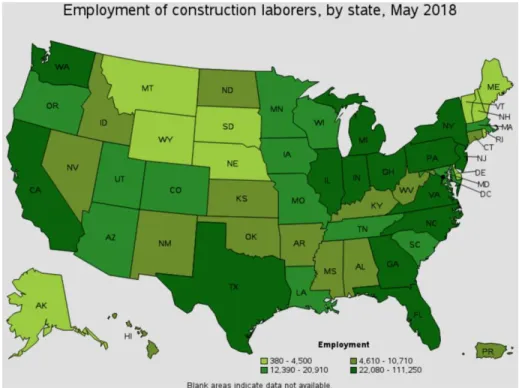
Figures from the United States Bureau of Labor Statistics show that in May of 2018 there were a little more than 100,000 people working as construction laborers in California. Per Cal/OSHA’s guidelines, each of these workers was required to have access to at least one quart of water for every hour they were performing work on their jobsite. Assuming an 8-hour work day and that all 100,000 laborers showed up for work, this would amount to 800,000 quarts of water needed across California’s job sites in a single day. Undoubtedly, much of this water was provided in the form of single-use plastic bottles, as it is the cheapest and most convenient method of keeping jobsite personnel hydrated. This method of hydration is one of the main sources of plastic waste for the construction industry not only in California, but globally.
Methodology
The first step in researching for this project was to select a commercial construction company that employs the use of single-use plastic bottles as their means of worker hydration. A mid-size contractor is preferable, as it narrows the scope of projects and number of workers to study and quantify, while still providing enough data to create an accurate estimate. Exploratory research through company website searches and email correspondence with various industry contacts was used in order to select the company that was right for this project. While initiating the process of company selection, more exploratory research was conducted to look for qualitative data from sources such as OSHA and environmental advocacy groups. These sources were important as they provided valuable context and background information for this case study. After the company was selected, quantitative research about the number of direct workers currently employed across the company’s sites was conducted. This research was carried out through communication with a contact within the company’s on-site management team. Research questions included:
• What is the overall value of these projects?
• What is the latest estimated timeline to completion?
• What is the primary way that workers stay hydrated on your job sites?
• How many direct workers are employed by your firm across all three of these projects (Not including subcontractors)?
• What is your budget for purchasing water for your workers?
• How many pallets of water per month are ordered by you and your management staff?
Case Study
Site and Water Purchasing Details
This case study is focused on a contractor in Northern California working on three school projects. It was requested by the project manager contact involved with this case study that the company and this individual’s identity remain anonymous. The project details are outlined below, omitting the specific locations and names to protect the request for anonymity. All project details are provided by a contact within the firm. For ease of reading, the project details have been entered into Table 1 below.
Table 1: Project Information
This table is provided to create a clear understanding of the scope and general
information surrounding each individual project.
School
Project Duration
Workers on Site
Elementary School
21 Months
18
Middle School
21 Months
26
High School
26 Months
28
Total Workers Across All Sites: 72
The overall value across the three projects is approximately $250-300 million. They are located on a single site, but each is treated as an independent project with its own management and labor team. The number of workers employed by the general contractor across the sites obviously fluctuates based on the current activities and stage of the project. For simplicity, the number of workers used for this study is the number of workers on site at the time this report was written. Included in this labor number are the general contractor’s on-site laborers, carpenters, and superintendents. These teams are on site in order to complete the work that the general contractor self-performs. According to
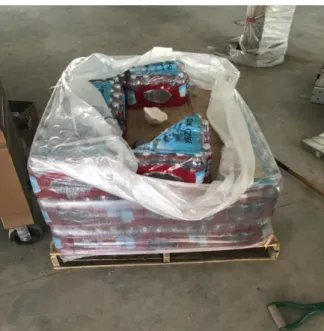
The water purchased by the management team is Crystal Geyser brand. The pallets contain 54 cases of water bottles, with each case containing 35 bottles; each bottle contains 16.9 ounces of water. The budget for bottled water is $2,400 per month. With each pallet costing around $560, there are always between 3-5 pallets of water on site in order for the general contractor to remain Cal/OSHA compliant with the amount of drinking water available. It is common practice for work teams to grab a case of bottles off of the main pallet and keep them close to their various work areas in order for ease of
Figure 2: Pallet of water recently delivered to the site. Photo provided by general contractor’s contact.
access. It is up to the workers to make sure that they are drinking enough water periodically throughout the day, with reminders from management staff to do so.
Results and Discussion
The goal of this paper was to create an estimate for the number of plastic bottles used across a general contractor’s sites. The following estimate was created through close contact and repeated
communication with an agent of the general contractor in order to create the most accurate estimate possible. Every effort was made to present the number as an objective count of information, and not to criticize the general contractor for their means and methods of worker hydration.
The first step in creating the final estimate of plastic bottles was to create an estimate of the amount of water required throughout the lifetime of the project. These results, along with the necessary
assumptions and how they were computed are shown below.
*Number of quarts based on Cal/OSHA’s requirement of one quart of water per worker, per hour of work. For simplicity and clarity, an 8-hour workday with no overtime was assumed.
**Number computed based on the project durations provided by the general contractor. An average of 22 weekdays per month was used to convert months to days.
***Number computed by the conversion factor of 4 quarts in one gallon.
With the initial estimate completed, conversion factors were used to create a final estimate of the total number of bottles consumed.
Table 3:
The final estimate is shown here. Each project is shown with the amount of 16.9 oz plastic bottles required over the project’s duration.
Site Elementary
School
Middle School High School Totals
Gallons Req’d 16,632 24,024 29,568 70,224 Ounces Req’d* 2,128,896 3,075,072 3,784,704 8,988,672 Bottles Req’d** 125,970 181,957 223,947 531,874
Table 2:
Shown below is the total is the initial estimate exploratory estimate. The number of gallons required over each project’s lifetime is shown.
Site Elementary
School
Middle School High School Totals
Current Workers 18 26 28 72
Water Per Day Req’d (quarts)*
144 208 224 576
Duration of Project (Days)**
462 462 528 1,452
*Number computed by a conversion of 128 fluid ounces in one gallon.
**The total bottles required was based on the conversion of 16.9 fluid ounces in one bottle of Crystal Geyser water.
The final number of bottles estimated was approximately 530,000 for a crew of 72 workers over about two years. It was important to create a singular number centered around a specific size of company and project, as the goal of this case study was to create a baseline by which other firms and jobs can be measured. This number, it should be noted, is the amount of water that must be onsite for the project to legally comply with OSHA’s guidelines for hydration, not the exact number of bottles used by the workers on site. As with any estimate, a certain degree of estimation and assumption must be made, and all assumptions are laid out above. In order to make the estimate as accurate as possible, open communication was kept with the general contractor’s agent while the estimating process was being undertaken. All numbers have been checked for general accuracy and confirmed with the contractor that they are reasonable.
Conclusions and Future Research
Plastic waste and specifically single-use bottles have become a relatively recent environmental issue throughout the world. This case study was designed to create a deeper understanding of the
construction industry’s contribution to this form of pollution. In no way was the intention of this study to assign blame or criticize a single company’s choices while completing a job. Rather, this company should be commended for its willingness to participate in such a critical study. It is widely understood that while problematic, single-use plastics are often the most effective way of providing clean drinking water to workers on a construction site. It is very often the best option because of the complicated layouts of most large sites and the stringent hydration requirements laid out by governing bodies such as OSHA. However, by looking deeper at the numbers surrounding the use of single-use plastics on a jobsite, it should inspire workers and staff to become more conscious of the way materials are selected and used on a jobsite. The final number of bottles, nearly 532,000, seems shockingly high considering the relatively small space and number of individuals that have consumed them. By providing a baseline estimate for the use of plastic bottles, the number and rate of
consumption can be easily applied to companies with projects of similar scope. Providing a clearer understanding of the way a harmful resource is consumed on a construction site is the most valuable insight that is gained from this study. Future researchers should look to this study as a benchmark for other companies. The rate of consumption can easily be applied to other companies to realize the amount of impact that a single aspect of the job has on the environment. This case study is a small but important development in the progress of tracking jobsite waste and understanding the construction industry’s impact on the environment.
References
California Occupational Safety and Health Administration. (2019). Cal/OSHA Pocket Guide for the Construction. [WWW Document]. URL
https://www.dir.ca.gov/dosh/dosh_publications/ConstGuideOnline.pdf
Jackson, Frank; Morledge, Roy. (1997). Reducing Environmental Pollution Caused by Construction Plant. [WWW Document]. URL
Lights, Zion. (2012). What’s the Problem with Plastic Bottles?. [WWW Document]. URL https://www.onegreenplanet.org/animalsandnature/whats-the-problem-with-plastic-bottles/
Lindwall, Courtney. (2020). Single-Use Plastics 101. [WWW Document]. URL https://www.nrdc.org/stories/single-use-plastics-101
National Oceanic and Atmospheric Association. (2020). What Are Microplastics?. [WWW Document]. URL https://oceanservice.noaa.gov/facts/microplastics.html
Paisan, Sean. (2017). Cal/OSHA Requires Heat Illness Prevention Steps for Outdoor Work. [WWW Document]. URL https://www.shrm.org/resourcesandtools/legal-and-compliance/state-and-local-updates/pages/cal-osha-requires-heat-illness-prevention-steps-for-outdoor-work.aspx
Parker, Laura. (2019). How the Plastic Container Went From Miracle Container to Hated Garbage. [WWW Document]. URL https://www.nationalgeographic.com/environment/2019/08/plastic-bottles/
Ray, Debika. (2019). Plastic Waste in Construction – Is the Sector Doing Enough?. [WWW
Document]. URL https://www.building.co.uk/focus/plastic-waste-in-construction-is-the-sector-doing-enough/5098139.article
Snook, Jenny. (2017). How Does Construction Impact the Environment?. [WWW Document]. URL https://gocontractor.com/blog/how-does-construction-impact-the-environment/
The Water Project. (2015). In a Thirsty World… Bottled Water Seems Wasteful. [WWW Document]. URL https://thewaterproject.org/bottled-water/bottled_water_wasteful
Thompson, Andrea. (2018). From Fish to Humans, A Microplastic Invasion May Be Taking a Toll. [WWW Document]. URL https://www.scientificamerican.com/article/from-fish-to-humans-a-microplastic-invasion-may-be-taking-a-toll/