Original Research Article
Knowledge regarding diabetes among expectant mothers attending ante
natal clinic of a tertiary care institution of
Kolkata: a cross sectional study
Prabir Biswas
1, Sonali Majumdar (Das)
1*, Bibekananda Das
2INTRODUCTION
India has largest population of 50.8 million diabetic sufferers.1 According to WHO, 80% of diabetes related
deaths occur in low and middle income group and projects that deaths will double from 2016 to 2030.2 Diabetes in
pregnancy (DIP) can occur both due to type 2 diabetes
prior to pregnancy and due to impaired glucose tolerance in at risk women due to diabetogenicity of the condition termed as Gestational diabetes mellitus (GDM). Prevalence of the both these condition has increased globally.3 DIP can lead to early-onset type 2
diabetes in the mothers after delivery and can cause adolescent diabetes and obesity in the offspring as well.4,5 1Department ofPhysiology, 2Department ofGynecology and Obstetrics, R. G. Kar College of Medicine, Kolkata, West
Bengal, India
Received: 10 October 2018
Accepted: 03 November 2018
*Correspondence:
Dr. Sonali Majumdar (Das),
E-mail: [email protected]
Copyright: © the author(s), publisher and licensee Medip Academy. This is an open-access article distributed under the terms of the Creative Commons Attribution Non-Commercial License, which permits unrestricted non-commercial use, distribution, and reproduction in any medium, provided the original work is properly cited.
ABSTRACT
Background: Prevalence of gestational diabetes (GDM) has increased tremendously in India. Prevention of the condition is possible through health education. However, knowledge regarding diabetes is poor among Indian women. Thus, examining the basic knowledge regarding diabetes among expectant mothers is necessary to identify areas of deficit.
Methods: An observational, analytical study of cross-sectional design was undertaken to assess the knowledge regarding diabetes among 173 expectant mothers attending the ante-natal clinic of R. G. Kar Medical College, Kolkata using a pre tested schedule.
Results: Mean score of the respondents were less than 3 out of 8 which was a poor score. The overall mean diabetic score was similar for the antenatal mothers irrespective of the number of pregnancy (p=0.3154) but the score was greater than that for the non-pregnant women (p=0.0000). The expectant mothers showed better response compared to the controls when asked whether a person can have diabetes but be unaware of the condition; whether diabetes can harm a person’s body before diagnosis; long term complications of the disease(P<0.05). However, answers were similar across all groups with respect to queries like the age group in which the condition is more commonly diagnosed and whether diabetes is curable (p>0.05). The pregnant women had less reported leisure time physical exercise and first degree relative with diabetes (p<0.05).
Conclusions: Mean knowledge score of the expectant mothers was more than the women controls though the overall
score was poor. A structured awareness program is urgently needed which would first address diabetes in general and then the specifics of GDM.
Keywords: Bengal, Hospital-based, Gestational diabetes, Pregnant
Routine blood sugar examination is done between 24 and 28 weeks of pregnancy and required advice for gestational diabetes prevention for every mother is part of antenatal protocol.6
Several studies have been done in different parts of India to assess awareness regarding GDM among antenatal mothers.7,8 Different agencies stressed that health
promotion regarding the risk factors and prevention of diabetes in pregnancy is urgently needed.9
But before proceeding for the same, baseline knowledge about the diabetes itself among the expectant mothers needs to be ascertained as awareness regarding the condition is low among Indian women in general.10
The present study was undertaken to assess the knowledge of diabetes among pregnant women attending a tertiary care hospital of Kolkata using a pretested schedule. The research hypothesis being whether expectant mothers attending antenatal clinic of Department of Gynaecology and Obstetrics have more knowledge regarding diabetes when compared to women attending the outpatient clinic of the same department for non-obstetrics reasons
.
METHODS
An observational analytical study of cross sectional design was conducted. Out of the total of 350 women participants, one hundred and eighty (n=180) expectant mothers attending antenatal clinic, in the Department of Gynaecology and Obstetrics, R. G. Kar Medical College, Kolkata were included in the study using the simple random sampling method. Seven subjects later left the study. Out of 173 mothers, eighty-three (n=83) were primigravidae and 90 were multi gravidae.
Another group of 170 women attending the outpatient clinic of the same department for non-obstetrics reasons were selected as controls using similar methodology. All the women satisfied the given inclusion and exclusion criteria.
Inclusion criteria
• Antenatal mothers irrespective of gestational age, diabetes status were included.
• Women attending outpatient clinic for
gynaecological reasons in the reproductive age (15-45years) were taken as controls.
Exclusion criteria
Women with severe or acute illness; in active labor; deaf and dumb subjects; under influence of alcohol or drugs; unwilling to participate. Study was conducted during period of August 2015 to August 2018 at R. G. Kar Medical College in the Department of Physiology.
The prevalence (P) of diabetes among pregnant women in Bengal was found to be 11.69 %.11 So, the sample size N
was
N ≥4PQ/L2
P=11.69; Q=100-11.68=88.31; absolute error L=5% of P
So, N ≥4X11.69X88.31/5X5 ≥165
Thus, on the basis of the sample size calculation, one hundred and seventy three (n=173) antenatal mothers were included in the study. One hundred and seventy (n=170) non-pregnant women attending outpatient clinic of the same department.
Study technique
All the study participants were residents of different areas of South Bengal and selected by simple random sampling from the outpatient Department of Gynaecology and Obstetrics of R. G. Kar Medical College, Kolkata. Informed consent was taken from all the study subjects after fully explaining the objectives of the study.
Detailed history, information regarding age, monthly family income, education years, place of residence, self reported physical exercise, family history of diabetes, occupation etc were taken. A pre-tested and pre-designed
schedule was administered to every consenting
individual.12
The data were collected by in- person interview. All the respondents were assured of confidentiality and anonymity. The time taken to complete the schedule ranged from 15-20minutes. The schedule consisted of five questions with responses in the format of yes, no and do not know.
The total maximum score for the items was eight. The correct answer was allotted score of 1 and wrong answer or do not know answer was given score of zero. Score of seven or more out of eight was considered a good score. Number of correct responses less than 7 was considered not good score.13
Any recent laboratory reports like that of blood glucose, serum TSH, hemoglobin% were noted for ascertaining the diabetic status of the subjects.
Statistical analysis
RESULTS
A total of 343 women participated in the present study. Of which 173 were pregnant mothers who attended the antenatal clinic of Department of Gynaecology and Obstetrics, R. G. Kar Medical College, Kolkata,
participated in the study. Out of 173, eighty-three (n=83) were primigravidae and 90 were multi gravidae. One hundred and seventy women (n=170) who went to the
outpatient clinic of the same department for
gynaecological reasons, were taken as controls.
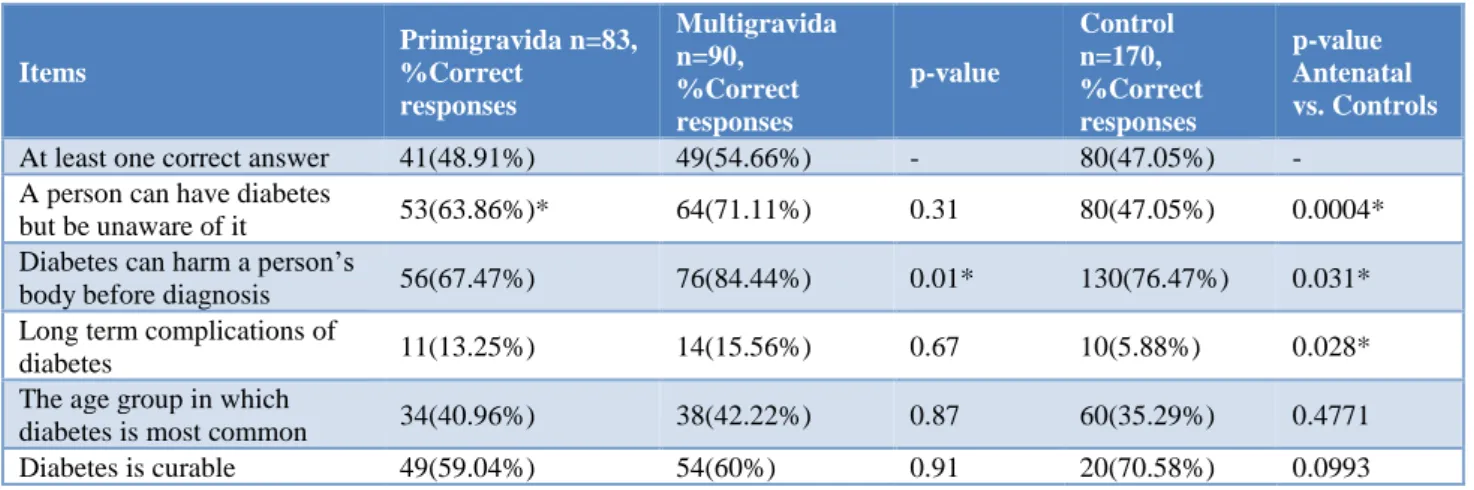
Table 1: Knowledge regarding diabetes among antenatal women with respect to controls.
Items
Primigravida n=83, %Correct
responses
Multigravida n=90, %Correct responses
p-value
Control n=170, %Correct responses
p-value Antenatal vs. Controls
At least one correct answer 41(48.91%) 49(54.66%) - 80(47.05%) -
A person can have diabetes
but be unaware of it 53(63.86%)* 64(71.11%) 0.31 80(47.05%) 0.0004*
Diabetes can harm a person’s
body before diagnosis 56(67.47%) 76(84.44%) 0.01* 130(76.47%) 0.031*
Long term complications of
diabetes 11(13.25%) 14(15.56%) 0.67 10(5.88%) 0.028*
The age group in which
diabetes is most common 34(40.96%) 38(42.22%) 0.87 60(35.29%) 0.4771
Diabetes is curable 49(59.04%) 54(60%) 0.91 20(70.58%) 0.0993
Table 2: Distribution of age and education years among the study participants, n=343.
Items Primigravida n=83,
Gr 1
Multigravida n=90, Gr 2
p-value Gr1 vs. Gr 2
Control n=170, Gr3
p-value Gr 1vs 3;Gr 2vs3
Mean age (SD)in years 20.14(3.76) 24.87(4.32) 0.001* 24.53(14.29) 0.0064*; 0.8258
Mean Education years (SD) 7.33(3.94) 7.12(3.97) 0.7271 7.29(4.369) 0.9437; 0.7581
Table 3: Distribution of occupation, social class, reported leisure time physical exercise and First degree relative with diabetes among the respondents, n=343.
Items Primigravida
n=83,
Multigravida n=90,
Control
n=170, p-value
Occupation: Homemaker 68(81.92%) 65(72.22%) 120(70.58%) 0.4267
Social Class14:Poor 77(92.78%) 84(93.33%) 145(80.55%) 0.06
Reported leisure time physical exercise 22(26.5%) 18(20%) 70(41.17%) 0.001*
Relative with diabetes 16(19.27%) 22(24.44%) 60(35.29%) 0.018*
Table 4: Distribution of occupation, social class, reported leisure time physical exercise and first degree relative with diabetes among the antenatal mothers, n=173.
Parameters Primigravida, n=83 Multigravida, n=90 p-value
Occupation: Homemaker 68(81.92%) 65(72.22%) 0.1304
Social Class: Poor 77(92.78%) 84(93.33%) 1.00
Reported Leisure time physical exercise 22(26.5%) 18(20%) 0.3106
Relative with diabetes 16(19.27%) 22(24.44%) 0.4121
Table 1 shows the distribution of diabetes knowledge score of all the items of the primigravidae vs. multigravidae and antenatal mothers vs. the controls using Chi square test. The overall mean diabetic score was similar for multigravidae with respect to primigravidae thus statistically non significant (p=0.3154) while the score for
antenatal mothers was more than that for the controls (p=0.0000*).
for the antenatal group compared to the controls (p=0.0004).
For item 2, whether diabetes can harm a person’s body before diagnosis, the number of correct answers were greater for multigravidae women compared to both primigravidae mothers (p=0.01) and the controls (p=0.03).
For item 3, whether eye, kidney, heart and foot are affected as a result of long-term complications of the disease; score was similar for the antenatal mothers (p=0.67) but more compared to the controls (p=0.028).
For item 4, the age group in which the condition is more commonly diagnosed >40 years or less than 40 years; response rate was similar for all the groups (p>0.05).
For item 5, whether diabetes is curable; the proportion of correct answers was similar for all the groups (p>0.05).
Table 2 shows the mean age and education years of the antenatal mothers with respect to the controls. Mean age of the mothers were significantly different from the controls. (p<0.05*). But the mean education years were similar across all age groups.
Table 3 shows the distribution of different parameters like occupation, social class, reported leisure time physical exercise and First degree relative with diabetes among the study participants. Occupation and social class were similar among them, but the control subjects had more reported leisure time physical exercise and first degree relative with diabetes (p<0.05). P values were calculated using ANOVA.
Table 4 shows the distribution of different parameters like occupation, social class, reported leisure time physical exercise and First degree relative with diabetes among the pregnant women. All the parameters were similar among the ante natal mothers (p>0.05).
Diabetic knowledge score among the expectant mothers according to the education of the pregnant women: Ante natal mothers with higher literacy level (n=153 vs. 20) showed more knowledge score (p=0.02).
Working mothers (n=40 vs. 133) had more knowledge score compared to homemaker antenatal subjects (p=0.0104). Antenatal mothers whose 1st degree relative is
diabetic (n=38 vs. 135) showed greater knowledge score compared to pregnant women with no diabetic relative (p=0.0009).
Family size (large family size, n=62 vs. 111) did not influence the knowledge score (p=0.1873). Out of 173 subjects, only 19 were diagnosed with gestational diabetes mellitus (10.98%). The knowledge score among diabetic (n=19 vs154) compared to normoglycemic mothers were similar (p=0.8733).
Also, age of the mothers (p=0.6642) or their gestational age (p=0.1493) did not influence the knowledge score.
DISCUSSION
Out of the total of 343 participants, one hundred and seventy-three (n=173) were expectant mothers and 170 women were included as controls. Of the pregnant women, 83 were primigravidae and 90 were multigravidae mothers.
Mean score of the all the groups were less than 3 out of 8 which was a poor score. The overall mean diabetic score was similar for mutigravidae and primigravidae (p=0.3154) but greater than that for the controls (p=0.0000). The expectant mothers showed better response compared to controls when asked whether a person can have diabetes but be unaware of the condition; whether diabetes can harm a person’s body before diagnosis; long term complications of the disease (P<0.05). However, responses were similar across all groups with respect to queries like the age group in which the condition is more commonly diagnosed and whether diabetes is curable (p>0.05).
The control subjects had more reported leisure time physical exercise and first degree relative with diabetes compared to the pregnant women (p<0.05). All the study participants were similar with respect to education years, occupation, social class, reported leisure time physical exercise and first degree relative with diabetes except age. The multigravidae and control group were older than the first time mothers.
Only three out of 173 (1.73%) mothers were unaware of the condition called diabetes or ‘sugar’ disease. Mean score of all the groups were less than 3 out of 8 which was a poor score. The findings were similar to that of other workers. A qualitative study by Bandopadhyay et al was conducted on seventeen South Asian women residing in Australia with GDM regarding knowledge about different types of diabetes before and after diagnosis and delivery. It was found that knowledge regarding any type of diabetes was low among the study participants.15
A Nepal based study done in rural areas on antenatal mothers and another on women of Kerala suffering from gestational diabetes also reported similar findings.16, 17 The
overall mean diabetic score was similar for mutigravidae and primigravidae (p=0.3154) but greater than that for the controls (p=0.0000).
A hospital based cross-sectional study on awareness regarding GDM among 141 women was performed. The highest information source was obtained from doctors (37%, n=44) followed by family members (22%, n=28).18
Thus, diabetes education through effective promotion and campaigns by the health care workers can play an important role in creating increased awareness among antenatal women.20 While mass media, neighbours may
have played an important role with respect to awareness about diabetes but the contribution of the health care providers is considerable.
Mothers with multiple pregnancies has mean knowledge score of 2.94(1.44) which was greater than those for first time mothers 2.73(1.44). Repeated pregnancies probably helped improve the knowledge score though results were statistically non significant. Multiple pregnancies probably increase the number of interaction between the mothers and the health professionals.
A study conducted in South India among 120 expectant mothers in a primary health centre showed that parity was not found to be significantly associated with the level of knowledge about GDM.8 In contrast, a similar study by
Azu and Essel among 250 pregnant women from Ghana found that the higher the parity of the expectant mothers, the lower was their level of knowledge on GDM probably due to illiteracy and poverty.21
In the present study, the mean education years of the mothers with multiple pregnancy were 7.12(3.97) years while above 93.33% of the expectant mothers were poor. The multigravidae mothers were similar to the first time mothers with respect to these two parameters.
The expectant mothers showed better response compared to controls when asked whether a person can have diabetes but be unaware of the condition; whether diabetes can harm a person’s body before diagnosis; long term complications of the disease (P<0.05). However responses were similar across all groups with respect to queries like the age group in which the condition is more common and whether diabetes is curable (p>0.05) .
A Chennai based study assessed the knowledge regarding gestational diabetes among pregnant mothers and found that 48.8% of rural women were ignorant of risk factor for gestational diabetes while 75.6% were unaware of the long term complications of the disease.17
All the study participants were similar with respect to education years, occupation, social class, reported leisure time physical exercise and first degree relative with diabetes except age. Both the multigravidae and control group were older than the first time mothers.
The control subjects had more reported leisure time physical exercise and first degree relative with diabetes compared to the pregnant women (p<0.05). A Kerala based study was conducted among 1303 women to assess self reported physical activity and was found to be more in women who belonged to the age group of 35-54 years (OR 1.91:1.32-2.63).22
Out of 173 subjects, only 19 were diagnosed with gestational diabetes mellitus (10.98%). The mean knowledge score (SD) among diabetic mothers was 2.89 (1.55) compared to normoglycemic mothers 2.83 (1.35) but statistically non significant (p=0.8733).
A study conducted among 89 Bangladeshi women found no significant difference in knowledge among GDM patients compared to normal pregnant women (p=0.83). Overall Knowledge about GDM is poor among pregnant women.23 The Pondicherry based study was carried on 200
antenatal mothers with GDM and found that the knowledge regarding diabetes to be average.24 A Kerala
based study also reported similar findings.25
However older age, large family size (more than 4 family members) and more gestational age (women with more than 28 weeks of gestation i.e. in 3rd trimester pregnancy
vs. women in 2nd trimester) gave similar response rate
when compared to their respective controls (p<0.05). In contrast, a study conducted on total of 500 pregnant women with GDM residing in Karnataka found statistically significant association between knowledge about GDM with maternal age, (P<0.050).8
GDM occurs when a woman's pancreatic function is not sufficient to overcome the diabetogenic environment of pregnancy and causes high blood glucose levels due to the body's extra demand for insulin.26
A year 2015 based study conducted by a NGO for diabetes prevention in Bengal on 6000 Bengali women found alarming increase in gestational diabetes in the state which was the reason behind the huge number of adolescent diabetes cases.11
Proper educational interventions promote better pregnancy outcomes. So, health promotion programs to increase knowledge about this condition among antenatal mothers is the need of the hour.27,28
An US based study on 97 pregnant women of Indian origin found non-adherence with respect to regularly attending prenatal or diabetes education classes. Giving incentives for attendance or having the classes become social events with community support were reccommended. 29 The
present study was a preliminary study and it does indicate aspects of the disease where antenatal mothers lack adequate knowledge. However, a future study on the at risk population such pregnant women with high Body Mass Index, previous history of GDM, currently suffering from the same is required for better interpretation of the study results.
CONCLUSION
The overall mean diabetic score was similar for antenatal mothers (p=0.3154) but greater than that for the controls (p=0.0000). The advice given during antenatal visit and the haematological intervention may contribute to more knowledge among expectant mothers. However, the mean score of the all the groups were less than 3 out of 8 which was a poor score. A structured awareness program for the expectant mothers is urgently needed which address the understanding would regard the diabetes in general and then switching to specifics of GDM
.
ACKNOWLEDGEMENTS
Authors would like to thank Dr. Anil Baran Singha Mahaptra, Professor and ex Head of Department, Department of Physiology, R. G. Kar Medical College, Kolkata. Dr. Salil Kumar Mandal, Professor and ex Head of Department, Department of Physiology, K. P. C. Medical College, Kolkata, West Bengal, India.
Funding: No funding sources Conflict of interest: None declared
Ethical approval: The study was approved by the Institutional Ethics CommitteeR. G. Kar Medical College, Kolkata, West Bengal, India
REFERENCES
1. Magon N. Gestational diabetes mellitus: Get, set, and go. From diabetes capital of the world to diabetes care capital of the world. Indian J Endocrinol Metab. 2011;15(3):161-9.
2. World Health Organisation. Factsheet, 2016.
Available at:
www.searowho.int/india/mediacentre/events/2016/e n/. Accessed on 7 September 2018.
3. Chen L, Magliano DJ, Zimmet PZ. The worldwide epidemiology of type 2 diabetes mellitus-present and
future perspectives. Nat Rev Endocrinol.
2011;8(4):228-36.
4. Chodick G, Elchalal U, Sella T, Heymann AD, Porath A, Kokia E, et al. The risk of overt diabetes mellitus among women with gestational diabetes: a
population- based study. Diabet Med.
2010;27(7):779-85.
5. Franks PW, Looker HC, Kobes S, Touger L,
Tataranni PA, Hanson RL, et al. Gestational glucose tolerance and risk of type 2 diabetes in young Pima Indian offspring. Diabetes. 2006 Feb;55(2):460-5. 6. Gestational diabetes mellitus. Practice Bulletin No.
137. American College of Obstetricians and Gynaecologists. Obstet Gynecol. 2013;122:406-16.
7. Shriraam V, Rani MA, Sathiyasekaran BWC,
Mahadevan S. Awareness of gestational diabetes mellitus among antenatal women in a primary health center in South India. Indian J Endocrinol Meta. 2013;17(1):146-8.
8. Dhyani V, Mahantashetti NS, Ganachari M.S,
Kambar S, Ghatnatti V. Awareness of gestational diabetes among pregnant women attending tertiary care health centre. Indian J Health Sci Biomed Res. 2018;11:51-5.
9. Mahalakshmi MM, Bhavadharini B, Maheswari K, Anjana RM, Jebarani S, Ninov L.et al: Current practices in the diagnosis and management of gestational diabetes mellitus in India (WINGS-5). Indian J Endocrinol Meta. 2016;20(3):364-8.
10. Kayal A, Anjana RM, Mohan V. Gestational
diabetes-An update from India. Diabetes Voice. 2013; 58:30-4.
11. Times of India. Group article on health issues, 2015.
Available at: www.timwsofindia.indiatimes
.com/india/12-pregnant- women-in –west –bengal-diabetic-study/articleshow/46984047.cms. Accessed on 7 September 2018.
12. Majumdar (Das) S, Das M. The reliability and validity of the translated Oregon diabetes knowledge scale among Bengali women residing in Kolkata. IOSR-JDMS. 2018;17{6(ver7)}:55-60.
13. Oregon Diabetes coalition. Oregon progress report on diabetes. Department of Human services, Health services, Oregon diabetes prevention &control program, Portland, Oregon,2006. Available at: http://library.state.or.us/repository/2008/200810290 850153/index.pdf.
14. Agarwal AK. Social classification: The need to update in the present scenario. Indian J Community Med. 2008;33:50-1.
15. Bandyopadhyay M, Small R, Davey M, Oats JJN, Forster DA, Aylward A. Lived experience of gestational diabetes mellitus among immigrant South
Asian women in Austrailia. ANZJOG.
2011;51(4):360-4.
16. Shrestha S, Thapa P, Saleh F, Thapa N, Stray BP, Khanom K. Knowledge regarding diabetes among pregnant women in three districts of Nepal. J Nepal Health Res Counc. 2013;11(25):259-63.
17. Bhavadharini B, Deepa M, Nallaperumal S, Anjana RM, Mohan V. Knowledge about gestational diabetes mellitus amongst pregnant women in South Tamil Nadu. J Diabetol. 2017;8:22-6.
18. Price LA, Lock LJ, Archer LE, Ahmed Z. Awareness of gestational diabetes and its risk factors among pregnant women in Samoa. Hawaii J Med Public Health. 2017;76(2):48-54.
19. Elmekresh A, AbuHalimeh B, Abukhater R, Bakro A, Nahab S. Gestational diabetes awareness in women of childbearing age in Sharjah. Glob J Obes Diabetes Metab Syndr. 2017;4(2):51-3.
20. Carolan-OIah MC. Educational and intervention programmes for gestational diabetes mellitus (GDM) management: An integrative review. Collegian. 2016;23(1):103-14.
Horizon: An International J Nursing Midwifery. 2017;1(2):1-8.
22. Mathews E, Pratt M, Jissa VT, Thankappan KR. Self-reported physical activity and its correlates among
adult women in the expanded part of
Thiruvananthapuram city, India. Indian J Public Health. 2015;59(2):136-40.
23. Monir N, Zeba Z, Rahman A. Comparision of knowledge of women about gestational diabetes mellitus and healthy pregnant women attending at hospital in Bangladesh. J Science Foundation. 2018;16(1):20-6.
24. Elamurugan S, Arounassalame B. What do Mothers
know about gestational diabetes: knowledge and
awareness? Indian J Obst Gynecol Res.
2016;3(4):393-6.
25. Hussain R, Rajesh R, Giridhar A, Gopalakrishnan M, Sadasiyan S, James J, et al. Knowledge and awareness about diabetes mellitus and diabetic retinopathy in suburban population of a South Indian state and its practice among patients with diabetes mellitus: A population-based study. Indian J Ophthalmol. 2016;64:272-6.
26. Morampudi S, Balasubramanian G, Gowda A,
Zomorodi B, Patil AS. The challenges and
recommendations of Gestational Diabetes Mellitus Care in India: A review. Front Endocrinol Lausanne. 2017;8:56.
27. Lee J, Smith JP. The effect of health promotion on diagnosis and management of diabetes. J Epidemiol Community Health. 2012 Apr; 66(4):366-71. 28. Mohan V, Usha S, and Uma R. Screening for
gestational diabetes in India: where do we stand? J Post Grad Med. 2015;61(3):151-4.
29. Carlson LD, Henderson JN, King K, Klenszynski K, Thompson DM and Mayer P. American Indian diabetes beliefs and practices: anxiety, fear; and dread in pregnant women with diabetes. Diabetes Spectrum. 2015;28(4):258-63.