ScholarWorks @ Georgia State University
Educational Policy Studies Dissertations Department of Educational Policy Studies
5-13-2016
Teacher Retention: Behaviors of Principals
Influencing Teachers in Schools as part of Georgia’s
Vision for Public Education
Sharissa Y. Seymour
Georgia State University
Follow this and additional works at:https://scholarworks.gsu.edu/eps_diss
This Dissertation is brought to you for free and open access by the Department of Educational Policy Studies at ScholarWorks @ Georgia State University. It has been accepted for inclusion in Educational Policy Studies Dissertations by an authorized administrator of ScholarWorks @ Georgia State University. For more information, please [email protected].
Recommended Citation
Seymour, Sharissa Y., "Teacher Retention: Behaviors of Principals Influencing Teachers in Schools as part of Georgia’s Vision for Public Education." Dissertation, Georgia State University, 2016.
This dissertation, TEACHER RETENTION: BEHAVIORS OF PRINCIPALS INFLUENCING TEACHERS IN SCHOOLS AS PART OF GEORGIA’S VISION FOR PUBLIC EDUCATION, by SHARISSA Y. SEYMOUR, was prepared under the direction of the candidate’s Dissertation Advisory Committee. It is accepted by the committee members in partial fulfillment of the re-quirements for the degree, Doctor of Education, in the College of Education & Human Devel-opment, Georgia State University.
The Dissertation Advisory Committee and the student’s Department Chairperson, as representa-tives of the faculty, certify that this dissertation has met all standards of excellence and scholar-ship as determined by the faculty.
_________________________________
Jami Royal Berry, Ph.D. Committee Chair
______________________________ ___________________________ Nick Sauers, Ph.D. Kendra Washington-Bass, Ph.D. Committee Member Committee Member
______________________________ Date
______________________________ William L. Curlette, Ph.D.
Chairperson, Department of Educational Policy Studies
______________________________ Paul A. Alberto, Ph.D.
By presenting this dissertation as a partial fulfillment of the requirements for the advanced degree from Georgia State University, I agree that the library of Georgia State University shall make it available for inspection and circulation in accordance with its regulations governing materials of this type. I agree that permission to quote, to copy from, or to publish this dissertation may be granted by the professor under whose direction it was written, by the College of Education & Human Development’s Director of Graduate Studies, or by me. Such quoting, copying, or pub-lishing must be solely for scholarly purposes and will not involve potential financial gain. It is understood that any copying from or publication of this dissertation which involves potential fi-nancial gain will not be allowed without my written permission.
All dissertations deposited in the Georgia State University library must be used in accordance with the stipulations prescribed by the author in the preceding statement. The author of this dis-sertation is:
Sharissa Seymour
Department of Educational Policy Studies 30 Pryor Street
Atlanta, GA 30303
The director of this dissertation is:
Dr. Jami Royal Berry
Department of Educational Policy Studies College of Education & Human Development
Sharissa Y. Seymour
ADDRESS: 30 Pryor Street, Room 450 Atlanta, GA 30303
EDUCATION:
PROFESSIONAL EXPERIENCE:
2007- present Assistant Principal
Gwinnett County Public Schools
2001-2007 Teacher
Gwinnett County Public Schools
PROFESSIONAL SOCIETIES AND ORGANIZATIONS
2014 Professional Association of Georgia Educators Ed.D. 2016 Georgia State University
Educational Policy Studies Ed.S. 2006 Georgia State University
Early Childhood Education M.Ed. 2003 Georgia State University
SCHOOLS AS PART OF GEORGIA’S VISION FOR PUBLIC EDUCATION
by
SHARISSA Y. SEYMOUR
Under the Direction of Jami Royal Berry
ABSTRACT
Once considered managers of school buildings, principals have moved into the role of
in-structional leaders, charged with putting student learning first in their realm of daily
responsibili-ties. The concept of transformational leadership helps foster the development of a school culture
that includes student-centered interactions, an underlying sense of social stability, and student
learning at its core. Principals lead their staffs in a multitude of ways. The extent of principal
ef-fectiveness as it relates to retaining teachers in school buildings is in need of exploration. Four
issues related to principal effectiveness are addressed as supported by the literature: (a)
educa-tional leadership theory, (b) organizaeduca-tional culture in schools, (c) teacher mobility, and (d)
ef-fects of teacher mobility on school culture. Teacher retention at the local school builds stronger
communities simply by fostering relationships that enable problem solving among colleagues,
sessed and debated. Data collection consisted of sixteen semi-structured interviews that
consti-tute the source of this instrumental case study. By interviewing system leaders in two distinctly
different districts and examining the perceptions of teachers in those districts, the researcher was
able to understand the effects of the Georgia Vision Project and teacher retention at the local
school level. Data analysis resulted in the central categories: respect, support, relationships,
recognition, open door policy, and encouragement as ways in which principals can influence
re-tention.
SCHOOLS AS PART OF GEORGIA’S VISION FOR PUBLIC EDUCATION
by
Sharissa Y. Seymour
A Dissertation
Presented in Partial Fulfillment of Requirements for the
Degree of
Education Doctorate
in
Educational Leadership
in
Educational Policy Studies
in
the College of Education & Human Development Georgia State University
Copyright by Sharissa Y. Seymour
This dissertation is dedicated to my sweet girls, Jordan and Taylor. The time it took to
read, research, and write took my time away from both of you and I know there were many times
you wished I was devoting those moments to you. It is my hope that continuing my education
demonstrated that no one or nothing should stand in your way of accomplishing your personal
I would first like to acknowledge my precious family. My girls, Jordan and Taylor, I
thank you for allowing me to model for you the importance of education. I hope I have modeled
that you can do hard things, and your education has no limits. My grandmother, Earline Owens,
for serving as a positive source of energy throughout the program; always providing just in time
encouragement. My mom, Bonita, for constantly letting me know the depth of her pride. You
helped ensure all of my assignments were completed by serving as child entertainer for the girls
when I was most in need. Although far too many to name, I would like to thank all of my uncles,
aunts, and cousins who believed in me and made me feel like I was someone special during this
journey. I will carry the title of first doctor in the family with honor. Your love is felt deep in my
core. I couldn’t have asked to be a member of a more awesome group of people.
To the countless friends who have been by my side in numerous ways, providing
assis-tance. I appreciate you. You have given me editing assistance, shoulders for a good cry, dinner
dates to take my mind away, words of affirmation, and technical support. I thank you. I can
nev-er say enough, I am far bettnev-er because of our friendship.
Thank you to Dr. Jami Berry for serving as my dissertation chair. You have been my
big-gest cheerleader in this educational journey. I am most appreciative for your willingness to
al-ways be a phone call or text away. You have provided me with tremendous guidance and support
throughout my dissertation process. My dissertation committee members, Dr. Nick Sauers and
Dr. Kendra Washington Bass, who each brought their own expertise, offering helpful insights
one with numerous questions ensuring clarity. The support we provided each other during this
LIST OF TABLES ... V
1 THE PRINCIPAL AND TEACHER RETENTION ...1
Guiding Questions ...2
Review ...2
References ...23
2 TEACHER RETENTION: BEHAVIORS OF PRINCIPALS INFLUENING TEACHERS AS PART OF GEORGIA’S VISION FOR PUBLIC EDUCATION ...33
Methodology ...35
Results ...45
Conclusions ...82
References ...84
Table 1. Sources of Evidence ...46
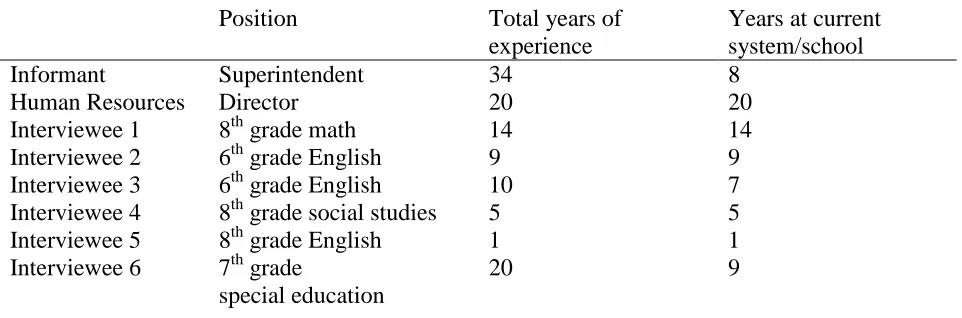
Table 2. System A Interviewees ...46
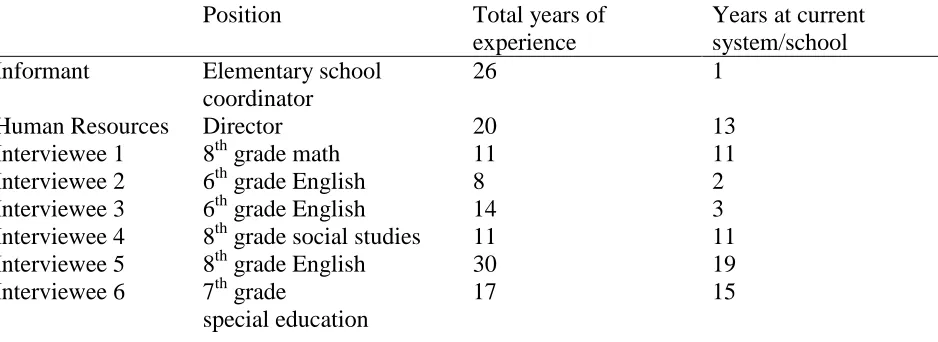
Table 3. System B Interviewees...60
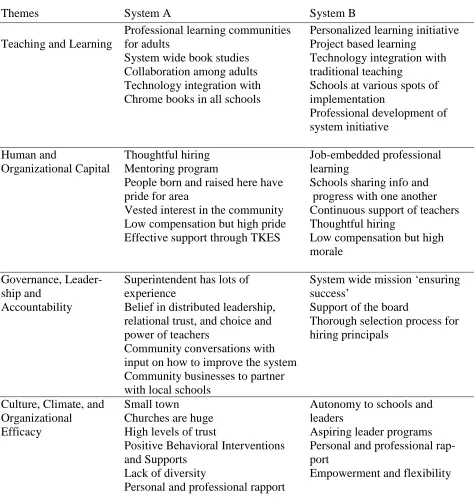
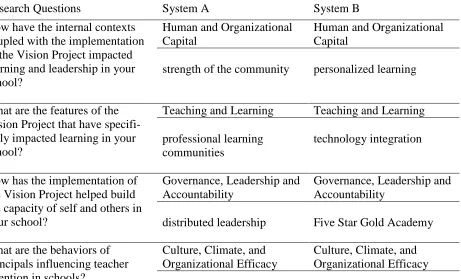
Table 4. Study Highlights ...72
1 THE PRINCIPAL AND TEACHER RETENTION
This dissertation reviews the research around the idea of principal influence on teacher
retention. Schools need leadership, and teachers need administrators who support their
profes-sional growth (Balyer, 2012; Duke, 2010; Parsons & Beauchamp; 2012). There are many
simi-larities in how effective leadership is viewed between researchers within the academic
communi-ty and other industries (Silva, 2014). In essence, leadership is increasingly difficult regardless of
who is being led (Latham, 2014). Thus, the position of principal is powerful, and research on the
practices of this position is critical to the future of the profession. Qualities defining behaviors of
effective principals have been studied by researchers (Leithwood & Seashore-Louis, 2011;
Mar-zano, Waters, & McNulty, 2005; Stronge, Richard, & Catano, 2008; Sun & Leithwood, 2012;
“The Wallace Foundation”, 2013). This literature review refers to the principal as the leader of
the school building and examines the impact teacher retention has on school culture. The
litera-ture reviewed informed the researcher’s understanding and interpretation of leadership, school
culture, and teacher mobility.
Principals lead their staffs in a multitude of ways. The extent of principal effectiveness as
it relates to retaining teachers in school buildings is in need of exploration. Price (2012) stated,
“Principals are central figures in schools whose actions directly shape their school’s climate”
(p.40). Four concepts are explored in this review: (a) educational leadership theory, (b)
organiza-tional culture in schools, (c) teacher mobility, and (d) effects of teacher mobility on school
cul-ture. Each area contributes to bodies of literature while ultimately exploring the impact of the
Guiding Questions
Empirical research is limited on the influence of the principal when referring to teacher
perception, attitudes, and behavior that affect retention (Adams & Woods, 2015). By examining
certified staff perceptions, using a qualitative approach, this dissertation will assess complex
questions as it relates to the strategic efforts of the Georgia Vision Project.
Four questions guide the overall work of the evaluation:
1. How have the internal contexts coupled with the implementation of the Vision Project
impacted learning and leadership in schools?
2. What are the features of the Vision Project that have specifically impacted learning in
schools?
3. How has the implementation of the Vision Project helped build the capacity of self and
others in schools?
In addition to the Vision Project, this study will also explore the practices of elementary
school principals and their influence on teacher retention from the perspective of certified
em-ployees: What are the behaviors of principals influencing teacher retention in schools?
Review
Teacher retention at the local school builds stronger communities, allowing a long
stand-ing staff to develop a culture bondstand-ing its citizens (Boyd, Grossman, Ing, Lankford, Loeb,
Wyckoff, 2011; Buchanan, 2012; Ingersoll, 2003; Ladd, 2011; Torres, 2012). This literature
re-view is written to explore and understand the number of years teachers spend at a particular
school and the correlation to the leadership practices of their principal. This research is important
become effective leaders. To begin, district leadership is reviewed and the assessment continues
across the levels of school structure.
Superintendents are known to be at the top of the educational pyramid (Simpson, 2013).
They are responsible for maintaining the integrity of the system (Tarter & Hoy, 1988). School
processes start and end with them. They make decisions expected to be carried out throughout
their organization with principals as middle managers and teachers as implementers (Fredericks
& Brown, 1993; Price, 2012). Principals are the “central source of leadership influence” (“The
Wallace Foundation”, 2013, p.6). Principals who can articulate a sound vision for their schools
with a focus on teaching and learning are known to elicit successful school climates coupled with
high levels of student achievement (Stronge, Richard & Catano, 2008; Sun & Leithwood, 2012).
In the past, this understanding has not always been common knowledge.
Over the years, the job description and expectations of the school principal have changed
dramatically (Lattuca, 2012; Odhiambo & Hii, 2012). Once considered managers of school
buildings, principals have moved into the role of instructional leader, charged with putting
stu-dent learning first in their realm of daily responsibilities (Fredericks & Brown, 1993; Leithwood
& Seashore-Louis, 2011). In addition to facilitating managerial functions of their buildings,
principals are now spending more time in classrooms, but it has not always been that way
(Cas-cadeen, 1998; Catano & Stronge, 2006; DuFour & Eaker, 1987). In the last decade, educational
leaders have made note of leaders in non-academic based settings.
Those in academia, practitioners and consultants have all contributed to the leadership
body of knowledge (Hess, 2013; Latham, 2014). Research focused on educational leadership
mirrors leadership in other non-educational entities. Marzano, Waters, and McNulty (2005)
leadership in other institutions” (p. 5). Covey (1989) presented seven principles not specifically
designed for educators in his book, The 7 Habits of Highly Effective People, although they have
been a primary tool guiding many educational leaders’ practices. Covey (1989) helps readers
un-derstand different approaches exist for effective leadership. These universal, timeless,
self-evident principles are needed now more than ever as challenges become greater in an attempt to
find effective change solutions, especially for principals as they lead schools (Covey, 1989). For
example, one of the principles, synergize combines the strengths of people through positive
teamwork producing great results.
Michael Fullan’s (2011) study of leadership contended the use of reflective practice to
become more effective. Fullan went on to say, “leaders never go from theory to practice or
re-search evidence to application. They do it the other way around: they try to figure out what’s
working, what could be working better, and then look into how research and theory might help”
(2011, p. xii). Many educational leaders find great comfort in the art of reflection, especially
when the trial produces great results with which to grow upon, and the error has minimal effects
(McCotter, 2009).
Becoming a principal often means increased responsibilities that result in increased
ac-countability. “Given the perceived importance of leadership, it is no wonder that an effective
principal is thought to be a necessary precondition for an effective school” (Marzano, Waters, &
McNulty, 2005, p. 5). Schools with ineffective leadership struggle with low student achievement,
poor community support, and low teacher morale (Louis, Dretzke, & Wahlstrom, 2010). Higher
teacher mobility rates can be a result of low teacher morale (Sedivy-Benton & Boden-McGill,
2012). This review explores research on educational leadership theory to explain the evolution of
Educational leadership.
Prior to the 1970’s, principals spent most of their time dealing with necessary day-to-day
administrative items, moving from crisis to crisis (Parsons and Beauchamp, 2012; Spiro, 2015).
Parsons and Beauchamp (2012) report this type of work most often deals with people and
hap-pens quickly, therefore allowing principals to become experts in managing school operations.
Over the years, the job description and expectations of principals have changed significantly.
Odhiambo and Hii (2012) discussed the changes in expectations of school leaders. They
con-tended that with an increase in autonomy and accountability, the roles and responsibilities of
school leaders have expanded and intensified.
The role of the school leader from the past is no longer appropriate (Odhiambo & Hi,
2012; Shoho & Barnett, 2010; Lattuca, 2012; Lynch, 2012). As educational leadership evolved,
society had to adjust to lessen the impact of leadership transition.Parents, teachers, and
commu-nity members have had to understand the new role of school principal (Blasé & Blasé, 1998;
Catano & Stronge, 2006). At one point, parents thought of the school principal as disciplinarian.
Teachers thought of the school principal as managers of budgets and public liaison. Community
members thought of principals as the gatekeeper between the school and the outside world. In
order for the role of principal to begin to change, these groups had to understand the leader of the
past needed renovation.
As the job description evolved, characteristics of principals who are effective leaders
were examined. Parsons and Beauchamp (2012) posited ten effective leadership themes making
schools successful. The ten themes described the importance of leading with influence.
Success-ful principals understand their most powerSuccess-ful work occurs by developing teachers as individuals.
im-pacted. The research of Crum, Sherman, and Myran (2009) identified five common themes of
practice: leadership with data; honesty and relationships; fostering ownership and collaboration;
recognizing and developing leadership; and instructional awareness and involvement. These
themes are critical as they form the framework for how principals can use their leadership
prac-tices for positive influence. Lastly, Spiro (2015) reported on five key pracprac-tices of effective
prin-cipals as published by the Wallace Foundation. Examples of effective prinprin-cipals were shared
us-ing the practices: shapus-ing a vision of success for all students, creatus-ing a climate hospitable to
ed-ucation, cultivating leadership in others, improving instruction, and managing people, data, and
processes to foster school improvement. The commonalities between these lists are core sets of
practices identified to form the basics of effective leadership. These practices help facilitate high
levels of student achievement. All of the sets state the importance of leading by building
rela-tionships and having instructional awareness. Findings from the researchers emphasized
com-mon threads allowing principals to thrive as facilitators, despite rigorous accountability demands.
Educational reform.
The history of educational reform in public schools dates back over the past two
centu-ries. When children were first given the opportunity to receive a free public education in the
ear-ly 1800s, the need for better organization and structure in school settings was created (Lattuca,
2012). The distinction between the role of teacher and principal began to emerge. The role of
school leader was that of principal teacher. As time has progressed, the concept of education
re-form has continued to remain constant and the role of the principal has developed.
National educational reforms such as No Child Left Behind (Hess & Petrilli, 2004;
Rudalevige, 2003) and Race to the Top (2009) have illustrated the importance of the right person
re-forms, student achievement growth is calculated across various subgroups to determine school
effectiveness (Dumay, 2009; ten Bruggencate, Luyten, Scheerens & Sleegers, 2012; Leithwood,
& Mascall, 2008). An increase in student achievement performance across all subgroups is the
ultimate goal. Effective school leadership is a contributing factor to high levels of student
achievement. With these reforms, many principals had to reevaluate the way in which they led
schools.
When considering changes in education today, particularly leadership, one must consider
its evolution into present time. Instructional leadership, transformational leadership, and
distrib-uted leadership are three examples of current researched based educational leadership theories
(Balyer, 2012; Heidmets & Liik, 2014; Kennedy, Deuel, Nelson, & Slavit, 2011; Latham, 2014;
Leithwood & Jantzi, 1990; McCleskey, 2014; Onorato, 2013; Stewart, 2006). A review of these
approaches is needed to identify characteristics of particular styles that can reduce challenges to
school culture. Reflective practice can be used by practitioners to identify personal areas of
strength and need (Blase & Blase, 1999; Drago-Severson, 2012; Latham, 2014).
In the 1980’s, the concept of instructional leadership began to emerge due to the 1983
Nation at Risk report (“National Commission on Excellence in Education”, 1983). “Leadership
studies have been redirected from administrative management towards instructional leadership,
and from a focus on teaching to a focus on learning” (Parsons & Beauchamp, 2012, p. 700).
In-structional leadership has been defined as the practice of school leaders who promote student
learning and believe schools are places where a focus should be on academics (Stronge, Richard,
& Catano, 2008). Conclusions have been made that principals can make a difference and play a
central role in student achievement, school effectiveness, and school improvement when an
accountability, one in which an increased level of student achievement can be measured by the
results of high stakes, normative tests, the principal who sends the message that student learning
comes before all else has the potential to outshine in effectiveness. “Leadership at the school
lev-el is more important than ever” (Odhiambo & Hii, 2012, p.233). Today’s principal must focus on
student achievement of all students by being both instructional leader and operations manager,
with greater emphasis on the first.
Leithwood and Jantzi (1990) defined the term transformational leadership as “the
en-hancement of individual and collective problem-solving capacities of organizational members”
(p.252) in their search to find leadership strategies which help foster the development of a school
culture that included student-centered positive interactions, maintained discipline, and held
stu-dent learning at its core. The researchers looked for processes engaged in by typical and effective
principals while solving problems with groups of teachers. Leithwood (1994) summarized three
of his studies by saying that transformational forms of leadership are sensitive to “organization
building: developing shared vision, creating productive work cultures, and distributing leadership
to others” (p.501). To begin, principals lay the foundation by involving teachers in all aspects of
instructional decision making and school operations (Sun & Leithwood, 2012). Teacher buy-in
can create environments rich in collegiality. The emphasis of a transformational leader is one
who empowers his or her colleagues.
According to Marzano, Waters, & McNulty (2005), transformational leadership can be
defined as “focused on change” (p.14). With additional responsibilities of administrators, “many
school leaders are seeking more effective organizational behavior by drawing on the leadership
potential of all stakeholders, especially teachers” (Gabriel, 2005, p.1). Gabriel (2005) posited by
Teacher leaders can provide a voice in shaping programs, supporting the mission, and guiding
the team toward its goal. Principals are then able to deepen their role as facilitator.
Goddard, Neumerski, Goddard, Salloum, and Berebitsky (2010) conceptualized
instruc-tional and transformainstruc-tional leadership as two of the most dominant theories of educainstruc-tional
lead-ership. They contended that emerging research is linking the constructs of instructional
leader-ship and transformational leaderleader-ship tightly; therefore encouraging people to begin a combined
discussion. When considered simultaneously, the researchers provide a strong foundation to
measure principal effectiveness.
Instructional leadership generally refers to the management and improvement of teaching and learning, including the nature of the work principals engage in to support such im-provements. In contrast, transformational leadership describes the work of leaders to deepen the motivation, commitment, and dedication of group members to organizational goals (Goddard, Neumerski, Goddard, Salloum, & Berebitsky, 2010, p. 338).
In companion with one another, effective schools can be created.
Leading quality improvement and pedagogical leadership were emphasized as
responsi-bilities asked of those under distributed leadership (Heikka & Hujala, 2013). A shared
commit-ment among stakeholders for the effectiveness of the organization rests within the distributed
leadership context. Kennedy, Deuel, Nelson, and Slavit (2011) believed when teachers and
prin-cipals share leadership in a school, both the adults and students win. They posited important
fea-tures of distributed leadership. Creating an environment characterized by ongoing professional
learning that support the development of strong school communities focused on improving
stu-dent learning through teacher collaboration defines their research. Formal leaders acting alone
cannot accomplish the tough task needed to meet the educational needs of students; however,
distributed leadership is not about creating numerous leaders (Harris, 2013). Distributed
those who can support the development of the school, bringing about productive change and
im-proved instruction. This model provides a mean to assist learning in a wide variety of educational
settings.
Distributed leadership can pose challenges and lack optimism. It is believed that
“distrib-uted leadership must be considered within the context of previous leadership models” (Corrigan,
2013, p. 70). If relational trust is not built with individuals, this theory of leadership can be
simp-ly seen as delegation by another name.
Leaders are constantly learning and then using and sharing what they have learned to
support students. Researchers contradicted a long-held concept of leadership in which singular
figures with charismatic and heroic qualities control a school (Kennedy, et al, 2011). By
differ-entiating schools that have top-down and lateral decision making practices, researchers separate
schools based on how stakeholders are involved in processes (Davison, Brown, Pharo, Warr,
McGregor, Terkes, Boyd, & Abuodha, 2013). Research suggests that when adults in a school
engage in deep conversation that supports student learning, teams exhibit a spirit of inquiry by
continually asking questions of data and each other. “Schools work better when leadership is
shared” (Parsons and Beauchamp, 2012, p.699). This conversation is made powerful by
individ-uals working together to deepen their understanding of core instructional practices that ultimately
increases each teacher’s capacity.
Leadership has proven vital, if not the most important aspect of the effective functioning
in a school (Leithwood, 1994). Instructional leadership, transformational leadership, and
distrib-uted leadership research have illustrated characteristics evidenced by effective school leaders. A
must be reflective about their practice and engage in connections between development and
effi-cacy to become effective practitioners, creating positive school cultures.
Teacher empowerment.
The teaching profession is one of the largest occupations and continues to grow (Ingersoll
& Merrill, 2010). Principals are second in line to teachers in their impact on student development
within the school setting (Johnson, 2012; Stronge, Richard & Catano, 2008). Teachers play an
important role in how schools function because they are the core of schools. Hipp (1996)
be-lieves the most important resources in our schools are the teacher and warns of the impact of
ig-noring the social, psychological, and physical aspects of their work. A crucial component of any
successful drive to improve the quality of education is providing students with access to effective
teachers and keeping teachers in schools where they are needed most.
Mutually reinforcing school factors influencing the relationship between schools and
school leaders were identified (Chambers and Huggins, 2014; Price, 2012). In particular,
Cham-ber & Huggins (2014) considered “the influences of teachers and school personnel” (p. 211) as
the most important factor for school improvement. Positive adult interactions between students
and teachers, administrators, and other school personnel were positive contributors of high
aca-demic success (Leithwood & Jantzi, 1990). It was found that negative comments and low
expec-tations seemed to play just as important a part of student’s lack of success, highlighting the
im-portance of employing and keeping effective teachers in schools, particularly teachers who are
positive (Kraft, Papay, Johnson, Charner-Laird, Ng, & Reinhorn, S, 2015).
Explorations of hiring and retention practices have been researched. Ingersoll & Merrill
(2010) found trends in data explaining how the teaching force is changing. Ballooning refers to
increase in growth of special education as a result of the changes in the Individuals with
Disabili-ties Act (IDEA) have contributed to this progress. As educators grow older and begin to
ap-proach retirement age, the number of newcomers has steadily increased. The researchers found
large proportions of teachers at both ends of the age spectrum, creating twin peaks in data.
Im-portantly, they found the teaching force is becoming less stable as an increase in teacher turnover
has been noted since the early 1990s. As more teachers are joining the profession, research on
teacher mobility is in need of review. Egalite, Jensen, Stewart & Wolf (2014) identified
charac-teristics of teachers who enter and remain in schools. Teacher’s researched highly value the
posi-tive influence they can have on a student’s life. They found schools with a strong sense of
com-munity and high academic standard as an indicator of teacher commitment.
Based on the work of James Burns, often considered the founder of modern leadership
theory, Leithwood and Jantzi (1990) addressed the call for the restructuring of school initiatives
that aimed to empower teachers. Historically, they found that schools where teachers were
au-tonomous and isolated prevented staff members as a whole from working toward a unified
school vision. Practices of schools with autonomous teachers did not include professional
con-versations with one another of a collaborative nature focused on student learning. Teachers felt
hindered and ineffective (McLean, Dixon, & Verenikina, 2014). Adams and Woods (2015)
dis-cussed teacher efficacy as the quality of feeling successful. Feelings of isolation can be a stress
factor, therefore transferring over to educators’ negative performance in the classroom. Teachers
then become overwhelmed and discouraged.
Successful principals develop teachers by encouraging them to take on more direct
lead-ership roles in the school (Blase & Blase, 1999; Wells & Klocko, 2015). Collaborating with
gives them purpose (Dauksas & White, 2010; Hauserman & Stick, 2013; MetLife, 2012).
Educat-ing staff members of accountability structures enable administrators to delegate tasks to teachers
showing an interest in improving school culture thus empowering school teams.
In today’s intense school reform climate, principals who can build trust with their
teach-ers may be especially important for improving schools (Price, 2012). Additionally, studies have
found a positive link between administrative support and teacher outcomes (Hipp, 1996;
Kukla-Acevedo, 2009). In schools where teachers describe the work as rigorous, the lack of clarity
re-garding the instructional and organizational culture, including undefined norms and shared
ex-pectations, can be frustrating (Cucchiara, Rooney, & Robertson-Kraft, 2015). Principals who
lead schools by communicating expectations, maintaining order, and establishing norms for
cul-ture have teachers with improved job satisfaction. Keeping effective teachers in the schools that
need them most is an exceedingly difficult challenge for districts and in need of continued study.
Teacher mobility.
Educators may enter the profession to make a difference in a young person’s life because
they had wonderful teachers in school, because they always liked learning, or because of the
in-terest in the content (Buchanan, 2012). Considerations to salary, benefits, time commitment, and
workload are also made (Johnson, 2012). Once employed, ongoing assessments of the school
culture and individual performance are measured.
The percentage of teachers who either leave the profession or transfer to another school
has steadily increased in the United States through the last decades, leading to unstable
incon-sistent school staffs (Ingersoll, 2003; Ingersoll, 2010). Kukla-Acevedo (2009) separated the two
types of teachers in transition. The researcher defined those who leave the profession as leavers
students are all potential determinants of teacher turnover (Kukla-Acevedo, 2009). Stability at
local schools, where educators are establishing strong roots in the community are imperative to
the success of effective schools.
In reviewing research conducted by the National Center for Education Statistics (NCES),
specifically data from the Schools and Staffing Survey (SASS) and its supplement, the Teacher
Follow-Up Survey (TFS), it was found that of the 3,377,900 public school teachers in 2014 who
were teaching during the 2011–12 school year, 84 percent remained at the same school, eight
percent moved to a different school, and eight percent left the profession during the following
year. Among public school teacher movers, 59 percent moved from one public school to another
public school in the same district, 38 percent moved from one public school district to another
public school district, and three percent moved from a public school to a private school between
2011–12 and 2012–13. These data were obtained from a questionnaire given to a random sample
of about 50,000 educators representing all types of teachers, schools, and districts in all 50 states.
Developing an understanding of the reasons driving higher turnover rates is needed to provide
insight into how teachers can be supported in the future (Boyd, Grossman, Ing, Lankford, Loeb,
& Wyckoff, 2011).
Employee turnover in any occupation, including teaching, has benefits and challenges
(Hanushek and Rivkin, 2010). In a study by Levy, Joy, Ellis, Jablonski, & Karelitz (2012) it was
suggested that teachers who stay, outperform those who leave, implying that turnover includes
the weeding out of less effective teachers. In contrast, research has found that teacher turnover
plays a large role in school staffing problems, creating teacher shortages (Ingersoll and Merrill,
A potential source of valuable input on teacher retention is from the perspective of
cur-rent and former teachers (Buchanan, 2012; Odhiambo & Hi, 2012). By examining the
character-istics and gaining a better understanding of the reasons teachers leave, practitioners are able to
reflect and revise practices (Boyd, et al, 2011). Ladd (2011) used quantitative research data to
show a strong correlation to working conditions as a contributing factor in a teacher’s decision to
leave a school and found “teachers’ perceptions of working conditions at the school level are
highly predictive of an individual teacher’s intentions to leave a school, with the perceived
quali-ty of school leadership the most salient factor” (p.251). This teacher perception data provides
insight into the relationship between leadership and teacher retention. Perception data from
for-mer teachers allows researchers to discuss factors contributing to mobility and implications for
its impact.
Attention has been paid in recent years to the issue of teacher attrition and to the factors
that influence teachers’ decisions to move from one school to another or to leave the profession
altogether (Dagli, 2012; Kukla-Scevedo, 2009; Ladd, 2011). Relationships between teacher
attri-tion and working condiattri-tions have been studied to have a strong connecattri-tion (Boyd, et al, 2011;
Buchanan, 2012; Cucchiara, et al, 2015; Dauksas & White, 2010; Ingersoll, 2001). Working
conditions are defined based on the review of the literature and can be separated into the
follow-ing school contextual factors: teacher influence, professional learnfollow-ing, administration, staff
rela-tions, student behavior, and demographics.
Teachers feel professional satisfaction when they perceive they have more influence on
school policy and practices thereby contributing to school-wide decisions (Boyd et al, 2011;
Dagli, 2012). Positive correlations are drawn between teacher influence on school policy and
school wide professional learning plans and non-existent or limited mentoring programs
nega-tively impact teacher attrition (Buchanan, 2012; Dauksas & White, 2010). Teachers should
con-tinually be provided opportunities to develop and update their skills so they are better able to
reach all learners, therefore contributing to becoming highly effective.
The way in which school principals are willing to help teachers improve professionally
refers to administrative support (Boyd et al, 2011; Dagli, 2012; Heidmets & Liik, 2014). Those
with administrative support are more likely to remain in teaching because the leader has the
po-tential to influence many other working conditions in a positive manner. Recognizing teachers
and showing appreciation are other ways in which administrators can be supportive. Leaders who
provide teachers with an opportunity to establish reciprocal relationships support retention in
schools (Dauksas & White, 2010).
Staff relations refer to teachers’ collegial and social relationships with others in the
build-ing (Boyd et al, 2011). Dagli (2012) described school culture lackbuild-ing in collegiality by
recount-ing findrecount-ings of teachers who went out of their way to see other teachers fail as an indicator for
wanting a changed profession. Additionally, teachers emphatically outlined the need for
experi-enced teachers to share their knowledge in formal and informal structures with one another
(Blase & Blase, 1999; Kraft, Papay, Johnson, Charner-Laird, Ng, & Reinhorn, 2015). Providing
opportunities for teachers to collaborate with colleagues to plan and participate in professional
activities is considered a need for teacher retention (Dauksas & White, 2010). Research from
teachers’ perspective describes principals who model a philosophy of teamwork by providing
regular time for collaboration and teacher sharing as essential for teaching and learning (Blase &
Student behavior is considered a working condition influencing teacher mobility.
Stu-dents’ lack of motivation in some environments eventually creates student misbehavior and
classroom discipline problems (Buchanan, 2012). Feeling safe is a central theme behind
teach-ers’ reasons for resignation, and students who behaved inappropriately limited teachteach-ers’ levels of
comfort (Boyd et al, 2011; Dagli, 2012).
When looking at the percentage of teachers who transfer to other buildings, teachers often
shuffled more from poor schools than wealthier schools (Hanushek & Rivkin, 2010). The
Met-Life Survey of the American teacher (MetMet-Life, 2012) reported the challenge to maintain an
ade-quate supply of effective teachers in urban schools and in schools with two-thirds or more
low-income students. Teachers often move to teach students in schools with less poverty to avoid
these pitfalls.
Personal characteristics as well as characteristics associated with the schools and districts
in which teachers teach, significantly impact decisions of retention (Clotfelter, Ladd & Vigdor,
2011; Ingersoll, 2001; Ladd, 2011; Torres, 2012). Teacher characteristics such as gender, race,
age, certification, educational level, and years of teaching experience have been found to be
indi-cators of retention decisions (Dagli, 2012). Demographic characteristics of the school’s students
can also be used as a second tier predictor of mobility, especially when race or social
backgrounds are unequal (Clotfelter, Ladd & Vigdor, 2011; Goldhaber, Lavery & Theobald,
2015). A teacher’s willingness to stay in a school can ultimately result from unequal
demograph-ic percentages.
Teacher turnover is higher when teachers have adverse working conditions (Ladd, 2011).
Conversely, working conditions are positively impacted when teachers feel committed to their
have opportunities for professional growth and are successful in the implementation of practice,
they feel as if they are making a difference and that their work is appreciated. Researchers found
a positive psychological meaningfulness between work-role fit and job enrichment (Astakhova,
2015; Janik & Rothmann, 2015). This appreciation has been found to be predictive of
sustaina-bility in the profession.
Working conditions have been described based on a number of school contextual factors.
For the sake of the researcher’s work in this project, the contextual factor of working conditions
refers to the quality of school leadership. School administrators play a particularly important role
in teacher career decisions (Boyd, et al, 2011; Heidmets & Liik, 2014; Ladd, 2011). Buchanan
(2012) stated school leaders who lacked positivity and did not instill a culture of community
were indicators of negative influence for teachers. Boyd et al (2011) found “the administration
factor is the only one that significantly predicts teacher retention decisions after controlling for
other school and teacher characteristics” (p.323). Understanding the role of workplace conditions
on teacher turnover can potentially assist school officials in creating a school work environment
that encourages teachers to remain in their current positions (Kukla-Acevedo, 2009). Seemingly,
if teachers feel supported by their administrators, their working conditions can be positively
af-fected.
Effects of teacher mobility on school culture.
Chambers and Huggins (2014) defined the impact of organizational culture as “The
es-sence of an organization’s culture exists not only on a macrocosmic level through organizational
structures but also microcosmically in the way that those organizational structures are manifested
in individual exchanges and the interpretations of those individual exchanges” (p.192). Leaders
Walker & Kutsyuruba, 2015; Pater, 2105). Teachers are also impactful contributors. The effect
of teacher retention on school culture is an area of needed research (Boyd et al, 2011; Dagli,
2012; Shaw & Newton, 2014). Resolving high teacher mobility is a needed discussion for
schools and districts. Its impact has direct implications on school culture and the students who
are served in the schools (Levy, Joy, Ellis, Jablonski & Karelitz, 2012; Ronfeldt, Loeb, Wyckoff,
2013).
With staff turnover, organizations are always burdened with interviewing potential
em-ployees, onboarding new hires, and high productivity costs (Kukla-Acevedo, 2009). Levy, Joy,
Ellis, Jablonski & Karelitz (2012) researched a model to determine explicit and hidden costs of
teacher turnover. Calculations of data broken down by separation, hiring, and training contribute
to costs of mobility. Non-monetary productivity losses when new teachers replace veteran
teach-ers were also recognized. The expense of explicit and hidden costs of teacher turnover can be
significant, draining school budgets and impacting the instructional programs.
In addition to elevated budget costs, a lack of teacher stability at the local school results
compromise student learning (Ronfeldt, Loeb, Wyckoff, 2013). The authors found when teachers
leave, they are often replaced with those having less experience and limited training (Helfeldt,
Capraro, Caparo, Scott, 2015). Problems are then created as schools are continuously starting
over to put school plans for improvement in place and train staff on local initiatives. Increases in
turnover may further exacerbate these problems (Ingersoll, 2010).This dilemma puts pressure on
school leaders to determine ways to lessen the impact caused by teacher mobility. Seemingly, it
is important to determine characteristics of principals that retain teachers to ultimately reduce
Literature on effective schools addresses the importance of leadership and the ability of
the principal to create an environment with a clear vision (Ladd, 2011; Stronge, et al, 2008).
Schools focused on transformational leadership trust teacher’s professional judgment in making
classroom decisions and empower teachers to participate in the decision making arena for their
school, resulting in a feeling of ownership and pride for their work environment (Cucchiara, et
al, 2015; Leithwood, 1994).
Past research has focused largely on the challenges of teaching in poverty,
high-need schools (Guarino, Brown, & Wyse, 2011; Ingersoll & Merrill, 2010; Kukla-Acevedo, 2009;
Ladd, 2011). A challenge to staffing schools is an ideal that when faced with choices of
em-ployment, candidates select optimal positions with supportive administrators and with students
who are considered easier or more rewarding to teach. The percentage of teacher mobility was
higher in schools where 75 percent or more students were minority or 75 percent or more
partici-pated in the free or reduced lunch program (Dagli, 2012). School demographics play little role in
the decision to leave teaching but greatly influence decisions to transfer within and between
dis-tricts (Adams & Woods, 2105). Poor, minority schools are much more likely to lose teachers of
all types, particularly teachers from highly competitive universities with high scores on teacher
certification exams (Guarino, Brown, Wyse, 2011). Wealthy schools with low minority
popula-tions have an advantage for teacher candidates.
Certain school demographics and student characteristics have been linked to schools with
higher attrition rates (Cucchiara, et al, 2015). It is fair to say those contextual factors listed as
reasons teachers leave are not within policy makers control to change. After teacher, student, and
school characteristics were removed, administrative support was the only workplace condition
Sedivy-Benton & Boden-McGill, 2012). The factor of administrator support as a working condition
identified by the literature in teacher perception surveys is within control at the school level and
can be addressed.
Dagli’s (2012) research concluded that greater autonomy in teacher classrooms and
greater administrative support was associated with a decrease in the probability of moving to
an-other school. Teachers who perceive that they have legitimate administrative support have a
higher probability of staying in the same school (Egalite et al, 2014; Hughes, Matt & O'Reilly,
2015). Due to the fact that teachers seek transfers to other appealing schools, an exceedingly
dif-ficult challenge for districts is to consider options to retain highly qualified teachers (Kraft,
Pa-pay, Johnson, Charner-Laird, Ng, & Reinhorn, S, 2015). Researching behaviors of principals in
local schools will provide an insider perspective in which to facilitate change. Replication of
these behaviors in high mobility schools should then be a priority.
Conclusion.
The support of administrators has emerged as a significant factor in teacher retention
de-cisions (Aslanargun, 2015; Blase & Blase, 1999; Hughes, Matt, O’Reilly, 2015). This review of
the literature provides the framework that illuminates the need for a clear understanding of
prin-cipal behaviors influencing teacher retention as employees in their current buildings. Clarifying
those characteristics, with additional research on certified staff members’ perceptions of
princi-pals is needed. Once an understanding is obtained, approaches by principrinci-pals should be strongly
sought out by practicing school leaders and explicitly featured in principal preparation programs
(Davis & Darling-Hammond, 2012; Leithwood, 1994). The impact of school culture can be
rein-forced by the relationship between students, the staff, and the administrators (Egalite et al, 2014).
The research in this review contributes to the knowledge base on the influence principal
behaviors have on teacher retention. Leadership has proven vital, if not the most important aspect
of the effective functioning in a school. As leadership best practice evolves by becoming more
horizontal and shared by administrators and teachers, teachers grow as professionals contributing
to a positive school culture (Hitt & Tucker, 2015; Spiro, 2015). As administrators get a firm
grasp of leadership practices positively impacting teachers with a deep understanding that
stu-dent learning comes first, remarkable outcomes can result. Once direction has been set and
ade-quate professional development provided, teachers become motivated by their working
References
Adams, B. L., & Woods, A. (2015). A model for recruiting and retaining teachers in Alaska's
rural K-12 schools. Peabody Journal of Education, 90(2), 250-262.
Aslanargun, E. (2015). Teachers’ expectations and school administration: Keys of better com
munication in schools. Eurasian Journal of Educational Research, 15(60), 17-34.
Astakhova, M. N. (2015). Explaining the effects of perceived supervisor fit and
person-organization fit on person-organizational commitment in the U.S. and Japan. Journal of Business
Research, 69 (2), 956-963. doi:10.1016/j.jbusres.2015.08.039.
Balyer, A. (2012). Transformational leadership behaviors of school principals: A qualitative
re-search based on teachers' perceptions. International Online Journal of Educational
Sci-ences, 4(3), 581-591.
Blase, J., & Blase, J. (1999). Principals' instructional leadership and teacher development:
Teachers' Perspectives. Educational Administration Quarterly, 35(3), 349-378.
Boyd, D., Grossman, P., Ing, M., Lankford, H., Loeb, S., & Wyckoff, J. (2011). The influence of
school administrators on teacher retention decisions. American Educational Research
Journal, 48(2), 303-333.
Buchanan, J. (2012). Telling tales out of school: Exploring why former teachers are not returning
to the classroom. Australian Journal of Education, 56(2), 205-217.
Cascadden, D.S. (1998). Principals as managers and leaders: A qualitative study of the perspec
tives of selected elementary school principals. Journal of School Leadership, 8(2),
137-169.
Catano, N., & Stronge, J. H. (2006). What are principals expected to do? Congruence between
Chamber, T. & Huggins, K. (2014). The influence of school factors on racial opportunity cost for
high-achieving students of color. Journal of School Leadership, 24(1), 189-225.
Cherkowski, S., Walker, K., Kutsyuruba, B. (2015). Principals’s moral agency and ethical
deci-sion-making: Toward a transformational ethics. International Journal of Educational
Policy & Leadership 10(5), 1-17.
Clotfelter, C., Ladd, H. & Vigdor, J. (2011). Teacher mobility, school segregation, and
pay-based policies to level the playing field. Education Finance and Policy 6(3), 399-438.
Corrigan, J. (2013). Distributed leadership: rhetoric or reality?. Journal of Higher Education Pol
icy & Management, 35(1), 66. doi:10.1080/1360080X.2013.748479
Covey, S. R. (1989). The seven habits of highly effective people: Powerful lessons in personal
change. New York, New York: Simon & Schuster.
Crum, K. S., Sherman, W. H., & Myran, S. (2009). Best practices of successful elementary
school leaders. Journal of Educational Administration, 48(1), 48-63.
doi:http://dx.doi.org/10.1108/09578231011015412
Cucchiara, M. B., Rooney, E., & Robertson-Kraft, C. (2015). I've never seen people work so
hard! Teachers' working conditions in the early stages of school turnaround. Urban Edu
cation, 50(3), 259-287.
Dagli, Ü. (2012). America's public school kindergarten teachers' job turnover and associated
fac-tors. Educational Sciences: Theory & Practice, 12, 3121-3134.
Dauksas, L. & White, J. (2010). Should I stay or should I go? How teacher leadership can
im-prove teacher retention. AASA Journal of Scholarship and Practice, 7(2), 27-32.
Davis, S., Darling-Hammond, L., (2012). Innovative principal preparation programs: What
Davison, A., Brown, P., Pharo, E., Warr, K., McGregor, H., Terkes, S., & Abuodha, P. (2014).
Distributed leadership. International Journal of Sustainability in Higher
Educa-tion, 15(1), 98-110. doi:10.1108/IJSHE-10-2012-0091
Drago-Severson, E. (2012). The need for principal renewal: The promise of sustaining principals
through principal-to-principal reflective practice. Teachers College Record, 114(12),
1-56.
DuFour, R., & Eaker, R. (1987). The principal as leader: Two major responsibilities. NASSP
Bul-letin, 71(500), 80-89.
Duke, D. L. (2010). Differentiating school leadership: Facing the challenges of practice.
Thou-sand Oaks, CA: Corwin.
Dumay, X. B. & Galand, B. (2012). The multilevel impact of transformational leadership on
teacher commitment: cognitive and motivational pathways. British Educational Research
Journal, 38(5), 703-729.
Egalite, A. J., Jensen, L. I., Stewart, T., & Wolf, P. J. (2014). Finding the right fit: Recruiting and
retaining teachers in Milwaukee choice schools. Journal of School Choice, 8(1),
113-140. doi:10.1080/15582159.2014.875418
Fredericks, J. & Brown, S. (1993). A look at the literature: School effectiveness and principal
productivity. NASSP Bulletin, 77 (556), 9-16.
Fullan, M. (2011). Change leader: Learning to do what matters most. San Francisco, CA:
Jossey-Bass.
Gabriel, J. G. (2005). How to thrive as a teacher leader. Alexandria, VA: Association for
Goddard, Y. L., Neumerski, C. M., Goddard, R. D., Salloum, S. J., & Berebitsky, D. (2010). A
multilevel exploratory study of the relationship between teachers' perceptions of
princi-pals' instructional support and group norms for instruction in elementary schools.
Ele-mentary School Journal, 111(2), 336-357.
Goldhaber, D. D., Lavery, L. L., & Theobald, R. R. (2015). Uneven playing field? Assessing the
teacher quality gap between advantaged and disadvantaged students. Educational Re
searcher, 44(5), 293-307.
Guarino, C. M., Brown, A. B., & Wyse, A. E. (2011). Can districts keep good teachers in the
schools that need them most?. Economics of Education Review, 30(5), 962-979.
Hanushek, E., & Rivkin, S. (2010). Constrained job matching: Does teacher job search harm
dis-advantaged urban schools? (Working paper No. 15816). The National Bureau of
Eco-nomic Research (NBER), http://www.nber.org/papers/w15816 (accessed October 3,
2014).
Harris, A. (2013). Distributed leadership: friend or foe?. Educational Management Administra
tion & Leadership, 41(5), 545-554. Doi:10.1177/1741143213497635
Hauserman, C.P., Ivankova, N. V., & Stick, S. L. (2013). Teacher perceptions of principals'
leadership qualities: A mixed methods study. Journal of School Leadership, 23(1),
34-63.
Hauserman, C. P., & Stick, S. L. (2013). The leadership teachers want from principals: Trans
formational. Canadian Journal of Education, 36(3), 184-203.
Heikka, J., & Hujala, E. (2013). Early childhood leadership through the lens of distributed lead
ership. European Early Childhood Education Research Journal, 21(4), 568-580.
Helfeldt, J. P., Capraro, M.M., Caparo, R.M., Scott, C. (2015). Full time teaching internships: A
public school-university partnership designed to increase teacher retention in urban area
schools. Journal of Education and Human Development, 4(2-1), 1-15.
Hess, F.M. (2013). Cage-busting leadership. Cambridge, MA: Harvard Education Press.
Hess, F. M., & Petrilli, M. J. (2004). The politics of No Child Left Behind: Will the coalition
hold?. Journal of Education, 185(3), 13-25.
Heidmets, M. M., & Liik, K. K. (2014). School principals’ leadership style and teachers’
subjec-tive well-being at school. Problems of Education in the 21St Century, 6240-6250.
Hipp, K. A. (1996). Teacher efficacy: Influence of principal leadership behavior.; Paper present
ed at the Annual Meeting of the American Educational Research Association (New
York, NY, April 8-12, 1996).
Hitt, D. H., & Tucker, P. (2015). Systematic review of key leader practices found to influence
student achievement: A unified framework. Review of Educational Research, Unpub
lished manuscript. doi:10.3102/0034654315614911
Hughes, A. L., Matt, J. J., & O'Reilly, F. L. (2015). Principal support is imperative to the reten
tion of teachers in hard-to-staff schools. Journal of Education and Training Studies, 3(1),
129-134.
Ingersoll, R. (2001). Teacher turnover and teacher shortages: An organizational analysis.
American Educational Research Journal, 38, 499–534.
Ingersoll, R. (2003). Is There Really a Teacher Shortage?. Retrieved from
http://repository.upenn.edu/gse_pubs/133
Ingersoll, R., & Merrill, L. (2010). Who's teaching our children?. Educational Leadership, 67(8),
Janik, M., & Rothmann, S. (2015). Meaningful work and secondary school teachers' intention to
leave. South African Journal of Education, 35(2), 1-13. doi:10.15700/saje.v35n2a1008
Johnson, S.M. (2012). Build the capacity of teachers and their schools. Phi Delta Kap
pan, 94(2), 62-65.
Kennedy, A., Deuel, A., Nelson, T., & Slavit, D. (2011). Requiring collaboration or distributing
leadership?. The Phi Delta Kappan, (8), 20. doi:10.2307/25822857
Kraft, M. A., Papay, J. P., Johnson, S. M., Charner-Laird, M., Ng, M., & Reinhorn, S. (2015).
Educating amid uncertainty: The organizational supports teachers need to serve in
high-poverty, urban schools. Educational Administration Quarterly, 51(5), 753-790.
Kukla-Acevedo, S. (2009). Leavers, movers, and stayers: The role of workplace conditions in
teacher mobility decisions. Journal of Educational Research, 102(6), 443-452.
Ladd, H. F. (2011). Teachers' perceptions of their working conditions: How predictive of
policy-relevant outcomes? Educational Evaluation and Policy Analysis, 33(2), 235-261.
Latham, J. R. (2014). Leadership for quality and innovation: Challenges, theories, and a
frame-work for future research. Quality Management Journal, 21(1), 11-15
Lattuca, P. (2012). The principalship in transition. Educational Forum, 76(2), 224-233.
doi:10.1080/00131725.2011.653868
Leithwood, K. (1994). Leadership for school restructuring. Educational Administration
Quarter-ly, 30(4).
Leithwood, K., & Jantzi, D. (1990). Transformational leadership: how principals can help reform
school cultures. School Effectiveness & School Improvement, 1(4), 249-280.
Leithwood, K., & Mascall, B. (2008). Collective leadership effects on student achieve
Leithwood, K., & Seashore-Louis, K. (2011). Linking Leadership to Student Learning. San
Fran-cisco, CA: Jossey-Bass.
Levy, A., Joy, L., Ellis, P., Jablonski, E., & Karelitz, T. M. (2012). Estimating teacher turnover
costs: A case study. Journal of Education Finance, 38(2), 102-129.
Louis, K., Dretzke, B., & Wahlstrom, K. (2010). How does leadership affect student
achieve-ment? Results from a national US survey. School Effectiveness and School Improvement,
21(3), 315-336.
Lynch, J. M. (2012). Responsibilities of today's principal: Implications for principal preparation
programs and principal certification policies. Rural Special Education Quarterly, 31(2),
40-47.
Marzano, R.J., Waters, T., & McNulty, B.A. (2005). School leadership that works. Alexandria,
VA: Association for Supervision and Curriculum Development.
McCleskey, J. (2014). Situational, transformational, and transactional leadership and leadership
development. Journal of Business Studies Quarterly, 5(4), 117-130.
McCotter, S. (2009). Are school leaders prepared to reflect? An action research examination of
prospective principals. International Journal of Educational Leadership Prepara
tion, 4(3), 1-14.
McLean, F. M., Dixon, R. M., & Verenikina, I. (2014). Bringing it to the teachers: Building a
professional network among teachers in isolated schools. Australian & International
Journal of Rural Education, 24(2), 15-22.
Mendels, P. (2013). 5 Practices of effective principals. Journal of Staff Development, 34(6),
MetLife. (2012). The MetLife survey of the American teacher: Challenges for school leadership.
A survey of teachers and principals. Retrieved from
http://files.eric.ed.gov/fulltext/ED542202.pdf.
National Center for Education Statistics. (2014). Teacher Attrition and Mobility: Results From
the 2012-13 Teacher Follow-up Survey [Data File]. Retrieved from
http://nces.ed.gov/pubs2014/2014077.pdf
National Commission on Excellence in Education. (1983). A nation at risk: The imperative for
educational reform. The Elementary School Journal, 84(2). 112-130.
Odhiambo, G., & Hii, A. (2012). Key stakeholders' perceptions of effective school leadership.
Educational Management Administration & Leadership, 40(2), 232.
doi:10.1177/1741143211432412
Onorato, M. (2013). Transformational leadership style in the educational sector: An empirical
study of corporate managers and educational leaders. Academy of Educational
Leader-ship Journal, 17(1), 33-47.
Parsons, J., & Beauchamp, L. (2012). Leadership in effective elementary schools: A synthesis of
five case studies. US-China Education Review, B(8), 697-711.
Pater, R. (2015). Advanced culture change leadership. Professional Safety, 60(9), 24-26.
Price, H. E. (2012). Principal-teacher interactions: How affective relationships shape principal
and teacher attitudes. Educational Administration Quarterly, 48(1), 39-85.
Race to the Top. Retrieved from http://www2.ed.gov/programs/racetothetop/index.html
Ronfeldt, M., Loeb, S., & Wyckoff, J. (2013). How teacher turnover harms student achieve
ment. American Educational Research Journal, 50(1), 4-36.
Rudalevige, A. (2003). The politics of No Child Left Behind. Education Next, 3(4), 23-54.
Sedivy-Benton, A. A., & Boden-McGill, C. J. (2012). Unpacking the effects: Identifying school
and teacher factors and their influence on teachers' intentions to stay or leave the profess
sion. Research in the schools, 19(2), 75-89.
Shaw, J., & Newton, J. (2014). Teacher Retention and satisfaction with a servant leader as
principal. Education, 135(1), 101-106.
Silva, A. (2014). What do we really know about leadership?. Journal of Business Studies
Quarterly, 5(4), 1-4.
Simpson, J. J. (2013). Superintendent Tenure and Student Achievement. AASA Journal of
Schol-arship & Practice, 9(4), 10-23.
Shoho, A. R., & Barnett, B. G. (2010). The realities of new principals: Challenges, joys, and
sor-rows. Journal of School Leadership, 20(5), 561-596
Spiro, J. J. (2015). Effective Principals in Action. Principal's Research Review, 10(1), 1-6.
Stewart, J. (2006). Transformational leadership: An evolving concept examined through the
works of Burns, Bass, Avolio, and Leithwood. Canadian Journal of Educational
Admin-istration and Policy, (54), 1-29.
Stronge, J.H., Richard, H.B., Catano, N. (2008). Qualities of effective principals. Alexandria,
VA: Association for Supervision and Curriculum Development.
Sun, J. J., & Leithwood, K. (2012). Transformational school leadership effects on student
achievement. Leadership & Policy in Schools, 11(4), 418-451.
Tarter, C. J., & Hoy, W. K. (1988). The context of trust: Teachers and the principal. The High
ten Bruggencate, G., Luyten, H., Scheerens, J., & Sleegers, P. (2012). Modeling the influence of
school leaders on student achievement: How can school leaders make a differ
ence?. Educational Administration Quarterly, 48(4), 699-732.
Torres, A. (2012). 'Hello, goodbye': Exploring the phenomenon of leaving teaching early.
Journal of Educational Change, 13, (1), 117-154.
Wallace Foundation. (2013, January). The school principal as leader: Guiding schools to better
teaching and learning. New York: Author. Available at
http://www.wallacefoundation.org/knowledge-center/school-leadership/effective-
principal-leadership/Documents/The-School-Principal-as-Leader-Guiding-Schools-to-Better-Teaching-and-Learning-2nd-Ed.pdf.
Wells, C. C., & Klocko, B. A. (2015). Can teacher leadership reduce principal stress?. Journal of
2 TEACHER RETENTION: BEHAVIORS OF PRINCIPALS INFLUENCING
TEACHERS IN SCHOOLS AS PART OF GEORGIA’S VISION
FOR PUBLIC EDUCATION
The purpose of the Georgia Vision Project Research Study was to determine to what
de-gree the project’s implementation has impacted school culture and student achievement in high
implementation districts. The Georgia Vision Project hopes that “public education in Georgia
will provide all children an equitable and excellent education that prepares them for college,
ca-reer and life” (“A Vision for Public Education Equity and Excellence”, 2009). The work of the
Georgia Vision Project is organized into seven recommendations. This project is based upon four
(numbers 2, 3, 4, & 5) of the seven education system components. All of the components are:
1. Early Learning and Student Success
2. Teaching and Learning
3. Human and Organizational Capital
4. Governance, Leadership and Accountability
5. Culture, Climate, and Organizational Efficacy
6. Teaching and Learning Resources
7. Financial Resources
In addition to the Georgia Vision Project Research Study, an individual focus of this
dis-sertation was to explore the influence of principals on teacher retention. The fifth component of
the Georgia Vision Project, Culture, Climate and Organizational Efficacy, specifically aligned
with the purpose of this study to garner new information on teacher retention. Under the guiding
principle of that component, which states, “effective leadership is crucial to creating