Political Science Theses Department of Political Science
8-7-2018
Militarized Patriotism: Constructing Norms Of
Patriotic Behavior Through The Image Of The
Soldier In Film
Matthew Morley
Follow this and additional works at:https://scholarworks.gsu.edu/political_science_theses
This Thesis is brought to you for free and open access by the Department of Political Science at ScholarWorks @ Georgia State University. It has been accepted for inclusion in Political Science Theses by an authorized administrator of ScholarWorks @ Georgia State University. For more information, please [email protected].
Recommended Citation
Morley, Matthew, "Militarized Patriotism: Constructing Norms Of Patriotic Behavior Through The Image Of The Soldier In Film." Thesis, Georgia State University, 2018.
THROUGH THE IMAGE OF THE SOLDIER IN FILM
by
MATTHEW BLAKE MORLEY
Under the Direction of Henry Carey, PhD
ABSTRACT
Janet Cramer’s concept of militarized patriotism is an important contribution to the study
of social militarization. This essay attempts to expand our understanding of militarized
patriotism by interrogating the ways patriotic norms of behavior are established within American
culture and altered during moments of crisis. I argue that changes in the cinematic reproduction
of the image of the soldier during the 1970s established “honoring the soldier” as a new form of
enforced patriotic behavior. In particular, I argue that the attempt to portray the “real” events of
Vietnam constructed an image of the wounded soldier that allowed audiences to empathize with
American veterans. As the image of the wounded soldier was consolidated in American culture
during the 1980s and 1990s, honoring the soldier became a repressive mechanism that now
works to legitimize a permanent state of war.
THROUGH THE IMAGE OF THE SOLDIER IN FILM
by
MATTHEW BLAKE MORLEY
A Thesis Submitted in Partial Fulfillment of the Requirements for the Degree of
Masters of Art
in the College of Arts and Sciences
Georgia State University
Copyright by Matthew Blake Morley
THROUGH THE IMAGE OF THE SOLDIER IN FILM
by
MATTHEW BLAKE MORLEY
Committee Chair: Henry Carey
Committee: Jelena Subotic
Mario Feit
Electronic Version Approved:
Office of Graduate Studies
College of Arts and Sciences
Georgia State University
ACKNOWLEDGEMENTS
This journey would not have been possible without the support of the wonderful staff,
students, and faculty in the department of political science. Thank you to Dr. Carey, Dr. Subotic,
and Dr. Feit for the advice, encouragement and, perhaps more importantly, the patience. To the
staff, students, and faculty of the Institute for Women’s, Gender, and Sexuality Studies, thank
you for allowing me to be a part of such a remarkable and engaging space. Special thanks to
Julie Kubala for your guidance and mentorship. You allowed me to look beyond my
preconceptions to envision new possibilities. To my friends, my family, and my loves, thank you
for the emotional, financial, and physical support. To Lucas, Nathan, Cory, and Rebecca, thank
you for the advice and guidance through this process. And finally to Sherah, I owe you the most.
Had it not been for you this would not be a reality. I am always in your debt for everything you
have done for me: from the words of encouragement and your commitment to my success to,
most importantly, the sacrifices you have made and the endless frustration. Words alone cannot
TABLE OF CONTENTS
ACKNOWLEDGEMENTS ... V
LIST OF FIGURES ... VIII
1 INTRODUCTION ... 1
2 LITERATURE REVIEW ... 2
2.1 Patriotism ... 5
2.2 Militarized Patriotism ... 7
2.3 Culture and the Endurance of Militarized Patriotism ... 10
2.4 Hollywood and the Image of the Soldier ... 11
2.5 The Power of Images ... 15
3 MILITARIZED PATRIOTISM AND THE IMAGE OF THE SOLDIER ... 18
3.1 Constructing Patriotism through the Image of the Soldier ... 20
3.2 National Security and the Crisis of the Cold War ... 25
3.3 Militarized Patriotism and the Conservative Soldier ... 31
4 THE CRISIS OF VIETNAM ... 34
4.1 The Green Berets and the End of the Conservative Soldier ... 38
5 MILITARIZED PATRIOTISM AND THE WOUNDED SOLDIER ... 43
5.1 The Wounded Soldier ... 45
5.2 The Conservative Warrior Extracts Revenge ... 52
5.4 World War II Nostalgia and the Cult of the Soldier ... 58
6 CONCLUSION ... 62
LIST OF FIGURES
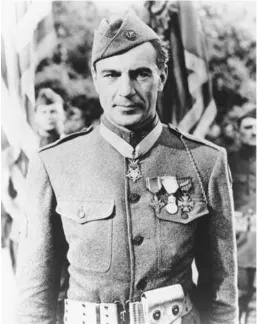
Figure 1: Sergeant York (1941), Warner Brothers ... 20
Figure 2: Sgt. Stryker in the Sands of Iwo Jima (1949), Republic Pictures ... 31
Figure 3: Col. Kirby in The Green Berets (1968), Batjac Productions ... 38
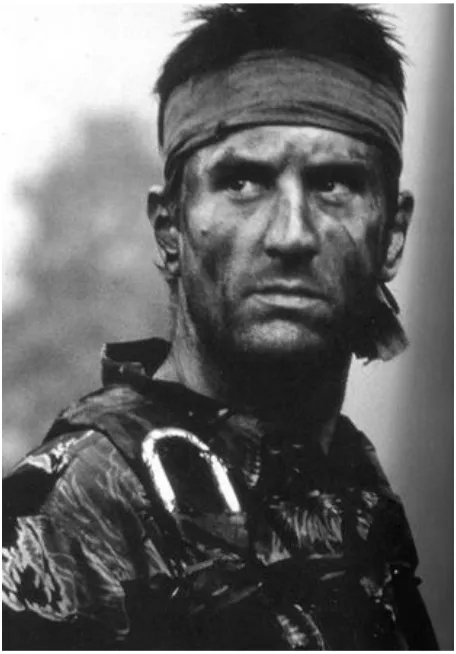
Figure 4: Mike in The Deer Hunter (1978), Universal Pictures ... 45
Figure 5: John Rambo in First Blood (1982), Orion Pictures ... 52
1 INTRODUCTION
Despite a modest opposition in the United States and a near global rejection of the Bush
administration’s unilateral foreign policies, including a strong anti-war movement in Europe,
very little public debate occurred in the United States prior to the 2003 Iraq War (Cramer 2009,
151; Sheehan 2008, xiii–xv, 214). Any debate that did occur amounted to what Steven Van
Evera terms “non-evaluation”; a debate where those in power seek to direct attention and public
favor towards their position by actively ignoring or suppressing contradictory information and
criticism (in Kaufmann 2004, 6). As Richard Jackson observes, the Bush administration
successfully controlled the debate through a concerted effort to “deny, deconstruct, and
delegitimize” oppositional narratives of the war (Jackson 2011, 398). By the time the war
commenced, the American public overwhelmingly favored the war in Iraq (see Eichenberg 2005;
Mueller 2005) and marched impulsively into a devastating war without a national discussion
(Kohn 2008).
The cost of the Global War on Terror has been drastic. The wars in Iraq and Afghanistan
killed over 6,800 U.S. military personnel and wounded another 32,000 (Deer 2016). By 2016,
there were nearly 1 million disability claims filled with the Department of Veterans Affairs (Deer
2016). These numbers, however, pale in comparison to the effects the two wars have had on Iraqi
and Afghani citizens. There have been at least 210,000 confirmed civilian deaths in both war
zones (Deer 2016). In the years since the 2003, the United States military has expanded
exponentially. In the last years of the Bush era, the United States was spending upwards of $600
billion annually to support a military infrastructure that spanned the globe (Boggs and Pollard
2008, 566). The promise of hope and change that lead Barack Obama into the Whitehouse had
nearly half of total military spending across the globe (O’Connell 2012). Despite this exorbitant
spending, in the 2012 presidential campaign, both Obama and his Republican challenger Mitt
Romney called for an increase in the military budget (O’Connell 2012). As Aaron O’Connell
points out, the US military has become the “third-rail” of American politics (O’Connell 2012).
The costs of permanent war in the United States, both in material and human terms, is
especially problematic considering it is now clear that the Bush administration’s campaign to
garner public support for the war in Iraq was intentionally based on disinformation and
over-inflated threat assessments (see Kaufmann 2004; Massing 2004). More troubling, we now know
the information needed to debunk the administration’s case for war was present at that time
(Cramer 2007, 2009; Kaufmann 2004). In light of these revelations, as Robert Gilpin rightly
asserts, the toll of war should weigh “heavily on the conscience of every American” (Gilpin
2005, 5). Yet the question remains: why did politicians, the media, and, perhaps more
importantly, the American public, not actively oppose the Bush administration. Indeed, not only
was there a remarkable lack of opposition but, despite the collapse of the administration’s
narrative that Iraq posed a clear and present danger to the security of the United States, the
administration was re-elected to a second term in 2004.
Janet Cramer argues any opposition to the 2003 Iraq War was effectively silenced by two
norms of “patriotic” behavior that emerged during the Cold War (Cramer 2007). As American
culture became increasingly militarized as a result of a collective fear over the threat of the
Soviet Union and communism, the American public came to accept a strong military and
deference of war powers to the presidency as a necessary means to maintain national security
(Cramer 2007, 490–91). In the process of legitimizing the mobilization for war in 2003, the Bush
War era norms of patriotic behavior (Jackson 2011). As a result, those that opposed the call for
militarization risked being labeled “unpatriotic, disloyal, divisive, and naïve” (Jackson 2011,
398). Thus, in Cramer’s view, opposition to the war was silenced and discredited by what she
terms militarized patriotism.
Militarized patriotism is an important conceptual framework to interrogate everyday
cultural practices that may not directly relate to militaristic beliefs and attitudes. Militarized
patriotism speaks to processes of social militarization that normalize the military and war to the
point that even the most resolute anti-military activist may inadvertently be contributing to
processes of militarization by performing a patriotic script. I believe militarized patriotism has
taken on a renewed significance in our current political climate. Like previous election cycles,
the 2016 election was marked by endless expressions of support and devotion to the military.
Both sides of the aisle attempted to exert their loyalty to the military while calling into question
the other’s patriotic motives. In the wake of the election, President Trump surrounded himself
with generals and veterans to symbolize his support for the troops. At the same time, Trump’s
recent national security policy calls for a return to Cold War methods and military posturing,
including revamping the US nuclear arsenal (National Security & Defense 2018). Likewise, the
president’s recent attacks on black athletes who exercise a constitutional right to protest by
kneeling during the national anthem calls into question the meaning of patriotism and what a
citizen’s civic duty is to those who fight for “freedom and democracy.” This leads me to ask, in a
society defined by permanent war, has the spectacle of honoring the soldier become a new form
of militarized patriotic behavior?
The purpose of this essay is to expand our understanding of militarized patriotism by
behavior. In doing so, this essay seeks to address a key gap in Cramer’s conceptualization;
namely, how militarized patriotism endured both the popular rejection of the Vietnam War
during the 1960s as well as the end of the Cold War in the late 1990s. Thus, to broaden Cramer’s
concept, this essay asks: how has militarized patriotism remained a dominant fixture within
American culture despite changes in international and domestic conditions?
Historically, the cultural practice of honoring the men and women who serve in the
military has been a core component of patriotic expression. However, I argue that following the
Vietnam War, this cultural practice turned into a new norm of patriotic behavior, marked by
what Andrew Bacevich refers to as the “romanticized view of soldiers,” where the soldier comes
to symbolize the strength and well-being of the national identity (in Kohn 2008, 193; also
Bacevich 2013, 2). It was this transformation that allowed militarized patriotism to remain a key
component within American culture. In order to describe how this process occurs, this essay
analyzes the cultural processes that construct and reinforce new patriotic norms in times of crisis.
In particular, I interpret Hollywood’s portrayal of the soldier in war films in order to reveal how
the image of the soldier functions to construct appropriate forms of patriotic behavior within
American culture.
This essay proceeds as follows. In the first section, I review the relevant literature in
which militarized patriotism is situated and establish my theoretical argument. The second
section explores how variations in the image of the soldier in Sergeant York (1941) and The
Sands of Iwo Jima (1949) create new forms of patriotic behavior specific to the crises of World
War II and the Cold War. In the third section, I discuss how the Vietnam War creates a crisis of
patriotic idealism, which in turn leads to the cultural rejection of the image of the soldier in John
Hunter (1979), First Blood (1982), and Saving Private Ryan (1998) allow the practice of
honoring the soldier to be consolidated in American culture by reframing the image of the
wounded soldier. It is through this process that honoring the soldier comes into being as an
enforced norm of militarized patriotism.
2 LITERATURE REVIEW
2.1 Patriotism
The use of national artifacts are integral to the imagining of the political community (see
Anderson 2006; Hobsbawm and Ranger 1983). However, national artifacts are not just
motionless markers of a territorially bounded sovereign nation-state, they are active objects that
destroy, construct, demarcate, and give meaning to boundaries, internal and external, real or
imaginary. National artifacts are the symbolic mechanism through which individuals feel a
connection to the nation and “the people.” National artifacts elicit feelings of belonging, of place,
of common purpose. They are also the devices through which the political community is not only
imagined but also fought for and defended. “For the nation to remain cohesive,” Ryan Watson
contends, “members of different generations must feel obliged to fight and die for the nation”
(2007, 4). Patriotism, or the feeling of love and devotion to one’s country (Adorno et al. 1950;
Viroli 1995), materializes through a positive emotional attachment to national artifacts
(Kosterman and Feshbach 1989). Individuals feel patriotic when they interact with national
artifacts. They elicit feelings of solidarity and commitment to the nation, its institutions, and the
larger political community.
Following the attacks on September 11, 2001, the United States experienced a way of
on patriotism within the Academy. Much of this scholarship addresses the long-standing debate
over what patriotism is and whether or not it is a positive or negative phenomenon. For example,
numerous scholars have explored the relationship between national artifacts and patriotism (for
example Butz, Plant, and Doerr 2007; Coryn, Beale, and Myers 2004; Ferguson and Hassin
2007; Hassin et al. 2007; Huddy and Khatib 2007; Skitka 2005). Others debate the virtuousness
and moral significance of patriotism (for example Brubaker 2004; Calhoun 2002; Gomberg
1990; Laborde 2002). Outstanding scholarship has focused on the negative consequences of
ultrapatriotic landscapes. For example, a number of scholars argue the heightened patriotic mood
following 9/11 legitimized the Global War on Terrorism (Birkenstein, Froula, and Randell 2010;
Brewer 2011; Butterworth and Moskal 2009; Dittmer 2005; Falk 2013a; Kellner 2004).
Likewise, some argue patriotism justified the passage of the 2001 Patriot Act, the establishment
of the Homeland Security apparatus, and the substantial curtailment of civil liberties and
increased surveillance of the citizenry (Coy, Maney, and Woehrle 2003; Cramer 2009; Kellner
2004, 2015).
Much of this work aligns with the historical perspective that there are two forms of
patriotism; a “genuine” democratic patriotism and a nationalist “blind patriotism.” Genuine
patriotism is believed to be a necessary requirement to a well-ordered democracy by nurturing
feelings of solidarity, a sense of a unified national identity, and a belief in institutions and shared
responsibility (Adorno et al. 1950; Nathanson 1989; Skocpol 2002). Blind patriotism, on the
other hand, maintains the belief that the “Nation” is superior to other nations and should be
dominant (Adorno et al. 1950, 107; Kosterman and Feshbach 1989, 261; Schatz, Staub, and
Lavine 1999). Therefore, blind patriotism is associated with increased intolerance and prejudice
“authoritarian values” (Li and Brewer 2004, 728). “The patriot as nationalist,” cautioned Falk,
“does not question the rightness of the cause pursued by his or her government, nor the legality
and morality of the means to achieve national objectives in times of war” (Falk 2013b, 203).
Valuable as these debates may be, they often overlook the fact that to be patriotic, one must act
patriotic.
2.2 Militarized Patriotism
In analyzing the lack of congressional deliberation leading up to the 2003 invasion of
Iraq, Janet Cramer makes a novel contribution to the study of patriotism. Writing in “Militarized
Patriotism: Why the U.S. Marketplace of Ideas Failed Before the Iraq War”, Cramer argues
convincingly that the lack of public deliberation can be attributed the “powerful silencing effect”
of what she refers to as “militarized patriotism” (2007, 490–91). For Cramer, militarized
patriotism is the mechanism that enforces two norms of appropriate patriotic behavior: the
support for a strong military and deference of war powers to the Executive Branch (2007, n. 12).
Militarized patriotism forces political actors to perform these norms of behavior in order to avoid
being labeled unpatriotic or disloyal. Militarized patriotism is not a new form of patriotism that
emerged following 9/11. Instead, it is a deformation of a previous form of genuine patriotism
that occurred as a result of the militarization of political culture during the Cold War. Put another
way, the norms of behavior enforced by militarized patriotism emerged in response to the
collective fear of the Soviet Union and the global threat of communism (Cramer 2007, 495). The
consolidation of these norms of behavior within US political culture created new rules of the
game where it was deemed “too politically risky” for political actors to appear “weak” on
cultural script created from a specific set of historical conditions that affect the behavior of
contemporary political actors.
Militarized patriotism is a valuable conceptual framework to interrogate alternative forms
of patriotic behavior today. By framing militarized patriotism as a cultural performance, Cramer
is asking the important question of how patriotism functions rather than more common
approaches that ask what it is (aggregate of ideas, beliefs, and attitudes) or whether it is a
positive or negative phenomenon (good patriotism versus bad nationalism). In Cramer’s
formulation, militarized patriotism is a repressive mechanism. It does not inspire, as is
commonly accepted, but forces individuals to act according to a consensus on what is and is not
appropriate patriotic behavior. By conceptualizing militarized patriotism as a repressive
mechanism, Cramer is challenging traditional approaches to political culture. By recognizing that
militarized patriotism may not be easily associated with shared beliefs, ideas, and political
orientations, Cramer is arguing that the examination of aggregate properties typically may not
reveal the full extent to which militarized patriotism affects culture. Moreover, against traditional
constructivist arguments, militarized patriotism does not necessarily constitute a shared
world-view (for example Duffield 1999; Farrell 1998; Katzenstein 1996; Kier 1996; Sheehan 2008).
Rather, Cramer observes that individual actors may not possess militaristic preferences, attitudes
or a shared world-view, nevertheless they are compelled to act within the prescribed script for
fear of negative consequences (2007, 492). While it could be argued that these individuals were
acting according to their own rational interests, Cramer’s point is the opposite. Because one of
the foundational tenants of a well-ordered democracy is open and public deliberation, these
actors are actually operating against their long-term interests by weakening the democratic
Furthermore, militarized patriotism reveals the significant role that patriotic behavior
plays in processes of militarization. In traditional political science research, militarization is
understood as the extraction and distribution of labor and resources to the military (Lutz 2002).
However, militarized patriotism speaks to the social and cultural process through which civil
society is organized for war and violence (Geyer 1989). Cynthia Enloe defines social
militarization as the complex multi-layered processes through which society is organized for
violence in ways that are not easily identifiable with the allocation of resources or the material
mobilization for war (see 2000, 2010, 2014). Numerous scholars have demonstrated how social
militarization functions through the use and manipulation of non-military images, discourses,
and symbolic languages in ways that still “glorify and legitimate” the military (Lutz 2002, 724;
see also Walker 1987; Wilson 2000; Giroux 2003; Schulzke 2012; Enloe 2010). Catherine Lutz
adds that social militarization functions through the “less visible deformation of human potential
into hierarchies of race, class, gender, and sexuality” (2002, 723). For Linda ÅHäll, social
militarization is the “subtle process of the normalization of a militarized society” (2015, 68).
Davies and Philpot suggest that social militarization is intimately connected to “abstract”
meanings of citizenship and patriotism (2012, 49). Indeed, patriotic sentiment reaches its peak
when states militarize and wage war (O’Leary and Platt 2001). In my view, militarized
patriotism speaks to a broader phenomenon inherent to social militarization, specifically, the
construction and maintenance of a permanent state of war. This is to say; militarized patriotism
addresses the puzzle of why some states do not experience a period of de-militarization at the
conclusion of war or conflict (Kosterman and Feshbach 1989). However, Cramer does not
2.3 Culture and the Endurance of Militarized Patriotism
As Steven Johnston points out, any dominant social and political order will always create
feelings of love and devotion within the social body as long as that order is deemed just (2002).
Patriotism, for Johnston, is a specific language deployed by the dominant social forces to address
a specific crisis (Johnston 2002). Furthermore, patriotism operates through the belief that
individuals can correct the crisis as long as they act according to the prescribed patriotic script
(Johnston 2002). Thus, the type of patriotic script, that is, what distinguishes appropriate forms
of patriotic behavior, is determined by the nature of the crisis. In Stuart Hall’s formulation, a
crisis is an opportunity to transform the status quo that arises when there is a disruption in the
“normal” functioning of the governing economic, social, cultural order (2002, 229). The normal
functioning of the state in times of war and conflict is to militarize; that is, to extract resources
and labor from the social body to ensure the survival of the state. War, by its very nature,
challenges the stability of the dominant social and political order. It also accentuates and
energizes the social and cultural tensions and contradictions within society. New ideas,
discourses, and rationalities emerge from this instability to challenge the dominant ideas of the
ruling elite. The tension between pacifist-isolationist and interventionist discourse is a notable
example. Thus, to maintain a legitimate claim to the monopoly of coercive power (Weber 1947),
the ruling elite seeks to maintain its dominant position in society through popular consent.
Patriotism is a useful tool to maintain consent because it reifies the "common-sense"
understanding that the state, its institutions, and the military are necessary for the protection of
society. Thus, I argue, militarized patriotism occurs when the struggle between two competing
groups challenges the state’s ability to militarize. When a crisis occurs, American culture is the
enforced. This process allows militarized patriotism to endure despite changes in domestic and
international conditions.
Following Douglas Kellner and Meenakshi Gigi Durham, I understand culture as “a set of
discourses, stories, images, spectacles, and varying cultural forms and practices that generate
meaning, identities, and political effects” (2009, xiv). From this perspective, culture is the
production and consumption of everyday artifacts and practices: texts, art, film, theater, popular
music, and dance. Culture also involves less visible forms of ritualized behavior such as
shopping, eating at a fast-food restaurant, gathering in a public park, or going to a nightclub. The
consumption of these cultural artifacts and practices allow individuals to “see and understand”
the world around them and internalize their position within the larger political community
(Durham and Kellner 2009, xiv). For this essay, I argue that the transformation of militarized
patriotism can be interpreted by reading its constituent artifacts and practices situated within
“historically specific situations” and “the social relations of production and reception in which
culture is produced” (Durham and Kellner 2009, xxi). In doing so, such an analysis will
illuminate how changes in patriotic artifacts reflect or reproduce alternative forms of patriotic
behavior (2009, xxi). As my primary argument is that changes in historical conditions gave rise
to the patriotic norm of “supporting the troops”, the specific patriotic artifact this essay analyzes
is the image of the soldier in popular culture.
2.4 Hollywood and the Image of the Soldier
Hollywood has long been an essential tool for United States militarization. Boggs and
Pollard argue the United States lacks an “official” propaganda machine and therefore Hollywood
government influence in the entertainment industry, writes Burston, “is as old as the movie
business itself” (2003, 68). According to John Garofolo, the relationship between American
cinema and Hollywood can be traced to the “introduction of motion picture technology in the
late nineteenth century” (2016, 58). “Ever since the 1920s,” writes Shaw, “the US armed services
had shown themselves to be more than willing to offer logistical help with film productions that
portrayed their activities positively” (2007, 201). The relationship was mutually beneficial;
“movie producers got access to military bases and equipment, while the military benefited from
free advertising” (Shaw 2007, 201). Indeed, Hollywood’s relationship with the military, security,
and intelligence apparatuses is well documented (for example Brewer 2011; DeBauche 1997;
Kumar and Kundnani 2014). Furthermore, many scholars have highlighted how Hollywood has
been a primary mechanism through which citizens internalize and understand patriotism and
processes of militarization (for example Birkenstein, Froula, and Randell 2010; Koppes and
Black 1990; Pollard 2002; Wetta and Novelli 2003).
One of the primary genres through which Hollywood has contributed to processes of
militarization is the war film. As Brewer argues, the government uses war films to disseminate
“all the rational and emotional reasons why Americans must fight” (2011, 6–7). According to
Patrick Deer, the 1940s war film allowed the government to rally support for a policy of “total
war against fascism” by shifting the narrative from an isolated geographically defined conflict to
a “global war of space and movement” (2016, 51). The war film is also a powerful marketing
tool for the military. Catherine Lutz, for example, argues that although the Defense Department
has a $2 billion annual recruitment budget, it also benefits from films like The Sands of Iwo Jima
(1949) and Black Hawk Down (2001) to promote military service (2002, 724). As one senior
excitement and importance of military life, they can help generate a favorable atmosphere for
recruiting” (in Kumar and Kundnani 2014, 74). Most importantly, the war film affects positive
attitudes and beliefs about war, the military, and patriotism (Pollard 2002). Furthermore, through
the “symbolic glorification of the military,” Patrick Regan argues, the war film ability to increase
popular support for the military becomes a significant hurdle for arms reduction and
demilitarization (1994a, 116, see also 1994b).
John Garofolo argues, the war film is the “ideal mechanism to convey the warrior
ideology to a largely non-warrior populace” (2016, 56). “The motion picture,” he adds, “has been
the preferred medium to encourage, support, create, and properly indoctrinate a nation’s warrior
culture when needed” (Garofolo 2016, 58). War films construct popular support for the military
or convey the appropriate warrior image by replicating similar plots: “heroic men encountered
sinister, semi-human antagonists opposed to freedom and democracy” (Pollard 2002, 123).
Likewise, these films present soldiers as noble, virtuous, and “glorify wartime exploits while
embellishing the military experience itself” (Pollard 2002, 121,124). Even those films, as Boggs
and Pollard point out, that “deal only peripherally with military combat” still rely on traditional
military tropes: “male heroism, battlefield camaraderie, superpatriotism, violent struggle of good
against evil, noble US objectives, and glorification of high-tech warfare” (2008, 567–68).
The image of the soldier is a specific cultural production associated with the war film. In
the 20th century, it was deployed in patriotic fashion to generate camaraderie, national unity, and
remembrance in times of war. However, as the Interwar and Vietnam eras demonstrate, the
image of the soldier has also been used to rouse mistrust, doubt, and raise questions over the
American military tradition. In this sense, the image of the soldier is not a neutral, timeless
Hobsbawm, is “largely fictitious” (1983, 2). Rather, the image of the soldier belongs to the
whole series of “invented” practices and discourses through which, by way of repetition, the
public is taught appropriate values and norms of behavior (Hobsbawm and Ranger 1983, 2). The
image of the soldier, then, is reactionary; it a response to “novel situations which take the form
of reference to old situations, or which establish their own past by quasi-obligatory repetition”
(Hobsbawm and Ranger 1983, 2). Samuel Huntington argues the inclusion of positive images of
soldiers in popular culture is the best way to resolve the security crisis inherent to liberalism
(2002, 457). Images that portray the military in a positive frame, he argues, leads to a more
“conservative” political culture favorable and sympathetic to the military. Further, positive
images of the soldier increase both cultural acceptance of the independent role of the military in
society and military professionalism; both cornerstones to his normative theory of objective
civilian control (Huntington 2002). Thus, the positive image of the soldier is an important tool
for closing the perceived “gap” between civilian and military cultures (for example Collins and
Holsti 1999; Feaver and Kohn 2001; Holsti 1998). Today, literary images of soldiers fill the
pages of countless mass-market publications, from non-fiction accounts of America’s military
history to popular warrior memoirs (Lutz 2002). Television channels like the History Channel
allow for the continuous recirculation of popular images of World War II heroes (Wetta and
Novelli 2003, 866). In sum, then, the image of the soldier has become a ubiquitous feature in
American culture. So much so that their role as the “nurturing soil” from which processes of
2.5 The Power of Images
The visual is becoming increasingly recognized as a legitimate object of analysis. In an
era of on-demand images, global media networks, the Internet, social media, and smartphones,
James Der Derian suggests, “the realities of international politics increasingly are generated,
mediated, simulated by new digital means of reproduction” (2000, 779). In our current
conjuncture, the public’s understanding of war, terrorism, famine, natural disasters, and any
number of major political events, as Roland Bleiker rightly points out, is always determined by
“how images dramatically depict the events…and how politicians and the public respond to these
depictions” (2015, 873). In The Politics of Pictures, John Hartley argues that the public domain
no longer exists as a physical place “you can literally enter” (2017, 1). Rather, the modern
“public” exists in a mediated form; “the popular media of the modern period” (Hartley 2017, 1).
As a result, images are much more embedded in everyday life than traditional politics has ever
been (Hartley 2017, 3). Images are, according to Hartley, “the place where collective social
action, individual identity and symbolic imagination meet–the nexus between culture and
politics” (2017, 3). Accordingly, Hartley suggests a new form of political analysis is necessary if
we are to understand contemporary politics (2017, 1). Hartley argues, “it is necessary to ask what
institutions and what discourses are engaged in making the mediated representations of the
public domain, what the resulting picture of the public looks like, and who speaks for–and to–the
public so created” (2017, 2).
In recent years, the study of images has become an important component for social
militarization and security studies. In particular, Lene Hansen and Michael C. Williams have
called for a greater emphasis on how the image functions within securitizing discourse(for
image a powerful medium through which an object is securitized. This is to say, images allow
audiences to perceive and comprehend the construction of an existential threat (the image of a
terrorist for example) against a referent object (e.g. an image of a child). By allowing the
audience to internalize the reality of a threat, the image strengthens the ability of a securitizing
actor (usually a government or a politician) to make a legitimate claim to the use of extraordinary
measures–excess militarization, violation of civil liberties, illegal detention, drone strikes etc.–to
confront the threat (for a complete discussion on Securitization Theory see Buzan, Wæver, and
De Wilde 1998). Thus, when we speak of militarization we are always discussing a response to a
securitizing discourse. However, for this purpose of this essay, what interests me is not the
construction of the threat that legitimizes processes of militarization. Rather, I am interested in
how the image functions to establish norms of behavior that actors perform regardless if they
accept the reality of the securitizing act.
So what makes images so powerful? First, the image allows the audience to identify the
subject being portrayed easily. As Nancy Armstrong argues, identification occurs through the
visual recognition of physical objects, actions, poses, gestures, and landscapes (in Briggs 2003).
On the other hand, identification entails not just the visual representation of the object but also a
myriad of emotions, memories, and historical contexts that underlie the image itself. Lene
Hansen suggests the image also allows the audience to identify with the subject being portrayed
by allowing for the “emotionally charged ‘drawing in’ of the spectator” (2011, 56). Second,
images are powerful because they make a claim to authenticity. Since antiquity, the authenticity
of the visual has been fundamental to politics (Hartley 2017, 5). The language of visualization, of
“seeing,” of transparency, of “exposing” the truth, is foundational to our belief in a well-ordered
writes, “so ingrained is the idea that public affairs are visible that metaphors of light and sight
suffuse political rhetoric, acting as guarantors for the credibility of the representation (2017, 6).
According to Gillian Rose, the image claims authenticity because we, as the audience, assume it
is a truthful “snapshot” of reality (2016, 27). Third, the image is powerful because of its
circulability (Hansen 2011). Circulability refers to the material and technological conditions
through which the image is reproduced and the speed at which it is transmitted to the public.
While technological advancements since the birth of television have increased the speed of
transmission, the last 20 years have seen the proliferation of new media technologies that have
altered both the way we consume the image and how the image is produced. Facebook and
Youtube, among others, have replaced traditional media by allowing anyone with an Internet
connection and a camera to produce and circulate images. Thus, on the first level, circulability
refers to the accessibility of the image through its consumption. On the second level, circulability
refers to the technology through which the image is produced. Circulability also refers to the
image’s translatability. “The main distinctiveness of the visual,” writes Hansen, “resides in the
belief in its capacity to transgress linguistic boundaries–that visuals can be ‘read’ by all” (2011,
57). Hence the image creates what Hansen terms the “possibility of seeing” (2011, 57).
There are methodological challenges to the study of images. "Images," writes Bleiker,
“do not speak for themselves. They need to be interpreted” (2015, 875). Likewise, W.J.T Mitchel
argues, “Images are not words. It is not clear that they actually ‘say’ anything” (2005, 140). The
image may portray an event, a person, or a place but, according to Mitchell, “the verbal message
or speech act has to be brought to them by the spectator, who projects a voice into the image,
reads a story into it, or deciphers a verbal message” (2005, 140). Therefore, the challenge resides
and ideas of the interpreter as much as those contained within the image itself (Bleiker 2015).
Likewise, although an audience may see the same image, they may not read it the same way as
another audience (Hansen 2011). The image, as David Campbell argues, is read within a specific
historical, political and social context (in Hansen 2011). Likewise, according to Hansen, “the
image never speaks exclusively from within the frame, but is constituted through a larger
intertext” (2011, 55). In my analysis of the image of the soldier, I focus on three elements from
Lene Hansen’s framework for the study of images: analysis of the image itself, its immediate
intertext, and an analysis of the underlying policy discourse (Hansen 2011).
3 MILITARIZED PATRIOTISM AND THE IMAGE OF THE SOLDIER
Throughout the 1930s, American culture was dominated by pacifism and isolationism
(Pollard 2002). As the Versailles Treaty began to fail, many Americans questioned the point of
another European war. Moreover, regardless of what was happening overseas, most Americans
were more concerned with the lingering effects of the Great Depression. As the crisis of fascism
began to unfold in Europe and Asia, many politicians openly argued that World War I was a
disastrous mistake that need not be repeated (Brewer 2011). Instead of another European war,
most isolationists argued the western hemisphere could be defended from Nazi aggression by
constructing a “Fortress America” (Brewer 2011, 91). Others believed the threat of Hitler was
exaggerated. The dominance of this isolationist culture challenged Roosevelt’s authority to
militarize successfully. However, following the rapid land grabs by German, Italy, and Japan the
isolationist position became difficult to sustain. In his public appeal for intervention, President
Roosevelt made continual references to the plight of European citizens, to American’s sense of
Wilson (Steele 1984, 70). Roosevelt also openly attacked the culture of isolationism. In his view,
isolationism was “the helpless nightmare of a people without freedom” (in 1976, 8). Roosevelt
often spoke of the “obvious delusion that we of the United States can safely permit the United
States to become a lone island…in a world dominated by the philosophy of force” (in 1976, 8).
An efficient propaganda machine backed up Roosevelt’s public rhetoric. His supporters on the
radio and television continually lambast isolationist politicians as “disloyal, un-American, Nazi
sympathizers, and ‘Fifth columnists’ or subversives who deliberately paved the way for German
takeover of the United States (Brewer 2011, 94). More than anything else, the president relied on
his supporters in Hollywood to spread the interventionist message.
During the 1930s, American cinema rarely addressed challenging domestic or
international problems (Jacobs 1967). During the troubling years of the Great Depression,
Hollywood provided the necessary escape through light-hearted musicals, comedies, gangster
movies, westerns, and historical dramas (Pollard 2002). When it came to war, most films
reflected the popular mood by avoiding the subject altogether (Pollard 2002). Those films that
dealt with the subject of war focused on the horrors and atrocities of warfare in a definitive
anti-war stance. The isolationist culture in Hollywood, however, was weakened by the escalating
situation in Europe and the Pacific (Pollard 2002). By the late 1930s, many filmmakers were
encouraged by Roosevelt’s public rhetoric and began to put out films meant to enlighten the
public on the dangers of Fascism (Brewer 2011; Jacobs 1967). These films were crucial for
increasing public awareness of the threat of fascism but they did little to promote
interventionism. What Roosevelt’s interventionist cause needed was a new image of the solder to
Figure 1: Sergeant York (1941), Warner Brothers
3.1 Constructing Patriotism through the Image of the Soldier
Sergeant York (1941) is the perfect cinematic representation of Roosevelt’s
interventionism. Gary Cooper plays the eponymous young Tennessee man who, although at first
objects to being drafted to fight in World War I on religious grounds, goes on to become an
American hero during the Argonne offensive of 1918 when he singlehandedly kills 20 German
soldiers and secures another 132 prisoners. The film opens in a small rural chapel where a
preacher is attempting to give the daily sermon. He keeps getting interrupted as a group of young
men outside are shooting their pistols and making much noise. One of the men is the young
Alvin York. He is well known in the village for his heavy drinking and hell raising. In the local
ain’t done much thinking on it…It ain’t in our corner, no how” (Hawks 1941). This is Hawk’s
first attempt to establish the isolationist position of the film. When Alvin meets Gracie, he
decides to clean up his act and get a piece of “bottomland” so that he can marry the young
woman. Despite his attempts at making enough money, he ultimately fails. After a brief return to
his rebellious past, he decides to “get religion.” As a result, his life begins to turn around, and he
grows closer to Gracie. When the United States enters World War I, York refuses to register for
the draft proclaiming, “War is killing and the book’s against killing, so war is against the book”
(Hawks 1941). Only after his pastor tells him he can register as a conscientious objector does he
do so. However, his status is rejected, and he is soon drafted. York again refuses, asking the
pastor “what kind of law is it that says a man has to go against the book and its teaching” (Hawks
1941). Persuaded that it is the right thing to do, York reluctantly decides to go. Here we see two
important movements to reify the authority of the state. First, the audience is told that rejecting
the war itself is acceptable as long as you do it within the prescribed way. Second, with the
pastor convincing York, we are told that the laws of the nation transcend those of God. In
training, York excels and is quickly promoted. However, again, he refuses the promotion due to
his religious beliefs. His superior officer tries to convince York that the fight for Freedom is a
noble cause and sacrifices are necessary to maintain that freedom. York is given a book on the
history of the United States and a furlough to travel back to Tennessee to think over the offer.
Only after reading Matthew 22:21, “Render unto Caesar the things that are Caesar’s; and to God
the things that are God’s,” does York come to the revelation that World War I is a good cause.
When he returns to his unit, he is shipped off to Europe where he achieves his heroic status.
When York returns from Europe, he is offered multiple offers for films and product
he needs to achieve his ultimate goal: to win Gracie’s hand in marriage. Nevertheless, he refuses
the offer. In his rejection of profit for his actions, York reaffirms that war is not something to be
profited from: “I ain’t proud of what happened over there. What we did in France was something
we had to do. Some fellows done it ain’t coming back. So, the way I figure, things like that ain’t
for buying and selling” (Hawks 1941). In the end, he returns to Tennessee to reunite with Gracie.
To his surprise, the people of Tennessee have purchased 200 acres of bottomland for him and
Gracie to start their new life.
Sergeant York presents the ideal image of the soldier for the interventionist cause. First,
York reflects what Richard Kohn terms the “prototypical” enlisted man (1981, 554). Dominant
throughout American culture, the prototypical soldier exhibits extraordinary heroism in combat,
achieves a high level of success, and does this, typically, with average skills. In this way, the
prototypical soldier reflects what Richard Schickel views as the “dumb, dutiful decency of the
average American” (in Bayles 2003, 14). For Bosley Crowther, Gary Cooper and cast embody “a
perfect specimen of homo americanus” (1941). In Cooper’s performance, we find the “gaunt,
clumsy yokel, the American hayseed” but also “the proud, industrious, honest, simple citizen
who marches in the forefront of this nation’s ranks” (Crowther 1941). York’s success as an
image of the soldier is not despite his rural upbringing but because of it. As David Lee points
out, “York's pioneer-like skill with a rifle, homespun manner, and fundamentalist piety endeared
him to millions of Americans as a kind of “contemporary ancestor” fresh from the backwoods of
Appalachia” (Lee 2014, x). Finally, York does not fight for glory or honor but out of patriotic
duty to defend freedom and justice. Indeed, despite his achievements, he is reluctant to receive
Second, Sergeant York provides a patriotic script for the transformation from an
isolationist position to interventionism. Importantly, the scripted transition is not a zero-sum
decision between, on the one hand, a position that views war is morally wrong and, on the other,
a position that views war as a moral responsibility to maintain freedom and democracy. The
dualism here is representative of what Samuel Huntington argues is the ambiguous relationship
American’s have always had with war; War is either an “abomination” or a “crusade” (2002,
151). The decision made by York provides another option where, to use Huntington’s words,
“the nation,” embodied by the soldier, is able to “choose peace or war as its interests guided by
justice shall counsel” (2002, 151). As Crowther observes, Sergeant York “put aside his religious
scruples against killing for what he felt was the better good of his country and thus lasting
benefit of mankind” (1941). Thus, through the image of the soldier in Sergeant York, we find a
third way, the logic of the just war. Part of this occurs, as Thomas Doherty suggests, through the
film’s attempt to rewrite World War I as a “reasonable national enterprise” and not the “crazy
slaughterhouse” depicted in classic isolationist war films like All Quiet on the Western Front (in
Bayles 2003, 13). In doing so, York replicates the patriotic call to arms of the Wilson-era by
emphasizing war as a necessary measure to ensure a more peaceful democratic society (Bodnar
2001). By situating the image of the soldier within the just war narrative, York can maintain his
religious convictions while rejecting a total commitment to war.
In sum, then, Sergeant York serves as a patriotic script through which the American
public can make the transition from isolationism to interventionism without sacrificing their core
ideals. More importantly, the image of the soldier in Sergeant York reveals the patriotic norms
that were necessary for the nation to prepare for war. Specifically, Sergeant York constructs an
individualism and personal freedom. However, his freedom and individualism are only valuable
within the context of the greater good. Second, York comes to understand and accept that these
freedoms are only guaranteed by the exchange that occurs between the individual and the
institutions that regulate and maintain freedom. Put another way, York’s freedom is determined
by the nation yet the fate of the nation rests in his hands. Third, York reconciles his religious
views with the acceptance that war is a moral cause and necessary to protect his freedoms.
Moreover, war is necessary so that others may enjoy the same freedoms and benefits from
democracy. These three norms of patriotic behavior are enforced by the film's emphasis on the
“civilizing” conversion that York undergoes to become the ideal liberal soldier. This is to say;
York is constituted through the enforcement of social standards and constraints that transform
him from a reckless, wild “bad boy” to a “respectable civilized man” embodies by the decorated
war veteran (Slocum 2005, 42–43). Moreover, only after he sacrifices part of his individualism
for the greater good does York become a fully constituted civilized man. To be a fully embodied
citizen then is to be a patriotic citizen and accept the liberal tenet that war is a necessary means
to achieve the democratic peace.
Finally, York’s liberal patriotism reflects a romantic attachment and sense of duty to the
ideals of the American Revolution. As the real York stated at the premiere of his cinematic
biography, “if Americans stopped fighting for freedom, ‘then we owe the memory of George
Washington an apology’ because if so, ‘he wasted his time at Valley Forge’” (in Brewer 2011,
92). Sergeant York would go on to inspire a new wave of American patriotism that would help
the Roosevelt administration unite the country against a common enemy (Suid 2002). Likewise,
the image of the soldier constructed throughout the film would go on to be the patriotic model
subjected to the same types of visual cues, narratives, and choreographed action that made
Sergeant York the highest grossing film in 1941 (Suid 2002).
3.2 National Security and the Crisis of the Cold War
The United States emerged from World War II as a new global power. Although there
was a general consensus that the old international system could not be restored, many disagreed
over how the new world order should look and what role the United States should play in it
(Griffith 1979). Again, political discourse began to split between those that advocated for a
return to isolationism and those who sought to maintain intervention. Isolationism was enjoying
a modicum of success by exploiting the war-weariness of the American public. Many
isolationists questioned the Roosevelt administration’s motives for war and the handling of the
war effort. Like Wilson before, there was a growing sense that Roosevelt had manufactured the
attack on Pearl Harbor to justify the United States entry into the war (Nevins 1976).
Interventionism, however, was emboldened by the success of World War II, which, they argued,
was a lesson on the mistakes of isolationism (Boyle 1972). Additionally, interventionism was
strengthened by the aggressive acts of the Soviet Union in post-war Europe and revelations of
Stalin’s atrocities. On March 12, 1947, President Truman consolidated post-war United States
foreign policy–what would ultimately become the status quo for the next four decades–by
stating, “I believe that it must be the policy of the United States to support free peoples who are
resisting attempted subjugation by armed minorities or by outside pressure (Truman 1976, 436).
Truman's new foreign policy of containment marked a fundamental shift from Roosevelt’s
No sooner had the dust settle in the battlefields than the United States embarked on a
period of rapid militarization. Containment led to a global war of position with the United States
and the Soviet Union in a race to fill the power vacuum left by the war. For many in the United
States, global peace required filling the vacuum with the spirit of capitalism, self-determination,
and religious freedom against a rising tide of Soviet-communist ideology (Tindall and Shi 2016).
Likewise, after the Soviet Union entered the nuclear arms race in 1949, politicians and
policymakers came to believe that the threat of nuclear war necessitated quick and decisive
decision-making (Jablonsky 2002). National security interests could no longer afford open
debate (Jablonsky 2002). As Janet Cramer notes, “it was assumed that a president who had the
prerogative to act quickly or make independent, credible threats was necessary for national
security” (2007, 497). At the same time, many politicians, policymakers, and military
professionals believed that the rise of Fascism and the surprise attack on Pearl Harbor
represented a failure in pre-war institutions. This failure, in turn, meant that that United States
was ill prepared to confront new global threats (Jablonsky 2002). To ensure national security, US
military and diplomatic infrastructures were drastically altered to confront the Soviet Union
anywhere in the world (Jablonsky 2002). The National Security Act of 1947 instituted the most
significant expansion of the United States’ war capabilities in 170 years (Jablonsky 2002). By
centralizing the Armed Forces within the newly established Department of Defense, as well as
the creation of the Joint Chiefs and the National Security Council, the National Security Act
amplified the war powers of the Executive Branch exponentially (Jablonsky 2002). Additionally,
through the founding of the Central Intelligence Agency, the National Security Act created the
first peacetime intelligence apparatus (Jablonsky 2002). By 1949, the United States was
US defense budgets had increased to $52.8 billion from $13.7 billion in 1950 (Cramer 2007,
495)
To legitimize post-war militarization, public discourse shifted from “national defense” to
“national security” (O’Brien 2006, 248). According to Edward Pessen, the change in discourse
meant that the government could now legitimize “open-ended commitments and the capabilities
of anticipating and responding to political and military changes anywhere in the world” (in
O’Brien 2006, 248). More importantly, the shift to a national security discourse was an effective
tool to manipulate the public into accepting the drastic alterations that Cold War militarization
would have on American society. The most logical solution to obtain national security was, as
Whitfield observes, to “reduce the options” (1996, 257). Reducing the options required cleansing
public discourse of its progressive roots. National security demanded a “closing of the ranks”
and cultural “homogeneity” in American society (Whitfield 1996, 257). “The American way of
life,” writes Whitfield, “was understood to be singular” (1996, 257). It also necessitated
suppressing public dissent, the restriction of civil liberties, and restraining intellectual and artistic
creativity and independence (Whitfield 1996). Thus, the American post-war political culture was
dominated by a discourse that promoted “authority at the expense of liberty, stability at the
expense of change, and order at the expense of reform” (Whitfield 1996, 257). According to
Whitfield, national security “put liberalism on the defensive” (1996, 256).
National security discourse allowed a new wave of conservatives to gain a foothold in
both politics and culture. In part, the dominance of national security discourse allowed them to
identify and label those that opposed increased security measures as “un-American leftist fringe”
(O’Brien 2006, 249). More effectively, the language of national security allowed them to pursue
media” (O’Brien 2006, 249). Senator McCarthy is, of course, the Cold War bogeyman that still
haunts the public imagination today. However, as Whitfield argues, McCarthyism could not exist
without the “pieties and orthodoxies that were designed to constitute an embattled unity in the
struggle against communism” (1996, 257). “Though intimately involved in curbing liberty,”
writes Whitfield, “the state acted with popular approval and acquiescence; the will of the
majority was not thwarted” (1996, 260).
The national security discourse was able to achieve a level of popular consensus because
it was ambiguous. To be sure, collective fear and anxiety were a driving force behind the
consolidation of the national security discourse. However, as Wittkopf and McCormick argue
convincingly, the “threat of communism” was not a unified idea within American culture (1990,
630). For many American, the idea of the threat of communism was constructed not only through
McCarthyism but also from Roosevelt’s anti-isolationist discourse and attacks on his opposition.
Communism, like fascism before, was an ideological threat with subversive “fifth column”
agents lying in wait in every corner of American life. Anyone, in this context, could be a
communist threat. At the same time, national security discourse constructed the threat of
communism in terms of the material capabilities of the Soviet Union (Wittkopf and McCormick
1990). Reflecting the anxiety over nuclear war, this discourse focused on the ability of Russian
bombs to destroy American cities and Russian military invasion. Although these two aspects are
complementary, the ambiguity of what really was the threat of communism allowed competing,
often contradictory, groups to coalesce around a core belief that communism was bad.
Many public intellectuals, academics, and cultural producers reinforced the national
security discourse within American culture. The Committee on Un-American Activities of the
subversive threat. As the hearings were widely publicized, many Americans listened and
watched as many famous “friendly” personalities testified about the communist threat in
Hollywood (Leab 1984, 62). At the same time, many liberal scholars responded to the material
threat of the Soviet Union by advocating for a conservative movement to protect liberalism. In
1957, for example, Samuel Huntington argued, “conservatism is the intellectual rationale of the
permanent institutional prerequisites of human existence. It is the rational defense of being
against mind, of order against chaos” (1957, 461). He adds, “until the challenge of communism
and the Soviet Union is eliminated or neutralized, a major aim of American liberals must be to
preserve what they have created” (1957, 473). Conservatism’s ideals, for Huntington, “remind
men of the institutional prerequisites of social order. And when these prerequisites are
threatened, conservatism is not only appropriate, it is essential” (1957, 473).
In an era of national security, patriotism and loyalty became a permanent state of being.
More importantly, Cold War patriotism constructed the citizen as the always already combatant
in the struggle against communism (Whitfield 1996, 263). Cold War patriotism, then, demanded
an uncritical “civic enlistment” from the citizen as the front-line soldier in the battle for
information (Whitfield 1996, 262). The citizen’s patriotic duty, then, was to always be on the
lookout for subversives while simultaneously preparing for the impending nuclear war. This
culture of conspiracy and surveillance caused American culture to become increasingly
conformist. In a visit the United States in 1947, Simone de Beauvoir observed, “this country,
once so passionate about individualism, had itself become a nation of sheep; repressing
originality, both in itself and in others; rejecting criticism, measuring value by success, it left
In the first two decades of the Cold War, war films functioned to legitimize the extensive
powers of the government, the extreme militarization, increased surveillance, and project the
new vision of patriotism. Having witnessed the enormous impact Hollywood had on shifting
American culture in favor of the interventionist cause during World War II, in 1949, the Defense
Department established the Motion Picture Production Office to “regulate and facilitate
cooperation between the military and the film industry” (Shaw 2007, 201). According to Shaw,
this allowed Hollywood producers access to “free use of military hardware, official film clips
and actual soldiers” in exchange for “feature films that aided recruitment and enhanced the
military’s public image” (2007, 201). Many of the films during the Cold War took advantage of
this relationship by glorifying and honoring the men who fought the “good war” (Pollard 2002,
125). Films like The Desert Rats (1953), Stalag 17 (1953), To Hell and Back (1955), The Bridge
Over the River Kwai (1957), The Longest Day (1962), and The Great Escape (1963) celebrated
the men who fought and sacrificed for the struggle against a violent and monstrous ideology.
These films shared the same conclusion: the war against communism, like World War II, is a
“noble historical crusade in defense of Western Civilization” (Pollard 2002, 130). However, the
dominant position of the national security discourse in American culture maintained the belief
that success in the fight against communism was not going to be through the same “glorious”
battles that defined World War II. It was going to be a much more difficult battle; a battle that
was to take place not in a distant field but within the community, schools, and the home itself.
Thus, to be prepared for the fight, American culture needed a new patriotic commitment and a
Figure 2: Sgt. Stryker in the Sands of Iwo Jima (1949), Republic Pictures
3.3 Militarized Patriotism and the Conservative Soldier
John Wayne is an American icon. Notably, he is a conservative icon. As James Campbell
writes, Wayne has achieved a level of conservative deification through his “embodiment of
authority, masculinity, love of country, and other allegedly endangered American virtues” (2000,
466). “Not until John Wayne created the role of Sergeant Stryker in Sands of Iwo Jima,” writes
Lawrence Suid, “and then merged his personality with the character did Americans find a man
who personified the ideal soldier” (2002, 114). In The Sands of Iwo Jima (1949), Wayne portrays
the hard-edged Marine Sergeant John Stryker who leads a diverse group of Marines in the
Pacific theater of World War II. His unit reflects the diversity of American history with each
role in the film is to turn the soft progressive civilians in his unit into hardened conservative
warriors. His methods are questionable, and his soldiers despise him. Nevertheless, he is
committed. “Before I’m through with you,” Stryker tells his unit, “you’re gonna move like one
man and think like one man. If you don’t, you’ll be dead” (Dwan 1949). Indeed Stryker reflects
the perfect image of American masculinity. His impressive physicality is evident when Stryker
single-handedly takes out a Japanese bunker on the Tarawa Atoll. At the same time, he is well
aware of his responsibility to his Marines and the chain of command. When one of his Marines is
wounded and cries out for help, Stryker refuses a Sergeant York display of bravery, knowing
from experience that the enemy could be waiting to attack. Furthermore, attempting a rescue
would violate his orders. Thus, his physicality is matched by a high degree of stoicism and
restraint, even to the point of displaying a willingness to shoot another member of his unit for
violating orders. According to Josiah Bunting, Wayne’s appeal, reflected in his portrayal of
Stryker, is his “anti-intellectual Archie Bunker temperament” (in Suid 2002, 133).
Intellectualism and self-determination are what get soldiers killed. War is hell and demands strict
adherence to authority and rigged toughness. Thus the image of the soldier we find in Stryker is
one that accepts violence as not only necessary when in war but ultimately triumphing in any
situation to solve problems. Violent men, writes Suid, “cut through the Gordian know to get to
the heart of the problem” (2002, 133). John Wayne as Sergeant Stryker is militarized patriotism
at its finest.
The action of the film revolves around what Lewis Jacobs refers to as the “our brothers in
arms” narrative (1967, 16). The unit, Martha Bayles adds, always serves as a synecdoche for
society as a whole (2003). According to Slocum, “because the combat platoon symbolized the
social body” (2005, 46). During World War II, the unit in war films stood in for a American
progressive society where the soldiers’ interactions embodied the “strengths of democracy”
(Bayles 2003, 14). The unit is typically portrayed as hierarchical. However, to signify freedom
and self-determination the structure of the unit is not rigid. Soldiers in the brother-in-arms script
are not, to borrow from Chaplin’s infamous The Great Dictator speech, “machine men with
machine minds and machine hearts!” (1940). The soldier is allowed the space to function
independently, “to seize the initiative, improvise, and,” writes Bayles, “when it comes to making
‘the ultimate sacrifice,’ do so willingly, because he believes without being coerced that the cause
for which he is dying is his own dignity and freedom” (2003, 14–15). The soldier-in-arms
formula functioned in Sergeant York to reify the liberal ideals of freedom and democracy. In
Sands of Iwo Jima, the unit is the mechanism through which Wayne’s conservative Cold War
vision of patriotism is transmitted; recognition and respect for authority, rules and the law, a
singular homogenized vision of America, and the unconditional support of total war under a state
of emergency.
In Sands of Iwo Jima, the brother-in-arms narrative facilitates the conversion of Peter
Conway (John Agar). Conway is an arrogant college student (read liberal elite) whose deceased
father was a former commanding officer of Stryker. He detests Stryker for both his resemblance
to his father and his harsh parental leadership. However, in seeing his bravery in action and after
Stryker saves his life in a training accident, Conway’s feelings towards Stryker begin to change.
When the unit is sent to fight on Iwo Jima, the fighting is intense, and many of the men in the
unit are killed. Conway saves Stryker’s life and confesses his new found respect for his, telling
him he will name his child after the sergeant. Once the remaining men surmount the top of