Interlocked Molecules using Olefin Metathesis
Thesis by Erin Nicole Guidry
In Partial Fulfullment of the Requirements for the Degree of
Doctor of Philosophy
California Institute of Technology Pasadena, California
2008
ii
iv Acknowledgements
First, I would like to thank my best friend and future husband Ian Mangion, whose love and support have sustained me these past years. Ian has enriched my graduate school experience in countless ways, and I feel so privileged to begin this new stage of my life with him by my side.
I owe my largest debt of gratitude to my parents, especially my mom who taught me the value and joy of learning. I would also like to thank the rest of my family for their unwavering support and for helping me keep graduate school in perspective.
I would like to thank Bob for being a wonderful research advisor, for allowing me space to explore projects that I find interesting, for his enthusiasm, and especially for providing such a wonderful research environment for me to work in. It has been a pleasure to get to know Bob as both a scientist and a person and he has been a role model for me both inside and outside the lab. I would also like to thank Bob for the annual Grubbs’ group camping trip. These trips were some of my favorite times in graduate school, and I am so glad that this tradition is still going strong. I would like to thank my ever evolving committee of Professor MacMillan, Professor Jim Heath, Professor Peter Dervan and Professor David Tirrell for their advice and comments during my graduate career. I would especially like to thank Professor Tirrell for all his thoughtful advice during the MURI meetings and for his support in finding a job.
appreciate him for sharing his knowledge of all things supramolecular and for being a wonderful collaborator. I would also like to thank Professor Stoddart’s and Professor Tirrell’s research groups for all their great advice and rousing discussions during our MURI meetings.
I would like to thank the reverend, Dr. Stuart Cantrill (whose name I still do not pronounce correctly) for introducing me to the fun and sometimes mysterious world of ammonium binding. I would also like to thank Stu for teaching me countless chemdraw tips, for his superb editing and for cricket.
I would like to thank Professor Dan O’Leary for being a great coworker and for introducing me to the 21 choices in Claremont (along with Maggie, Francis and Katie).
I would like to thank Professor Wayne Steinmetz for introducing me to 2D-DOSY experiments and patiently pouring over all the confusing data I generated. His encyclopedic knowledge of the outdoors is impressive. I wish him all the best in his upcoming retirement.
vi chemistry was inspiring. I would also like to thank Chris for introducing me to the music of Necko Case and to a recipe for the best macaroni and cheese I have ever tasted. I am sure Chris is going to make a fantastic research advisor and father, and I wish him luck as he begins these new journeys. Last, but certainly not least, I would like to thank Jean Li for becoming the newest member of the bay. Evidently Jean couldn’t resist repeating all the fun times we had together during her days as a SURF. I would like to thank Jean Li for being such a fun SURF to spend the summer with and for her patience as I tried to understand what you really need to do to be a good mentor. I have thoroughly enjoy my last few months in the bay with Jean and am continuously amazed by her energy and enthusiasm and am sure that I will be seeing great things from her in the future.
would also like to thank Paul for being an absolute angel the past few months helping me with everything from teaching responsibilities to his tireless editing of my thesis. I feel so fortunate to have had the pleasure to work with Paul and am so glad that I get to leave projects in the hands of such a talented chemist and thoughtful individual. I would like to thank Patricio Ramero (Pato), Daryl Allen and Chris Douglas for editing my research proposals and for numerous scientific discussions.
I would like to thank Donde Anderson, my friend and maid of honor for her friendship, for rediscovering the long lost Grubbs group tradition of “Girl Lunch” and introducing me to the best source for recipes and other kitchen advice, Cook’s Illustrated (also known as America’s Test Kitchen). Donde was an almost instant friend and I cannot imagine how I would have survived graduate school without her.
viii an almost encyclopedic knowledge of chemistry and for the country and western dance lessons. I am delighted that I will soon become Greg’s coworker again in a few short months. I would like to thank John Matson (Beef) for making my last several years in lab so enjoyable, for attempting to cure cancer and for being a great drinking and dancing buddy (watch out for your toes though). I would also like to thank John for his care and attention of the Grubbs’ group mascot “Jedi Olefin Metathesis Barbie.” I would like to thank the Ath crew past and present for being such great fun to spend Friday evenings with. I would also like to thank one of the newer members of the Ath crew Ian Stewart for his sharp sense of humor and sharing my love of delicious food from around the world. I would like to thank Eric Ferriera and Kevin Kuhn for their wonderful music recommendations. I would like to thank Katie and Daryl for introducing me to Canadian culture. I would like to thank my classemate Irina for being an excellent outlet shopping companion and teaching me about Russian culture. I would like to thank Paula for adding a little arts and culture to my life. I would like to thank Amy Eastwood for being a great roommate and finding us such a wonderful apartment. I would like to thank the members of the book club (Dave, Jeff, Andy, Wendy, Heather, and Amy) for expanding my reading horizons and giving me yet another excuse to drink wine on a weeknight.
I would like to thank members of the Stoltz, MacMillian, Bercaw and Dervan groups who have taken time to chat about science and have enriched my graduate career (especially, Raissa Trend, Eric Ferriera, Dan Caspi, Nikki Goodwin, Neil Garg, Jeff Byers, Alan Northrup, Ryan Stafford and Katie Saliba).
Abstract
Olefin metathesis has been employed in the efficient syntheses of a [2]catenane with the templation being provided by the recognition between a secondary ammonium ion and a crown ether. In one approach, a crown ether precursor has been clipped around an NH2
+ center situated in a macrocyclic ring, yielding the mechanically interlocked compound. In the other approach, the reversible nature of olefin metathesis allows for a magic ring synthesis to occur wherein two free macrocycles can be employed as the stationary materials, leading to the formation of the same [2]catenane.
A strategy for the formation of mechanically interlocked polymers is presented. Ring-closing olefin metathesis has been shown to provide a very high yielding route to [c2]daisy-chains suitably functionalized to allow their one-step conversion to bis-olefins which can be used as monomers in ADMET polymerizations to afford mechanically interlocked polymers. Metathesis, in two different guises is making a hitherto unreachable goal in synthesis a reality.
Table of Contents
Acknowledgements...iv
Abstract...ix
Table of Contents...xi
List of Schemes...xiii
List of Figures...xv
List of Abbreviations...xxii
Chapter 1: Introduction...1
Introduction / Historical Prospective...2
Crown Ether / Ammonium Binding...6
Dynamic Covalent Chemistry...9
Olefin Metathesis...10
References...17
Chapter 2: Magic Ring Catenation via Olefin Metathesis...22
Introduction...23
Results and Discussion...24
Conclusions...31
References...32
Experimental Information...36
Chapter 3: [2]Daisy-Chain Dimers and Their Incorporation into Interlocked Polymers...48
Introduction...49
[2]Daisy-Chain Dimers via Ring-Closing Metathesis...………...51
Mechanically Interlocked Polymers via Acyclic Diene Metathesis Polymerization...54
Conclusions...58
References...59
Experimental Information...63
Chapter 4: Cyclic Polycatenanes via Ring Closing Metathesis...79
Introduction...80
Polycatenane Formation via Clipping...83
Conclusions………..…102
References...104
xii Appendix 1: Studies toward Interlocked Polymers via ROMP of
[2]Catenane Monomers...122 Introduction...123 Ring-Opening Metathesis Polymerization of a [2]Catenane using Grubbs’
Cyclic Metathesis Catalyst...128 Ring Opening Metathesis Polymerization of a [2]Catenane using Grubbs’
List of Schemes
Chapter 2: Magic Ring Catenation via Olefin Metathesis
Scheme 1 Synthesis of macrocyclic template 9-H·PF6...25 Scheme 2 Magic ring synthesis of [2]catenane 12-H·PF6 utilizing
metathesis catalyst 10...29 Scheme 3 Olefin metathesis mediated reaction of 17-H·PF6 does
not lead to formation of [2]catenane 18-H·PF6 but
instead to the formation of [3]pseudorotaxane 19-H·PF6...31
Chapter 3: [2]Daisy-Chain Dimers and Their Incorporation into Interlocked Polymers Scheme 1 Synthesis of self-complementary monomer 4-H·PF6. ...52 Scheme 2 Synthesis of self-complementary monomer 10-H·PF6. ...55 Scheme 3 Synthesis of bisolefin functionalized [2]daisy-chain dimer
13-H2⋅2PF6 and its subsequent ADMET polymerization
to form mechanically interlocked polymer 14-H2n⋅2nPF6. ...57
Chapter 4: Cyclic Polycatenanes via Ring-Closing Metathesis
Scheme 1 Synthesis of ROMP monomer 13………..……85
Scheme 2 Synthesis of azide terminated telechelic polymer 19 via
xiv Appendix 1: Studies toward Interlocked Polymers via ROMP of [2]Catenane Monomers
List of Figures
Chapter 1: Introduction
Figure 1 Graphical representation of a [2]catenane (1a),
[2]rotaxane, (1b) and [2]pseudorotaxane (1c)...…3
Figure 2 Graphical representation of stimuli-responsive bistable [2]catenanes and [2]rotaxanes that can function as switches in memory and logic circuits...4
Figure 3 Synthesis of a hydrocarbon-based [2]catenane using a statistical approach...5
Figure 4 Hydrogen bonding between dialkylammonium ions and crown ethers can be exploited to form [2]pseudorotaxanes….…..6
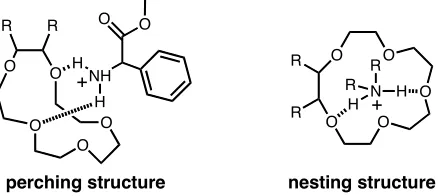
Figure 5 Crown ethers may bind in a facial manner (perching structure) or in a threading manner (nesting structure)...7
Figure 6 A range of crown ethers will bind dialkylammonium ions. However, both the size and the substituents affect the binding affinity (Ka)...8
Figure 7 Olefin-containing crown ethers will bind dialkylammonium ions, however, the binding constant is significantly diminished compared to dibenzo-[24]crown-8...9
Figure 8 General mechanism of olefin metathesis...11
Figure 9 Ruthenium-based olefin metathesis catalysts...12
xvi Chapter 2: Magic Ring Catenation via Olefin Metathesis
Figure 1 Partial 1
H NMR spectra showing the change over time during the magic ring synthesis of the dynamic
[2]catenane 12-H·PF6...27
Chapter 3: [2]Daisy-Chain Dimers and Their Incorporation into Interlocked Polymers Figure 1 Graphical representation of daisy chain monomer (1a),
[2]daisy-chain dimer (1b) and daisy-chain polymer (1c)...50 Figure 2 The formation of a [2]daisy-chain dimer requires
that both recognition units reside within the same molecule in such a way that dimerization is favored rather
than intramolecular complexation...51 Figure 3 Unsymmetrical substitution of the central aromatic ring
of self-complementary monomer 4-H·PF6 leads to a mixture of stereoisomers in the [c2]daisy-chain
compound 6-H2⋅2PF6...53 Figure 4 Ball and stick representation of [2]daisy-chain dimer
6-H2⋅2PF6 generated from a low-resolution X-ray crystal
Chapter 4: Cyclic Polycatenanes via Ring-Closing Metathesis
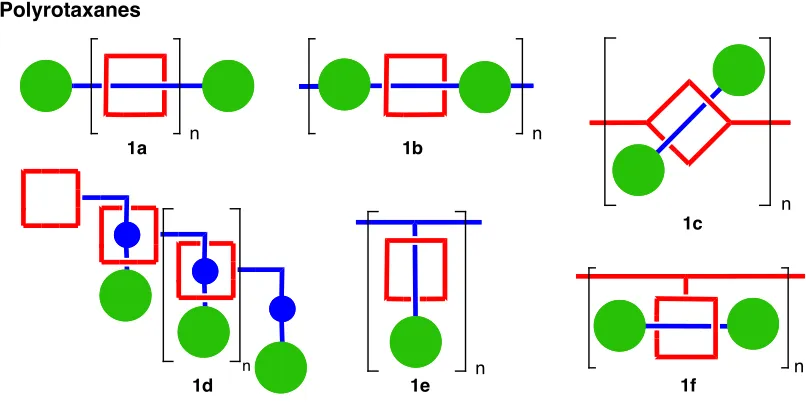
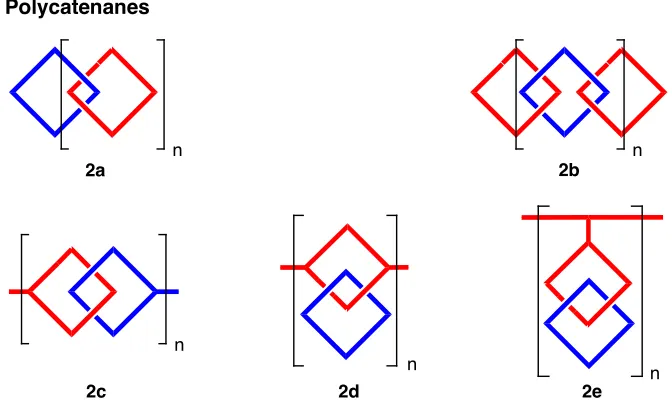
Figure 1 Graphical representation of polyrotaxanes………80 Figure 2 Graphical representation of polycatenanes………..…..81 Figure 3 Graphical representation of cyclic polycatenane formation
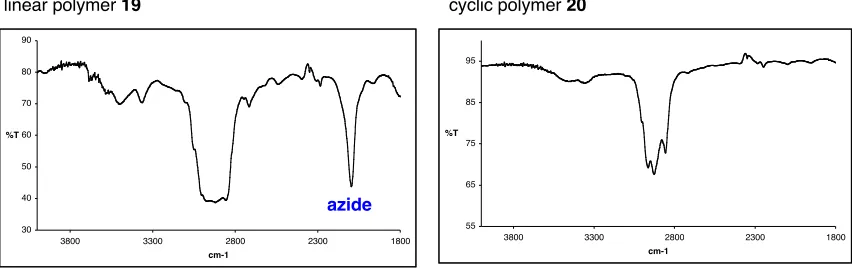
using a clipping approach………..82 Figure 4 Partial 1H NMR spectra of linear polymer 19 and cyclic
polymer 20. Peak labels are defined in eq. 3………....88 Figure 5 FTIR spectra of linear azide terminated polymer 19 and
cyclic polymer 20 after click cyclization………..….88 Figure 6 MALDI-MS spectrum of ‘cyclic’ polymer 20 after
click cyclization……….89 Figure 7 End-group analysis of cyclic polymer sample 20 using
labeling experiments………..90 Figure 8 Linear polymer template 23 will thread [24]crown-8 (24),
forming psuedorotaxane 25. ‘Endless’ cyclic polymer template 26 cannot thread [24]crown-8 (24) due to its
cyclic structure………...91 Figure 9 Two possible products of the ring-closing metathesis of
diolefin 4 in the presence of cyclic polymer template are presented: (i) the interlocked product, [2]catenane 29 or (ii) a mixture of non-interlocked products crown 30 and
xviii Figure 10 Two possible product mixtures, polypseudorotaxane 31
or a mixture of 23 and 30 may result from the mixing of
linear polymer template 23 and crown-like macrocycle 30…..….94 Figure 11 2D-DOSY spectrum of polypseudorotaxane 25 formed
from mixing [24]crown-8 (24) and polymer template 23. A diffusion coefficient (logD) of –9.1 m2
s-1
corresponding to unthreaded crown (c) is evident along with a
diffusion coefficient of –9.9 m2 s-1
corresponding to threaded crown (c’). Both polymer template 23 and
polypseudorotaxane 25 have the same self-diffusion
coefficient and are labeled (p)………...95
Figure 12 2D-DOSY spectrum of polypseudorotaxane 31 formed from mixing crown-like macrocycle 30 and polymer
template 23. The diffusion coefficient at –9.2 m2 s-1 corresponding to unthreaded crown (c) is evident along with diffusion coefficients of –9.5 to –10.0 m2
s-1
corresponding to threaded crown (c’). Both polymer template 23
and polypseudorotaxane 31 have the same
Figure 13 2D-DOSY spectrum of the reaction mixture resulting from the ring-closing metathesis of the acyclic polyether 4 in the presence of the cyclic polymer template 28 using metathesis catalyst 5. Possible outcomes include formation of cyclic polycatenane 29 or a mixture of crown 30 and polymer 28. The diffusion coefficient at –8.6 m2
s-1 corresponding to crown (c) is evident along with diffusion coefficients of –8.6 m2
s-1
corresponding polymer
and are labeled (p)……… ………98 Figure 14 Two possible products can result from the addition of 32
to a purified reaction mixture resulting from the
ring-closing metathesis of the terminal olefin functions
in the acyclic polyether 4 in the presence of the cyclic
polymer template 28 using metathesis catalyst 5……….100 Figure 15 Purification method to remove linear polymer impurities
from cyclic polymer samples by exploiting the threading between [24]crown-8 (24) and linear polyammonium ions 24. Polypseudorotaxane 25 has improved solubility in CH2Cl2 compared to its unthreaded, cyclic analogue 26. Washing with CH2Cl2 can therefore be used to remove
xx Appendix 1: Studies toward Interlocked Polymers via ROMP of [2]Catenane Monomers
Figure 1 Graphical representation of polyrotaxanes...123 Figure 2 Graphical representation of polycatenanes...124 Figure 3 Cyclic polymer formation using a “cyclic” olefin
metathesis catalyst and a strained cyclic ROMP monomer...126 Figure 4 Graphical representation of the formation of interlocked
polymers via ring opening metathesis polymerization (ROMP) of an olefin-containing [2]catenane...127 Figure 5 Proposed synthesis of a cyclic polycatenane through the
ROMP of a [2]catenane monomer using cyclic metathesis
catalyst 4...128 Figure 6 Olefin containing [2]catenanes for potential use as
ROMP monomers...129 Figure 7 The ring closing metathesis of crown ether macrocycle 11
around dibenzylammonium macrocycle 12 generates [2]catenane 6 but also generates other linear olefin products
such as 11 and 13...132 Figure 8 Proposed mechanism of linear polymer formation during
the ROMP of a [2]catenane monomer using cyclic
Figure 9 Proposed synthesis of a polyrotaxane via ROMP of a
[2]catenane monomer using a bulky metathesis catalyst and chain transfer agent...135 Figure 10 14 is large enough to act as a stopper for macrocycle 7.
We speculate that stopper 15 will be large enough to act
as a stopper for macrocycle 12...136 Figure 11 Proposed mechanism of linear polymer formation during ROMP
xxii List of Abbreviations
Ac2O acetic anhydride
ADMET acyclic diene metathesis
9-BBN 9-borabicyclo[3.3.1]nonane
Boc tert-butyl carbamate
Boc2O di-tert-butyl dicarbamate
CAM citric ammonium molybdate
click Huisgen dipolar cycloaddition
CM cross metathesis
COD cyclooctadiene
COT cyclooctatetrene
CTA chain transfer agent
dba dibenzylammonium ion
DCC dicyclohexyl carbodiimide
DMAP 4-dimethylaminopyridine
DMF dimethylformamide
DMSO dimethylsulfoxide
DNA deoxyribose nucleic acid
DOSY diffusion ordered nuclear magnetic resonance
dc change in concentration
dn change in refractive index
EtOAc ethyl acetate
FAB fast atom bombardment
fn average degree of functionality
FTIR Fourier transform infrared
GPC gel permeation chromatography
HPLC high pressure liquid chromatography
Ka association constant
MALDI matrix assisted laser desorption ionization MALLS multi angle laser light scattering
mCPBA 3-chloroperbenzoic acid
MeCN acetonitrile
MeOH methanol
Mn number average molecular weight
MsCl methanesulfonyl chloride
NHC N-heterocyclic carbene
NMR nuclear magnetic resonance
PCy3 tricyclohexylphospine
PDI polydispersity index
PhMe toluene
PPh3 triphenylphosphine
RCM ring closing metathesis
RI refractive index
xxiv
SEC size exclusion chromatography
TFA trifluoroacetic acid
THF tetrahydrofuran
TLC thin layer chromatography
C h a p t e r 1
2 Introduction
The Grubbs group has developed functional-group tolerant ruthenium alkylidene
catalysts for use in a variety of olefin metathesis reactions. These reactions have
impacted numerous and diverse fields of chemistry from complex small molecule
synthesis to polymer and material science. One such field that could potentially exploit
the advances made in olefin metathesis is supramolecular chemistry, in the synthesis of
interlocked molecules. This thesis explores the use of olefin metathesis reactions in the
synthesis of small molecule and polymeric interlocked molecules.
Introduction / Historical Perspective
Interlocked molecules are defined as two or more molecules that cannot be
separated without covalent bond cleavage, but do not contain covalent bonds between
them. The most basic interlocked molecules are the [2]catenane (1a) where ‘catena’
comes from the Latin word meaning chain and the [2]rotaxane (1b) where ‘rota’ comes
from the Latin word meaning wheel (Figure 1). A catenane is a compound consisting of
two or more rings that are looped through each other and do not contain any covalent
bonds between them. Rotaxanes consist of a linear dumbbell-shaped component
surrounded by one or more ring-shaped components, which are entrapped on the rod of
the rotaxane by large stoppering groups. A common precursor to both catenanes and
rotaxanes is a supramolecule, the pseudorotaxane (1c), which consists of a rod-like
component (with no stoppering groups) surrounded by one or more ring shaped
interlocked, but instead are in equilibrium with their constituent components. The
standard nomenclature of these systems is to place the number of components in brackets
before the name of the compound or complex. For example, a [2]catenane consists of
two interlocking macrocycles and a [2]rotaxane consists of one dumbbell component and
one macrocycle. Interestingly, while both [2]catenanes and [2]rotaxanes are considered
interlocked molecules, catenanes are considered topological isomers, which in order to
separate into its macrocyclic components cleavage of at least one covalent bond is
required. Rotaxanes, by contrast, are considered constitutional isomers because
separation into individual components can be accomplished by means other than covalent
bond cleavage (such as stretching of the macrocyclic component, shrinkage of the
dumbbell component, etc.). On a more practical level, however, most rotaxanes are
prepared with sufficiently large blocking groups such that dissociation into the
constituent components requires covalent bond cleavage.1
[2]Catenane [2]Rotaxane [2]Pseudorotaxane
1a 1b 1c
Figure 1: Graphical representation of a [2]catenane (1 a), [2]rotaxane (1 b) and [2]pseudorotaxane (1c).
Mechanically interlocked molecules have long been of interest to chemists due
their unique molecular structures and the synthetic challenge they pose. Furthermore,
recent advances in nanotechnology have revealed that these molecules are not only
4 both memory and logic circuits (Figure 2). This could potentially allow for the
preparation of devices with smaller feature sizes through a “bottom up” approach rather
than the traditional microlithography “top down” approach.2
stimulus
stimulus
Figure 2: Graphical representation of stimuli-responsive bistable [2]catenanes and [2]rotaxanes that can function as switches in memory and logic circuits.
The first interlocked molecule, [2]catenane 2 was synthesized by Wasserman and
coworkers at Bell Laboratories (Figure 3) in 1960.3
The hydrocarbon-based [2]catenane
2 was formed using a statistical approach, which relies on the chance formation of one
macrocycle while threaded through another. An acyloin condensation was used as the
final bond forming reaction and [2]catenane 2 was isolated in a 1 percent yield. The
yields associated with the statistical approach are quite low, illustrating the disadvantage
of relying on chance threading events to form interlocked molecules. Using the statistical
(CH2)32 O
OEt
O OEt
C31H57
(CH2)31 C31H57D5 O
1.
Na, xylenes 140 °C 2. HOAc
D5
1% yield
OH
[image:29.612.183.466.67.231.2]2
Figure 3: Synthesis of a hydrocarbon-based [2]catenane using a statistical approach.
The major breakthrough in the synthesis of interlocked molecules was the use of
molecular recognition (or supramolecular chemistry) to make interlocked molecules in a
rational and efficient manner. Supramolecular chemistry, meaning “beyond the
molecule,” also termed host-guest chemistry can be used to template the formation of
interlocked molecules, a technique termed directed synthesis. Interactions between host
and guest molecules form a supramolecular complex, which after appropriate
manipulation can be converted into an interlocked molecule. Typically, non-covalent
interactions such as hydrogen bonding, π-π interactions or van der Waals interactions are
used to form supramolecular complexes; however, metal coordination interactions have
also been exploited. The association constant (Ka), with units of inverse concentration, denotes the amount of host-guest complex relative to its constituents and thus expresses
the extent of formation of the subsequent interlocked molecule. Both concentration and
temperature impact the Ka such that an increase in concentration favors the association and formation of a supramolecular complex, which is expressed in an increase in the Ka while an increase in temperature favors dissociation of the supramolecular complex into
6 One of the most heavily exploited non-covalent interactions in the formation of
supramolecular complexes and interlocked molecules is the hydrogen bond. There are a
variety of hydrogen bonding recognition motifs, many of which have been inspired by
nature and include systems based on amides,4
crown ether/ammonium binding5
and
base-pair hydrogen bonding.6
Throughout this thesis, the molecular recognition between
dialkylammonium ions and macrocyclic crown ethers through hydrogen bonding will be
exploited in the formation of interlocked molecules (Figure 4).
PF6– + O O O O O O O O R R R
R O R
O O O O O
R NH
2 PF6– + O O R R R R dialkylammonium
ion crown ether [2]pseudorotaxane
R N
[image:30.612.175.479.282.381.2]H2 R
Figure 4: Hydrogen bonding between dialkylammonium ions and crown ethers can be exploited to form [2]pseudorotaxanes.
Crown Ether / Ammonium Binding
Crown ethers are cyclic polyethers with the basic -CH2CH2O- repeating structure. These molecules were first discovered by Pedersen7
at Dupont and subsequently
investigated by Cram8
at UCLA, both of whom later received a Nobel Prize for their
work in this area of research. Crown ethers are capable of binding metal cations, such as
sodium, potassium, etc. but will also form hydrogen-bonded complexes with primary and
secondary ammonium ions.9
Additionally, ammonium ions may bind in two different
modes, either the ‘perching structure’ where the ammonium ion is binding to the face of
internal cavity of the crown ether (Figure 5). The size of the crown ether dictates which
binding mode will operate, and it has been found that [18]crown-6 binds
dialkylammonium ions in a perching fashion, while the slightly larger [24]crown-8 binds
dialkylammonium ions in a nesting structure.10
O O O
O O
H H
R R
NH
O O
O
O
O R
R
N R
H H R
perching structure nesting structure
O O
Figure 5: Crown ethers may bind in a facial manner (perching structure) or in a threading manner (nesting structure).
Stoddart and coworkers have exploited the nesting interaction between
dialkylammonium ions and crown ether macrocycles in the formation of a variety of
interlocked compounds. Through structure-activity studies, they found that both the size
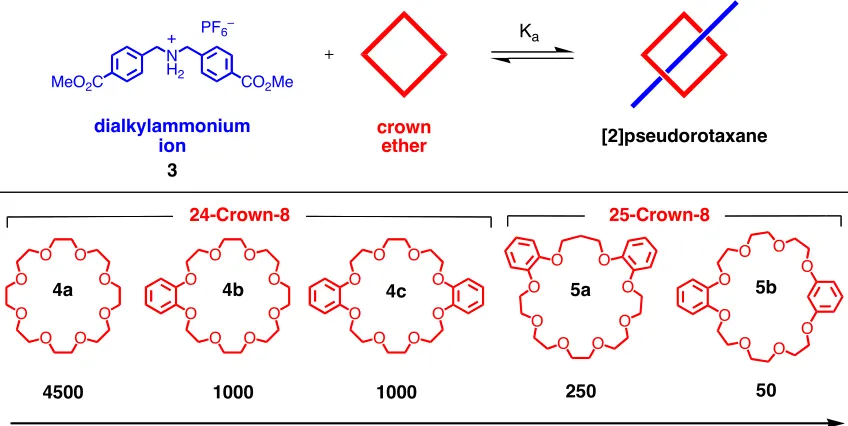
and substitution of the crown ether macrocycle play a large role in the Ka of the resulting supramolecule (Figure 6). The association constant between the substituted
dibenzylammonium ion (dba) 3 and a range of crown ethers (4 and 5) was determined.11 In the 24-crown-8 series (4a, 4b, 4c) it was observed that an increase in the number of
phenolic oxygen atoms reduced the binding affinity from 4500 M-1
for crown ether 4a,
with all dialkyl ether oxygen atoms, to 1000 M-1 for crown ether 4c which contains four phenolic oxygen atoms. Phenolic oxygen atoms have reduced basicity with respect to
dialkyl ether oxygen atoms and, as such, their effectiveness as H-bond acceptors is
diminished resulting in crown ethers with lower binding affinities. It was also found that
[image:31.612.216.435.199.297.2]8 (5a and 5b) dramatically decreases the binding affinity. It is thought that the addition of
an additional methylene unit disrupts the array of donor atoms directed toward the center
of the crown ether cavity. This distortion results in a less favorable geometry for
interaction with dialkylammonium ions.
O O O O O O O O O O O O O O O O O O O O O O O O
4500 1000 1000 250 50
O O O O O O O O O O O O O O O O 24-Crown-8 25-Crown-8
Decreasing Binding Affinity
Ka, CD3CN, 298 K dialkylammonium
ion
MeO2C CO2Me
N H2
PF6–
+
crown
ether [2]pseudorotaxane
Ka
3
[image:32.612.111.535.198.411.2]4a 4b 4c 5a 5b
Figure 6: A range of crown ethers will bind dialkylammonium ions. However, both the size and the substituents affect the binding affinity (Ka).
Olefin containing crown ethers (7a and 7b) are also capable of forming
[2]pseudorotaxanes with dba 6 (Figure 7), though the association constant is somewhat
diminished when compared to crown ether 4c.12
The major factor contributing to this
decrease in binding affinity is the “loss” of two ether oxygen atoms upon structural
24-Crown-8
dialkylammonium ion
N H2
PF6–
+
crown
ether [2]pseudorotaxane
Ka
6
O
O O O O
O O
O O O O
O
100 320
O O O O O O O
O
Decreasing Binding Affinity
Ka, CD3CN, 298 K
10
[image:33.612.148.502.74.281.2]4c 7a 7b
Figure 7: Olefin-containing crown ethers will bind dialkylammonium ions, however, the binding constant is significantly diminished compared to dibenzo-[24]crown-8.
Dynamic Covalent Chemistry
While the association constant between host-guest complexes impacts the product
distribution (i.e., yield of interlocked compound), other factors also contribute to the
formation of interlocked molecules. The final bond forming step, namely the reaction
that transforms a molecule from a supramolecule to an interlocked molecule, is also of
great importance due to the impact that it can have on product distribution. Kinetically
controlled reactions have been commonly used in the synthesis of interlocked
compounds, however, they can suffer from low yields of interlocked compounds due to
the irreversible formation of noninterlocked by products.13
An alternative strategy to this
traditional method exploits dynamic covalent chemistry,14
an approach that utilizes
10 than kinetic control. In this way, the yield of a mechanically interlocked compound
reflects its stability relative to those of any other non-interlocked by-products. Examples
of equilibrium reactions employed as the final bond-forming step in the synthesis of
interlocked molecules include the reversible formation of imines,15
disulfides16
and cyclic
acetals.17
Olefin metathesis is also a dynamic reaction that operates under thermodynamic
control. Additionally, ruthenium based metathesis catalysts are functional-group tolerant,
which is important due to the many reactive functional groups present in most molecular
recognition systems. Olefin functional groups are also orthogonal to most of the
molecular recognition systems that are commonly employed in the synthesis of
interlocked molecules and a wide variety of olefin metathesis mediated reactions are
possible through the variation of the structure or reaction conditions. For these reasons,
olefin metathesis is an ideal candidate for use in the formation of interlocked molecules.
Throughout this thesis, numerous olefin metathesis reactions will be employed in the
synthesis of both small molecule and polymeric interlocked molecules.
Olefin Metathesis
Olefin metathesis is a versatile carbon-carbon bond forming reaction and is
mediated by a metal alkylidene, which allows for both the cleavage of carbon-carbon
double bonds and their reassembly in new ways. The general mechanism for olefin
metathesis was first proposed by Chauvin in 1971. It involves olefin coordination to a
This intermediate may then undergo a cycloreversion process in either an unproductive
manner to reform the starting olefin and metal alkylidene or in a productive manner to
generate a new olefin containing product and regenerate a metal alkylidene species which
can re-enter the catalytic cycle (Figure 8). In general, all of these steps are reversible and
operate under thermodynamic control.18
M R R1
R2
M R R2 R1
M R
R2
R1 Figure 8: General mechanism of olefin metathesis.
A number of metals are effective at mediating olefin metathesis reactions. The
first generation of olefin metathesis catalysts consisted of ill-defined mixtures capable
only of polymerizing strained cyclic olefins.19
More recently, well-defined molybdenum,
tungsten and ruthenium catalysts have emerged and greatly expanded the synthetic utility
of metathesis reactions. Schrock and coworkers have prepared a number of highly active
molybdenum and tungsten based catalysts that have been widely used in olefin
metathesis.20
A general problem with early transition metal catalysts is their extreme air
and moisture sensitivity, which frequently requires rigorous solvent and reagent
purification. Additionally, substrates with polar functional groups are typically not
tolerated by these very electrophillic metals.
Grubbs and coworkers have prepared a number of ruthenium based catalysts
which, depending on the ligand subset, also have high activity in olefin metathesis.
These late transition metal catalysts are much more tolerant of air and moisture compared
with early transition metal catalysts and do not require rigorous solvent or reagent
12 functional groups, greatly expanding the synthetic utility of the olefin metathesis
reaction. The first well-defined ruthenium metathesis catalyst 8a had low activity and
was limited to reactions with highly strained cyclic olefins such as norbornene.21 Replacement of the triphenylphosphine ligands (PPh3) with more electron-donating tricyclohexylphosphine ligands (PCy3), generating catalyst 8b greatly increased catalyst activity and expanded the substrate scope to include unstrained cyclic olefins and acyclic
olefins.22
The substrate scope was further improved by replacement of one of the
tricyclohexylphosphine ligands with a very donating N-heterocyclic carbene (NHC)
ligand, generating catalyst 8c.23
Increased catalytic activity allowed more
electron-deficient olefins (i.e., acrylates) and bulky substrates to undergo olefin metathesis.
Additionally ligand modification of catalyst 8c, including the addition of pyridine
ligands, generates catalyst 8d which has very fast initiation relative to its parent catalyst
8c.24
Phosphine ‘free’ systems such as catalyst 8e have also been developed and are
generally more stable than their phosphine analogues, though initiation is typically
somewhat slower.25
Other catalysts based on this general ligand framework have been
developed to effect asymmetric,26
water-soluble27
and very sterically encumbered
transformations.28
Ph3P
Ru PPh3 Cl Cl Ph 8a N N Ru Py Cl Cl Ph 8d
Cy3P
Ru PCy3 Cl Cl Ph 8b N N Ru PCy3 Cl Cl Ph 8c N N Ru Cl Cl O 8e Py
As can be seen in Figure 10, olefin metathesis has been applied to the synthesis of
small molecule and polymeric architectures. Cyclic olefins can be made from α,ω-dienes
through ring closing metathesis (RCM). Acyclic olefins can be made from two
chemically distinct olefins through cross metathesis (CM). α,ω-Dienes can also be used
to generate polymeric materials through an iterative cross metathesis process termed
acyclic diene metathesis (ADMET). Strained cyclic olefins can be polymerized through
ring opening metathesis polymerization (ROMP) to form polymeric materials. A driving
force is required to generate a single product from these thermodynamic processes. For
RCM, CM and ADMET the liberation of volatile small molecules (i.e., ethylene) or the
formation of more stable products is a driving force. ROMP is driven by the release of
ring strain. Throughout this thesis all four of these major categories of metathesis
reactions will be utilized in the construction of interlocked molecules. Factors which
affect each of these individual reactions will be discussed.
X
RCM
n X
n
X
n
-C2H4
+C2H4
ADMET
X -C2H4
+C2H4
X X
n
ROMP
X Y
X Y CM
-C2H4
+C2H4
n
n
14
RCM
Ring-closing metathesis converts α,ω-dienes to cyclic olefin-containing products.
Both the thermodynamic stability of the product and the expulsion of volatile small
molecules (i.e., ethylene) drive product formation. While highly strained cyclic products,
such as norbornes, cannot be formed through RCM, a variety of both small and large
rings can be prepared. Additionally, low concentration can be important to shift the
equilibrium toward the formation of the corresponding cyclic product rather than the
formation of various cross metathesis by-products resulting from side reactions of two or
more α,ω-diene starting materials.29
ADMET
Acyclic diene metathesis polymerization converts α,ω-dienes to polyalkenamers
and is driven by the expulsion of volatile small molecules (i.e., ethylene). ADMET is
classified as a step growth polymerization where high molecular weight polymer is
formed only at very high conversion and somewhat broad polydispersities are typical. At
complete conversion, the theoretical polydispersity index (PDI) is 2. In order to push this
process to high conversion and obtain large molecular weight polymer, several strategies
are utilized. High concentration can be important to shift the equilibrium toward the
formation of high molecular weight polymer. Removal of ethylene becomes increasingly
difficult as the extent of reaction increases due to the increase in viscosity associated with
the formation of higher molecular weight polymers. This issue can be somewhat
overcome by the application of vacuum or by increasing the temperature of the reaction,
ROMP
ROMP produces polyalkenamers through the ring opening of strained cyclic
olefin monomers and is classified as a chain growth polymerization. Under appropriate
conditions with certain metathesis catalysts, ROMP can be controlled to such an extent
that it satisfies the criteria of a living polymerization, producing polymers with narrow
PDIs. Since all polymer chains are growing at the same rate, molecular weight is directly
proportional to monomer conversion. The rate of initiation relative to propagation has an
impact on the PDI of the polymer. For active catalysts and very reactive high strain
monomers, faster initiating catalysts lead to polymers with narrow polydispersities.30 Since ROMP operates under thermodynamic control, depolymerization and ‘back-biting’
(i.e. chain transfer forms cyclic olefins and smaller polymer chains) processes are also
possible. These processes are affected by both monomer and catalyst selection.
Back-biting processes are more prevalent in the more active catalyst 8c and can lead to a
broadening of the PDI when polymerizing relatively unsubstituted olefin monomers.31 Substituted norbornene monomers can be polymerized with the fast initiating catalyst 8d
to give very narrow PDI polymer product due to the absence of chain transfer in these
more substituted systems. Block copolymers can also be produced through sequential
addition of monomer units which do not undergo chain transfer (such as substituted
norbornenes) in conjunction with fast initiating catalysts.32
The back-biting process is not always undesirable and can be used in the creation
of end functionalized (telechelic) polymers. The chain transfer process is typically
performed by polymerizing a cyclic olefin in the presence of a linear difunctional olefin
16 process due to its high reactivity toward chain transfer. The chain transfer agent may
react with the metal alkylidene attached to a growing polymer chain, resulting in an end
functionalized polymer and a newly functionalized catalyst molecule. This newly
functionalized catalyst molecule may then react with a growing polymer chain,
transferring the new end group to the polymer and terminating the polymer chain growth
or react with a monomer, beginning the growth of a new mono-functionalized polymer
chain. The only polymer chains not containing the CTA end group result from the
original catalyst alkylidene and terminating species. This process operates under
References
(1) (a) Schill, G. Catenanes, Rotaxanes and Knots; Academic Press: New York, 1971.
(b) Amabilino, D. B.; Stoddart, J. F. Chem. Rev.1995, 95, 2725–2828. (c) Molecular
Catenanes, Rotaxanes and Knots Sauvage, J.-P.; Dietrich-Buchecker, C. Eds.;
Wiley-VCH: Weinheim, 1999.
(2) (a) Collier, C. P.; Mattersteig, G.; Wong, E. W.; Luo, Y.; Bererly, K.; Samparo, J.;
Raymo, F. M.; Stoddart, J. F.; Heath, J. R. Science 2000, 289, 1172–1175. (b) Pease,
A.R.; Jeppesen, J. O.; Stoddart, J. F.; Luo, Y.; Collier, C. P.; Heath, J. R. Acc. Chem. Res.
2001, 34, 433–444. (c) Luo, Y.; Collier, C. P.; Jeppesen, J. O.; Nielsen, K. A.; DeIonno,
E.; Ho, G.; Perkins, J.; Tseng, H.-R.; Yamamoto, T.; Stoddart, J. F.; Heath, J. R.
ChemPhysChem. 2002, 3, 519–525. (d) Diehl, M. R.; Steuerman, D.; Tseng, H.-R.;
Vignon, S. A.; Star, A.; Celestine, P. C.; Stoddart, J. F.; Heath, J. R. ChemPhysChem
2003, 4, 1335–1339. (e) Tseng, H.-R.; Wu, D.; Fang, N. X.; Zhang, X.; Stoddart, J. F.
ChemPhysChem 2004, 5, 111–116. (f) Steuerman, D. W.; Tseng, H.-R.; Peters, A. J.;
Flood, A. H.; Jeppesen, J. O.; Nielsen, K. A.; Stoddart, J. F.; Heath, J. R. Angew. Chem.,
Int. Ed. 2004, 43, 6486–6491. (g) Flood, A. H.; Ramirez, R. J. A.; Deng, R. P.; Muller,
W. P.; Goddard III, W. A.; Stoddart, J. F. Aust. J. Chem.2004, 57, 301–322. (h) Flood,
A. H.; Peters, A. J.; Vignon, S. A.; Steuerman, D. W.; Tseng, H.-R.; Kang, S.; Heath, J.
R.; Stoddart, J. F. Chem. Eur. J. 2004, 10, 6558–6564. (i) Flood, A. H.; Stoddart, J. F.;
Steuerman, D. W.; Heath, J. R. Science2004, 306, 2055–2056. (j) Jang, S. S.; Kim, Y.
H.; Goddard III, W. A.; Flood, A. H.; Laursen, B. W.; Tseng, H.-R.; Stoddart, J. F.;
Jeppesen, J. O.; Choi, J. W.; Steuerman, D. W.; DeIonno, E.; Heath, J. R. J. Am. Chem.
18 (3) Wasserman, E., et al. J. Am. Chem. Soc. 1960, 82, 4433-4434.
(4) (a) Hunter, C. A. J. Chem. Soc., Chem. Commun.1991, 749. (b)Hunter, C. A. J. Am.
Chem. Soc. 1992, 114, 5303. (c) Vogtle, F.; Meier, S.; Hoss, R. Angew. Chem., Int. Ed.
Engl. 1992, 31, 1619. (d) Hunter, C. A.; Purvis, D. H. Angew. Chem., Int. Ed. Engl.
1992, 31, 792. (e) Carver, F. J.; Hunter, C. A.; Shannon, R. J. J. Chem. Soc., Chem.
Commun. 1994, 1277.
(5) Cantrill, S. J.; Fulton, D. A.; Heiss, A. M.; Pease, A. R.; Stoddart, J. F.; White, A. J.
P.; Williams, D. J. Chem. Eur. J. 2000, 6, 2274-2287.
(6) (a) Seeman, N. C. DNA Cell Biol.1991, 10, 475. (b) Mueller, J. E.; Du, S. M.;
Seeman, N. C. J. Am. Chem. Soc.1991, 113, 6306.
(7) (a) Pedersen, C. J. Prix Nobel1988, 181-197. (b) Pedersen, C. J. Science1988, 60,
450-451.
(8) Cram, D. J. Prix Nobel1988, 105-123.
(9) Pedersen, C. J. J. Am. Chem. Soc.1967, 89, 7017-7036.
(10) Cram, D.J., et al. Acc. Chem. Res.1978, 11, 8.
(11) Ashton, P. R.; Bartsch, R. A.; Cantrill, S. J.; Hanes, R. E. Jr.; Hickingbottom, S. K.;
Lowe, J. N.; Preece, J. A.; Stoddart, J. F.; Talanov, V. S.; Wang, Z. -H. Tetrahedron Lett.
1999, 40, 3661-3664.
(12) Kilbinger, A. F. M.; Cantrill, S. J.; Waltman, A. W.; Day, M. W.; Grubbs, R. H.
Angew. Chem., Int. Ed. 2003, 42, 3281–3285.
(13) (a) Dietrich-Buchecker, C. O.; Sauvage, J.-P.; Kern, J. M. J. Am. Chem. Soc.1984,
106, 3043–3045. (b) Hunter, C. A. J. Am. Chem. Soc. 1992, 114, 5303–5311. (c) Vögtle,
(d) Gong, C. G.; Gibson, H. W. Angew. Chem., Int. Ed. 1998, 37, 310–314. (e)
Kolchinski, A. G.; Busch, D. H.; Alcock, N. W. J. Chem. Soc., Chem. Commun. 1995,
1289–1291. (f) Hansen, J. G.; Feeder, N.; Hamilton, D. G.; Gunter, M. J.; Becher, J.;
Sanders, J. K. M. Org. Lett.2000, 2, 449–452. (g) Shukla, R.; Deetz, M. J.; Smith, B. D.
Chem. Commun. 2000, 2397–2398. (h) Hubbard, A. L.; Davidson, G .J. E.; Patel, R. H.;
Wisner, J. A.; Loeb, S. J. Chem. Commun. 2004, 2, 138–139. (i) Sasabe, H.; Kihara, N.;
Furusho, Y.; Mizuno, K.; Ogawa, A.; Takata, T. Org. Lett. 2004, 6, 3957–3960. (j)
Hernandez, J. V.; Kay, E. R.; Leigh, D. A. Science2004, 306, 1532–1537.
(14) (a) Rowan, S. J.; Brady, P. A.; Sanders, J. K. M. Angew. Chem., Int. Ed. Engl. 1996,
35, 2143–2145. (b) Lehn, J.-M. Chem. Eur. J. 1999, 5, 2455–2463. (c) Lehn, J.-M.;
Eliseev, A. V. Science2001, 291, 2331–2332. (d) Otto, S.; Furlan, R. L. E.; Sanders, J.
K. M. Science2002, 297, 590–593. (e) Rowan, S. J.; Cantrill, S. J.; Cousins, G. R. L.;
Sanders, J. K. M.; Stoddart, J. F. Angew. Chem., Int. Ed. 2002, 41, 898–952. (f) Corbett,
P. T.; Otto, S.; Sanders, J. K. M. Org. Lett. 2004, 6, 1852–1827.
(15) (a) Cantrill, S. J.; Rowan, S. J.; Stoddart, J. F. Org. Lett. 1999, 1, 1363–1366. (b)
Rowan, S. J.; Stoddart, J. F. Org. Lett.1999, 1, 1913–1916. (c) Glink, P. T.; Oliva, A. I.;
Stoddart, J. F.; White, A. J. P.; Williams, D. J. Angew. Chem., Int. Ed. 2001, 40,
1870–1875. (d) Horn, M.; Ihringer, J.; Glink, P. T.; Stoddart, J. F. Chem. Eur. J.2003, 9,
4046–4054. (e) Chichak, K. S.; Cantill, S. J.; Pease, A. R.; Chiu, S.-H.; Cave, G. W. V.;
Atwood, J. L.; Stoddart, J. F. Science2004, 304, 1308–1312. (f) Hogg, L.; Leigh, D. A.;
Lusby, P .J.; Morelli, A.; Parsons, S.; Wong, J. K. Y. Angew. Chem., Int. Ed. 2004, 43,
1218–1221. (g) Schalley, C. A. Angew. Chem., Int. Ed. 2004, 43, 4399–4401. (h) Cantrill,
20 (16) (a) Kolchinski, A. G.; Alcock, N. W.; Roesner, R. A.; Busch, D. H. Chem. Commun.
1998, 1437–1438. (b) Furusho, Y.; Oku, T.; Hasegawa, T.; Tsuboi, A.; Kihara, N.;
Takata, T. Chem. Eur. J. 2003, 9, 2895–2903.
(17) Fuchs, B.; Nelson, A.; Star, A.; Stoddart, J. F.; Vidal, S. B. Angew. Chem., Int. Ed.
2003, 42, 4220–4224.
(18) Herisson, J. -L.; Chauvin, Y. Makromol. Chem.1971, 141, 161-176.
(19) Truett, W. L.; Johnson, D. R.; Robinson, I. M.; Montague, B. A. J. Am. Chem. Soc.
1960, 82, 2337-2340.
(20) Schrock, R. R.; Hoveyda, A. H. Angew. Chem. Int. Ed.2003, 42, 4592-4633.
(21) Nguyen, S. T.; Johnson, L. K.; Grubbs, R. H.; Ziller, J. W. J. Am. Chem. Soc.1992,
114, 3974-3975.
(22) Schwab, P.; France, M. B.; Ziller, J. W.; Grubbs, R. H. Angew. Chem. Int. Ed. Engl.
1995, 34, 2039-2041.
(23) Scholl, M.; Ding, S.; Lee, C. W.; Grubbs, R. H. Org. Lett.1999, 1, 953-956.
(24) Sanford, M. S.; Love, J. A.; Grubbs, R. H. Organometallics2001, 20, 5314-5318.
(25) (a) Garber, S. B.; Kingsbury, J. S.; Gray, B. L.; Hoveyda, A. H. J. Am. Chem. Soc.
2000, 122, 8168-8179. (b) Gessler, S.; Randl, S. Tetrahedron Lett.2000, 41, 9973-9976.
(26) Funk, T. W.; Belin, J. M.; Grubbs, R. H. J. Am. Chem. Soc.2006, 128, 1840-1846.
(27) Hong, S. H.; Grubbs, R. H. J. Am. Chem. Soc.2006, 128, 3508-3509.
(28) Berlin, J. M.; Campbell, K.; Ritter, T.; Funk, T. W.; Chlenov, A.; Grubbs, R. H. Org.
Let.
(29) Grubbs, R. H., Ed. Handbook of Metathesis; Wiley-VCH: Weinheim, Germany,
(30) (a) Sanford, M. S.; Ulman, M.; Grubbs, R. H. J. Am. Chem. Soc. 2001, 123, 749.
(b) Sanford, M. S.; Love, J. A.; Grubbs, R. H. J. Am. Chem. Soc. 2001, 123, 6543.
(31) (a) Bielawski, C. W.; Grubbs, R. H. Angew. Chem. Int. Ed. 2000, 39, 2903.
(b) Bielawski, C. W.; Benitez, D.; Grubbs, R. H. Macromolecules2001, 34, 8610.
(c) Scherman, O. A.; Kim, H. M.; Grubbs, R. H. Macromolecules2002, 35, 5366.
(32) Choi, T. -L.; Grubbs, R. H. Angew. Chem. Int. Ed. 2003, 42, 1743-1746.
(33) (a) Hillmyer, M. A.; Grubbs, R. H. Macromolecules 1993, 26, 872-4.
(b) Maughon, B. R.; Morita, T.; Bielawski, C. W.; Grubbs, R. H. Macromolecules 2000,
C h a p t e r 2
M a g i c R i n g C a t e n a t i o n v i a O l e f i n
M e t a t h e s i s
Magic Ring Catenation via Olefin Metathesis
Introduction
Mechanically interlocked molecules,1
such as catenanes and rotaxanes, have long
been of interest to chemists because of their unique molecular structures. Furthermore,
recent advances in the science of nanosystems have revealed that these molecules are not
only aesthetically pleasing curiosities, but can also function as the key components in
active molecular electronic devices where bistable derivatives, for example, serve as
bistable switches in both memory and logic circuits.2
Although a vast number of syntheses of catenanes and rotaxanes have appeared in
the chemical literature, most of the strategies employ kinetically controlled covalent bond
formation as the final interlocking step.3
This approach does not always result in high
yields of mechanically interlocked compounds because of the irreversible formation of
unwanted non-interlocked by-products. An alternative strategy, however, exploits
dynamic covalent chemistry,4
an approach that utilizes reversible reactions in which the
product distribution depends on thermodynamic rather than kinetic control, i.e., the yield
of a mechanically interlocked compound reflects its stability relative to those of any other
non-interlocked by-products with proof-reading and error-checking operating up until a
final equilibrium state is reached. Examples of equilibrium reactions employed as the
final bond-forming step in the synthesis of catenanes and rotaxanes include the reversible
formation of imines,5
disulfides6
and cyclic acetals,7
as well as olefin metathesis mediated
by functional group tolerant ruthenium alkylidene catalysts.8
This protocol has been
24 coworkers in the Grubbs group have demonstrated11
that the ring closing of certain
olefin-containing polyether substrates around appropriately-substituted secondary
dialkylammonium ions results in the reversible formation of [2]rotaxanes (eq 1). For
example, by employing the ruthenium catalyst (PCy3)2(Cl)2Ru=CHPh (1), 12
the
macrocyclic polyether 2 containing one olefinic double bond can be induced to undergo a
magic ring synthesis in the presence of the dumbbell compound 3-H·PF6, wherein the
NH2 +
center acts as the template for the formation of the [2]rotaxane 4-H·PF6. Here, we
show that two convenient, high yielding methods for constructing [2]rotaxanes can be
extended to the template-directed formation of [2]catenanes by (macrocyclic) polyether /
secondary ammonium ion recognition13
by using a cyclic rather than a linear template.
73 % yield
N H2
OMe MeO
MeO OMe
PF6–
+ O O O O N H2 OMe MeO MeO OMe
PF6– +
O O
+
CH2Cl2 Reflux O O O O O O
Cy3P Ru
PCy3 Cl
Cl Ph
2 3-H·PF6
1
4-H·PF6
(1)
Results and Discussion
The formation of the [2]catenane requires that the dibenzylammonium-template
containing macrocycle is large enough to permit catenation by the polyether macrocycle.
The 27-membered macrocyclic template 9-H·PF6, shown in Scheme 1, was identified as a
suitable target for synthesis. As outlined in this Scheme, hydroxybenzaldehyde and
4-cyanophenol were both alkylated in separate reactions (K2CO3/DMF) with the mesylated
group in the second alkylation product was reduced to the primary amine 6 using LiAlH4
in THF. Condensation of this amine with the aldehyde 7, followed by reduction
(NaBH4/MeOH) yielded the macrocyclic precursor 8 after protection of the secondary
amine function with a Boc group. Ring closing metathesis (RCM) using the ruthenium
catalyst (H2IMes)(PCy3)(Cl2)Ru=CHPh (10) 14
in a CH2Cl2 solution of 8 yielded the
expected protected macrocycle which was hydrogenated (H2/Pd/C/EtOAc), deprotected
(TFA/CH2Cl2), and subjected to counterion exchange (NH4PF6/MeOH) to yield the
hexafluorophosphate salt 9-H·PF6 of the macrocycle.
HO OH Br
MsO O
O O
H2N
O O H O N O O O O Boc N H2 O O O O 1. K2CO3 / DMF / 100°C
LiAlH4 / THF / Reflux 1.
5
9-H·PF6 PF6– + NC OH OH H O NaOH / H2O
MsCl / Et3N CH2Cl2 2.
2.
K2CO3 / DMF / 100°C
6
7
1. PhMe
2. NaBH4 / MeOH
8
1. 10 / CH2Cl2 / Reflux 2. H2 / Pd/C / EtOAc
3. TFA / CH2Cl2 NH4PF6 / MeOH 4.
+
3. (Boc)2O / DMAP CH2Cl2
Scheme 1: Synthesis of macrocyclic template 9-H·PF6.
Ring-closing of the terminal olefin functions in the acyclic polyether 11 in the
presence of the macrocyclic template 9-H·PF6 utilizing catalyst 10 afforded (eq 2) the
[2]catenane 12-H·PF6 in a 75% isolated yield as a mixture of (E) and (Z) isomers, as
confirmed by ESI mass spectrometry and both 1
H and 13
26 m/z = 774 and m/z = 760 were observed in the mass spectrum of the [2]catenane 12
-H·PF6. The lower mass peak arises from an impurity in the dibenzylammonium-based
N H2
+ PF6
–
O O
O O
9-H·PF6
O O O O O O 11 (52-75%) 12-H·PF6
CH2Cl2
Reflux N N Ru PCy3 Cl Cl Ph
10 NH2
+ O O O O O O O O O O
PF6–
(2)
macrocycle 9-H·PF6, which is formed during the RCM macrocyclization of the diolefin 8.
Olefin isomerization prior to the RCM reaction affords a macrocycle with one methylene
deletion, resulting in a 26-membered ring, rather than the expected 27-membered
macrocyclic product.
Further confirmation of the interlocked nature of the [2]catenane 12-H·PF6 was
obtained following acylation (Ac2O/Et3N) of this compound under basic conditions (eq
3). The acylated product 13, in which the mutual recognition expressed between the two
mechanically interlocked rings has been removed, was proven to be a single
non-fragmented species, as evidenced by both NMR spectroscopy and ESI mass
spectrometry. N H2 + O O O O O O O O O O
PF6–
N O O O O O O O O O O
Et3N CH2Cl2
O O
O O
(3)
N H2 + PF6
– O O O O 9-H·PF6 12-H·PF6 a b c d
CH2Cl2
Reflux + 10 N H2 + O O O O O O O O O O
PF6–
a'
b' c' d'
O O O O O O 2
7.5 7.0 5.5 5.0 4.5 δ
[image:51.612.119.532.87.393.2]c b b' c' d' d' a' CHDCl2 0 2 7 15 Time (min) e' e e e'
Figure 1: Partial 1H NMR spectra showing the change over time during the magic ring synthesis of the dynamic [2]catenane 12-H·PF6.
To demonstrate further the reversible nature of the olefin metathesis reaction
employed in the synthesis of the dynamic [2]catenane 12-H·PF6, the preformed
macrocycle 2 was employed in the corresponding magic ring synthesis. When the two
complementary macrocycles (9-H·PF6 and 2) are dissolved in CH2Cl2, catenation of these
separate rings is in the absence of any other species not possible. Upon the addition of a
catalytic amount of 10, however, the formation of 12-H·PF6 is observed by 1
H NMR
spectroscopy (Figure 1) to occur within a matter of minutes. After only two minutes,
signals are observed in the 1
H-NMR spectrum at δ ~ 4.3 ppm, corresponding to the NH2 +
-adjacent methylene protons (d') in an environment where they are encircled by a crown
28 isomers of the [2]catenane. Furthermore, signals corresponding to ‘free’ 9-H·PF6 (b and
c) are observed to diminish in intensity, as others, corresponding to the [2]catenane 12
-H·PF6 (a', b', c'), increase in intensity over the course of the observation.
To further simplify the 1
H NMR spectrum, the (E) and (Z) isomers of [2]catenane
12-H·PF6 were removed by hydrogenation (H2/PtO2/THF) of the olefinic double bond
which results in the formation of a single species, the [2]catenane 14-H·PF6 (eq 4). The
signals corresponding to the NH2 +
-adjacent methylene protons (d') in an environment
where they are encircle by a crown ether-like macrocycle collapse into a single species
due to the removal of the cis/trans isomerization in the crown ether-like macrocycle.
H2 / PtO2
THF N H2 + O O O O O O O O O O
PF6–
14-H·PF6 12-H·PF6 N H2 + O O O O O O O O O O
PF6–
(4)
Formation of this interlocked compound presumably occurs via a process in
which the olefin 2 undergoes a ring-opening metathesis reaction to form a linear
oligoether species, that subsequently threads through the ammonium ion-containing
macrocycle 9-H·PF6 to form a [2]pseudorotaxane, prior to a ring-closing metathesis
reaction that stitches the ends of the linear component back together, to reform a
macrocycle with the same constitution as 2. This macrocycle is now, however, wrapped
around the NH2 +
center of what was previously 9-H·PF6, resulting in the formation of a
(52-75%) N
H
+ PF6
–
O O
O O
9-H·PF6
12-H·PF6
CH2Cl2
Reflux + N H2 + O O O O O O O O O O
PF6–
10 N H2 + O O O O O O O O O O
PF6– O O O O O O 2 Ph [Ru] [2]Pseudorotaxane
Scheme 2: Magic ring synthesis of [2]catenane 12-H·PF6 utilizing metathesis catalyst 10.
In essence, catalyst 10 enables the topological isomerization of two
non-interlocked rings into a catenated architecture, reminiscent of the conjurer’s simple parlor
trick, or, in a more scientific context, the action of topoisomerases15
on circular
double-stranded DNA.
An alternative approach for the formation of a [2]catenane can be imagined where
the dibenzylammonium-containing diene acts as the ring closing substrate around a
crown ether macrocycle. Pseudorotaxane formation between diene 15-H·PF6 and
24-crown[8] (16) followed by RCM would lead to the formation of the [2]catenane 18
-H·PF6. The linear template 15-H·PF6, shown in equation 5 was identified as a suitable
target for synthesis. As outlined in this equation, linear template 8 was deprotected
(TFA/CH2Cl2), and subjected to counterion exchange (NH4PF6/MeOH) to yield the
30 N O O O O Boc
15-H·PF6
PF6–
8
1. TFA / CH2Cl2
NH4PF6 / MeOH 2. + (5) N H2 O O O O
A mixture of the linear template 15-H·PF6 and 24-crown[8] (16) does indeed form
the desired [2]pseudorotaxane 17-H·PF6 (eq 6) as is evident by characteristic changes in
chemical shift observed in the 1
H NMR spectrum. Ring closing of the terminal olefin
functions in the linear template 15-H·PF6 in the presence of the macrocyclic 24-crown[8]
(16) using catalyst 10 afforded (Scheme 3) a product with approximately 50 percent
conversion to an internal olefin containing species. However, upon further examination
of this compound by ESI mass spectrometry, it was found that the desired [2]catenane
18-H·PF6 was not formed. The product of the metathesis reaction was instead
[3]pseudorotaxane 19-H·PF6 which resulted from the cross metathesis of two molecules
of linear [2]pseudorotaxane 17-H·PF6.
15-H·PF6
PF6–
+ (6) N H2 O O O O O O O O O O O O
CH2Cl2
N H2 + O O O O O O O O O O O O
PF6–
N H2 + O O O O O O O O O O O O PF6–
17-H·PF6
N H2 + O O O O O O O O O O O O PF6–
NH2 + O O O O O O O O O O O O PF6–
19-H·PF6
H2N + O O O O O O O O O O O O
PF6–
18-H·PF6
10
CH2Cl2 Reflux
Scheme 3: Olefin metathesis mediated reaction of 17-H·PF6 does not lead to formation of [2]catenane 18-H·PF6 but instead to the formation of [3]pseudorotaxane 19-H·PF6.
Conclusion
Olefin metathesis has been employed in the efficient syntheses of a [2]catenane
with the templation being provided by the recognition between a secondary ammonium
ion and a crown ether. In one approach, a crown ether precursor has been clipped around
an NH2 +
center situated in a macrocyclic ring, yielding the mechanically interlocked
compound. In the other approach, the reversible nature of olefin metathesis under the
conditions of the reaction allows for a magic ring synthesis to occur wherein two free
macrocycles can be employed as the stationary materials, leading to the formation of the
same [2]catenane in manner reminiscent of a conjurer’s party trick, or, in a more
32 References
(1) (a) Schill, G. Catenanes, Rotaxanes and Knots; Academic Press: New York, 1971.
(b) Amabilino, D. B.; Stoddart, J. F. Chem. Rev. 1995, 95, 2725–2828. (c) Molecular
Catenanes, Rotaxanes and Knots Sauvage, J.-P.; Dietrich-Buchecker, C. Eds.;
Wiley-VCH: Weinheim, 1999.
(2) (a) Collier, C. P.; Mattersteig, G.; Wong, E. W.; Luo, Y.; Bererly, K.; Samparo, J.;
Raymo, F. M.; Stoddart, J. F.; Heath, J. R. Science2000, 289, 1172–1175. (b) Pease, A.
R.; Jeppesen, J. O.; Stoddart, J. F.; Luo, Y.; Collier, C. P.; Heath, J. R. Acc. Chem. Res.
2001, 34, 433–444. (c) Luo, Y.; Collier, C. P.; Jeppesen, J. O.; Nielsen, K. A.; DeIonno,
E.; Ho, G.; Perkins, J.; Tseng, H.-R.; Yamamoto, T.; Stoddart, J. F.; Heath, J. R.
ChemPhysChem.2002, 3, 519–525. (d) Diehl, M. R.; Steuerman, D.; Tseng, H.-R.;
Vignon, S. A.; Star, A.; Celestine, P. C.; Stoddart, J. F.; Heath, J. R. ChemPhysChem
2003, 4, 1335–1339. (e) Tseng, H.-R.; Wu, D.; Fang, N. X.; Zhang, X.; Stoddart, J. F.
ChemPhysChem 2004, 5, 111–116. (f) Steuerman, D. W.; Tseng, H.-R.; Peters, A. J.;
Flood, A. H.; Jeppesen, J. O.; Nielsen, K. A.; Stoddart, J. F.; Heath, J. R. Angew. Chem.,
Int. Ed. 2004, 43, 6486–6491. (g) Flood, A. H.; Ramirez, R. J. A.; Deng, R. P.; Muller,
W. P.; Goddard III, W. A.; Stoddart, J. F. Aust. J. Chem.2004, 57, 301–322. (h) Flood,
A. H.; Peters, A. J.; Vignon, S. A.; Steuerman, D. W.; Tseng, H.-R.; Kang, S.; Heath, J.
R.; Stoddart, J. F. Chem. Eur. J. 2004, 10, 6558–6564. (i) Flood, A. H.; Stoddart, J. F.;
Steuerman, D. W.; Heath, J. R. Science2004, 306, 2055–2056. (j) Jang, S. S.; Kim, Y.
H.; Goddard III, W. A.; Flood, A. H.; Laursen, B. W.; Tseng, H.-R.; Stoddart, J. F.;
Jeppesen, J. O.; Choi, J. W.; Steuerman, D. W.; DeIonno, E.; Heath, J. R. J. Am. Chem.
![Figure 3: Synthesis of a hydrocarbon-based [2]catenane using a statistical approach.](https://thumb-us.123doks.com/thumbv2/123dok_us/8843323.931906/29.612.183.466.67.231/figure-synthesis-hydrocarbon-based-catenane-using-statistical-approach.webp)
![Figure 4: Hydrogen bonding between dialkylammonium ions and crown ethers can be exploitedto form [2]pseudorotaxanes.](https://thumb-us.123doks.com/thumbv2/123dok_us/8843323.931906/30.612.175.479.282.381/figure-hydrogen-bonding-dialkylammonium-crown-ethers-exploitedto-pseudorotaxanes.webp)
![Figure 7: Olefin-containing crown ethers will bind dialkylammonium ions, however, the bindingconstant is significantly diminished compared to dibenzo-[24]crown-8.](https://thumb-us.123doks.com/thumbv2/123dok_us/8843323.931906/33.612.148.502.74.281/figure-olefin-containing-dialkylammonium-bindingconstant-significantly-diminished-compared.webp)
![Figure 1: Partial 1H NMR spectra showing the change over time during the magic ring synthesisof the dynamic [2]catenane 12-H·PF6.](https://thumb-us.123doks.com/thumbv2/123dok_us/8843323.931906/51.612.119.532.87.393/figure-partial-spectra-showing-change-synthesisof-dynamic-catenane.webp)
![Figure 2: The formation of a [2]daisy-chain dimer requires that both recognition units residewithin the same molecule in such a way that dimerization is favored rather than intramolecularcomplexation.](https://thumb-us.123doks.com/thumbv2/123dok_us/8843323.931906/75.612.109.540.228.456/figure-formation-requires-recognition-residewithin-molecule-dimerization-intramolecularcomplexation.webp)