Open Access
Vol 11 No 3
Research article
Validation of the International Classification of Functioning,
Disability and Health Core Set for chronic widespread pain from
the perspective of fibromyalgia patients
Robin Hieblinger
1, Michaela Coenen
2, Gerold Stucki
1,3, Andreas Winkelmann
1and
Alarcos Cieza
2,31Department of Physical Medicine and Rehabilitation, Ludwig-Maximilian University Munich, Ziemssenstraße 1, Munich 80336, Germany 2ICF Research Branch of the WHO Collaborating Center for the Family of International Classifications at the German Institute of Medical Documentation and Information (DIMDI), Institute for Health and Rehabilitation Sciences, Marchioninistraße 17, Munich 81377, Germany 3Swiss Paraplegic Research (SPF), Guido A. Zaech Straße 4, Nottwil 6207, Switzerland
Corresponding author: Gerold Stucki, [email protected]
Received: 5 Feb 2009 Revisions requested: 13 Mar 2009 Revisions received: 3 Apr 2009 Accepted: 14 May 2009 Published: 14 May 2009
Arthritis Research & Therapy 2009, 11:R67 (doi:10.1186/ar2696) This article is online at: http://arthritis-research.com/content/11/3/R67 © 2009 Hieblinger et al.; licensee BioMed Central Ltd.
This is an open access article distributed under the terms of the Creative Commons Attribution License (http://creativecommons.org/licenses/by/2.0), which permits unrestricted use, distribution, and reproduction in any medium, provided the original work is properly cited.
Abstract
Introduction Functioning is recognized as an important study outcome in chronic widespread pain (CWP). The Comprehensive ICF Core Set for CWP is an application of the International Classification of Functioning, Disability and Health (ICF) with the purpose of representing the typical spectrum of functioning of patients with CWP. The objective of the study was to add evidence to the validation of the Comprehensive ICF Core Set for CWP from the patient perspective. The specific aims were to explore the aspects of functioning and health important to patients with fibromyalgia, and to examine to what extent these aspects are represented by the current version of the Comprehensive ICF Core Set for CWP.
Methods The sampling of patients followed the maximum variation strategy. Sample size was determined by saturation. The focus groups were digitally recorded and transcribed
verbatim. The meaning condensation procedure was used for qualitative data analysis. After qualitative data analysis, the identified concepts were linked to ICF categories.
Results Thirty-three patients participated in six focus groups. Fifty-four ICF categories out of 67 categories of the Comprehensive ICF Core Set for CWP were reported by the patients. Forty-eight additional categories that are not covered in the Comprehensive ICF Core Set for CWP were raised.
Conclusions Most ICF categories of the existing version of the Comprehensive ICF Core Set for CWP could be confirmed from the patient perspective. However, several categories not included in the Core Set emerged and should be considered for inclusion.
Introduction
The perspective of functioning, disability and health of the World Health Organization [1] establishes the basis for a com-prehensive description of the experience of patients suffering from a determined disease. This perspective recognizes differ-ent aspects of health from a biological, individual and social perspective, providing for a coherent view of illness [2]. This holistic approach guided the development of the International Classification of Functioning, Disability and Health (ICF), which was approved by the World Health Assembly in May 2001. Since the ICF has been developed in a worldwide,
com-prehensive process and was endorsed by the World Health Assembly as a member of the World Health Organization Fam-ily of International Classifications, it is likely to become the gen-erally accepted framework to describe functioning, disability and health from a bio-psycho-social perspective.
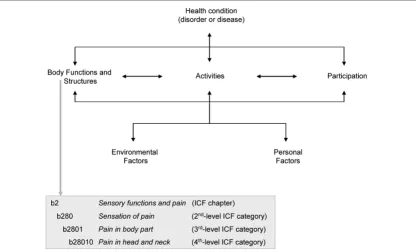
Based on the bio-psycho-social perspective, the ICF classifi-cation contains the so-called ICF components Body Func-tions, Body Structures and Activities and Participation as well as the contextual factors Environmental and Personal Factors (see Figure 1). Both functioning and disability represent the
result of the interaction between Body Functions, Body Struc-tures and Activities and Participation of an individual with a health condition and the contextual factors of that individual. The ICF classification contains more than 1,400 so-called ICF categories, each allotted to the named components of the classification – with the exception of the component Personal Factors, which has not yet been classified. Each ICF category is denoted by a code composed of a letter that refers to the components of the classification (b, Body Functions; s, Body Structures; d, Activities and Participation; and e, Environmen-tal Factors) and is followed by a numeric code starting with the chapter number (one digit), followed by the second level (two digits) and the third and fourth levels (one digit each) (see Fig-ure 1).
To address the issue of feasibility regarding the over 1,400 ICF categories, ICF Core Sets have been developed in a for-mal-decision-making and consensus-based process integrat-ing evidence gathered from preparatory studies for a number of most burdensome, chronic health conditions. ICF Core Sets represent a selection of ICF categories out of the whole classification that can serve as minimal standards for the reporting of functioning and environmental factors for clinical studies and clinical encounters (Brief ICF Core Set) or as standards for multiprofessional, comprehensive assessment (Comprehensive ICF Core Set). Since the ICF Core Sets address aspects within all of the components of the ICF (Body Functions, Body Structures, Activities and Participation, Envi-ronmental Factors) they present a broad perspective that may reflect the whole health experience of patients.
One of the several health conditions for which ICF Core Sets were developed is chronic widespread pain (CWP). A com-mon musculoskeletal disorder, CWP is characterized by gen-eralized muscular pain and tenderness at multiple sites. Clinical examinations reveal no disease in joints and muscles. Fibromyalgia (FM) is one of the most severe clinical manifesta-tions of CWP. According to the American College of Rheuma-tology, patients with widespread pain for at least 3 months and tenderness in 11 out of 18 tender points on digital palpation are classified as suffering FM [3]. In addition to pain, FM is characterized by fatigue, sleeping problems, mood disorder and several other symptoms as well [4]. An estimated 0.5 to 4% of the population suffers from FM [5]. Working, managing daily tasks and functioning in general can become a tremen-dous burden for the sufferers. Functioning represents the core of the patients' experience and is determined and influenced by their interaction with the environment and their own per-sonal characteristics – not only by the health condition [6-9]. This is reflected by patients themselves and also by health pro-fessionals treating patients with FM. Owing to the multidimen-sional nature of FM, however, experts in general have recognized the difficulty of finding standardized measures, thus limiting the progress in therapeutic approaches.
The lack of standardized or validated outcome measures for FM has caused uncertainty regarding which key domains of the condition should be measured. This has been acknowl-edged by initiatives such as the Outcome Measures in Rheu-matoid Arthritis Clinical Trials (OMERACT), the goal being to define what should be measured and how, across the spec-Figure 1
The bio-psycho-social perspective and the International Classification of Functioning, Disability and Health (ICF)
[image:2.612.100.517.95.347.2]trum of rheumatology intervention and observational studies [10]. OMERACT FM workshops have been held with the objective of standardizing and improving the quality of out-come research in FM by identifying and prioritizing domains [11,12]. The ICF can help specify OMERACT domains by serving as a conceptual model to define functioning.
The Comprehensive ICF Core Set for CWP describes the typical spectrum of problems in functioning among patients with CWP. Additionally, it provides an ideal basis from which to define theoretically sound models of functioning and disa-bility in patients with CWP. The current version of the Compre-hensive ICF Core Set for CWP includes 65 ICF categories at the second level and two ICF categories at the third level of the classification.
The Comprehensive ICF Core Set for CWP is now undergo-ing worldwide testundergo-ing and validation usundergo-ing a number of approaches, including an international multicentre validation study and a validation from the perspective of health profes-sionals. Since patients were not directly included in the devel-opment of the ICF Core Sets, they are now explicitly involved in the validation of ICF Core Sets to establish the patient per-spective in this process. As standards of functioning and health in research and clinical practice, the ICF Core Sets have to show that they address the perspective of those who experience the disease. Since FM is a very common CWP ill-ness with clearly defined classification criteria, we decided to focus on FM patients to validate the ICF Core Sets for CWP.
Qualitative methodology provides the possibility of exploring the perspective of those who experience a health problem; that is, the patient perspective [13,14]. Qualitative methods, especially focus groups, are now widely used and increasingly accepted in health research and health-related sciences [15-17]. The idea behind the focus group methodology is that group processes can help people explore and clarify their views [18]. The nondirective nature of focus groups allows participants to comment, explain, disagree and share experi-ences and attitudes [19]. The Comprehensive ICF Core Set for rheumatoid arthritis was validated recently from the patient perspective using qualitative methodology. Seventy-one out of the 76 ICF categories in this ICF Core Set were confirmed, and an additional 57 categories not covered in the ICF Core Set for rheumatoid arthritis were found [20]. Further studies for validation of ICF Core Sets from the patient perspective are currently in progress, including those for stroke, low-back pain and diabetes.
The objective of the present study was to add evidence to the validation of the Comprehensive ICF Core Set for CWP from the perspective of patients with FM. The specific aims were to explore the aspects of functioning and health important to patients with FM using focus group methodology and to
exam-ine to what extent these aspects are represented by the cur-rent version of the Comprehensive ICF Core Set for CWP.
Materials and methods
Design
We conducted a qualitative study with patients suffering from FM using focus groups. The study was approved by the Ethics Commission of the medical faculty of the Ludwig-Maximilian University, Munich.
Participants
Persons with FM from three different sources – the FM day clinic of the Department of Physical Medicine and Rehabilita-tion of the Ludwig-Maximilian University Munich, the waiting list of the same clinic, and patients from a German self-help group of FM sufferers (Deutsche Rheuma-Liga e.V.) – were contacted and asked whether they would like to participate in the study. A sample was selected based on the maximum var-iation strategy [21] from the pool of patients who answered positively, the two criteria being disease duration and age. Only participants with FM diagnosed according to the Ameri-can College of Rheumatology [3] and who gave written informed consent according to the Declaration of Helsinki 1996 were definitely selected.
Sample size
The sample size was determined by saturation [22]. Saturation refers to the point at which an investigator obtains sufficient information from the field [18] (see Data analysis, Saturation of data).
Methods
Participants filled out a patient questionnaire including socio-demographic and disease-related variables. An established topic guide with guidelines describing how to prepare and perform the focus group sessions as well as open-ended questions was applied [23]. During the focus group sessions, a visual presentation of the open-ended questions was used for better comprehension.
Data collection
All focus groups were conducted in a nondirective manner by the same moderator (RH) and one group assistant (MC). The moderator and group assistant were psychologists with exper-tise in the ICF and in conducting group processes.
each chapter was introduced, patients were encouraged to describe in their own words any problems they personally experienced related to each specific ICF chapter. To gain more information relevant to the participants, they were asked – after the presentation of all chapter titles of each of the ICF components – whether they thought anything important was missing (Table 1 also presents examples for the ICF chapters).
At the end of each focus group session, a summary of the main results was given back to the group to enable the participants to verify and amend emergent issues.
The focus group sessions were digitally recorded and tran-scribed verbatim. The assistant observed the process within the group session and took field notes according to a stand-ardized coding schema. Field notes refer to descriptive obser-vations of the group interaction and of the topics of discussion. To review the course of the focus group, a debriefing with the moderator and the assistant took place after each focus group.
Data analysis
Qualitative analysis
The meaning condensation procedure [24] was used for the qualitative data analysis (see Table 2). In the first step, the tran-scripts of the focus groups were read through to gain an over-view of the collected data. In the second step, the data were divided into meaning units, and the theme that dominated a meaning unit was determined. A meaning unit was defined as a specific unit of text, either a few words or a few sentences with a common theme [25]. A meaning unit division therefore did not follow linguistic grammatical rules. Rather, the text was divided where the researcher discerned a shift in meaning [24]. In the third step, the concepts contained in the meaning
units were identified. A meaning unit could contain more than one concept.
Linking to the ICF
The identified concepts were linked to ICF categories based on established linking rules [26,27] in a systematic and stand-ardized way. According to these linking rules, health profes-sionals trained in the ICF are advised to link each concept to the ICF category representing this concept most precisely.
Saturation of data
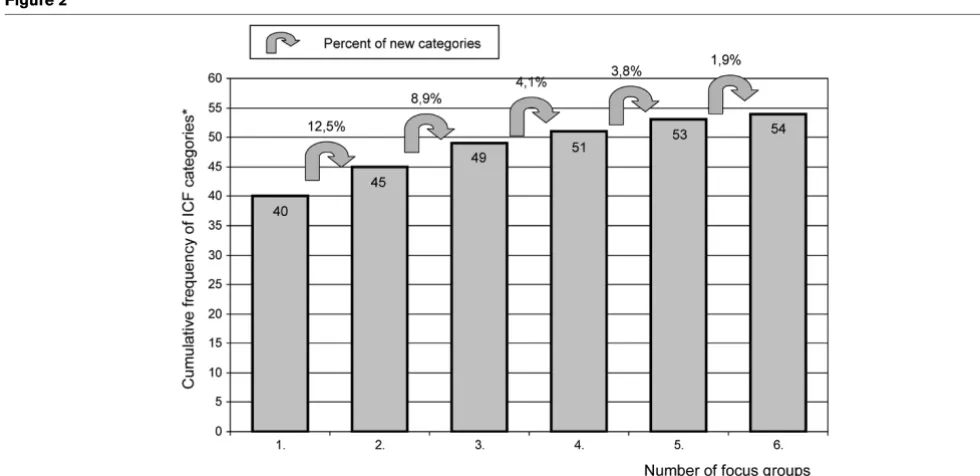
Saturation was defined as the point during data collection and analysis in which the linking of the concepts of two consecu-tive focus groups each reveal less than 5% additional ICF cat-egories in relation to the number of ICF catcat-egories contained in the Comprehensive ICF Core Set for CWP that were iden-tified in the respective previous focus group.
Confirmation of ICF categories
An ICF category of the Comprehensive ICF Core Set for CWP was regarded as confirmed if the respective ICF cate-gory had been identified after linking the information recorded from the focus groups to the ICF.
Additional ICF categories
All ICF categories identified in the focus groups that are included in the ICF but not in the current version of the Com-prehensive ICF Core Set for CWP are reported as additional categories. To allow for a quick overview, only second-level ICF categories are presented in the tables.
Accuracy of the analysis
To ensure the accuracy of data analysis, two strategies were conducted. First, multiple coding – which refers to performing the qualitative analysis and the linking to the ICF of the first
Table 1
Open-ended questions of the focus group, including a brief example from Activities and Participation component
Open-ended questions
If you think about your body and mind, what does not work the way it is supposed to?
If you think about your body, in which parts are your problems?
If you think about your daily life, what are your problems in this area?
- The next area is called Mobility. This area involves everything having to do with movement. If you think about your daily life, what are your problems in this area?a
- The next area is called self-care. If you think about your daily life, what are your problems in this area?a
- ....
- Can you think of anything else missing in this area regarding your daily life?
If you think about your environment and your living conditions, what do you find helpful or supportive?
If you think about your environment and your living conditions, what barriers do you experience?
focus group by two health professionals. The two health pro-fessionals compared their data analysis and documented the discussion. Second, peer review – which refers to analysing and linking random samples of 15% of the transcribed text and 15% of the identified concepts (of the first health professional) by a second health professional. The degree of agreement between the two health professionals regarding the linked ICF categories was calculated by kappa statistic with 95%-boot-strapped confidence intervals [28]. The values of the kappa coefficient generally range from 0 to 1, where 1 indicates per-fect agreement and 0 indicates no additional agreement beyond what is expected by chance alone. The Kappa analysis was performed with SAS for Windows, version 9.1 (SAS Insti-tute Inc., Cary, NC, USA).
Results
Description of the focus groups
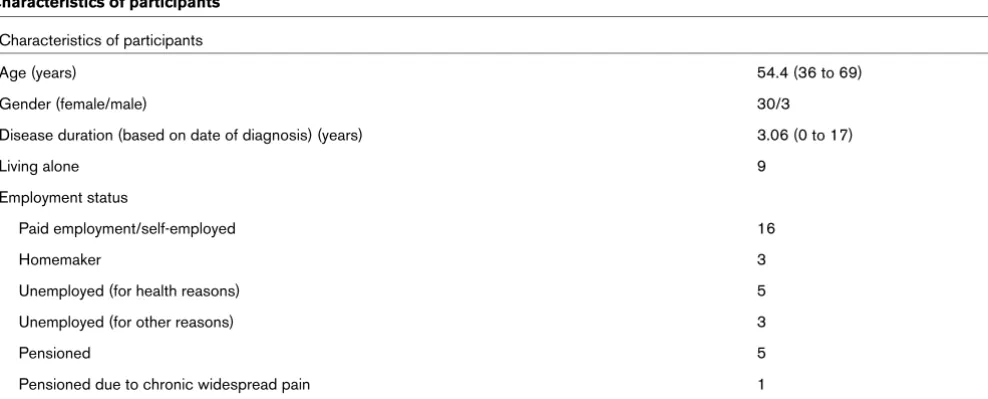
A total of 33 participants were included in six focus groups. Participants' characteristics are summarized in Table 3. The focus group sessions lasted from 70 to 115 minutes (mean 1 hour 40 minutes) including a short break.
Qualitative analysis and linking
A total of 1,686 concepts were identified in the focus groups. These concepts were linked to 247 different ICF categories of the first to the fourth levels. There were 277 concepts that could not be linked to ICF categories. Of these, 143 concepts could be allotted to the component Personal Factors (for example, aspects of coping, disease management) and 90 concepts were not included in the ICF classification, and therefore were defined as not covered (for example, time-related aspects, benefits of heat or exercise). Forty-four con-Table 2
Scheme of the qualitative data analysis
Transcription + meaning units Concepts ICF categories
Moderator: The next area is called Mobility. This area involves everything having to do with movement. If you think about your daily life, what are your problems in this area?
Patient A: Working over my head is becoming more and more difficult, like cleaning windows.
Problems working over the head d4
Cleaning windows d6402
Patient B: I have to hold on to the railing and pull myself up when I go up the stairs. The next day it might be better but I really have to pull myself up to go up the stairs.
Problems going up the stairs d4551
Patient C: After a half hour of ironing my arms hurt. Then I have to take a break. Kneeling is also a problem for me.
Pain in arm when ironing b28014, d6403
Problems kneeling d4102
[image:5.612.61.555.517.716.2]ICF, International Classification of Functioning, Disability and Health.
Table 3
Characteristics of participants
Characteristics of participants
Age (years) 54.4 (36 to 69)
Gender (female/male) 30/3
Disease duration (based on date of diagnosis) (years) 3.06 (0 to 17)
Living alone 9
Employment status
Paid employment/self-employed 16
Homemaker 3
Unemployed (for health reasons) 5
Unemployed (for other reasons) 3
Pensioned 5
Pensioned due to chronic widespread pain 1
cepts were labelled not definable, which means that the con-cept is too unspecific to be assigned to a concrete ICF category (for example, quality of life in general).
Some concepts named by the participants were more specific than the corresponding most specific ICF category. For exam-ple, the participants reported several issues pertaining to the pain quality (pressure pain, rest pain, stabbing pain) that are not specifically covered by the existing ICF categories at that level of detail. All of these concepts referring to different qual-ities of pain were therefore linked to the ICF category sensa-tion of pain (b280).
Saturation of data
Regarding the ICF categories of the Comprehensive ICF Core Set for CWP, saturation of data was reached after con-ducting six focus groups (see Figure 2).
Confirmation of the Comprehensive ICF Core Set for CWP
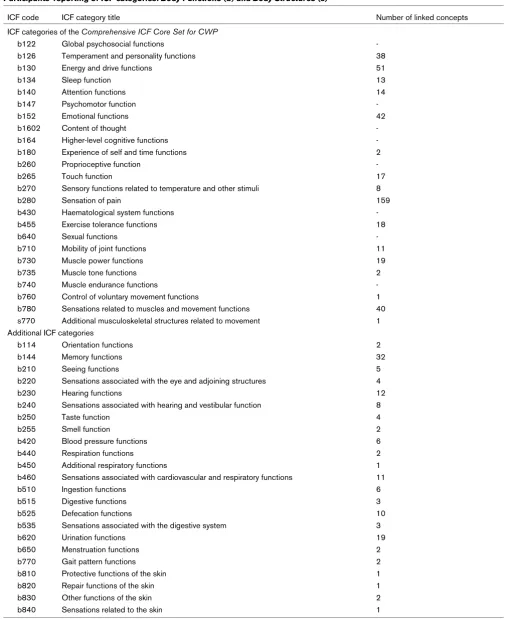
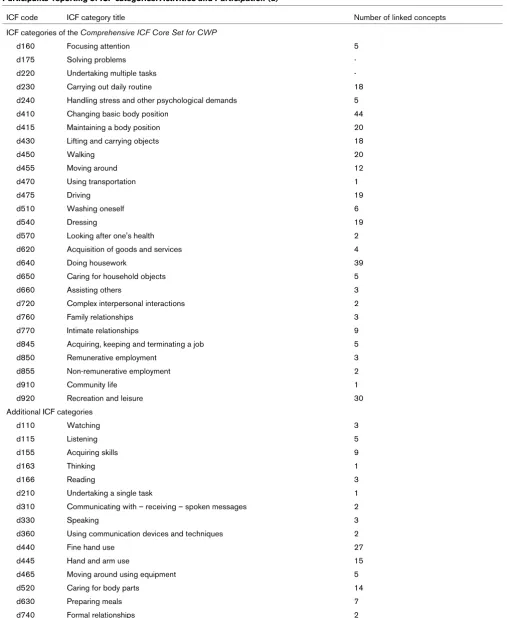
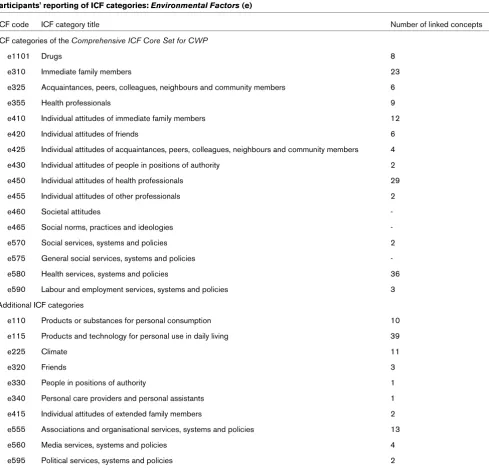
In total, 54 out of the 67 ICF categories included in the Com-prehensive ICF Core Set for CWP were confirmed by the par-ticipants: 15 out of the 23 categories of Body Functions, the one category of Body Structures, 25 out of the 27 categories of Activities and Participation and 13 out of the 16 categories of Environmental Factors (Tables 4, 5 and 6).
Additional categories
Forty-eight additional second-level ICF categories that are not included in the current version of the Comprehensive ICF
Core Set for CWP were identified in the focus groups (Tables 4, 5 and 6). Most of the additional ICF categories stem from Body Functions (n = 23), followed by Activities and Participa-tion (n = 15). Ten addiParticipa-tional ICF categories reported by the participants related to Environmental Factors. No additional ICF categories from Body Structures were identified.
Twenty-two further third-level and fourth-level ICF categories emerged (data not shown), mainly from the Activities and Par-ticipation chapter Mobility (for example, d4401 grasping, d4153 maintaining a sitting position, d4552 running), and the Body Functions chapters Mental functions (for example, b1300 energy level, b1301 motivation, b1343 quality of sleep) and Neuromusculoskeletal and movement-related functions (for example, b7801 sensation of muscle spasm, b7300 power of isolated muscles and muscle groups).
Accuracy of the analysis
The kappa coefficient for the agreement between the two investigators (peer review) was 0.76. The 95%-bootstrapped confidence interval was 0.70 to 0.82.
Discussion
[image:6.612.54.544.454.692.2]Most ICF categories of the current version of the Comprehen-sive ICF Core Set for CWP could be confirmed from the patient perspective by FM patients. Fifty-four ICF categories out of 67 categories of the Comprehensive ICF Core Set for CWP were reported by the patients. Forty-eight additional cat-egories that are not covered in the Comprehensive ICF Core Set for CWP were raised. The present study also confirmed
Figure 2
Saturation of the qualitative data in the focus groups
Table 4
Participants' reporting of ICF categories: Body Functions (b) and Body Structures (s)
ICF code ICF category title Number of linked concepts
ICF categories of the Comprehensive ICF Core Set for CWP
b122 Global psychosocial functions
-b126 Temperament and personality functions 38
b130 Energy and drive functions 51
b134 Sleep function 13
b140 Attention functions 14
b147 Psychomotor function
-b152 Emotional functions 42
b1602 Content of thought
-b164 Higher-level cognitive functions
-b180 Experience of self and time functions 2
b260 Proprioceptive function
-b265 Touch function 17
b270 Sensory functions related to temperature and other stimuli 8
b280 Sensation of pain 159
b430 Haematological system functions
-b455 Exercise tolerance functions 18
b640 Sexual functions
-b710 Mobility of joint functions 11
b730 Muscle power functions 19
b735 Muscle tone functions 2
b740 Muscle endurance functions
-b760 Control of voluntary movement functions 1
b780 Sensations related to muscles and movement functions 40 s770 Additional musculoskeletal structures related to movement 1 Additional ICF categories
b114 Orientation functions 2
b144 Memory functions 32
b210 Seeing functions 5
b220 Sensations associated with the eye and adjoining structures 4
b230 Hearing functions 12
b240 Sensations associated with hearing and vestibular function 8
b250 Taste function 4
b255 Smell function 2
b420 Blood pressure functions 6
b440 Respiration functions 2
b450 Additional respiratory functions 1
b460 Sensations associated with cardiovascular and respiratory functions 11
b510 Ingestion functions 6
b515 Digestive functions 3
b525 Defecation functions 10
b535 Sensations associated with the digestive system 3
b620 Urination functions 19
b650 Menstruation functions 2
b770 Gait pattern functions 2
b810 Protective functions of the skin 1
b820 Repair functions of the skin 1
b830 Other functions of the skin 2
b840 Sensations related to the skin 1
Table 5
Participants' reporting of ICF categories: Activities and Participation (d)
ICF code ICF category title Number of linked concepts
ICF categories of the Comprehensive ICF Core Set for CWP
d160 Focusing attention 5
d175 Solving problems
-d220 Undertaking multiple tasks
-d230 Carrying out daily routine 18
d240 Handling stress and other psychological demands 5
d410 Changing basic body position 44
d415 Maintaining a body position 20
d430 Lifting and carrying objects 18
d450 Walking 20
d455 Moving around 12
d470 Using transportation 1
d475 Driving 19
d510 Washing oneself 6
d540 Dressing 19
d570 Looking after one's health 2
d620 Acquisition of goods and services 4
d640 Doing housework 39
d650 Caring for household objects 5
d660 Assisting others 3
d720 Complex interpersonal interactions 2
d760 Family relationships 3
d770 Intimate relationships 9
d845 Acquiring, keeping and terminating a job 5
d850 Remunerative employment 3
d855 Non-remunerative employment 2
d910 Community life 1
d920 Recreation and leisure 30
Additional ICF categories
d110 Watching 3
d115 Listening 5
d155 Acquiring skills 9
d163 Thinking 1
d166 Reading 3
d210 Undertaking a single task 1
d310 Communicating with – receiving – spoken messages 2
d330 Speaking 3
d360 Using communication devices and techniques 2
d440 Fine hand use 27
d445 Hand and arm use 15
d465 Moving around using equipment 5
d520 Caring for body parts 14
d630 Preparing meals 7
d740 Formal relationships 2
relevant outcomes of treatment in CWP and FM from the patient perspective, such as pain, fatigue, sleep disorders, psychological distress, lack of muscle power, difficulties changing and maintaining a body position, and difficulties car-rying out a daily routine [29,30]. Pain proved to be the central topic reported by patients, with a total of 159 concepts linked to the ICF Core Set category sensation of pain (b280).
Apart from pain, the most outstanding theme reported by par-ticipants was the attitude of others regarding FM. The patients describe often feeling left alone with their illness, due to a lack of understanding and acceptance from others. Several
[image:9.612.63.552.102.570.2]patients reported feeling as if FM is not accepted as a legiti-mate illness by some doctors and healthcare professionals and is often trivialized by friends, relatives and colleagues, thus adding to the burden of pain and exhaustion. Fifty-five con-cepts concerning negative attitudes of others regarding the ill-ness were linked to the corresponding ICF Core Set categories (e410, e420, e425, e430, e450, e455). Forty-six additional concepts were linked to the first-level ICF category attitudes (e4). Several studies report similar findings such as patients' experiences of stigma [31-34] and studies docu-menting controversy as to the existence, classification and acceptance of FM by healthcare professionals [35-38]. Table 6
Participants' reporting of ICF categories: Environmental Factors (e)
ICF code ICF category title Number of linked concepts
ICF categories of the Comprehensive ICF Core Set for CWP
e1101 Drugs 8
e310 Immediate family members 23
e325 Acquaintances, peers, colleagues, neighbours and community members 6
e355 Health professionals 9
e410 Individual attitudes of immediate family members 12
e420 Individual attitudes of friends 6
e425 Individual attitudes of acquaintances, peers, colleagues, neighbours and community members 4
e430 Individual attitudes of people in positions of authority 2
e450 Individual attitudes of health professionals 29
e455 Individual attitudes of other professionals 2
e460 Societal attitudes
-e465 Social norms, practices and ideologies
-e570 Social services, systems and policies 2
e575 General social services, systems and policies
-e580 Health services, systems and policies 36
e590 Labour and employment services, systems and policies 3
Additional ICF categories
e110 Products or substances for personal consumption 10
e115 Products and technology for personal use in daily living 39
e225 Climate 11
e320 Friends 3
e330 People in positions of authority 1
e340 Personal care providers and personal assistants 1
e415 Individual attitudes of extended family members 2
e555 Associations and organisational services, systems and policies 13
e560 Media services, systems and policies 4
e595 Political services, systems and policies 2
Thirteen ICF categories in the Comprehensive ICF Core Set for CWP were not at all mentioned by the focus groups. Most of the ICF categories belonged to Body Functions and included global psychosocial functions (b122), psychomotor function (b147), content of thought (b1602), proprioceptive function (b260) and haematological system functions (b430). Some categories were not confirmed but were linked to similar categories; for example, 18 concepts were linked to the cate-gory carrying out daily routine (d230) instead of undertaking multiple tasks (d220), and nine concepts were linked to inti-mate relationships (d770) instead of sexual functions (b640). Sometimes the participants made more specific statements that were linked to similar ICF categories; for example, although the ICF Core Set category societal attitudes (e460) was not linked, several statements were linked to categories e410 through e455 specifying individual attitudes (for exam-ple, individual attitudes of friends, colleagues, people in posi-tions of authority, health professionals).
Forty-eight additional second-level ICF categories that are not covered in the current version of the Comprehensive ICF Core Set for CWP were raised. Most of the additional ICF cat-egories belong to Body Functions, followed by Activities and Participation and Environmental Factors. Some of these addi-tional ICF categories need special discussion. Several con-cepts deal with difficulties in cognitive functioning. Thirty-two concepts were linked to the Body Functions category memory functions (b144). The patients reported problems with short-term and long-short-term memory such as absorbing, storing and recalling information. Learning and applying knowledge was also perceived as challenging for the participants. Difficulties acquiring skills, thinking, hearing, listening and reading were frequently reported by the focus group participants. Poor memory performance and problems in cognitive functioning in FM sufferers have been well documented and are in accord-ance with other studies [39-42]. Sensations associated with hearing, such as tinnitus and dizziness, were also reported by the participants, as in other studies [43,44].
The use of the hands and arms is a further topic not included in the Comprehensive ICF Core Set for CWP that FM suffer-ers experience as very burdening. The participants reported difficulties in grasping, picking up and manipulating objects with their hands and pulling, reaching and turning or twisting the arms, making everyday activities and tasks very difficult to fulfil. Twenty-seven and 15 concepts were linked to fine hand use (d440) and hand and arm use (d445), respectively.
An additional topic found among the participants but not included in the Comprehensive ICF Core Set for CWP was functions of the digestive system. Such problems included dif-ficulties with salivation, swallowing and digesting food. Urinal and intestinal irregularities were frequently reported and expe-rienced as extremely hindering, affecting numerous activities and participation in sports and social engagements. Irritable
bowel syndrome and urinary problems in FM sufferers are reported in other studies as well [45-47]. Twenty-two con-cepts were linked to functions related to the digestive system (b510 to b535). Some participants mentioned feeling as if fin-gers, hands, feet or legs were swollen although swelling was not always visible. These concepts were labelled not defina-ble. Other topics concerned Environmental Factors not cov-ered in the ICF classification (labelled not covcov-ered). Numerous patients mentioned the benefits of heat, such as using hot or warm water to sooth aching body parts. Several others recog-nized the importance of exercise in coping with pain and fatigue.
The characteristics of the sample in this study (gender, age, disease duration) are comparable with samples in other national [48] and international studies [49]. The validation of the ICF Core Set for rheumatoid arthritis from the patient per-spective using the same approach as in the present study showed similar results. Seventy-one out of the 76 ICF catego-ries in the ICF Core Set for Rheumatoid Arthritis were con-firmed and an additional 57 categories not covered in the ICF Core Set for rheumatoid arthritis emerged [20].
It is important to mention that several strategies were used to improve and verify the trustworthiness of the data analysis. Tri-angulationensured the comprehensiveness of data; we included data triangulation by using two data analysts (investi-gator triangulation: multiple coding) [50,51]. Secondly, reflex-ivity was assured by conducting a research diary for the documentation of memos concerning the design, data collec-tion and data analysis. Clear exposicollec-tion was also used, estab-lishing guidelines for conducting the focus groups (including open-ended questions), verbatim transcription, and linking rules [28]. Finally, peer review was included, as described ear-lier. The kappa coefficient of 0.76 (0.70 to 0.82) for the accu-racy of the peer review is comparable with other studies reporting kappa statistics about the linking of categories [22,52,53], and can be regarded as substantial agreement.
fol-lowing the strategy of saturation during data analyses, with the criteria of two consecutive focus groups each revealing less than 5% additional ICF categories in relation to the number of ICF categories of the Comprehensive ICF Core Set for CWP identified in the respective previous focus group. Participants in a seventh focus group might still report new themes and concepts not yet addressed.
Initiatives such as the OMERACT address the challenge of standardizing and improving the quality of outcomes research by finding a common terminology and a common model of functioning and disability. The OMERACT FM workshop agreed upon the most important key domains to measure in FM. Some of the key domains mentioned are pain, patient glo-bal sense of well-being, fatigue, multidimensional aspects of functioning, sleep, depression, and treatment side effects. These domains are included in the Comprehensive ICF Core Set for CWP, which can in turn be used as a basis for the fur-ther specification of OMERACT domains and the develop-ment of new instrudevelop-ments to assess functioning for research. A further key research objective of the OMERACT initiative will be to include the patient perspective on what represents a clinically meaningful change in a domain or the syndrome as a whole. The present study can help enhance the knowledge of FM by including the patient perspective. Further research in the context of the development and confirmation of ICF Core Sets, however, is needed.
The results of the present study are comparable with the results of the validation of ICF Core Sets for rheumatoid arthri-tis. In line with the validation study of ICF Core Sets for CWP, most of the ICF categories included in the ICF Core Set for rheumatoid arthritis were also confirmed [20]. In addition, both studies identified numerous ICF categories from the patient perspective that were not included in the current versions of the ICF Core Set. All results of the validation studies of ICF Core Sets will be presented at an international World Health Organization conference and will be taken into account for the decision on the final versions of ICF Core Sets.
Conclusions
It is important to consider the patient perspective for the vali-dation of the Comprehensive ICF Core Set for CWP. Most ICF categories of the existing version of the Comprehensive ICF Core Set for CWP could be confirmed by focus groups with FM patients. Several additional categories not repre-sented in the Comprehensive ICF Core Set for CWP emerged from the focus groups and should be considered for inclusion in the final version.
Competing interests
The authors declare that they have no competing interests.
Authors' contributions
RH conceived and organized the study and drafted the manu-script. MC participated in the performance of the focus groups and the data analysis and was involved in the peer review. GS was responsible for the overall design of the development and the validation of ICF Core Sets. AW guided the study with his input on FM. AC participated in the development of the study design and accompanied the study implementation.
Acknowledgements
The authors would like to thank Monika Hörer for the transcription of the focus groups. The present study was partially funded by the Deutsche Rheuma-Liga e.V., Bundesverband.
References
1. World Health Organization: International Classification of Func-tioning, Disability and Health: ICF Geneva: WHO; 2001. 2. Stucki G, Ewert T, Cieza A: Value and application of the ICF in
rehabilitative medicine. Disabil Rehabil 2003, 25:628-634. 3. Wolfe F, Smythe HA, Yunus MB, Bennett RM, Bombardier C,
Goldenberg DL, Tugwell P, Campbell SM, Abeles M, Clark P, Fam AG, Farber SJ, Fiechtner JJ, Franklin M, Gatter RA, Hamaty D, Les-sard J, Lichtbroun AS, Masi AT, Mccain GA, Reynolds WJ, Romano TJ, Russell IJ, Sheon RP: The American College of Rheumatology 1990 criteria for classification of fibromyalgia: report of the multi-center criteria committee. Arthritis Rheum
1990, 33:160-172.
4. Wolfe F, Ross K, Anderson J, Russell IJ, Hebert L: The prevalence and characteristics of fibromyalgia in the general population.
Arthritis Rheum 1995, 38:19-28.
5. Clauw DJ, Crofforf LJ: Chronic widespread pain and fibromyal-gia: what we know and what we need to know. Best Pract Res Clin Rheumatol 2003, 17:685-701.
6. Richardson JC, Ong BN, Sim J: Experiencing chronic wide-spread pain in a family context: giving and receiving practical and emotional support. Sociol Health Illn 2007, 29:347-365. 7. Gupta A, Silman J, Ray D, Morriss R, Dickens C, MacFarlane GJ,
Chiu YH, Nicholl B, McBeth J: The role of psychosocial factors in predicting the onset of chronic widespread pain: results from a prospective population-based study. Rheumatology
2007, 46:666-671.
8. Sylvain H, Talbot LR: Synergy towards health: a nursing inter-vention model for women living with fibromyalgia and their spouses. J Adv Nurs 2002, 38:264-273.
9. Henriksson CM: Longterm effects of fibromyalgia on everyday life. Scand J Rheumatol 1994, 23:36-41.
10. Stucki G, Boonen A, Tugwell P, Cieza A, Boers M: The World Health Organisation International Classification of Function-ing, Disability and Health: a conceptual model and interface for the OMERACT process. J Rheumatol 2007, 34:600-606. 11. Mease PJ, Clauw DJ, Arnold LM, Goldenberg DL, Witter J,
Wil-liams DA, Simon LS, Strand CV, Bramson C, Martin S, Wright TM, Littman B, Wernicke JF, Gendreau RM, Crofford LJ: Fibromyalgia syndrome. J Rheumatol 2005, 32:2270-2277.
12. Mease P, Arnold LM, Bennett R, Boonen A, Buskila D, Carville S, Chappell A, Choy E, Clauw D, Dadabhoy D, Gendreau M, Golden-berg D, Littlejohn G, Martin S, Perera P, Russell IJ, Simon L, Spa-eth M, Williams D, Crofford L: Fibromyalgia syndrome. J Rheumatol 2007, 34:1415-1425.
13. Carr AJ, Hewlett S, Hughes R, Mitchell H, Ryan S, Carr M, Kirwan J: Rheumatology outcomes: the patient's perspective. J Rheu-matol 2003, 30:880-883.
14. Kirwan J, Heiberg T, Hewlett S, Hughes R, Kvien T, Ahlmen M, Boers M, Minnock P, Saag K, Shea B, Suarez Almazor M, Taal E: Outcomes from the Patient Perspective Workshop at OMER-ACT 6. J Rheumatol 2003, 30:868-872.
15. Mays N, Pope C: Qualitative research in health care: assessing quality in qualitative research. BMJ 2000, 320:50-52. 16. Giacomini MK, Cook DJ: Users' guides to the medical literature:
17. Murphy E, Dingwall R, Greatbatch D, Parker S, Watson P: Quali-tative research methods in health technology assessment: a review of the literature. Health Technol Assess 1998, 2:1-274. 18. Kitzinger J: Qualitative research: introducing focus groups.
BMJ 1995, 311:299-302.
19. Powell RA, Single HM, Lloyd KR: Focus groups in mental health research: enhancing the validity of user and provider question-naires. Int J Soc Psychiatry 1996, 42:193-206.
20. Coenen M, Cieza A, Stamm TA, Amann E, Kollerits B, Stucki G: Validation of the International Classification of Functioning, Disability and Health (ICF) Core Set for rheumatoid arthritis from the patient perspective using focus groups. Arthritis Res Ther 2006, 8:R84.
21. Patton MQ: Qualitative Evaluation and Research Methods New-bury Park, CA: Sage; 1990.
22. Kvale S: Interviews – An Introduction to Qualitative Research Interviewingw Newbury Park, CA: Sage; 1996.
23. Karlsson G: Psychological Qualitative Research from a Phenom-enological Perspective Stockholm: Almquist & Wiskell Interna-tional; 1995.
24. Cohen J: A coefficient of agreement for nominal scales. Educ Psychol Meas 1960, 20:37-46.
25. Cieza A, Brockow T, Ewert T, Amman E, Kollerits B, Chatterji S, Üstün TB, Stucki G: Linking health-status measurements to the International Classification of Functioning, Disability and Health. J Rehabil Med 2002, 34:205-210.
26. Cieza A, Brockow T, Ewert T, Amman E, Kollerits B, Chatterji S, Üstün TB, Stucki G: Linking health-status measurements to the International Classification of Functioning, Disability and Health. J Rehabil Med 2002, 34:205-210.
27. Cieza A, Geyh S, Chatterji S, Kostanjsek N, Üstün B, Stucki G: ICF linking rules: an update based on lessons learned. J Rehabil Med 2005, 37:212-218.
28. A SAS macro for calculating bootstrapped confidence inter-vals about a kappa coefficient [http://www2.sas.com/proceed ings/sugi22/STATS/PAPER295.PDF]
29. Robinson ME, Brown JL, George SZ, Edwards PS, Atchison JW, Hirsch AT, Waxenberg LB, Wittmer V, Fillingim RB: Multidimen-sional success criteria and expectations for treatment of chronic pain: the patient perspective. Pain Med 2005, 6:336-345.
30. Wassem R, McDonald M, Racine J: Fibromyalgia: patient per-spectives on symptoms, symptom management, and provider utilization. Clin Nurse Spec 2002, 16:24-28.
31. Asbring P, Närvänen AL: Women's experiences of stigma in relation to chronic fatigue syndrome and fibromyalgia. Qual Health Res 2002, 12:148-160.
32. Paulson M, Norberg A, Danielson E: Men living with fibromyal-gia-type pain: experiences as patients in the swedish health care system. J Adv Nurs 2002, 40:87-95.
33. Henriksson CM: Living with continuous muscular pain – patient perspectives: part I. encounters and consequences. Scand J Caring Sci 1995, 9:67-76.
34. Söderberg S, Lundman B, Norberg A: Struggling for dignity: the meaning of women's experience of living with fibromyalgia.
Qual Health Res 1999, 9:575-587.
35. White KP: Fibromyalgia: the answer is blowin in the wind. J Rheumatol 2004, 31:636-9.
36. Ehrlich GE: Pain is real; fibromyalgia isn't. J Rheumatol 2003, 30:1666-1667.
37. Stahl SM: Fibromyalgia: the enigma and the stigma. J Clin Psy-chiatry 2001, 62:501-502.
38. Wolfe F: Stop using the American College of Rheumatology Criteria in the clinic. J Rheumatol 2003, 30:1671-1672. 39. Park DC, Glass JM, Minear M, Crofford LJ: Cognitive function in
fibromyalgia patients. Arthritis Rheum 2001, 44:2125-2133. 40. Sephton SE, Studts JL, Hoover K, Weissbecker I, Lynch G, Ho I,
McGuffin S, Salmon P: Biological and psychological factors associated with memory function in fibromyalgia syndrome.
Health Psychol 2003, 22:592-597.
41. Sietvold H, Stiles TC, Landro NI: Information processing in pri-mary fibromyalgia, major depression and healthy controls. J Rheumatol 1995, 22:137-142.
42. Grace GM, Nielson WR, Hopkins M, Berg MA: Concentration and memory deficits in patients with fibromyalgia syndrome. J Clin Exp Neuropsychol 1999, 21:477-487.
43. Bayazit YA, Gürsoy S, Özer E, Karakurum G, Madenci E: Neuro-tologic manifestations of the fibromyalgia syndrome. J Neurol Sci 2002, 196:77-80.
44. Rosenhall U, Johansson G, Orndahl G: Otoneurologic and audi-ologic findings in fibromyalgia. Scand J Rehabil Med 1996, 28:225-232.
45. Wolfe F, Ross K, Anderson J, Russell IJ, Hebert L: The prevalence and characteristics of fibromyalgia in the general population.
Arthritis Rheum 1995, 38:19-28.
46. Koziol JA: Epidemiology of interstitial cystitis. Urol Clin North Am 1994, 21:7-20.
47. Sperber AD, Aczmon Y, Neumann L, Weisberg I, Shalit Y, Abu-Shakrah M, Fich A, Buskila : Fibromyalgia in the irritable bowel syndrome: studies of prevalence and clinical implications. Am J Gastroenterol 1999, 94:3541-3546.
48. Offenbächer M, Waltz M, Schoeps P: Validation of a german ver-sion of the fibromyalgia impact questionnaire (FIQ-G). J Rheu-matol 2000, 27:1984-1988.
49. Neumann L, Buskila D: Epidemiology of fibromyalgia. Curr Pain Headache Rep 2003, 7:362-368.
50. Denzin NK: The Research Act: A Theoretical Introduction to Soci-ological Methods New York: McGraw-Hill; 1978.
51. Barbour R: Checklists for improving rigour in qualitative research: a case of the tail wagging the dog? BMJ 2001, 322:1115-1117.
52. Landis JR, Koch GG: The measurement of observer agreement for categorial data. Biometrics 1977, 33:159-174.
53. Stamm TA, Cieza A, Coenen M, Machold KP, Nell VP, Smolen JS, Stucki G: Validating the international classification of function-ing, disability and health comprehensive core set for rheuma-toid arthritis from the patient perspective: a qualitative study.