ScholarWorks @ Georgia State University
ScholarWorks @ Georgia State University
Geosciences Theses Department of Geosciences
Fall 12-20-2012
Urban Stream Channel Geomorphology: Investigating the
Urban Stream Channel Geomorphology: Investigating the
Short-Term Channel Stability and Bed-Material Transportation within a
Term Channel Stability and Bed-Material Transportation within a
Rehabilitated Urban Stream Reach in DeKalb County, Georgia
Rehabilitated Urban Stream Reach in DeKalb County, Georgia
Andreas Shoredits Georgia State University
Follow this and additional works at: https://scholarworks.gsu.edu/geosciences_theses
Recommended Citation Recommended Citation
Shoredits, Andreas, "Urban Stream Channel Geomorphology: Investigating the Short-Term Channel Stability and Bed-Material Transportation within a Rehabilitated Urban Stream Reach in DeKalb County, Georgia." Thesis, Georgia State University, 2012.
https://scholarworks.gsu.edu/geosciences_theses/55
AND BED-MATERIAL TRANSPORTATION WITHIN A REHABILITATED URBAN STREAM REACH IN DEKALB
COUNTY, GEORGIA
by
ANDREAS S. SHOREDITS
Under the Direction of Jordan A. Clayton
ABSTRACT
Rivers and streams are sensitive to alterations in their watersheds and one of the greatest
disturbances is from urban development. An urban stream channel in the Atlanta metropolitan area in
the Georgia Piedmont was studied to establish the nature of adjustment the channel form was
experiencing. This study compared a degraded channel with a channel influenced by stabilization efforts
in the same stream reach, in order to investigate the behavior of channel adjustments towards a greater
stability. Measurements of the short-term changes in channel cross-sectional area and bed-material
volume, following a series of threshold flow events, were taken in the reach and the variation in bed
sediment texture was also investigated. Results showed that channel banks were stable compared to
more mobile beds and that urban effects continued to dictate sedimentation. Rehabilitation measures
were aggrading channels in their reaches and were likely perpetuating the instability of upstream
channels.
AND BED-MATERIAL TRANSPORTATION WITHIN A REHABILITATED URBAN STREAM REACH IN DEKALB
COUNTY, GEORGIA
by
ANDREAS S. SHOREDITS
A Thesis Submitted in Partial Fulfillment of the Requirements for the Degree of
Master of Science
in the College of Arts and Sciences
Georgia State University
Copyright by Andreas Stefan Shoredits
AND BED-MATERIAL TRANSPORTATION WITHIN A REHABILITATED URBAN STREAM REACH IN DEKALB
COUNTY, GEORGIA
by
ANDREAS S. SHOREDITS
Committee Chair: Seth E. Rose
Committee: Jordan A. Clayton
Daniel M. Deocampo
Leslie A. Edwards
Electronic Version Approved:
Office of Graduate Studies
College of Arts and Sciences
Georgia State University
ACKNOWLEDGEMENTS
I must extend a great thank you to my advisor, Dr. Jordan Clayton, for his valued support during
my study, his guidance in the field, and especially his continued communication with me over the past
year from Salt Lake City, UT. Without the help of Barrett Fisher my field data collection would have been
less successful and certainly less adventurous. I commend his eagerness towards the field work and his
tireless efforts out there with me. Mr. Ed Segraves has contributed to the success of this study by
making his property available to me and through his promotion of research on this mitigation banking
site. His property was made accessible to me at my convenience and I thank him for this. Dr. Seth Rose
has provided me with continued guidance throughout my graduate career including, but not limited to,
teaching advice and industry preparedness. His wise counseling has always been appreciated. My
committee has continuously provided me with valuable feedback during the progression of my thesis
work and for this they have my gratitude. A further thank you is extended to my department, the
Department of Geosciences, for providing the necessary equipment and funding for me to have
effectively conducted my field work and for who’s members helped me advance through this M.S.
program. Lastly, my brother Stefan has provided me with ongoing support and I appreciate this
TABLE OF CONTENTS
ACKNOWLEDGEMENTS ... iv
LIST OF TABLES ... vii
LIST OF FIGURES ... viii
1 INTRODUCTION ...1
1.1 Purpose of the Study and Thesis Question ...2
1.2 Background on Urban Streams and Stream Rehabilitation ...4
1.3 Site Selection and Description ...5
1.4 Literature Review ... 11
2 METHODS ... 13
2.1 Channel Cross-Section Analysis ... 13
2.2 Sediment Volume ... 16
2.3 Grain-size Distribution ... 16
2.4 Stream Stage and Water Surface Slope ... 18
2.5 Effective Stream Discharge ... 20
2.6 Rapid Geomorphic Assessment ... 21
3 RESULTS ... 23
3.1 Channel Cross-section Analysis ... 23
3.2 Sediment Volume ... 38
3.3 Grain-size Analysis ... 40
3.3.1 Bed-material Subsurface ... 40
3.4 Rapid Geomorphic Assessment ... 44
4 DISCUSSION... 47
5 CONCLUSION ... 52
REFERENCES ... 54
APPENDICES ... 58
Appendix A ... 58
Appendix B ... 60
LIST OF TABLES
Table 1 – Results from the cross-sectional resurvey analysis ... 33
Table 2 - Channel sediment volume densities ... 39
Table 3 - Rapid Geomorphic Assessment (RGA) results for the Snapfinger Creek Mitigation Bank ... 46
Table B1 – Pre-flood sample analysis ... 60
Table B2 – Post-flood sample analysis... 61
Table B3 – Pre-flood pebble count analysis ... 62
Table B4 – Post-flood pebble count analysis ... 63
Table C1 - Statistical analysis of cross-section resurvey results ... 64
LIST OF FIGURES
Figure 1.1 – Study location in the state of Georgia ...7
Figure 1.2 – Map of the study reach ...8
Figure 3.1 – Control Site cross-sectional analysis ... 26
Figure 3.2 – Control Site sketch... 26
Figure 3.3 – North Experimental Site cross-sectional analysis ... 29
Figure 3.4 – North Experimental Site sketch ... 29
Figure 3.5 – South Experimental Site cross-sectional analysis ... 32
Figure 3.6 – South Experimental Site sketch ... 32
Figure 3.7 – Plot of channel area alterations ... 34
Figure 3.8 – Plot of volumetric channel changes per cross-sectional segment ... 35
Figure 3.9 – Grain-size distribution plots ... 43
Figure 3.10 – Channel bed surface gravel analysis ... 44
1 INTRODUCTION
As rural populations dwindle at the expense of increasingly urbanizing populations it is expected
that by 2025 85% of the U.S. population will be considered urban (United Nations, 2012). Between 2000
and 2008 the southern U.S. experienced the largest regional population increase in the nation
(11.5 million) according to the 2009 U.S. census (O'Driscoll et al., 2009). Typically the urbanization of
watersheds is associated with a multitude of alterations in the hydraulic regime of stream channels and
associated channel instabilities which will affect the maintenance of aquatic habitats (Wolman, 1967;
Rose and Peters, 2001; Leopold et al., 2005; Chin, 2006). The term ‘stability’, in terms of stream
channels, implies that a channel form is essentially constant or temporarily balanced under current
conditions (Henshaw and Booth, 2000; Niezgoda and Johnson, 2005). Rivers and streams that have been
modified by human intervention will undergo progressive channel modifications towards greater
stability over a much shorter time-span compared to modifications related to more natural
disturbances. This makes urban streams ideal settings for studying the balance between channel
sediments changes and channel morphology alterations as these stream channels develop into more
stable forms (Simon, 1989).
The normal adjustment of degraded urban streams are frequently cut short by additional human
intervention in the form of channel stabilization or stream restoration measures to limit property
damage, control unpredictable flows or rehabilitate lost ecological settings (Niezgoda and Johnson,
2005; Bernhardt and Palmer, 2007). Practices such as stream restoration have notoriously been linked to
a dearth of sufficient monitoring data needed to assess the degree of post-project effectiveness, and
thus restoration efforts can conceivably also contribute towards further channel degradation. A
common approach in understanding the propensity towards channel stability, particularly in urban
flow and sediment imbalances (Henshaw and Booth, 2000). Reach instability can include incision of the
channel bed, bank erosion or failure, and an increased sediment transportation competency. Many of
these cases of instability are communicated by comparisons of temporal and spatial channel
cross-sectional change and others by channel bed-material sediment investigations. Grain size changes are
important for many reasons including the inhibition of a channel equilibrium geometry, influences on
sediment transport capacity, implications for biological communities, and because changes in grain size
distributions represent a degree of freedom in channel responses to channel disturbance (Doyle and
Shields, 2000). The fundamental cause for bed material change, other than just increased high flows,
would be the sediment supply derived from watershed development contributions.
This purpose of this study was to evaluate the dominant processes taking place in a stream
channel affected by watershed urbanization, and to assess the current stability of the reach through
inspection of changes in channel areas and the movement trends of bed sediments. In addition this
research explores whether reach-scale stream restoration practices are likely having a positive or
negative feedback on an existing degraded stream system.
1.1 Purpose of the Study and Thesis Question
The current research investigates whether the short-term adjustments in stream channel
volume in conjunction with bed sediment transportation could, after a series of threshold flow events,
be utilized to assess the stability of a restored reach in an urbanizing watershed. This premise is based
on comparing a channel reach in a degraded stream, where watershed-scale anthropogenic
disturbances continue to exert their indirect control, to a channel reach in the same stream that has
been influenced by reach-scale anthropogenic stabilization efforts such as stream restoration.
Quantification of channel capacity modifications (by cross sectional comparison) and an analysis of
stabilization efforts on the stream channel or that the same channel is still largely adjusting to
watershed urbanization.
A ‘stable’ morphology would imply that the channel form no longer undergoes progressive
adjustments, such as with bed and bank erosion, and it is essentially in a state of dynamic equilibrium
(Wolman, 1967; Schumm, 1977; Henshaw and Booth, 2000; Rakovan and Renwick, 2011). Stream
channels which have, for example, historically been destabilized as a result of increased impervious
surface cover following watershed urbanization, will over a period of some years have adjusted their
channel form to a state where there is neither a propensity towards aggradation nor degradation
(Church, 2006). It may take decades for urban rivers and streams to restabilize (Ruhlman and Nutter,
1999; Chin, 2006), and unless there is sufficient prior knowledge of pre-disturbance channel conditions,
predicting required time-periods for increased stability becomes improbable. Reaches adjusting to
variable external controls will attain what is known as a quasi-equilibrium state in their channel
geometry and hydraulic processes (Knighton, 1998; Leopold et al., 2005; Annable et al., 2012). In many
cases it has been possible to frame these newly equilibrated channel hydraulic geometries and bedload
characteristics in terms of stages in a channel evolution model (CEM) for incised channels developed by
Schumm et al. (1984) and modified by Simon (1989, 1994) (Simon, 1989; Doyle and Shields, 2000;
Mukundan et al., 2011). Given enough time and space to adjust (Niezgoda and Johnson, 2005),
degraded urban channels can be analyzed based on stage classification thus permitting certain
predictions on the long-term responses associated with channel sediment and discharge dynamics.
Work by Annable et al. (2012) postulates that even with the profuse and rapid urbanization of
watersheds currently taking place, there are still too few studies that expand on our knowledge of urban
channel stability in terms of a quasi-equilibrium condition. Bledsoe and Watson (2001) admitted that
measured data of urban influences on stream channel form are lacking, which means that our
upon. The current study on a restored reach in Snapfinger Creek in DeKalb County, Georgia, aims to
identify the current state of stability at a reach-scale and to apply these findings as a prediction relating
to a larger spatial- and temporal scale for this urban stream. It should be noted that this study is not
intended as an unequivocal evaluation of the success and failures of restoration efforts at Snapfinger
Creek, but is rather a study of the nature of channel topography adjustments in a unique setting where
both urban and restoration dynamics are at play.
1.2 Background on Urban Streams and Stream Rehabilitation
Urban stream channels differ from streams flowing through less impacted landscapes because
they are affected by a unique set of watershed impacts and both physical and cultural constraints.
Stream channels found in cities drain low-permeability watersheds that in turn produce flashy
hydrographs and reduced baseflow conditions (Rose and Peters, 2001; O’Driscoll et al., 2010).
Impervious surface coverage regularly accompanies watershed development and transmits the larger
volumes of runoff even during ordinary precipitation events. The receiving stream channels become
greatly enlarged as their ecosystems become increasingly degraded by diminished water quality
conditions and the removal of riparian vegetation (Wolman, 1967; Leopold et al., 2005; Violin et al.,
2011).
The impacts of urbanization on streams typically follow an evolution of alteration phases or
stages in characteristic channel morphologies (Simon, 1989; Doyle and Shields, 2000). Initial
construction and urban expansion produces sedimentation of drainages with large quantities of sand
and associated stream channelization. With completion of construction, sediment sources are decreased
as the amount and efficiency of runoff is increased as channel beds and banks begin to degrade as
streams become incised (Wolman, 1967). Over time the material contributed by channel enlargement
flows tend to selectively remove finer grains from a generally increasingly coarse channel bed and,
because of a reduction in stream power aided by coarse sediments, the reach approaches a
quasi-equilibrium condition as a more dynamic form of channel stability (Simon, 1989; Chin, 2006; Annable et
al., 2012). As each developing watershed is unique pertaining to the degree and rate at which urbanizing
is taking place (in addition to many other factors), urban stream channel responses will vary both
spatially and temporally in achieving a more stable form.
1.3 Site Selection and Description
Snapfinger Creek has its watershed in the headwaters of the Upper Ocmulgee river basin
located in north central Georgia (Figure 1.1). This 4th order stream (Eco-South Inc., 2007) feeds into the
Ocmulgee River basin which ultimately forms the Altamaha River towards the Atlantic coastline to the
southeast. The total watershed area covers approximately 100 km2 (U.S.EPA, 2010) and it is underlain by
Southern Piedmont-Blue Ridge province geologies of the late Proterozoic and early Paleozoic Atlanta
Group including the Clairmont, Wahoo Creek, and Clarkston Formations, together consisting largely of
gneisses, schists and amphibolites (McConnell and Abrams, 1984). The watershed drained by Snapfinger
Creek and its two main tributaries (Indian Creek and Barbashela Creek) lies entirely within DeKalb
County and comprises approximately 38% urban land use (Trawick, 2009) with largely sub-urban
residential and light industrial developments. According to the U.S. EPA 2010 watershed assessment
report for the Upper Ocmulgee, Snapfinger Creek was listed as ‘impaired’ due to high pathogen and low
stream biota counts and in 2000 it was listed as having high counts of heavy metals (U.S.EPA, 2010). The
urban nature of this stream is further demonstrated by its flashy flow response to rainfall events.
In August 2009, the Snapfinger Creek Mitigation Bank (SCMB) was completed on a reach in the
lower third of the Snapfinger Creek watershed. The roughly 62.7 hectare restoration site is located
of the metropolitan perimeter (Figure 1.2). The property is bordered to the south by the I-20 overpass at
which point the interpolated drainage area of Snapfinger Creek is 81.8 km2 (Carter et al., 1986).
Mitigation efforts sought to restore lost forested, bottomland hardwood wetlands habitats and
impacted stream functions to this former golf course (Eco-South Inc., 2007; U.S.FWS, 2012). Primary
objectives in restoring the Snapfinger Creek reach were to stabilize the largely eroding banks along the
reach by implementation of around 630 linear meters of both traditional and bio-engineering features
which included rock vanes, root-wads, geotextiles and log-revetments (Eco-South Inc., 2007). Many of
the bank-engineering functions, such as the establishment of riparian vegetation and the prevention of
excessive bank erosion, were compromised by the occurrence of a large flood event in September of
Figure 1.1 – Study location in the state of Georgia
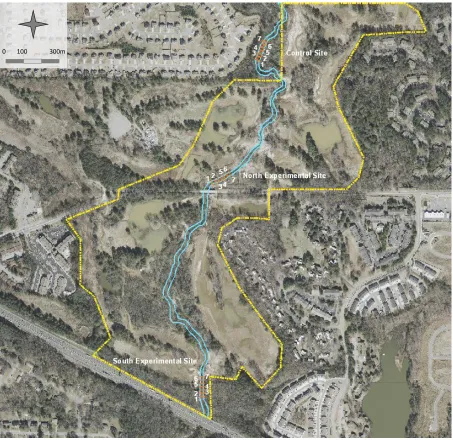
Figure 1.2 – Map of the study reach
Satellite image of the study reach and the three channel sites. The yellow boundary demarks the mitigation bank property and the numbered orange lines denote the approximate cross-section setup for each site (2010 orthoimagery courtesy of U.S. Geological Survey).
Snapfinger Creek comprises largely sandy channel material with very apparent ripple bed-forms
covering the channel bed. Sand dominated bed-material regularly becomes fully mobilized over a broad
range of flows as it moves in the form of sand sheets and suspended material. Channels characterized by
bed sediment which moves as mixed loads are known as transitional channels. An abundant supply of
sand tends promote bed instabilities by increasing bed–material mobility and the accompanied
migration of bed-forms (Church, 2002, 2006).
Three channel locations were investigated to study the sediment transportation potential in this
restored reach. The study design incorporated a comparison of restored with non-restored portions of
the same urban stream. It should be noted that the term ‘restored’, in this study, is used to refer to
reaches on which mitigation intervention has been practiced and does not indicate the absolute stability
of those sections of Snapfinger Creek. Two experimental sites known as the North Experimental Site
(NES) and the South Experimental Site (SES) would examine the channel adjustments taking place near
the middle and lower reaches in the mitigation bank respectively. Upstream of the restoration site,
reaches were unaffected by direct stabilization efforts and were therefore suited as a control for
alterations due to intervention downstream. The Control Site (CS) was located ±120 m upstream of the
property boundary where the predominant influence on channel dynamics would be from urbanization
rather than from restoration efforts (Figure 1.2).
Two criteria were used for selecting study sites and these were based on the field observations
conducted before the study commencement. The first requirement was that sites had a relatively
straight channel section in order to limit the influence of geomorphic effects which may have
complicated the interpretation of perceived stability observations (O’Driscoll et al., 2009). Any
geomorphic flow hydrology controls would also have obscured the effects of urban-induced processes
with more natural processes of channel alteration (Henshaw and Booth, 2000). The second requirement
excessive bank-protection engineering. By meeting these requirements each survey channel would likely
not conform to the conventional reach study length of 20-50 channel widths and a cross-sectional
spacing of two to five channel widths as used by other field investigators (Kondolf and Micheli, 1995).
Actual sites for this study amounted to shorter reach lengths and cross-section spacing for field
measurements (Figure 1.2).
The Control Site (CS) reach was chosen based on (i) its proximity to the mitigation site but and
(ii) that it exhibited the typical channel morphology of a degraded urban stream. This channel exhibited
deeply incised channel depths (±2.51 m), fairly narrow channel widths (±12.9 m), and significant tilted
and fallen trees. The eastern banks were well vegetated and primarily composed of sand deposits that
were likely derived from historic meander alluvium. In contrast, the western banks were taller and
composed of cohesive, red ultisols with steep bank failures. Along these banks it was common to find
severely undercut tree roots with large trees essentially suspended above the outer channel. This site
typified an urban stream channel that was not yet adjusted to frequent high flows and had experienced
significant vertical incision with bank failures. Bed sediments were mostly fine to coarse sands and silts
and characteristic features in this reach included sand/silt bed-forms which seemed to aggrade down
channel.
The North Experimental Site (NES) was situated near the midpoint of the stream mitigation
property (Figure 1.2) and it represented a reach that was directly downstream of the majority of bank
engineering practices in the reach. The channel was fairly shallow (±1.86 m) and broad (±14.9 m)
compared to the CS dimensions, and bank material consisted mainly of non-cohesive sands with well
vegetated banks. This site had some notable features which included: (i) a coir-fiber log protecting
almost the entire length of the left bank toe, (ii) that it was immediately downstream of a channel step
in the form of rock weir, (iii) an in-stream tree as a result of prior bank collapse, and (iv) two large
At approximately 85 m north of the I-20 overpass towards the southern end of the mitigation
property, the SES constituted the most downstream culmination of possible mitigation effects on
channel dimensions and bed composition. This channel reach was shallower (±1.8 m) and broader
(±16.1 m) than both upstream sites and some bank stabilization features such as log revetments,
remnant bank rip-rap and a few geotextile bank coverings were present. Relatively few flow obstacles
existed in this channel compared to the other study sites and riparian vegetation was generally well
established except for a clearing along the upper-most part of the reach. All the study sites had beds
with clearly developed ripples comprising the largely sandy bed-material surface and rip rapped portions
of the banks in all three sites were unavoidable. Bed surface compositions also maintained shifting
gravel clusters (surface material >4.0 mm) which were particularly apparent in both experimental sites.
1.4 Literature Review
Doyle and Shields (2000) produced a study to develop a modified version of the Channel
Evolution Model (CEM) based on the inclusion of qualitative predictions of bed textural changes which
incising rural channels experience as they progress through the geomorphic evolution as described by
Schumm et al. (1984) and later revised by Simon (1989, 1994). In their study three reaches in eastern
Mississippi were chosen for the sake of comparison with a study done on the same reaches a decade
before and the current study attempted to replicate these previous study procedures. It was found that
the prediction of longitudinal grain size distribution did not follow the conventional down-stream fining
trends observed by others, and the dominant factor in in the development of grain size distributions was
rather attributed to the sediment sizes, quantities, and their source locations within the watershed.
Although grain size plays a larger role than previously appreciated in the evaluation of incised channels,
Numerous contemporary papers are centered around evaluating the effectiveness of stream
rehabilitation projects, often supplementing for the general lack of existing post-project monitoring
data (Bernhardt et al., 2005). One such study by Buchanan et al. (2012) investigates a suite of
geomorphic parameters in order to identify the success of project objectives in central New York State,
two years after rehabilitation efforts. It was found that the restored reach experienced excessive overall
degradation, especially in the upper reach, and aggradation at the bottom of the reach likely resulting
from local scour higher up. Low bed and bank stability throughout the reach may have been attributed
to ‘hard’ engineering structures such as cross- and bank vanes, which promoted accelerated incision of
scour pools and inadvertently deflected high flows onto banks. The resulting short-term channel
instability did not, however, undermine the outlook for long-term success but rather emphasized the
importance of accounting for sediment transport and watershed-scale stressors.
A study by Miller and Kochel (2010) evaluates 26 stream mitigation sites in North Carolina, many
of which have suffered from large post-project adjustments in channel capacity over a timespan of one
to six years since project completion. By examining channel dimension changes through time, the
authors investigated the short-term stability and the long-term likelihood of equilibrated channel
conditions. In many of the examined reaches there was a re-organization of channel form, configuration,
and slope in the form of localized amounts of scour and fill. Changes in channel capacities were
particularly related to increases in slope, bed grain size and project age and in this study the time
required for channels to reach equilibrium exceeded the monitoring period. The recovery of highly
dynamic channels was deemed near impossible to instigate save for properly addressing three
influential parameters, namely excess shear stress (e.g. flashy urban channels and high gradient
streams), sediment supply (e.g. historic land-use changes upstream), and bank erodibility (the degree of
2 METHODS
2.1 Channel Cross-Section Analysis
Cross-sectional measurements were used to determine the changes that were occurring in
channel areas and were taken using auto-level surveys at seven transects with a spacing of 10 m
(permitting there were no major obstacles) along the length of three 60 m reaches. The transect spacing
was determined from an initial inspection of the NES reach channel width, which helped establish that
cross-sectional spacing should be at least 8 m apart which would equal approximately one-half of the
channel width. To measure each transect, a stake was set on either side of the channel which was
spanned by a surveying tape across the entire width of the channel starting from the left bank side. An
auto-level was positioned on either bank to clearly sight both stakes on opposing banks of the transect.
The entire length of the measuring tape, spanning each transect, needed to be visible without
obstruction. To maintain a consistency in measurements, each completed cross-section was calibrated
by checking the instrument’s elevation against a site benchmark location (BM). Benchmarks were
commonly chosen to be the tops of adjacent stakes or other more permanent features such as trees or
signage postings. A stadia rod was used to measure the changes in elevation across the cross-section
and elevation readings are compared to a predetermined datum (the top of the left bank stake in this
case). Two persons were responsible for conducting these measurements, with one at the surveying
station and the other walking each cross-section with the stadia rod taking depth measurements. The
person walking along the channel transect decided at what intervals and thus at what resolution
readings were taken at various locations in the channel. To ensure that transect monuments could
withstand overbank flows so that future measurements could be taken, staked locations were
reinforced with rebar rods. GPS coordinates were collected for all auto-level surveying sites so that the
Any potential changes in channel area would depend on the threshold for entrainment of bed-
and bank-material imposed by stream channel flow. Consequently, this study was constructed around a
period of flow events that were effective in moving channel sediments to a measurable degree (this is
described in greater detail below). The terminology used in the study describes ‘pre-flood’ and
‘post-flood’ measurements in association with initial channel conditions and those conditions representing a
period of effective flow events, respectively. To calculate the amount of change in cross-sectional areas
for each transect, an area calculation was performed in a spreadsheet whereby the channel depth was
set to bank scour lines representing some high flow stand in the NES channel. The use of a scour line to
represent the cross-section area was considered more representative than using a determined bankfull
flow as it is well known that bankfull stages are difficult to estimate based on specific return intervals in
urban environments (Annable et al., 2012). The flashy hydrology of urban streams makes determining a
bankfull-flow recurrence interval for these channels less reliable than for channels with less variable
flows (Shields Jr et al., 2003). The scour lines in the NES measured 1.92 m in channel depth and the
wetted channel perimeter at this stage was thought to be representative of pertinent changes in
channel form, as bank vegetation above this line appeared more established. The water surface height
at this stage was used as the datum for calculating cross-sectional area changes. As no major tributaries
entered the study reach, a continuity of steady, uniform flow through the reach was assumed with a
discharge (Q) that was relatively constant for each site. Appropriate bank heights for the remaining
reach cross-sections were estimated using the continuity equation in Equation 1, where these heights
were approximated from resulting areas (A) using the calculated velocity (v) and a uniform discharge
value (Q). The calculations utilized to establish cross-sectional areas were:
Q = vA (1)
where Q = flow discharge (m3/s), v = flow velocity (m/s), A = the channel area of the wetted perimeter
(m2), k = 1 m1/3/s (for SI), R = hydraulic radius, S = channel slope, and n = Manning’s roughness value.
Initial calculations required determining the flow velocity (v) for the NES using the Manning equation
(Equation 2) and this value was established by: (i) using the measured channel slope (S = ±0.001), (ii)
calculating the hydraulic radius (R) relating to the bank scour height where A = 26.1 m2 (R = 1.4 m), and
(iii) evaluating an appropriate Manning’s roughness value (n) for this channel based on known
roughness coefficients (from various sources) for typical sand-bed, Piedmont channels. As bed-material
was primarily sand in all channels, the value for n was 0.039, 0.035 and 0.04 for the NES, SES and CS
respectively and variations in roughness were attributed mainly to the amount of channel debris and
flow obstacles. Bed-forms and bank roughness were however not considered in this study. The resulting
flow velocity of 1.0 m/s, together with the known channel area (A) for the NES, was used in Equation 1
to give a discharge of ±26.0 m3/s.
The flow velocities in the SES and CS could not be calculated using Equation 2 as for the NES,
because R remained unknown, and hereby their velocities required approximation in reference to
1.0 m/s (velocity for NES). These approximations utilized known channels slopes (SES = 4.0 × 10⁻⁴;
CS = ±0.001) and appropriate roughness values (see above). Resulting velocities were 1.1 m/s for the SES
and 0.9 m/s for the CS and by rearrangement of Equation 1 and the use of a uniform discharge (Q), their
areas equated 23.6 m2 and 28.8 m2 respectively. The final step included designating the representative
bank heights by fitting the calculated area values to the channel cross-section geometry plots. Average
bank heights in the NES, SES and CS (i.e. heights representative of the scour line) were approximately
2.2 Sediment Volume
Alterations in individual cross-sectional areas ultimately related to degradation and aggradation
of channel beds and banks, therefore the quantity of bed sediment which was mobilized could be
approximated by calculating the volumetric mass balance (Buchanan et al., 2012). The difference in
channel cross-sectional area was multiplied by half the distance to both adjacent upstream and
downstream transect pins to calculate a volume in cubic meters of bed material sediment moving
through or stored within each reach (Terrio et al., 1997; Martin and Church, 2006; Fraley et al., 2009). In
this study the sediment transport by suspension was not considered as important as bedload
transportation. The major interest was in monitoring adjustments channel form, and bedload is
attributed to bed and bank changes (Church, 2006). Bedload transport estimates for the duration of the
study period would be extended to predict an annual sediment budget for the reach. These volumetric
results were also compared to estimates for bed-material transportation for similar watershed sizes in
the physiographic region.
2.3 Grain-size Distribution
Sediment samples were taken from selected bed locations within each reach to determine any
changes in bed textures which may have accompanied alterations in channel topography after a series
of effective discharge events. For each of the reaches (two experimental and one control), a set of bed
sediment samples were taken comprising of two sand samples and two gravel samples which were
representative of the subsurface and the bed surface/ pavement sediments respectively. Both samples
types had been collected from locations within the stream channel that were characteristic of the
specific type of grain size sample based on field observations (e.g. channel bar or thalweg) and these
sample locations were marked for future comparative sample collection. This meant that both sand and
cross-sectional transect lines. Pebble counts (surface gravels) and volumetric (subsurface) samples were
considered separately, because one was more descriptive of the flow competency whereas the other is
more telling of the proportion of grain sizes and changes in bed texture.
Bed-material composition samples, with a grain size generally ≤ 2 mm, were collected using a
cylinder-type sampler to extract a volume of subsurface sediments to a shallow depth of 5 cm. This
depth was assumed to represent the ‘active’ bed-material layer and would not include significant
historic sediments. Sampling was conducted using a 7.62 cm aluminium pipe which was worked into the
channel bed. To retrieve the sample, the top of the open pipe was sealed with a mechanical pipe plug
and the sediment was extracted by holding the base of the pipe closed using a small shovel inserted into
the bed underneath the pipe. Whether samples were collected within a stream flow or on an exposed
bar, this technique prevented significant sample losses upon extraction. The samples were transferred
into labeled, quart-sized bags and returned to Georgia State University for laboratory grain-size analysis.
Samples were dry-sieved using a Rotap sieve shaker at standard half-phi (½ φ) interval mesh sizes and
the grain-size percentiles of D16, D50 and D84 as well as the grain-size distributions were determined for
all three study sites.
Gravel- or pavement samples with a diameter ≥ 2 mm were examined on site using a modified
Wolman (1954) and Edwards & Glyson (1999) method. This method involved a random sampling
technique within a predetermined channel bed area. A pebble count of 50-100 samples was taken
within a fixed 1.2 m2 (60 cm × 60 cm) grid plot whereby each sample was assessed for size in the field
using a ½ φ unit class gravelometer.
The chosen locations for gravel and sand sample pairs were intended to best present the
variation in grain-size and sediment texture within the reach. The representative grain size distribution
of gravel (pavement) and sand (subsurface) for each reach was taken to be the average of each sample
mixed) and their size distributions were measured separately in order to fully interpret bed texture
dynamics. A statistical analysis of the resulting bed-material size distributions (a) between sites and (b)
between survey dates for the same sites was conducted to scrutinize between sampling results. The
significance in the difference in averaged grain sizes was assessed using both parametric and
non-parametric tests because of the asymmetry in some bed sample distributions. Both the two-tailed t-test
for unequal variances and the Mann-Whitney U Test were utilized for this purpose.
2.4 Stream Stage and Water Surface Slope
The closest operational stream gage to the study reach was ±8 km upstream from the NES
(USGS 02203950 near Redan Rd.). For stream stage predictions further downstream a custom measuring
staff was permanently installed in the upper part of NES within the channel and was monitored by
taking readings over the duration of the study period. A rudimentary stream stage correlation between
the USGS gage and the stage within the NES needed to be ascertained to provide continuous stage data
for remotely monitoring flow stages. The base of this staff was set to the current water surface level (the
datum) at the time of installation when the stage at USGS gauging station read 0.75 m. This stage
approximated near base-level flow in Snapfinger Creek for that time of year.
Eight points were initially used to set up the correlation curve between the study reach and the
active stream gauge upstream (reach-gauge correlation) and the highest flow measured 0.98 m at the
USGS station. Only using these low flows would not have sufficed for this study, particularly due to the
interest in sediment transportation at higher stages. To account for larger flows occurring in the study
reach, an additional correlation was set up using the above USGS gauge and a second operational gauge
(USGS 02203560) which was located ±3 km downstream of the study site (between-gauge correlation).
Because there were no major tributaries entering between the study reach and this southern gauge site,
curve onto the gauge-reach data plot. This new curve (Figure 1.3) provided a means of extrapolating
higher flows within certain reservations but at a suitable accuracy (r2 = 0.97).
Because the study was interested in examining the movement of bed-material through
respective reaches, the critical threshold for entrainment of a largely sand-sized bed needed to be
established. This meant that the range of flows capable of fully mobilizing grain sizes of medium to
coarse sands (0.2 - 2.0 mm) through the reach needed to be calculated. Diagrams by Kuhnle (1993) and
Frings (2008) were used to empirically support the necessary critical shear stress (τcr) for Snapfinger
Creek as calculated here by the Shields equation:
τcr= τ* × (ρs - ρ)gD50 (3)
y = 0.5932x0.8478
R² = 0.9715
0.0 0.5 1.0 1.5 2.0 2.5
0.0 0.5 1.0 1.5 2.0 2.5 3.0 3.5 4.0 4.5 5.0
R
e
ac
h
H
e
ig
h
t
(m
)
USGS Gage Height (m)
[image:29.612.76.510.79.360.2]NES Reach Stream Stage Correlation
Figure 1.3 – Reach flow stage determination
where ρs = density of the solid (2,650 kg/m3 for quartz predominance), ρ = density of water (1,000
kg/m3), g = gravity (9.81 m/s2), D50 = median subsurface grain size, and τ* = Shields dimensionless shear
stress (a value of 0.04 was used). A critical shear stress value greater than 0.5 N/m2 was required to
overcome the boundary shear stress of bed-material with D50 of 0.7 mm (median grain size based on
pre-flood grain-size distribution measurements). This estimation was in agreement, although slightly
greater than those supported by the above authors (0.3 - 0.4 N/m2 for similar D50). One possible
explanation is that uniform bed sediments, as in this study, are entrained more selectively and at higher
critical values than are sediment mixtures for a similar D50 (Church, 2006).
A conservative boundary shear stress (τ0) needed to be established for an effective flow stage
that would initiate the mobilization of bed-material load. The boundary shear stress was calculated for
the channel dimensions of the reach using the following equation:
τ0 = ρgRS (4)
where ρ = density of the fluid (1,000 kg/m3), R = hydraulic radius, and S = water surface slope.
Measurements of the water surface slope were conducted at low flow and subsequent to
cross-sectional field measurements of the pre-flood channel topography. A total station instrument was used
to establish the slope along the middle of the channel across the approximate length of each reach (i.e.
±60 m). Such measurements gave a general idea of the channel grade in each site.
2.5 Effective Stream Discharge
Effective flow events were those flows that measured between 0.3 m and 1.92 m at the NES
during the study period from September 2011 to January 2012. Because of the flashy nature of this
stream and the short duration of the rising and falling limb during precipitation events, only stages
above a selected discharge of 3.1 m3/s (or a 0.7 m stage in NES) were considered threshold or effective
present in the active layer of the bed-material load. At this discharge the sandy subsurface material in all
three sites would be mobilized based on above threshold shear stress calculations for the three sites (τcr
for D50 subsurface was 0.3 - 0.5 N/m2). Most of the surface gravels, however, would have required flows
at higher threshold stages that where only possible at stages nearer 25.2 m3/s (τcr for D50 gravel surface
material of 14.0 mm was approximated at 10.0 N/m2 using Equation 3). Continuity of flow was again
assumed for the reach because no major tributaries enter between individual study sites and thus the
effective discharge was roughly equal in all sites. The inundated channel area at this stage was
translated to individual sites using the continuity equation (Equation 1). By the time the cross-sectional
resurvey was taken in January 2012, there had been a total of 11 effective flow events through the
reach. It should be noted that the SES had experienced one less effective flow event than the other two
sites due to discontinuity in successive field data collection.
2.6 Rapid Geomorphic Assessment
Since the practice of restoration may itself be considered a disturbance (Chin, 2006; Unghire et
al., 2011; Violin et al., 2011) the contribution of watershed based sediments has the potential to be
more localized in this site. A rapid geomorphic assessment protocol was used to evaluate the potential
sediment contribution by existing in-stream structures in the mitigation bank reaches. This assessment
was performed by a coordinated rating of each structure’s effectiveness in performing its intended task
in the reach (Miller and Kochel, 2010; Buchanan et al., 2012). A subjective field-based survey was
conducted of the most significant bank engineering practices along the entire restored reach (±585 m)
to account for likely locations of degradation and aggradation exclusive to the experimental sites. The
assessment protocol that was used was based on one used by Brown (2000) in his study on urban
stream restoration practices, which itself is a protocol similar to the USEPA Rapid Bioassessment
structural restoration practices, (ii) the enhancement of aquatic habitat and (iii) the health of riparian
vegetation along the stream banks. For the current study, however, only the ‘structural integrity’ and
the ‘effectiveness/ functionality’ of bank installations were assessed for the Snapfinger Creek mitigation
site because the potential contributions of bank material from restored reaches and their associated
tributaries were of particular interest.
The survey sheet was based on a pre-determined set of criteria used to assess the following: (a)
the percentage of engineering feature intactness; (b) the amount of dislocation of practice materials; (c)
the degree of unintended erosion and deposition caused by the practice; (d) whether or not the practice
was serving its intended purpose; (e) the likelihood of the practice acting as a source of sediments to the
downstream channel. In an attempt to reduce the subjectivity of this assessment, a two-person team
was utilized to base the scoring criteria on their best judgment. The assessment had been conducted
3 RESULTS
3.1 Channel Cross-section Analysis
Channel cross-section changes over time were based on the increase or decrease in total area,
which for this study meant that degradation received positive values (due to channel expansion) and
aggradation received negative values (due to channel contraction). To calculate the change in channel
area, the same datum line used for the pre-flood was also used for post-flood measurements (Figure
3.1, Figure 3.3, and Figure 3.5). This method diverged from the conventional use of the top of the pin as
a datum, and the results were for the most part in good agreement with the study method used. Both
the absolute (│scour + fill│) and the net change in channel area were calculated to identify the degree of
alteration and the dominant transportation processes of bed sediments respectively taking place in each
cross-section (Schoonover et al., 2007; Miller and Kochel, 2010; Buchanan et al., 2012). Pre-and
post-flood cross sectional comparisons showed that each reach exhibited a dissimilar total amount of change,
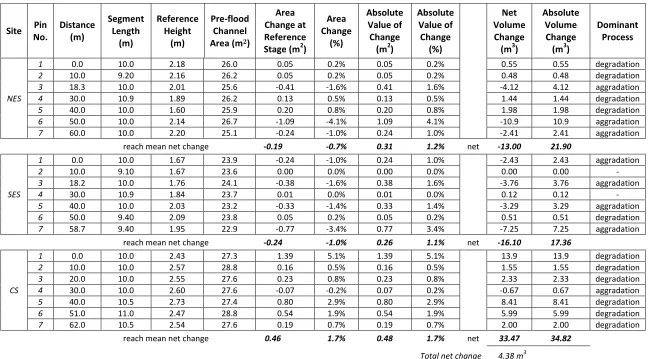
which meant that different processes were predominant in each reach (Table 1 and Figure 3.7). The
largest amount of change experienced at any cross-section was 5.1 % (1.4 m2) and the smallest amount
of change was usually due to a balance of erosion and deposition and thus zero. Total changes (i.e. the
amount of scour and fill) exhibited in all cross-sections for each site were significantly different between
the control and the experimental sites (Table C). Changes between both experimental sites were
however not statistically significant.
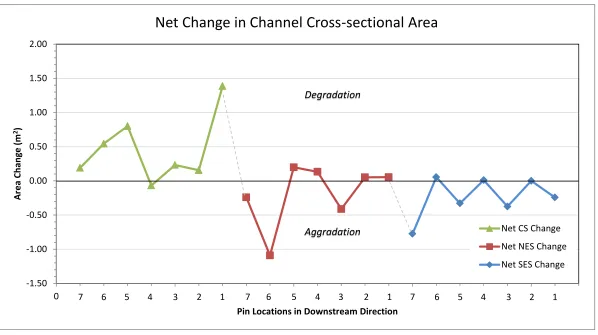
The average of the net changes experienced in all transects revealed that the two experimental
reaches displayed a largely aggradational trend in channel modification (NES = -0.7 % or -0.2 m2,
SES = -1.0 % or -0.2 m2) compared to the CS which had greater degradational channel characteristics
(+1.7 % or +0.5 m2) (Table 1). A definite pattern of upstream degradation becoming progressively more
aggradational downstream was visible when looking at the average changes from CS through SES in
100 150 200 250 300 350 400 450 500 550 600 650
0 5 10 15 20
El e vation (c m )
Distance from Left Bank Pin (m)
Control - Section 3
Pre Flood Post Flood
100 150 200 250 300 350 400 450 500 550 600 650
0 5 10 15 20
El e vation (c m )
Distance from Left Bank Pin (m)
Control - Section 1
100 150 200 250 300 350 400 450 500 550 600 650
0 5 10 15 20
El e vation (c m )
100 150 200 250 300 350 400 450 500 550 600 650
0 5 10 15 20
El e vation (c m )
Distance from Left Bank Pin (m)
Control - Section 6
Pre Flood Post Flood
100 150 200 250 300 350 400 450 500 550 600 650
0 5 10 15 20
El e vation (c m )
Distance from Left Bank Pin (m)
Control - Section 4
100 150 200 250 300 350 400 450 500 550 600 650
0 5 10 15 20
El e vation (c m )
Figure 3.1 – Control Site cross-sectional analysis
Cross-sectional plots of pre- and post-flood channels in the CS. The red, dashed line denotes the high flow mark used for the area calculation.
100 150 200 250 300 350 400 450 500 550 600 650
0 5 10 15 20
El
e
vation
(c
m
)
Distance from Left Bank Pin (m)
Control - Section 7
Pre Flood Post Flood
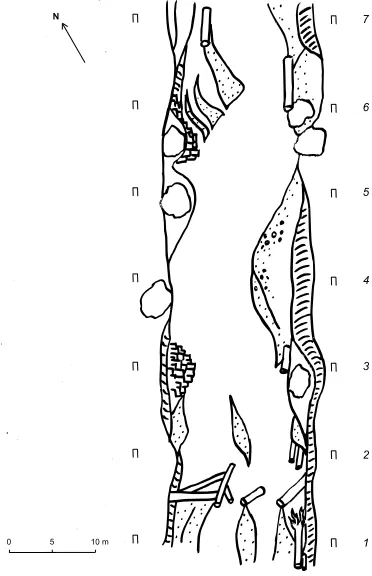
Figure 3.2 – Control Site sketch
[image:36.612.207.393.376.664.2]50 100 150 200 250 300 350 400 450
0 5 10 15 20
El e vation (c m )
Distance from Left Bank Pin (m)
N Experimental - Section 3
Pre Flood Post Flood
50 100 150 200 250 300 350 400 450
0 5 10 15 20
El e vation (c m )
Distance from Left Bank Pin (m)
N Experimental - Section 1
50 100 150 200 250 300 350 400 450
0 5 10 15 20
El e vation (c m )
50 100 150 200 250 300 350 400 450
0 5 10 15 20
El e vation (c m )
Distance from Left Bank Pin (m)
N Experimental - Section 4
50 100 150 200 250 300 350 400 450
0 5 10 15 20
El e vation (c m )
Distance from Left Bank Pin (m)
N Experimental - Section 5
50 100 150 200 250 300 350 400 450
0 5 10 15 20
El e vation (c m )
Distance from Left Bank Pin (m)
N Experimental - Section 6
Figure 3.3 – North Experimental Site cross-sectional analysis
Cross-sectional plots of pre- and post-flood channels in the NES. The red, dashed line denotes the high flow mark used for the area calculation.
50 100 150 200 250 300 350 400 450
0 5 10 15 20
El
e
vation
(c
m
)
Distance from Left Bank Pin (m)
N Experimental - Section 7
Pre Flood Post Flood
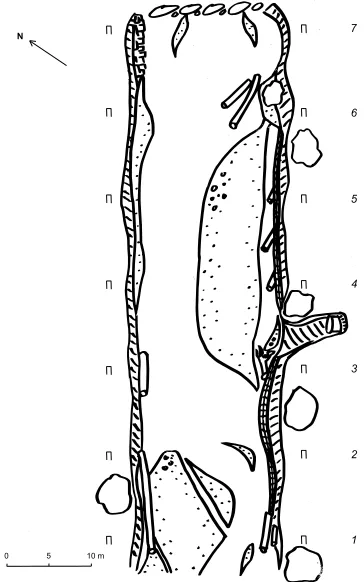
Figure 3.4 – North Experimental Site sketch
[image:39.612.196.378.375.666.2]50 100 150 200 250 300 350 400 450
0 5 10 15 20
El e vation (c m )
Distance from Left Bank Pin (m)
S Experimental - Section 1
50 100 150 200 250 300 350 400 450
0 5 10 15 20
El e vation (c m )
Distance from Left Bank Pin (m)
S Experimental - Section 2
50 100 150 200 250 300 350 400 450
0 5 10 15 20
El e vation (c m )
Distance from Left Bank Pin (m)
S Experimental - Section 3
50 100 150 200 250 300 350 400 450
0 5 10 15 20
El e vation (c m )
Distance from Left Bank Pin (m)
S Experimental - Section 4
50 100 150 200 250 300 350 400 450
0 5 10 15 20
El e vation (c m )
Distance from Left Bank Pin (m)
S Experimental - Section 5
50 100 150 200 250 300 350 400 450
0 5 10 15 20
El e vation (c m )
Distance from Left Bank Pin (m)
S Experimental - Section 6
Figure 3.5 – South Experimental Site cross-sectional analysis
Cross-sectional plots of pre- and post-flood channels in the SES. The red, dashed line denotes the high flow mark used for the area calculation.
50 100 150 200 250 300 350 400 450
0 5 10 15 20
El
e
vation
(c
m
)
Distance from Left Bank Pin (m)
S Experimental - Section 7
Pre Flood Post Flood
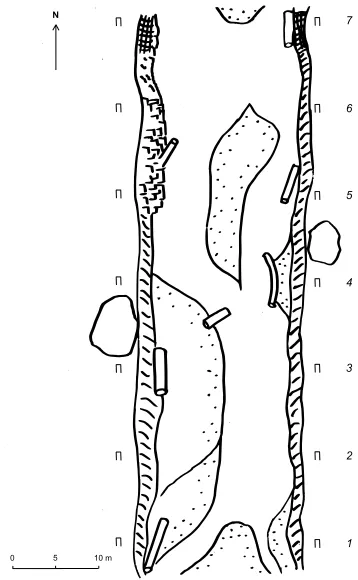
Figure 3.6 – South Experimental Site sketch
[image:42.612.205.384.377.667.2]Table 1 – Results from the cross-sectional resurvey analysis
Changes in channel cross-sectional area and channel volume for the study reach representing the total amount of scour and fill per cross-section as positive and negative values respectively. The post-flood channel dimension for each transect was used as the baseline for area change calculations. For channel volumes each cross-section represents a segment of the channel length. Positive and negative values represent the total amount of sediment eroded and deposited respectively.
Site Pin
No. Distance (m) Segment Length (m) Reference Height (m) Pre-flood Channel Area (m2)
Area Change at Reference Stage (m2)
Area Change (%) Absolute Value of Change
(m2)
Absolute Value of Change (%) Net Volume Change (m3)
Absolute Volume Change (m3)
Dominant Process
NES
1 0.0 10.0 2.18 26.0 0.05 0.2% 0.05 0.2% 0.55 0.55 degradation 2 10.0 9.20 2.16 26.2 0.05 0.2% 0.05 0.2% 0.48 0.48 degradation 3 18.3 10.0 2.01 25.6 -0.41 -1.6% 0.41 1.6% -4.12 4.12 aggradation 4 30.0 10.9 1.89 26.2 0.13 0.5% 0.13 0.5% 1.44 1.44 degradation 5 40.0 10.0 1.60 25.9 0.20 0.8% 0.20 0.8% 1.98 1.98 degradation 6 50.0 10.0 2.14 26.7 -1.09 -4.1% 1.09 4.1% -10.9 10.9 aggradation 7 60.0 10.0 2.20 25.1 -0.24 -1.0% 0.24 1.0% -2.41 2.41 aggradation
reach mean net change -0.19 -0.7% 0.31 1.2% net -13.00 21.90
SES
1 0.0 10.0 1.67 23.9 -0.24 -1.0% 0.24 1.0% -2.43 2.43 aggradation
2 10.0 9.10 1.67 23.6 0.00 0.0% 0.00 0.0% 0.00 0.00 -
3 18.2 10.0 1.76 24.1 -0.38 -1.6% 0.38 1.6% -3.76 3.76 aggradation
4 30.0 10.9 1.84 23.7 0.01 0.0% 0.01 0.0% 0.12 0.12 -
5 40.0 10.0 2.03 23.2 -0.33 -1.4% 0.33 1.4% -3.29 3.29 aggradation 6 50.0 9.40 2.09 23.8 0.05 0.2% 0.05 0.2% 0.51 0.51 degradation 7 58.7 9.40 1.95 22.9 -0.77 -3.4% 0.77 3.4% -7.25 7.25 aggradation
reach mean net change -0.24 -1.0% 0.26 1.1% net -16.10 17.36
CS
1 0.0 10.0 2.43 27.3 1.39 5.1% 1.39 5.1% 13.9 13.9 degradation 2 10.0 10.0 2.57 28.8 0.16 0.5% 0.16 0.5% 1.55 1.55 degradation 3 20.0 10.0 2.55 27.6 0.23 0.8% 0.23 0.8% 2.33 2.33 degradation 4 30.0 10.0 2.60 27.6 -0.07 -0.2% 0.07 0.2% -0.67 0.67 aggradation 5 40.0 10.5 2.73 27.4 0.80 2.9% 0.80 2.9% 8.41 8.41 degradation 6 51.0 11.0 2.47 28.8 0.54 1.9% 0.54 1.9% 5.99 5.99 degradation 7 62.0 10.5 2.54 27.6 0.19 0.7% 0.19 0.7% 2.00 2.00 degradation
reach mean net change 0.46 1.7% 0.48 1.7% net 33.47 34.82
-1.50 -1.00 -0.50 0.00 0.50 1.00 1.50 2.00
0 5 10 15 20
A
re
a C
h
an
ge
(
m
2)
Pin Locations in Downstream Direction
Net Change in Channel Cross-sectional Area
Net CS Change
Net NES Change
Net SES Change
7 6 5 4 3 2 1 7 6 5 4 3 2 1 7 6 5 4 3 2 1
Degradation
[image:44.792.99.697.138.473.2]Aggradation
Figure 3.7 – Plot of channel area alterations
-15.00 -10.00 -5.00 0.00 5.00 10.00 15.00 20.00
1 2 3 4 5 6 7
N
e
t
Vo
lu
m
e
tr
ic
Ch
an
ge
(
m
3)
Site Pin Number
Net Change in Cross-sectional Segment Volumes
CS Net Volume
SES Net Volume
NES Net Volume
Scour
[image:45.792.114.691.130.460.2]Fill
Figure 3.8 – Plot of volumetric channel changes per cross-sectional segment
Aggradation in the SES was largely exhibited by lateral channel bar development in the upper
reaches (pin 5-7) and to some degree in the lower reach (pin 1). An interesting feature in this site was
the development of point bar along the right bank through transects of pin 3 to pin 4 (Figure 3.5 and
Figure 3.6), as sediment from the mid-channel was generally eroded. In the NES aggradation was
dominant mainly because of deposition in the upper reaches (pin 6 and 7) and occurrence of a log in mid
reach (pin 3). The overall net change indicated channel narrowing, but excluding these above mentioned
features would have made this channel degradational (Table 1). The pin 7 transect was essentially taken
across a scour pool, where an influx of sand developed left and right bank point bars. The rock weir
above this site was redirecting the flow towards the left bank, which although not measured in this
study, had been severely undercut and eroded in the past. A probable legacy of this was that a
prominent lower bank aggradation was taking place on the right banks along the pin 6 transect (Figure
3.6). In the remainder of the site there was a degree of thalweg migration as the channel meandered
filling in previous thalweg locations and redistributing channel bar sediments (pin 2-6).
For the most part the CS experienced predominant channel erosion over the duration of the
study period. As with the NES, there was a migration of the thalweg channel as meandering tended to
scour new low-flow channels and degrade exiting channel bars (Figure 3.1). The resurvey of these
channel banks along precisely the same transect line was complicated by the presence of tree roots,
overhanging banks, and persistent vegetation cover. The comparative measurements of changes in bank
dimension were therefore adjusted in the spreadsheet calculations to compensate for any anomalous
bank adjustments. Bank aggradation did however take place along the left bank above a log in the
channel along the pin 6 transect of and on the right bank along the pin 2 transect. The largest erosion
took place below a channel debris constriction upstream of the pin 1 transect causing the removal of
The sum of the absolute changes for all transects in each reach, demonstrated that the total
amount of both scour and fill relating to the alteration in each reach was different (Table 1). Statistical
results from comparing these changes between individual sites were not considered significant (p > 0.05
for α = 0.05 using Mann-Whitney test and two-tailed t-test) (Table C). When all three reaches were
compared, the CS represented the largest amount of absolute change (1.7 % see Table 1), the NES
experienced a moderate amount of change (1.2 %) and the SES exhibited the least amount of change
(1.1 %). Average changes in the CS almost culminated to as much as the average changes of both
experimental sites together (Table 1), but this does not directly indicate the CS as the sediment source.
As demonstrated by the NES and SES channels, the measure of absolute change lends a greater
understanding of the true amount of actual bed movement through each site and although the SES
demonstrated the greatest degree of aggradation, the NES experienced considerably more bed mobility.
These changes may also be translated into the relative amount of instability which exists in this channel
(see Schoonover et al. (2007)).
Channel shape also warranted inspection following resurveying of channel sections, and in many
cases these shapes could be attributed to possible stages according to the channel evolution model
(CEM) for incising rivers (Simon, 1994). In this model, the channel morphology of a degraded stream
progresses through six stages as it adjusts to imposed disturbances such as urbanization (Simon, 1989;
Doyle and Shields, 2000; Niezgoda and Johnson, 2005). Stage I includes the premodified, unaltered
channel form and as construction commences, the watershed becomes a significant sediment source as
stream channels become channelized during Stage II. As the watershed becomes developed and
impervious surface cover causes increased runoff during precipitation events, stream channels become
incised (Stage III) and consequent bank failures cause channels to widen (Stage IV). The channel bed
begins to aggrade with continued widening in Stage V, and channels ultimately reach a quasi-equilibrium
Not enough time had accumulated for any of the channel dimensions to change significantly,
especially since bed erosion and deposition was more prevalent than bank involvement and so channels
were thought to represent their current stage in evolution. The CS had an entrenched, trapezoidal shape
confined by its steeply incised banks and resembled a Stage III or IV. Riparian vegetation was set very
high relative to the flow line and the upper right banks were frequently vertical in this channel. The NES
also appeared trapezoidal in shape but bank angles were gentler compared to the CS banks with fallen
riparian vegetation becoming established on the lower bank line (Figure 3.3 and Figure 3.4). This site
was subjected predominantly to degradation of the channel bed but the magnitude of deposition
concurrently occurring classified this site as aggradational and therefore qualifying it as a Stage V
channel. The lower and characteristically aggradational SES had low bank heights, had more rounded
channel dimensions with a pronounced convex bank shape particularly for the right banks. The SES,
according to the CEM, would likely represent a late Stage V channel.
3.2 Sediment Volume
The total volume of sediment moving through each reach was estimated using the cumulative or
net change in channel area as discussed above. Between the three sites there was a visible
aggradational development in the downstream direction culminating in the SES channel (Figure 3.8). The
total change in volume for the study was 4.4 m3 of bed-material, which was representative of a net
degradation (Table 1). While the SES had experienced one less effective flow event, the results albeit
indicated that more loss of bed-material could be accounted for in the CS than could be balanced as
influx into both study sites together. However, a sediment budget approach cannot be considered
absolute in this instance because the surveyed reaches are not directly connected and the fate of
sediments can only be loosely inferred. This implies that sediments are additionally stored in reaches
balance of scour and fill in all three reaches. Cumulative volumes of 13.0 m3 and 16.1 m3 were being
deposited in the NES and SES channels respectively and the CS experienced a net removal of 33.5 m3 of
bed-material from its channel. This also makes the latter site with the most net change as would be
expected from the section results. Because the segment volumes were calculated using the
cross-section areas, the patterns observed in the area change plots are repeated for the volumetric trends
(Figure 3.7 and Figure 3.8). The NES showed variations between degradation and aggradation, and
although it experienced a lower amount of aggradation than the SES, it generally shows a larger
[image:49.612.176.439.459.639.2]absolute change in volume compared to that site (NES = 21.9 m3 versus SES = 17.4 m3).
Table 2 - Channel sediment volume densities
Bulk density estimates calculated using channel segment volumetric changes (method based on densities used by Fraley et al. (2009)).
grain size density
(g/cm3) kg/m
3 average sample
representation
clay/silt 1.3 1330 0.1%
fine sand 1.5 1460 6.6%
med/coarse sand 1.7 1720 86.4%
fine gravel 2.3 2250 6.8%
medium gravel 2.4 2400 0.2%
CS NES SES
sediment volume (m3) 33.5 -13.0 -16.1
sediment mass (t) 58.3 -22.6 -28.0
3.3 Grain-size Analysis
3.3.1 Bed-material Subsurface
The grain size distribution of bed-material samples for all three sites were generally uni-modal,
moderately well to poorly sorted compositions of medium to coarse sand and fine gravel with typical D50
values ranging from 0.43 mm to 1.03 mm. Overall the resulting changes in grain size distributions within
and between sites during the study period were not deemed statistically significant by Mann-Whitney
tests or two-tailed t-tests (p > 0.05 for α = 0.05) (Table C). For this study it was expected that bed
sediments would be significantly different in the mitigation site compared to upstream locations due to
observed bank erosion caused by bank engineering. The similarity between pre- and post-flood sample
distributions points towards a common sediment source further upstream. Channel processes at work in
the upper Snapfinger Creek watershed are still providing large sources of sand-sized bed load material,
which is moving for the most part downstream as pulses with each high-flow event in the form of
bed-forms (Knighton, 1998). The high proportion of sand in the channel bed implies that this material is likely
frequently mobilized (Schoonover et al., 2007). Another expected result was that the sites in the lower
reaches would experience a bed fining as upstream channels became more coarse grained. The results
show no indication of this because the channel morphology controls in this reach are largely affected by
bed processes such as the reworking of sand in the form of scour and fill.
All three channels had median grain sizes which did not shift significantly from that of coarse
sand, but minor trends in distributions were noticeable. Pre- and post-flood grain-size distributions for
the NES remained largely identical even though the latter was a larger sample quantity (Figure 3.9 and
Figure1A) with median D50 grain sizes not changing from around 0.7 mm (0.5 ɸ). The bed-material of the
SES was not as univariant as it generally coarsened from a D50 of 0.5 mm to 0.7 mm. The reverse could
be said for the CS, whose bed generally became less coarse as D50 went from 0.7 mm to 0.5 mm. It is