Counseling and Psychological Services
Dissertations Department of Counseling and Psychological Services
Summer 8-11-2011
Removing a Barrier to Widen the Door to Recovery: Working
Removing a Barrier to Widen the Door to Recovery: Working
Alliance Development with African American Women Substance
Alliance Development with African American Women Substance
Abusers
Abusers
Telsie A. DavisGeorgia State University
Follow this and additional works at: https://scholarworks.gsu.edu/cps_diss
Part of the Student Counseling and Personnel Services Commons
Recommended Citation Recommended Citation
Davis, Telsie A., "Removing a Barrier to Widen the Door to Recovery: Working Alliance Development with African American Women Substance Abusers." Dissertation, Georgia State University, 2011.
https://scholarworks.gsu.edu/cps_diss/61
This Dissertation is brought to you for free and open access by the Department of Counseling and Psychological Services at ScholarWorks @ Georgia State University. It has been accepted for inclusion in Counseling and Psychological Services Dissertations by an authorized administrator of ScholarWorks @ Georgia State University.
This dissertation, REMOVING A BARRIER TO WIDEN THE DOOR TO RECOVERY: WORKING ALLIANCE DEVELOPMENT WITH AFRICAN
AMERICAN WOMEN SUBSTANCE ABUSERS, by TELSIE A. DAVIS, was prepared under the direction of the candidate’s Dissertation Advisory Committee. It is accepted by the committee members in partial fulfillment of the requirements for the degree Doctor of Philosophy in the College of Education, Georgia State University.
The Dissertation Advisory Committee and the student’s Department Chair, as representatives of the faculty, certify that this dissertation has met all standards of excellence and scholarship as determined by the faculty. The Dean of the College of Education concurs.
____________________________ ____________________________ Julie Ancis, Ph.D. Jeff Ashby, Ph.D.
Committee Chair Committee Member
____________________________ ____________________________
Brian Dew, Ph.D. Kensa Gunter, Psy.D.
Committee Member Committee Member
____________________________
Date
____________________________ Brian Dew, Ph.D.
Chair, Department of Counseling and Psychological Services
____________________________
R. W. Kamphaus, Ph.D.
By presenting this dissertation as a partial fulfillment of the requirements for the
advanced degree from Georgia State University, I agree that the library of Georgia State University shall make it available for inspection and circulation in accordance with its regulations governing materials of this type. I agree that permission to quote, to copy from, or to publish this dissertation may be granted by the professor under whose direction it was written, by the College of Education's director of graduate studies and research, or by me. Such quoting, copying, or publishing must be solely for scholarly purposes and will not involve potential financial gain. It is understood that any copying from or publication of this dissertation which involves potential financial gain will not be allowed without my written permission.
All dissertations deposited in the Georgia State University library must be used in
accordance with the stipulations prescribed by the author in the preceding statement. The author of this dissertation is:
Telsie A. Davis 7345 Wright Drive Atlanta, GA 30349
The director of this dissertation is:
Dr. Julie Ancis
Department of Counseling and Psychological Services College of Education
Telsie A. Davis
ADDRESS: 7345 Wright Drive
Atlanta, Georgia 30349
EDUCATION:
Ph.D. 2011 Georgia State University
Counseling Psychology
Ed.S. 2003 Georgia State University
Professional Counseling
M.S. 2001 Georgia State University
Professional Counseling
B.S. 1997 Georgia Institute of Technology
Applied Psychology
PROFESSIONAL EXPERIENCE:
2010-Present Predoctoral Psychology Intern
Emory School of Medicine, Atlanta, GA 2008-2009 Psychometrist & Psychology Trainee
Lifespan Psychological Services, Atlanta, GA 2005-2007 Clinical Supervisor
Southside Medical Center, Inc., Atlanta, GA 2001-2005 Substance Abuse Counselor
Southside Medical Center, Inc., Atlanta, GA 2000-2009 Graduate Research and Teaching Assistant Georgia State University, Atlanta, GA
PROFESSIONAL SOCIETIES AND ORGANIZATIONS:
2007-Present American Psychological Association 2009-Present Association of Black Psychologists
PUBLICATIONS:
Davis, T. A. & Chang, C. Y. (in press). Voices of recovery: Perceived effectiveness of gender-sensitive substance abuse treatment. Journal of Addictions and Offender Counseling.
West, L. M., Davis, T. A., Thompson, M., & Kaslow, N. (in press). “Let me count the ways:” Fostering reasons for living among low-income, suicidal, African American women. Suicide and Life-Threatening Behavior.
Ancis, J. R. & Davis, T. A. (2008). Oppression: Historical contexts. In B. Erford (Ed.),
The Encyclopedia of Counseling. Alexandria, VA: American Counseling Association.
Davis, T. A. & Ancis, J. R. (2007). Chemical dependence. In J. Ancis (Ed.), The complete women’s psychotherapy treatment planner. New York: Wiley.
Davis, T. A. (2006, Fall). Putting the cart behind the wheel: A call for gender-sensitive substance abuse assessment. AACE NewsNotes.
PRESENTATIONS:
Samples, T., Woods, A., Davis, T. A., Rhodes, M., & Gantt, S. (2010, August).
Ethnicity of interviewer effect on the disclosure of intimate partner violence. In N. Kaslow (Chair), The Grady Nia Project. Symposium conducted at the meeting of the American Psychological Association, San Diego, CA.
Barber, J., Pinterits, J., & Davis, T. A. (2009, August). Taking action against racism through media. In J. E. Helms (Chair), Taking action against racism in schools and colleges:Watching racism vanish? Symposium conducted at the meeting of theAmerican Psychological Association, Toronto, Ontario, Canada. Davis, T. A. & Ancis, J. R. (2009, August). The relationship between perceived
therapist characteristics and working alliance development with African
American women with substance use disorders. Poster presented at the meeting of the American Psychological Association, Toronto, Ontario, Canada.
REMOVING A BARRIER TO WIDEN THE DOOR TO RECOVERY: WORKING ALLIANCE DEVELOPMENT WITH AFRICAN
AMERICAN WOMEN SUBSTANCE ABUSERS by
Telsie A. Davis
Empirical investigation of the intersection of ethnicity and gender reveal that
African American (AfA) women with substance use disorders experience the lowest rates
of treatment retention among substance abusers (McCaul et al., 2001; Mertens &Weisner,
2000). This is problematic given that substance abuse treatment is effective largely to the
extent clients are retained in treatment (National Institute on Drug Abuse [NIDA], 2009).
A review of the literature demonstrates that a weak working alliance (WA) resulting from
a negative perception of the therapist, is a central barrier to treatment retention for this
population (Constantine, 2007; Lewis, 2004; Palmer et al., 2009; Terrell & Terrell, 1984).
Given that WA is a significant predictor of treatment retention (Sharf et al., 2010),
identifying therapist characteristics that facilitate positive WA specifically among AfA
women substance abusers stands as a promising step towards reducing disparities in
treatment retention for this group. Thus, the aim of this study is to identify the process by
which therapist characteristics are predictive of a positive WA with the target population.
Two groups of therapist characteristics were explored as predictors of working alliance
(WA) with AfA women substance abusers (n = 102). This study tested the hypotheses
that Population Sensitive Therapist Characteristics (PSTCs; i.e. multicultural competence
[MC], egalitarianism [EG], and empowerment [EM]) would explain an additional and
significant amount of the variance in WA beyond that explained by general therapist
regression revealed that PSTCs explained an additional 12% of the variance in WA, after
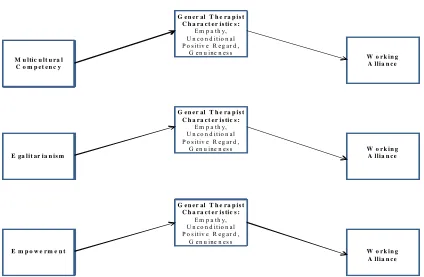
controlling for GTCs. Bootstrapping analyses demonstrated that GTCs fully mediated
the effect of MC and EM on WA, and partially mediated the effect of EG on WA. These
findings suggest that therapists can cultivate stronger WA with the target population
through demonstration of PSTCs in addition to GTCs, and that PSTCs are facilitative in
whole or in part, because they increase the likelihood the therapist is perceived as
REMOVING A BARRIER TO WIDEN THE DOOR TO RECOVERY: WORKING ALLIANCE DEVELOPMENT WITH AFRICAN
AMERICAN WOMEN SUBSTANCE ABUSERS by
Telsie A. Davis
A Dissertation
Presented in Partial Fulfillment of Requirements for the Degree of
Doctor of Philosophy in
Counseling Psychology in
the Department of Counseling and Psychological Services in
the College of Education Georgia State University
Copyright by Telsie A. Davis
Special thanks to:
Dr. Julie Ancis for chairing this committee and for all the spoken and non-spoken ways you have compelled me to use my voice in this dissertation. I am grateful for your wisdom, candidness, and humor that always served to push me “onward” to the completion of what you called “important work.”
Dr. Kensa Gunter for affirming and supporting me since the first day of my doctoral program. Your knowledge has been a gift, and your voice has helped me to find my own! Thank you for your support of this dissertation and every professional endeavor I have pursued.
Dr. Jeff Ashby for introducing me to quantitative methodology, believing in my potential to become a competent researcher and inspiring me to love this method of inquiry in my pursuit of using research as advocacy; and Dr. Brian Dew for your guidance and support both on this dissertation and throughout my doctoral training.
The wonderfully resilient women who participated in this research – you have the answers, and your courage to share them has both humbled and motivated me to ensure your voices are represented in the literature.
The “truly devoted to the cause of culturally competent treatment” program directors who gave me access to the participants and made me promise to return to share my findings. I am grateful for your commitment to bridging the gap between research and practice.
The APA Minority Fellowship Program for supporting this research through their dissertation award grant: SM58567.
A deeply loving and heartfelt thanks to:
Donald “Donnie” L. Davis, Jr., my husband, cheerleader, therapist, motivator, prayer partner and more – you are the reason I could pursue this dream while also enjoying my other ones! “I love you more today than yesterday, but not as much as tomorrow.”
Chloe, Charlee, and baby Davis to come – you are my inspiration to make this world a better place. Chloe and Charlee – thank you for singing your song, “Mommy You Can Do It,” whenever I looked too tired to finish working on my book. I love you forever!
George and Janice Andrews for giving me life and supporting it whole-heartedly and often financially; Papa George who called me “Doctor” when I first began my Master’s program; Grandma Mildred for providing free child care and nutritious meals; Tregonie, Treamon, Tameka, and Tomina for supportively holding me accountable; all my
Page
Abbreviations ………iv
Chapter 1 AFRICAN AMERICAN WOMEN SUBSTANCE ABUSERS, POOR TREATMENT RETENTION AND WORKING ALLIANCE……….……….…………....1
Introduction………..1
Review of the Literature ………...3
Conclusions …………..………….………17
References …...………..20
2 REMOVING A BARRIER TO WIDEN THE DOOR TO RECOVERY: AFRICAN AMERICAN WOMEN AND WORKING ALLIANCE DEVELOPMENT ………39
Introduction ………...………39
Methods ……….…58
Results ………..….62
Discussion ……….…66
Limitations and Future Directions ………...71
Conclusions ………..74
References ……….77
EG Egalitarianism
EM Empowerment
GTCs General Therapist Characteristics
MC Multicultural Competence
PSTCs Population-Sensitive Therapist Characteristics
UPR Unconditional Positive Regard
Chapter I
AFRICAN AMERICAN WOMEN SUBSTANCE ABUSERS, POOR
TREATMENT RETENTION AND WORKING ALLIANCE
Substance abuse is arguably the foremost public health concern in the United
States (Ehrmin, 2005; National Institute on Drug Abuse [NIDA, 2008]). It causes “more
deaths, illnesses, and disabilities than any other preventable health condition” (Ericson,
2001, p.1) in America, and costs our society an estimated 350 billion dollars annually
(NIDA, 2008). It is directly linked to cancer, heart disease, sexually transmitted diseases,
and HIV/AIDS (NIDA, 2003; NIDA 2008), and implicated in societal problems such as
homelessness, violence against women (Blumenthal, 2002; Office of National Drug
Control Policy [ONDCP], 2001), a strained health care system, overcrowded jails, and
millions of preventable deaths annually (Ericson, 2001; Ehrmin, 2005; ONDCP, 2001).
Due to pregnancy and women shouldering the majority of parenting responsibilities in the
US (Nelson-Zlupko, Dore, Kauffman, & Kaltenbach, 1996), female substance abuse is
additionally associated with poor social, physical, and mental health indicators for
children (Roberts & Nishimoto, 2006; Scott-Lennox, Rose, Bohlig, & Lennox, 2000).
For African American (AfA) women, substance abuse is associated with still
more devastating problems. Research has shown that when abusing substances, AfA
women are more likely to use the most severely addictive drugs and incur the highest rate
Jenkins-Monroe, 2000). They have been found to have a higher prevalence of untreated medical
disorders (e.g. anemia and sexually transmitted diseases) and dental diseases associated
with their substance-abusing lifestyle (McCaul, Svikis, & Moore, 2001). Moreover, for
African American women, AIDS is the leading cause of death for those aged 25-34 years,
the third leading cause for those aged 35-44 years, and the fourth leading cause for those
aged 45-54 years; and 24% of these documented transmissions are drug-related (Centers
for Disease Control and Prevention [CDC], 2008). Given AfA women’s traditional
position as primary nurturer within the Black family, their substance abuse is an
additional encumbrance weighing on a community already shouldering a disproportionate
amount of community-debilitating factors such as poverty and oppression (Curtis-Boles
& Jenkins-Monroe, 2000).
Fortunately, substance abuse treatment has proven effective in mitigating the
deleterious consequences of substance abuse. Treatment is associated with decreased
levels of substance use, criminal activity, jail time, and HIV infection; increased
employability, post-natal birth weights, and family functioning; as well as improved
medical and psychiatric conditions (Greenfield et al., 2007; NIDA, 1997; NIDA 2008;
NIDA, 2009; Office of National Drug Control Policy [ONDCP], 2008). Successful
substance abuse outcomes are largely associated with treatment retention, such that there
is a positive correlation between length of stay in treatment and constructive change
(Greenfield et al., 2007; NIDA, 1997; NIDA, 2009). Additionally, data has shown that
short treatment stays increase client risk of multiple treatment episodes (Mertens &
Weisner, 2000) which is linked to continued substance abuse, increased criminal activity,
Palmer, Murphy, Piselli, & Ball, 2009), further underscoring the importance of treatment
retention.
Empirical findings suggest that AfA women have the lowest rates of treatment
retention in comparison to other ethnic and gender groups in substance abuse treatment
(McCaul et al., 2001; Mertens & Weisner, 2000). Such data validates the need for
immediate research aimed at increasing the retention rates of this population. Thus, the
purpose of this chapter is two-fold. The first aim is to review existing literature
pertaining to disparities in treatment retention and highlight a significant barrier to
treatment retention for this population. The second is to present support for an empirical
focus on culturally responsive working alliance development as a means to address this
barrier and enact a promising first step towards increasing the treatment retention rates of
AfA women with substance use disorders. Therapist characteristics believed to be
culturally responsive and facilitative of a strong working alliance with this population
will be outlined.
Treatment Retention and African American Women with Substance Use Disorders
Treatment retention is operationalized as the number of days spent in treatment
from the date of admittance to the last date of service (Roberts & Nishimoto, 2006).
Research has repeatedly demonstrated retention to be a major challenge in substance
abuse treatment (Dobkin, De Civita, Paraherakis & Gill, 2002; Meier, Donmall,
Barrowclough, McElduff & Heller, 2005), with dropout rates in outpatient programs
averaging 55% (Agosti, Nunes, & Ocepeck-welikson, 1996). Data from the 2009
SAMHSA Treatment Episode Data Set (TEDS) showed that of the 1.37 million client
Services Administration [SAMHSA], 2009). As stated previously, treatment retention is
positively correlated with successful treatment outcomes (Fiorentine, Nakashima, &
Anglin, 1999; Greenfield et al., 2007; NIDA, 2007; NIDA, 2009) such as decreased or
cessation of substance use, decreased criminality and risky behavior, increased
employment (Anglin et al., 1997; Palmer et al., 2009), and improved psychological
functioning (Roberts & Nishimoto, 1996). Such findings highlight the necessity of an
empirical focus on improving substance abuse treatment retention rates.
African American ethnicity (Agosti et al., 1996; Campbell, Weisner, & Sterling,
2006; Jacobson, Robinson & Bluthenthal; 2007; King & Canada, 2004; McCaul et al.,
2001; Milligan, Nich, & Carroll, 2004; Siqueland et al., 2002a; Wolf, Sowards, & Wolf,
2003) and female gender (Arfken, Klein, di Menza & Schuster, 2001; King & Canada,
2004; McCaul, Svikis & Moore, 2001; Petry & Bickel, 2000) have been shown to be
independent and consistent predictors of low treatment retention. The following is a brief
review of the robust findings concerning individual investigations of both these variables,
followed by a review of the literature pertaining to the intersection of the two.
African American Ethnicity and Treatment Retention
Several studies identified significantly lower treatment retention rates among
African American participants compared to their European American counterparts
(Campbell et al., 2006; Jacobson et al., 2007; King & Canada, 2004; Longshore &
Teruya, 2006; McCaul et al., 2001; Milligan et al., 2004; Siqueland et al., 2002a: Wolf et
al., 2003). Jacobson et al.’s (2007) review of 10,591 study participants’ intake and
discharge records from every publicly funded outpatient and residential alcohol treatment
retention rates for African Americans in both outpatient and residential programs in
comparison to European Americans. Campbell et al. (2006) investigated substance abuse
treatment initiation and retention rates of 419 African American, European American,
Native American, Latino, and Asian American adolescents. Results indicated that even
after controlling for severity of substance use, African Americans had the lowest rates of
retention among all groups.
While there exists convergent evidence that African American ethnicity is a
predictor of low treatment retention, other studies have found no differences (e.g. Niv,
Pham, & Hser, 2009). It has also been suggested that the predictive role of ethnicity may
be mediated by educational attainment (Sayre, Schmitz, Stotts, Averill, Rhoades, &
Grabowski, 2002). Though studies have shown that higher education levels are
associated with longer stays in substance abuse treatment (Mertens & Weisner, 2000;
Van Ness, Davis, & Johnson, 2004), no nationally representative studies with detailed
adjustment for educational attainment among ethnic groups are available in the health
care literature (Wiltshire, Person, Kiefe, & Allison, 2009).
Female Gender and Treatment Retention
Studies examining whether gender is an independent predictor of treatment
retention are inconsistent. Several clinical trials that examined gender differences in
substance abuse treatment retention revealed women to have poorer retention rates than
their male counterparts (Arfken et al., 2001; King & Canada, 2004; McCaul, Svikis &
Moore, 2001; Petry & Bickel, 2000). However, a convergence of results from several
large, population-based studies suggest that gender is not a significant predictor of
In response to these divergent results, Humphreys and Weisner (2000) caution
that common exclusion criteria used in large-scale, substance abuse research often show a
pattern of producing population samples that are largely European American and higher
functioning than individuals seen in actual practice. They argue that the exclusion
criteria disproportionately exclude African Americans and individuals with lower income
and more severe substance use and psychiatric problems (Humphreys & Weisner, 2000).
This has direct implications for the generalizability of large-scale studies to
substance-abusing African American women since this group typically presents with more severe
symptomatology than other groups of substance abusers (Beatty, Jones, & Doctor, 2005;
Boyd, Phillips, & Dorsey, 2003).
The Intersections of African American Ethnicity, Female Gender, and Treatment
Retention
The author found only two studies that explored the intersection of ethnicity and
gender concerning treatment retention among substance abusers. McCaul et al. (2001)
investigated a combined ethnicity/gender variable, and the results showed that treatment
retention rates for AfA women were lower than any other ethnic and gender group
studied. In a women-only sample of 317 participants in an outpatient substance abuse
treatment program, Mertens and Weisner (2000) found that longer treatment retention
was predicted by ethnicities other than African American. Despite a dearth of findings
specific to the treatment retention of the target population, the aforementioned emergent
data, along with robust data on separate and independent analyses of AfA ethnicity and
female gender provides compelling evidence that retention for this population is among
The finding of only two studies concerning the treatment retention of AfA women
is likely related to the fact that historically, gender and ethnicity have been treated as
independent variables in substance abuse research (Greenfield et al., 2007). Such
treatment of these variables reflects in part, the poor acknowledgement of the saliency of
ethnicity and gender as dimensions that transform the meaning and experience of the
other (Jackson & Greene, 2000). Such treatment also highlights the necessity of an
urgent and increased empirical focus on the intersection of these cultural characteristics
as it relates to the clinical experience of AfA women.
In fact, AfA women with substance use disorders are overrepresented in public
substance abuse treatment programs relative to their numbers in the general population
(NIDA, 2003; Roberts & Nishimoto, 2006; Weisner & Schmidt, 1994 as cited in Schmidt
& Mulia, 2009). The author posits that this groups’ overrepresentation does not
necessarily negate the need for a focus on treatment retention, but may highlight a serious
service delivery problem wherein AfA women often present to treatment, but prematurely
drop out in numbers significantly higher than many other groups (Lewis, 2004; Mertens
& Weisner, 2000; Roberts, 1999).
Barriers to Treatment Retention for African American Women with
Substance Use Disorders
Barriers to treatment retention are conceptualized as program or client factors
(Amaro, Chernoff, Brown, Arévalo & Gatz, 2007) that influence premature dropout
unrelated to mutual client–therapist agreement to terminate or treatment ending for
reasons such as incarceration or relocation (Cournoyer, Brochu1, Landry & Bergeron,
“negative client perception of the therapist” (see Bass & Jackson, 1997; Dalton, 2001;
Lewis, 2004; Palmer et al., 2009; Roberts & Nishimoto, 2006; Sanchez-Hucles, 2001,
Terrell & Terrell, 1984), which is a generic expression for several independent, but
related findings in the literature concerning negative client views of the therapist
associated with treatment drop out. These findings include client perceptions that
therapists are insensitive and untrustworthy (Terrell & Terrell, 1984), unable or unwilling
to connect with clients (Palmer et al., 2009), and lack relevant cultural knowledge about
the clients with whom they work (Lewis, 2004). The barrier of “negative client
perception of the therapist” also highlights the issue of weak therapeutic relationships
between clients and therapists, and the subsequent influence on treatment retention.
The Importance of the Therapist and the Therapeutic Relationship to
Treatment Retention
Research highlights the importance of the therapist, and the therapeutic
relationship to treatment. In fact, the therapist is one of the most significant factors in
effective substance abuse treatment (Najavits & Weiss, 1994). Other than client factors,
the therapeutic relationship accounts for more of the explained variance in treatment
outcomes than any other variable (Ackerman et al., 2001), and a positive relationship
with a therapist is a significant factor in a woman’s decision to remain in substance abuse
treatment (Dalton, 2001; Lewis, 2004; Nelson-Zlupko et al., 1996; Sanchez-Hucles,
2001). Fiorentine et al.’s (1999) data concerning client engagement in drug treatment
also underscores the relevance of the therapist to treatment retention. Their findings
showed that treatment experiences, inclusive of a perceived favorable therapeutic
(Fiorentine et al., 1999). Thus, the author posits that identification of therapist
characteristics facilitative of a positive therapeutic relationship is a promising step
towards increasing treatment retention for this population.
Therapist Characteristics, Working Alliance, and Treatment Retention
A popular measurement of the therapeutic relationship is the working alliance
(Lambert & Barley, 2002), and it has been demonstrated to be a consistent predictor of
treatment retention among substance abusing populations (Barber et al., 2001). The
working alliance is broadly defined as the emotional attachment between the client and
therapist (Martin et al., 2000; Luborsky et al., 1997). A well-accepted operational
definition of the working alliance is that proposed by Bordin (1979). He defined working
alliance as comprised of three dimensions: (1) the affective bond between the therapist
and the client, (2) therapist and client agreement on treatment goals, and (3) therapist and
client agreement on treatment tasks to achieve the goals (Bordin, 1979; Martin et al.,
2000; Horvath & Symonds, 1991).
The literature has consistently recognized the significant and independent
contribution the working alliance makes to positive treatment outcomes such as treatment
retention (Barber et al., 2001; Palmer et al., 2009) across modalities and client groups
(Barber et al., 2001; Conners, Carroll, DiClemente, Longabaugh, & Donovan, 1997;
Horvath & Symonds, 1991; Martin et al., 2000; Meier et al., 2005; Ackerman et al., 2001;
Wintersteen, Mesinger & Diamond, 2005). Working alliance has been documented to
account for 36% to 57% of the variance in treatment outcomes (Horvath & Luborsky,
1993), and the most recent meta-analytic review concerning the relationship between
(Martin et al., 2000). Empirical study of this relationship has proven it to be stable and
consistent, and not the result of suspected confounds such as clinical diagnosis, type of
intervention, type of rater (i.e. patient, therapist, and observer), or time of rating (Martin
et al., 2000). In fact, the working alliance is so directly linked to positive treatment
outcomes (Fiorentine & Hillhouse, 1999; Lambert & Barley, 2002; Luborsky ) that many
theorists refer to it as the “quintessential integrative variable” (Wolfe & Goldfried, 1988,
p.449) and an effective intervention in and of itself (Martin et al., 2000; Horvath &
Symonds, 1991).
The Therapist’s Contribution to the Working Alliance
Both the therapist and client contribute to the development of the working alliance;
but it has been the client’s contribution that has garnered the greatest amount of empirical
scrutiny (Ackerman & Hilsenroth, 2003; Horvath & Luborsky, 1993; Meier et al., 2005;
Ritter, Bowden, Murray, Ross, Greeley, & Pead, 2002). The APA Division 29 Task
Force on Empirically Supported Therapy Relationships asserts that therapist
characteristics are just as central to working alliance development and significant enough
to warrant investigations that explicitly identify therapist characteristics facilitative of a
positive therapeutic relationship (Ackerman et al., 2001). Norcross and Lambert (2011)
and The US Department of Health and Human Services (USDHHS) (2001) extend this
argument and call for an understanding of therapist characteristics that promote working
alliance development with diverse and disorder-specific groups of clients.
An argument for the study of therapist characteristics predictive of working
alliance development concerns the reality that client characteristics (i.e. interpersonal
once a client presents to treatment. Thus, an inequitable focus on client factors that
contribute to working alliance development is a handicap to treatment; for a robust
understanding of only client factors necessitates that initial and valuable treatment time
be spent preparing the client for services. In contrast, a more equitable focus on therapist
characteristics that are facilitative of the working alliance allows treatment to be
client-responsive at the point of entry, when the client is likely to be the most motivated for
treatment, and where dropout often occurs (Chawdhary et al., 2007).
A significant relationship between working alliance and treatment retention has
been found for clients in substance abuse treatment (Barber et al., 2001). Moreover,
negative therapist attitudes have been identified as a significant programmatic barrier to
treatment retention with AfA women with substance use disorders (Lewis, 2004; Rhodes
& Johnson, 1997; Roberts & Nishimoto, 2006). Consequently, the identification of
therapist characteristics facilitative of a positive working alliance with the target
population could ultimately lead to the mitigation of a significant barrier to retention and
improved treatment retention rates for this vulnerable group.
Therapist Characteristics and Working Alliance Development
“General Therapist Characteristics.” Ackerman and Hilsenroth’s (2003)
meta-analysis of therapist characteristics influencing the working alliance identified nine
therapist attributes as facilitative of working alliance development in the general
counseling population: empathy, positive regard, genuineness, trustworthiness,
expertness, self-efficacy, flexibility, interest, and alertness. Three of these characteristics
(empathy, positive regard, and genuineness) are also known as Carl Rogers’ necessary
Division 29 Task Force on Empirically Supported Therapy Relationships provide support
for these three therapist characteristics as well. The Task Force classified empathy as
“demonstrably effective” (Ackerman et al., 2001, p. 495), and positive regard and
genuineness as “promising and probably effective” (Ackerman et al., 2001, p. 495). In
the substance abuse literature, these characteristics also received empirical support as
therapist characteristics associated with positive working alliance development (Najavits
& Weiss, 1994; Ritter et al., 2002). Given the robust empirical findings that empathy,
positive regard, and genuineness are therapist characteristics associated with positive
relationship development across client type and treatment modality (Ackerman &
Hilsenroth, 2003), they will be referred to as General Therapist Characteristics (GTCs).
Of important note, data concerning GTCs is based largely on European American
male clients. As such, despite the robustness of the findings, they may not significantly
predict alliance development for African American women with substance use disorders.
Additionally, research has demonstrated the existence of gender and cultural differences
in personal characteristics; etiology, patterns, and progression of substance use; and
treatment needs among substance abusers (Brady & Ashley, 2005). Aggregate analyses
may have masked the influence of these important differences. Thus, the author cautions
against generalizing results based on a European male population as has been routinely
done in the past (Blumenthal, 2002; Copeland & Hall, 1992; Kropp & Banhal-Baugus,
1996; Roberts, Jackson, & Carlton-LaNey, 2000; Sterk, Elifson & Theall, 2000; Swift et
al., 1996; Wallen, 2002), and calls for an empirical study of whether empathy, positive
regard, and genuineness are in fact, predictive of positive working alliance development
Consideration of therapist characteristics responsive to the unique cultural
characteristics of client groups is justified by findings of Griner and Smith’s 2006
meta-analysis of culturally responsive mental health interventions. Interventions adapted for a
specific cultural group were four times as effective as those that were not culturally
specific. Other research demonstrates that culturally responsive treatment is positively
correlated with improved working alliance (Chung & Bemak, 2002; Comas-Diaz &
Greene, 1994). Thus, an investigation of culturally responsive therapist characteristics
appears promising for the study of effective working alliance development with AfA
women substance abusers.
“Population-Sensitive Therapist Characteristics.” African American women
enter substance abuse treatment facing significant barriers to treatment retention. One
barrier appears with great frequency in the small, but emergent body of literature on
African American women with substance use disorders: the experience of culturally
insensitive attitudes (Bass & Jackson, 1997; Ehrmin, 2002; Greene, 1994; Lewis, 2004;
Rhodes; Roberts et al., 2000). A review of the literature on the working alliance
concerning women, women substance abusers, and African American women substance
abusers in particular, have highlighted therapist characteristics posited to be responsive to
the cultural insensitivity this population often faces. These characteristics, referred to as
Population-Sensitive Therapist Characteristics (PSTCs), include multicultural
competency, egalitarianism, and empowerment.
Multicultural competency. The empirical focus on multicultural competency has
steadily increased in the mental health field over the last three decades in light of the
Multicultural competency refers to the ability of a therapist to: (1) be actively mindful of
their cultural conditioning and how it influences their psychological practice; (2) actively
attempt to understand, respect, and appreciate the worldview of the client; and (3)
therapeutically intervene with skills and strategies that are responsive to the needs,
experiences, and values of the client (Sue, Arredondo, & McDavis, 1992). Researchers
suggest that a failure to consider and address relevant cultural factors (e.g. sexism,
racism, race-specific gender effects, and gender-specific race effects) will compromise
therapeutic relationships with AfA women (Constantine, 2007; Greene, 1994) and those
with substance use disorders (Bass & Jackson, 1997; Comas-Diaz & Greene, 1994;
Ehrmin, 2001; Ehrmin, 2002; Ferguson & Candib, 2002; Lewis, 2004; Roberts et al.,
2000). Regression analyses in Fuertes and Brobst’s (2002) examination of client ratings
of therapist multicultural competence showed that multicultural competency explained an
additional and significant amount of variance in client ratings of satisfaction only for
ethnic minority clients, validating the assumption that multicultural competency is
important for that demographic.
Research has demonstrated that the absence of therapist multicultural competence
results in clinical misses including misunderstanding, misinterpretation, and
misdiagnosing of clients’ attitudes, values, beliefs, opinions, and behaviors (Ancis, 2004;
Chung & Bemack, 2002; Sue et al., 1992); as well as premature termination of treatment
(Castro & Garfinkle, 2003). Specific to African American clients in therapy with
European American therapists, Constantine (2007) found that clients’ perception of
microaggressions predicted a weak working alliance and was associated with low ratings
multicultural competence is likely facilitative of strong working alliances with African
American women.
Egalitarianism. Egalitarianism as a therapist characteristic is defined as the
therapist’s capacity to share power with the client and create a therapeutic relationship
based on a recognition of the equally valuable expertise of both parties: the therapist as a
clinical expert and the client as an expert on themselves (Worell & Johnson, 2001). The
resulting egalitarian relationship includes self-disclosure by the therapist (Remer &
Rostosky, 2002; Remer & Oakley, 2005) and is absent of the imbalanced power
hierarchies that often relegate African American women substance abusers to the bottom
of socially constructed power differentials. The provision of an egalitarian therapist
could aid members of this population in defining themselves as capable contributors to
the well-being of self and others. Such self-definition is believed to initiate the lessening
of poor self-esteem (Ehrmin, 2001; Lewis, 2004), and internalized racism (Amaro et al.,
2005; Curtis-Boles & Jenkins-Monroe, 2000; Lewis, 2004) exhibited by many Black
women substance abusers (Ehrmin, 2001; Lewis, 2004; Roberts et al., 2000). A
participant quote from Davis and Ancis (unpublished manuscript) illustrates the utility of
and client preference for therapist egalitarianism, “That’s what I’m asking for, help you
know. I’m not asking you to drive the car, I’m asking you to be in the passenger seat
while I drive, alright (p.16).”
Chin (1994) offers a favorable perspective on the role of hierarchies in the lives of
women and advises of the importance of hierarchical relationships to many women of
color. She argues that unequal power structures are not inherently detrimental to the
hindering in therapy. Contrary to Chin (1994), feminist and womanist scholars
(Comas-Diaz & Greene, 1994; hooks, 2005; Rader & Gilbert, 2005) advise that given women’s
subordinate positions in most cultures, relationships based on more equal power
structures are essential in cultivating space for women to see themselves as valuable and
their experiences as non-pathological responses to oppressive socio-political factors. The
present author posits that both perspectives are valid, and that taken together, do not
diminish the usefulness of egalitarianism, but highlight the importance of therapists
considering individual dynamics when negotiating power in therapy with women of
color.
Empowerment. Therapist empowerment concerns the ability of the therapist to
increase the client’s self-efficacy to effectively cope with current and future stressors
(Worell & Johnson, 2001). Feminist conceptualizations of empowerment focus on
facilitating the client’s understanding of both internal and external contributions to their
distress and well-being (Worell & Remer, 2003). Facilitating the client’s understanding
of both causes of pain and sources of resilience is posited to imbue clients with a sense of
power to positively address and/or cope with their problems (Worell & Remer, 2003). In
an investigation of female substance abusers’ therapist preferences, Davis and Ancis
(unpublished manuscript) found that women substance abusers expressed a preference for
a therapist who focused on their strengths as well as their problems. One participant
indicated, “I needed someone to see me, see, you know, that I could make it. I needed
somebody to tell me that they thought I had what it takes to make it” (Davis & Ancis,
unpublished manuscript, p.16).
imperative for therapists to understand the rich, but often antagonistic social milieu
African American women must navigate, that at any given time, may facilitate, or
undermine her adaptive functioning. In addition to two marginalized identities, African
American women substance abusers, have the added stigmatized identity of a substance
abuser that serves to amplify oppression and social rejection (Comas-Diaz & Greene,
1994; Ehrmin, 2005; Lewis, 2004). Thus, it is conceivable that this triple marginalization
intensifies feelings of powerlessness. As such, a therapist who facilitates clients’
empowerment could be successful in helping them positively address and cope with the
many factors that undermine or make their recovery challenging. (Ehrmin, 2005; Lewis,
2004; Roberts & Nishimoto, 2006; Stahler, Kirby & Kerwin, 2007).
The argument that multicultural competency, egalitarianism, and empowerment
are therapist characteristics that are culturally responsive to the target population begs the
research question, “Are these PSTCs facilitative of a positive working alliance with AfA
women with substance use disorders?” Another question to be investigated
simultaneously is, “How much of the variance in this population’s working alliance
ratings do these characteristics account for over and above GTCs (i.e. empathy, positive
regard, and genuineness), if any?” Whatever combination of therapist characteristics
proves to be significantly facilitative of a positive working alliance with the target
population, the research will be successful in identifying for therapists a culturally
responsive model of working alliance development that could ultimately lead to increased
treatment retention for AfA women with substance use disorders.
Conclusion
therapeutic interventions (NIDA, 2009). However, the consensus is that treatment is
largely successful to the extent that clients are retained in treatment (Greenfield et al.,
2007; NIDA, 2007; NIDA, 2009). Given the documented vulnerabilities of AfA women
substance abusers and mounting evidence of their low treatment retention rates, there is
an urgent need for an empirical focus on increasing retention rates for this population
(Bride & Humble, 2008).
This paper proposes that a promising first step towards increasing treatment
retention for the target group is to focus on strengthening the working alliance between
AfA women substance abusers and their therapists. Research indicates that the working
alliance is a consistent predictor of treatment completion among substance abusers
(Luborsky et al., 1995; Barber et al., 2001). Unfortunately, findings that these clients
often perceive negative and prejudicial attitudes on the part of their therapists and
treatment staff (Bass & Jackson, 1997; Cournoyer et al., 2007; Dalton, 2001; Lewis,
2004; Roberts & Nishimoto, 2006; Rhodes & Johnson, 1997; Sanchez-Hucles, 2001)
suggests there exist significant barriers for professionals in developing strong working
alliances with this group.
Empathy, positive regard, and genuineness are identified as GTCs that are
facilitative of working alliance development across client type and treatment modality
(Ackerman & Hilsenroth, 2003; Najavits & Weiss, 1994; Ackerman et al., 2001; Ritter et
al., 2002). Multicultural competence (Bass & Jackson, 1997; Comas-Diaz & Greene,
1994; Constantine, 2007; Greene, 1994; Ehrmin, 2001; Ehrmin, 2002; Ferguson &
Candib, 2002; Lewis, 2004; Nelson-Zlupko et al., 1995; Roberts et al., 2000),
Roberts & Nishimoto, 2006; Stahler, Kirby & Kerwin, 2007), and egalitarianism (Davis
& Ancis, unpublished manuscript; Rader & Gilbert, 2005) are identified as PSTCs
facilitative of working alliance development specifically with AfA women substance
users. The author hypothesizes that while a positive working alliance may be established
with the target population utilizing GTCs, concurrent use of PSTCs that are sensitive to
the reality of being an AfA woman substance abuser may result in a stronger working
alliance. Identification of therapist characteristics that are facilitative of working alliance
development specifically for this population can increase the likelihood that therapists
will be more effective at relationship building, likely allowing them to successfully attend
to relevant cultural issues and counteract ethnic, gender, and disability prejudice among
other biases emanating from thought and behavior.
In sum, the author advocates for research that will identify therapist characteristics
that are empirically demonstrated to be facilitative of positive working alliance
development with AfA women who have substance use disorders. In addition to
allowing for more effective relationship building with this population, identifying such
characteristics could lead to the development of a culturally responsive model of working
alliance development that allows for a greater understanding of how the therapist can
create and sustain a therapeutic relationship with this population. Such knowledge
concerning the creation of more effective working alliances could also ultimately lead to
References
Ackerman, S. J., Benjamin, L. S., Beutler, L. E., Gelso, C. J., Goldfried, M. R., & Hill,
C., … Rainer, J. (2001). Empirically supported therapy relationships:
Conclusions and recommendations of the Division 29 Task Force.
Psychotherapy: Theory, Research, Practices, Training, 38(4), 495-497. doi:
10.1037/0033-3204.38.4.495
Ackerman, S. J., Hilsenroth, M. J. (2003). A review of therapist characteristics and
techniques positively impacting the therapeutic alliance. Clinical Psychology
Review, 23, 1-33. doi: 10.1016/S0272-7358(02)00146-0
Agosti, V., Nunes, E., & Ocepeck-Welikson, K. (1996). Patient factors related to early
attrition from an outpatient cocaine research clinic. The American Journal of
Drug and Alcohol Abuse, 22(1), 29-39. doi: 10.3109/00952999609001643
Alleyne, V., & Rheineck, J. E. (2008). People of color and addictions. In D. Capuzzi, &
M. D. Stauffer (Eds.), Foundations of addictions counseling (pp. 348-365).
Boston, MA: Pearson Education, Inc.
Amaro, H., Larson, M. J., Gampel, J., Richardson, E., Savage, A., Wagler, D. (2005).
Racial/ethnic differences in social vulnerability among women with co-occurring
mental health and substance abuse disorders: Implications for treatment services.
Journal of Community Psychology, 33(4), 495-511. doi: 10.1002/jcop.20065
Amaro, H., Chernoff, M., Brown, V., Arévalo, S., & Gatz, M. (2007). Does integrated
trauma-informed substance abuse treatment increase treatment retention? Journal
of Community Psychology, 35(7), 845-862. doi:10.1002/jcop.20185
with diverse populations. New York: Routledge.
Anglin, M. D., Hser, Y., & Grella, C. E. (1997). Drug addiction and treatment careers
among clients in the Drug Abuse Treatment Outcome Study (DATOS).
Psychology of Addictive Behaviors, 11(4), 308-323. doi:
10.1037/0893-164X.11.4.308
Arfken, C. L., Klein, C., di Menza, S., Schuster, C. R. (2001). Gender differences in
problem severity at assessment and treatment retention. Journal of Substance
Abuse Treatment, 20, 53-57. doi:10.1016/S0740-5472(00)00155-0
Ashley, O. S., Sverdlov, L., Brady, T. M. (2004). Length of stay among female clients
in substance abuse treatment. In C. L. Council (Ed.), Health Services Utilization
by Individuals with Substance Abuse and Mental Disorders (DHHS Publication
No. SMA 04–3949, Analytic Series A-25 ed., Rockville, MD: Substance Abuse
and Mental Health Services Administration, Office of Applied Studies.
Barber, J. P., Lester, L., Gallop, R., Crits-Christoph, P., Frank, A., Weiss, R. D.,
…Siqueland, L. (2001). Therapeutic alliance as a predictor of outcome and
retention in the national institute on drug abuse collaborative cocaine treatment
study. Journal of Counseling and Clinical Psychology, 69(1), 119-124. doi:
10.1037/0022-006X.69.1.119
Bass, L. & Jackson, M. (1997). A study of drug-abusing African American pregnant
women. Journal of Drug Issues, 97(3), 659-671. Retrieved from
http://www2.criminology.fsu.edu/~jdi/
Beatty, L., Jones, D., & Doctor, L. (2005). Reducing HIV/AIDS and criminal justice
Health Care for the Poor and Underserved, 16(4), 1-5. Retrieved from
http://www.press.jhu.edu/journals/journal_of_health_care_for_the_poor_and_und
erserved/
Blumenthal, S. (2002). Women and substance abuse: A new national focus. In C.
Wetherington, & A. Roman (Eds.), Drug addiction research and the health of
women (pp. 13-32). Bethesda, MD: U.S. Department of Health and Human
Services, National Institutes of Health, National Institute on Drug Abuse.
(Original work published 1998)
Boardman, T., Catley, D., Grobe, J. E., Little, T. D., & Ahluwalia, J. S. (2006). Using
motivational interviewing with smokers: Do therapist behaviors relate to
engagement and therapeutic alliance? Journal of Substance Abuse Treatment, 31,
329-339. doi: 10.1016/j.jsat.2006.05.006
Bordin, E. S. (1979). The generalizability of the psychoanalytic concept of the working
alliance. Psychotherapy: Theory, Research and Practice, 16(3), 252-260.
doi: 10.1037/h0085885
Boyd, M. R., Phillips, K., & Dorsey, C. J. (2003). Alcohol and other drug disorders,
comorbidity, and violence: Comparison of rural African American and Caucasian
women. Archives of Psychiatric Nursing, 17(6), 249-258.
doi:10.1053/j.apnu.2003.10.003
Brady, T. M., & Ashley, O. S. (Eds.). (2005). Women in substance abuse treatment:
Results from the Alcohol and Drug Services Study (ADSS) (DHHS Publication
No. SMA 04-3968, Analytic Series A-26). Rockville, MD: Substance Abuse and
Bride, B. (2001). Single-gender treatment of substance abuse: Effect on treatment
retention and completion. Social Work Research, 25(4), 223-225. doi:
10.1080/10826080801914154
Briggs, C. (2008). Gender and addictions. In D. Capuzzi, & M. D. Stauffer (Eds.),
Foundations of addictions counseling (pp. 331-347). Boston, MA: Pearson
Education, Inc.
Burdon, W. M., Messina, N. P., Prendergast, M. L., (2004). The California treatment
expansion intiative: Aftercare participation, recidivism, and predictors of
outcomes. Prison Journal, 84(1), 61-80. doi: 10.1177/0032885503262455
Busseri, M. A., & Tyler, J. D. (2003). Interchangeability of the working alliance
inventory and working alliance inventory, short form. Psychological Assessment,
15(2), 193-197. doi: 10.1037/1040-3590.15.2.193
Butler, L. E., Zetzer, H., & Yost, E. (1997). Tailoring interventions to clients: Effects on
engagement and retention. In L. S. Onken, J. D. Blaine, & J. J. Boren
(Eds.). Beyond the therapeutic alliance: Keeping the drug-dependent individual
in Treatment (pp. 85-109). Rockville, MD: National Institute on Drug Abuse.
Centers for Disease Control and Prevention (CDC). (2008). HIV/AIDS among women.
CDC HIV/AIDS Fact Sheet. Retrieved November 13, 2009, from the CDC Web
site: http://www.cdc.gov/hiv/topics/women/resources/factsheets/women.htm
Chawdhary, A., Sayre, S. L., Green, C., Schmitz, J. M., Grabowski, J., & Mooney, M. E.
(2007). Moderators of delay tolerance in treatment-seeking cocaine users.
Addictive Behaviors, 32, 370-376. doi: 10.1016/j.addbeh.2006.03.044
(Eds.). Women of color: Integrating ethnic and gender identities in
psychotherapy (pp. 194-222). New York: Guilford.
Chung, R. C., & Bemak, F. (2002). The relationship of culture and empathy in cross-
cultural counseling. Journal of Counseling & Development, 80, 154-159.
Retrieved from http://www.counseling.org/Publications/Journals.aspx
Comas-Diaz, L. & Greene, B. (Eds.). (1994). Women of color: Integrating ethnic and
gender identities in psychotherapy. New York: Guilford.
Conners, G. J., Carroll, K. M., DiClemente, C. C., Longabaugh, R., & Donovan, D. M.
(1997). The therapeutic alliance and its relationship to alcoholism treatment
participation and outcome. Journal of Consulting and Clinical Psychology, 65(4),
588-598. Retrieved from http://www.apa.org/pubs/journals/ccp/index.aspx
Conners, N. A., Grant, A., Crone, C. C., Whiteside-Mansell, L. (2006). Substance abuse
treatment outcomes for mothers: Treatment outcomes and the impact of length of
stay. Journal of Substance Abuse Treatment, 31, 447-456. doi:
10.1016/j.jsat.2006.06.001
Constantine, M. G. (2002). The intersection of race, ethnicity, gender, and social class in
counseling: Examining selves in cultural contexts. Journal of Multicultural
Counseling and Development, 30, 210-215. Retrieved from
http://www.multiculturalcenter.org/jmcd/
Constantine, M. G. (2007). Racial microaggressions against African American clients in
cross-racial counseling relationships. Journal of Counseling Psychology, 54(1),
1-16. doi: 10.1037/022-0167.54.1.1
treatment in a specialist women’s and two traditional mixed-sex treatment
services. British Journal of Addictions, 87, 1293-1302. doi:
10.1111/j.1360-0443.1992.tb02738.x
Corrigan, J. D., & Schmidt, L. D. (1983). Development and validation of revisions in the
Therapist Rating Form. Journal of Counseling Psychology, 30(1), 64-75. doi:
10.1037//0022-0167.30.1.64
Cournoyer, L., Brochu1, S., Landry, M., & Bergeron, J. (2007). Therapeutic alliance,
patient behaviour and dropout in a drug rehabilitation programme: The
moderating effect of clinical subpopulations. Addiction, 102, 1960–1970. doi:
10.111/j.1360-0443.2007.02027.x
Curtis-Boles, H., & Jenkins-Monroe, V. (2000). Substance abuse in African American
women. Journal of Black Psychology, 26(4), 450-469. doi:
10.1177/0095798400026004007
Dalton, I. E. (2001). Acculturative stress, cultural content and race of the therapist: Its
effects on African American women’s ratings of therapist credibility and
competence. Dissertation Abstracts International: Section B: The Sciences and
Engineering, 61(11-B), 6128. Retrieved October 28, 2007.
Davis, T. A. & Ancis, J. R. (unpublished manuscript). Therapist characteristics and
gender-sensitive substance abuse treatment. Manuscript in preparation.
Dobkin, P. L., De Civita, M., Paraherakis, A., & Gill, K. (2002). The role of functional
support in treatment retention and outcomes among outpatient adult substance
abusers. Addiction, 97, 347-356. doi:10.1046/j.1360-0443.2002.00083.x
contemporary psychotherapist. Clinical Social Work Journal, 29(3), 245-258.
doi: 10.1023/A:1010407728614
Erickson, N. (2001). Substance abuse: The nation’s number one health problem. U.S.
Department of Justice, Office of Justice Programs, Office of Juvenile Justice and
Delinquency Prevention, Office of Juvenile Justice Fact Sheet, #17. Retrieved
January 6, 2007, from http://www.ncjrs.gov/pdffiles1/ojjdp/fs200117.pdf
Ehrmin, J. T. (2001). Unresolved feelings of guilt and shame in the maternal role with
substance-dependent African American women. Journal of Nursing Scholarship,
33(1), 47-52. doi: 10.1111/j.1547-5069.2001.00047.x
Ehrmin, J. T. (2002). “That feeling of not feeling”: Numbing the pain for substance-
dependent African American women. Qualitative Health Research, 12(6), 780-
791. doi: 10.1177/104973230201200605
Ehrmin, J. T. (2005). Dimensions of culture care for substance-dependent African
American women. Journal of Transcultural Nursing, 16(2), 117-125.
doi:10.1177/1043659604273549
Ferguson, W. J., & Candib, L. M. (2002). Culture, language, and the doctor-patient
relationship. Family Medicine, 34(5), 353-361. Retrieved from
http://www.stfm.org/fmhub/
Fiorentine, R., & Hillhouse, M. P. (1999). Drug treatment effectiveness and client-
therapist empathy: Exploring the effects of gender and ethnic congruency.
Journal of Drug Issues, 29(1), 59-74. Retrieved from
http://www2.criminology.fsu.edu/~jdi/
treatment. Journal of Substance Abuse Treatment, 17(3),199-206.
doi:10.1016/S0740-5472(98)00076-2
Fuertes, J. N., & Brobst, K. (2002). Clients' ratings of counselor multicultural
competency. Cultural Diversity and Ethnic Minority Psychology, 8(3), 214-223.
doi: 10.1037/1099-9809.8.3.214
Fuertes, J. N., Stracuzzi, T. I., Bennett, J., Scheinholtz, J., Mislowack, A., Hersh, M., et
al. (2006). Therapist multicultural competency: A study of therapy dyads.
Psychotherapy: Theory, Research, Practice, Training, 43(4), 480-490.
doi:10.1037/0033-3204.43.4.480
Greene, B. (1994). African American women. In C. L. Comas-Diaz & B. Greene (Eds.).
Women of color: Integrating ethnic and gender identities in psychotherapy (pp.
10-29). New York: Guilford.
Greenfield, S., Brooks, A., Gordon, S., Green, C., Kropp, F., McHugh, R., et al. (2007).
Substance abuse treatment entry, retention, and outcome in women: A review of
the literature. Drug and Alcohol Dependence, 86, 1-21. doi:
10.1016/j.drugalcdep.2006.05.012
Griner, D., & Smith, T. B. (2006). Culturally adapted mental health interventions: A
meta-analytic review. Psychotherapy: Theory, Research, Practice, Training,
43(4), 531-548. doi: 10.1037/0033-3204.43.4.531
Hanna, C. A., Hanna, F. J., Giordano, F. G, & Tollerud, T. (1998). Meeting the needs of
women in counseling: Implications of a review of the literature. Journal of
Humanistic Education and Development, 36(3), 160-170. Retrieved from
hooks, b. (2005). Sisters of the yam: Black women and self-recovery. Boston: South
End.
Howell, E. M., Heiser, N., & Harrington, M. (1999). A review of recent findings on
substance abuse treatment for pregnant women. Journal of Substance Abuse
Treatment, 16(3), 195-219. doi: 10.1016/S0740-5472(98)00032-4
Horvath, A. O., & Luborsky, L. (1993). The role of the therapeutic alliance in
psychotherapy. Journal of Consulting and Clinical Psychology, 61(4), 561-573.
doi: 10.1037//0022-006X.61.4.561
Horvath, A. O., & Symonds, B. D. (1991). Relation between working alliance and
outcome in psychotherapy: A meta-analysis. Journal of Counseling Psychology,
38, 139-149. doi: 10.1037//0022-0167.38.2.139
Jackson, L. C., & Greene, B. (Eds.) (2000). Psychotherapy with African American
women: Innovations in psychodynamic perspectives and practice. New York:
The Guilford Press.
Jacobson, J. O., Robinson, P. L., & Bluthenthal, R. N. (2007). Racial disparities in
completion rates from publicly funded alcohol treatment: Economic resources
explain more than demographics and addiction severity. Health Research and
Educational Trust, 42(2), 773-794. doi: 10.1111/j.1475-6773.2006.00612.x
Johnson, D. M., Worell, J., & Chandler, R. K. (2005). Assessing psychological health
and empowerment in women: The personal progress scale revised. Women &
Health, 41(1), 109-129. doi:10.1300/J013v41n01_07
King, A. C., & Canada, S. A. (2004). Client-related predictors of early treatment drop-
of Substance Abuse Treatment, 26, 189-195. doi:
10.1016/S0740-5472(03)00210-1
Kropp, F., & Banhal-Baugus, M. (1996). The association of personal-related variables
to length of sobriety: A pilot study of chemically dependent women. Journal of
Addictions & Offender Counseling, 17(1), 21-35. Retrieved from
http://www.counseling.org/Publications/Journals.aspx
Lambert, M. J., & Barley, D. E. (2002). Research summary on the therapeutic
relationship and psychotherapy outcome. In J. C. Norcross (Ed.). Psychotherapy
relationships that work: Therapist contributions and responsiveness to patients
(pp. 17-36). New York: Oxford University Press.
Lewis, L. M. (2004). Culturally appropriate substance abuse treatment for parenting
African American women. Issues in Mental Health Nursing, 25, 451-472.
doi:10.1080/01612840490443437
Longshore, D., & Teruya, C. (2006). Treatment motivation in drug users: A theory-
based analysis. Drug and Alcohol Dependence, 81, pp. 179-188. doi:
10.1016/j.drugalcdep.2005.06.011
Luborsky, L., Barber, J., Siqueland, L., Thomas, M. A., & Woody, G. (1997).
Establishing a therapeutic alliance with substance abusers. In L. S. Onken, J. D.
Blaine, & J. J. Boren (Eds.). Beyond the therapeutic alliance: Keeping the
drug-dependent individual in Treatment (pp. 233-244). Rockville, MD: National
Institute on Drug Abuse.
Martin, D. J., Garske, J. P., & Davis, M. K. (2000). Relation of the therapeutic alliance
and Clinical Psychology, 68(3), p. 438-450. doi: 10.1037//0022-006X.68.3.438
McCaul, M. E., Svikis, D. S., & Moore, R. D. (2001). Predictors of outpatient
treatment retention: Patient versus substance use characteristics. Drug and
Alcohol Dependence, 62(1), 0-17. doi:10.1016/S0376-8716(00)00155-1
Meier, P. S., & Best, D. (2006). Programme factors that influence completion of
residential treatment. Drug and Alcohol Review, 25, 349-355.
doi: 10.1080/09595230600741230
Meier, P. S., Donmall, M. C., Barrowclough, C., McElduff, P., & Heller, R. F. (2005).
Predicting the early therapeutic alliance in the treatment of drug misuse.
Addiction, 100,pp. 500-511. doi: 10.1111/j.1360-0443.2005.01031.x
Mertens, J. R.., & Weisner, C. M. (2000). Predictors of substance abuse treatment
retention among women and men in an HMO. Alcoholism: Clinical and
Experimental Research, 24(10), 1525-1533. doi: 10.1111/j.1530-
0277.2000.tb04571.x
Milligan, C. O., Nich, C., & Carroll, K. M. (2004). Ethnic differences in substance
abuse treatment retention, compliance, and outcome from two clinical trials.
Psychiatric Services, 55(2), 167-173. doi: 10.1176/appi.ps.55.2.167
Najavits, L. M., & Weiss, R. D. (1994). Variations in therapist effectiveness in the
treatment of patients with substance use disorders: An empirical review.
Addiction, 89, 679-688. doi: 10.1111/j.1360-0443.1994.tb00954.x
National Institute on Drug Abuse (NIDA). (1997, September/October). Study sheds new
light on the state of drug abuse treatment nationwide [Electronic Version]. NIDA
http://www.drugabuse.gov/nida_notes/NNVol12N5/Study.html
National Institute on Drug Abuse (NIDA). (2003). Drug abuse among racial/ethnic
minorities (NIHPublicationNo. 03-3888). Rockville, MD: Author.
National Institute on Drug Abuse (NIDA). (2008). Drug abuse and addiction: One of
America’s most challenging public health problems. Retrieved July 25, 2008,
from http://www.nida.nih.gov/about/welcome/aboutdrugabuse/index.html
National Institute on Drug Abuse (NIDA). (2009). Principles of drug addiction
treatment: A research-based guide. (NIHPublicationNo. 09-4180). Rockville,
MD: Author.
Nelson-Zlupko, L., Dore, M., Kauffman, E., & Kaltenbach, K. (1996). Women in
recovery: Their perceptions of treatment effectiveness. Journal of Substance
Abuse Treatment, 13(1), 51-59. doi: 10.1016/0740-5472(95)02061-6
Nelson-Zlupko, Kauffman, E., & Dore, M. (1995). Gender differences in drug addiction
treatment: Implications for social work intervention with substance-abusing
women. Social Work, 40(1), 45-54. Retrieved from
http://www.naswpress.org/publications/journals/sw.html
Newman, C. F. (1997). Establishing and maintaining a therapeutic alliance with
substance abuse patients: A cognitive therapy approach. In L. S. Onken, J. D.
Blaine, & J. J. Boren (Eds.). Beyond the therapeutic alliance: Keeping the
drug-dependent individual in Treatment (pp. 181-206). Rockville, MD: National
Institute of Drug Abuse.
Niv, N., Pham, R., & Hser, Y. (2009). Racial and ethnic differences in substance abuse
60(10), 1350-1356. doi: 10.1176/appi.ps.60.10.1350
Norcross, J. C., & Lambert, M. J. (2011). Psychotherapy relationships that work II.
Psychotherapy: Theory, Research, Practice, Training, 48(1), 4-8. doi:
10.1037/a0022180
Office of National Drug Control Policy (ONDCP). (2001). The Economic Costs of Drug
Abuse in the United States, 1992-1998. Washington, DC: Executive Office of the
President (Publication No. NCJ-190636). Retrieved January 7, 2007, from
http://www.whitehousedrugpolicy.gov/publications/pdf/economic_costs98.pdf
Office of National Drug Control Policy (ONDCP). (2008). Treatment effectiveness.
Retrieved January 27, 2008, from
http://www.whitehousedrugpolicy.gov/treat/effectiveness.html
Palmer, R. S., Murphy, M. K., Piselli, A., & Ball, S. A. (2009). Substance user treatment
dropout from client and clinician perspectives: A pilot study. Substance Use &
Misuse, 44, pp.1021-1038. doi: 10.1080/10826080802495237.
Pelissier, B. (2004). Gender differences in substance use treatment entry and retention
among prisoners with substance use histories. American Journal of Public
Health, 94(8), 1418-1424. doi: 10.2105/AJPH.94.8.1418
Petry, N. M., & Bickel, W. K. (2000). Gender differences in hostility of opioid-
dependent Outpatient: Role in early treatment termination. Drug and Alcohol
Dependence, 58(1-2), 27-33. doi: 10.1016/S0376-8716(99)00058-7
Polcin, D. L., Goalloway, G. P., & Greenfield, T. K. (2006). Measuring confrontation
during recovery from addiction. Substance Use & Misuse, 41, 369-392.