WIRELESS MACHINE TO MACHINE HEALTH CARE
SOLUTION USING ANDROID MOBILE DEVICES IN
GLOBAL DEVICES
Dr.P.CHANDRASEKAR1, A.RAJASEKAR2, VINOTH JOHN PRAKASH3, K.PRABU4, N.UDHAYARAJ5, K.SENTHILKUMAR6
1
Department of EEE, Veltech Rangarajan Dr.Sakunthala R& D Institute Of Science And Technology, Chennai,India
2
Department of EEE, Veltech Rangarajan Dr.Sakunthala R& D Institute Of Science And Technology, Chennai,India
E-mail: [email protected] , [email protected]
ABSTRACT
The research and design of embedded pulse monitoring instrument overcome the shortcoming of traditional pulse diagnosis system. The instrument has simple structure stable and reliable operation,
high accuracy, low power consumption, good portability full featured function, and extensive application
occasion. The real time monitoring system for cardiac patient physical state is based on wireless
transceiver module technology. It can be taken by patient and keep the patient moment intact because it
is miniature and portable .The system can monitor and record the physical states and moment parameters real time, and the provide auxiliary means for the correct diagnosis of doctor. With
intelligent transceiver module, the sign of acute disease for patient can be found early, and then the
patient can be helpe in time, the sudden death of patient can be avoid. The wireless transceiver module technology can be suite for short distance communication, and the transmission distance is limit only about 10 meters, and then it can be suitable for in- patient monitoring.
Keywords: Wireless Transceiver, Wpan, Temparature Sensor, Data Acquisition System
1. INTRODUCTION
This system describes a wireless M2M healthcare solution that uses Android mobile devices in a global network. The use of a global M2M network in healthcare application service coverage by providing efficient support for IPv6 over low-power wireless personal area network (WPAN) and mobile technology in wide areas.
Microcontroller Based Wireless temperature and ECG sensor suitable for operation in a small office/home environment. Many individuals and organizations may wish to use electronic surveillance ones promises to replace the use of traditional healthcare systems based on wireless sensor networks, providing ease of measurement, extension of network, accessibility, and reliability.
2. DATA ACQUISITION SYSTEM FOR
PATIENT
To keep the moment of the patient intact with the sensors on his body, the wireless sensors are required to be minimized and portable. Base on wireless transceiver module communication
technology the patient physical states data
acquisition system is made up of sensors, signal conditioning unit, A/D converter, embedded PIC controller unit and transceiver communication module. According to the state of an illness of the
patient, the sensors which are fixed on patient body may be of some of these sensors ECG
sensors, blood pressure sensors. Each sensor is
fasted on corresponding position of the patient’s body.
The physical states and movement parameters
main function of PIC controller is to integrate the data with the definition frame format, at last, the transceiver communication module sends it to remote monitoring system or display.
3. WORKING PRINCIPLE
The signals are continuously recorded in
separate files on flash memory for feature
analysis. Once pathological abnormality is
detected, the monitoring device requests a
transmission through PC or PDA to the remote care center.
For the temperature measurement,
thermistors are used that measures the
temperature of the patient. For respiration rate measurement, displacement method is adopted that uses displacement sensors which are placed in the thoracic region or abdomen region.
The pressure sensors measure the blood
pressure of the blood. These analog input signals
are fed into the signal conditioning part of the system that includes amplifiers and filter circuits. After signal conditioning, the analog signals are
converted to digital signals using the
microcontroller. Then the microcontroller produce output in a computer
system through serial port interface, through
Bluetooth interface, or using Zigbee modules
such as CC2500 or standard IEEE 802.15.4 is
selected as the wireless transmission standard.
Methodology is important to achieve a major
goal with reliability, predictability. Accordingly a new system is to be developed. So as to design
such system with predictable results in a
predictable time embedded system software is
used to make most effective & wide variety
system.. The PIC would be programmed using embedded C software developed by Kiel
microvision-3. Then the PIC microcontroller
transmits or receives signals through wireless
modules either Bluetooth or wireless
transceivers or using Zigbee modules. The real time signals would be transmitted / received by RF transceiver modules.
Real time location of the event is very important and valuable piece of information so as to make
real time decisions. It is beneficial for fault
tolerant, routing, aggregation, event detection, & so on.
Monitoring and control is the core of the real-time monitoring system for patient physical states, and it can dispose , display , save ,query and analyze the data from each patient.
To know the physical states of inpatient, the
physical parameters need to be monitored real
-time. With the increase in the number senior
citizens and chronic diseases, the number of
elderly patients who need constant assistance
has increased. Elderly patient is the continuous monitoring of their vital signs. The results prove that the mobility, usability and performance of
our proposed system have impacts on the user’s
attitude, and there is a significant positive
relation between the user’s attitude and the intent to use our proposed system.
This proposed system is expected to monitor the
electrical activity of heart of the patient under
critical care more conveniently and accurately for diagnosing which can be interfaced with PIC
18F4450 to bring it under a network system widely for the doctor to monitor the patient’s
condition sitting in his own office without being
physically present near to the patients bed.
Wireless networked embedded device includes signal conditioning circuitry, sensors and a PIC controller with a wireless Transceiver module
(CC2500). To measure or monitor human
movements or activities, a graphical LCD display is selected for its low price, small size, capability of continuous measurement, and ease of integration.
IEEE 802.15.4 is selected as the wireless transmission standard because of its short-range, low-cost, and low power characteristics. This system can not only realize accurate measurement
of indicators, but also save the patients travel
between home and the hospital.
4. POWER SUPPLY- BLOCK DIAGRAM
A regulator circuit removes the ripples and also remains the same dc value even if the input dc voltage varies, or the load connected to the output dc voltage changes. This voltage regulation is usually obtained using one of the popular voltage regulator IC units.
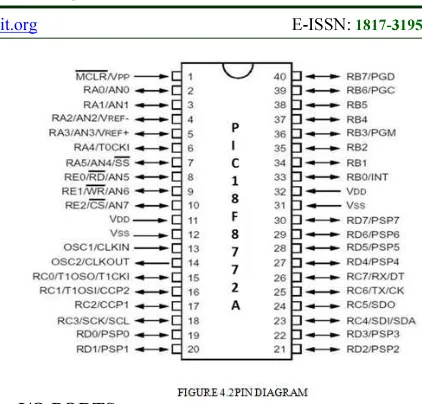
[image:3.595.296.507.105.307.2]A. PIC 18F8772A
FIG 4.1 PIC ARCHITECTURE • High performance RISC CPU
• Only 35 single word instructions to learn • All single cycle instructions except for program Branches which are two cycle • Operating speed: DC - 20 MHz clock input, DC - 200 ns instruction cycle • Up to 8K x 14 words of FLASH Program Memory,
Up to 368 x 4 bytes of Data Memory (RAM)
• Interrupt capability (up to 14 sources) • Direct, indirect and relative addressing modes
• Power-on Reset (POR) • Power-up Timer (PWRT) and Oscillator Start-up Timer (OST)
• Processor read/write access to program memory
• Wide operating voltage range: 2.0V to 5.5V
• Low-power consumption B. PIN DIAGRAM
I/O PORTS
Some pins for these I/O ports are multiplexed with an alternate function for the Peripheral features on the device. In general, when a peripheral is enabled, that pin may not be used as a general purpose I/O pin.
PORTA AND THE TRISA REGISTER
PORTA is a 6-bit wide, bi-directional port. The corresponding data direction register is TRISA. Setting a TRISA bit (= 1) will make the corresponding PORTA pin an input (i.e., put the corresponding output driver in a Hi-Impedance mode). Clearing a TRISA bit (= 0) will make the corresponding PORTA pin an output (i.e., put the contents of the output latch on the selected pin). Reading the PORTA register reads the status of the pins, whereas writing to it will write to the port latch. All write operations are read-modify-write operations.
PORTB AND THE TRISB REGISTER
5. TEMPARATURE SENSOR
FEATURES
Calibrated directly in Celsius (centigrade). Linear +10.0 mV/ oC scale factor
0.5oC accuracy guarantee able (at +25oC). Rated for full -55oc to +150oC range. Suitable for remote applications. Low cost due to water-level trimming. Operates from 4 to 30 volts.
Less than 60µA current drain. Low self-heating 0.08oC in still air.
Non linearity only +/- 0.75o C typical low impedance output.
1mA load.
A popular voltage output analog integrated circuit temperature sensor is the LM35DZ, manufactured by National Semiconductor. This is a 3-pin analog output sensor which provides a linear output voltage of 10 mV0/ C. The temperature range is 0C to +100 0C, with an accuracy of ±1.5 0C
6. MEASURING THE ECG SIGNAL FEATURES
VERSATILE: The YokeMate LWS® can standardize almost every ECG leadin your facility with a minimum of fuss. In fact, adapters are only needed about 10% of the time, much less than other systems.
INTERCHANGEABLE: Spacing and lead sequence can be standardized across multiple monitoring systems. All inclusive. Consisting of universal connectors, universal cables and adapters (when necessary), this system can be used with shielded and unshielded, disposable and reusable, radiolucent and pre-wired leadwiresets.
LARGER CONDUCTIVE AREA: Although the footprint is smaller, the conductive surface area of our Red Dot™ Repositionable Electrodes is larger than that of conventional electrodes. This results in lower skin impedance and improved ECG trace quality.
COMFORTABLE AND CONFORMABLE: The low-profile, soft cloth backing provides ease of application and removal, improves patient comfort compared to thicker, less-flexible backings and reduces the risk of electrodes catching on medical devices, drapes, gowns or bedding, which can cause inadvertent electrode lift. Small footprint for enhanced versatility. The small size and ultra-low profile allows for quick and easy placement on patients of different ages and sizes.
PREPLESS: If speed is a concern, the Red Dot™ Repositionable Electrodes’lower impedance may eliminate the need to prep the skin prior to application.
7. BLUETOOTH PROTOCOL
FEATURES
• Fully qualified Bluetooth® version 2.1 module, supports version 2.1 +
Enhanced Data Rate (EDR)
• Backwards-compatible with Bluetooth version 2.0,1.2, and 1.1Postage stamp sized form factor, 13.4 mm x25.8 mm x 2 mm (RN-42) and 13.4 mm x 20 mm
• Low power (26 uA sleep, 3 mA connected, 30 mAtransmit)
• UART (SPP or HCI) and USB (HCI only) data connection interfaces.
• Sustained SPP data rates: 240 Kbps (slave), 300Kbps (master)
• HCI data rates: 1.5 Mbps sustained, 3.0 Mbpsburst in HCImode
• Embedded Bluetooth stack profiles included(requires no host stack): GAP, SDP, RFCOMM, andL2CAP protocols, with SPP and DUN profilesupport
• Bluetooth SIG certified
• Castellated SMT pads for easy and reliable PCBmounting
• Certifications: FCC, ICS, CE
• Environmentally friendly, RoHS compliant . 8. CONCLUSION
The real time monitoring system for cardiac patient physical state is based on wireless
transceiver module technology. It can be taken by
patient and keep the patient moment intact because it is miniature and portable .The system can monitor and record the physical states and moment parameters real time, and the provide auxiliary means for the correct diagnosis of doctor. With intelligent transceiver module , the
sign of acute disease for patient can be found early,
and then the patient can be helped in time, the sudden death of patient can be avoided. The wireless transceiver module technology can be suited for short distance communication, and the transmission distance is limited only about 10 meters, and then it can be suitable for in- patient monitoring.
REFRENCES:
[1] M.M. A. Hashem, Rushdi Shams, Md. Abdul Kader, and Md. Abu Sayed, Design and Development of a Heart Rate Measuring Device using Fingertip, Department of Computer Science and Engineering, Khulna University of Engineering & Technology (KUET), Khulna 9203, Bangladesh, 2010.
[2]. S.Allender, V.Peto, P.Scarborough, A.Boxer and M.Rayner ,Coronary heart disease statistics, British
[3]. Health Promotion Research Group, Heart Foundation Department of public health, University Oxford, 2007.
[4]. Mohamed Fezari, Mounir Bousbia-Salah, and Mouldi Bedda, “Microcontroller Based Heart Rate Monitor”, The International Arab Journal of InformationTechnology, Vol. 5, No. 4, 2008.suited for short distance communication, and the transmission distance is limited only about 10 meters, and then It can be suitable for in- patient monitoring. The system is important to be applied to patient care.
[5]. U. Patel, C. Babbs, A computer based automated telephonic system to monitor
patient progress in home setting, Jornal of
Medical Systems, vol. 16(2), 1992, 101-112. [6]. G. Coyle, L. Boydell, L. Brown, Home
telecare for the elderly,Journal of Telemedicine and. Telecare, vol. 1, 1995, 183-185.
[7]. P. Giovas, D. Papadoyannis, D. Thomakos, et al., Transmission of electrocardiograms from a moving ambulance, Journal of Telemedicine and Telecare, vol. 4, 1998, 5-7.