An Exploration in Developing Operating Department Practitioner Student Placements: A New Approach to Students Placement Experiences.
Word count
3743 plus 699 for reference list.
Key works
Operating Department Practice Utilisation of placements ODP student experiences Professional socialisation Student support
Abstract
Like nursing and other professions elements of the education of Operating Department Practitioners (ODP) can only be contextualised by clinical practice involvement (Stockhausen and Strutt 2005, Higginson 2006, Morgan 2006). The importance of high quality placement experiences for all UK healthcare professions is widely acknowledge (Quality Assurance Agency 2001),
Prior to 2009 students on the Diploma in Higher Education ODP programmed undertook four clinical placement in the same Trust or organisation. At the time of the project there was a short fall in the number of placements available and although the University explored placing students in different clinical areas, such as private health care providers and new areas in the NHS none could provide the full learning experience for students to achieve the required competences.
The course team developed a placement system that utilises placements in a variety of setting and ensures students can complete the required outcomes for the placement. The new approach involved auditing placements for individual placements instead of for the full course. Students are now informed throughout the recruitment and selection events that they would be undertaking placements in a minimum of three different organisations. Students now move to a different organisation every placement, to gain a variety of clinical experiences.
This has resulted in the greater utilisation of clinical placements and the development of new areas for students to have placements. Students experience has increased as they can develop skills and understanding of the ODP role from different perspectives.
Introduction
literature search were undertaken examining other health professions to try and inform the proposed changes.
Like nursing and other professions elements of the education of ODPs can only be contextualised by clinical practice involvement (Stockhausen and Strutt 2005, Higginson 2006, Morgan 2006). The importance of high quality clinical placement experiences for all UK healthcare professionals is widely acknowledged (Quality Assurance Agency 2001). Murray and Williamson (2009) indicate that commissioners of preregistration nurse education require an appropriate number and quality of professionals, who are fit for future practice, and students require good quality education in safe environments, to equip them with the skills to deliver professional nursing care. Likewise for ODP students the College of Operating Department Practitioners (2006 and 2011) in both the Diploma HE and BSc curriculum ODP recommend that 60% of the course be in clinical practice. The aim of clinical experiences and the course are to enable students to meet the required Standards of Proficiency (SOP) (HCPC 2012), but it could be argued that the placements element involves more than completing competences. It is an opportunity for students to develop links between theory and practice, develop professional skills, professional understanding, readiness for working as a qualified practitioner and professional socialisation (Clouder 2003).
ODP clinical placements
Prior to 2009 students on the Diploma in Higher Education ODP programme undertook four clinical placement modules one in each semester and on the three year degree that commenced September 2012 three one in each year. These develop their clinical skills and ensured they meet the practical requirements of the (CODP 2006 and 2011) curriculum and the SOP set by HCPC (2012). Although there were four modules on the Diploma course which equated to four placements with different requirements these were undertaken in the same Trust or organisation. At the time of the project every year there was a short fall in the number of placements available and although the team explored new clinical areas such as private health care providers and new areas in the NHS none could provide the full learning experience for students to achieve the required competences.
Project Development
An extensive review of the literature was undertaken to explore issues related to the development and utilisation of placements. Pollit and Hungler (1997) indicate that when developing an investigation exploring existing literature is valuable, as the answer may be available already. The review involved searching a number of professional and academic search engines, however no literature was found regarding the utilisation of placements for ODP students. Literature was available on nursing students using theatre placements by Callaghan (2010) however the ODP requirements for their theatre placements are very different. Literature relating to other professions development of placements including nursing (Hall 2006, McKenna et al 2009, Murray and Williamson 2009), Midwifery (Gilmour et al 2013 and Barnett et al 2010), Radiography (Price et al 2000) provide some information and structures on how they had developed placement experiences and utilised placements.
Orton (1981) states that engaging with the clinical providers is vital as organisational attitude characteristics are a major predictors of the clinical learning experience of which the ward sister, (and in the operating theatre the senior ODP/nurse) is the a key figure for creating and maintaining the learning climate. Also the students were consulted as Davis (1990 cited in Midgley 2006) states each student brings with them a personal view of the world, of people, how it works, what it all means and subsequently a personal way of learning.
A new approach to placements
The course team developed a placement system that utilises placements in a variety of setting and ensures students can complete the required outcomes for the placement. Students are allocated to placements by the Practice Placement team in the University that had previously arranged and allocated placements for the other health profession students in the University. This improved the students experience by assisting them in meeting their requirements and aspirations whilst also enabling the University to creatively utilise the variety of placements. It also resulted in access to new placement areas such as the private sector and placements that don’t offer a full range of specialities. This process continues to be managed by the placements team and along with academics, practice educators and commissioners actively explore increasing placement areas and capacity.
The new approach involved auditing placements for individual placements instead of for a student for the full two/three years. Murray and Williamson (2009) indicate that the auditing of placements is vital to ensure the appropriate number of students can be supported, also the involvement of clinical staff and mentors in decisions as to how many students can be supported is important and that Trusts and HEIs must identify clearly how many students can be taken in each area.
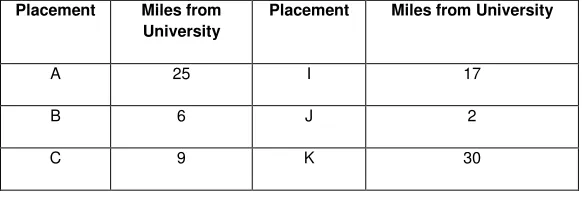
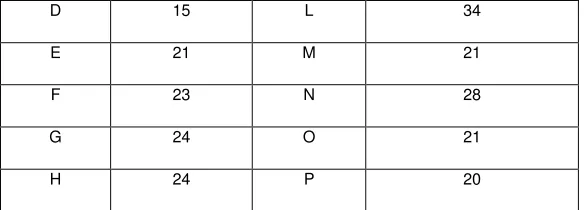
[image:3.595.51.342.686.785.2]Students in the first group following the development where asked to rank the placements available in terms of preference prior to starting the course, and were informed throughout the recruitment and selection events that they would be undertaking placements in a minimum of three different organisations. The existing students on the diploma course were not incorporated in the new system as they had been recruited being told they would be in one organisation throughout their studies, however some of these students later asked to become part of the new system and move around placements as they saw the value of moving to different areas. This practice continues and applicants are also informed that they must be prepared to travel to all the placement sites, and we cannot guarantee any placements, this is to ensure equity to all students. The University has 16 different placement sites with the nearest 2 miles from the University and the farthest away 34 miles, the mean distance to placements is 19 miles (Table one). The area the placements cover is largely urban and there are good road and public transport links so travel is not an issue. The university placement team them allocated students to an appropriate placement area for their placement requirements and students are informed 6 weeks before the start of the placement of the allocation.
Table one. List of placements and miles from University (using road travel)
Placement Miles from University
Placement Miles from University
A 25 I 17
B 6 J 2
D 15 L 34
E 21 M 21
F 23 N 28
G 24 O 21
H 24 P 20
This ensures that the placement allocated meets the individual requirements which Field (2004) suggests, is a requirement of all clinical placements because “they are situated in the real life context where they are allowed to participate legitimately as learners” (p127). Choi (2006) describes this social participation during placements as important for student development, “if the student learning is viewed through the lens of social participation, and at the correct level, knowledge is developed continuously through learners cognitive activity and participation in the group to which they belong” (p.144).
Chung-Heung and French (1997) when investigating nurse education found that “the clinical education setting is the most influential in the development of nursing skills, knowledge and professional socialisation”(p238). These authors focused on the perceptions of students but highlighted the importance of the learning climate within the clinical environment in the development of students into practitioners. The role of the ODP varies from hospitals where practitioners only undertake the anaesthetic, surgical or post anaesthetic care role to hospitals where practitioners are multi-skilled and cover all clinical roles. By exposing students to different environments they develop a greater understanding of the professional expectations placed on practitioners. This change in placements enable the students the opportunity to develop a greater appreciate of the OPD role and professional socialisation, as they experience different practices and behaviour.
Concerns about the new system
Table two provides a synopsis of some of the comments made by the four groups the university consulted with prior to the implementation of the new system, there are common themes regarding
• Student hardship.
• Ownership and belonging. • Support.
[image:4.595.51.343.72.177.2]• Competence. • Recruitment.
Table two. List of concerns
Students Mentors Clinical educators Managers/Employers
Travel/financial problems travelling to placements.
The students would not be theirs anymore.
Students would not have the support of someone who they had known for the whole course.
We won’t get to know the students, and recruitment will be difficult.
Maintaining or losing skills when they went to a different theatre.
It would take time for students to fit in or understand the new working practices.
Students would take time to adapt and may not have time to achieve the required
competencies.
Different working practices in different organisations and becoming confused.
Students would leave because of having to travel.
They would be utilising more clinical areas, and some areas that had not been used before.
Students will leave.
Not belonging. They would be getting students who had been passed by someone else.
Students won’t be part of the team.
Mentors won’t be able to assess them and see their progress.
Not where they want to work when they qualified.
If it is a difficult student you don’t have them for the full course.
How will know how the student has progressed before they come to the placement.
This would have been good because I don’t like my placement, or it’s a long way to travel.
Students won’t become part of the team/organisation.
Students will leave because of travel problems.
Student hardship?
Concerns regarding student hardship are not new MacAlister (1995) in an editorial stated that “life as a student is tough” and with changes to the students bursary system implemented in September 2012 there are concerns regarding students ability to support themselves while on the course. However in terms of this development the NHS bursary (2012) department state that “If you have to undertake practice placements as part of your NHS course you may be entitled to be reimbursed for some of the costs you incur through attending the placements. This can include reimbursement of both travel and accommodation costs if they are in excess of your normal daily travel costs to get to your usual university base / teaching site”. Since the implementation of the change there has been no increase in attrition on the course, however managing student’s expectation have caused some problems. The placement team have instigated a “no change policy to the allocated placements” as some students have attempted to manipulate the placements to suit themselves, however by not changing placements students have not left the course. Also the placement element of the course reviews highly on course reviews and the National Student Survey, which are used to assess student satisfaction.
Ownership and belonging?
work with a greater variety of students and as the students move around difficult students work with a variety of mentors.
The wider experience has led to a change in the employment destinations of students on completion of the course. Prior to the change students largely gained employment in the hospital they had been based for the course, however students are now seeking employment in a much larger selection of hospitals some because of their clinical experience and some have indicated because of the confidence gained for moving placements. Mckenna et al (2010) suggest that “exposure to clinical practice can alter preconceived ideas about different speciality areas” (p 177), and quote research from Rushworth and Happell (2000) indicating a positive change in students nurses perceptions of psychiatric nursing following placement. By providing a variety of placements in different organisation student’s views of working in a teaching hospital, a district hospital, a day surgery unit or private health care provider can be change which may result in them seeking employment at the end of the course. This variety of placements and the fact placement areas have different students each placement, means that students seeking employment have to compete with students the employers may have also had on placement and know how they performed or behaved.
Support?
In principle the change in placement allocation had no impact on the support mechanisms for students while on placements, in that mentors and clinical educators still carried out the same roles, and it was usual for students to move between teams or departments in the same hospital. However because students are now moving from one organisation to another there were concerns about consistence of practice and competence. This is highlighted by Henderson et al (2006) who explored establishing a structure and processes for safe and effective clinical placement of student nurses, the indicate that “difficulties can arise as there is no provision for individual assessment of each student prior to undertaking clinical placement” (p.278). This has been a problem for some students who have passed previous placements but have then had their competence questioned by mentors, however when judging the level a student should have attained as Henderson et al (2006) states “general indicators such as year in which the student is enrolled, provides a basis for assessments of what activities the student is capable of undertaking” (p 278). This maybe a result of the different working practices and protocols of the different organisations and as mentioned earlier students may have to has Melia (1987) suggests ‘‘getting the work done’’, ‘‘learning the rules’’ and ‘‘fitting in’’ to ensure they meet the requirements of the placement area they are in. Students sometimes find this difficult in particular towards the end of the course, however from a course perspective gaining as wide experience of different practices as possible is a good thing so they can develop a wider understanding of the ODP role.
Competence?
quality of that work on a continuum” (p.167). Now the students experience a variety of organisations they can explore different practices and explore evidence based practice. From the authors own experience delivering post qualification modules the most enlightening session is asking practitioners from different organisations to write a list of actions, procedures, policies and care interventions for a road traffic injury patient from a perioperative area. The level of differences they find between their organisations is substantial. As a result of moving the students around they are exposed to these different practices and as Eraut (1994) states they see different dimensions concerned with the quality of work.
In terms of the assessment of competence by mentors in placement there has been a slight increase in the number of students who do not pass or need to retake placements. Although there is no literature or empirical evidence of a problem in ODP there is evidence of a concern of mentor’s “failure to fail student” on clinical placement (Duffy 2004, Brown et al 2012, Jervis and Tilki 2011) in nursing and other professions. For example Brown et al (2012) indicated that two of the reasons mentor gave for passing failing students were “gave the student the benefit of the doubt” and “Liked the student and did not want to hurt his or her feelings”. When students had all their placements in one organisation, although they may have worked with different mentors, they were a member of the department and from a professional view part of the institution. With students moving to different hospitals could the pressure from this be reduced and mentors become more prepared to fail students. In addition because the student is moving to a different organisation are mentors more conscious of what others will think if they pass a student. This area of assessment requires further investigation however mentors do appear more prepared to not pass students especially towards the end on the course.
Recruitment?
Prior to the change recruitment to the course although via the University Clearing Admissions System (UCAS) offers were usually linked to a particular hospital or organisation. Students were then committed to that placement for the full period of the course, so students recruited later in the year may not have had the opportunity for a placement close to home. The view is now the University are recruiting students for the region and to fulfil the needs of all organisations, rather than individual placements. As such offers to the course or students accepting offers to study are not dependant on where the placement is, as all students move around and do not have a base.
Discussion on implementation
In addition to utilising placements student experience has increased and they are developing a greater insight to the role of the ODP and how different clinical environments utilise them. During their academic work students are also able to reflect on evidence based practice as they have a greater experience of different working practices. They can and do question practitioners and compare how they work with other departments. Students are also becoming more selective regarding their future employers and who can offer them the best opportunity to use their skills rather than just accepting a role in the hospital they have been based.
There is further analysis to be undertaken into this change and opportunities to explore some of the areas discussed in this article further. For example student and mentors experiences, professional socialisation of ODP students, decisions on employer on qualification, and the process of assessing and decisions on passing students.
References
Anant S. (1967). Belongingness and mental health: Some research findings. Acta Psychologia 26, 391–396.
Barnett T, Cross M, Shahwan-Akl L, Jacob E. (2010). The evaluation of a successful collaborative education model to expand students clinical placements. Nurse Education in Practice 10 17-21.
Brown L. Douglas V. Garrity J. C.W. Shepard (2012) What influences mentors tom pass or fail students. Nursing Mnagement. 19. 5
Callaghan A. (2010). Student nurses’: Perceptions of learning in a perioperative placement. Journal of Advanced Nursing 67 (4) 854-864.
Clouder D. L. (2003). Becoming professional: exploring the complexities of professional socialisation in Health and Social Care. Learning in Health and Social Care 2, 4, 213-222.
College Of Department Practitioners. (2006). The Diploma in Higher Education in Operating Department Practice. Curriculum Document.
College Of Department Practitioners. (2011). Bachelor of Science in Operating Department Practice, Curriculum Document.
Choi M. (2006). Communities of practice, an alternative learning model for knowledge creation. British Journal of Educational technology. 37(1) 143-146.
Chung-Heung L. French P. (1997). Education in the practicum: a study of the ward learning climate in Hong Kong, Journal of Advanced Nursing. 26 (3) 455-462.
Clouder L. (2003). Becoming professional: exploring the complexities of professional socialization in health and social care. Learning I Health and Social Care 2. 4. 213-222..
Davis B D (1990). How nurses learn and how to improve the learning environment. Nurse Education Today. 10 405-409.
Eraut, M. (1994). Developing Professional Knowledge and Competence. The Falmer Press. London.
Field D.E (2004). Moving from novice to expert – the value of learning in clinical practice , a literature review. Nurse Education Today 24 (7) 560-565.
Glimour C. McIntyre M. McLelland G. Hall H. Miles M. (2013) Exploring the impact of clinical placement models on undergraduate midwifery students. Women and Birth 26 (2013) e21-225.
Hall W. A. (2006). Developing clinical placements in a time of scarcity. Nurse Education Today 26 627-633.
Health and Care Professions Council. (2012) Standards of Proficiency, Operating Department Practitioners.
Henderson A J. Forrester K. Heel A. (2006). The establishment of structures and processes for the safe and effective clinical placement of nursing students. Nurse Education Today 6 275-280.
Higginson R. (2006), Fear, Worries and experience of first year pre-registration nursing students : a qualitative study. Nurse Researcher. 13. 32-50.
Jervis A. Tilki M. (2011) Why are nurse mentors failing to fail student nurses who do not meet clinical performance standards? British Journal of Nursing, 2011, Vol 20, No 9
Lakin, J. (2003). Exclusion and the Role of Nonconcious Behavioral Mimicry: The Role of Belongingness Threat. Unpublished PhD, The Ohio State University, OH, USA. Cited in Levett-Jones T and Lathlean J 2008.
Levett-Jones T, Lathlean J. (2008) Belonginess: A prerequisite for nursing students clinical learning. Nurse Education in Practice. 8 103-111.
MacAlister L (1995) Editorial Making ends meet: hardship among student nurses. British Journal of Nursing. 4. 1
McKenna L G. Wray N, McCall L. (2009) Exploring continuous clinical placement for undergraduate students. Advances in health science education. 14 327-335.
Mckenna L, McCall L, Wray N. (2010) Clinical placements and nursing students career planning: A qualitative exploration. International Journal of Nursing Practice. 19 176-182
Maslow, A. (1987). Motivation and Personality, third ed. Harper and Row, New York.
Melia, K. (1987). Learning and working: The occupational socialization of nursing. Tavistock, London.
Morgan R. (2006). Using clinical skills laboratories to promote theory-practice integration during first placement, an irish perspective. Journal of Clinical Nursing 15 155-161.
Murray S. C. Williamson R. (2009) Managing Capacity issues in clinical placements for pre-registration nurses. Journal of Clinical Nursing. 18. 3146-3154.
NHS Student Bursaries accessed December 2013. Am I entitles to claim back travel or accommodation costs as a result of attending a practice placement.
http://www.nhsbsa.nhs.uk/searchpage.aspx?terms=TRAVEL+EXPENSES
Orton (1981) Ward learning climate. Royal College of Nursing. London
Pollit D. Hungler B. (1997). Essentials of nursing research methods, appraisal and utilization. 4th Edition. Lippincott. Philidelphia.
Price R. Hopwood N. Pearce V. (2000) Auditing the clinical placement experience. Radiography 6 151-159.
Quality Assurance Agency. (2001) Code of Practice for the Assurance of Academic Quality and Standards in Higher Education: Placements. QAA London
Sargent, J., Williams, R., Hagerty, B., Lynch-Sauer, J., Hoyle, K., (2002). Sense of belonging as a buffer against depressive symptoms. Journal of the American Psychiatric Nurses Association 8, 120–129.