ANTIBIOTIC RESISTANT STAPHYLOCOCCUS AUREUS DISPERSION FROM HOG OPERATIONS: A SYSTEMATIC REVIEW AND META-ANALYSIS
Alexandra Noelle George
A technical report submitted to the faculty at the University of North Carolina at Chapel Hill in partial fulfillment of the requirements for the degree of Masters of Science in Public Health in the Environmental Sciences & Engineering Department in the Gillings School of Global Public
Health.
Chapel Hill 2018
Approved by:
Jacqueline MacDonald Gibson Jill Stewart
© 2018
Alexandra Noelle George ALL RIGHTS RESERVED
ABSTRACT
Alexandra George: Antibiotic Resistant Staphylococcus aureus Dispersion from Hog Operations: A Systematic Review and Meta-Analysis
(Under the direction of Jacqueline MacDonald Gibson)
Antibiotic use in hog production can select for antibiotic resistant strains of
Staphylococcus aureus, including methicillin-resistant and multidrug-resistant S. aureus (MRSA
and MDRSA, respectively). The bacteria can eventually spread to humans and the environment through a variety of routes. To quantify the prevalence of swine-associated MRSA and MDRSA in various reservoirs related to hog production and to identify factors contributing to the spread of these pathogens, we conducted a systematic review and meta-analysis according to the Preferred Reporting Items for Systematic Reviews and Meta-Analyses (PRISMA) protocol. The systematic review identified 166 studies documenting livestock-associated MRSA or MDRSA colonization published in English before June 2017. These studies revealed consistent evidence of high livestock-associated MRSA prevalence (55.3%) in hog herds raised with antibiotics, slaughterhouse pigs (30.4%), workers at industrial hog operations (24.4%), and veterinarians (16.8%). In addition, the studies included reported that 38.56% (95% CI 16.89% – 60.23%) of MRSA colonization of hospital patients could be of swine origin. Among studies examining risk factors for livestock-associated MRSA and MDRSA colonization, 93% (7 studies) of those that considered antibiotic use found an increased colonization risk, 80% of those considering
such as wearing personal protective equipment, had mixed effectiveness, with 4 studies finding that personal protective equipment usage, for instance, had a protective effect and 3 suggesting that it could increase the risk of colonization. Evidence suggests that MRSA and MDRSA can be present in air, soil, water, and household surface samples gathered in or near high-intensity hog operations. These results suggest that resistant S. aureus can colonize reservoirs even distantly linked to hog farming, suggesting that preventive action may be the best option to reduce its impact. This study underscores the need for a streamlined reporting system to better track livestock-associated resistant S. aureus.
To my family (Mom, Dad, Jackie, and Catherine), who got me to this point, and my friends (Russell, Alyssa, Elisa, Megan, Heidi, Walker, and countless others) who got me through it:
thank you for encouraging me during the difficult times and celebrating the good. And to the communities around the world who must deal directly with the consequences of industrial animal production, especially those in eastern North Carolina, may this work help to
ACKNOWLEDGMENTS
The author would like to thank Chien-hsiu Weng for his work on an early version of this project, as well as Elizabeth Christenson and Sarah Rhodes for their mentorship, guidance, and organizational support. Additional thanks go to Jackie MacDonald Gibson for her advice and tireless revisions, and Jill Stewart for her brilliant leadership on this larger project.
TABLE OF CONTENTS
LIST OF TABLES ... viii
LIST OF FIGURES...ix LIST OF ABBREVIATIONS ... x INTRODUCTION...1 METHODS ...2 Search strategy...2 Inclusion criteria ...4 Data extraction ...5
Pooled Effect Size Calculation ...7
Prevalence by Reservoir ...8
Assessment of Factors Influencing Livestock Associated-MRSA and -MDRSA Transmission ...9
RESULTS ... 10
Reservoir Prevalence ... 13
Risk Factors for Colonization ... 20
Hospital Patients ... 22 Individual Characteristics ... 22 Nature of Operation ... 22 Nature of Exposure ... 23 DISCUSSION ... 24 Limitations ... 28 Conclusion ... 30
APPENDIX I: SUMMARY TABLE OF FOREST PLOT RESULTS... 32
APPENDIX 2: SUMMARY OF RESERVOIRS NOT ANALYZED BY FOREST PLOTS ... 33
LIST OF TABLES
Table
1. Search term combinations ...3 2. Summary of inclusion criteria ...4 3. Summary of location and setting of studies considering livestock-associated
LIST OF FIGURES
Figure 1 - PRISMA flowchart showing the results of the literature search and screening
process. ... 11
Figure 2 - Number of publications by year; all of these publications were included in this systematic review. ... 12
Figure 3 - Map showing global distribution of included studies by country. ... 12
Figure 4 - MRSA and MDRSA prevalence in hogs. ... 14
Figure 5 - MRSA and MDRSA prevalence in humans. ... 16
Figure 6 - MRSA and MDRSA prevalence in environmental reservoirs. ... 17
Figure 7 - MRSA and MDRSA in post-slaughter reservoirs (including carcasses and "retail meat", or meat that might be sold in a grocery store). ... 19
Figure 8 - Factors influencing the spread and subsequent colonization of resistant Staphylococcus aureus from hog operations. ... 21
LIST OF ABBREVIATIONS
LA-MRSA Livestock-associated methicillin-resistant Staphylococcus aureus MRSA Methicillin-resistant Staphylococcus aureus
Introduction
Antibiotics have been hailed as the “miracle drug” of the 20th century – and indeed, they are at least partially responsible for a significant increase in life expectancy in the industrialized world (1). However, from the time penicillin was first used to fight infection, bacteria began to evolve and develop resistance to antibiotics (2). Today, antibiotic-resistant bacteria pose a threat to the effective prevention and treatment of infectious diseases (3). Among the best-known and most virulent antibiotic-resistant pathogens are Staphylococcus aureus including strains with resistance to methicillin alone (MRSA) or to three or more categories of antibiotics, a resistance profile known as multidrug-resistance (MDRSA, or multi-drug-resistant S. aureus) (1). In the United States, the Centers for Disease Control and Prevention (CDC) estimates around 80,000 cases of MRSA each year, resulting in about 11,000 deaths annually (4)—roughly the same number of deaths caused by firearm homicides in 2014 (5).
Since the first documented case of MRSA transmission from swine to a human in 2004, when MRSA in a Dutch infant was traced to her family’s hog farm (6), a growing body of research has linked antibiotic use in animal husbandry to the spread of MRSA and MDRSA in humans (7). Evidence suggests that the frequency of such transmission has increased steadily over the past decade (8). However, the risks and routes of transmission of MRSA and MDRSA from swine farms into the surrounding environment and community remain poorly understood. Understanding these risks and factors that mitigate and exacerbate them is important to
To help inform future characterization of these risks, we conducted a systematic literature review in order to 1) quantify the prevalence of MRSA and MDRSA in hog farms, farm workers, family members of workers, members of surrounding communities, environmental samples in or near hog farms, and pork products and 2) identify and, to the extent possible, quantify factors contributing to the transmission of resistant forms of S. aureus to workers, their family members, and surrounding environments and communities. A previous qualitative review explored the occupational and community health concerns associated with pig farming (9). Another review examined the prevalence of MRSA in humans in contact with livestock of all types (10). However, this is the first systematic review to quantify the prevalence of swine-associated MRSA and MDRSA in multiple reservoirs (humans, farm workers, family members, community members, environmental media, pork products) and factors influencing their spread from these reservoirs.
Methods
A systematic review was conducted to identify any papers documenting prevalence or transmission of methicillin- or multidrug- (resistant to three or more classes of antibiotics) resistant S. aureus colonization in association with hog production. The review was conducted in accordance with the Preferred Reporting Items for Systematic Reviews and Meta Analyses (PRISMA) protocol (11).
Search strategy
We searched the online database PubMed using the “advanced search builder” tool to search for relevant combinations of the terms or sets of terms as outlined in TABLE 1. Each row represents a unique search combination, and this table describes the full subset of search term combinations conducted. Searches were conducted from February until June 2017. All titles and abstracts were imported into an Excel database for further inspection, and papers deemed
irrelevant based on their abstracts were eliminated. The remaining papers were downloaded for full paper examination. Relevant papers were then either included or excluded according to the inclusion criteria (Table 2).
TABLE 1. Search term combinations
Term 1 Term 2 Term 3
livestock associated MRSA community risk
livestock associated MRSA pig risk
livestock associated MRSA community pig
livestock associated MRSA worker risk
livestock associated MRSA pork chain
livestock associated MRSA pork
livestock associated MRSA risk
MRSA swine
MDRSA community risk
MDRSA pig risk
MDRSA swine
MDRSA community pig
MDRSA worker risk
MDRSA pork chain
MDRSA pork
MDRSA risk
antibiotic AND resistant AND staphylococcus AND livestock
community risk antibiotic AND resistant AND staphylococcus AND
livestock
pig risk
antibiotic AND resistant AND staphylococcus AND livestock
swine antibiotic AND resistant AND staphylococcus AND
livestock
community pig antibiotic AND resistant AND staphylococcus AND
livestock
worker risk antibiotic AND resistant AND staphylococcus AND
livestock
pork chain antibiotic AND resistant AND staphylococcus AND
livestock
pork antibiotic AND resistant AND staphylococcus AND
livestock
Inclusion criteria
Studies were considered eligible only if they were published in English (or published with an English translation). Only original reports or publications involving hog-associated MRSA or MDRSA colonization were considered for inclusion, eliminating any editorials, commentaries, or reviews. Exclusively hospital-acquired or community-acquired MRSA or MDRSA were not included in the study. Experiments conducted strictly in the lab (for instance, involving molecular typing of a single MRSA or MDRSA sample) were also not considered for this review. Finally, individual case reports were not included, as the goal was to estimate MRSA and MDRSA colonization prevalence, and these studies examine an individual rather than
enumerate a number of cases in a larger population. These criteria are summarized in TABLE 2. One reviewer conducted the screening, and the results were spot-checked by two additional reviewers.
TABLE 2. Summary of inclusion criteria
Inclusion Exclusion
Language: English Other
Acquisition Mode: Livestock-associated, community-associated, other/unknown
Hospital-associated or exclusively community associated
Population: Hog farm workers, household members of farm workers, veterinarians,
slaughterhouse workers, patients in hospital, community members in proximity to hog farm
Other
Target: Live hogs, retail pork products,
environmental samples from within and around hog farms
Other Study Type: Field or field + laboratory
experimentation, epidemiological studies
Exclusively laboratory experimentation Publication Type: Original reports associated with
hogspecific livestock associatedMRSA or -MDRSA
Non-original reports, reviews, editorials, and commentaries
Patients in a hospital setting were chosen for inclusion because there is growing evidence that livestock associated-MRSA can colonize individuals without direct contact with hogs (12). It is therefore important to know the relative burden of livestock associated-MRSA as compared to traditionally hospital-associated strains to better understand how pervasive this organism is in a hospital setting. Furthermore, because most hospital studies presented livestock associated-MRSA prevalence as the proportion of livestock associated-associated-MRSA per all associated-MRSA types identified (often through screening), this reservoir is reported differently from the rest. For the hospital patient reservoir specifically, prevalence was calculated as the number of livestock-associated MRSA or MDRSA patients per all patients who were positively colonized with MRSA or MDRSA, whereas other reservoirs are reported as number of MRSA or MDRSA positive samples per all samples. It is important to note that “reservoir,” as it is used in the context of this study, simply means any surface, organism, or environmental media where a microorganism can live and grow.
Data extraction
For each study, data were collected describing the type of reservoir, sample size, and number of samples testing positive for MRSA and MDRSA colonization, if reported. The spa-type, sequence-spa-type, or clonal complex considered by each study were also noted if they were specified. Separately, factors affecting the relative risks of MRSA or MDRSA spread were recorded if they were specifically identified and compared. For each of these comparative studies, data were recorded describing the factor, whether it increases (is positively associated with) or decreases (is negatively associated with) risk of colonization, and whether a statistically significant relationship was found. These data were extracted by one reviewer (ANG), and
There was tremendous variability in the population and study design of some of these studies, and some exceptions should be noted. First, in the case of longitudinal studies, meaning those including sampling at more than one time point, prevalence was averaged across all time points when given individual-level data. If the data for individual time points were not included, the prevalence was calculated as any pig, person, etc. that tested positive during any instance per the total number of individuals sampled. Additionally, some studies reported the “pooled
prevalence” of a reservoir. In these cases, the authors would combine several swabs (usually up to six) for analysis; if any one swab was positive, all six were counted as positive. (Broens, 2011c) reports that pooled samples may give a more accurate picture, and therefore the reported pooled prevalences were extracted for use in the analyses without modification (13). Some studies of environmental samples (e.g., air) reported the fraction of colony-forming units (CFUs) from each sample that were MRSA or MDRSA; for such cases, prevalence was calculated as MRSA or MDRSA positive CFUs per total CFUs. Similarly, for the hospital patient reservoir specifically, prevalence was calculated as the number of livestock-associated MRSA or MDRSA patients per all patients who were positively colonized with MRSA or MDRSA. Longitudinal studies examining the effects of an intervention were treated as cross-sectional studies, and only the prevalence of the first pre-intervention sampling point was recorded. If prevalence was tested for using multiple microbial methods (for instance, direct plating and enrichment methods), the results obtained from the more sensitive method were reported. Finally, regarding the vote-counting analysis of factors contributing to MRSA or MDRSA transmission, a factor was counted as statistically significant if either a univariate or multivariate statistical analysis in the study found a statistically significant relationship with the relevant MRSA or MDRSA outcome variable.
Pooled Effect Size Calculation
The extracted data were organized into an Excel table. A tool from Neyeloff et al. was used to create Forest Plots for each reservoir (14). This tool is an Excel spreadsheet that calculates effect sizes across studies. The tool uses a Q statistic to assess heterogeneity across studies:
𝐐𝐐 = ∑(𝒘𝒘 ∗ 𝑬𝑬𝑬𝑬𝟐𝟐) − [∑(𝒘𝒘∗𝑬𝑬𝑬𝑬)]𝟐𝟐
∑ 𝒘𝒘 ( 1 )
where w = 1/SE, SE = √events/n, and ES = # of successes/total # of events. Q follows a chi-squared distribution with n-1 degrees of freedom, where n is the number of studies. If p>0.05 for the computed Q statistic and associated chi-squared distribution, then heterogeneity is considered low, and the summary effect size can be computed from
a fixed-effects model:
𝒆𝒆𝒆𝒆
��� = ∑(𝒘𝒘∗𝒆𝒆𝒆𝒆)∑ 𝒘𝒘 ( 2 )
and
𝑬𝑬𝑬𝑬𝒆𝒆𝒆𝒆��� = �∑ 𝒘𝒘𝟏𝟏 ( 3 )
which gives a 95% confidence interval of:
𝑪𝑪𝑪𝑪(𝒆𝒆𝒆𝒆���) = (𝒆𝒆𝒆𝒆���) ± �𝟏𝟏. 𝟗𝟗𝟗𝟗 ∗ 𝑬𝑬𝑬𝑬(𝒆𝒆𝒆𝒆���)� ( 4 )
Otherwise, if heterogeneity is significant (p<0.05 for the computed Q statistic), then an alternate model that re-weights each study to reflect population variability, rather than only sampling error as in the fixed-effects model. Study weights are adjusted using a constant, v:
𝒗𝒗 = 𝑸𝑸−(𝒌𝒌−𝟏𝟏)
∑ 𝒘𝒘−�∑ 𝒘𝒘𝟐𝟐∑ 𝒘𝒘� ( 5 )
The adjusted weights are given by:
A new effect size and confidence interval can then be calculated under the random effects model: 𝐞𝐞𝒆𝒆 ���𝒗𝒗 = ∑(𝒘𝒘𝒗𝒗∗𝑬𝑬𝑬𝑬) ∑ 𝒘𝒘𝒗𝒗 ( 7 ) and 𝑬𝑬𝑬𝑬𝒆𝒆𝒆𝒆���𝒗𝒗 = �∑ 𝒘𝒘𝟏𝟏𝒗𝒗 ( 8 )
which allows for the calculation of a 95% confidence interval:
𝑪𝑪𝑪𝑪(𝒆𝒆𝒆𝒆���𝒗𝒗) = (𝒆𝒆𝒆𝒆���𝒗𝒗) ± �𝟏𝟏. 𝟗𝟗𝟗𝟗 ∗ 𝑬𝑬𝑬𝑬(𝒆𝒆𝒆𝒆���𝒗𝒗)� ( 9 )
Depending on the heterogeneity among the prevalences reported by the included studies, the appropriate summary effect size was chosen and included in a summary table.
Prevalence by Reservoir
Similar reservoirs were broadly grouped into four categories to facilitate prevalence comparisons. “Hog reservoirs” include conventionally raised pigs, alternatively raised pigs, pigs in a slaughterhouse, conventionally raised herds (where the entire herd was classified as positive or negative for resistant S. aureus colonization), and alternatively raised herds. The category of “human reservoirs” includes workers at conventional hog operations, workers at alternative hog farms, slaughterhouse workers, individuals living with a worker employed at a conventional farm, those living with a worker employed at an alternative farm, community members (having no direct contact with hogs or workers), veterinarians, healthcare workers, and hospital patients. “Environmental reservoirs” include barn air, outside air, soil, slaughterhouse surfaces, water, flies, production surfaces (surfaces within the pigs’ barn of origin), alternative production surfaces (production surfaces on a farm or operation employing “alternative” practices),
protective gear, feed, feces, and households. Finally, the “post-slaughter” grouping includes un-processed carcasses, raw pork products, prepared pork products, and alternatively raised pork products.
Assessment of Factors Influencing Livestock Associated-MRSA and -MDRSA Transmission To assess the relative importance of factors influencing the risk of livestock associated-MRSA and -MDRSA transmission, we applied a vote-counting technique that has been used in several prior systematic reviews in medicine and public health (15–18). In this approach, a study is counted as a “positive vote” for a given factor if the study found that the factor increased a particular risk (in this case, the risk of antibiotic-resistant S. aureus colonization among exposed individuals), or as a “negative vote” if the study found that the factor decreased the risk. As such, this technique provides a starting point for summarizing results across a large body of research (19). As in prior applications of the vote-counting approach, risk factors were organized into categories to enable the generation of generalizable insights. For instance, while (Boost et al., 2013a) compared working with pigs for “more than 9 hours a day” or “less than 9 hours a day/not at all”, and (Denis et al., 2009) compared “more than once a week contact with pigs” versus “no pig contact”, these factors were both included under “frequency of pig contact” for the purpose of this vote counting analysis. Each study could contribute only one vote per factor category, but if the study examined votes from multiple categories, they were counted in each separate category. In some cases, when factors were condensed by study, data conflicted
regarding whether or not the factor was a positive or negative influencer of colonization. In these instances, one positive and one negative half-vote were added. For example, (Rinsky &
Nadimpalli et al., 2013) examined two separate factors: whether workers “were cut or scratched while in contact with livestock” (negatively associated with colonization compared to a referent group) and whether they “drew blood/collected fluids from pigs” (positively associated with colonization compared to a referent group). Both of these were combined under the category, “contact with fluids”, and since each study could only contribute one “vote” per category, this
one was given one positive half-vote and one negative half-vote. The votes in each category were summed together and displayed in a graph.
As an example, Hatcher et al. reports a crude prevalence ratio of 3.21 in an exposed group that handled dead pigs compared to a referent group that did not (20). The factor “handling dead pigs” is associated with an increased risk of MRSA colonization, and would thus count as a “positive vote”. Whenever this factor showed up in other literature, that study would be added to this category, and similar votes would be summed.
Results
To quantify MRSA and MDRSA colonization in various reservoirs associated with high-intensity hog farming and to identify factors contributing to this colonization, we conducted a systematic review of articles published prior to June 2017. From 942 potentially relevant studies, 166 met the inclusion criteria and were included in the data abstraction stage (Fig 1). These 166 studies were included in a quantitative synthesis if a prevalence estimate could be extracted from them, or a qualitative synthesis if they identified contributing factors. The two were not mutually exclusive, and many studies were included in both analyses. Publication of relevant studies peaked in 2012 (n = 27) following a steady rise since the first documentation of livestock-associated MRSA and MDRSA in 2006 (Fig 2). Much of the literature from this review comes from the Netherlands and the United States, which published 33 and 31 studies over the time period in question, respectively (Fig 3).
Figure 1. PRISMA flowchart showing the results of the literature search and screening process.
Figure 2. Number of publications by year; all of these publications were included in this systematic review.
Figure 3. Map showing global distribution of included studies by country.
Reservoir Prevalence
The prevalence of resistant S. aureus was most frequently studied in conventional pigs and workers (meaning those who do not self-identify as employing an “alternative” means of production, such as organic or reduced/eliminated use of antibiotics), with mention in 50 and 42 studies, respectively. Production surfaces within a hog operation (classified here as an
environmental reservoir) and raw pork meat were the next most analyzed, with 22 and 27 studies examining these reservoirs, respectively.
To characterize the prevalence of MRSA and MDRSA in each identified reservoir, we calculated pooled effect sizes from the included studies (Figs 4-7). Among the various hog reservoirs, MRSA and MDRSA colonization was highest when considered on the herd level in conventional hog production operations (55.3%) (Fig 4). Based on these results, slightly more than half of all herds were colonized with MRSA when considered on this level, and just over 10% were colonized with MDRSA. Live pigs sampled either at the slaughterhouse or during transport to the slaughterhouse were the next most-colonized reservoir (30.4%). Across studies, there was a high degree of variability in colonization status among individual pigs at their home operations prior to transport. The central tendency estimate of MRSA prevalence for this
reservoir was 25.8%, but this estimate was not statistically significant in spite of the large number of studies focusing on individual hogs.
Figure 4. MRSA and MDRSA prevalence in hogs.
The x-axis lists the name of the reservoir for which prevalence is being reported, and the y-axis is the percentage of MRSA or MDRSA positive samples per total samples as a percentage. Effect size analyses were only conducted on reservoirs examined in three or more studies, and
error bars were only included for such. The darker colors represent a statistically significant central tendency for prevalence across studies. On the x-axis, n1 is the number of studies considering MRSA prevalence, and n2 is the number of studies considering MDRSA prevalence.
The prevalence among human reservoirs is visibly lower than that among pigs (Fig 5). While hospital patients appear to have the highest prevalence, it should be noted that this prevalence was calculated as the percentage of livestock-associated MRSA per all patients carrying MRSA, whereas other human reservoirs were calculated as the percentage of MRSA carriers per all individuals sampled. Most of these studies were done in hospitals located in areas of high pig density. TABLE 3 provides further detail of the studies considering
TABLE 3. Summary of location and setting of studies considering livestock-associated MRSA carriage in hospital patients
Author, Publication
Year, Reference
Study
Design Country Setting
Deiters, 2015 (21)
Case-control study
Germany Northwestern Germany: pig density 781pigs/km2
Monaco, 2013 (22)
Cross-sectional Italy
"Lombardy Region (Italy), the Italian region with the highest density of pig farming"
Mutters, 2016 (23)
Cross-sectional Germany
Taken from inpatients at Heidelberg University Hospital for prevalence comparison with individuals involved in hog farming
Omland, 2012 (24)
Cross-sectional Denmark
North Denmark Region: Universal healthcare; physicians must report MRSA Reynaga, 2017 (25) Prospective cohort study
Spain County of Osona, which has a high density of pig farming
van Rijen, 2014 (12)
Cross-sectional The Netherlands
Half of hospitals included located in areas of high pig density
van de Sande-Bruinsma, 2015, (26)
Cross-sectional The Netherlands
High density farming area in the south of the Netherlands
Apart from hospital patients, conventional workers had the highest MRSA colonization prevalence, with about 1 in 4 workers colonized (24.4%), followed by veterinarians (16.8%), individuals sharing a household with a conventional hog worker (8.2%), and community members living near a hog operation but having no direct contact with the hogs (2.0%).
Figure 5. MRSA and MDRSA prevalence in humans.
The x-axis lists the name of the reservoir for which prevalence is being reported, and the y-axis is the percentage of MRSA- or MDRSA-positive samples per total samples as a percentage. Effect size analyses were only conducted on reservoirs examined in three or more studies, and
error bars were only included for such. The darker colors represent a statistically significant central tendency for prevalence across studies. On the x-axis, n1 is the number of studies considering MRSA prevalence, and n2 is the number of studies considering MDRSA prevalence.
“Hospital Patients” refers to the prevalence of specifically livestock-associated MRSA positive patients per all positive MRSA patients in a hospital, whereas for other human reservoirs, prevalence is the percentage of all tested individuals who are colonized with livestock-associated
MRSA or MDRSA. “HH” is shorthand for household.
More studies focused on MDRSA in humans than on MDRSA in hogs. Considering the combined MRSA and MDRSA prevalence, workers still had the highest colonization rates, but were instead followed by their household members, and then veterinarians (although only studies reporting MRSA colonization in veterinarians were found).
Regarding hospital patients, our results suggest that livestock-associated MRSA could be responsible for as much as 40% of hospital MRSA colonization among rural hospitals or
hospitals in dense livestock farming regions. However, this result does not necessarily imply that livestock-associated MRSA is responsible for 40% of active MRSA infections, since
“colonization” simply means that the organism has established a presence in the individual, whereas “infection” means that it has activated the body’s immune response and caused observable symptoms.
Environmental reservoirs have some of the highest MRSA prevalences among the four reservoir categories (Fig 6). However, fewer studies examined these reservoirs, in comparison to studies of livestock associated-MRSA and MDRSA in hogs and humans, and only three studies examined MDRSA in environmental reservoirs (two in water and one on hog farm production surfaces). The pooled prevalence of MRSA in air sampled within barns was 65.7%, but there was high variability among studies, so the central tendency across studies was not significant.
Prevalence in outdoor air was much lower, 6.9%, but only two studies tested outdoor air. The “production surfaces” category refers to surfaces within a hog barn, including stables, the floor, walls, etc. Just over a third of all samples (37%) taken from such surfaces were positive for MRSA.
Prevalences in two environmental reservoirs indicate mechanisms by which livestock-associated MRSA and MDRSA can be transported from hog farms into the surrounding community: the “Protective Gear” and “Households” classifications. Only two studies (27,28) considered prevalence of resistant S. aureus on workers’ protective gear, but these studies indicate that 47-74% of worker protective gear could be contaminated with LA-MRSA. Four studies sampled the homes of community members living near hog operations; all four detected LA-MRSA, with a statistically significant central tendency of 49%.
The x-axis lists the name of the reservoir for which prevalence is being reported, and the y-axis is the percentage of MRSA or MDRSA positive samples per total samples as a percentage. Effect size analyses were only conducted on reservoirs examined in three or more studies, and
error bars were only included for such. The darker colors represent a statistically significant central tendency for prevalence across studies. On the x-axis, n1 is the number of studies considering MRSA prevalence, and n2 is the number of studies considering MDRSA prevalence.
The “post-slaughter” grouping has a relatively low prevalence of colonization when compared to the other reservoirs (Fig 7). However, the data reveal some interesting trends. First, the pooled prevalence of MDRSA in raw pork products was 23.6%, and this result was
statistically significant. Additionally, the level of MRSA colonization was similar in both conventionally raised and alternatively raised pork products (7.9% and 7.4%, respectively), although the result for alternatively raised products is based on only one study. Finally, prepared pork products (whether cooked at home or purchased as a microwaveable meal) carry a reduced risk of colonization and transmission, with a prevalence of just 0.021%.
Figure 7. MRSA and MDRSA in post-slaughter reservoirs (including carcasses and "retail meat", or meat that might be sold in a grocery store).
The x-axis lists the name of the reservoir for which prevalence is being reported, and the y-axis is the percentage of MRSA or MDRSA positive samples per total samples as a percentage. Effect size analyses were only conducted on reservoirs examined in three or more studies, and
error bars were only included for such. The darker colors represent a statistically significant central tendency for prevalence across studies. (Note that “Pork Products (Prepared)” had a statistically significant result.). On the x-axis, n1 is the number of studies considering MRSA
prevalence, and n2 is the number of studies considering MDRSA prevalence. Interestingly, just over a quarter (nine out of 30) of the identified MRSA reservoirs produced a statistically significant pooled prevalence. The lack of a central tendency in most of these reservoirs shows a high degree of variability among the individual included studies. For MDRSA, roughly half of the studies produced a statistically significant result. However, there were, overall, many fewer instances of studies examining MDRSA prevalence than MRSA
prevalence (about 25 compared to MRSA’s nearly 300 instances among the 157 studies included in the quantitative synthesis).
Risk Factors for Colonization
To identify which factors contribute to human colonization by resistant forms of
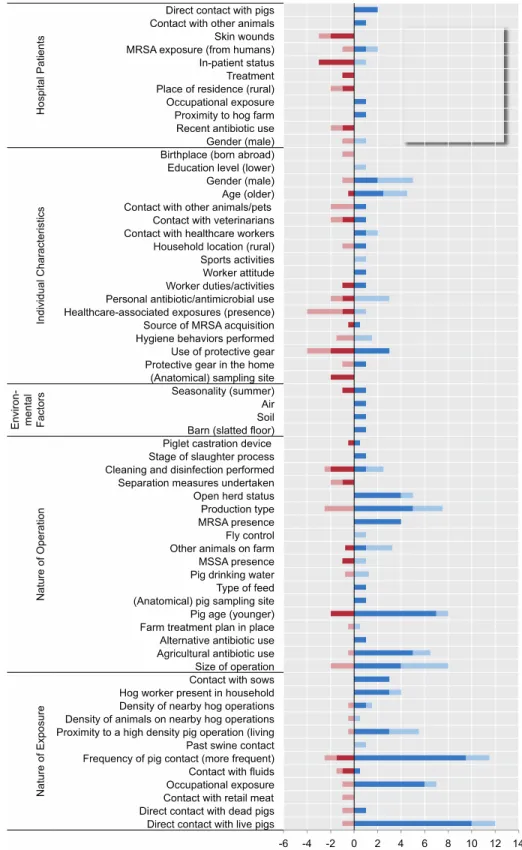
livestock-associated S. aureus (including both MRSA and MDRSA), we qualitatively recorded factors examined in each study and assigned positive votes to findings that the factor was associated with increased colonization risk and negative votes to those finding the factor was associated with decreased risk. Figure 8 shows the results of this vote-counting exercise (Fig 8). It is important to remember that the figure displays factors that have been the most frequently studied, not necessarily those most strongly correlated to colonization. Factors could be divided into five broad categories: hospital patients (key features of individuals already admitted to a hospital and found to be colonized with specifically livestock-associated MRSA or MDRSA), individual characteristics (key features of colonized individuals), environmental factors (factors affecting how the microbes might move through the environment to new hosts), nature of
operation (examining the characteristics of and practices employed by a production facility), and nature of exposure (how a person encounters potentially colonized pigs). Factors were
additionally subdivided within each of these categories. Four factors in particular stood out as being positively associated with colonization most often: the age of the pigs (10 studies, with 8 showing higher risk for contact with younger pigs), the frequency of contact with pigs (13 studies, with 12 showing a positive association), having occupational contact with pigs (8
studies, with seven showing higher risk among hog workers), and having direct contact with live pigs (13 studies, with 12 showing a positive association).
Figure 8. Factors influencing the spread and subsequent colonization of resistant Staphylococcus aureus from hog operations.
In some cases, a study had conflicting data regarding whether or not the factor was a positive or negative influencer of colonization. In these instances, a half-vote was given to both the positive
and negative sides; since each study could contribute only one vote per category, the total number of studies examining can be found by summing the positive and negative votes. For
“Hospital Patients”, these are factors contributing to the likelihood that a given MRSA- or MDRSA-positive patient in a hospital is colonized by a specifically livestock-associated strain
rather than a hospital-associated strain of the organism.
Hospital Patients
Among hospital patients, the factors that were exclusively positively associated with livestock-associated MRSA or MDRSA included having direct contact with hogs or other animals, having occupational exposure to hogs, and living near a hog farm. As shown in Table S-3, reporting skin wounds, being a hospital in-patient, place of residence (i.e. living in a nursing home), having an implanted device, and using antibiotics were all suggestive of resistant S.
aureus that had arisen from the hospital itself or from a community source (such as a nursing
home).
Individual Characteristics
The use of protective gear presents an interesting anomaly: wearing gloves, a mask, or a gown appears to actually be positively associated with colonization, rather than having a
protective effect as might be expected, although the evidence was mixed (33% negative votes). This latter result may reflect the increased risk when workers bring protective gear home: the pooled MRSA prevalence in worker protective gear is 60.6%. More evidence is needed to determine whether such preventive measures would have a significant difference on an individual’s risk of colonization.
Nature of Operation
Given the mixed evidence the data present, the potential effects of occupational hygiene practices on subsequent colonization risk are uncertain. Regular cleaning and disinfection of production surfaces was the most negatively influencing factor, but less compellingly so
considering that only four studies considered this practice, and results were somewhat mixed (63% negative votes). The open or closed status of a farm—whether the farmer/operator purchases pigs (open) or raises them on a single farm for the duration of their life cycle
(closed)—is another factor that could be leveraged to some degree. Open farms were positively associated with colonization, but again only examined in four studies (100% positive votes).
Nature of Exposure
Within the “nature of exposure” category, nearly all tested factors are overall positively associated with colonization (positive votes outnumber the negative votes) or neutral (positive and negative votes are equal). The available studies indicate that regular, direct interaction with pigs exposes an individual to the resistant S. aureus microbes that the animals may carry on their skin or in their noses. In addition, the available evidence suggests that living with a hog worker (i.e. a spouse, parent, child, etc.), or living near a high-density hog operation are also positively associated with an increased risk of colonization. Certain attributes of these institutions seem to affect the likelihood of becoming colonized, as well. The use of antibiotics (93% positive votes) and size of the operation (80% positive votes) are positively associated with colonization. Multiple studies considered any antibiotic use versus none, as well as different administration techniques, and found a positive association with MRSA status (13,29–32). Broens, et al. found that herds administering batch treatment of antibiotics (treating the whole herd when an animal was sick, as opposed to incidental use, or treating just the sick animal) were more likely to be colonized by MRSA (OR = 10.2; 95% CI: 1.4–126.1; P=0.015) (33). Slifierz, et al. examined different means of antibiotic administration, and found that administration via injection or feed were associated more often with MRSA-positive herds, while administration via water was more often associated with MRSA-negative herds. These factors were collapsed into one vote, hence
in birthing piglets, raising pigs from weaning until slaughter, or fattening mature pigs prior to slaughter, for instance, also likely plays a role in colonization risk (83% positive votes). The influence of production type is probably related to pig age, another overwhelmingly positive factor (90% positive votes), with younger pigs more likely to be colonized.
(Studies included in meta-analyses (6,12,13,20–181)) Discussion
The aim of this study was twofold: first, to quantify the prevalence of swine-associated MRSA and MDRSA among various reservoirs (meaning any location where microbes can live and grow), and second, to identify factors contributing to the transmission of antibiotic-resistant forms of S. aureus from industrial hog operations to humans or the environment. Reservoirs could be divided into four broad categories: hogs, humans, the environment, and post-slaughter (pork) products. Among hog reservoirs, whole herd prevalence was highest (55.3% MRSA prevalence in conventionally raised herds), followed by slaughterhouse pigs (30.4% MRSA prevalence). In human reservoirs, workers in conventional hog farms (those using antibiotics for subtherapeutic purposes) had the highest levels of livestock-associated MRSA colonization (24.4%). Additionally, based on seven studies conducted mainly in rural areas or areas dense in livestock production, nearly 40% of hospital patients colonized by MRSA were colonized by a livestock-associated strain. Environmental reservoirs were poorly studied, with only 36 studies characterizing livestock-associated MRSA or MDRSA prevalence in any type of environmental sample. Finally, raw pork products had the most livestock-associated MDRSA among post-slaughter reservoirs (pooled MDRSA prevalence 23.6%). The factors most commonly associated with colonization included the frequency of pig contact, pigs’ ages (with younger pigs posing the highest risk), the size of the hog operation (larger farms having higher risks), and whether the operation used antibiotics for subtherapeutic purposes. Among studies examining the role of
antibiotic use in antibiotic-resistant S. aureus transmission risk, 93% reported that risk increased with antibiotic use. Evidence on the effectiveness of occupational hygiene practices, such as wearing personal protective equipment or disinfecting surfaces is mixed, with some studies suggesting the latter practice could increase risks, potentially due to contamination of the protective gear.
Although prevalence was highest at the herd level, using the entire herd as a proxy for colonization among hogs likely overestimates risk, because a single animal testing positive within a herd would result in the entire herd being classified as positive, though there might be hundreds of uncolonized animals as well. Nonetheless, pigs in transport or at the slaughterhouse would have the highest individual-level prevalence because these pigs are kept in closer quarters and have frequent contact with each other during this step in the production chain. Considering trends in environmental prevalence, it seems plausible that microbes settle onto the soil upon leaving the barn, as suggested by both the lower prevalence in the outside air and similarly high prevalence in soil (73.1%) surrounding the hog barns, although only one study tested soil outside of hog barn for livestock associated-MRSA.
An interesting trend noticed across all relevant reservoirs was that production practices do seem to affect colonization status. As previously mentioned, farms could be classified as “alternative” for a number of reasons, including using reduced/no antibiotics, using organic practices, being a small farm, or existing in a country with known antibiotic-reducing practices (e.g. Switzerland). Although no single, uniform definition of “alternative” exists, operations exhibiting one or more characteristics of alternative production seemed to have a lower prevalence of antibiotic resistance. Excluding pork products, this held true for individual pigs, whole herds, workers, household members, and production surfaces.
Findings that antibiotic use in hog farming can result in the colonization of humans with MRSA and MDRSA, even if colonization does not result in an immediate infection, are
important because colonization status can potentially contribute to later negative health outcomes. There is evidence that colonization by S. aureus increases an individual’s risk of subsequent infection (182). MRSA-colonized patients are 13 times more likely to develop a subsequent infection than those colonized with methicillin-sensitive S. aureus and more than 9 times as likely compared to those not colonized by S. aureus (183). Although it has been argued that livestock-adapted strains pose less risk to humans than perhaps more virulent strains
originating in hospitals, it is possible that these bacteria could acquire additional human virulence factors, and because they are already resistant to multiple types of antimicrobials, it will be especially difficult to fight them off. Furthermore, the relatively poorly characterized livestock-related factors among hospital patients suggest the need for a standardized set of questions to better understand the health burden of colonization. The risk of colonization with MRSA and MDRSA represents an often-overlooked occupational hazard for farmers and their families.
This study provides a more comprehensive and up-to-date overview of the landscape of livestock-associated MRSA and MDRSA arising from hog farms globally, compared to prior reviews. Nonetheless, the findings are consistent with those in prior reviews. Liu et al. conducted a systematic review identifying 33 relevant studies, and found that about 18% of farmers were colonized, similar to but slightly less than the 24% pooled prevalence calculated for farm workers for this study. This relatively small difference likely arises from the fact that this study considers more than 100 additional studies compared to Liu et al.’s previous review. Liu et al. also noted that animal contact and the intensity of that contact (frequency and duration) were some of the major factors contributing to colonization (10). A mini review by Graveland et al.
did not calculate prevalences of livestock-associated S. aureus in specific reservoirs, but did identify direct, occupational contact with livestock as contributing to livestock-associated MRSA colonization, and also found that cleaning and disinfecting the stables between hog batches or production cycles helped to control MRSA (184). Chuang and Huang conducted a review of ST9 MRSA (one type of MRSA strain shown to be associated with swine) in Asian countries, and found that prevalence in hogs ranged from 0.9–42.5%, compared to 25.8% (considering all livestock associated strains of hog origin) in this study. Among pig workers, this same study identified ST9-MRSA colonization in the range of 5.6% - 19.2%. This range is slightly less than the pooled prevalence calculated in our review because it considers only ST9-type MRSA, whereas our review considers all livestock-associated strains. Recent research has identified multiple MRSA strains (including CC398, CC9, CC97, and CC30) associated with swine (185). In addition, Asia may have less MRSA prevalence compared with Europe and elsewhere in the world (186). This could be due to the greater number of developing countries in the region, and thus fewer industrial scale animal operations.
Our finding that across studies, nearly one-quarter of swine farm workers carry livestock-associated, antibiotic-resistant S. aureus also is consistent with recent studies finding that S. aureus strains of animal origin have adapted to humans. For example, one study in France examined S. aureus bloodstream infections, and discovered ST398 strains in patients who reported no livestock contact. These strains had acquired the Sau3int phage, allowing them to colonize humans (187). Another study from the United States found human-adapted ST398 S.
aureus strains containing human-specific immune evasion cluster genes chp and scn in hospital
patients. These gene clusters are usually associated with S. aureus isolates from humans, in spite of ST398 having originated in hogs (188).
There are a few surprising findings stemming from these data. First, considering the relatively low prevalence of MRSA in raw pork (7.9%), we did not expect to find such a high prevalence of multidrug resistant S. aureus in raw pork (23.5%). It is also interesting to know that prevalence does not vary much between alternative and conventionally raised products. If the alternative products were less colonized originally, it is possible that they were contaminated during the transportation process between the farm and the grocery store or at the
slaughterhouse, especially if they were not kept separated from the conventionally raised products. Little is known about the potential for secondary transmission, meaning the chance of subsequent human colonization upon exposure to colonized raw meat. We also observed that environmental reservoirs are relatively poorly characterized, particularly regarding surface water. Only two studies (119,136) examining potential transmission from water or hog sewage were identified in the search process. More work needs to be done to determine how persistent
resistant S. aureus is in surface water, particularly considering the nature of hog waste storage. In the United States, hog feces are often stored in large, open pits, and eventually applied to nearby fields as fertilizer. Hog lagoons can contaminate nearby surface water sources as runoff,
particularly during major flood events. Finally, the conflicting data surrounding the use of protective gear was especially interesting. It is unclear whether the gear is simply not sufficient in preventing exposure, or if there is some sort of secondary exposure occurring, for instance, if workers take their gear home at the end of the day.
Limitations
These findings are limited by several important considerations. First, and perhaps most importantly, this review considers studies published from all over the world and from over the course of more than a decade, which likely explains the high variability of prevalences in reservoirs without a statistically significant central tendency. Hog production practices differ by
country, and these prevalence estimates may not necessarily be representative of any one country. For instance, a majority (over 60%) of Swiss farms have 50 or fewer animals per farm and minimal antibiotic use, while in the US, less than 60% of all hog farms have fewer than 100 animals, with 95% of the pigs harvested each year coming from an operation housing over 5000 animals (189–191). The Netherlands also employs a “search-and-destroy” policy to keep its national MRSA prevalence low. (Under this policy, individuals re-entering the country or who have been in contact with a MRSA patient are screened upon admission to a hospital, and kept in isolation until the culture is confirmed negative. If the individual is colonized by MRSA, they are maintained in isolation and treated to eliminate the microorganism (192).) Few studies examined MDRSA specifically, so it may be more common than estimated here, especially since several studies that examined methicillin resistance for the purpose of identifying MRSA did not necessarily check for resistance to other antibiotic classes, or, if they did, would classify as “methicillin and tetracycline-resistant”, for example, but not specifically multidrug resistant. It is possible that the prevalence estimate for community members living near hog farms is
underrepresented. Since these individuals do not have a connection with the hog farms besides proximity, whatever strain they were colonized with could have been classified as “community-acquired” and not recorded in these studies, since the search algorithm used here was specifically looking for livestock-associated MRSA and MDRSA. Additionally, the prevalence of livestock associated-MRSA in hospitals could be an overestimation, because most of these studies were conducted in rural communities with a high density of animal production. Urban hospitals are likely to have a lower ratio of MRSA of livestock origin as opposed to community or hospital origin.
globally, and as such, there were notable differences in how authors presented their findings. Some studies gave prevalence by barn (meaning the whole operation was considered “positive” or “negative”), while others presented it at the individual pig level. Some reported all strains of MRSA or MDRSA found on a hog farm as “positive” samples, while others reported only the confirmed livestock-associated strains (e.g., CC398 or CC9) after additional molecular testing. Some studies examined prevalence in a reservoir at one particular time point, while others observed the reservoir prevalence over time, and reported several different time points capturing these changing data. Finally, analysis of a study’s quality was not within the scope of this study. Because of this, studies were given equal credence, regardless of sample size, power, journal in which the study was published, or any other factor.
Conclusion
These results show that antibiotic resistant, livestock-associated S. aureus has the potential to spread from its point of origin on hog farms, and can even colonize individuals only loosely associated with hog production. It follows that preventing the rise of antibiotic-resistant
S. aureus may be an easier action than targeting it at every possible point of transmission and
colonization. Because 93% of studies assessing the effects of antibiotic use found a positive association between antibiotic use and antibiotic-resistant S. aureus transmission or colonization risk, with only one study showing mixed results, limiting the over-use of antibiotics in livestock production may be the most effective way to limit the spread of these drug-resistant pathogens.
Workers and their families are most at risk of colonization by these microorganisms. These results show that people having regular or frequent, direct contact with pigs are at an increased risk for carrying antibiotic-resistant S. aureus in their nasal passages. Additionally, evidence suggests that living with a hog worker (whether a spouse, parent, or child) or living
near a high-density hog operation also increases the risk of antibiotic-resistant S. aureus nasal carriage.
In rural and livestock-dense areas, livestock-associated MRSA and MDRSA have been identified in hospital settings, and the burden of these microorganisms needs to be better quantified in this context. A standardized questionnaire administered to patients in high density hog farming regions could help to better inform which factors put individuals most at risk for colonization and any subsequent negative health effects. This study also underscores the need for a streamlined reporting system for continued and improved surveillance of resistant S. aureus at the farm level.
More work is needed to better quantify the risk that livestock-associated MRSA and MDRSA pose to humans. First, environmental reservoirs demonstrated some of the highest prevalences across all reservoirs, but were simultaneously the least frequently studied. MDRSA contains higher resistance abilities (due to its resistance to multiple antibiotics) compared simply to MRSA, but was only a fraction as well studied. More studies need to be conducted to
determine MDRSA across nearly all reservoirs, but particularly in an environmental context. To understand the acute health risks that colonization means for humans, more work is needed to understand the virulence of livestock-associated microorganisms in this setting. Several preliminary studies have found an association between human colonization by
livestock-associated MRSA or MDRSA and incidence of skin and soft tissue infections. Although there is evidence that livestock-associated MRSA (CC398) infections do occur, more research is needed to understand risks to humans both on and off farms (122,146,193,194). These results have significant implications for protecting the health of hog workers and their families, as well as individuals living in areas of high-density industrial farming.
APPENDIX I: SUMMARY TABLE OF FOREST PLOT RESULTS
MRSA MDRSA
Reservoir n Effect Size LowerLimit Upper Limit n Effect Size Lower Limit Upper Limit
Pigs (Conventional @ Farm of Origin) 50 25.802 2.809 2.809 2 3.500
Pigs (Alternative @ Farm of Origin) 15 2.592 1.128 1.128
Pigs (Conventional @ Slaughterhouse) 19 30.400 5.776 5.776
Whole Herd (Conventional) 18 55.253 16.469 16.469 1 13.000
Whole Herd (Alternative) 1 20.800
Farm Workers (Conventional) 42 24.446 4.103 4.103 6 15.037 8.154 8.154
Farm Workers (Alternative) 5 1.77611 1.672 1.672 1 7.60000
Slaughterhouse Workers 12 2.398 1.442 1.442 1 8.000 HH Members (Conventional) 13 8.163 4.113 4.113 3 12.997 9.831 9.831 HH Members (Alternative) 1 0.000 Community Members 8 2.026 1.094 1.094 3 5.373 3.269 3.269 Veterinarians 13 16.819 5.544 5.544 Healthcare Workers 1 1.300 Hospital Patients** 7 38.560 21.672 21.672
Env - Barn Air 4 65.668 62.830 34.332
Env - Outside Air 2 6.900
Env - Soil 1 73.100
Env - Slaughterhouse Surfaces 5 13.442 9.212 9.212
Env - Water 2 52.500 2 52.500
Env - Flies 1 0.100
Env - Production Surfaces 22 37.034 7.299 7.299 1 1.300
Env - (Alt Production Surfaces) 2 0.400
Env - Protective Gear 2 60.600
Env - Feed 2 64.700
Env - Feces 2 36.200
Env - Households 4 48.778 23.115 23.115
Swine Carcasses 8 11.536 4.439 4.439
Pork Products (Raw) 27 7.923 2.472 2.472 5 23.555 17.961 17.961
Pork Products (Prepared) 4 0.02128 0.021 0.355
Pork Products (Alt) 1 7.40000
*The number of studies do NOT sum to the number included in this meta-analysis because some analyzed more than one reservoir **Refers to the number of presumed LA-MRSA positive patients per all identified MRSA positive patients
APPENDIX 2: SUMMARY OF RESERVOIRS NOT ANALYZED BY FOREST PLOTS
Reservoir Author,
Publication Year Title
Sample Size Effect Size M RSA Whole Herd (Alternative) van de Vijver, 2014
Prevalence and molecular characteristics of methicillin-resistant Staphylococcus aureus (MRSA) in organic pig herds in the Netherlands 24 20.8% Household Members (Alternative) Rinsky & Nadimpalli, 2013
Livestock-associated methicillin and multidrug resistant Staphylococcus aureus is present among industrial, not antibiotic-free livestock operation workers in North Carolina
13 0.0%
Human Healthcare
Workers Wulf, 2008b
MRSA carriage in healthcare personnel in
contact with farm animals 77 1.3%
Environmental
(Outside Air) Ferguson, 2016
Detection of airborne methicillin-resistant Staphylococcus aureus inside and downwind of a swine building, and in animal feed: Potential occupational, animal health, and environmental implications
7580 3.2% 6.9%
Schulz, 2012
Longitudinal study of the contamination of air and of soil surfaces in the vicinity of pig barns by livestock-associated methicillin-resistant Staphylococcus aureus
11.75 10.6% *Longitudinal study: values from 6 operations averaged over 4 seasons; only downwind samples counted Environmental (Soil) Schulz, 2012
Longitudinal study of the contamination of air and of soil surfaces in the vicinity of pig barns by livestock-associated methicillin-resistant Staphylococcus aureus
16.75 73.1% *Longitudinal study: values from 6 barns at three different distances combined and averaged across 4 sampling time points; downwind only counted Environmental (Water) Hatcher, 2016 Occurrence of methicillin-resistant
Staphylococcus aureus in surface waters near industrial hog operation spray fields
183 4.9% 52.5%
Wan, 2014
Spreading of β-lactam resistance gene (mecA) and methicillin-resistant
Staphylococcus aureus through municipal and swine slaughterhouse wastewaters
72 100.0%
Environmental (Flies)
Schaumburg, 2016
A geospatial analysis of flies and the spread
of antimicrobial resistant bacteria 1346 0.1%
Environmental (Alternative Operation - Production Surfaces) Boost, 2012 High
meticillin-resistant Staphylococcus aureus carriage in intensive pig farms in southern China
van de Vijver, 2014
Prevalence and molecular characteristics of methicillin-resistant Staphylococcus aureus (MRSA) in organic pig herds in the Netherlands
120 0.8%
Environmental
(Protective Gear) Friese, 2012
Occurrence of MRSA in air and housing
environment of pig barns 27 74.1% 60.6%
Gilbert, 2012
Livestock-associated MRSA ST398 carriage in pig slaughterhouse workers related to quantitative environmental exposure
85 47.1%
Environmental
(Feed) Ferguson, 2016
Detection of airborne methicillin-resistant Staphylococcus aureus inside and downwind of a swine building, and in animal feed: Potential occupational, animal health, and environmental implications
4 100.0% 64.7%
Friese, 2012 Occurrence of MRSA in air and housing
environment of pig barns 17 29.4%
Environmental
(Feces) Friese, 2012
Occurrence of MRSA in air and housing
environment of pig barns 27 55.6% 36.2%
He, 2013
Food-animal
related Staphylococcus aureus multidrug-resistant ST9 strains with toxin genes
120 16.7%
Pork Products
(Alternative) O'Brien, 2012
MRSA in conventional and alternative retail
pork products 95 7.4% M DRSA Pigs (Conventional) Patchanee, 2014
Occurrence and characterization of livestock-associated methicillin-resistant
Staphylococcus aureus in pig industries of northern Thailand
292 0.7% 3.5%
Rajkhowa, 2016
SCC mec typing and antimicrobial resistance of methicillin-resistant Staphylococcus aureus (MRSA) from pigs of northeast India
698 6.2%
Whole Herd
(Conventional) Riesen, 2009
Antibiotic resistance and genetic diversity in Staphylococcus aureus from slaughter pigs in Switzerland 54 13.0% Workers (Alternative) Rinsky & Nadimpalli, 2013
Livestock-associated methicillin and multidrug resistant Staphylococcus aureus is present among industrial, not antibiotic-free livestock operation workers in North Carolina
105 7.6%
Workers
(Slaughterhouse) Neyra, 2014
Multidrug-resistant and methicillin-resistant Staphylococcus aureus (MRSA) in hog slaughter and processing plant workers and their community in North Carolina (USA)
162 8.0%
Environmental (Water)
(Hatcher, 2016)
Occurrence of methicillin-resistant
Staphylococcus aureus in surface waters near industrial hog operation spray fields
179 5.0% 52.5%
(Wan, 2014)
Spreading of β-lactam resistance gene (mecA) and methicillin-resistant
Staphylococcus aureus through municipal and swine slaughterhouse wastewaters
Environmental (Production Surfaces)
Patchanee, 2014
Occurrence and characterization of livestock-associated methicillin-resistant
Staphylococcus aureus in pig industries of northern Thailand
312 1.3%
Summary of data extracted from individual studies in instances where there were fewer than the minimum of three studies needed to perform a forest plot analysis.
APPENDIX 3: FULL EXPLANATION OF FACTORS AND COUNT BREAKDOWN
Factor Referent (If
Applicable) Author, Publication Year
Negative Statistically Significant (p < 0.05) Negative Statistically Insignificant (p >= 0.05) Positive Statistically Significant (p < 0.05) Positive Statistically Insignificant (p >= 0.05) Nature of Exposure
Direct Contact with Live Pigs Exposition to
colonized pigs (Cuny, 2009) 1
Animal
contact/Touching pigs from other farms in past 6-12 months
(Dorado-Garcia, 2015) 1
Contact with pigs (Feingold, 2012) 1
Contact with
livestock (Gilbert, 2012) 1
Work with nursery
pigs (Hatcher, 2017) 1
Contact with pigs No contact with
pigs (Kock, 2009) 1
Direct contact with pigs
No direct contact with pigs
(Rinsky & Nadimpalli,
2013) 1
Ever have contact with pigs, chickens, cows, or turkeys Never have contact with pigs, chickens, cows, or turkeys (Schinasi, 2014) 1
Working with live pigs
Not working
with live pigs (van Cleef, 2010a) 1
Intensive contact with pigs
No contact with pigs
(van den Broek, 2009)
1 Minimal contact with
pigs No contact with pigs Current swine exposure No current
swine exposure (Wardyn, 2015) 1
Type of animal contact (direct contact with pigs)
No contact with
pigs (Wulf, 2008a) 1
Direct contact with livestock (pig/veal calves) No direct contact with livestock (Wulf, 2008b) 1 TOTALS 0 1 10 2
Direct Contact with Dead Pigs
Handle dead pigs (Hatcher, 2017) 1
Handling dead livestock
Did not handle dead livestock
(Rinsky & Nadimpalli,
2013) 1
TOTALS 0 1 1 0
Contact with Retail Meat Ever have contact with uncooked meat
Never have contact with uncooked meat
products at home or at work products at home or at work TOTALS 0 1 0 0 Occupational Exposure Make "private farm visits"
Does not visit
farms (Bisdorff, 2011) 1
Veterinarians working with pigs
Vets not working with pigs
(Garcia-Graells, 2011) 1
Veterinarians working with live pigs Vets not working with pigs or only dead pigs Use disinfectant (perform cleaning activities at work using ammonia or Clorox bleach disinfectant) Do not use disinfectant (Hatcher, 2017) 1
Remove pig waste N/A
(Characteristics)
(Huang, 2014) 1
Clean pig pens N/A
(Characteristics) Working as a
veterinarian N/A (Leedom Larson, 2010) 1
Occupational contact with pigs (vets, farmers, workers) No occupational contact (Schulze-Geisthovel, 2016) 1 [Vets] attending to individual swine animals (Walter, 2015a) 1 Occupational contact with pigs No occupational contact with pigs (Ye, 2016) 1 TOTALS 0 1 6 1
Contact with Fluids Were cut or scratched while in contact with livestock
Skin not broken
(Rinsky&Nadimpalli, 2013)
0.5 Drew blood/collected
fluids from pigs
Did not draw blood/collect fluids
0.5 Obtain blood or other
specimens from swine
(Smith, 2009) 1
TOTALS 1 0.5 0.5 0
Frequency of Pig Contact (More Frequent Contact) More than 9 hours a
day
Less than 9
More than once a week contact with pigs
No pig contact (Denis, 2009) 1
Number of hours
worked per week (Dorado-Garcia, 2015) 1
10 - 19 visits to slaughterhouse in one year* Less than 10 visits to slaughterhouse in one year (Fang, 2014) 1 10-30 hours <10 hours (Garcia-Graells, 2013) 1
Within last 7 days No contact in
last 7 days
Time spent on farm N/A
(Characteristics)
(Huang, 2014) 1
Time spent handling pigs
N/A
(Characteristics) Hours per week in
direct contact with livestock
(Rinsky&Nadimpalli, 2013) 1
Daily contact with hogs
Rarer than daily contact with hogs (Schulze-Geisthovel, 2016) 1 Work in stables >40 hrs/wk (van Cleef, 2014) 1 Working in stables 10
hours/week (van Cleef, 2015) 1
[Vets] attending to swine herd health management 1 time per week [Vets] attending to swine herd health management 0 times per week
(Walter, 2015a) 1
[Vets] attending to swine herd health management 2 times per week [Vets] attending to swine herd health management 0 times per week [Vets] attending to
swine herd health management 3-9 times per week
[Vets] attending to swine herd health
management 0 times per week [Vets] attending to
swine herd health management >10 times per week
[Vets] attending to swine herd health
management 0 times per week Frequency of pig
contact: frequent N/A
(Wulf, 2008a) 0.5 0.5
Frequency of pig
contact: sometimes N/A
Frequency of pig
contact: seldom N/A
Short term - <= 7