Time Out for Respite and Recovery: A Qualitative Study of Influences on General Practitioners’ Adaptation to General Practice
Amanda Murfett BPsych(Hons)
A thesis submitted in fulfilment of the requirements for the degree of Doctor of Philosophy
School of Social Sciences and Psychology Faculty of Arts, Education & Human Development
Victoria University Australia
ABSTRACT
DECLARATION
“I, Amanda Murfett, declare that the PhD thesis entitled Time Out for Respite and Recovery: A Qualitative Study of Influences on General Practitioners’ Adaptation
to General Practice is no more than 100,000 words in length including quotes and
exclusive of tables, figures, appendices, bibliography, references and footnotes. This thesis contains no material that has been submitted previously, in whole or in part, for the award of any other academic degree or diploma. Except where
otherwise indicated, this thesis is my own work”.
ACKNOWLEDGEMENTS
This research was possible due to the generosity and support of many people. First, thank you to my supervisor Professor Adrian Fisher who assisted with finalising and submitting the thesis.
Thanks also to Associate Professor Denise Charman who worked with me in the early stages of the project.
A very special thank you to Dr Delwyn Goodrick. This thesis would not have been completed without her support and encouragement.
To the participants of this study I extend my sincere thanks for their generous disclosures and honesty.
To my industry partner representatives Margo Field, Jenni Parsons, and Ian Watts, thank you for making participant recruitment a smooth process.
Thank you to my friend Dr Julie Morsillo who generously assisted with reading the final draft and preparation of this document.
To my friend Dr Lyn Radford thank you for reading drafts and sharing my PhD experience.
Thanks also to friends, colleagues and staff at the School of Psychology, Victoria University, especially Dr Lesley Birch, Kim Shearson, Dr Felicity Morris, Dr Michelle Ball, Jane Trewin, Janine Jarski, and Grace Shirippa.
TABLE OF CONTENTS
CHAPTER 1 INTRODUCTION ... 1
1.1 Organisation of the Thesis ... 3
1.2 Conclusion ... 6
CHAPTER 2 STRESS AND COPING ... 7
2.1 Stress ... 7
2.2 Coping ... 10
2.3 Occupational Stress Theoretical Models ... 14
2.3.1 Job Demand Control Model ... 14
2.3.2 Effort-Reward Imbalance Model ... 17
2.3.3 Effort-Recovery Model ... 19
2.3.4 Work-Non-Work/Family Conflict ... 22
2.4 BoundaryTheory and Border Theory ... 25
2.5 Work Orientation: Work Centrality and Job Involvement ... 27
2.5.1 Measuring Work Centrality and Job Involvement ... 30
2.6 Adaptive Coping Strategies ... 31
CHAPTER 3 AUSTRALIAN GENERAL PRACTITIONERS ... 34
3.1 Role of GPs in Australia ... 34
3.1.1 Australian GP Profile... 35
3.1.2 General Practitioners’ Remuneration ... 37
3.2 Demand for GP services ... 38
3.2.1 An ageing population ... 39
3.2.2 Mental Health Needs ... 40
3.3 Workforce Shortage and Demand ... 40
3.4 Overview of the Literature on Occupational Stress in Doctors ... 42
3.4.1 Doctors’ Work Context and Occupational Stress ... 43
3.4.2 Doctors’ Personality and Occupational Stress ... 46
3.4.3 Negative Attitude to Help Seeking Behaviour ... 48
3.5 Psychological Health ... 50
3.5.1 Burnout ... 50
3.5.2 Depression and Suicide... 51
3.5.3 The Impaired Doctor... 53
3.6 Doctor Discontent and Job Satisfaction ... 55
3.6.1 Australian Doctors’ Job Satisfaction ... 59
3.7 Summary ... 61
3.8 Aims of the Study ... 62
CHAPTER 4 RESEARCH DESIGN ... 64
4.1 Methodology ... 64
4.2 Participants ... 66
4.2.1 Sampling Strategy ... 66
4.2.2 Sample Characteristics ... 67
4.3 Interview Format ... 70
4.4 Phases of Data Collection ... 73
4.4.1 Setting up the Interviews ... 74
4.4.2 Interview Process ... 74
4.4.3 Preparing the Data for Analysis ... 75
4.5 Data Analysis ... 76
4.5.1 Social Context of the Interviews ... 78
4.7 Researcher's Statement ... 82
4.8 Summary ... 82
CHAPTER 5 INTRODUCTION TO STUDY PARTICIPANTS ... 84
5.1 Choosing a Medical Career ... 84
5.1.1 High Academic Ability ... 84
5.1.2 Cultural and Family Factors ... 85
5.1.3 Internal Motivation for Medicine ... 87
5.2 Choosing General Practice ... 88
5.3 Summary ... 90
CHAPTER 6 GPs’ MANAGEMENT OF WORK DEMANDS ... 91
6.1 Managing Multiple Roles at Work ... 91
6.1.1 Experiencing Role Conflict ... 92
6.2 GPs’ Conceptions of Time at Work ... 94
6.2.1 The Value of Time: “There’s not enough hours in the day” ... 94
6.2.2 Time is Money: Balancing Effort and Reward ... 95
6.3 Managing Time ... 103
6.4 Time Pressure at Work ... 104
6.5 Managing Patient Expectations: Punctuality and Waiting ... 105
6.5.1 Managing Punctuality and Waiting: No Appointments ... 107
6.5.2 Managing Patient Characteristics and Presentations ... 109
6.6 Early Detection and Survival or Death: “She might die” ... 111
6.7 The Cost of Making Mistakes: The Threat of Litigation ... 112
6.8 Case Study: Lyn ... 115
6.9 Summary and Conclusions ... 118
CHAPTER 7 TIME OUT FOR RESPITE AND RECOVERY ... 120
7.1 Contemporary Households in the Workforce ... 120
7.2 Allocating Time to Work and Non-Work Domains ... 121
7.3 Centrality of Work and Non-Work Domains ... 121
7.4 Managing Life Domains ... 124
7.5 Tensions between Work and Non-work ... 126
7.5.1 Managing Separation of Work and Non-Work ... 132
7.6 Time Out: Psychological Detachment ... 134
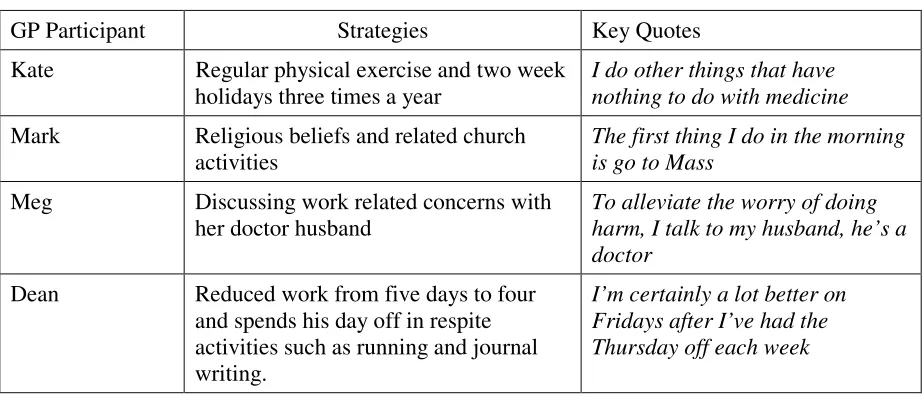
7.6.1 Kate ... 136
7.6.2 Mark ... 137
7.6.3 Meg ... 138
7.6.4 Dean ... 139
7.7 Case Study: Robert ... 141
7.8 Case Study: Kim ... 144
7.9 Negative Cases ... 146
7.10 Summary ... 147
CHAPTER 8 SYNTHESIS ... 149
8.1 Summary of Key Findings ... 149
8.2 Work Centrality ... 151
8.3 Integration and Segmentation of Work ... 154
8.3.1 Integration of work and non-work/family domains ... 156
8.3.2 Segmentation of work and non-work/family domains ... 156
8.4 Work – Life Balance ... 163
8.4.1 Job Satisfaction and Work – Life Balance ... 165
8.4.2 Life stage and work-life balance ... 166
8.5 Situational Factors ... 167
8.5.2 Work Content and Demand ... 167
8.5.3 Acute Incidents (mistakes) and Litigation ... 168
8.6 Recovery of Resources ... 169
8.7 Respite and Psychological Detachment ... 171
8.7.1 Type of Respite Activities and Recovery ... 171
8.7.2 Type of Respite Activity and Psychological Detachment ... 172
8.8 GP Adaptation Schema ... 174
8.9 Case Study: Jeff ... 177
8.9.1 Work Concerns ... 178
8.9.2 Work Orientation: Relative Centrality of Work ... 179
8.9.3 Managing Work and Non-Work Domains ... 180
8.9.4 Respite Activities: Facilitating Psychological Detachment ... 181
8.10 Summary and Conclusions ... 181
CHAPTER 9 DISCUSSION ... 184
9.1 Pathways to a Medical Career and General Practice ... 185
9.2 Situational Factors: Features of General Practice or General Practice Demands ... 186
9.3. Practice Location and Structure ... 189
9.4 Adapting to General Practice and Life as a GP ... 190
9.5 Perceived Work/Life Balance ... 192
9.6 Coping with the everyday demands of general practice ... 194
9.7 Implications for Practice ... 196
9.8. Comparison with other occupational stress models ... 198
9.9. Implications for Theory ... 200
9.10. Contribution to research ... 202
9.11 Limitations ... 203
9.12 Directions for Future Research... 205
9.13 Conclusions ... 206
REFERENCES ... 208
APPENDIX A INTERVIEW QUESTIONS ... 227
APPENDIX B DEMOGRAPHIC DATA FORM ... 228
APPENDIX C ETHICS APPROVAL ... 229
LIST OF TABLES
Table 1 Male GP Sample Demographics ... 68
Table 2 Female GP Sample Demographics ... 69
Table 3 Summary of Time Out Strategies ... 141
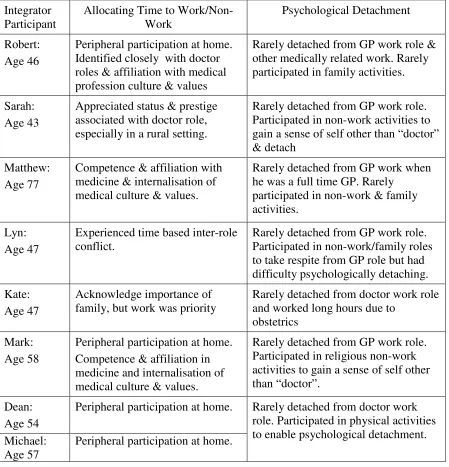
Table 4 Integrator Cross-Participant Summary ... 159
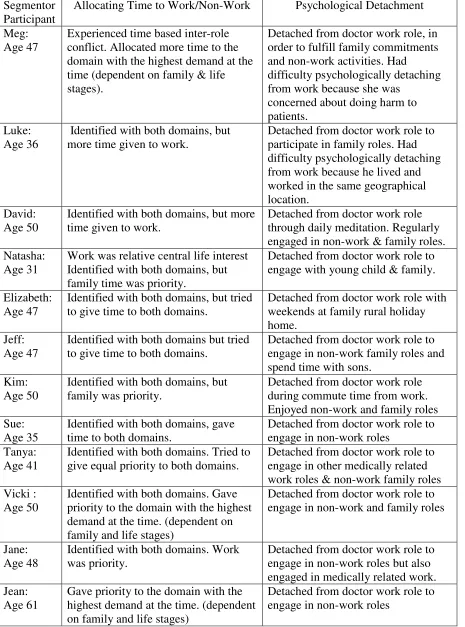
Table 5 Segmentor Cross-Participant Summary ... 160
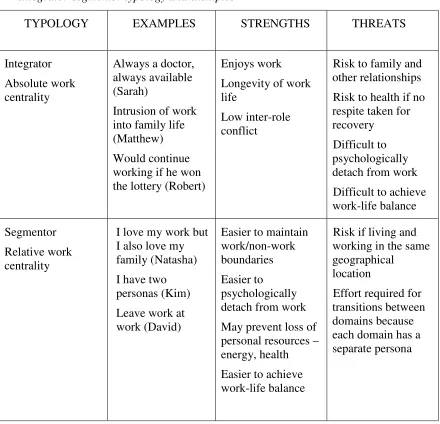
Table 6 Integrator-segmentor typology and examples ... 163
LIST OF FIGURES
Figure 1. Job Demand Control Model. ... 15
Figure 2. Original Effort-Reward Imbalance Model. ... 17
Figure 3. Amended Effort-Reward Imbalance Model. ... 18
Figure 4. The Effort-Recovery Model ... 19
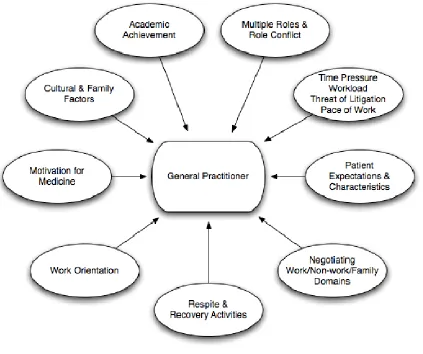
Figure 5. Summary of findings. ... 151
CHAPTER 1 INTRODUCTION
General Practitioners (GPs)1 work in a changing healthcare environment. There is an unprecedented and ongoing expansion of medical knowledge and technology, and an escalation in patient expectations (Harrison & Lee, 2006; Murray, Montgomery, Chang, Rogers, Inul & Safran, 2001; Warren, Weitz, & Kulis, 1998). The social position and status of the medical profession has also changed, with evidence of increasing cynicism towards the expert knowledge of medicine (Lupton, 1997). In addition to the many changes that are taking place in medicine, GPs function in a highly demanding work environment with long work hours, high workloads, and threats of litigation (Catino & Celotti, 2009; Firth-Cozens, 1999; Makin, Rout, & Cooper, 1988; Summerton, 2000; Sutherland & Cooper, 1992; 1993).
Research into the occupational health of doctors, and the subsequent influences on their health and wellbeing, has attracted considerable attention over the past 20 years. The literature has tended to focus on negative aspects contributing to health problems, rather than positive contributions to wellbeing. Occupational health problems experienced by doctors have been associated with both workplace factors and with individual factors (Firth-Cozens, 1999). Studies of doctors’ functioning have emphasised negative aspects with some studies suggesting that medical practitioners experience higher rates of suicide, especially among women doctors (Hawton, Clements, Sakarovitch, Simkim, & Deeks, 2001; Lindeman, Laara, Hakko, & Lonnqvist, 1996; Schernhammer & Colditz, 2004),
1 GPs provide primary care medical services in Australia and in the United Kingdom. In the United
depression, alcohol abuse, (Firth-Cozens, 1999; Schattner, Davidson, & Serry, 2004), substance abuse and burnout (Caplan, 1994; Miller & McGowen, 2000; Sutherland & Cooper, 1992) and marital problems (Harari, 1998).
Despite this focus in the literature, it is clear that many doctors adapt well to the work demands of general practice. There is, however, limited literature relating to GPs who achieve optimal professional and personal functioning in the high demand environment of general practice. Further, there is limited literature about their experience of work and life as a GP. The current research contributes to new knowledge by shifting away from a deficit approach to an ability approach (Frydenberg, 1997).
Adaptation is a generic term for processes influencing how well the person routinely deals with the demands or requirements of living (Lazarus & Folkman 1984a). The term coping has become part of the vernacular; coping is principally a psychological concept which Lazarus and Folkman (1984a) define as “constantly changing cognitive and behavioural efforts to manage specific external and/or internal resources of the person” (p.141).
GPs’ work involves handling the physical, psychological, and social problems of others; there are pervasive and ongoing challenging demands associated with the content and context of their work. These daily hassles (DeLongis, Coyne, Dakof, Folkman, & Lazarus, 1982) or chronic demands may be part of everyday life for doctors. Therefore, identifying the ways in which GPs cope with, and adapt to, the demands of general practice is important because some of these demands may be inevitable for GPs, and the medical profession more generally.
time so they can enjoy both their work and non-work/family lives. Schattner and Coman (1998) identified work intruding on family life was a significant stressor for GPs. The issue of work interfering with non-work life was considered in a qualitative study conducted by Tolhurst and Stewart (2004). These researchers identified a generational change in attitudes of Australian medical students toward work life balance. The medical students believed there were lessons that could be learned from previous generations of doctors who tended to put work before family and lifestyle. This younger group
considered that a balance between work, family, and lifestyle an important aspect in their career decisions. While Schattner and Coman (1998), and Tolhurst and Stewart (2004) have identified work-life balance as a concern for doctors, there has been little research into the adaptive strategies adopted by doctors to achieve balance, and the factors that contribute to their perceptions of work-life balance.
This study focuses on understanding how GPs experience general practice, and how they accommodate and manage the demands of their work and non-work/family domains. Developing an understanding of the factors contributing to, and maintaining healthy adaptation will provide new information that is relevant and meaningful to practicing GPs, and medical students in training. The study findings will also have important implications for assisting with retaining GPs capable of working in demanding circumstances.
1.1 Organisation of the Thesis
might suggest. Rather, an iterative process of data analysis and literature review was carried out. As relevant themes emerged during data analysis, the researcher returned to searching existing literature to assist with conceptualising the themes emerging from interviews.
Chapter 2 describes how the concept of stress evolved during the 20th century, and into the 21st century. Also presented is an overview of four occupational stress models that provided preliminary guidance for the study. However, the literature indicates that stress and anxiety may also come from other life domains. Occupational stress cannot be considered in isolation because work and non-work/family are interconnected domains. Furthermore, individual differences in work orientation may influence how stress is appraised. The chapter concludes by presenting the literature relating to adaptive coping strategies.
Chapter 3 begins with descriptions of the role and profile of Australian GPs, and the health care environment in which they work. This is followed by an overview of existing literature relating to doctors’ occupational stress, and a review of the literature pertaining to doctors’ occupational health, and the issues surrounding their responses to the demands of working in general practice. The chapter finishes with an explanation of the need for this research, and presents the aims that oriented the study.
Chapter 5 describes the reasons provided by GP participants for choosing the profession of medicine, and work in general practice as a career. This information is presented to provide a context for the experiences shared by the interview participants.
Chapter 6 provides an overview of how GP participants managed the demands of their work. This includes the multiple roles that GP participants’ engaged in during a typical work day, and how these multiple roles can, for some participants, be a source of role conflict. The second part of the chapter explains participants’ perceptions of time scarcity, the value of time in general practice, and the link between time and income. This is followed by the strategies participants adopted to ease the tension between time
pressures, provision of quality care, and meeting patient expectations. The chapter concludes with an illustrative case study that provides an account of how one GP in this study managed her work, and the strategies she implemented to synchronise, prioritise, and manage her time.
Chapter 7 describes the ways GPs allocate time to work and other life domains and the ways they achieve psychological detachment from work. This study has identified that GPs’ life domains are interconnected, with one domain influencing choices and behaviour in the other. GPs’ experiences and activities within the general practice work environment influence their life outside work. Their experiences in other non-work domains appear to influence their adaptation to the general practice work environment. The final section of the chapter presents two illustrative case studies that describe two GPs in this study and their responses to the issues highlighted in the findings.
The final chapter, Chapter 9, discusses the findings of this study, its major
contributions, and implications for practice, limitations, and directions for future research.
1.2 Conclusion
Research carried out in Australia and overseas has produced consistent findings regarding doctors’ concerns about work conditions, and the healthcare systems under which they work. Findings suggest there are some aspects of working in medicine that contribute to discontent. There is, however, a lack of understanding about factors
underpinning these concerns, and the strategies GPs adopt to address these concerns. The focus of this study is to identify factors influencing GPs’ healthy adaptation rather than maladaptive responses to work demands.
It is important to have GPs who are functioning at optimal levels because GPs have a central role in community health care. GPs who are not highly functional may have a detrimental effect on the delivery of high quality health care in the community (Firth-Cozens, 1999; Schattner, 1998). There has been minimal research undertaken regarding the factors that influence GPs optimal functioning. This thesis will contribute to
CHAPTER 2 STRESS AND COPING
The chapter begins with a description of how the concept of stress evolved during the 20th century, and an explanation of the cognitive and behavioural coping efforts used to manage perceived stressful encounters. This is followed by an overview of three occupational stress models that provided preliminary guidance for the study. However, stress and anxiety may also come from other life domains. The next section considers that occupational stress cannot be viewed in isolation because work and non-work/family are interconnected domains. Also presented is the notion that individual differences in work orientation may influence how stress is appraised. The chapter concludes with the literature relating to adaptive coping strategies.
2.1 Stress
There are many definitions of stress that vary depending on the discipline. Hans Selye (cited in Ice & James, 2007), introduced the concept of stress from physics and
engineering, and described stress as a non-specific response of the body to a ‘noxious’ stimulus. This is a physiological reaction to physical and physiological stimuli or stressors, whereby the body responds to any external source of stress in an attempt to restore the body’s internal homeostasis. The initial quick hormonal reaction is the fight or flight stress response. Selye later elaborated on this process of the body’s struggle to maintain balance and developed a three stage syndrome known as General Adaptation Syndrome (GAS). The first stage of GAS is alarm reaction, whereby the body reacts to a stimulus by activating the hypothalamic pituitary adrenal (HPA) axis. The second stage is resistance, which signals successful adaptation to the stimulus. The third stage,
From his experiments with rats, Selye (1946) discovered that these processes were adaptive for the organism defending against stressors. However, there is a limited supply of adaptive energy to cope with stress, and it declines with continuous exposure to stressful stimuli. If there is exposure to chronic stressors, this can suppress the immune system, and place the organism at risk of a variety of diseases (Ice & James, 2007), such as mental health problems, cardiovascular disease, and a range of unfavourable health outcomes LaMontagne, Ostry, Louie, & Keegel, (2006).
While some stress investigators were researching with animals, others were
considering the influence of psychosocial stressors on humans (Ice & James, 2007). For example, in an attempt to chart psychosocial stressors, Adolf Meyer devised the life chart in the first half of the 20th century to chronologically document a person's major life events and significant illness experiences over his or her life span. Analyses of his patients’ charts found that stressful major life events frequently preceded illness onsets. Stressful events were defined as occurrences that were likely to bring about readjustment requiring changes in people’s usual activities, such as a change of habitat, births, and deaths (cited in Dohrenwend, 2006). Meyer's chart was later modified by Stanley Cobb, Harold G. Wolff, Stewart Wolff Jr., Lawrence E. Hinkle, Jr., and Thomas H. Holmes who often simplified the chart to focus on a single organ system (Rahe, 1990).
Following from this descriptive work by Cobb et al., the next step was the
Lazarus and colleagues moved beyond the simpler notion of physiological responses to non-specific stressors. They proposed that the stress process is a transaction between the person and the environment (Lazarus & Folkman, 1984b; Lazarus, 1999). According to the often cited Lazarus and Folkman (1984b) cognitive/transactional model of stress and coping, people’s feelings, thoughts, and actions in stressful circumstances depend on their appraisals of the situation. Stress occurs when the situation is appraised as
demanding or exceeding resources (e.g., social skills, problem-solving skills,
self-efficacy, social support) and jeopardise wellbeing (Lazarus & Folkman, 1984a; Lazarus & Folkman, 1984b).
2.2 Coping
The ways people deal with stress, adversity, and change, the kinds of coping processes they utilize in different situations and, the benefits that accumulate from engaging in different forms of coping have produced a considerable body of empirical
research (Beutler & Moos, 2003; Suls, David, & Harvey, 1996; Zeidner & Saklofske, 1996).
Coping strategies are mechanisms of adaptation (Cramer, 1998). The principal importance of appraisal and coping processes is that they influence adaptation; in
particular, three major adaptational outcomes: 1) functioning in work and social living, 2) morale or life satisfaction, and 3) somatic health. These three adaptational outcomes influence overall quality of life (Lazarus & Folkman, 1984b).
As well as the wide variety of cognitive and behavioural efforts used to manage perceived stressful encounters (Lazarus & Folkman, 1984b), there are other psychological mechanisms that may be used to relieve stress, i.e., defense mechanisms. These mental mechanisms alter veridical perception in order to protect the person from too much anxiety. The source of the anxiety may be from the perception of a worrying external event or the presence of a disruptive internal psychological state such as a fear, drive, or wish (A. Freud, 1936, cited in Cramer 1998). Defense and coping are two different types of mechanisms that may both provide an adaptive function, that is, to protect people from the emotional consequences of perceived stressful events, and adversity, and may be considered to be an “adaptational process” (Cramer, 1996 p. 920).
relation to how a person handles stressful situations in general (Carver, Scheier, & Weintraub, 1989).
In contrast, the process of coping refers to a person’s varied ways of managing
stressors that change in response to both person and situational variables, and is measured in relation to how a person handles a particular stressful situation (Lazarus & Folkman, 1984b). In the process of coping, people are thought to use a number of different coping strategies involving a range of behaviours, cognitions, and emotions directed at managing their experience of stressors. The widely used “Ways of Coping” questionnaire includes a number of items that reflect the defense denial, for example, “Went on as if nothing had happened” (Cramer, 1998).
Lazarus and Folkman’s transactional model of coping involves the process of coping; they propose a reciprocal relationship between personality and situational variables (Lazarus & Folkman, 1984a; 1984b). Although each person has a preferred coping style, she or he uses different coping strategies for different perceived problem situations; these may change with the demands of the situation. In this model, coping strategies are neither intrinsically good nor bad (Folkman, Lazarus, Dunkel-Schetter, Delongis, & Gruen, 1986). Rather, their value can be measured in terms of their outcome in relation to
managing stressors (i.e., functional/adaptive, dysfunctional/maladaptive). As described by Frydenberg (1997), “Self-evaluated outcome is the major determinant (of the success of coping actions). That is, the respondent is asked to assess, ‘Did it work for me?’” (p. 52).
positive consequences and others with negative consequences (Folkman, 1992). Adaptive coping is thought to involve the contextually determined, and flexible, use of a range of coping strategies, such as problem-focused coping (e.g., planned problem solving) emotion-focused coping (e.g., distancing, applying self-control, accepting responsibility, escape-avoidance, positive reappraisal) (Lazarus & Folkman, 1984a). With problem-solving coping, people try to manage or change the situation; whereas emotion-problem-solving coping, people try to manage or change their cognitions. These two forms of coping are not mutually exclusive, and in any given situation, people are thought to use a variety of different emotion-and problem-focused functions (Folkman & Lazarus, 1980).
Coping behaviours such as excessive alcohol consumption, or drug dependency and self-prescribing may provide temporary relief from stress, but do not deal with the
problem. In the longer-term, however, these coping mechanisms may be maladaptive, and negatively affect functioning at work and social living, lower morale and/or life
satisfaction, and somatic health (Lazarus & Folkman, 1984b).
In addition to coping as a style and coping as a strategy, there is a third coping
strategy of seeking social support. This is usually categorised as ‘instrumental’ support or ‘emotional’ support, and can involve either problem-focused coping or emotion-focused coping (e.g., seeking emotional support or tangible support) (Folkman, Dunkel-Schetter, Delongis, & Gruen, 1986). Social support functions include encouragement,
Two models defining differential effects of social support are 1) the main-effect model representing the direct effects of everyday social support, and, 2) the buffering-effect representing the interactive buffering-effects of social support at times of stress (Cohen & Wills, 1985). The main or direct effect model proposes that social resources have positive effects on physiological and psychological health (Vermeulen & Mustard, 2000). The buffering effect model proposes that social support interacts with the stressful event and protects against the negative effects of the stressor because the fulfilment of social needs assists people to cope with stressful situations. Social support as a moderator of reducing the negative influence of stressors on a number of adjustment outcomes has been readily accepted, because, intuitively practical assistance and encouragement from others should relieve the effects of perceived stressful events (Jimmison, McKimmie, Hannam & Gallagher, 2010).
Folkman, Lazarus, Dunkel-Schetter, DeLongis, and Gruen (1986) found differences in the coping patterns of people seeking social support. Participants sought less social support in encounters that involved their self-esteem; they posited this finding may have been due to shame or embarrassment. Due to societal expectations, and the medical culture, it is possible these factors contribute to doctors’ reluctance to seek help. This is discussed later in section 3.4.3.
2.3 Occupational Stress Theoretical Models
The detrimental effects of excessive workplace demands have contributed to a growth in interest in understanding the factors that moderate an individual’s response to
occupational stress. A range of theoretical frameworks has been identified to describe the physical (e.g., impact of noise) and psychosocial (e.g., impact of perceived time pressure) stressors associated with occupational stress, and adverse health outcomes. These models are not specific to the medical profession, but were developed to illuminate responses of individuals who work across various occupational fields.
The current study was informed by four theoretical models of occupational stress:
(1) The Job Demand-Control-Support Model (JDCS) (Karasek & Theorell, 1990), (2) the original Effort-Reward Imbalance Model (ERI) (Siegrist (1996), (3) the amended ERI (Siegrist, 1999), and (4) the Effort-Recovery Model (Meijman & Mulder, 1998). The following sections present an overview of these four models, and their implications for this study.
2.3.1 Job Demand Control Model
The Job Demand Control model (JDC) (see Figure 1 below), also known as the Job Strain model (Karasek, 1979), proposed that job strain will happen when high
control (low-strain jobs) will result in lower than average health complaints (Karasek, 1979; Karasek & Theorell, 1990).
Figure 1. Job Demand Control Model (Karasek, 1979, p.288).
The JDC model classifies physicians as having high demand and high decision latitude; hence the demands of the job will not be experienced as particularly stressful because there is also autonomy in decision making (Karasek, 1979). Consistent with the propositions of the JDC model, a study by Keeton, Fenner, Johnson, and Hayward (2007) found that for doctors, the most important predictors of work-life balance were control over scheduling and work hours. However, GPs may not always perceive they have autonomy in decision making, especially with regard to workload and constant time pressure. It may, therefore, be valuable to also consider individual GP’s subjective perceptions of their ability to control their workload.
This JDCS model is one of the most well- known, often cited, and reviewed models pertaining to wellbeing and work. Underpinning this model is the proposition that work control and social support assist the individual to deal with work demands, thus
influencing health, wellbeing and productivity. The psychological processes underpinning the beneficial effects and main predictions of the model have mainly been tested with statistical interactions between demands, control, and support, and it appears that the JDCS model has not been unequivocally supported.
A study by Beehr, Farmer, Glazer, Gudanowski, and Nair (2003) found that gender role status may moderate the relationship between social support and individual strains. More feminine people reacted more strongly and positively to social support than more masculine people. DeLange, Taris, Kompier, Houtman, and Bongers (2003) provided only modest support for the hypothesis that the combination of high demands and low control resulted in high job strain. As will be explained later in section 3.4.3, although doctors (male and female) are aware of the benefits of seeking help, they are often reluctant to solicit help and support from other health professionals, peers, and work colleagues. They may not, therefore, benefit from the social support available to them because they do not seek it out.
2.3.2 Effort-Reward Imbalance Model
An occupational stress model explaining the influence of work on health was developed by Siegrist in 1996. The Effort-Reward Imbalance Model (ERI) (Siegrist, 1996), see Figure 2, proposes a failed reciprocity between efforts and rewards. That is, an effort-reward-imbalance may elicit recurring negative emotions and unrelenting stress responses, which, in turn, activate subsequent adverse health outcomes, especially coronary heart disease and associated risk factors (Siegrist, 1996; 1998).
Figure 2. Original Effort-Reward Imbalance Model (Seigrist, 1996, p.30).
Generally, people do not stay in high effort/low reward imbalance situations
(Vegchel, de Jonge, Bosma &Schaufeli, 2005), however, Siegrist (1996) identified three particular circumstances where this situation could prevail. These include: (1) for
strategic reasons, such as the expectation of future gains, (2) no alternative employment choice, and (3) excessive work-related over commitment.
low reward. They misjudge the balance between their work demands and their own resources for coping with these demands (Siegrist, 1999; Siegrist & Peter, 2000).
Siegrist (1999) proposed the amended ERI model (see Figure 3) has three central assumptions: (1) high efforts combined with low rewards increase the risk of poor health, (2) a high level of OC may increase the risk of poor health, and (3) high efforts/low rewards combined with a high level of OC have an even higher risk of poor health.
In Figure 3 below, the amended ERI model (Siegrist, 1999) indicates over
commitment as an independent concept that influences the perception of both efforts and rewards. The effort expended at work is not limited to the extrinsic demands, such as pace and volume of work, but is also connected to workers’ intrinsic effort or OC.
Figure 3. Amended Effort-Reward Imbalance Model (Seigrist, 1999, p.40).
This model is pertinent to the study of GPs as it connects the personality
identified that doctors’ compulsiveness was associated with distress through an excessive sense of responsibility for things beyond individual control. Doctors may therefore be susceptible to OC. The rewards of working in general practice go beyond financial reward to include altruistic benefits such as making a contribution to people’s lives. Rewards also signify opportunities for achievement, maintenance, and control of a valued occupational status, and the money and prestige that accompany that status (Siegrist, 1996).
2.3.3 Effort-Recovery Model
The high ideals of the medical profession may contribute to some GPs propensity for over commitment to their patients and their work, resulting in a depletion of their own resources and inadequate recovery from work demands. The Effort-Recovery model (E-R) (Meijman & Mulder, 1998), see Figure 4, is a conceptual framework for the psychological study of workload. It was originally based on explanations for individuals’ responses to physical exercise (Meijman & Mulder, 1998).
The E-R model proposes that carrying out the responsibilities of life and exposure to workload requires effort (time and energy), described as the activation of personal resources to satisfy a demand. Effort expended results in the development of short-term psychological and physiological reactions such as acute fatigue and accelerated heart rate. These reactions are theoretically reversible, and, when effort is no longer needed or when the psychological and physiological reactions to effort can be eased through other means, recovery occurs (Dikkers, Guerts, Kompier, Tavis, Houtman, & van den Heuvel 2007; Guerts & Sonnentag, 2006). This process is considered adaptive because it provides the individual with information about the amount of effort required to perform the task, and reversible because when the exposure to workload ceases, the functions that were activated will recover again within a certain period of time (Guerts et al., 2006).
A principal assumption underpinning the E-R model is that responses such as chronic fatigue and strain develop when opportunities for recovery from workload are inadequate. This is particularly relevant to individuals (such as doctors) in work settings where job demands are too high, and or they are unable to adjust their work behaviour by moving to less demanding tasks in order to recuperate and recover (Geurts, Taris, Kompier, Dikkers, Van Hooff, & Kinnunen, 2005). If recovery is inhibited, vitality at work can be reduced (Schellekens, Sijtsma,Vegter, & Meijman, 2000) and mood impaired (Sluiter, Van der Beek, & Frings-Dresen, 1999
Recovery from workload can occur through various active and passive leisure
activities, such as physical exercise, spending time with friends, watching television, and reading. These activities provide individuals with temporary respite and have
non-work/family domain (Dikkers, Guerts, Kompier, Tavis, Houtman, & van den Heuvel 2007; Guerts & Sonnentag, 2006).
The chronic high work demands that GPs experience, and the effort associated with these work demands, have been well documented (e.g., Dua, 1996; 1997; Firth-Cozens, 1999; Makin, Rout, & Cooper, 1988; Schattner 1998; Sutherland & Cooper, 1992; 1993).
Given the chronic work demands experienced by GPs, it could be that some doctors have an imbalance between effort and recovery; when this occurs, the psychological and physical effects may be detrimental to their health, wellbeing, work performance, and work-life balance. The E-R model provides a framework for shifting focus on the efforts GPs expend at work, to gaining a greater understanding of how they might recover and adapt from the demands of their work.
Generic models of occupational stress have offered key insights into the work
relationship; however, they have also been criticised for focusing too heavily on a narrow range of generalised work characteristics, and ignoring more situation-specific variables (Sparks & Cooper, 1999). Job stressors were examined by Beehr, Jex, Stacy, and Murray (2000) in a sample of 198 door-to-door book dealers using self-report measures of job stressors, psychological strains, co-worker social support, and performance. Results indicated that the strongest predictor was a job-specific measure of chronic stressors. Job-specific stressors were more important to workers because they focused on their particular and unique work situations. The chronic aspect of these stressors caused more strain, because chronic stressors have temporal dimensions of frequency, intensity, and duration. These temporal dimensions are also present in medical general practice.
workloads and distinctive work environments. GPs’ work involves handling the physical, psychological, and social problems of others, as well as often running a small business and managing staff. There are pervasive and ongoing challenging demands associated with the content and context of their work.
The stress and strain associated with working in general practice has been well documented (e.g., Dua 1996; 1997; Firth-Cozens, 1997; Winefield & Anstey, 1991). However, theoretical and empirical work over several decades has demonstrated that work and non-work/family are interconnected domains (Kanter, 1977; Pleck, 1977; Voydanoff, 2005). It is also possible that doctors experience stress and strain from their other life domains.
2.3.4 Work-Non-Work/Family Conflict
Literature regarding the linkages between individuals’ work and non-work spheres (e.g., Greenhaus & Beutell, 1985; Greenhaus & Parasuraman, 1986; Grzywacs, Almeida, & McDonald, 2002; Kirchmeyer & Cohen, 1999; Noor, 2004; Rice, Frone, & McFarlin, 1992) has challenged the formerly held belief that work and family/non-work are independent (Blood & Wolfe, 1960; Dubin, 1973 cited in Edwards & Rothbard, 2000), and demonstrated that work and non-work are interconnected life spheres.
has been defined as a form of inter-role conflict, where role pressures/demands from the work and family spheres are mutually incompatible in some aspects.
Work-family conflict can be time-based, strain-based, or behaviour-based (Greenhaus & Beutell, 1985). The most common type of WFC is time-based conflict. This occurs when role pressures originating in the two different domains compete for the individual’s time. Strain-based conflict occurs when the tension experienced in one domain interferes with performance in another domain. Behaviour-based conflict occurs when the
behaviours associated with roles are incompatible.
A study by Greenhaus, Parasuraman, Granrose, Rabinowitz, and Beutell (1989) found that time-based and strain-based WFC was strongly related to job involvement for
women, but not for men. Time-based conflict was lowest when both spouses were highly involved in their jobs. These findings suggest that WFC is lowest when both spouses work, and their work is a significant life interest.
To date, research about doctors has considered doctors’ work and non-work domains as separate spheres. In Australia between 1986 and 2006, the labour force participation rate among women aged 15 years and over increased from 48% to 58% (ABS, 2008b). This increase, combined with an increase in fathers’ participation in family work (Moen & Sweet, 2003; Pleck 1995), and interest in the quality of life, has seen a shift in
researchers away from viewing work and home as separate domains (Burke, 2004a; Burke, 2004b). It is important that research regarding doctors’ stress considers work and non-work/family as interconnected spheres as WFC research indicates.
between work and non-work/family domains is challenging, and an imbalance in the relationship between work and home can be a source of conflict resulting in adverse effects on attitudes and wellbeing (Bacharach, Bamberger, & Conley, 1991). Of particular relevance to general practice as possible sources of conflict are time pressures and the strain (from work stressors) associated with general practice. These sources of conflict may be exacerbated by specific behaviours enacted by doctors, such as restricted emotional display at work (detached concern). This lack of emotional display may be inconsistent with the level of expressed emotion expected by family members and may contribute to work family conflict (Greenhaus & Beutell 1985).
Research findings have led to advocating for a holistic view of people’s lives to be adopted, but there has been little research into how GPs integrate work and personal life. Work intruding on family life has been identified as a significant concern for Australian GPs (Dua, 1997; Schattner & Coman 1998). The current generation of students, and younger generation X doctors, value time off and lifestyle as well as their work (Keeton, Fenner, Johnson, & Hayward, 2007). A qualitative study by Tolhurst and Stewart (2004) explored the attitudes of Australian medical students, and identified a generational change in attitudes toward work-life balance. The students spoke of learning from previous generations who were inclined to place work first, and considered a balance between work, family, and lifestyle an important aspect in their career decisions. While these studies have identified that managing the work and non-work/family domains, and balancing work and personal life were a concern for doctors, they did not provide
information about the strategies that doctors used to manage their work and personal life.
and work orientation may influence how he or she chooses to balance their various life spheres.
2.4 Boundary Theory and Border Theory
Boundaries (or borders) demarcate the perimeter and range of a specific life domain (Ashforth, Kreiner, & Fulgate, 2000). Boundary theory (Eng, 1996a; Nippert-Eng, 1996b; Zerubavel, 1991) and work-family border theory (Clarke, 2000), both consider how people “construct, maintain, negotiate, and cross” (Desrochers & Sargent, 2004, p.40) domain borders or boundaries. These theories are both useful for
understanding how people perceive their roles and responsibilities, and move between their various life roles and domains (Sutton & Noe, 2005). Nippert-Eng (1996a) identified examples such as home, work, and church as social domains that are created by
boundaries that are perceived as real by the person who created them. Boundaries (or borders) can be constructed along a continuum from strong to weak. Strong boundaries are closed to influence and segment or divide domains. Conversely, weak boundaries are open to influence and integrate or merge domains (Ashforth et al., 2000). Both these theories also consider the implications of integrating and segmenting life domains.
According to boundary theory (Nippert-Eng, 1996a; Nippert-Eng, 1996b; Zerubavel, 1991), people build and preserve boundaries in order to simplify and order their
environment. These boundaries are mentally placed around similar or functionally related areas, or domains, that have meaning for the person who creates and maintains the
Unlike boundary theory, work-family border theory considers work and family domains only. The key interest in this theory is work-family balance which is defined as “satisfaction and good functioning at work and at home, with minimum of role conflict” (Clark, 2000, p. 751).
Although there are some differences between boundary and border theory, they share some similar propositions (Clark, 2000; Ashforth et al., 2000; Nippert-Eng, 1996b). Desrochers and Sargent (2004) identified three major similarities as: (1) integrating work and non-work/family eases domain transitions, (2) separating work and non-work/family domains assists managing borders, and (3) integrating and segmenting domains can improve the well-being of employees. There are, however, some individual and environmental characteristics that require consideration. For example, an individual’s time management skills or the particular meanings they attach to work and
non-work/family domains, and, the norms and policies of the workplace. These characteristics influence the fit between integrating and segmenting preferences and the social context.
A four item scale developed by Kreiner (2006) assesses segmentation preferences. Items include: I don’t like to think about work while I’m at home, and I prefer to keep
work life at work. Responses are based on a 6-point Likert scale ranging from strongly
disagree to strongly agree. Higher scores indicate a greater need for segmentation of work from other life domains, and lower scores indicate a greater need for integrating work and non-work/family domains. People with a need for segmentation prefer to keep temporal and physical boundaries intact (Ashforth et al., 2000)
associated with the medical profession, there may be lack of fit between the cultural expectations and doctors’ personal preference for integrating or segmenting. Doctors may have difficulty drawing the line between work and family, because, they may choose to accept phone calls from patients at home. It is, however, possible for doctors to maintain a clear work-family boundary by referring their patients to a locum service rather than accept calls at home. Whether doctors choose to integrate or segment their work and non-work/family domains may also be influenced by their work orientation.
2.5 Work Orientation: Work Centrality and Job Involvement
Work centrality and job involvement have often been used interchangeably in the literature related to individuals’ attachment to work. The work centrality (WC) construct has been conceptualised in several ways, but the present research defines WC as the beliefs that individuals have about the degree of significance that work has in their lives (Paullay, Alliger, & Stone-Romero, 1994). Individuals for whom work is a central life interest have a strong identification with work, and, they believe in the value of work; the work role is an important and central part of their lives (Brooke, Russell, & Price, 1988; Hirschfeld & Field, 2000; Kanungo, 1982; MOW International Research Team, 1987; Starcevich, 1973).
WC originated with Dubin’s (1956) study of ‘central life interests’ (CLI); this concept was informed by Weber’s (1905/1930) Protestant Work Ethic theory (cited in Paullay et al., 1994). The Dubin study (1956) proposed that people have social experiences in a number of life domains (e.g., work, family, community), but these various settings do not have equal salience for the individual. A person may prefer any one or more of several social domains for carrying out activities. This first study of CLI used the CLI
describing a behaviour and asking where the respondent would be most likely to enact the behaviour. All 32 items provide the respondent with the opportunity to identify whether they would enact a specified behaviour in a work setting, a work setting or a non-specific location. For example, one item asks I would much rather be a leader: 1. in any organization, just so it’s a good one; 2. in my club or church or 3. in my work. Results of this study found that almost three out of every four industrial workers in the sample considered that work and the workplace were not central life interests. Orzack (1959) replicated the Dubin (1956) study with a sample of professional nurses. Based on the assumption that for the professional, work is a point of self-identification and is both valued and important, the study hypothesised that work was more likely to be a central life interest for professionals than for industrial workers. This hypothesis was based on the premise that the training undertaken by professionals includes technical skills, but also includes the learning of behaviours that will be appropriate in their future professional roles and work settings. Orzack (1959) found that in contrast to the industrial workers, four of every five nurses identified that work and the workplace were central life interests.
More recent empirical research using the WC construct has identified that work centrality is associated with a person’s value system and self-identity (Hirschfeld & Field, 2000). The extent to which an individual derives personal meaning, and invests in non-work life roles is related to their level of the centrality of non-work in their life (Stephens & Feldman, 1997). Work centrality may also be associated with the allocation of time, and possibly effort among various life domains (MOW International Research Team, 1987; Wallace, 1999).
to self-image. The job-involved person is significantly personally affected by the entire job situation, such as the work itself, co-workers, and the company. Conversely, for the non-job involved individual, work is not as important as non-work life. The core of this individual’s self-image is not greatly affected by the kind of work s/he does or how well they perform at work (Lodahl & Kejner, 1965).
In a meta-analysis of organisational research into job involvement, Brown (1996) found that people who are prone to be highly job-involved are high in self-esteem, internally motivated, and have a protestant work ethic. Effort or working “hard” is a behavioural outcome of job involvement. The job-involved person is generally satisfied with the job, particularly the content of their work because this is intrinsically satisfying; the intrinsic need satisfaction is more important than the extrinsic need satisfaction. These individuals are, therefore, less likely than others to leave the organisation. The
job-involved person requires an interesting, challenging job and this further cultivates job involvement. Overall, the job-involved person experiences few ill-effects from identifying strongly with his or her job. They do not, usually, have high levels of stress, anxiety, somatic health complaints, or work-family conflict especially when both spouses are job involved. No strong spill-over effects of job involvement was evident (Brown, 1996), but the job-involved person is not likely to demonstrate high levels of involvement in non-work domains as their major focus is their job role (Frone, Russell, & Cooper, 1992).
2.5.1 Measuring Work Centrality and Job Involvement
WC can be measured directly, and is assessed by asking how central and important the role of working is in one’s life in absolute terms (Harpaz, Claes, Depolo, &
Quintanilla, 1992; MOW International Research Team, 1987). WC can also be measured indirectly by comparing the relative importance of work and other life roles (van der Velde, Feij & van Emmerik, 1998).
The Work Centrality Measure developed by Paullay et al. (1994) taps into the centrality of work in people’s lives with items such as “ I would probably keep working
even if I did not need the money” and a reverse scored item “To me, work is only a small
part of who I am”. The Lodahl and Kenjner (1965) Job Involvement (JI) measure
contains items such as “The most important things that happen to me involve my work” and a reverse scored item “Most things in life are more important than work”. In spite of concerns about deficiencies of this scale, it has frequently been used (or at least a subset of the items) and continues to be used in research (Reeve & Smith 2001).
In the current study, the term ‘work centrality’ is used because all participants identified a degree of importance that working has in their lives (MOW, 1987). It is relevant to consider participants’ work orientation, because, the centrality of work in the lives of GPs has the potential to influence how they allocate time, and perhaps effort among their various life domains. Thus, work orientation and preference for integrating or segmenting work and non-work/family domains may also influence GPs coping
2.6 Adaptive Coping Strategies
As mentioned earlier, stress does not always cause distress (Selye, 1975); stress can also have positive aspects. This section focuses on adaptive approaches to dealing with the demands of medicine and general practice.
The lack of empirical evidence addressing the concerns commonly raised in the literature regarding doctors’ self-care and health was acknowledged by Miller and McGowan (2000). Based on stress management literature, and reflections on the issues identified in their study, they suggested that physicians needed to “practice what they preach” (p. 972) regarding caring for their own health, and engage in meaningful activities outside of work. These researchers identified several characteristics and attitudes that prevail within the profession require change: (1) developing a professional attitude of self-confidence, competence and authority without promoting a sense of invincibility; (2) recognising distress in colleagues and offering assistance and support, (3) reducing work-life conflict; and (4) removing the necessity for workaholism. These suggestions will require changes to medical culture that may be met with some resistance because they challenge long-standing attitudes and traditions within the medical
profession.
An open ended two-page questionnaire was sent to 550 readers of the Medical
Encounter, the newsletter of the Task Force on Patient and Doctor of the Society of
non-traditional coping skills of reframing and limit setting” (p1857). The sample respondents described a variety of specific methods for enhancing adaptation. These included
increasing self-awareness through religious practice, continuing education outside medicine, personal psychotherapy, meditation, yoga, stimulating book reading, and keeping a personal journal. Also identified was sharing of feelings and responsibilities that included spending time with family, friends and colleagues, storytelling,
complaining, laughing over human idiosyncrasies, interests outside medicine (physical activity, clubs, teams), self-awareness groups, using multidisciplinary health care teams, and getting assistance with domestic or professional tasks. Adaptations for promoting self-care included scheduling and taking frequent vacations, limiting evening, weekend, and on call work, taking brief breaks during the day, making time for family and or friends, interests and friendships outside medicine, regular sleep, meals and time to oneself, and physical activity. The 10% response rate suggests that it is difficult to collect data from busy doctors. Another reason for the low response rate may indicate the lack of successful strategies used by the surveyed group, or that the requirement for introspection and self-revelation was a disincentive to respond. More importantly, the poor response rate casts some doubts over the conclusiveness of the findings. Further research is required to understand the adaptive strategies doctors employ to manage their work demands.
denial (e.g., pretend nothing is the matter). However, statistically significant differences revealed that men tended to take time off work, while women talked about stressful events with family and friends.
Choosing to respond to job demands with behaviours such as physical activity, meditation, time management, and cognitive restructuring may improve physical and psychological health (Sutherland & Cooper, 1993). When people engage in these types of behaviour, they are taking time to psychologically detach from their work role by
engaging in respite activities that facilitate recovery from work demands. This is
especially important because it is difficult for doctors to completely leave their patients at work; they often take patients home in their thoughts (Yalof, 1988). These adaptive coping strategies do not recognise individual differences, and presume that GPs can psychologically detach from their work; however, the degree to which individual GPs can do this may be related to their work orientation.
CHAPTER 3
AUSTRALIAN GENERAL PRACTITIONERS
The first sections in this chapter provide descriptions of the role and profile of Australian GPs and the healthcare environment in which they work. The next sections review the literature pertaining to doctors’ occupational health, and the issues surrounding their responses to the demands of working in general practice. These sections are
followed by a review of the literature pertaining to GPs occupational stress and the personal characteristics that influence their responses to workplace stressors. The chapter concludes with a rationale for the current study and the research questions that oriented the study.
3.1 Role of GPs in Australia
In Australia general practice is a specialty that requires advanced training. GPs working in Australia diagnose and treat peoples’ physical and mental disorders and injuries, and also provide preventive and health promotional services. They hold a bachelor degree or higher qualification, and one year of hospital-based training, and are registered or licensed by state or territory authorities (Australian Bureau of Statistics [ABS], 2003). GPs provide primary care medical services in Australia and in the United Kingdom. In the United States and Canada primary care providers are often known as family physicians.
commonly seek opinions from other specialists for diagnosis and management of their patients’ illnesses (ABS, 2003).
GPs most commonly practice in a small business environment. Forty percent work in group practices of five or more GPs, and 16% work in solo practices. The majority of GPs work in private rooms (78%), with the remainder working in acute care hospitals, 24-hour clinics, and non-residential health care facilities (Australian Institute of Health and
Welfare [AIHW], 2005).
3.1.1 Australian GP Profile
In 2006, there were 35,452 GPs registered in Australia. The numbers of GPs per 100,000 persons rose between 1997 and 2006. In Victoria, where the current study was based, the ratio of GPs per 100,000 persons was 181.9 compared with 178.6 for all of Australia (ABS, 2008a). In the last 20 years there has been an increase in female
participation in general employment from 39% to 46%. Correspondingly, there were also increases in the proportion of female GPs from 25% in 1986 to 39% in 2006. The most significant increase, however, was that 53% of GPs under 30 years were female. GPs are on average older than the rest of the working population, and 12% were aged over 60 years.
53.6 hours a week, compared to an average of 49.2 hours a week in major cities (ABS, 2008a).
There has been a steady increase in the proportion of GPs working part time, which may be attributed to GPs changing attitudes towards the role of work, older GPs working part-time, and an increased number of females in the GP workforce. In 1986, 15% worked part-time, by 2006 there were 22% part-time GPs (ABS, 2008a).
In Australia, the geographical location where GPs choose to practise is influenced by family, social and professional connections, lifestyle preferences, and market forces (AIHW, 2005). These factors have tended to attract the highest concentration of the medical workforce to the relatively wealthier, more inviting inner suburbs and capital cities. Thus, there is an unequal geographical distribution of the GP workforce across Australia. In 2006, there were 204.9 GPs per 100,000 persons in major cities, compared with 128.3 per 100,000 persons in inner regional areas and 64.5 per 100,000 persons in VRAs. Patients in suburban areas, therefore, have greater access to GP services than their rural or regional counterparts (AIHW, 2005).
3.1.2 General Practitioners’ Remuneration
According to Australian Doctor (Kron, 2007), the average gross income of GPs can vary between $AU220,000 and $AU275,000 (before tax)2 per year depending on a number of variables such as, geographical area of practice, type of work, type of billing for service, hours worked, and whether the GP is a practice principal/owner or employee. Compared to other medical specialties, this is sometimes considered to be poor
remuneration, given the years of education required to achieve the qualification, and the degree of professional responsibility inherent to the role.
GPs are paid, in part, by the Australian Government through the Health Insurance Commission (HIC). When GPs submit their fees for service to patients for payment, the HIC records all GP activities. All GPs’ individual data are recorded and compared to the average expected number of short or long consultations, number and type of drug
prescriptions, referrals, and other types of treatment. These data enable the HIC to track GP activity; monitor levels of service delivery, and detect outliers for follow up
investigation.
Medicare3 is the Australian Government funded health insurance scheme that provides free or subsidised health care services to the Australian population. GPs can elect to bulk-bill their patients and receive payment of the scheduled fee directly from the HIC; or utilise a co-payment system whereby they charge the patient a fee above the
2
Income is based on deduction of expenses but before tax planning for a GP working full time -- 40-50 patient contact hours a week.
3
Medicare scheduled fee. The patient claims their rebate from Medicare, and then pays any out-of-pocket difference (to the doctor) between the scheduled rebate fee, and the fee charged by the particular GP. The fee for service charged is at the discretion of individual GPs, who may elect to charge from between $AU5 to $AU30 or even more above the scheduled rebate. Co-payment billing is likely to provide a higher income to the GP than bulk billing Medicare for payment.
As a way of providing incentives to GPs for management of chronic health
conditions, the Australian Government introduced alternative payment systems, known as blended payments, in November 2001. Payments made through the Practice Incentives Program (PIP) are in addition to other income earned by GPs and the practice, such as patient payments, and Medicare rebates. Four PIP measures deliver increased funding to GPs to provide better mental health care, improved management of diseases, such as asthma and diabetes, and increased screening for cervical cancer. GPs working in PIP practices are also eligible to receive a Service Incentive Payment (SIP) in these areas of care.
This additional payment system is controversial, as many GPs question the role of government in defining the parameters of their clinical care. The associated bureaucratic demands of additional paperwork and administration may also pose additional demands on the GP. Some GPs, therefore, choose not to participate in these additional payment programs.
3.2 Demand for GP services
a GP at least once (ABS 2012) The high demand for GP services, combined with the trend of more GPs working part-time (Joyce, McNeil, & Stoelwinder, 2006), has a corresponding influence on the GPs workload, and the level of remuneration generated from consultations.
With an ageing population, the demand for GP services is unlikely to diminish; the number of patient presentations will remain high, and the range of patient needs will remain diverse. Patients do not present to the GP with only physical ailments or illness; many patients consult GPs as the ‘first port of call’ for their psychological and
psychosocial needs as well. The GP requires sufficient time and breadth of knowledge to provide quality care, which influences the quantitative and qualitative aspects of GP workloads.
3.2.1 An ageing population
and their capacity to manage their work-life balance. As there tends to be lower numbers of GPs in regional areas (AIHW, 2005), the increased health demands associated with older Australians will add further stress to the limited GP resources in more remote areas.
3.2.2 Mental Health Needs
Andrews, Hall, Teesson, and Henderson (1999) conducted the first national
Australian survey of mental health and found that mental disorders accounted for 20% of the Australian burden of disease. Approximately half as many Australians have a mental disorder as have a chronic physical disorder (e.g., kidney disease, chronic bronchitis). Physical disorders are more prevalent in the aged, and mental disorders are more frequent in the younger population. One in five adult people identified with significant
psychological distress were receiving help from a GP, rather than a mental health professional. The demands for both physical and psychological care mean that GPs require skills in managing a diverse range of presentations that go beyond physical ailments.4
3.3 Workforce Shortage and Demand
The changing characteristics, and work preferences, of practising GPs will influence the balance between supply and demand for primary care services and future workforce planning (Charles, Britt, & Valentini, 2004). There has been increasing concern about workforce shortages of GPs that are related to projected characteristics of both the general practice workforce, and the ageing Australian community (LaMontagne, Ostry, Louie, & Keegel,2006). An analysis by Joyce, McNeil, and Stoelwinder (2006) predicted that the
4
availability of effective full-time practitioners in Australia would continue to fall. Projections of long-term shortages in the future GP workforce were modelled according to key changes in intakes of Australian GPs; attrition due to increasing retirement rates of doctors in the “baby boomer” generation, and a decline in working hours by both male and female doctors. While there are limitations to the accuracy of projective modelling, the impact of an increasingly part-time work force and rates of retirement on GP workforce shortages have also been identified by others (e.g., Charles, et al., 2004).
Workforce shortages are also influenced by the number of medical graduates electing to pursue general practice as a specialty. According to Joyce and McNeil (2006), a declining proportion of new graduates from Monash University Medical School were choosing general practice as a career. These researchers compared four cohorts (N=386) of Monash Medical School graduates who completed their degrees in 1980, 1985, 1990 and 1995. Eight years after graduation, half of those in the 1980 and 1985 cohorts were working in general practice, compared with 38% of the 1990 and 33% of the 1995
graduates. The decline in attracting graduates to general practice has been attributed to the perception that general practice is less prestigious than other specialties (Lambert, Evans, & Goldacre, 2002).
Investigating the issues that may influence the functioning, job satisfaction, and intention to stay in the GP workforce is important because the increasing demand for healthcare services will be at a rate that will challenge Australia’s training and service delivery systems (Health Workforce Australia, 2012). It will, therefore, be imperative to understand the stressors and coping strategies that GPs use to enable successful
the future health requirements of Australians. The following section provides an overview of the literature regarding occupational stress in doctors.
3.4 Overview of the Literature on Occupational Stress in Doctors
Given the nature of GP work, and the range of patient presentations and needs, GPs may be more susceptible to occupational stress than those working in many other
professions. The sources of potential stress may influence GPs’ perceived job satisfaction, physical and psychological health, and decisions to continue working in general practice. The outcomes of occupational stress may, therefore, also influence workforce shortages.
Research into the sources and levels of stress in doctors, and the subsequent influences on their health and well-being has attracted considerable attention. Factors associated with stress related problems have been identified in the workplace and within the individual (Firth-Cozens, 1999). Doctors (and other health professionals) working in the UK demonstrated above threshold levels of stress that persisted at around 28% compared with 18% in the general working population (Firth-Cozens, 1999). In addition to pressures in the workplace, Dua (1996; 1997) also identified age and gender
differences in GPs’ reported occupational stress, with younger males reporting greater stress than females. Winefield and Anstey (1991) found younger GPs reported more emotional exhaustion and depersonalisation than older GPs.
In a survey of Australian metropolitan GPs, occupational stress was cited as a reason for them considering abandoning their profession (53%), or leaving their current