Available online: http://edupediapublications.org/journals/index.php/IJR/ P a g e | 793
Implementation of Line of Balance in Bridge
Construction Project
Amit Sharma
1, Vikas Sharma
2, Swatilekha Guha Bodh
3& Rajesh
Bhargava
41Associate Professor IES IPS Indore 2Research scholar IES IPS Indore 3Assistant Professor IES IPS Indore 4Dy.Registrar RGPV
Abstract:
The line of balance method (LOB) is used in the repetitive type of activity and save lots of time in the project. In a bridge construction most of the activities are repetitive in nature. The present work focused on LOB method to complete the project in minimum possible time duration. Live running Bridge problem is selected for the research. LOB and CPM both methods are implemented and compared in this bridge schedule. CPM is widely used in planning and schedule in construction. Results show that in existing method 794 days are required to complete the project but CPM taking 656 days and LOB requires 615 days only. The result shows that LOB is more useful in the repetitive type of activity.
.
Keywords Line of Balance, Critical Path Method, Bridge, Microsoft Project, Scheduling, Activity,
1.Introduction
Traditional network scheduling methods Critical Path Method (CPM), Program Evaluation and Review Techniques (PERT), and bar charting are less effective for the planning of linear repetitive activity projects. Linear scheduling techniques are more suitable to manage linear projects such as highways and tunnels. Linear scheduling is a practical tool that can be utilized for developing and maintaining the construction schedule as well as for seeking alternative schedules to the existing schedule.
2. Line of Balance Method
The Line of balance has some relationship to the linear scheduling method, a scheduling method developed by the U.S.
Navy in the early 1950s for industrial manufacturing and production control. The objective of the LOB technique is to ensure that components or subassemblies are available at the time they are required to meet the production schedule of the final assembly. Changing the technology used: The equipment and construction materials that are utilized on the project are analyzed.
Alternative technologies may enable
schedule comparison. Changing
construction logic: The technique involves changing the sequence of two or more activities; i.e., switching the predecessor and successor activities or modifying a finish-to-start relationship. Implementing shift work: Any additional work shift will increase output and shorten the schedule. Increasing utilization (over time): Extended work hours will increase output and shorten the schedule. (Yang and Ioannou, 2003)
3. Literature Reviews
Vorster et al. (1995) A review of linear scheduling research is presented to show the need for a standard format that combines the best of prior research and experience. Concluded that the planning depth that can be achieved using linear scheduling. A bar chart or CPM schedule cannot provide the same level of understanding as a visual schedule.
Liu et al. (2002) To enhance the efficiency of problem-solving, constraint programming
Available online: http://edupediapublications.org/journals/index.php/IJR/ P a g e | 794
complicated scheduling problem, and
several heuristic rules are engaged. The analysis result demonstrates the model ability for enhancing efficiency and shortening duration with various multi-skilled crew selections.
Dzeng et al. (2003) This study proposes algorithms based on standardized codes and network modules. A computer system was also designed to conduct scheduling, and ultimately to let project controllers combine these schedules electronically. This work presents the theoretical development and computer implementation of modular-based scheduling algorithms for supporting the integration of construction schedules for expressway projects.
Pai et al. (2013) reported aspect of a Repetitive Scheduling Method (RSM) or Line Of Balance Scheduling Technique (LOBST) applied for a housing project having project activities repetitive in nature. Linear scheduling methods are planning and scheduling techniques mostly used in construction and manufacturing industries where repetitive operations are abundant.
The research shows that there is great potential for line of balance scheduling in the construction industry, and in the future, there is a good chance that it would be implemented in more construction projects.
Badukale et al. (2014) carried out the study in a construction company in which LOB concept is used in the initial planning phase of a high-rise residential project.
Finally concluded that line of balance was more suitable than other methods and use of LOB as a means to simulate and discuss decisions related to the design of a
production system for a multi-storey building and its impacts on daily operations.
4.Need of Research
Most of the researchers left bridge element which is not taken under considerations, however, it is noted that bridge is one of the most critical event and highly frequent and repetitive in path construction. Literature is due for clear reliable system research for repetitive construction practices (e.g. Bridge construction). Linear scheduling or line of balance is not elaborated and explained considering live construction problem. Successful and complete implementation of line of balance is absent in the literature.
Indian researchers and construction
professionals are not implementing linear scheduling techniques and are not motivated and aware for same. CPM is continuously used in India for network analysis and finding critical path, Problem is taken as a challenge to introduce the new technique named linear scheduling which is proved better than CPM for repetitive construction. For the present work a live bridge problem is considered and data’s for bridge manufacturing steps followed in the construction of the bridge are collected. The ultimate goal is to implement a linear scheduling technique known as Line of Balance to manage, plan, schedule, and control construction project.
5.Research Objectives of Work
The objectives of this research are:
• To understand the principles of the LSM, • To implement the method on a bridge
construction project as a schedule
Available online: http://edupediapublications.org/journals/index.php/IJR/ P a g e | 795 • To analyze the effectiveness and
appropriateness of the method for this purpose on this type of project.
6.Methodology
(Fig 1). LOB, Methodology
7.Data Collection
Existing Case Description
The present study is focus on the construction of Railway over bridge (ROB) at Lohamandi. M.P. PWD bridge division Indore undertakes the project. The construction of bridge at the present location is very important as transport hub of Indore city is the heart of the city. The famous Loha Mandi, Anaj Mandi and Private Navlakha bus stand nearby to this level crossing is very often closed for train movement and thereby causing jam like situation in the entire business locality of the area. Therefore the R.O.B.(Railway Over Bridge) is very important at this level crossing
(Fig 2). Existing Site Bridge Remaining from Railway Crossing
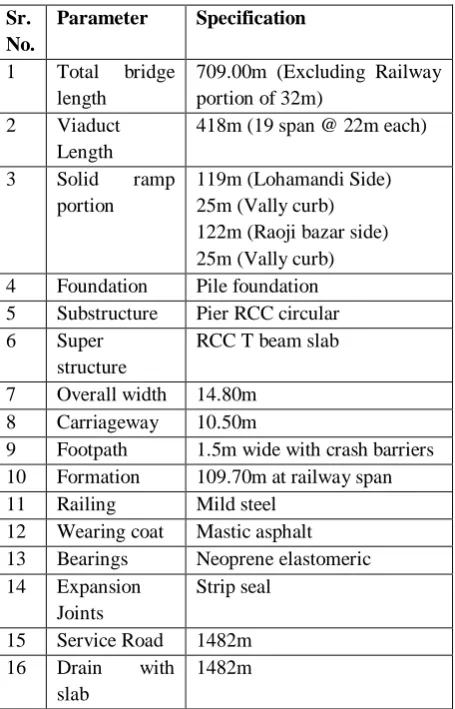
Table 1. Existing Site Technical Specification
Sr. No.
Parameter Specification
1 Total bridge length
709.00m (Excluding Railway portion of 32m)
2 Viaduct Length
418m (19 span @ 22m each)
3 Solid ramp portion
119m (Lohamandi Side) 25m (Vally curb) 122m (Raoji bazar side) 25m (Vally curb) 4 Foundation Pile foundation 5 Substructure Pier RCC circular 6 Super
structure
RCC T beam slab
7 Overall width 14.80m 8 Carriageway 10.50m
9 Footpath 1.5m wide with crash barriers 10 Formation 109.70m at railway span 11 Railing Mild steel
12 Wearing coat Mastic asphalt 13 Bearings Neoprene elastomeric 14 Expansion
Joints
Strip seal
15 Service Road 1482m 16 Drain with
slab
1482m
Table 2: Bridge Construction Activities
Sr.No. ACTIVITY
Duration (Days)
PRE CONSTRUCTION STAGE
1 Scope of Work 2 Site selection
3
Detailed survey & investigation
4 Design and Drawing 5
Estimation, Technical sanction, administrative approval
6
Available online: http://edupediapublications.org/journals/index.php/IJR/ P a g e | 796
7 Agreement of work with department and contractor STARTING OF WORK
1 Layout of work 2 Site clearance 75
2
Investigation of strata (Survey, boring, soil test etc.) 10 3 Design and Drawing 30 Material Purchase 90
FOUNDATION
4
Boring and investigation of
strata 19
6
Piling work/laying of
foundation 105
7 Pile Cap 95
CONSTRUCTION OF
SUB-STRUCTURE
8 Pier Shaft 90
9 Abutment 24
10 pier Cap 90
11 Abutment cap 14 12 Pedastal/Chair 38
13 Bearing 21
CONSTRUCTION OF SUPER-STRUCTURE
14
Staging/Erection work for laying of slab 50
15
Beam/Soffit/Grider R.C.C. AND P.C.C WORK 100 16 Deck Slab(P.C.C./R.C.C.) 100
17 Kerb 5
18 M.S.Railing 6
19 R.C.C. Crush barrier 4
20 Foothpath 4
21 Wearing coat 2
22 Removal shuttering 5
8.Activities having scope of linear scheduling
Site clearance (Tree cutting, Trunks, Demolition,)
Material Purchasing
Boring
Piling (Laying of foundation, pile cap)
Pier (Pier shaft, pier cap, pedestal, bearing)
Slab (Staging, Reinforcement
,girder, deck slab) Activity start =
((No. of units -1)* duration of operation)) / No. of gangs used. (Liu et al. 2002)
The graph below shows site clearance scheduling with LOB. X axis shows the number of activities involved in site clearance, Y axis shows the duration of actives in number of days, Z axis represents a unit time to complete one activity. Blue colour line represents start time for activities and red colour line shows the finish time of activities. Unit activity time is 1 day and site clearance is to be completed in 38 days with LOB.
(Fig 3). LOB for Site Clearance
Available online: http://edupediapublications.org/journals/index.php/IJR/ P a g e | 797
(Fig 4). LOB for Material Purchasing
The graph below shows boring scheduling with LOB.X shows the number of activities involved in boring, Y axis shows the duration of actives in number of days, Z axis represents a unit time to complete one activity. Blue colour line represents start time for activities and red colour line shows the finish time of activities. Unit activity time is 0.5 day and boring is to be completed in 13 days with LOB.
(Fig 5). LOB for Boring
The graph below shows piling scheduling with LOB.X axis shows the number of activities involved in piling, Y axis shows the duration of actives in number of days, Z axis represents a unit time to complete one activity. Blue colour line represents start time for activities and red colour line shows the finish time of activities. Unit activity time is 11 day and piling is to be completed in 77 days with LOB.
(Fig 6). LOB for Piling
The graph below shows piers scheduling with LOB.X axis shows the number of activities involved in piers, Y axis shows the duration of actives in number of days, Z axis represents a unit time to complete one activity. Blue colour line represents start time for activities and red colour line shows the finish time of activities. Unit activity time is 26 day and piers is to be completed in 156 days with LOB.
(Fig 7). LOB for Piers
Available online: http://edupediapublications.org/journals/index.php/IJR/ P a g e | 798 time is 18 day and slab is to be completed in
180 days with LOB.
(Fig 8). LOB for Slab
9.CPM for Bridge (MS Project)
CPM critical path is also calculated using MS Project software. Using MS Project the project is calculated to be finished in 656 days.
(Fig 9): Critical Path with MS Project
(Fig 10). Critical Path with MS Project
10.Result and Discussion
The activities, which are repetitive and are selected to plan and schedule as per LOB technique, are present in below table
Table 3: Comparison Existing and LOB
ACTIVITY EXISTING LOB
Site clearance
(Tree cutting, Trunks, Demolition,) 50 38
Material Purchasing 55 45
Boring 19 13
Piling (Laying of foundation, pile cap) 135 77
Pier (Pier shaft,pier cap,pedastal,bearing) 219 156 Slab (Staging,Reinforcement,girder,deck
slab) 210 180
(Fig 11). Existing vs. LOB Comparison Graph
Existing activity duration are found greater than LOB scheduled activity as per comparison graph.
Available online: http://edupediapublications.org/journals/index.php/IJR/ P a g e | 799 LOB is found as optimized scheduling
technique as per above comparison graph results. As actual days calculated are 794, 656 days is result with CPM and LOB is scheduling project in only 615 days.
11.Conclusion
The existing bridge plan is first studied and the number of days as per present schedule are 794 days.
The technique CPM and LOB both are implemented and it is found that the schedule reduces from 794 days to 656 days in CPM and 615 in LOB. There is saving of 179 days with LOB technique with respect to present schedule and plan. It is clear and well understood that LOB is the better technique than existing methods and it can be used for plans and schedule for bridge and other civil constructional repetitive activities and projects in the city.
12.Acknowledgement
The authors are thankful to Dr. Archana Keerti Chowdhary Principal IES IPS Indore, Mr. Ratmele, Sub Divisional Officer, and Mr. Manoj Jain, Sub Engineer, MP PWD, Bridge construction sub division, Indore for providing the necessary facilities for the preparation of the paper.
References
1. Jiang, A., Cheng, B., Flood, I., and Issa, R., (2006). “Modified Linear Scheduling In Scheduling Multiple Utility
Line Construction Project.” Joint
International Conference on Computing and Decision Making in Civil and Building Engineering, 3926- 3937.
2. Rachmat, F. H., Song, L., and Lee, S. (2010). “Applying a Stochastic Linear
Scheduling Method to Pipeline
Construction.” Bechtel Corporation,
Houston, Texas, USA.
3. Abbondati, F., Lamberti, R., and Capaldo, F. S., (2016). “Linear Scheduling Analysis Toolkit for Road and Airports
Construction Projects.” ARPN Journal of Engineering and Applied Sciences, 11(11), 6863-6874.
4. Yang, I., Ioannou, P. G., (2003). “Scheduling System With Focus on Practical Concerns in Repetitive Projects.”
Construction Management and Economics, 619-630.
5. Vorster, M. C., Beliveau, Y. J., and Bafna, T., (1995). “Linear Scheduling and Visualization.” Transportation Research Record, 32-39.
6. Badukale, P. A., and Sabihuddin, S., (2014). “Line of Balance.” International Journal, of Modern Engineering Research,
4(3), 45-47.
7. Dzeng, R. J., and Wang, W. C.
(2003). “Automatic Schedule Integration for Highway Projects.” Elsevier, Science Direct, Automation in Construction, 447 – 461.
8. Liu, S. S., and Wang, C. J., (2002). “An Optimization Model for Linear Project
Scheduling Considering Multi-Skilled
Crews.” Construction Engineering,
National Yunlin University of Science & Technology, Yunlin, Taiwan.
9. Pai, S. K., Verguese, P., and Rai, S., (2003). “Application of Line of Balance Scheduling Technique (LOBST) for a Real estate sector.” International Journal of
Science, Engineering and Technology