Report No. 442
TAILORING FATS, OIL, AND GREASE COMMUNICATION PLATFORMS TO FIT THE NEEDS OF NC UTILITIES, WHILE ENHANCING THE MESSAGE THROUGH
STATEWIDE SYNERGY
By
Sayde J. Brais1, Regina Guyer2, and Robin Rothberg1
1
Department of Communication Studies
2
Environmental Assistance Office
UNC-WRRI-442
The research on which this report is based was supported by funds provided by the Urban Water Consortium through the Water Resources Research Institute.
Contents of this publication do not necessarily reflect the views and policies of the UWC or of WRRI, nor does mention of trade names or commercial products constitute their endorsement by the WRRI or the State of North Carolina.
This report fulfills the requirements for a project completion report of the Water Resources Research Institute of The University of North Carolina. The authors are solely responsible for the content and completeness of the report.
2
ACKNOWLEDGMENTS
3
ABSTRACT
Urban Water Consortium (UWC) member utilities engaged the Infrastructure, Design, Environment, and Sustainability (IDEAS) Center’s Environmental Assistance Office and the Communication Studies Department team at UNC Charlotte to develop program materials tailored to fit utility needs and communities (specifically Latino populations and
multifamily/apartment housing, among other target audiences) that incorporate the Fats, Oil, and Grease effective communications strategies identified through “Improving Grease Disposal in Multifamily Housing & Latino Populations” research (WRRI Project # 50395). Communication efforts were enhanced as UWC member utilities benefited from economies of scale achieved in several ways. First, the overall communication plan was tailored for each utility. Second, the plan supported statewide measures reinforced by coordinated localized measures. Third, UWC member utilities throughout the state were able to pool resources to develop and share creative strengths, and to reduce costs (i.e. stock photography and printing set-up costs). As UNC Charlotte students developed marketing materials and strategies to suit the UWC members’ needs with faculty guidance during the Public Relations Practicum course (COMM 3055: Topics in Public Relations), continued enhancement of FOG communications needs developed through discussions with state agency representatives. This should result in synergistic implementation through state strategies and tactics, reinforced by local programs and initiatives across North Carolina. The project outcome allowed for implementation of effective communications strategies, fostered understanding of concepts, and encouraged behavior change for UWC members, while engaging college students with cross-disciplinary challenges.
KEYWORDS
4
1.0
INTRODUCTION
TheInfrastructure, Design, Environment, and Sustainability (IDEAS) Center’s Environmental Assistance Office (EAO) at UNC Charlotte, in partnership with the Department of Communication Studies developed the research project “Fats, Oil, and Grease (FOG) Communications Implementation” to assist each of the Urban Water Consortium (UWC) member utilities. FOG consists of fats, oils and grease generated through every day cooking, and it’s a potentially serious problem because sanitary sewer overflows (SSOs) often result from improper FOG disposal (i.e. down the kitchen sink), acquire significant corrective costs for water utilities and pose potential public health issues. The UWC is interested in addressing this problem through targeted outreach for specific audiences which include Latino populations, minority populations unique to respective city/town, multifamily/apartment housing, school systems, and more.
The research utilized the recommended communications strategies identified through “Improving Grease Disposal in Multifamily Housing & Latino Populations” research (WRRI Project # 50395) and has tailored messaging to fit with each UWC member utility’s needs and community. The implemented strategies enhanced communication efforts and benefit the economies of scale of the UWC member utilities in several ways. First, as the communication plan was tailored for each utility it reflected collaboration for individual components to reinforce and be reinforced by other components of the
utilities’ existing FOG programs. Second, the plan supported state-wide measures reinforced by coordinated localized measures. Third, UWC member utilities throughout the state were enabled to pool resources for the development and sharing of creative strengths and to reduce costs (translation and printing set-up costs, for example). Regina C. Guyer, EAO Executive Director, and Sayde J. Brais, lead project investigator and Communication Studies faculty, facilitated meetings with the UWC members in understanding the needs and current practices of their utility.
This research is beneficial for two main reasons. First, it will help to enhance the capabilities of the Urban Water Consortium member utilities to share and build
5
implement outreach and communication strategies. The research team worked to identify and pursue areas where state synergies could be established to effectively communicate FOG-related behavior modification initiatives, eventually reinforced by local utility programs.
Deliverables consisted of: (1) a research report to summarize project results with recommendations developed on the process of implementation of FOG communication strategies; (2) findings from discussions with UWC member utilities in the development of program plans, summary of materials developed and strategies suggested by students of PR Practicum course; and (3) a set of prototype PR/Marketing materials for each of the UWC member utilities to which each utility would have full and complete access for use in their own communities.
2.0
METHODOLOGY
During the course of the Fall 2012 academic semester (September-December), Guyer assisted Brais in conducting initial interviews and visits with some of the UWC member utilities. Brais travelled to 10 out of 12 member utilities for an on-site meeting, and conducted two phone conversations with the remaining member utilities, in an effort to more fully understand the uniqueness of the utility, current programs and materials, community logistics, and program areas of interest. Please see Appendix A-site visit table. During on-site and phone meetings, Guyer and Brais used and disseminated the information included in the “Improving Grease Disposal in Multifamily Housing & Latino Populations” (WRRI Project #50395) to interpret and adapt research results for each utility’s Fats, Oil and Grease (FOG) program implementation. Additionally, Brais conducted a series of follow-up emails to update municipalities with progress status, and invited interested and able municipalities to visit UNC Charlotte and speak directly and engage with the students of the Public Relations (PR) Practicum course.
The knowledge gathered though site visits, Brais and course instructor and co-principal investigator, Robin Rothberg, ensured the proper depth and targeting of
communication/marketing materials developed by students. A three-credit,
6
in Multifamily Housing & Latino Populations” (WRRI Project #50395) research report and communication strategies publication as their “textbook” and guide for their efforts. For published materials (online and print), students had access to stock photography, allowing utilities to reproduce many materials almost instantly, without needing to secure photography permissions.
In March 2013, during the semester’s mid-point, students discussed current progress with various member utilities in-person and via video chat. Representatives from member utilities provided detailed feedback and critiques of current materials, concepts, and messages.
In May 2013, at the semester’s conclusion, students presented their findings to UWC member utilities and North Carolina Division of Environment and Natural Resources (NCDENR) representatives who attended the on-campus presentations at UNC Charlotte. UWC members had the opportunity to decide which concepts and materials they liked or disliked, and provided critiques and feedback regarding student work in a roundtable discussion immediately following the presentations. The roundtable consisted of present UWC member representatives, NCDENR representatives, Guyer, Brais, Rothberg, and colleagues. UWC members left with electronic versions of all concepts and materials personalized with each utility’s logo, as well as a hard copy booklet summary of all concepts and materials and display booth “hands on learning” material.
As a follow-up to the roundtable discussion, FOG graphic posters designed by a student team were created on vinyl for each UWC member. These posters were delivered to all UWC members. In addition, UWC members who were not available to attend the May presentations were visited on-site by Guyer and delivered the materials with an
explanation of how they could be implemented.
On October 11, 2013, Brais and Guyer attended the quarterly meeting of the Urban Water Consortium leadership to present the research findings, provide an overview of the
materials developed with their application, and discuss implementation of future synergies for FOG communications.
7
3.0
RESULTS/DELIVERABLES
Materials enabled each UWC member utility to incorporate their own specific messages, logos, and tailor the materials to meet their communities, which included Latino
populations, minority populations unique to respective city/town, multifamily/apartment housing, school systems, and more. Students involved in the project were provided with valuable learning experiences for further developing workforce skills which include: comprehending client needs and desires, critiquing public relations/marketing messages, updating and re-designing current messages, creating a variety of original
messages/materials, publishing materials through professional means, receiving and using feedback from clients, presenting materials to clients, and meeting needs and desires of clients.
In a roundtable discussion conducted at the close of student presentation on May 7, 2013, UWC and state representatives discussed their likes/dislikes, constructive criticism, and reactions to student-created materials—with many voicing positive reactions to the creative and innovation displayed in the materials (specifically the “tube” event display and cookbook), excitement toward the improvements to FOG messages/logos/slogans, and reservation toward social media templates/approaches. Less than a month after the student presentations were delivered to respective UWC and state members, the City of Charlotte began using FOG disposal techniques as described and written by student teams on brochures, as well as implementing the usage of the “potty pamphlet”, which
describes the proper way to dispose of regular household items down other drains found in most homes.
The synergy for dissemination across the state of NC was achieved by interactions with NC Division of Environment and Natural Resources (NCDENR) representatives Deborah Gore, Supervisor of the Pretreatment, Emergency Response and Collection Systems (PERCS) Unit and Michael Leggett, Environmental Engineer. In further follow up with NCDENR’s NC Division of Environmental Assistance and Customer Service (DEACS), Jamie Ragan, Outreach Coordinator, and Joe Fitzpatrick, Environmental Specialist, the EAO has pursued being able to post materials as a resource for other utilities through the state website. This project has also enabled the EAO to begin discussions with the NCDENR DEACS to pursue collaborations for the next phase past effective communication in creating a pilot project for behavior change and the infrastructure needed to reinforce those changes by investigating cooking oil collection.
• Two research reports which summarized the project results were developed and submitted to the Water Resources Research Institute. These were completed as a progress report on February 4, 2013 and the final report on January 6, 2014.
• Recommendations developed for each UWC utility member on how the communication strategies could be implemented within their organizations. Includes findings from the discussions with UWC member utilities by lead investigator, Sayde J. Brais.
8
North Carolina region and nationally. These presentations included: North Carolina Pretreatment Consortium (NC-PC) Conferences in September 2012 and 2013; NC-PC “FOG Day” on December 12, 2012; NC American Water Works Association / Water Environment Federation Conference November 2013; Water Resource Research Institute Conference 2012 and 2013; and the National Water Environment Federation Technical Exhibition and Conference 2012 in New Orleans, Louisiana. In addition, an abstract is currently being submitted for the Water Resource Research Institute Conference 2014.
• Public relations/marketing materials created by UNC Charlotte PR Practicum class. See figures 1-4 below for examples of prototype materials. Materials are print ready or electronic materials which include the development of information tailored to suit particular audiences (landlords, students, end users, etc.),as well as, website evaluations and re-design concepts, FOG informational video,
brochures, flyers, television and radio scripts, curriculum plans and supplemental materials, event displays and social media outreach plans.
• Each UWC member utility received a set of prototype public relations/marketing materials tailored with their company’s logo for utility representatives to use as a resource within their utility FOG programs.
Each group created a logo and designed materials around their themes which are shown in Figures 1a-1c. The materials that were provided to the utilities included: brochures, bill inserts, postcard / info graphics, door hangers, fact sheets tailored to different audiences, grocery store flyer, receipt stamp, teaching modules (including classroom engagement activities, games, awards, and background materials), cookbook (which implemented FOG in its recipes), video tool, public service announcement storyboard, “hands on learning tube”, T-shirt designs, website designs, “Pinterest” posting examples, blog ideas with monthly posting categories, and follow up contact information with the Public Relations at Delhaize Group (Food Lion LLC). Sample prototype materials are shown in Figures 2-4.
9
Figure 1b: Team 2 Logo and Design
Figure 1c: Team 3 Logo and Design
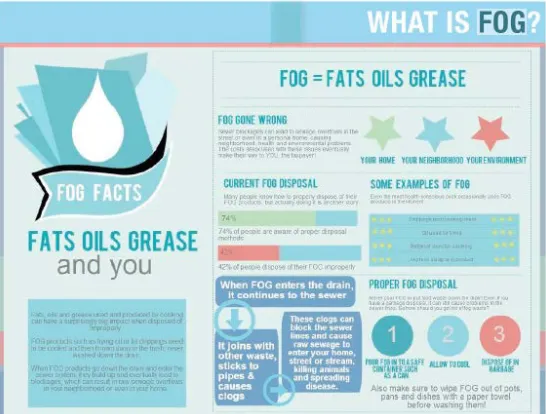
Figure 2: Infographic created by Team 1 to be used in multiple facets (i.e. local events, mailed to residents, shared online through website or blogs). This material was described as a need by several UWC member utilities including City of Durham, City of Charlotte, City of Greenville, etc.
10
Figure 3: FOG lesion plan created by Team 3 to be used specifically for UWC utility members (i.e. Town of Cary, City of Durham, City of High Point, etc.) that expressed a need for educational materials that may be used in elementary/middle schools by teachers.
Figure 4: The door hanger with information translated into Spanish, created by Team 2 to be used specifically for multifamily housing/apartment residents, a target audience important to all UWC member utilities. The updated design and slogan, paired with the concise wording and graphics provide requesting utilities () with an additional outreach tool for Latino audiences.
Introduction to FOG
FOG stands for fat, oil and grease that come from cooked food.
show pictures of grease in pan after burgers made (provide examples)
To prevent FOG from going down the drain, scrape or wipe the fats, oils and grease off of the cooking supplies you have used (Emphasize they cannot do this without parental supervision)
When fats, oils and grease are poured down the drain, it clogs the pipes we get our water through and our wastes out (show images of SSOs)
present display created and show how clogged pipes look
Activities
Cool, Scrape, Pour! This activity will take 20-25 minutes
Divide children into groups of 3. Let each child get a chance to scrap and pour.
Use props and show how to let oil cool, scrape and pour.
Explain the upcoming contest
Hand out contest layout to bring home to parents
Materials needed: 3 frying pans and Container of Crisco
Rubber spatula
Create your own Can- Activity will take 25-30 minutes
Show example of already decorated can
Tell students to bring in used, opened cans
11
4.0
DISCUSSION
The projected outcome was to enable the implementation of the effective communication strategies developed through “Improving Grease Disposal in Multifamily Housing & Latino Populations” (WRRI Project #50395) research to suit the individual needs of each UWC member utility, foster understanding of the communication/marketing concepts, and encourage behavior change (communication outreach strategies) of the utilities through addressing the FOG program from a public relations perspective. Another projected outcome was to provide an economy of scale in the development of prototype materials, which could then be tailored and implemented within each individual utility’s FOG program. Additionally, workforce development and student learning experiences were gained by the interactions between the UWC members and undergraduates. The findings of this research will ultimately involve synergy among local utility programs and initiatives across North Carolina. This project allows for implementation of effective communications strategies and public relations materials for each UWC utility, and encourages behavior change in target publics’ current grease disposal habits. Even though they may each choose different ways to incorporate it into their public relation materials, outreach programs, or bill inserts; the message from the 12 Urban Water Consortium members will create a reinforced outcome. The messages are further emphasized through NCDENR DEACS program’s ability to post the materials for use statewide.
5.0
SUMMARY
This research consisted of a three-tier process concluding with deliverables including a research report to summarize project results with recommendations developed for each UWC utility member on the process of implementation of communication strategies, as well as findings from discussions with UWC member utilities in the development of program plans. All research findings were compiled and discussed to enable building of partnerships within the community which included a summary of materials developed and strategies suggested by students of PR Practicum course as well as a set of prototype PR/Marketing materials for each of the UWC member utilities to which each utility will have full and complete access for use in their own communities. This research provides a gateway for further collaboration and statewide synergy surrounding the best FOG disposal communication practices. It also provides an invaluable real-world experience for college students, most of whom graduated immediately following the conclusion of the course and entered into the workforce.
6.0
CONCLUSIONS
12
# 50395). The tailoring of appropriate materials to suit each UWC member utilities’ needs were developed by on-site visits and interviews to determine their individual program needs, discuss current practices for FOG materials, and their community’s needs. This information along with the WRRI Project #50395 report and utilities
representatives meeting directly with the students in the PR Practicum Class enabled the development of meaningful Public Relations/ Marketing materials by three groups of students.
Implementation of the marketing materials and strategies which were suited to fit the UWC members’ needs will allow for continued enhancement of FOG communications within their communities. The collaboration developed through discussions with state agency representatives allows for synergistic implementation through state strategies and tactics, reinforced by local programs and initiatives across North Carolina. The project outcomes allowed for implementation of effective communications strategies for each UWC utility through fostering the understanding of communication/marketing concepts, and encouraging behavior change (communication outreach strategies) while engaging students with cross-disciplinary challenges.
7.0
RECOMMENDATIONS
The recommendations for the project include:
1) Implementation of PR Practicum Class developed materials to suit the needs within each UWC member utilities’ communities. It is recommended for each utility to tailor the variety of materials with their logos and messaging to create a synergy with current messages and new ones. The development of materials from the class included expanded messaging develop an understanding of the impacts improper disposal of not only FOG, but other household items (i.e. “flushable” wipes, cotton swabs, dental floss, hair, etc.).
2) Use the synergy of the UWC in following up with Public Relations Contact with Delhaize Group (Food Lion LLC). This would allow potential collaboration across the state with messaging and synergy with the retail grocery chain which could interact with a large audience of their clients.
3) Continued synergy of the UWC in developing needed effective communication materials to suit the programs of the utilities. These may include further development of FOG program materials or pursuit of additional needs of the utilities such as reclaimed water/ water reuse messaging and communication materials to allow for a successful understanding of the key program elements for the public.
13
relations and marketing materials, literature/website research for understanding common practices of utilities, or other project scopes.
8.0
REFERENCES
A-1
APPENDIX
Appendix A-Site Visit Table
UWC Member Utility Person(s) met/spoke with Date of meeting
City of Burlington Water Resources Department
Steve Haller,
Pretreatment Compliance Specialist
In-person meeting, December 12, 2012 Cape Fear Public Utility
Authority Kipp Glazier, Community Compliance Supervisor
Phone meeting, January 14, 2013 Town of Cary Department
of Public Works and Utilities
Donald Smith, Utility Pretreatment Manager Maria Vanderloop, Utility Pretreatment Technician II
On-site meeting, December 7, 2012
Charlotte-Mecklenburg Utilities Department
Ruby Tarver, FOG Program Manager Cam Coley, Advertising & Community Information
Bill Gintert, Environmental Compliance Manager
On-site meeting January 9, 2013
City of Durham Department of Water Management
Tyrone Battle, Industrial Pretreatment Coordinator Mike Fike, Industrial Pretreatment Technician Erick Bluford, Industrial Pretreatment Technician
On-site meeting December 7, 2012
Fayetteville Public Works Commission Water Resources Division
Tim Davis, Systems Protection Supervisor Chad Ham, Environmental Programs Manager Jeff Whims, Environmental Systems Protection
Technician
On-site meeting December 10, 2012
City of Greensboro Water Resources Department
David Phlegar, Stormwater Division Manager Ignatius “I.G.” Chukwu, FOG Program Coordinator
On-site meeting, December 5, 2012
Greenville Utilities Commission
Deanna Castellow, Environmental Control Officer Sue Hatch, Public Information Office/Communications
Manager
Linda Clark, Communications Technician Steve Porter, Water Resources Systems Engineer
On-site meeting, December 19, 2012
City of High Point Public
Services Department Carrie Boyd, Pretreatment Supervisor
On-site meeting, December 5, 2012
Orange Water and Sewer Authority (OWASA)
Greg Feller, Public Affairs Administrator John Greene, General Manager of Operations Thurman Green, Water Distribution and Wastewater
Collection Systems Manager
On-site meeting, December 14, 2012
City of Raleigh Public
Utilities Department Marti Gibson, Environmental/EMS Coordinator
Phone meeting, January 9, 2013
City of Winston-Salem Utilities Division
Sherry Bagwell, Utility Plant Supervisor Cheryl Tilly, Grease Compliance Officer
B-1
Public Relations Practicum
Course description
COMM 3055-01 Topics in PR Prerequisite: COMM 2145. Timely and important areas relevant to the study of public relations. May be repeated for credit with permission of the major advisor.Class project
Create public relations materials for water utilities across North Carolina to use to help publics learn to properly dispose of fats, oils and grease. Materials may include, but not be limited to, scripts, posters, online items, fliers and newsletters.Instructor information
Name: Robin RothbergEmail: [email protected] Phone: 704-687-0777 Office: 5032 Colvard Office hours:
12:45-1:45 p.m., TR; 11 a.m.-noon, W To schedule a time to meet, use nineradvisor.uncc.edu.
Name: Sayde Brais Email: [email protected] Office: 5030 Colvard Office hours:
9-10 a.m., T; 3:30-4:30 p.m., R
Students can help prevent health danger
Members of the North Carolina Urban Water Consortium (UWC) are waiting. They are waiting for public relations materials to help prevent priority
publics from creating sewer blockages that can lead to spills and overflows that endanger people and wildlife. PR Practicum students will determine best practices, tactics and strategies using primary research, information from research associate Sayde Brais and the findings of “Improving Grease Disposal in Multifamily Housing & Latino Populations.” Students will also create prototype
materials for UWC member utilities across North Carolina. Items may include website evaluation/ design concepts, brochures, scripts (TV, radio,
telenovela), curriculum plans, event displays, bulletin board materials and social media.
Students will compete to design statewide materials and, when necessary, specialize for regions (Triad, Triangle, etc.).
Real-world resources
In PR Practicum, good copy will be critical. Good graphic design will be crucial.
For published materials (online or print), students will have access to stock photography. This will allow utilities to reproduce many materials almost immediately, without needing to secure photography permissions.
Students will also have class time dedicated to work, or to knowledgeable guest speakers.
Conference possibility
One student or a few students may volunteer to present at the 15th Annual Water Resources Research Institute Conference in Raleigh, N.C. (Student presenters attend free; student posters are entered into a student poster competition.) More information about the March 20-21 conference is at go.ncsu.edu/wrriac.
Sheer opportunity
With real-world clients, resources and presentation opportunities, PR Practicum is a chance for students to showcase their skills for eager clients waiting to be wowed. Portfolio materials will be useful for job interviews. Finally, after all these years of preparation, it’s time.
COMM 3055-01 TR 11 a.m.-12:15 p.m. 5041 COLVARD SPRING 2013
Tuesday
Thursday
10 First day of class
Introductions, syllabus, expectations, etc. 15 Class visitors: Town of Cary Utility Department 17 Class visitors: Charlotte-Mecklenburg
Utility Department (CMUD) 22 Class visitors: High Point Utility Department and CMUD 24 Class visitor: City of Durham utility
29 Calendar assignment is due. 31
PR Practicum Calendar, Spring 2013
Wait. Where are the assignments? Where are the deadlines?
Well, that’s up to the groups in this class. Everyone has the same starting point, the same rules, the same materials and the same access to information. Everyone has the same deadline, too. Most things in between, though, are up to individual groups.
Required items are:
Attendance; because so much in-class time is work time, each student gets one absence and one telecommute (work from outside the classroom, approved by all group members). After that, each absence deducts from a student’s attendance grade. (Speak to an instructor for a religious exemption.)
A calendar noting deadlines and definitions for progress, for materials and for group member critiques.
Group member critiques — two during the semester. The critique should include information the group deems important (see calendar), as well as both a grade and advice on how the critiqued group member can improve. The instructor will remove the critique-writer’s name and give a copy of the critique to the person critiqued.
A set of work that includes website evaluation/design concepts, brochures, scripts (TV, radio, telenovela), curriculum plans, event displays, bulletin board materials and social media.
A client presentation during the final exam time that explains and showcases all class work and includes a “wow” (something the client didn’t ask for that will impress the client).
Grading:
Attendance………..……….………10 percent Calendar (group grade)……….……….…………10 percent Average of two group member critiques (written)…….……….……….…………...10 percent Average of two group member critiques (received — group members assign grades)….……….…………...10 percent Set of work……….………..30 percent Client presentation including a “wow”………...………..30 percent … of your final grade
Grades are based on a 10-point percentage scale:
90-100 = A 80-89 = B 70-79 = C 60-69 = D 59-below = F
Additional information for all groups:
Check 49er Express email each business day for potential course updates, new materials or class cancellation.
Abide by the UNC Charlotte Code of Student Academic Integrity, http://legal.uncc.edu/policies/up-407 Among other things, the code forbids cheating, multiple submission of academic work, plagiarism, abuse of academic materials and complicity in academic dishonesty. There are penalties up to and including expulsion.
During class time, only use computers to work on class work. Keep food or drinks in a bag, not on tables or near computers.
Students who need special accommodations should notify the instructor via letter from the Office of Disability Services (http:// ds.uncc.edu or 230 Fretwell) as soon as possible.
Disclaimer: The calendar and other elements of this syllabus are a plan subject to instructor discretion.
Tuesday
Thursday
5 7
12 14
19 21
26 28
February 2013
Tuesday
Thursday
There is no class March 5 or 7. Enjoy your Spring Break!
12 14
19 21
26 28
March 2013
Tuesday
Thursday
2 4
9 11
16 18
23 25
30 Last day of class.
Final exam: Tuesday, May 7, 11 a.m.-1:30 p.m.
Appendix C
Regina C. Guyer, P.E.
Sayde J. Brais
Urban Water Consortium Project
WRRI Final Report - Project Deliverables Summary
NO
FOG,
NO
COMM 3055: PR Practicum
Project Teams
“No Fog, No Clog”: Ashley Heath, Erica
McDaniel & Shayla Sadler
“Keep Water on the Run”: AnneMarie
Bombardieri, Alexes Johnson & Janynne Neves
“FOG=CLOG”: Alexis Brethauer, Jaclyn Harris &
NO FOG, NO CLOG
Ashley Heath
Erica McDaniel
JAAgency
Fact Sheet
What should I already know about FOG problem?
Where does FOG usually com from?
Who is responsible for sewers if the sewer backs
up?
How much damage can FOG clogging cause?
What are some easy steps to follow to prevent any
FOG-related incidents?
What additional precautions can we take against
Resident Fact Sheet
What do I do about FOG?
How do pipes clog?
What is the worst case scenario with clogging
pipes?
I don’t want to harm the environment, so what do I
do with my FOG after I’m done cooking?
Teacher Lesson Plan
Introduction to FOG FOG stands for fat, oil and grease that come from cooked food.
show pictures of grease in pan after burgers made (provide examples)
To prevent FOG from going down the drain, scrape or wipe the fats, oils and grease off of the
cooking supplies you have used (Emphasize they cannot do this without parental supervision)
When fats, oils and grease are poured down the drain, it clogs the pipes we get our water through
and our wastes out (show images of SSOs)
present display created and show how clogged pipes look
Activities Cool, Scrape, Pour! This activity will take 20-25 minutes
Divide children into groups of 3. Let each child get a chance to scrap and pour.
Use props and show how to let oil cool, scrape and pour.
-Explain the upcoming contest
-Hand out contest layout to bring home to parents
Materials needed: 3 frying pans and Container of Crisco
Rubber spatula Create your own Can- Activity will take 25-30 minutes
Show example of already decorated can
Tell students to bring in used, opened cans
Have construction paper, crayons, markers, glue and scissors available
Contest Layout
Students in elementary schools ( K-5) in 12 of NC counties will
have the opportunity to create the best jingle/video/dance
showing the way their family conserves oil, grease and fats to
keep their pipes clean!
Parents, friends and family members are all welcome to partake
in the video.
The best jingle/video/dance in each county will be selected and
will be eligible to win the class a pizza party(can be changed)
Videos can be uploaded through the water consortium’s
Facebook Page and the winner will have a highlighted spot on
the page!
The winners will also be mentioned on the water consortium’s
Storyboard for FOG PSA
The mom is in the kitchen about to pour grease down the drain, kid yells stop!
The kid begins to explain to mom what he learned about F.O.G in school.
The mom asks kid what to do instead? How do I properly dispose of F.O.G?
The kid is explaining the proper disposal of F.O.G. Mom opens cabinet to get the proper materials.
The screen goes black… voice over begins
explaining the
importance and benefits of disposing F.O.G
Alexis Brethauer
Chase McBride
Potty
Blogs
Created Blog to share ideas using
Email:
[email protected]
Password: unccharlotte123
Blog websites
Wix
Blog Inspiration
Monthly Celebration to this campaign
Creative Beginnings Month, Family Wellness Month, National
Energy and Environmental Assistance Office | UNC Charlotte
Infrastructure, Design, Environment, and Sustainability (IDEAS) Center
Energy Production Infrastructure Center (EPIC)
Regina C. Guyer, P.E.
Cameron 241, 9201 University City Blvd, Charlotte, NC 28223
704-687-1934 | [email protected]
______________________________________________________________________
Communication Studies Department | UNC Charlotte
Sayde J. Brais, M.A.
Colvard 5055, 9201 University City Blvd., Charlotte, NC 28223
D-1
Appendix D-Presentation Listings
Presentations and research reports were disseminated based on the first and second phases of project through conference presentations, abstract and report submittals given throughout the North Carolina region and nationally. These included:
• North Carolina Pretreatment Consortium (NC-PC) Conferences in September 2012 and 2013;
• NC-PC “FOG Day” on December 12, 2012;
• NC American Water Works Association / Water Environment Federation Conference November 2013;
• Water Resource Research Institute Conference 2012 and 2013; and the
• National Water Environment Federation Technical Exhibition and Conference 2012 in New Orleans, Louisiana.