Scholarship@Western
Scholarship@Western
Electronic Thesis and Dissertation Repository
6-19-2018 1:00 PM
Dual Route Model of Idiom Processing in the Bilingual Context
Dual Route Model of Idiom Processing in the Bilingual Context
Tianshu Zhu
The University of Western Ontario
Supervisor Minda, J Paul
The University of Western Ontario Graduate Program in Psychology
A thesis submitted in partial fulfillment of the requirements for the degree in Master of Science © Tianshu Zhu 2018
Follow this and additional works at: https://ir.lib.uwo.ca/etd
Part of the Cognition and Perception Commons, Experimental Analysis of Behavior Commons, First and Second Language Acquisition Commons, Multicultural Psychology Commons, and the
Psycholinguistics and Neurolinguistics Commons
Recommended Citation Recommended Citation
Zhu, Tianshu, "Dual Route Model of Idiom Processing in the Bilingual Context" (2018). Electronic Thesis and Dissertation Repository. 5456.
https://ir.lib.uwo.ca/etd/5456
This Dissertation/Thesis is brought to you for free and open access by Scholarship@Western. It has been accepted for inclusion in Electronic Thesis and Dissertation Repository by an authorized administrator of
i
The dual route model predicts that idiomatic phrases show a processing advantage over
matched novel phrases. This model postulates that familiar phrases are processed by a faster
direct route, and novel phrases are processed by an indirect route. This thesis investigated the
role of familiar form and concept in direct route activation. Study 1 provided norming
evidence for experimental stimuli selection. Study 2 examined whether direct route can be
activated for translated Chinese idioms in Chinese-English bilinguals. Bilinguals listened to
the idiom up until the last word (e.g., draw a snake and add), then saw either the idiom
ending (e.g., feet) or the matched control ending (e.g., hair); to which they made lexical
decision and reaction times were recorded. Results showed evidence for dual route model
and provided preliminary support for both familiar concept and lexical association as drivers
of direct route activation.
Keywords
Bilingualism, dual-route model, cross-modal, idiom processing, L2 learning,
ii
Acknowledgement
Primero, me gustaría agradecer al Dr. John Paul Minda por su dirección al completar estos
estudios y por su ayuda en la escritura y edición de esta tesis. Estoy agradecido por su ánimo
y paciencia en todo este procedimiento y me gustaría con su supervisión continuar mi
estudio. Además, doy muchas gracias al Dr. Albert Katz y la Dr. Debra Jared por sus
consejos y feedbacks en varias etapas de este proyecto.
Muchas gracias a mi amiga Xuan Pan por su amistad y apoyo en más que dos años previos.
Además, a mis colegas, Emily Nielsen, Ana Ruiz Pardo, Joshua Hatherley y Bailey
Brashears, por sus consejos y ayuda en todo el procedimiento de prueba de este proyecto.
Finalmente, un cordial agradecimiento a mi instructora de zumba, Elsa. Tú eres tan
iii
Table of Contents
Abstract ... i
Acknowledgments... ii
Table of Contents ... iii
List of Tables (where applicable) ... vi
List of Figures (where applicable) ... vii
List of Appendices (where applicable) ... viii
Chapter 1 ... 1
1 Idiom Processing ... 1
1.1 Idioms and Bilingualism ... 1
1.1.1 Idioms as a Formulaic Language Trope... 1
1.1.2 Bilingualism ... 1
1.1.3 Idioms pose Challenges to Second Language (L2) Learners ... 2
1.1.4 Cross-Language Facilitation ... 2
1.1.5 Chinese Idioms... 3
1.2 Evidence of Dual Route Model... 4
1.2.1 Dual Route Model ... 4
1.2.2 Evidence from English Idiom Studies ... 6
1.2.3 Evidence from Chinese Idiom Studies ... 7
1.3 Carrol and Conklin (2014) ... 7
1.3.1 Study Description... 7
1.4 Purpose of this Thesis ... 10
Chapter 2 ... 11
2 Study 1: Idiom Norms ... 11
iv
2.2 Method ... 12
2.2.1 Materials ... 12
2.2.2 Participants ... 15
2.3 Procedure ... 16
2.4 Results and Discussion ... 16
2.4.1 English Participants’ Data Cleaning ... 16
2.4.2 Chinese Participants’ Data Cleaning ... 17
2.4.3 Overall... 17
Chapter 3 ... 18
3 Study 2: Cross Modal Idiom Processing ... 18
3.1 Cross Modal Paradigm ... 18
3.2 Purpose and Hypotheses ... 19
3.3 Methods... 20
3.3.1 Materials ... 20
3.3.2 Participants ... 23
3.4 Procedure ... 24
3.5 Data Cleaning... 25
3.5.1 By Subject ... 25
3.5.2 By Item... 25
3.6 Results ... 26
3.6.1 All Participants... 26
3.6.2 English Participants ... 27
3.6.3 Bilingual Chinese Participants ... 28
3.7 Discussion ... 30
Chapter 4 ... 32
v
4.1 Comparisons to Carrol and Conklin (2014) ... 32
4.1.1 Native English Speakers ... 32
4.1.2 Bilingual Chinese Speakers ... 32
4.2 Evidence of Dual-Route Model ... 33
4.2.1 Interpretation of English Speakers’ Results ... 33
4.2.2 Interpretation of Bilingual Chinese Speakers’ Results ... 34
4.3 Limitations and Future Directions ... 37
4.4 Conclusion ... 39
References ... 40
Appendices ... 48
vi
List of Tables
Table 1:Example of stimulus materials for each condition... 22
Table 2:Descriptive summary of the idioms used in Study 2. ... 22
Table 3:Descriptive summary of RTs in the four conditions. ... 26
vii
List of Figures
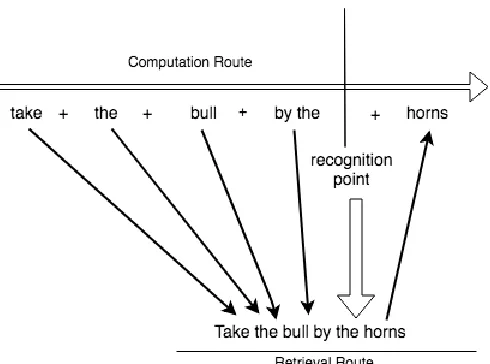
Figure 1: Dual route model for the idiom ‘take the bull by the horns’. The computation route
was engaged as the default process and the meaning of constituent words is computed. When
the recognition point was reached, retrieval route is activated and the remaining word(s) of
the idiom is automatically retrieved. ... 6
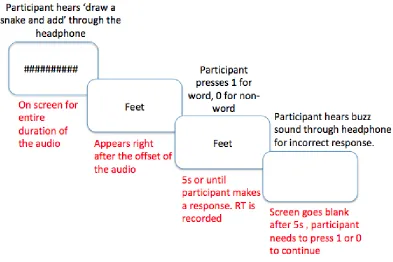
Figure 2:Illustration of Study 2 paradigm using ‘draw a snake and add feet’ as an example.
... 25
Figure 3: Native English and Bilingual Chinese speakers’ average RTs along with 95%
confidence intervals across the four experimental conditions. Control conditions are
viii
List of Appendices
Appendix A: Task Instructions for M-Turk Familiarity Norming ... 48
Appendix B: Task Instructions for M-Turk Predictability Norming ... 49
Appendix C: Demographic Questions M-Turk Participants ... 50
Appendix D: Idioms used in Study 2 ... 51
Appendix E: Demographic Questionnaire for Study 2 ... 54
Chapter 1
1
Idiom Processing
1.1
Idioms and Bilingualism
1.1.1
Idioms as a Formulaic Language Trope
Formulaic language is defined as:
“A sequence, continuous or discontinuous, of words or other meaning elements,
which is, or appears to be, prefabricated: that is, stored and retrieved whole from memory
at the time of use, rather than being subject to generation or analysis by the language
grammar (Wray & Perkins, 2000).”
Extensive corpus analysis found that formulaic language or recurrent lexical bundles
occur 30% of the time in conversational corpuses and 21% in academic prose (Biber,
Johansson, Leech, Conrad, & Finegan). The current paper will focus on one of the largest
formulaic language tropes: idioms. Idioms are expressions whose meaning cannot be
derived from a systematic or literal processing of the component words (Libben &
Titone, 2008; Swinney & Cutler, 1979; Vespignani, Canal, Molinaro, Fonda, & Cacciari,
2010). Native speakers process idioms effortlessly. This fluency and idiomatic control of
the language rests on the extensive knowledge of the close association between a
culturally recognized concept and the idiomatic form. These familiar expressions can be
retrieved directly from long term memory (Pawley & Syder, 1983).
1.1.2
Bilingualism
According to estimates, more than half of the world’s population speak more than one
language (Bialystok, 2017). Bilingualism is not only common, but also fascinating
phenomenon. For instance, it can shape experience and lead to changes in cognitive
differences in grey matter density and white matter integrity after just a short period of
time of foreign language learning.
Recent investigations on bilingualism have been focused on discovering any
cross-language interactions: When a bilingual processes information in one cross-language,
knowledge from another language may be simultaneously activated. Cross-language
facilitation were shown through studies on reading (Dijkstra, Timmermans, & Schriefers,
2000), listening (Spivey & Marian, 1999), and speech production (Jared & Kroll, 2001;
Jared & Szucs, 2002).
1.1.3
Idioms pose Challenges to Second Language (L2) Learners
It is often the case that even after years of intense active learning and extensive exposure
to L2 in the country where that language is spoken, the learner still lags behind in many
aspects of second language use. Native-like language use such as incorporating idioms
effectively in speech is one prominent facet even advanced bilinguals have difficulty
mastering (Cieślicka, 2006). Searle (1975) stated the importance of figurative expressions
in natural discourse with the following quote ‘Speak idiomatically unless there is some reason not to do so’. Knowledge of idioms not only gains bilinguals the access to
native-like language patterns, it is also an essential aid to cultural adaptation (Qualls, O’Brien,
Blood, & Hammer, 2003). Due to the lack of figurative competence in L2, speakers are
likely to rely more on interpreting constituent words literally in L2 then shift to L1
conceptual representation to estimate idiomatic meaning (Kecskes, 2000). Therefore,
previous L1 knowledge may contribute to L2 learners’ interpretations of L2 figurative
expressions. Cieślicka (2006) suggested that understanding the ways in which non-native
speakers’ process idioms should be put under the spotlight of psycholinguistic research.
1.1.4
Cross-Language Facilitation
Numerous studies have shown single word priming effects in bilinguals (Chen & Ng,
1989; de Groot & Nas, 1991). A joint activation theory was proposed to explain this
means constant competition between the known languages based on the shared
underlying conceptual representation.
There is increasing evidence for cross-language effects that goes beyond the single word
level. Ueno (2009) found that unrelated English word pairs were responded to faster by
Japanese-English bilinguals when these were translated Japanese collocations (e.g.,
forgive marriage). Moreover, Swedish-English bilinguals showed cross-language
facilitation in English for collocations that can be directly translated into Swedish over
phrases that do not have direct translation in Swedish (Wolter & Gyllstad, 2011). These
studies suggest non-target language activation during second language processing due to
shared conceptual representations between the two languages, and this effect extends
from single words to multi-words collocations. I wanted to test whether this language
non-selective lexical association is true for even larger language units such as idioms.
The cross-language effects have been observed between different pairs of alphabetic
languages. Since the logographic principle of Chinese differ significantly from that of
alphabetic languages, research on Chinese would further advance our knowledge on the
extent of influence one language can have on a completely different language. The
present studies intend to uncover any facilitation for Chinese idioms when they are
presented in English to Chinese-English bilinguals.
1.1.5
Chinese Idioms
Ninety-five percent of Chinese idiomatic expressions (i.e., Chengyu) are four characters.
The meaning of these quadra-syllabic idiomatic expressions (i.e., QIEs) tend to be
compact due to the spacing limitation. The use of QIEs has been regarded as ‘a mark of erudition in verbal communication’ (Tsou, 2012) and a reflection of an individual’s
education. Effective writing often incorporates large number of QIEs for both elegant
style and rhetoric power. Moreover, QIE is an integral part of formal education, by the
time of completing primary school, students are expected to master around 1000 QIEs
(Wang & Liu, 2006). Proper use of QIEs in one’s writing or speech is a strong indicator
focus of the current discussion regarding Chinese idioms, any mention of Chinese idioms
hereafter will be referring to QIEs.
A large proportion of Chinese idioms are based on the classic literature of historical
anecdotes. For instance, the idiom yi-ri-san-qui (一日三秋,‘one-day-three autumns’)
refers to the earnest feeling that one day apart seems like three autumns. This expression
came from the earliest collection of Chinese poems, Shi Jing (Book of Odes), written
between the 10th and 7th centuries BC. In addition, ancient Chinese characters and
grammars are still embedded in commonly used idioms but are otherwise seldomly used
in modern communication. Since the idiomatic meaning of Chinese idioms are deeply
rooted in Chinese history and culture, in-depth cultural exposure and extensive formal
education is required. Chinese idioms are ideal candidates for investigating cross
language effects in bilinguals, because of the high degree of familiarity to Chinese
speakers and semantic opacity to non-Chinese speakers.
Furthermore, Chinese idioms have fixed formulaic expressions that allow no semantic
substitution or syntactic flexibility (Zhou, 2004). Native Chinese speakers process
Chinese idioms in a similar fashion as how native English speakers processed English
idioms (Liu, Li, Shu, Zhang, & Chen, 2010; Zhang, Yang, Gu, & Ji, 2013). Therefore, the
syntactic constraints can be used to examine the idiom processing advantage.
1.2
Evidence of Dual Route Model
1.2.1
Dual Route Model
In the idiom processing literature, three classes of theories have been proposed. The two
early classes of theories have considered idioms as a homogenous group. The first class
of theory contends that idioms are represented as single entries in the lexicon, therefore,
supports the noncompositional approach (Bobrow & Bell, 1973; Swinney & Cutler,
1979). The second class of theory postulates that an idiom’s constituent words are critical
in understanding idiomatic meaning, thus, adhering to the compositional view (Abel,
2003; Raymond W. Gibbs, Nayak, & Cutting, 1989; Hamblin & Gibbs, 1999; Nunberg,
idioms and holds a hybrid approach that takes in features from both compositional and
noncompositional view (Cacciari & Tabossi, 1988; D. A. Titone & Connine, 1999). This
view accounts for both direct retrieval of familiar idioms, as well as the compositional
analysis of less familiar or unpredictable idioms for figurative meaning. This offers
explanations for the processing advantage of familiar phrases over novel phrases.
A dual route model was suggested based on the theoretical background of the hybrid
approach (van Lancker Sidtis, 2012; Wray, 2002; Wray & Perkins, 2000). It has been
applied to idiom comprehension research in native speakers. This model postulates that
idioms are processed based on an individual’s familiarity to them. Specifically, two
approaches are available to speakers: the ‘retrieval’ route and the ‘computation’ route;
these two routes are also referred to as ‘direct’ and ‘indirect’ route, respectively. These
terms will be used interchangeably throughout this paper. Familiar phrases or formulaic
expressions are stored in long-term memory and can be retrieved holistically, and novel
phrases have to be calculated word by word for meaning. The direct route is activated
when a familiar idiom is encountered (Carrol & Conklin, 2014). The indirect route is
used when the encountered phrase is unfamiliar, thus, meaning must be computed rather
than directly retrieved. Subjective familiarity is crucial in determining which route is
more efficient for processing (Tabossi, Fanari, & Wolf, 2009). The two routes can be
seen as a race rather than an either/or situation. For unfamiliar expressions, only the
indirect route is available, thus resulted in slower processing time compare to matched
idiomatic phrases. The labels for the two routes are merely convenient shorthand to
describe the processing advantage of idioms over novel phrases. This advantage could
either be due to ‘holistic retrieval’ or as Wray (2012) suggested, due to simultaneous
activation of all constituent words or priming of multiple phrasal possibilities via the base
component. In the current paper, direct route activation refers to the processing advantage
for familiar phrases versus matched control phrases. Figure 1 shows a representation of
the dual route model for the English idiom ‘Take the bull by the horns’ (meaning ‘deal
Figure 1:Dual route model for the idiom ‘take the bull by the horns’. Black arrows represent associative links and white arrows represent process or activation of different route.
When ‘Take the bull by the…’ is encountered, the computation route will be activated first. This should be the default process because the idiom’s holistic form would only
become apparent after encountering enough composing elements. The computation route
is the only available approach until the recognition point is reached, this is referred as the
‘key’ of the idiom (Cacciari & Tabossi, 1988). After which point, the phrase may be
registered as known, direct retrieval takes over and becomes the optimal approach of
processing. In our example, the combination of constituent words in ‘take the bull by
the…’ triggers the idiomatic configuration. The last word of the idiom ‘horns’ is
automatically activated through the direct route before actually encountering it. The
computation route is also available, but due to the delay in processing time, its
contribution is often ignored. However, if up until the ‘key’, the phrase was pointing to a
certain familiar idiom, but the final part revealed a different word from expectation, (for
example, if ‘tires’ instead of ‘horns’ showed up), the computation route will be adopted
again for further analysis. This is at the cost of processing time compare to relying on the
automatic activation aspect of the direct route.
1.2.2
Evidence from English Idiom Studies
Studies have shown that idioms are processed faster than matched novel expression by
Vespignani, Canal, & Cacciari, n.d.; Siyanova, 2010; Tremblay & Baayen, 2010) and
fMRI studies (van Lancker Sidtis, 2012) both had shown that these two types of phrases
are processed differently.
Glora (1997) showed that direct retrieval of idioms is moderated by subjective
familiarity. Moreover, Titone and Connine (1994) found a strong positive correlation
between an idiom’s predictability and familiarity. Therefore, a highly familiar idiom’s
ease of retrieval may be contingent on the ease of prediction. These correspond to the
assumptions of dual route model that familiar expressions show facilitatory effect over
unfamiliar or novel matched phrases due to direct route activation.
1.2.3
Evidence from Chinese Idiom Studies
Studies done in Chinese showed processing advantage for Chinese idioms compared to
novel control phrases along the same lines as English idiom studies (Simon, Zhang, Zang,
& Peng, 1989; S. Zhou, Zhou, & Chen, 2004). ERP studies also supported differential
processing between Chinese idioms and novel matched control phrases (Liu et al., 2010;
Zhang et al., 2013). Moreover, patients with aphasia whose native language was either
Chinese or English, showed the same patterns of impairment when processing idiomatic
versus novel phrases (Chung, Code, & Ball, 2004). Therefore, Chinese idioms are treated
similarly by native Chinese speakers as how English idioms are treated by native English
speakers.
1.3
Carrol and Conklin (2014)
1.3.1
Study Description
There is mounting evidence for dual route as an idiom processing model in L1 idiom
studies, but it is unclear whether familiarity to form or concept is the driver behind the
idiom processing advantage. Form is defined in this thesis as the original present-tense
surface structure of an idiom without considering its phrasal flexibilities (e.g., ‘kick the
bucket’ was used instead of ‘kicked the bucket’ or ‘kick the political bucket’). Since
investigate whether cross-language facilitation can be seen for idioms in the
Chinese-English bilingual context, in order to understand the underlying mechanism behind the
dual route model.
Carrol and Conklin (2014) investigated the dual-route model in the Chinese-English
bilingual context. Specifically, the researchers wanted to know whether an idiom’s
processing advantage can be seen for L1 idioms when they are presented in an L2 to
bilinguals. With the knowledge that when L1 idioms are presented to participants in their
original form, familiar idioms tend to be retrieved from the long-term memory and the
entire form becomes activated faster compared to matched novel phrases. However, the
authors were curious about whether the familiar form is the only driver of direct route
activation, and what is the role played by the underlying concept of the idiom. Therefore,
they tested the dual route model in the absence of the familiar idiom form.
They translated a set of Chinese idioms word-for-word into English and manipulated the
ending word of these translated phrases. Two phrasal conditions were created: the idiom
condition was the actual translation of the idiom; whereas the control condition had the
last word of the idiom replaced by a control word that was matched with the real ending
word. For example, the Chinese idiom ‘画蛇添足’ is translated as ‘draw a snake and add
feet’. The idiom condition was ‘draw a snake and add--FEET’, and the control condition
was ‘draw a snake and add--HAIR’. Chinese-English bilingual participants (from now
on, bilingual Chinese speakers/participants) read the translated idioms at their own pace
up until the second last word, then press a button to proceed to a lexical decision task; for
which, they make word/nonword judgement to the letter string appeared on screen. The
reaction times (RTs) of the ending words from the two conditions were compared
through a self-paced lexical decision paradigm. If cross-language facilitation was present
for idioms, the translated Chinese idioms in the idiomatic condition should be familiar to
bilingual Chinese participants. The authors hypothesized that if familiarity to form is the
only driving force behind direct route activation, bilingual Chinese speakers should not
show RT difference between idiom and control conditions; if familiarity to concept also
plays a role, then the idiom condition should be responded faster than the control
standards. Two counterbalanced lists were created with idiom condition of a certain
idiom on one list and its control condition on the opposite list.
The authors found a marginal interaction effect (p = .07) between phrasal conditions and
idiom origins among bilingual Chinese participants. Post hoc analyses for Chinese and
English idioms found that Chinese idioms were responded to marginally faster than
Chinese controls (p < .05). They interpreted these results as evidence for the important
role played by conceptual familiarity in idiom processing.
1.3.1.1
Limitations to their Study
Carrol and Conklin’s study was the first to examine translated idioms in the context of
dual route model. Their investigation was not unflawed. Three limitations need to be
addressed before interpretation of their results.
The biggest limitation is that the researchers used a self-paced reading as the ‘prime’.
Participants took as long as they wished in the priming stage, which introduced the
possibility of active translation and prediction for the final word. The researchers’
rationale was to accommodate non-native speakers of English for their slower reading
speed. However, this design completely undermined the ability to detect one of the main
assumptions of dual route model: the automatic activation of the direct route. With the
introduction of time gap between prime and target, automatic activation is no longer
discernible. Moreover, the authors did not report the time taken by participants on
self-paced reading. If this information was available, one may be able to better speculate the
strategies used by participants in approaching the task. To make matters worse, for
stimuli selection, they did not match the unprimed RTs between idiomatic endings and
control endings. In other words, the items in the idiomatic condition may have
intrinsically different RTs than words in the matched control condition even in the
absence of any priming. It may not be an overstatement to say that their paradigm was
not well suited to answer their primary research question. They may have just tested
whether active translation and prediction would lead to overall differential RTs for two
The second limitation is the lack of effective norming for stimuli selection. The
researchers had 4 bilingual Chinese speakers to rate the familiarity of the selected
Chinese idioms in their original characters as preliminary measures. However, the
authors did not incorporate any norms for the translations of Chinese idioms. Even
though it is an investigation of cross-language facilitation effect, optimal translation will
facilitate access to the underlying concepts. It would be helpful to norm the translated
Chinese idioms with native Chinese speakers, and only keep the items that are recognized
and predicted by these raters. If an item is not recognizable in its translated form, it will
act like a novel phrase despite participants’ indication of high familiarity to its original
form.
The third limitation is the low power of the study and the marginal interaction effect. In
total, 19 English speakers and 19 bilingual Chinese speakers participated in their study,
which divides into about 10 participants per counterbalanced list. The low sample size
may signify unreliable results. Despite the low sample, they were able to find a marginal
interaction effect (p = .07) among bilingual Chinese participants in processing L1 idioms
in L2. It has led to the speculation of the effect’s reliability if a larger sample was used.
These three limitations undermined Carrol and Conklin’s results and are critically in need
of being addressed in further studies.
1.4
Purpose of this Thesis
The present thesis intends to test the same hypotheses and answer the questions left from
Carrol and Conklin (2014) using a different methodology. Specifically, I am testing the
dual route model and the underlying mechanism of direct route activation. My design
eliminates the time gap between prime and target and my study still asks the question of
whether direct route can be activated for L1 idioms presented in L2. I will use an
appropriate sample size both in terms of participants and the number of idioms, with the
idioms being selected with scrutiny. With these thorough considerations in my
Chapter 2
2
Study 1: Idiom Norms
The existing norms for English idioms are usually not up to date (Libben & Titone, 2008;
Titone & Connine, 1994). With the rapid transition of language usage patterns and the
creation and modification of expressions, significant changes have occurred in people’s
perception of common idioms (Brysbaert, Warriner, & Kuperman, 2014; Bulkes &
Tanner, 2017). Norming data were recently updated for many other figurative language
tropes. For example, metaphor norms were updated by (Campbell & Raney, 2016). At the
time of the preparation of this study, no updated norms for idioms were done in North
America. Therefore, I decided to collect norming data for the experimental stimuli which
will be Study 1 of my thesis.
This chapter is in line previous idiom norming literature by taking the heterogeneous
nature of idioms into consideration. Previous studies have consistently shown that a
variety of dimensions influence the speed and accuracy with which an idiom can be
retrieved (R. W. Gibbs Jr, 1980; Libben & Titone, 2008; D. Titone & Libben, 2014). For
example, Cacciari and Tabossi (1988) and Titone and Connine (1999) suggested that
figurative meanings of highly familiar and predictable idioms are retrieved at a faster rate
compare to less familiar and predictable ones. The faster retrieval is due to that the more
predictable the idiom’s final word, the more unitary is its representation in the lexicon.
2.1
Purposes and Hypotheses
The purpose of Study 1 was to select qualified idioms for the main study. Filter criteria
were based on descriptive norms of selected dimensions. I examined two dimensions of
idiom comprehension that were relative to the purpose of the current study, namely,
familiarity and predictability. The rationale for choosing these two scales was that these
scales together provide both subjective and objective measures of people’s familiarity
and knowledge of idioms’ forms. The activation of the direct route of dual route model
online processing of idioms (Cacciari & Glucksberg, 1991; Swinney & Cutler, 1979).
Study 1’s main goal is to select the idioms that are only familiar to native speakers of the
language where the idioms came from. In other words, English idioms should only be
familiar to native English speakers, but not to bilingual Chinese speakers, and vice versa
for translated Chinese idioms.
I asked both native English speakers and bilingual Chinese speakers to complete the
ratings for all items. I was most interested in the translated Chinese idioms that can be
closely predicted (i.e., completed) by bilingual Chinese speakers but cannot be predicted
by the majority of native English speakers. These criteria would provide basis for that,
when given enough time, bilingual Chinese participants can recognize the translated
idiom based on lexical and conceptual association of the idiom’s original form.On the
other hand, because of the lack of lexical and conceptual background knowledge, English
speakers would not be able to make correct predictions regardless of the amount of time
given. I was also interested in the English idioms that can be accurately predicted by
native English speakers and cannot be accurately predicted by the majority of bilingual
Chinese speakers. I also included familiarity rating as a second layer of proof. Only the
idioms that were rated as highly familiar by native speakers of the language where the
idioms came from were to be selected.
Therefore, this study intended to filter out the idioms that are highly familiar or
predictable by non-native speakers of the language where the idioms came from, as well
as the idioms that are too peculiar to native speakers.
2.2
Method
2.2.1
Materials
2.2.1.1
English Idioms
The majority of English idioms were selected from Titone and Connine’s (1994)
descriptive norms study. In their study, the researchers investigated familiarity and
common English idioms. Despite that compositionality was one of the dimensions used,
Carrol and Conklin’s (2014) post hoc analysis of compositionality showed that it was not
a significant predictor of idiom processing advantage in bilingual Chinese speakers. Due
to the similar nature of the two studies, therefore, this scale was not included in my
norming. Only the idioms with mean familiarity rating above 4 (on a 7-point Likert scale;
1 means “never heard of before’, 7 means ‘very frequently encountered’) across all of
their 30 participants were included in the present study. I also compared this list to
English idioms used by Carrol and Conklin (2014), unlisted items were added.
In addition, common idioms were also chosen from http://www.idiomsite.com and
http://www.ef.com/english-resources/english-idioms/. I created a large list for norming,
since the stringent selection criteria may lead to heavy elimination.
2.2.1.2
Chinese Idioms
Chinese idioms in their original forms were chosen by the author, then translated to
English using MDBG (https://www.mdbg.net/chinese/dictionary) online translator.
Subjective discretion was used during the translation phase to make sure the translation
was both literal and sensible. Only the idioms whose translation preserved the original
idiom’s word order were included (e.g., 望穿秋水---‘gaze- through-the autumn-water’,
meaning ‘to eagerly look forward to seeing someone’).
2.2.1.3
Familiarity Scales
I used Titone and Connine’s (1994) familiarity scale to get descriptive measures for
idioms. Familiarity is defined here as how often the person either hears or uses a given
idiomatic expression. Familiarity scale was a 7-point Likert scale based on subjective
frequency of encounter, ranging from ‘never heard of before’ (1) to ‘very frequently encountered’ (7). Although Titone and Connine used two operational definitions (i.e.,
frequency of encounter; knowledge of the idiomatic meaning) to collectively measure
familiarity, the present study concerned more about form activation rather than meaning,
thus, only the frequency subscale of familiarity scale was used (see Appendix A for full
developed by the author, and to be completed by both native English and bilingual
Chinese speakers.
Moreover, because translation equivalent was hard to achieve for Chinese idioms, due to
the compact syntax of four-characters. The original form of the idiom in Chinese was
likely not immediately apparent to participants. Chinese participants were encouraged to
guess the original form of the idiom if they believe it was translated from Chinese, then
to make frequency ratings based on that. If no close match came to mind upon seeing the
translated idiom, participants were to give a ‘never heard of before’ rating; if the original
form was readily available, participants were to give a ‘very frequently encountered’
rating. However, they had to utilize their judgement to decide whether the idiom in
question is an English or a Chinese one. Note that the frequency of translated Chinese
idioms were actually rated on the idioms’ original character forms.
2.2.1.4
Predictability Scale
The predictability scale in the present study was similar to the original predictability scale
in Titone and Connie (1994). The cloze (i.e., fill the blank) task (e.g., Take the bull by the
___ ) I used was without context (see Appendix B for full task instruction), whereas
Titone and Connie put the idioms into carrier sentences. Predictability was defined as the
likelihood of completing the phrase in an idiomatic manner. Recent large-scale
idiom-norming study (Bulkes & Tanner, 2017) that was published during data collection phase
of the present study also used cloze task for their predictability scale.
Predictability scale was presented to participants as a list of idioms with the last word
omitted. Participants were told to fill-in the last word of each idiom with the first word
that came to mind after reading the prompting partial phrase. This scale was completed
both by native English speakers and bilingual Chinese speakers.
2.2.1.5
Qualtrics Surveys
The familiarity and predictability scales were posted online on Qualtrics. Participants
that provided qualified answers were allowed to proceed to the norming. Two rounds of
norming were done. English native speakers participated in the first round, they each
completed either the familiarity or the predictability scale. A hundred and ninety-nine
(199) items in total were included, 102 were English idioms and 89 were translated
Chinese idioms. After filtering out disqualified items, the remaining idioms were used to
create the second round of familiarity and predictability norming. Sixty-five (65) English
idioms and 58 translated Chinese idioms were included in the familiarity and
predictability scale. These scales were completed by bilingual Chinese speakers. Specific
item filtering process will be explained in the data cleaning section below.
2.2.2
Participants
2.2.2.1
English Participants
Native English speakers were recruited through Amazon.com’s mechanical Turk (i.e.,
M-Turk) crowdsourcing tool. Qualified participants were North American residents who
were registered members of the M-Turk labor force and have a success rate of 95% in
completing other surveys. Twenty-nine had completed the predictability scale out of the
271 participants that had started; and 28 had completed the familiarity scale out of the 57
participants that had started. Participants received one dollar for completing either scale.
Participants ranged from 21 to 68 (M = 36.02, SD = 11.03) years of age. All of the
included participants were born and raised in English-speaking North American
countries.
2.2.2.2
Chinese Participants
Bilingual Chinese speakers were recruited through emailing potential qualified
participants with survey link attached. Potential participants were located either in
Alberta or Ontario, Canada. Eight had completed the predictability survey out of the 15
participants that had started; and all of the 8 participants completed the familiarity survey.
Out of the people that completed the surveys, their age ranged from 24 to 29 (M = 26, SD
of the included participants were native Mandarin Chinese speakers, and highly fluent in
both Mandarin Chinese and English.
2.3
Procedure
English participants completed the scale through M-Turk and each received 1 dollar as
compensation. Chinese participants received a reusable link from the researcher and
completed it for free out of kindness.
2.4
Results and Discussion
2.4.1
English Participants’ Data Cleaning
Due to the difficulty associated with recruiting bilingual Chinese speakers, English
participants acted as the first layer of filter. Their responses to the familiarity and
predictability scale was first analyzed, the retained items were then used to create the
scales for bilingual Chinese participants. Only the English idioms that were completed
accurately by more than 90% of the participants and translated Chinese idioms that were
correctly or closely predicted by less than 20% of the participants were retained.
It was shown that with English idioms, the predictability scale was highly correlated with
familiarity scale. In other words, high familiarity rating of an idiom is correlated with its
high percentage of accurate prediction. Thus, I did not remove additional English idioms
based on familiarity ratings. Nonetheless, an additional layer of filter was used for
translated Chinese idioms. Any translated Chinese idioms with a mean rating above 3
were removed to ensure that the retained Chinese idioms were unfamiliar to English
participants. Retained English idioms had high overall familiarity ratings (M= 5.4, SD
= .722), and Chinese idioms had low overall familiarity ratings (M = 1.40, SD = .309)
2.4.2
Chinese Participants’ Data Cleaning
The filtered familiarity and predictability scale was created for bilingual Chinese
participants after removing disqualified items based on English participants’ responses.
Due to the lack of exact translation-equivalents for Chinese idioms and relatively small
sample of Chinese raters, more lenient criteria were used at this stage of filtering. All
translated Chinese idioms that were closely predicted (i.e., synonyms of the original
translated ending; e.g., cave vs. hole); by more than 50% of the native Chinese
participants were retained, and all English idioms that were correctly completed by less
than 20% of the participants were retained.
I also looked at Chinese participants’ familiarity rating and removed any English idioms
with mean rating greater than 3. Retained English idioms had low overall familiarity
ratings (M = 2.07, SD = .482), and Chinese idioms had high overall ratings (M = 4.14, SD
= .075) from native Chinese participants.
2.4.3
Overall
After the thorough two-step filtering process, 48 English and 48 translated Chinese
idioms were retained to be used in the main study. Study 1 provided the basis for
Chapter 3
3
Study 2: Cross Modal Idiom Processing
This chapter builds on Study 1 by using the retained idioms to test the predictions of the
dual route model. This study will also extend previous studies on bilingualism (Cieślicka,
2006; Kecskes, 2000; Wolter & Gyllstad, 2011), hybrid model of idiom processing
(Caillies & Butcher, 2007; Sprenger, Levelt, & Kempen, 2006; Titone & Connine, 1999),
cross-modal paradigm (Beck & Weber, 2016; Titone & Libben, 2014) by looking at
cross-language idiom processing. An understanding for cross-language facilitation in
bilinguals has always been a fascinating topic in the field of psycholinguistics.
3.1
Cross Modal Paradigm
Auditory-Visual cross-modal priming has advantage over visual-visual priming because
visual stimuli can be precisely timed to display right at the offset of the auditory prime
without the need of introducing masks. This would allow for the accurate measure of
automatic activation of the direct route through timed responses of the lexical decision
task (Cacciari & Tabossi, 1988; Titone & Connine, 1994). The common procedure of
auditory-visual cross-modal paradigm is to have the participant gaze on a fixation point
while listening to the prime, then make lexical decision to the letter-string appears on the
screen at the offset of each auditory prime.
Cross-modal paradigm has been widely used in idiom studies. Titone and Libben (2014)
investigated on how various linguistic differences among idioms modulate figurative
meaning activation using cross-modal semantic priming. The authors suggested that
cross-modal design is ideal for tracking meaning activation over time. Moreover, Cieślica
(2006) used cross-modal design to compare the literal and figurative saliency of English
idioms in Polish-English bilinguals. She found a greater priming effect for literal
meanings in these advanced English L2 speakers. In addition, Beck and Weber (2016)
aimed to look at the effects of L1 on L2 idiom comprehension in German-English
they chose had matching German translations, the other half that had no matching
German translations. They found priming effect for both literal and figurative meanings
of the idioms, but no effect of translatability was discovered. These studies have all
suggested that cross-modal priming is an effective methodology for investigating
underlying mechanisms of idiom processing. Therefore, the present study will be using
cross-modal priming as the main paradigm.
3.2
Purpose and Hypotheses
The present study investigated whether the dual route model can be applied to translated
idiom processing in order to understand the underlying mechanism behind direct route
activation. Previous studies have shown that formulaic language is processed faster than
matched novel phrases by speakers who are familiar with them (Durrant, 2008; Jiang &
Nekrasova, 2007), and this has been specifically demonstrated for idioms (Gibbs, 1980;
Swinney & Cutler, 1979). The dual route model postulates that this facilitation is due to
direct route activation, which saves time from having to calculate meaning for each
constituent word. To my knowledge, Carrol and Conklin (2014) was the first study that
investigated on the role of dual route in translated idioms. I asked the same research
question as these researchers, namely, whether dual route can be the explanatory model
for L1 idiom processing in L2, in the same way as processing L1 idioms in L1. In other
words, whether the same facilitatory effect can be seen for translated idioms compared to
matched control phrases. Translated idioms preserved the idiomatic concept and the
lexical association at the conceptual level but eliminated the familiar form. This can help
to disentangle the roles played by familiarity to form and to concept, in direct route
activation; if idiom processing advantage was seen when L1 idioms are processed in L2,
then familiarity to concept should also be a contributing factor. With the aforementioned
limitations to Carrol and Conklin, critical modifications need to be made. To address
these limitations, I used cross-modal paradigm for more sensitive measures of RTs, and
larger sample size in terms of both participants and number of idioms.
It was hypothesized that there was a three-way interaction among phrase type, idiom
language should be seen across the two native language groups. That is, native English
speakers would respond faster to English idioms than matched English controls, but show
no RT difference for Chinese idioms and matched Chinese controls. Whereas Chinese
participants would show facilitatory effect for translated Chinese idioms compared to
matched Chinese controls, and no RT difference for English idioms and matched English
controls. If this RT pattern was seen in Chinese participants, it can be seen as evidence
that familiarity to concept contributed to direct route activation.
Building on the norms from Study 1, I made sure that one language’s idioms are only
familiar to native speakers of this language. Therefore, native speakers of each language
should not respond differentially to phrasal conditions from outside of their native
language. This experiment will provide stronger evidence for understanding the
underlying mechanism of direct route activation.
3.3
Methods
3.3.1
Materials
3.3.1.1
Idiom and Filler Stimuli
The stimuli of interest consisted of English idioms, English matched control phrases,
translated Chinese idioms and translated Chinese matched control phrases. Matched
control phrases were formed by replacing the last word of the corresponding idiom with
an idiomatically irrelevant word. In addition, filler items were composed of word-fillers
and non-word fillers.
The 48 English idioms and 48 translated Chinese idioms retained in Study 1 were used in
this study as stimulus of interest. Control phrases were created from these items by
selecting an alternative final word that was matched with the original for part of speech,
length, frequency and unprimed reaction time. These factors were controlled because
Frequency and unprimed RT data were provided by the English Lexicon Project (ELP)
corpus database (Balota et al., 2007). The ELP is a large database of descriptive and
behavioral data, along with a search engine that allows user to quickly access information
of interest. I specified the range of word frequency, length, and unprimed lexical decision
time based on idioms’ original ending words’ data, ELP then returned a list of words that
satisfied these search criteria. I picked matched control words for each idiom from this
list and matched the part of speech with the original ending word.
I used Freq_HAL measure of ELP as our basis for word frequency. “Freq_HAL refers to
the Hyperspace Analogue to Language (HAL) frequency norms, based on the HAL
corpus, which consists of approximately 131 million words gathered across 3000 Usenet
newsgroups during February 1995” (Balota et al., 2007). The comparison between
English idioms’ original endings and alternative endings showed no significant difference
in frequency, t(47) = .440, p = .662, or unprimed RTs, t(47) = .153, p = .879. The
comparison between translated Chinese idioms’ original endings and alternative endings
also showed no significant difference in frequency, t(47) = .346, p = .731, or unprimed
RTs, t(47) = .583, p = .562.
Filler items consisted of word fillers and non-word fillers. Word fillers were 48 literal
English phrases, all were literally plausible, grammatical English phrases (e.g., warn him
about drugs). Equal number of phrases that end with non-words were created. Non-word
fillers were composed of 86 unused English or translated Chinese idioms, and 58 literal
phrases. These phrases had the last word replaced by a non-word. All non-words were
taken from the ARC non-word database (Rastle, Harrington, & Coltheart, 2002), and
conformed to the phonotactic rules of English.
3.3.1.2
Counterbalanced Lists
The stimuli were divided into two counterbalanced lists with an idiom and its control
appearing on opposite lists. Each participant heard 24 English idioms, 24 English
controls, 24 translated Chinese idioms, 24 translated Chinese controls, 48 word fillers and
Descriptive summary of the ending words. The complete list of idioms is found in the
appendix D.
Table 1:Example of stimulus materials for each condition.
Condition Prime Target Number
English Idiom A chip off the old Block 24
English Control A chip off the old Fence 24
Chinese Idiom Draw a snake and add Feet 24
Chinese Control Draw a snake and add Hair 24
Filler phrase + Word Explain the facts to Mother 48
Filler phrase + Non-word Cut a long story Tealth 144
Table 2:Descriptive summary of the idioms used in Study 2.
English Idiom English Control Chinese Idiom Chinese Control
Freq_HAL 50472 46324 54506 50710
Unprimed RT (SD) 605.93 (46.02) 604.74 (36.24) 602.03 (46.14) 607.74 (50.33)
Notes: Freq_HAL refers to the Hyperspace Analogue to Language (HAL) frequency norms, based on the HAL corpus, which consists of approximately 131 million words fathered across 3000 Usenet newsgroups during February 1995. Unprimed response times in msec and standard deviations (in brackets) for idiom and control endings are also presented.
3.3.1.3
Auditory Primes
Due to the cross-modal nature of the present study, the primes (i.e., partial phrase prior to
the ending word) were delivered in auditory mode. The auditory primes were recorded by
a native English speaker (i.e., born and raised in Canada) using Audacity digital editor.
Attention were paid during recording to ensure that all items were treated equally, the last
word of the primes were finished with a flat tone. This way, both English and translated
Chinese idioms’ prime sounded equal in terms of expectation in the voice for the ending
3.3.2
Participants
3.3.2.1
English Participants
Sixty-six native English speakers (with no experience of learning Mandarin) took part in
the study for course credit. Age of participants ranged from 17 to 20 years old (M =
18.16, SD = .74). All of the participants were either born in Canada/the U.S. or raised in
Canada (i.e., moved to Canada before 3 years of age). This was to ensure these
participants had sufficient exposure to common English idioms.
Five participants were excluded from the analysis. One was due to software error; two
were due to low performance (i.e., < 80%); one was due to not following the instruction
of wearing the headphone throughout the experiment; the last one was eliminated due to
knowledge of Mandarin. Sixty-one English speakers were included in the final analysis,
31 completed counterbalanced List 1, and 30 completed counterbalanced List 2.
3.3.2.2
Chinese Participants
Seventy-two native Mandarin speakers were recruited through psychology undergraduate
research participation pool or recruitment poster. Only people that were born and raised
in China until at least age 11 and have lived in Canada for more than 3 years were
qualified to take part in the study. This was to ensure that participants received
sufficiently formal education in China to acquire the common Chinese idioms, and also
proficient in English to understand the English words used in the task. Participants were
all registered undergraduate students at Western University. They have all passed the
stringent university entrance English language exams, therefore, no additional language
test was administered. Age of participants ranged from 17 to 30 years old (M = 20.10, SD
= 2.70). In addition, these participants were asked to complete a demographic
questionnaire to indicate the number of years lived in China and Canada (see Appendix
E). Participants’ years lived in China ranged from 11 to 21 years (M = 15.30, SD = 2.55),
and their years lived in Canada ranged from 3 to 8 years (M = 4.89, SD = 1.39). See
Fourteen participants were excluded from the analysis. Six were excluded for not
satisfying the inclusion criteria; another 6 were excluded because of low performance
(i.e., < 80%), one was due to native language being Cantonese and unfamiliar with
Mandarin; the last one was eliminated due to software error. Fifty-eight bilinguals were
included in the final analysis, 29 completed each counterbalanced list.
3.4
Procedure
Each participant first filled out a demographic questionnaire to indicate their knowledge
of language(s) and years of residency in different countries. The experiment was
constructed using PsychoPy open-source software (Peirce, 2007; see Figure 1 for the
Study 2 paradigm). Participants were instructed prior to starting the computer task that
they will hear auditory information through the headphones, some of which will be
partial English idioms and partial translated Chinese idioms, and after each auditory
prime, they will make a lexical decision about the letter string that shows up on the
screen. Additional on-screen instruction was provided as well.
During the auditory prime, a mask composed of 10 number signs (i.e., ##########) were
presented on the screen. Once the auditory priming was over, the mask disappeared, and
the letter string showed up, and stayed on the screen for a maximum of 5 seconds.
Participants then used keyboard press to indicate word/non-word responses (i.e., 1 for
word, 0 for non-word). They could make responses as soon as the letter string appeared.
Once the response was recorded, the next trial will begin. If participants did not make a
response within 5 seconds, the screen will go blank, and participants still had to press
either 1 or 0 to continue to the next trial. This design was to ensure that participants were
engaged in the task rather than passively letting the trials pass. If they made an incorrect
response, they will receive an auditory feedback in the form of a short buzz. Accuracy
and RTs were recorded. Ten practice trials were given. The trials in the actual experiment
were presented in random order until each participant had responded to all 288 items.
Bilingual Chinese speakers and English speakers received the same two counterbalanced
Figure 2:Illustration of Study 2 paradigm using ‘draw a snake and add feet’ as an example.
3.5
Data Cleaning
3.5.1
By Subject
Filler items and incorrect trials were not analyzed. Each participant’s data was examined
individually. Any trial with RT longer than 3 standard deviations away from the mean RT
of that specific individual were removed (Kinoshita, Norris, & Siegelman, 2012; Lee &
Taft, 2009). For bilingual Chinese speakers, 2.6% of total trials were removed. For
English speakers, 1.9% of total trials were removed.
3.5.2
By Item
Simple item analysis was done on idiom ending words to get the count of people getting
each word correct. Words that were correctly responded by less than half of the
participants were labelled for later removal. This was an indicator that most people did
not think they were words. For instance, translated Chinese idiom ‘add dog’s tail to
not be a good item to include in the analysis. Worth noting here is that I not only
removed these words from analysis, as well as their matched control words on the other
list. In other words, the whole idiom was removed from analysis if one of its ending
words was seen as non-word by most participants. This item analysis was done for both
bilingual Chinese participants and English participants. Three Chinese idioms and 5
English idioms were removed, this left us with 45 translated Chinese idioms, and 43
English idioms. Distribution of RTs for both language groups is shown in Table 3.
Table 3:Descriptive summary of RTs in the four conditions.
Note: Mean response times in msec and standard deviations (in brackets) for English and bilingual Chinese speakers in each of the four experimental conditions.
3.6
Results
3.6.1
All Participants
The primary analysis was designed to examine my main hypotheses, namely, the 3-way
interaction amount phrase type, idiom language and participants’ native language.
Participants would experience direct route activation only for idioms they are familiar
with, in other words, ones from their native language.
To test this, a Four-way (2 x 2 x 2 x 2) mixed analysis of variance (ANOVA) was
performed in R (R core Team, 2017) through package ‘afex’ (Singmann et al., 2018) with
participants native language and counterbalanced-list as between-subjects factors and
idiom’s language origin and phrase type as within-subjects factors. Counterbalanced list
was included as a factor to account for between lists error variance, however, it was not a
variable of interest, no further analyses will be reported (Pollatsek & Well, 1995).
A significant three-way interaction among native language, idiom’s language origin and
phrase type was found; F(1, 115) = 8.82, p = .004, 2 = .002. This showed that, as English Idioms English
Controls
Chinese Idioms
Chinese Controls English Participants RT 605 (114) 687 (107) 643 (111) 677 (115)
predicted, the interaction between idiom’s language origin and phrase type was
significantly different across the two native language groups.
Several main effects and 2-way interaction effects were also revealed. A significant main
effect of native language was observed; F(1, 115) = 28.80, p < .0001, 2= .18. A
significant main effect of idiom’s language origin was found; F(1, 115) = 9.30, p = .003,
2= .003. A significant main effect of phrase type was shown; F(1, 115) = 109.85, p
< .0001, 2 = .04. A significant interaction effect of phrase type and idiom’s language
origin was revealed; F(1, 115) = 10.21, p = .002, 2 = .002. No significant interaction effect of native language and idiom’s language origin was detected; F(1, 115) = .17, p
= .68. No significant interaction effect of native language and phrase type was revealed;
F(1, 115) = 1.67, p = .20.
Two separate two-way mixed ANOVAs were then conducted for each native language
group to discern their distinct patterns.
3.6.2
English Participants
This secondary analysis was designed to test the effect of idioms’ language origin on
lexical decision RTs across phrase types among English participants. I expected a main
effect of phrase type where participants would experience direct route activation for
English idioms but not translated Chinese idioms. I also expected to see an interaction
effect between phrase type and idiom language origin. English participants should show
larger RT difference between phrase types for English idioms than for translated Chinese
idioms.
3.6.2.1
Interaction Effect
A significant interaction effect was revealed both through analysis by subjects, F(1, 60) =
14.78, p = .0003, 2 = .01; and analysis by items, F(1, 60) = 9.05, p = .003, 2 = .05.
Tukey adjusted post-hoc tests were conducted using R package ‘emmeans’ (Lenth, 2018).
This planned comparison revealed that English participants were significantly faster at
idioms, t(119.48) = 9.65, p < .0001; and translated Chinese idioms, t(119.48) = 4.03, p
= .0001. The significant interaction showed that English speakers responded differently
to English phrases compare to translated Chinese phrases across the levels of phrase type
conditions. As shown in figure 3, control phrases had on average longer RT than idiom
phrases, this was true to both English and Chinese idioms, but the difference was much
more obvious for English than for Chinese idioms. This larger RT difference between
English phrase conditions signified that there was direct route activation. However, the
smaller but yet significant difference between the Chinese phrase conditions may
represent a different cognitive mechanism involved in the process.
3.6.2.2
Main Effect
A two-way (2 x 2) ANOVA with repeated measures was conducted using R package
‘afex’ with idiom’s language origin and phrase type as within-subjects factors. A
significant main effect of phrase type was observed in both subject analysis, F(1, 60) =
100.10, p < .0001, 2 = .06; and item analysis, F(1, 169) = 46.81, p < .0001, 2 = .22. A significant main effect of idiom’s language origin was shown through analysis by
subjects, F(1, 60) = 8.46, p = .005, 2 = .004; but not analysis by items, F(1, 169) =
2.11, p = .15.
3.6.3
Bilingual Chinese Participants
This secondary analysis was designed to test the effect of idioms’ language origin on
lexical decision time across phrase types among bilingual Chinese participants. A main
effect of phrase type was expected, where participants would experience direct route
activation for translated Chinese idioms but not for English idioms. An interaction effect
between phrase type and idiom’s language origin was also expected. Chinese participants
should show larger RT difference between phrase type conditions for translated Chinese
3.6.3.1
Main Effect and Interaction Effect
A two-way (2 x 2) ANOVA with repeated measures was conducted using R package
‘afex’ with idiom’s language origin and phrase type as within-subjects factors. No significant main effect of idiom’s language origin was shown through either subject
analysis, F(1, 57) = 2.34, p = .13; or item analysis, F(1, 169) = .77, p = .38. No
significant interaction effect was revealed by either subject analysis, F(1, 57) = .01 , p
= .92; or by item analysis, F(1, 169) = .01, p = .92. The lack of interaction signified that
Chinese participants processed English and Chinese idioms in a similar fashion. A
significant main effect of phrase type was observed in both subjects analysis, F(1, 57) =
29.41, p < .0001, 2= .02; and item analysis, F(1, 169) = 11.28, p = .001, 2 = .06.
Tukey adjusted post-hoc tests were conducted using R package ‘emmeans’ (Lenth, 2018).
This planned comparison revealed that bilingual Chinese participants were significantly
faster at responding to idiomatic phrases than to control phrases, this was true for both
translated Chinese idioms, t(113.99) = 3.78, p = .0003; and English idioms, t(113.99) =
3.93, p = .0001.
See figure 3 for comparisons of the RTs in the 4 conditions between native English
speakers and bilingual Chinese speakers. It shows that the 3-way interaction was driven
by native English speakers’ significant differential responses for Chinese and English
phrase conditions, with clear evidence of direct route activation for English idioms. The
lack of difference in RT patterns in bilingual Chinese participants was interesting and
Figure 3: Native English and Bilingual Chinese speakers’ average RTs along with 95% confidence intervals across the four experimental conditions. Control conditions are represented in red, and idiom conditions are represented in blue.
3.7
Discussion
The purpose of this thesis was to explore the underlying mechanism in idiom processing
advantage. Specifically, it was hypothesized that if direct route activation is driven only
by familiarity to form, bilingual Chinese speakers would show no difference between
translated Chinese idioms and control. On the other hand, if familiarity to concept played
a role in direct route activation, these bilinguals would show processing advantages for
translated Chinese idioms compared to control. As comparisons, native English speakers
should show facilitatory effect for English phrasal conditions, but no difference for
Chinese phrasal conditions.
Results supported the dual route model in L1 idiom processing in L1. Native English
speakers responded significantly faster to English idiomatic phrases than to matched
control phrases. Results also provided preliminary evidence for direct route being driven
by familiarity to concept, as bilingual Chinese speakers showed significantly faster
responses to Chinese idioms than to controls.
To my surprise, both native English and bilingual Chinese participants showed
language, despite the stringent control measures taken in Study 1 to ensure unfamiliarity.
Native English participants revealed faster responses to translated Chinese idioms than
controls. I speculate this may be due to residual and uncontrolled semantic associations
between prime and idiom's real ending. For instance, the Chinese idiom 'chicken feathers
and garlic skins', the idiom ending 'skin' may be activated by the mentioning of 'feather',
whereas the control ending 'plant' may not be. As one may expect, idioms' real ending
should be intrinsically associated to the prime since they are meaningful established
phrases, whereas control endings may not be. Therefore, spreading activation may
contribute to shorter RTs in the idiom condition than control condition. Moreover,
bilingual Chinese participants revealed faster responses to English idioms than controls.
Several speculations can be applied. Firstly, it may be that despite the effort to select
unfamiliar English idioms to Chinese speakers, the small number of raters (i.e., N = 9)
did not reflect this population’s true idiom knowledge. The participants in my study may
have a stronger knowledge of English idioms than the raters did. Secondly, it could be
that the English idioms were presented in written form during norming, but in auditory
form during the actual experiment. English idioms are a colloquial form of expression,
which appear less often in writing. Participants may be more acquitted with these English
idioms than they consciously aware. Finally, the differential RTs for English idioms and
controls may be due to different degree of spreading activation in idiom and control
conditions, as we saw in how English speakers' process translated Chinese idioms.
Although bilingual Chinese speakers showed idiom processing advantage when
processing L1 idioms in L2, it may be difficult to draw a firm conclusion in light of that
English participants show essentially the same pattern. It was inconclusive to make
strong argument for either direct route activation or spreading activation given these
mixed results. Therefore, dual route model was supported again in processing L1 idioms
in L1; preliminary support for the contributing role of familiarity to concept in direct
route activation was provided; however, further studies are needed to disentangle these