Drug Design, Development and Therapy
Dove
press
O r i g i n a l r e s e a r c h
open access to scientific and medical research
Open access Full Text article
insight into the mechanism of polyphenols
on the activity of hMgr by molecular docking
Barira islam1,* charu sharma2,*
abdu adem3
elhadi aburawi1 shreesh Ojha3 1Department of Paediatrics, 2Department of internal Medicine, 3Department of Pharmacology and
Therapeutics, college of Medicine and health sciences, United arab emirates University, al-ain, abu Dhabi, United arab emirates
*These authors contributed equally to this work
Abstract: Statins are hypolipidemic drugs that are effective in the treatment of hypercholesterolemia by attenuating cholesterol synthesis in the liver via competitive inhibi-tion of 3-hydroxy-3-methylglutaryl-coenzyme A (HMG-CoA) reductase. Recently, dietary changes associated with drug therapy have garnered attention as novel drugs to mitigate or ameliorate hypercholesterolemia. The present study was undertaken to observe different dietary polyphenols that can bind to the active site of HMGR and inhibit it. Results from the 12 dietary polyphenols tested reveal that polyphenols can bind to HMGR and block the binding of nicotinamide adenine dinucleotide phosphate (NADP+). We observed that the
rigidity of phenolic rings prevents the polyphenols from docking to the enzyme activity site. The presence of an ester linkage between the phenolic rings in (–)-epigallocatechin-3-gallate (EGCG) and the alkyl chain in curcumin allows them to orient in the active site of the HMGR and bind to the catalytic residues. EGCG and curcumin showed binding to the active site residues with a low GRID score, which may be a potential inhibitor of HMGR. Kaempferol showed binding to HMG-CoA, but with low binding affinity. These observations provide a rationale for the consistent hypolipidemic effect of EGCG and curcumin, which has been previously reported in several epidemiological and animal studies. Therefore, this study substantiates the mechanism of polyphenols on the activity of HMGR by molecular docking and provides the impetus for drug design involving further structure–function relationship studies.
Keywords: polyphenols, HMG-CoA, EGCG, curcumin, docking, in silico
Introduction
Mortality from cardiovascular disease (CVD) is the foremost cause of death in the industrialized world and the second leading cause of death worldwide. Statistics from the World Health Organization indicate that more than 60% of morbidity, disability, and mortality in Arab countries is caused by chronic noncommunicable diseases, especially CVD, diabetes, and cancer.1
Among the several risk factors of CVD, the most important are hyperten-sion and hypercholesterolemia. In patients with altered cholesterol homeostasis, cholesterol builds up in the coronary arteries, subsequently leading to coronary
heart disease (CHD), and eventually to heart failure.2 Cholesterol is one of the
critical molecules essential for the structure and function of eukaryotic lipid bilayers. Epidemiological evidence has shown a positive relationship between
total cholesterol concentration and the mortality rate of CHD.3,4 In humans, the
mevalonate pathway is responsible for the endogenous synthesis of cholesterol. In cholesterol synthesis, the enzyme 3-hydroxy-3-methylglutaryl-coenzyme A reductase (HMGR) (enzyme nomenclature [EC] 1.1.1.34), which catalyses the
correspondence: shreesh Ojha Department of Pharmacology and Therapeutics, college of Medicine and health sciences, United arab emirates University (UaeU), PO Box 17666, al-ain, abu Dhabi, United arab emirates Tel +971 7 137 524
email [email protected]
Journal name: Drug Design, Development and Therapy Article Designation: Original Research
Year: 2015 Volume: 9
Running head verso: Islam et al
Running head recto: Effects of polyphenols on HMGR activity DOI: http://dx.doi.org/10.2147/DDDT.S86705
Drug Design, Development and Therapy downloaded from https://www.dovepress.com/ by 118.70.13.36 on 22-Aug-2020
For personal use only.
Number of times this article has been viewed
This article was published in the following Dove Press journal: Drug Design, Development and Therapy
Dovepress
islam et al
reaction converting HMG-CoA to mevalonate, is the rate-limiting enzyme of the mevalonate pathway that
produces cholesterol and other isoprenoids.5 The enzyme,
HMGR, represents an important molecular target for several antihypercholesteremic drugs known as statins. Human HMGR enzyme contains 888 amino acids, with the first 339 residues as the membrane anchor domain located in the endoplasmic reticulum. A linker region is located between residues ranging from 340 to 449, while the catalytic domain, from residues ranging from 450 to 888, resides in the cytoplasm.6 The structure of the
catalytic portion of human HMGR consists of a proteinic tetramer containing four actives sites formed by residues of two monomers. This active site is characterized by the so-called cis-loop (residues 682–694), which is involved in the reduction of the substrate HMG-CoA.
Statins remain the drugs of choice for the treatment of dyslipidemia in patients with CHD or substantial risk fac-tors for CHD.7,8 However, long-term use of statins has been
reported to lead to the development of type 2 diabetes mellitus and autoimmune diseases.9,10 Therefore, alternate agents with
lower toxicity and wide tolerance are needed and continue to be explored for future therapeutics.
Interest in dietary fats and their role in the development of CVD have spurred a considerable amount of research in the past three decades. The reduced risk of CVD in popula-tions with more polyphenol intake, despite a high-cholesterol and high-fat diet, constitute the French paradox, which is indicative of their beneficial effects in the maintenance of cardiovascular health owing to the multiple benefits of polyphenolic compounds.11–13 In relation to drug discovery
and development, the identification of drug targets is an important step, and HMGR represents one of the major therapeutic targets to regulate cholesterol biosynthesis. Synthetic, statin-like compounds that include an HMG-like moiety have shown significant hypocholesterolemic activity. However, there are other agents without a structural HMG-like moiety that are known to inhibit HMGR, such as cholestin, diosgenin, β-sitosterols, and lycopene, among many others.
Several of the polyphenolic compounds, such as tea catechins (mainly gallate ester derivatives), have been tested successfully both in vitro and in vivo as cholesterol-lowering agents, apart from their antioxidant activities. The evidence indicates that polyphenols exert concerted, multiple-level action involving the upregulation of the low-density lipo-protein receptor, the reduction of cholesterol absorption, and
the modulation of both synthetic and metabolic pathways.14
Considering the complexity of action and the short half-life of
HMGR, the direct effect on HMGR activity is very difficult to recognize and isolate. The literature supporting a physiologi-cally significant inhibition of the key rate-limiting enzyme, HMGR, in lipid metabolism by polyphenols is limited for mechanistic insights into their therapeutic use.15–17
Therefore, the present study was designed to determine whether the polyphenols can reduce cholesterol biosynthesis by inhibiting HMGR, an important therapeutic target. Reveal-ing polyphenols as novel agents similar to the statins reason-ably represents HMGR as a viable therapeutic target in new drug discovery and development. Several previous studies have demonstrated that the consumption of dietary polyphe-nols lowers cholesterol levels and improves cardiovascular health in humans. However, the precise pharmacological and molecular mechanism for their activity on HMG-Co reductase has not been investigated extensively. We have chosen to investigate 12 polyphenolic compounds that are the common component of diets and traditional medicines across the world. The docking studies were performed to screen the binding site and binding energy of polyphenols and to provide a mechanistic insight into the pharmacological effects and therapeutic benefits. We have chosen fluvastatin as a standard statin, which is the first synthetic HMG-Co inhibitor to be developed and used in the management of dyslipidemia in the primary and secondary prevention of CVD.
Materials and methods
receptor protein structure
The three-dimensional (3D) coordinates of the crystal struc-ture of HMGR in complex with fluvastatin (Protein Data Bank [PDB] ID: 1HWI) was used for docking (San Diego Supercomputer Center, University of California, San Diego, CA, USA). We used Chimera (UCSF Resource for Biocom-puting, Visualization, and Informatics, University of Cali-fornia, San Francisco, CA, USA) and the docking program DOCK6 (UCSF DOCK Resource, University of California, San Francisco, CA, USA) to perform this study.18,19
ligand structure
The 3D structure for eriodictyol (PDB ID: 2NNL), kaempferol (PDB ID: 3QWH), catechin (PDB ID: 4C94), quercetin (PDB ID: 2UXH), naringenin (PDB ID: 2UXU), apigenin (PDB ID: 4HKK), (–)-epigallocatechin-3-gallate (EGCG) (PDB ID: 2KDH), luteolin (PDB ID: 4HKN), and myricetin (PDB ID: 4GDR) were extracted from the ligand-bound protein structure of the PDB database. The two-dimensional (2D) structure of baicalein, curcumin, and tetrahydrocurcumin (THC) were made using ChemDraw software (Cambridgesoft, MA, USA). The 2D structures
Drug Design, Development and Therapy downloaded from https://www.dovepress.com/ by 118.70.13.36 on 22-Aug-2020
Dovepress effects of polyphenols on hMgr activity
were converted to 3D using the PRODRG 2 SERVER (http://davapc1.bioch.dundee.ac.uk/prodrg/).20 These 3D
ligand molecules were used individually on DOCK6 for docking on the HMGR enzyme. The coordinates of
nico-tinamide adenine dinucleotide phosphate (NADP+) were
taken from PDB ID: 1DQA.
Molecular docking
The crystal structure of HMGR was taken from the PDB (PDB ID: 1HWI). The protein coordinates were used after removing the solvent and ligand molecules. The hydrogen atoms were added to the protein and it was then minimized using the AMBER 99SB (AMBER Molecular Dynamics, University of California, San Francisco, CA, USA) force field. A molecular surface of the protein was generated with dimethyl sulfate. The spheres from the receptor HMGR were generated using the SPHGEN program of DOCK6. A grid for grid-based scoring was generated using the GRID program of DOCK. The default parameters and grid spacing of 0.25 were used in present study. The RESP charge-fitting of electrostatic potentials was completed using ANTECHAMBER module of the AMBER11 (AMBER MD Softwares, University of California, San Francisco, CA, USA) program. Flexible ligand docking was carried out using the DOCK6 program. The default values for the parameters of the anchor-and-grow algorithm of DOCK6 were used except for maximum orientations (500) and simplex anchor maximum iterations (500). The docking poses were visualized using the program
Chimera. The coordinates of NADP+ on HMGR was
pre-dicted by the structure match of the HMGR enzyme bound
to fluvastatin (PDB ID: 1HW1) and that bound to NADP+
(PDB ID: 1DQA) in Chimera.
DOcK scoring and ranking
Generally, docking programs attempt to simulate protein– ligand complex structures with a threshold accuracy and speed that enables pragmatic computation and analysis. The ability to predict the probable binding mode of a ligand to differentiate correct poses and eliminate incorrect ones was based on reliable scoring functions. The DOCK6 score function calculates ligand desolvation in addition to steric and electrostatic interactions between the ligand and recep-tor. The electrostatic interactions between the ligand and the protein are calculated from an electrostatic potential map. The best conformations of each ligand that were clustered using complete linkage analysis were saved in mol2 formats. These files were further used to apply the remaining scoring functions. During ranking, a lower score is always indicative of a higher affinity.
Results and discussion
Comparison of NADPH and flavonoids
binding on hMgr
The reductive cleavage of HMG-CoA to mevalonate utilizes two molecules of nicotinamide adenine dinucleotide
phosphate-oxidase (NADP[H]).8 Since flavonoids have
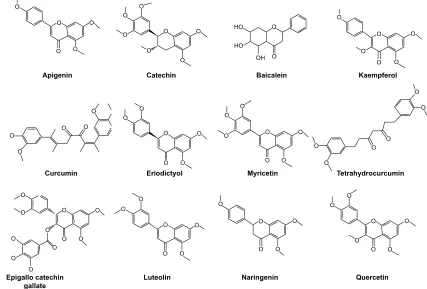
shown promising antioxidant activity, it is of interest if they can bind to the NADP(H) binding site of HMGR. In the present study, we tested the 3D structures of 12 common dietary polyphenols to predict the binding site on HMGR. The structural formulae of these polyphenols are presented in Figure 1. It was observed that all polyphenols tested in this study can bind to the same region as the adenine ring of
NADP+, and they may therefore act as inhibitors of NADP+
binding. This corroborates the fact that polyphenols are antioxidants in nature.13,16
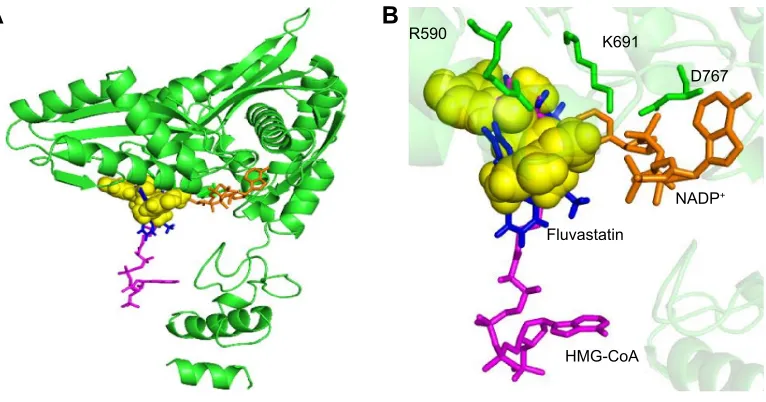
All of the polyphenols used in this docking study have been reported to possess antioxidant activity in experimental studies (Table 1). Quercetin docking to HMGR is shown as representative of polyphenol binding in Figure 2. The
binding of NADP+ leads to closure of the COOH-terminal
helix, moving the H866 into the hydrogen bonding distance of thiol and completing the active site.21 The blocking of
NADP+ binding due to the quercetin interaction will lead to noncompletion of the active site and can inhibit the action of the HMGR enzyme. Compelling evidence from previous in vivo and in vitro studies indicates the health benefits of quercetin, such as dietary flavonoids and polyphenolic com-pounds in particular, in the maintenance of cardiovascular health.13,16,17,22 We predict that polyphenol binds on HMGR
on the NADP+ binding site and can block the electron transfer on the substrate HMG-CoA.
comparison of statin and polyphenol
binding on hMgr
The X-ray crystal structure of human HMGR with HMG-CoA has revealed that “cis-loop” comprised of amino acid residues 682–694 forms the catalytic site of the enzyme. The residues K691, E559, and D767 of HMGR form a hydrogen bond-linked network that interacts with the carbonyl group of HMG-CoA. K691 stabilizes the negatively charged oxy-gen of mevaldyl-CoA. E559 and D767 are located in close proximity, which raises the pKa of E559 so that it donates a proton to mevaldehyde.21 All statins, including fluvastatin,
bind to R590, K691, and D690 residues of HMGR.8 The
shallow and mobile hydrophobic groove of the terminal –COOH amino acids of HMGR can accommodate the other rings of polyphenolic compounds like flavonoids. In accor-dance with this hypothesis, the docking studies revealed that
Drug Design, Development and Therapy downloaded from https://www.dovepress.com/ by 118.70.13.36 on 22-Aug-2020
Dovepress
islam et al
Figure 1 chemical structures of the polyphenols used in this study.
2+ 2
2
$SLJHQLQ &DWHFKLQ %DLFDOHLQ .DHPSIHURO
7HWUDK\GURFXUFXPLQ 0\ULFHWLQ
(ULRGLFW\RO &XUFXPLQ
4XHUFHWLQ 1DULQJHQLQ
/XWHROLQ (SLJDOORFDWHFKLQ
JDOODWH 2
2 2
2 2
+2
+2 2
2
2
2 2
2 2
2
2 2 2
2
2 2
2 2
2 2
2
2
2 2 2
2 2 2 2
2
2 2
2
2 2 2 2 2
2
2
2 2
2 2
2 2
2
2 2 2
2
2 2
2
2 2 2
2
2 2
2
2 2
2 2
2
2 2
Table 1 effects of polyphenols used in the present study, as shown in previous experimental reports
Polyphenols Anticholesterol activity Antioxidant activity HMG-CoA inhibition
Baicalein Tc, lDl, no hDl Yes nra
eriodictyol nra Yes nra
Kaempferol Yes Yes Yes
Quercetin Yes Yes nra
curcumin Yes Yes Yes
naringenin Yes Yes Yes
apigenin nra Yes nra
luteolin Yes Yes nra
Myricetin Yes Yes Yes
Tetrahydrocurcumin Yes Yes Yes
catechin nra Yes nra
egcg Yes Yes Yes
Abbreviations: hMg-coa, 3-hydroxy-3-methylglutaryl-coenzyme a; Tc, total cholesterol; lDl, low-density lipoprotein; hDl, high-density lipoprotein; nra, no report available; egcg, (–)-epigallocatechin-3-gallate.
polyphenols bind on the enzyme-active site of HMGR. The HMG-like moiety of statins binds to the catalytic residues in a similar way as HMG of HMG-CoA. As the rings of flavonoids are connected by rigid bonds, we observed that it cannot fully occupy the HMG-CoA binding site and therefore may not behave as a competitive inhibitor (Figure 2).
The supplementation of naringenin in rats has been reported to lower the plasma and hepatic cholesterol con-centrations by suppressing HMGR and acetyl-coenzyme
A acetyltransferase (ACAT) in rats fed a high-cholesterol
diet.22 A review published on the analysis of 170
random-ized clinical trials, which included 6,557 participants, concluded that no consensus can be drawn on the effect of flavonoids on the total cholesterol level of participants.23
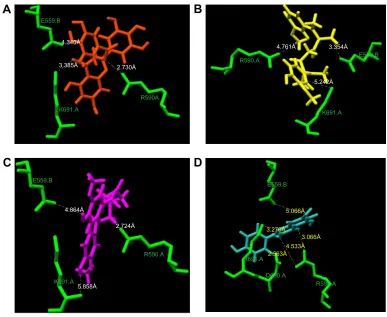
However, we observed that EGCG, curcumin, THC, and kaempferol can bind with the active site residue (Figure 3). This is in agreement with the report that curcumin and green tea, rich in polyphenols like EGCG,
Drug Design, Development and Therapy downloaded from https://www.dovepress.com/ by 118.70.13.36 on 22-Aug-2020
Dovepress effects of polyphenols on hMgr activity
Figure 3 Binding of polyphenol on the active site of hMgr.
Notes: (A) egcg (red); (B) curcumin (yellow); (C) Thc (purple); and (D) kaempferol (cyan). The green sticks represent the active site residues.
Abbreviations: egcg, (–)-epigallocatechin-3-gallate; Thc, tetrahydrocurcumin; hMgr, 3-hydroxy-3-methylglutaryl-coenzyme a reductase.
5$
5$
(% (%
c
.$
c
c c
5$ 5$
(%
c
c
.$
(%
c
c c c
'$ 5$
c
.$
c c c
$
&
'
%
Figure 2 representation of quercetin binding on hMgr.Notes: (A) hMgr (green) is shown in cartoon representation and quercetin (cyan) as nonbonded spheres. (B) closer view of quercetin binding to active site residues. HMG-CoA is shown as magenta sticks, fluvastatin as blue sticks, NADP+ as orange sticks, and active site residues as green sticks.
Abbreviations: naDP+, nicotinamide adenine dinucleotide phosphate; hMg-coa, 3-hydroxy-3-methylglutaryl-coenzyme a; hMgr, 3-hydroxy-3-methylglutaryl-coenzyme a reductase.
5
.
'
1$'3
)OXYDVWDWLQ
+0*&R$
$
%
have been shown to decrease cholesterol concentration.24
In agreement with this report, we observed that in polyphenols in which the phenolic rings are connected
by functional groups such as –O– in EGCG and –CH2 in
curcumin, binding to the enzyme-active site is stronger.
Comparing the binding of flavonoids
Differences between the flavonoid binding on the HMGR were observed based on the orientation of polyphenol rings and the side chains present on it. Among all the tested poly-phenol compounds in this study, EGCG showed the best
Drug Design, Development and Therapy downloaded from https://www.dovepress.com/ by 118.70.13.36 on 22-Aug-2020
Dovepress
islam et al
docking score and occupancy of the substrate binding site. The -gallate part of the molecule can enter the HMG-CoA binding cavity as the –OH group on the molecule forms hydrogen bonds with K691. The epigallocatechin part of EGCG interacts with the residues in the cis-loop of HMGR and –O– of ester linkage to gallate forms hydrogen bonds with R590 (Figure 3A). Recently, it has been shown that EGCG can bind to enzymes of the mevalonate pathway and inhibit cholesterol biosynthesis in vitro. The nature of bind-ing is electrostatic, similar to the HMGR and EGCG bindbind-ing
shown here.25 Numerous studies have shown that
catechin-rich tea extracts lower the level of serum cholesterol.24–26
EGCG has been shown to alter the expression of HMGR genes following a detailed kinetic and equilibrium study on
the modulation of HMGR.16,26
Using a concerted approach involving spectrophotomet-ric, optical biosensor and chromatographic analyses, molecu-lar docking, and site-directed mutagenesis on the cofactor site of HMGR, the authors demonstrated that EGCG potently inhibits the in vitro activity of HMGR (Ki in the nanomolar range) by competitively binding to the cofactor site of the reductase. An earlier report based on docking experiments suggests that EGCG binds more strongly on the NADPH binding site on HMGR.16 In agreement with this study, the
docking of EGCG on the enzyme-active site shows that it can cause steric hindrance to both NADPH and HMG-CoA binding. An in vitro analysis of EGCG binding on the HMG-CoA receptor shows that it inhibits the activity of the HMG-CoA receptor. The study shows that EGCG can bind
on HMGR with a much higher binding affinity than other NADPH enzymes.16 Our study corroborates the previous
findings and substantially aids in predicting that inhibition of HMGR activity can also possibly be due to steric hindrance caused by HMG-CoA binding.
Kaempferol and myricetin stimulate
biosynthesis of cholesterol
Many experimental results suggest that curcumin is hypolipi-demic and a few studies have shown a specific effect of
cur-cumin on HMG-CoA receptor enzyme activity.17 Curcumin
counteracts hyperlipidemia in animals, which otherwise would show high concentrations of circulating cholesterol and triglycerides and develop lipid-laden fatty streaks and lipid-mediated stress, including accumulation of lipids, inflammation, and increased oxidative stress within several weeks upon being fed a high-fat and/or cholesterol-rich Western diet.27 Several studies have shown that some of the
effects of curcumin (eg, on cholesterol and gene expression) are similar to the effects of statins, such as lovastatin, and that curcumin mainly acts by reducing liver cholesterol biosyn-thesis by inhibiting, directly or indirectly, HMGR.28,30,39 In
corroboration of these findings, the present docking clearly shows that curcumin can bind to the HMG-CoA site on the enzyme similar to the statins (Figures 3B and 4). Curcumin is at a distance of 3.35 Å from E559 of HMGR, which is
proposed to be the proton donor for mevaldehyde.21
Previ-ous experiments have shown that THC, which is an active metabolite of curcumin, can inhibit cholesterol synthesis
Figure 4 representation of curcumin binding on hMgr.
Notes: (A) hMgr (green) is shown in cartoon representation and curcumin (yellow) as nonbonded spheres; (B) closer view of curcumin interaction. active site residues of HMGR (green), fluvastatin (blue), NADP+ (orange), and hMg-coa (magenta) are shown as stick representations.
Abbreviations: naDP+, nicotinamide adenine dinucleotide phosphate; hMg-coa, 3-hydroxy-3-methylglutaryl-coenzyme a.
5 .
'
)OXYDVWDWLQ
+0*&R$
$
%
1$'3
Drug Design, Development and Therapy downloaded from https://www.dovepress.com/ by 118.70.13.36 on 22-Aug-2020
Dovepress effects of polyphenols on hMgr activity
comparably better than curcumin in animal models.29 It
has also been also reported that the administration of THC for several weeks can significantly reduce the activity of
enzyme, HMGR.30
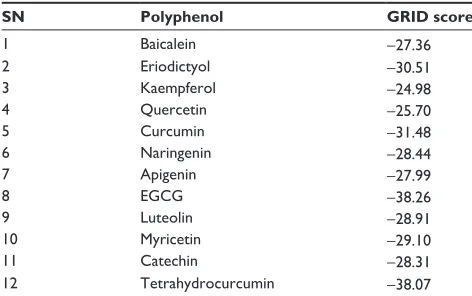
To assess if the effect observed was due to THC binding on the HMGR active site, we performed docking of THC on the HMGR enzyme. We observed that indeed, THC can fit in the HMG-CoA binding cavity on HMGR and can pro-foundly inhibit the enzyme activity (Figure 3C). The GRID score of THC was markedly better than curcumin, implying that it can bind with more affinity onto the enzyme-active site (Table 2). This can be attributed to the fact that THC is more flexible when compared to curcumin, as the chain connecting the phenolic ring has single bonds, while cur-cumin has two double bonds in the structure. It has been clearly shown in previous studies that this conformational difference imparts rigidity to curcumin, whereas THC is twisted and flexible.31 The flexibility in THC allows
bet-ter access to the enzyme-active site than curcumin, and therefore lowers the GRID score in the current DOCK-based analysis. THC has been shown to be a more potent
antioxidant than curcumin in other experimental studies.32
The bioavailability of THC is also predicted to be more than curcumin.
The algorithm of the docking tools used here first uses a geometric matching algorithm to superimpose the ligand onto a negative image of the binding pocket. After, it uses an anchor-and-grow algorithm to generate conformations of the ligand on the fly within the receptor, thus allowing fine sampling of conformational space.18 In this way, the docking
score reflects both the ligand fit and energy contribution due to specific interactions of the protein and ligand. It is evident from the docking results that polyphenolic compounds with
Table 2 griD score of polyphenol docking on hMgr activity, as calculated by DOcK6
SN Polyphenol GRID score
1 Baicalein -27.36
2 eriodictyol -30.51
3 Kaempferol -24.98
4 Quercetin -25.70
5 curcumin -31.48
6 naringenin -28.44
7 apigenin -27.99
8 egcg -38.26
9 luteolin -28.91
10 Myricetin -29.10
11 catechin -28.31
12 Tetrahydrocurcumin -38.07
Abbreviations: sn, serial number; egcg, (–)-epigallocatechin-3-gallate; hMgr, 3-hydroxy-3-methylglutaryl-coenzyme a reductase.
a rigid three-ring structure cannot bind to the substrate bind-ing site. However, kaempferol shows bindbind-ing on the same site as statins and HMG-CoA. This is because the number and position of the –OH group of kaempferol make it most suitable to form hydrogen bond interactions and anchor on the substrate binding site (Figure 3). However, the docking score is very low compared to those for EGCG, curcumin, and THC. The docking pose indicates that kaempferol can act as an inhibitor by sterically hindering HMG-CoA bind-ing on the enzyme. This corroborates to the findbind-ings of the epidemiological study, which predicts that among dietary flavonols and flavones, only food rich in kaempferol, like broccoli, could show slight inhibition of the cholesterol level.33
Conversely, kaempferol and myricetin have been reported to stimulate cholesterol biosynthesis, particularly within a low concentration range (from 0.1 to 10 μM), and exhibit a variable degree of inhibition at higher concentrations. These conflicting results were not further substantiated by any study, and the authors concluded that the opposing effects on cholesterol biosynthesis are exerted in an indirect manner and seem possible through differential modulation of the complex regulation of HMGR.34 A recent study suggested that
treat-ment with kaempferol effectively prevents atherosclerosis induced by high cholesterol in rabbits.35
Our analysis is in agreement with the effect of poly-phenols observed in previous in vitro and in vivo studies. EGCG has been shown to inhibit tumor growth in mouse models of breast cancer by preventing hypoxia-inducible factor-1α and nuclear factor-kappa B activation.36 To the
best of our knowledge, no consensus has been derived on the influence of flavonoids on HMGR activity. Recently, it was shown that chokeberry extract, which is rich in poly-phenols, inhibited HMGR expression in Caco-2 cells in a
dose-dependent manner.37
Previous studies also reported that integration of herbal medicines may provide a more effective and safe means of alleviating lipid disorders.38 A phytoconstituent,
n-Octadecanyl-O-α-d-glucopyranosyl(6′→ 1″)-O-α-d
-glucopyranoside isolated from the methanolic extract of
Ficus virens, has recently been shown to inhibit HMGR
activity.39 The docking analysis of this compound suggested
that it does not occupy the catalytic domain, and so is not competitive in binding.40 We observed that the flavonoids
have a rigid structure that prevents them from entering the enzyme-active site of HMGR and inhibiting HMG-CoA binding. The phenolic rings of flavonoids can best fit in the NADP(H) binding site (Figure 2). Therefore, they can
Drug Design, Development and Therapy downloaded from https://www.dovepress.com/ by 118.70.13.36 on 22-Aug-2020
Dovepress
islam et al
competitively inhibit NADP(H) binding and may offer some steric hindrance to HMG-CoA binding. The -gallate group of EGCG and the phenol ring of curcumin and THC, which is connected by flexible alkyl chains, can bind to the HMG-CoA binding site. Therefore, EGCG, curcumin, and THC are polyphenols with the greatest potential to inhibit cholesterol biosynthesis.
Conclusion
The findings of the present docking study demonstrate that all the polyphenols tested in this study can bind in the hydrophobic region of the L-domain and cis-loop, leading to the substrate binding cavity, and can sterically hinder HMG-CoA binding. From the study results, it is evident that most polyphenolic rings may pose steric hindrance on NADP+ binding. Among all the tested polyphenols, curcumin, THC, EGCG, and kaempferol can occupy the HMG-CoA binding site and act as competitive inhibitors of substrate binding on the enzyme. The present docking results show that EGCG, curcumin, and THC have strong potential to bind with high affinity. The study results provide a mechanistic rationale for the cholesterol-lowering effect of EGCG, curcumin, and THC.
Gaining a mechanistic insight into the effects of poly-phenols on HMGR, a key rate-limiting enzyme, could be useful in drug discovery and development on a pharmaco-logical basis. Moreover, due to the importance of mevalonate pathways in the regulation of cholesterol metabolism, fur-ther studies should be carried out to elucidate the in vivo mechanisms of polyphenols that regulate plasma cholesterol through a cascade mechanism mediated by the inactivation of HMGR.
Acknowledgments
There are no patents or products in development or marketed products to declare. This study was supported by grants from the College of Medicine & Health Sciences, United Arab Emirates University, United Arab Emirates. The funders had no role in the study design, data collection and analysis, decision to publish, or preparation of the paper. The authors would like to thank Professor Keith Bagnall, Department of Anatomy, College of Medicine and Health Sciences, United Arab Emirates University, United Arab Emirates, for critically reading the paper and for providing language editing.
Disclosure
The authors report no conflicts of interest in this work.
References
1. World Health Organization [webpage on the Internet]. World health statistics. Geneva, Switzerland: World Health Organization; 2009. Available from: http://www.who.int/gho/publications/world_health_ statistics/EN_WHS09_Full.pdf. Accessed: November 15, 2014. 2. Singh P, Saxena R, Srinivas G, Pande G, Chattopadhyay A. Cholesterol
biosynthesis and homeostasis in regulation of the cell cycle. PLoS One. 2013;8(3):e58833.
3. Stamler J, Daviglus ML, Garside DB, Dyer AR, Greenland P, Neaton JD. Relationship of baseline serum cholesterol levels in 3 large cohorts of younger men to long-term coronary, cardiovascular, and all-cause mortality and to longevity. JAMA. 2000;284(3):311–318. 4. Sugiyama D, Okamura T, Wantanabe M, et al; NIPPON DATA 80/90
Research Group. Risk of hypercholesterolemia for cardiovascular disease and the population attributable fraction in a 24-year Japanese cohort study. J Atheroscler Thromb. 2015;22(1):95–107.
5. Carmena R, Duriez P, Fruchart JC. Atherogenic lipoprotein particles in atherosclerosis. Circulation. 2004;109(23 Suppl 1):III2–III7. 6. Luskey KL, Stevens B. Human 3-hydroxy-3-methylglutaryl
coen-zyme A reductase. Conserved domains responsible for catalytic activity and sterol-regulated degradation. J Biol Chem. 1985;260(18): 10271–10277.
7. Endo A. The discovery and development of HMG-CoA reductase inhibitors. J Lipid Res. 1992;33(11):1569–1582.
8. Istvan ES, Deisenhofer J. Structural mechanism for statin inhibition of HMG-CoA reductase. Science. 2001;292(5519):1160–1164. 9. Marcum ZA, Vande Griend JP, Linnebur SA. FDA drug safety
communications: a narrative review and clinical considerations for older adults. Am J Geriatr Pharmacother. 2012;10(4):264–271. 10. de Ferranti S, Ludwig DS. Storm over statins – the controversy
surround-ing pharmacologic treatment of children. N Engl J Med. 2008;359(13): 1309–1312.
11. Noratto G, Martino HS, Simbo S, Byrne D, Mertens-Talcott SU. Con-sumption of polyphenol-rich peach and plum juice prevents risk factors for obesity-related metabolic disorders and cardiovascular disease in Zucker rats. J Nutr Biochem. 2015;26(6):633–641.
12. Yamagata K, Tagami M, Yamori Y. Dietary polyphenols regulate endothe-lial function and prevent cardiovascular disease. Nutrition. 2015;31(1): 28–37.
13. Zern TL, Wood RJ, Greene C, et al. Grape polyphenols exert a car-dioprotective effect in pre- and postmenopausal women by lowering plasma lipids and reducing oxidative stress. J Nutr. 2005;135(8): 1911–1917.
14. Chen ZY, Jiao R, Ma KY. Cholesterol-lowering nutraceuticals and functional foods. J Agric Food Chem. 2008;56(19):8761–8773. 15. Sesso HD, Gaziano JM, Liu S, Buring JE. Flavonoid intake and the
risk of cardiovascular disease in women. Am J Clin Nutr. 2003;77(6): 1400–1408.
16. Cuccioloni M, Mozzicafreddo M, Spina M, et al. Epigallocatechin-3-gallate potently inhibits the in vitro activity of hydroxy-3-methyl-glutaryl-CoA reductase. J Lipid Res. 2011;52(5):897–907.
17. Zingg JM, Hasan ST, Meydani M. Molecular mechanisms of hypolipi-demic effects of curcumin. Biofactors. 2011;39(1):101–121. 18. Ewing TJ, Makino S, Skillman AG, Kuntz ID. DOCK 4.0: search
strate-gies for automated molecular docking of flexible molecule databases.
J Comput Aided Mol Des. 2001;15(5):411–428.
19. Pettersen EF, Goddard TD, Huang CC, et al. UCSF Chimera – a visu-alization system for exploratory research and analysis. J Comput Chem. 2004;25(13):1605–1612.
20. Schüttelkopf AW, van Aalten DMF. PRODRG: a tool for high-through-put crystallography of protein-ligand complexes. Acta Crystallogr. 2004;D60:1355. Available from :http://davapc1.bioch.dundee.ac.uk/ prodrg/”The PRODRG Server - Daan van Aalten Laboratory. Accessed: October 15, 2014.
21. Istvan ES, Palnitkar M, Buchanan SK, Deisenhofer J. Crystal structure of the catalytic portion of human HMG-CoA reductase: insights into regulation of activity and catalysis. EMBO J. 2000;19(5):819–830.
Drug Design, Development and Therapy downloaded from https://www.dovepress.com/ by 118.70.13.36 on 22-Aug-2020
Drug Design, Development and Therapy
Publish your work in this journal
Submit your manuscript here: http://www.dovepress.com/drug-design-development-and-therapy-journal
Drug Design, Development and Therapy is an international, peer-reviewed open-access journal that spans the spectrum of drug design and development through to clinical applications. Clinical outcomes, patient safety, and programs for the development and effective, safe, and sustained use of medicines are a feature of the journal, which
has also been accepted for indexing on PubMed Central. The manu-script management system is completely online and includes a very quick and fair peer-review system, which is all easy to use. Visit http://www.dovepress.com/testimonials.php to read real quotes from published authors.
Dovepress
Dove
press
effects of polyphenols on hMgr activity
22. Lee KH, Park E, Lee HJ, et al. Effects of daily quercetin-rich supplemen-tation on cardiometabolic risks in male smokers. Nutr Res Pract. 2011; 5(1):28–33.
23. Hooper L, Kroon PA, Rimm EB, et al. Flavonoids, flavonoid-rich foods, and cardiovascular risk: a meta-analysis of randomized controlled trials.
Am J Clin Nutr. 2008;88(1):38–50.
24. Davies MJ, Judd JT, Baer DJ, et al. Black tea consumption reduces total and LDL cholesterol in mildly hypercholesterolemic adults. J Nutr. 2003;133(10):3298S–3302S.
25. Ge H, Liu J, Zhao W, et al. Mechanistic studies for tri-targeted inhi-bition of enzymes involved in cholesterol biosynthesis by green tea polyphenols. Org Biomol Chem. 2014;12(27):4941–4951.
26. Wu Q, Li JZ, Zhao TY, et al. Epigallocatechin-3-gallate (EGCG) inhibits 3-hydroxy-3-methylglutaryl-CoA reductase in the presence of glycerol.
Pak J Pharm Sci. 2014;27(6):1905–1910.
27. Ejaz A, Wu D, Kwan P, Meydani M. Curcumin inhibits adipogenesis in 3T3-L1 adipocytes and angiogenesis and obesity in C57/BL mice.
J Nutr. 2009;139(5):919–925.
28. Shin SK, Ha TY, McGregor RA, Choi MS. Long-term curcumin administration protects against atherosclerosis via hepatic regulation of lipoprotein cholesterol metabolism. Mol Nutr Food Res. 2011;55(12): 1829–1840.
29. Pari L, Murugan P. Antihyperlipidemic effect of curcumin and tetrahy-drocurcumin in experimental type 2 diabetic rats. Ren Fail. 2007;29(7): 881–889.
30. Karthikesan K, Pari L, Menon VP. Antihyperlipidemic effect of chlo-rogenic acid and tetrahydrocurcumin in rats subjected to diabetogenic agents. Chem Biol Interact. 2010;188(3):643–650.
31. Ou JL, Mizushina Y, Wang SY, Chuang DY, Nadar M, Hsu WL. Structure-activity relationship analysis of curcumin analogues on anti-influenza virus activity. FEBS J. 2013;280(22):5829–5840.
32. Aggarwal BB, Deb L, Prasad S. Curcumin differs from tetrahydrocur-cumin for molecular targets, signaling pathways and cellular responses.
Molecules. 2014;20(1):185–205.
33. Lin J, Rexrode KM, Hu F, et al. Dietary intakes of flavonols and flavones and coronary heart disease in US women. Am J Epidemiol. 2007;165(11): 1305–1313.
34. Gebhardt R. Variable influence of kaempferol and myricetin on in vitro hepatocellular cholesterol biosynthesis. Planta Med. 2003;69(12): 1071–1074.
35. Kong L, Luo C, Li X, Zhou Y, He H. The anti-inflammatory effect of kaempferol on early atherosclerosis in high cholesterol fed rabbits.
Lipids Health Dis. 2013;12:115.
36. Gu JW, Makey KL, Tucker KB, et al. EGCG, a major green tea catechin suppresses breast tumor angiogenesis and growth via inhibiting the activation of HIF-1α and NFκB, and VEGF expression. Vasc Cell. 2013; 5(1):9.
37. Kim B, Park Y, Wegner CJ, Bolling BW, Lee J. Polyphenol-rich black chokeberry (Aronia melanocarpa) extract regulates the expression of genes critical for intestinal cholesterol flux in Caco-2 cells. J Nutr
Biochem. 2013;24(9):1564–1570.
38. Zhu PL, Pan SY, Zhou SF, et al. Effects of combined dietary supple-mentation with fenofibrate and Schisandrae Fructus pulp on lipid and glucose levels and liver function in normal and hypercholesterolemic mice. Drug Des Devel Ther. 2015;9:923–935.
39. Peschel D, Koerting R, Nass N. Curcumin induces changes in expres-sion of genes involved in cholesterol homeostasis. J Nutr Biochem. 2007;18(2):113–119.
40. Iqbal D, Khan MS, Khan MS, Ahmad S, Hussain MS, Ali M. Bio-activity guided fractionation and hypolipidemic property of a novel HMG-CoA reductase inhibitor from Ficus virens Ait. Lipids Health
Dis. 2015;14:15.
Drug Design, Development and Therapy downloaded from https://www.dovepress.com/ by 118.70.13.36 on 22-Aug-2020