Volume 11, No. 3, May-June 2020
International Journal of Advanced Research in Computer Science
RESEARCH PAPER
Available Online at www.ijarcs.info
ISSN No. 0976-5697
THE REALITY OF USING E-LEARNING APPLICATIONS AND
THE READINESS OF FACULTY MEMBERS: A CASE STUDY
Galal eldin Abbas Eltayeb
Computer Department College of Science and Arts in Ar Rass Qassim University, Kingdom of Saudi Arabia
Abstract:E-learning has a significant role in motivating the faculty members in higher education, so the objective of this study is to investigate the real implementation of e-learning tools, and the readiness of faculty to experience e-learning in their educational activities, and how that motivates them. Faculty members of Qassim University (QU), Kingdom of Saudi Arabia (KSA) participating in the research confirmed that e-learning is an element that affects their motivation and they have a favourable attitude towards the use of E-e-learning to enhance the educational activities. A questionnaire was applied to collect data from faculty members questioning the computer knowledge, knowledge of requirements of e-learning, the readiness of faculty members to use e-learning in teaching, and knowledge of e-learning tools that being able to use in teaching. The statistical method including comparing means and Pearson's correlation coefficient used for data analysis. The outcomes of this paper give a view of the real use of e-learning and its tools in normal teaching activities, and explore the readiness towards that. Over 90% of faculty members have the needed equipment, over 70% have the ability to use any LMS to deal with their courses, and over 95% can use good communication tools. Well, that entire represents attitude towards readiness of using e-learning applications based on their high knowledge of needed information and tools, this helps the institute to develop new techniques and methods for educational activities in higher education.
Keywords:e-learning, faculty, readiness, motivation, higher education, Qassim University (QU), learning management system (LMS).
I. INTRODUCTION
Despite the general trend towards using e-learning as a support or alternative to the traditional educational methods, and the availability of formal or motivational invitations or institutional recommendations, the exact use of e-learning and its applications is scratched through many observations. With the fact that the e-learning field is wide and expands day after day through the diversity of tools and mechanisms used in the educational process. This paper comes to find some of these positive and negative observations about the reality of the present applications used by faculty members.
The study targeting the faculty members, asking about what tools of the e-learning they use, and measuring their motivation towards these tools, also, discovering the matter and the expected results of the real practice of e-learning.
Hence the importance of the paper; that the real use of the e-learning applications as one of the learning styles; required by the stage of communication, technological revolutions, supporting the new concept of learning, which imposed itself in educational institutions, especially in higher education. That makes an expectation to define new features, and tools that may be an inspiration to the practice of e-learning in one way or another that may push the educational process and develops its methods.
II.PAPER OBJECTIVES
This paper aims to declare the basic concepts of e-learning and its application importance, it means, and expected results when using it. The paper will measure the knowledge of faculty members at the university with these concepts and procedures according to the learning requirements, and extrapolate their readiness to use
e-learning in the educational process. As well as measuring the faculty members experiences and skills about implementing the e-learning. This paper follows the methodology of the comprehensive survey method for previous studies in the subject of research, then it uses statistical methods to measure the aims of the paper and its readings from the reality of application, then evaluating the methods and tools that used by faculty members, representing a vision for the best use of them.
III. LITERATURE REVIEW
The researcher will present the primary concepts of e-learning, and its applied significance, tools and expected results, and then measure the knowledge of the faculty members at the university in accordance with the requirements of e-learning [18], and extrapolate their readiness to use e-learning in the educational process, as well as to measure the actual reality of practicing an application of e-learning; in accordance with the known systems of building e-learning systems [19]. As well as identifying, the tools expected to be use in this process [28] and examining them in terms of the availability of e-learning tools and the appropriate environment and society [5]. The study will summarize the used methods, techniques.
Several studies have been engaged in concerning implementing e-learning in higher education. For example:
∑ A study by Prof. Dr. Abdullah Al-Musa [1] of the importance of knowledge of the concept of e-learning as well as the characteristics of education in the space community, as well as addressing the benefits of e-learning and finally the obstacles that stand in front of it.
applied to Aleppo University as a preliminary and mini-idea of the systems of what is known as the Virtual University. The study concluded that computer education helps to increase educational experiences and experiences, in addition to that, this type of education can be a follow-up to traditional education, and through e-learning students can exchange ideas and dialogue with a group of people from all over the world, creating a dynamic and effective new generation in society.
∑ Study by Chizmar and Williams [17], which aimed to be acquainted with the disabilities of e-learning for the faculty. The study sample included 105 faculty members at Illinois University in Illinois.
∑ Study of Brown, which confirmed that e-learning requires new skills that must be acquired by faculty and students alike [8]. These skills include the transfer of teacher-based education to learner-based education, where teacher facilitator becomes the educational process, and this required change is challenging for faculty and causes them distress and anxiety.
∑ Study by O'Quinn aimed at identifying barriers that reduce faculty participation in e-learning at a community college in northern Virginia, USA [20]. The study included 11 faculty members who studied traditionally and 51 studied using distance learning. The results of the study revealed that the most important obstacles to e-learning are lack of technical support, poor technological background, lack of material support for material purchase, lack of training required by e-learning and the extra time that teachers need in this type of learning, which in turn constitutes a constraint for promotion.
∑ Study by Rodney said that the most important obstacles to e-learning are the lack of effective leadership, the lack of appropriate training, the lack of equipment and tools needed, and the poor technical support for this type of learning [32].
IV. E-LEARNING CONCEPT AND DEFINITION
Clark and Mayer (2011) define e-learning as :“... instruction delivered on a digital device such as a computer or mobile device that is intended to support learning (p. 8) .”
In higher education, we deliver this instruction in the matter of contents and educational activities using electronic technology, it provides a set of different tools to enhance the learning, teaching, and research [19].
The use of e-learning in universities performed the process of learning more active, interesting and enjoyable [30], and allowed learners in universities to receive individualized support and also to have learning schedules that is more suitable to them as well as separate from other learners [34].
By using e-learning depending on practicality, including easy accessibility from anywhere, its flexibility, as it adapts to the needs and pace of learning, its profitability, by reducing the costs [3]. E-Learning offers immediate results giving constructive feedback; it is also unlimited, allowing the infinite use of resources and E-learning content across borders and finally, we note that courses be updated at any time [25]. E-learning classified in some based on the extent of their engagement in education or based on the timing of interaction [4] using just computer or depends on the internet in different modes mixed or blended more, assistant, and completely online [14] and handling and interacting of
educational activities comes [4] synchronous or asynchronous.
In higher education, the use internet as a new technique of teaching has made radical changes in the traditional process of teaching [35], and more choices for today’s education become available [24], colleges, universities, and other institutions, race to advance the online course capability in a speedily developing cyber education market [23].
V. METHODOLOGY AND HYPOTHESIS
Based on research literature, we use one standardized measure to assess the reality of using e-learning, its applications, and the motivation of faculty members. Therefore, we identified the potential data for Included in the aimed measures after the reviewer's validation and their comments. A survey was done for the faculty members in QU, it contains eighty (80) structured questions distributed in five research groups. The survey approved by QU Deanship of Scientific Research (http://srd.qu.edu.sa/) and distributed to all faculty members who are involved in academic activities.
A total of 113 faculty members participated in this survey. The survey designed to cover five categories, these were:
1. Personal information of participated staff members. 2. General computer knowledge.
3. Knowledge of the concept and requirements of e-learning.
4. The readiness of the faculty members to use e-learning in teaching.
5. Knowledge of e-learning tools and being able to use them in teaching.
Structured questions were given three choices starting with the least preference as Disagree, Not Sure, and Agree, each preference is assigned numerical value as:
Disagree Not Sure Agree
1 2 3
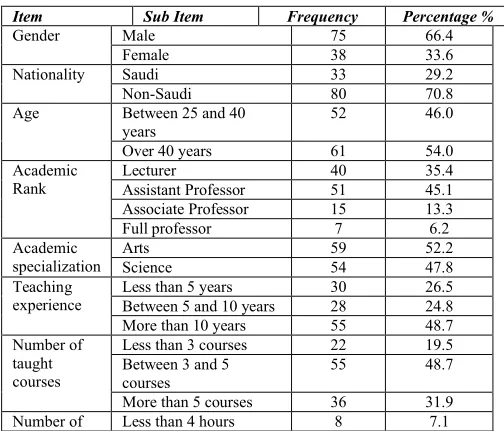
[image:2.596.310.562.567.783.2]The demographic data of the respondents considered for this study presented in Table 1
Table 1: Demographic data of respondents
Item Sub Item Frequency Percentage %
Gender Male 75 66.4
Female 38 33.6
Nationality Saudi 33 29.2
Non-Saudi 80 70.8
Age Between 25 and 40
years 52 46.0
Over 40 years 61 54.0
Academic
Rank LecturerAssistant Professor 4051 35.445.1 Associate Professor 15 13.3
Full professor 7 6.2
Academic specialization
Arts 59 52.2
Science 54 47.8
Teaching experience
Less than 5 years 30 26.5 Between 5 and 10 years 28 24.8 More than 10 years 55 48.7 Number of
taught courses
Less than 3 courses 22 19.5 Between 3 and 5
courses
55 48.7
Credit hours Between 4 and 10 hours 27 23.9 More than 10 hours 78 69.0
According to the survey-collected data, we can stated the following hypotheses:
∑ There is no difference between males and females towards readiness for e-learning.
∑ There is no effect of training programs towards motivating the faculty member to use e-learning tools effectively.
∑ Knowing of e-learning tools, do not necessarily lead to use them in teaching activities.
VI. FINDINGS AND DISCUSSIONS
In our case, the questions asked to the faculty members in the survey was coming in the five categories presented before. Responses carried out with the IBM® SPSS® 19 Statistics Software (June 2020) in order to analyze the faculty member's feedback, the study found the following results:
∑ Kronbach's alpha scale was involved in an efficiency of 0.755 indicating good internal consistency of Items [31], also in between categories are high enough to say it has a consistent, as shown in table 2.
Table 2. Reliability Statistics (e-learning)
Category Cronbach's
Alpha N of Items
Computer knowledge 0.491 14
Knowledge of the concept and requirements of e-learning
0.741 11
Knowledge of e-learning tools and
being able to use them in teaching 0.591 18 Readiness of faculty members to
use e-learning in teaching
0.844 14
Total Reliability 0.755 57
∑ Table 3 below, indicates that the effect of each element clarifies the relationship of the capabilities and background of a faculty member with the categories of the study. We notice a clear rise in this relationship, which indicates that a faculty member has enough of general knowledge to use e-learning tools in teaching his courses, even if he receives abundant training or not, which may highlight the role of the educational institutions will more than the desire to train and use.
Table 3. The effect of the capabilities and background of a faculty member on the study trends.
Item / Category Response
option knowledgeComputer the concept and Knowledge of requirements of
e-learning
Readiness of faculty members to use
e-learning in teaching
Knowledge of e-learning
tools and being able to
use them in teaching
I have a private computer
Yes 98.2% 97.4% 97.6% 97.2%
I have experience in dealing with computers
Yes 93.5% 94.1% 93.4% 94.5%
I have previous experience in e-learning
Yes 71.8% 71.1% 71.3% 71.3%
I have previously used an LMS e-learning management system
Yes 75.5% 74.8% 75.4% 74.3%
I have training courses on e-learning
Never 36.8% 35.7% 37.6% 35.2%
Less than 1 year
33.4% 33.8% 33.3% 33.6%
I can write student activities on the computer myself.
Yes 96.5% 96.9% 96.3% 96.9%
I know how to use text editing software (for example, word)
Yes 97.4% 97.5% 97.3% 97.8%
I'm good at using slide show programs (PowerPoint for example)
Yes 93.2% 93.2% 92.8% 94.6%
I have permanent access to the Internet
Yes 97.5% 97.6% 97.4% 98.2%
I have an
active email Yes 99.4% 99.4% 99.3% 99.1% I can use
chatting software
Yes 52.4% 53.2% 52.2% 54.8%
I can use a social media site (e.g. Facebook, Twitter and WhatsApp)
Yes 76.0% 77.5% 75.4% 78.7%
∑ In table 4, the output table shown above provides Pearson correlations between expected knowledge of the faculty member to use the e-learning tools, and the results indicate that correlations between this knowledge (α = 0. 332, 0.453 and 0. 171). The calculated p value is less than 0.5, so we can say that there exist a significant correlation between the data Categories, which means all related knowledge effect each other.
Table 4. Correlation matrix between integral e-learning issues
Category Computer
knowledge Knowledge of the concept and requirements of e-learning
Knowledge of e-learning tools and being able
to use them in teaching
Readiness of faculty members to use e-learning
in teaching
Computer knowledge 1 .332** .453** -.171-Knowledge of the
concept and requirements of e-learning
Knowledge of e-learning tools and being able to use them in teaching
.453** .379** 1
-.158-Readiness of faculty members to use e-learning in teaching
-.171- -.185-* -.158- 1
**. Correlation is significant at the 0.01 level (2-tailed). *. Correlation is significant at the 0.05 level (2-tailed).
This study highlighted the significant relationship between e-learning and faculty member's motivation so, they are more likely to be more motivated when applying e-learning in courses activities. If faculty member are more skilled and have a free time to train, then they are more likely to be engaged in using e-learning applications. So, it would definitely be fascinating to utilize e-learning applications as a standard tool in the faculty member's courses and academic activities. In general, we notice that:
∑ Most of the faculty members have personal computers (96%), and they are familiar to use them in e-learning (75%).
∑ Most of the faculty members have a positive opinion on e-learning, which is clear from their knowledge of the basic knowledge of e-learning and its tools and use.
∑ Most of the faculty members have a readiness of more than (93%) percentage to use the e-learning tools in teaching activities in their courses.
∑ There is no difference in the gender of the faculty member on e-learning issues.
∑ There is no difference in the nationality of the faculty member, whether Saudi or non-Saudi, on e-learning issues.
∑ The teaching specification even social art field or applied sciences field does not represent an orientation on the use of e-learning tools.
The number of courses taught and the credit hours adopted influences the faculty's readiness, and this may be due to the effort expected in a large number of courses that do not able him to learn and use e-learning tools.
Based on those findings, the following recommendations can be figured out:
∑ Increasing the announcements, seminars, and workshops, defining e-learning concepts and its tools.
∑ Providing e-learning tools, software and its accessibility through the university's online platforms.
∑ Covering a large number of faculty members by training programs about the use of e-learning platforms and their tools.
∑ Financial and Moral appreciation for faculty members who frequently use e-learning tools in their courses.
VII.ACKNOWLEDGMENT
The author wishes to acknowledge the support and collaboration provided by faculty members who participated in this research paper, also the authors acknowledge the support of my colleagues at the QU University.
VIII. CONCLUSION
The current study was an attempt to determine the readiness of the faculty members to use e-learning applications in their
academic courses, based on the basic knowledge, including concepts of e-learning, equipment, and tools, besides the complementary software to prepare the course material for e-learning, on the other hand, the communication ways with learners via the Internet. The results of the study based on surveying the conditions and opinions of faculty members, that enable them to acquire the basic knowledge needed to use e-learning tools in their educational activities, represent the fact of really engaging the e-learning in some ways, and reflecting a true readiness , also deduces the motivation for that. It is interesting to note that the faculty members are ready, whether they had trained or not, that may highlight the will of the educational institution. So, here we conclude that if the educational institution mandatory directed faculty members to use e-learning in all educational activities, it will not face a problem in the equipment or knowledge.
We recommend that if further research is based on this current work and investigates more aspects related to planning e-learning environments can consider that the characteristics of a faculty member, their type, specialization, or gender, do not affect the readiness to engage in e-learning. It also favors exposure to develop training programs in the e-learning environment, tools, and necessary technical support.
IX. REFERENCES
[1] A. A. Al-Musa, "E-learning is understood. Properties... His benefits. "Obstacles", a working paper presented to the Future School Symposium on 16-17/8/1423 H. King Saud University. [2] A. A. Alqarni, "EDUCATIONAL TECHNOLOGY IN SAUDI
ARABIA: A HISTORICAL OVERVIEW." International Journal of Education, Learning and Development Vol.3, No.8, pp.62-69, October 2015.
[3] A. Edmundson, Globalized e-learning cultural challenges. (USA: Idea Group Inc), 2007.
[4] A. F. Algahtani, "Evaluating the Effectiveness of the E-learning Experience in Some Universities in Saudi Arabia from Male Students' Perceptions," Durham theses, Durham University, 2011.
[5] A. M. Kadok,"Education technology (what, the foundations and practical applications)." First edition, Riyadh: Vocabulary House for Publishing and Distribution, 2000.
[6] A. N. Darwazeh, "The Role of the Teacher in the Internet Age", Conference on Distance Learning and the Role of Technology and Information, April 10-12, Amman, Jordan. 1999.
[7] B. Kwofie, and A. Henten, "The Advantages and Challenges of E‐Learning Implementation: The Story of a Developing Nation." Paper presented on 3rd World Conference on Educational Sciences Bahcesehir University, Conference Centre Istanbul – Turkey. 2011.
[8] D. Brown, J. Cromby, and P. Standen, "The effective use of virtual environments in the education and rehabilitation of students with intellectual disabilities." British Journal of Educational Technology, 32(3), 2001, p. 289-299.
[9] D. H. Linda, L. Flook, Ch. Cook-Harvey, B. Barron and D. Osher. "Implications for educational practice of the science of learning and development, Applied Developmental Science," 2020, 24:2, 97-140, DOI: 10.1080/10888691.2018.1537791
[10] D.A. Back, F. Behringer, and T. Harms, "Survey of e-learning implementation and faculty support strategies in a cluster of mid-European medical schools. BMC Med Educ 15, 145 https://doi.org/10.1186/s12909-015-0420-4
[12] H. Kaabi, & T. Alsulimani, "The effect of E-Learning on Teachers' Motivation: A case study in Jeddah University." INTERNATIONAL JOURNAL OF MANAGEMENT & INFORMATION TECHNOLOGY. 2018. 14. 3316-3327. 10.24297/ijmit.v14i0.7896.
[13] H. Shamir, D. Pocklington, K. Feehan, and E.Yoder, "Educational Equity Using Computer-Assisted Instruction." Conference: Society for Information Technology and Teacher Education, At Washington, D.C. USA. 2018.
[14] H. Zeitoun, E-learning: Concept, Issues, Application, Evaluation, Riyadh: Dar Alsolateah publication. 2008.
[15] I. Al-Muhaysin, and H. Khadija. "Distance higher education using the International Information Network." A working paper presented to the third conference to prepare the teacher, Makkah / Umm Al-Qura University / Faculty of Education. 19-21 Shaaban 1419 H.
[16] J. V. Merrienboer, T. Bastiaens, and A. Hoogveld, "Instructional Design for Integrated E-Learning." In: Wim jochems et.,al., (eds): Integrated E-Learning. London: Rutledge Falmer. 2004. [17] J.F. Chizmar, and D.B. Williams, What Do Faculty
Want?. Educause Quarterly, 24(1), 2001, 18-24.
[18] K. Tremblay, D. Lalancette, and D. Roseveare. OECD (2012) Assessment of Higher Education Learning Outcomes, AHELO Feasibility Study Report. Volume 1: Design and Implementation (Paris: OECD).
[19] K.H. Fee, "Delivering E-Learning: A Complete Strategy for Design Application and Assessment," London and Philadelphea: Kogan Page. 2005.
[20] L. O'Quinn, and M. Corry, "Factors That Deter Faculty from Participation in Distance Education." Online Journal of Distance Learning Administration, 2002, 5(4),. Retrieved June 6, 2020 from https://www.learntechlib.org/p/94886/.
[21] M. Hazem, A. El-Bakry, A. Saleh. "Adaptive E-Learning Based on Learner’s tyles." Buletin Teknik Elektro dan Informatika (Bulletin of Electrical Engineering and Informatics), Vol. 2, No. 4, December 2013, pp. 240∼251, ISSN: 2089–319.
[22] N. Jaddaa, "DESIGN AND IMPLEMENTATION OF INFORMATICS SYSTEM FOR VIRTUAL TEACHING OF A SUBJECT BY USING COMPUTER," Amman, Jordan, (2003). [23] N. Love, and N. Fry, "Accounting Students’ Perceptions of a
Virtual Learning Environment: Springboard or Safety Net?," Accounting Education: An International Journal, 2006, 15 (2), 151-166.
[24] N. Yang, and L. H. Arjomand, "Opportunities and Challenges in Computer- Mediated Business Education: An Exploratory Investigation of Online Programs," Academy of Educational Leadership Journal, 1999, 3 (2), 17-29.
[25] P. G. Rossi, "Learning environment with artificial intelligence elements." Journal of e-learning and knowledge society, 2009, 5(1), 67-75.
[26] R. C. Clark, and R.E. Mayer, "E-learning and the science of instruction: proven guidelines for consumers and designers of multimedia learning," 3rd edn, Jossey-Bass, San Francisco, 2011, http://dx.doi.org/10.1002/9781118255971.
[27] S. Basak, M. Wotto, and P. Bélanger, "E-learning, M-learning and D-learning: Conceptual definition and comparative analysis." E-Learning and Digital Media. 2018, 15. 191-216. 10.1177/ 2042753018785180.
[28] S. Downes, E-Learning 2.0. eLearn Magazine (C - Publications in Trade Journals (invited article)) Association for Computing Machinery, New York, USA, October 16, 2005.
[29] S. El-Seoud, I. Taj-Eddin, N. Seddiek, M. Mohamed, and A. Nosseir, "E-Learning and Students' Motivation: A Research Study on the Effect of E-Learning on Higher Education." International Journal of Emerging Technologies in Learning (iJET). 2014, Vol. 9. 20-26. 10.3991/ijet.v9i4.3465.
[30] S. Liaw, and H. Huang, "Exploring the World Wide Web for Online Learning: A Perspective from Taiwan. Educational Technology, 2003. 43(3), 27-32, Retrieved from www.jstor.org/stable/44428833. June 6, 2020.
[31] S. Mishra, and S. Panda, "Development and Factor Analysis of an Instrument to measure Students Attitude Towards e-learning," Asian Journal of Distance Education, 2007, Vol.5 (1), pp.27-33. [32] S. Rodney, "The integration of instructional technology into
public education: Promises and challenges." Educational Technology, 2002, 1(42), 5- 13.
[33] S.Guri-Rosenblit, "E-Teaching in Higher Education: An Essential Prerequisite for E-Learning. Journal of New Approaches in Educational Research," 2018, 7. 93-97. 10.7821/naer.2018.7.298.
[34] Tao, Y. H., Yeh, C. R., & Sun, S. I. (2006). Improving training needs assessment processes via the Internet: system design and qualitative study. Internet Research, 16 (4), 427–49.