O R I G I N A L R E S E A R C H
Tunable drug loading and release from
polypeptide multilayer nano
fi
lms
Bingbing Jiang1
Bingyun Li1,2,3
1Biomaterials, Bioengineering and Nanotechnology Laboratory, Department of Orthopaedics, School of Medicine, West Virginia University, Morgantown, WV, USA; 2WVNano Initiative, WV, USA; 3Department of Chemical Engineering, College of Engineering and Mineral Resources, West Virginia University, Morgantown, WV, USA
Correspondence: Bingyun Li Biomaterials, Bioengineering, and Nanotechnology Laboratory, Department of Orthopaedics, School of Medicine, West Virginia University, Robert C Byrd Health Sciences Center, Morgantown, WV 26506–9196, USA Tel +1 304 293 1075
Fax +1 304 293 7070 Email [email protected]
URL http://www.hsc.wvu.edu/som/ortho/ nanomedica-group/
Abstract: Polypeptide multilayer nanofi lms were prepared using electrostatic layer-by-layer self-assembly nanotechnology. Small charged drug molecules (eg, cefazolin, gentamicin, and methylene blue) were loaded in polypeptide multilayer nanofi lms. Their loading and release were found to be pH-dependent and could also be controlled by changing the number of fi lm layers and drug incubation time, and applying heat-treatment after fi lm formation. Antibiotic-loaded polypeptide multilayer nanofi lms showed controllable antibacterial properties against Staphylococcus aureus. The developed biodegradable polypeptide multilayer nanofi lms are capable of loading both positively- and negatively-charged drug molecules and promise to serve as drug delivery systems on biomedical devices for preventing biomedical device-associated infection, which is a signifi cant clinical complication for both civilian and military patients. Keywords: polypeptide, self-assembly, polyelectrolyte multilayer, nanofi lm, charged molecule, tunable release
Introduction
Biomedical devices are indispensable in the care of patients. However, biomedical device-associated infection is a signifi cant clinical complication. In orthopedics, infection prevention is one of the major goals of injury management. Infection rates are 7%–9% for elbow replacements and 1%–2% for hip replacements,1 and patients
with open fractures have a high risk of infection due to bacterial contamination and soft tissue damage. The incidence of Gustilo grade III open fractures may exceed 30%2,3 and 2%–15% (or higher) of combat-related extremity injuries with developed
osteomyelitis.4 To reduce the risk of biomedical device-associated infection, attention
has turned recently to developing drug-containing fi lms on biomedical devices,5–10 as
such fi lms can enhance the device’s specifi c functions including fi ghting infection and promoting wound-healing.5,7,10 For instance, dip coating,8 spin coating,9 spray coating,6
and covalent conjugation of antibiotics10 have been developed to prepare antimicrobial
fi lms on biomedical devices. Much effort has been devoted to controlling drug release via manipulating the dissolution or degradation of the fi lms.
More recently, electrostatic layer-by-layer self-assembly nanotechnology has been developed11 and used to construct polyelectrolyte micro- or nanocapsules12,13
and multilayer fi lms14,15 for drug delivery. Certain drug molecules, such as active
proteins, enzymes, nucleic acids, and DNA, have been immobilized into polyelec-trolyte multilayer fi lms. The advantages of polyelecpolyelec-trolyte multilayer fi lms as drug delivery systems include: (i) drug molecules can act as either functional drugs or components of the fi lm, and they can also form a stable crosslinking structure with other fi lm component(s) via multivalent interactions (eg, electrostatic or hydrogen-bonding interactions), (ii) sustained drug release is possible through controlling the fi lm properties,16 (iii) polyelectrolyte multilayer fi lms have the potential to protect
International Journal of Nanomedicine downloaded from https://www.dovepress.com/ by 118.70.13.36 on 23-Aug-2020
Jiang and Li
drug molecules from losing their biological functions,17–21
and (iv) the fi lm preparation process is simple and can be automated.11,14–17,
The drug release behavior of polyelectrolyte multilayer films depends on the permeability, the disassembly or erosion of the multilayer structure, and other experimental variables. A variety of polyelectrolyte multilayer films has been studied to control drug release via ionic strength, temperature, pH, enzyme, and hydrolytical degradation,12,13
Hayne and colleagues have bonded a thiol-bearing molecule, 5,5’-dithiobis(2-nitrobenzoic acid) (DTNB), into multilayers and 2-nitro-5-thiobenzoate dianions were released from the fi lms by the breakdown of disulfi de bonds between the DTNB and one of the fi lm components.22 Rubner and colleagues
have loaded Ketoprofen or cytochalasin D into polyelec-trolyte multilayers and have shown unique zero-order drug release over a period of a few days.23,24 Caruso and Quinn have
developed thermo-responsive multilayers containing poly-(N-isopropylacrylamide-co-acrylic acid) and have achieved sustained drug release.16 In addition, hydrogels and micelles
have been introduced into polyelectrolyte multilayers as “drug containers” to manipulate drug-loading capacity.25–27
However, only a few studies are reported on controlling the loading and release of small drug molecules.22,28–30 It is still
challenging to achieve a controllable release of small charged drug molecules, probably due to the weak interactions between small drug molecules and the fi lm components. All of these have limited the applications of polyelectrolyte multilayer fi lms for controlled drug release, especially on biomedical devices. Introducing “binding-sites” with tunable properties within nanofi lms could be very useful in achieving controllable drug loading and release in polyelectrolyte mul-tilayer fi lms on biomedical devices.
In this work, we prepared polypeptide multilayer nanofi lms using weak polyelectrolytes of poly-L-lysine (PLL) and poly-L-glutamic acid (PLGA), and we studied the loading and release behavior of small charged drug molecules. One advantage of such biodegradable drug release systems is that drug “binding-sites” within the multilayer nanofi lms can be created and tuned simply by immersing the multilayer nanofi lms fabricated at one pH into an aque-ous solution of a different pH. For instance, PLL/PLGA multilayer nanofi lms were prepared at pH 4.0, and positively-charged drugs including gentamicin and methylene blue (MB) were loaded into the multilayer nanofi lms by immers-ing the nanofi lms in a drug-containimmers-ing solution of a higher pH (eg, pH 7.0). Negatively-charged drugs such as cefazolin were incorporated into nanofi lms formed at pH 10.0 by
incubating the nanofi lms in a cefazolin-containing solution of a lower pH (eg, pH 7.0). We showed that the loading and release of small charged (positively and negatively) drug molecules could be tuned by changing the number of fi lm layers, the pH of the application environment or the pH of drug solutions, and applying post-preparation heat-treatment of the nanofi lms. The driving force of drug loading and release from the multilayer nanofi lms is mainly electrostatic interaction, attraction or repulsion, between the small charged drug molecules and the charged side-chains (binding-sites) of PLL or PLGA. Moreover, we found that polypeptide multilayer nanofi lms loaded with antibiotics presented antibacterial properties against Staphylococcus aureus (S. aureus). Therefore, the developed approach is promising for controlling the loading and release of small charged drug molecules and achieving drug release systems for preventing biomedical device associated infection.
Materials and methods
Materials
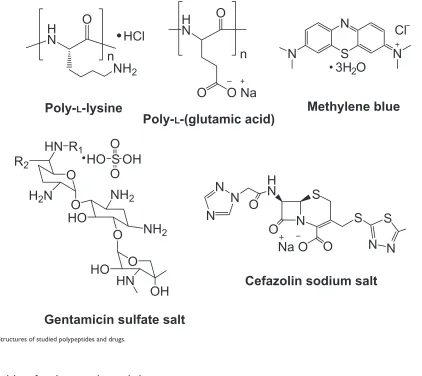
Poly-L-lysine (Mn = 150 kDa), PLGA (Mn = 50 kDa), MB, gentamicin, and cefazolin were used (Sigma Aldrich, St. Louis, MO). The structures of these polymers and drugs are shown in Figure 1, where cefazolin, a widely used antibiotic, is a negatively-charged small drug molecule, and gentamicin, another common antibiotic, and MB, a dye indicator, are positively-charged small molecules. Quartz slides were purchased from SPI Supplies, Inc. (West Chester, PA), cut into 25 mm × 10 mm × 1 mm, and cleaned by incubating in a piranha solution (4:1 H2SO4/H2O2) for 2 h at 80 °C followed by rinsing with deionized water. Stainless steel sheets were purchased (Small Parts, Inc., Miramar, FL) and cut into discs
(10 mm × 0.25 mm), which were ultrasonicated in a 2%
sodium dodecyl sulphate (SDS) solution for 30 min, washed in deionized water, and rinsed with an ethanol–NaOH solution and deionized water.
Buffer solutions in the pH range 4.0–10.0 were used throughout this study. Buffer solutions of pH 7.0–10.0 were prepared using 50 mM glycine–NaOH and buffer solutions of pH 4.0–7.0 were prepared using 10 mM Tris-HCl, 10 mM NaAc, and 130 mM NaCl. Gentamicin (10 mg/mL) and MB (3 mg/mL) solutions were prepared in Tris-HCl buffer solutions of pHs 4.0, 5.0, and 7.0. Cefazolin was dissolved in the glycine–NaOH buffer solutions of pHs 7.0, 8.0, and 9.0 at a concentration of 10 mg/mL. PLL (1 mg/mL) and PLGA (1 mg/mL) solutions were prepared by dissolving PLL and PLGA in the buffer solutions of pHs 4.0, 5.0, 7.0, 9.0, and 10.0.
International Journal of Nanomedicine downloaded from https://www.dovepress.com/ by 118.70.13.36 on 23-Aug-2020
Tunable drug loading and release from polypeptide multilayer nanofi lms
Assembly of polypeptide multilayer
nano
fi
lms
Polypeptide multilayer nanofi lms were prepared at pHs 4.0, 5.0, 7.0, 9.0, and 10.0 using a dipping-machine (Riegler and Kirstein GmbH, Berlin, Germany); all the aqueous media used were of the same pH for the same sample. In brief, pre-cleaned quartz slides or stainless steel discs were dipped in a PLL solution for 20 min followed by rinsing with corresponding buffer solution for 3 min and drying with air. The samples were then dipped in a PLGA solution for 20 min, rinsed with buffer solution for 3 min, and dried with air. These two dipping processes, ie, dipping in PLL and PLGA solutions, were referred to as one deposition cycle. By repeating the deposition cycle, polypeptide multilayer nanofi lms, (PLL/ PLGA)n, were prepared where n is the number of deposition cycles or bilayers.
The formation of polypeptide multilayer nanofi lms on quartz slides was examined using UV-vis spectrometry. Images of PLL/PLGA multilayer nanofi lms were obtained using atomic force microscopy (AFM, PicoSPM® II, Tempe,
AZ) operating in a tapping mode with a silicon nitride
cantilever tip. The growth of multilayer nanofi lms on stainless steel discs with bilayers was measured using ellipsometry (M-2000, JA Woollam Co., Lincoln, NE).
Post-preparation heat-treatment
of polypeptide multilayer nano
fi
lms
Polypeptide multilayer nanofi lms, (PLL/PLGA)10 and (PLL/ PLGA)20, on quartz slides were treated at 120 °C in a vacuum oven (Isotemp Model 281, Fisher Scientifi c, Pittsburgh, PA) for 4 h. The vacuum applied was 380 Torr.
Stability of polypeptide multilayer
nano
fi
lms
The stability of polypeptide multilayer nanofi lms in aqueous media was tested. In one set of studies, (PLL/PLGA)20 fi lms on quartz slides were assembled at pHs 4.0, 7.0, and 10.0, and then incubated in a phosphate-buffered saline (PBS) of pH 7.0. In another set of experiments, (PLL/PLGA)20 fi lms prepared at pH 10.0 on quartz slides were incubated in PBS solutions of pHs 4.0, 7.0, and 9.0. After incubating for 0, 0.5, 2.5, 8, 24, 48, 96, and 192 h, the samples were dried and their
H
N
O
NH
2n
HCl
Poly-
L-lysine
H
N
n
O
O
O Na
Poly-
L-(glutamic acid)
O
HN
H
2N
O
HO
NH
2NH
2O
O
HO
HN
OH
R
1Gentamicin sulfate salt
N
N
N
O
H
N
N
S
O
Na O
O
S
N N
S
S
O
O
HO
OH
S
N
N
N
Cl
Methylene blue
3H
2O
Cefazolin sodium salt
R
2Figure 1 Structures of studied polypeptides and drugs.
International Journal of Nanomedicine downloaded from https://www.dovepress.com/ by 118.70.13.36 on 23-Aug-2020
Jiang and Li
absorbances in the range of 190–290 nm were recorded using UV-vis spectrometry. All the data were averaged from three measurements. The absorbances of the same polypeptide multilayer nanofi lm were compared between the time points studied.
Antibiotic- and MB-loading in polypeptide
multilayer nano
fi
lms
The loading of positively- and negatively-charged small drug molecules and drug models in polypeptide multilayer nano-fi lms was studied. The infl uences of number of nano-fi lm layers as well as the drug-loading time and drug solution pH were investigated. Polypeptide multilayer nanofi lms prepared at pHs 4.0, 5.0, and 7.0 were used to load positively-charged drug molecules (ie, gentamicin and MB), and those at pHs 7.0, 9.0, and 10.0 were used to load negatively-charged drug molecules (ie, cefazolin). To determine the effect of drug solution pH on drug loading, (PLL/PLGA)20 fi lms prepared at pH 4.0 were incubated in MB solutions of pHs 4.0, 5.0, and 7.0, and (PLL/PLGA)20 fi lms prepared at pH 10.0 were immersed in cefazolin solutions of pHs 7.0, 8.0, 9.0, and 10.0.
In general, polypeptide multilayer nanofi lms on quartz slides were incubated in the corresponding drug solutions at ambient temperature. At time periods of 2, 5, 10, 20, 40, and 60 min, the samples were rinsed with deionized water and dried with N2 gas followed by UV-vis absorbance measure-ments. The loading of cefazolin, gentamicin, and MB was determined by measuring the absorbance at 270 nm, 270 nm, and 665 nm, respectively, using UV-vis spectrometry.28,29
In order to obtain the total loading amounts of cefazolin, gentamicin, and MB in polypeptide multilayer nanofi lms, the drug-loaded samples were ultrasonicated in 1 mL PBS for 30 min, and the ultrasonication process was repeated three or more times until no peak absorbance referring to the corresponding drugs on quartz slides could be observed using UV-vis spectrometry. The drug concentration in the PBS was analyzed by recording the peak absorbance of the drugs. Raw data were converted to concentration of drug (Cn, μg/mL) referring to the standard curves we obtained (data not shown). The drug released into the PBS solutions (Mn, μg/cm2) was
calculated from an equation: Mn = Cn × V/An, where V is the total volume of the PBS and An is the surface area of the nanofi lms on substrates. The total drug loaded in polypep-tide multilayer nanofi lms was determined as the cumulative amount of drugs released during the ultrasonication processes. It is worth noting that the peak absorbance of gentamicin at 270 nm was observed in gentamicin-loaded polypeptide
multilayer nanofi lms but the absorbance of the released gentamicin in the PBS solutions was hard to detect. As a result, the actual amount of gentamicin loaded was not reported in this study.
In vitro
drug release from polypeptide
multilayer nano
fi
lms
Drug-loaded polypeptide multilayer nanofi lms on quartz slides were incubated in 10 mL PBS of a certain pH (eg, pHs 4.0, 5.0, 7.0, 9.0, or 10.0). 0.6 mL of PBS solution was taken at a certain time period and 0.6 mL of fresh PBS was added to keep the volume of the release medium constant. The sample solutions of cefazolin and MB were analyzed using UV-vis spectrometry by measuring their absorbance at 270 nm and 665 nm, respectively. The total drug release (μg/cm2) was
calculated as detailed before.
S. aureus
Kirby–Bauer disk diffusion assay
A modifi ed Kirby–Bauer technique was used to assess the antibacterial activity of polypeptide multilayer nanofi lms loaded with antibiotics.31,32 A clinical isolate S. aureus was
grown overnight in Mueller–Hinton broth, and the turbidity was adjusted to 0.5 McFarland. A cotton swab was dipped in the S. aureus suspension and rubbed across the surface of a Mueller–Hinton blood agar plate. Cefazolin- and gentamicin-loaded polypeptide multilayer nanofi lms on stainless steel discs were inserted parallel to the agar plate surface. The plates were inverted and incubated at 37 °C without shaking for 24 h before observation. The diameters of the zones of inhibition were measured six times from different directions, and the experiments were repeated at least three times. The average diameters of the zones were calculated.
Results
Growth curve and stability of PLL/PLGA
multilayer nano
fi
lms
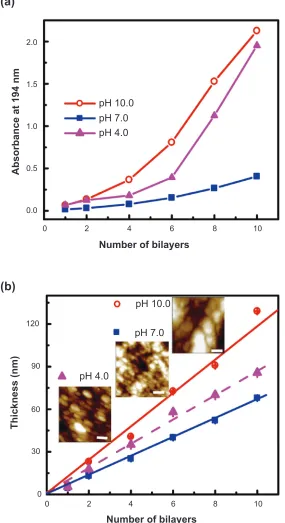
The formation of PLL/PLGA multilayer fi lms was examined using UV-vis spectrometry, ellipsometry, and AFM. Figure 2a shows that the absorbance of PLL/PLGA multilayer fi lms on quartz slides increased with increasing number of bilayers. In the pH values studied (ie, pH 4.0, 7.0, and 10.0), the smallest increase in absorbance was observed in the multilayer fi lms constructed at pH 7.0. Figure 2b presents the thickness of polypeptide multilayer fi lms. One can see that the thickness growth of PLL/PLGA multilayer fi lms increased linearly with an increasing number of deposition bilayers. Similar to the UV-vis absorbance data, the least thickness was observed in
International Journal of Nanomedicine downloaded from https://www.dovepress.com/ by 118.70.13.36 on 23-Aug-2020
Tunable drug loading and release from polypeptide multilayer nanofi lms
the multilayer fi lms constructed at pH 7.0 and the greatest thickness in the fi lms prepared at pH 10.0. The thickness per layer of the PLL/PLGA multilayer fi lms prepared at pHs 4.0, 7.0 and 10.0 were 4.3 ± 0.3 nm, 3.4 ± 0.1 nm, and 5.9 ± 0.2 nm, respectively.
The surface morphology of polypeptide multilayer nanofi lms formed at pHs 4.0, 7.0, and 10.0 was examined using AFM (Figure 2b insets). Particulate domains were observed. The size of the particulate domains of the nanofi lms prepared at pH 7.0 was around tens of nanometers and was
Number of bilayers
Number of bilayers
0 2 4 6 8 10
0 2 4 6 8 10
0.0 0.5 1.0 1.5 2.0
Absorbance at 194 nm
0 30 60 90 120
Thickness (nm)
(a)
(b)
pH 10.0 pH 7.0 pH 4.0
pH 10.0
pH 7.0
pH 4.0
Figure 2 Growth profi les of pH-controllable polypeptide multilayer nanofi lms a) on quartz slides and examined using UV-vis spectrometry, and b) on stainless steel discs and examined using ellipsometry. The inset in b) presents the atomic force microscope images of multilayer fi lms formed at pHs 4.0, 7.0, and 10.0. The scale bars are 200 nm.
International Journal of Nanomedicine downloaded from https://www.dovepress.com/ by 118.70.13.36 on 23-Aug-2020
Jiang and Li
much smaller than those of the nanofi lms assembled at pHs 4.0 and 10.0.
One concern in developing polyelectrolyte multilayer fi lms is their stability. Our stability studies of the PLL/PLGA nanofi lms in aqueous solutions showed no obvious changes in absorbance (data not shown) in the wavelength range of 190–290 nm after more than one week at all the pH values studied (ie, pH 4.0, 7.0, and 9.0). This means that PLL/PLGA
multilayer nanofi lms are stable and can tolerate pH shifts in our drug loading and release processes.
Tunability of drug loading in PLL/PLGA
multilayer nano
fi
lms
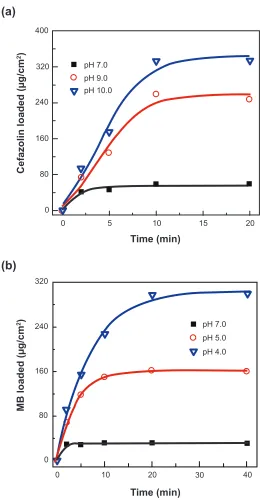
The infl uence of pH at which the multilayer nanofi lms were prepared and time of incubation on drug loading was studied in (PLL/PLGA)20 nanofi lms (Figure 3). It was found that the
Time (min)
Time (min)
0 0 80 160 240 320 400
5 10 15 20
Cefazolin loaded (
μ
g/cm
2)
(a)
(b)
MB loaded (
μ
g/cm
2)
0 0 80 160 240 320
10 20 30 40
pH 7.0 pH 9.0 pH 10.0
pH 7.0 pH 5.0 pH 4.0
Figure 3 Effects of pH at which nanofi lms were prepared on drug-loading profi les of a) cefazolin and b) MB in (PLL/PLGA)20 nanofi lms. The pH of both cefazolin and MB solutions was 7.0.
Abbreviations: MB,methylene blue; PLGA, poly-L-glutamic acid; PLL, poly-L-lysine.
International Journal of Nanomedicine downloaded from https://www.dovepress.com/ by 118.70.13.36 on 23-Aug-2020
Tunable drug loading and release from polypeptide multilayer nanofi lms
loading of drugs increased with the incubation time and the loading of cefazolin and MB could reach their maximum loading (ie, capacity) within 10 and 20 min, respectively. (PLL/PLGA)20 nanofi lms formed at different pHs showed different drug-loading capacities. More drugs were captured in the nanofi lms prepared at a pH away from pH 7.0 than at pH 7.0, and loading was faster in the nanofi lms assembled at pHs 10.0 and 4.0 than at pH 7.0. Cefazolin-loading capacity in the nanofi lms formed at pH 10.0 was ∼330 μg/cm2; it was the
highest and it was almost six times that of nanofi lms prepared at pH 7.0 (∼60 μg/cm2). Similarly, the MB-loading capacity
in (PLL/PLGA)20 nanofi lms assembled at pH 4.0 was about ten times that in the nanofi lms prepared at pH 7.0.
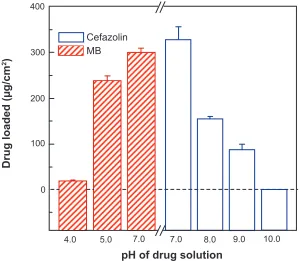
The infl uence of drug solution pH on drug loading was also investigated. Figure 4 shows that more cefazolin was loaded in (PLL/PLGA)20 nanofi lms at a lower pH in the range of pH 7.0–10.0, and more MB was loaded at a higher pH in the range of pH 4.0–7.0. Cefazolin-loading capacity at pH 7.0 was about four times that at pH 9.0. Loading of cefazolin at pH 10.0 was not detected and the loading capacity of MB at pH 7.0 was about sixteen times that at pH 4.0.
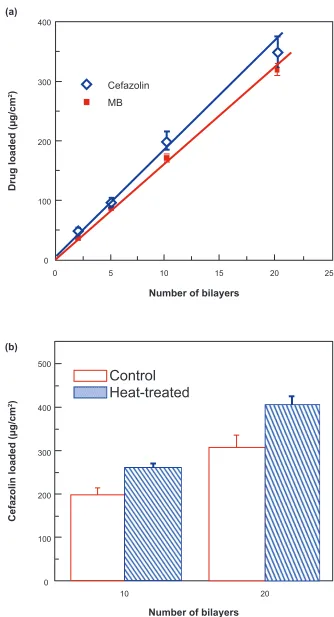
Figure 5a presents the drug-loading capacity versus bilayers of (PLL/PLGA)n nanofi lms. The amounts of drugs, either cefazolin or MB, loaded increased approximately linearly with an increasing number of bilayers.
The infl uence of post-preparation heat-treatment on drug loading is shown in Figure 5b. After heat-treatment at 120 °C for 4 h, both (PLL/PLGA)10 and (PLL/PLGA)20 nanofi lms had ∼30% increase in drug loading.
In addition, Figure 6 shows that gentamicin was loaded into PLL/PLGA multilayer nanofi lms within 20 to 40 min, and gentamicin and MB, both positively-charged, had similar drug-loading kinetics in (PLL/PLGA)20 nanofi lms.
Tunability and kinetics of drug release
from PLL/PLGA multilayer nano
fi
lms
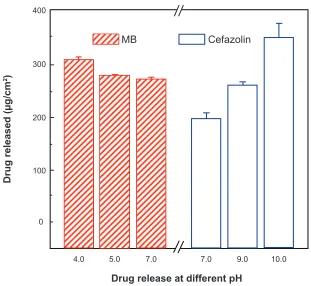
Environmental conditions (eg, pH) infl uenced the drug release from polypeptide multilayer nanofilms. We studied the release of cefazolin and MB from (PLL/PLGA)20 nanofi lms in a wide range of pH values. Figure 7 shows that more cefazolin was released at a higher pH than at a lower pH in the pH range 7.0–10.0; the amount of cefazolin released at pH 10.0, ∼340 μg/cm2, was about twice that released at pH 7.0,
∼190 μg/cm2. Also, more MB was released at a lower pH than
at a higher pH in the pH range 4.0–7.0.
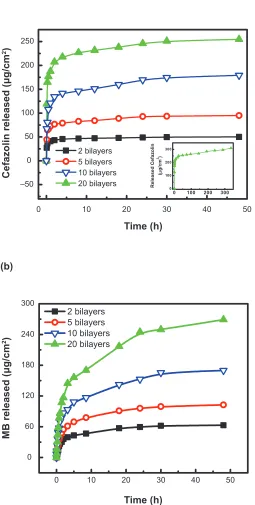
Moreover, the number of fi lm bilayers, the pH at which the nanofi lms were prepared, and post-preparation heat-treatment infl uenced drug release from polypeptide multilayer nanofi lms. The number of fi lm bilayers infl uenced the drug release behavior. Figure 8a shows that there was a burst release in the fi rst few
pH of drug solution
4.0 5.0 7.0 7.0 8.0 9.0 10.0
0 100 200 300 400
Drug loaded (
μ
g/cm
2)
Cefazolin MB
Figure 4 Effects of drug solution pH on drug-loading capacity of polypeptide multilayer nanofi lms. Cefazolin was loaded at pHs 7.0, 8.0, 9.0, and 10.0 in (PLL/PLGA)20 nanofi lms assembled at 10.0. MB was loaded at pHs 4.0, 5.0, and 7.0 in (PLL/PLGA)20 nanofi lms prepared at pH 4.0.
Abbreviations: MB, methylene blue; PLGA, poly-L-glutamic acid; PLL, poly-L-lysine.
International Journal of Nanomedicine downloaded from https://www.dovepress.com/ by 118.70.13.36 on 23-Aug-2020
Jiang and Li
(a)
(b)
400
300
200
100
0
400 500
300
200
100
0
0 5 10
10
20
20
25 15
Cefazolin MB
Number of bilayers
Number of bilayers
Drug loaded (
μ
g/cm
2)
Cefazolin loaded (
μ
g/cm
2)
Control
Heat-treated
Figure 5 Effects of a) fi lm bilayers and b) heat-treatment on drug-loading capacity. The pH of both cefazolin-and MB-loading solutions was 7.0. Cefazolin was loaded in (PLL/PLGA)20 nanofi lms assembled at pH 10.0. MB was loaded in (PLL/PLGA)20 nanofi lms prepared at pH 4.0.
Abbreviations: MB, methylene blue; PLGA, poly-L-glutamic acid; PLL, poly-L-lysine.
International Journal of Nanomedicine downloaded from https://www.dovepress.com/ by 118.70.13.36 on 23-Aug-2020
Tunable drug loading and release from polypeptide multilayer nanofi lms
hours (mainly the fi rst hour) in all the cefazolin-loaded samples. Up to 95% cefazolin was released from 2- and 5-bilayer PLL/ PLGA nanofi lms within 48 h, and 85% and 75% were released from the 10- and 20-bilyer PLL/PLGA nanofi lms, respectively. More cefazolin was released from a higher number of bilayers of nanofi lms. For instance, 50, 90, 180, and 250 μg/cm2 cefazolin
were released at 48 h from 2, 5, 10, and 20-bilayer PLL/PLGA nanofi lms, respectively. Similarly, there was a burst release in the fi rst few hours in MB-loaded PLL/PLGA multilayer nano-fi lms, and more MB was released with an increasing number of bilayers (Figure 8b).
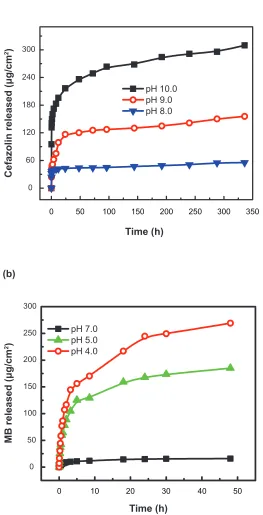
Figure 9 shows that the pH at which PLL/PLGA nanofi lms were prepared also affected drug release. More cefazolin was released from (PLL/PLGA)20 nanofi lms assembled at a higher pH in the pH range 7.0–10.0, and more MB was released from (PLL/PLGA)20 nanofi lms deposited at a lower pH in the pH range 4.0–7.0.
In addition, post-preparation heat-treatment infl uenced drug release (Figure 10). A greater amount of cefazolin was released from heat-treated samples than from untreated ones. Meanwhile, the heat-treatment slowed drug release from the PLL/PLGA nanofi lms. Up to 80% of loaded cefazolin was released in the fi rst 24 h from the 10- and 20-bilayer PLL/PLGA
nanofi lms without heat-treatment, while approximately 67% and 60% was released from the heat-treated 10- and 20-bilayer PLL/PLGA nanofi lms, respectively (Figure 10 inset).
Kirby–Bauer assays
Studies were conducted to evaluate the antibacterial effects of cefazolin- and gentamicin-loaded polypeptide multilayer nanofi lms. Figure 11a shows that the average diameter of zone of inhibition increased with increasing fi lm bilayers. The discs with cefazolin had a zone of inhibition of 18.8 ± 0.8 mm, 20.7 ± 0.9 mm, and 23.9 ± 0.8 mm, respectively, for 5, 10, and 20-bilayer PLL/PLGA nanofi lms. The average zone diameters, for 5, 10, and 20-bilayers, of gentamicin-loaded PLL/PLGA nanofi lms were 20.2 ± 1.0 mm, 23.6 ± 0.7 mm, and 27.0 ± 0.9 mm, respectively. The cefazolin- and gentamicin-loaded 20-bilayer PLL/PLGA nanofi lms assembled at different pHs also showed different antibacterial activity (Figure 11b). The average zone diameters for cefazolin-containing nanofi lms assembled at pH 8.0, 9.0, and 10.0 were 18.3 ± 0.8 mm, 20.5 ± 1.0 mm, and 23.9 ± 0.8 mm, respectively, and the average zone diameters were 17.5 ± 1.1 mm, 22.5 ± 1.0 mm, and 27.0 ± 0.9 mm for gentamicin-containing (PLL/PLGA)20 nanofi lms deposited at pH 7.0, 5.0, and 4.0, respectively.
120
100
80
60
60 40
40 50
20
20 30
10 0
0
MB
Gentamicin
Time (min)
Drug loaded (%)
Figure 6 Loading profi les of gentamicin and MB in (PLL/PLGA)20 nanofi lms assembled at pH 4.0. Both gentamicin and MB were loaded at pH 7.0. UV-vis absorbances of
gentamicin at 270 nm and MB at 665 nm were recorded, and the highest absorbance values (ie, at 60 min) were set as 100% for gentamicin and MB.
Abbreviations: MB, methylene blue; PLGA, poly-L-glutamic acid; PLL, poly-L-lysine.
International Journal of Nanomedicine downloaded from https://www.dovepress.com/ by 118.70.13.36 on 23-Aug-2020
Jiang and Li
Discussion
In this study, we developed biodegradable polypeptide multilayer nanofi lms made of two weak polyelectrolytes as potential drug release systems on biomedical devices. Our developed polypeptide multilayer nanofi lms on stainless steel discs and quartz slides possessed the capability to load both negatively- and positively-charged small drug molecules, and the drug loading and release were tunable and pH-dependent.
Mechanism of pH-dependent
drug loading and release
Compared to strong polyelectrolytes, such as poly(dially ldimethylammonium chloride) (PDDA) and poly(styrene sulfonate) (PSS), weak polyelectrolytes such as PLL, PLGA, poly(ethyleneimine) (PEI), poly(acrylic acid) (PAA), and poly(allylamine hydrochloride) (PAH), may present various ionization statuses and surface charges as their environmental pH changes. At a pH below or above the isoelectric point (pI), a weak polyelectrolyte is partially charged and may adopt a coiled structure in polyelectrolyte multilayer nanofi lms due to the decrease in charge repulsion among themselves.13,20 The coil-structured polymer contains
uncharged segments that may be converted to be charged (“binding sites”) if the environmental pH is switched to a value at which the weak polyelectrolyte becomes more ionized. As a result, binding sites within multilayers made of weak polyelectrolytes can be created for capturing oppositely-charged drug molecules.
In our study, we prepared PLL/PLGA multilayer nanofi lms using electrostatic layer-by-layer self-assembly based on alternative deposition of PLL and PLGA on a substrate. Mechanisms of drug loading and release from the developed PLL/PLGA multilayer nanofi lms are proposed in Figure 12. PLL and PLGA are weak polyelectrolytes; PLGA possesses a net negative charge at a pH higher than pH 2.6, the pI of PLGA,33,34 and PLL presents a net
posi-tive charge at a pH lower than its pI, pH 12.5.32 Therefore,
in the multilayer fi lms formed in an acid solution, eg, pH 4.0, PLGA is partially charged and adopts a coiled structure (Figure 12 top part), and its net charge decreases as pH decreases in the pH range 2.6–7.0. This results in more deposition of PLGA and thicker fi lms at pH 4.0 than at pH 7.0; PLL/PLGA multilayer nanofi lms assembled at pH 4.0 presented a higher absorbance and higher thickness than those deposited at pH 7.0 (Figure 2). When incubating
MB Cefazolin
400
300
200
100
0
4.0 5.0 7.0 7.0 9.0 10.0
Drug release at different pH
Drug released (
μ
g/cm
2)
Figure 7 Effects of environmental pH on release of cefazolin and MB from polypeptide multilayer nanofi lms. Cefazolin was released in PBS solutions of pHs 7.0, 9.0, and 10.0 for 48 h, and MB was released in PBS solutions of pHs 4.0, 5.0, and 7.0 for 48 h. Cefazolin was released from (PLL/PLGA)20 nanofi lms that were assembled at pH 10.0 and loaded with cefazolin at pH 7.0 for 20 min. MB was released from (PLL/PLGA)20 nanofi lms that were prepared at pH 4.0 and loaded with MB at pH 7.0 for 20 min.
Abbreviations: MB,methylene blue; PBS, phosphate-buffered saline; PLGA, poly-L-glutamic acid; PLL, poly-L-lysine.
International Journal of Nanomedicine downloaded from https://www.dovepress.com/ by 118.70.13.36 on 23-Aug-2020
Tunable drug loading and release from polypeptide multilayer nanofi lms
–50 0 50 100 150 200 250
Cefazolin released (
μ
g/cm
2)
Time (h)
2 bilayers 5 bilayers 10 bilayers 20 bilayers
0 60 120 180 240 300
MB released (
μ
g/cm
2)
Time (h) 2 bilayers
5 bilayers 10 bilayers 20 bilayers
0 100 200 300
0 100 200 300
R
el
eased Cefa
zo
lin
(
μμ
g/
cm
2)
(a)
(b)
50 40
30 20
10 0
50 40
30 20
10 0
Figure 8 Release profi les of (a) cefazolin and (b) MB from polypeptide multilayer nanofi lms. Both cefazolin and MB were released at pH 7.0. Cefazolin was released from PLL/PLGA multilayer nanofi lms that were assembled at pH 10.0 and loaded with cefazolin at pH 7.0 for 20 min. MB was released from PLL/PLGA multilayer nanofi lms that were prepared at pH 4.0 and loaded with MB at pH 7.0 for 20 min. The inset presents the release, up to 336 h, of cefazolin from (PLL/PLGA)20 nanofi lms.
Abbreviations: MB,methylene blue; PLGA, poly-L-glutamic acid; PLL, poly-L-lysine.
PLL/PLGA multilayer nanofi lms prepared at pH 4.0 in a drug solution of pH 7.0, where both PLL and PLGA are highly ionized, the uncharged side chains of PLGA in the nanofi lms become negatively charged thereby generat-ing bindgenerat-ing sites for positively-charged drug molecules.
In the pH range 4.0–7.0, the higher the drug solution pH, the more binding sites are available and the more drugs can be captured. Therefore the capture of drugs is pH-dependent. Meanwhile, the release of drugs from PLL/PLGA multi-layer nanofi lms is also pH-dependent. When drug-loaded
International Journal of Nanomedicine downloaded from https://www.dovepress.com/ by 118.70.13.36 on 23-Aug-2020
Jiang and Li
PLL/PLGA multilayer nanofi lms serve in an environment of pH (eg, pH 4.0) lower than the pH (eg, pH 7.0) at which the drugs are loaded, the net charge of PLGA reverses and PLGA becomes less ionized. This leads to weakening of the interactions between the positively-charged drug molecules
and the negatively-charged PLGA molecules. As a result, drugs are released from PLL/PLGA multilayer nanofi lms.
Similarly (Figure 12 bottom part), PLL/PLGA multilayer nanofi lms assembled at a high pH (eg, pH 10.0) contain partially-ionized and coil-structured PLL. This allows the PLL/PLGA 0
60 120 180 240 300
pH 10.0 pH 9.0 pH 8.0
Cefazolin released (
μ
g/cm
2)
Time (h)
0 50 100 150 200 250 300
MB released (
μ
g/cm
2)
Time (h) pH 7.0
pH 5.0 pH 4.0 (a)
(b)
0 50 100 150 200 250 300 350
0 10 20 30 40 50
Figure 9 Effects of pH at which polypeptide multilayer nanofi lms were assembled on release of (a) cefazolin and (b) MB. Both cefazolin and MB were released at pH 7.0. Cefazolin was released from (PLL/PLGA)20 nanofi lms that were loaded with cefazolin at pH 7.0 for 20 min. MB was released from (PLL/PLGA)20 nanofi lms that were loaded
with MB at pH 7.0 for 20 min.
Abbreviations: MB,methylene blue; PLGA, poly-L-glutamic acid; PLL, poly-L-lysine.
International Journal of Nanomedicine downloaded from https://www.dovepress.com/ by 118.70.13.36 on 23-Aug-2020
Tunable drug loading and release from polypeptide multilayer nanofi lms
multilayer nanofi lms the capability to load negatively-charged drugs at pH 7.0, and drug release can be induced in an environ-ment of a higher pH, eg, pH 8.0, 9.0, or 10.0.
Tunable loading of charged drugs
in polypeptide multilayer nano
fi
lms
The pH at which polypeptide multilayer nanofilms are prepared may infl uence the amount of polymers deposited thereby influencing subsequent drug loading. Figure 3a
shows that the drug-loading capacity of (PLL/PLGA)20
nanofi lms prepared at pH 10.0 was approximately six times that of nanofi lms assembled at pH 7.0. The higher loading of cefazolin in those nanofi lms prepared at pH 10.0 was due to the higher amount of PLL assembled (corresponding to the higher absorbance and increased thickness at pH 10.0 in Figure 2) and the more ionization of PLL as the pH changes from fi lm preparation at pH 10.0 to drug loading at pH 7.0, compared to those nanofi lms prepared at pHs 9.0 and 7.0. As a result, binding sites on PLL molecules for negatively-charged
drug molecules were created as the pH shifts from the fi lm preparation pH to the drug-loading pH and more binding sites on PLL would be available at a lower pH in the pH range 7.0–10.0. This is consistent with the increased loading of cefazolin in PLL/PLGA multilayer nanofi lms assembled at pH 10.0 than at pHs 9.0 and 7.0 (Figure 3a).
Similarly, (PLL/PLGA)20 nanofilms assembled at a
lower pH in the pH range 4.0–7.0 would have more PLGA deposited, corresponding to higher absorbance and higher thickness at pH 4.0 than at pH 7.0 in Figure 2. This thereby leads to more binding sites on PLGA for positively-charged drug molecules when the drugs are loaded at pH 7.0. As shown in Figure 3b, the (PLL/PLGA)20 nanofi lms formed at a lower pH in the pH range of 4.0–7.0 showed higher MB loading. Therefore, polypeptide multilayer nanofi lms assembled at different pHs had various capacities for drug loading after fi lm formation.
Meanwhile, the pH at which drugs are loaded could also be used to tune drug loading in polypeptide multilayer nanofi lms. 400
300
200
100
0
0 50 100 150 200 250 300 350
Time (h)
Time (h)
Cefazolin released (
μ
g/cm
2)
(PLL-PLGA)20 (PLL-PLGA)20 Heat-treated
(PLL-PLGA)10 (PLL-PLGA)10 Heat-treated
100
80
60
40
20
10 20 30 40 50
0 0
Normalized cefazolin released (%)
Figure 10 Effects of heat-treatment on cefazolin release from polypeptide multilayer nanofi lms. Cefazolin was released at pH 7.0. Cefazolin-containing (PLL/PLGA)10 and (PLL/PLGA)20 nanofi lms were assembled at pH 10.0 and loaded with cefazolin at pH 7.0 for 20 min. The inset shows the release in percentage.
Abbreviations: PLGA,poly-L-glutamic acid; PLL, poly-L-lysine.
International Journal of Nanomedicine downloaded from https://www.dovepress.com/ by 118.70.13.36 on 23-Aug-2020
Jiang and Li
As shown in Figure 4, (PLL/PLGA)20 nanofi lms prepared at pH 10.0 showed different capacities for loading negatively-charged cefazolin in the pH range 7.0–10.0, and (PLL/ PLGA)20 nanofi lms prepared at pH 4.0 allowed the tuning of positively-charged MB loading in the pH range 4.0–7.0. More side chains of PLL, assembled at pH 10.0, became ionized at
a lower drug-loading pH in the pH range 7.0–10.0, therefore more binding sites were available for negatively-charged drug molecules and more cefazolin was captured at pH 7.0 than at pHs 8.0, 9.0, and 10.0 (Figure 4). At pH 10.0, no absorbance for cefazolin was detected in the nanofi lms, because there was no pH shift between fi lm preparation and drug loading and
(a)
Gentamicin Cefazolin
Gentamicin Cefazolin
Number of bilayers
Diameter of zone of inhibition (mm)
Diameter of zone of inhibition (mm)
pH at which the films were formed
(b)
30
25
30
25
20
15
10
5
0
10 9 8 7 5 4
20
15
10
5
0
0 5 10 20
Figure 11 a) Diameter of zone of inhibition vs number of fi lm bilayers. Cefazolin-containing PLL/PLGA nanofi lms were assembled at pH 10.0 and loaded with cefazolin at pH 7.0 for 20 min. Gentamicin-containing PLL/PLGA nanofi lms were assembled at pH 4.0 and loaded with gentamicin at pH 7.0 for 20 min. b) Diameter of zone of inhibition
vs. pH at which drug-containing (PLL/PLGA)20 nanofi lms were assembled. (PLL/PLGA)20 nanofi lms were loaded with cefazolin or gentamicin at pH 7.0 for 20 min. The diameter
of control samples was 10.0 mm.
Abbreviations: PLGA,poly-L-glutamic acid; PLL, poly-L-lysine.
International Journal of Nanomedicine downloaded from https://www.dovepress.com/ by 118.70.13.36 on 23-Aug-2020
Tunable drug loading and release from polypeptide multilayer nanofi lms
no binding sites were created; as a result, no cefazolin was captured in the nanofi lms. This may mean that the driving force of drug loading in PLL/PLGA multilayers is mainly electrostatic attraction. Similarly, the drug solution pH also infl uenced the loading of positively-charged MB, where the PLL/PLGA nanofi lms were assembled at pH 4.0. The change in ionization of PLGA led to the capture of more positively-charged MB at pH 7.0 than at pHs 4.0 and 5.0 (Figure 4). The limited loading of MB at pH 4.0 might be related to the interaction of MB with the outermost layer, ie, PLGA, of the (PLL/PLGA)20 nanofi lm.
Using the electrostatic layer-by-layer self-assembly technique, we can also control the amount of polymers deposited and tune the subsequent drug loading by manipulating the number of deposition bilayers. Figure 2 shows that the absorbance and thickness, and thereby the amount of polypeptides deposited, increased with increasing deposition bilayers. The increase in polypeptide deposition could lead to an increase in binding sites and drug loading when the pH shifts from the deposition pH to the drug-loading pH. As a result, the amounts of cefazolin and MB loaded in PLL/PLGA multilayer nanofi lms increased approximately linearly with increasing deposition bilayers (Figure 5a).
In addition, heat-treatment after fi lm formation may influence drug loading. We found that heat-treatment after multilayer fi lm formation led to an increase (∼30%, Figure 5b) in cefazolin loading; however, the reason for the increase is unknown and will be studied in the future. In the literature, heat-treatment led to the formation of crosslinkings between polyelectrolyte multilayers due to the formation of amide bonds from carboxylic and amine groups within polyelectrolyte multilayers,35 and the swelling
properties of heat-treated fi lms changed signifi cantly over a wide pH range.36
Tunable drug release from polypeptide
multilayer nano
fi
lms
In previous studies, drug release from polyelectrolyte multilayer fi lms was mainly controlled by manipulating the permeability and degradation of the fi lms. In our study, PLL/ PLGA multilayer nanofi lms were stable in aqueous solutions and could tolerate pH shifts in our drug loading and release processes. The release of drug molecules from polypeptide multilayer nanofi lms is mainly due to the change of interaction between drug molecules and polypeptide nanofi lms, and drug diffusion.
Figure 12 Mechanisms of pH-dependent drug capture and release from polypeptide multilayer nanofi lms. PLL/PLGA multilayer nanofi lms are assembled at a pH (eg, pH 4.0 or 10.0) away from the drug-loading pH, followed by incubating in a drug (eg, gentamicin, MB, or cefazolin) solution of pH 7.0 and releasing the captured drugs by altering the pH of releasing media.
Key: stretched PLL, coiled PLL, stretched PLGA, coiled PLGA, positively-charged drug, negatively-charged drug.
Abbreviations: MB,methylene blue; PLGA, poly-L-glutamic acid; PLL, poly-L-lysine.
pH < 7.0 (eg, 4.0) pH 7.0 pH < 7.0 (eg, 4.0)
pH > 7.0 (eg, 10.0)
Coating formation Drug loading Drug release
pH > 7.0 (eg, 10.0) pH 7.0
International Journal of Nanomedicine downloaded from https://www.dovepress.com/ by 118.70.13.36 on 23-Aug-2020
Jiang and Li
By changing the interaction between drug molecules and PLL/PLGA multilayer fi lm components, one can tune drug release. As shown in Figure 12, when there is a pH shift from drug loading to drug release, the interaction between the drug molecules and the corresponding oppositely-charged poly-peptides changes and drugs can be released. Cefazolin and MB were loaded at pH 7.0 and more cefazolin was released at pH 10.0 than at a lower pH in the pH range 7.0–10.0. More MB was released at pH 4.0 than at a higher pH in the pH range 4.0–7.0 (Figure 7), due to the change in the interaction between the drug molecules and the corresponding oppositely-charged polypeptides. For instance, as the pH changed from the drug loading (pH 7.0) to a higher drug release pH in the pH range 7.0–10.0, more binding sites of PLL were reversed and became uncharged; therefore, more cefazolin was released from the nanofi lms.
Moreover, the history of polypeptide multilayer nanofi lms had a signifi cant impact on the amount of drugs released. Drug release could be tuned by controlling the number of fi lm layers, the pH at which the nanofi lms were prepared, and post-preparation heat-treatment. It was found that more drugs (cefazolin and MB) were released from PLL/PLGA multilayer nanofi lms with more bilayers (Figure 8). More
cefazolin was released from (PLL/PLGA)20 nanofilms
assembled at pH 10.0 than those assembled at a lower pH in the pH range 7.0–10.0, and more MB was released from (PLL/PLGA)20 nanofi lms assembled at pH 4.0 than those nanofi lms prepared at a higher pH in the pH range 4.0–7.0 (Figure 9). The higher drug release was probably associated with the corresponding higher drug loading in the PLL/PLGA multilayer nanofi lms under those conditions (Figure 3). The post-preparation heat-treatment also had some effect on drug release, as it seemed that heat-treatment slowed drug release compared to the control samples (Figure 10 inset). This was likely related to the possible crosslinking formation and the reduced swelling of polyelectrolyte multilayers in aqueous media after heat-treatment.36 The higher release amounts of
cefazolin after the burst release period was because of higher amounts of cefazolin loaded in the nanofi lms after heat-treat-ment (Figure 5b).
In vitro
antibacterial activity
against
S. aureus
Quantitative assessment of the therapeutic activity of antibi-otic-loaded polypeptide multilayer nanofi lms was conducted. The diameter of a zone of inhibition provides a quantitative measure of the amount of in vitro active antibiotic (eg, cefazolin and gentamicin) released and diffused into the agar
plates. Figure 11 shows that PLL/PLGA multilayer nanofi lms containing cefazolin and gentamicin presented large zones of inhibition, and those samples without antibiotics had no antibacterial effects. The zone of inhibition became larger with increasing number of bilayers; this is because more drugs (eg, cefazolin) were loaded and subsequently released from the PLL/PLGA multilayer nanofi lms with more bilayers (Figure 5a). The difference in the sizes of zone of inhibition in (PLL/PLGA)20 nanofi lms assembled at different pHs was also related to the different amounts of antibiotics loaded and released from the PLL/PLGA multilayer nanofi lms. The more antibiotics loaded, the bigger the zone of inhibition. Figure 3 shows that the (PLL/PLGA)20 nanofi lms formed at different pHs possessed different drug-loading capacities, and more cefazolin was loaded at pH 10.0 than at pHs 9.0 and 7.0. As a result, a larger zone of inhibition was observed in cefazolin loaded (PLL/PLGA)20 nanofi lms assembled at pH 10.0 than at pHs 9.0 and 7.0.
Our studies showed that stainless steel discs coated with antibiotic-loaded polypeptide multilayer nanofi lms exhibited
in vitro antibacterial activity against S. aureus. Stainless steel is one of the commonly used metal implants in orthopedics and S. aureus is the most common source of osteomyelitis and septic arthritis.37,38 Therefore, the developed
antibiotic-loaded polypeptide multilayer nanofi lms have the potential to prevent orthopaedic device-associated infection, and further studies will be carried out to investigate the effi cacy of such antibiotic-loaded nanofi lms in preventing infection in vivo in an open fracture rat model we recently developed.39
Conclusions
A multilayer self-assembly technology was applied to construct biodegradable polypeptide multilayer nanofi lms made of PLL and PLGA, which are weak polyelectrolytes that enable the fi ne tuning of drug loading and release after fi lm formation. Our studies showed that the loading kinetics of gentamicin and MB, both positively-charged, were very similar. The loading and release of both negatively- and positively-charged drug molecules (eg, cefazolin, gentamicin, and MB) could be tuned by several variables during and after the fi lm preparation. Such variables include the number of deposition layers, pH of fi lm preparation, and post-preparation heat-treatment. The loading of drugs (eg, cefazolin and MB) increased approximately linearly with an increasing number of layers, and heat-treatment before drug loading enhanced the drug-loading capacity. The pH of fi lm preparation also signifi cantly altered the fi lm formation including surface morphology. In addition, the drug-loading pH and the incubation time in the drug solution could be used
International Journal of Nanomedicine downloaded from https://www.dovepress.com/ by 118.70.13.36 on 23-Aug-2020
Tunable drug loading and release from polypeptide multilayer nanofi lms
to tune the amount of drugs that could be loaded, and the pH of an application environment also had a signifi cant impact on drug release. The developed antibiotic-loaded polypeptide multilayer nanofi lms presented tunable antibacterial properties and potentially have signifi cant applications in medicine, eg, antibacterial drug delivery systems for preventing biomedical device-associated infection.
Acknowledgments
The authors received fi nancial support from National Science Foundation (NSF), West Virginia University Program to Stimulate Competitive Research (WVU PSCoR), West Virginia University Senate Grant, and National Aeronautics and Space Administration West Virginia Experimental Program to Stimulate Competitive Research (NASA WV EPSCoR). We also acknowledge the assistance of Rajiv Bhattarai (Davis and Elkins College, Elkins, WV) for fi lm stability tests and staff support by Vincent Kish, Suzanne Smith, and Nina Clovis.
References
1. Garvin K, Feschuk C. Polylactide-polyglycolide antibiotic implants.
Clin Orthop Relat Res. 2005;437:105–110.
2. Zalavras CG, Patzakis MJ, Holtom PD, Sherman R. Management of open fractures. Infect Dis Clin North Am. 2005;19:915–929.
3. Schmidmaier G, Lucke M, Wildemann B, Haas NP, Raschke M. Prophylaxis and treatment of implant-related infections by antibiotic-coated implants: a review. Injury. 2006;37:S105–S112.
4. Murray CK, Hsu JR, Solomkin JS, Keeling JJ, Andersen RC, Ficke JR, Calhoun JH. Prevention and management of infections associated with combat-related extremity injuries. J Trauma. 2008;64(3 Suppl):S239–S251. 5. Langer R. New methods of drug delivery. Science. 1990;249:1527–1533. 6. Sun YM, Chang CC, Huang WF, Liang HC. Fluidized-bed spray coated
porous hydrogel beads for sustained release of diclofenac sodium.
J Control Release. 1997;47:247–260.
7. Uhrich KE, Cannizzaro SM, Langer RS, Shakesheff KM. Polymeric systems for controlled drug release. Chem Rev. 1999;99:3181–3198. 8. Acharya G, Park K. Mechanisms of controlled drug release from
drug-eluting stents. Adv Drug Del Rev. 2006;58:387–401.
9. Muller-Buschbaum P, Gebhardt R, Maurer E, Bauer E, Gehrke R, Doster W. Thin casein fi lms as prepared by spin-coating: Infl uence of fi lm thickness and of pH. Biomacromolecules. 2008;7:1773–1780. 10. Antoci V, Adams CS, Parvizi J, Ducheyne P, Shapiro IM, Hickok NJ.
Covalently attached vancomycin provides a nanoscale antibacterial surface. Clin Orthop Relat Res. 2007;461:81–87.
11. Decher G. Fuzzy nanoassemblies: toward layered polymeric multicomposites. Science. 1997;277:1232–1237.
12. Lynn DM. Layers of opportunity: nanostructured polymer assemblies for the delivery of macromolecular therapeutics. Soft Matt. 2006;2:269–273. 13. De Geest BG, Sanders NN, Sukhorukov GB, Demeester J, De Smedt SC.
Release mechanisms for polyelectrolyte capsules. Chem Soc Rev. 2007;36:636–649.
14. Scranton AB, Rangarajan B, Klier J. Biomedical applications of polyelectrolytes. Adv Polym Sci. 1995;122:1–54.
15. Cai KY, Rechtenbach A, Hao JY. Polysaccharide-protein surface modi-fi cation of titanium via a layer-by-layer technique: Characterization and cell behavior aspects. Biomaterials. 2005;26:5960–5971.
16. Quinn JF, Caruso F. Thermoresponsive nanoassemblies: Layer-by-layer assembly of hydrophilic-hydrophobic alternating copolymers.
Macromolecules. 2005;38:3414–3419.
17. Chluba J, Voegel JC, Decher G, Erbacher P, Schaaf P, Ogier J. Peptide hormone covalently bound to polyelectrolytes and embedded into multilayer architectures conserving full biological activity.
Biomacromolecules. 2001;2:800–805.
18. Serizawa T, Yamaguchi M, Akashi M. Alternating bioactivity of polymeric layer-by-layer assemblies: Anti- vs procoagulation of human blood. Biomacromolecules. 2002;3:724–731.
19. Jessel N, Atalar F, Lavalle P, et al. Bioactive coatings based on a polyelectrolyte multilayer architecture functionalized by embedded proteins. Adv Mater. 2003;15:692–695.
20. Amiji M, editor. Polymeric gene delivery: Principles and applications. New York, NY: CRC Press;2004. p. 227–241.
21. Schultz P, Vautier D, Richert L, et al. Polyelectrolyte multilayers function-alized by a synthetic analogue of an anti-infl ammatory peptide, alpha-MSH, for coating a tracheal prosthesis. Biomaterials. 2005;26:2621–2630. 22. Zhong Y, Whittington CF, Haynie DT. Stimulated release of small
molecules from polyelectrolyte multilayer nanocoatings. Chem
Commun. 2007;14:1415–1417.
23. Mendelsohn JD, Barrett CJ, Chan VV, Pal AJ, Mayes AM, Rubner MF. Fabrication of microporous thin fi lms from polyelectrolyte multilayers.
Langmuir. 2000;16:5017–5023.
24. Berg MC, Zhai L, Cohen RE, Rubner MF. Controlled drug release from porous polyelectrolyte multilayers. Biomacromolecules. 2006;7:357–364. 25. Qi B, Tong X, Zhao Y. Layer-by-layer assembly of two different polymer
micelles with polycation and polyanion coronas. Macromolecules. 2006;39:5714–5719.
26. Schneider A, Vodouhe C, Richert L, et al. Multifunctional polyelectrolyte multilayer fi lms: Combining mechanical resistance, biodegradability, and bioactivity. Biomacromolecules. 2007;8:139–145.
27. Wang L, Wang X, Xu MF, Chen DD, Sun JQ. Layer-by-layer assembled microgel fi lms with high loading capacity: Reversible loading and release of dyes and nanoparticles. Langmuir. 2008;24:1902–1909.
28. Arici MK, Sumer Z, Guler C, Elibol O, Saygi G, Cetinkaya S. In vitro potency and stability of fortifi ed ophthalmic antibiotics. Aust N Z J
Ophthalmol. 1999;27:426–430.
29. Chung AJ, Rubner MF. Methods of loading and releasing low molecular weight cationic molecules in weak polyelectrolyte multilayer fi lms.
Langmuir. 2002;18:1176–1183.
30. Chuang HF, Smith RC, Hammond PT. Polyelectrolyte multilayers for tunable release of antibiotics. Biomacromolecules. 2008;9:1660–1668. 31. Sherertz RJ, Forman DM, Solomon DD. Effi cacy of dicloxacillin-coated
polyurethane catheters in preventing subcutaneous Staphylococcus aureus infection in mice. Antimicrob Agents Chemother. 1989;33:1174–1178. 32. Jiang B, Li B. Polypeptide nanocoatings for preventing dental and
orthopaedic device-associated infection. J Biomed Mater Res B. 2009;88:332–338.
33. Zimmermann R, Kratzmuller T, Erickson D, Li DQ, Braun HG, Werner C. Ionic strength-dependent pK shift in the helix-coil transition of grafted poly(l-glutamic acid) layers analyzed by electrokinetic and ellipsometric measurements. Langmuir. 2004;20:2369–2374.
34. Hahn SK, Hoffman AS. Preparation and characterization of biocompatible polyelectrolyte complex multilayer of hyaluronic acid and poly-L-lysine. Int J Biol Macromol. 2005;37:227–231.
35. Harris JJ, DeRose PM, Bruening ML. Synthesis of passivating, nylon-like coatings through cross-linking of ultrathin polyelectrolyte fi lms.
J Am Chem Soc. 1999;121:1978–1979.
36. Tong WJ, Gao CY. Stable microcapsules assembled stepwise from weak polyelectrolytes followed by thermal crosslinking. Polym Adv Technol. 2005;16:827–833.
37. Goldenberg DL. Septic arthritis. Lancet. 1998; 351:197–202. 38. Marriott I, Gray DL, Tranguch SL, et al. Osteoblasts express the infl ammatory
cytokine interleukin-6 in a murine model of Staphylococcus aureus osteomy-elitis and infected human bone tissue. Am J Pathol. 2004;164:1399–1406. 39. Li B, Jiang B, Boyce B, Lindsey B. Oral presentation, Local IL-12
incorporated in nanocoatings promising for preventing open fracture associated infection. San Francisco, CA: Orthopaedic Research Society (ORS) Annual Meeting; March 2008.
International Journal of Nanomedicine downloaded from https://www.dovepress.com/ by 118.70.13.36 on 23-Aug-2020
International Journal of Nanomedicine downloaded from https://www.dovepress.com/ by 118.70.13.36 on 23-Aug-2020