1
Expectations Eclipsed in
Foreign Language Education:
Learners and educators on an ongoing journey
Edited by
3
Expectations Eclipsed in
Foreign Language Education:
Learners and educators on an ongoing journey
Edited by
282 p.: ill. ; cm. – (Sabancı Üniversitesi Yayınları)
ISBN 978-605-4348-22-0
1. Language and education – Congresses. 2. English language – Study and teaching – Foreign speakers – Congresses. 3. English philology – Study and teaching – Foreign countries – Congresses. 4. English language – Foreign countries – Congresses. I. Görür-Atabaş, Hülya. II. Turner, Sharon. III. 2nd International Conference on Language Education: Eclipsing Expectations, June 2-4, 2011. IV. Eclipsing Expectations. V. Sabancı Üniversitesi Yayınları.
PE1128.A2 E97 2011
©Copyright 2011 by Sabancı University School of Languages. All rights reserved. Any redistribution or reproduction of part or all of the contents in any form is prohibited other than the following:
• you may print or download to a local hard disk for your personal and non-commercial use only
• you may copy extracts of the content to individual third parties for their personal use, but only if you acknowledge the website as the source of the material.
Foreword and Forward
Dear Colleague,
Between June 2-4, 2011 Sabancı University School of Languages welcomed colleagues from 21 different countries to a collaborative exploration of the challenging and inspiring journey of learners and educators in the field of language education.
The conference provided an opportunity for all stakeholders to share their views on language education. Colleagues met with world-renowned experts and authors in the fields of education and psychology, faculty and administrators from various universities and institutions, teachers from secondary educational backgrounds and higher education, as well as learners whose voices are often not directly shared but usually reported.
of educational events that took place online and in the Virtual Zones on conference premises
• Cultural experiences such as a foreign languages’ fair, music and dance performances took delegates solely beyond the academic experience of language
• A “voyage” to the stars providing an exploration of the stars with a distinguished astrophysicist.
This journey, however, would not have been possible without the efforts, collaboration and contributions of all those who have had an important role in making this conference a unique experience for everyone involved.
We are especially grateful to our Director, Deniz Kurtoğlu Eken, administrative staff and instructor colleagues of the School of Languages, the wider Sabancı University community and also our learners who performed, presented and supported us in this endeavour.
Thank you to all our invited speakers and delegates who came together in order to provide everyone with an opportunity to share, reflect and learn from each other.
Thank you also to the Sabancı Foundation and all our sponsors in helping us to realize this conference.
We would now like to invite you to the third phase of our Eclipsing Expectations journey:
The following is a collection of selected papers, summaries and experiential essays by those delegates who chose to contribute to this publication.
Unlike traditional proceedings where the papers are categorized under various themes these papers stand individually and as a whole, leaving the reader to form their own connections. In this way, the proceedings reflect the perspectives, ideas, experiences and findings of the delegates’ inspirational journey into Eclipsing Expectations. This collection also reflects the excitement of the conference where participants each had their own personal, meaningful journey based on their own paths chosen through the conference programme.
were suggested:
Are all participants in the learning process aligned? What facilitates this alignment?
What hinders this alignment?
Can educators and learners become peers? Can the roles be switched?
What can educators learn from learners? Who are then the experts?
Are educators and learners dominating or liberating?
How can educators and learners explore beyond the obvious?
How can obscure elements in the learning process be made more visible?
Proposals for paper presentations, workshops and posters that sought answers to the questions above were invited to address the following key areas:
Research with learners
Feedback from learners and learning from feedback Voices in curriculum development
Perceptions of assessment
Dreams, nightmares, and realities for all participants
Learner principles, practices, and processes in language learning Teachers as learners of learners
Experimenting with learning
The conference title, the considerations and the key areas outlined above intrigued many colleagues and enticed them to attend our conference which included unique components such as:
• Plenaries by language learners based on their perspectives of language education
• Concurrent sessions, entitled Voices from the learners, in which language learners shared their experiences to pass on their messages to language educators
We hope that these various pathways and webs of knowledge will contribute to the whole multidimensional perspectives of collective experience for all readers of this volume.
We invite you to reflect and travel beyond our eclipse and enjoy this third phase of our journey into….
The Conference Committee
1 6
Students’ transfer of writing
skills between languages and
between courses
Zeynep İskenderoğlu Önel
Zeynep İskenderoğlu Önel has her PhD in Educational Sciences,
MA in TEFL and BA in ELT. She has been involved in various teacher education programs, and given presentations at national and international conferences. Dr. İskenderoğlu Önel is interested in research, academic writing, teacher training and education. She is currently teaching on the Freshman English Programme at Sabancı University, Turkey.
2 3
Students’ transfer of writing skills between
languages and between courses
Zeynep İskenderoğlu Önel
Introduction
Academic writing research reveals that writing serves different purposes in different courses and similarly students are expected to assume different roles in writing for different courses. In other words, different instructors may read student writing with “different sets of expectations, depending on the goals of writing, the perceived roles of the student writers, and the academic readers’ own disciplinary expertise” (Zhu, 2004, p. 30). Zhu describes this phenomenon as the expectation of “the transfer of general writing skills to different contexts.” It is obvious that students need to develop some general writing skills to a relatively high degree in order to be able to transfer these skills to the context of different courses. Research involving interviews with faculty members have revealed that these general skills can be summarized as: audience awareness, logical organization, paragraph development, coherence and cohesion, clarity, sentence structure, grammar, and mechanics (Zhu, 2004; Johns, 1981, in Snow & Brinton, 1988).
The need for students in different disciplines to be trained on writing skills is a complicated issue in terms of who will take the responsibility to teach students how to write in different courses. Attempts to answer this question have given way to movements such as Writing Across the Curriculum (WAC) in North America. In the simplest terms, the WAC movement suggests that the responsibility for helping students improve their communication skills is shared by faculty members in the students’ disciplines and the language teacher, teaching writing skills.
In other words, not only the writing instructor but also the faculty members involved would focus on the format and organization, as well as the content of the written work, and should be able to give feedback in both areas. One drawback of the WAC movement has been that few faculty members are willing to do this kind of work, and more importantly, not many know how to
(L. F. Stoller, personal communication, March 7, 2011). In the same manner, as Spack (1988) argues that when teachers of English take the responsibility for teaching in different disciplines, they may have to “assign papers that they are ill-equipped to handle.”(p. 30).
Another potential solution to this dilemma is ‘The Adjunct Model’, or the ‘linked courses’ as Ann Johns calls since it suggests a more equal footing (L. F. Stoller, personal communication, March 7, 2011). This model requires the students to enroll in a content class, for instance a political science class, and a support English class. The English instructor and the political science professor communicate to discuss the content of the course. The English instructor also attends the political science class with her students and does all the reading and takes lecture notes, to be able to prepare students for what’s to come in a future political science class or to clarify what has been introduced. In addition, with this interdisciplinary approach the English instructor will design writing tasks with more meaningful contexts relevant to students’ area of study. Cummins’ (1991) Interdependence Hypothesis suggests that:
To the extent that instruction in Lx is effective in promoting proficiency in Lx, transfer of this proficiency to Ly will occur provided there is adequate exposure to Ly (either in school or environment) and adequate motivation to learn Ly. (p. 77)
In this respect, we can assume that if students have received effective writing instruction in L1, they should be able to transfer the writing skills to L2, provided they are sufficiently exposed to L2. Similarly, we can also argue that if students learn to write in a certain manner for one course, they should be able to write in the same manner for another course. At this point, the condition is that they get adequate guidance and instruction on the expectations of the content specific task.
In this study, the Interdependence Hypothesis makes the core of the research, which I personally place somewhere between a case study and classroom research.
The Sabancı University Case
Background
4 met to compare the two courses and identified several overlapping areas, 5 which were thought to be reinforcing in terms of writing skills.
Being one of the Freshman ENG instructors, I took the initiative and carried out a small scale action research. After the identification of the problem, I asked my students to send to me their papers for TLL and for SPS courses along with their ENG papers in Fall 2010. I decided to compare papers students wrote in SPS, TLL, and ENG and analyze them in terms of effective writing skills (mentioned above). Then I carried out interviews with the students via email asking them questions about the process of writing the assignments for each of the courses. Where the email interviews were not informative enough, I organized face to face interviews for clarification of certain points in the emails. Both interviews were in Turkish.
The 40 students involved in the study were taking ENG, TLL and SPS in the same semester, completed assignments for all 3 courses, and agreed to send me their papers and to participate in the interview.
Student papers in each course were analyzed in terms of the question, the thesis statement, the organization, accuracy in use of language and choice of vocabulary, register, and source integration.
Results
The results revealed that even some of the students who had developed an awareness of effective writing skills and used them in papers they had written for ENG and TLL failed to produce adequate papers for SPS. When they were asked the reason for this, they said they were not explicitly given the instructions to pay attention to writing rules. They needed to see the requirement openly stated on the task sheet for SPS papers, and sometimes verbally affirmed by their teaching assistants (TA).
It was observed that the nature of the question helps students to organize and develop well written arguments. For example, if the question comprises three or four sub-questions leading them to answer each separately then they do not need to create an overarching thesis statement. Similarly, they use each sub-question like a sub-title and write the paper accordingly and, therefore they produce well organized papers.
Another significant point was that the skills they said they were paying attention to in SPS papers and the ones we observed in their papers did not always match. This means more explicit instruction on how to go about writing SPS papers may be needed.
enrolled in. They all take 2-semester courses on social and political sciences (SPS), natural sciences, history of modern Turkey, Turkish language and literature (TLL), and communication skills in English (Freshman ENG).
The Freshman ENG course is a content-based skills course aiming to build upon and expand the students’ communicative, critical analysis, study and research skills. Thus the course focuses on improving students’ academic skills as well as English proficiency.
In order to develop students’ academic skills, ENG courses offer focused instruction on discussion, seminar and writing skills. The types of writing tasks students are expected to produce include an in-class exam where they write essays of 600 hundred words for a content-specific question. In the take-home essay, they are provided with sources, which have been analyzed and discussed thoroughly in class, and are expected to write an argumentative essay, synthesizing these texts. In the research paper, however, they need to do a library search, find and evaluate sources, and use them in an argumentative essay of approximately 1500-2000 words. Both the take home-essay and the research paper are process essays, for which students receive teacher feedback before the final version.
As for the writing skills covered on the course, students get explicit instruction on effective writing. The focus of these training sessions comprises of a clear thesis statement, a well developed argument, effective examples, transition between ideas, transition within/between paragraphs, unity between ideas, in-text citation and references, and use of language.
A highly similar, focused instruction is given in Turkish Language and Literature (TLL) courses as well. Students are also expected to write an analytic paper of almost 2000 words as a requirement of this course in Turkish.
Another course where they are required to write analytic papers is the History of Civilizations (SPS) course. However, over the years, it has been observed that, although students receive focused instruction on writing skills both in English and in Turkish, they do not produce well organized, effective papers for this course.
The Study
6 given in the previous semester and two papers that received an A and a C- 7 grade respectively. Then we discussed the current task and brainstormed how they could go about writing a thesis statement. We also produced a mind-map on a potential introduction and how students could develop each of the ideas into paragraphs.
At the time of writing this paper, the marking of the SPS papers had not been completed. Once they are complete, the next step will be to compare students’ ENG and SPS papers and the grades they received in each course. This will hopefully give us some idea on whether the focused instruction for the SPS paper has been helpful.
Implications
The missing voice in this study is the teaching assistants (TAs). Involving them will not only satisfy triangulation purposes, but also give insights into how TAs guide students in the process of writing papers and how they mark papers. This may also lead to TA training in these areas.
References
Cummins, J. (1991). Conversational and academic language proficiency in bilingual contexts. Association Internationale de Linguistique Appliquee, 8, 75-89.
Snow, M. A., & Brinton, D. M. (1988). Content-Based Language Instruction: Investigating the Effectiveness of the Adjunct Model. TESOL Quarterly, Vol. 22, No. 4, 553-574
Spack, R. (1988). Initiating ESL students into the academic discourse community: How far should we go? TESOL Quarterly, 22, 29–51.
Zhu, W. (2004). Faculty views on the importance of writing, the nature of academic writing, and teaching and responding to writing in the disciplines. Journal of Second Language Writing 13 (2004) 29–48
Language was another category considered in the student papers. Obviously, students with high language proficiency produced better papers. It was easier to follow not only the argumentation in those papers, but also the
flow of ideas.
Below is a tabulated version of students’ responses:
What students say they transfer What is observed missing in some papers
1. Organization rules 2. Transition tools 3. Coherence 4. Concusion rules 5. Source integration 6. Thesis Statement 7. Topic sentence
1. Thesis Statement
What is observed in many student papers
1. Thesis Statement 2. Topic sentence
What students say they transfer Why students say they don’t transfer
1. Teaching Assistants (TA) reminded them of writing rules
2. Student pays special attention 3. Student has internalized the skills
1. TAs do not care, as long as you don’t give a list of ideas, but write in an essay format 2.Students who do and who don’t get the same grade
3. TAs want you to write the correct content only
What students suggest
1. Students should gain awareness of the need to use effective writing skills 2. Topics in ENG and SPS may correspond
3. Markers need to pay attention to writing skills 4. Stricter marking schemes for SPS needed 5. TAs should explain to students the writing rules
6. Discussion sessions can be more discussion oriented than a revision of lectures
Conclusion
8 9
Reframing Languages:
film in early secondary school
curriculum
Shirley Lawes
Shirley Lawes, PhD, is Subject Leader for the Post Graduate
Certificate in Education, Modern Foreign Languages at the Institute of Education, University of London. Within the area of foreign languages teaching and learning, her current research is in the role of culture and in particular, the use of film and film-making in the foreign languages classroom.
10 11
Reframing Languages:
film in early secondary school curriculum
Shirley Lawes
Film is one of those teaching resources that language teachers always enthuse about and claim to value and yet rarely use. Harsh perhaps, but true. We’ve come to expect our materials to be ready packaged, ready ‘levelled’ and assessed at the right level, or else we work straight from the textbook We have lost some of the joy of language teaching and the challenge of creating learning materials for ourselves that excite and inspire our learners; that teach them what languages are all about. I hear a chorus of responses like, ‘no time!’, ‘can’t fit anything different into our schemes of work’ and ‘too much trouble!’ So when four brave teachers accepted our invitation to take part in a research project to use short film with their Year 8 (12-13 year olds) French classes, we were delighted to be able to test out our ideas with them. Our project was funded by the Esmee Fairbairn Foundation in the UK and was led jointly by myself and Mark Reid, Head of Education at the British Film Institute.
Our aim was to investigate how a Key Stage 3(KS3)1 modern foreign languages
curriculum that includes a significant element of work with film can have an impact on teaching and learning. The research developed out of film workshops that had been running for several years on the PGCE Modern Foreign Languages course at the Institute of Education, University of London. Over a period of three years, over 200 student teachers of languages had participated in the film workshop, producing teaching and learning materials of high quality, demonstrating imagination, creativity and enormous enthusiasm for working with the medium of film (Lawes, 2008). The success of these workshops in terms of developing an innovatory approach to teaching foreign languages at Key Stage 3 led us to the view that film as a linguistic resource and a cultural medium would be of great interest to practising teachers, particularly in the context of the new KS3 national curriculum. Furthermore, our pilot work suggests that the imaginative use of this resource could make a significant impact on the attainment and motivation of learners.
1 Key Stage 3 spans Years 7,8 and 9 of the English secondary school curriculum (11-14 year olds).
The background motivation for exploring film in the languages curriculum came primarily from the perceived need to do something about what was becoming a crisis in modern foreign language learning in England. Learning foreign languages has never been the most popular activity amongst school pupils in England, but in 2004 learning languages was made optional from age 14 onwards, and since then the numbers of students continuing their language studies to examination level have fallen sharply. Needless to say, this has provoked concerns at all levels of the languages community about the erosion of the status of foreign languages in the school curriculum and it has become important for teachers to think about how they can successfully promote the subject area to ensure that as many pupils as possible are motivated to continue to learn a foreign language in Key Stage 4 and beyond.
These concerns were our starting points, along with the changes in the Key Stage 3 curriculum (QCA 2007) that seemed to offer the opportunity of reinvigorating both the content and form of what is taught in modern foreign languages in ways that impact substantially on both motivation and attainment. The new KS3 curriculum introduced in 2007 was intended to encourage teachers to look beyond the immediately transactional and functional uses of language that are presented in directly ‘relevant’ situations, and to reconsider the notion that foreign language learning is a cultural pursuit. Film is a cultural medium that has much potential to enrich the foreign languages learning experience, in terms of what could be called ‘ethno-culture’, that is, aspects of daily life, traditions and folklore that give important insights into the countries and people where the foreign language is spoken. It is also an accessible form of ‘enrichment culture’, an art form and cultural medium that can lead to a way of exploring literature, art and music while at the same time worthy of study in its own right.
How film, and in particular, short films (‘shorts’) can enhance the motivation and attainment of learners at an earlier stage has hardly been explored, or indeed acknowledged, and was worthy of study with a view to creating more enriching language learning experiences for learners through the unravelling of the conventions and layers of meaning that are unique to film as a cultural form. The technology that is now readily available in most schools makes film a much more accessible medium for use in the classroom to engage learners, to promote effective linguistic and cultural learning of both the ‘ethno’ and ‘enrichment’ variety as well as to begin to explore film narrative through a foreign language.
12 some parts of the prescribed curriculum and seek alternative ways of teaching, 13 while ensuring that their chosen groups of learners would not be disadvantaged
when it came to end-of-year tests. As researchers, we were as much interested in how using short film was a developmental tool for teachers as we were in improving learner engagement. With respect to the impact on teaching, we were looking at the extent to which participating teachers
• developed new pedagogical knowledge and approaches
• developed their knowledge of and confidence in exploring film as a cultural medium
• changed their expectations of pupils in terms of attainment • integrated more effectively cultural awareness into their teaching • With respect to the impact on learning, we were interested in the extent
to which participating pupils
• improved their motivation towards learning French
• improved their attainment in listening, speaking, reading and writing • developed an interest in film as a cultural form
• developed their cultural knowledge
• expressed the intention to continue learning French in Key Stage 4
Our project ran over four terms from September 2009 to December 2010 and involved 4 schools, each with 2 different ability groups of Year 8 learners of French. We invited a number of schools to take part and were looking for self-selecting participants – particularly teachers who were willing to be enthusiastic volunteers and co-researchers able to contribute to the design and development of lesson materials that they would teach. They also needed to be willing to design and implement formative assessments and undertake the writing of reflective journals. They each selected a top set and middle set2 of French learners and over the three
terms of the ‘intervention’ phase devised a unit of 5 lessons based on a short film. We met at the beginning of the project to choose three3 films from a menu of 6
that we had previously used successfully with our PGCE student teachers, and we worked with the teachers on approaches developed by the British Film Institute over the years4 to use ICT with the films in more creative ways. They learned how
to use software to import stills and short sequences from the films into powerpoint and create a sequence of lessons around aspects of the film narrative.
The distinctive aspect of our project was that we were interested in exploring film as a cultural medium. Film offers a rich and substantial experience of the ‘forms of life’ of a culture – with music and voice, performance, setting, all scaffolded by stories that sweep a viewer along. Short films in particular offer very powerful
2 Pupils are generally selected according to ability in English schools. A top set being the most able learners.
3 Le Bon Numéro, an animation, Les Crayons were chosen (available from http://www.bfi.org.uk/education/teaching/cineminis/pdfs/5-Thinking-about-film.pdf and La Place des fêtes, from the compilation Pais, Je t’aime
4 See: http://www.bfi.org.uk/education/teaching/cineminis/pdfs/5-Thinking-about-film.pdf for examples.
experiences for teachers and learners. They are often more like poems than feature films – rich, densely allusive texts, whose stories are told in the language of pure cinema, principally because, as they are only typically shown in festivals, it is expensive and counter productive to use lots of dialogue. And they are short! Typically 4 – 6 minutes in length which means that they can be fully exploited in their entirety. The sorts of activities included watching and discussing, inferring and predicting in French, and of course learning about a range of film styles, periods and genres. But they were also creatively engaging with film: making French inter-titles in the animation Le Bon Numero, for example, using the simple past tense; creating their own story endings, or choosing alternative soundtracks for Les Crayons; going on to make their own short films following La place des fêtes. Most encouragingly, some groups began to learn about French film language – the ‘plan Américain’, and the ‘contre-plongee’, for example. As one teacher put it ‘they’re much more likely to want to talk about film than about their favourite animals or their bedrooms.’
14 15
Integrating Digital Movie
Projects in ESL Grammar
Classes
Derya Kulavuz Önal
Derya Kulavuz-Önal has been as ESL/EFL instructor for 10 years
teaching both in Turkey and in the US. Also she is currently pursuing a doctoral degree at the University of South Florida. Her main interests centre around teacher learning, sociocultural theory, qu tative research and educational technology.
16 17
Integrating Digital Movie Projects in ESL Grammar
Classes
Derya Kulavuz Önal
21st century learners learn with technology. They are “digital natives” (Prensky, 2001), for whom digital technology and social media are integral parts of their daily lives; they use this technology to receive and share all kinds of information. Therefore, it has become essential for teachers to provide students learning experiences by integrating technology into their teaching as well, and thus make classroom learning more natural, active, and meaningful for them. However, using technology just for the sake of technology does not help teachers or learners to understand the educational uses of digital technology (Koehler & Mishra, 2005). For this reason, teachers need to seek ways to integrate technology in pedagogically-sound ways that are appropriate to the content they are teaching, as well as think critically about the learning outcomes and objectives when designing technology-integrated tasks in their classroom.
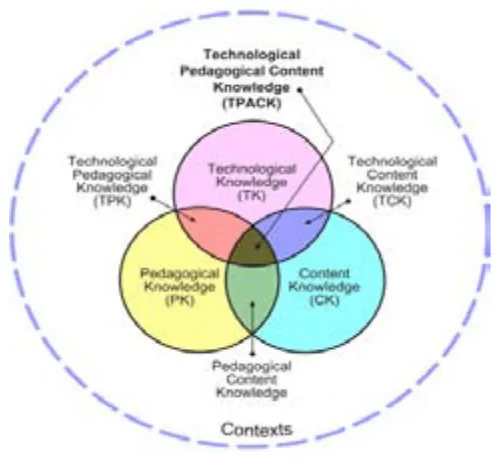
Most of the digital technologies today are not necessarily produced for educational purposes. Because of this, teachers need to repurpose them for educational use in order to integrate technology into their teaching in pedagogically-sound ways (Mishra & Koehler, 2009). This requires an understanding of and critical thinking about the complex interactions between the technology chosen to be used, content to be taught, and pedagogical needs of students (Mishra & Koehler, 2006). As shown in Figure 1 below, while designing a technology-integrated task or project in our classrooms, we as teachers need to think at a complex level:
• What content to choose, and how to modify this content for students’ learning needs (content knowledge, pedagogical content knowledge) • What technology we are familiar and comfortable with, what technology
is best to use when we consider our students’ learning needs, what technology is best for a particular content and how this content should be modified for different technology tools (technological knowledge, technological pedagogical knowledge, technological content knowledge)
• What technology is best to use for my objectives for a particular content and for my students’ learning needs (technological pedagogical content knowledge)
Figure 1. Mishra & Koehler’s TPACK Model (Retrieved from www.tpck.org )
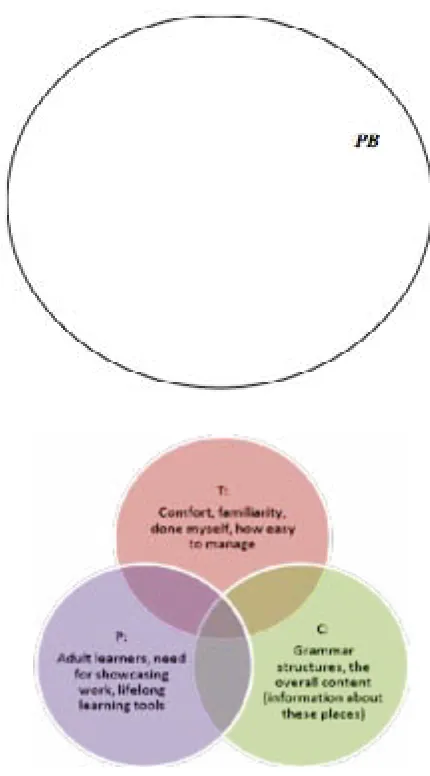
This framework was my point of departure when I implemented a digital movie project in my English as a Second Language (ESL) Grammar class in an Intensive English Program (IEP) in Spring 2008, where the curriculum followed a project-based learning approach. In this paper, I will share how this framework helped me organize and implement this project, how I implemented it, and what needs to be considered in the future.
The Project
Decision-making Process
Contexts. Following the principles of project-based learning (PBL), the
18 me think that it would be more beneficial for them if they left the class with 19 a project that they could showcase in their future studies or career, or learn
technology skills that might be useful for their future endeavors.
In addition, my students generally were interested in learning about different cultures and places in the world since they are from around the world.
Technology
Our program had a computer lab equipped with enough computers for two classes at a time. Each computer had Windows operating system, headsets with microphones, and internet access. I was able to reserve the lab for 2 hours per week. I, myself, was familiar and comfortable with Web 2.0 technologies, video editing with Windows Movie Maker, and Microsoft applications. From my “bag of technology tools” I tried to choose the one not only appropriate for the content and the pedagogy but also manageable and teachable within the time given.
Figure 2. My decision-making process about contexts, content, pedagogy and technology
Content. The course was a focused grammar course in which we were
following an English grammar textbook for intermediate learners. The course content included the following topics for the 14-week semester:
• Sentence types (simple, compound, and complex sentences) • Subject-verb agreement
• Future tenses (including future perfect, future continuous, and future perfect continuous)
• Perfect tenses • Modals
• Passive Voice • Phrasal verbs • Adjective Clauses
My students were supposed to be writing, revising their writing, giving an oral presentation, and apply grammatical knowledge through speaking and writing tasks (Table 1).
Table 1. Course description and goals determined by the program
Course Description
This course focuses on producing complex grammatical forms in oral and written language, including the perfect tenses and the passive voice
Strand Goals
Students who take courses in the Grammar strand will:
1. increase grammatical knowledge through exercises and activities; 2. apply grammatical knowledge through speaking and writing tasks; and
3. improve ability to self-edit.
Course Goals
Students will complete the following tasks and projects for each unit:
1. complete the most communicative exercises in nine units 2. write two to three paragraphs for six of the nine units
2. revise the writing after receiving self-editing tips and feedback 3. give an oral presentation to a small group based on the revised writing
Teaching a pure grammar class was challenging as most students think focusing mostly on grammar structures does not help them become better language users. Moreover, I wanted my students to show and use the grammar they learn in this class in an authentic and meaningful way.
Pedagogy. My students were intermediate level English learners from a
20
Lessons Learned and Further Suggestions
21 Implementing digital movies in a class such as this one was rewarding. Asexpected, students with more interest in using digital technology, and with better time-management skills created better products. However, others also had a chance to practice these skills through this project. As a teacher, this project helped me better understand how technology should and can serve for content and learning objectives once the teacher thinks critically and deeply about the technology, pedagogy, content, and her teaching context. Furthermore, I would like to suggest a few more things to consider for those who wish to implement such a project in the future:
• Provide ample CLASS time: Students may be overloaded and burdened with the skills needed for a technology project. Although you give enough time for them to work on this project, it is necessary to allocate most of this time in class, so that you can help them with technology issues. • Do one yourself before you ask them to do it! This has been my motto;
do it yourself before you ask your students to do something. It is the best way in order to see what challenges are waiting for your students, and whether the allotted time for the project is reasonable or the project is manageable and doable. Additionally, it is necessary to prepare for questions and concerns during the project implementation phase, and what you create becomes a model for your students.
• Get familiar with the other versions or other available Web 2.0 tools for technology projects. When you start using a technology tool, it is necessary to be aware that students might have different versions of the same tool, or have different machines (PC vs. Mac), or simply do not have the software (e.g. video-editing software) in their computers. Therefore, teachers need to be prepared for these possibilities by making sure that they are familiar with different versions or available equivalents on the Internet.
• Let them see examples! Students learn from models. No matter how much detailed instruction you provide, every student will perceive them differently, or you cannot make sure that they understand something the way you want them to understand. Therefore, it is necessary to show them examples of end-products.
• Emphasize the difference between ‘presented’ vs. ‘read’: When narrating a digital movie, students work from a script. However, you need to make sure your students know the differences between genres. They should be aware that in this particular project, for example, their script and the way they narrate this script should sound as if they are presenting rather than reading from a paper.
Implementation
After considering all the items above, I decided that my students prepare a digital movie of a place in the world over 7 weeks. We named the project as “Top Places to Go before You Die!” and I decided to put all the final products in a blog for future access and sharing. During the 7-week process, we spent at least 2 hours each week in the computer lab.
Students first decided whether or not to work individually or with a partner, and which place to work on (see the detailed project handout at (http://top-places.blogspot.com). The main criterion was to work on a place out of their hometowns so that they also learn about new places through this project. Then, they were supposed to search for information and images about this place, which also gave them an opportunity to practice their internet literacy. The project handout also guided them about what information to look for. They were then asked to create a script describing this place by using at least 1-2 examples of the grammar structures we had learned up to that point. The script also needed to have an introduction, body (main information about the place), and conclusion, and students were required to submit a first and an edited draft before they proceeded with the recording. Additionally, they made sure the images they chose and the order of them in the movie were in harmony with their script. During the initial weeks, we spent time in the computer lab learning how to use Movie Maker. They then narrated and recorded their scripts over the images to create a digital movie of the place of their choice, and added background music if they wished to do so. Finally, each student presented their videos in class during the final week. Later, we uploaded them to You Tube and embedded them to our blog.
Assessment
22
Conclusion
23 In this paper, I have attempted to share my experiences of integrating digitalmovie projects in an ESL grammar class. I believe such a project not only provides a venue for students to use grammar structures in an authentic way by developing all four skills (writing, when writing their script; reading, when collecting information from the internet; speaking and pronunciation, when narrating their movie; listening, when listening to other movies, and their own voices during the narration process) but also can be implemented with learners at varying proficiency levels. However, teachers need to consider their content, learning objectives, student’s learning needs, available technology tools, and the broader contexts before implementing technology-integrated projects in order to use technology as a learning tool.
References
Koehler, M., & Mishra, P. (2005). Teachers learning technology by design. Journal of Computing in Teacher Education, 21(3), 94-102.
Mishra, P., & Koehler, M. (2006). Technological pedagogical content knowledge. Teachers College Record, 108(6), 1017-1054.
Mishra, P., & Koehler, M. (2009). Too cool for school? No way! - using the TPACK framework: You can have your hot tools and teach with them, too. Learning and Leading with Technology, May, 14-18.
Prensky, M. (2001). Digital natives, digital immigrants. On the Horizon, 9(5), 1-6.
24 25
Preparatory School EFL
Students’ Affective Profiles
in Reading Skills
Şükran Saygı
Şükran Saygı has been a language instructor for the last six
years. She is currently a language instructor at Atılım University Preparatory School, Turkey. She is interested in curriculum and materials’ development, affective domain of language teaching and learning and foreign language literacy.
26 27
Preparatory School EFL Students’ Affective Profiles
in Reading Skills
Şükran Saygı
1. Background
Since it requires both more linguistic and cognitive processing than reading in the native language, reading in the target language is very challenging for language learners.
The Program for International Student Assessment (PISA) was conducted by the Organization for Economic Co-operation and Development (OECD) in 41 countries and Turkey in 2003: Turkey has the second lowest performance in all reading tests among the OECD countries (Cinoğlu, 2009). The Progress in International Reading Literacy Study (PIRLS) provides information about the reading achievement of primary school students, concentrating on students in the fourth grade. In this study, Turkey’s average was 449, which was significantly lower than the international average 500 (Akşit, 2007).
2. Purpose of the Study
Firstly, this study aims at defining the nature of motivation to read in Turkish (L1) and in English (L2). To do this, factors that comprise the EFL students’ motivation to read were analyzed. Secondly, the relationship between the students’ motivations to read together with their reading habits and their success in reading exams will be explored.
3. Methodology
3.1 Questionnaire Population and Setting
The respondents for the questionnaire were foreign language students at Atılım University. Respondents were at two different instruction
levels, namely pre-intermediate (N = 172) and upper-intermediate (N=101).
3.2 Data Collection Instrument -The Questionnaire
The Reading Motivation in L1 and Reading Motivation in L2 Questionnaire consisted of 66 items (33 items in the L1 section and 33 items in the L2 section). The questionnaire was adapted from Wang & Guthrie’s Motivations for Reading Questionnaire (2004) and Yamashita’s (2007) reading attitude questionnaire.
4. Results
4.1. Reading Motivation in L1 and L2 – A Factor Analysis
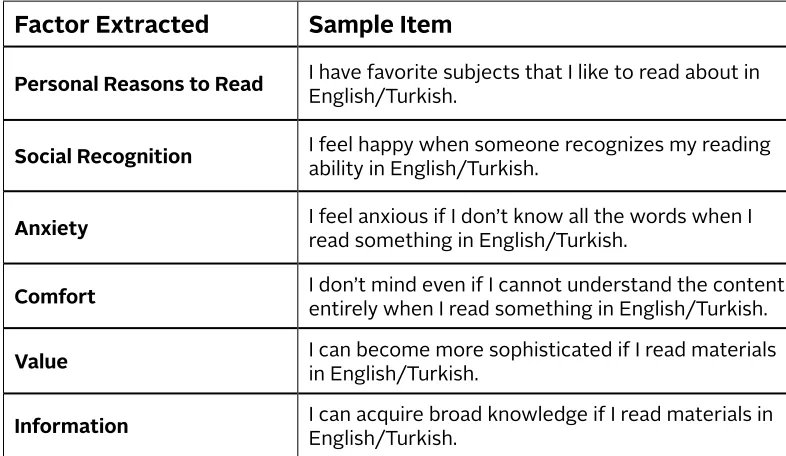
Table 1. Reading Motivation Factors – A Summary
Factor Extracted Sample Item
Personal Reasons to Read I have favorite subjects that I like to read about in English/Turkish.
Social Recognition I feel happy when someone recognizes my reading ability in English/Turkish.
Anxiety I feel anxious if I don’t know all the words when I read something in English/Turkish.
Comfort I don’t mind even if I cannot understand the content entirely when I read something in English/Turkish.
Value I can become more sophisticated if I read materials in English/Turkish.
Information I can acquire broad knowledge if I read materials in English/Turkish.
4.2 Contribution of L1 Reading Motivation to L2 Reading Achievement (A Regression Analysis)
28 reading achievement. 29
4.3.4. Reading Text Preferences of the Students: A positive
significant correlation was observed between the students’ reading achievement and their online text preferences such as online newspapers, games, the Internet, E-mails, electronic references (r = .17, p < .01).
5. Discussion
5.1 Motivation for Reading is Multi-dimensional: In the current study,
six different reading motivation factors were extracted from the questionnaire. This multidimensionality is in line with previous studies (Wigfield & Guthrie, 1997; Yamashita, 2007; Baker & Wigfield, 1999; Mori, 2002, Takase, 2007; Kim, 2010).
5.2 Contribution of L1 Reading Motivation to L2 Reading Achievement:
The interpretation of the relationship between L1 reading motivation and L2 reading achievement requires the discussion that reading is a language problem. In the current study, L2 reading scores of the students were not predicted by the students’ motivations to read in Turkish or the materials they read in Turkish, instead their reading achievement depends on something else, and naturally it should be their English proficiency levels. This result, partially though, was expected in that the exposure period, as an indirect indicator, accounted for the reading achievement in L2, although the effect size was small.
5.3 Contribution of L2 Reading Motivation to L2 Reading Achievement
5.3.1. Reading is a Language and a Reading Problem: L1 and L2
reading are, naturally, different from one another. The difference is based on the limited exposure to L2 print, most of which comes from classroom practices. However, when reading in L2, readers are supported by a range of supporting resources unique to the L2 reading situation such as cognates, dictionaries, grammar textbooks, word glosses. These resources used to support L2 reading are not commonly used in L1 settings. The fact that L1 and L2 reading are different is clear, but how the L2 reading resources affect L2 reading development is less clear. When looking at the reading process from the language problem perspective, the role of grammar and vocabulary should be noted since reading enjoyment can come only when the reading is reasonably fluent and effortless. When students have difficulty in extracting print Similar results were found in two different proficiency levels: none of
the L1 reading motivation factors significantly predicted L2 reading achievement, R2 = .035, F (6, 164) = .337, ns (pre-intermediate); none of the L1 reading motivation factors significantly predicted L2 reading achievement, R2 = .139, F (6, 93) = .496, ns (upper-intermediate).
4.3 Contribution of L2 Reading Motivation to L2 Reading Achievement (A Regression Analysis)
It was observed that L2 reading motivation factors significantly predicted L2 reading achievement, R2 = .166, F (6, 265) = 4.291, p < .001. This indicates that the exposure period and L2 reading motivation factors significantly predicted 16.6 % of the reading grade. Of this variance, the exposure period accounted for 8.5 % of the variance while L2 reading motivation factors significantly explained 8.1 %.
4.3.1. Pre-intermediate: It was observed that L2 reading motivation factors significantly predicted L2 reading achievement, R2 = .107, F (6, 164) = 2.577, p < .05. 10.7 % of reading achievement of the pre-intermediate students was significantly predicted by L2 reading motivation factors and the exposure period. L2 reading motivation factors were found to explain 8.4 % of the variance while the exposure period was found to explain 2.3 %.
4.3.2. Upper-intermediate: It was observed that none of L2 reading motivation factors significantly predicted L2 reading achievement, R2 = .235, F (6, 93) = .2.492, p < .05. This indicates that 23.5 % of the upper-intermediate level students’ reading achievement was significantly predicted by L2 reading motivation factors and the exposure period. Of this variance, the exposure period accounted for 11.2 % of the variance, while L2 reading motivation factors significantly explained 12.3 %.
4.3.3. Reading Habits and Behaviors in L2: After the addition
30 5.3.3. The Contribution of the Amount of Reading to L2 31
Achievement: The contribution of time spent reading is significant
for the upper-intermediate level students but not for pre-intermediate students. This indicates what the students learn during the period they are exposed to English could be transferred to higher proficiency levels. This again suggests that fluency in reading is a prerequisite for this type of transfer.
5.3.4. The Contribution of Text Type Preferred to L2 Reading Achievement: Regarding the relationship between students’ text
preferences and their reading achievement, it was observed that the preference for online texts such as online newspapers, texts on the Internet, computer games, e-mails, and electronic references significantly correlated with the reading grade.
Regarding the relationship between text type preferred and reading achievement, a small correlation was observed. This small correlation could be attributed to the fact that online reading is different from printed materials, and has yet to be researched thoroughly. Reading something online is more like “navigating” (Topping, 1997). Birkerts (1994 as cited in Liu, 2005) notes that the younger generation growing up in the digital environment lacks the ability to read deeply and to sustain a prolonged engagement in reading. The small correlation found between students’ online reading materials could be attributed to the nature of hyper-reading in that it is plausible to expect that the students’ gains from the online materials take time to transfer to classroom practices and exams.
6. Pedagogical Implications
As the results of the current study indicated, the curriculum and the reading syllabus do not include motivational components. At least, the motivational components of the course book, which constitutes the reading syllabus, are based on hidden assumptions. Since the teachers do not get support in this regard, curricular changes should be made to ease the burden on the teachers’ shoulders and help them to uncover these assumptions.
information, they become increasingly frustrated (Koda, 2004 as cited in Strauss, 2008).
On the other hand, in the pre-intermediate level, the factor anxiety was found to be a significant predictor. Comfort is the significant predictor in the upper-intermediate level. These factors were closely associated with the proficiency levels of the students, and this suggests grammar and vocabulary knowledge of the students. To exemplify, the pre-intermediate level students’ reading performances were affected by the anxiety they feel about the unknown vocabulary or the content of the material they read.
The small effect size of the L2 reading motivation constructs could also be attributed to the phenomenon reading is a reading comprehension problem. According to Coady (1979 as cited in Perkins et al., 1989) reading is an interactive complex of abilities and knowledge, some of which has a linguistic nature. He goes on to argue that students’ store of textually relevant background knowledge and attained reading comprehension proficiency in L1 plays a crucial role in L2 reading. Another point he makes is that students have poor reading habits in their first language so the teachers have to teach reading skills which should have been learned in L1 instruction.
5.3.2. Anxiety as a Factor in L2 Reading : The current study
32 33
Taylor, B.M., Frye, B.J. & Maruyama, G.M. (1990). Time spent reading and reading growth. American Educational Research Journal, 27 (2), 351-362.
Topping, K.J. (1997). Electronic literacy in school and home: a look into the future. Reading Online, available at: (www.readingonline.org/international/future/)
Wang, J. H. & Guthrie, J. T. (2004) Modeling the Effects of Intrinsic Motivation, Extrinsic Motivation, Amount of Reading, and Past Reading Achievement on Text Comprehension between U.S. and Chinese students. Reading Research Quarterly, 39, (2) pp. 162-186.
Wigfield, A. & Guthrie, J. T. (1997). Relations of children’s motivation for reading to the amount and breadth of their reading. Journal of Educational Psychology, 89 (3), 420-432.
Yamashita, J. (2007). The relationship of reading attitudes between L1 and L2: An investigation of adult EFL learners in Japan. TESOL Quarterly, 41 (1), 81-105.
Another result that calls for implementation in class is the use of technology in reading lessons. The current study revealed that students’ interaction with online texts have a statistically significant effect on their reading grades. Considering this, some laboratory hours could be organized in which the students have the opportunity to read online, search on the Internet and report what they have learned in written or spoken form.
Similarly, the study revealed that the more time the students spend reading, the better grades they get. In line with Taylor et al. (1990), more time should be spared for the students so that they are exposed to the language under the supervision of the teacher.
References
Aksit, N. (2007). Educational Reform in Turkey. International Journal of Educational Development, 27, 129-137.
Baker, L. & Wigfield, A. (1999). Dimensions of children’s motivation for reading and their relations to reading activity and reading achievement. Reading Research Quarterly, 34 (4), 452-477.
Cinoglu, M. (2009). What does PISA 2003 mean for Turkey? Firat University Journal of Social Sciences, 19 (1), 43-50.
Kim, K.J. (2010). Reading motivation in two languages: an examination of EFL college students in Korea. Reading and Writing. DOI 10.1007/s11145-010-9229-z.
Liu, Z. (2005). Reading behavior in the digital environment: Changes in reading behavior over the past ten years. Journal of Documentation, 61 (6), 700-712.
Mori, S. (2002). Redefining motivation to read in a foreign language. Reading in a Foreign Language 14, 91-110.
Perkins, K., Brutten, S.R. & Pohlmann,T. (1989). First and Second Language and Reading Comprehension. RELC Journal, 20 (1).
Saito, Y., Horwitz, E.K. & Garza T.J. (1999). Foreign language reading anxiety. The Modern Language Journal, 83 (2), 202-218.
Strauss, M. J. (2008). Reading habits and attitudes of Thai L2 students. Unpublished master’s thesis. University of South Africa. Pretoria, South Africa.
34 35
Researching Culture in Turkish
ELT Textbooks
Alena Iriskulova
Alena Iriskulova is a second year graduate student at the Middle
36 37
Researching Culture in Turkish ELT Textbooks
Alena Iriskulova
The present article describes a study in the framework of a Master’s Thesis which is being carried out by the author. All the presented results are preliminary. There are no final results and final conclusions made. All the information given in the conclusion part is based on the preliminary data obtained and analyzed.
The investigation of the integration of cultural elements into foreign language education can be traced back to the 1950s. Many research studies concerning this issue have been carried out since then. However, there are still controversial issues to consider. One of the moot points here is what place is given to students’ native cultures, and how important these cultures are. The investigations conducted in many countries show that there were different tendencies towards the use of native and target cultures. In some cases target culture could be totally neglected due to political and economic reasons, for others it could be the opposite situation: the whole emphasis could be put on the target culture whereas the local cultural background of students remains outside of the classroom.
There have been investigations carried out on the topic of cultural elements in ELT in Turkey (See Çakıt, 2006; Önalan, 2004; Gülcü, 2010), but still little attention has been paid to the cultural content of the ELT textbooks published in Turkey, and no investigations have examined the cultural content of the reading passages and dialogue texts of the textbooks. Furthermore, almost no attention has been given to the teachers’ perceptions of the cultural load of the textbooks they use. Teachers are the ‘messengers’ of both language and culture and it is of no small importance to know what these messengers think about the issues they convey and about the materials they use in their lessons. In order to gain a complete picture about the place of culture in the ELT textbooks published in Turkey, it is necessary to take into account not only the teacher’s perceptions, but also the perceptions of the students who are exposed to the textbooks.
Therefore, the main purpose of the study presented in this article is (1) to find out what teachers’ perceptions of the cultural load in the ELT textbooks published in Turkey are; (2) to investigate what the perceptions of students,
who are being taught using these textbooks, are concerning the cultural load in the ELT textbooks published in Turkey; and (3) to examine the textbooks for 8th grade, published in Turkey, for the presence of cultural load. The present
investigation, however, concentrates on quite a narrow area, not on the presence of culture in ELT textbooks in general, but on the reading passages of the textbooks. This is due to the assumption that a reading passages and dialogue texts contain a richer cultural load in comparison with other textbook items. Furthermore, cultural elements may be presented explicitly, and thus it can be easier to analyze their presence.
Based on the aims mentioned above, the following research questions are to be investigated in the present study:
• What is the percentage of using Turkish culture related words in comparison to the usage of target culture-related and international (other foreign) cultures-related words in text passages of the ELT textbooks for 8th grade published in Turkey?
• What is the frequency of usage of elements re1ated to native (C1), target (C2), international1* (C3) cultures or culture-neutral (CNEUT) elements in the reading passages?
• What types of culture-related items are more frequently used (names, geographical items, food items, referents to art, music and literature, references to famous people, references to traditions, and to the behavior of people)?
• How much are the reading passages and dialogues loaded with C1, C2, and C3?
• What aspects of native, target, and international cultures are represented in the reading passages and dialogues of the ELT textbooks for 8th grade published in Turkey?
• Do the reading passages and dialogues reflect the list of criteria developed by the researcher to analyze 8th grade textbooks?
• What are teachers’ perceptions of the ELT textbooks published in Turkey in terms of cultural load?
• How useful and do teachers consider C1, C2, and C3 to be present in the reading passages and dialogues?
• Do teachers consider the textbooks they use in their lessons to have sufficient and appropriate cultural load?
• What are students’ perceptions of the ELT textbooks published in Turkey in terms of cultural load?
38
Methodology
39Subjects. A pre-established amount of 30 teachers are supposed to be asked
to participate in the present study. All teachers in this group are working in state schools in Ankara, teaching English to 8th graders and using a textbook
published in Turkey. The ten interviewees chosen are volunteers from this group. Each teacher is asked to distribute a short questionnaire to his/her students which will amount to a minimum of 60 student participants.
Materials. Two textbooks for 8th grade – Spot On 8 and Let’s Speak English
8 – are to be analyzed. The books are approved by the Turkish Ministry of Education, published locally and used at state schools in Ankara. Due to the aims of the study, not a whole textbook, but the reading passages and dialogues of it are to be investigated in terms of cultural load.
Data collection procedures. Six data collection procedures are chosen based
on the goals and the research questions of the study.
• In order to answer the research question concerning the percentage of word usage related to students’ native culture in comparison to the usage of target and international cultures and culture-neutral words in text passages, content analysis will be used.
• The second research question stated in the present study refers to the way native (C1), target (C2), and international (C3) cultures are represented in the text passages of the ELT textbook published in Turkey. The checklist is to be used by the author of the present research and two independent assistants in order to obtain an objective view of the books. For that a list of criteria has been developed to assess the integration of cultural elements into reading passages and dialogue texts.
• For the deeper analysis of the teachers’ perceptions there is a detailed teacher questionnaire developed. It is to be distributed among the teachers either personally or via e-mail.
• Another questionnaire is to be used for the students in order to define their perceptions of the ELT textbooks published in Turkey in terms of cultural load.
• In order to obtain more reliable data, apart from questionnaires a semi-structured interview is to be implemented. This is due to the fact that interviews allow the researcher to go into much deeper detail than a questionnaire does.
Data analysis procedures. The preliminary data gathered via the selected
data collection tools and the final data, which will be obtained later, are both quantitative and qualitative, and they should be analyzed in different ways. The qualitative data are obtained from open-ended questions of the questionnaires, and the interviews; they are to be transcribed and the content-analyzed.
Quantitative data are to be gathered using the Likert scale and yes/no items of the questionnaires as well as from the item frequency analysis technique application. The PASW program will be used for calculating the frequencies of the predetermined choices in order to see teachers’ and students’ preferences, the mean and the standard deviation of each item are to be calculated; and the Cronbach’s alpha coefficient is to be computed in order to define the internal consistency of the questionnaire.
Preliminary results
There are preliminary results obtained in terms of the cultural load of textbooks, teachers’ and students’ perceptions.
Cultural load. It is estimated that there are certain cultural elements prevailing
in the reading passages and dialogues of the textbooks. In the “Names” category the target culture names had the greatest weight in both reading passages and dialogues. Food items appeared to be culture-neutral. There were native and target culture-related geographical references found with the target culture prevailing. Not many references to famous people were found, and the amount of native and target culture-related items was equal. There appeared to be a similar situation with the “Traditions” category. The rare elements belong either to the local or to the target culture.
Teachers’ perceptions. The responses towards cultural presence in ELT
textbooks appeared to be more than positive. All the teachers agreed on the point that target and native cultures should be included in the reading passages of textbooks. There were, however, some discrepancies on the point of other world cultures, 17% of teachers considered other cultures to be of no importance in the textbook materials.
It has to be noted, though, that the present results cannot be considered as totally reliable, since not all the teachers have been involved yet, and therefore, the data cannot be considered as complete.
Students’ perceptions. According to the preliminary results, students
40 41
8%
26%
21% 11%
34%
“My textbook is good”
totally agree
agree
no idea
disagree
totally disagree
Image 1. Level of students’ satisfaction with their textbook Spot On 8
As for students’ attitudes towards various cultures, the overall picture shows that students place their native culture as the most important one, with other cultures following. The image below shows the students’ perceptions of local, target (British and American), and other world cultures.
Image 2. Students’ attitudes towards various cultures
Surprisingly, there was a wave of hostility found in the students’ attitudes towards the textbooks’ main characters. The following opinions were obtained from the application of the student questionnaire:
Ders kitabımdaki okuma parçaları içinde Türk kültürü olmalı çünkü… (Reading texts in my textbook should have references to Turkish culture because...)
• “Ders kitaplarımız ingilizce olsa bile diyaloglarda Tessa ve Trevor yerine Türk karakterler olması daha iyi olmalı”.(If there were Turkish characters instead of English Tessa and Trevor, it would be better)
• “Tessa ve Trevor’dan sıkılık. Onları sevmiyoruz”. (We are tired of Tessa and Trevor. We don’t like them.)
• “Tessa ve Trevor’ı sevmiyoruz”.(We don’t like Tessa and Trevor)
• “Tessa ve Trevor’dan bıktım. Türk Kültürümüz gerektir”.( We are tired of Tessa and Trevor. We need our Turkish culture.)
• “Türk kültürü ilgimi çekiyor ve birçok geleneklerimişiz var. Tessa ve Trevor artık ölsün”! (Turkish culture is interesting for me and there are some traditions. Let Tessa and Trevor die!)2
Conclusion
There are both positive and negative findings obtained from the preliminary data sets. From one angle there is a general positive attitude of both teachers and students towards various cultures. However, from another, the level of students’ satisfaction with their textbook, and the range of cultural elements in the textbook do not match the expectations of students and teachers. Upon the completion of the present research and the final data analysis it will become possible to judge the situation with textbooks and their cultural load. At the present stage we can see that there are some minor problems with the situation, and these problems should be evaluated and solved before they become a serious educational disaster.
References
Çakıt, I. (2006). Evaluation of the EFL textbook “New Bridge to Success 3” from the perspectives of students and teachers. A thesis submitted to the Graduate School of Social Sciences of Middle East Technical University.
Gülcü, M. (2010). The place of the native culture in the English language classroom. A case study of ENG 101 classrooms at METU. A thesis submitted to the Graduate School of Social Sciences of Middle East Technical University.
Önalan, O. (2004). EFL teachers’ perceptions of the place of culture in ELT: A survey study at four universities in Ankara/Turkey. A thesis submitted to the Graduate School of Social Sciences of Middle East Technical University. Retrieved from http://etd.lib.metu.edu.tr/ upload/2/12604872/index.pdf
Prodromou, L. (1988). English as cultural action. ELT Journal, 42(2): 73-83.
42 43
Teaching Techniques
Işıl Kuntsal
Işıl Kuntsal is a Freshman student at Sabancı University. She has
been studying English for 13 years, but also knows French. Işıl is interested in music and art. She is an active member of the SU classic choir where she is the chef of sopranos. Her biggest dream is to travel the world and meet people.
44 45
Teaching Techniques
Işıl Kuntsal
Every good dish needs a unique mixture of spices just like every person needs unique learning styles. This is just like each student has their own characteristics; each person has a different learning style which can transform language learning into a joyful experience.
The variety of intelligences which Howard Gardner brings forth such as spatial intelligence, logical intelligence, linguistic and verbal intelligence, naturalistic intelligence, intrapersonal intelligence, interpersonal intelligence, musical intelligence and body/movement intelligence can all appear in the classroom, especially when learning a foreign language.
To better understand these intelligences, I have conducted a survey with 25 students who have been through a year of English language preparation courses at Sabancı University School of Languages. In the survey students were provided with sixteen language teaching techniques, including an option for any “other” technique, options and were asked to tick those they had experienced when learning English in their preparatory year.
The techniques provided were:
• Associating topics with certain colors or food • Visual inputs e.g. Videos
• Maps • Puzzles
• Background information about topics • Revising the previous lesson
• Songs
• Vocabulary exercises e.g.Flash cards • Group works
• Role playing • Surveys
• Brainstorming • Native speakers
• Competition games • Creating oral stories
• Filling the blanks exercises
• Conceptual objects e.g. Ancient objects.
The results of the survey were interesting to me.
I expected students to generally agree on specific techniques, however it turned out that the preference of techniques used in learning a foreign language varies from student to student. For instance, visual input was the most frequent chosen teaching technique which was effective, however, there were students who said that they learn better by brainstorming, using songs or doing vocabulary exercises. This made me reflect on my own learning style and the techniques I prefer the instructor uses.