Survey on ML Based Banana Leaf Disease Classification
Chaitanya Pai1, Diksha Naik2, Sambhrama.B.R.3
1(Students of Department of Information Science and Engineering
Canara Engineering College, Mangalore, India)
2(Students of Department of Information Science and Engineering
Canara Engineering College, Mangalore, India)
3(Students of Department of Information Science and Engineering
Canara Engineering College, Mangalore, India)
ABSTRACT
—Machine Learning based banana leaf disease classification project is a useful application for farmers to identify, analyse and manage plant pathogens within fields as effectively and automatically at minimum cost. Major banana diseases express their symptoms on leaf area in their earlier stage of infection. These infections can be analysed and classified automatically through computer vision and machine vision systems that use image processing techniques for information interpretation. Image processing techniques produces higher degree of accuracy in automatic identification and classification of diseases in banana leaves. Machine learning technology typically improves efficiency and accuracy over time. Thus, this project ensures consistency and accuracy at a low and affordable cost and also ensure less time consumption for disease identification. Plant diseases are important factors as they result in serious reduction in quality and quantity of agriculture products.Keywords
:Back Propagation Neural Network, Principal component analysis, Support vector machine,
Image processing, Artificial Neural Network Fuzzy Interference System.
I.
I
NTRODUCTIONAgriculture is an important sector as it provides food and livelihood for millions of people. It also gives support
to the country’s economy. Banana is one of the major foods as well as fruit crop that has capability to provide abundant income to the farmers and country’s economy. But this contribution of banana crop is not fully utilized
by the farmers as there are various diseases that decrease the production. Major threat in banana agriculture is
caused by pests and diseases that reduce crop productivity, leading to heavy financial loss for farmers.
Identification and diagnose of banana plant diseases accurately in early stage facilitate farmers to have a better
control over the crop. Symptoms of these diseases are varied. In some crops’ diseases are visible in early stage
and in other, they are visible only in later stage, as there will be no possibility to rescue the crop.
Persistent monitoring over the plant helps to identify the pest and disease in early stage and also sustains the
plant quality with minimized yield loss. Many farmers are not aware of the disease identification based on the
symptom expression on plants. Hence the support of diagnostic services provided by sources such as
agricultural research institutions and state farm advisory services are becoming mandatory for banana cultivators.
of an automated system is the need for farmers to avoid these inconveniences and to have a user-friendly
suggestion.
II.
LITERATURE
SURVEY
[1] Deep learning is a novel method for image processing and object detection with greater accuracy in the
classification of various crop diseases.Transfer learning is one such popular approach in deep learning, where
pre-trained models are adapted to do a new task. Deep transfer learning (DTL) generates a fresh framework for
digital image processing and predictive analytics, with greater accuracy and has huge potential in crop disease
detection. our results showed that the dcnn was a robust and easily deployable strategy for digital banana disease
and pest detection. using a pre-trained disease recognition model, system was able to perform deep transfer
learning (dtl) to produce a network that can make accurate predictions. Dataset consists of various types of data,
including images with various resolutions (cell phone, tablets, standard RGB camera); light conditions
depending on time of image taking (e.g., illumination), season (e.g., temperature, humidity), and different
environmental locations. performance metrics:1.loss functionclassification loss is used to measure the model’s
confidence by classifying the pixels region delimitated by the bounding box and the localization loss measures
the geometric distance between the predicted bounding box and the ground truth annotation.Map score:The
mean average precision (map) was used as the validation metric for banana disease and pest detection. Precision
refers to the accuracy. System’s methodology computing a confusion matrix (CM) for each selected model
based on the object detection script.certain diseases are localized in a particular country, region or continent,
such as, Xanthomonas wilt of banana which is very specific to Africa. Therefore, reliable and accurate image
collection at hotspots and strong labeling is very important. Since we are aiming for a global solution, we
collected the image dataset of major banana diseases from different disease hotspots through our CGIAR
network. To build a detection model, we retrained three different convolutional neural network (CNN)
architectures using a transfer learning approach. A total of six different models were developed from 18
different classes (disease by plant parts) using images collected from different parts of the banana plant.
[2] The paper applies deep-learning technique to detect and classify the banana leaf disease. It also makes use of
LeNet architecture as a convolutional neural network to classify image data sets. This system detects the disease
and also proposes the remedies for the disease being classified. This system makes use of K nearest neighbors
(KNN) algorithm. This algorithm stores all the input data sets and classifies given input data based on distance
function. The feature extraction is done using CNN (Convolutional Neural Network) algorithm. CNN is deep
artificial neural network that is mainly used to classify image, cluster them based on similarity and executes the
recognition process. In this system user upload image as an input. Using CNN Classifier, given image file will
be processed. KNN algorithm is used to identify the correct combination of the components to validate the
disease. K nearest neighbors (KNN) is a simple algorithm that stores all available cases and classifies new cases
based on a similarity measure (e.g., distance functions). This system is used to determine and predict an
[3] The author exploits the fusion of close range hyperspectral (HS) image and high-resolution (HR) visible
RGB image for potential disease detection in banana leaves.Typical morphological features used for
characterizing thespatial information of very high-resolution images are generated by applying morphological
openings and closings byreconstructionon a grayscale image, using a structuralelement (SE) of predefined size
and shape. An opening acton objects that are bright compared with their surroundings,while closings act on dark
objects. This approach applies the joint bilateral filter to transfer the textural structures of HR RGB image to
low-resolution HS image and obtain an enhanced HS image. Initial experimental results on Musa acuminate
(banana) leaf images demonstrate the efficiency of our fusion approach, with significant improvements over
either single data source or some conventional methods. This paper took morphological filters as an example to
generate spatial features and joint bilateral filter for textural structures transferring. Many approaches have been
conducted to transfer the spatial information into hyperspectral imagery, e.g., hyperspectral image
pansharpening. However, the objective ofthese approaches is to obtain an enhanced hyperspectral image,
focusing on the optimized preservations on both spectraland spatial information.Morphological filters are
applied togenerate the spatial profile, which includes not only boundaryinformation,our approach first
decorrelates the original low-resolutionHS image into PCA domain, and separates the informationcontent from
the noise.We can find that for certain objects, spectral information is enough to obtain good results for example
the dead and dying leaf categories. This is consistent with the expected differences in spectra of such leaf areas.
However, either hyperspectral data or HR color image alone is not enough for reliable classification, especially
for potential banana diseases (class ’spot’). Fusion by simply stacking spectral information and morphological
features can improve the accuracies of most classes. However, no improvements for the potential diseases,
indicating that the complementary information from both sensors are not well fused. The proposed method
produces higher classification accuracy for most classes, compared with the other approaches. This means that
our fusion method is capable to fuse the complementary information from multi-sensor and multi-resolution
data.
[4]The system identifies two prominent banana diseases namely banana sigatoka and banana speckle by
applying deep neural network technology. The author here has made use of LeNet architecture as a
convolutional neural network to classify image data sets. The preparatory results illustrate the effectiveness of
the proposed approach even under challenging conditions such as illumination, complex background, different
resolution, size, pose, and orientation of real scene images. This system accepts both RGB and greyscale
images. During image pre-processing every image is resized into 60 *60 pixel henceforth converted to greyscale
image. The study is limited to only two prominent diseases of banana leaf. Neural networks contain multiple
neurons arranged in layers. The neurons in the adjacent layers are connected to each other. These neurons learn
how to convert inputs (pre-extracted and pre-processed features) into corresponding output (labels). In particular,
convolutional neural networks (CNNs). The feature extraction model is the part where the network learns to
detect different high-level features from the input images. It consists of a sequence of convolution and pooling
layers. Convolution map. The convolution layer is an elementary unit in the CNN architecture. The goal of
convolution is to extract features from the input image. It consists of a set of learnable filters. Convolution map.
convolutional neural network, convolution layers are followed by sub-sampling layers. Each sub-sampling layer
reduces the size of the convolution maps, and introduces invariance to (low) rotations and translations that can
appear in the input. Within the classification step we use fully connected layers where each neuron provides
afull connection to all learned feature maps issued from the previous layer in the convolution neural network.
[5] In this paper, author has proposed software solution for automatic plant disease detection and finally the
percentage infection using image processing technique.All the acquired images are stored in jpg format on the disk, which creates the database. The proper database creation is the important part as it is responsible for the accuracy of classification. Image processing techniques are employed to enhance the quality of images. Besides, the proposed work uses Artificial Neural Network to classify the Banana plant diseases. The ANN consists of
three layers: input layer, hidden layer and the output layer. The two important steps in designing an accurate training model are the training process and the validation process. The dataset i.e. the feature file is divided into two parts. 1. The training feature file which is used to train the neural network model. 2. The testing feature file which is used to validate the accuracy of the trained neural network. This
system involves several steps, which include- dataset creation, image pre-processing, HOT (Histogram of
Template) feature extraction and artificial neural network-based training and classification. Finally, a system is
developed that extracts the features from images and classifies the diseases is using ANN (Artificial Neural
Network) algorithm. The Banana plant disease detection system is developed using the MATLAB application.
The system developed involves images acquisition, pre-processing, feature extraction, feature file creation,
wherein a set of features are selected and computed during the feature extraction phase which are used further
for classification of the disease. Grading was done and the control methods for the respective disease are
displayed.
[6]This system is a well-organized module that identifies the Black sigatoka disease and Panama wilt disease on
banana leaf. The disease grading has been done using ANFIS (Artificial Neural Network Fuzzy Interference
System) classifier. Finally, classifiers comparison has been performed using confusion matrix. This work
consists of identifying and grading the affected part banana Black Sigatoka disease and Panama wilt disease. It
uses video as input. Banana leaf spot diseases were segmented efficiently according to color, texture and shape
features. Initially Image segmentation is done, along with image analysis and important features are extracted
and classification of diseases is performed using SVM (Support Vector Machine) classifier. If the leaf is disease
affected then disease grading is done using ANFIS classifier. Finally, classifiers comparison has been performed
with SVM or ANFIS classifiers using confusion matrix. The classifier comparison results 100 % accuracy for
ANFIS and 92% for SVM. The Multilevel SVM replaces Linear SVM which result 100 % accuracy for SVM.
For implementing the proposed system, here we used sample data from Mohandas College Banana farm by
using Samsung Galaxy phone which contains50 video samples of both normal banana leaf and diseased banana
leaf. Then image frames are generated using video reader function in mat lab 2013a. The Banana Leaf diseases
are classified using Multi layered Support Vector Machine. That is, it detects whether the disease is Black
sigatoka disease or Panama wilt disease. It uses video as input. Banana leaf spot diseases were segmented
efficiently according to color, texture and shape features. Initially Image segmentation is done, along with image
[7] This paper provides a various method to detect plant diseases using image processing technique. This system
is also a well-organized module that identifies the Black sigatoka disease and Panama wilt disease on banana
leaf. The disease grading has been done using ANFIS classifier. Finally, classifiers comparison has been
performed using confusion matrix. The strategy for image segmentation described effectively detects and selects
the regions that, from the point of view of a human expert, are considered diseased. The strength of this
algorithm is the ability to identify the correct target (diseased region) in images with different range of
intensities distribution. The algorithm was tested on a very diverse set of images and segmentation performance
was estimated. Because of the complexity of the images used in this study, the strategy proposed here may be
suitable for other type of images whose targets are different to that of images showing diseased plants. The next
stage of developing a disease classification system is to extract parameters of the diseased region and classify
the image accordingly. To test the accuracy of the algorithm, manually segmented images were compared with
those segmented automatically. Results showed that the developed algorithm was able to identify a diseased
region even when that region was represented by a wide range of intensities. This study reports on an algorithm
for the detection of visual symptoms of disease by the analysis of colored images. The algorithm was divided
into four stages: (1) image pre-processing: to specify a suitable color transformation that best highlighted the
diseased regions shown in the picture; (2) image enhancement: to develop a filter that could highlight those
regions considered targets (possible diseased regions); (3) image segmentation: to identify regions in the image
that were likely to qualify as diseased region; (4) image post-processing: to remove unwanted background
regions.
[8] The paper identifies the BBTV (banana bunchy top infection), CMV (cucumber mosaic
infection), BSV (banana streak infection) and BBMV (banana bract mosaic infection) are the
four most essential infection sicknesses influencing bananas. Tragically, they are all present
in the Asia and Pacific locale. This paper identifies the infected leaves using Economic
Threshold Level (ETL) algorithm. It detects and prevents the banana streak viral disease
using Embedded Linux development board interfaced with a camera. The algorithm sets pixel
value of the healthy banana leaf as the threshold value. Then the pixel value of the given
input image is calculated. If pixel value of input image is beyond the threshold value then the
image is classified as disease affected. The accuracy of disease identification is somewhere
III.
PROPOSED
SYSTEM
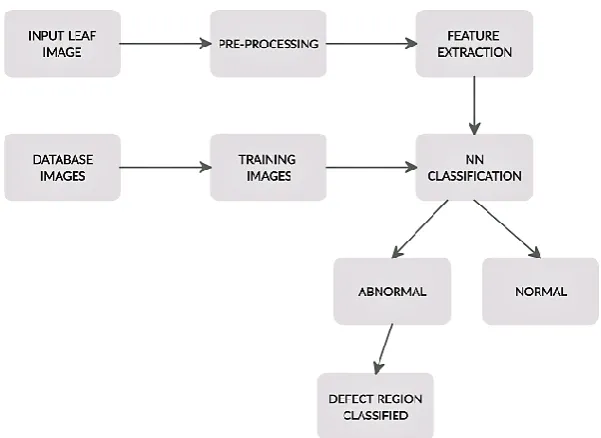
Figure 1: ML based banana leaf disease classification
As shown in above Figure 1 the proposed system has six major processes, which have been
explained below briefly.
A. Image formation
Image formation, capturing the images of banana leaf is an initial step in disease analysis. Images of the
leaves can be captured either as an entire region or as a fractal region based on the analysis.
B. Image processing
Image processingis a manipulation process performed on an image to provide enhanced information about
the infected region in a leaf image information in an effective manner with proper visual understanding.
C. Image analysis
Image analysis is a method used for quantitative measurements and abstraction of information from an image.
Methods like feature extraction, image segmentation, classification and measurements come under the category
of image analysis.
D. Pattern classification
Pattern classification is used in the interpretation of extracted diseased region in an image to identify the type
E. Back Propagation Neural Network
Back Propagation Neural Network (BPNN) is a widely used self-training classifier in most
of the applications related to image classification. BPNN is to adaptively build association
between known pattern of input and specific output.
F. Support vector machine
Support vector machine (SVM) is one of the best suitable supervised learning methods used in automatic
detection of disease due to its higher accuracy in disease identification.
G. Principal component analysis
Principal component analysis (PCA) is a classical statistical tool used in disease identification. PCA reduces
the dimensionality in data by performing transformation.
IV.
ANALYSIS
Paper
Methodology 1
Methodology 2
Methodology 3
[1]
MaP score:The mean
average precision (mAP) was
used as the validation metric
for banana disease and pest
detection.
Deep transfer learning (DTL)
generates a fresh framework
for digital image processing
and predictive analytics, with
greater accuracy.
Loss functionclassification is
used to measure the model’s
confidence by classifying the
pixels region delimitated by
the bounding box and the
localization loss measures
the geometric distance
between the predicted
bounding box and the ground
truth annotation.
[2] The paper applies
deep-learning technique to detect
and classify the disease.
Makes use of LeNet
architecture as a
convolutional neural network
to classify image data sets.
KNN algorithm is used to
identify the correct
combination of the
components to validate the
disease.
[3] Fusion of close range
hyperspectral (HS) image
and high-resolution (HR)
visible RGB image for
Decorrelates the original
low-resolution HS image
into PCA domain, and
separates the information
Applies the joint bilateral
filter to transfer the textural
structures of HR RGB image
potential disease detection. content from the noise. and obtain an enhanced HS
image.
[4] System accepts both RGB
and greyscale images. The
paper applies deep-learning
technique to detect and
classify the disease.
Makes use of LeNet
architecture as a
convolutional neural network
to classify image data sets.
Identifies only two
prominent banana diseases
namely banana sigatoka and
banana speckle.
[5] Image processing techniques
are employed to enhance the
quality of images. Besides,
the proposed work uses
Artificial Neural Network to
classify the Banana plant
diseases.
This system involves dataset
creation, image
pre-processing,Histogram of
Template feature extraction.
Developed using the
MATLAB application.
[6] Diseases are classified using
Multi layered Support Vector
Machine. That is, it detects
whether the disease is Black
sigatoka disease or Panama
wilt disease.
The grade of the disease has
to be determined from PI to
detect the disease. Fuzzy
Logic has been employed for
this purpose.
SVM classifier will
determine whether the leaf is
diseased or not. If the leaf is
diseased, then calculate the
AT (total area) and AD
(diseased area). Once AT and
AD are known, the
percent-infection (PI) is calculated by
using ANFIS Toolbox.
[7] Image pre-processing: to
specify a suitable color
transformation that best
highlighted the diseased
regions shown in the picture.
Image enhancement: to
develop a filter that could
highlight those regions
considered targets.
Image segmentation: to
identify regions in the image
that were likely to qualify as
diseased region
[8] This paper identifies the
infected leaves using
Economic Threshold Level
(ETL) algorithm.
It detects and prevents the
banana streak viral disease
using Embedded Linux
development board
interfaced with a camera.
The algorithm sets pixel
value of the healthy banana
leaf as the threshold value.
Then the pixel value of the
given input image is
calculated. If pixel value of
input image is beyond the
threshold value then the
V.
CONCLUSION
Strategy of disease detection is effectively described and selecting the particular region out as per the human expert point of view. Thus, appropriate area of disease was able to identify out of the whole leaf by distinguishing the intensity. The next part of the implementation of the system was to classify diseases based upon the parameters of the affected region. These automatic machines implemented by various techniques help a farmer to identify the disease and hence he can think of the better way to reduce the diseases on his own rather than depending upon the human source which resulted in the better way of time efficiency.
R
EFERENCE[1] Michael Gomez Selvaraj,Alejandro Vergara, Henry Ruiz, Nancy Safari, Sivlngam Elavabalan Walter
Ocimati & Guy Blomme AI-powered banana disease and pest detection.
[2] Prof. N. A. Auti, Shraddha Kadam, Sneha Satav, Poonam Bhapkar, Shraddha Dhumal, International Journal of Innovative Research in Engineering & Multidisciplinary Physical Sciences (IJIRMPS), Volume 6, Issue 6, 2018.
[3] Wenzhi Liao1, Daniel Ochoa2, Yongqiang Zhao3, Gladys Maria Villegas Rugel4 and Wilfried Philips1,
Bananadiseasedetectionbyfusionofclose-rangehyperspectralimageandhigh-resolution RGB image, 2018
IEEE International Geoscience and Remote Sensing Symposium Year: 2018| Conference Paper | Publisher:
IEEE.
[4] Jihen Amara, Bassem Bouaziz, Alsayed Algergawy, A Deep Learning-based Approach for Banana Leaf
Diseases Classification, B. Mitschang et al. (Hrsg.): BTW 2017 – Workshop band, Lecture Notes in
Informatics (LNI), Gesellschaft für Informatik, Bonn 2017.
[5] Basavaraj Tigadi, Bhavana Sharma, Banana Plant Disease Detection and Grading Using Image, IEEE
Autotestcon Year: 2016, Research Article Volume 6 Issue number 6.
[6] Vipinadas. M. J, A. Thamizharasi Detection and Grading of diseases in Banana leaves using Machine
Learning International Journal of Scientific & Engineering Research, Volume 7, Issue7, July-2016.
[7] A. Camargoa, J.S. Smithb, an image-processing based algorithm to automatically identify plant disease
visual symptoms.
[8] Karthik. G,Praburam.N, Detection And Prevention Of Banana Leaf Diseases From Banana Plant Using