an Ethnographic Approach
lariella Ba].do
Thesis submitted for the Degree of Ph.D. in Education
University of London Institute of Education larch 1987
Abstract
In many multilingual countries the medium of instruction from the early grades of Primary School is a second language (L2) scarcely used in the community, where a first language (Li) is the medium of communication. School teachers are bilingual but do not consider the children's competence in Li as relevant to the learning of the L2. Language mismatch is often blamed for the high failure rate at school. In underdeveloped countries this situation is worsened by scarce resources available, teachers' limited competence, and pressures to acquire literacy in the 12, often the language of former colonization.
It is argued that knowledge of the community's 'ways of talking' in Li is an inexpensive resource teachers can use to facilitate the learning of the 12 at school. This study provides an example of how information on children's discourse patterns in LI. may explain difficulties and suggest improvements in classroom activities for the learning of oral communication skills in the L2.
The analysis of discourse patterns in Li was derived from a study of conversations. Conversational sequences in the family setting between adults and 20 children (mean age: 6.9) using their Li (Tsonga), were selected from transcripts of audio-recorded naturally occurring verbal interactions of children with adults and peers in a rural village in Southern Xozambique. Discourse patterns in the structure of conversation, in the use of clarification exchanges and in the exchange of information were identified, analyzed and contrasted with those of texts used in Grade i classrooms for oral practice in L2 (Portuguese).
Discrepancies were found in the strategies used for the cooperative construction of meaning that could easily be redressed if a culture-sensitive pedagogy of language teaching permeated Teacher Education.
Contents
Page
List of Figures and Tables 6
List of Abbreviations 8
List of Annexes 9
The Aims
1.1 General aim of the study 10
1.2 The ethnographic approach 11.
1.3 Overview of the study 18
The Literature
2.1 Language in Education policies
1. Colonialism and language 22
2. Traditional and colonial education 25
3. Linguistic minorities 28
4. Bilingual programmes in education 29 2.2 Oral language and Literacy
1. Literacy and cognitive processes 33
2. Differences between oral and written language 35 3. Oral discourse, oral text and school literacy 37 4. Bilingualism and development of literacy 39 2.3 The socio-historical school in Soviet Psychology
1. Introduction 42
2. Basic concepts 43
3. The role of the adult in education 47
4. Context and meaning 50
5. Relevance for education in underdeveloped countries 52 2.4 Adult-child conversation
1. Adults' role in language development 54
2.5 Ethnography of communication
1. Cross-cultural variation in adult-child interaction 58 2. Dyadic interaction and adults' input 59 3. Children as conversational partners 61 4. Facilitating structures of adults' talk 63 5. Adult-child Question and Reply patterns 64
The Setting
3.1 The linguistic situation In Xozamblque
1. African languages and Portuguese 66
2. Language policies of colonial Portugal 71 3. Language during the war and after Independence 73 3.2 Education In Xozambique
1. Colonial education 77
2. The educational policy of FRE.LI.NQ. 79 3. Primary education and its Teachers 83
3.3 Language learning in the First Grade 86
3.4 The I.7.D.E. Project 90
The Jethod
4.1 Overview 95
4.2 Problems in naturalistic research
1. Naturalistic methods 96
2. Collection and processing of data 98 4.3 The subset of data
1. From Interaction to adult-child conversations 101 2. The analysis of adult-child conversational sequences 103 4.4 The coding system
1. Definitions 105
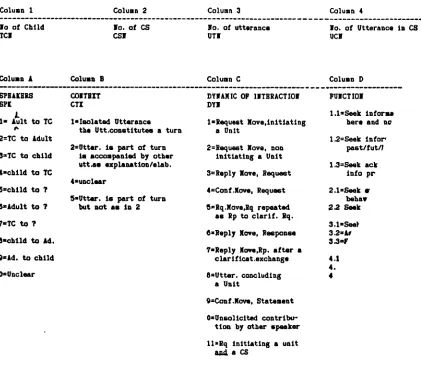
2. The Codebook 108
Examples of coded Conversational Sequences 116 4.5 From home data to educational practice
Interpretation of Results
5.1 Overview 129
5.2 Participants, topics and purpose of interaction
1. Home conversations 131
2. Classroom dialogue texts 135
5.3 The sustaining of interaction
1. Home conversations 137
2. Classroom dialogue texts 144
5.4 Clarification exchanges
1. Home conversations 147
2. Classroom dialogue texts 151
5.5 The exchange of information and explanation
1. Home conversations 153
2. Classroom dialogue texts 160
5.6 Conclusion: interaction in the classroom
1. The development of L2 oral competence 162
2. The interlanguage perspective 165
3. Classroom discourse 168
Implications of the Study
6.1 The teacher as protagonist 170
6.2 The teacher as restraint 173
6.3 An ethnographic approach to Teacher Education
1. Language, cognition and culture 177
2. The Zone of Proximal Development at home and at school 178 3. Translating culture into education 181
4. Conclusion 187
Annexes 189
References 214
List of Tables and Figures
The Setting
Table 3.1 Illiteracy Rate in Population over 7 Years of Age
in Xozainbique, 1980 68
Table 3.2 Percentage of School Attendance by Age Group in
Xozambique, 1980 68
Fig. 3.1 Percentage of Population over 10 Years of Age and
Educational Qualifications in Xozambique, 1980 69 Table 3.3 Educational Provision in Colonial Nozambique and
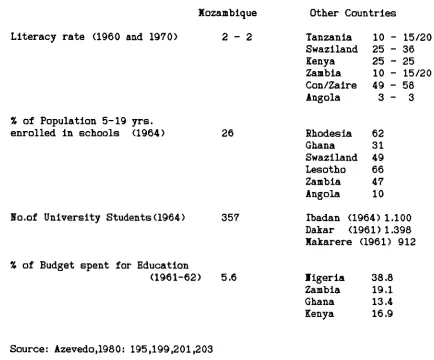
Other Countries 78
Table 3.4 School Enrolment in Xozambique in Selected Years,
1975-84 81
Table 3.5 Jumber of Jew Graduates and Teachers in )Lozambique
in Selected Years, 1975-1984 81
Fig. 3.2 School Coverage by Sex and Age Group in Xozambique
in Selected years, 1967-84 82
The Jethod
Table 4.1 The Codebook 107
Table 4.2 Differences between Home and School Talk 122
Interpretation of Results
Table 5.8 Sustaining and Jon-sustaining Utterances by Speaker 140 Table 5.9 Adults' Requests for Information and Explanation 153 Table 5.10 Form of Adults'Requests for Information and Explanation 154 Table 5.11 Information Value of Adults' Requests for Information and
Explanation 144
Table 5.12 Children's Offers of Information and Explanation in the
Dynamic of Conversational Sequences 157 Table 5.13 Children's Offers of Information and Explanation: detailed
Functions 158
Table 5.14 Children's Offers of Information and Explanation: Type and
Complexity 158
Table 5.15 Questions and Rhetorical Questions by Speaker in CSs 159
Implications
Abbreviations
C.C.R. = Conseiho Coorlenador do Recenseamento (laputo) Census National Office
C.N,P, = Comlssäo Nacional do Piano (Naputo) National Planning Commission
FRE.LI.NO. = Frente de Libertacto de Noça.wbique Iozambique Liberation Front; now Party
I.N.D,E. = Instituto Nacional de Desenvolvimento da Educaçäo (Xaputo) National Institute for the Development of Education
L.C.H.C. Laboratory of Comparative Human Cognition Li = First Language
L2 = Second Language
N.E.C. = Ninistério da Educaçao e Cuitura (Naputo)
Ninistry of Education and Culture (now Ninistry of Education)
U.LI.N. = United Nations Institute for Naniibia (Lusaka) S.N.E. = Sistema Nacional de EducaçIo
List of Annexes
Page The Alas
1.1 Contrasting Ethnographic and Quantitative Approaches 190 1.2 Contrasting Positivist and Naturalistic Axioms 191 The Literature
2.1 Societal and Linguistic Goals and their Relation to
Educational Policies 192
2.2 Prerequisites for L2 Learning/situation in Selected Countries 193
2.3 Verth's Model of Conversation 194
2.4 Mishler's Types of Discourse 195
The Setting
3.1 Map of Mozambique's main Languages
3.2 List of Dialogues in Textbooks and Teacher's Manuals 197
3.3 Textbook Dialogue: No.8 198
3.4 Textbook Dialogue: No.10 199
3.5 Textbook Dialogue: No.11 200
3.6 Example of a Transcript from the I.N.D.E. Study 202
Interpretation of Results
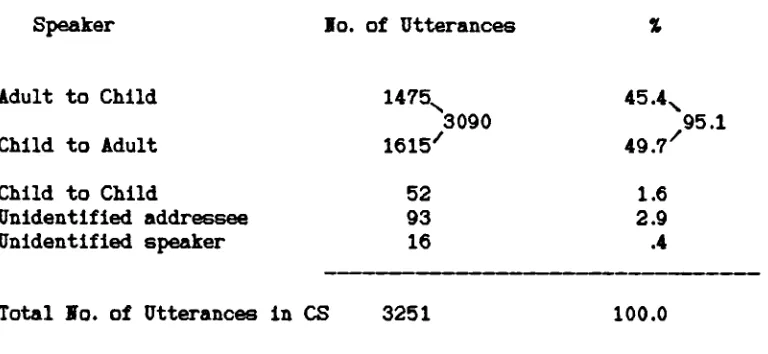
5.1 Identity of Speakers in Conversational Sequences 203 5.2 Basic Functions of Utterances by Speaker 204 5.3 Main Functions of Utterances by Speaker 205
5.4 Main Functions of Requests by Speaker 206
5.5 Sustaining and Non-sustaining Utterances by Speaker 207
5.6 Dynamic of Interaction by Speaker 208
5.7 Questions as Reply Moves by Speaker 209
5.8 Adults' Requests for Information and Explanations and their
relation to the Dynamic of Interaction 210
5.9 Clarification Requests by Speaker 211
5.10 Sustaining Moves by Speaker 212
The Aims
1.1 General aim of the study
The purpose of the study is to develop an ethnographic approach to communication and second language learning for Teacher Education Programmes in multilingual, underdeveloped countries, by providing an example of how teachers could apply knowledge of language patterns used at home to language learning activities in the classroom. It is suggested that the study of the children's 'ways of talking' outside school would enable teachers to make a principled use of current syllabi and participate in educational innovation.
The study is based on data from Mozambique, where I worked in Teacher Education and In a Research Project on Bilingualism; It may be relevant, however, to other situations where:
- the language used at home by the children (Li) is different from the country's official language (L2) used at school;
- the medium of instruction Is L2 from the beginning of Grade 1, with no use of the Li;
- children have little or no exposure to L2 and literacy before entering and outside school, and their classmates are in the same position;
- teachers are bilingual, but poorly trained; they constitute the sole L2 learning resource for oral communication, and can rely only on scarce teaching materials;
1.2 The ethnographic approach
The study is based on the assumption that an ethnographic approach is advisable because
- it makes teachers aware that children's language skills have to be considered in a broader framework of culturally acquired communicative competence, which is already developed and should not be ignored;
- it enables teachers to build on children's strengths, for example, by using in the classroom familiar patterns of language for the development of communicative competence;
- it fits in with ideological positions and economic realities in underdeveloped (1) countrIes, recognizing human rather than technolo-gical resources as their main asset in the struggle for development; - It fosters a positive attitude towards studies based on local reality
versus application of strategies devised in non-comparable settings (I.e. rich countries).
The growing interest in naturalistic and qualitative research in education may be due to dissatisfaction with the experimental methods and the impossibility of 'culture-free' tests (Cole,1985b), or to a reaction against ethnocentric claims to universality, or simply to the availability of new audio or video-tape based analytical techniques coupled with enlarged computing facilities. The ethnographic approach cuts across different disciplines and forms new areas of investigation (ethnography of communication, of classroom interaction, of learning situations etc.), the common underlying assumption being that the context of social interaction is a crucial factor for learning.
While traditional ethuography aimed at giving a full decription of social units to provide a general understanding of how they function, microethnography seeks to give a description of a particular type of Interaction defined by specific settings ( classroom Interaction, adult-child communication at home, patient-therapist dialogues, etc.). While the method of traditional ethuography prescribed observation by total immersion in the observed culture, original data not being accessible or replicable, microethnography involves systematic data collection through recording, data being available for re-examination. In a more recent development, experimental ethnography,'... natural events are triggered automatically through the experimental creation of specific contexts'.
(Trueba and Vright,1981:149).
If '... a discipline is defined not by what it studies but by the questions it seeks to answer' (Halliday,1985:6), the main question ethnographers pose is
what people need to know in order to do what they do in ordinary social interaction. They emphasize not simply behaviour but the knowledge necessary to produce that behaviour. (Erickson,1981:29) It comes as no surprise, then, that naturalistic studies end up revealing 'disadvantaged' children's linguistic competence and mothers' adequate language input, while experimental studies tend to stress the opposite (Wells,1981; Tizard,1984): the more we study children's talk, the better speakers we discover them to be. Another consequence is that members of the community under investigation are more than a mere source of data, as they may provide insights into the patterns and meaning of observed social interact .on.
underdeveloped countries), this knowledge is easily available; sometimes it is in itself a source of conflicts as it threatens long-established beliefs. Perhaps it is not too optimistic to say that
of all forms of scientific knowledge, ethnography is the most open, the most compatible with a democratic way of life, the least likely to produce a world in which experts control knowledge at the expense. of those who are studied. The skills of ethnography are enhancements of skills all normal persons employ in everyday life. (Hymes,1981:59)
Ethnography
and EducationEthnographic studies of classroom interaction have focused on cultural congruence of teaching styles, sociocu].tural rules of interaction,
acquisition of social competence required to participate in it, and coinmunication/miscoamunication in the classroom (see Trueba and Wright, 1981 for a review). With the expansion of bilingual education programmes in the U.S.A. and other Western countries, these issues have become politically controversial and more looked into, especially the problem of language proficiency assessment (Rivera,1983). These studies have helped to
bring the child's culture into the consciousness of the teacher, but also (to) bring the teacher's culture into his own consciousness (Guthrie and Hall,1981:11).
Lack of responsiveness and feedback from the pupils is experienced by teachers when confronted with children from a different cultural background; when these children are a tiny minority, the educational system tends to force them into conforming to established patterns of classroom interaction; when they constitute a sizable number or a majority, as in multicultural countries, the system is forced to reconsider some of its assumptions: responsiveness is then found to be 'highly situation-specific' (Au,1981), as are expectations (Gumperz, 1977), 'participation structures' (Philips,1972) and verbal productivity
Conclusions from many studies on classroom interaction with minority children in the U.S.A. may be summarized in the following points:
- culturally inappropriate learning contexts lead to poor performance; 'a context is inappropriate for a certain group of children if its construction violates their cultural norms' (Au,1981:92);
- successful educational strategy at school is connected to discourse modes prevalent in the children's community;
- it is necessary to identify the characteristics of learning contexts children have experience of, in order to create culturally appropriate learning situations at school.
The series of studies related to K.E.E.P. (Kamehameha Early Education Program) in Hawaii is particularly important because they document how the introduction of 'culturally appropriate' classroom practices actually resulted in improved reading performances. Drawing from an extensive ethnographic literature, classroom interaction was structured as close as possible to the community's 'speech economy': rules governing speaking and turn-taking, adult intervention, asking and replying to questions in the community were studied, discussed with the teachers and used at school; the structure of the 'talk story', a major speech event in Hawaiian culture, was taken as the model for teacher-children interaction
(Au,1981; Boggs,1972 and 1985).
Community and family ethnography provides essential background for understanding what goes on in classrooms and is a source of hypotheses for designing and adjusting classroom practice
(Jordan,1985:11).
A similar successful intervention is documented with lative American children (Xohatt and Erickson,1981). These efforts represent a research direction that moves away from the search for individual characteristics of either the child or the teacher that would account for school failure; it also goes beyond the sociological explanation in terms of 'mismatch'
countries, but cannot be transferred to poor countries where the class dynamic is different and much more fluid.
Ethnography and Teacher Education
As the interaction in the classroom is organized by the teacher, it is the teacher who must be aware of the importance of the competence children bring with them to school: this competence should be seen as an asset on which to build, and a challenge to any dogmatism in pedagogy. 'Cooperative ethnographic monitoring' (Hymes ,198 1) usually involves educationalists, ethuographers and teachers, but requires teachers with conceptions of cognitive and linguistic development and of the learning process that fully recognize the centrality of sociocultural mediation. Pre-service and in-service training courses may be structured along these lines, and there are experiences which show the feasibility and results of this approach (Heath,1983; Siniic-Dudgeon and Rivera,1983; Au,1981; Troike and Saville-Troike,1982).
it was an 'aha' experience for them (the teachers in training]. They said that they now saw the cultural patterning of things that they had previously taken for granted. (Xohatt and Erickson,1981 :119)
It is argued that this approach is particularly relevant for underdeveloped countries: it makes full use of human resources ) it is not very expensive, it stresses assets and not deficiencies, it makes teachers more equipped to confront the imposition of models developed abroad (Altbach,1984; see 6.3.3, conclusion), it trains teachers in simple research methods and encourages them to engage in curriculum development on the basis of their own findings.
Ethiography and Theory of Knowledge
Ethnographic studies and naturalistic or qualitative methods in research are often considered synonyms. In fact, there is no inherent contradiction in using quantitative methods in qualitative research, provided that 'the primary concern is with deciding what makes sense to count' (Erickson,1981 :18), and naturalistic observations can complement experimental studies.
In some fundamental aspects, however, an ethnographic approach is not only radically different from quantitative or experimental methods, but also irreconcilable; these aspects are more related to conceptions and t1ries of knowledge than to research techniques. Ethnography seems able to avoid much of the criticism currently directed to the 'positivist paradigm' of science, and it has indeed a large body of experience to offer in the construction of alternative 'new paradigms' in research
(Reason and Rowan,1981).
The 'post-positivist' paradigm is also called 'naturalistic' (Lincoln and Guba,1985), and it shares with ethnography many of its axioms: in ontology, it considers realities as holistic and not fragmentable; in epistemology, it does not accept the traditional division between the knower and the known; in aziology, it considers inquiry as value-bound, and phenomena as taking their meaning from their contexts as much as from themselves; and it fundamentally questions the possibility of generalization and cause-effect relationships that are at the basis of positivist science. The two tables reproduced in Annexes 1.1 and 1.2 show the affinity between the ethnographic approach and the post-positivist paradigm in their dimensions of contrast with, respectively, the quantitative approach in research and the positivist paradigm of inquiry.
We shall take the position that the positivist posture, while discredited by vanguard thinkers in every known discipline, continues to guide the efforts of practitioners of inquiry, particularly in the social or human sciences. (Lincoln and Guba,1985 :15)
It has been suggested that the metaphor for the world is changing from the 'machine' to the 'hologram', where the appearance of the object depends on the perspective of the viewer, and complete information can be stored in each part of the whole; this view of reality has consequences for research, for example:
- the critenon for sample construction is radically changed from statistical to informational (i.e., 'Its purpose is to maximize Information, not facilitate generalization'- Lincoln and Guba,1985:202). - the criterion for transferability of findings becomes one of
ecological 'fittingness, (i.e.] the degree of congruence between sending and receiving contexts' (ibidem, page 124).
1.3 Overview of the study
When children go to school for the first time, they have to adapt to a setting which is new to them in a number of aspects. They are confronted, among other things, with new discourse patterns (Villes,1983): some are related to the teachers' personality , but most of them seem just typical of classroom interaction or other tutoring situations (Sinclair and Coulthard,l975; Wells,1981).
As language plays such an important part in school, it is regarded as one of the main factors accounting for the failure of certain children.
(Kohl,1987; Ogbu,l982). In particular, stress has been put on differences in language varieties, uses of language and discourse patterns
(Labov,1972; Blank,1982; Heath,l983; Philips,1972). When learning and interacting in school is processed through a language different from the children's Li, the mismatch between home and school is even greater. although bilingualism is not in itself a source of academic failure
(Cummins,l979).
Communication in the classroom should be facilitated for the 12 learner to acquire oral language skills that will enable him to participate fully in classroom activities: as it is easier to understand familiar patterns, compatible with the listener's expectations of how conversation is structured (Brown et al.,1984), teachers should use as much as possible those discourse patterns the children use in their Li and through which they have developed their communicative and learning competence. This is particularly valid for classroom activities for the development of oral skills in the 12.
Li and cultural background, but teachers have difficulties in using the children's Li to facilitate the learning of the L2, Teachers may find methodologies and syllabi incongruent with their own conceptions of language, teaching and learning; the rapid pace of change may have created a cultural divide between them and their own community, with the teacher identifying with the 'modern' versus the 'traditional' culture. This Is more evident In rural areas, and may prevent the appreciation and the pedagogical use of the linguistic and cognitive competence children had developed before entering school.
Knowing the 'ways of talking' of the children seems an appropriate focus for teacher education in all multicultural settings, if one takes as a basic assumption an interactive model of language acquisition and development (Vells,1981 and 1985). Children develop their communicative and cognitive competence Interacting with peers and adults; in social groups like the one considered in the study, children spend more time with peers than with adults; however, the study focuses on adult-child interaction because at school most of the communication In L2 Is between teacher and children, as the teacher Is in a dominant position, being the only competent speaker of L2.
The analysis of home talk has to permit the Identification of features In adult-child interaction that in turn would make it possible to find out what discourse structures the pupils will recognize as familiar and compatible with their expectations. For example: how do children and adults contribute to the flow of conversation? How is Interaction sustained (mainly through question/anwer exchanges or through other means)? Vhat are the most common ways of adults asking for information and explanation? Are clarification requests used often? Vhat type, and for what purpose? How are they elaborated on? In what context are rhetorical questions used?
difficulties encountered by children in oral practice for the learning of the L2 at school.
The study will try to identify and describe patterns in the structure and process of interaction in naturally-occurring LI. conversations between adults and children, at home. These patterns will be contrasted with those of texts used in the classroom for the development of L2 oral communication skills. Recommendations will be formulated within the limits of the specific situation outlined in 1.1. Finally, implications of the study for Teacher Education will be discussed.
Chapter 1 indicates the aims of the study and the grounds for the ethnographic approach.
Chapter 2 provides a review of the literature considered relevant to the present study. Language policies during the colonial and post-independnce periods are sketched to provide a background to the setting of the study; differences between British, French and Portuguese colonial policies are indicated. The situations of linguistic minorities in developed countries and of rural populations in underdeveloped countries are compared to show the extent to which studies on bilingual language programmes carried out in the North are relevant to the South.
Studies on the cognitive consequences of literacy and bilingualism are reviewed in 2.2, in particular those which criticize the polarity between written and oral language and stress the importance of LI. competence in the learning of the L2.
Studies in adult-child conversation and in the ethnography of communication are examined (2.4 and 2.5) in order to point out the cross-cultural variation, and five aspects of adult-child interaction are examined to show how Western, white, middle class patterns are not applicable to other cultural groups.
Chapter 3 provides information on Xozambique, where the data for the study were collected. The language policies of the Portuguese and of the revolutionary governments (3.1) and the development of the educational system (3.2) are discussed, in particular the methods and problems of language learning in the first grade and the training of teachers (3.3). The I.N..D.E. Research Project on Bilingualism and Cognitive Development carried out in Xaputo, for which the data of the present study were collected, is presented in 3.4.
Chapter 4 discusses the design and method of the study within the
naturalistic paradigm and the limitations of the data base, provides the working definitions, and describes the coding system devised to classify the data. It also discusses to what extent it is legitimate to contrast home and classroom interaction, and to use data in Li to investigat4he learning of L2.
Chapter 5 presents the results of the analysis of home conversations, contrasting their characteristics with those of texts used for classroom practice. Their topics and purpose are described, and patterns in the sustaining of interaction, the use and function of clarification requests, and the exchange of Information are identified. The discussion is focused on the development of oral fluency in L2.
Chapter 6 discusses the implications of the study for Teacher Education
The Literature
2.1 Language in Education Policies
2.1.1 Colonialism and language
the mental universe of the colonized. It has been argued that colonialism develops only insofar as there are colonizers who are prepared to carry out certain roles, and colonized who accept -or defy- the demands posed upon them by the colonial power (Xannoni,1950): while many studies consider the colonial situation as an institutional framework, others look at Its complex psychological components. (Xernmi,1986; Fanon,1952 and 1961; Clignet,1984 for a review).
The dialectics of the colonial situation involve, on the colonizer's side, the assignment of absolute values to his culture, or pseudo-universality (Clignet,1984:84) and , for the colonized, the deprivation of the tools of self-definition in relation to time, space and the outside world (Freire's
'culture of silence',1972; Vieira,19?9; wa Thiong'o,1985; Fanon, 1961). Examples of this alienation are the deliberate attempt to erase the significance of the oppressed people's past, the distorted image offered of the metropolitan culture, and the second-class status accorded to local languages and arts as opposed to those of the metropolis.
The study of language offers a vantage point to examine the complex relationship between culture, oppression and liberation in colonial and neocolonial situations. Xoderate and radical authors differ sharply in the role they attribute to the cornpredor burgeolsie and therefore to the
phenomenon of 'assimilation', which in turn assumed different characteristics among the various colonizing powers. Va Thiong'o emphasises the dual character of language, as a means of communication (in production, in literature and in orature, i.e. oral literature), and as a carrier of culture:
Language as culture ... mediates between me and my own self; between my own self and other selves; betwen me and nature. Language is mediating in my very being. (1985:117)
This 'glottophagie' went through two stages: at first, the foreign
language is adopted by those who are closer to the colonial power, who represent it or work for it along a class axis; later the linguistic differentiation spreads along a geographical axis, dividing town and country. At this macro-level, the result is a L2 monolingual dominant class, a bilingual urban population and a Li monolingual rural population
(Calvet,1974). This involves a complex process of L2 language acquisition
and use, as part of the dominant class and the whole urban population were at one time Li monolinguals. In the classical colonial situation,
The recognition by the colonized of the inferior position imposed on him leads him to try to beat the colonizer at his own game. He attempts ... to reduce the differences that the colonizer has defined as being at the origin of his second-class status. This reduction is attempted in terms of language. Insofar as the colonized is evaluated in terms of distance from the colonizer's cultural model, he is tempted to speak the colonizer's language with more refinement than his 'master' himself and to avoid any verbal pattern that would betray his own origin. (Clignet,1984:86) Assimilation became the ideology used by the colonizing power to assert its own culture as universal without restricting it to the citizens of the metropolis, a move which would not permit a full exploitation of the colony. Assimilation as overt aim of colonial policy is usually considered to be more typical of the French and Portuguese (see 3.3.1 and 3.3.2) than of the British (see page 28), but differentiation tends to blur in the realm of language policy, if not in that of language in education policies:
Vithout going as far as to credit British colonialism with a label of 'linguistic liberalism', one must recognize that its institutional and ideological components are less savage, less paranoic than the French. ... But the relationship between dominant and dominated languages remains (the same] ... right until now : in Anglophone Africa, English is as much a language of class as French is In Francophone Africa. (Calvet,19?4:84 and 85 - my translation from French).
(wa Thiong'o,1985) that bought the way into the system, securing individual upward mobility.
2.1.2 Traditional and Colonial Education
Practices and theories of traditional education have been widely studied, and it Is difficult to summarize their central characteristics1 primarily because of their enormous heterogeneity and loose definition. The social organization of knowledge, including learning and teaching, has been radically transformed by industrial society:
Knowledge Is now incremental, transformational, and innovative. Its structure Is formal. relational, and generative. No trans-generational reliability of meanings, but doubt and critique.
The basic function of direct experience is replaced by the basic function of learning, on the basis of vicarious experience, for the acquisition of higher-order vicarious experience.
(Elderstein,1981:67 and 69).
In predominantly oral cultures, the suggestive power of words is stronger, and the relation between meaning and referents is enriched by the frequent use of analogy and allusions (Erny,1981); written texts acqufre and transmit their meaning in the course of social, oral Interaction (Heath,1983; see 2.2). Formal and informal education are aspects of growing up in all social systems, and although the mix varies quantitatively from one society to another, formal learning situations are by no means limited to societies where literacy Is more widely spread; school systems, on the other hand, were established in some countries before (and continued despite) Western school models were Imported
(Bray,Clarke and Stephens,1986).
to the colonies. For example, it has been clalited that in traditional education
learning is not depersonalized but continues to be bound up with the social status of the persons acting as teacher (Scribner and Cole,1973 :555)
or that learning is mostly by observation without much verbal explanations, or that it is rarely 'decontextualized' (Bruner,1972); (Western) school learning would have the opposite characteristics, and this would promote abstract thinking.
It seems possible to criticize this position along the same lines used by Street (1984) In his criticism of the 'great divide' between oral and
literate language : at a closer examination, the differences are not so sharp and they tend to be stressed mainly because of the Ideological need to justify the enormous expense on Western-type educational systems
(see 2.2.2).
Differences among colonial educational systems are also to be taken into consideration. In general, the education policy in the colonies reflected the conventional wisdom of the time In the metropolitan countries
(Watson,1982). The most striking difference between the French and Portuguese policies on the one hand and the British on the other, were on the issues of centralization of the educational system, the role of the missionary Churches in education, and the extension of school provision. In the British Colonies, policies in different countries, and even towards different ethnic groups in the same territory, were markedly varied, and the particular interests and attitudes of the governors were an important factor in the education system: only In the 1920s was a committee on Education formed and guidelines issued, ending the tradition of laissez
in the colonies, and non-Portuguese missionaries were often held in suspicion for not being loyal to Portugal (Bertulli,19?4): this prevented progressive stands also in educational matters.
Decolonization varied considerably across countries and continents, was in a few cases the result of mass participation in a revolutionary process, but in most cases represented the transfer of political power to the indigenous dominant class. Everywhere independence was seen as a liberation in both cultural and structural terms, but particular political configurations in each country gave different meaning to this aspiration across a wide spectrum of policies. Independent young nations had to reconcile the divergent demands of cultural specificity and uniformity to models still well in charge of the world economic order.
In Africa, the typical neocolonial solution consisted in considering uniformity paramount, while paying up services to an African culture demoted to folklore, and reacting to the excesses of the colonial period; in education, the split was more clearly along class lines, with a narrowly 'African' curriculum for the peasantry and a 'European' one for the urban elites. Only where a new culture had been created in the process of a long, popular struggle for independence was this dualism demstified: some nations did not find much pride in proving that they were able to carry on the colonial policies on their own, but rather wanted to use the newly found confidence in their own culture to transform the modes of social production ('... national liberation is necessarily an act of culture' - Cabral,1980:143).
Between these extremes, the majority of African nations struggled with problems of production, war, natural disasters, and with ill-defined language and education policies, while launching far-reaching programmes of Africanization in the attempt to avoid mass reactions to 'the post-independence betrayal of hope' (wa Thiong'o,1985:122). But it is intere-sting to note that
relativeness is an accepted notion with regard to the content of communications but not as far as their processes are concerned. The beginning of all colonial situations did generate a number of myths. So does their end. (Clignet,1984:92 and 93).
2.1.3 Linguistic minorities
Parallels between the black colonized masses and the working class in industrialized countries are a common feature of political and sociological studies based on Marxian theory. Revolutionary movements in underdeveloped countries in the early '7Os were able to direct their struggles not against the colonists, but against colonialism (considered the expression of the interests of the dominant classes in the metropolis, and as such likely to be continued by local elites restricted to a nationalist outlook). Certain combinations of structure of the labour force and its ethnic segmentation lead to forms of internal colonialism, in many countries often very different on other parameters. It Is in this context that some similarities may be noted between the formerly colonized 'majorities' of underdeveloped countries and linguistic
'minorities' In Industrialized countries.
One is somehow forced to contrast the two groups because the policy, psychology and pedagogy of bilingualism have been studied for a longer time and with larger resources to tackle the problems of groups labelled as 'linguistic minorities', even If these are numerically less massive. A major problem for the researcher is to select those studies and lines of research that can be relevant in such different contexts as rural areas in underdeveloped countries.
survival: the first approach that grew out of contact between the 'host country' and immigrants needed as labour force was that of assimilation. The immigrant was made to feel inferior, among other things, because of his difficulty in mastering what for him was the L2, and so he found it convenient to try to become part of the mainstream culture. As minority groups progressively found this impossible, they rediscovered their identity, and their language and culture were variously revindicated as equal, beautiful, alternative, different etc. (for a comprehensive study, see Skutnabb-Kangas, 1983 and 1986; Phillipson and Skutnabb-Kangas,1986).
Differences among successive generations and origins of immigrants, and in the soclo-economic conditions and policies of the host countries combine into an extreme variety of situations. Yhile some studies on bilingualism and education adopt a strictly psychological approach (see 2.2.4) and tend to Isolate the learner and his task, a more articulate approach studies the soclolinguistics of the bilingual situation, and its influence on the individual's learning.
It seems to me that what is transferable from studies of situations as different as those of the linguistic minorities in industrialized countries, and of the rural majorities in underdeveloped countries, cannot be a format for a bilingual curriculum or a teaching strategy; but rather an approach that stresses the complex interplay of factors, related to the context (internal and external, Cummins,1984:75), the learner, the two or more languages and the aims of education.
2.1.4 Bilingual programmes in education
and political goals of the country (assimilation of minorities, generalized bilingualism, perpetuation of stratification, apartheid (see Annex 2.1).
The status of the two languages, the class position of the bilingual group, its being a minority or the majority group are all important factors that have consequences for the learning situation. A model with 18 prerequisites for learning of a L2 has been identified (Phillipson et al.j.986), under four headings:
• organizational factors
• learner-related affective factors
• Li-related linguistic, cognitive and social factors • L2-related linguistic, cognitive and social factors
Annex 2.2 compares different countries adopting contrasting policies using this model.
Many studies in sociolinguistic patterns and language planning in 'developing' countries were published between 1968 and 1972, when the enthusiasm for the recently-granted Independence was still at its height; In the seventies the phenomenon of 'growth without development' was being experienced by many countries, as was the realization of the impossibility of financing an ever expanding educational system which produced so many failures. Language was singled out as an important factor and educational policies were reconsidered (Bangbose,1976; Bokamba and Tlou,19?7; Hawes,1979).
children would end up having to learn in a language unknown by their teachers (Bull,1964).
The success of the Canadian Immersion Programmes contradicts the UNESCO position too, but several of the preconditions for immersion programmes for L2-medlum learning do not exist in underdeveloped countries, where situations seem more likely to produce submersion type of programmes, i.e. those which were found the least successful (Skutnabb-Kangas,1983). Indeed, in some rural areas it would be more adequate to call the L2 a 'foreign' language, as the opportunities to use it outside the classroom are so reduced.
While challenging the misconception that 'the mother tongue is always the better medium for learning', the Canadian experience does not prove that a certain method to teach the L2 for L2-medium learning is effective, but rather that language, cognitive •iid pedagogical variables are insufficient to account for differential school progress in bilingual situations (see the debate in Rivera,1984). The success of the Canadian experience, like the lack of success in mother tongue learning by Blacks
in South Africa or by Turk immigrants in Vest Germany, point to the
fact that the non-replicability of their results (taking the language of instruction as the independent variable), is not a limitation but the major lesson to be learnt.
Language in education policy is such a delicate issue that it is perhaps one of the fields where it is easier to accept that political rather than educational considerations would be the basis for decisions. In conclu-sion, I would like to quote two contrasting but equally well founded views: the first from one of the best researched projects carried out in Africa (Nigeria) and the second from a study on the future language policy of independent Jamibia elaborated at the United Nations Institute for Jamibia:
The results of the Six-Year Primary Project at Ife have shown most clearly that children can receive their primary education in elementary science, maths, and social and cultural studies through the medium of their mother tongue alone and yet most efficiently learn ( at secondary school in English]... without any intervening Intensive English language course after their primary education. (Afolayan,1984 :15)
It will be remembered that the South African régime [illegally occupying Jamibia] has to date capitalized on and exploited the existence of various languages in Namibia. ... In the case of Jamibia struggling to overcome the effect of mother tongue education put to wrong use, and anxious to manipulate an International language for rapid economic development, there may be strong pressures to Introduce English as early as possible into the language curriculum. ... In support of English medium instruction are points such as the relative ease of pursuing a single language policy throughout the educational system and then the likelihood of greater fluency for all In English due to longer exposure. (1) (U.J.I.N.,1981:37 and 62).
2.2 Oral language and Literacy
2.2.1 Literacy and cognitive processes
Oral and written language are different in many ways: it is claimed that written language requires conscious learning, often in specialized institutions, implies a detachment of the writer from his product, gives as result the permanency of text and accuracy In the reproduction of knowledge, and requires for its production a transformation of text through decontextualization (Goody,1968; Olson,1977a).
This covariation of literacy with other major changes in life
experience -a pervasive condition in almost all settings- is a
formidable obstacle to research on educational effects (of
literacy]... The attribution to literacy of causal significance in
cognitive development remained, as with Vygotsky, on the
hypothetical level. (Scribner and Cole,1981:1O and 12).
The position that literate cultures have in the written language an
'amplifier' of cognitive capacities and therefore 'push cognitive growth
better, earlier and longer than others' (Greenfield and Bruner,1969) was
challenged by the important study on Val literacy (Scribner and
Cole,1981), where it was possible for the first time to separate schooling
from literacy, as Vai people had developed their own script which was
learned at home. The conclusion of the study was that literacy per se
does not produce all the cognitive effects generally ascribed to school,
which are the result of a particular kind of literacy
used it for his own influential theories on bilingualism (see 2.2.4). Because of its consequences for education and language learning, in both Li and 12, the question of the comparison between oral versus written language is further examined.
2.2.2 Differences between oral and written language
It seemed easy to relate the difference between text and utterance to the difference between oral and literate traditions (including ways of knowing and approaching learning), and consequently to consider children's sole or predominant exposure to oral language, typical of non-literate or minimally-non-literate groups and considered highly contextualized, as a possible cause of learning difficulties at school. The critique of the positions briefly presented above must begin with a rejection of their starting point, i.e the polarization of the differences between oral and written modes of communication (the 'great divide' theory).
This has been done by many authors from the domains of anthropology, linguistics, pragmatics and sociolinguistics , who pointed out that:
- 'the traditional oral-literate dichotomy does not capture the ways other cultural patterns in different societies affect the uses of oral and written language' (Heath,1983:344);
- literacy as a specific societal activity within a culture cannot be
equated with literacy in other cultures or in other times (Zebroski,1982);
- features that have been associated exclusively with literacy are also found in oral communication, and the reverse, e.g.:
• rhetorical strategies (Tannen,iQ82a,b)
structural ambiguity of the meaning of a text (Stubbs,1980)
• active role to be played by the reader/listener in relating the writer/speaker's background knowledge to the text in order to make sense of it (Simon and Xurphy,1986)
• activation of cognitive schemas for comprehension (Vells,1985, Cole,1981);
- the tendency to equate oral communication with conversation should not obscure the fact that certain types of oral discourse are as little dependent on the immediate context, depersonalized, acquired in special institutions, permanent and reproducible as written texts, an example being ritual communication in non-literate societies (Akinnaso,1982a and b);
- the model of literacy is to a large extent defined by discourse properties, and therefore it is in the discourse patterns that one finds the mismatch (Scollon and Scollon,1981);
- neither schooling nor literacy are responsible for logical thought but only contribute to the range of problems than can be solved logically
(Orasanu and Scribner, 1982).
Street (1984) offers the most comprehensive exposition and critique of the 'great divide theory' and one of its main proponents, Goody:
He would explicitly replace the theory of a 'great divide' between 'primitive' and 'modern' culture, which had been employed in earlier anthropological theory and which is now discredited, with the distinction betweeen 'literate' and 'non-literate'. He believes that the distinction is similar to, but more useful than, that traditionally made between 'logical' and 'pre-logical'. This, he claims, is because of the inherent qualities of the written word Vriting ... 'enforces' the development of 'logic', •.. the emergence of scientific thought •.. . (Street,1984:5)
of reading and writing (i.e. literacy) are more complex phenomena thaiJust the 'essay-text form of literacy' (page 41) and that most cultures are likely to offer a mix of oral and written activities and 'literacies', according to the particular contexts and ways in which power relations are embedded (page 8). Street (1984) draws many arguments from social history studies as well as from anthropology and linguistics, and develops many of the points presented above when discussing the differences between oral and written communication. His argument is even more persuasive, however, when contributions from pragmatics and discourse analysis have been further explored (as in Street ,1986).
2.2.3 Oral discourse, oral text and school literacy
Literacy-related activities during pre-school years, like reading bed-time stories or shared reading, have been considered important for the subsequent acquisition of literacy at school (Dombey,1983; Villiams et
al.,1982; Heath,1982b); but the extent to which the child acquires text-related, context-reduced language skills has been considered to be a more crucial variable (Snow, 1983 and 1984). Consequently, the characteristics of oral language that were identified as potentially facilitative for literacy learning would be those more typical of the written language, like distance between sender and receiver, explicitness of reference, fictionalization of sender and receiver, complexity of syntactic structure, permanency of information, autonomous rather than interactive narrative skills, high degree of cohesion (Tannen,1982a).
These are the characteristics of decontextualized language use. Literacy is normally decontextualized, and literate activities normally show these features. But if oral discourse can have these characteristics and be used in a decontextualized way, so too can
literate activities be context-bound. (Snow,1983:186)
literacy (Scribuer and Cole,1981). Snow (1984) reviews studies on the contextualized/decontextualized distinction and concludes that
Despite the wealth of speculation (on such distinction], only very little evidence is available to confirm the claim that skills with the two language types are separable. (Snow, 1984:15)
In my opinion, the fact that all definitions of 'decontextualization', in all their nuances, rest on a basic differentiation between utterance and text of the sort proposed by Olson mak the definition difficult and the issue of the transition to/acquisition of literacy rather confused. If one takes as starting point a discoursal/pragmatic approach to language and stresses the similarities rather than the differences between spoken and written forms, the text vs. utterance distinction may be dropped in favour of that of discourse-as-a-process vs. text-as-a-product (Brown and Yule,1983). In this perspective, what is studied is
the record (text) of a dynamic process in which language was used as an instrument of communication in a ccnitext by a speaker/writer to express meaning and achieve intentions
(discourse). (Brown and Yule,1983:28)
This model applies to both written and oral language:
participants' prior knowledge ... powerfully influence their interpretations of discourse and hence the connections which they perceive, and impose, on a stretch of speech or a piece of writing. ... In written language, knowledge of genre and of communicative intentions form an important framework for an audience's expectations and inferences. (Collins and Xichaels,1986 :209)
The model of conversation ... is a co-operative venture in which the participants seek to increment the commonly-accepted set of propositions by contributing further propositions that are relevant to it. (Verth,1981:134)
Many studies have shown a strong correlation between oral language skills and written language achievement, and the correlation has proved useful in predicting children at risk (Blank,1982); but instead of concentrating the attention on those aspects of oral language which are considered relevant to literacy in that they mirror those of written language, the structure of and processes involved in oral interpersonal communication could be explored, and discourse patterns identified that would be useful in the transition to literacy and to L2. This seems a good research direction because it values the learners' competence developed before and outside school (see 4.5): that competence is an asset for all, even for those children living in non- or minimally-literate social groups, that is, the environment for the majority of the children in the world.
2.2.4 Bilingualism and development of literacy in L2
Early studies on bilingualism and I.Q. generally concluded that bilingualism was responsible for lower levels of verbal skills and eventually for poor academic achievement, while more recent studies suggest that bilingualism can positively influence academic and cognitive functioning (Reviewed in Cummins,1979 and Skutnabb-Kangas,1983). The conflicting results of studies on bilingualism are due to the better control of socioeconomic variables in the subjects; results from French Immersion Programmes in Canada show that learning In L2 at school does not necessarily cause academic difficulties: it is clear that bilingual situations differ widely, and so many types of bilingualism exist, which lead to different results (see 2.1.3 and 4).
academically beneficial form of bilingualism can be achieved only on the basis of adequately developed Li skills'. This thesis is based on:
- the 'developmental Interdependence hypothesis' : the development of competence in 12 is partially a function of the type of competence already developed in Li at the time when Intensive exposure to 12 begins;
- the 'threshold hypothesis': those aspects of bilingualism which might positively influence cognitive growth are unlikely to come into effect until the child has attained a certain minimum level of competence in the L2;
- and on the postulated
significant relationships between communicative activities in different languages which make similar contextual and cognitive demands on the individual. (Cummins,1979:i22).
It is also necessary to distinguish between surface fluency and cognitive uses of language in both Li and L2, as at school the bilingual child must function in cognitively demanding situations through the medium of a language he has not mastered. Cummins's (1983) conceptualization of language proficiency along two continua (from context-embedded to context-reduced and from cognitively demanding to cognitively undemanding), which led to the distinction between B.I.C.S. and C.A.L.P.,
(Cummins,1983:1i4, see page 34, bottom) has been revised by the author after criticisms on a number of grounds (see debate in Rivera,1984).
and his previous knowledge organized in schemata, which provides expectations and prediction abilities (Co].e,1981). This does not only apply to 'phonetic to semantic' aspects of language, but also to discoursal aspects, as the phenomenon of Discourse Transfer suggests
(Lopes,1986). Therefore
The difficulty or not of processing (information in a new language] depends on the familiarity with the discoursal and cognitive structures. (Lopes ,1986 :98)
The problem of school literacy in L2 could then be posed in the following terms:
- what are the cognitive demands imposed on a learner who has to process imperfectly-mastered L2 discourse structures in order to comprehend ( make sense of) information?;
- can learning be facilitated by acting on schemata as well as on text, i.e by using discourse patterns easily predictable (in that they are those of the learner's Li) for the learning of/in L2?
2.3 The soclo-historical school in Soviet Psychology
2.3.1 Introduction
The soclo-historical or soclo-cultural tradition in Soviet psychology (Vygotsky-Luria-Leont'ev) and in particular Vygotsky's theories on language and cognition have been taken as the main theoretical base, on three grounds:
- they provide a solid foundation for understanding the nature of the interaction between adults and children in the process of acquisition of language and literacy; more recent studies confirm Vygotsky's intuitions about the sociogenesis of communication and language, the importance of adults' interaction and the function of language and literacy in cognitive development;
- they anticipated and still provide a theoretical background to recent developments in linguistics and ethnography that focus on the centrality of context for the interpretation of meaning in discourse; - their pedagogical implications seem to respond to the problems of
underdeveloped countries more adequately than other, Western, theories.
2.3.2 Basic concepts
Tools and signs.
transforms his own nature. The interaction is mediated in increasingly complex ways as the system of tools (technology) becomes more complex. Vygotsky extended this concept of mediated interaction to the use of signs, and suggested that it is the semiotic mediation of tool use that creates the truly human forms of activity (Wertsch,1983; Lee,1985). 'Signs' are socially created symbol systems like language, writing, number systems. Some psychlog1cal processes rely on perceptual contexts, but higher mental processes rely on sign-mediated activity and are uniquely human.
The use of artificial means, the transition to mediated activity, fundamentally changes all psychological operations just as the use of tools limitlessly broadens the range of activities within which the new psychological functions may operate. In this context, we use the term higher psychological functions ... as referring to the
combination of tool and sign in psychological activity. (Vygotsky,, 1978:55)
Linguistically-mediated
scxial origins of higher mental functions,The socio-historical tradition challenges one of the main assumptions, seldom made explicit, of Western psychology, i.e. that 'the boundaries of the individual provide the proper framework within which psychological processes can be adequately analyzed' (Vertsch and Sammarco,1985:276). This assumption underlines the traditional dichotomy between psychology
(as the study of individual processes) and anthropology (as the study of group cultural products). One attempt to bridge the gap, namely cross-cultural psychology, goes no further than considering 'culture (as] an important source of independent variables for the study of psychological dependent variables' (Cole,1985a:147).
transcends artificial divisions between disciplines, and (b) it avoids the two opposite traps of reductionism, whereby explanations of social
processes can be reduced to principles that govern individual phenomena, or the opposite (ICohlberg and Yertsch,1981).
Vygotsky considered cognitive processes as 'internalized transformations of socially prevalent patterns of interpersonal interaction'
(Cole,1985a:148). According to his 'General genetic law of cultural development', any higher psychological function, including language, first appears on the social ('inter-psychological') level, and only later on the individual ('intra-psychological') level (Vygotsky,1978:57), as it is born out of social relations. Cognitive development is treated as a process of acquiring culture by participating in, and gradually mastering, social interaction; the use of language, or more generally of signs, is central in this transition from social to mental activity.
Ye place this transition from a social influence outside the individual to a social influence within the individual at the center of our research and try to elucidate the most important factors that give rise to this transition. (Vygotsky,1960 -a text in Russian quoted in Kohlberg and Yertsch,1981:36).
In contrast to Piaget, we hypothesize that development does not proceed towards socialization but towards the conversion of social relations into mental functions. (Vygotsky,l981 :164).
As is well known, one of the main differences between Plaget and Vygotsky is the different role they attribute to language in cognitive development: for the latter, the introduction of linguistic mediation causes a major
qualitative change in the development of thought:
The most significant moment in the course of intellectual development, which gives birth to the purely human forms of practical and abstract intelligence, occurs when speech and practical activity, two previously completely independent lines of development, converge. (Vygotsky,1978 :24).
For an accurate, yet concise, comparison between the basic tenets of cognitive theories in the Western (American and French) and the Soviet psychological traditions, see Hedegaard (1988),
The Zone of Proximal Development (ZPD)
Both the French and the Soviet traditions put greater emphasis on the processes and potentials of human mental development than on its quantifiable products, and structure development in stages, a construct that does not fit comfortably with quantitative models more typical of Anglo-American psychology (Sutton,1980b). The notion of Zone of Proximal Development exemplifies this qualitative approach:
We must determine at least two developmental levels. The first level can be called the actual development level, that is, the level of development of a child's mental functions that has been established as a result of certain already completed developmental cycles. ... (but] what children can do with the assistance of others might be In some sense even more indicative of their mental development than what they can do alone. ...The zone of proximal development is the distance between the actual development level as determined by independent problem solving and the level of potential development as determined through problem solving under adult guidance or in collaboration with more capable peers,
(Vygotsky,1978:85-86).
The fact that Vygotsky's theory draws on Engel's law of dialectics explains why for him development is not a linear model, but an alternation of periods of growth (i.e. slow, quantitative change) and crises of development (i.e. sudden, qualitative change):
Ye believe that child development is a complex dialectical process characterized by periodicity, unevenness in the development of different functions, metamorphosis or qualitative transformation of one form Into another, intertwining of external and internal factors, and adaptive processes... L'ps in the child's development are seen ... as no more than a moment in the general line of development. (Vygotsky ,1978 :73).
child's skills and the type of social relationships: as skills become more and more complex, relationships become inadequate and eventually will pose limits to the development of skills; at that point a crisis will erupt and new relationships will have to be established, thus marking the beginning of a new stage. This model for ontogenesis, close to that devised by Xarx to explain social history, has been translated into graphic form using a mathematical construct called Catastrophe Theory
(Sutton,1980a).
The concept of activity
'Activity' is the most fundamental working concept in Soviet psychology (Wertsch,1.981). Human psychology studies the activities of concrete individuals. Human activity is integrated in the system of social relations, as it uses objects, tools and psychological tools (i.e.signs) historically developed. Activity is the uniquely human form of rule-governed, tool-mediated, goal-directed action: it includes the motives, the goals, and the conditions operating on the subject (Cole,1985a, Vertsch,185b). This may be seen an elaboration of Xarx's famous differentiation between the worst architect and the best of bees, Higher mental functions are developed in the course of activity:
Any higher mental function was external because it was social at some point before becoming an internal, truly mental function.
(Vygotsky,1981 :162)
The process of internalization is the bridge between external and internal activity (Vygotsky,1978:28; Zinchenko,1985; Vertsch,1979), but:
the process of internalization is not the transferal of an external activity to a pre-existing, internal 'plane of consciousness': it is the process in which this internal plane is
The unit of analysis
Following Xarx, Vygoteky wanted to find the 'living cell' or 'microcosm of consciousness that reflects all its aspects' (Wertsch 1985b:193), an interesting paralellism with 'holistic' paradigms of inquiry (see pages 16-17).
By unit we mean a product of analysis which, unlike elements, retains all the basic properties of the whole and which cannot be further divided without losing them. (Vygotsky,1962:4).
Zinchenko (1985) notes that, in the history of Psychology,, the choice of the unit of psychological analysis has important consequences for the structure of the theory: units like sensation, relationship figure-ground, reflex or behaviour were bound to prove insufficient for the analysis of complex cognitive processes.
Vygotsky 'the methodologist' went beyond Vygotsky 'the psychologist' (Wtsch,1985b) as he tried to systematize the requirements for the units and methods of psychological analysis (e.g., must be capable of self development - Zinchenko,1985). He suggested 'meaning' as the unit of analysis for the study of thought and language; using his criteria, but more influenced by Leont'ev in this aspect, contemporary Soviet scholars suggest 'activity' or 'goal-directed action' as the unit of analysis for psycho logy.
the human individual's activity is a system in the system of social relations. It does not exist without these relations.
(Leont'ev,lQBl :47)
2.3.3 The role of the adult in education
child's relative level), but at the level of potential development (upper limit of ZPD). The adult must recognize the child's striving towards change, change his relationship towards him, provide new and more complex types of activities in which the child can test his new skills. Educational intervention is geared towards establishing contradictions rather than achieving equilibrium.
The relationship between learning and development Is seen as one where learning must lead development:
Vhat the child can do in cooperation today, he can do alone tomorrow. Therefore the only good kind of instruction is that which marches ahead of development and leads It; It must be aimed not so much at the ripe as at the ripening functions. (Vygotsky,1962:104). Some decades later, studies on early language acquisition have In a sense confirmed this: the child develops communication and language as a result of the mother considering him a competent conversationalist, reading meanings In his first verbal exercices, treating them as If they were communicative (XcTear,1985; Snow,1977). The 'enabling, sustaining' mother (Wells,l981) uses direct request forms, for example, well beyond the child's ability to understand them
It is as if adults were tutoring the child on how to Interpret communicative moves ... they use directives which require a definition of the situation somewhat beyond the child's level, and then coach the child on how to respond. (Vertsch.1979:20).
Cole's redefinition of ZPD as 'the structure of joint activity in any context where there are participants who exercise differential responsibility by virtue of differential expertise' (Cole,1985a:155) seems particularly effective In this context.