Modern Approach of Student Performance
through Advanced Evoluting Technique
Swathi Amancha1, K Shakunthala2, A Prakash3
Assistant Professor, Dept of CSE, St. Martin’s Engineering College, Dhulapally, Hyderabad, Telangana, India
Assistant Professor, Dept of IT, St. Martin’s Engineering College, Dhulapally, Hyderabad, Telangana, India
Head of the Dept, Dept of CSE, St. Martin’s Engineering College, Dhulapally, Hyderabad, Telangana, India
ABSTRACT: A blog is generally published on World Wide Web by means of blog you can add and maintain content.
Traditional means of writing an essay is never a helpful one in order to grab attention from many people we need to present the content in World Wide Web by means of blog. Blogs are of many types the one who uses the blog is called blogger and often this process is referred to as microblogging. We have different types of blogs like for arts we have artblogs, for photographs photoblog, for videos vblogs, for music mp3blogs, similarly for education we call it as edublogs. In this paper we are going to discuss about edublogs i.e. we have to decide whether the student has relevant answer or not. In this paper we are going to focus on word discovery algorithm, naive bayes classifier, neural network classifier, support vector systems, decision trees and also stremming.
KEYWORDS: Word Discovery Algorithm, Naïve Bayes Classifier, Neural Network classifier, Support Vector
systems, Decision trees and also stremming.
I. INTRODUCTION
Filtering Mechanisms are implemented. There are many types of filtering mechanisms available like image filtering, content based filtering, video filtering that is removing noise, video. In this we are making use of mechanisms like 1.Content based filtering 2.Collaborative based filtering 3.Policy based filtering.
1. Content based filtering:
All the content that is irrelevant ones has to be filtered.
2. Collaborative based filtering:
Sometimes when posting content one person explanation may vary with another one but most of them will consider a simpler explanation in any situation. Likes and dislikes can also be given to the post.
3. Policy based filtering :
Certain rules and regulations are meant to be followed .Students are abide to follow those rules and regulations given by the instructor. In case if they don’t follow it they will be blacklisted.
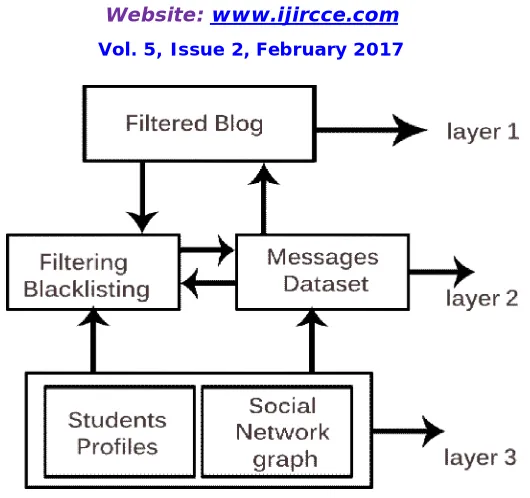
Filtered Blog Architecture:
Figure 1: Filtered Blog Architecture
Layer 1: Contains student profiles that are the details and branch code and id. Social Networking graph contains the
details of the students and what are the commonly discussed topics and all.
Layer 2: Messages and dataset: They are the topics that students are discussing and all the irrelevant topics are to be
filtered. Blacklisting a student that is completely stopping user from posting.
Layer 3: Finally attained blog that is by filtering is called filtered blog.
II. RELATED WORK
As the usage of blogs have been increased in the present era so we have made a study about the usage of blogs in different fields like arts(artblogs),photography(photoblogs),videos(vblogs),music(mp3blogs),education(edublogs).With the increasing popularity of blogs the number of users on blog are increasing day by day hence there is a need to sort out the relevant and irrelevant content of users. In this paper we proposed an algorithm named Word Discovery Algorithm which can sort out the relevant and irrelevant content posted by the users. This algorithm makes usage of the machine learning techniques like Naïve Bayes classifier, Neural Network Classifier, Support Vector System, Decision Trees. The explanation of the algorithm is given in section 3 .
III.PROPOSEDMETHODOLOGY
WORD DISCOVERY ALGORITHM:
Step 1: Instructor posts question on blog. Step 2: Student answers the questions. Step 3: Relevant answers posted on blog.
Step 4: Irrelevant will be removed by discovering left and right words.
Implementation:
We make use of machine learning techniques like Naïve Bayes Classifier, Neural Network Classifier, Support Vector System, Decision Tree.
1.Naïve Bayes Classifier:
In this we take small amount of training data to estimate classification. In the present instance important points should not be missed by the students that is only relevant points will be considered and irrelevant points will be discarded by the instructor.
A Sample Program:
#include<stdio.h> #include<conio.h> void main() {
int n,ld,rev=0; clrscr();
printf(“\n Enter n Value:”); scanf(“%d”,&n);
while(n>0) {
ld=n%10; rev=(rev*10)+ld; n=n/10;
}
printf(“\nReverse of the number is: %d”, rev); getch();
}
In the above program a small amount of trained data that is logic is involved in it. An evaluator or instructor will make sure that logic is correct or not. Apart from that rest of the statements are not considered only trained amount of data is considered. Based on this trained data evaluator or instructor will consider whether to post the answer in the blog or not.
1. Neural Network Classifier:
In this feedback of the previous layer will be taken into consideration.
2. Support Vector System :
In this both non linear and linear classification is done to get the appropriate output.
3. Decision Trees :
The decision will be taken based on conditions that are based on small amount of trained data.
IV.RESULTS GENERATION
RESULTS GENERATED ARE AS FOLLOWS:
Figure 2: REPRESENTING QUESTIONS AND EXPLANATIONS
Four Questions are given by the Instructor Students have explained in three different ways namely Explanation 1, Explanation 2, Explanation 3 Respectively
For Question1 students found the explanation 1 Simpler For Question2 students found the explanation 2 Simpler For Question 3 students found the explanation 1 Simpler For Question2 students found the explanation 3 Simpler
0 1 2 3 4 5 6
Q 1 Q 2 Q 3 Q 4
EXPLANATION 1
EXPLANATION 2
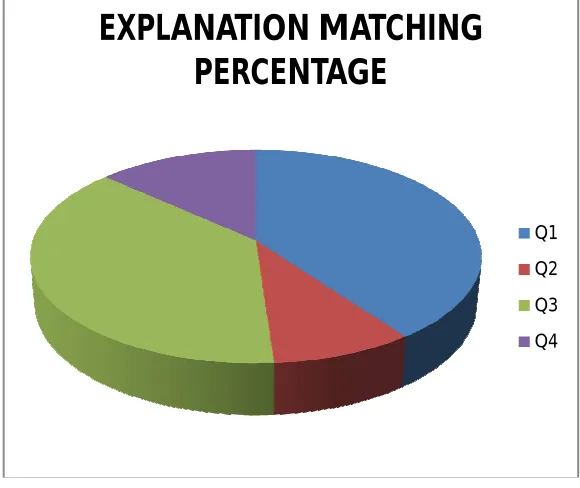
Figure 3 :PIE CHART FOR PERCENTAGE OF RELAVANCE IN ANSWER
Question 1: 90% Relevant answered Question 2: 20% Relevant answered Question 3: 85% Relevant answered Question 4: 30% Relevant answered
Question 1: 90% relevant answered so instructor will consider this answer as appropriate one Question 2: 20% relevant answered so instructor will not consider this answer as appropriate one Question 3: 85% relevant answered so instructor will consider this answer as appropriate one Question 4: 30% relevant answered so instructor will not consider this answer as appropriate one
EXPLANATION MATCHING
PERCENTAGE
Q1
Q2
Q3
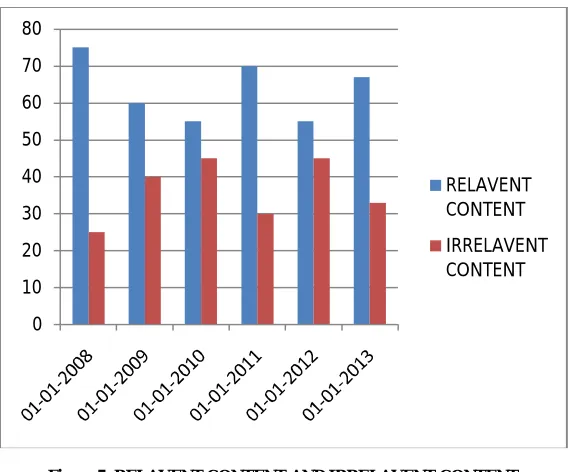
Figure 4: GRADUAL INCREASE OF STUDENT ON THE USAGE OF BLOG
Students from Section A and Section B have gradually started usage of blog on the basis of educational purpose
0 20 40 60 80 100 120 140 160 180 200 0 1 -0 1-2 0 0 8 0 1 -0 1-2 0 0 9 0 1 -0 1-2 0 1 0 0 1 -0 1-2 0 1 1 0 1 -0 1-2 0 1 2 0 1 -0 1-2 0 1 3 0 1 -0 1-2 0 1 4
USAGE OF BLOG B SECTION
V. CONCLUSION
Finally we conclude that as the technology developed people thought process also improved they are not relying on traditional methodology instead they are thinking about advancement.
Simplifying the work matters a lot. So in our proposed methodology we have come up with a technique through which instructor can correct and rectify errors by means of blog. With the advancement of technology the instructor is not only having track of the student inside the class but also outside the class.
VI.FUTURE SCOPE
Presently we are focusing on content mining i.e. the answer which they are presenting in the textual form. In future we can concentrate on video mining where student posts their answers by means of videos.
REFERENCES
[1] R. Baeza-Yates and B. Ribeiro-Neto, Modern Information Retrieval, pp. 75-82. Addison Wesley, 1999. [2] Z. Baidu, http://zhidao.baidu.com, Dec. 2010.
[3] K. Borau, C. Ullrich, J. Feng, and R. Shen, “Microblogging for Language Learning: Using Twitter to Train Communicative and Cultural Competence,” Proc. Eighth Int’l Conf. Web Based Learning, pp. 78-87, 2009.
[4] S. Cetintas, L. Si, Xin, S. Chakravarty, H. Aagard, and K. Bowen,“Learning to Identify Students’ Relevant and Irrelevant Questions in a Micro-Blogging Supported Classroom,” Proc. 10th IntelligentTutoring Systems (ITS ’10) Conf., pp. 281-284, 2010.
[5] S. Cetintas, L. Si, Y.P. Xin, D. Zhang, and J.Y. Park, “Automatic Text Categorization of Mathematical Word Problems,” Proc. 22nd Int’l FLAIRS Conf., pp. 27-32, 2009.
[6] J. Chen, R. Nairn, L. Nelson, M. Bernstein, and E. Chi, “Short and Tweet: Experiments on Recommending Content from Information Streams,” Proc. 28th ACM Int’l Conf. Human Factors in Computing Systems, pp. 1185-1194, 2010.
[7] C. Costa, G. Beham, W. Reinhardt, and M. Sillaots, “Micro-Blogging in Technology Enhanced Learning: A Use-Case Inspection of PPE Summer School 2008,” Proc. Workshop Social Information Retrieval for Technology Enhanced Learning, http://www.know center.tu-graz.ac.at/content/download/1650/8519/file/2008_ccosta_microblogging.pdf, Dec. 2008.
[8] H. Duan, Y. Cao, C.-Y. Lin, and Y. Yu, “Searching Questions by Identifying Questions Topic and Question Focus,” Proc. 46th ACL Conf., pp. 156-164, 2008.
[9] G. Grosseck and C. Holotescu, “Can We Use Twitter for Educational Activities?” Proc. Fourth Int’l Scientific Conf., eLearning and Software for Education, 2008.
[10] P. Han, R. Shen, F. Yang, and Q. Yang, “The Application of Case Based Reasoning on Q&A System,” Proc. Australian Joint Conf. Artificial Intelligence, pp. 704-713, 2002.
[11] A. Java, X. Song, T. Finin, and B. Tseng, “Why We Twitter: Understanding Micro-Blogging Usage and Communities,” Proc. Ninth WEBKDD Conf., pp. 56-65, 2007.
[12] J. Jeon, B. Croft, and J. Lee, “Finding Semantically Similar Questions Based on Their Answers,” Proc. 28th ACM SIGIR Conf., pp. 617-618, 2005.
[13] J. Jeon, B. Croft, J. Lee, and S. Park, “A Framework to Predict the Quality of Answers with Non-Textual Features,” Proc. 29th ACM SIGIR Conf. Research and Development in Information Retrieval, pp. 228-235, 2006.
[14] V. Jikoun and M. de Rijke, “Retrieving Answers from Frequently Asked Questions Pages on the Web,” Proc. 14th ACM Int’l Conf. Information and Knowledge Management (CIKM ’05), pp. 76-83, 2005.
[15] T. Joachims, “Text Categorization with Support Vector Machines: Learning with Many Relevant Features,” Proc. 10th European Conf. Machine Learning (ECML ’98), pp. 137-142, 1998.
BIOGRAPHY
1.Swathi Amancha, Post Graduated in Computer Science Engineering(M.Tech) from JNTUH in 2012
and graduated in Computer Science Engineering(B.Tech) from JNTUH in 2009 Having 7 years of experience as Asst Professor.She is presently working as Asst Professor in Computer Science
2.K.Shakunthala, Post Graduated in Computer Science Engineering(M.Tech) from JNTUH in 2012 and graduated in Information Technology(B.Tech) from JNTUH in 2010.Having 3 years of experience as Asst Professor .She is presently working as Asst Professor in Information Technology department in St. Martin’s Engineering College, Hyderabad. Area of interest in Computer Networks, Network Security, Cloud Computing, Big Data.
3.A. Prakash, Currently working as Head of the Department, CSE, St. Martin’s Engineering College.