University of Windsor University of Windsor
Scholarship at UWindsor
Scholarship at UWindsor
Electronic Theses and Dissertations Theses, Dissertations, and Major Papers
2010
He reads, he scores: The effect of soccer texts on students'
He reads, he scores: The effect of soccer texts on students'
attitudes and achievement in reading
attitudes and achievement in reading
Daniela Koppeser University of Windsor
Follow this and additional works at: https://scholar.uwindsor.ca/etd
Recommended Citation Recommended Citation
Koppeser, Daniela, "He reads, he scores: The effect of soccer texts on students' attitudes and achievement in reading" (2010). Electronic Theses and Dissertations. 7901.
https://scholar.uwindsor.ca/etd/7901
He Reads, He Scores: The Effect of Soccer Texts
on Students' Attitudes and Achievement in Reading
by
Daniela Koppeser
A Thesis
Submitted to the Faculty of Graduate Studies and Research through Education
in Partial Fulfillment of the Requirements for the Degree of Master of Education at the
University of Windsor
Windsor, Ontario, Canada
1*1
Library and Archives CanadaPublished Heritage Branch
395 Wellington Street Ottawa ON K1A 0N4 Canada
Bibliotheque et Archives Canada
Direction du
Patrimoine de I'edition
395, rue Wellington OttawaONK1A0N4 Canada
Your file Votre r6f6rence ISBN: 978-0-494-62729-7 Our file Notre reference ISBN: 978-0-494-62729-7
NOTICE: AVIS:
The author has granted a
non-exclusive license allowing Library and Archives Canada to reproduce,
publish, archive, preserve, conserve, communicate to the public by
telecommunication or on the Internet, loan, distribute and sell theses
worldwide, for commercial or non-commercial purposes, in microform, paper, electronic and/or any other formats.
L'auteur a accorde une licence non exclusive permettant a la Bibliotheque et Archives Canada de reproduire, publier, archiver, sauvegarder, conserver, transmettre au public par telecommunication ou par I'lnternet, preter, distribuer et vendre des theses partout dans le monde, a des fins commerciales ou autres, sur support microforme, papier, electronique et/ou autres formats.
The author retains copyright ownership and moral rights in this thesis. Neither the thesis nor substantial extracts from it may be printed or otherwise reproduced without the author's permission.
L'auteur conserve la propriete du droit d'auteur et des droits moraux qui protege cette these. Ni la these ni des extraits substantiels de celle-ci ne doivent etre imprimes ou autrement
reproduits sans son autorisation.
In compliance with the Canadian Privacy Act some supporting forms may have been removed from this thesis.
Conformement a la loi canadienne sur la protection de la vie privee, quelques
formulaires secondaires ont ete enleves de cette these.
While these forms may be included in the document page count, their removal does not represent any loss of content from the thesis.
Bien que ces formulaires aient inclus dans la pagination, il n'y aura aucun contenu manquant.
• + •
Author's Declaration of Originality
I hereby certify that I am the sole author of this thesis and that no part of this thesis has been published or submitted for publication.
I certify that, to the best of my knowledge, my thesis does not infringe upon anyone's copyright nor violate any proprietary rights and that any ideas, techniques, quotations, or any other material from the work of other people included in my thesis, published or otherwise, are fully acknowledged in accordance with the standard referencing practices. Furthermore, to the extent that I have included copyrighted material that surpasses the bounds of fair dealing within the meaning of the Canada Copyright Act, I certify that I have obtained a written permission from the copyright owner(s) to include such material(s) in my thesis and have included copies of such copyright clearances to my appendix.
ABSTRACT
The recent focus on boys' underachievement in literacy has prompted interventions to
improve their attitudes and achievement. One research-based strategy to engage boys in
reading is to provide texts that are relevant to them. This study examined the impact of
reading about a typical boy interest area, sports, on students' attitudes and achievement.
The results did not show that students who read soccer texts had improved reading
attitudes or achieved higher literacy scores than students who read texts from the
traditional school curriculum. However, this research suggests that the relationship
between reading soccer texts and an increase in reading attitudes may be stronger for girls
than boys. This study raises questions about current strategies that frame boys as a
homogeneous group and argues for the inclusion of non-traditional forms and genres to
DEDICATION
This thesis is dedicated to my boys
ACKNOWLEDGEMENTS
This research project would not have been possible without the guidance and support of
many people.
The author wishes to express her sincere gratitude to her thesis advisor, Dr. Dragana
Martinovic, for her expertise, kindness, and encouragement. Her energy and enthusiasm was
inspiring and made her first research experience more enjoyable. The author also gratefully
acknowledges the members of her thesis committee, Dr. Debbie Kane and Dr. Christopher Greig,
for their time and thoughtful comments.
The author would like to acknowledge the generous support from the Ontario Ministry of
Education for funding the initial boys' literacy project which allowed her to purchase the
soccer-themed novels. She would also like to acknowledge the staff and students at the Windsor-Essex
Catholic District School Board who supported her research project. The author would also like to
thank Dr. R. Tullock for permission to use the Rhody Secondary Reading Attitude Assessment
scale as a measure in her research.
Finally, the author wishes to express her love and gratitude to her family. She owes her
deepest gratitude to her parents, Gino and Antoinette Barzotto, for supporting her throughout all
of her studies and encouraging in her a love of reading. She would also like to acknowledge her
sisters, Deanna and Lisa, for their moral support throughout this journey. This project also would
not have been possible without the patience and encouragement of her husband Michael and the
TABLE OF CONTENTS
AUTHOR'S DECLARATION OF ORIGINALITY iii
ABSTRACT iv
DEDICATION v
ACKNOWLEDGEMENTS vi
LIST OF TABLES ix
LIST OF FIGURES x
LIST OF APPENDICES xi
I. INTRODUCTION
Research Questions 2
Definitions 3 Delimitations of Scope and Key Assumptions 6
Conclusion 7
II. REVIEW OF THE LITERATURE
Definitions of Literacy 8 Boys' Reading Achievement 9 Boys' Attitudes towards Reading 15 Literacy Practices and Gender Identity 16
Students' Reading Interests 20 Boys and Sports Literature 26 Avoiding Bias in Soccer Literacy Programs 31
Limitations of a Gendered Curriculum 33
III. METHODOLOGY
Introduction and Background of this Study 37 Description of the Study and Research Questions 38
Description of Research Procedures 38
Selection of Literature 39 Soccer Novel 39 Curriculum Novel 41 Set-up of the Study 42
Participants 42
Reading Journals 47 Literacy Assessment 47 Ethical Considerations 50
IV. FINDINGS
Quantitative Analysis 53 Subjects 53 The Rhody Secondary Reading Attitude Scale 59
The Ontario Secondary School Literacy Test 60
Interest Survey 60 Qualitative Analysis 73
Subjects 73 The Reading Journals 73
Procedure 73 Results 74
V. DISCUSSION
Major Findings 79 Strengths 85 Limitations 86 Implications for Future Research 87
VI. CONCLUSIONS
REFERENCES 92
APPENDICES
APPENDIX A: Certificate of Completion for Research Ethics Tutorial 99
APPENDIX B: Teacher Consent to Participate in Research 100 APPENDK C: Parental Consent to Participate in Research 102
APPENDIX D: Assent for High School Students 104 APPENDIX E: Letter of Information for Consent to Participate in Research 105
APPENDIX F: The Rhody Secondary Reading Attitude Assessment Survey 107
APPENDIX G: Personal Ways to Respond to Reading 109 APPENDIX H: Interest in Sports and Soccer Scale 110
LIST OF TABLES
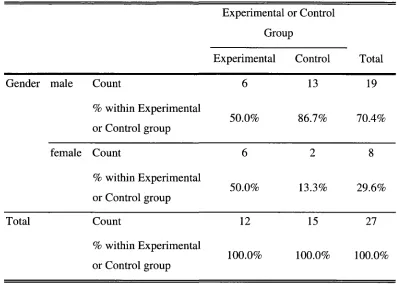
Table 1: Descriptive Statistics with Respect to Gender and Group Membership 54
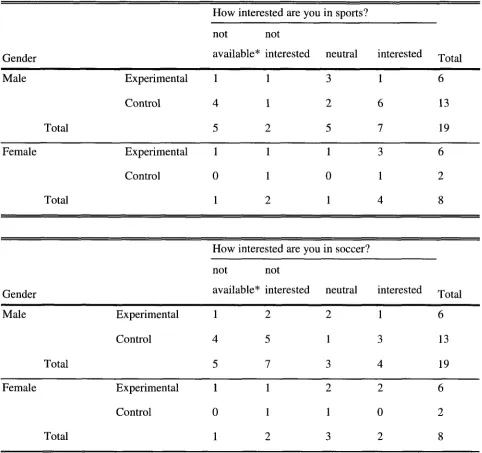
Table 2: Participants' Interest in Sports and Soccer after the Study 55
Table 3: Control Group: Male and Female Interest in Sports 56
Table 4: Experimental Group: Male and Female Interest in Sports 58
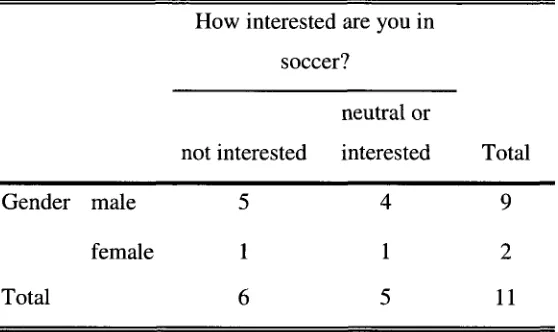
Table 5: Control Group: Male and Female Interest in Soccer 58
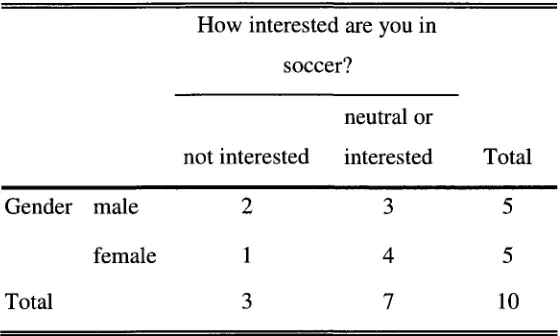
Table 6: Experimental Group: Male and Female Interest in Soccer 59
Table 7: Mean Differences and Standard Deviations across Genders and Classes 62
Table 8: Results of the Paired Samples t-test in Experimental and Control Groups 63
Table 9: Mean Differences and Standard Deviations across Genders and Classes for
School-Related Reading 67
Table 10: Mean Differences and Standard Deviations across Genders and Classes for Reading in
the Home 68
Table 11: Mean Differences and Standard Deviations across Genders and Classes for Other
Recreational Reading 69
Table 12: Mean Scores for Students' Interest in Sports across Classes and Genders 71
LIST OF FIGURES
Figure 1: Interest in sports and in soccer among male and female students after the study. Interest in sports and in soccer among experimental and control groups after the
study 57
Figure 2: Mean Pre-and Post-test Scores on the Rhody test for Females in Experimental and
Control Groups 65
Figure 3: Mean Pre-and Post-test Scores for Males in Experimental and Control Groups 65
Figure 4: Success Counts on the Ontario Secondary School Literacy Test for Males in the
Experimental and Control Groups 70 Figure 5: Success Counts on the Ontario Secondary School Literacy Test for Females in the
LIST OF APPENDICES
APPENDIX A: Certificate of Completion for Research Ethics Tutorial 99
APPENDIX B: Teacher Consent to Participate in Research 100
APPENDIX C: Parental Consent to Participate in Research 102
APPENDIX D: Assent for High School Students 104
APPENDIX E: Letter of Information for Consent to Participate in Research 105
APPENDIX F: The Rhody Secondary Reading Attitude Assessment Survey 107
APPENDIX G: Personal Ways to Respond to Reading 109
CHAPTER I
INTRODUCTION
Boys' underachievement in literacy has been the recent focus of efforts to support student
success in literacy. While the gender gap in different subjects is not a new phenomenon, the
recent focus on boys' literacy may be due, in part, to cross-curricular implementation of literacy,
as poor literacy skills impact students' performance in other subject areas. This focus may be
also due to the need for graduates to have strong literacy skills to be competitive in an
increasingly global and information-based society. Numerous studies (Coles & Hall, 2002;
Sadker, 2002; Schwartz, 2002; Wilhelm & Smith, 2001; Viadero, 2006) have shown gender
differences in literacy with respect to attitude and achievement. It is apparent that boys as a
group have more negative attitudes towards reading and do not score as well as girls on measures
of literacy performance. The evidence of weaker reading and writing skills among boys has
prompted interventions to improve their literacy attainment. In 2004, for example, the Ontario
Ministry of Education responded with a guide to improving boys' literacy skills. The preface to
this guide underscores the need for educators to respond to this issue, with a particular focus on
classroom strategies:
Based on an international review of effective practices, the guide is intended to stimulate
discussion of this important issue [boys' literacy] among educators in Ontario and to
provide practical and effective strategies that teachers across the province can put to use
in the classroom, both immediately and over the longer term. (2004, p. 2)
One of the strategies proposed by the guide is to create a more engaging reading environment for
boys by choosing appropriate classroom resources for them. This strategy is based on the
interests and encourages educators to expand texts in the classroom that better respond to the
reading interests of boys.
Ivey and Broaddus (2001) found that interest in reading material was the most important
reason that made students want to read. In an earlier study, Millard (1997) argued that the
reading communities in schools are more relevant to the interests of girls than boys. Wilhelm and
Smith (2001) found that boys rejected school-based reading because it was not consistent with
the activities they engaged in outside of school. Such findings suggest that educators can interest
boys in reading when they provide texts that better appeal to their interests. Numerous studies
(e.g., Coles & Hall, 2002; Smith, 2004) have shown that boys enjoy reading about their
traditionally masculine interest areas, particularly sports. Drawing from this literature, this study
examined the impact, if any, of soccer texts on boys' attitudes and achievement in reading.
Research Questions
The purpose of this study was to examine the relationship, if any, between the use of
soccer texts in Grade 10 applied English classes and students' attitudes towards reading, as well
as students' achievement on the Ontario Secondary School Literacy Test (OSSLT). The central
questions addressed in this research were:
a) Does the use of soccer texts in the English classroom affect students' attitudes towards
reading?
b) Does the use of soccer texts in the English classroom affect students' achievement on
the OSSLT?
c) Do students who read soccer texts in English classes have higher scores on the OSSLT
This study used primarily quantitative and then some qualitative research methods.
Student attitudes towards reading were measured pre- and post-study through a reading attitude
scale, the Rhody Secondary Reading Attitude Assessment. Students' interest in sports and soccer
were measured through an interest scale administered after the intervention. Students' attitudes
towards reading were also measured qualitatively through analyzing themes in student responses
to a series of prompts in reading journals. Students' achievement in reading was measured based
on their performance on the OSSLT. Although the study was primarily quantitative, the
qualitative data provided a means to triangulate the results.
This report is outlined as follows. A review of the literature on reading attitudes and
achievement will be provided to form a theoretical context for the present research. This will be
followed by a background to the study, including a discussion of the methodology and its
limitations. An analysis of the quantitative and qualitative data will follow. In the final chapter, a
discussion of the major findings of the study will be provided with implications for theory and
practice. Finally, the researcher will provide possible directions for future research in this area.
This study was intended as a useful resource for educators at the secondary level, in
particular those who deliver literacy programs to adolescent boys.
Definitions
Literacy—The definition of literacy is evolving to reflect changes in an increasingly
technological and information-based society. The meaning of literacy for this study is based
broadly on the definition described in the introduction to The Ontario Curriculum, Grades 9 and
10: English (revised 2007):
Literacy development is a communal project, and the teaching of literacy skills is
dedicated to developing the knowledge and skills on which literacy is based - that is,
knowledge and skills in the areas of listening and speaking, reading, writing, and viewing
and representing, (p. 3)
In this study, however, the definition of literacy was narrowed to focus more exclusively on
reading skills. In particular, the study focused on students' reading attitudes and achievement in
reading.
Reading attitudes—refers to how students feel about reading as measured on the Rhody
Secondary Reading Attitude Assessment. In particular, it refers to students' feelings toward five
aspects of their reading environment as measured on the scale: (a) school related reading, (b)
reading in the library, (c) reading in the home, (d) other recreational reading and (e) general
reading. Students' feelings towards reading the particular texts in the study are also measured
through their personal responses to the texts in reading journals.
Reading achievement—refers to student performance on the OSSLT as measured by the
Education Quality and Accountability Office (EQAO).
EQAO—the definition of EQAO is self-described in its Framework for the Ontario
Secondary School Literacy Test (2007) document:
The EQAO is an arms-length agency of the provincial government that measures the
achievement of students across Ontario in reading, writing and mathematics, and reports
the results to parents, educators and government, (p. 5)
The EQAO conducts four provincial assessments every year, including the OSSLT which
"assesses whether students have the literacy (reading and writing) skills needed to meet the
literacy requirement for the Ontario Secondary School Diploma (OSSD)" (p. 7). The framework
For the purpose of the OSSLT, literacy comprises the reading and writing skills required
to understand reading selections and to communicate through a variety of written forms
as expected in The Ontario Curriculum across all subjects up to the end of Grade 9.
(p. 12)
Gender—an important sub-theme that emerged in the preparation of this research was the
role of gender, in particular masculinities, in reading attitudes and achievement. For the purpose
of this study, gender refers to more than biological differences between males and females; it
refers to the social dimension of being male and female. The World Health Organization (WHO),
for example, uses "gender" to refer to "the socially constructed roles, behaviors, activities, and
attributes that a given society considers appropriate for men and women". This study is based
upon the socially constructed roles and behaviours of the gendered reader in society.
Masculinities—in this study, the term "masculinities" refers to the particular qualities of
behaving in ways that are considered typical for males.
Hegemonic masculinities—the role of masculinities in creating hegemonic relations
between males and females is also an important sub-theme in this study. In the words of Connell
(1990), "To say a particular form of masculinity is hegemonic means that it is culturally exalted
and that its exaltation stabilizes a structure of dominance and oppression in the gender order as a
whole" (1990, p. 94). The intersection of hegemonic masculinity and gender stereotypes in
students' attitudes towards reading will be discussed in later chapters.
Non-traditional—finally, the term "non-traditional" is used to refer to the experimental
novel Home of the Braves throughout this study. While the novel may be traditional in terms of
featuring a story of a white, middle-class, heterosexual male, it is "non-traditional" in terms of
example, has encouraged the use of "non-traditional" genres in the classroom as a strategy to
engage boys in reading. It is this strategy upon which the study is based.
Delimitations of scope and key assumptions
Key assumptions in this study were that it will be possible in the otherwise "messy"
classroom setting to delineate variables of interest (e.g., attitude towards reading) on the basis of
what reading material is used in an English class. The researcher also decided to use the 25-item
instrument that may not be comprehensive enough to distinguish nuances in the development of
students' reading attitudes.
The study is also based on the assumption that it will be possible to determine changes in
student achievement in reading based on a single standardized measure of literacy achievement.
The researcher used the Ontario Secondary School Literacy Test (OSSLT) that reports literacy
achievement as a single literacy score and thus, does not delineate between student achievement
in reading and writing. Furthermore, the OSSLT also does not delineate between students'
relative success on this measure since a numerical score is only reported for students who are not
successful.
Another assumption is that it will be possible to determine whether a single theme
variable in the experimental novel (e.g., soccer) impacted students' attitudes and achievement in
reading. While primarily a sports-text, the experimental novel had sub-themes, such as friendship
and relationships, that may have impacted students' overall responses to the text more than the
theme of soccer itself. The physical "newness" of the text and the prospect of being part of a
study may have also impacted students' initial reactions to the text.
Since the researcher did not record significant change between experimental and control
takes more factors into account. Future research in boys' literacy, for example, should take into
account factors beyond gender, such as ethnicity and social status, to disaggregate the data
among and between boys and girls as a group. Social class, for example, may have been a
confounding factor in this research. The participants in the study were recruited exclusively from
Grade 10 applied level English classes. The students in this stream may share particular social
circumstances, such as fewer literacy resources in the home, that may impact their attitudes and
achievement in reading. Application of such enhanced data collection techniques, which would
delineate between factors like social status, ethnicity and others, will better determine for which
girls and boys do particular reading interventions improve literacy.
Conclusion
As the end of the United Nations Literacy Decade (2003-2012) approaches, this
statement made by United Nations Educational, Scientific and Cultural Organization (UNESCO)
reminds us of the important work we have of developing literacy skills for the benefit of all
people:
Those who use literacy take it for granted - but those who cannot use it are excluded
from much communication in today's world. Indeed, it is the excluded who can best
CHAPTER II
REVIEW OF THE LITERATURE
This chapter is a review of the theoretical and methodological dimensions of the literature
on students' reading attitudes and achievement. The focus of this overview is on the results that
point to gender differences in attitudes towards reading and recommendations on how to bridge
this gap. Results from the previous research form a base for establishing questions that inform
the focus for the research described in later chapters.
Definitions of Literacy
A review of the literature on reading attitudes and achievement points to an evolving
definition of literacy, which is in time becoming increasingly complex. The traditional definition
of literacy considers the ability to use language to read and write. The International Council for
Adult Education (ICAE) (2003) expands basic literacy to include, "learning to read and write
(text and numbers), reading and writing to learn, and developing these skills and using them
effectively for meeting basic needs" (p. 29), in particular the skills necessary to perform essential
daily tasks. This definition, however, is too exclusive as it does not take into account variations
between particular social and cultural contexts.
More recent definitions of literacy have evolved from such an exclusive focus on reading
and writing to the social and cultural aspects embedded in the act of reading and writing. The
definition by the United Nations Educational, Scientific and Cultural Organization (UNESCO),
for example, reflects the importance of socio-cultural context in defining literacy:
Literacy is the ability to identify, understand, interpret, create, communicate, compute
a continuum of learning to enable an individual to achieve his or her goals, to develop his
or her knowledge and potential, and to participate fully in the wider society, (p. 13)
Similarly, a functional view of literacy incorporates "the ability to understand and employ
printed information in daily activities at home, at work, and in the community—to achieve one's
goals and to develop one's knowledge and potential" (Statistics Canada and OECD, p. 14). Thus,
literacy is not a simple construct with one single, widely accepted definition. Definitions of
literacy have evolved and become more complex to reflect the current realities in our
increasingly knowledge-based society and growing demands for specific skills in the workforce,
which also affect education. In this context, illiteracy is viewed as a social problem to be solved
through education.
Despite changes in the meaning of literacy, all of these views espouse the underlying
belief that literacy skills are the foundation of learning and that they have implications for the
individual, society and world. Furthermore, literacy is a fundamental human right that is
necessary to foster full participation in society.
Such beliefs have prompted the inauguration of 2003-2012 as the United Nations
Literacy Decade (UNLD) to address this global need. This political and social climate forms the
context for the research conducted in this study.
Boys' Reading Achievement
Studies show a declining trend of boys' achievement in literacy skills, especially in
reading and writing. The Canadian Council on Learning's (CCL) report, State of Learning in
Canada: No Time for Complacency (2007), argues that Canada is facing a major literacy
challenge whereby, "an astounding number of Canadian adults cannot read, write [...] at the
also documented that while 15 year-old Canadians scored above the Organisation for Economic
Co-operation and Development (OECD) average in 2003, girls outperformed boys significantly
in reading, with girls scoring an average of 32 points higher than boys1 (p. 28). Furthermore, the
report, Measuring Up: Canadian Results of the OECD PISA Study-The Performance of
Canada's Youth in Mathematics, Reading, Science and Problem Solving states that this gender
gap in reading achievement is much larger than the gap between boys and girls in mathematics
(2007, p. 38).
This trend in boys' underachievement is also echoed in provincial measures of literacy
achievement. In Ontario, The Education Quality and Accountability Office (EQAO) measures
student achievement in reading and writing for students in Grades 3, 6 and 9. In 2007-2008,
EQAO reported that boys did not perform as well as girls in reading at any of the three grade
levels. In Grade 3, 68% of females performed at or above the provincial standard in reading
compared to 59% of males (9 points difference). This gap was wider for Grade 6 with 73% of
females and 58% of males meeting or exceeding the reading standard (15 points difference).
Similarly, a larger percentage of female (88%) than male (80%) students successfully completed
the March 2008 Ontario Secondary School Literacy Test (OSSLT). EQAO further reports that
over the past five years, the gender gap has remained consistent in all three provincial
assessments of reading and writing.
The achievement level of boys in reading is also lagging considerably behind girls in the
United States. The National Assessment of Educational Progress (NAEP), for example, measures
1 For PISA, the scores for reading, science, and problem solving are expressed on a scale with an
the achievement of students from the United States in various subject areas, including reading
and writing, in Grades 4, 8 and 12. The 2008 NAEP data showed that males consistently
performed significantly below females in reading achievement at all three grade levels. The most
pronounced differences in scores in 2004 were in the 8l and 12th grade where females lead males
by 8 and 11 points respectively. The long-term trend scores from the NAEP show that this
pattern is consistent over time. For over three and a half decades, female students have scored
higher on average than male students in reading. Furthermore, this gap widens as students move
into adolescence. In 2008, for instance, at age nine, boys scored an average of seven points lower
than girls in reading; while age seventeen boys lagged behind girls by eleven points.
Moreover, these achievement patterns appear to be universal. The Progress in
International Reading Literacy Study (PIRLS) 2006 (US Department of Education, 2007),
reported that girls had higher average achievement than boys in reading in every country (n=41)
and province. Overall, the average score for girls was 509 compared to 492 for boys. Similarly,
the Programme for International Student Assessment (PISA) 2006 showed that girls
outperformed boys on the reading component in all countries (n = 57) and in all Canadian
provinces. PISA also reported that reading is the area with the largest gender gaps, with the gap
of at least 50 score points in twelve countries.
Boys' underachievement on such national and international assessments have contributed
to what Barrs (2000) refers to as a "cult of measurement" (p. 287). In this context, the gap in
boys' and girls' achievement has created a perceived "crisis" in boys' literacy. Sokal (2005),
however, cautions that the trend of boys' underachievement is not altogether an unfamiliar topic.
In fact, gender differences in literacy have remained consistent since at least 1965. Zyngier
through a superficial analysis of test results and through framing the issue as a rivalry of girls
versus boys. Such treatment, Zyngier argues, ignores the wide range of achievement among boys
and girls and ignores factors, beyond gender, that affect the achievement of all children.
The underachievement in reading by boys has been problematised to such an extent so as
to prompt the need for urgent intervention. In Ontario, a recent Ministry of Education teacher
guide Me Read? No Way!: A practical guide to improving boys' literacy skills argues that
closing the gap is a gender equity issue:
All educators share the common goal of providing equitable learning opportunities for
every student in the classroom. Providing equitable opportunities for girls is a familiar
topic; providing them for boys is a relatively recent issue, but one that is appearing with
increasing urgency on education agendas around the world. (2004, p. 4)
Zyngier (2009), however, argues that a focus on one group based on one homogeneous trait (like
gender) does not promote a socially just education. Instead, Zyngier argues that schools should
transform the existing structures in schools that promote a "narrow, opposing notion of
masculinity and femininity" (p. 116). The boys' debate has prompted research into gender
differences in the acquisition and maintenance of literacy skills.
It is now widely accepted that boys are more likely than girls to have problems with
acquiring literacy (Coles & Hall, 2002; Sadker, 2002; Schwartz, 2002; Wilhelm & Smith, 2001;
Viadero, 2006). Wilhelm and Smith (2001) found that boys learned to read at an older age, took
longer to learn to read, and comprehended narrative and expository texts less well than girls did.
These findings are consistent with Millard's results that a larger proportion of boys described
learning to read as "hard" and significantly more girls than boys found learning to read as "easy"
Boys are thus "differently literate" (Millard, 1997), which Millard argues may predispose
them to problems with literacy in school. Boys' rejection of school-based reading, for example,
positions them outside of the "dominant literacy of schooling" (p. 45), thus disadvantaging them
in acquiring the reading and writing skills necessary for success in the school setting. This is
particularly problematic in those aspects of the school curriculum that are language-based. This
idea that, as pupils, boys are different from girls is echoed in the work of Taylor and Lorimer
(2002) who reported that boys are more likely than girls to be enrolled in special education
programs, to be disciplined more often and to have higher dropout rates than girls.
One explanation offered for boys' underachievement is the feminization of primary
schooling. In a study of male (n = 118) and female (n = 92) primary school student teachers from
20 institutions in England, Skelton (2002) found that the teachers viewed primary schools and
teaching as feminized. The need for more male role models in primary schools has been offered
as a strategy to counteract the alleged feminization of schools. When asked for their views on
conditions to increase male teachers recruitment in primary schools, for example, the female
student teachers responded in ways that, the researcher suggested, supported traditional
stereotypical notions of masculinity. These females suggested use of "three conditions associated
with traditional masculinity and male power" (p. 81), in particular advanced status and higher
pay, men as knowledge/skills experts (e.g., particular subject teaching; disassociation of the
notion of primary teaching as similar to child care), and men as leaders (i.e., in control of
discipline). Thus, the views of the female student teachers reinforced the idea that primary
schools are feminized environments.
Skelton (2002), however, critiques the belief held by the student teachers that primary
teaching is primarily a female profession; that is, female primary teachers outnumber males by
5:1. Such a view, however, assumes that males and females act in stereotypical ways and that the
predominance of female teachers has effects on the pedagogy and culture that privilege females.
Instead, Skelton argues that the current educational policy that goes contrary to what feminized
education would be, i.e., having flexible school agendas, putting less emphasis on individualism,
and promoting non-hierarchical management structures in the primary school, results in schools
that are "masculinised - or re-masculinised" (p. 91). The problem is that current educational
policy does not challenge conventional gender stereotypes. This limiting notion of gender has the
unintended effect of reinforcing stereotypical ideas of masculinity and femininity.
Martino (2008) also criticizes educational policies that call for more male role models in
elementary schools. Such policies, Martino argues, do not take into account the complexities of
masculinity in male elementary school teachers' lives. In a case study of two male elementary
school teachers, the narratives of both males revealed competing versions of masculinity based
on their specific biographies, in particular their sexual orientation and social class. Ben, a 40 year
old homosexual elementary teacher at an inner-city school in Toronto and Steve, a 33 year old
heterosexual teacher in an economically disadvantaged community in a major Australian city,
both embody contradictory practices of masculinity. Ben, for example, desires "to fashion a
masculinity against such unpalatable forms of blokiness, which he associates with a crude form
of sexism, racism, overt homophobia and a tendency to moral degeneracy, which he experiences
at the hands of his students and their families"; while Steve refuses, "by wearing a floral shirt
and crossing his legs, to embody normative heterosexual masculinity in the eyes of his students
that immediately incites their homophobic surveillance and policing of his masculinity" (p. 599).
hegemonic masculinities on male teachers' lives rather than advocating for more male role
models as a solution to addressing the boys' underachievement.
These results, although intriguing, do not reveal why boys as a group have more trouble
with acquiring literacy? Is the issue perhaps in the different attitudes that girls and boys may
have towards reading?
Boys' Attitudes towards Reading
Numerous studies have demonstrated gender differences in attitudes towards reading. In a
study of male and female students from nine schools in South Yorkshire, UK, Millard (1997)
found that boys as a group do not value reading as an activity and are more likely than girls to
describe themselves as non readers. Almost half of the participant boys (46%, n = 134) were
termed "occasional readers" because they did very little reading, compared to less than a quarter
of the girls (22%, n = 121) in this category. Millard also found that boys were more likely than
girls to report school as the place where they did most of their reading.
Millard (1997) argues that boys' perceptions of themselves as readers, and the ways in
which their early reading experiences have been differentiated in relation to their gender,
necessarily shape their reading attitudes. Hall and Coles (2001) reiterate this idea stating that
"boys who read voraciously in texts and forms unrecognized by official school curricula see
themselves as non-readers" (p. 220). Is this disconnect between boys' school and outside of
school literacy experiences the consequence of school non-responsiveness to boys' literacy
needs? Or, are these attitudes embedded in the broader societal issues of gender construction?
According to Millard (1997), it seems that boys' reading habits may be due to a societal
issue whereby the image of the reader in society is linked to "a construct of passive feminine
with female members of the family, particularly mothers, to the extent that mothers played an
equally important role as schools in the process of learning to read. In addition, children
associate different kinds of reading as appropriate to different members of the family; fathers
read for a set purpose (e.g., to get informed), rather than for leisure or to enjoy the narrative.
Similarly, Scieszka (2003) argued that social reasons might account for why more girls than boys
are readers because many boys do not see reading as a "particularly masculine activity" (p. 17).
These findings suggest that constructions of gender and literacy are inextricably linked in
societal attitudes towards reading and related literacy practices. Are the literacy practices in
schools feminized or are girls socialized differently in their attitudes towards reading?
Literacy Practices and Gender Identity
Similar to Millard (1997), Alloway and Gilbert (1997) argued that the then literacy
practices in schools were incompatible with boys' understanding of masculine identity. It is
because "the practices that are naturalised in the literacy classroom are often practices that boys
may experience as incompatible with their understandings of appropriate masculine identity" (p.
55). In particular, this masculine identity runs counter to the "truly literate subject" in the
literacy classroom that encourages boys to "express their inner selves, to appreciate the canons of
literature, and to observe community standards of morality" (Alloway & Gilbert, 1997, p. 55).
Young (2001) argued that these masculine identities are not stable and that they are
constructed within social institutions, namely schools. Young designed a study to examine the
impact that social contexts have on how boys display masculinity as they participate in literacy
activities. In an eighteen week homeschooling project with four adolescent boys, Young found
that the boys displayed hegemonic practices of masculinity in their discussions about texts. Here
To say a particular form of masculinity is hegemonic means that it is culturally exalted
and that its exaltation stabilizes a structure of dominance and oppression in the gender
order as a whole. (1990, p. 94)
In a critical literacy activity intended to explore how teen magazines represent boys and girls,
Young (2001) found that the boys talked about gender in stereotyped ways. For example, when
asked to write a description of a "perfect girl," the boys ogled the pictures and made remarks
about female bodies to one another. However, when asked to describe a "perfect male," the boys
refused to respond and voiced negative reactions to the pictures of boys in the magazine. Using
Critical Discourse Analysis (CDA) as a method, Young found that the gender representations in
the magazines limited the ways the boys thought about themselves. Young argued that the boys'
reactions to the photos were an outward display of heterosexual masculinity important to their
growing masculine identities. In addition, the boys were more interested in displaying this
masculinity than participating in a critical discussion about how boys and girls were represented
in teen magazines.
These distinct characteristics of boys' literacy practices and behaviours are what Blair
and Sanford (2004) termed "morphing." In a two-year ethnographic case study of early
adolescent boys in six Canadian urban and rural school settings, Blair and Sanford found that the
boys morphed school literacy practices based on their interests and needs. The researchers found
five themes in the boys' comments about their literacy practices, including boys' need to find
personal interests, action, success, fun and purpose in their school work. In particular, Blair and
1. Boys choose to transform time to work on aspects of school literacies that appeal to
them (e.g., dedicate more time to prepare themselves for classroom activities; use larger
chunks of time for activities).
2. Boys transform the purpose of the assignment to suit their interests (e.g., representing
their knowledge in alternative formats - visually, orally and with gestures; creative
writing about characters that exhibit strength or power; selecting visual, humourous and
active texts).
3. Boys transform literacy events into social-cultural capital (e.g., clustering around an
engaging activity; reading materials that can be shared in conversations with friends).
(2004, p. 454)
Blair and Sanford also found that the reading selected by the boys outside of school which
supported their personal interests contrasted with their selections in school because they were not
seen as appropriate for school reading. The researchers further argued that since boys' literacy
resists the traditional definition of school literacy, the boys in the study were "using what they
had learned in school and were morphing it for their own purposes, fulfilling their need to
position themselves in the world and support relationships with their peers" (2004, p. 454). In
other words, morphing was a practice used by boys to turn themselves into what they perceived
to be "acceptable masculine beings" (p. 457). Boys are thus set up to reinforce gendered
behaviour through changing literacy practices based on their interests and needs.
Several studies offer other possible explanations for the opposition of boys' literacy
practices and behaviours to traditional school literacy practices. In an action research project on
dual-language storytelling, Cummins, Chow and Schecter (2006) used students' home languages
within their interactions with students between cognitive engagement and identity investment.
Cummins, Chow and Schecter argued that, "teacher-student interactions must affirm students'
cultural, linguistic, and personal identities in order to create classroom conditions for the
maximum identity investment in the learning process" (p. 305). While this study focused on
enhancing bilingual children's literacy development, the framework that emerged from the study
could also be applied to the distinctive characteristics of boys' literacy. This framework is also
reminiscent of the "second class" or "alternative pedagogical space" that Campano (2005)
described as such that, "unsettles distinctions that are often taken for granted, such as those
between official/unofficial and school/familial ways of knowing" (p. 187). Since Campano
(2005) acknowledges that, "the second class runs parallel to, sometimes in the shadow of, the
official first class" (p. 187), traditional or official literacy practices may fail to legitimize certain
ways of knowing or being. These ways of knowing are necessarily embedded not only in school
literacy practices, but in the school sanctioned texts themselves.
It is well known that books and other texts affect children's view of themselves,
including their views of gender identity (Coles & Hall, 2002; DeBlase, 1993; Millard, 1997;
Orellana, 1995; Temple, 1993). According to Barrs (2000), "reading is one of the main
psychological tools available to us in the process of becoming a person because of the access it
gives us to other and wider ways of being" (p. 289), including ideas of what it entails in being
female or male. This process, Barrs argues, is revealed in the history of texts people read from
childhood and adolescence into adulthood. In examining the reading history of her goddaughter,
for example, Barrs argued that the progression of female reading choices revealed a more
complex and varied view of gender than many boys' reading histories (e.g., girls are more likely
roles than boys are to act out female roles). She writes, however, that, "I can parallel this history
[her goddaughter's] with other reading histories of girls, but I don't know whether many boys'
reading histories would show the same kind of pattern, of a view of gender becoming more
complex and varied." (p. 290). So, what are the implications of the content of reading on boys'
and girls' identity construction?
Gilbert (1992) stated that, "it is also through the text that we learn how to take up
positions in our culture as women and men, wives and husbands, lovers and friends: that we
learn to function socially in our world" (p. 188). However, Wall (1992) cautioned that, "Since
we [the readers] readily acknowledge that literature mirrors life and describes the world around
us, the subconscious effect of conditioning is thus perpetuated through literature" (p. 26).
Alloway et al. (2002) also underscored the importance of taking a critical look at school texts:
Over and above the general issue of whether or not these materials are found to be more
engaging by boys, real engagement in these imported materials calls for more intensive
analysis of the texts' cultural contents, and highlights the powerfully gendered nature of
commercial representations of the culture in which the school operates. (2002, p. 169)
If literature mirrors and describes the world around us, then an important aspect in the
development of boys' attitudes toward reading is the extent to which the texts in schools overlap
with boys' personal interests, which are also socially determined. Are there noted differences in
reading interests between genders and are these interests reflected in the school curriculum?
Students' Reading Interests
Ivey and Broaddus (2001) found that interest in reading material was the most important
reason that made middle school students want to read. In a survey of 1765 Grade 6 students from
(42%, n = 750) were motivated to read at school by finding good materials to read and having
choice in the selection. In a follow-up interview of 31 students on the survey responses, 12
students (39%) confirmed that a good book or topic motivates them to read in school. In
addition, the students who were not engaged by the assigned school texts reported these
materials as "boring."
Ivey and Broaddus (2001) also found a vast difference in the diversity of materials
students reported reading at home compared to at school. For example, after being asked what
are their favourite books they read at home/in school, more than three quarters of classrooms
surveyed reported at least 0.7 unique titles per student for home reading as compared to less than
one quarter that reported 0.7 unique titles per student for reading at school. In one particular
classroom, all 23 students mentioned separate titles or topics of their home reading. Thus, there
were noticeable differences between the variety and types of books read at school and home—at
home students read nonfiction, fiction, popular and informational magazines, picture books, and
poetry, while in school they mentioned reading award-winning novels (contemporary realistic
fiction, historical fiction, and some fantasy) and rarely nonfiction, informational magazines, or
recently published titles. The researchers concluded that students were reading at home to learn
about topics related to their personal interests. Furthermore, the books students read at school did
not match what they said they preferred to read and what they read outside of school. In fact,
classrooms were ranked as one of the least likely places to find materials they wanted to read.
So, what can teachers do to motivate students, particularly boys, in reading at school?
Taylor and Lorimer (2002) suggested that teachers can interest boys in literacy when they
demonstrate knowledge of boys' needs and provide texts that appeal to their interests. Taylor and
that giving students reading materials related to their interests leads to greater motivation in
developing literacy skills. While Taylor and Lorimer cautioned that no one solution emerged
from their research, the content of texts, especially if it affirms boys' masculine identities, may
help motivate boys to engage in reading.
A consistent theme in the literature on reading interests is that boys like to read what
reflects their experiences (Coles & Hall, 2002; Jones, 2005; Smith, 2004; Sullivan, 2004;
Wilhelm, 2001). In a study of 49 boys from four diverse backgrounds and research sites,
Wilhelm and Smith (2001) qualitatively examined the boys' literacy activities in and out of
school. One of the themes that emerged from their research was that while boys valued reading
and pursued literate activities outside of school, there was a complete disconnection between
literacies at home and at school. Furthermore, they found that almost all the participants, even
successful students, rejected school literacy tasks. However, many of these same boys
participated in literacy tasks at home. So, why did the boys in the study reject school-based
reading?
Wilhelm and Smith (2001) found no evidence that boys rejected literacy because they
saw it as feminized. For example, in response to a reading profile of a boy that included details
that might mark him as feminine, the boys expressed admiration for him, in particular for his
love for reading and competence as a reader. Instead, Wilhelm and Smith found that boys often
rejected school-based reading because it was not consistent with the activities boys engaged in
outside of school. Similarly, Millard (1997) found that the reading communities in schools were
more relevant to the interests of girls than boys. In an earlier study of 16 boys and girls, Millard
found that the main reasons for the gender differences in attitudes towards school reading were
(e.g., computer and hobby magazines; comic strips), not having free choice in reading, and an
existing mismatch between students' expectations of the importance of reading and its perceived
use in school as a time filler and/or leisure activity. It seems that any intervention intended to
increase reading engagement of school children, particularly boys, needs to be based on their
interests. This is particularly necessary when school reading does not match boys' expressed
interests outside their school lives.
Many studies have demonstrated the importance of sports in boys' school lives.
Lightbody, Siann, Stocks and Walsh (1996) designed a study to measure the role of gender in
motivation towards school. In the study, 1068 secondary school students in London, UK,
completed a questionnaire about their enjoyment of school, particularly school subjects. Overall,
girls (58%, n = 543) were more likely than boys (47%, n = 525) to report that they enjoyed
school. The researchers found gender differences in the enjoyment of specific subjects, with boys
far more likely to report enjoyment in Science, Technology, Physical Education, Information
Technology and Mathematics. The researchers found marked gender differences on six of the
following eight aspects of school life: friends, break, lunch break, teachers, clubs, sports, outings
and lessons. A significant number of boys (73%) rated sports as "like a lot," which was the
highest score on an interest inventory scale, compared to 48% of girls on the same item.
Similarly, boys rated school clubs more favourably than girls did (41%, compared to 20%).
Other studies also looked into the children's favourite out of school activities. For
example, Nippold's et al. (2005) studied the leisure time preference of young adolescents. In a
study of 100 sixth graders and 100 ninth graders in Oregon, Nippold et al. found that one of the
most popular leisure activities among adolescent boys was playing sports (80%, n = 200),
positively to the item on reading on the questionnaire. While reading was a moderately popular
activity for all students (51%), in higher grades interest in reading declined over time as only
37% of ninth graders reported enjoying reading. Boys' interest in playing sports, however,
remained fairly stable from Grades 6-9 (82%, compared to 78%). Furthermore, boys were more
likely than girls (17%, compared to 4%) to report that they spend no time reading for leisure. The
researchers concluded that as children become adolescents, their interest in reading decreases as
other activities compete for their time. Thus, sports are clearly an important part of the lived
experience of many school-age boys.
If interest in reading materials is the most important element in motivating boys to read,
then literature that relates to their unique male interests, namely sports, could be an entry point to
engage them in reading. Smith (2004) conducted a largely qualitative study designed to examine
the reading experiences of six high achieving boy readers over a two-year period. These
five-year old boys were identified by their teachers as boys whose reading was "significantly above
their peers' reading and above where they would expect a child of that age to be" (p. 10).
Although data was collected on fiction and non-fiction reading, the data analysis focused on the
boys' non-fiction reading habits since this genre had a dominant place in their reading for
pleasure.
Smith found that these boys all enjoyed reading non-fiction texts, particularly to find out
information. In particular, the boys enjoyed reading about four subject areas: space, football,
dinosaurs and animals/minibeasts. The researchers also noted the dominant place of football in
the boys' non-fiction reading. In a research conversation with one of the boys about things they
like about reading, one of the participants responded, "I like to find out about information ... I
soccer (though denoted in the study as football) texts. For some boys, this interest developed
over the two years and dominated their reading at the end of the study. In the reading logs of two
of the boys, for example, all of the non-fiction reading noted was football-related. Furthermore,
the researchers found that the reading interests of the boys were not feminized as they closely
resembled the interests of other boys. So, how do these successful boy readers make connections
with their masculine interest areas and reading?
Smith (2004) found that one of the ways the boys made positive connections between
reading and masculinity is that they used non-fiction reading to find out information about their
masculine interest areas. For example, the boys read non-fiction texts to find out statistical and
biographical information related to football. The outcome of boys' reading is that they have
excellent knowledge on the subject areas of their interest. The boys used this knowledge gained
from their non-fiction reading in the classroom with their peers. This "expert" identity gave the
boys "high status, hegemonic masculine identity" (p. 14) amongst their peers. Smith concluded
that the boys used the non-fiction reading in traditional boy interest areas to develop an
acceptable and desirable "version of masculinity" (p. 11) which includes being a reader. Thus,
Smith concluded that masculinity and reading became compatible for the young boys in the
study through their non-fiction reading interests.
Sokal (2005) also argued that boys perceive reading of high-interest texts as an
appropriate activity. Such texts, however, must be engaging to the individual boys, not to boys as
a homogeneous group. Similar to Smith's findings in the previously described study, Sokal
argued that boys rationalize their participation in reading by using themselves as the models for
masculinity. In other words, when boys find interest in a feminine activity, they will justify
be appropriate to boys. Sokal cautions, however, that while de-feminizing reading will affect
some boys' performance, it will not impact other obstacles to boys' reading achievement.
Instead, Sokal argues that researchers move towards asking the question "Which boys?" instead
and take into account individual preferences as vital in engaging non-reading boys.
Similarly, Martino et al. (2004) problematize educators viewing boys as a homogeneous
group. In a study of boys at a junior secondary high school in Australia implementing a "boy
friendly" curriculum, Martino et al. found that the "boy friendly" curriculum was highly
gendered and based on teachers' normative assumptions about how boys learn. The school
implemented an "activities-based curriculum" based on the assumption that boys prefer
structured programs with more hands-on activities to address their educational needs. The ways
in which such a curriculum is framed, however, homogenizes boys and normalizes certain
gendered approaches to learning. Such approaches, they argue, can have a negative impact on the
social and educational outcomes for boys and girls since they cater to a particular kind of
masculinity for a particular type of middle class boy. Despite such limiting definitions of
masculinity, are there differences between the reading preferences of particular boys and girls?
Boys and Sports Literature
In a study of reading choices by Coles and Hall (2002), there were significant differences
in the types of books chosen by boys and girls. Coles and Hall's study replicated an earlier
large-scale national reading survey sponsored by the W H Smith bookshop chain in England in 1971.
The current study used a national survey with children of 10, 12 and 14 years of age in 110
primary and 59 secondary schools in England to compare children's reading choices over time.
Overall, the researchers found that book reading had increased, except amongst 14-year old boys.
to 1.45 in this age group. There was also a tendency for fewer books being read by children as
they grew older. For example, 91% of 10 year olds had responded positively to having read any
book in the month prior to the survey compared to only 64% of 14-year olds.
Coles and Hall (2002) also examined differences in the types of books chosen by boys
and girls. A much greater percentage (82.1%, n = 7867) of boys' reading consisted of
sports-related books, compared to only 17.9% of girls'. Amongst the boys, a comic book, tabloid
newspaper and soccer magazines were the most popular at the time of the survey. When asked to
complete the sentence "I think that reading is ...," more girls (59.2%) than boys (47.1%)
expressed positive attitudes towards reading. Coles and Hall concluded that reading practices are
highly gendered, and become more gendered as children move into adolescence. They further
argued that the mismatch between boys' reading tastes and habits and school literacy
requirements affect boys' motivation in school-based reading. Boys' "vernacular literacies" (p.
105), for example, are more inclined to analyzing information (i.e., memorizing facts and
figures, rehearsing arguments, comparing and ranking performances and identifying procedures)
than analyzing motivation or characterization. Thus, Coles and Hall argued that children's
distinct reading cultures outside school should be recognized and respected in school.
Crowe (2001) also reported that the sports novels widely read by boys often featured
male protagonists. While sports literature for teenagers has been around for a long time, the
nature of these novels has changed over time. Crowe (2001) coined the term "sportlerroman" (p.
130) to describe a genre of bildungsroman that deals with the personal development of a young
athlete. In these novels, "the main character is an athlete, but the central issues of the stories are
only tangentially connected to sports" (p. 130). Such books, Crowe described, combine character
reluctant readers and this has limited the acceptance of the genre as "legitimate literature" (p.
131). Similarly, Hill (2005) touted the popularity of the "male sporting hero" as one who is
"admired by men of all ages as a paragon, the happy warrior who all would wish to be" (p. 411).
Minchew (2002) pointed out the potential value of teaching character through sports
literature in schools since it "provides an avenue for values discussions; moreover, the intensity
and passion of the court or field or arena may more completely engage some students than
traditional literature does" (p. 138). Minchew illustrated that sports literature can be used to
teach, among other values, a strong work ethic, physical and psychological courage, honesty and
fair play, and the ability to learn from adversity. Thus, studies on the reading preferences of boys
support the notion that boys' enjoyment in reading about their masculine interest areas,
particularly sports, should not be taken lightly, but should be reflected in the school literacy
activities as well.
In encouraging boys to read about masculine interest areas, however, Greig and Hughes
(2009) warn that using "boy baits" such as adventure, sports and violence, to "lure" boys into
reading reinforces traditional definitions of masculinity (p. 92). Such strategies, they argue,
interfere with boys' best interests "as it is not only aggressive and violent but maintains male
power at the expense of women and other subordinate and marginalized masculinities, and
imposes limits on boys and their reading preferences" (p. 94). This narrow view, they argue, also
assumes that boys' reading preferences "are determined as a result of simply being boys" which
leads to the homogenizing of boys as a group (p. 93).
However, Brozo's (2002) research on boys' reading preferences suggests that there may
be more to boys' reading engagement than simply the genre of text. Brozo argued that boys
male archetypes. Perhaps not surprisingly, these archetypes appealed to and affirmed boys'
unique masculine identities. While Brozo emphasized that boys exhibit "multiple expressions of
masculine identity" (2002, p. 15), the archetypal "warrior" Brozo described in his research seems
to be the most closely aligned with the culture of sports. Here Brozo drew on Arnold's (1992)
definition of the archetypal warrior as the one that traditionally represents the "noblest qualities
of masculinity: bravery, self-sacrifice, stamina and skill" (Arnold, 1992, p. 101). The ten positive
male archetypes alluded to in Brozo's research included the pilgrim, patriarch, warrior, magician,
king, wildman, healer, prophet, trickster and lover. In defense of criticism that such archetypes
reinforce gender stereotypes, Brozo argued instead that "books that are steeped in positive male
archetypes may actually dispel stereotypical notions of what it means to be masculine" (Brozo,
2002, p. 19).
Several studies have explored the place of sport in the construction of particular types of
masculinities. The connection between sports and war imagery has long been established. Gilbert
and Gilbert's research (1998) found that "men's sport is the archetype of institutionalized
masculinity, and the image of men which dominate its ideology are the quintessential
manifestation of the masculinist ethos" (p. 33). Similarly, Renold (1997) warned of the gendered
consequences that sports can have on boys and girls. In a study of playground relations in two
primary schools, Renold examined how playground games and activities, particularly soccer,
defined boys' masculinity and signified this masculinity to others. In both primary schools, the
researcher found that soccer (though denoted in the study as football) was the dominant activity
for boys and girls. However, Renold suggested that hegemonic masculinity was constructed
through the exclusion of females in the game. The following excerpt from the transcripts show
ER: Why do you think they are stopping you from playing sometimes?
Hannah: Well sometimes if you go up to them and say 'can I play football' they say 'No
you're a girl, you're not good enough' or something like that.
ER: But the fact that you do score goals and that you can play/
Hannah: Yeah but they won't let you try. (Renold, 1997, p. 9)
Through such transcripts, Renold showed the place of soccer as a "powerful collective practice
dominated by boys who actively excluded girls" (1997, p. 9). In fact, the physical separation of
the school playground between soccer and all other activities further segregated the girls from
the boys.
Renold (1997) also explored the relationship between athletic achievement in soccer and
masculinity. The boys that showed mastery of skills in the game, for example, were often
considered to be more masculine by their peers. Renold further argued that these masculinising
practices privileged boys over girls:
The masculinising practices that took place with and without the game of football seemed
to stem specifically from the need to portray and display to others a particular type of
male hegemony, achieved by positioning themselves within a wider 'sporting narrative.'
Moreover, such practices, because they were constructed in relation to femininities,
subordinated, stigmatized and marginalized other masculinities and femininities. (1997,
p. 20)
However, Renold noted that it was the boys who were not fully skilled in the game that actively
excluded girls from the game. Renold suggested that since these boys were unable to construct
their masculinity through sporting competence, they excluded girls to disassociate themselves