Modelling The Happiness Classification Of
Addicted, Addiction Risk, Threshold And
Non-Addicted Groups On Internet Usage
Fatma Sapmaz [1], Tarık Totan [2]
[1] Sakarya University, Faculty of Education
Department of Guidance and Counseling
Hendek / Sakarya
E-mail: [email protected]
[2] Adnan Menderes University
Faculty of Education Department of Guidance and Counseling
Efeler / Aydın
E-mail: [email protected]
ABSTRACT
The aim of this study is to model the happiness classification of university students – grouped as addicted, addiction risk, threshold and non-addicted to internet usage -- with compatibility analysis on a map as happiness, average and unhappiness. The participants in this study were 400 university students from Turkey. According to the results of two-step cluster analysis, it was found that 21.10% of participants are in the ‘addiction group’, 26.60% participants are in the ‘addiction risk group’, 26.60% participants are in the ‘threshold group’ which is between the ‘risk’ and ‘non-addicted’ groups, and 25.80% participants are in the ‘non-addicted group’. Additionally, two-step cluster analysis for happiness research showed that 15.90% of participants are in the ‘happiness group’, 43.20% belong to the ‘average group’ and 40.90% fall into the ‘unhappiness group’. Correspondence analysis between internet addiction groups and happiness status suggested a significant and justifiable relationship between the two variables. Consequently, taking the findings of this study and of the limited research addressing different concepts of positive psychology such as internet addiction and happiness (e.g., satisfaction of needs, psychological strength etc.) together, these research findings are thought to contribute to the literature.
Keywords: Internet addiction, happiness, correspondence analysis
INTRODUCTION
Nowadays, internet access and usage are increasingly rising in Turkey, just as they are in other countries around the world. The fact that the Turkish internet economy is growing, and this growth is expected to achieve 19% by the year 2017, is underlined in the “Turkey Internet Economy Report” (The Boston Consulting Group, BCG, 2013), which can be considered as one of the most in-depth and detailed studies published, regarding the local and global effects of the internet. The data from the Turkish Statistical Institute (TurkStat) that is presented in the report, prepared by The Boston Consulting Group (BCG, 2013), shows that the number of internet users has jumped from 21 million to 36 million between the years 2007 and 2012. As a result of the Household Information Technologies Usage research conducted in 2013, it is established that the computer and internet usage ratio of individuals in the 16-74 age group are respectively 49,9% and 48,9% while the percentage of households that have access to the internet is reported to have risen to 49,1% (TurkStat, 2013). According to the statistics given by Internet World Stats(2013) regarding internet usage, internet users in Turkey were around 2 million in the year 2000, 5.5 million in 2004, over 10 million in 2006 and around 38 million in 2013. These numbers show that the internet usage ratio of the total population of the country was 3% in the year 2000 and 46.3% in the year 2013. The fact that internet use has increased rapidly within this period is a sign that the use of the internet has become a widespread popular activity throughout these years, and the increase of this tendency in internet usage will reflect on the risky internet use rate.
The supreme reason behind the internet becoming an important and indispensable part of our lives can be explained by the fact that it is simplifying life for us. People are able to access information swiftly and
easily with the help of the internet, follow social and political news, satisfy their needs and do their shopping without leaving the house, and furthermore even entertain themselves in the comfort of their homes. In particular, the fact that it allows people to communicate without any borderlines has made the internet become something that many people demand (Mestçi, 2007). In addition, the fact that the internet became widespread and got accepted so quickly has brought some consequences of its own. One of the main consequences is the habit of internet use becoming a pathological condition and resulting in internet addiction. The prevelance and increase of cyber bullying in the international findings on children in puberty (Siomos, Dafouli, Braimiotis, Mouzas, & Angeloulos, 2008; Cao & Su, 2001)shows that this issue will increase even further and become a threat for coming generations.
Internet addiction can be classified as using the internet out of its purpose and as an addiction that is characterized with exaggerated internet use (Young, 2007; Block, 2008) When the literature of “internet addiction”, which term was used by Goldberg (1996) for the first time, is analyzed, it is seen that it is also referred to as pathological internet use (Morahan-Martin & Schumacker, 2000; Durkee et al., 2012), problematic or uncontrolled internet use (Liu & Potenza, 2010; Aboujaoude, 2010), internet addictive Young, 1996) internet addiction disorder (Goldberg, 1996; Siomos & Angelopoulos, 2008), internet dependency (Wang, 2001; te Wildt, Putzig, Zedler, & Ohlmeier, 2007), pathological internet use (Morshan-Martin & Schumacker, 2000) or problematic internet use (Davis, Flett, & Besser, 2002). In addition to these, internet addiction can also be described as “net addiction”, “net compulsion” and “internet dependency syndrome” (Petersen, Weymann, Schelb, Thiel, & Thomasius, 2009). In order to exemplify descriptions regarding internet addiction, it can be mentioned that according to Young (2007) internet addiction is a new and usually unrecognized clinical disorder that can cause the user to lose the ability to control their online activities and that will have such an effect on their social and occupational lives as to cause them problems. Suler (2004) has identified internet addiction as being dysfunctionally busy in any activity performed with the computer. According to the symptoms shown by patients that suffer from internet addiction, it is an irresistible urge to be online, which is a kind of an urge that may cause psychobiological damage and lead them to addictive behavior (Wölfling, Müller, & Beutel, 2012). The common point between this and other addictions that are taken into consideration differently is that the user cannot resist the urge to use the internet and this fact affects their functionality in various areas of their lives. As a matter of fact, while there are different views on when internet use is unhealthy or what the description of internet addiction is, the common point of these views can be stated as the time spent on the internet disrupting peoples’ functionality. Moreover, it is defined in DSM-5 (2013) as the individual indulging in increasing use that will lead them to feel deprivation of excessive gaming, sexual preoccupations and e-mail/text messaging dimensions, this use affecting their lives negatively in a somewhat undesirable manner (Block, 2008). Internet gaming disorder is the title of future studies aimed to improve the DSM, which have taken their place in DSM-5 (2013).
Internet addiction, which has been presented as having connections to many negative psychological patterns (Kim et al., 2006; te Wilt, Putzig, Zedler, & Ohlmeir, 2001) is expected to be also related to a pattern such as happiness, that is directing the daily life of the individual in emotional and behavioral dimensions. As one of the main notions of positive psychology, happiness -- which is also referred to as subjective well being -- is described as the evaluation of life from the cognitive and affective aspects and as having high satisfaction from life (Diener, 1984; Myers, & Diener, 1995). In this regard, there are two main aspects to subjective well being: positive-negative affectivity and life satisfaction. While positive and negative affectivity includes the evaluation of life from the affective aspect, life satisfaction involves cognitive evaluation (Diener, 1984; Myers, & Diener, 1995). It is emphasized that in recent years many studies have researched the factors that affect the subjective well-being of individuals and what increases happiness, due to the fact that it represents the positive aspect of mental health. In these studies, it is seen that many factors affect happiness, such as heritage (Lu, 2001), exercising (Veenhoven, 2008), taking part in religious activities (Lewis, Cruise, 2006), positive thinking (Caprara & Steca, 2005), being helpful to society and to other individuals (Borgonovi, 2008), being in close social relations (Cheng & Furnham, 2002; Litwin, Shiovitz-Ezra, 2011), or establishing online social networks (Bollen, Gonçalves, Ruan, & Mao, 2011; Dodds, Harris, Kloumann, Bliss, & Danforth, 2011). Although they may seem very different from one another, almost all of the factors apart from genetic are under the individual’s control and the common point of most of them is that the aim may be described as performing purposeful activities and improving social relations (Doğan, Spmaz, Çötok, 2013; Lyubomirsky,
Sheldon, & Schkade, 2005). For example, in a meta-analysis study conducted by Lyubomirsky, Sheldon and Schkade (2005) with the aim of examining the determiners of happiness, it was found that purposeful activities affect happiness at a rate of 40%. Positive thinking, fulfilling religious necessities, exercising, doing favours (altruism), and improving social relations can be listed as purposeful activities. Similarly, Buss (2000) emphasized that activities such as getting socially closer with relatives or friends and forming strong friendships are among the strategies of increasing subjective well being. In this regard, every planned activity that directs the individual to action, (exercising, doing something helpful to the society etc.), and notably social relations, can be accepted as a factor that contributes to subjective well-being. In the light of these findings related to ensuring or improving subjective well-being, the kind of a relationship that exists between internet addiction and subjective well-being is the starting point of this study. This is because there are findings that suggest the withdrawal of the individual from communication in real life conditions due to characterized internet addiction, and moreover the time spent in front of the computer brings some physical problems with it. Although there are studies suggesting that individuals who struggle with social communication are forming new friendships in the cyber environment with the help of internet use, and are able to open up to people they do not know, it can be stated that this does not reflect their real life conditions. As a matter of fact, when Davis40 listed the elements that contribute to pathological internet use, these
underlined the social relations of the individual with regard to their real life and emphasized that those who lacked social support from family or friends or lived in social isolation were drawn towards pathological internet use. Similarly many studies regarding problematic internet use point out that loneliness is one of the main factors with respect to disruption in interpersonal relations, which is among the negative results of internet use (Caplan, 2002; Caplan, 2003). In spite of this, some studies emphasize that internet use improves communication with family and friends, contributes to the recognition of the individual, presents them with the opportunity of spending their spare time with entertainment, and in a nutshell, increases the life satisfaction of the person (Papacharissi & Rubin, 2000). This and similar situations can be described as opportunities that internet use brings to the individual. However the important issue is internet use becoming pathological, and beyond daily ordinary use. In addition, even in the studies related to internet use improving life satisfaction and social relationships, the aim of internet use and the level of the individual’s social abilities are debated. It is clear that internet use has no effect on the life satisfaction of people with strong social relationships and efficient interpersonal relations (Papacharissi & Rubin, 2000). However when the internet is used in order to easily reach information or to simplify tasks rather than to form social relationships, it is evident that internet use contributes to life satisfaction.
As a result, when studies related to both problematic internet usage and subjective well being are evaluated as a whole, it is seen that with its life-simplifying features, internet use can have a positive effect on the subjective well being of the person as well as a negative effect with its aspects of social relations and limitations on purposeful activities. This situation seems to be closely related to the social abilities of the individuals in daily life and the support they receive from their surroundings (friends/family etc.), as well as their purpose and level of using the internet. This situation seems to be becoming a vicious circle where everything affects everything else. This study has the aim of answering the question of whether there is a relation between problematic internet use and subjective well being regardless of the purpose of using the internet, and if there is a relation, what the direction of that relation is. With this aim, the happiness levels of the students within the space between normal internet use and addictive internet use were investigated in this study.
METHODS
ParticipantsThe participants of this study consisted of 400 university students (62.80% female [n=251] and 37.30% male [n=149]) studying at the Faculty of Education of Sakarya University, located in the northwest area of Turkey, in the academic year 2011-2012. The age group of the participants was between 18-26, and the average age of the participants was 20 years and 8 months. While the participants were chosen through the use of easy sampling using improbability sampling methods, the students were required to have taken
undergraduate classes regarding the use of computer and information technologies in order to be accepted as participants.
Data collections tools
Internet Addiction Scale (IAS): The scale was developed by Günüç and Kayri (2010). IAS is a 35-item measurement tool with a self-reporting style, including options that vary between totally not applicable and totally applicable in a 5-point Likert type scale. The scale consists of four sub-factors: “Deprivation”, “Control Difficulty”, “Functionality Impairment” and “Social Isolation”. The factors explain 47.46% of the total variance. As a result of confirmatory factor analysis, the goodness of fit indexes regarding the four-factor
structure was stated to be at a sufficient level (χ2/df= 2.14, RMSEA= .039, CFI= .87). The internal consistency
reliability parameters regarding the sub dimensions of the scale were reported to be .88, .86, .83 and .79, in that respective order. The high scores on the scale point to abusive use of the internet.
Oxford Happiness Scale-Short Form (OHS-S): The scale was developed by Hills and Argyle (2002). The original scale consists of 8 items in 5-point Likert style with options varying between strongly disagree and strongly agree. A Turkish adaptation of OHS-S was conducted by Doğan and Çötok (2011). In this regard, as a result of the exploratory factor analysis, a one-factor structure consisting of 7 items with an eigenvalue of 2.78 and explaining 39.74% of the total variance was acquired. The one factor structure of OHS-S was examined with confirmatory factor analysis and the goodness of fit indexes were found to be (χ2/df= 2.77,
AGFI= .93, GFI= .97, CFI= .95, NFI= .92, IFI= .95, RMSEA= .074). Internal consistency parameters of OHS-S regarding the reliability were found as .74 and the test reliability parameters as .85.
Process and Methods of Analysis
In the developmental process of the internet addiction scale, the four categories identified by Günüç and Kayri(2010) -- addicted group, addiction risk group, threshold group, non-addicted group -- alongside the three categories identified by Diener and Seligman (2002) for happiness -- very happy, average and unhappy -- were specified with Two-Step Cluster Analysis. Two-stage grouping analysis and compatibility analysis were used in the modeling process of internet addiction and happiness statuses in the research analyses. SPSS and R softwares were used in the statistical process.
FINDINGS
The data collected from the university students within the scope of this study are the continuous variables that were collected from the internet addiction and happiness measurement tools. In the developmental process of the internet addiction scale, the four categories identified by Günüç and Kayri (2010) -- addicted group, addiction risk group, threshold group, non-addicted group -- alongside the three categories identified by Diener and Seligman (2002) for happiness -- very happy, average and unhappy -- were specified with Two-Step Cluster Analysis.
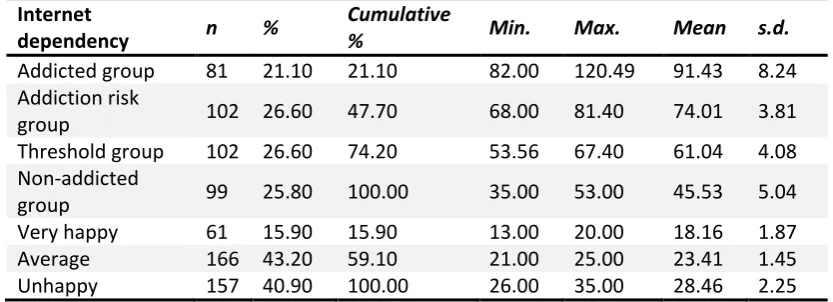
Table 1. Internet Addiction And Happiness Sub-Clusters As A Result Of The Two-Step Cluster Analysis. Internet
dependency n % Cumulative % Min. Max. Mean s.d. Addicted group 81 21.10 21.10 82.00 120.49 91.43 8.24 Addiction risk
group 102 26.60 47.70 68.00 81.40 74.01 3.81
Threshold group 102 26.60 74.20 53.56 67.40 61.04 4.08 Non-addicted
group 99 25.80 100.00 35.00 53.00 45.53 5.04
Very happy 61 15.90 15.90 13.00 20.00 18.16 1.87
Average 166 43.20 59.10 21.00 25.00 23.41 1.45
Unhappy 157 40.90 100.00 26.00 35.00 28.46 2.25
As a result of the two-step cluster analysis, the distribution identified 21.10% of the users to be addicted to the internet, 26.60% to be in the addiction risk group, 26.60% to be in the threshold group between the risk group and the non-addicted group, and 25.80% to be in the non-addicted group. This indicates that slightly more than one fifth of the university students in the research group can be identified as internet addicted and slightly more than a quarter of them can be identified as in no danger of becoming addicted to the internet. On the other hand, it was determined that almost half of the research group (47.70%) carry the risk of becoming internet addicted or are considered to be in the internet addicted group, or in other words that they are in a sensitive position regarding internet addiction. As a result of the two-step cluster analysis that was carried out for happiness, the statistics show that 15.90% of the participants are in the group that can be considered as being happy, while 43.20% are in the average group and 40.90% are in the unhappy group. Thus, while one seventh of the participants can be labeled as happy, almost half of them can be labeled as feeling unhappy. The relations between internet addiction and happiness status was examined with correspondence analysis.
Table 2. Correspondence Table And Row/Columns Profiles
Internet dependency
Happiness
Unhappy Average Very happy Active Margin Mass Active margin Addicted group Row profiles Column profiles 21 .259 .344 37 .457 .223 23 .284 .146 81 1,00 .211 Addiction risk group
Row profiles Column profiles 21 .206 ,344 49 .480 ,295 32 .314 ,204 102 1.00 ,266 Threshold group Row profiles Column profiles 11 ,108 ,180 51 ,500 ,307 40 ,392 ,255 102 1,00 ,266 Non-addicted group Row profiles Column profiles 8 ,081 ,131 29 ,293 ,175 62 ,626 ,395 99 1,00 ,258 Active Margin Mass Active margin 61 ,159 1,00 166 ,432 1,00 157 ,409 1,00 384 - -
As a result of the correspondence analysis, when the cross-tabulations of the row and column variables were examined, the load value for happiness statuses for the row profile in the addiction group varied between .26-.46, while varying between .21-.48 for the addiction risk group, .11-.50 for the threshold group, and .08-.63 for the non-addicted group. As for the column profile, the load value for the happiness statuses for the addicted group varied between .15-.34, while varying between .21-.48 for the addiction group, .11-.50 for the threshold group and .13-.40 for the non-addicted group. When the mass values were examined, the findings showed unhappy to be .16, average .43, very happy .41, addicted group .21, addiction risk group .27, threshold group .27, and non-addicted group to be .26.
Table 3. Results From The Correspondence Analysis For Internet Dependency And Happiness
Dimension Singular Value Inertia χ2 p
Proportion of
Inertia Confidence Singular Value
Accounted
for Cumulative s.d.
Correlation
2
1 .283 .080 .875 .875 .049 .105
2 .107 . 011 .125 1.000 .050
Total .091 35.078 .000a 1.000 1.000
a 6 degrees of freedom
According to the correspondence analysis between the internet addiction groups and happiness statuses, there is a justifying and significant relation between the two variables (χ2 = 35.078, p= .000). The
total variance explained in accordance with the total inertia value is 9%. The first dimension contributes at the 8% level to the explained variance and the second dimension contributes at the 1% level. According to proportion of inertia, 88% of the 9% explained variance is caused by the first dimension and 13% is caused by the second dimension. Maximum canonical correlation was calculated as .28 for the variables in the first dimension and .11 in the second dimension. In accordance with the inertia results in the overview row points outcomes, the load value was .022 for the addicted group, .011 for the addiction risk group, .007 for the threshold group, .051 for the addicted group, and on the other hand, in accordance with the inertia results in the overview column points outcomes, the load value was .031 for unhappy, .016 for average and .044 for very happy.
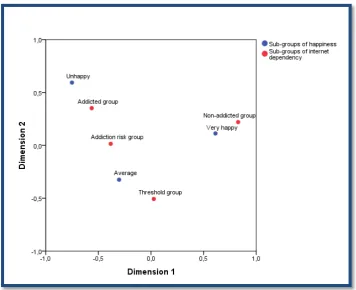
Diagram 1. The Biplot Correspondence Map For Happiness Statuses And Internet Addiction.
In the first and second dimension axes of the biplot correspondence map, which was achieved as a result of the correspondence analysis, the internet addiction groups -- addicted group, addiction risk group, threshold group and non-addicted group -- are positioned along with happiness statuses -- unhappy, average
and very happy. Internet dependency groups are shown as blue dots and happiness statuses as red dots on the map. In accordance with the results, it is observed that happy individuals (Scoredimension1= .612,
Scoredimension2= .113) are more likely to be non-addicted (Scoredimension1= .828, Scoredimension2= .220), while
unhappy (Scoredimension1= -.751, Scoredimension2= .594) individuals are internet addicted (Scoredimension1= -.564,
Scoredimension2= .352). Individuals in the average (Scoredimension1= -.303, Scoredimension2= -.325) status are
observed to score between addiction risk (Scoredimension1= -.383, Scoredimension2= .015) and threshold
(Scoredimension1= .027, Scoredimension2= -.507). As this result shows, the total amount of explained variance of
this model equals 9%, and the individuals with an increasing tendency to become internet addicted become unhappy while on the contrary individuals become happier with the decrease of a tendency to internet addiction.
DISCUSSION AND CONCLUSIONS
The aim of this study was to develop a compatibility modeling through the happiness categories of the student participants within the field extending from normal internet use to addictive internet use. In the light of this aim, cluster analysis was used to categorize the participants as internet addicts. According to the results, slightly more than one fifth of the participants fall into the internet-addicted group. Meanwhile, youngsters falling into the addiction risk and threshold groups with similar rates were specified. Johansson and Götestam(2004) also stated in a similar study that problematic internet use is around a rate of one third in teenagers and youngsters. Whang, Lee and Chang (2003) specified the internet addicts and addiction risk group participants to be at similar levels.
In accordance with the first and second dimension coordinates acquired from the compatibility analysis, unhappy individuals were discovered to be in close proximity with internet addiction, and happy individuals with non-internet addiction. Hence, in the examination of the literature it was noted that the several devastating effects of internet addiction on the individuals emphasize that this is an undesirable obsession. This emphasis is also reflected in definitions regarding internet addiction. For example, Young (2007) describes internet addiction as a new and usually unknown clinic disorder that can affect the individual to such an extent as to cause social, professional and associational problems and also issues in online use and control abilities of the individual (Young, 2007). Results of numerous studies on internet addiction and its effects on mental health are in support of the emphasis in Young’s (2007) definition. For example, a close relation between internet addiction and numerous psychological problems such as depression (Morrison &
Gore, 2010; Young & Rogers, 1998), anxiety and stress (Whang, Lee, Chang, 2003; İskender & Akın, 2011) and
social anxiety (Shepherd & Edelmann, 2005; Caplan, 2006) was found in previous studies. Cao and Su (2006) determined the hyperactivity, conduct problems, psychoticism and neuroticism averages of the internet-addicted teenagers to be higher, and their levels of the effective use of time, i.e., self-sufficiency levels, to be low. In the light of these studies and the findings of our study, it can be stated that there is a negative relationship between internet addiction and the mental health of the individuals. However, this does not mean that non-internet addiction will have a positive relationship to happiness.
As regards the studies of the relationship between internet addiction and mental health problems, the studies regarding internet addiction within the framework of positive psychology are of a more limited
number (Whang, Lee, & Chang, 2003; İskender & Akın, 2011). When the results of studies investigating
internet addiction within the scope of positive psychology were examined, the amount of differing results stands out. In some of the studies a positive relation exists among positive psychology notions such as internet addiction, psychological well-being, life satisfaction and happiness (Pénard, Poussing, & Suire, 2013)
and a negative relation in the rest (Akın, 2012). This difference, which is already reflected in the results, seems to be caused by the fact that it falls at the point between daily internet use and internet addiction, or the purposes of the individuals using the internet. In other words, in cases where the internet use takes a problematic or pathological shape at the beginning, it can affect the mental health of the individuals negatively. When Suler (2004) defined the difference between healthy and pathological internet use, he emphasized that cyber life becomes an issue in the case of the individual disconnecting from real life. Individuals can disconnect from their daily life and find a different life in the cyber world, thus becoming
addicted, and this situation cannot be considered as equal to daily internet use. On the other hand, internet use can affect the mental health of the individual according to the source of the user’s motivation. For example, individuals with weak friend and family relationships, low self-esteem and lack of social support in their daily lives are able to compensate for the aforementioned deficiencies through using the internet. In the short term, this helps them to feel better. Research conducted by Wastlund, Norlander & Archer (2001) emphasised the fact that shy and introverted individuals use the internet for interaction and this increases their online social interaction, thereby increasing the well-being of the individual. However, another subject of concern is to what degree and how the social interaction brought or improved by internet use is transferred to daily life. This is due to the fact that individuals with strong social support and relationships in real life do not get any contribution to their degree of life satisfaction from internet use (Papacharissi & Rubin, 2000), but interaction in the cyber world increases the loneliness of individuals who already feel themselves alone in real life, thus affecting their life-satisfaction levels and well-being.
Whether there is an interaction between subjective well-being and internet addiction, regardless of the purpose of internet use, was examined in this study, but this investigation did not take into consideration various pathological states such as depression, loneliness or social anxiety. This was simply due to the fact that the aforementioned psychological symptoms or disorders are usually the driving factor in studies done in the framework of internet addiction and positive psychology. However not suffering from depression cannot be seen as a guarantee of feeling great life satisfaction or happiness (Sapmaz & Temizel, 2013). In conclusion, the results of this study are considered to be possible contributors to the literature of psychological counseling and guidance, along with the relevant field(s), due to the findings, and to the current limitations on the studies where different notions (such as satisfying the need, psychological robustness etc.) in the framework of positive psychology, such as internet addiction and happiness, are handled together.
REFERENC
ES
Aboujaoude, E. (2010) Problematic internet use: An overview. World Psychiatry, 9(2), 85–90.
Argyle, M., Martin, M., & Crossland, J. (1989). Happiness as a function of personality and social encounters. In J. P. Forgas, J. M. Innes (Eds.), Recent advances in social psychology: An international perspective (pp. 189- 203). Amsterdam: North Holland, Elsevier Science.
Block, J. (2008). Issues for DSM-V: Internet addiction. American Journal of Psychiatry, 165(3), 306-307.
Bollen, J., Gonçalves, B., Ruan, G., & Mao, H. (2011). Happiness is assortative in online social networks. Artificial Life, 17(3), 237-251.
Buss, D. M. (2000). The evolution of happiness. American Psychologist, 55(1), 15-23.
Caplan, S. E. (2002). Problematic internet use and psychosocial well-being:Development of a theory-based cognitive-behavioral measurement instrument. Computers in Human Behavior, 18(5), 553–575.
Caplan, S. E. (2003). Preference for online social interaction: A theory of problematic internet use and psychosocial well-being. Communication Research, 30(6),625–648.
Caprara, G. V., & Steca, P. (2005). Affective and Social Self-Regulatory Efficacy Beliefs as Determinants of Positive Thinking and Happiness. European Psychologist, 10(4), 275-286.
Cao, R. & Su, L. (2006). Internet addiction among Chinese adolescents: Prevalence and psychological features. Child: care, health and development, 33(3), 275–281.
Cheng, H., & Furnham, A. (2002). Personality, peer relations, and self-confidence as predictors of happiness and loneliness. Journal of Adolescence, 25(3), 327-339.
Davis, R. A. (2001). A cognitive-behavioral model of pathological Internet use. Computers in Human Behavior, 17, 187–195. doi:10.1016/S0747-5632(00)00041-8.
Diener, E. (1984). Subjective well-being. Psychological Bulletin, 95, 542-75.
Diener, E. & Seligman, M. E. P. (2002). Very happy people. Psychological Science, 13(1), 81-84.
Dodds, P. S., Harris, K. D., Kloumann, I. M., Bliss, C. A., & Danforth, C. M. (2011). Temporal patterns of happiness and information in a global social network: Hedonometrics and Twitter. PloS one, 6(12), e26752.
Doğan, T. & Çötok, N. A. (2011). Oxford mutluluk ölçeği kısa formunun Türkçe uyarlaması: Geçerlik ve güvenirlik çalışması. Türk Psikolojik Danışma ve Rehberlik Dergisi, 4(36), 165-132.
DSM-V (2013). American psychiatric association: Diagnostic and statistical manual of mental disorders, (5th
Ed.). Arlington, VA, American Psychiatric Association.
Durkee, T., Kaess, M., Carli, V., Parzer, P., Wasserman, C., Floderus, … Wasserman, D. (2012). Prevalence of pathological internet use among adolescents in Europe: demographic and social factors. Addiction, 107(10), 1-13. doi: 10.1111/j.1360-0443.2012.03946.x
Goldberg, I. (1996). Internet addiction disorder (access, September, 2012) http://www.webs.ulpgc.es/aeps/JR/Documentos/ciberadictos.doc
Günüç, S. (2009). İnternet bağımlılık ölçeğinin geliştirilmesi ve bazı demografik değişkenler ile internet
bağımlılığı arasındaki ilişkilerin incelenmesi. Yayınlanmamış yüksek lisans tezi. Yüzüncü Yıl Üniversitesi,
Sosyal Bilimler Enstitüsü, Van.
Günüç, S. & Kayri, M. (2010). Türkiye’de internet bağımlılık profili ve Internet Bağımlılık Ölçeğinin geliştirilmesi: Geçerlik-güvenirlik çalişmasi.Hacettepe Üniversitesi Eğitim Fakültesi Dergisi, 39, 220-232.
Hills, P. & Argyle, M. (2002). The Oxford Happiness Questionnaire: a compact scale for the measurement of psychological well-being. Personality and Individual Differences, 33, 1073–1082.
İskender, M. & Akın, A. (2011). Self-compassion and internet addiction. TOJET: The Turkish Online Journal of Educational Technology, 10(3), 215-221.
Johansson, A., & Götestam, K. G. (2004). Internet addiction: characteristics of a questionnaire and prevalence in Norwegian youth (12–18 years). Scandinavian Journal of Psychology, 45(3), 223-229.
Kim, K., Ryu, E., Chon, M. Y., Yeun, E. J., Choi, S. Y., Seo, J. S., & Nam, B. W. (2006). Internet addiction in Korean adolescents and its relation to depression and suicidal ideation: a questionnaire survey. International Journal of Nursing Studies, 43(2), 185-192.
Lewis, C. A., & Cruise, S. M. (2006). Religion and happiness: Consensus, contradictions, comments and concerns. Mental Health, Religion & Culture, 9(3), 213-225.
Liu, T. and Potenza, M. N. (2010). Problematic Internet Use: Clinical Aspects. In E. Aboujaoude & L. M. Koran (Eds). Impulse Control Disorders (pp. 167-181), Cambridge University Press: Cambridge, MA.
Litwin, H., & Shiovitz-Ezra, S. (2011). Social network type and subjective well-being in a national sample of older Americans. The Gerontologist, 51(3), 379-388.
Lu, L. (2001). Understanding happiness: A look into the Chinese folk psychology. Journal of Happiness Studies, 2(4), 407-432.
Lyubomirsky, S., King, L. & Diener, E. (2005). The benefits of frequent positive affect: Does happiness lead to success? Psychological Bulletin, 131, 803-855.
Mestçi A. (2007). Turkey internet economy report. http://inettr.org.tr/inetconf12/kitap/ Bildiriler/30_24_inet07.pdf (accessed, Apr. 25, 2014).
Morahan-Martin J., & Schumacher, P. (2000). Incidence and correlates of pathological internet use among college students. Computers in Human Behavior, 16, 13–29.
Myers, D. G. & Diener, E. (1995). Who is happy? Psychological Science, 6(1), l0-17.
Papacharissi, Z., & Rubin, A. M. (2000). Predictors of Internet usage. Journal of Broadcasting & Electronic Media, 44, 175–196.
Petersen, K. U., Weymann, N., Schelb, Y., Thiel, R., & Thomasius, R. (2009). Pathological Internet use--epidemiology, diagnostics, co-occurring disorders and treatment. Fortschritte der Neurologie-Psychiatrie, 77(5), 263-271.
Tsai, C. C., & Lin, S. S. (2001). Analysis of attitudes toward computer networks and Internet addiction of Taiwanese adolescents. CyberPsychology & behavior, 4(3), 373-376.
Wildt, B. T. T., Putzig, I., Zedler, M., & Ohlmeier, M. D. (2007). Internet dependency as a symptom of depressive mood disorders. Psychiatrische Praxis, 34, 318-322.
Siomos, K. & Angelopoulos, N. (2008). Internet addiction disorder. Psychiatrike, 19(1), 52-8.
Siomos, K. E., Dafouli, E. D., Braimiotis, D. A., Mouzas, O. D., & Angelopoulos, N. V. (2008). Internet addiction among Greek adolescent students. CyberPsychology & Behavior, 11(6), 653-657.
Suler, J. (2004). Computer and cyberspace “addiction”. International Journal of Applied Psychoanalytic Studies, 1(4), 359–362. doi:10.1002/aps.90.
Veenhoven, R. (2008). Healthy happiness: Effects of happiness on physical health and the consequences for preventive health care. Journal of Happiness Studies, 9(3), 449-469.
Wang, W. (2001). Internet dependency and psychosocial maturity among college students. International. Journal of Human Computer Studies, 55, 919-938.
Wastlund, E., Norlander, T., & Archer, T. (2001). Internet blues revisited: Replication and extension of an internet paradox study. CyberPsychology & Behavior, 4, 385–391.
Whang, L. S., Lee, S. & Chang, G. (2003) Internet over-users’ psychological profiles: a behavior sampling analysis on internet addiction. CyberPsychology and Behavior, 6(2), 143–150.
Wölfling, K. J. Müller, K.W.,& Beutel, M. E. (2012). Treating internet addiction: first results on efficacy of a standardized cognitive-behavioral therapeutic approach. European Psychiatry, 27(1), 1.
Young, (1996). Psychology of computer use: XL. Addictive use of the ınternet: A case that breaks the
stereotype. Psychological Reports, 79, 899-902.
Young, K. S. (1997, August). What makes the Internet addictive: Potential explanations for pathological Internet use. Paper presented at the 105th American Psychological Association Annual Convention, Chicago, IL, USA.
Young, K. S. (1998). Internet addiction: The emergence of a new clinical disorder. CyberPsychology &
Behavior, 1(3), 237-244.
Young, K. (2007). Cognitive behavior therapy with internet addicts: Treatment outcomes and implications.
CyberPsychology & Behavior, 10(5), 671-679.
Young, K. S. & Rogers, R. C. (1998). The relationship between depression and Internet addiction.
CyberPsychology and Behavior, 1(1), 25–28.