175
_______________________________________________________________
_______________________________________________________________
A REVIEW ON THE PROCESS OF SINGLE DOSE CROSSOVER
COMPARATIVE ORAL BIOAVAILABILITY STUDIES IN
HUMANS
Devi Sowjanya
1, Ramesh T
2*, Ramesh M
2, Vasanth PM
11Department of Pharmacy, UCEV-JNTUK, Vizianagaram-535002, Andhra Pradesh, India. 2
Department of Biotechnology, UCEV-JNTUK, Vizianagaram-535002, Andhra Pradesh, India.
ABSTRACT
Bioavailability (BA) and Bioequivalence (BE) studies play a major role in the drug development phase for both new drug products and their generic equivalents, and thus attract considerable attention globally. Bioequivalence (BE) means the absence of a greater than allowable difference between the systemic bioavailability of a test product and that of a reference product. BA/BE focus on the release of the drug from the dosage form and absorption into the systemic circulation. The value of the testing two one-sided null hypotheses of non-equivalence at a significance level of 0.05, and the importance of estimating a 90% confidence interval of the ratio (test/reference) of mean AUC and Cmax values, and of the difference between
mean tmax values, are now reasonable knowledge of the pharmacodynamics and / or pharmacokinetics of the active substance in
question. The design and conduct of the study should follow ICH/ EU regulations on Good Clinical Practice, including reference to an Ethics committee. This article briefly reviews the BA/BE concepts, various basic regulatory considerations, design and conduct of BA/ BE studies.
Key words: Bioavailability, Bioequivalence, Generic drugs, Pharmacokinetics.
INTRODUCTION
The rising cost of medication has been contributing to the overall cost of health care and thus receives considerable attention globally. A major strategy for lowering the cost of medication, and thereby reducing its contribution to total health care costs, has been the introduction of generic equivalents of brand-name drugs [1].This strategy has been effective in reducing total prescription cost by 11% without sacrificing quality[2].Generic drugs have captured more than 65% of the global market and account for 66% of prescriptions filled in the United States but for less than 13% of the [3].Thus bioavailability studies are important because an NDA submission includes the results from phase I, phase II, phase III clinical trials, which are very time consuming and costly to obtained[4].
Bioavailability focuses on the process by which the active ingredients or moieties are released from an oral dosage form and move to the site of action.
The purpose of bio equivalence study is to demonstrate the profiles produced by formulations under
study do not differ significantly. If two profiles are super imposable then it is expected that same therapeutic effect will result. Another confounding factor is that even when the reference formulations are given to the same individual, the identical bioavailability will not be achieved every time. This affects result when inference is made on the basis of measurement of closeness [5].
BIO AVAILABILITY Definition
Bioavailability is the rate and extent to which the active ingredient or moiety is absorbed from a drug product and becomes available at the site of action. For drug products that are not intended to be absorbed into the bloodstream, and it may be assessed by measurements intended to reflect the rate and extent to which the active ingredient or active moiety becomes available at the site of action [6].
Bioavailability reflects the extent of the systemic availability of the active therapeutic moiety and is generally assessed by measuring the area under the
*Corresponding Author: Ramesh T, E mail: [email protected]
International Journal
of
Pharmacy Review & Research
www.ijprr.com
176
concentration time curve (AUC), the peak plasma concentration (Cmax) and the time to reach Cmax (tmax) [7].
BIO EQUIVALENCE
The absence of a significant difference in the rate and extent to which the active ingredient or active moiety in pharmaceutical equivalents or pharmaceutical alternatives becomes available at the site of drug action when administered at the same molar dose under similar conditions in an appropriately designed study[8].
Basic principles of pharmacokinetics
The factors, which decide the availability of drug, are absorption, distribution, metabolism & excretion of that particular drug product. These all are pharmacokinetic parameters [8].
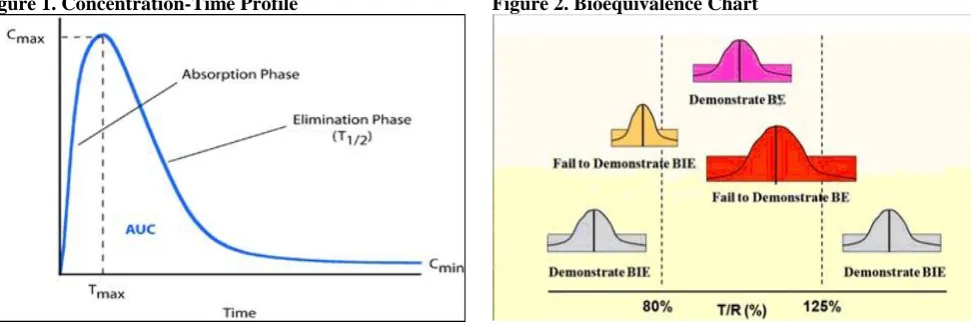
Plasma drug concentration-time profile
A direct relationship exists between the concentrations of drug at the bio phase i.e. at the site of action, and at the concentration of drug in plasma.
Pharmacokinetic parameters Tmax, Cmax, AUC0-t,
AUC0-∞, kel and t1/2. Will be calculated using plasma
concentration verses time profile data for both the test ad
reference products obtained from individual subjects.
Cmax: Maximum observed plasma drug concentration over
a specified time period.
Tmax: Observed time to reach maximum drug
concentration Cmax.
AUC0-t: Area under the plasma concentration –time curve
measured to the last quantifiable concentration, using trapezoid rule.
AUC0-∞: AUC0-t plus additional area extrapolated to
infinity.
kel: Apparent first –order terminal elimination rate
constant calculated from a semi-log plot of the plasma concentration vs time curve, using the method of least square regression.
t1/2: Elimination half-life as determined by quotient
0.693/kel.
After obtaining the profiles in a comparative trail, and computing the metrices, conclusions need to be reached regarding the comparison. Statistical methods are applied to test if the metrics are sufficiently similar to be considered equivalent. When the metrices are deemed equivalent, the drug concentration profiles are regarded as fundamentally the same.
To achieve this equivalence, the study products geometric mean ratios(eg:AUC test/AUC reference),as well as their projected 90% confidence intervals for the population mean ratios, must be located within an 80 to 125% window. For the maximum concentration (Cmax)
some regulatory agencies consider it adequate if adequate if only the mean ratios are within the interval.
The process of single dose cross over comparative oral bio availability studies involves.
STUDY PROTOCOL Study Design
An open label, randomized, two treatment, two period, two sequence, single dose, crossover comparative oral bio availability study in normal, healthy, adult, human subjects under fed conditions.
Number of Subjects
A sufficient number of normal, healthy, adult, human subjects will be enrolled in the study .The number of subjects required is calculated by the formula: N= (t, 2N-2+t, 2N-2)
2
[CV/ (V-)] 2
Where
N= Number of subject, t = appropriate value from the t-distribution, = type 1 error , = type 2 error,
= Treatment difference, CV=coefficient of variance (intra subject),
V=Bioequivalence limit.
Duration of the Study
Subjects will undergo a screening procedure no earlier than 21 days before the first day of dosing.
Washout Period
At least 07 days between successive dosing periods.
Randomization
The randomization for this study will be generated using statistical software SAS® Version 9.1.3. All the subjects will be divided into blocks of equal size such that allotment of sequences 'AB' and 'BA' will be balanced within each block. The Test and Reference Product will be assigned with the randomization code (A or B)
Blinding
The randomization code will be made available only to the Principal Investigator from the Bio-statistician, Quality Assurance unit for verification of Dispensing labels and auditing raw data, to the pharmacist at the time of dispensing. The analyst will not have access to the randomization schedule.
Selection and Withdrawal of Subjects
All subjects will undergo a screening procedure comprising clinical examination, recording of electrocardiogram, radiological investigation and laboratory investigations of blood as well as urine less than 21 days prior to first dosing. The subjects will be selected on the basis of the following inclusion and exclusion criteria.
177
INCLUSION CRITERIA
Adult healthy male between age of 18 and 50 years.
Height and weight according to the tables published by the LIC of INDIA.A maximum Variation of 10% on the eighter side is permissible.
The following Hematological and other parameters should be within normal limits for those Specific age, weight and healthy combinations.
[i]Complete blood count [Total and differential count] [ii] ESR [iii] Liver functional tests [SGOT, SGPT, Serum bilrubine, serum alkaline phosphates, serum creatinine [iv] Blood sugar: Post Prodial, fasting. [v]HIV antigen
No abnormality on clinical Examinations.
No history of any illness in past eight weeks.
EXCLUSION CRITERIA
Consumption of tobacco in any form.
Addiction to alcohol or history of any drug abuse
History of kidney or liver dysfunction.
History of jaundice in the past 6 months
History of drug allergy to the test drug or any chemicals similar to the drug under investigation.
Administration or intake of any prescription or OTC Medication for 2 weeks before the study
Patient suffering from any chronic illness such as arthritis, asthma etc.
Participation in any bioavailability or bioequivalence study in past 12 weeks.
TESTS TO BE PERFORMED AT THE TIME OF CHECK-IN OF EACH PERIOD
Alcohol breath test and Urine test for drug of abuse [Morphine, Marijuana, Barbiturates, Benzodiazepines and Cocaine]; Urine pregnancy test will be performed for all female subjects.
TREATMENT OF SUBJECTS Housing
Subjects will be admitted and housed in the clinical facility from not less than 10.50 hours before dosing and will be checked out 24.00 hours after dosing in each period, if the subjects do not suffer from any adverse event. In case of adverse event the subject will be housed in the facility at discretion of the physician.
Diet and Water
All subjects will be fasted overnight for at least 10.00 hours before scheduled time for high fat breakfast (about 1000 Kcal) in each period. The subjects will receive a standard meal at about 04.00, 08.00, 12.00 and 24.00 hours after dosing in each period. . In case, meal and blood sample collection timings coincide, samples will be collected before meal. Drinking water will be restricted from one hour pre-dose till one hour post-dose (except 240±5 ml during the administration of the dose). At all other times, drinking water will be provided ad libitum.
Dosing
All subjects will be fasted overnight for at least 10.00 hours before scheduled time for high fat breakfast
(about 1000 Kcal); dosing will be done 30 min after the start time of high fat breakfast in each period.
Sampling Schedule
Nineteen (19) blood samples will be collected. The venous blood samples (04 ml each except 10 ml pre-dose) will be withdrawn at pre-dose and at 02.00, 03.00, 04.00, 05.00, 06.00, 07.00, 08.00, 09.00, 10.00, 11.00, 12.00, 13.00, 14.00, 16.00, 24.00, 36.00, 48.00 and 72.00 hours post dose. The samples collected at 36.00, 48.00 and 72.00 hours post dose will be on an ambulatory basis.
Sampling Procedure
Intravenous Cannula Insertion and Removal Time: Intravenous cannula will be inserted before pre-dose sample and will remain till 24.00 hours post pre-dose.
Blood Samples Collection
Pre-dose sample 10 ml and post dose blood samples at each sampling time point 04 ml will be drawn and transferred to pre-labeled (Project No., Subject No., Period and Sampling time point) vacuettes® containing K3EDTA as anticoagulant. After every blood sample
collection 0.5 ml of heparinized saline (1 ml of 5 IU/ml of heparin in normal saline solution as an Anticoagulant) will be injected to the I.V. cannula to maintain the cannula patent. Also before every blood sample collection 0.5 ml of blood present in the I.V. cannula will be discarded.
Blood samples collected will be placed in the wet ice bath until centrifugation.
Sample Handling and Processing
After collection of blood samples from all the subjects at each time point, samples will be centrifuged at 4000 RPM for 10 minutes below 10oC. The time interval between sample collection and the start of centrifugation should not exceed 45 minutes.
Total Blood Withdrawn
Approximately 294.5 ml [including about 258 ml of blood for Pharmacokinetic analysis, about 08 ml of blood for clinical laboratory tests for pre study screening, about 06 ml of blood for post study safety assessment and 22.5 ml as total volume discarded before each sampling except for pre-dose and ambulatory samples] total blood will be drawn from each subject, for all the periods.
ASSESSMENT OF SAFETY
Recording of Vital Signs and Clinical Examination
178
subjects about their well-being at the time of check-in and check-out of the study. About 06 ml of blood will be collected from each subject for post-study safety assessment at the end of the study.
EXPERIMENTAL METHODOLOGY
Details of the analytical method intended to be used for the analysis of the biological sample is followed as per the protocol.
Method development
It is development of new method of sample processing that suits the chromatographic technique and that maintains stability of the drug. The volume of reagents to be used, mobile phase compositions, extraction techniques, various spectroscopic parameters like the flow rate, split ratio, voltage, gas parameters, parent and daughter ion masses etc will be decided during the development phase[10].
Solid Phase Extraction
It consists of four basic steps. I) conditioning II) retention III) rinsing IV) elution
Liquid-liquid extraction
It is also known as solvent extraction. It is a method to separate compounds based on their solution preferences for two immiscible liquids. It is an extraction of a substance from one liquid phase into another liquid phase.
Analytical Techniques
Chromatography is probably the most versatile and wide spread technique used today in pharmaceutical industry because of its simplicity, rapidity. Small sample requirements and ease of operation compared to other analytical techniques.
Bio analytical method validation
Bio analysis is a term generally used to describe the quantitative measurement of a compound (drug) or its metabolite in biological fluids, primarily blood, plasma, serum, or urine, or tissue extracts [11].It is reliable and reproducible for the intended use. The fundamental parameters for this validation include (1) accuracy, (2) precision, (3) selectivity, (4) reproducibility, (5) Recovery and (6) stability.
Accuracy
It describes the closeness of mean test results obtained by the method to the true value (concentration) of the analyte.
Precision
It describes the closeness of individual measures of an analyte when the procedure is applied repeatedly to multiple aliquots of a single homogenous volume of biological matrix.
Selectivity
It is the ability of an analytical method to
differentiate &quantify the analyte in the presence of other components in the sample. For selectivity, analyses of blank samples of the appropriate biological matrix (plasma, urine, or other matrix) should be obtained from at least six sources. Each blank sample should be tested for interference. It should be ensured at the lower limit of quantification (LLOQ) [12].
Recovery
Recovery experiment was performed by comparing the analytical results for extracted samples at three concentrations (low, medium, high) with un-extracted standards that represent 100% recovery.
Stability
Drug stability in a biological fluid is a function of the storage conditions, chemical properties of the drug, the matrix, and the container system [12].
Validation involves documenting, through the use of specific laboratory investigations, that the performance characteristics of the method are suitable and reliable for the intended analytical applications [12].
REFERENCE STANDARD
Analysis of drugs and their metabolites in a biological matrix is carried out using quality control (QC) samples. For this reason, an authenticated analytical reference standard of known identity and purity should be used to prepare solutions of known concentrations. The source &lot number ,expiration date ,certificates of analyses when available ,and/internally or externally generated evidence of identity & purity should be furnished for each reference standard[12].
ACCEPTANCE CRITERIA FOR THE RUN
The following acceptance criteria should be considered for accepting the analytical run.
Standard curve samples, blanks, QCs, and study samples can be arranged as considered appropriate within the run.
Matrix –based standard calibration samples: 75%, or a minimum of six standards, when back –calculated (including ULOQ) should fall within 15%, except for LLOQ, when it should be 20% of the nominal value. Values falling outside these limits can be discarded, provided they do not change the established model.
Quality control samples replicated (at least once) at a maximum of three concentrations(one within 3x of the LLOQ(low QC),one in the mid range(middle QC)and one approaching the high end of the range(high QC) should be incorporated into each run. The results of the QC samples provide the basis of accepting or rejecting the run. At least 67% of the QC samples should be within 15% of their respective nominal (theoretical) values; 33% of the QC samples can be outside the nominal value. A confidence internal approach yielding comparable accuracy & precision is an appropriate alternative.
179
Calibration/standard curve
A calibration curve is the relationship between instrument response and known concentrations of the analyte. A calibration curve should consist of a blank sample (matrix sample processed without internal standard), a zero sample (matrix sample processed with internal standard) & 6-8 non zero samples covering the expected range, including LLOQ [12].
Pharmacokinetics & Statistical Analysis
After the data has been collected, statistical methods must be applied to determine the level of significance of any observed difference in the rate and or extent of absorption in order to establish bio equivalence between two or more drug products. The general statistical deliverables for a single-dose crossover BE study include summary statistics, ANOVA, 90% confidence interval, ratio analysis & intra-subject variability in addition to sequence, treatment, and period effects.
The following pharmacokinetic parameters are required for submission
Plasma concentrations and time points
Subject, period, sequence, treatment
AUC0-t, AUC0-∞, Cmax, tmax, λz and t1/2.
Inter subject, intra subject, and/or total variability, if available.
Cmin (concentration at the end of a dosing interval),
Cav (average concentration during a dosing interval),
Degree of fluctuation [(Cmax-Cmin)/Cav], and swing [(Cmax
-Cmin)/Cmin] if steady-state studies are employed [12].
The following statistical information required for AUC0-t, AUC0-∞, and Cmax
Geometricmean
Arithmetic mean
Ratio of means
Confidence intervals
Logarithmic transformation should be provided for measures used for BE demonstration.
Analysis of Variance
ANOVA is a statistical technique to identify the sources of variance and estimate the degree of variability. In most bio availability studies, There are 3 readily identified sources of variance namely formulation
[treatment], subject and period.
Confidence Intervals
Westlake was the first to suggest the use of confidence intervals as a BE test to evaluate whether the mean amount of drug absorbed using the test formulation was close to the mean amount absorbed of the reference product[13].
90% confidence intervals for the difference between treatments, least-square means were calculated for ln-transformed Cmax, AUC0-t and AUCs0-inf. The 90%
CI for ln-transformed Cmax, AUC0-t and AUC0-inf were
calculated.
Bioequivalence Criteria
Based on the statistical results of the 90% confidence intervals for the difference of means of ln-transformed Cmax, AUC0-t and AUC0-inf conclusions were
drawn whether the test product is bioequivalent to the reference product.
APPLICATIONS OF BA/ BE STUDIES
Comparative bio availability: a universal approach
Most bioavailability studies, whether for a new or generic product, possess a common theme. A test is conducted to identify the quantitative nature of a specific product comparison. This comparison for a new drug may be, for example, to assess the performance of an oral formulation relative to that of an intravenous dose, or perhaps the performance of a modified-release formulation in comparison to a conventional capsule. For a generic product, it is typically a comparison of a competitive formulation with a reference product. Such commonality surrounding comparative bioavailability studies suggests a universal experimental approach.
Comparative bioavailability studies for new drugs (NDA)
The initial oral formulation for a new drug is frequently used to conduct early human studies of safety and efficacy. Often, early oral bioavailability information about the drug (and this initial formulation) is obtained by means of studies comparing it with an intravenous dose and/or a solution of the drug they employ the Universal Approach where in the comparator is an intravenous dose or perhaps a solution of the drug.
180
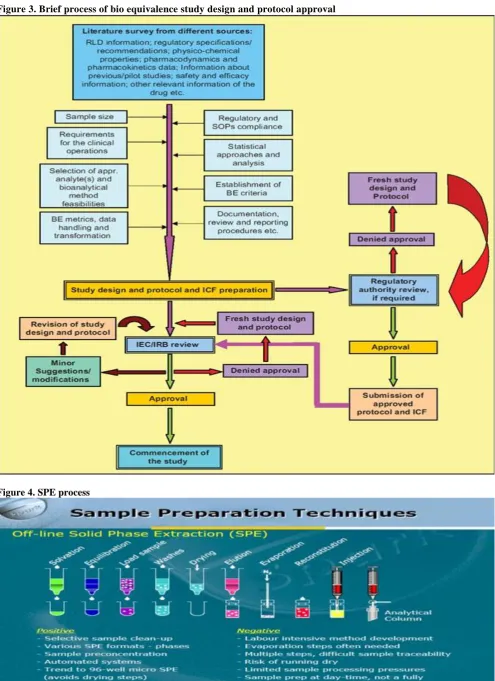
Figure 3. Brief process of bio equivalence study design and protocol approval
181
Figure 5. Principle of liquid-liquid extraction Figure 6. Calibration Curve
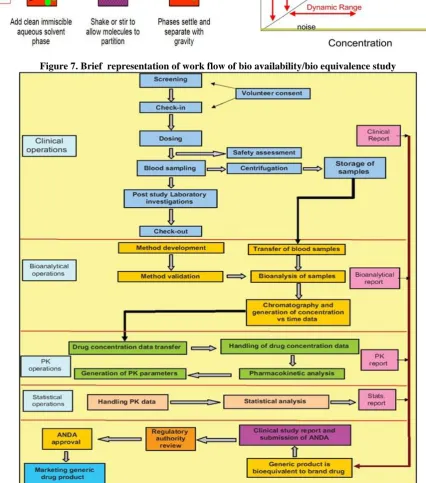
Figure 7. Brief representation of work flow of bio availability/bio equivalence study
Comparative bioavailability for generic drug products (ANDA)
When a manufacturer there by wishes to gain therapeutic equivalence by introducing a competitive generic product in to the market place, it is not necessary to conduct the full array of trails needed for the first (innovative) product. If equivalence has been demonstrated, according to prescribed study requirements
appropriately determined metrics the generic product by inference is regarded as therapeutically equivalent to the innovative drug product.
Testing under fasting conditions
When the particular drug is not showing any expected results, then the drug is tested under fasting conditions using BE studies.
182
Testing underfed conditions
The drug can also be tested under fed conditions to meet all conditions as per regulatory norms [14, 15, 16,].
CONCLUSION
The review was concluded that this continuing success story of BA/BE is based on the contribution to efficacy, safety, and quality by international regulatory authorities, pharma industry researchers, academic researchers, and indeed the efforts from ICH, WHO, and various international conferences. However, a lot remains
to be done, especially to promote global harmonization of BA/BE approaches, which should focus on uniformity, standardization of nomenclature, agreement on general concepts, consideration of BE criteria and objectives, all of which reflect regulatory decision-making standards, as well as ensuring product quality over time for both innovator and generic drugs. To achieve these objectives efforts should continue from international health organizations, pharmaceutical industries, researchers, and regulatory authorities to understand and to develop more efficient and scientifically valid approaches to assess BE, and to develop generic drugs in a cost-effective manner.
REFERENCES
1. Midhal KK, Mc Kay G. Bioequivalence: its history, practice, and future. AAPS Journal, 11, 2009, 664-670.
2. Hass JS, Phillips KA, Gersten berger EP, Serger AC. Potential savings from substituting generic drugs for brand-name drugs: medical expenditure panel survey, 1997-2000. Ann intern med, 142, 2005, 891-897.
3. Shrank WH, Cox ER, Fisher MA, Mehta J, Choudhry NK. Patient’s perceptions of generic medications. Health aff, 28, 2009, 546-556.
4. Draft Guidance on Approval of Clinical trails & New Drugs, Central Drugs Standard Control Organization, 2011. 5. Gunosindhu C. Regulatory needs in Bioavailability and Bio equivalence studies of pharmaceuticals. 2012.
6. Mei LC, Vinod S. Bio availability and Bio equivalence, FDA a regulatory review. Pharmaceutical research, 18(12). 7. Gibaldi M, Perrier D. Pharmacokinetics. 2nd ed. New York: Marcel Dekker, 1982.
8. Guidelines for Bio availability and Bioequivalence studies. CDSCO, Ministry of health and welfare, 2005.
9. Mastan, Thirunagari BL, Sathe A. The basic regulatory considerations and prospects for conducting bioavailability/bio equivalence studies- an overview. Comparative Effectiveness Research, (2), 2011, 124-145.
10. Anaywal, Brijeshkumar, Dr.Anil Bhandaril, Rai AK, Ankitawal, Pranay W. Bioanalytical method Development-Determination of drugs in biological fluids. Journal of pharmaceutical science and technology, 2(10), 2010, 333-347. 11. James CA, Breda M, Baratte S, Casati M, Grassi S, Pellegatta B. Analysis of drug and metabolites in tissues and other
solid matrices. Chromatogr Suppl, 59, 2004, 149-156.
12. Guideline on bioanalytical method validation, 21 july 2011MEA/CHMP/EWP/1922171/2009 Committee for medicinal products for Human Use CHMP.
13. Westlake WJ. Use of confidence intervals in analysis of comparative bioavailability trails. J Pharm sci, 61, 1972, 1340-1341.
14. Abdou HM. Dissolution, Bioavailability & Bio equivalence. Easton: MACK Publishing Company, 1989.
15. Blanchard J, Sawchuk RJ, Brodie BB. Principles and perspectives in Drug Bioavailability. Basel (Switzerland): S. Karger, 1979.