
37
Author for correspondence: Professor Udupa Nayanabhirama Professor and Research Director (Health Sciences), Manipal Univesity, Manipal, Karnataka-576104, India
E-mail: [email protected] Tel.: +91-9845547746
Herbal medicinal plants as an anticancer agents
Picheswararao Polu, Udupa Nayanabhirama* and Saleemulla KhanDepartment of Pharmacognosy, Manipal College of Pharmaceutical Sciences, Manipal, Karnataka-576104, India *Professor and Research Director (Health Sciences), Manipal Univesity, Manipal, Karnataka-576104, India
Received March 20, 2015: Revised April 4, 2015: Accepted April 20, 2015: Published online June 30, 2015
Copyright @ 2015 Ukaaz Public ations. All rights reserved. Email: [email protected] om; Website: www.ukaazpublications.com
Abstract
Cancer is known to be the second most common cause of death, surpassed only by cardiovascular disease. So there has been intense research on various plant resources to develop novel anticancer agents. From the past several years, medicinal plants have been proved to be an important natural source for cancer therapy with fewer side effects. There are many natural cytotoxic drugs available, which needs further improvement and development of new drugs. The basic aim of this review is to explore the potential of newly discovered anticancer compounds from medicinal plants, as a lead for anticancer drug development. It will be helpful to explore the medicinal value of plants and for new drug discovery from them for the researchers and scientists around the globe.
Key words: Anticancer agents, medicinal plants, cancer prevention, apoptosis, cytotoxicity
1. Introduction
Cancer is known to be the second most common cause of death, surpassed only by cardiovascular disease. Based on the ACS report 2014, nearly 1 in every 4 deaths can be attributed to cancer with a possibility of 585,720 deaths due to cancer this year in USA. In 2012, there were 14.1 million new cancer cases, 8.2 million cancer deaths and 32.6 million people living with cancer (within 5 years of diagnosis) reported by IARC worldwide. Breast and ovarian cancers are the major cause of cancer death in American women. Studies revealed that in India, 555,000 national cancer deaths in 2010. About 42% of male and 18% of female cancer deaths are due to tobacco-related products. Despite tremendous advances in the cancer chemotherapy, search for new and better agents is continued. Compounds of natural origin have provided new and potential leads for cancer chemotherapy in the past; many of them are drug of choice in cancer treatment. For instance, taxol for breast cancer, vin ca alkaloids for leukemia, podoph yllu m, etoposides and capototheca, etc. are some of the natural products in clinical use. Herbs these days are also being used as chemoprotectant against cytotoxicity caused by anticancer drugs. So the present review is aimed to explore the potential anticancer compounds from the medicinal plants.
2. Medicinal plants with anticancer activity
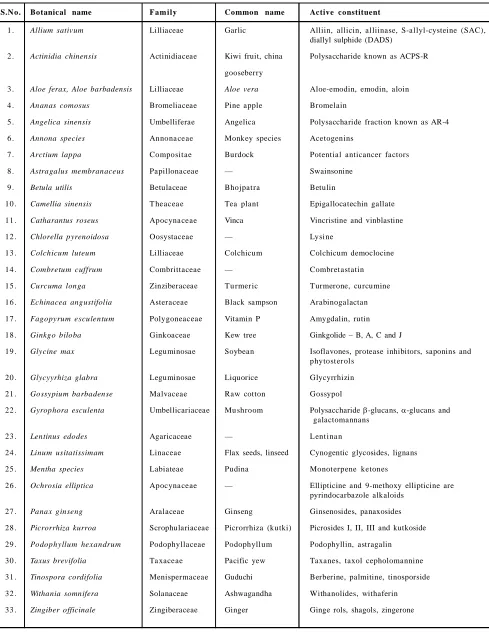
The list of the plants having anticancer activity and the chemical constituents responsible for its activity are given in Table 1. A brief discussion about each plant was given below.
PHYTOMEDICINE
An International Journal
Annals of Phytomedicine 4(1): 37-45, 2015 Journal homepage: www.ukaazpublications.com
ISSN : 2393-9885
Review
Allium sativum Linn.: Commonly known as garlic, which contains chemical constituents like allicin, alliin, sallyl-cysteine and diallylsulphide, etc. Pharmacological properties of allium is due to the presence of allicin which is a precursor for several compounds containing sulphur (Charfenberg et al., 1990). Due to the presence of alliin in garlic oil, it inhibits prostaglandin dependent cancers. Metastasis in lung cancer was prevented by diallyl trisulphide present in it (Belman, 1983). Studies shown that the extract of garlic exhibited cytotoxicity against bladder, stomach, lung and breast cancer cell lines by MTT assay (Milner, 1996).
Actinidia chinensis Planch.: Commonly known as kiwi fruit, its immunomodulatory and anticancer activities are due to the presence of polysaccharide known as ACPS-R.
Aloe vera Tourn. ex Linn.: It contains aloe-emodin which inhibits the metastasis and activates the macrophages for anticancer activity (Pecere et al., 2000). Its immunostimulant activity against cancer cells is due to the presence of chemical known as acemannan (Wasserman et al., 2002).
Ananas comosus (Linn.) Merrill.: In the treatment of leukemias bromealin (mixture of protease + other enzymes) is used, which inhibits the growth of the cancer by enhancing the cytotoxic activity of macrophages and monocytes.
Angelica sinensis Linn.: Used to treat cervical cancer. AR-4, a polysaccharide of the plant responsible for its immunomodulatory activities which includes stimulation of immunce cell proliferation, interferon production, etc.
Annona species Linn.: Acetogenins from the plant is effective in treatment of nasopharyngeal carcinoma and it shows cytotoxicity against sarcoma and leukemia.
Betula utilis D. Don: Commonly known as birch, found to be effective in treatment of prostate cancer. Betulin is an active constituent, which can easily convert into betulinic acid responsible for its cytotoxic activity against liver and lung cancer cell lines.
Camellia sinensis (Linn.) O.Kuntze: Commonly known as green tea. It is a potential antioxidant because of the polyphenols present in it. It fights against cancer by removing free radicals from the body. Epigalloacatechin gallate (EGCG), a polyphenol in green tea decrease the number of leukemia cells in the patients with a form of blood cancer known as chronic lymphocytic leukemia (CLL). Daily consumption of green tea (5g/day) protects the body against stomach, colon and lung, etc. cancers (Lea et al., 1993).
Catharanthus roseus G. Don: Commonly known as Madagascar periwinkle, anticancer activity of the plant is due to the presence of major alkaloids known as vincristine and vinblastine. Vinblastine shows the anticancer activity by inhibiting the microtubule formation in cancer cells and its adverse effects includes loss of hair, bone pain and dizziness, etc. (Jean Bruneton, 1993). Vincristine sulphate inhibits the process of mitosis in cancer cells, and it is useful in treatment of acute leukemia in children and lymphocytic leukemia. It is also useful in treatment of Hodgkin disease, Wilkins tumor and reticular cell sarcoma (Nobel, 1990).
Colchicum luteum Baker: Colchicine, a tropolone alkaloid responsible for its anticancer activity by showing antimitoitic activity and used for dispersion of tumors and other neoplastic diseases (Jean Bruneton, 1993).
Combretum caffrum (Eckl. & Zeyh) Kuntze: Combretastatin, constituent of the plant responsible for its activity against cancer by inhibiting the blood supply to the tumor cells.
Curcuma longa Linn: Curcumin is the main constituent responsible for its anticancer activity by inhibiting the PGE-2 (Nagabhushan and Bhide, 1992). The protective effects against cancer are due its direct antioxidant activity. Its an titu mor activity is du e to involvement in various pathways of cancer like NF-B, AP-1 and transcriptional factor, etc. (Plengsuriyakarn et al., 2012). It arrests the cancer cells proliferation in G2/S phase and induces apoptosis. It is also useful in the treatment of breast, stomach, skin, prostate and lung cancers (Kikuzaki and Nakatani, 1993).
Ech in acea a n gu stifolia : By activating th e macrophages arabinogalacton protects body from cancer. It is used in treatment of oseophagus and colon cancers (Jean Bruneton, 1993).
Fagopyrum esculentum Moench: Amygdalin, a natural cyanogentic glycoside which contains benzaldehyde and cyanidine responsible for its anticancer activity. -glucosidase a liver enzyme which breaks molecule into glucuronic acid. Glucuronidase, an enzyme present in higher concentrations in cancer cells, which helps to break glucuronic acid into cyanide which kills cancer cells (Jean Bruneton, 1993).
Ginkgo biloba Linn.: By regulating the platelet activating factor, it inhibits the cancer growth (Tyler, 1994). Studies shown that it helps in protecting the DNA from nuclear radiations (Kleijnen and Knipschild, 1992).
Glycine max Merrill: Isoflavones such as genistein, daidzein and saponins isolated from the plant responsible for its activity. Genistein works by blocking angiogenesis, act as atyrosine kinase inhibitor and inducing apoptosis. It helps in inhibiting the growth and spreading of various cancers such as uterus, breast, cervical, ovarian, testis, prostate and lung, etc.
Glycyrrhiza glabra Linn.: Licochalcone-A, compound isolated from the plant shows anticancer activity by inhibiting the growth and spreading of the cancer cells, specifically in prostate cancer by inhibiting the apoptosis and mitosis of cancer cells. Glycyyrhizin, a glycoside of the plant helps in inhibition of spreading and growing of lung cancer and fibrosarcomas (Ambasta, 2000).
Gossypium barbadense Linn.: Gossypol, a constituent from the plant acts as an anticancer agent by inducing the apoptosis and arresting cell cycle at G0/G1 phase and it is useful in treatment of different cancers such as pancreas, adrenal gland, prostate, urinary bladder, breast, colon, liver, brain tumors and leukemias, etc. The negative isomer of gossypol, i.e. (–) gossypol which helps in inhibition of growth and spreading of radiotheraphy resistant cancers of breast, lung, head and neck and brain by inducing the apoptosis (Ambasta, 2000).
Lentinus edodes (Berk.) Pegler: Lentinan, a -glucan present in the mushroom showed cytotoxicity against lung cancer cell line by MTT assay (Mizuno, 1995) and it acts by increasing the production of natural killer cells and macrophages, which kills the cancerous cells (Mizuno et al., 1995). Other edible mushrooms belonging to the family shown anticancer activity, hypolipidemic activity and antithrombotic activity due to the presence of various steroids, terpenes and polysaccharides.
Linum usitatissimum Linn.: Commonly known as flax seed, which contains high amount of lignans. Breast cancer activity of the plant is due to conversion of lignans into enterolactone and enterodiol (mammalian lignans) by bacterial fermentation in colon (Thompson
et al., 1991) which has structural similarity with estrogens and can bind to oestrogen receptors, thereby inhibits the growth of breast cancer cells (Serraino et al., 1991, 1992).
Mentha species Linn.: Essential oils of the plant species contains phenolic compounds which acts as a powerful antioxidants, by fighting against free radicals it acts as an anticancer agent (Attele et al., 1999). Monoterpene ketones present in Mentha piperta oil causes inhibition of carcinogen by acting directly on metabolites (Yun, 1996; Yun and Choi, 1990).
Ochrosia elliptica Labill.: Ellipticine and 9-methoxy ellipticine, monomeric alkaloids of the plants having potential cytotoxic activity by binding to DNA is of cancer cells (Yun and Choi, 1995). Reports have shown that this plant used in treatment of breast and kidney cancers.
Panax ginseng Mey.: Commonly known as ginseng, lowers the cancer risk in humans (Jeena et al., 1999). Its main constituents are a group of 6 triterpenoid saponins known as ginsenosides (Cragg
Picrorrhiza kurroa Hook.f.: Commonly known as kutki and its active constituents are picrosides-I, II and III and kutkoside. It shows activity against liver by acting as powerful antioxidant in liver.
Podophyllum Linn.: Podophyllin is the active constituent of the plant species, whose activity is similar to that of vinca alkaloids. It is used in treatment of Hodgkin’s disease, non-Hodgkin’s lymohoma, leukemia, bronchogenic carcinoma, ovarian and testicular cancers.
Taxus species Linn.: Commonly known as pacific yew and species includes Taxus brevifolia, Taxus yunnanensis, Taxus baccata and
Taxus wallichiana. All the plant species contain taxanes which include paclitaxel and docetaxel are the constituents responsible for its activity. Its activity is different from that of vinka alkaloids and podophyllin. By crosslinking the microtubules, it stops the division of the cancer cells. It is used in treatment of leukemia’s, breast, ovarian, lung and colon cancers.
Tinospora cordifolia (Willd.) Miers ex Hook.f. & Thoms.: Recent studies reported that, ethanolic extract of the plant causes significant cytotoxicity and apoptosis effects on human breast cancer cell lines, i.e. MCF-7 and MDA MB 231 (Maliyakkal et al., 2013). Palmitine, an alkaloid from the plant shown anticancer activity against DMBA induced carcinogenesis in Swiss albino mice model (Huma Ali and Savita, 2013). Sesquiterpenoid and diterpenoid lactones from the plant shown cytotoxicity against throat, cervix and lung cancer cell lines.
Withania somnifera Dunal: Recent studies showed that ethanolic extract of the plant causes cell cycle arrest at G2/M phase in human breast cancer cell lines (Maliyakkal et al., 2013). Withanolide D and withaferin A are compounds from the plant, inhibit the growth and spreading of the cancerous cells. Cytotoxic potential of the plant is due to its free radical scavenging activity (Devi, 1996). When compared with doxorubicin, withanolides of the plant showed significant inhibition in the growth of lung, breast and colon cancer cell lines (Devi et al., 1996).
Zingiber officinale Rosc.: Cytotoxic activity of the plant is due the presence of pungent vallinoids like 6-gingerol, shagols, gingerone and 6-paradol. 6-shagol from the plant showed anticancer activity by inducing apoptosis and by inhibiting the formation of new blood vessels, particularly in patients with ovarian cancer (Kikuzaki and Nakatani, 1993).
3. Plant derivatives with anticancer activity
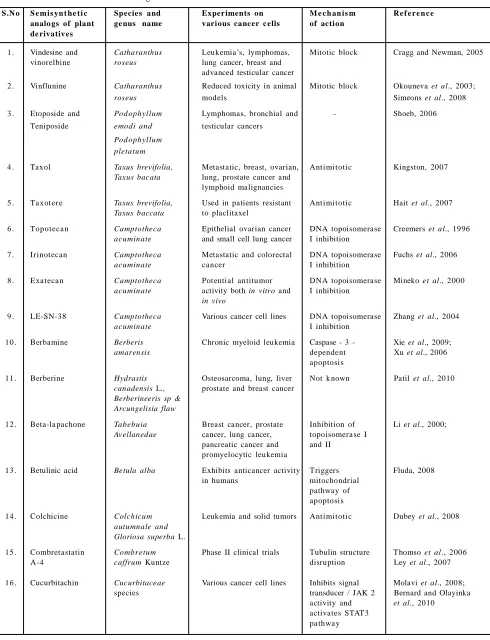
The list of the plant derivatives having anticancer activity and the particular constituents responsible for its activity are given in Table 2. A brief discussion about each derivative was also given in this table.
Berbamine: A bisbenzylisoquinoline alkaloid from Berbamine. It was found that it inhibits the tyrosine kinase and induces apoptosis in chronic myeloid leukemia (Xie et al., 2009). Recent studies proved that it acts by inducing caspase-3- dependent apoptosis of NB4 cells (leukemic cancer) (Xu et al., 2006).
Berberine: An isoquinoline alkaloid obtained from Berberis species,
Tinospora cordifolia, Hydrastis canadensis, etc. Recent studies showed its in vitro and in vivo anticancer activity in prostate, breast, lung, liver and osteosarcoma cancer cell lines (Wang et al., 2011; Patil et al., 2010).
Betulinic acid: Is a pentacyclic triterpenoid from Betula alba. It acts by triggering the mitochondrial pathway in apoptosis, thereby causes the cell death (Fluda, 2008).
Bruceatin: Studies have shown that its activity against HeLa cell lines and rabbit reticulocytes by irreversible inhibition of protein and DNA synthesis (Liaoo et al., 1976).
-lapachone: Is a water insoluble naphthaquinone obtained from
Tabebuia avellanedae (Li et al., 2000). By inhibiting topoisomerase I and II, it showed its anticancer activity in pancreatic, lung and breast cancer cell lines. Because of its poor solubility and systemic toxicity, the compound converted into gold nanoparticles for cancer therapy (Jeong et al., 2009).
Camptothecin: An alkaloid from Camptotheca acuminate, because of its poor solubility and toxicity new chemical moieties like itinotecan, topotecan, 9-amino camptothecin and rubitecan, etc. were chemically synthesized. Cytotoxicity of these compounds is due to inhibition of topoisomerase I (Srivatsava et al., 2005). As a second line treatment, topotecans were used in ovarian and lung cancer patients (Creemers et al., 1996). Irinotecan was used for colon cancer as a first and second line treatment (Fuchs et al., 2006).
Colchicine: An alkaloid from Colchicum autumnale and Gloriosa superba. It acts by arresting the cell cycle at mitosis. 3-demethyl colchicine, colchicoside, thiocolchicocide are the derivatives of colchicine synthesized chemically because of its toxic nature (Dubey
et al., 2008).
Comb reta sta tin A-4: A natu rally occu rring stilben e from
Combretum caffrum. It acts by disrupting the tubulin and thereby changing the morphology of endothelial cells. It is developed into a nano formulation (2nd phase of clinical trials) because of its poor solubility (Thomso et al., 2006; Ley et al., 2007).
Cucurbitacin: A tetracyclic triterpenoid from cucurbitaceae species. Their anticancer activity is due to inhibition of JAK 2 activity and transcriptor 3 activator (STAT3) in breast, prostate and nasopharynx cancer cell lines (Molavi et al., 2008). Because of its water insoluble nature and non-specific toxicity, its polymeric form is used to deliver the compound (Bermard and Olayinka, 2010).
Curcumin: Is a polyphenolic compound from turmeric. Its activity is by inducing apoptosis and modulation of cell cycle. But the exact mechanism of action of the compound is still not clear. 1st and 2nd clinical phase trails are going on the compound for colorectal cancer (Sa et al., 2010). Studies showed that the compound in higher doses was safe and it was reported in 1st phase of clinical trials (Goel et
al., 2008).
Diadzein and Genistein: Are the aglycon moieties, found in isoflavones of soya and its activity is due to inhibition of 3A4-mediated metabolism (Moon et al., 2006). Genistein used in breast and ovarian cancer due to inhibition of cell proliferation. These compounds are also capable of chemically induced lung, prostate, bladder and blood cancers (Dixon and Ferreira, 2002).
Ellipticine: An alkaloid from Apocyanaceae family and its activity is due to inhibition of topoisomerase II and intercalation of DNA. Reports shown that it inhibits growth and induces apoptosis in hepato carcinoma cells (HepG2) (Kuo et al., 2006).
Emodin: It is an anthraquinone compound and it induces apoptosis in liver, lung, ovarian and blood cancer cell lines by different pathways (Huang et al., 2009).
Flavopiridol: Is a semisynthetic derivative from plant alkaloid rohitukine. Its anticancer activity is due to the inhibition of cell cycle at G1 or G2 phase by interferring with cyclic dependent kinase. Presently, it is under 1st phase of clinical trials for treating solid tumors and 2nd phase of clinical trials for treating renal cellular carcinoma and colorectal carcinoma (Mans et al., 2000).
Harringtonine and Homoharringtonine: Are the esters of cephalotaxine alkaloid. By inhibiting the protein synthesis and chain elongation homoharringtone acts as an anticancer agent. Both these compounds are effective against acute and chronic myeloid leukemias (Cragg and Newman, 2005; Efferth et al., 2007). Indirubin and Meisoindigo: Its anticancer activity is due to inhibition of cyclin dependent kinase, which arrest the cell cycle and it also inhibit the proliferation of cancer cells. Clinically, it is effective against chronic myeloid leukemia (Nam et al., 2005; Liu et al., 1996). Because of its poor solubility and absorption, its derivative meisoindigo has been synthesized chemically.
Ingenol 3-o-angelate: Is a diterpene ester and derivative of ingenol obtained from Euphorbia peplus. By activating the PKC, it causes necrosis of the cancerous cells. Presently, it is under 2nd phase of clinical trials for the treatment of actinic keratosis and basal cell carcinoma (Hampson et al., 2005).
4-Ipomeanol: Is a furan derivative from Ipomea batatus. It acts by cytochrome p-450 mediated conversion into DNA-binding metabolite. It showed good cytotoxic potential against lung cancer in pre-clinical stages but unfortunately it showed poor results in human trails (Ancuceanu and Istudor, 2004).
Irisquinone: Is a benzoquinone derivative showed good anti-n eoplastic poteanti-n tial agaianti-nst rodeanti-n t tu mors aanti-n d acts as a chemosensitizer (Hazra et al., 2004).
Phenoxodiol and Protopanaxadiol: Is a synthetic analogue of naturally occurring gensistein. It acts by inducing apoptosis by inhibiting the membrane electron transport and cell proliferation. Presently, it is under 3rd phase of clinical trials for ovarian cancer and initial stage of clinical trials for cervical and prostate cancer (Herst et al., 2009). Protopanaxadiol is a triterpenoid analogue
from ginseng saponins. It acts by inducing apoptosis and shows cytotoxicity against lung, breast and colorectal cancer cell lines. Presently, it is under 1st phase of clinical trials for treatement of lung cancer (Pan et al., 2010).
Phodophyllotoxin: Etoposide and teniposide are the semisynthetic analogues of phophyllotoxin, proved to be potential anti-neoplastic agents against lymphomas, bronchial and testicular cancers (Shoeb, 2006).
Salvicine: Is a diterpenoid quinone from Salvia prionitis. Reports shown that it is a good anticancer activity in both in vitro and in vivo against malignant tumors by inhibiting topoisomerase II (Deng
et al., 2011).
Silvestrol: Was found to be effective against prostate and breast cancer. It revealed that mitochondrial pathway which triggers the extrinsic pathway of apoptosis of human prostate cancer cell lines (LNCaP). Episilvestrol is an epimer of silvestrol, proved to be less cytotoxic than silvestrol (Kinghorn et al., 2009; Kim et al., 2007). Taxanes: They act by binding to microtubles and stops the mitosis of the cancerous cells (Hait et al., 2007). Paclitaxel and its semi-synthetic derivative docotaxel are important derivatives of taxanes and they are the choice of drugs as 1st and 2nd line treatment for lung, ovarian and prostate cancers (Kingston, 2007).
Vinca alkaloids: They act by inhibiting the cell proliferation by binding to tubulin during mitosis which leads to apopotosis of cancerous cells. Vincristine and vinblastin e are the natural compounds; vinorelbine and vindensine are semisynthetic analogues of vinka alkaloids and presently they are in phase II clinical trials. In combination with chemotherapeutic agents, these compounds are effective against advanced testicular cancer, lymphomas, leukemia’s and breast cancers (Cragg et al., 2005). Vinorelbine and vinflurine are the other two synthetic analogues which showed reduced cytotoxicity in animal models (Okouneva et al., 2003; Simeons et al., 2008).
4. Conclusion
From the preceding review, it can be concluded that herbal medicinal plants and its derivatives are active against different type of cancers like lymphomas, breast, ovarian, lung, liver, stomach, prostate and testicular cancers. Hence, there is hope in the pharmaceutical industry, that even more powerful commercial drugs can be developed sooner, using plant derivatives, to effectively treat cancer and save mankind.
Acknowledgements
The authors th ank Manipal University, Manipal College of Pharmaceutical Sciences, Manipal, India for providing the facilities to carry out this study.
Conflict of interest
Table 1: Herbal medicinal plants with anticancer activity
S.N o. Botanical name Fam ily Common name Active constituent
1 . Allium sativum Lilliaceae Garlic Alliin, allicin, alliinase, S-allyl-cysteine (SAC), diallyl sulphide (DADS)
2 . Actinidia chinensis Actinidiaceae Kiwi fruit, china Polysaccharide known as ACPS-R
gooseberry
3 . Aloe ferax, Aloe barbadensis Lilliaceae Aloe vera Aloe-emodin, emodin, aloin
4 . Ananas comosus Bromeliaceae Pine apple Bromelain
5 . Angelica sinensis Umbelliferae Angelica Polysaccharide fraction known as AR-4
6 . Annona species Annona ceae Monkey species Acetogenins
7 . Arctium lappa Compositae Burdock Potential anticancer factors
8 . Astragalus membranaceus Papillonaceae — Swainsonine
9 . Betula utilis Betulaceae Bhojpatra Betulin
10 . Camellia sinensis T heacea e Tea plant Epigallocatechin gallate
11 . Catharantus roseus Apocyna ceae Vinca Vincristine and vinblastine
12 . Chlorella pyrenoidosa Oosystaceae — Lysine
13 . Colchicum luteum Lilliaceae Colchicum Colchicum democlocine
14 . Combretum cuffrum Combrittaceae — Combretastatin
15 . Curcuma longa Zinziberaceae Tu rmer ic Turmerone, curcumine
16 . Echinacea angustifolia Asteraceae Black sampson Arabinogalactan
17 . Fagopyrum esculentum Polygoneaceae Vitamin P Amygdalin, rutin
18 . Ginkgo biloba Ginkoaceae Kew tree Ginkgolide – B, A, C and J
19 . Glycine max Leguminosae Soybean Isoflavones, protease inhibitors, saponins and phytoster ols
20 . Glycyyrhiza glabra Leguminosae Liquorice Glycyrrhizin
21 . Gossypium barbadense Malvaceae Raw cotton Gossypol
22 . Gyrophora esculenta Umbellicariaceae Mu shroom Polysaccharide -glucans, -glucans and galactomannans
23 . Lentinus edodes Agaricaceae — Lentina n
24 . Linum usitatissimam Linaceae Flax seeds, linseed Cynogentic glycosides, lignans
25 . Mentha species Labiateae Pudina Monoterpene ketones
26 . Ochrosia elliptica Apocyna ceae — Ellipticine and 9-methoxy ellipticine are pyrindocarbazole alkaloids
27 . Panax ginseng Aralaceae Ginseng Ginsenosides, panaxosides
28 . Picrorrhiza kurroa Scrophulariaceae Picrorrhiza (kutki) Picrosides I, II, III and kutkoside
29 . Podophyllum hexandrum Podophyllaceae Podophyllum Podophyllin, astragalin
30 . Taxus brevifolia Ta xaceae Pacific yew Taxanes, taxol cepholomannine
31 . Tinospora cordifolia Menispermaceae Guduchi Berberine, palmitine, tinosporside
32 . Withania somnifera Solanaceae Ashwagandha Withanolides, withaferin
Table 2: Plant derivatives as anticancer agents
S.N o S e m is yn t he t i c Specie s and Exper iments on M e c h an is m R e f e r e n c e analo gs of plant ge nus name various cancer c ells of action
de rivativ es
1 . Vindesine and Catharanthus Leukemia’s, lymphomas, Mitotic block Cragg and Newman, 2005
vinorelbine roseus lung cancer, breast and
advanced testicular cancer
2 . Vinflunine Catharanthus Reduced toxicity in animal Mitotic block Okouneva et al., 2003;
roseus models Simeons et al., 2008
3 . Etoposide and Pod ophyllum Lymphomas, bronchial and - Shoeb, 2006
Teniposide emodi and testicular cancers
Pod ophyllum pletatum
4 . Taxol Taxus brevifolia, Metastatic, breast, ovarian, Antimitotic Kingston, 2007 Taxus bacata lung, prostate cancer and
lymphoid malignancies
5 . Ta xoter e Taxus brevifolia, Used in patients resistant Antimitotic Hait et al., 2007 Taxus baccata to placlitaxel
6 . Topoteca n Camptotheca Epithelial ovarian cancer DNA topoisomerase Creemers et al., 1996 acuminate and small cell lung cancer I inhibition
7 . Ir inotecan Camptotheca Metastatic and colorectal DNA topoisomerase Fuchs et al., 2006
acuminate cancer I inhibition
8 . Exa teca n Camptotheca Potential antitu mor DNA topoisomerase Mineko et al., 2000 acuminate activity both in vitro and I inhibition
in vivo
9 . LE-SN-38 Camptotheca Various cancer cell lines DNA topoisomerase Zhang et al., 2004
acuminate I inhibition
10 . Berbamine Berberis Chronic myeloid leukemia Caspase - 3 - Xie et al., 2009;
amarensis dependent Xu et al., 2006
apoptosis
11 . Berberine Hydrastis Osteosarcoma, lung, liver Not k nown Patil et al., 2010 canadensis L., prostate and breast cancer
Berberineeris sp & Arcungelisia flaw
12 . Beta-la pachone Tabebuia Breast cancer, prostate Inhibition of Li et al., 2000; Avellanedae cancer, lung cancer, topoisomera se I
pancreatic cancer and and II promyelocytic leukemia
13 . Betulinic acid Betula alba Exhibits anticancer activity Triggers Fluda, 2008
in humans mitochondrial
pathway of apoptosis
14 . Colchicine Colchicum Leukemia and solid tumors Antimitotic Dubey et al., 2008 autumnale and
Gloriosa superba L.
15 . Combretastatin Combr etum Phase II clinical trials Tubulin structure Thomso et al., 2006
A-4 caffrum Kuntze disruption Ley et al., 2007
16 . Cucurbitachin Cucurbitaceae Various cancer cell lines Inhibits signal Molavi et al., 2008;
species transducer / JAK 2 Bernard and Olayinka
activity and et al., 2010 activates STAT3
17 . Curcumin Curcuma longa Colorectal cancer, multiple Exa ct mechanism Goel et al., 2008 myeloma and pancreatic of action is still
cancer unknown
18 . D aphnoretin Wikstroemia indica Ehrlich ascites carcinoma, Suppression of Diogo et al., 2009 Human hepatoma Hep3B protein and DNA
cells synthesis
19 . Diadzein and Lupinus species, Ovarian, breast cancer and Inhibits 3A 4 - Dixon and Ferreira Genistein Vicia faba, Glycine chemically induced cancers mediated metabolism et al., 2002
max, Psoralea of stomach, bladder and and oxidative
corylifolia lung metabolism
20 . Elipticine Ochrosia Various cancer cell lines DNA intercalation Kuo et al., 2006
borbonica, and inhibition of
Ochrosia elliptica topoisomerase II
21 . Emodin Rhizome of Lung, liver, ovarian and Apoptosis of Huang et al., 2009
rubarb blood cancer cancer cells by
several pathways
22 . Flavopiridol Amoora rohituka Colorectal, non-small cell Inhibits cell cycle Man’s et al., 2000 and Dysoxylum lung cancer, renal cell progression at G1
binectariferum carcinoma and solid tumors or G2 phase
23 . Harringtonine Cephalotaxus Acute and chronic myeloid Inhibition of protein Cragg and Newman and Homoharringto herrintonia leukemia synthesis and chain 2005; Efferth et al.,
nine elongation during 20 07
tra nslation
24 . Indirubin Chinese herb, Dan- Chronic myeloid leukemia Inhibits cyclin- Nam et al., 2005
ggui Lonehui Wan dependent kinase
25 . Ingenol 3-o-angelate Euphorbia peplus Actinic keratosis and basal Causes necrosis of Hampson et al., 2005
L., cell carcinoma tumor by the
activation of PKC
26 . 4 -I pomea nol Ipomoeca batatas Lung specific cancer in Cytochrome p-4 50 Ancuceanu and animal models mediated conversion Istudor, 2004
into DNA - binding metabolities
27 . Irisquinone Iridaceaclatca Good activity in Acts as a Hazra et al., 2004 pallasii and Iris transplatable rodent chemosensitizer
kumaoensis tumor s
28 . Phenoxodiol Plant isoflavone, Ovarian, prostate and Inhibit plasma Herst et al., 2009
genistein cervical cancer membra ne
electr on tra nsport and cell
proliferation
29 . Salvicine Salvia prionitis Malignant tumors Inhibition of Deng et al., 2011
Hance topoisomerase II
30 . Silvestrol Aglaia foveolata Prostate, breast and lung Apoptosome/ Kinghom et al., 2009;
Panell cancers mitochondrial Kim et al., 2007
References
Ali, Mand Shuaib (1997). Withanolides from the stem bark of Withania somnifera. Phytochemistry, 44(6):1163-1168.
Ambasta, S.P. (2000). The useful plants of India, Fourth Edition, National Institution of Sci. Communication, Delhi, pp:239.
Ambasta, S.P. (2000). The useful plants of India, Fourth Edition, National Institution of Sci. Communication, Delhi, pp:243.
Ancuceanu, R.V and Istudor, V. (2004). Pharmacologically active natural compounds for lung cancer. Altern. Med. Rev., 9:402-419. Asthana, R and Raina, M.K. (1989). Pharmacology of With ania
somnifera- a review. Ind. Drugs, 26:1-7.
Attele, A.S.; Wu, J.A and Yuan, C.S. (1999). Ginseng pharmacology: multiple constituents and multiple actions. Biochem. Pharmacol., 58(11 ):168 5-16 93.
Belman, S. (1983). Onion and garlic oils inhibit tumor promotion. Carcinogenesis, 4:1063-65.
Berna rd, S.A. and Olayinka , O.A. (20 10) . Sear ch for a novel antioxidant, antiinflammatory/ analgesic or antiproliferative drug: cucurbitacins hold the ace. J. Med. Plants Res., 4:2821-2826. Charfenberg, K.; Wagner, R. and Wagner, K.G. (1990). The cytotoxic
effect of ajoene, a natural product from garlic, investigated with different cell lines. Cancer Letter, 53(2-3):103-08.
Cragg, G.M. and Newman, D.J. (2005). Plants as a source of anti-cancer agents. J. Ethnopharmacol., 100:72-79.
Cragg, G.M.; Schepartz, S.A.; Suffness, M. and Grever, M.R. (1993). The taxol supply crisis- New NCI policies for handling the large-scale production of novel natural product anticancer and anti-HIV agents. J. Nat. Prod., 56:1657-68.
Creemers, G.J.; Bolis, Gore M.; Scarfone, G.; Lacave, A.J.; Guastalla, J.P.; Despax, R.; Favalli, G.; Kreinberg, R. and VanBelle, S. (1996). Topotecan, an active drug in the second-line treatment of epithelial ovarian cancer: results of a large European phase II study. J. Clin. Oncol., 14:3056-61.
Deng, F.; Lu, J.J.; Liu, H.Y.; Lin, L.P.; Ding, J. and Zhang, J.S. (2011). Synthesis a nd antitumor activity of novel salvicine analogues. Chin. Chem. Lett., 22:25-28.
Devi, P.U. (1996). Withania somnifera Dunal (Ashwagandha): potential plant source of a promising drug for cancer chemotherapy and radiosensitization. Indian J. Exp. Biol., 34:927-932.
Devi, P.U.; Akagi, K.; Ostapenko, V.; Tanaka, Y. and Sugahara, T. (1 996 ). Withaferin A: a new ra diosensitizer from the I ndian medicinal plant Witha nia so mnifer a. Int. J. Radiat. Biol., 69(2):193-97.
Diogo, C.V.; Felix, L.; Vilela, S.; Burgeiro, A., Barbosa, I.A.; Carvalho, M.J.M.; Oliveira, P.J. and Peixoto, F.P. (2009). Mitochondrial toxicity of the phyotochemicals daphnetoxin and daphnoretin -relevance for possible anticancer application. Toxicol. In vitro, 23 :77 2-77 9.
Dixon, R.A. and Ferreira, D. (2002). Molecules of interest: genistein. Phytochemistry, 60 :20 5-211.
Dubey, K.K.; Ray, A.R. a nd Behera , B.K. ( 2008) . Pr oduction of demethylated colchicine through microbial transformation and scale-up process development. Process Biochem., 43:251-257.
Efferth, T.; Li, P.C.H.; Konkimalla, V.S.B. and Kaina, B. (2007). From traditional Chinese medicine to rational cancer thera py. Trends Mol. Med., 13:353-61.
Fuchs, C.; Mitchell, E.P. and Hoff, P.M. (2006). Irinotecan in the treatment of colorectal cancer. Cancer Treat. Rev., 32:491-503.
Fluda, S. (2008). Betulinic acid for cancer treatment and prevention. Int. J. Mol. Sci., 9:1096-1107.
Goel, A.; Kunnumakkara, A.B. and Aggarwal, B.B. (2008). Curcumin as ‘‘Curecumin’’: from kitchen to clinic. Biochem. Pharmacol., 75 :78 7-80 9.
Hait, W.N.; Rubin, E.; Ali, E.; and Goodin, S. (2007). Tubulin targeting agents. Update on Cancer Therapeutics, 2:1-18.
Hampson, P.; Wang, K. and Lord, J.M. (2005). Treatment of actinic keratoses, acute myeloid leukemia therapy, treatment of basal cell carcinoma, protein kinase C activator. Drugs Fut., 30:1003. Hazra, B.; Sarma, M.D.; and Sanyal, U. (2004). Separation methods
of quinonoid constituents of plants used in oriental traditional medicines. J. Chromatogr. B., 8(12):259-275.
Herst, P.M.; Davis, J.E.; Neeson, P.; Berridge, M.V. and Ritchie, D.S. (2009). The anticancer drug, phenoxodiol, kills primary myeloid and lymphoid leukemic blasts and rapidly proliferating T cells. Haematologica, 94:928-934.
Huang, Z.; Chen, G. and Shi, P. (2009). Effects of emodin on the gene expression profilingof human breast carcinoma cells. Cancer Detect. Prev., 32 :286-291.
Hu ma, Ali a nd Savita , D ixit ( 2013 ). Extraction optimization of Tinospora cordifolia and assessment of the anticancer activity of its alkaloid palmatine. The Scientific World Journal, 1-10. Jean Bruneton (19 93). Pharma cognosy, phytochemisty medicinal
plants. Lavoisier Publisher., France, pp:832.
Jean Bruneton (19 93). Pharma cognosy, phytochemisty medicinal plants. Lavoisier Publisher., France, pp:771-77.
Jean Bruneton (19 93). Pharma cognosy, phytochemisty medicinal plants. Lavoisier Publisher., France, pp:151.
Jean Bruneton (19 93). Pharma cognosy, phytochemisty medicinal plants. Lavoisier Publisher., France, pp:281.
Jeena, K.J.; Joy, K.L. and Kuttan, R. (19 99) . Effect of Em blica officinalis, Phyllanthus amarus and Picrorrhiz akurroa on N-nitrosodiethylamine induced hepatocardinogenesis. Cancer Lett., 136:1 1-1 6.
Jeong, S.Y.; Park, S.J.; Yoon, S.M.; Jung, J.; Na Woo, H.; Yi, S.L.; Song, S.Y.; Park, H.J.; Kim, C. and Lee, J.S. (2009). Systemic delivery and preclinical evaluation of Au nanoparticle containing -lapachone for radiosensitization. J. Control Release, 139:239-24 5.
Kikuzaki, H. and Nakatani, N. (1993). Antioxidant effects of some ginger constituents. J. Food. Sci., 58:1407-10.
Kim, S.; Hwang, B.Y.; Su, B.N.; Chai, H.; Mi, Q.; Kinghorn, A.D.; Wild, R. and Swanson, S.M. (2 007 ). Silvestrol, a potential anticancer rocaglate derivative from Aglaia foveolata, induces apoptosis in LNCaP cells through the mitochondrial/apoptosome pa thway withou t a ctivation of execu tioner ca spa se-3 or -7. Anticancer Res., 27:2175-2183.
Kinghorn, D.; de Blanco, E.J.C.; Chai, H.B.; Orjala, J.; Farnsworth, N.R.; Soejarto, D.D.; Oberlies, N.H.; Wani, M.C.; Kroll,D.J. and Pearce, C.J. (2009). Discovery of anticancer agents of diverse natural origin. Pure Appl. Chem., 81:1051-1063.
Kingston, D.G.I. (2007). The shape of things to come: structural and synthetic studies of taxol and related compounds. Phytochemistry, 68(14 ):184 4-18 54.
Kleijnen, J. and Knipschild, P. (1992). Gingko biloba for cerebral insufficiency. Br. J. Clin. Pharmacol., 34;352-58.
Ladanyi, A.; Timar, J. and Lapis, K. (1993). Effect of lentinan on macrophage cytotoxicity against metastatic tumor cells. Cancer Immunol and Immunother, 36:123-26.
Lampe, J.W.; Martini, M.C.; Kurzer, M.S.; Adlercreutz, H. and Slavin, J.L. (19 94) . Ur ina ry lignan and isoflavonoid excr etion in premenopausal women consuming flaxseed powder. Am. J. Clin. Nutr., 60:122-28.
Lea, M.A.; Xiao, Q.; Sadhukhan, A.K.; Cottle, S.; Wang, Z.Y. and Ya ng, C.S. (19 93) . I nhibitory effects of tea extracts and (-)-epigallocatechin gallate on DNA synthesis and proliferation of hepatoma and erythroleukemia cells. Cancer Lett., 68:231-6.
Ley, C.D.; Horsmany, M.R. and Kristjansen, P.E.G. (2007). Early effects of combretastatin-A4 disodiu m phospha te on tumor perfusion and interstitial fluid pressure. Neoplasia, 9:108-112.
Liaoo, L.L.; Kupchan, S.M. and Horwitz, S.B. (1976). Mode of action of the antitumor compound bruceantin, an inhibitor of protein synthesis. Mol. Pharmacol., 12:167-176.
Liu, X.M.; Wung, L.G.; Li, H.Y. and Ji, X.J. (1996). Induction of differentiation and downregulation of c-myb gene expression in ML4 human myeloblastic leukemia cells by the clinically effective and leukemia agent meisoindigo. Biochem. Pharmacol., 51:1545-1551.
Maliyakkal, N.; Udupa, N.; Pai, K.S.R. and Rangarajan, A. (2013). Cytotoxic a nd apoptotic activities of extra cts of Withan ia somnifera and Tinospora cordifolia in human breast cancer cells. Int. J. of Applied Res. in Nat. Products, 6(4):1-10.
Mans, D.R.A.; Da Rocha, A.B. and Schwartsmann, G. (2000). Anti-cancer drug discovery and development in Brazil: targeted plant collection as a rational strategy to acquire candidate anticancer compounds. The Oncologist, 5:185-198.
Milner, J.A. (1996). Garlic: its anticarcinogenic and antitumorigenic properties. Nutr. Rev., 54:82-86.
Mizuno, T. (19 95). Bioactive biomolecules of mushrooms: food function and medicinal effect of mushroom fungi. Food Rev. Int., 11:7-21.
Mizuno, T. (1995). Shiitake- Lentinus edodes: functional properties for medicinal and food purposes. Food Rev. Int., 11:111-28.
Mizuno, T.; Saito, H.; Nishitoba, T. and Kawagishi, H. (1995). Antitumor active substances from mushrooms. Food Rev. Int., 11:23-61. Molavi, O.; Ma, Z.; Mahmud, A. and Alshamsan, A. (2008). Polymeric
micelles for the solubilization and delivery of STAT3 inhibitor cucurbitacins in solid tumors. Int. J. Pharm., 347:118-127. Nagabhushan, M. and Bhide, S.V. (1992). Curcumin as an inhibitor of
cancer. J. Am. Coll. Nutr., 11:192-98.
Nam, S.; Buettner, R.; Turkson, J.; Kim, D.; Cheng, J.Q.; Muehlbeyer, S.; Hippe, F.; Vatter, S.; Merz, K.H. and Eisenbrand, G. (2005). Indirubin derivatives inhibit Stat3 signaling and induce apoptosis in human cancer cells. PNAS., 102:5998-6003.
Noble, R.L. (19 90) . T he discovery of the vinca alkaloids-chemotherapeutic agents against cancer. Biochem. Cell Bio., 68;1344-1351.
Okouneva, T.; Hill, B.T.; Wilson, L. and Jordan, M.A. (2003). The effects of vinflunine, vinorelbine, and vinblastine on centromere dynamics. Mol. Cancer Ther., 2:427-436.
Pan, L.; Chai, H. and Kinghom, A.D. (2010). The continuing search for antitumor agents from higher plants. Phytochem. Lett., 3:1-8. Patil, J.B.; Kim, J. and Jayaprakasha, G.K. (2010). Berberine induces apoptosis in breastcancer cells (MCF-7) through mitochondrial-dependent pathway. Eur. J. Pharmacol., 64(5):70-78.
Pecere, T.; Gazzola, M.V. and Micignat, C. (2000). Aloe-emodin is a new type of anticancer agent with selective activity against neuro-ectodermal tumors. Cancer Res., 60:2800-2804.
Serr aino, M. and Thompson, L.U. (1991) . The effect of flaxseed su pplementa tion on early r isk ma rkers for ma mma ry carcinogenesis. Cancer Lett., 60:135-42.
Serr aino, M. and Thompson, L.U. (1992) . The effect of flaxseed su pplementa tion on the initiation and promotiona l stages of mammary tumorigenesis. Nutr. Cancer, 17:153-59.
Shoeb, M.; Celik, S.; Jaspars, M.; Kumarasamy, Y.; MacManus, S.; Na har, L.; Kong, T.L.P. and Sa rker, S.D . (200 6). Isola tion, structure elucidation and bioactivity of schischkiniin, a unique indole a lka loid fr om the seeds of Ce nta ure a sc his chk inii. Tetrahedron, 61:9001-06.
Simoens, C.; Lardon, F.; Pauwels, B.; De Pooter, C.M.J.; Lambrechts, H.A.J.; Pattyn, G.G.O.; Breillout, F. and Vermorken, J.B. (2008). Comparative study of the radiosensitising and cell cycle effects of vinflunine and vinorelbine, in vitro. BMC Cancer, 8:65.
Srivastava, V.; Negi, A.S.; Kumar, J.K.; Gupta, M.M. and Khanuja, S.P.S. (2005). Plant-based anticancer molecules: a chemical and biological profile of some important leads. Bioorg. Med. Chem., 13:589 2-59 08.
Thompson, L.U.; Robb, P.; Serra ino, M. and Cheu ng, F. ( 1991 ). Mammalian lignan production from various foods. Nutr. Cancer, 16:4 3-5 2.
Thomso, P.; Naylor, M.A.; Everett, S.A.; Stratford, M.R.L.; Lewis, G.; Hill, S.; Patel, K.B.; Wardman, P. and Davis, P.D. (2006). Synthesis a nd biologica l pr oper ties of bior eductively targeted nitrothienyl prodrugs of combretastatin A-4. Mol. Cancer. Ther., 5:288 6-28 94.
Tyler, V. (1994). Herbs of choice: the therapeutic use of phytomedici-nals. Haworth Press, New york, pp:32-33.
Wa ng, F.; G ao, Y.; Ga o, L. and Xing, T. (2 011) . Study on the electrochemical behavior of the anticancer herbal drug berberine and its analytical application., J. Chin. Chem. Soc., 58:61-68.
Wang, J. and Shimura, K. (1991). Enhancing effect of antitumor polysaccharide from Astralagusor radix hedysarum on C3 cleavage production of macrophages in mice. Mem. Inst. Oswaldo Cruz.., 86(20):159-164.
Wasserman, L.; Avigad, S.; Nordenberg, J.; Berry, E. and Fenig, E. (2002). The effect of aloe-emodin on the proliferation of a new mer kel carcinoma cell line. The Am. J . of Dermatopa thology, 24(1):1 7-22.
Xie, J.; Ma, T.; Gu, Y.; Zhang, X.; Qiu, X. and Zhang, L. (2009). Berbamine derivatives: a novel class of compounds for antileukemia activity. Eur. J. Med. Chem., 44:3293-3298.
Xu, R.; Dong, Q. and Gan, X. (2006). Berbamine: a novel inhibitor of bcr/ablfusion gene with potent anti-leukemiaactivity. Leuk. Res., 30 :17 -2 3.
Yue, P.Y.; Mak, N.K.; Cheng, Y.K.; Leung, K.W.; Ng, T.B.; Fan, D.T.; Yeung, H.W. and Wong, R.N. (2007). Pharmacogenomics and the Yin/Yangactions of ginseng: a ntitumor, angiomodula ting a nd steroidlike activities of ginsenosides. Chinese Med., 2:6.
Yun, T.K. and Choi, S.Y. (1990). A case-control study of ginseng intake and cancer. Int. J. Epidemiol., 19:871-76.
Yun, T.K. and Choi, S.Y. (1995). Preventive effect of ginseng intake against various human cancers: a case control study on 1987 pairs. Cancer Epidemiol Biomarkers Prev., 4:401-08.
![Tris[2 (deuteriomethylsulfanyl)phenyl]phosphine deuteriochloroform 0 125 solvate](data:image/gif;base64,R0lGODlhAQABAIAAAP///wAAACH5BAEAAAAALAAAAAABAAEAAAICRAEAOw==)