Food Handling Practices and Food Safety Messaging Preferences
of African-American and Latino Consumers
Emily Patten
Brigham Young University
Jeannie Sneed
Kansas State University
Londa Vanderwal Nwadike
Kansas State University/University of Missouri
Extensive research on consumer food handling has identified common practices that could negatively impact food safety. Limited research has considered if food handling practices differ among diverse groups or if unique approaches are needed to provide food safety education for different audiences. This study examined food handling practice differences between African-American and Latino consumers and differing responses to food safety messages. Four focus groups were conducted, two with African-American participants and two with Latino participants, with each focus group consisting of 10-15 participants. Focus group transcripts were reviewed, coded, and grouped into themes using an iterative process. The 50 participants self-identified as either African-American or Latino, had home meal preparation experience, and were 18 years or older. Each focus group was multigenerational and included males and females. Risky food handling practices reported by both groups included rinsing poultry before cooking and limited food thermometer use. African-American participants preferred informational food safety messages, whereas Latino participants were split in preferring informational, guilt-inducing, and fear-inducing messages.
Keywords: consumer food safety, food handling, messaging, cultural awareness, food safety education
Introduction
Food Safety
The Centers for Disease Control and Prevention (CDC) estimated that between 9-15% of
food preparer, and inadequate cleaning of equipment and utensils (CDC, 2009).
Byrd-Bredbenner, Berning, Martin-Biggers, and Quick (2013) stated that many of these illnesses could be prevented by using proper food handling practices in the home.
A series of food safety surveys have allowed researchers to identify consumer food handling patterns over time in the general United States population (Academy of Nutrition and Dietetics, 2011; Altekruse, Street, & Fein, 1996; Altekruse, Yang, Timbo, & Angulo, 1999; Cody & Hogue, 2003; Fein, Lando, Levy, Teisl, & Noblet, 2011; Levy, Choiniėre, & Fein, 2008; Verrill, Lando, & O’Connell, 2012). Cody and Hogue’s (2003) data explored compliance with the Food Safe Families’ four key messages: clean, chill, separate, and cook. The data revealed that only 25% of consumers complied with cook messages, but there was better consumer compliance with clean (90%), chill (86%), and separate (82%). The Academy of Nutrition and Dietetics (2011) found that some consumer food handling practices improved over time while others did not. In 2011, more people reported compliance with cross-contamination prevention practices, such as using different plates for raw and cooked foods and washing cutting boards/utensils between use with raw and ready-to-eat foods than in 2002. However, fewer people reported washing their hands all of the time before starting food preparation and fewer people knew the correct final cooking temperature for ground beef in 2011 than in 2002 (Academy of Nutrition and Dietetics, 2011). Observational studies (Anderson, Shuster, Hansen, Levy, & Volk, 2004; Jay, Comar, & Govenlock, 1999; Kendall et al., 2004; Phang & Bruhn, 2011; Scott & Herbold, 2010; Sneed et al., 2015) confirmed many of these survey findings.
While there has been extensive research about consumer food handling practices in general, less research has focused on differences among ethnic and racial groups. Fein et al. (2011)
investigated food handling trends from 1988 to 2010 and found that Hispanic black and non-Hispanic white survey respondents were similar in the safety of their food handling practices, but they found that white respondents had safer food handling practices than did Hispanic
respondents. Two studies identified differences in food handling practices based on ethnicity (Henley, Stein, & Quinlan, 2012; Verrill et al., 2012).
Campylobacter and Salmonella are major causes of foodborne illness in the United States. Studies by Cummings, Sorvillo, and Kuo (2010) and Samuel et al. (2004) have shown that their incidences vary among races and ethnicities. A common food source or intake pattern has not been found to attribute the higher rates of Salmonella, Shigella, and Campylobacter in minority populations. Quinlan (2013) recommended exploring food handling and purchasing patterns of these populations to identify if cultural barriers exist. Research indicates there may be
Messaging
Communicating food safety concerns to the public in an effort to affect change can be challenging. Wansink and Pope (2015) highlighted that message creators tend to differ from their target audiences because message creators are more immersed and involved in the technical subject matter and feel more of an obligation to comply with their own messages. As a result, message creators respond differently to a message than does the target population (Wansink & Pope, 2015). Having open dialogue or focus groups with a target audience to understand their perception of food safety risks/threats is important during the message development phase (FAO/WHO, 1999). In creating food safety messages, the consideration of societal factors like language skills, cultural factors, illiteracy, and poverty is essential, as these may be barriers in the communication process (FAO/WHO, 1999; Jacob, Mathiasen, & Powell, 2010).
Medeiros, Hillers, Kendall, and Mason (2001) recommended focusing consumer food safety education on hand washing, adequate cooking, and avoiding cross-contamination. The food safety messages tested in this study were based on these concepts. Using three different approaches to the same concept (informative, guilt-inducing, and scare/fear-inducing), the reactions of the focus groups’ participants were obtained and discussed. Informative messages were focused on providing food safety information to the target audience. Guilt is a negative emotional state that is elicited as someone behaves in a manner inconsistent with their belief system and motivates action within the guilty person (O’Keefe, 2002). Thus, the guilt-inducing messages placed the responsibility of making other people sick on the food preparer (the target audience). Fear, or scare, tactics have been and are a common approach to encouraging health and/or lifestyle changes (e.g., promoting smoking cessation or condom use; Ruiter, Kessels, Peters, & Kok, 2014). Fear inducing messages can be associated with defensive responses (Ruiter et al., 2014). However, because of the frequency of use of these tactics, “scare” messages were also tested in this study.
Methods
Study Design
Qualitative focus groups were used to explore food handling practices of African-American and Latino consumers. A total of four, 60-90-minute focus groups were completed, two with African-Americans and two with Latinos. Kansas State University’s Institutional Review Board approved the study protocol and participants provided written informed consent.
Study Sample and Recruitment
Researchers partnered with key informants in the community (Extension Services, a local Latino community organization, and an emergency assistance program) to recruit participants and provide sites for conducting the focus groups. All focus groups were conducted in the greater Kansas City metropolitan area, with three in Kansas and one in Missouri. The recruitment process began in May 2014, with posted and distributed flyers through the partnering community organizations. Inclusion criteria for participants were self-identification as African-American or Latino, prepare meals at home, and age 18 years or older. Each focus group included both males and females and was multigenerational. A $25 incentive was offered for participation and child care was provided as needed. Henley et al. (2012) had 12.5% attrition overall but 65% attrition with Hispanic participants in their focus groups. To achieve four to ten participants in each focus group, which is the preferred number of participants identified in literature (Krueger & Casey, 2009), we recruited approximately fifteen participants per focus group due to anticipated attrition of participants between recruiting and the actual focus group event. Participants were asked to register with the appropriate community organization, and a representative of that organization made reminder phone calls to participants 24 hours prior to the focus group date.
Procedures
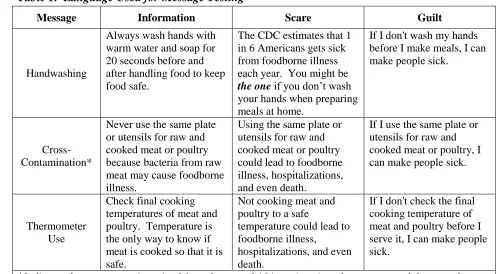
Table 1. Language Used for Message Testing
Message Information Scare Guilt
Handwashing
Always wash hands with warm water and soap for 20 seconds before and after handling food to keep food safe.
The CDC estimates that 1 in 6 Americans gets sick from foodborne illness each year. You might be the one if you don’t wash your hands when preparing meals at home.
If I don't wash my hands before I make meals, I can make people sick.
Cross-Contamination*
Never use the same plate or utensils for raw and cooked meat or poultry because bacteria from raw meat may cause foodborne illness.
Using the same plate or utensils for raw and cooked meat or poultry could lead to foodborne illness, hospitalizations, and even death.
If I use the same plate or utensils for raw and cooked meat or poultry, I can make people sick.
Thermometer Use
Check final cooking temperatures of meat and poultry. Temperature is the only way to know if meat is cooked so that it is safe.
Not cooking meat and poultry to a safe
temperature could lead to foodborne illness,
hospitalizations, and even death.
If I don't check the final cooking temperature of meat and poultry before I serve it, I can make people sick.
*Indicates the message topic omitted from the second African-American focus group and the second Latino focus group in interest of time management.
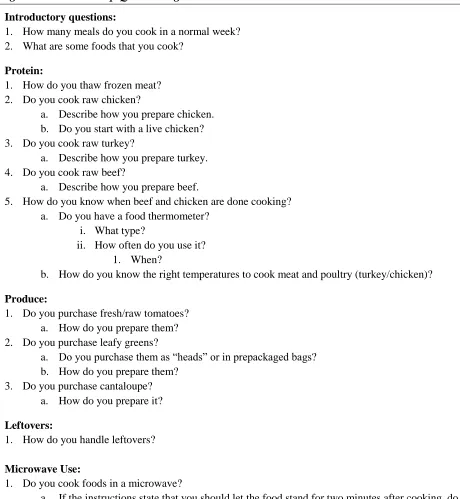
Questioning route. The questioning route for the focus groups (Figure 1) was developed by the researchers and reviewed for content by representatives from United States Department of Agriculture’s Food Safety and Inspection Service. A family and consumer sciences educator from Kansas State University’s Research and Extension Service who regularly interacts with diverse audiences reviewed the questioning route and made audience-specific suggestions to wording. The preliminary questions were used to initiate conversation and set an open tone. The remaining questions were designed to promote free discussion among participants regarding food handling practices. Areas of concern related to food handling and the four core messages from the Food Safe Families campaign (clean, separate, cook, and chill) served as a framework for developing the questioning route (Food Safety Inspection Service [FSIS], 2014). Question topics included: meat and poultry preparation and cooking methods, produce washing, handling
Figure 1. Focus Group Questioning Route
Introductory questions:
1. How many meals do you cook in a normal week? 2. What are some foods that you cook?
Protein:
1. How do you thaw frozen meat? 2. Do you cook raw chicken?
a. Describe how you prepare chicken. b. Do you start with a live chicken? 3. Do you cook raw turkey?
a. Describe how you prepare turkey. 4. Do you cook raw beef?
a. Describe how you prepare beef.
5. How do you know when beef and chicken are done cooking? a. Do you have a food thermometer?
i. What type?
ii. How often do you use it? 1. When?
b. How do you know the right temperatures to cook meat and poultry (turkey/chicken)?
Produce:
1. Do you purchase fresh/raw tomatoes? a. How do you prepare them? 2. Do you purchase leafy greens?
a. Do you purchase them as “heads” or in prepackaged bags? b. How do you prepare them?
3. Do you purchase cantaloupe? a. How do you prepare it?
Leftovers:
1. How do you handle leftovers?
Microwave Use:
1. Do you cook foods in a microwave?
a. If the instructions state that you should let the food stand for two minutes after cooking, do you do that?
Cold Holding:
1. How do you know that your fridge is cold enough? a. Do you have a refrigerator thermometer?
i. How often do you check it?
Cleaning/Sanitizing:
1. How do you wash your dishes?
a. If you wash your dishes by hand, how do your dishes dry? b. How do you clean cutting boards?
2. Describe how you clean your kitchen. a. What cleaners do you use?
b. Do you use cloth towels, paper towels, or sponges?
i. If you use paper towels, do you use them only time and discard them? Do you continue to use them a few times before you throw them away?
3. Do you use your cell phone (or other devices) in the kitchen while you prepare food?
Handwashing:
1. When do you wash your hands when making a meal? 2. How do you wash your hands?
Transportation
1. How do you get to the grocery store?
2. How long is food out before it gets to a fridge after shopping?
Information
1. Where do you get your food safety information?
2. Which message would motivate you to wash your hands?
3. Which message would motivate you to avoid cross-contamination? 4. Which message would motivate you to use a thermometer?
Note: Entire questioning route used to direct focus group dialogue. As needed, additional follow-up
questions were used for clarification.
Pilot test. A pilot focus group was conducted with a total of four participants (both African-Americans and Latinos were represented) at the sponsoring institution. Following the pilot test, the questions were slightly reordered and rephrased based on participants’ reactions and
researchers’ assessment of the flow. A Spanish interpreter observed the pilot test session, and discussed procedures to be used in the Latino focus groups both before and after the pilot session.
At the conclusion of the questioning route discussion, participants were asked where they get food safety information. Then they were shown and read three message types (information, scare, and guilt) on each of three topics (handwashing, cross-contamination, and thermometer use; Table 1) and asked to vote for the message within that topic that they believed would most likely influence them to follow the behavior described. One researcher called for a vote by raise of hands and the other two researchers counted participant responses. The messages were also translated from English to Spanish by the Spanish interpreter assisting with the study and the Latino groups were shown and read the messages in both English and Spanish. All nine messages were shown to each minority groups’ first focus group. However, it was decided to omit the three types of cross-contamination messages in subsequent groups due to time constraints and similarity of participant responses to types of messages regardless of content theme. Thus, each minority group’s second focus group responded to a total of six messages. The messages within each topic were presented in random order.
Data analysis. Each focus group session was audio recorded and transcribed verbatim. Any responses in Spanish were translated into English by a qualified Spanish translator. The
transcripts for each minority group were then aggregated. The analysis procedure described by Bogdan and Biklen (2003) was utilized. This process began with two independent researchers immersing themselves in the transcripts to gain a sense of the totality of the data. Key words and phrases capturing the groups’ food handling practices within those themes were highlighted. Written notes taken during the focus group were also consulted to clarify points from the
transcriptions as needed. The two researchers used the common patterns identified in the data to develop coding schemes and then the transcripts were coded by two researchers. Coding
disagreements were resolved through discussion and reviewing the original data to ensure that participants’ responses were accurately presented.
Results and Discussion
Participants
Each focus group consisted of ten to fifteen participants. In total, 19 African-American women, six African-American men, 21 Latino women, and four Latino men participated. Young adults, parents of small children, middle aged, and retired individuals participated. Participants
indicated they met the study’s inclusion criteria when they signed up at the community
The self-reported food handling practices of African-American and Latino consumers were explored, and both common and unique factors were identified. The themes are summarized in this section based on the four key messages of the Food Safe Families campaign: clean, separate, cook, and chill (FSIS, 2014).
Clean
Although Food Safe Families messages discourage consumers from rinsing meat and poultry prior to cooking (FSIS, 2014), a majority of participants in both minority groups reported doing so, which is consistent with the findings of Henley et al. (2012). One African-American
participant encouraged focus group peers to wash their chicken: “Wash it off real good. Scrub it down. Scrub it down. Put your Army clean on it and scrub it down.” In regard to preparing a turkey, one Latino participant said, “And then, after [thawing], I wash it off, take everything out. And then, after you wash it off, uh, put it in the oven.” One unique food handling practice mentioned by several Latino participants was the use of lemon juice to rinse raw poultry prior to cooking, which was somewhat similar to Henley et al.’s (2012) finding that several African-American and Hispanic focus group participants rinsed poultry with acidic solutions.
Another discussion point related to clean was the practice of preparing higher risk produce items. Participants’ methods varied for cantaloupe preparation; some do not wash cantaloupe at all, while others wash it either before or after cutting. Because cantaloupe has a thick peel, many believed washing was unnecessary. One participant said, “Nah, I peel it.” Others said, “I don’t wash it because I don’t eat the skin,” and “No, because you’re taking it out of the hull and you’re cutting it from the inside.” These statements indicate participants did not perceive potential harm or susceptibility if they do not properly wash cantaloupe. No difference between African-American and Latino focus groups was evident. However, nutrition and food safety educators need to emphasize why and how to wash cantaloupe properly to prevent foodborne illness.
Participants shared their dish washing and kitchen cleaning practices. African-American
participants were strong proponents of bleach use. One African-American participant explained her dishwashing method as using, “detergent, bleach. Hot as I can stand it. I pour a little bleach in mine [dishwater].” Another participant described that she cleans her cutting boards with “bleach and hot water. I let it soak all night in bleach water.” Henley et al. (2012) found that bleach was commonly mentioned as part of the cleaning process by both African-American and Hispanic consumers. African-American participants in this study referred to the strong smell of bleach after cleaning, indicating that high concentrations were used. Latino participants also reported using bleach frequently in their kitchens. However, other agents such as vinegar and lime juice were also mentioned often. One Latino participant reported, “When I leave stuff there [in the kitchen] for a long time . . . I try to clean it with vinegar first to kill all the germs.” Another Latino participant said, “I wash the dishes with the hottest water possible and when there’s a lot of grease, I put a squirt of lime.” The perceived benefit of using bleach and other agents to clean and sanitize was a common consensus among participants.
Both African-American and Latino participants reported using hand towels, sponges, and paper towels in their home kitchens. Several Latino participants did mention an additional product for scrubbing dishes that is reportedly from Mexico and described as: “It’s like a cloth, it’s thick, but it’s rough and you can wash dishes really good with it.” Another participant explained further, “It doesn’t fall in pieces. It’s definitely some kind of synthetic fiber . . . It’s plastic or something and it’s thin and it’s flexible.”
Separate
Some participants indicated that they were aware of the need to separate different kinds of foods when using cutting boards. One Latino participant said, “I use the wooden cutting board and I know it’s not the best one because when you cut, then the little holes start getting in there, bacteria keeps getting there, too, and I know we are supposed to use different cutting boards for meat and vegetables, and I know how to clean it because I am in the [ServSafe®] training like four times and I still keep using my wooden one. And it’s my favorite because that’s the one that I saw in my house when I was a kid.”
Another Latino participant mentioned that she avoids touching raw meat by using gloves or tongs. She said, “I don’t like the feeling or sensation of touching raw meat, so I either use a glove or some tongs.” Her response indicates a concern about touching the food rather than cross-contamination. This is interesting because it suggests a lower perceived threat of foodborne illness and a higher immediate concern for self and comfort.
preparing food and some retrieve recipes on a tablet. The possibility of these devices serving as a source of cross-contamination should be explored in the future.
Cook
Although each focus group had participants who reported owning some type of food
thermometer, the majority indicated that they do not regularly use a thermometer to determine final cooking temperatures for meat and poultry. When participants were asked how they knew when beef and chicken were done cooking, most responses involved using some form of sensory judgment (e.g., “juices run clear,” “look at the pinkness,” “eyeballing”), following prescribed cooking times (e.g., “I know that the steak is three minutes on each side”), or using cooking acumen (e.g., “It’s just something I’ve been doing so long”). Participants were asked if they owned and used a thermometer. One participant said, “I got one. I don’t use it though, but I got one.” Another reported, “I never use a thermometer. It’s because I always learn how to cook just looking at it, tasting it and just kind of touching it.” African-American and Latino participants who reported owning food thermometers indicated that if they use their
thermometers, it is typically for checking final cooking temperatures for meat or poultry. This finding is consistent with those in an earlier focus group study with diverse populations (Henley et al., 2012) and national studies of self-reported food handling practices (Altekruse et al., 1996; Altekruse et al., 1999; Fein et al., 2011; Lando & Chen, 2012, Verrill et al., 2012).
Overwhelmingly, participants did not perceive major benefits for utilizing a food thermometer on a regular basis and they trusted their own judgment in home food preparation, indicating they do not perceive a high threat for foodborne illness when thermometer use was absent from their home protocols.
Chill
Cold-holding practices were also addressed in the focus groups. The majority of participants reported relying on sensory observations (i.e., seeing frozen items or tasting product) to know if their refrigerators are safe for cold holding. One participant said, “On a day-to-day basis, I check the milk.” Another participant mentioned, “If you get your lettuce out and it’s frozen, you know [it’s too cold].” Participants from all focus groups demonstrated confusion about the difference between the temperature setting dial and a refrigerator thermometer. One Latino participant said she had a refrigerator thermometer however she reported only checking it “maybe every two weeks.” The vast majority of participants indicated they did not use a thermometer to ensure safe cold holding.
Participants reported their primary methods of thawing frozen meat/poultry at home. Thawing frozen meat on the bottom shelf of the refrigerator, running water over it, and thawing as part of the cooking process were mentioned. Of concern was the frequent mention of letting food sit on the counter or in the sink for extended periods to thaw. One African-American participant said, “I take mine out in the morning and then thaw it out during the day. Then, in the evening time, I cook it.” A Latino participant said, “Sometimes I put it on the counter, in the sink, I mean . . . mmm, for five or six hours.” It was clear that these participants did not perceive susceptibility to foodborne illness by using this thawing method. Although several safe thawing methods were mentioned, setting frozen food out at room temperature was common for both groups.
Food Safety Information and Messages
African-American and Latino participants reported getting food safety messages from a variety of sources, including the mass media (television and internet), family members (mother and children), and classes (work trainings, nutrition, and ServSafe®). Several participants mentioned that they have received food safety information because of employment that required food safety training. The idea of tradition was laced throughout participant comments. Many African-American and Latino participants used the terminology “generation to generation” to explain how their meal preparation skills and food safety information are learned.
There was more variation in responses from Latino participants. Sometimes they preferred messages with scare tactics or guilt. They indicated it was useful to know that these practices could make people sick. Some Latino participants also appreciated knowing the “odds” and consequences of specific practices. One participant commented that the Latino culture is “family-oriented” and that messages that included the idea that practices could hurt others resonated with her, but she suspected it would not have the same impact on other cultures. Several Latino participants mentioned they did not know what the Centers for Disease Control and Prevention (CDC) was, thus that terminology did not appeal to them. Additionally, if a statement became too long, Latino participants reported the message lost their attention.
It appears that types of food safety messages resonate with these two diverse groups differently. Further research is needed but this indicates that educational messaging may be more effective and lead to the suggested behavior change if customized for specific audiences. This is
consistent with recommendations of other researchers who also emphasized the need for health-related messages to be targeted to a specific audience (FAO/WHO, 1999; Jacob et al., 2010; Wansink & Pope, 2015).
Practice Implications
Food Handling
Food safety and nutrition educators will be most effective in improving the nation’s health and reaching diverse populations if basic food safety information can be incorporated in a variety of environments including: school nutrition programs, community programs, and
inpatient/outpatient nutrition counseling. As evidenced by this focus group data, there are some unique behaviors associated with Latino participants like using acidic solutions to clean raw poultry; using vinegar, iodine, or Microdyn® to wash produce; and using a cleaning product from Mexico for scrubbing dishes that appears to be associated with family tradition or culture, that could be evaluated further to determine its safety. African-Americans in this study were strong proponents of bleach use and may benefit from training about proper dilution of the product. Tailoring food safety education to address salient topics with these populations may aid in improving their food safety practices. From the Health Belief Model (HBM) perspective, participants in this study had low levels of perceived threat, which includes susceptibility and severity (Glanz, et al., 2008), of foodborne illness in terms of most food handling practices beyond cleaning and sanitizing.
Messaging
fear/scare-inducing messages, it is recommended that individuals from these populations be involved in developing and testing of educational materials to assure the messages and presentation are effective for them. Importantly, food safety and nutrition educators need to develop cultural awareness so that they can provide practical and relevant food safety information to the populations they serve.
Conclusions
This study identified several consumer food safety behaviors that are inconsistent with recommendations in the Food Safety Families campaign and are specific to these two diverse groups, indicating the need for continued and targeted education. Exposing the risk/threat of foodborne illness to these populations and additional benefits of practicing safe food handling seems to be a realistic entry point for education, as most participants did not demonstrate that they perceived threat or saw benefits to some key behaviors. As these efforts are made, consideration of messaging is important. For this sample, a majority of African-Americans preferred informational food safety messages. Latino participants were varied in their preferences of informative, guilt-inducing, and fear/scare-inducing messages.
Limitations
Due to the study methodology and the focus on one specific geographic area, the findings are not generalizable beyond this sample. Additionally, there are other factors beyond race/ethnicity that may also factor into messaging preferences that were not addressed in this study. Researchers should continue to investigate food safety practices of diverse populations and ascertain messaging that is most effective in communicating food handling best practices.
References
Academy of Nutrition and Dietetics. (2011). Consumer knowledge of home food safety practices survey. Retrieved from http://www.eatright.org/~/media/homefoodsafety/multimedia /downloads/consumer%20knowledge%20of%20home%20food%20safety%20practices% 20survey.ashx
Altekruse, S. F., Street, D. A., Fein, S. B., & Levy, A. S. (1996). Consumer knowledge of foodborne microbial hazards and food-handling practices. Journal of Food Protection, 59(3), 287–294. doi:10.4315/0362-028X-59.3.287
Altekruse, S. F., Yang, S., Timbo, B. B., & Angulo, F. J. (1999). A multi-state survey of consumer food-handling and food-consumption practices. American Journal of Preventive Medicine, 16(3), 216–221. doi:10.1016/S0749-3797(98)00099-3
Bogdan, R. C., & Biklen, S. K. (2003). Qualitative research for education. Boston, MA: Allyn and Bacon.
Byrd-Bredbenner, C., Berning, J., Martin-Biggers, J., & Quick, V. (2013). Food safety in home kitchens: A synthesis of the literature. International Journal of Environmental Research and Public Health, 10(9), 4060–4085. doi:10.3390/ijerph10094060
Centers for Disease Control and Prevention. (2009). Number of foodborne disease outbreaks by etiology and contributing factor, Foodborne Disease Surveillance System, United States—1998-2008. Retrieved from http://www.cdc.gov/outbreaknet/pdf/fdoss-98-08-appendix-contributing-factors-508c.pdf
Cody, M. M., & Hogue, M. A. (2003). Results of the home food safety – It’s in your hands 2002 survey: Comparisons to the 1999 benchmark survey and Healthy People 2010 food safety behaviors objective. Journal of the American Dietetic Association, 103(9), 1115–1125. doi:10.1016/S0002-8223(03)01064-2
Cummings, P. L., Sorvillo, F., & Kuo, T. (2010). Salmonellosis-related mortality in the United States, 1990–2006. Foodborne Pathogens and Disease, 7(11), 1393–1399.
doi:10.1089/fpd.2012.1158
Fein, S. B., Lando, A. M., Levy, A. S., Teisl, M. R., & Noblet, C. (2011). Trends in U.S. consumers’ safe handling and consumption of food and their risk perceptions, 1988 through 2010. Journal of Food Protection, 74(9), 1513–1523. doi:10.4315/0362-028X.JFP-11-017
Food and Agriculture Organization (FAO) and World Health Organization (WHO). (1999). Report of a joint FAO/WHO expert consultation: The application of risk communication to food standards and safety matters. Retrieved from
http://www.fao.org/docrep/005/x1271e/x1271e00.htm
Food Safety Inspection Service. (2014). Check your steps: Food safe families.Retrieved from http://www.fsis.usda.gov/wps/portal/fsis/topics/food-safety-education/teach-others/fsis-educational-campaigns/check-your-steps
Glanz, K., Rimer, B. K., & Viswanath, K. (Eds.). (2008). Health behavior and health education: Theory, research, and practice (4th ed.). San Francisco, CA: Jossey-Bass.
Gould, L. H., Nisler, A. L., Herman, K. M., Cole, D. J., Williams, I. T., Mahon, B. E., . . . Hall, A. J. (2011). Surveillance for foodborne disease outbreaks – United States, 2008. Morbidity and Mortality Weekly Report, (60)35, 1197–1202. Retrieved from https://www.cdc.gov/mmwr/preview/mmwrhtml/mm6035a3.htm
Gould, L. H., Walsh, K. A., Vieira, A. R., Herman, K., Williams, I. T., Hall, A. J., & Cole, D. (2013). Surveillance for foodborne disease outbreaks—United States, 1998-2008. Morbidity and Mortality Weekly Report, 62(SS02), 1–34. Retrieved from
https://www.cdc.gov/mmwr/preview/mmwrhtml/ss6202a1.htm
Jacob, C., Mathiasen, L., & Powell, D. (2010). Designing effective messages for microbial food safety hazards. Food Control, 21(1), 1–6. doi:10.1016/j.foodcont.2009.04.011
Jay, L. S., Comar, D., & Govenlock, L. D. (1999). A video study of Australian domestic food-handling practices. Journal of Food Protection, 62(11), 1285–1296. doi:10.4315/0362-028X-62.11.1285
Kendall, P. A., Elsbernd, A., Sinclair, K., Schroeder, M., Chen, G., Bergmann, V., . . . Medeiros, L. C. (2004). Observation versus self-report: Validation of a consumer food behavior questionnaire. Journal of Food Protection, 67(11), 2578–2586. doi:10.4315/0362-028X-67.11.2578
Krueger, R. A., & Casey, M. A. (2009). Focus groups: A practical guide for applied research, (4th ed.). Thousand Oaks, CA: Sage.
Lando, A. M., & Chen, C. C. (2012). Trends in ownership and usage of food thermometers in the United States, 1998 through 2010. Journal of Food Protection, 75(3), 556–562.
doi:10.4315/0362-028X.JFP-11-314
Levy, A. S., Choiniėre, C. J., & Fein, S. B. (2008). Practice-specific risk perceptions and self-reported food safety practices. Risk Analysis, 28(3), 749–761. doi:10.1111/j.1539-6924.2008.01051.x
Medeiros, L. C., Hillers, V. N., Kendall, P. A., & Mason, A. (2001). Food safety education: What should we be teaching to consumers? Journal of Nutrition Education, 33(2), 108– 113.
O’Keefe, D. J. (2002). Guilt as a mechanism of persuasion. In J. P. Dillard & M. Pfau (Eds.), The
persuasion handbook: Developments in theory and practice (pp. 329–344). Thousand
Oaks, CA: Sage.
Phang, H. S., & Bruhn, C. M. (2011). Burger preparation: What consumers say and do in the home. Journal of Food Protection, 74(10), 1708–1716. doi:10.4315/0362-028X.JFP-10-417
Quinlan, J. J. (2013). Foodborne illness incidence rates and food safety risks for populations of low socioeconomic status and minority race/ethnicity: A review of the literature.
International Journal of Environmental Research and Public Health, 10(8), 634–3652.
doi:10.3390/ijerph10083634
Ruiter, R. A., Kessels, L. T., Peters, G. J. Y., & Kok, G. (2014). Sixty years of fear appeal research: Current state of the evidence. International Journal of Psychology, 49(2), 63– 70. doi:10.1002/ijop.12042
Samuel, M. C., Vugia, D. J., Shallow, S., Marcus, R., Segler, S., McGivern, T., . . . Tauxe, R. V. (2004). Epidemiology of sporadic Campylobacter infection in the United States and declining trend in incidence, FoodNet 1996–1999. Clinical Infectious Diseases, 38(Supplement 3), S165–S174. doi:10.1086/381583
Signs, R. J., Darcey, V. L., Carney, T. A., Evans, A. A., & Quinlan, J. J. (2011). Retail food safety risks for populations of different races, ethnicities, and income levels. Journal of Food Protection, 74(10), 1717–1723. doi:10.4315/0362-028X.JFP-11-059
Smith, K. E., Medus, C., Meyer, S. D., Boxrud, D. J., Leano, F. E., Hedberg, C. W., . . . Danila, R. N. (2008). Outbreaks of salmonellosis in Minnesota (1998 through 2006) associated with frozen, microwaveable, breaded, stuffed chicken products. Journal of Food Protection, 71(10), 2153–2160. doi:10.4315/0362-028X-71.10.2153
Sneed, J., Phebus, R., Duncan-Goldsmith, D., Milke, D., Sauer, K., Roberts, K. R., & Johnson, D. (2015). Consumer food handling practices lead to cross-contamination. Food
Protection Trends, 35(1), 36–48.
Verrill, L., Lando, A. M., & O’Connell, K. M. (2012). Consumer vegetable and fruit washing practices in the United States, 2006 and 2010. Food Protection Trends, 32(4), 164–172. Wansink, B., & Pope, L. (2015). When do gain-framed health messages work better than fear
appeals? Nutrition Reviews, 73(1), 4–11. doi:10.1093/nutrit/nuu010
Dr. Emily Patten is an Assistant Professor of Nutrition, Dietetics and Food Science at Brigham Young University, Provo, Utah.
Dr. Jeannie Sneed is a retired Professor of Hospitality Management and Dietetics from Kansas State University, Manhattan, Kansas.
Dr. Londa Nwadike is an Assistant Professor and State Extension Food Safety Specialist for Kansas State University and the University of Missouri.
Funding Disclosure