R E S E A R C H A R T I C L E
Open Access
Gestational tissue transcriptomics in term
and preterm human pregnancies: a
systematic review and meta-analysis
Haley R. Eidem
1, William E. Ackerman IV
2, Kriston L. McGary
1, Patrick Abbot
1and Antonis Rokas
1*Abstract
Background:
Preterm birth (PTB), or birth before 37 weeks of gestation, is the leading cause of newborn death
worldwide. PTB is a critical area of scientific study not only due to its worldwide toll on human lives and economies,
but also due to our limited understanding of its pathogenesis and, therefore, its prevention. This systematic review and
meta-analysis synthesizes the landscape of PTB transcriptomics research to further our understanding of the genes and
pathways involved in PTB subtypes.
Methods:
We evaluated published genome-wide pregnancy studies across gestational tissues and pathologies,
including those that focus on PTB, by performing a targeted PubMed MeSH search and systematically reviewing all
relevant studies.
Results:
Our search yielded 2,361 studies on gestational tissues including placenta, decidua, myometrium, maternal
blood, cervix, fetal membranes (chorion and amnion), umbilical cord, fetal blood, and basal plate. Selecting only those
original research studies that measured transcription on a genome-wide scale and reported lists of expressed genetic
elements identified 93 gene expression, 21 microRNA, and 20 methylation studies. Although 30 % of all PTB cases are
due to medical indications, 76 % of the preterm studies focused on them. In contrast, only 18 % of the preterm studies
focused on spontaneous onset of labor, which is responsible for 45 % of all PTB cases. Furthermore, only 23 of the
10,993 unique genetic elements reported to be transcriptionally active were recovered 10 or more times in these 134
studies. Meta-analysis of the 93 gene expression studies across 9 distinct gestational tissues and 29 clinical phenotypes
showed limited overlap of genes identified as differentially expressed across studies.
Conclusions:
Overall, profiles of differentially expressed genes were highly heterogeneous both between as well as
within clinical subtypes and tissues as well as between studies of the same clinical subtype
and
tissue. These results
suggest that large gaps still exist in the transcriptomic study of specific clinical subtypes as well in the generation of
the transcriptional profile of well-studied clinical subtypes; understanding the complex landscape of prematurity will
require large-scale, systematic genome-wide analyses of human gestational tissues on both understudied and
well-studied subtypes alike.
Keywords:
Preterm birth, Gestational tissues, Transcriptomics, Gene expression, microRNA, Methylation,
Preeclampsia, Idiopathic preterm birth, Meta-analysis
* Correspondence:[email protected]
1
Department of Biological Sciences, Vanderbilt University, VU Station B #35-1634, Nashville, TN 37235, USA
Full list of author information is available at the end of the article
Background
In humans, gestation typically lasts 40 weeks; preterm
birth (PTB) is defined as birth before 37 completed
weeks of gestation and is the leading cause of newborn
death worldwide. More than 15 million babies are born
too soon every year and rates of PTB had been
increas-ing until 2006 when changes in obstetrical practices
regarding early cesarean sections led to a recent decrease
in deliveries before term [1]. Nevertheless, 10 % of
preg-nancies still end before 37 weeks across the world and
this high incidence of PTB is problematic because
premature babies are at higher risk for lifelong health
and developmental problems [2, 3]. For example, almost
half of all children born premature suffer from vision or
hearing loss and learning disabilities at some point in
their life [4, 5]. The combined medical costs stemming
from care during the labor and delivery process as well
as from care later in life are estimated to be near $26
billion annually [6].
PTB is a complex, multifactorial syndrome comprised of
multiple clinical subtypes, which often occur at different
gestational ages and can be defined as either
‘
spontaneous
’
or
‘
medically indicated
’
[7]. Medically indicated preterm
deliveries account for 30 % of PTB cases and are often
preceded by complications including preeclampsia (PE),
intrauterine growth restriction (IUGR), gestational
dia-betes mellitus (GDM), and chorioamnionitis [8]. The
remaining 70 % of PTB cases are idiopathic; 45 % is due
to the spontaneous onset of labor (sPTB) and the
remaining 25 % is due to the preterm premature rupture
of membranes (PPROM) [9
–
11]. Regardless of PTB
sub-type, however, current therapies are not successful in
prolonging time to birth once labor has been initiated and
the most effective therapy, progesterone supplementation,
is only effective in a small number of high-risk cases [12].
It is critical that we gain greater insight into the genes and
pathways that regulate birth timing in humans in order to
develop effective prevention and treatment strategies,
including for cases of sPTB.
A number of environmental risk factors have been
associated with sPTB including infection, nutrition,
socioeconomic status, and stress but the pathways
through which these risk factors act remain unclear [13].
Recent evidence from family, twin, and case
–
control
studies suggests that genetics also plays an important
role in birth timing, and the heritability of PTB is
esti-mated to be approximately 30 % [1, 6, 8]. Thus, PTB
tends to run in families and women who were born
pre-term are also more likely to deliver prepre-term themselves.
Interestingly, however, fathers born prematurely do not
appear to pass on this risk to offspring [1]. Furthermore,
one of the strongest predictors of PTB is previous
pre-term birth and, in subsequent pregnancies from the
same woman, birth timing tends to occur around the
same gestational age for each pregnancy [9, 14].
Candi-date gene studies have targeted genes with known
biological roles potentially related to processes occurring
during pregnancy but, in general, teasing apart the
com-plex genetic architecture of pregnancy and PTB has
proved challenging.
Further complicating our understanding of PTB
gen-etic architecture are the numerous maternal and fetal
gestational tissues that must interact to facilitate
partur-ition [12, 15]. These tissues include decidua,
myome-trium, cervix and maternal blood originating from the
mother and villous placenta, fetal membranes (chorion
and amnion), umbilical cord, and fetal blood originating
from the fetus (Fig. 1). Furthermore, the basal plate is a
region at the maternofetal interface that is commonly
biopsied for the study of PTB and includes cells from
both the decidua and villous placenta. The decidua,
myometrium, and cervix act to house the fetus as well
as expel it during labor and delivery, the chorion and
amnion act as membranes separating the fetus from the
mother, and the umbilical cord allows for efficient nutrient
transfer. Together, these tissues share a general
functional-ity in the efficient maternofetal exchange of nutrients, gas,
and waste.
Although little is known about the complex etiology of
PTB, many studies have generated pregnancy-related
transcriptomes in various tissue types and pathologies.
Because of the diversity of tissues and clinical subtypes
involved as well as the large number of questions
exam-ined, few studies have attempted to synthesize any
dimension of the admittedly complex transcriptional
landscape of this multifactorial syndrome. To synthesize
placenta
cervix amnion
chorion
decidua
myometrium umbilical cord
maternal blood
fetal membranes
fetal blood
basal plate
what is known about PTB transcriptomics, we analyzed
all published genome-wide studies of gestational tissues
(placenta, decidua, myometrium, maternal blood, cervix,
basal plate, fetal membranes, umbilical cord, and fetal
blood) in both healthy and diseased human pregnancies
to identify all statistically supported candidate genetic
el-ements in PTB subtypes.
Our meta-analysis identified 134 genome-wide studies
of pregnancy and PTB. The majority of PTB research
fo-cused on PE; very few studies were fofo-cused on sPTB
(18 %) even though sPTB accounts for 45 % of all PTB
cases. Moreover, there was limited overlap in the identity
of candidate genes across studies. In placenta (n = 53),
for example, 6,444 differentially expressed unique genes
were identified but only 2,
LEP
and
FLT1
, were present
in more than 10 gene expression studies. Similarly, in PE
studies (n = 27), 5,329 differentially expressed unique
genes were identified but only 13 were found in 5 or
more gene expression studies. The limited overlap of
dif-ferentially expressed genes across studies of the same
tis-sue or clinical subtype as well as the highly uneven
coverage of studies targeting highly prevalent clinical
subtypes suggest that larger-scale, systematic studies
aimed at understanding the transcriptional profiles of
the diverse clinical PTB subtypes and characterizing
their disease-relevant transcriptional differences will be
necessary to identify genes whose dysregulation
contrib-utes to this complex, multifactorial syndrome.
Results
A systematic review identified 134 transcriptomic studies
on 9 gestational tissues and 29 different phenotypes
Of the 2,361 studies identified in our PubMed search,
134 genome-wide transcriptomic studies in human
ges-tational tissue samples were, based on a number of
se-lection criteria, deemed eligible for systematic review
(Additional file 1) [16
–
133]. These 134 studies were
identified from a total of 116 distinct publications; this is
so because 14 publications reported multiple
compari-sons that were separated into 33 distinct studies for the
purpose of this analysis. Platform-wise, 127/134 (95 %)
were microarray studies, 4/134 (3 %) were
bisulfite-sequencing studies, and 3/134 (2 %) were
RNA-sequencing studies. All studies were published between
1999 and 2014, primarily in the journals
Placenta
and
The American Journal of Obstetrics and Gynecology
. The
phenotypes examined in these studies were quite diverse;
14/134 (10 %) studies examined preterm pregnancies,
80/134 (60 %) term pregnancies, and 40/134 (30 %) both
preterm and term pregnancies. One non-clinical phenotype
(healthy pregnancies) and 28 distinct clinical phenotypes
were represented. Finally, 21/134 (16 %) were microRNA
studies, 20/134 (15 %) were methylation studies, and the
remaining 93/134 (69 %) were gene expression studies. A
total of 10,993 unique genetic elements were reported
to be transcriptionally active across all 134 studies
(Additional file 2), but only 23/10,993 (0.2 %) were
reported in 10 or more studies.
The 134 studies analyzed 9 distinct gestational tissues,
namely placenta, decidua, myometrium, maternal blood,
cervix, fetal membranes (chorion and amnion), umbilical
cord, fetal blood, and basal plate. The three most
com-mon tissues studied were placenta (82/134; 61 %), fetal
membranes (16/134; 12 %), and myometrium (17/134;
12 %), whereas each of the other six tissues was sampled
in 7 or fewer studies (Fig. 2).
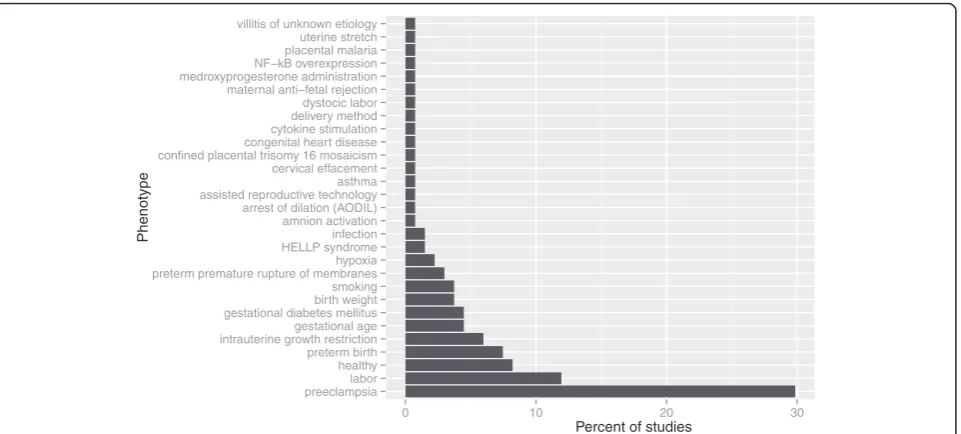
The 134 studies analyzed 29 distinct phenotypes (Fig. 3).
11/134 (8 %) studies focused on healthy pregnancies,
while the remaining 123/134 (92 %) studies focused on
clinical phenotypes. The most common phenotypes studied
were PE (40/134; 30 %), labor (16/134; 12 %), and sPTB
(10/134; 7 %). Definitions for all phenotypes are provided in
Additional file 3.
PTB research focus does not reflect PTB subtype
epidemiological prevalence
To evaluate whether the proportion of transcriptomic
studies devoted on different PTB subtypes reflects their
clinical prevalence, we compared the frequencies of the
three major clinical etiologies (sPTB at 45 %, PPROM at
25 %, and medically indicated PTB at 30 %) to the
fre-quency of transcriptomic studies devoted to these
etiolo-gies (Fig. 4). We found that although only 30 % of all
PTB cases are due to medical indications, such as PE,
IUGR, or GDM, 41/54 (76 %) of the studies categorized
as preterm in our systematic review focused on them;
21/54 (39 %) of the preterm studies focused on PE alone.
In contrast, although sPTB is responsible for 45 % of all
cases, only 10/54 (18 %) of the preterm studies in our
systematic review studied this clinical subtype.
A meta-analysis of 93 gene expression studies across 9
distinct gestational tissues showed limited overlap of
candidate genes
which only 2,123 (25 %) were found in two or more
studies (Fig. 5, Additional file 4). This examination also
showed that only 23 candidate genes were differentially
expressed two or more times in studies of all three
tissues (Additional file 5). Among the genes present in
this overlap were interleukin 1 beta, a proinflammatory
cytokine shown to be involved in infection-related PTB
and PE, and superoxide dismutase 2, an antioxidant
enzyme shown to be involved in oxidative stress
associ-ated with PTB [18, 23, 34, 49, 65, 134
–
138].
Although gene expression profiles are available for 29
distinct phenotypes, PTB research is dominated by
studies focused on select phenotypes of PTB
The 93 gene expression studies analyzed 29 distinct
phenotypes. From these studies, 5/93 (5 %) focused on a
preeclampsia labor healthy preterm birth intrauterine growth restriction gestational age gestational diabetes mellitus birth weight smoking preterm premature rupture of membranes hypoxia HELLP syndrome infection amnion activation arrest of dilation (AODIL) assisted reproductive technology asthma cervical effacement confined placental trisomy 16 mosaicism congenital heart disease cytokine stimulation delivery method dystocic labor maternal anti fetal rejection medroxyprogesterone administration NF kB overexpression placental malaria uterine stretch villitis of unknown etiology
0 10 20 30
Percent of studies
Phenotype
Fig. 3Gestational tissue transcriptomic studies in term and preterm human pregnancies organized by phenotype. A targeted PubMed search for genome-wide transcriptomic studies yielded a total of 134 studies focusing on 29 distinct phenotypes. PE research accounted for 30 % of all studies in the meta-analysis, followed by labor (12 %) and sPTB (7 %). Phenotype definitions are provided in Supplementary Table S2
placenta myometrium fetal membranes cervix umbilical cord maternal blood decidua basal plate fetal blood
0 20 40 60
Percent of studies
Tissue
non-clinical phenotype (healthy pregnancies), with the
remaining 88/93 (95 %) focused on clinical phenotypes.
Among studies focused on clinical phenotypes, the three
most common phenotypes investigated were PE (27/93;
29 %), labor (15/93; 16 %), and IUGR (8/93; 9 %); each of
the other 26 clinical phenotypes was studied in 5 or fewer
studies. Genome-wide gene expression studies of the three
most commonly studied clinical phenotypes identified a
total of 7,730 unique genes, of which only 1,336 (15 %)
were present in two or more studies (Fig. 6, Additional
file 6). No candidate genes were found two or more times
in studies of all three phenotypes. Generally, overlap of
Worldwide Prevalence Research Prevalence
0 20 40 60
PPROM medical indication sPTB PPROM medical indication sPTB
Phenotype
P
ercent
Fig. 4Proportion of transcriptomic research does not correspond to PTB subtype prevalence. Although only 30 % of all PTB cases are due to medical indications, such as PE, IUGR, or GDM, 76 % of the preterm studies in our systematic review focused on them. In contrast, only 18 % of the studies focused on sPTB, even though this clinical subtype accounts for the majority (45 %) of PTB cases
1498 228
150 101
23
86 38
Placenta Myometrium
FetalMembranes
Fig. 5Overlap of differentially expressed genes across tissues. Differentially expressed genes present in two or more gene expression studies categorized by tissue were compared across the three most commonly studied (placenta, myometrium, and fetal membranes). Out of 2,123 genes identified to be differentially expressed in at least two studies, 23 genes were shared across all three tissues
661 585
12 68
0
7 3
PE Labor
IUGR
differentially expressed genes was more limited across
clinical phenotypes than across gestational tissues.
Overlap of differentially expressed genes identified across
PTB studies is limited
Studies of placenta, myometrium, and fetal membranes,
the three most commonly studied tissues, focused on a
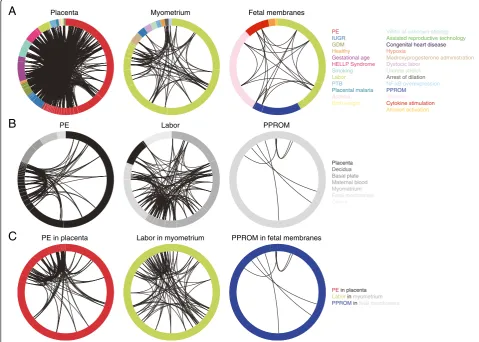
total of 25 distinct phenotypes (Fig. 7a, Additional file 7).
The clinical phenotype studied, however, differed between
tissues, with PE dominating placental research (23/53
placental studies or 43 %), labor dominating myometrial
research (9/17 myometrial studies or 53 %), and PPROM
dominating fetal membrane research (4/13 fetal membrane
studies or 31 %). Likewise, the range of tissues studied
dif-fered between phenotypes. PE was studied across 4 distinct
gestational tissues (placenta, decidua, basal plate, and
ma-ternal blood), labor was studied across 4 distinct gestational
tissues (myometrium, fetal membranes, placenta, and
cervix), and PPROM was studied across only 1 distinct
ges-tational tissue (fetal membranes) (Fig. 7b, Additional file 8).
To identify common differential gene expression
signatures, we looked for overlap between differentially
B
C
Placenta
Decidua
Basal plate
Maternal blood Myometrium Fetal membranes Cervix
PE in placenta
Labor in myometrium PPROM in fetal membranes
A
PE IUGR GDM
Healthy
Gestational age HELLP Syndrome
Smoking
Labor PTB Placental malaria Asthma Birth weight
Villitis of unknown etiology Assisted reproductive technology Congenital heart disease Hypoxia
Medroxyprogesterone administration Dystocic labor
Uterine stretch Arrest of dilation NF-kB overexpression PPROM Infection Cytokine stimulation Amnion activation
Placenta Myometrium Fetal membranes
Labor
PE PPROM
PE in placenta Labor in myometrium PPROM in fetal membranes
Fig. 7Representation of overlap in differentially expressed genes across the most commonly studied tissues, phenotypes, and tissues & phenotypes. Studies are represented as distinct wedges in the outermost track, colored by phenotype and sized by number of genes reported. Genes that show a high degree of overlap across studies (4 or more placenta, PE,orPE in placenta studies; 4 or more myometrium, labor,or
labor in myometrium studies; 4 or more fetal membranes studies; or 2 or more PPROMorPPROM in fetal membranes studies) appear as black links connecting each study reporting the gene. In general, the scarcity of links illustrates the considerable lack of overlap in the genes identified as differentially expressed across PTB studies.aRepresentation of overlap in differentially expressed genes across the most commonly studied tissues. Studies of placenta, myometrium, and fetal membranes, the three most commonly studied tissues, focused on a total of 25 distinct phenotypes with PE dominating placental research, labor dominating myometrial research, and PPROM dominating fetal membranes research.
expressed genes reported in studies of the same
pheno-type
and
tissue. The most studied phenotype-tissue
combinations were PE in placenta (n = 23), labor in
myo-metrium (n = 9), and PPROM in fetal membranes (n = 4)
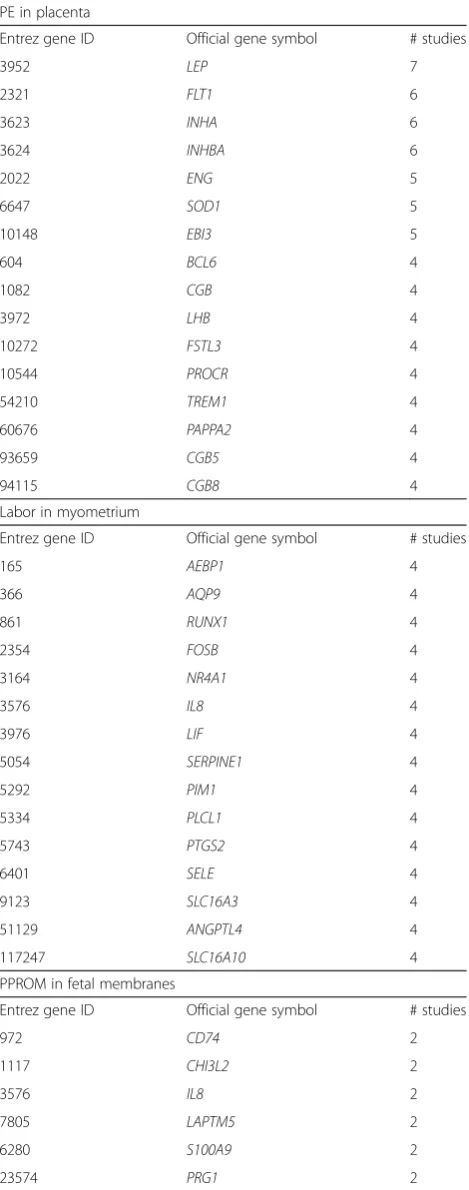
(Fig. 7c, Table 1). Examination of PE in placenta studies
identified 16 genes that were present in 4 or more
stud-ies including
LEP
, a fat-regulating hormone commonly
shown to be differentially expressed in gestational tissues
of women with PE and HELLP Syndrome, and
FLT1
, a
growth factor known to be highly expressed in
pre-eclamptic placental trophoblast cells [21, 32, 44, 48, 53,
75, 80, 88, 94]. Examination of labor in myometrium
studies identified 15 genes that were present in 4 or more
studies including
PTGS2
, a cyclooxygenase involved in
inflammation and commonly upregulated in myometrium
during labor [18, 26, 40, 64, 66, 136, 139]. Finally, 6 genes
were present in 2 or more PPROM in fetal membranes
studies including
IL8
, a proinflammatory chemokine often
associated with PTB [36, 37, 55, 87, 92, 140].
To examine whether the sets of genes that were most
prevalent in each of the three tissue and phenotype pairs
(PE in placenta, labor in myometrium, and PPROM
in fetal membranes) disproportionally represented
particular functions, we examined whether any Gene
Ontology functional category was statistically
signifi-cantly enriched (
p
< 0.0001) in each of the three gene
sets (Additional file 9). Candidate genes identified in PE
in placenta studies were enriched for regulation of cell
death (GO:0010941) and apoptosis (GO:0042981),
candi-date genes identified in labor in myometrium were
enriched for wounding (GO:0009611) and inflammatory
response (GO:0006954), and candidate genes identified
in PPROM in fetal membranes were enriched for
immune system process (GO:0002376) and immune
response (GO:0006955).
Discussion
PTB is a complex, multifactorial syndrome with high
preva-lence worldwide, whose pathogenesis remains poorly
understood, especially for cases of early spontaneous labor.
To provide an overview as well as a synthesis of the current
landscape of PTB transcriptomics, we conducted an
in-depth systematic review of the literature as well as a
meta-analysis of 93 gene expression studies on a wide diversity of
gestational tissues and clinical phenotypes. Examination of
our results identifies two key findings. First, the
corres-pondence between PTB subtype prevalence and proportion
of transcriptomic research devoted to these subtypes is
weak. Second, the overlap between differentially expressed
genes identified in different studies is quite small, even on
studies aimed on the same phenotypes and tissues. Below,
we discuss the possible factors that underlie these two key
findings and their implications for research on PTB.
Table 1
The most often recovered differentially expressed
genes in PE in placenta, labor in myometrium, and PPROM in
fetal membranes
PE in placenta
Entrez gene ID Official gene symbol # studies
3952 LEP 7
2321 FLT1 6
3623 INHA 6
3624 INHBA 6
2022 ENG 5
6647 SOD1 5
10148 EBI3 5
604 BCL6 4
1082 CGB 4
3972 LHB 4
10272 FSTL3 4
10544 PROCR 4
54210 TREM1 4
60676 PAPPA2 4
93659 CGB5 4
94115 CGB8 4
Labor in myometrium
Entrez gene ID Official gene symbol # studies
165 AEBP1 4
366 AQP9 4
861 RUNX1 4
2354 FOSB 4
3164 NR4A1 4
3576 IL8 4
3976 LIF 4
5054 SERPINE1 4
5292 PIM1 4
5334 PLCL1 4
5743 PTGS2 4
6401 SELE 4
9123 SLC16A3 4
51129 ANGPTL4 4
117247 SLC16A10 4
PPROM in fetal membranes
Entrez gene ID Official gene symbol # studies
972 CD74 2
1117 CHI3L2 2
3576 IL8 2
7805 LAPTM5 2
6280 S100A9 2
In general, transcriptomic studies on placental tissue
samples from women with preeclampsia dominate PTB
research. Furthermore, there are very few studies
focus-ing on sPTB, a subtype responsible for 45 % of all PTB
cases. Although genes commonly associated with PTB
clinical subtypes (i.e.,
LEP
and
FLT1
) are identified in
many of the gene expression studies to be differentially
expressed,
the
overlap
between
the
differentially
expressed genes identified across studies is generally very
limited. This is not surprising in comparisons between
tissues (Fig. 5) because these often involve examinations
of different clinical subtypes, although it does suggest
that there is little overlap in tissue-specific
transcrip-tional profiles of different clinical subtypes. Similarly, it
is not surprising that comparisons between clinical
sub-types do not show a high degree of overlap (Fig. 6)
be-cause these often involve examinations of different
tissues. Nevertheless, it should be noted that
differen-tially expressed genes with substantial overlap across
studies appear to be biologically meaningful. For
ex-ample, genes involved in hormone regulation (i.e.,
CGB
,
CRH
,
INHA
, and
GH2
), which have been previously
shown to be key in the maintenance of pregnancy, show
substantial overlap in preeclampsia studies. Genes
in-volved in inflammation (i.e.,
IL8
), which have been
previ-ously shown to be dysregulated in PPROM and other
clinical PTB subtypes, are also identified to be
differen-tially expressed in multiple studies.
The observed minimal overlap between the
differen-tially expressed genes identified across studies focused
on the same tissue
and
clinical phenotype (Fig. 7) is
pos-sibly more serious. One potential explanation may be
the difficulty in obtaining appropriate controls important
in pregnancy research; comparing studies that differ with
respect to the presence of labor, gestational age, and fetal
sex is challenging, since all of these factors are thought
to influence the gene expression landscape in gestational
tissues. Even though matching of samples with respect
to all these factors is very challenging, the reporting of a
standard list of such factors as required metadata in
transcriptomic studies would facilitate further
examin-ation of their importance and likely influence on
tran-scriptomic profiles.
In addition to transcriptomics, several other systematic
reviews and meta-analyses have focused on identifying
biomarkers, usually proteins, that are associated with
PTB [141
–
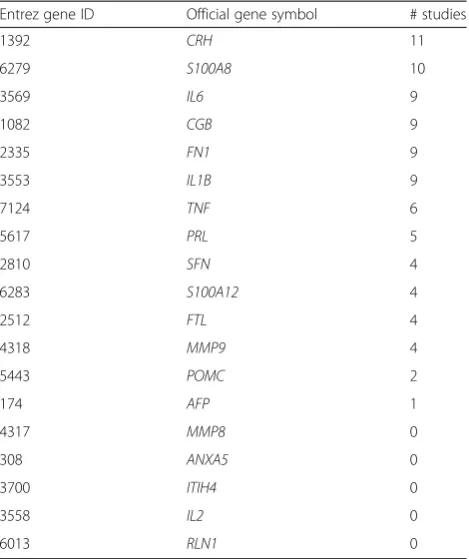
143]. Overlapping 19 previously identified
common PTB biomarkers with the studies in our
meta-analysis indicates that most (12/19; 63 %) are replicated
in 4 or more studies (Table 2). Therefore, our
compari-son shows evidence of considerable overlap between
transcriptomic and proteomic studies in PTB. Further
re-search from both approaches is necessary, however,
be-cause our comparison also indicates that transcriptomics
and proteomics can target unique candidate genes and
proteins as well.
Furthermore, the recent publication of comprehensive
phenotyping tools necessitates the connection of
evidence-based phenotype knowledge with genomic data collection
in order to make more targeted conclusions [144]. It
’
s
chal-lenging to compare and contrast gene expression signatures
between distinct subtypes without knowing whether the
transcriptomes came from cases of sPTB due to maternal
stress, uterine distention, or another subtype. Therefore, a
greater focus needs to be placed on collecting the most
detailed meta-data available regarding sPTB diagnosis as
well as performing genome-wide studies of these newly
described sPTB subtypes.
Finally, it is important to note that different studies
follow different guidelines with respect to data
avail-ability. For example, some studies do not report the
full list of differentially expressed genes identified or
do not make them easily available for subsequent
analysis (e.g., reporting tables that contain differential
expression data on hundreds or thousands of genes in
PDF format), therefore limiting and biasing the data
avail-able for subsequent analyses. The publishing of the data
for
all
genes with differential expression above an explicit
significance threshold in an easily accessible format is
crucial in order to carefully analyze aggregated results and
draw meaningful conclusions.
Table 2
Overlap of meta-analysis with previously identified PTB
biomarkers
Entrez gene ID Official gene symbol # studies
1392 CRH 11
6279 S100A8 10
3569 IL6 9
1082 CGB 9
2335 FN1 9
3553 IL1B 9
7124 TNF 6
5617 PRL 5
2810 SFN 4
6283 S100A12 4
2512 FTL 4
4318 MMP9 4
5443 POMC 2
174 AFP 1
4317 MMP8 0
308 ANXA5 0
3700 ITIH4 0
3558 IL2 0
Conclusions
This study synthesizes all high-quality transcriptomic
studies on gestational tissues to examine the landscape of
PTB as well as to identify genes and genomic elements
associated with it. We found that highly prevalent PTB
subtypes, such as sPTB, are not well studied and that
dif-ferentially expressed genes identified in different studies
are often non-overlapping. Thus, the identification of the
genes whose dysregulation contributes to this complex
and multifactorial syndrome will require many more
large-scale, systematic studies aimed at understanding the
transcriptional profiles of these diverse clinical PTB
subtypes across gestational tissues and characterizing their
disease-relevant transcriptional differences.
Note Added in Proof
While this manuscript was in review, by studying the
vari-ation in the placental transcriptome of healthy humans,
Hughes and coworkers estimated that more than 90 % of
the observed transcriptomic variation is explained by
vari-ation within and between individuals [145]. These results
provide an alternative, yet complementary, explanation for
our finding that profiles of differentially expressed genes
were highly heterogeneous both between and within
clin-ical subtypes and tissues as well as between studies of the
same clinical subtype and tissue.
Methods
Search strategy
This systematic review and meta-analysis followed
guide-lines set by the Preferred Reporting Items for Systematic
Reviews and Meta-Analyses (PRISMA) (Additional files
10, 11 and 12) [146]. The electronic search was performed
on August 16, 2014 in PubMed with no restrictions to
identify all articles relating to differentially expressed or
methylated genes and microRNAs in human gestational
tissues. The search strategy was constructed based on
related MeSH terms:
“
Pregnancy
”
[mh] AND
“
Humans
”
[mh] AND (
“
Gene
Expression Profiling
”
[mh] OR
“
Gene Expression
Regulation
”
[mh]) AND (
“
Placenta
”
[mh] OR
“
Decidua
”
[mh] OR
“
Myometrium
”
[mh] OR
“
Cervix
Uteri
”
[mh] OR
“
Extraembryonic Membranes
”
[mh] OR
“
Blood
”
[mh] OR
“
Plasma
”
[mh] OR
“
Umbilical
Cord
”
[mh])
Systematic review
We collected abstracts for all 2,361 studies identified
from this search and annotated eligibility based on 6
inclusion criteria:
1. Published in English
2. Full text available
3. Original research
4. Human gestational tissue samples
5. Genome-wide analysis
6. Candidate gene list assembled
134 studies met all 6 criteria and were included in the
systematic review. Furthermore, studies were excluded
when the study data was not accessible (the number of
gene candidates was reported but the list of candidate
genes was not), the study data was not reported (the
number of candidate genes was not reported and a list
of candidate genes was not provided), the data was
un-clear, there were no significant gene candidates, the
study was not genome-wide, the study was not
human-specific, the study was not relevant, the study was not
single-gene based (i.e., was focused on pathways or gene
sets), the study used data from proteomics, the study
was performed on cell line rather than in an in-vivo
tissue, the study
’
s supplement was not available, or when
the study
’
s tissue was collected before the third trimester
(Additional file 12).
Meta-analysis
Studies were included in our meta-analysis if they met
an additional 3 inclusion criteria:
1. Studied differential gene expression
2. Provided candidate gene list
3. DAVID ID conversion successful
116 references met all inclusion criteria and, due to
multiple comparisons or analyses in 14 of these
refer-ences, a total of 134 distinct studies were summarized
(Additional file 1). Of the 134 studies included in our
systematic literature review, 93 gene expression studies
met these criteria and were further analyzed. All
differ-entially expressed genes reported in these studies were
first extracted and then converted to Entrez ID format
using the DAVID online tool, selecting the smallest
Entrez ID number if multiple IDs mapped to single
genes. We extracted all reported significantly
differen-tially expressed genes based on each study
’
s significance
threshold for differential expression. Overlap was
deter-mined simply by the presence of the same gene in the
gene lists from different studies. DAVID was used to
assay functional enrichment according to Gene Ontology
categories. All analyses were performed using Python
and visualizations were performed using ggplot2 and
Circos [147, 148].
Additional files
Additional file 2:All reported candidate genomic elements.
Additional file 3:Phenotype definitions.
Additional file 4:Duplicated genes in well-studied gestational tissues.Genes in 2 or more placenta studiesor2 or more myometrium studiesor2 or more fetal membranes studies.
Additional file 5:Well-replicated genes in well-studied gestational tissues.22 genes in 2 or more placenta studiesand2 or more myometrium studiesand2 or more fetal membranes studies.
Additional file 6:Duplicated genes in well-studied clinical phenotypes.
Genes in 2 or more PE studiesor2 or more labor studiesor2 or more IUGR studies.
Additional file 7:Well-replicated genes in placenta, myometrium, and fetal membranes.Genes in 5 or more placenta studiesor5 or more myometrium studiesor5 or more fetal membranes studies.
Additional file 8:Well-replicated genes in PE, labor, and PPROM.
Genes in 5 or more PE studiesor5 or more labor studiesor2 or more PPROM studies.
Additional file 9:GO enrichment.Enriched GO functional categories for replicated genes in PE in placenta, labor in myometrium, and PPROM in fetal membranes.
Additional file 10:PRISMA checklist.
Additional file 11:PRISMA flow chart.
Additional file 12:Excluded studies.All studies excluded from systematic review.
Abbreviations
PTB:Preterm birth; sPTB: Spontaneous idiopathic preterm birth; PE: Preeclampsia; IUGR: Intrauterine growth restriction; GDM: Gestational diabetes mellitus; PPROM: Preterm premature rupture of membranes; MeSH: medical subject headings.
Competing interests
The authors declare that they have no competing interests.
Authors’contributions
HRE and AR designed the study with input from WEA, KLM, and PA. HRE carried out the study and drafted the manuscript with subsequent contributions and revisions from AR. All authors read and approved the final manuscript.
Acknowledgements
We thank Louis J. Muglia for offering invaluable advice on experimental design at an early stage of this experiment. This work was conducted in part using the resources of the Advanced Computing Center for Research and Education at Vanderbilt University. HRE was supported by the Graduate Program in Biological Sciences at Vanderbilt University. Research on this project was supported by the March of Dimes through the March of Dimes Prematurity Research Center Ohio Collaborative.
Author details
1Department of Biological Sciences, Vanderbilt University, VU Station B
#35-1634, Nashville, TN 37235, USA.2Department of Obstetrics and Gynecology, The Ohio State University, Columbus, OH 43210, USA.
Received: 19 December 2014 Accepted: 12 May 2015
References
1. Muglia LJ, Katz M. The enigma of spontaneous preterm birth. N Engl J Med. 2010;362:529–35.
2. Blencowe H, Cousens S, Oestergaard MZ, Chou D, Moller A-B, Narwal R, et al. National, regional, and worldwide estimates of preterm birth rates in the year 2010 with time trends since 1990 for selected countries: a systematic analysis and implications. The Lancet. 2012;379:2162–72. 3. Goldenberg RL, Culhane JF, Iams JD, Romero R. Epidemiology and causes of
preterm birth. Lancet. 2008;371:75–84.
4. Esplin MS. Overview of spontaneous preterm birth: a complex and multifactorial phenotype. Clin Obstet Gynecol. 2014;57:518–30. 5. Chang HH, Larson J, Blencowe H, Spong CY, Howson CP, Cairns-Smith S,
et al. Preventing preterm births: analysis of trends and potential reductions with interventions in 39 countries with very high human development index. The Lancet. 2013;381:223–34.
6. Plunkett J, Muglia LJ. Genetic contributions to preterm birth: implications from epidemiological and genetic association studies. Ann Med. 2008;40:167–95.
7. Myatt L, Eschenbach DA, Lye SJ, Mesiano S, Murtha AP, Williams SM, et al. A standardized template for clinical studies in preterm birth. Reprod Sci. 2012;19:474–82.
8. Menon R. Spontaneous preterm birth, a clinical dilemma: etiologic, pathophysiologic and genetic heterogeneities and racial disparity. Acta Obstet Gynecol Scand. 2008;87:590–600.
9. Ananth CV, Vintzileos AM. Epidemiology of preterm birth and its clinical subtypes. J Matern-Fetal Neonatal Med Off J Eur Assoc Perinat Med Fed Asia Ocean Perinat Soc Int Soc Perinat Obstet. 2006;19:773–82.
10. Henderson JJ, McWilliam OA, Newnham JP, Pennell CE. Preterm birth aetiology 2004–2008. Maternal factors associated with three phenotypes: spontaneous preterm labour, preterm pre-labour rupture of membranes and medically indicated preterm birth. J Matern Fetal Neonatal Med. 2012;25:642–7.
11. Moutquin J. Classification and heterogeneity of preterm birth. BJOG Int J Obstet Gynaecol. 2003;110:30–3.
12. Romero R, Dey SK, Fisher SJ. Preterm labor: one syndrome, many causes. Science. 2014;345:760–5.
13. Bezold KY, Karjalainen MK, Hallman M, Teramo K, Muglia LJ. The genomics of preterm birth: from animal models to human studies. Genome Med. 2013;5:34.
14. Lengyel C, Muglia LJ, Pavlicev M: Genetics of Preterm Birth. eLS. 2014:1–13. 15. Iams JD. Preterm birth categories-labels with consequences. Am J Obstet
Gynecol. 2014;210:97–8.
16. Arcelli D, Farina A, Cappuzzello C, Bresin A, De Sanctis P, Perolo A, Prandstraller D, Valentini D, Zucchini C, Priori S, Rizzo N: Identification of circulating placental mRNA in maternal blood of pregnancies affected with fetal congenital heart diseases at the second trimester of pregnancy: implications for early molecular screening. Prenat Diagn. 2010;30(3):229-34.
17. Bethin KE, Nagai Y, Sladek R, Asada M, Sadovsky Y, Hudson TJ, et al. Microarray analysis of uterine gene expression in mouse and human pregnancy. Mol Endocrinol Baltim Md. 2003;17:1454–69.
18. Bollapragada S, Bollopragada S, Youssef R, Jordan F, Greer I, Norman J, et al. Term labor is associated with a core inflammatory response in human fetal membranes, myometrium, and cervix. Am J Obstet Gynecol. 2009;200:104. e1–11.
19. Brennan DJ, McGee SF, Rexhepaj E, O’Connor DP, Robson M, O’Herlihy C. Identification of a myometrial molecular profile for dystocic labor. BMC Pregnancy Childbirth. 2011;11:74.
20. Bruchova H, Vasikova a, Merkerova M, Milcova A: Effect of maternal tobacco smoke exposure on the placental transcriptome. Placenta. 2010;31(3):186-91. 21. Buimer M, Keijser R, Jebbink JM, Wehkamp D, van Kampen AHC, Boer K,
et al. Seven placental transcripts characterize HELLP-syndrome. Placenta. 2008;29:444–53.
22. Bukowski R, Hankins GDV, Saade GR, Anderson GD, Thornton S. Labor-associated gene expression in the human uterine fundus, lower segment, and cervix. PLoS Med. 2006;3:e169.
23. Centlow M, Wingren C, Borrebaeck C, Brownstein MJ, Hansson SR. Differential gene expression analysis of placentas with increased vascular resistance and pre-eclampsia using whole-genome microarrays. J Pregnancy. 2011;2011:472354–12.
24. Chaemsaithong P, Madan I, Romero R, Than NG, Tarca AL, Draghici S, et al. Characterization of the myometrial transcriptome in women with an arrest of dilatation during labor. J Perinat Med. 2013;41:665–81.
25. Chan EC, Fraser S, Yin S, Yeo G, Kwek K, Fairclough RJ, et al. Human myometrial genes are differentially expressed in labor: a suppression subtractive hybridization study. J Clin Endocrinol Metab.
2002;87:2435–41.
27. Chang S-D, Chao A-S, Peng H-H, Chang Y-L, Wang C-N, Cheng P-J, et al. Analyses of placental gene expression in pregnancy-related hypertensive disorders. Taiwan J Obstet Gynecol. 2011;50:283–91.
28. Charpigny G, Leroy M-J, Breuiller-Fouché M, Tanfin Z, Mhaouty-Kodja S, Robin P, et al. A functional genomic study to identify differential gene expression in the preterm and term human myometrium. Biol Reprod. 2003;68:2289–96.
29. Chim SSC, Lee WS, Ting YH, Chan OK, Lee SWY, Leung TY. Systematic identification of spontaneous preterm birth-associated RNA transcripts in maternal plasma. PLoS ONE. 2012;7:e34328.
30. Cordeaux Y, Tattersall M, Charnock-Jones DS, Smith GCS. Effects of medroxyprogesterone acetate on gene expression in myometrial explants from pregnant women. J Clin Endocrinol Metab. 2010;95:E437–47. 31. Dunk CE, Roggensack AM, Cox B, Perkins JE, AAsenius F, Keating S, et al. A
distinct microvascular endothelial gene expression pro. Placenta. 2012;33:285–93.
32. Enquobahrie DA, Meller M, Rice K, Psaty BM, Siscovick DS, Williams MA. Differential placental gene expression in preeclampsia. Am J Obstet Gynecol. 2008;199:566. e1–11.
33. Enquobahrie DA, Williams MA, Qiu C, Meller M, Sorensen TK. Global placental gene expression in gestational diabetes mellitus. Am J Obstet Gynecol. 2009;200:206. e1–13.
34. Esplin MS, Fausett MB, Peltier MR, Hamblin S, Silver RM, Branch DW, et al. The use of cDNA microarray to identify differentially expressed labor-associated genes within the human myometrium during labor. Am J Obstet Gynecol. 2005;193:404–13.
35. Gack S, Marme A, Marme F, Wrobel G, Vonderstrass B, Bastert G, et al. Preeclampsia: increased expression of soluble ADAM 12. J Mol Med Berl Ger. 2005;83:887–96.
36. Haddad R, Tromp G, Kuivaniemi H. Human spontaneous labor without histologic chorioamnionitis is characterized by an acute inflammation gene expression signature. Am J Ldots. 2006;195:394–405. e12.
37. Han YM, Romero R, Kim J-S, Tarca AL, Kim SK, Draghici S, et al. Region-specific gene expression profiling: novel evidence for biological heterogeneity of the human amnion. Biol Reprod. 2008;79:954–61.
38. Hansson SR, Chen Y, Brodszki J, Chen M, Hernandez-Andrade E, Inman JM, et al. Gene expression profiling of human placentas from preeclamptic and normotensive pregnancies. Mol Hum Reprod. 2006;12:169–79.
39. Hassan SS, Romero R, Tarca AL, Nhan-Chang C-L, Vaisbuch E, Erez O, et al. The transcriptome of cervical ripening in human pregnancy before the onset of labor at term: Identification of novel molecular functions involved in this process. J Matern Fetal Neonatal Med. 2009;22:1183–93.
40. Havelock OC, Keller P, Muleba N, Mayhew BA, Casey BM, Rainey WE, et al. Human myometrial gene expression before and during parturition. Biol Reprod. 2005;72:707–19.
41. Heikkilä A, Tuomisto T, Häkkinen S-K, Keski-Nisula L, Heinonen S, Ylä-Herttuala S. Tumor suppressor and growth regulatory genes are overexpressed in severe early-onset preeclampsia–an array study on case-specific human preeclamptic placental tissue. Acta Obstet Gynecol Scand. 2005;84:679–89.
42. Heng YJ, Pennell CE, Chua HN, Perkins JE, Lye SJ. Whole blood gene expression profile associated with spontaneous preterm birth in women with threatened preterm labor. PLoS ONE. 2014;9:e96901.
43. Hiden U, Maier A, Bilban M, Ghaffari-Tabrizi N, Wadsack C, Lang I, et al. Insulin control of placental gene expression shifts from mother to foetus over the course of pregnancy. Diabetologia. 2006;49:123–31.
44. Hoegh AM, Borup R, Nielsen FC, Sørensen S, Hviid TVF. Gene expression profiling of placentas affected by pre-eclampsia. J Biomed Biotechnol. 2010;2010:787545–11.
45. Jarvenpaa J, Vuoristo JT, Savolainen E, Ukkola O, Vaskivuo T, Ryynanen M. Altered expression of angiogenesis-related placental genes in pre-eclampsia associated with intrauterine growth restriction. Gynecol Endocrinol Off J Int Soc Gynecol Endocrinol. 2007;23:351–5.
46. Junus K, Centlow M, Wikstrom AK, Larsson I, Hansson SR, Olovsson M. Gene expression profiling of placentae from women with early- and late-onset pre-eclampsia: down-regulation of the angiogenesis-related genes ACVRL1 and EGFL7 in early-onset disease. Mol Hum Reprod. 2012;18:146–55. 47. Kang BY, Tsoi S, Zhu S, Su S, Kay HH. Differential gene expression profiling
in HELLP syndrome placentas. Reprod Sci. 2008;15:285–94.
48. Kang JH, Song H, Yoon JA, Park DY, Kim SH, Lee KJ, et al. Preeclampsia leads to dysregulation of various signaling pathways in placenta. J Hypertens. 2011;29:928–36.
49. Khanjani S, Kandola MK, Lindstrom TM, Sooranna SR, Melchionda M, Lee YS, et al. NF-κB regulates a cassette of immune/inflammatory genes in human pregnant myometrium at term. J Cell Mol Med. 2011;15:809–24. 50. Kim MJ, Romero R, Kim CJ, Tarca AL, Chhauy S, LaJeunesse C, et al. Villitis
of unknown etiology is associated with a distinct pattern of Chemokine Up-regulation in the feto-maternal and placental compartments: implications for conjoint maternal allograft rejection and maternal anti-fetal graft-versus-host disease. J Immunol. 2009;182:3919–27. 51. Kim J, Zhao K, Jiang P, Lu Z, Wang J, Murray JC, et al. Transcriptome
landscape of the human placenta. BMC Genomics. 2012;13:115.
52. Lapaire O, Grill S, Lalevee S, Kolla V, Hösli I, Hahn S. Microarray screening for novel preeclampsia biomarker candidates. Fetal Diagn Ther. 2012;31:147–53. 53. Lee GSR, Joe YS, Kim SJ, Shin JC. Cytokine-related genes and
oxidation-related genes detected in preeclamptic placentas. Arch Gynecol Obstet. 2010;282:363–9.
54. Lee J, Romero R, Chaiworapongsa T, Dong Z, Tarca AL, Xu Y, et al. Characterization of the fetal blood transcriptome and proteome in maternal anti-fetal rejection: evidence of a distinct and novel type of human fetal systemic inflammatory response. Am J Reprod Immunol. 2013;70:265–84. 55. Li R, Ackerman WE, Summerfield TL, Yu L, Gulati P, Zhang J, et al.
Inflammatory gene regulatory networks in amnion cells following cytokine stimulation: translational systems approach to modeling human parturition. PLoS ONE. 2011;6:e20560.
56. Lian IA, Toft JH, Olsen GD, Langaas M, Bjørge L, Eide IP, et al. Matrix metalloproteinase 1 in pre-eclampsia and fetal growth restriction: reduced gene expression in decidual tissue and protein expression in extravillous trophoblasts. Placenta. 2010;31:615–20.
57. Lim S, MacIntyre DA, Lee YS, Khanjani S, Terzidou V, Teoh TG, et al. Nuclear factor kappa B activation occurs in the amnion prior to labour onset and modulates the expression of numerous labour associated genes. PLoS ONE. 2012;7:e34707. 58. Liu Y, Li N, You L, Liu X, Li H, Wang X. HSP70 is associated with
endothelial activation in placental vascular diseases. Mol Med Camb Mass. 2008;14:561–6.
59. Løset M, Mundal SB, Johnson MP, Fenstad MH, Freed KA, Lian IA, et al. A transcriptional profile of the decidua in preeclampsia. Am J Obstet Gynecol. 2011;204:84. e1–27.
60. Mayor-Lynn K, Toloubeydokhti T, Cruz AC, Chegini N. Expression profile of microRNAs and mRNAs in human placentas from pregnancies complicated by preeclampsia and preterm labor. Reprod Sci Thousand Oaks Calif. 2011;18:46–56.
61. McCarthy C, Cotter FE, McElwaine S, Twomey A, Mooney EE, Ryan F, et al. Altered gene expression patterns in intrauterine growth restriction: potential role of hypoxia. Am J Obstet Gynecol. 2007;196:70. e1–6.
62. McMinn J, Wei M, Schupf N, Cusmai J, Johnson EB, Smith AC, et al. Unbalanced placental expression of imprinted genes in human intrauterine growth restriction. Placenta. 2006;27:540–9.
63. Meng T, Chen H, Sun M, Wang H, Zhao G, Wang X. Identification of differential gene expression profiles in placentas from preeclamptic pregnancies versus normal pregnancies by DNA microarrays. Omics J Integr Biol. 2012;16:301–11.
64. Mittal P, Romero R, Tarca AL, Gonzalez J, Draghici S, Xu Y, et al. Characterization of the myometrial transcriptome and biological pathways of spontaneous human labor at term. J Perinat Med. 2010;38:617–43. 65. Muehlenbachs A, Fried M, Lachowitzer J, Mutabingwa TK, Duffy PE.
Genome-wide expression analysis of placental malaria reveals features of lymphoid neogenesis during chronic infection. J Immunol Baltim Md 1950. 2007;179:557–65.
66. Nhan-Chang CL, Romero R, Tarca AL, Mittal P, Kusanovic JP, Erez O, et al. Characterization of the transcriptome of chorioamniotic membranes at the site of rupture in spontaneous labor at term. Am J Obstet Gynecol. 2010;202:462. e1–462.e41.
67. Nishizawa H, Pryor-Koishi K, Kato T, Kowa H, Kurahashi H, Udagawa Y. Microarray analysis of differentially expressed fetal genes in placental tissue derived from early and late onset severe pre-eclampsia. Placenta. 2007;28:487–97. 68. Nishizawa H, Ota S, Suzuki M, Kato T, Sekiya T, Kurahashi H, et al.
69. Ogita K, Kimura T, Nakamura H, Koyama S, Tsujie T, Tomiie M, et al. Differential expression and localization of decorin in human choriodecidual membrane during preterm and term pregnancy. Am J Reprod Immunol. 2004;51:204–10.
70. Okamoto A, Endo H, Kalionis B, Shinya M, Saito M, Nikaido T, et al. IGFBP1 and follistatin-like 3 genes are significantly up-regulated in expression profiles of the IUGR placenta. Placenta. 2006;27:317–21.
71. Osei-Kumah A, Smith R, Jurisica I, Caniggia I, Clifton VL. Differences in placental global gene expression in pregnancies complicated by asthma. Placenta. 2011;32:570–8.
72. Peng H-H, Kao C-C, Chang S-D, Chao A-S, Chang Y-L, Wang C-N, et al. The effects of labor on differential gene expression in parturient women, placentas, and fetuses at term pregnancy. Kaohsiung J Med Sci. 2011;27:494–502. 73. Radaelli T, Varastehpour A, Catalano P, Haugeul-de Mouzon S. Gestational
diabetes induces placental genes for chronic stress and inflammatory pathways. Diabetes. 2003;52:2951–8.
74. Rehman KS, Yin S, Mayhew BA. Human myometrial adaptation to pregnancy: cDNA microarray gene expression profiling of myometrium from non-pregnant and pregnant women. Mol Hum Reprod. 2003;9(11):681-700.
75. Reimer T, Koczan D, Gerber B, Richter D, Thiesen HJ, Friese K. Microarray analysis of differentially expressed genes in placental tissue of pre-eclampsia: up-regulation of obesity-related genes. Mol Hum Reprod. 2002;8:674–80.
76. Roh CR, Budhraja V, Kim HS, Nelson DM, Sadovsky Y. Microarray-based identification of differentially expressed genes in hypoxic term human trophoblasts and in placental villi of pregnancies with growth restricted fetuses. Placenta. 2005;26:319–28.
77. Saben J, Zhong Y, McKelvey S, Dajani NK, Andres A, Badger TM, et al. A comprehensive analysis of the human placenta transcriptome. Placenta. 2014;35:125–31.
78. Shankar R, Johnson MP, Williamson NA, Cullinane F, Purcell AW, Moses EK, et al. Molecular markers of preterm labor in the choriodecidua. Reprod Sci Thousand Oaks Calif. 2010;17:297–310.
79. Sitras V, Paulssen R, Leirvik J, Vårtun A, Acharya G. Placental gene expression profile in intrauterine growth restriction due to placental insufficiency. Reprod Sci. 2009;16:701–11.
80. Sitras V, Paulssen RH, Grønaas H, Leirvik J, Hanssen TA, Vårtun A, et al. Differential placental gene expression in severe preeclampsia. Placenta. 2009;30:424–33.
81. Sitras V, Fenton C, Paulssen R, Vårtun Å, Acharya G. Differences in gene expression between first and third trimester human placenta: a microarray study. PLoS ONE. 2012;7:e33294.
82. Soleymanlou N, Jurisica I, Nevo O, Ietta F, Zhang X, Zamudio S, et al. Molecular evidence of placental hypoxia in preeclampsia. J Clin Endocrinol Metab. 2005;90:4299–308.
83. Sood R, Zehnder JL, Druzin ML, Brown PO. Gene expression patterns in human placenta. Proc Natl Acad Sci U S A. 2006;103:5478–83. 84. Tashima LS, Millar LK: Genes upregulated in human fetal membranes by
infection or labor. Obstet Gynecol. 1999;94(3):441-9.
85. Tattersall M, Cordeaux Y, Charnock-Jones DS, Smith GCS. Expression of gastrin-releasing peptide is increased by prolonged stretch of human myometrium, and antagonists of its receptor inhibit contractility. J Physiol. 2012;590:2081–93.
86. Textoris J, Ivorra D, Ben Amara A, Sabatier F, Ménard J-P, Heckenroth H, et al. Evaluation of current and New biomarkers in severe preeclampsia: a microarray approach reveals theVSIG4 gene as a potential blood biomarker. PLoS ONE. 2013;8:e82638.
87. Tromp G, Kuivaniemi H, Romero R, Chaiworapongsa T, Kim YM, Kim MR, et al. Genome-wide expression profiling of fetal membranes reveals a deficient expression of proteinase inhibitor 3 in premature rupture of membranes. Am J Obstet Gynecol. 2004;191:1331–8.
88. Tsai S, Hardison NE, James AH, Motsinger-Reif AA, Bischoff SR, Thames BH, et al. Transcriptional profiling of human placentas from pregnancies complicated by preeclampsia reveals disregulation of sialic acid acetylesterase and immune signalling pathways. Placenta. 2011;32:175–82.
89. Uusküla L, Männik J, Rull K, Minajeva A, Kõks S, Vaas P, et al. Mid-gestational gene expression profile in placenta and link to pregnancy complications. PLoS ONE. 2012;7:e49248.
90. Várkonyi T, Nagy B, Füle T, Tarca AL, Karászi K, Schönléber J, et al. Microarray profiling reveals that placental transcriptomes of early-onset HELLP syndrome and preeclampsia are similar. Placenta. 2011;32(Suppl):S21–9.
91. Votavova H, Dostalova Merkerova M, Fejglova K, Vasikova A, Krejcik Z, Pastorkova A, et al. Transcriptome alterations in maternal and fetal cells induced by tobacco smoke. Placenta. 2011;32:763–70.
92. Weiner CP, Mason CW, Dong Y, Buhimschi IA, Swaan PW, Buhimschi CS. Human effector/initiator gene sets that regulate myometrial contractility during term and preterm labor. Am J Obstet Gynecol. 2010;202:474. e1–474.e20.
93. Winn VD, Haimov-Kochman R, Paquet AC, Yang YJ, Madhusudhan MS, Gormley M, et al. Gene expression profiling of the human maternal-fetal interface reveals dramatic changes between midgestation and term. Endocrinology. 2007;148:1059–79.
94. Winn VD, Gormley M, Paquet AC, Kjaer-Sorensen K, Kramer A, Rumer KK, et al. Severe preeclampsia-related changes in gene expression at the maternal-fetal interface include sialic acid-binding immunoglobulin-like lectin-6 and pappalysin-2. Endocrinology. 2009;150:452–62.
95. Yan YH, Yi P, Zheng YR, Yu LL, Han J, Han X-M, et al. Screening for preeclampsia pathogenesis related genes. Eur Rev Med Pharmacol Sci. 2013;17:3083–94.
96. Zhang Y, Cui Y, Zhou Z, Sha J, Li Y, Liu J. Altered global gene expressions of human placentae subjected to assisted reproductive technology treatments. Placenta. 2010;31:251–8.
97. Zhao YH, Wang DP, Zhang LL, Zhang F, Wang DM, Zhang WY. Genomic expression profiles of blood and placenta reveal significant immune-related pathways and categories in Chinese women with gestational diabetes mellitus. Diabet Med J Br Diabet Assoc. 2011;28:237–46.
98. Zhou R, Zhu Q, Wang Y, Ren Y, Zhang L, Zhou Y. Genomewide oligonucleotide microarray analysis on placentae of pre-eclamptic pregnancies. Gynecol Obstet Invest. 2006;62:108–14.
99. Zhou Y, Gormley MJ, Hunkapiller NM, Kapidzic M, Stolyarov Y, Feng V, et al. Reversal of gene dysregulation in cultured cytotrophoblasts reveals possible causes of preeclampsia. J Clin Invest. 2013;123:2862–72.
100. Barbaux S, Gascoin-Lachambre G, Buffat C, Monnier P, Mondon F, Tonanny M-B, et al. A genome-wide approach reveals novel imprinted genes expressed in the human placenta. Epigenetics Off J DNA Methylation Soc. 2012;7:1079–90.
101. Blair JD, Yuen RKC, Lim BK, McFadden DE, von Dadelszen P, Robinson WP. Widespread DNA hypomethylation at gene enhancer regions in placentas associated with early-onset pre-eclampsia. Mol Hum Reprod. 2013;19:697–708.
102. Blair JD, Langlois S, McFadden DE, Robinson WP. Overlapping DNA methylation profile between placentas with trisomy 16 and early-onset preeclampsia. Placenta. 2014;35:216–22.
103. Chu T, Bunce K, Shaw P, Shridhar V, Althouse A, Hubel C, et al.
Comprehensive analysis of preeclampsia-associated DNA methylation in the placenta. PLoS ONE. 2014;9:e107318.
104. Cruickshank MN, Oshlack A, Theda C, Davis PG, Martino D, Sheehan P, Dai Y, Saffery R, Doyle LW, Craig JM: Analysis of epigenetic changes in survivors of preterm birth reveals the effect of gestational age and evidence for a long term legacy. Gen Med. 2013;5:1–1.
105. Das R, Lee YK, Strogantsev R, Jin S, Lim YC, Ng PY, et al. DNMT1 and AIM1 imprinting in human placenta revealed through a genome-wide screen for allele-specific DNA methylation. BMC Genomics. 2013;14:1–1.
106. Gordon L, Joo JE, Powell JE, Ollikainen M, Novakovic B, Li X, et al. Neonatal DNA methylation profile in human twins is specified by a complex interplay between intrauterine environmental and genetic factors, subject to tissue-specific influence. Genome Res. 2012;22:1395–406.
107. Kim SY, Romero R, Tarca AL, Bhatti G, Kim CJ, Lee J, et al. Methylome of fetal and maternal monocytes and macrophages at the feto-maternal interface. Am J Reprod Immunol. 2012;68:8–27.
108. Kim J, Pitlick MM, Christine PJ, Schaefer AR, Saleme C, Comas B, et al. Genome-wide analysis of DNA methylation in human amnion. ScientificWorldJournal. 2013;2013:678156–11.
109. Lun FMF, Chiu RWK, Sun K, Leung TY, Jiang P, Chan KCA, et al. Noninvasive prenatal methylomic analysis by genomewide bisulfite sequencing of maternal plasma DNA. Clin Chem. 2013;59:1583–94.
110. Ruchat S-M, Houde A-A, Voisin G, St-Pierre J, Perron P, Baillargeon J-P, et al. Gestational diabetes mellitus epigenetically affects genes predominantly involved in metabolic diseases. Epigenetics Off J DNA Methylation Soc. 2013;8:935–43.
112. Suter M, Ma J, Harris A, Patterson L, Brown KA, Shope C, et al. Maternal tobacco use modestly alters correlated epigenome-wide placental DNA methylation and gene expression. Epigenetics Off J DNA Methylation Soc. 2011;6:1284–94.
113. Turan N, Ghalwash MF, Katari S, Coutifaris C, Obradovic Z, Sapienza C. DNA methylation differences at growth related genes correlate with birth weight: a molecular signature linked to developmental origins of adult disease? BMC Med Genomics. 2012;5:10.
114. Yuen RKC, Chen B, Blair JD, Robinson WP, Nelson DM. Hypoxia alters the epigenetic profile in cultured human placental trophoblasts. Epigenetics Off J DNA Methylation Soc. 2013;8:192–202.
115. Choi SY, Yun J, Lee OJ, Han HS, Yeo MK, Lee MA, et al. MicroRNA expression profiles in placenta with severe preeclampsia using a PNA-based microarray. Placenta. 2013;34:799–804.
116. Elovitz MA, Brown AG, Anton L, Gilstrop M, Heiser L, Bastek J. Distinct cervical microRNA profiles are present in women destined to have a preterm birth. Am J Obstet Gynecol. 2014;210:221. e1–11.
117. Enquobahrie DA, Abetew DF, Sorensen TK, Willoughby D, Chidambaram K, Williams MA. Placental microRNA expression in pregnancies complicated by preeclampsia. Am J Obstet Gynecol. 2011;204:178. e12–21.
118. Gu Y, Sun J, Groome LJ, Wang Y. Differential miRNA expression profiles between the first and third trimester human placentas. Am J Physiol Endocrinol Metab. 2013;304:E836–43.
119. Guo L, Yang Q, Lu J, Li H, Ge Q, Gu W, et al. A comprehensive survey of miRNA repertoire and 3′addition events in the placentas of patients with pre-eclampsia from high-throughput sequencing. PLoS ONE. 2011;6:e21072. 120. Hassan SS, Romero R, Pineles B, Tarca AL, Montenegro D, Erez O, et al.
MicroRNA expression profiling of the human uterine cervix after term labor and delivery. Am J Obstet Gynecol. 2010;202:80. e1–8.
121. Higashijima A, Miura K, Mishima H, Kinoshita A, Jo O, Abe S, et al. Characterization of placenta-specific microRNAs in fetal growth restriction pregnancy. Prenat Diagn. 2013;33:214–22.
122. Hu Y, Li P, Hao S, Liu L, Zhao J, Hou Y. Differential expression of microRNAs in the placentae of Chinese patients with severe pre-eclampsia. Clin Chem Lab Med CCLM FESCC. 2009;47:923–9.
123. Ishibashi O, Ohkuchi A, Ali MM, Kurashina R, Luo S-S, Ishikawa T, et al. Hydroxysteroid (17-β) dehydrogenase 1 is dysregulated by miR-210 and miR-518c that are aberrantly expressed in preeclamptic placentas: a novel marker for predicting preeclampsia. Hypertension. 2012;59:265–73. 124. Luo SS, Ishibashi O, Ishikawa G, Ishikawa T, Katayama A, Mishima T, et al.
Human villous trophoblasts express and secrete placenta-specific MicroRNAs into maternal circulation via exosomes. Biol Reprod. 2009;81:717–29. 125. Montenegro D, Romero R, Pineles BL, Tarca AL, Kim YM, Draghici S, et al.
Differential expression of microRNAs with progression of gestation and inflammation in the human chorioamniotic membranes. Am J Obstet Gynecol. 2007;197:289. e1–6.
126. Montenegro D, Romero R, Kim SS, Tarca AL, Draghici S, Kusanovic JP, et al. Expression patterns of microRNAs in the chorioamniotic membranes: a role for microRNAs in human pregnancy and parturition. J Pathol. 2009;217:113–21. 127. Morales-Prieto DM, Chaiwangyen W, Ospina-Prieto S, Schneider U,
Herrmann J, Gruhn B, et al. MicroRNA expression profiles of trophoblastic cells. Placenta. 2012;33:725–34.
128. Mouillet JF, Chu T, Nelson DM, Mishima T, Sadovsky Y. MiR-205 silences MED1 in hypoxic primary human trophoblasts. FASEB J. 2010;24:2030–9. 129. Noack F, Ribbat-Idel J, Thorns C, Chiriac A, Axt-Fliedner R, Diedrich K, et al.
miRNA expression profiling in formalin-fixed and paraffin-embedded placental tissue samples from pregnancies with severe preeclampsia. J Perinat Med. 2011;39:267–71.
130. Pineles BL, Romero R, Montenegro D, Tarca AL, Han YM, Kim YM, et al. Distinct subsets of microRNAs are expressed differentially in the human placentas of patients with preeclampsia. Am J Obstet Gynecol. 2007;196:261. e1–6. 131. Wang W, Feng L, Zhang H, Hachy S, Satohisa S, Laurent LC, et al. Preeclampsia
up-regulates angiogenesis-associated MicroRNA ( i.e., miR-17,−20a, and -20b) that target Ephrin-B2 and EPHB4 in human placenta. J Clin Endocrinol Metab. 2012;97:E1051–9.
132. Xu P, Zhao Y, Liu M, Wang Y, Wang H, Li YX, et al. Variations of MicroRNAs in human placentas and plasma from preeclamptic pregnancy. Hypertension. 2014;63:1276–84.
133. Zhu X, Han T, Sargent IL, Yin G, Yao Y. Differential expression profile of microRNAs in human placentas from preeclamptic pregnancies vs normal pregnancies. Am J Obstet Gynecol. 2009;200:661. e1–7.
134. Burleigh DW, Kendziorski CM, Choi YJ, Grindle KM, Grendell RL, Magness RR, et al. Microarray analysis of BeWo and JEG3 trophoblast cell lines: identification of differentially expressed transcripts. Placenta. 2007;28:383–9. 135. Chen H-W, Chen JJW, Tzeng C-R, Li H-N, Chang S-J, Cheng Y-F, et al. Global analysis of differentially expressed genes in early gestational decidua and chorionic villi using a 9600 human cDNA microarray. Mol Hum Reprod. 2002;8:475–84.
136. Chevillard G, Derjuga A, Devost D, Zingg HH, Blank V. Identification of interleukin-1 regulated genes in uterine smooth muscle cells. Reproduction. 2007;134:811–22.
137. Fukushima K, Murata M, Hachisuga M, Tsukimori K, Seki H, Takeda S, et al. Gene expression profiles by microarray analysis during Matrigel-induced tube formation in a human extravillous trophoblast cell line: comparison with endothelial cells. Placenta. 2008;29:898–904.
138. Popovici RM, Betzler NK, Krause MS, Luo M, Jauckus J, Germeyer A, et al. Gene expression profiling of human endometrial-trophoblast interaction in a coculture model. Endocrinology. 2006;147:5662–75.
139. Soloff MS, Jeng YJ, Izban MG, Sinha M, Luxon BA, Stamnes SJ, et al. Effects of progesterone treatment on expression of genes involved in uterine quiescence. Reprod Sci Thousand Oaks Calif. 2011;18:781–97. 140. Brou L, Almli LM, Pearce BD, Bhat G, Drobek CO, Fortunato S, et al.
Dysregulated biomarkers induce distinct pathways in preterm birth. BJOG Int J Obstet Gynaecol. 2012;119:458–73.
141. Conde-Agudelo A, Papageorghiou A, Kennedy S, Villar J. Novel biomarkers for the prediction of the spontaneous preterm birth phenotype: a systematic review and meta-analysis: novel biomarkers to predict spontaneous preterm birth. BJOG Int J Obstet Gynaecol. 2011;118:1042–54.
142. Kacerovsky M, Lenco J, Musilova I, Tambor V, Lamont R, Torloni MR, et al. Proteomic biomarkers for spontaneous preterm birth: a systematic review of the literature. Reprod Sci. 2014;2014(21):283–95.
143. Menon R, Torloni MR, Voltolini C, Torricelli M, Merialdi M, Betran AP, et al. Biomarkers of spontaneous preterm birth: an overview of the literature in the last four decades. Reprod Sci. 2011;18:1046–70.
144. Manuck TA, Esplin MS, Biggio J, Bukowski R, Parry S, Zhang H, et al. The phenotype of spontaneous preterm birth: application of a clinical phenotyping tool. Am J Obstet Gynecol. 2015;212:487. e1–487.e11. 145. Hughes DA, Kircher M, He Z, Guo S, Fairbrother GL, Moreno CS, Khaitovich
P, Stoneking M. Evaluating intra- and inter-individual variation in the human placental transcriptome. Genome Biol. 2015;16:54.
146. Moher D, Liberati A, Tetzlaff J, Altman DG, PRISMA Group. Preferred reporting items for systematic reviews and meta-analyses: the PRISMA statement. PLoS Med. 2009;6:e1000097.
147. Krzywinski M, Schein J, Birol I, Connors J, Gascoyne R, Horsman D, et al. Circos: an information aesthetic for comparative genomics. Genome Res. 2009;19:1639–45.
148. Wickham H. Ggplot2: Elegant Graphics for Data Analysis. New York: Springer; 2009 [Use R!].
Submit your next manuscript to BioMed Central
and take full advantage of:
• Convenient online submission
• Thorough peer review
• No space constraints or color figure charges
• Immediate publication on acceptance
• Inclusion in PubMed, CAS, Scopus and Google Scholar
• Research which is freely available for redistribution