RESEARCH
Systematic evaluation of characteristics
of the membrane-based fed-batch shake flask
P. Philip, K. Meier, D. Kern, J. Goldmanns, F. Stockmeier, C. Bähr and J. Büchs
*Abstract
Background: The initial part of process development involves extensive screening programs to identify optimal bio-logical systems and cultivation conditions. For a successful scale-up, the operation mode on screening and produc-tion scale must be as close as possible. To enable screening under batch condiproduc-tions, the membrane-based fed-batch shake flask was developed. It is a shake flask mounted with a central feed reservoir with an integrated rotating membrane tip for a controlled substrate release. Building on the previously provided proof of principle for this tool, this work extends its application by constructive modifications and improved methodology to ensure reproducible performance.
Results: The previously limited operation window was expanded by a systematic analysis of reservoir set-up varia-tions for cultivavaria-tions with the fast-growing organism Escherichia coli. Modifying the initial glucose concentration in the reservoir as well as interchanging the built-in membrane, resulted in glucose release rates and oxygen transfer rate levels during the fed-batch phase varying up to a factor of five. The range of utilizable membranes was extended from dialysis membranes to porous microfiltration membranes with the design of an appropriate membrane tip. The altera-tion of the membrane area, molecular weight cut-off and liquid volume in the reservoir offered addialtera-tional parameters to fine-tune the duration of the initial batch phase, the oxygen transfer rate level of the fed-batch phase and the duration of feeding. It was shown that a homogeneous composition of the reservoir without a concentration gradi-ent is ensured up to an initial glucose concgradi-entration of 750 g/L. Finally, the experimgradi-ental validity of fed-batch shake flask cultivations was verified with comparable results obtained in a parallel fed-batch cultivation in a laboratory-scale stirred tank reactor.
Conclusions: The membrane-based fed-batch shake flask is a reliable tool for small-scale screening under fed-batch conditions filling the gap between microtiter plates and scaled-down stirred tank reactors. The implemented reser-voir system offers various set-up possibilities, which provide a wide range of process settings for diverse biological systems. As a screening tool, it accurately reflects the cultivation conditions in a fed-batch stirred tank reactor and enables a more efficient bioprocess development.
Keywords: Fed-batch, Shake flask, Glucose release, Dialysis membrane, Microfiltration membrane, Small-scale screening tool, RAMOS, Escherichia coli
© The Author(s) 2017. This article is distributed under the terms of the Creative Commons Attribution 4.0 International License (http://creativecommons.org/licenses/by/4.0/), which permits unrestricted use, distribution, and reproduction in any medium, provided you give appropriate credit to the original author(s) and the source, provide a link to the Creative Commons license, and indicate if changes were made. The Creative Commons Public Domain Dedication waiver (http://creativecommons.org/ publicdomain/zero/1.0/) applies to the data made available in this article, unless otherwise stated.
Background
Fed-batch cultivations have found extensive application in the field of biotechnology [1]. This operation mode is often used for the overexpression of biomolecules, such as nucleic acids [2], recombinant or natural proteins [3], amino acids [4] or the achievement of high cell densities
[1]. The fed-batch operation mode is chosen for biologi-cal systems that evoke challenges as oxygen limitation, osmotic inhibition, catabolite repression, substrate inhi-bition or overflow metabolism when exposed to high ini-tial substrate concentrations. This cultivation strategy has proven to be advantageous for a variety of microorgan-isms such as Escherichia coli [5], Saccharomyces cerevi-siae [6], Bacillus subtilis [7] and Pichia pastoris [8]. Due to modern molecular evolutionary methods, the diversity
Open Access
of new strains and products has become innumerable. This trend calls for screening tools that help to identify suitable strains and process parameters for subsequent production processes [9] or downstream processing [10]. In the past, production processes were conducted in fed-batch mode, but the initial screening was conducted in batch mode. As physiological conditions and perfor-mance of strains between batch and fed-batch operation mode are not comparable, high-potential strains were often not identified [11–13]. Furthermore, the limited performance of sub-optimal strains had to be compen-sated with extensive process optimization, which was often not feasible. In worst case, the loss of a well-suited strain in the screening could not be compensated at all. The availability of fed-batch screening tools is an essen-tial prerequisite for a fast-track implementation of pro-duction processes.
To conduct fed-batch screening experiments, a number of devices and materials are commercially available. The distinguishing factors are complexity of technical periph-ery, handling, option of integrated online analytics and process control. Before choosing a method, a comparison based on various evaluation criteria such as experimental throughput, variety of feedable compounds, possibility to adjust feed rates, necessity of pH control, etc. need to be taken into consideration [14]. Scaled-down small-scale stirred tank reactors from milliliter to liter scale enable the feeding of one or more required substances with the aid of pumps and control units (e.g. DASGIP, Jülich/Ger-many; INFORS HT, Bottmingen/Switzerland; etc.) [15, 16]. The pH can easily be controlled and the feeding-rate can be altered to any desired profile. The entire degree of freedom as in conventional stirred tank reactors is avail-able and together with an online-monitoring system, the scale-up to large-scale stirred tank reactors can eas-ily be conducted. However, due to the complexity of the required technical equipment, handling effort and invest-ment costs are high and limit the experiinvest-mental through-put. A similar functional system on a milliliter scale is the microfluidic microtiter plate system BioLector Pro (m2p-labs, Baesweiler/Germany). It offers the possibil-ity to supply culture wells with substrates, pH stabilizing substances or any other compound from correspond-ing reservoir wells. The simultaneous cultivation of 32 microbioreactors is feasible [17, 18]. In combination with the BioLector, online-monitoring and process control are possible. For such a multi-functional performance, high investment and operation costs need to be procured. Alternatively, the EnBase (BioSilta Oy, Oulu/Finland) system is based on the enzymatic degradation of starch to glucose using glucoamylase from Aspergillus niger.
This concept can be incorporated for various bioreactor scales [19–22]. Glucosidase is another enzymatic system
used for the in situ glucose release by means of a solu-ble polymer [23]. The synthetic Feed in Time (m2p-labs, Baesweiler/Germany) fed-batch medium also provides glucose as carbon source [24]. The feeding rate can easily be altered by adapting the added enzyme concentration, enabling the possibility of high-throughput screening. Nevertheless, the significant impact of temperature and pH on enzyme activity has to be considered in cultiva-tions. The shelf-life is strongly dependent on enzyme stability, and the application of this system is limited to amylase or protease-free cultivations. The FeedPlates and FeedBeads (Kühner, Birsfelden/Switzerland), applicable for microtiter plates and shake flasks, respectively are based on the diffusion-driven release of solid substrates encapsulated in a silicone matrix [25]. pH stabilization is possible through the release of sodium carbonate [26]. Even though the system is applicable in high-throughput, the possibility of adjusting the feed rate is limited to a variation of cultivation parameters, e.g. filling volume or by choosing a polymer material with a different release rate.
ambient pressure. Figure 1a (right) shows the online ver-sion of the flask. Additional parts for gas inlet and outlet enable the usage with the respiration activity monitoring system (RAMOS) [27]. This modification enables a quasi-continuous online monitoring of the respiration activity [oxygen transfer rate (OTR), carbon dioxide transfer rate (CTR), respiratory quotient (RQ)] and provides informa-tion on various metabolic phenomena, as well as limita-tions or inhibilimita-tions. The oxygen transfer rate (OTR) in a bioreactor can be assumed to be in a quasi-continuous state with the oxygen uptake (OUR) or consumption rate. It is a common parameter for the quantification of the physiological state of an aerobic culture [28]. Since most metabolic activities depend on oxygen consumption and are based on stoichiometric proportionalities, the OTR can be used as a parameter to evaluate the glucose-lim-ited feeding of various fed-batch cultivations presented in this study. The maximum oxygen transfer capacity, referred to as OTRmax, is the maximum gas–liquid mass
transfer for a given set of operation conditions [29]. The proof of principle for this screening tool was pro-vided by Bähr et al. [14] in cultivations with the con-trolled release of carbon and nitrogen sources. In this work, the prototype was constructively modified and improved to ensure a more reproducible performance. The previously limited operation window was expanded by the systematic analysis of reservoir set-up variations for cultivations with the fast-growing organism E. coli
and provides the basis for a quick adaptation to further
biological systems. In a final step, the application of the membrane-based fed-batch shake flask as a screening tool was validated in a parallel experiment with a labora-tory-scale stirred tank reactor.
Results and discussion
Concentration‑related issues with the membrane‑based fed‑batch shake flask
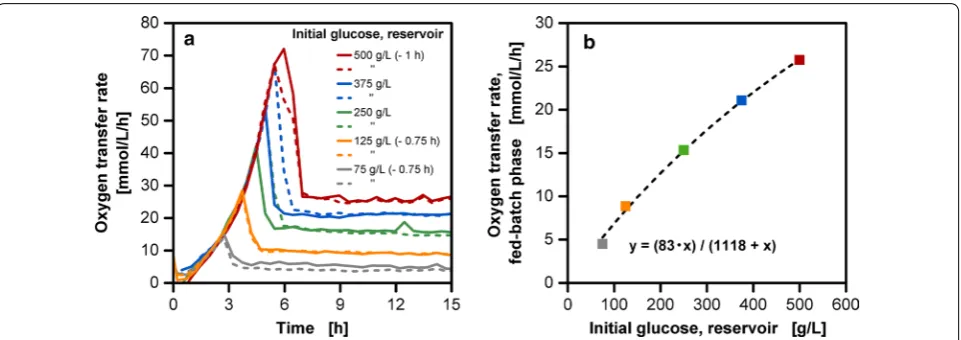
the extensive variation of the initial glucose accumulation does not cause a prolonged period of oxygen limitation in cultivations, which is a common cause for alterations of an organism’s metabolism [31]. Overflow metabolism, in the form of acetate production, was not detectable in both RAMOS as well as high-performance liquid chro-matography (HPLC) measurements (data not shown). With increasing initial concentration in the reservoir, a higher amount of released glucose results in both higher OTR maxima during the batch phase varying up to a fac-tor of seven and higher OTR levels in the fed-batch phase varying up to a factor of five.
The correlation between initial glucose concentration in the reservoir and OTR level in the fed-batch phase is hyperbolic (Fig. 2b). Bähr et al. [14] describe that the glucose concentration gradient between the culture medium and the reservoir causes water to diffuse into the feed reservoir. This leads to a dilution of the feed and a decreased glucose gradient. A non-linear decrease of the concentration profile can be observed over time in the reservoir (Fig. 3) contributing to the above-mentioned effect. In addition, diffusion coefficients for glucose solutions decrease linearly with increasing tion, having an asymptotic progress at high concentra-tions [32]. Several studies with alternative membranes have shown a similar hyperbolic correlation to a sub-strate transport. Paul et al. [33] propose that the viscos-ity of the solvent penetrating through the membrane may be the underlying cause for the non-linear transport. Almazán et al. [34] suggest that concentration polariza-tion and rise of osmotic pressure are the causes for the
decline of flux through the membrane due to increased resistance to permeation. Further, it was suggested that glucose as an uncharged organic molecule, but with a high dipole moment (~14 Debye) is more likely to be repelled by a membrane charge [35]. Further, the dialysis membrane in this experimental set-up is placed in a bio-logical surrounding with a complex media composition. Even though regenerated cellulose exhibits low protein binding characteristics [36], the contact with organic and non-organic compounds could lead in time to the occur-rence of fouling. The cultivation results with the cellu-lose-based dialysis membrane show that despite possible complexities resulting from solvent–solute-membrane interaction, a reproducible glucose release can be accom-plished. The correlation presented in Fig. 2b enables a quick and simple adaptation of the initial glucose con-centration to the demands of both slow and fast-growing microorganisms.
A homogenous reservoir composition without a con-centration gradient is essential to provide the basis for a comparable substrate release for the membrane-based fed-batch shake flask. To address the question whether a concentration gradient is prevalent along the reser-voir height, samples for HPLC analysis were taken at the upper liquid surface, the middle portion of the glass tube and directly behind the membrane by piercing through the membrane from the front (Fig. 3). In all four experi-ments with different initial glucose concentration in the reservoir, even for the highest initial concentration of 750 g/L glucose in the reservoir, no significant devia-tion in glucose concentradevia-tions, measured at different Fig. 2 Effect of initial reservoir glucose concentration on oxygen transfer rate of E. coli fed-batch cultivations (duplicates). a For clarity reasons the cultivations with 75, 125 and 500 g/L initial reservoir glucose concentration have been shifted timewise as indicated, due to deviating lag-phases. b The oxygen transfer rate level of the fed-batch phase is respectively plotted over the initial reservoir glucose concentration; cultivation conditions: Wilms-MOPS-mineral medium (0.2 M MOPS), temperature: 37 °C, shaking frequency: 350 rpm, shaking diameter: 50 mm, culture broth volume: 10 mL, inoculation OD600: 0.5, reservoir filling volume: 2 mL, dialysis membrane: Reichelt (1) dialysis membrane, membrane area: 18.1 mm2; strain: E.
positions, could be determined. The detected slight devi-ation results primarily from errors due to the high dilu-tion factors necessary for HPLC analysis. To achieve the amount of released glucose based on Fick’s law, a rough calculation of the theoretical necessary concentration gradient was conducted [data not shown]. To accomplish the release of glucose solely based on diffusion, an unreal-istic high concentration gradient would have been neces-sary. This confirms the existence of convective transport and good mixing within the reservoir through vigorous shaking of 350 rpm at 50 mm shaking diameter. These settings were chosen to supply sufficient oxygen to fast-growing E. coli cultivations. For lower shaking frequen-cies for different experimental set-ups, this issue needs to be evaluated again.
To address the question whether essential nutrients dif-fuse in the opposite direction from the culture medium into the reservoir and are lost to the cultivation, meas-urements of ammonium and phosphate in both the cul-ture broth and the reservoir were conducted. Figure 4a, c show for ammonium an initial accumulation in the reser-voir in all tested cultivations. Over the time, ammonium is consumed and once the concentration is decreased in the culture broth, a back-diffusion of ammonium from the reservoir takes place. Hence, the microorganisms can completely metabolize the initially provided amount of
ammonium. For cultivations with an initial glucose con-centration in the reservoir of 375 and 500 g/L an ammo-nium limitation can be observed after approximately 18 and 21 h, respectively. The effect of nitrogen limitation on a cultivation along with the means to overcome this challenge is a crucial issue that needs to be addressed to conduct cultivations optimally. For phosphate, Fig. 4b, d show that the high amount provided initially to the cul-ture broth results in an almost constant level for both the reservoir and the culture broth. As phosphate was not consumed in significant amounts no limitation in the cul-ture broth occurred. In summary, the composition of the culture broth and the reservoir can result in a diffusive transport of media components into the reservoir. But the reservoir does not act as a permanent nutrient sink as back-diffusion to the culture broth can take place upon lowered concentration of the component in the culture broth.
Additional set‑up variations of the reservoir system In addition to the variation of the initial glucose concen-tration in the reservoir, the set-up of the reservoir system offers further possibilities to alter the release rate. One possibility is to alter the membrane area at the membrane tip (Fig. 5a). Increasing the membrane area from 4.2 to 26.4 mm2 has a direct influence on the peak height of the
Fig. 3 Analysis of glucose concentrations at three different positions in the reservoir system in E. coli fed-batch cultivations. Samples were taken at the upper liquid surface (top, filled circles), from the middle of the glass tube (middle, open squares) and behind the membrane (bottom, filled trian-gles) during cultivations for varied initial reservoir glucose concentrations (250, 375, 500 and 750 g/L); cultivation conditions: Wilms-MOPS-mineral medium (0.2 M MOPS), temperature: 37 °C, shaking frequency: 350 rpm, shaking diameter: 50 mm, culture broth volume: 10 mL, inoculation OD600:
0.5, reservoir filling volume: 2 mL, dialysis membrane: Reichelt (1) dialysis membrane, membrane area: 18.1 mm2; strain: E. coli BL21 (DE3)
OTR in the batch phase, increasing from approximately 20 to 60 mmol/L/h. An OTR variation of about 10 mmol/ L/h in the fed-batch phase can be observed between the lowest and the highest membrane area. Even though the membrane area was increased by a factor of almost six, this magnitude of alteration is not transferred to the OTR in the fed-batch phase. As the same initial glu-cose concentration is used for all set-ups, the increased batch peaks for larger membrane areas result in a higher amount of metabolized glucose at an early stage of culti-vation. This may leave a reduced amount of glucose avail-able in the reservoir for the fed-batch phase. The lower concentration gradient over the membranes results in a reduced driving force for glucose transport and hence, a lower OTR level of the fed-batch phase. Under the given conditions the alteration of the membrane area allows for a fine-tuning of the release rate. A simple way to reduce
the height and width of the batch peak is through increas-ing the inoculation concentration (see Additional file 1). Cultivations reach the glucose-limited condition faster and more glucose is available for the fed-batch phase.
The duration of the fed-batch phase at a more or less constant OTR level can be controlled via the reservoir filling volume (Fig. 5b). The initial concentration differ-ence between the reservoir and the culture broth remains the same, but due to the higher total amount of glucose, the concentration gradient for diffusion is maintained for a longer period of time. For long-term cultivations, a higher reservoir volume is advantageous for the longer benefit from the fed-batch phase. In addition, the influ-ence of membrane thickness was tested for a 28 and 42 µm thick dialysis membrane (see Additional file 2). Astonishingly, no difference in the release rate could be identified for these two types of membranes.
Fig. 4 Distribution of ammonium and phosphate in the culture broth and the reservoir over time in E. coli fed-batch cultivations. a, c Ammonium amount for three initial reservoir glucose concentrations (250, 375 and 500 g/L). b, d Phosphate amount for three initial reservoir glucose concen-trations (250, 375 and 500 g/L); cultivation conditions: Wilms-MOPS-mineral medium (0.2 M MOPS), temperature: 37 °C, shaking frequency: 350 rpm, shaking diameter: 50 mm, culture broth volume: 10 mL, inoculation OD600: 0.5, reservoir filling volume: 2 mL, dialysis membrane: Reichelt (1) dialysis
Figure 6a shows a selection of membranes that are sufficiently flexible to be used with the membrane tip type A (see Fig. 1b). In contrast, Fig. 6b shows mem-branes which are stiff and have a paper-like nature. For these, the membrane tip type B (Fig. 1b) was used. With the usage of both membrane tips the optional range of
utilizable membranes was extended. Figure 6a shows the Reichelt (1) dialysis membrane (10–20 kDa MWCO) in comparison with membranes from SpectraPor with a defined MWCO. With 180 Da, glucose is many times smaller than the MWCO of the tested membranes and no rejection effects should occur. Yet with a change of Fig. 5 Effects of membrane area and reservoir volume on oxygen transfer rate in E. coli fed-batch cultivations (duplicates). Variation of a membrane area. b Reservoir volume; cultivation conditions: Wilms-MOPS-mineral medium (0.2 M MOPS, 250 g/L glucose in the reservoir), temperature: 37 °C, shaking frequency: 350 rpm, shaking diameter: 50 mm, culture broth volume: 10 mL, inoculation OD600: 0.5, 2 mL reservoir filling volume in a and varied reservoir filling volume in b, dialysis membranes: Reichelt (1) dialysis membrane, varied membrane area in a and 18.1 mm2 membrane area in
b; strain: E. coli BL21 (DE3) pRhotHi-2-EcFbFP
Fig. 6 Effect of molecular weight cut-off (MWCO), membrane type and material on oxygen transfer rate in E. coli fed-batch cultivations (duplicates). a Membrane tip type A (see Fig. 1b) with membrane area of 18.1 mm2 was used for the dialysis membranes with varying MWCO values
[Spec-traPor 25 kDa, Spec[Spec-traPor 10 kDa, Spec[Spec-traPor 1 kDa, Reichelt (1) dialysis membrane]. b Membrane tip type B (see Fig. 1b) with membrane area of 11.34 mm2 was used for membranes of varying materials (mixed cellulose ester (MCE), polycarbonate (PC), polyether sulfone (PES), polyethylene
the MWCO the possibility of fine-tuning the release rate can be observed. For dialysis membranes, it is postulated that diffusion through the membrane is dependent on the amount of water present in the wet membrane [30], which most likely varies in the tested membranes. The cultivation with the Reichelt (1) dialysis membrane is similar to the cultivation with the 1 kDa MWCO mem-brane from SpectraPor. This discrepancy may result from the fact that no standardization is available for the tested solute or the operation conditions for MWCO measure-ments [37]. An increase in the batch peak and OTR level of the fed-batch phase can be detected for increasing MWCOs of the SpectraPor membranes. Even though an initial concentration of 250 g/L was used in the reservoir, the performance of SpectraPor 10 and SpectraPor 25 is similar to the cultivation with 375 g/L initial reservoir glucose concentration in combination with the Reichelt (1) dialysis membrane (see Fig. 2).
In addition to cellulosic dialysis membranes, alternative membranes are an asset for the application in the mem-brane-based fed-batch shake flask. A fundamental rea-son that may dictate the choice of alternative membrane materials to the cellulose-based dialysis membrane is the implementation in cellulase-containing systems. Espe-cially, fermentation processes revolving around bio-fuel production may contain a cocktail of cellulases [38, 39]. Cellulases can be produced in fed-batch operation mode to achieve both a high titer and volumetric productivity
[40]. For these applications, alternative membranes not based on cellulose are required for screening with the membrane-based fed-batch shake flask.
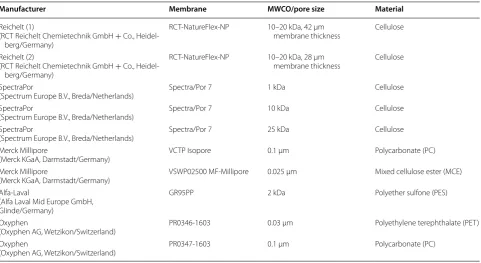
Figure 6b shows results obtained with membranes of different materials (Table 1). The selected membrane materials were tested for biocompatibility (data not shown) as described by Meier et al. [41]. In Fig. 6b, OTR values at various levels can be observed for identical initial settings. No distinction between batch and fed-batch phase can be seen with the Oxyphen PR0346-1603 membrane. It has a very low release rate for glucose and is appropriate for slow-growing organisms, such as plant cell cultivations [42]. For moderately fast-growing microorganisms e.g. yeast cultivations, the Alfa-Laval GR95PP membrane is more suitable. The moderate glu-cose release rate is likely to result from the membrane material PES, which has a negative membrane charge in an alkaline to neutral pH environment [43]. The inten-sity of a charged surface towards surrounding parti-cles is strongly dependent on the electrostatic shield resulting from the counter-ions. As the media contains a number of salts and the pH is in the range of about 7–7.5, an interaction of ions with the membrane is very likely. The Millipore VSWP02500 has a similar perfor-mance as the previously discussed Reichelt (1) dialysis membrane and is based on a cellulose mixture. A domi-nant batch peak at about 70 mmol/L/h and an OTR level of 20 mmol/L/h in the fed-batch phase can be seen
Table 1 Overview of tested membranes
Manufacturer Membrane MWCO/pore size Material
Reichelt (1)
(RCT Reichelt Chemietechnik GmbH + Co., Heidel-berg/Germany)
RCT-NatureFlex-NP 10–20 kDa, 42 µm
membrane thickness Cellulose
Reichelt (2)
(RCT Reichelt Chemietechnik GmbH + Co., Heidel-berg/Germany)
RCT-NatureFlex-NP 10–20 kDa, 28 µm
membrane thickness Cellulose
SpectraPor
(Spectrum Europe B.V., Breda/Netherlands) Spectra/Por 7 1 kDa Cellulose
SpectraPor
(Spectrum Europe B.V., Breda/Netherlands) Spectra/Por 7 10 kDa Cellulose
SpectraPor
(Spectrum Europe B.V., Breda/Netherlands) Spectra/Por 7 25 kDa Cellulose
Merck Millipore
(Merck KGaA, Darmstadt/Germany) VCTP Isopore 0.1 µm Polycarbonate (PC)
Merck Millipore
(Merck KGaA, Darmstadt/Germany) VSWP02500 MF-Millipore 0.025 µm Mixed cellulose ester (MCE)
Alfa-Laval
(Alfa Laval Mid Europe GmbH, Glinde/Germany)
GR95PP 2 kDa Polyether sulfone (PES)
Oxyphen
(Oxyphen AG, Wetzikon/Switzerland) PR0346-1603 0.03 µm Polyethylene terephthalate (PET)
Oxyphen
for an initial glucose concentration of 250 g/L in the res-ervoir. Similar characteristics are observed for the Oxy-phen PR0347-1603 made of polycarbonate. These high glucose releases are suitable for fast-growing microor-ganisms, such as E. coli.
Comparative cultivation studies with a dialysis membrane and a microfiltration membrane
The choice of the membrane material and type are important parameters to vary the substrate release from
the reservoir. In Fig. 7 the usage of a dialysis membrane (Reichelt (1), 10–20 kDa) and a microfiltration mem-brane (Millipore VCTP Isopore, 0.1 µm) are compared to analyze the effects of varying transport mechanisms on the cultivation progress. The microfiltration mem-brane from Millipore VCTP Isopore is a track-etched membrane with a narrow pore size distribution, which is a unique property for membranes of this manufacturing process [44]. The pores are described to be circular holes with a sinusoidal wall variation [45].
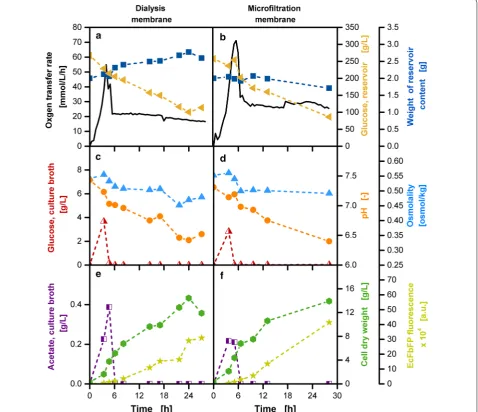
Fig. 7 Online and offline characterization of cultivations with a dialysis membrane and a microfiltration membrane in E. coli fed-batch cultiva-tions. a, b Oxygen transfer rate (OTR, solid line), glucose concentration in the reservoir (slanted triangles), glucose concentration in the culture broth (straight triangles), weight of reservoir content (filled squares). c, d Glucose concentration in the culture broth (half-filled triangles), pH (circles), osmolality (filled triangles) in the culture broth. e, f Acetate concentration (half-filled squares), cell dry weight (hexagons) and EcFbFP fluorescence (stars); cultivation conditions: Wilms-MOPS-mineral medium (0.2 M MOPS, 250 g/L glucose in the reservoir), temperature: 37 °C, shaking fre-quency: 350 rpm, shaking diameter: 50 mm, culture broth volume: 10 mL, inoculation OD600: 0.7, reservoir filling volume: 2 mL, dialysis membrane:
Reichelt (1) dialysis membrane, membrane area: 18.1 mm2, microfiltration membrane: Millipore VCTP Isopore, membrane area: 11.34 mm2; strain: E.
Diffusive effects dominate the material flows within dialysis membranes, whereas hydrodynamic effects play a role in microfiltration membranes. With the dialy-sis membrane, an increase in the total amount of fluid weight in the reservoir over the cultivation time can be detected (Fig. 7a). Based on diffusive effects a compensa-tion of a high glucose concentracompensa-tion in the reservoir and a high water content in the culture broth causes the flow of both substances to the respective other side [46]. With the microfiltration membrane, the transport through the membrane lattice in addition to the flow through distinct pores needs to be considered [47]. The effect of mass transport through diffusive processes is apparent in the non-constant progress of the glucose reservoir con-centration and the initial constant phase of the reservoir fluid content (Fig. 7b). With declining glucose concentra-tion, the impact of diffusion diminishes and the effects of convective flow are apparent with the decreasing amount of fluid in the reservoir.
In preliminary experiments, a faster glucose release was identified for the microfiltration membrane. To adapt to the glucose release with the dialysis membrane, a smaller membrane area was chosen. Figure 7a, b show the OTR results for both cultivations. Slightly higher OTR values can be observed for the batch and the fed-batch phase of the microfiltration membrane in comparison to the dialy-sis membrane. Despite these differences, comparable offline results were obtained for the preset settings. The values for osmolality (Fig. 7c, d) are in a similar range for both membrane types throughout the entire cultivation time. After an initial minimal increase, caused by glucose accumulation (Fig. 7c, d) and acetate production (Fig. 7e, f), the osmolality is reduced as the biomass increases, metabolizing the initially provided amount of nutrients. A horizontal progress of the osmolality is observed for most parts of the fed-batch phase, which results from the controlled release of the substrate and its immediate metabolism. The overall high value for osmolality results from high buffer concentrations necessary to stabilize the pH value in shake flask cultivations. An indication for the ongoing metabolism is the decreasing pH, which results from acidification by acetate and ammonium uptake. For both membrane types, similar values for offline meas-urements of pH, glucose and acetate concentration in the culture broth (Fig. 7c–f) were obtained. Figure 7e, f contain values for cell dry weight (CDW) after correc-tion to avoid falsificacorrec-tion due to concentracorrec-tion or dilu-tion effects. The correcdilu-tion factor is based on the ratio between the initial and current flask content. An expo-nential increase of biomass can be noted in the batch phase until the accumulated glucose is exhausted. In the fed-batch phase, the self-regulatory feature of the system becomes apparent in that the microorganisms display
linear growth. E. coli BL21 (DE3) pRhotHi-2-FbFP pro-duces a flavine mononucleotide binding fluorescence protein (EcFbFP) as a product. For both membranes, low values of product are measured in the batch phase in the presence of an excess amount of glucose. After entering the glucose-limited fed-batch phase an almost tenfold increase in the product concentration along with a dou-bled biomass amount is noted until the end of the given cultivation time. This is a typical feature of a catabolite-repressed system [14]. Despite the different transport mechanisms of the two membranes a similar perfor-mance can be obtained for the same initial glucose con-centration by adapting the membrane area.
Parallel cultivations in shake flasks and laboratory‑scale stirred tank reactors in batch and fed‑batch operation mode
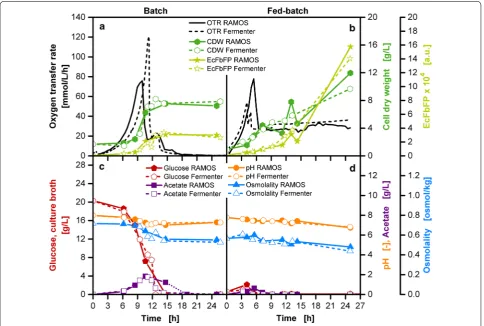
procedure was carried out on both scales for the batch operation mode with 20 g/L glucose initially provided in the culture medium. The slight time shifts in Fig. 8 result from the consecutive start of the various devices used.
Figure 8a shows the OTR for the RAMOS and labo-ratory-scale stirred tank reactor cultivations in the batch operation mode. The difference in the initial OTR peak height is most probably due to a short period of oxygen limitation in shake flask cultivations. For the attempted comparison, it can be regarded as irrelevant, as offline samples reveal a similar performance on both scales (Fig. 8a, c). The initial OTR peak results from the metabolism of glucose as seen in the decreasing glucose concentration initially provided to the culture medium (Fig. 8c). An exponential increase in biomass can be noted for this phase. Due to overflow metabolism, ace-tate is being produced in parallel (Fig. 8c) [49–51]. After
depletion of glucose, acetate is consumed and results in a second OTR peak [52]. A minimal increase in biomass can be noted up to a final constant level until the end of the cultivation. Upon depletion of glucose, an increase in product concentration (EcFbFP) can be observed, reaching a constant level until the end of the cultivation. Throughout the cultivation, a decrease in osmolality and pH was detectable.
Although a slightly higher OTR level in the fed-batch phase is observable in the fed-batch stirred tank reactor compared to the shake flask cultivation (Fig. 8b), there is a good consistency between the offline data acquired with both systems (Fig. 8b, d). An initial glucose accu-mulation between 1 and 2 g/L can be noted in the initial batch phase (Fig. 8d). The glucose release from the fed-batch screening device adequately represents the glucose release via a pump to a fed-batch stirred tank reactor.
Fig. 8 Parallel cultivations in shake flasks and laboratory-scale stirred tank reactors in batch and fed-batch operation mode with E. coli. a, c Batch cultivations with Wilms-MOPS-mineral medium (0.2 M MOPS), 20 g/L glucose, inoculation OD600: 0.8. b, d Fed-batch cultivations with
Wilms-MOPS-mineral medium (0.2 M MOPS), without initially provided glucose in culture broth, glucose in the reservoir of the fed-batch shake flask and in the feed bottle of the stirred tank reactor: 250 g/L, feeding of the fed-batch stirred tank reactor is started at the beginning of the experiment with a pumping rate of 4.2 mL/h, inoculation OD600: 0.9; shake flask cultivation conditions: temperature: 37 °C, shaking frequency: 350 rpm, shaking
diameter: 50 mm, culture broth volume: 10 mL, fed-batch reservoir filling volume: 2 mL, microfiltration membrane: Merck Millipore Isopore VCTP, membrane area: 11.34 mm2; stirred tank reactor conditions: temperature: 37 °C, aeration: 1 vvm, DOT controlled at 30% air saturation, reactor
In the batch cultivations, the initial concentration of substrate increases the osmolality in the culture medium to 0.72 osmol/kg, in comparison to 0.57 osmol/kg in the fed-batch cultivations (Fig. 8c, d). This slight increase already had a significant impact on the lag-phase, which is almost doubled in the batch cultivation in contrast to the fed-batch cultivation. Even though a higher amount of total glucose was consumed in fed-batch operation mode than in batch operation mode, a lower acetate production is to be noted (Fig. 8c, d). 1.6–1.8 g/L of acetate was measured in the batch cultivation in com-parison to 0.3–0.6 g/L in the fed-batch operation mode. A pH decrease as a result of acidification due to ammo-nium uptake is in a similar range for both shake flask and stirred tank reactor cultivations.
Comparison of Fig. 8a, b shows that the amount of biomass is increased by one-third in the fed-batch cul-tivation as a direct consequence of a higher amount of substrate provided. Due to the de-repressed state in fed-batch cultivations, the product EcFbFP is approximately increased fourfold compared to batch cultivations. The experiments on shake flask level showed the same bio-mass and product results as the cultivation with the stirred tank reactor, validating the comparibility of cul-tivation conditions between the membrane-based fed-batch shake flask and the stirred tank reactor.
Conclusions
The membrane-based fed-batch shake flask is an inno-vative screening tool for small-scale cultivations. In the initial part of screening the fed-batch shake flask in com-bination with the RAMOS-device can be used to identify, amongst others, promising strains, process settings, and media compositions. A detailed analysis can then be con-ducted with parallelly run offline fed-batch shake flasks. When no online device is available, the offline fed-batch shake flask can be used as a stand-alone device to be sam-pled at pre-determined sampling time points. Simple in its set-up, yet versatile in its application, the membrane-based fed-batch shake flask offers the possibility to test in parallel a diverse number of fed-batch settings in an easy and reliable manner. The set-up variations of the reservoir were systematically analyzed for cultivations with the fast-growing organism E. coli and provide the basis for a quick adaptation to further biological systems of varying growth rates. Two main parameters to adapt the amount of released substrate, quantified in this study with the measurement of the oxygen transfer rate in the RAMOS device, are the initial substrate concentration in the reservoir and the membrane used for the controlled release. A good precognition of the biological system is of advantage, as this simplifies the choice of an appropriate
membrane. In presence of cellulases for example, the membrane integrity of cellulosic dialysis membranes might be impaired. With the help of a newly devel-oped membrane tip, the utilizable range of membranes is extendable from flexible dialysis membranes to stiff paper-like microfiltration membranes. For microbiologi-cal systems, which are sensitive to increasing osmolality values, the microfiltration membrane is a more suitable option as the concentration of the culture medium due to water diffusion to the reservoir can be reduced. The OTR level of the fed-batch phase can be varied to more than fivefold with the change of membranes and can be extended even further by altering the initial glucose con-centration in the reservoir. Additionally, the variation of the membrane area and the MWCO offer further oppor-tunities to fine-tune the substrate release as well as to influence batch peak characteristics.
In this work, modifications of the reservoir construc-tion and optimized handling procedures are presented to ensure reproducible performance. The selected shak-ing parameters are sufficient to ensure a homogenous composition in the reservoir, despite the usage of high glucose concentrations in combination with narrow res-ervoir parts. Measurement of ammonium and phosphate in the culture broth and the reservoir with the dialy-sis membrane showed that the reservoir does not act as a permanent nutrient sink. These factors provide the basis to adequately imitate the feeding via a pump into a stirred tank reactor.
The applicability of the membrane-based fed-batch as a screening tool was demonstrated in a parallel cultivation with a laboratory-scale stirred tank reactor. The working volume of the shake flask cultivation and the stirred tank reactor cultivation was varied by a factor of 100. Equiva-lent biomass and product concentrations were obtained on both scales. The feeding via a pump and the controlled release from the reservoir system resulted in similar pH, osmolality and acetate values, validating compara-tive environmental conditions for cells in both types of bioreactors.
Methods Strain
All cultivations were conducted with the model organ-ism E. coli BL21 (DE3) pRhotHi-2-EcFbFP (GenBank Number: ABN71355) [14]. The production of a flavine mononucleotide binding fluorescence protein is under the control of a lac operon [53, 54]. Without induction, a fluorescence signal is detectable due to leaky expression [14, 55].
Media
As complex medium LB medium was used for E. coli
pre-cultures containing 10 g/L peptone from casein (Carl Roth, Karlsruhe/Germany), 5 g/L yeast powder extract for bacteriology (Carl Roth, Karlsruhe/Germany) and 5 g/L NaCl. The pH value was adjusted to pH 7.0–7.2. 50 mg/L kanamycin sulfate was added to maintain selec-tion pressure.
All cultivation experiments of E. coli were per-formed in the modified Wilms-MOPS mineral medium [52, 56] with the base solution consisting of 6.98 g/L (NH4)2SO4, 3 g/L K2HPO4, 2 g/L Na2SO4, 41.85 g/L
(N-morpholino)-propane sulfonic acid (MOPS). The pH value was adjusted to 7.5 with NaOH. Before each experiment, the base solution was supplemented with 0.5 g/L MgSO4·7H2O, 0.01 g/L thiamine hydrochloride,
1 mL/L trace element solution [0.54 mg/L ZnSO4·7H2O,
0.48 mg/L CuSO4·5H2O, 0.3 mg/L MnSO4·H2O,
0.54 mg/L CoCl2·6H2O, 41.76 mg/L FeCl3·6H2O,
1.98 mg/L CaCl2·2H2O, 33.4 mg/L Na2EDTA
(Titri-plex III)] and 50 mg/L kanamycin sulphate to maintain selection pressure.
The culture medium of batch cultivations was supple-mented with a glucose solution to achieve a final con-centration of 20 g/L glucose. In the culture medium of fed-batch cultivations, sterile distilled water was used to compensate the omitted glucose volume to maintain the same composition of the other medium components.
Cultivation conditions
All cultivations were conducted with orbital shakers (LS-X, Kühner, Birsfelden/Switzerland) at 350 rpm, 50 mm shaking diameter at 37 °C. The RAMOS technology was used for online monitoring of the cultivation progress. The device is an in-house build apparatus. Commercial versions are available from Kühner AG (Biersfelden/ Switzerland) or HiTec Zang GmbH (Herzogenrath/Ger-many). The oxygen transfer rate (OTR) was measured as a duplicate in the RAMOS device. Optionally offline batch and fed-batch shake flasks were used to provide samples for offline analysis.
For cryo cultures, cells were grown in complex medium until mid-exponential phase and then harvested. 750 μL
of the culture was added to 250 μL of 80% (w/w) glycerol, used as cryo-protectant, homogenized and immediately frozen at −80 °C. For preculture cultivation, one cryo vial was resuspended in 11.5 mL complex medium. In the mid-exponential phase, the culture was harvested and centrifuged at 4000 rpm and 4 °C for 15 min. The cells were resuspended in the main culture medium and were used to inoculate the main culture at an OD600 of 0.5 if
not otherwise mentioned. 10 mL culture volume was used for all main culture cultivations.
Parallel cultivations were conducted in the laboratory-scale stirred tank reactor and in the RAMOS device. For the batch cultivation, an Applikon Biotechnology fer-menter ez-Control (Applikon Biotechnology B.V., Delft/ Netherlands) was used with a dual six-blade Rushton impeller (45 cm diameter) and a working volume of 1 L. For fed-batch cultivations a Sartorius BIOSTAT® Bplus fermenter (Sartorius, Göttingen/Germany) with a dual six-blade Rushton impeller (53 cm diameter) and a work-ing volume of 1 L was used. For both stirred tank reac-tors, the temperature was controlled at 37 °C, and no active pH regulation was incorporated. A ring sparger was used for an aeration at 1 vvm. The dissolved oxygen tension was controlled at 30% air saturation by control-ling the stirring rate. For the batch stirred tank reactor the rotation speed was varied between 500 and 1500 rpm and for the fed-batch stirred tank reactor between 500 and 800 rpm. In both batch and fed-batch operation mode, the same inoculated main culture was used respec-tively for RAMOS cultivations and stirred tank reactor cultivations. For the fed-batch stirred tank reactor, the glucose feed with a stock concentration of 250 g/L was accomplished with a pump (IPC RS232, Ismatec, Zürich/ Switzerland) working at 4.2 mL/h. These settings were chosen to mimic the glucose release from the reservoir to the culture broth in a membrane-based fed-batch shake flask and were determined in a pre-experiment.
the membrane tip was screwed liquid-tight on the cap. To test for possible leakages, the assembled membrane tip was filled with liquid, preferably water to minimize alterations of the reservoir composition. The filled tip was positioned in a semi-micro cuvette and placed in a centrifuge. The centrifuge was operated at room temper-ature at 500 rpm for a minimum of 7 min. Only mem-brane tips that were liquid-free at the bottom of the cuvette were used further. The membrane tip was then loaded with a stainless-steel ring of 3.1 g and connected to the flexible tube (PharMed® BPT, inner diameter 2.06 mm, wall thickness 0.8 mm; Saint-Gobain, Charny/ France) of the reservoir. Silicon rubber rings (inner diam-eter 4 mm, wall thickness 1 mm; Saint-Gobain, Charny/ France) were used to tighten both ends of the flexible tube with the respective connecting part, to the modified steel tube nozzle at the lower end of the glass tube or to the nozzle of the membrane tip. The modified steel tube nozzle, connected via UV bonding (UV curing at 366 nm, GB 368, Delo, Windach/Germany) with the glass tube, replaces the glass olive connection designed for the initial prototype [14]. This modification improved the conform-ity between reservoir systems of different shake flasks and increased their robustness towards functional stress. The assembled reservoir was then centrally placed in the shake flask and autoclaved. A previously prepared reser-voir solution was sterile pipetted into the reserreser-voir and gas bubbles entrapped through the filling procedure were removed with the help of a desiccator evacuated with a vacuum pump (Type 113042, LVS, Ilmenau/Germany). The evacuation and pressure normalization steps were repeated until no more gas bubbles ascended in the res-ervoir liquid. The culture broth was then filled sterile into the shake flask, and the device was placed on the shaker to start experimentation.
To correct offline data retrieved from the culture broth and from the reservoir due to concentration or dilu-tion effects, the content of the shake flask and the res-ervoir were corrected with respective factors. The cell dry weight was corrected with a factor representing the ratio of the weight initially at the start and the weight at the sampling point of cultivation. A constant density for the culture broth was assumed. For the reservoir, a concentration-density correlation was used to convert the weight of the reservoir content to a volume. Offline samples taken from the reservoir were corrected with the factor obtained as a ratio of the initial volume and the volume at sampling time point. In this study, correc-tions were undertaken for CDW (g/L), phosphate (g) and ammonium (g) measurements. All other values depict the actually measured concentrations, in turn showing the current environmental conditions of cells.
To address the question whether a concentration gradi-ent is prevalgradi-ent along the reservoir height of the mem-brane-based fed-batch shake flask, samples were taken at the reservoir extremities to analyze the glucose concen-trations via HPLC (Fig. 3). The reservoir was unscrewed from the flask with a minimal amount of jerk to reduce falsifications while sampling. Further, a clamp was placed on the flexible tube to avoid any intermixture while with-drawing fluid using a syringe at the respective sampling points. Samples were taken at the upper liquid surface, the middle portion of the glass tube and directly behind the membrane by piercing through the membrane from the front. For four different glucose concentrations from 250 to 750 g/L in the reservoir, the samples were taken for 72 h and analyzed.
Depending on the settings to be tested, the fed-batch reservoir contained a volume of 1–4 mL composed of 75–750 g/L initial glucose concentration and option-ally the dye blue dextran (Sigma-Aldrich, Steinheim am Albuch/Germany) at 1–4 g/L. Blue dextran is a dye with a molecular weight of 2 million g/mol and, therefore, it is not able to pass the membrane without leakage. It can be traced in the supernatant using an absorbance meas-urement at 615 nm. In a study presented by Susanto et al. [57] evaluating the effect of adsorptive fouling of cel-lulosic membranes with dextrans, it was shown that no significant water flux reduction or alteration of mem-brane properties occurred. This was verified in this study in parallel cultivations with the reservoir containing blue dextran and omitting blue dextran. No significant differ-ence in the progress of the OTR could be seen for cultiva-tions without blue dextran in comparison to cultivacultiva-tions with 2 g/L blue dextran in the reservoir (see Additional file 3). No interference of blue dextran was observed for the variation range between 1 and 4 g/L (data not shown). In all experiments with offline samples, the dye blue dex-tran was added to the reservoir composition to achieve a final concentration of 4 g/L. For experiments with the variation of glucose concentration in the reservoir 1 g/L blue dextran was used. The usage of blue dextran was omitted in all other experiments.
Offline sample analysis
The optical density (OD600) was determined from three
samples in a standard 1 cm cuvette at 600 nm using a spectrophotometer Genesys 20 (Thermo Fisher Scien-tific, Bonn/Germany). The samples were diluted with 0.9% (w/v) sodium chloride solution to measure in the linear correlation range of 0.1 < OD600 < 0.3. 0.9% (w/v)
and weighed reaction tube with 4000 rpm at 4 °C for 20 min. The resulting cell pellet was dried at 80 °C for a minimum of 48 h.
The pH value of the respective supernatant was meas-ured using a pH 510 pH/mV/°C meter (Eutech Instru-ments Europe, Nijkerk/Netherlands). 50 µL supernatant from three samples were used for measuring the osmolal-ity with the help of an Osmomat 030 (Gonotec, Berlin/ Germany). Before measurement, a two-point calibration was conducted with water and calibration standards. The calibration standard (300, 500 or 850 mOsmol/kg, Gono-tec, Berlin/Germany) closest to the expected osmolal-ity was used for calibration. Ammonium and phosphate quantification of the supernatant were conducted accord-ing to the manual provided in the respective Spectro-quant test kits (Merck KGaA, Darmstadt/Germany). The measurements were conducted in 1 cm cuvettes (Kartell, Noviglio/Italy) in the photometer Spektroquant NOVA 60 (Merck KGaA, Darmstadt/Germany).
The quantitative measurement of glucose and acetate was performed by means of high-performance liquid chromatography (Dionex HPLC Ultimate 3000, Sunny-vale/USA), equipped with an organic acid resin HPLC pre-column (40 × 8 mm) as well as an organic acid resin HPLC separation column (250 × 8 mm) (both from CS-Chromatography, Langerwehe/Germany). The super-natant of samples centrifuged for CDW determination was filtered using 0.2 μm cellulose acetate filters (VWR International, Darmstadt/Germany), diluted and stored at −20 °C until measurement. The eluent used was 5 mM sulphuric acid solution at a flow rate of 0.8 mL/min. A constant temperature of 60 °C was set during the meas-urement. The compounds were detected by measur-ing the refractive index usmeasur-ing a Shodex RI-101 detector (Techlab, Erkerode/Germany). The Chromeleon software version 6.8 (Dionex Softron, Germering/Germany) was used for the subsequent analysis and peak calculation.
The fluorometric quantification of the fluorescence protein, FbFP, was determined by measuring four times 200 μL culture broth samples in black 96 well microtiter plates with clear bottoms (BD Falcon TC-treated Black/ Clear, Corning Incorporated, Tewksbury/USA). The Syn-ergy4 microtiter plate reader (Xenon flashlight, intensity 100, BioTek, Winooski/USA) was used to measure fluo-rescence at an excitation wavelength of 450 nm and an emission wavelength of 495 nm. In parallel, the absence of blue dextran in 200 μL supernatant was photometri-cally analyzed at 615 nm to ensure membrane integrity. The software Gen5 1.07 (BioTek, Winooski/USA) was applied for data collection.
Abbreviations
CDW: cell dry weight; CTR: carbon dioxide transfer rate; E. coli: Escherichia coli; EcFbFP: E. coli codon bias-optimized FbFP; FbFP: flavin-mononucleotide-based fluorescent reporter protein; HPLC: high-performance liquid chromatography; MCE: mixed cellulose ester; MOPS: (N-morpholino)-propane sulfonic acid; MWCO: molecular weight cut-off; OD600: optical density at the wavelength of
600 nm; OTR: oxygen transfer rate; PC: polycarbonate; PES: polyether sulfone; PET: polyethylene terephthalate; RAMOS: respiration activity monitoring system; rpm: rotations per minute; RQ: respiratory quotient.
Authors’ contributions
PP designed the study, optimized the set-up and handling procedures of the screening tool, performed the cultivation experiments, analyzed the data and drafted the manuscript. KM, DK, JG and FS performed the cultivation experi-ments and participated in data analysis. CB assisted in the initial conceptual design of the study. JB initiated and supervised the study, participated in data interpretation and assisted in drafting the manuscript. All authors read and approved the final manuscript.
Competing interests
The authors declare that they have no competing interests.
Availability of data and materials
The datasets used and/or analyzed during the current study are available from the corresponding author on request.
Publisher’s Note
Springer Nature remains neutral with regard to jurisdictional claims in pub-lished maps and institutional affiliations.
Received: 15 May 2017 Accepted: 11 July 2017 Additional files
Additional file 1. Effect of inoculation optical density variation on oxygen transfer rate in E. coli fed-batch cultivations (duplicates). Variation of inoculation OD600 between 0.3 and 1.5; cultivation conditions:
Wilms-MOPS-mineral medium (0.2 M MOPS, 250 g/L glucose in the reservoir), temperature: 37 °C, shaking frequency: 350 rpm, shaking diameter: 50 mm, culture broth volume: 10 mL, reservoir filling volume: 2 mL, dialy-sis membrane: Reichelt (1) dialydialy-sis membrane, membrane area: 18.1 mm2;
strain: E. coli BL21 (DE3) pRhotHi-2-EcFbFP.
Additional file 2. Effect of membrane thickness of a dialysis membrane on oxygen transfer rate in E. coli fed-batch cultivations (duplicates). Variation of membrane thickness between 28 µm (Reichelt (2) dialysis membrane) and 42 µm (Reichelt (1) dialysis membrane); cultivation conditions: Wilms-MOPS-mineral medium (0.2 M MOPS, 250 g/L glucose in the reservoir), temperature: 37 °C, shaking frequency: 350 rpm, shaking diameter: 50 mm, culture broth volume: 10 mL, inoculation OD600: 0.5,
reservoir filling volume: 2 mL, membrane area: 18.1 mm2; strain: E. coli
BL21 (DE3) pRhotHi-2-EcFbFP.
Additional file 3. Effect of the dye blue dextran in the reservoir on oxy-gen transfer rate in E. coli fed-batch cultivations (duplicates). a Duplicate cultivations with 8.6 mm2 membrane area b Duplicate cultivations with
18.1 mm2 membrane area; cultivation conditions: Wilms-MOPS-mineral
medium (0.2 M MOPS, 250 g/L glucose in the reservoir), temperature: 37 °C, shaking frequency: 350 rpm, shaking diameter: 50 mm, culture broth volume: 10 mL, inoculation OD600: 0.5, reservoir filling volume: 2 mL,
References
1. Riesenberg D, Schulz V, Knorre WI, Pohl H, Korz D, Sanders E, et al. High cell density cultivation of Escherichia coli at controlled specific growth rate. J Biotechnol. 1991;20:17–28.
2. Elsworth R, Miller G, Whitaker R, Kitching D, Sayer P. Production of Escheri-chia coli as a source of nucleic acids. J Appl Chem. 1968;17:157–66. 3. Krause M, Ukkonen K, Haataja T, Ruottinen M, Glumoff T, Neubauer A,
et al. A novel fed-batch based cultivation method provides high cell-density and improves yield of soluble recombinant proteins in shaken cultures. Microb Cell Fact. 2010;9:11.
4. Weiner M, Albermann C, Gottlieb K, Sprenger GA, Weuster-Botz D. Fed-batch production of l-phenylalanine from glycerol and ammonia with recombinant Escherichia coli. Biochem Eng J. 2014;83:62–9.
5. Lee SY. High cell-density culture of Escherichia coli. Trends Biotechnol. 1996;14:98–105.
6. George S, Larsson G, Enfors SO. A scale-down two-compartment reactor with controlled substrate oscillations: metabolic response of Saccharomy-ces cerevisiae. Bioprocess Eng. 1993;9:249–57.
7. Öztürk S, Çalık P, Özdamar TH. Fed-batch biomolecule produc-tion by Bacillus subtilis: a state of the art review. Trends Biotechnol. 2016;34:329–45.
8. Looser V, Bruhlmann B, Bumbak F, Stenger C, Costa M, Camattari A, et al. Cultivation strategies to enhance productivity of Pichia pastoris: a review. Biotechnol Adv. 2014;33:1177–93.
9. Weuster-Botz D. Parallel reactor systems for bioprocess development. Adv. Biochem. Eng. Biotechnol. 2005;92:125–43.
10. Kittelmann J, Ottens M, Hubbuch J. Robust high-throughput batch screening method in 384-well format with optical in-line resin quantifica-tion. J Chromatogr B Anal Technol Biomed Life Sci. 2015;988:98–105. 11. van Leeuwen M, Buijs NAA, Canelas AB, Oudshoorn A, Heijnen JJ, van
Gulik WM. The Hagen–Poiseuille pump for parallel fed-batch cultivations in microbioreactors. Chem Eng Sci. 2009;64:1877–84.
12. Scheidle M, Jeude M, Dittrich B, Denter S, Kensy F, Suckow M, et al. High-throughput screening of Hansenula polymorpha clones in the batch compared with the controlled-release fed-batch mode on a small scale. FEMS Yeast Res. 2010;10:83–92.
13. Strnad J, Spudić V, Brinc MM, Pungerčar JR, Kravanja Z. Optimal process mode selection for clone screening. Acta Chim Slov. 2011;58:333–41. 14. Bähr C, Leuchtle B, Lehmann C, Becker J, Jeude M, Peinemann F, et al. Dialysis shake flask for effective screening in fed-batch mode. Biochem Eng J. 2012;69:182–95.
15. Schmideder A, Cremer JH, Weuster-Botz D. Parallel steady state stud-ies on a milliliter scale accelerate fed-batch bioprocess design for recombinant protein production with Escherichia coli. Biotechnol Prog. 2016;32:1426–35.
16. Faust G, Janzen NH, Bendig C, Römer L, Kaufmann K, Weuster-Botz D. Feeding strategies enhance high cell density cultivation and protein expression in milliliter scale bioreactors. Biotechnol J. 2014;9:1293–303. 17. Buchenauer A, Hofmann MC, Funke M, Büchs J, Mokwa W,
Schnaken-berg U. Micro-bioreactors for fed-batch fermentations with integrated online monitoring and microfluidic devices. Biosens Bioelectron. 2009;24:1411–6.
18. Funke M, Buchenauer A, Schnakenberg U, Mokwa W, Diederichs S, Mertens A, et al. Microfluidic biolector—microfluidic bioprocess control in microtiter plates. Biotechnol Bioeng. 2010;107:497–505.
19. Panula-Perälä J, Siurkus J, Vasala A, Wilmanowski R, Casteleijn MG, Neubauer P, et al. Enzyme controlled glucose auto-delivery for high cell density cultivations in microplates and shake flasks. Microb Cell Fact. 2008;7:31.
20. Wellenbeck W, Mampel J, Naumer C, Knepper A, Neubauer P, Wellenbeck W, et al. Fast-track development of a lactase production process with
Kluyveromyces lactis by a progressive parameter-control workflow. Eng Life Sci. 2016;49:1–27.
21. Krause M, Neubauer A, Neubauer P. The fed-batch principle for the molecular biology lab: controlled nutrient diets in ready-made media improve production of recombinant proteins in Escherichia coli. Microb Cell Fact. 2016;15:110.
22. Li J, Jaitzig J, Lu P, Süssmuth RD, Neubauer P. Scale-up bioprocess devel-opment for production of the antibiotic valinomycin in Escherichia coli
based on consistent fed-batch cultivations. Microb Cell Fact. 2015;14:83.
23. Hemmerich J, Adelantado N, Barrigón JM, Ponte X, Hörmann A, Ferrer P, et al. Comprehensive clone screening and evaluation of fed-batch strate-gies in a microbioreactor and lab scale stirred tank bioreactor system: application on Pichia pastoris producing Rhizopus oryzae lipase. Microb Cell Fact. 2014;13:36.
24. Toeroek C, Cserjan-Puschmann M, Bayer K, Striedner G. Fed-batch like cultivation in a micro-bioreactor: screening conditions relevant for
Escherichia coli based production processes. Springerplus. 2015;4:490. 25. Jeude M, Dittrich B, Niederschulte H, Anderlei T, Knocke C, Klee D, et al.
Fed-batch mode in shake flasks by slow-release technique. Biotechnol Bioeng. 2006;95:433–45.
26. Scheidle M, Dittrich B, Klinger J, Ikeda H, Klee D, Büchs J. Controlling pH in shake flasks using polymer-based controlled-release discs with pre-determined release kinetics. BMC Biotechnol. 2011;11:25.
27. Anderlei T, Büchs J. Device for sterile online measurement of the oxygen transfer rate in shaking flasks. Biochem Eng J. 2001;7:157–62.
28. Anderlei T, Zang W, Papaspyrou M, Büchs J. Online respiration activ-ity measurement (OTR, CTR, RQ) in shake flasks. Biochem Eng J. 2004;17:187–94.
29. Maier U, Losen M, Büchs J. Advances in understanding and modeling the gas–liquid mass transfer in shake flasks. Biochem. Eng. J. 2004;17:155–67. 30. Sakai K. Determination of pore size and pore size distribution. 2. Dialysis
membranes. J Membr Sci. 1994;96:91–130.
31. Zimmermann HF, Anderlei T, Büchs J, Binder M. Oxygen limitation is a pitfall during screening for industrial strains. Appl Microbiol Biotechnol. 2006;72:1157–60.
32. Gladden J, Dole M. Diffusion in supersaturated solutions. II. Glucose solu-tions. J Am Chem Soc. 1952;75:3900.
33. Paul DR, Ebra-Lima OM. Pressure-induced diffusion of organic liq-uids through highly swollen polymer membranes. J Appl Polym Sci. 1970;14:2201–24.
34. Almazán JE, Romero-Dondiz EM, Rajal VB, Castro-Vidaurre EF. Nanofiltra-tion of glucose: analysis of parameters and membrane characterizaNanofiltra-tion. Chem Eng Res Des. 2015;94:485–93.
35. Shirley J, Mandale S, Kochkodan V. Influence of solute concentration and dipole moment on the retention of uncharged molecules with nanofil-tration. Desalination. 2014;344:116–22.
36. Howe KJ, Clark MM. Fouling of microfiltration and ultrafiltration mem-branes by natural waters. Environ Sci Technol. 2002;36:3571–6.
37. Mehta A, Zydney AL. Permeability and selectivity analysis for ultrafiltration membranes. J Membr Sci. 2005;249:245–9.
38. Menon V, Rao M. Trends in bioconversion of lignocellulose: biofuels, platform chemicals & biorefinery concept. Prog Energy Combust Sci. 2012;38:522–50.
39. Dashtban M, Schraft H, Qin W. Fungal bioconversion of lignocellulosic residues: opportunities & perspectives. Int J Biol Sci. 2009;5:578–95. 40. Hendy NA, Wilke CR, Blanch HW. Enhanced cellulase production in fed-batch culture of Trichoderma reesei C30. Enzyme Microb Technol. 1984;6:73–7.
41. Meier K, Herweg E, Schmidt B, Klement T, Regestein L, Büchs J. Quantify-ing the release of polymer additives from sQuantify-ingle-use materials by respira-tion activity monitoring. Polym Test. 2013;32:1064–71.
42. Schilling JV, Schillheim B, Mahr S, Reufer Y, Sanjoyo S, Conrath U, et al. Oxygen transfer rate identifies priming compounds in parsley cells. BMC Plant Biol. 2015;15:282.
43. Susanto H, Ulbricht M. Characteristics, performance and stability of polyethersulfone ultrafiltration membranes prepared by phase separa-tion method using different macromolecular additives. J Membr Sci. 2009;327:125–35.
44. Apel P. Track etching technique in membrane technology. Radiat Meas. 2001;34:559–66.
45. Tung KL, Chang YL, Chuang CJ. Effect of pore morphology on fluid flow through track-etched polycarbonate membrane. Tamkang J Sci Eng. 2001;4:127–32.
46. Wijmans JG, Baker RW. The solution-diffusion model: a review. J Membr Sci. 1995;107:1–21.
47. Sato S, Kim SW. Macromolecular diffusion through polymer membranes. Int J Pharm. 1984;22:229–55.
49. Valgepea K, Adamberg K, Nahku R, Lahtvee P-J, Arike L, Vilu R. Systems biology approach reveals that overflow metabolism of acetate in
Escherichia coli is triggered by carbon catabolite repression of acetyl-CoA synthetase. BMC Syst Biol. 2010;4:166.
50. Xu B, Jahic M, Enfors SO. Modeling of overflow metabolism in batch and fed-batch cultures of Escherichia coli. Biotechnol Prog. 1999;15:81–90. 51. Xu B, Jahic M, Blomsten G, Enfors SO. Glucose overflow metabolism and
mixed-acid fermentation in aerobic large-scale fed-batch processes with
Escherichia coli. Appl Microbiol Biotechnol. 1999;51:564–71. 52. Scheidle M, Klinger J, Büchs J. Combination of on-line pH and oxygen
transfer rate measurement in shake flasks by fiber optical technique and respiration activity monitoring system (RAMOS). Sensors. 2007;7:3472–80. 53. Katzke N, Arvani S, Bergmann R, Circolone F, Markert A, Svensson V, et al.
A novel T7 RNA polymerase dependent expression system for high-level protein production in the phototrophic bacterium Rhodobacter capsula-tus. Protein Expr Purif. 2010;69:137–46.
54. Huber R, Roth S, Rahmen N, Büchs J. Utilizing high-throughput experi-mentation to enhance specific productivity of an E. coli T7 expression system by phosphate limitation. BMC Biotechnol. 2011;11:22. 55. Huber R, Ritter D, Hering T, Hillmer A-K, Kensy F, Müller C, et al.
Robo-Lector—a novel platform for automated high-throughput cultivations in microtiter plates with high information content. Microb Cell Fact. 2009;8:42.
56. Wilms B, Hauck A, Reuss M, Syldatk C, Mattes R, Siemann M, et al. High-cell-density fermentation for production of l-N-carbamoylase using an expression system based on the Escherichia coli rhaBAD promoter. Biotechnol Bioeng. 2001;73:95–103.