The University of San Francisco
USF Scholarship: a digital repository @ Gleeson Library |
Geschke Center
Master's Theses Theses, Dissertations, Capstones and Projects
6-7-2000
Latino Organizations in San Francisco, Oakland,
and Berkeley: Meeting the Challenges of
Fundraising
Mónica Natalia López
University of San FranciscoFollow this and additional works at:https://repository.usfca.edu/thes
This Thesis is brought to you for free and open access by the Theses, Dissertations, Capstones and Projects at USF Scholarship: a digital repository @ Gleeson Library | Geschke Center. It has been accepted for inclusion in Master's Theses by an authorized administrator of USF Scholarship: a digital repository @ Gleeson Library | Geschke Center. For more information, please [email protected].
Recommended Citation
López, Mónica Natalia, "Latino Organizations in San Francisco, Oakland, and Berkeley: Meeting the Challenges of Fundraising" (2000).Master's Theses. 1124.
The author of this thesis has agreed to make available
to the University community and the public a copy of this dissertation project.
Unauthorized reproduction of any portion of this dissertation is prohibited.
The quality of this reproduction is
contingent upon the quality of the original copy submitted.
University of San Francisco Gleeson Library/Geschke Center
2130 Fulton Street
Latino Organizations in San Francisco, Oakland, and Berkeley: Meeting the Challenges of Fundraising
A THESIS SUBMITTED
by
Monica Nataliat'6pez
In partial fulfillment of the Requirements
for the Degree of
Master ofNonprofit Administration
The University of San Francisco
_Q
Latino Nonprofit Organizations in San Francisco, Oakland, and Berkeley: Meeting the Challenges ofFundraising
This Thesis Written By
Monica Natalia Lopez
This Thesis written under the guidelines of the Faculty Advisory Committee, and approved by all its members, has been accepted in partial fulfillment of the requirements for the degree of:
Master ofNonprofit Administration
at the
University of San Francisco
Research Committee:
;Jt:fb!s::tk
b
1!7/tPfJ()
Chairpe on Date
;:,_._
I~
t../~I
1.7/"" ec00d1:ea<leff\.
J.
1j
Datek~
CY)Jt<.b
~rOD
ogram Director Date
&
~
C~
(./1:z/u
lo~>
I
TABLE OF CONTENTS
Abstract lV
Vita Auctoris v
List of Tables VI
List of Appendices Vlll
Chapter One: Introduction 1
Chapter Two: Review of Related Literature 13
Chapter Three: Methodology 36
Chapter Four: Results 49
Chapter Five: Summary and Conclusions 88
References 110
ABSTRACT
The purpose of this study was to describe the fundraising effectiveness of Latino
nonprofit organizations in the San Francisco Bay Area. A number of critical issues that
contribute to fundraising effectiveness, such as the diversity of funding sources, board
involvement in fundraising, organizational capacity to conduct fundraising, and
relationships with the funding world, were explored. The study also describes the
impediments to fundraising and the technical assistance needs of the Latino nonprofit
organizations in the sample.
The study suggests that dedicated staff for fundraising is the most significant
factor in accounting for the fundraising effectiveness of the organizations in the sample.
Data collected in the study support the hypothesis that Latino nonprofits benefit from
government and private sources alike. Organizations in the community service and
economic development fields benefit from greater support from the government than
advocacy and arts and culture organizations. On the private side, corporate funding is the
largest source of support followed by foundations, and very distantly by individuals.
While 33 percent of the organizations in the sample solicit donations from individuals
through special events, only 16 percent of them conduct individual donor campaigns.
More than half of the organizations do not have dedicated staffing for fundraising
and rely on their executive directors to raise grants and donations. Board involvement in
fundraising is low among the participating organizations, with 63 percent of respondents
reporting they were dissatisfied with their board's performance. Thirty-seven percent of
the organizations have dedicated fundraising staffing and only 15 percent of them were
Name
Date ofBirth:
High School:
Graduated:
Baccalaureate Degree:
College:
Graduated:
VITA AUCTORIS
Monica Natalia Lopez
May 16, 1963
Colegio Bolivar Cali, Colombia South America
1981
Bachelor of Arts Degree
Mount Holyoke College South Hadley, Massachusetts
Table 1 Table 2 Table 3 Table4 Table 5 Table 6 Table 7 Table 8 Table 9 Table 10 Table 11 Table 12 Table 13 Table 14 Table 15 Table 16 Table D-1 TableD-2
LIST OF TABLES
Job Titles ofRespondents
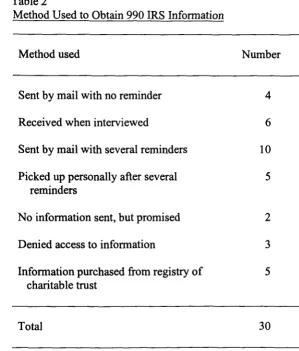
Method Used to Obtain 990 IRS Information
Organization Types by Primary Service Provided
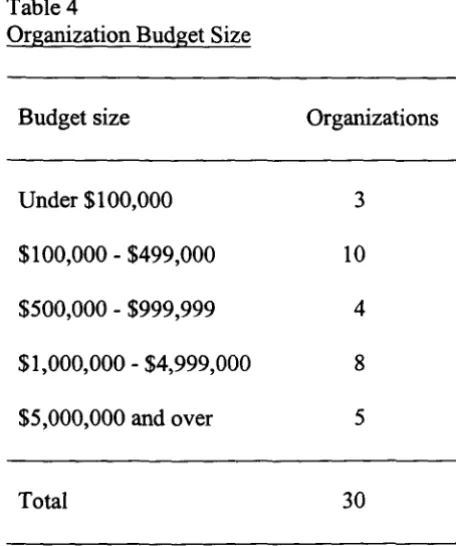
Organization Budget Size
1996 Revenue from Government, Corporate, and Foundation Grants, and Individual Donations
1997 Revenue from Government, Corporate, and Foundation Grants, and Individual Donations
1998 Revenue from Government, Corporate, and Foundation Grants, and Individual Donations
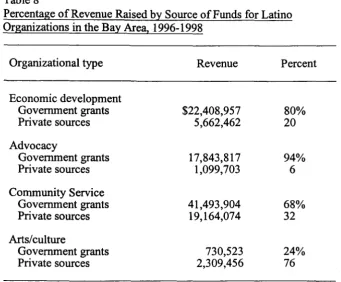
Percentage of Grant and Donation Revenue by Source of Funds for Latino Organizations in the Bay Area, 1996-1998
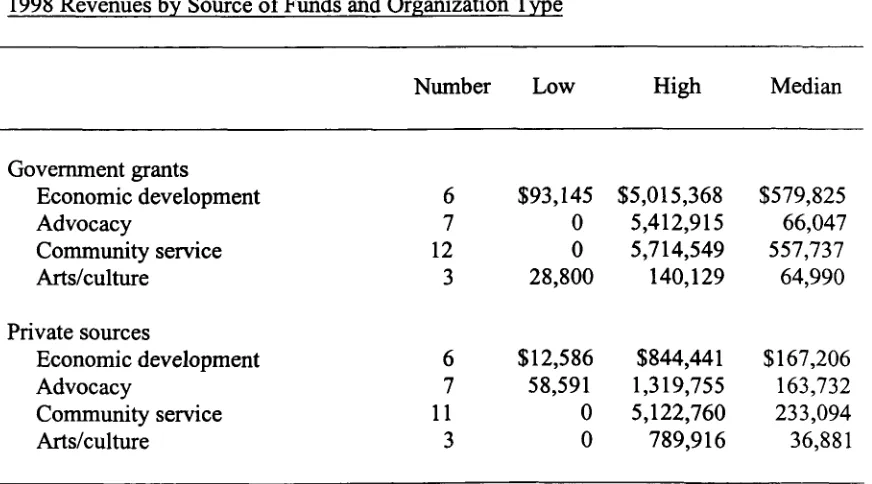
1998 Grant and Donation Revenue by Latino Organizations by Source ofFunds and Organization Type
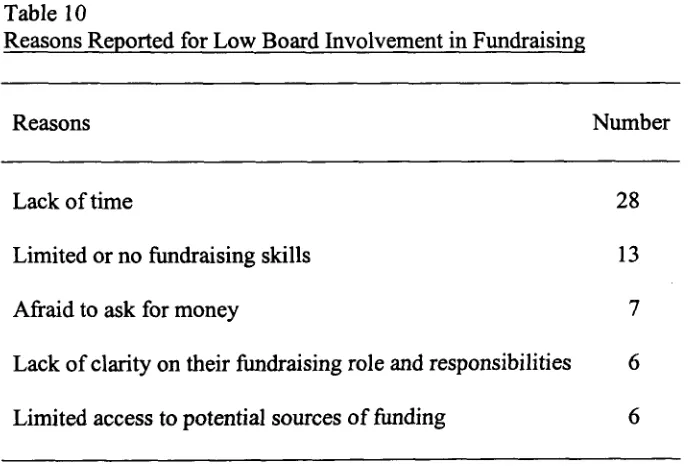
Reasons Reported for Board Involvement in Fundraising
Topics in Fundraising for Board Members
Persons Assigned Primary Fundraising Responsibility
Problems Experienced by Executive Directors in Fundraising
Fundraising Obstacles
Technical Assistance Needs Reported by Respondents
Common Problems Encountered with Funders
1996 Revenue from Government, Corporate, and Foundation Grants, and Individual Donations for Bay Area Latino Nonprofits
Table D-3
TableD-4
TableD-5
TableD-6
TableD-7
1998 Revenue from Government, Corporate, and Foundation Grants, and Individual Donations for Bay Area Latino Nonprofits
Percentage of Grant and Donation Revenue by Source ofFunds for Latino Community Service Organizations in the Bay Area, 1996-1998
Percentage of Grant and Donation Revenue by Source of Funds for Latino Economic Development Organizations in the Bay Area, 1996-1998
Percentage of Grant and Donation Revenue by Source ofFunds for Latino Advocacy Organizations in the Bay Area, 1996-1998
Appendix A
AppendixB
Appendix C
AppendixD
LIST OF APPENDICES
Interview Questionnaire
Directory of Latino Organizations
Follow-up Letter Sent to all Respondents
CHAPTER I: INTRODUCTION
This research project is a qualitative study on the fundraising effectiveness of Latino
nonprofit organizations located in San Francisco, Oakland, and Berkeley. Specifically,
this project explores the fundraising effectiveness of Latino nonprofits in a number of
critical areas including:
•
•
•
Diversity of funding sources
Board involvement in fundraising
Organizational capacity, including the staffing pattern dedicated to
fundraising and the roles and skills of the executive director and
fundraising staff
• Technical assistance needs
• Relationships with the funding world
This study will provide a description of the fundraising strengths and weaknesses of
Latino nonprofits and shed some light on how they might become more effective and
secure a long-term future.
Thirty nonprofit organizations located in San Francisco, Oakland, and Berkeley were
randomly selected for this study. Personal interviews were conducted with the executive
directors, development staff, or the main contact on the board of directors.
Background
The Roots of Latino Nonprofits
The family and community values that Latinos share are a critical part of this
extended community in order to build systems of support or self-help efforts. For
example, self-help or mutualista organizations have been part of the Mexican American
and Chicano communities for more than a century (Cortes, 1987, 1999; Hernandez,
1977; Gallegos & O'Neill, 1991). These groups were created because of the social,
economic, and discriminatory conditions faced by people of Mexican origin.
Mexican-Americans and Chicanos formed self-help or mutual aid societies and pooled resources to
offer their members funeral benefits, low interest loans, etc. (Hernandez, 1977, p. 14).
According to Rodolfo Acuna, Chicano historian and educator, the mutualistas were
the oldest social organizations in the Chicano community, from which trade unions and
political associations came into being (Hernandez, 1977, p. 15). These mutual benefit
societies were similar to those immigrant aid and benevolent associations established by
Germans, Jews, Irish, African Americans and Asians in the United States. Mutual-aid or
self-help groups in Mexican-American urban neighborhoods provided people with
community life and collective self-help (Hernandez, 1977, p. 15). These mutual benefit
communities were an extension ofthe family unit (Hernandez, 1977, p. 15).
Mutual benefit societies were the predecessors oftoday's Latino nonprofit
organizations (Cortes, 1989, p. 7). Although each Latino nationality has a different
history of self-help, they all engage in self-help as a way to protect themselves against the
harsh conditions they face in the United States (Smith, Shue, Vest, & Villarreal, 1999;
Cortes, 1987, p. 7; Rivera, 1987, p. 393). Contemporary examples ofLatino self-help are
such national organizations as Mexican American Legal Defense and Education Fund
La Raza, and hundreds of local and regional organizations located throughout the
country.
Values still present in contemporary self-help efforts include: 1) kinship values
which are primary sources of support in times of need, and 2) traditional family values,
which in some cases can include members of the community who are not family relatives
(Smith, Shue, Vest, & Villareal, 1999, p. 146-148). Among immigrants these ties are
strengthened by the fact that they are immigrants in a strange country (Smith, Shue, Vest,
& Villareal, 1999, p.147);
Changing Times
Despite a strong self-help identity, times have changed for many of these Latino
nonprofits. The Latino community is one ofthe largest and fastest growing ethnic
communities in the United States. Now comprising 15 percent of the U.S. population, it
is estimated that Latinos will make up as much as 25 percent of the nation and become
the largest ethnic minority by the year 2050 (Campoamor & Diaz, 1999, p. 3). Yet, the
social problems facing Latino communities in the United States are critical. Twenty-nine
percent of Latinos live in poverty, 39 percent of Latino children are poor, and 66 percent
of children in female-headed households live in poverty (Cortes, 1999, p. 20).
As the numbers of Latinos in need have increased, so has the need to finance the
activities of Latino nonprofit groups. Latino nonprofits are a viable strategy for social
change and a significant mechanism to integrate Latinos into the country's economic and
political institutions (Cortes, 1999, p.18). Despite increasing awareness and actual grant
making from organized philanthropic institutions, funding to Latino communities
foundation grants (Cortes, 1991; Hispanics in Philanthropy, 1992; Ramos, 1990; Valdez,
1984). Most current data estimates that Latino foundation dollars have dropped sharply
to 0.9 percent ("No Profit from Foundations," 1999).
Many Latino nonprofits turn to the government for continued support of their work.
Government funding to Latino nonprofits began during the mid-1960s and early 1970s
through the implementation of the Equal Opportunity Act. As a result, many Latino
organizations became dependent on the financial support ofthe government (Cortes,
1987, p. 3). Although the government's partnership with Latino nonprofits has continued,
it has also suffered a great setback due to continued cuts and the lack of a targeted
coordinated funding effort towards this sector.
The private sector is often regarded as a critical source of funding for Latino
nonprofits. While there is much emphasis placed on building a stronger partnership
between the Latino nonprofit sector and private foundations and corporations, private
philanthropy has not played a large role in supporting Latinos-in fact, most foundations
and corporations do not make grants to Latino communities (Cortes, 1987, p. 4). One of
the few foundations that has provided long-term, consistent support since the 1960s has
been the Ford Foundation (Cortes, 1999, p. 10).
The Bay Area Latino Nonprofit Sector
Many nationalities comprise the Latino community of the Bay Area-among them
Mexicans/Chicanos, Guatemalans, and Salvadoreans. The Latino community has had an
impact on the cultural and economic structures of the region. One of the impact areas is
the nonprofit sector.
1992, the Hispanic Community Foundation published a study on Latino nonprofits. The
objective of their study was to assess the status of Latino nonprofit organizations and
their capacity to serve the growing needs of Latinos in the San Francisco Bay Area
(Hispanic Community Foundation, 1992, p. v). To date, this is still the only survey of its
kind in the Bay Area.
One ofthe eight areas that the study examined was the funding situation of Latino
nonprofits. Among the findings was the need for technical assistance in fundraising,
growth management, and strategic planning (Hispanic Community Foundation, 1992, p.
ix). The study also found that the major challenges faced by these organizations in the
area offundraising were insufficient funds, insufficient staff, and the lack oftrained
boards and staffs (p. ix).
The Hispanic Community Foundation study also states that the majority of Latino
nonprofit organizations have a diverse mix of funding sources and for the most part do
not rely exclusively on government funding (Hispanic Community Foundation, 1992, p.
x). The survey does not describe the proportion of sources of funding beyond foundation,
government, and corporate funding (p. 10). The report does state, however, that in
aggregate terms, the largest source of funding was the federal government, followed by
the state government (p. 10). According to this survey, the implication is that a Latino
nonprofit organization can receive 60 percent of its funding from one government source
and 40 percent from one foundation and still have diverse funding. Most fundraising
experts would urge these organizations to have a more diverse funding mix. Although
there is not a specific formula that prescribes the ideal funding mix, the general rule is
Organizations should not receive more than 30 percent of their funding from any one source. An organization could lose 30 percent of its funding and probably survive, though it would be difficult, but the loss of more than 30 percent of funding would put any organization in dire straights. (Klein, 1996, p. 22)
Furthermore, the Hispanic Community Foundation's study does not describe the
specific obstacles or challenges encountered by Latino nonprofits in the area of
fundraising. The survey states that the organizations indicated a need for technical
assistance in fundraising (Hispanic Community Foundation, 1992, p. ix) but did not
specify the type or areas of such assistance. In addition, the study does not describe
whether Latino nonprofits have been affected by government cutbacks and by the low
foundation giving to this sector.
Statement of the Issue
Institutions are established organizations that function over extended periods of time.
Although organizations constantly change and grow, some manage to evolve and adapt
their structures for the long haul. Longevity alone does not guarantee institutionalization.
For institutionalization to take place, the management practices of these groups need to
become permanent and standardized, their effectiveness needs to be measurable, and their
financial situation needs to be secure.
The process of institutionalization among Latino community groups is naturally a
difficult one. Not only is it important to fulfill a need in the community and secure
political support for the organization, it is equally important to obtain a solid financial
base. Financial stability often takes years to achieve. However, many nonprofits do not
focus their efforts on achieving long-term financial stability; because of their multiple
69; Drucker, 1989, p. 89; Gallagher & Weinberg, 1991, p. 29; Mason, 1984, p. 97). Yet,
according to the legendary management expert Peter Drucker, without a substantial
surplus of money the nonprofit has little room for action (Emsthal, 1989, p. 23). The
nonprofits that pursue bolder financial strategies tend to be older, more established, and
have greater fundraising savvy. These nonprofits also tend to have an established
fundraising program, as well as a diverse funding mix (Klein, 1996; Setterberg &
Schulman, 1985, pp. 106-107).
For Latino nonprofits financial stability is also an issue. The 1992 Hispanic
Community Foundation survey on Latino nonprofits concluded that despite continued
organizational growth, the funding of Latino nonprofits is critically low (Hispanic
Community Foundation, 1992, p. ix). The study also revealed a trend of diminished
corporate and foundation funding (p. x), such that corporate and foundation funding
combined did not even equal the high levels of government funding (p. 1 0).
We have reason to be concerned for the long-term health of the Latino nonprofit
sector. Despite increasing awareness and actual grant making from organized
philanthropic institutions, funding to Latino communities continues to be low. Research
indicates that foundation dollars targeting Latino communities have dropped sharply to
0.9 percent ("No Profit from Foundations," 1999). The literature reviewed also suggests
that government funding towards Latino nonprofits has suffered a setback due to
continued cuts and the lack of a targeted coordinated funding effort towards this sector.
Given this funding context, a valid question arises: How effective are Latino nonprofits in
raising donations from individuals and government, corporate, and foundation grants?
in the Bay Area as measured by the diversity of their funding sources, the level ofboard
involvement in fundraising, organizational capacity, technical assistance needs, and by
the strengths of their relationships with the funding world.
Normative Definitions ofRelevant Variables
The definitions that are important to this study are:
Dominant culture: In the case of the Latino community living in the United States, the
dominant culture is the Anglo culture because it is this sector of society that sets the
norms for political, social, and economic behavior in this country.
Exposure to traditional fundraising techniques: This term refers to the level of
knowledge that a group has regarding mainstream fundraising methods, e.g., direct mail,
major donor solicitations, foundation proposals, and government grant writing.
Funding mix: The combination of sources of funding that support a nonprofit
organization. Possible sources of funding may be: foundation, church, and corporate
grants; city, state, and federal government grants; and individual donations.
Fundraising: Raising money in the form of grants and donations from corporations,
foundations, government, and individuals to support the mission of a nonprofit
organization (Seltzer, 1987; Klein, 1996).
General support/unrestricted funding: Grants that are given to a nonprofit organization
by the government, corporations, and/or foundations to support the general work and
goals of the organization.
Grassroots: Generally refers to organizations representing a broad range of people and
reflecting their interests.
IRS 990 form: Form filed annually with the Internal Revenue Service (IRS) by all
nonprofit organizations with an income of $25,000 or more. The information filed
reports all annual revenue and expenses during the year.
Latino: Latino refers to cultural heritage originating in Latin America and transferred to
the United States. However, some Latinos have historical roots orginating in the United
States, as is the case for Chicanos, Mexican-Americans, and Puerto Ricans. This term
may also refer to Indian and Black aspects of Latino culture.
Nonprofit organization: An organization whose purpose is to provide a service (including
arts and culture) or solve a social problem, on behalf of the public. Nonprofit
organizations are those groups given tax-exempt status by the Internal Revenue Service,
and which are classified under section 501(c)(3) ofthe Internal Revenue Code.
Large nonprofit: An organization with an expenditure and revenue level of one million
dollars.
Medium nonprofit: An organization with an expenditure and revenue level that is less
than one million dollars and more than $500,000.
Small nonprofit: An organization with an expenditure and revenue level that is less than
$500,000.
Latino nonprofit: An organization managed by Latinos that seeks to serve the Latino
community.
Project related/restricted funding: Grants given to a nonprofit organization by a grantor
to underwrite a particular endeavor that is of value to its constituency and fulfills the
Resources: In the case of a nonprofit organization, this term refers to the goods, services,
and money required to fulfill the mission of the organization. However, in this study the
resources that will be examined are the monetary resources received by the organization
to develop its mission in the form of grants from foundations, corporations, and
government as well as donations from individuals.
Self-help organizations: Groups that care about or contribute to the advancement of the
members of their group.
Social and economic stressors: These terms refer to the problems that many Latinos
confront in this country. Some of the stressors are lack of housing, food, jobs, money,
education, health, and the disruption of family roles and structures.
Systems of support: Groups and networks that help people cope with their problems,
including self-help Latino nonprofits, churches, family, informal groups, the extended
family, and the Latino community at large.
Specification of Research Question
How effective has the Latino nonprofit sector in the Bay Area been in raising
donations and grants? How diverse is the funding mix of Latino nonprofits? funding
mix? Have Latino nonprofits been able to develop their internal capacity to conduct
fundraising? What are the external/internal factors-such as relationships with the
funding world, and the roles of the executive director, board, and other staff-that
contribute to the fundraising effectiveness of Latino nonprofits? What impediments to
fundraising are faced by the Latino nonprofit sector? What types of technical assistance
are needed by Latino nonprofit organizations to build their internal fundraising capacity?
experience of 30 Latino nonprofit organizations located in the cities of San Francisco,
Oakland, and Berkeley. The researcher is assuming that Latino nonprofit organizations
are those that are managed by and serve Latinos. It is also assumed that the resources
referred to in this study are monetary donations received in the form of grants and
donations, including general support and project related funding. It is understood that
project related funding (or restricted funding) are grants or donations given to a nonprofit
organization to underwrite a particular endeavor while general support funding (or
unrestricted funding) are grants or donations given to support the general work and goals
of an organization.
Importance of the Study
This study focuses on Latino-based and managed nonprofits. It is an attempt to
describe how Latino-managed nonprofit organizations that serve the Latino communities
of the Bay Area raise money through grants and donations. This research project also
describes the extemaVintemal factors and impediments that influence the fundraising
process in these organizations.
So far as is known, this is the only study available on this subject. As such, this
project highlights a segment of the nonprofit sector that is little known and that has been
a persistent advocate for the welfare of Latinos. Many of the organizations included in the
study have been serving the community for several decades.
The organizations included in this project provide living testimony that self-help and
philanthropy are alive and thriving in the Latino community. The work performed by
Latino-managed organizations challenges the common perception that Latinos are
The self-help initiatives of Latinos need further recognition and financial support
from society in the United States if they are to thrive in the new millenium. It is
imperative for society at-large that Latino nonprofits further develop their financial
strength so the continuity of a broad array of services is guaranteed in the future. Latino
nonprofits are an important source of opportunities for the advancement of thousands of
Latino individuals and families who wouldn't have access to these opportunities
otherwise.
More importantly, a description of the obstacles faced by Latino nonprofit
organizations in their fundraising efforts should shed light on understanding ways to
assist them. The findings of this project can be used in developing training and technical
assistance as well as future funding initiatives for Latino nonprofits. Future funding
initiatives, technical assistance, and training are just a few strategies that can be used to
develop greater organizational capacity and financial strength in the Latino nonprofit
CHAPTER 2: LITERATURE REVIEW
Introduction
Research on the activities of Latino nonprofit organizations nationwide is limited.
The accomplishments and difficulties experienced by Latino organizations are for the
most part unknown. However, these groups continue to thrive and provide much-needed
services.
In the San Francisco Bay Area, Latino nonprofits have been functioning for a long
period of time. A few ofthese groups have been in existence since the 1930s and 1940s,
as in the case of the Sociedad Mutualista Morelos based in South San Francisco
(Hispanic Community Foundation, 1992, p. 6). Other examples oflong-standing Latino
nonprofits in the Bay Area are: The American G.l. Forum in San Jose, the Community
Services Organization, and the Mexican American Political Association (MAP A)
(Hispanic Community Foundation, 1992, pp. 6-7).
In its 1992 survey of Latino nonprofits in the Bay Area, the Hispanic Community
Foundation reported the existence of215 such organizations locally (Hispanic
Community Foundation, 1992, p. 2). The Hispanic Community Foundation's survey is
one of the few comprehensive studies on this topic. Their survey is the only partial
reference that exists regarding the fundraising activities of Latino organizations in this
region.
Support for Latino nonprofits during the past 15 years has fluctuated between .75
percent and 2 percent of all the money granted by private foundations (Cortes, 1991, pp.
144-5). Most recently, according to the Foundation Center, despite an increase in
have dropped sharply, from 2 percent to 0.9 percent of the foundation total ("No Profit",
1999, p. 20). Moreover, throughout its existence the Latino nonprofit sector has
depended primarily on non-Latino sources of funding, namely the government and a few
large foundations such as the Ford Foundation (Cortes, 1999, p. 10; Nicolau and
Santiestevan, 1991).
Government support has been the main financial alternative for Latino nonprofits.
During the mid- and late-1960s many Latino nonprofits were created through the
implementation of the Equal Opportunity Act (Cortes, 1987, p. 3). The federal "War on
Poverty" assisted many Latino nonprofit organizations devoted to the integration of
Latinos through self-help and self-determination efforts (Cortes, 1987, p. 3). During the
past 15 years, however, the federal government has phased out EOA support to the
nonprofit sector so that there is no longer any comprehensive coordinated federal effort to
assist the Latino nonprofit sector. What remains is a set of federal grant programs that
are available to all nonprofits (Cortes, 1987, p. 4). Today, Latino nonprofits are funded
by a mix of federal, state, and local government programs. Periodically, the government
announces more cuts at all levels of support. The impact of government cutbacks on the
Latino nonprofit sector has not been assessed.
Locally, government support of Latino nonprofit organizations in the Bay Area grew
from 1991 to 1992 by 17.3 percent (Hispanic Community Foundation, 1992, p. 11). The
Hispanic Community Foundation also claims that Latino nonprofits in the Bay Area are
not dependent on government funding (Hispanic Community Foundation, 1992, p. x),
supporting this assertion by reporting on the variety of funding sources received by
sector is the government (Hispanic Community Foundation, 1992, p. 10). Sources of
private support received by Bay Area Latino organizations are much less diverse than
government funding sources. Government support to this sector should be further
analyzed in light of the continuous cutbacks in government funding programs and their
impact on Latino nonprofits (Cortes, 1987). Given these circumstances, and the fact that
private philanthropic support to this sector is low, how effective are Latino nonprofit
organizations in the area of fundraising?
This literature review covers several related topic areas that will brief the reader on
the subject offundraising and Latino nonprofits. This section ofthe study also explores
why there is a need for Latino nonprofits, their historical roots, and the reasons for
funding these groups, while emphasizing that Latino nonprofit organizations share many
experiences with their counterparts in other ethnic communities in the United States.
An informed study on the fundraising effectiveness of Latino nonprofits must review
some general fundraising literature of the nonprofit sector. Key fundraising concepts and
models typically embraced by nonprofit organizations are defined and summarized, and
the concept of a healthy funding mix is described, so that the reader may gain an
understanding ofthe language and concepts used throughout this study. Description of
the functions of the executive directors, staff, and board of directors in the fundraising
process are also included.
The concluding section of this literature review covers the fundraising history of
Latino nonprofits, traditional sources of funding, and strategies that have been used by
these organizations over the years. Specific challenges and problem areas impeding the
It should be emphasized that information regarding the fundraising effectiveness of
Latino nonprofits is limited. The only such study is the 1992 Hispanic Community
Foundation's survey of Latino nonprofit organizations in the Bay Area. More information
exists on the topic of foundation giving to Latino communities. However, there is no
information on their staffing patterns, involvement of board members, the effectiveness
of their funding relationships, or other challenges that Latino organizations face in the
area of fundraising.
Reasons for Funding Latino Nonprofit Organizations
Many authors agree that there is a need for Latino nonprofits. These authors
generally reaffirm the notion that Latino nonprofits are capable of providing services that
are more culturally and linguistically relevant (and therefore more effective) to the
growing community of Latinos in the United States (Hispanic Community Foundation,
1992; Cortes, 1987, 1991, 1999).
By the end of the year 2004, the Latino community will be the largest ethnic
community in the United States (U.S. Bureau ofthe Census, 1996; Cortes, 1999). By the
year 2050, Latinos will comprise one out of four U.S. residents (U.S. Bureau ofthe
Census, 1996: Cortes, 1999). Yet the problems this community faces are serious. The
national Latino poverty rate is 25.6 percent-more than triple the rate for non-Hispanic
whites (U.S. Bureau ofthe Census, 1997). In education, the statistics are equally
sobering. Only 54 percent ofLatino adults have a high school education (Cortes, 1999,
p.2). The National Center for Education Statistics (NCES) reported that nearly one-third
of all Latinos between 16 and 24 years of age have dropped out of high school and that in
are continuing on to college and earning a bachelor degree (NCES, 1997, p. 13; NCES,
1996, p. 276).
Latino organizations have played a primary role in improving the social, political,
and economic conditions ofLatinos at the local, regional, and national levels (Cortes,
1999, p. 18). Latino nonprofits provide services to Latino communities in such fields as
job employment placement and training, community economic development, education,
housing, social services, legal assistance, public policy research and advocacy, cultural
programs, and the arts. These services help strengthen the well-being of Latino
communities and enable them to participate effectively in the mainstream of U.S. life
(Cortes, 1999, p. 18 ).
The History of Latino Nonprofit Organizations
Self-help efforts are created by ethnic communities as a way to keep their identity in
a complex society (Weber, 1982, p. 17). In analyzing the history of several ethnic groups
in the United States it is not surprising to find a rich tradition of self-help. Despite this
tradition, there has been little acknowledgement of self-help efforts of ethnic
communities living in the United States.
There are obviously many differences in the ways ethnic groups create self-help
efforts. In the development of self-help organizations among Latinos, the primary
motivation has been to achieve mutual protection (Rivera, 1987, p. 393). The majority of
Latino organizations have developed their self-help efforts because of the adversities and
lack of opportunities that Latino communities faced.
Many nationalities comprise the Latino population of the United States, and multiple
on this subject traces mainly the Mexican American and Puerto Rican roots of Latino
nonprofits. The philanthropic influence of more recent immigrants from Cuba, Central,
and South America is not as fully documented. However, this study will cover some of
the material found on the philanthropic traditions of Central Americans as well as
Mexicans and Chicanos. The history of Latino nonprofits sheds light on the constant lack
of financial resources available to this sector. Furthermore, reviewing the roots of Latino
nonprofit organizations is important because it illustrates why these organizations are
needed.
The situation ofMexican Americans as minorities in the United States and the
establishment of their voluntary organizations can be traced to 1848. In that year, the
Treaty of Guadalupe Hidalgo ended war between Mexico and the United States, and
Mexico ceded large territories ofthe American Southwest to the U.S. People of Mexican
origin living in those territories suddenly became an ethnic minority subject to the United
States government with a dominant Anglo culture (Gallegos & O'Neill, 1991, p. 3;
Camarillo, 1991, p. 15; Hernandez, 1977, p. 14). Mutual benefit groups or mutualista
associations were formed as a result of Anglo culture becoming the dominant culture in
the southwest (Gallegos & O'Neill, p. 3; Camarillo, p. 16; Hernandez, p. 14). The mutual
aid associations provided cultural continuity and ethnic identity to Mexican-American
communities during a period of dramatic change (Camarillo, 1991, p. 17). Jose
Hernandez claims that in some cases, the mutualistas acted as an unofficial government
(Hernandez, 1977, p. 15).
Much like their contemporary counterparts, the mutualista associations were formed
the Alianza Hispano Americana, founded in 1894, served the cultural and social needs of
the Tucson Mexican-American community (Camarillo, 1991, p. 17) and, at the same
time, was formed to counteract discrimination (Camarillo, p. 17; Rivera, 1977, p. 390).
Due to the political and economic circumstances of the mid- to late 19th century, the
mutualista associations were forced to have a multifaceted approach in serving the
Mexican-American communities (Camarillo, 1991, pp. 17 -18). This approach secured a
certain degree of stability for Mexican-Americans during periods of difficulty. Due to
limited financial resources available and the high level of community needs
contemporary Latino organizations have been forced to adopt a multi-faceted approach to
their work, often delivering multiple services to all Latino age groups and conducting
advocacy efforts on behalf of the community.
As the number of Mexicans in the United States increased in the beginning of the
20th century, new kinds of organizations developed. According to Armando Navarro,
three types of organizations emerged after 1910: 1) social action organizations; 2) mutual
benefit associations; and 3) unions (Navarro, 1974, p. 62). Social action organizations
were formed by small businessmen from the emerging Chicano middle class. These
groups were mainly interested in "Americanizing" their constituents and fought against
discrimination and other injustices for this reason (Navarro, 197 4, p. 62). The two most
important social action organizations during the early part of the twentieth century were
La Orden de los Hijos de America (OSA) and the League of United Latin American
Citizens (LULAC) (Navarro, 1974, p. 62).
Albert Camarillo states that mutual aid organizations "were responsible for the
especially during the 1920s and 1930s" (Camarillo, 1991, p. 20). Mutual aid societies
took the lead in organizing Chicano workers into unions to counter the discriminatory and
exploitative conditions that many Chicano workers faced. For example, a federation of
mutual aid societies from throughout southern California gathered in Los Angeles and
formed the first Mexican-American labor union in 1928, La Confederacion de Uniones
Obreras Mexicanas (Camarillo, 1991, p. 20).
In the 1940s Chicano organizations gained new influence as some of them were able
to access foundation support and government contracts (Camarillo, 1991, pp. 23-4).
During the 1950s two other organizations emerged that engaged in political action- the
Mexican American Political Association (MAP A) in California, and its counterpart in
Texas, the Political Association of Spanish-Speaking Organizations (PAS SO) (Camarillo,
1991, p. 25; Navarro, 1974, p. 69). These two organizations were overtly political in
their orientation and objectives. The organizations during this period paved the way for
others that emerged during the Chicano Movement in the 1960s. Many of them
continued but were eclipsed by the groups that were founded in the 1960s.
During the 1960s and 1970s there was a dramatic increase in the number of nonprofit
groups serving Chicanos (Camarillo, 1991, pp. 23-24).
Chicano participation in the civil rights movement of the 1960s fostered the
development of many organizations that adopted a variety of approaches, ideologies, and
objectives. The Chicano movement involved a larger number of activists, leaders, and
organizations than any previous period of Chicano history (Camarillo, 1991, p. 26).
While the values of these new organizations were not very different from those oftheir
organizations during the 1960s and 1970s.
Some ofthe organizations created during the 1960s were the United Farm Workers
(UFW), El Movimiento Estudiantil Chicano de Aztlan (MECHA), the Alianza Federal de
Pueblos Libres, and The Crusade for Justice. The 1960s also saw the creation of the
Mexican-American Legal Defense and Educational Fund (MALDEF) and the National
Council ofLa Raza (Camarillo, 1991, p. 28), two organizations that have survived to this
day. Both of these groups, as well as many others, obtained grants from federal
government agencies, corporations, and private foundations (Camarillo, 1991, p. 27).
The Ford Foundation provided the initial funding for many of these organizations through
its Hispanic Initiative (Camarillo, 1991, p. 27; Ylvisaker, 1991, p. 162; Nicolau &
Santiestevan, 1991, p. 51; Gallegos & O'Neill, 1991, p. 4). Despite the availability of
funding support, several authors concur that many of the groups that were formed during
this period were debilitated and later disappeared due to the lack of resources and
full-time paid staff (Navarro, 1974, p. 79; Nicolau & Santiestevan, 1991, p. 52). This trend
continues to this day and has been exacerbated by the termination of many government
programs and the lack of interest in Latino nonprofits on the part of private foundations
and corporations. Several authors agree that the growth and survival of the Latino
nonprofit sector will depend on its ability to attract financial resources from the
government, corporations, and foundations (Cortes, 1999, p. 40; Gallegos & O'Neill,
1991, p. 12; Camarillo, 1991, p. 32; Ylvisaker, 1991, p. 166).
Smith et al. (1999) observed that much ofthe giving and volunteering among recent
Guatemalan, Salvadorean and Mexican immigrant communities in the San Francisco Bay
second-generation Guatemalan woman interviewed in the 1999 study by Smith et al. stated
"Latins do not follow the American model of charity; we do not give to strangers."
Giving money or time to organizations is regarded with mistrust in these communities
because they are seen as large, impersonal organizations operated by strangers and
benefiting strangers (p. 150). The study found that almost all giving and volunteering
within these communities was on a personal basis and consisted of offering goods, money
and services (p. 150). The implication of this finding for Latino nonprofit organizations
is an interesting one and requires further research to determine if a high number of Latino
organizations are successful in raising donations from Latinos. This study will examine
the types of support Latino nonprofit organizations obtain from the general public,
including donations obtained from Latinos.
Most recently, Michael Cortes analyzed data from the Internal Revenue Service to
measure the formation of Latino nonprofits and found 4,068 organizations, half of which
are located in the states of California, Texas, or New Mexico (Cortes, 1999, p. 26).
Cortes reports that the rate of formation of new Latino nonprofits now exceeds 300 per
year (Cortes, 1999, p. 27). Bearing this information in mind, where are these
organizations obtaining funding? Is the funding base of Latino nonprofits diversified?
The documentation found suggests that the contemporary history of Latino nonprofits has
been affected by the lack of financial resources, which has had a significant impact on the
effectiveness and scope of these organizations. The statistical profile of Latino nonprofit
organizations compiled by Cortes states that almost 62 percent of all Latino organizations
nationwide have budgets of less than $25,000 and are not required to report their income
refers to financial solvency in a peripheral manner and does not directly deal with the
effectiveness and capacity of Latino nonprofit organizations to conduct fundraising,
which is the focus of this study.
Fundraising Organizational Capacity and Models Available to Latino Nonprofits
Based on the available literature, it is unclear how many Latino nonprofit
organizations engage in building their infrastructure and ski11s to conduct fundraising.
One of the purposes of this study is to describe how Latino nonprofits in San Francisco,
Oakland, and Berkeley have built their infrastructure and board and staff skills to raise
grants and donations.
A fundraising operation must have the required fundraising know-how (technical
skills) as well as the institutional skills to set a strategic vision and build the
organization's infrastructure for the long haul, while guaranteeing that the original vision
of the organization is maintained throughout the fundraising process. Catering to funding
sources requires technical and institutional skills. Successful nonprofit managers apply a
variety offundraising skills, marketing skills, and interpersonal skills to obtain funding.
"No other sector [besides the nonprofit sector] seems to put such diverse demands on
managers to maintain organizational sources of sustenance and growth" (O'Neill &
Young, 1988, p. 6). This study will describe the roles and skills of the board of directors,
executive director, and staff involved in fundraising in Latino nonprofit organizations.
Maria Gonzalez Borrero argues that the biggest challenge for Latino nonprofit
organizations "is to balance direct service and institutional change while improving the
management and internal operations ofthe organization" (Borrero, 1991, p. 116). She
administrative structures and organizational strategies" because they fear becoming
distant bureaucracies removed from serving the interests of their communities (Borrero,
1991, pp. 116-117). Therefore, promoting an institutionalization agenda among these
organizations may be complicated. However, some of the problems experienced by these
groups require skills that are "firm and fixed" and can still allow the organization to serve
the interests of its community. Firm and fixed fundraising skills, strategies, and staffing
are necessary to ensure effectiveness and organizational continuity in this area of work.
Many nonprofit organizations are limited by their lack of expertise in raising money,
or by an infrastructure insufficient to allow them to develop time-consuming fundraising
strategies. Such limitations are often found among Latino nonprofit organizations.
Furthermore, many nonprofit leaders and staff find fundraising distasteful or, at the very
least, frightening (Klein, 1996, pp. 44-45 & 152-156). This attitude stifles the
fundraising effort of any organization and limits its ability to become financially stable.
It is unclear to what degree these aversions hamper the fundraising of Latino nonprofits,
but this study will explore this question.
The main attitude that limits the fundraising possibilities of many nonprofits is the
fear many people feel when asking for money. Many of us were taught that asking for
money is rude, even a forbidden topic (Klein, 1996, p. 153). As Kim Klein (1996) says,
we forget that "Money in itself has no good or evil qualities. It is a substance ... it has
no morality" (p. 153).
In the nonprofit sector, money is also often taboo. By definition, a nonprofit
organization does not focus on its financial profits; it provides benefits and its success is
goals exclude monetary objectives because there is a prevalent attitude that a nonprofit
organization is a noneconomic entity (Mason, 1984, p. 90; Emsthal, 1989, p. 23;
Gallagher & Weinberg, 1991, p. 29; Dabbs, 1991, p. 69). This ambivalence about money
results in financial considerations not always being given the attention they deserve. This
can lead to problems with an organization's efficient use of resources and problems with
its fundraising efforts (Mason, 1984, p. 97). Without careful planning to raise the
financial resources required to operate a nonprofit organization, many of these groups
won't survive long-term. Failure to follow sound fundraising practices among Latino
nonprofit organizations may partially explain the serious shortage of financial resources
available to these groups.
Numerous books outline the strategies employed by nonprofit organizations to raise
money. Most of these books also advise nonprofits to develop a budget, articulate an
annual fundraising plan, involve the board in the fundraising process, and assess the
organization's capacity to develop the fundraising plan (Klein, 1996, pp. 314-321;
Flanagan, 1982, pp. 32-35; Seltzer, 1987, pp. 399-402; Setterberg & Schulman, 1985).
This study will assess whether the Latino nonprofits targeted for this study follow some
of these important fundraising models, and if so, to what degree the models contribute to
greater fundraising effectiveness.
The Fundraising Plan
This study examines how many Latino nonprofit organizations use an annual
fundraising plan or other planning tools to conduct fundraising, and the impediments they
experience in pursuing their stated goals.
essential part of the fundraising process. The fundraising authors reviewed are strong
advocates for long-term fundraising plans as necessary preparation for any sound
fundraising effort (Klein, 1996, pp. 314-321; Flanagan, 1982, pp. 281-291; Setterberg &
Schulman, 1985, pp. 108-13; Seltzer, 1987, pp. 400-456). The reason for a fundraising
plan is simple: it will help the organization raise more money in less time (Klein, 1996, p.
314; Flanagan, 1982, p. 281). Planning will help an organization think about its goals,
opportunities, and risks during the fiscal year, or even longer if the organization engages
in long-term planning (Flanagan, 1982, p. 283).
Much like the organization's budget, a fundraising plan is a management tool that
helps the organization monitor its fundraising efforts by setting specific income goals and
selecting the fundraising strategies that will to be used to raise money. The fundraising
plan is meant to be revised during the year as events evolve that might determine the
amount of money that can be raised. If the fundraising plan is properly used it will help
the organization evaluate its progress (Setterberg & Schulman, 1985, p. 102). In
addition, well-constructed plans can have a positive impact on funders. Many funding
sources will be pleased to see the organization thinking ahead and will reward the group
for its initiative (Setterberg & Schulman, 1985, p. 102).
What is a Healthy Funding Mix?
A diversified funding base is one of the main goals of any fundraising effort; it is the
key to the organization's financial stability. There is no specific formula that defines the
ideal funding mix. This study will examine carefully the issue of a diversified funding
mix among Latino nonprofit organizations.
nonprofit organizations are no exception. Setterberg and Schulman stress that before the
1970s many nonprofits did not think about continuity in fiscal planning (Setterberg &
Schulman, 1985, p. 107). Today, it has become more competitive to obtain government
and foundation resources. To grow and flourish, nonprofit groups must now look to a
variety of fundraising methods they may have previously ruled out, including direct mail
and membership campaigns, canvassing, personal recruitment of major donors, or
planned giving (Setterberg & Schulman, 1985, p. 107). Generally, the returns from these
fundraising efforts will bring peace of mind to a growing organization during times of
emergency and will offer the possibility of becoming independent from the program
priorities of any one funder. Fundraising success also builds a positive image among an
organization's constituents (Klein, 1996, p. 21; Setterberg & Schulman, 1985, p. 107).
Board Involvement in Fundraising
Little is known about how much leadership boards of directors of Latino nonprofit
organizations exercise in the area of fundraising; nor is much known about how well
trained or experienced they are. The quality of fundraising and management skills among
Latino nonprofit organization executive directors is also largely unknown. This study
will explore these questions in some depth.
Involving an organization's board of directors in the fundraising process is
considered by many authors on the subject an essential element in raising and
diversifying the organization's funding base (Flanagan, 1982, p. 36-37; Klein, 1996, p.
44-45; Setterberg & Schulman, 1985, p. 13; Seltzer, 1987, p. 41). Several of these
authors contend that each board member should make an annual financial contribution to
regarded by potential supporters as the people who should be most committed and
dedicated to the organization (Setterberg & Schulman, 1985, p. 13; Seltzer, 1987, p. 41;
Klein, 1996, p. 44). Equally important, the board should be involved in requesting
money for the organization. The staff's role in fundraising should support the board's
efforts. Klein (1996) writes that staff should:
help plan fundraising strategies, coordinate fundraising activities, keep records, take care of routine fundraising such as renewal appeals, and assist board members by writing letters for them, form fundraising plans with them and accompany them to solicitation meetings. Fundraising staff provide all the backup needed for effective fundraising (p. 45).
The central message found in the literature reviewed is that the board of directors is
responsible for the well-being of the organization and for its success and should be taking
a leadership position in raising money. Although most of the literature stresses board
involvement in fundraising, some of the authors acknowledge the fact that many board
members dislike asking for money and are reluctant to take leadership in this area (Klein,
1996, p. 44; Flanagan, 1982, p. 37). These authors suggest that fundraising training for
board members is a key to overcoming their fear of asking (Klein, 1996, p. 44; Flanagan,
1982, p. 37).
The Roles of the Executive Director and Staff in Fundraising
This study will examine the priority given by Latino nonprofit organizations to
raising funds and their level of effectiveness in doing so. The roles exercised by Latino
nonprofit executive directors, development directors, and other staff in the area of
fundraising will be described.
The executive director of any nonprofit is the institutional builder of the
organization and to make sure it is carried out in every aspect of the organization's work.
It is imperative that this vision be included in the fundraising work of the organization.
The executive director develops the program and organizational strategies including
fundraising strategies with the assistance of the staff. The executive director is a key
member of the fundraising committee, which also includes members of the board and
development staff.
The special functions of executive directors in the nonprofit world place them in a
leadership position among funders and the community in general. Latino executive
directors are also regarded as leaders within their community. In the literature available
on Latino nonprofit organizations, there is no specific reference to the managerial skills
of Latino executive directors. Therefore, this study will refer to the information available
about executive directors for all nonprofit organizations in general.
Executive directors are expected to be both managers and leaders. The literature
available on management and leadership offers a wide array of interpretations for
characterizing leaders and managers. A strong vision and values are necessary
ingredients for people to follow leaders (Bennis, 1989; Cox, 1990; Kiechel, 1994;
Badaracco & Ellsworth, 1990). A strong organizational vision needs to be present in all
the different aspects of the nonprofit's work and plays a significant role in the
organization's fundraising efforts. An organization that lacks a compelling, challenging,
meaningful, worthy, and credible vision will have problems raising funds. People must
believe that it is possible to succeed in the pursuit of the vision. Organizational vision is
in part communicated by the leader's expectations, behavior, and activities that are
There are two schools of thought among fundraising experts regarding the
involvement of the rest of the staff in the fundraising process. Some authors state that the
work of the fundraising committee is usually coordinated by staff (Setterberg &
Schulman, 1985, p. 20). In this model, the staff is also involved in asking for money as
well as in the planning and development of fundraising projects. Other fundraising
experts contend that asking for money should be left exclusively to the board of directors
(Flanagan, 1982, p. 36). The reason for this role division, says Flanagan (1982) is
because:
[p ]ower in any organization goes to the people who raise the money. For this reason, most groups recommend that the board of directors and the members raise the money, rather than paid staff. If the board raises the money, it can hire and fire the staff and can control the plans of the organization (p. 36).
The role ofthe staff is to prepare fundraising materials, do the record keeping, and,
most importantly, train the leaders in fundraising techniques (Flanagan, 1982, p. 37). The
board fundraising model poses some practical problems for a nonprofit organization.
First, it doesn't address the role of the executive director, who, like the board of directors,
is in a leadership position, and as such has an important vision to communicate and
presumably fundraising contacts to share. Second, because of their leadership position in
the community, board members are generally busy people who have conflicting schedules
and may have competing fundraising responsibilities that can often translate into a lack of
follow-through. Third, the board fundraising model does not address who is in charge of
inspiring, motivating, and coordinating the fundraising work of the organization. These
tasks are generally time consuming, but are necessary to the success of any fundraising
development staff. It is common, however, to find many nonprofit organizations without
a development staff, as is the case in many Latino nonprofit organizations. In the absence
of a development staff, the fundraising responsibility is generally shared by the executive
director and key board members.
The Fundraising History of Latino Nonprofits
The literature describing the fundraising history ofLatino nonprofits is scant. Yet,
the information available stresses that philanthropic support of Latino nonprofit
organizations was practically nonexistent 30 years ago (Cortes, 1987, p. 3). Latino
nonprofits have received funding from different sources of support since that time.
During the 1960s and well into the 1970s federal "War on Poverty" programs and the
Ford Foundation's Hispanic Initiative provided vital grants that led to the creation of
many present-day Latino nonprofit organizations (Cortes, 1999, p. 1 0). Furthermore, the
Latino nonprofit sector has depended on non-Latino sources of funding (Cortes, 1999, p.
10; Nicolau and Santiestevan, 1991). Government and a small number oflarge
foundations (e.g., the Ford Foundation) constitute most ofthat support (Cortes, 1999, p.
1 0). In the last decade, corporate contributions have played an important role (Cortes,
1999, p. 10).
Over the last 20-years cutbacks in federal and government support have affected the
financial health of Latino nonprofits. Private, foundation funding for Latino nonprofits
has fluctuated between . 75 percent and 2 percent of all dollars granted by private
foundations ("No Profit", 1999, p. 20; Cortes, 1987, p. 4; Ramos, 1990, p. 4; Hispanics in
Philanthropy, 1992, p. 1; Nuiry, 1992, p. 22). The current proportion of foundation
Philanthropy as well as several authors on the subject of Latino philanthropy have
affirmed that private sector support to Latinos is exceedingly low in comparison to the
numbers ofLatino people in need (Hispanics in Philanthropy, 1999, p. 3; Nuiry, 1992, p.
21; Cortes, 1987, p. ii).
Presently, the giving trend from foundations nationally seems to be focusing on
project support grants.
Although there is little research on this point, it appears that funders prefer to support new, short-term service objectives within Hispanic communities, instead of supporting long-term survival of Hispanic self-help organizations, (Cortes, 1987, pp. 4-5)
The continued reduction of government funding to the nonprofit sector and the lack
of unrestricted foundation support, pose a severe threat to the long-term survival of
Latino nonprofits (Cortes, 1987, p. 5).
In the Bay Area, the Hispanic Community Foundation found in its 1992 report that
Latino nonprofits in the region were critically underfunded. Of the organizations
surveyed, 62.1 percent reported that funding levels had not kept pace with increased
demand for services (Hispanic Community Foundation, 1992, p. 15). The Fund reported
that diminished support from state and federal funding sources was the main reason
reported for funding decreases (Hispanic Community Foundation, 1992, p. 11). While
the Hispanic Community Foundation's study reports that the Bay Area Latino nonprofit
sector enjoys a healthy funding mix, it also reports that state and federal funding levels
are higher than corporate and foundation levels combined (p. 10). To assume that this
constitutes a healthy funding mix is erroneous. Further analysis regarding the number of
organization obtains the bulk of its funding from two major government sources and also
secures a minimal percentage of its funding from an array of private sources, it still is
dependent on government funding for its long-term survival.
The Fundraising Challenges Faced by Latino Nonprofits
The literature reviewed claims that one of the major challenges faced by Latino
nonprofits in the future will be meeting the needs of an impoverished community during
a period of limited financial resources. The pressure to diversify the funding base of
these organizations is necessary and critical (Borrero, 1991, p. 113; Estrada, 1991, p. 135:
Cortes, 1991, p. 139; Ylvisaker, 1991, p. 166). Paul Ylvisaker is hopeful regarding the
future ofLatino nonprofits in the area offundraising:
Necessity is the mother of invention, and the necessity is there. Leadership and sophistication continue to emerge in the Hispanic community. I am particularly struck by the emergence of assertive leadership and participation by Hispanic women ... Much of philanthropy's slowness to respond is due to donors'
unfamiliarity with Hispanic circumstances and needs. This knowledge gap arises less from hostility than from social distance separating donors and Hispanics. Closing the gap will require movement on both sides-more from the donor community because of its advantaged position. (Ylvisaker, 1991, p. 166)
Although creating donor sensitivity to the work of Latino nonprofits is necessary, it
will take time. This strategy, however, does not fully address other possible sources of
diversification, nor areas in which Latino nonprofits need to be better prepared in order to
diversify their funding base, such as individual donor fundraising and, in particular, the
development of a Latino donor base.
It has also been suggested that Latino nonprofits might need assistance in order to
prepare them to diversify their funding base (Cortes, 1999, p. 10; Borrero, 1991, p. 122).
systems but have resisted the development of their infrastructure in this manner, as
mentioned earlier, for fear ofbecoming bureaucratic and inflexible (Borrero, 1991, p.
117). One of the issues explored in this study will be whether or not Latino nonprofit
organizations in San Francisco, Oakland, and Berkeley are resistant to developing the
fundraising models management and organizational systems advocated by fundraising
experts.
Strong management is necessary to reach inaccessible funders. Michael Cortes
suggests that Latinos should improve their fundraising skills and knowledge if they want
grantmakers to take more initiative in reaching out to them (Cortes, 1991, p. 151). He
states that:
In the early days ofHispanics in Philanthropy, several of its members volunteered to spend time helping nearby Latino community organizations improve their grantsmanship. Volunteers found the need overwhelming. The Latinos they worked with typically had no training and very little experience at fundraising. There was little or no prior contact with fundraising programs ... Even national and other relatively sophisticated Latino nonprofit organizations could benefit from additional fundraising training and assistance, particularly when they are soliciting individual contributions. (Cortes, 1991, p. 151)
Furthermore, Cortes claims there is no information regarding the relationship of
Latino staffing patterns and other management practices and fundraising effectiveness
(Cortes, 1991, p. 151).
At least in the Bay Area, the Hispanic Community Foundation's survey reports that
among the pressing needs of Latino nonprofits in the region were staff training and
development (with some respondents specifically identifying the need for training in
fundraising) and the need for general support funding, long-term funding, and capital
fundraising needs of Latino nonprofits is limited because it does not identify the areas
within the fundraising field where training is most needed. Furthermore, the capacity of
Latino organizations to respond to fundraising has not been assessed. The state of
executive leadership in fundraising, board involvement, and specialized fundraising staff
were not fully taken into account in the Hispanic Community Fund's survey. This project
seeks to answer these questions in detail through research with Latino nonprofits located