EMPLOYABILITY OF VISUAL CRYPTOGRAPHY IN
ENHANCING THE SECURITY FEATURES OF ONLINE
TRANSACTIONS IN THE E-COMMERCE FOR FORMAT
Atul Kalkhanda
ABSTRACT
In the last decades, E-commerce has taken the world literally by storm-there is hardly any domain left untouched by this rapidly growing medium of trade and commerce. The expansion of E-commerce has, in turn, compounded the growth of fulfilling transactions using online banking or credit/debit cards. This would lead to the phishing of personal information if the security measures used on the payment gateway were not adequate. To overcome this issue, this research paper proposes a visual cryptography technique to make these transactions more secure.
1. INTRODUCTION
International Journal of Advances in Engineering Research http://www.ijaer.com
(IJAER) 2017, Vol. No. 14, Issue No. II, August e-ISSN: 2231-5152, p-ISSN: 2454-1796
In this paper, the proposed strategy utilizes visual cognizance by literary bases, access to in any event data, and correspondence among customers and individuals from the commission. On the off chance that this data is ensured by the client and by the client, it is likewise given by the client data. The proposed substance is especially intriguing for an internet business, yet it is generally stretched out for web-based banking. The remainder of the paper is composed as pursues: Section II gives a brief portrayal of visual cryptography. Segment III contains a writing review. Area IV displays the present system for e-installment was done. Area V gives the proposed installment technique. Segment VI finishes up the paper.
2. VISUAL CRYPTOGRAPHY
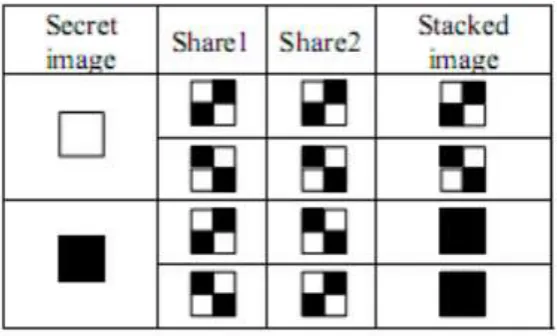
Naor and Shamir suggested a new idea of visual cryptography (VC) in 1994. Visual cryptography, a developing cryptography method, uses the features of human visualization to decode the encrypted images. It involves neither cryptography information nor complicated calculation. For protecting purposes, it also protects that hackers cannot identify any hints about a secret image from separate cover images. The essential knowledge is to divide the data into n parts recognized as the shares. Only when an appreciation of the number of shares is stacked composed will human eyes identify the image content. Visual cryptography protects secrets inside the images. The image is distributed into several shares and later decode without any computation. This decoding is done by overlapping the shares, which will expose the secret image or text by the human visual system. At the beginning of the model, which was established, involves a ciphertext and a page of transparency. The introductory text is recovered by overlapping the transparency with the critical bygone of the ciphertext. More recently, this model is enlarged with k from a secret sharing pattern, where secret sharing is a method where secret shares are scattered between the participants. Thus, the secret can only publish when an appropriate number of shares are stacked together. The (k, n) secret sharing scheme exposes a secret image only when k or more thank shares are arranged.
Fig. 1. Construction of (2, 2) VC
3. LITERATURE SURVEY
International Journal of Advances in Engineering Research http://www.ijaer.com
(IJAER) 2017, Vol. No. 14, Issue No. II, August e-ISSN: 2231-5152, p-ISSN: 2454-1796
Table 1 Comparission Analysis
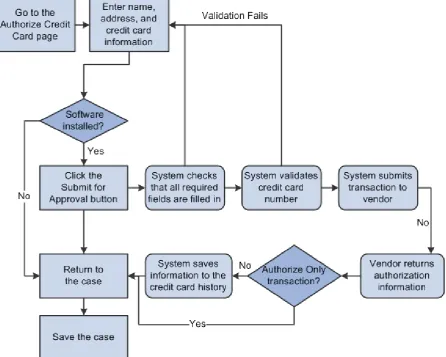
4. CURRENT METHODOLOGY
Fig 2: Existing System of E Payment System
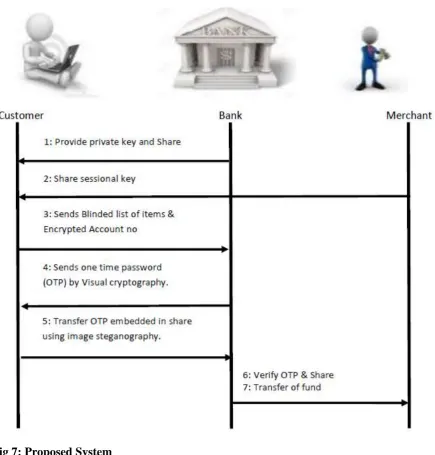
5. PROPOSED SYSTEM
International Journal of Advances in Engineering Research http://www.ijaer.com
(IJAER) 2017, Vol. No. 14, Issue No. II, August e-ISSN: 2231-5152, p-ISSN: 2454-1796
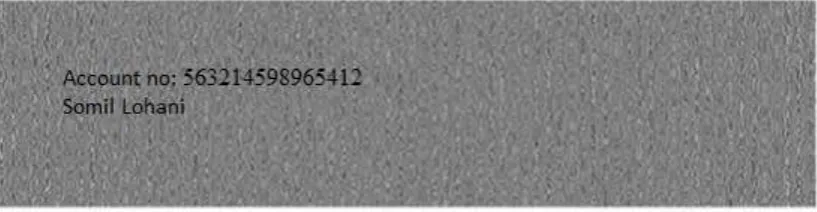
Fig 3: account number of User
Fig 4: First part is in Client
Fig 5: Second Part is with Bank
Fig 6: Data hiding in pixels of image
Fig 7: Proposed System