The London School of Economics and Political Science
Brokering Development Policy Change: The Parallel Pursuit
of Millennium Challenge Account Resources and Reform
Bradley Christopher Parks
Declaration
I certify that the thesis I have presented for examination for the MPhil/PhD degree of the London School of Economics and Political Science is solely my own work other than where I have clearly indicated that it is the work of others (in which case the extent of any work carried out jointly by me and any other person is clearly identified in it).
The copyright of this thesis rests with the author. Quotation from it is permitted, provided that full acknowledgement is made. This thesis may not be reproduced without my prior written consent.
I warrant that this authorisation does not, to the best of my belief, infringe the rights of any third party.
I declare that my thesis consists of 91,511 words.
Statement of conjoint work
Abstract
A small body of mostly anecdotal evidence suggests that governments have undertaken legal, policy, institutional, and regulatory reforms to enhance their chances of becoming eligible for assistance from the Millennium Challenge Corporation (MCC). But we know little about the strength and scope of the so-called "MCC Effect”—in particular, why it seems to exert varying levels of influence across time, space, and policy domains. I collect two novel sources of data on the MCC Effect in order to explain the conditions under which the MCC eligibility standards have influenced the reform efforts of developing country governments. Through formal coding of archival data, I construct a database of more than 14,000 country-policy-domain-year observations that measures whether and how governments change their policy behavior in order to achieve or maintain MCC eligibility. I then employ logit, rare event logit, and three-level random intercept modeling techniques as well as propensity score matching methods to explain the policy responses and non-responses of governments to the MCC eligibility criteria. I also draw on data from a first-of-its-kind survey of 640
development policymakers and practitioners in 100 low income and lower-middle income countries to "ground truth" inferences drawn from analysis of the archival data.
Pr
eface
I was part of the initial team that helped establish the MCC. As a member of the Policy and International Relations Department, which administers the agency's annual competition for funding, I had a front row seat to the policy reform dialogue between the USG and senior policymakers from nearly 120 low income and lower-middle income countries. My duties at the MCC included documenting the responses and non-responses of developing country governments to the Millennium Challenge Account (MCA) eligibility criteria. As such, I spent thousands of hours between 2005 and 2010, taking detailed notes in meetings with finance and planning ministers; reviewing letters of interest, disinterest, and opposition from senior officials in MCA candidate countries; reading cables from U.S. Embassy staff
responsible for engaging developing country officials on MCA eligibility issues; collecting information from USAID, MCC, and US Embassy staff with country-specific
responsibilities; and scouring MCA-related media coverage in candidate, threshold, and compact countries. My observations from this insider's perch inspired the data collection project and analysis that reside at the center of this thesis.
In anticipation of the fact that my period of service at the MCC would open up the analysis in this thesis to special scrutiny, I assembled a twelve-person team to systematically collect and independently code as much data as possible from public sources. I also employed
transparent and replicable procedures to analyze these data. I recognize that there is a tradeoff between having access to insider knowledge about "how things really work" and the ability to definitively refute criticisms of bias. Thus, I have taken great pains to ensure that the evidence presented in this thesis is collected and analyzed in an even-handed manner, but I cannot categorically rule out the possibility that my experiences at the MCC have colored my views about the MCC's influence or lack of influence vis-à-vis specific countries.
MCA eligibility incentive between 2004 and 2010. Without access to this evidence, I would not have conceived of the MCC Effect coding scheme described in Chapter 3 or the MCA Stakeholder Survey described in Chapter 5, which underpin my empirical analysis. Nor would this analysis have been possible if I had not crossed the policy-academy divide, which remains controversial within the international relations discipline (Nye 2009; Krasner 2009a; Keohane 2009; Parks and Stern 2013).
When one sets out to write an ambitious thesis like this one, debts are inevitably
accumulated. First and foremost, I am hugely indebted to my thesis adviser, Jeff Chwieroth, for the intellectual guidance and mentorship that he has provided since 2010. I also owe a tremendous debt of gratitude to a team of research assistants at the College of William & Mary, including Robert Mosolgo, Lauren Hoy, Alyse Prawde, Katherine McGinnis, Salil Singhal, Nakul Kadaba, James Page, Justin Anderson, Austin Strange, Suzanne Reed, Joe Lahouchuc and Anca Cretu. They spent thousands of hours collecting, collating,
synthesizing, and coding the information used to construct the dataset introduced in Chapter 3. The analysis in Chapters 3 and 4 would not have been possible without their assistance.
The 2012 MCA Stakeholder Survey described in Chapter 5 was also a team effort. First and foremost, I thank my colleague and co-author, Zachary Rice, who helped design and oversee implementation of the survey. I also thank Ashley Napier, Jake Douglas, Greg Kirwin, Taylor Wilson, Arvin Alaigh, Paul Burgess, Waly Faye, Sarah Mellman, Loïc Tchoukriel-Thébaud, Salvi Magilirane, Dimelza Gonzales-Flores, Henrique Passos Neto, and Sarah Parks for their outstanding research and translation assistance.
I am also grateful to a team of expert advisers who provided feedback on the design and content of the survey questionnaire. This team included Julia Maciel, the former Minister of Planning of Paraguay; Mishkat Al Moumin, Iraq's former Minister of the Environment; Victor Borges, the former Minister of Foreign Affairs of Cape Verde; Luis Cosenza, the former Minister of the Presidency of Honduras; John Evans, the former U.S. Ambassador to Armenia; Lucrecia Palacios, the former Director of the Policy Indicators Department in the Technical Secretariat of the Presidency of El Salvador, and Said Abdou Salime, the former Secretary General of the Ministry of Economy and Commerce of the Comoros. I also
Political Science, and the World Bank, including Sheila Herrling, David Wheeler, Sarah Jane Staats, Casey Dunning, Sarah Rose, Jeff Chwieroth, and Steve Knack.
This thesis was also made possible by the generous financial and in-kind support that I received from the Smith Richardson Foundation, the John Templeton Foundation, the Research Committee of the World Bank's Development Economics Vice-Presidency (DEC), the London School of Economics and Political Science, and the Institute for the Theory and Practice of International Relations at the College of William & Mary.
Finally, it must be acknowledged that in the absence of an MCC leadership team committed to evidence-based policymaking, this thesis would have never come to fruition. The MCC afforded me the time, space, and intellectual freedom to document the responses and non-responses of developing country governments without any agenda other than the pursuit of knowledge that might inform future policy and programming decisions. In particular, I would like to thank John Danilovich, Paul Applegarth, Daniel Yohannes, Rodney Bent, Maureen Harrington, Sherri Kraham, Alicia Phillips Mandaville, Tom Kelly, Sheila Herrling, and Bruce Overton for their patience, support, and encouragement. While there are pockets of inefficiency and incompetence within the U.S. government, the MCC is surely not one of those places. I found the staff at the MCC to be thoughtful, methodical, hard-working, and deeply motivated by their mission of reducing poverty through the pursuit of economic growth.
Table of Contents
Preface ... 4
List of Tables ... 9
List of Figures ... 10
Chapter 1: The Case for Independent Evaluation of a U.S. Foreign Aid Policy Experiment ... 12
Introduction ... 12
1.1 The Creation and Mandate of the Millennium Challenge Account ... 17
1.2 When Do External Incentives Incentivize Domestic Policy Change? Insights From Previous Research ... 27
1.3 Defining and Measuring Policy Influence ... 30
1.4 Does Your Position In the Aid Market Determine Your Policy Influence? ... 34
1.5 Confronting the Causal Inference Challenge ... 36
1.6 Charting a Course ... 38
Chapter 2: Network Brokerage: A Theory of Embedded Autonomy to Explain Reform in Developing Countries ... 41
Introduction ... 41
2.1 Understanding The Role of Networks in World Politics ... 49
2.2 What is Social Network Analysis (SNA) and Why Should IR Scholars Care? ... 51
2.2.1 Tie Density and Ideational Cohesion Within Technocratic Reform Teams ... 53
2.2.2 The Strength of Transnational Professional, Educational, and Ideological Ties ... 58
2.3 Brokers, Bridges, and Ties to Domestic Systems of Authority and Legitimacy ... 67
2.4 Conclusion ... 77
Chapter 3: Measuring Developing Country Policy Responses to the MCA Eligibility Requirements ... 79
3.1 The Dependent Variable: MCA-Inspired Policy Responses ... 81
3.2 The Correlates of Developing Country Interest in MCA-Related Reforms ... 87
3.2.1 Explanation #1: Size and Significance of the Reward ... 88
3.2.2 Explanation #2: Achievability of the Rewards ... 90
3.2.3 Explanation #3: Determinacy of the Conditions ... 95
3.2.4 Explanation #4: Credibility of Conditionality ... 98
3.2.5 Explanation #5: The Existence of A Technocratic Reform Team With Executive Authority ... 103
3.2.6 Explanation #6: Embedded Autonomy of the Senior Policymaking Team ... 107
3.3 Conclusion ... 110
Chapter 4: Trading Domestic Reforms for External Rewards: When and Why Do States Implement Policy and Institutional Adjustments to Achieve MCA Eligibility?... 112
4.1 A Tale of Two Countries ... 112
4.2 Why Might States Undertake Domestic Reforms to Achieve MCA Eligibility? ... 126
4.3 The Model ... 141
4.4 Results ... 144
4.5 Conclusion ... 171
Chapter 5: "Ground Truthing" the MCC Effect with Evidence from the 2012 MCA Stakeholder Survey ... 175
Introduction ... 175
5.1 Methods ... 177
5.1.2 Questionnaire Development ... 180
5.1.3 Survey Implementation ... 181
5.1.4 Response ... 182
5.2 Are We Measuring What We Think We Are Measuring? ... 187
5.3: The Influence of the MCA Eligibility Criteria in Comparative Perspective ... 201
5.5 Indirect Effects and Unintended Consequences ... 216
Chapter 6: Conclusions and Policy Implications ... 231
6.1 What Have We Learned About the MCC Effect? ... 231
6.2 What Have We Learned About the Uptake and Impact of Conditionality and Socialization Tools? . 236 6.3 Why Should Development Policymakers and Practitioners Pay Attention? ... 239
6.4 Measuring the Influence and Impact of Conditionality and Socialization Tools: Future Directions and Challenges ... 243
6.4.1 Accounting for the “Seesaw Effect” ... 243
6.4.2 Are Reform Promotion Tools Creating Policy Distortions and Perverse Incentives? ... 246
6.4.3 Understanding the Impact of Non-Western Suppliers of Development Finance ... 249
Appendix A: Methodology for Evaluating Government Responses to the MCA Eligibility Criteria ... 254
Appendix B: Codebook for Policymaking Network Ties Measurement Project ... 273
Appendix C: MCA Stakeholder Survey Questionnaire ... 281
Appendix D: Weighting and Data Aggregation for MCA Stakeholder Survey Responses 298 Appendix E: Reform Sustainability Codebook ... 300
List of Tables
Table 2.1: Williamson (1994) List of Hypotheses About Reform in Developing Countries .. 44
Table 2.2: List of Transnational Professional Networks ... 59
Table 2.3: Summary of Network Brokerage and Betweenness Centrality Hypotheses ... 76
Table 3.1: MCA Influence by Country and Stage of Policymaking Process, 2004-2010 ... 83
Table 3.2: MCC Effects By MCA Eligibility Indicator ... 97
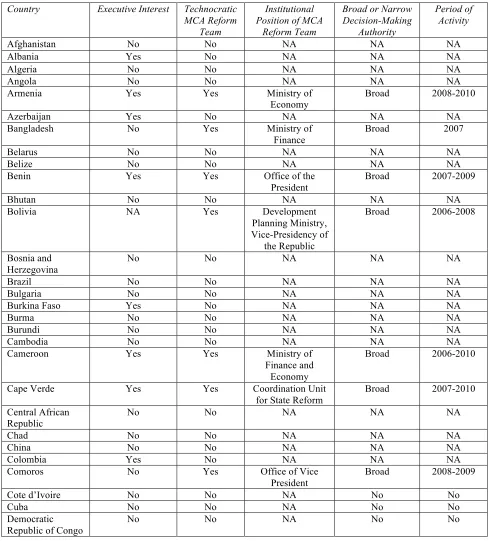
Table 3.3: Executive Interest in MCA Eligibility and Technocratic Reform Teams, 2004-2010... 104
Table 4.1: Variables used to Predict MCA-Inspired Policy Responses ... 144
Table 4.2: Descriptive Statistics (Entire Sample) ... 146
Table 4.3 t-tests for equality of means between groups assuming unequal variance ... 148
Table 4.4.1: Determinants of MCA-Inspired Policy Responses (mca_reform_anystage), Logistic Regression ... 149
Table 4.4.2: Determinants of MCA-Inspired Reform Adoption and Implementation (mca_reform_adoption_implementation), Logistic Regression ... 150
Table 4.4.3: Determinants of MCA-Inspired Reform Implementation (mca_reform_implementation), Logistic Regression ... 151
Table 4.4.4: Determinants of MCA-Inspired Policy Responses (mca_reform_anystage), Rare Event Logistic Regression ... 152
Table 4.4.5: Determinants of MCA-Inspired Reform Adoption and Implementation (mca_reform_adoption_implementation), Rare Event Logistic Regression ... 153
Table 4.4.6: Determinants of MCA-Inspired Reform Implementation (mca_reform_implementation), Rare Event Logistic Regression ... 154
Table 4.5: Determinants of MCA-Inspired Reform Adoption and Implementation ... 163
Table 4.6: Propensity Score Matching Estimates of the Causal Effects of Autonomy ... 168
Table 4.7: Propensity Score Matching Estimates of the Causal Effects of Embeddedness . 169 Table 5.1.1: Position Types of USG Respondents ... 186
Table 5.1.2: Position Types of Counterpart Government Respondents ... 186
Table 5.2.1: Comparison of 3 Measures of the MCC Effect Across Policy Domains ... 195
Table 5.2.2: Construct Validity Tests at the Country-Policy Domain Level ... 196
Table 5.3: Distribution of Responses to Question 22, Overall Sample (%) ... 210
List of Figures
Figure 1.1: Structure of the ROYG's Presidential MCC and National Reform Committee .... 21
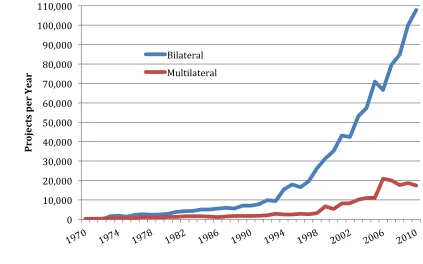
Figure 1.2: Proliferation of Aid Projects ... 34
Figure 2.1: Illustration of Betweenness Centrality ... 52
Figure 2.2: Highly Fragmented Network of Senior Cabinet Officials ... 57
Figure 2.3: Partially Integrated Network of Senior Cabinet Officials, Version 1 ... 57
Figure 2.4: Partially Integrated Network of Senior Cabinet Officials, Version 2 ... 57
Figure 2.5: Fully Integrated Network of Senior Cabinet Officials ... 57
Figure 2.6: Partially Integrated Network of Senior Cabinet Officials With Some Ties to a Transnational Professional Network ... 64
Figure 2.7: Partially Integrated Network of Senior Cabinet Officials With Many Ties to a Transnational Professional Network ... 65
Figure 2.8: Partially Integrated Network of Senior Cabinet Officials With Many Ties to Transnational Professional and Educational Networks ... 65
Figure 2.9: Fully Integrated Network of Senior Cabinet Officials With Many Ties to Transnational Professional and Educational Networks ... 66
Figure 2.10: Fully Integrated Network of Senior Cabinet Officials With Many Ties to Transnational Professional and Educational Networks and Weak Ties to the Political Opposition ... 75
Figure 3.1: Ethiopia's Fiscal Year 2010 MCA Scorecard ... 92
Figure 3.2: Benin's Fiscal Year 2010 MCA Scorecard ... 93
Figure 3.3: Government Willingness to Reform ... 94
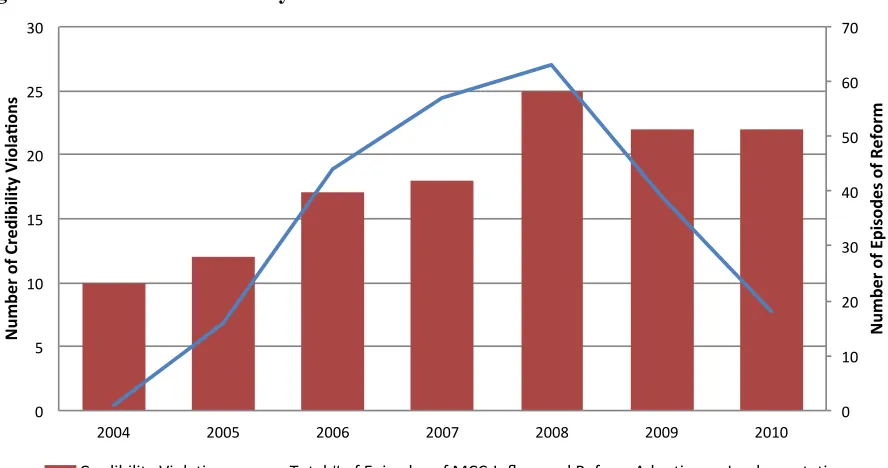
Figure 3.4: De Jure Credibility Violations and the MCC Effect Over Time ... 102
Figure 3.5: Total number of Episodes of MCC-Inspired Reform Adoption or Implementation ... 110
Figure 5.1.1: Cross-National Distribution of "MCA Experts" Contacted ... 179
Figure 5.1.2: Response Rate by Country ... 183
Figure 5.2.1: The Policy Influence of the MCA Eligibility Indicators, Survey Question 19 192 Figure 5.2.2: The Policy Influence of the MCA Eligibility Indicators, Survey Question 33 194 Figure 5.2.3: Increasing Impact of MCA Eligibility Criteria Over Time ... 198
Figure 5.2.4: Longitudinal Variation in the MCC Effect Based on Chapter 3 Dataset ... 199
Figure 5.2.5: MCC-Influenced Reform Adoption or Implementation and Influence of the MCA Eligibility Criteria ... 201
Figure 5.3.1: The Influence of External Assessments of Government Performance ... 204
Figure 5.3.2: The Influence of External Assessments of Government Performance, Excluding MCC/MCA Staff Responses ... 205
Figure 5.3.3: The Network of External Assessment Influence ... 206
Figure 5.3.4: The Network of External Assessment Influence, Excluding MCC/MCA Staff Responses ... 208
Figure 5.3.5: Weighted Distribution of Responses to Question 4, by MCA Status Category and Stakeholder Group (%) ... 209
Figure 5.4.1: Percentage of all Respondents Indicating MCA-Inspired Reforms Were Sustained, Expanded, or Accelerated ... 214
Figure 5.5.1: Weighted Distribution of Responses to Question 14d of the 2012 MCA Stakeholder Survey, by MCA Status Category and Stakeholder Group (%). ... 218
Figure 5.5.3: Weighted Distribution of Responses to Question 14g of the 2012 MCA
Stakeholder Survey, by MCA Status Category and Stakeholder Group (%) ... 220
Figure 5.6.1: Weighted Distribution of Responses to Question 14c of the 2012 MCA
Stakeholder Survey, by MCA Status Category and Stakeholder Group (%). ... 223
Figure 5.6.2: Weighted Distribution of Responses to Question 14j of the 2012 MCA
Stakeholder Survey, by MCA Status Category and Stakeholder Group (%). ... 225
Figure 5.6.3: Weighted Distribution of Responses to Question 14k of the 2012 MCA
Stakeholder Survey, by MCA Status Category and Stakeholder Group (%). ... 226
Figure 5.6.4: Weighted Distribution of Responses to Question 14l of the 2012 MCA
Stakeholder Survey, by MCA Status Category and Stakeholder Group (%). ... 228
Figure 5.6.5: Weighted Distribution of Responses to Question 14m of the 2012 MCA
Chapter
1
:
The Case for Independent Evaluation of
a U.S. Foreign Aid Policy Experiment
Introduction
Over the last fifteen years, an unusual coalition of foreign aid optimists—including Jeffrey Sachs, Bono, Angelina Jolie, Oprah, Pope Benedict XVI, and the Dalai Lama—has coalesced around the idea that the direct provision of financial resources from developed countries to developing countries will "make poverty history" (Easterly 2006; Busby 2010). Donor agency officials, developing country leaders, and non-governmental organizations have reinforced this message by calling for a "big push" in overseas development assistance to meet the Millennium Development Goals (MDGs) (Moss and Subramanian 2005).
Notwithstanding the high level of priority that contemporary development policy assigns to foreign assistance, the last sixty years of experience suggest a complex and sobering picture of the relationship between aid and development. Industrialized countries have transferred approximately $5.5 trillion in assistance to the developing world since 1960, yet fewer than 15 countries have transitioned out of poverty during the post-World War II era (Berthélemy 2006; Tierney et al. 2011). The few countries that have "made poverty history"—Botswana, Cape Verde, South Korea, Mauritius, Taiwan, among others—generally did not do so by managing large infusions of aid. Rather, they escaped poverty by sustaining high levels of economic growth through export-oriented development strategies, adopting efficiency-enhancing structural reforms, and patiently investing in the creation of strong state institutions (Rodrik et al. 2003; Criscuolo and Palmade 2008; Bräutigam et al. 2008).
Recognizing the limitations of aid, a "minority tradition" has gradually taken hold among development scholars and policymakers. This tradition is premised on this assumption that external actors can make a more substantial development contribution by creating incentives and social pressures for countries to establish endogenously functional systems and
process, resources are rarely the binding constraint to reform (Grindle and Thomas 1991; Grindle 2004a; Pritchett et al. 2010; Das et al. 2011). Since political resistance from ruling elites is usually the main obstacle that stands in the way of successful reform implementation (Lewis 1996; Acemoglu and Robinson 2000; van de Walle 2001), financial inducements are considered to be useful to the extent that they change the domestic political calculus of reform—for example, by altering the incentives of developing country leaders or shoring up the bargaining power of domestic reformers (Jacoby 2006; Pop-Eleches 2009; Krasner 2009a). Financial sanctions and moral suasion tools are also considered to be useful to the extent that they increase the reputational costs of resisting reform and deter backsliding (Noland 1997; Sharman 2008, 2009; Pitlik et al. 2010).
This intellectual tradition has emerged in response to the observed behavior of sovereign governments and international organizations (IOs). Multilateral institutions employ a wide range of strategies and policy instruments to spur, strengthen, and solidify reform efforts in developing countries. The World Trade Organization (WTO) uses its accession procedures to encourage countries seeking membership in its organization to adopt trade policy reforms (Sutherland 2008; Tang and Wei 2008). The Heavily Indebted Poor Countries (HIPC) Initiative and Multilateral Debt Relief Initiative (MDRI) make the provision of large-scale debt relief conditional upon the implementation of macroeconomic and public financial management reforms (World Bank 2012a). The World Bank, the Asian Development Bank, the African Development Bank, the Inter-American Development Bank, the Caribbean Development Bank, the International Fund for Agricultural Development, and the Global Environment Facility have created performance-based resource allocation formulae, which expand the resource envelope made available to governments that reform their policies and institutions (Dollar and Levin 2006; ADB 2005; Hout 2007; de Janvry and Dethier 2012). The European Commission has also developed a variety of policy instruments—the Special Incentive Arrangement for Sustainable Development and Good Governance (GSP+), the European Neighborhood Policy Instrument (ENPI), the ENPI Governance Facility, the Governance Incentive Tranche (GIT), Economic Partnership Agreements (EPAs),
Stabilization and Association Agreements (SAAs), and various performance-based budget support schemes1—to encourage more efficient service delivery and accountable governance
1 One example of a performance-based budget support scheme is the so-called "MDG Contract." EuropeAid
in developing countries (Kelley 2006; Borrman and Busse 2007; Saase 2008; Kleeman 2010; Zimelis 2011; Molenaers and Nijs 2011; Savedoff 2011).
Eager to jump on the resources-for-reform bandwagon, Western governments have developed their own tools of policy influence. The U.S. Government (USG) has introduced aid and trade policy instruments that reward countries for meeting eligibility conditions, such as the
adoption of liberal economic policies and the administration of free, fair, and regular elections (Radelet 2006; USTR 2008; Johnson and Zajonc 2006; Öhler et al. 2012).The United Kingdom's Department for International Development (DFID) has modified the way it implements conditionality contracts, shifting from a mostly policy-based to a mostly outcome-based approach (Watkins 2010; DFID 2011; Birdsall and Perakis 2012). Australia's bilateral aid agency has even experimented with a form of inter-jurisdictional competition at the sub-national level—by modulating the amount of development funding that is made available to provinces within partner countries based on performance and demonstrated commitment to rule-based governance and reform (AUSAID 2006).
Additionally, sovereign governments and IOs have begun to make more extensive use of moral suasion tools to advance their development objectives. The World Bank publishes a flagship Doing Business (DB) report each year, which provides guidance on which countries are most successfully implementing business regulatory reforms, and shines a spotlight on the fastest-reforming governments through its “Reformers’ Club" (Johnson and Zajonc 2006; IEG 2008a; Schueth 2011). The US State Department also publishes an annual Trafficking in Persons (TIP) report that benchmarks the degree to which governments around the world comply with the minimum anti-human trafficking standards (Cho et al. 2014; Kelley and Simmons 2013). Active participation in the Extractive Industries Transparency Initiative (EITI) has similarly become a global litmus test for governments that substantially rely on revenue from the oil, gas and mining payments; resource-rich governments that choose not to engage in EITI risk becoming a pariah state (Ölcer 2009; Pitlik et al. 2010).
A small but growing body of case study and statistical evidence suggests that these types of external pressures can influence domestic policy behavior. Judith Kelley’s study of EU
membership conditionality demonstrates that “[external] incentives are a key causal factor in policy change”and “incentive-based methods such as membership conditionality are the primary factors in changing behavior” (Kelley 2004a: 438, 452). Sharman (2008) calls attention to the outsized policy influence of the Financial Action Task Force (FATF), an inter-governmental body that names and shames countries taking insufficient action to combat money laundering. Radelet (2007) considers the incentive effect of the U.S. Government's Millennium Challenge Account (MCA) a “major success story," noting that Washington “has created the incentives for potential recipients to more carefully track the data and introduce the policy changes needed to meet the requirements" and "[t]here are examples from all around the world of the incentive effect of the MCA [country] selection process."2 Similarly, Sutherland (2008: 126) argues that "[n]owhere is the WTO's power to transform nations more evident than in its accession process.... The fundamental value of WTO membership—and the negotiations that precede it—is an opportunity to establish an agenda and identify priorities for the candidate countries." 3
The notion that external incentives, socialization mechanisms, and financial sanctions can spur, solidify, or sustain reform efforts also enjoys support among policymakers from developed and developing countries. Consider an excerpt from a leaked cable that the U.S. Ambassador to Guyana sent to Foggy Bottom in June 2006, urging the U.S. State Department to use Inter-American Development Bank (IDB) debt forgiveness and MCA eligibility as external levers for reform: "I recently learned that the IDB is planning to forgive the debt owed by its five poorest members—including almost a half billion dollars that Guyana owes. I cannot stress enough the unique opportunity this gives us to induce meaningful reform in a country that has obstinately resisted it for years. A chance like this won't come around again soon.... Guyana is anxious to secure debt relief from the IDB. ... Guyana is also a Millennium Challenge Corporation (MCC) threshold candidate. President Jagdeo considers both IDB
2 Siegle (2007) cites evidence that "[e]fforts to score highly enough on the [Millennium Challenge Account]
performance criteria has sparked a flurry of reformist activity."
3 Elaborating on this point, Sutherland (2008: 126) notes that "at a certain point political leaders understand that
debt forgiveness and MCC funding absolutely vital. We can use these as leverage to influence Guyana's leaders ... to do what they should" (Bullen 2006). 4
If one accepts the claims of policymakers at face value, conditional contracts are not the only instruments that instigate behavioral change in developing countries; moral suasion tools also exert influence. Consider anti-money laundering efforts in Nigeria. In 1999, Olusegun
Obasanjo was elected as the President of Nigeria on an anti-corruption platform, but his administration demonstrated little interest in cracking down on graft and bribery during the first few years of its tenure. 2001 marked an important turning point: the OECD-based FATF placed Nigeria on a blacklist of countries that had taken insufficient action to combat money laundering and terrorist financing. The Obasanjo administration responded by creating an Economic and Financial Crimes Commission (EFCC), staffing it with 1600 law enforcement professionals, and granting it broad legal authority to combat public sector corruption, money laundering, and illicit financial flows supporting terrorist networks. According to Nuhu Ribadu, the former head of the EFCC, "[t]he work of the EFCC would not have been possible without the Financial Action Task Force, which de facto forced Nigeria to develop new anti-‐
money laundering laws and spurred the creation of the EFCC. ... The effort we made at the EFCC was a marriage of two forces: pressure from outside and the force from within. The international community deployed the instruments of the Financial Action Task Force to trigger necessary reforms, which provided us the platform to build a strong local program to clean up our financial institutions and prosecute those who sought to undermine them" (Ribadu 2009).5
However, in spite of the evidence that extrinsic incentives can instigate legal, policy, regulatory, and institutional reforms under certain circumstances, the development research community remains broadly skeptical of the wisdom of external actors "meddling" in the internal affairs of sovereign developing country governments. Indeed, if there is one thing
4 Similarly, in 2009, a USAID official informed the author that the MCA eligibility standards had a significant
influence on the Albanian authorities: " The [MCC] Compact prospect does indeed operate as an incentive in Albania, where the United States already has a great deal of influence and leverage, just as the prospect of 'losing' a Compact is a serious public concern. US support—whether for NATO candidacy or MCC compact candidacy—matters here. Politicians and media pay attention to the MCC scorecard, which provides annual fodder for opposition attacks" (Author Interview with USAID Albania Official 2009).
5 Between 2003 and 2007, the EFCC secured more than 275 corruption convictions and recovered $5 billion in
that unites scholars of economics, international relations, international organizations, foreign policy, and comparative politics who study development policy and practice, it is that they bristle at the most intrusive forms of conditionality from the Bretton Woods institutions (Collier 1997; Cruz-Saco and Mesa-Lago 1998; Huber and Stephens 2000; Collingwood 2003; Boughton and Mourmouras 2004; Momani 2005a; Kohl and Farthing 2006).
Thus, one might say that an appropriate metaphor for the conditionality literature is a ship adrift in a sea of countervailing winds and waves. On one hand, there is some limited evidence that external actors can help steer developing countries towards more efficient, equitable, and sensible policies and practices. On the other hand, many scholars worry that the tools influence employed by donors and international organizations may have unintended negative consequences and potentially do more harm than good. One of the principal reasons for this intellectual schizophrenia is that the existing literature does not provide consistent guidance about the conditions under which these policy instruments are most influential or effective.6 Nor does the literature have much to say about which tools have the most reform-inducing and -sustaining influence and why.
In this thesis, I will seek to answer these questions by evaluating the influence of one particular policy instrument designed to spur and sustain the reform efforts in developing countries—the USG's Millennium Challenge Account (MCA).
1.1 The Creation and Mandate of the Millennium Challenge
Account
On March 14, 2002, President George W. Bush delivered a speech at the Inter-American Development Bank, outlining his administration’s approach towards international
development policy and unveiling a new mechanism for channeling U.S. foreign assistance to developing countries called the Millennium Challenge Account (MCA). Bush argued that “[w]hen nations refuse to enact sound policies, progress against poverty is nearly impossible. In these situations, more aid money can actually be counterproductive, because it subsidizes
6 Rogerson (2005: 550-551) argues that this syndrome also plagues development practitioners: "the aid industry
bad policies, delays reform, and crowds out private investment.” Calling for “a new compact … defined by … accountability for both rich and poor nations alike,” he pledged a $5 billion annual increase in U.S development assistance and promised to establish “a set of clear and concrete and objective criteria” to “reward nations that root out corruption, respect human rights, and adhere to the rule of law... invest in better health care, better schools and broader immunization... [and] have more open markets and sustainable budget policies, nations where people can start and operate a small business without running the gauntlets of bureaucracy and bribery” (Office of the White House 2002).
In the following year, a bipartisan coalition in the U.S. Congress authorized the creation of a new federal agency—the Millennium Challenge Corporation (MCC)—to administer the MCA. 7 The MCC is required by law to choose partner countries based on their demonstrated commitment to good governance. To this end, the agency publishes “country scorecards" that track the performance of nearly 120 developing countries on indicators produced by
independent third-party institutions.8 The U.S. Government's (USG) decision to make access to MCA funding conditional upon a country's performance on these third-party measures of performance created both a reward and an incentive for governments that rule justly, invest in their people, and promote economic freedom (Radelet 2006; Johnson and Zajonc 2006; Hook 2008).9
Scholars, policy analysts, and legislative overseers generally agree that the MCC has rewarded developing countries that possess reasonably sound policies and institutions with generous financial assistance (Fox and Rieffel 2008; Herrling, Kinder, and Radelet 2009; Kerry and Lugar 2010). However, MCC’s impact as an incentive for reform remains under-researched and dimly understood. A growing body of evidence suggests that governments have implemented legal, policy, institutional, and regulatory reforms to enhance their chances
7 On the origins of the MCA and the MCC, see Cronin 2006; Hook 2008; and Krasner 2009a, 2009b.
8 From FY2004 to FY2007, the MCC used 16 eligibility indicators. In 2012, the MCC expanded the number of
eligibility indicators to 20, to include additional assessments of child health, credit access, and gender equality in economic life (MCC 2011a).
9 The recent introduction of a “Democratic Rights Hard Hurdle” has placed additional emphasis on the
of becoming eligible for MCC assistance (Dugger 2006, 2007; Lucas 2006; Johnson and Zajonc 2006; Newton et al. 2007; Siegle 2007; Phillips 2007; Brown et al. 2008; Gerson 2007; Schaefer and Kim 2008; Radelet 2007; World Bank 2005, 2007; Öhler et al. 2012; Dreher et al. 2012; The Economist 2013a, 2013b). But we know little about the strength and scope of MCC’s “incentive effect”—in particular, why it seems to exert different levels of influence across countries, policy domains, and time. The primary objective of this thesis is to account for this variation.
I collect two novel sources of data on the MCC Effect in order to explain the conditions under which the MCA eligibility standards have influenced the reform efforts of developing country governments. Through formal coding of archival data, I construct a database of more than 14,000 country-policy-domain-year observations that measures whether and how
governments change their policy behavior in order to achieve or maintain MCA eligibility. I then employ logit, rare event logit, three-level random intercept, and propensity score matching modeling techniques to explain the policy responses and non-responses of governments to the MCA eligibility criteria. I also present and analyze data from a first-of-its-kind survey of 640 development policymakers and practitioners from 100 low income and lower-middle income countries to "ground truth" inferences drawn from analysis of the archival data.
My empirical findings suggest that a range of factors—including, but not limited to, regime type, reliance on foreign aid revenue, the chief executive’s political commitment to MCA-related reforms, the scope for reform in a particular policy domain, the provision of reform assistance, the determinacy of MCA policy conditions, the perceived credibility of USG policy conditions, and the level of priority assigned by the USG to individual policy conditions—influence the probability that a government will pursue reform activities in response to the MCA eligibility criteria. However, the central contribution of this thesis is the theoretical and empirical argument that the network positions of change management teams in developing countries shape whether, when, and how externally inspired reforms get adopted and implemented. In this regard, I call attention to an important, but
underappreciated factor that shapes the adoption and implementation of externally influenced reforms in developing countries: the presence of a policymaking team that has sufficient autonomy to introduce disruptive changes to the status quo, but also sufficient
face of the conventional wisdom—held by constructivist and rationalist scholars alike—that there is a positive, monotonic relationship between the autonomy of change management teams from domestic political and social forces and the state’s ability to facilitate status quo-altering reform (Waterbury 1989; Kahler 1992; Nelson 1993; Van de Walle 2001; Chwieroth 2007; Weymouth and Macpherson 2012).
I do not argue that the presence of such a team is either a necessary or sufficient condition for the MCA eligibility criteria to instigate a reform response. However, the logic, evidence and argumentation presented in this thesis suggests that (a) teams with “embedded autonomy” are more likely to initiate and shepherd to successful completion externally inspired reforms; (b) existing theoretical work in IR, IPE, and comparative political economy does not provide an adequate explanation for why teams with these unique attributes are more successful at executing status quo-altering reforms; and (c) further empirical inquiry is needed to understand the causal mechanism—or mechanisms—through which change management teams introduce and implement difficult policy, legal, regulatory, and institutional reforms
In order to illustrate the MCC Effect variation that I will seek to explain in this thesis, consider the widely divergent policy responses of two countries to the MCA eligibility criteria: Yemen and Armenia. Yemen was selected as eligible for MCA threshold assistance in 2004. According to a U.S. Embassy cable made available through Wikileaks, Yemen's then Minister of Planning "[Ahmed] Sofan, his subordinates, and several interlocutors [saw] MCC threshold [eligibility] as a way to encourage the [government] to make what they characterize as long overdue reforms" (Khoury 2005). The U.S. Embassy in Sana'a also reported in October 2005 that "[m]any of Yemen's key reformers have pinned their
reputations on the MCC" (Krajeski 2005). However, in November 2005, the USG suspended Yemen from the program for slippage on 9 of its 17 policy indicators, including Control of Corruption, Trade Policy, and Fiscal Policy. Yemeni President Ali Abdullah Saleh was reportedly "very upset" by the suspension (Phillips 2007) and responded to the USG decision by downplaying corruption within his own government (Sultan 2006).
officials.10 The ROYG also established a "Presidential MCC and National Reform
Committee" (see Figure 1.1) and tasked it with the design and implementation of governance reforms that would pave the way for MCA reinstatement (USAID Official 2006; MCC 2007a; Seche 2008).This Committee consisted of a mix of political insiders and technocrats with strong international ties and weak ties to domestic actors and networks (Seche 2008).
With support and oversight from the Committee, the Yemeni authorities passed landmark anticorruption legislation, sanctioned and prosecuted dozens of corrupt judges, removed the President from the Supreme Judicial Council, and cracked down on government payments to “ghost workers” (MOPIC 2006; Krajeski 2006a, 2006b; MCC 2007a). The USG responded by reinstating Yemen's MCA eligibility (Phillips 2007). Yemen's Ministry of Planning and International Cooperation later attributed the government's reform drive to the MCC
suspension, noting that the authorities' desire to meet the MCA eligibility standards “helped pave the way for the current reform momentum" (MOPIC 2006: 1).11 The Wall Street Journal, the World Bank, and many other independent observers also commended the MCC for its role in spurring reforms in Yemen (Phillips 2007; NDI 2005; Monasterski 2007).12 Even the head of the MCA Monitor, a non-governmental watchdog group, gave the U.S. government program “full credit” for the reforms adopted by the Yemeni government (Phillips 2007: A6; also see Herrling 2007).
Figure 1.1: Structure of the ROYG's Presidential MCC and National Reform Committee
10 Donors made an effort to "speak with one voice" to the ROYG (Krajeski 2006a, 2006b). At roughly the same
that MCC announced Yemen’s suspension from the MCC Threshold Program, the World Bank announced that it was cutting funding to Yemen from $420 million to $280 million due to concerns about governance. The World Bank also made clear that if the ROYG implemented the governance measures outlined in a February 2006 reform strategy, it could expect its World Bank funding to increase considerably (Krajeski 2006a, 2006b; Phillips 2011).
11 A USAID Yemen staff member reported to the author that the prospect of MCA recertification had
strengthened the Yemeni government's resolve to implement policy and institutional changes that had been repeatedly postponed (USAID Official 2007). Phillips (2011: 14) also points out that "[a]t the time Yemen's [MCA] re-admission was seen as a considerable victory for reformers within the government, who had worked to lay the foundations for more robust anti-corruption legislation."
12 However, as I discuss at greater length in the coming chapter, the MCC's influence vis-à-vis the ROYG
Source: Author’s correspondence with a senior ROYG official, 15 April 2006
Armenia provides an interesting comparative case of limited external influence. The MCC Board of Directors deemed Armenia "Compact-eligible" in May 2004, roughly 30 days month after the authorities launched a violent crackdown on peaceful demonstrators
protesting a fraudulent 2003 presidential election (Hyde 2007; Human Rights Watch 2009). This decision to grant Armenia eligibility under a cloud of controversy foreshadowed a tumultuous nine-year relationship. In November 2005, the Government of Armenia (GOA) held a constitutional referendum, and international election monitors charged that the
promoting democratic governance" (MCC 2009a).13 Soon thereafter, the Armenian
authorities turned to Iran and Russia for financial support. An advisor to Armenia's Minister of Economy reported to the press that "the possibility of asking for funding from Iran and Russia was debated internally as soon as the [MCC] made its June 10 decision [to suspend funding]" (Grigoryan 2009).14
These divergent outcomes in Yemen and Armenia call attention to the fact that the MCA eligibility standards can have widely varying effects across space, time, and policy domains. Yet few attempts have been made to explain the strength and scope of the so-called MCC Effect.
There are, to be sure, many boosters for the MCC's incentive-based aid allocation model. 15 U.S. Senators and Congressmen celebrate the fact that governments in developing countries are apparently undertaking political, social, economic reforms to improve their odds of achieving or maintaining eligibility for assistance from the Millennium Challenge
Corporation (MCC). Jim Kolbe, a former Congressman (R-Arizona) and chair of the Foreign Operations Export Financing and Related Agencies Subcommittee, testified in April 2008 that “Ambassadors lined up at my office when I was chairman of the subcommittee saying what do we have to do in order to qualify for [MCC assistance]. So I think [MCC] is doing exactly what we wanted it to do" (Kolbe 2008). Christopher H. Smith, a Republican
Congressman from New Jersey gives the MCC high marks for "the incentive provided ... to the recipient country’s government to focus on and respond to the needs of the poor segment
13 Notwithstanding the MCC's general lack of influence vis-à-vis the Armenian authorities, there is some
evidence that some senior GOA officials sought to use the MCA eligibility standards to advance domestic reforms (Nichol 2006; Öhler et al. 2012). In 2004, Armenia's Foreign Minister, Vartan Oskanian, reported to
The Washington Post that “inclusion in the Millennium [Challenge Account] program had made the country ‘more focused’ on governance, democracy, rule of law and human rights" (Kessler 2004: A17). In 2005, after MCC issued a warning to the GOA regarding democratic reform slippage, Oskanian went on national television and warned that “w[e] are now in a situation where any step away from democratization and a repeat of electoral fraud would have an economic cost. And I can name that cost: 235 million dollars" (Danielyan 2005). Additionally, since the June 2009 suspension, the Prime Minister and several other senior GOA officials have sought to use MCA eligibility criteria as an anti-corruption reform rationale (Grigoryan 2011; Stepanian 2013).
14 A 2012 International Crisis Group (ICG) report notes that GOA has proven adept at playing Western and
non-Western donors off of each other in order to resist external pressures for democratic reform: "External actors can have only a limited effect in bringing change to Armenia.... Armenia plays on the perception that it can always turn back towards Russia if [U.S. and EU] conditions are set that it considers too stringent" (ICG 2012: 14).
15 Although the MCA was a signature foreign policy initiative of the George W. Bush administration, the
of their population" (U.S. GPO 2007: 4). In 2010, Senate Foreign Relations Committee Chairman John Kerry (D-Massachusetts) and ranking Republican Richard Lugar argued that "the core principles upon which the MCC was founded—competitive selection of countries based on policy performance across independent and transparent indicators, country
ownership of compact design and development, and country-led implementation of
compacts—have allowed MCC to become a development leader" (Kerry and Lugar 2010). 16 The MCC's incentive-based model also enjoys strong support within the U.S. business community and NGO community (IGD 2008; McClymont 2003; Oxfam America 2011). 17
Additionally, there are independent observers who believe that tying U.S. assistance to performance on the MCA eligibility indicators has a reform-inducing or -sustaining effect. Jennifer Windsor, the Executive Director of Freedom House, argues that MCC “play[s] an important role in changing the political calculus of those blocking democracy while encouraging democratic activists. In certain cases, it can tip the balance in favor of democracy” (Carnegie Endowment for International Peace 2007).18 Nathaniel Heller, the Managing Director of Global Integrity, has indicated that “[w]hether people like it or not, countries are, in practice, responding to what has been coined the MCC effect … and they are undertaking reforms, sometimes some of the tough ones” (Keleman 2008). Brett Schaefer and Anthony Kim of the Heritage Foundation report that “the MCC has created a remarkable competition to reform … among countries looking to qualify for grants. It has catalyzed important policy changes in nations like Benin, Madagascar and Lesotho" (Schaefer and Kim 2008). The World Bank’s 2007 Celebrating Reform report also singles out the MCA
eligibility standards as a catalyst for reform: “When the United States’ Millennium Challenge
16 Former U.S. Senate Majority Leader Bill Frist has described the “MCC Effect” as “the biggest bargain in
foreign aid.” He points out that “[t]he MCC model can even produce change before any money is spent. We’re finding that governments are undertaking important reforms in an effort to qualify for MCC assistance—or to keep policy performance on track in order to qualify for a second five-year MCC Compact" (Frist 2008).
17 In a 2008 letter to the Senate Foreign Relations Committee, a coalition of more than 150 non-governmental
humanitarian and development organizations came to the MCC's defense during a period of budgetary uncertainty: "The MCC, has had some historic successes via [the] ‘MCA effect.’ In Tanzania, the work of USAID in strengthening the media and procurement under the MCC threshold program exposed corruption, resulting in the unprecedented resignation of the country’s prime minister.... The ‘MCA effect’ works because countries get the message that if they do their part to help their own people, the U.S. will be their partner” (InterAction 2008).
18 Freedom House (2009) also reports that “many foreign governments have engaged in a dialogue with [our
Account (MCA) made eligibility for funding dependent on the ease of business startup, countries from Burkina Faso to El Salvador to Georgia to Malawi started reforms" (World Bank 2007: 3).
But there are also MCC Effect skeptics. Brown and Tirnauer (2009: 4) point out that "there are some who believe [MCA-inspired] reforms are shallow or transitory and do not reflect fundamental and long-lived change." Others contend that inconsistent application of the MCC's suspension and termination policy undermines the credibility of USG conditionality (Main and Johnston 2009; Phillips 2011; Öhler 2012).19 Still others make the case that the MCC's legislative inability to engage in concurrent Compacts with a single country "kills the incentive for good performance by the partner country because it creates doubt about the U.S. commitment to the support the country’s long-term development effort" (Rieffel and Fox 2008: 31). A final group of critics argues that, while the MCA eligibility standards may induce domestic reforms, they steer developing countries toward an ill-conceived "one-size-fits-all" model of development (Arruñada 2007; Chhotray and Hume 2007; Goldsmith 2011; Booth 2011; Krever 2013).20
In short, a great deal of ink has been spilled in order to defend or challenge the strength and scope of the so-called MCC Effect, but neither policymakers nor scholars have a solid grasp on the influence of this USG reform promotion tool. In absolute terms, we do not understand the strength or the scope of the MCA eligibility incentive's influence—that is, the number of countries and policy domains in those countries where the MCA eligibility standards
instigated or reinforced specific policy decisions or actions that would not have otherwise occurred. Nor do we know much about variation over time in the policy influence of the MCA eligibility standards.
19 Runde et al. (2011) argues that lower-than-expected appropriations from the U.S. Congress could also
undermine the "MCC Effect." Relatedly, Rieffel and Fox (2008) and Geertson (2010) argue that the MCA eligibility indicators are relatively blunt policy monitoring instruments that, when mechanistically applied, can lead inappropriate USG policy and resource allocation decisions and reform-dampening effects in developing countries.
20 The same criticism has been made of multilateral agencies. Rodrik (2008: 100) argues that “institutional
The dearth of reliable data on the policy influence of the MCA eligibility standards reflects a larger problem that plagues the literature on external tools of conditionality and socialization. Virtually all research on the influence of external reform incentives is hobbled by the absence of reliable measures of the actual phenomenon of interest: how governments respond to external pressures. Existing studies either rely on de jure indicators of state participation in resources-for-reform agreements (e.g. signing an international agreement, formal
participation in an international initiative) or reform outcome measures that indirectly proxy for policy behavior and implementation (e.g. inflation control, democratization). 21 In this thesis, I take a substantially different methodological approach. Through process-tracing of 118 country cases, I build a dependent variable "from the ground up" that attempts to directly measure the empirical phenomenon of interest: whether, when, and how governments
formulate and implement domestic policy responses toreap the external rewards of MCA eligibility.
Drawing inspiration from the approach described in Kelley (2004b: 23), I develop a
dependent variable that measures "policy behavior and implementation" and employ detailed case studies and process tracing to "reveal the timing of events and action ... [and] the
motives and attitudes of actors." However, the approach taken in this thesis differs from Kelley (2004b) in that she uses process-tracing methods to measure the compatibility of a state's policy behavior and implementationwith international standards, whereas I use process-tracing methods to identify whether or not there is compelling evidence that the prospect of MCA eligibility motivated a specific policy response. I then divide each country case into "policy domain-year" sub-cases, resulting in nearly 14,000 total observations. The size and scope of my dataset—118 countries, 7 years, and 17 policy domains—provides a strong basis for a general empirical test of competing theoretical explanations.22 I
21 In the absence of reliable information about the policy preferences and actions of senior government
decision-makers, many scholars resort to a so-called “revealed preferences” approach in which outcomes measures are used to make inferences about the nature of government policy preferences (Lake and Powell 1999). This approach suffers from a key shortcoming: exogenous factors often influence outcome measures. Consider the challenge of measuring a government’s fiscal policy orientation. Many economists and political scientists use a country’s fiscal balance as a percentage of GDP as a proxy for the government’s fiscal policy orientation. However, natural disasters, debt relief, changing global economic conditions, and one-off oil, gas, and mining payments can have a dramatic impact on a country’s fiscal balance and these exogenous influences say almost nothing meaningful about the government’s underlying fiscal policy preferences.
22 Kelley (2004b) also draws on a substantially smaller sample: 64 observations related to ethnic minority policy
complement analysis of this formally coded dataset of archival information with a large-n survey of leading decision-makers in 100 MCA “target” countries.
In relative terms, researchers and policy practitioners are also ill-equipped to assess the policy influence the MCA eligibility standards. The MCA costs U.S. taxpayers billions of dollars, and the USG has access to many other incentives, sanctions, and socialization tools to influence the domestic policies and practices of developing countries (Savedoff 2011).
Therefore, it is reasonable to ask what type of "return on investment" the MCA eligibility incentive provides.23 Does it offer taxpayers good value-for-money as a policy instrument for spurring and sustaining reform efforts in the developing world? How much influence do the MCA eligibility criteria exert compared to other financial incentives and moral suasion tools? By surveying senior development policymakers and practitioners in 100 low income and lower-middle income countries and their USG counterparts, I will offer new evidence that sheds light on these questions.
The need for independent evaluation of the MCA's policy influence is both compelling and overdue. The central objective of this thesis is to couple systematic, large-n data collection and analysis with careful archival, case study, and survey evidence to provide a holistic evaluation of the MCC's influence on reform efforts in developing countries. Cherry-picked cases that support the positions of MCC Effect apologists and critics may be useful for op-eds and speeches, but they are not useful for the advancement of social science or the design of evidence-based policy.
1.2 When Do External Incentives Incentivize Domestic Policy
Change? Insights From Previous Research
More than a decade ago, Davis (2000: 312) correctly observed that "[p]ositive incentives ... are among the most understudied if frequently employed tools of international statecraft." However, it is also true that theories of international relations (IR) and international political economy (IPE) provide some guidance about the conditions under which external incentives and pressures influence domestic policy decisions. Existing theories of external influence
23 Of course, it is very important to remember that the MCA was primarily conceived as an investment of U.S.
have generated a range of testable hypotheses about why reform promotion tools exert varying levels of influence across countries, time, and policy domains. Social constructivists argue that the likelihood of reform hinges on the ability of external actors to find and work with developing country officials who share a common set of causal and principled beliefs about policy (Chwieroth 2007, 2009; Weymouth and Macpherson 2012). Rationalists maintain that the prospects for reform are strongest when international actors successfully align external incentives with domestic interests (Bueno de Mesquita et al. 2003; Smith and Vreeland 2006). For example, senior officials from a developing country's finance ministry or central bank might make macroeconomic policy commitments to the IMF to send a
credibility signal to investors and creditors, insulate themselves from the political fallout from domestically unpopular reforms, or strengthen their bargaining power vis-à-vis domestic actors who favor the status quo (Vreeland 2003).24 A final group of scholars from the realist tradition emphasize the importance of coercive power, predicting that the
probability of reform will correlate positively with a developing country’s level of economic and political dependence on wealthy countries and international organizations (Hirschman 1945; Baldwin 1985; Krasner 1978, 1985; Haggard 1995; Martin 1992; Shadlen 2008).
IR and IPE theories also suggest several reasons why the material incentive of MCA funding might have a limited impact on domestic reform efforts. For rationalists, the credibility of conditionality is a central concern. Donor agencies and international organization face a variety of political, economic, and organizational pressures—rewarding allies and punishing enemies, satisfying the demands of shareholders or domestic interest groups, and "pushing money out the door" to achieve professional prestige and budget maximization goals—that can undermine the credibility of their commitment to enforce conditionality contracts with developing countries (Keohane and Levy 1996; Thacker 1999; Stone 2002; Kelley 2004b; and Kilby 2009).
24 Another group of rationalists argue that donors and international organization can increase the power of their
external incentives by supporting domestic reformers in the non-governmental sector (Krasner 2009a; Jacoby 2006). For example, Diamond (2008: 47) notes that MCA eligibility “is showing promise as a tool that civil-society actors … can use to campaign for governance reforms and as an incentive for corrupt governments in need of more aid to reform their ways.” Krasner (2009a: 27) points out that donors and international
Social constructivists express a different concern: that global diffusion processes may
diminish the effectiveness of external instruments of policy influence (Levi-Faur and Vigoda-Gadot 2006; Meseguer and Gilardi 2009; Brooks 2005, 2007; Brune et al. 2004; Henisz et al. 2005). Weyland (2006: 4) summarizes this concern: “normative appeal and the quest for international legitimacy prompt the emulation of foreign innovations. To look good in the eyes of global public opinion, decision-makers want to be modern and up-to-date and therefore imitate new policy models. They are determined to avoid the stigma of being backward and therefore try hard to keep up with the latest trend. On a deeper level, they are influenced by new international norms that redefine proper state action. An innovation raises the standards of appropriate behavior, and decision-makers urgently try to catch up to this new benchmark.” Therefore, rather than making a rational calculation of whether a particular type of reform serves their own interests or the national interest, decision-makers in
developing countries may take “cognitive shortcuts” and look to their neighbors and other relevant peers to identify the most “modern” and “appropriate” types of reform.25
Political scientists and economists who study the comparative political economy of reform also tend to be less sanguine about the influence of external reform pressures. They generally take the view that IOs and donor agencies are relatively impotent and any external pressures they might bring to bear have little direct influence on the policy-making processes of developing countries (Mosley 1987; Nelson 1996; Ranis and Mahmood 1992; Ranis 1996; Rodrik 1996; Remmer 1998; Callaghy 1986; Easterly et al. 2006). Hunter and Brown (2000: 115) claim that "powerful domestic forces tend to override World Bank directives." In a far-reaching study of Latin American health care and pension reforms during the 1980s and 1990s, Weyland (2006: 11) concludes that “[w]hile external pressures undoubtedly influence domestic decision making, they are usually not the driving force behind social policy
reforms….”26 Scholars from this camp usually argue that domestic factors, such as social cohesion, state capacity, the quality and reform orientation of the political leadership, the number and relative alignment of veto players, and the ideological cohesion of the
25 For example, Simmons (2000) finds evidence of an “international policy diffusion” effect in the case of IMF
Article VIII, which requires governments “keep their current account free from restriction.” Her empirical results suggest that government compliance with IMF Article VIII is to some extent a function of the number of other countries in the world and in one’s region that are also Article VIII-compliant.
26 He argues that the "multiplicity of ‘veto players’ and the resulting need for political negotiations make it
government explain most of the empirical variation in the timing, speed, nature, and magnitude of reforms undertaken in the developing world (Tsebelis 2002; Joyce 2006; Alesina and Drazen 1999; Desmet et al. 2009; Easterly et al. 2006).
These very different perspectives on the influence of donor agencies and international organizations illustrate the need for research that can help scholars and policymakers distinguish between anecdotes and systematic empirical evidence. In this thesis, I will introduce a new dataset that measures the MCC's policy influence across the entire universe of MCA candidate countries, seventeen policy domains, and seven years. I will then use this comprehensive dataset to draw inferences about whether, to what extent, when, and how the MCA eligibility standards have influenced the reform efforts of developing countries. I will also present new survey evidence to "ground truth" these claims and illuminate several of the causal mechanisms through which the MCC Effect seems to operate.
1.3 Defining and Measuring Policy Influence
Of course, it is also important to recognize that the MCC's policy influence does not merely consist of the degree to which the MCA eligibility criteria directly catalyze or sustain reform efforts in developing countries. While donors and IOs can exert influence through a variety of carrots, sticks, and social pressures, the actual provision of financial resources can also
influence the design and implementation of reforms in developing countries (IEG 2008b). A small but growing body of evidence suggests that MCC Compact and Threshold
programming has had a demonstrable effect on reform efforts in developing countries (Crone 2008; Geertson 2010; Hollyer and Wantchekon 2011; Elbow et al. 2012). I will therefore control for this potentially cofounding variable in my analysis.
MCC's policy influence in Yemen declined sharply after the domestic authorities in Sana'a decided to release a prominent member of al-Qaeda member from house arrest in October 2007 and the MCC Board of Directors effectively suspended the government's eligibility for MCA funding.27 Phillips (2011: 14), who was in direct contact with several key ROYG reformers at the time, reports that "[t]hose in Yemen who had worked toward [MCA] reinstatement were angered by the suspension and felt that the United States had betrayed them by moving the goalposts [for] a problem that was ostensibly unrelated to security objectives. The reformers complained that the suspension only handed ammunition to those [who] were already opposed to reform."28
This episode calls attention to the fragility and reversibility of reform gains. But it also highlights the fact that understanding MCC's overall policy influence necessitates a deeper analysis of the degree to which reforms catalyzed by the MCA eligibility criteria are
sustained over time. To gain leverage on this issue, I collect and analyze new survey evidence from senior government officials and donor agency representatives in 100 low-income and lower-middle income countries. These survey data are far from perfect, but they do shed some light on the reform sustainability effects of MCA-inspired or -influenced efforts. I also conduct a more in-depth analysis of the sustainability of the MCC Effect in five “country-policy domain” cases.
In this thesis, I also draw a distinction between the influence and the effectiveness of the MCA eligibility standards as a tool for spurring and sustaining reform in developing countries. Apart from any direct effects that any incentive-based aid program might have, I emphasize the importance of capturing indirect effects and unintended consequences. There are at least three reasons why a holistic evaluation of the MCC's policy impact must take these issues into consideration.
First, the MCA eligibility standards might exert outsized policy influence, but do so at the expense of other important policy issues. That is to say, the MCC could divert a
government’s attention away from higher priority policy issues or limit a government's policy autonomy in a negative manner (Arruñada 2007; Goldsmith 2011). Given that the MCC uses
27 Technically, the MCC put Yemen's Threshold Program “on hold”, but the program was never resumed.
quantitative indicators from third-party institutions to measure policy performance, it is also possible that the eligibility standards might create incentives for countries to "game the system" by following the letter but not the spirit of the law (Pham 2009; Delevingne 2010). I confronted these concerns during my tenure as an MCC staff member. In 2008, several colleagues and I were responsible for informing senior decision-makers in Madagascar's Presidency, Ministry of Finance, Ministry of Health, and Ministry of Education that the government's performance had slipped on two MCA eligibility indicators—Health
Expenditures and Primary Education Expenditures. Our Malagasy counterparts responded by calculating exactly how much additional public spending on primary education and health would be necessary to exceed the MCA median benchmark. The domestic authorities did not want to spend any more or any less than what would be necessary to retain MCA eligibility. However, consultations with the IMF, the U.S. Embassy and other local stakeholders revealed that this did not necessarily represent an optimal reallocation of scarce public resources. Thus, one unfortunate and unintended consequence of the MCA eligibility criteria may be that governments respond to perverse incentives to do "just enough, but no better than" the performance standards established by the USG.
Second, if rigorous application of the MCA eligibility criteria imposes significant domestic or external audience costs, it might provoke MCA candidate governments to ally themselves with non-DAC suppliers of development finance. In at least five countries (Armenia,
Nicaragua, Bolivia, Moldova, and Sri Lanka), policy analysts, journalists, and U.S. diplomats have argued that disciplined application of the MCA eligibility criteria—through warnings, suspensions, and terminations—prompted governments to substitute aid from Venezuela, China, Brazil, Russia, and Iran for U.S. aid (Friedman-Rudovsky 2007; Goldberg 2007; Grigoryan 2009; Perera 2009; Callahan 2009a, 2009b; O'Neill 2009). For example, during the period of time in which Sri Lanka's Ministry of Finance, Ministry of Plan
of aid. He responded that "[t]he Millennium Challenge Account of the U.S. was summarily withdrawn from us. So, [under] the circumstances, either we had to succumb to acknowledge blackmail and compromise with terrorism, or look for other friends, which we did…We shifted our focus from our traditional contacts towards the east, and we were very successful. ... In fact, we hardly felt the pinch of the withdrawal of western development assistance" (Perera 2009). While this outcome may have strengthened the credibility of the MCC's performance-based aid allocation model, it did not seem to have the intended effect of changing the policy behavior of the Sri Lankan authorities. The quality of Sri Lanka's performance on the MCA eligibility indicators continued to degrade from 2007 to 2010 and the Sri Lankan authorities doubled down on cooperation with non-Western development finance institutions (Samath 2008; Denyer 2012a, 2012b)
Third, disciplined enforcement of MCA conditionality contracts may result in unanticipated policy spillover effects, or "blowback." Take for example the Government of Timor-Leste's response to the MCC's decision to "de-select" Timor-Leste for Compact eligibility after the country's performance on the MCA eligibility criteria declined in 2008. According to the then-U.S. Ambassador to Timor-Leste, "President Ramos Horta's reaction was sharply negative. Long a skeptic of the MCC, he again blasted the Compact process as overly bureaucratic and complex, and unresponsive to Timor-Leste's needs. The U.S., he opined, should be straightforwardly generous in its assistance, especially to fragile states such as Timor-Leste, and not require that they reach some sort of policy perfection before delivering aid. ... Additionally, the President said he would propose to the government that it reverse Timor's agreement on Article 98 [an agreement to not surrender U.S. citizens to the International Criminal Court], reconsider the bilateral [status of forces agreement], and review its policy of strong support of U.S. positions on human rights in the UN and other fora. He stated flatly that he would not now consider recognizing Kosovo in response to U.S. advice" (Klemm 2008).