London School of Economics and Political Science
The 'Power of Process':
The Impact of Process Management on Multilateral Negotiations
Kai Monheim
A thesis submitted to the Department of International Relations of the London
School of Economics for the degree of Doctor of Philosophy
Declaration
I certify that the thesis I have presented for examination for the MPhil/PhD degree of the London School of Economics and Political Science is solely my own work other than where I have clearly indicated that it is the work of others (in which case the extent of any work carried out jointly by me and any other person is clearly identified in it).
The copyright of this thesis rests with the author. Quotation from it is permitted, provided that full acknowledgement is made. This thesis may not be reproduced without my prior written consent.
I warrant that this authorization does not, to the best of my belief, infringe the rights of any third party.
I declare that my thesis consists of 119,206 words, which was approved by the London School of Economics and Political Science.
I can confirm that my thesis was copy edited for conventions of language, spelling and grammar by Jeremy Grove of Grove Proofreading & Editorial Services.
Abstract
Multilateralism has repeatedly proven slow to address the critical challenges of our times. Negotiations on climate change in the UNFCCC process failed dramatically in Copenhagen in 2009, as did those on trade in Seattle in 1999 and on biosafety in Cartagena in the same year, to name only a few prominent fields. Ensuing negotiations made progress with the Cancún Agreements on climate in 2010, the Doha Development Agenda on trade in 2001, and the Biosafety Protocol in 2000. Countries lost precious time and resources through the initial collapses. So, why did these negotiations first fail, while they later succeeded under similar political circumstances? International Relations theory has largely focussed on the structural factors of interest and power to explain these outcomes. Yet, as structures often remained constant short- to mid-term and outcomes varied nevertheless, scholarship has increasingly paid attention to process, from the agency of bureaucracies and individuals to discourse analysis. This thesis connects to this trend towards non-structural explanations, and intends to refine and complement them. In the tradition of regime theory, it eventually proposes a comprehensive negotiation framework that paints a holistic picture of negotiation dynamics to answer whether and how the process management of a multilateral negotiationby the organizers, such as the host
Acknowledgements
This thesis owes a lot to a number of institutions and individuals to whom I would like to express my deep gratitude. Above all, I thank my supervisor Dr Robert Falkner of the Department of International Relations, who has accompanied this research with tremendous intellectual advice and personal engagement from its first day on. He offered insightful and instant feedback on every kind of question that has arisen over the course of three years. I could not have imagined a better supervisor for such a project.
The London School of Economics and the Grantham Research Institute of Climate Change and the Environment have been stimulating bases for this research. They generously provided the support to realize field research that draws on fresh evidence from climate and trade summits in Cancún, Durban, Doha, and Geneva, as well as from interviews in Copenhagen, Bonn, and Brussels. It allowed collecting feedback in conferences and workshops from the ECPR Joint Session in St Gallen to the ISA in San Diego. Besides, wonderful individuals fill these institutions that have made this long journey very pleasant. Institute Manager Ginny Pavey and Co-Director Simon Dietz of the Grantham Institute are only two of them.
to three hours!) despite their busy schedules to share their experience and to thereby enable this analysis. Their staffs were often of invaluable help in arranging the interviews, such as Esmeralda Fratta Dormond of the UNFCCC, to name only one. I finally owe thanks to a major European delegation that supported this research by taking me on board (and behind the scenes) at the Doha summit.
Table of Contents
List of Figures ... 12
List of Tables ... 13
Preface ... 14
1. Literature review: Neglect of process management of multilateral negotiations ... 22
1.1. Neorealism ... 22
Focus on power ... 22
Critique ... 25
1.2. Liberal institutionalism and regime theory ... 28
Focus on interests ... 28
Two-level game ... 31
Regime formation and development ... 32
Critique ... 39
1.3. Constructivism ... 41
Focus on roles and ideas ... 41
Discourse modes in negotiations ... 44
Conditions and impact of discourse modes ... 45
Critique ... 47
1.4. Agency of bureaucracies and individuals ... 48
Focus on selected agents ... 48
Bureaucracies ... 50
Individuals ... 52
Critique ... 56
1.5. Conclusion ... 57
2. Analytical framework and methodology ... 59
2.1. Framework construction ... 59
2.2. Hypotheses for a comprehensive negotiation framework ... 63
Structural variables ... 71
2.3. Within-case and comparative analysis ... 73
Selection of method and correlation ... 73
Process-tracing ... 76
Comparing across regimes ... 78
2.4. Data collection ... 82
Climate change negotiations ... 82
Trade and biosafety negotiations ... 85
2.5. Operationalisation of process variables ... 87
Transparency and inclusiveness ... 87
Capability of organizers ... 89
Authority of the lead organizer ... 92
Negotiation mode of arguing and bargaining ... 94
2.6. Conclusion ... 100
3. Background of climate negotiations ... 101
3.1. Climate negotiations so far ... 101
3.2. Negotiation structure ... 103
3.3. Chronology during the Danish Presidency ... 106
Preparatory negotiations in 2009 ... 106
Expert-level negotiations at COP-15 ... 113
High-level segment ... 116
Finishing COP-15 ... 121
3.4. Chronology during the Mexican Presidency ... 129
Preparatory negotiations in 2010 ... 129
Expert-level negotiations at COP-16 ... 136
High-level segment ... 139
Finishing COP-16 ... 142
4. Negotiation process management during the Danish and Mexican Presidencies ... 149
4.1. Scope conditions and negotiation outcomes ... 149
4.2. Transparency and inclusiveness of process ... 152
Correlation with agreement during the Danish Presidency ... 152
Correlation with agreement during the Mexican Presidency ... 159
Process-tracing of transparency and inclusiveness with agreement ... 168
Conclusion ... 182
4.3. Capability of organizers ... 184
Correlation of capability and outcome during the Danish Presidency ... 184
Correlation of capability and outcome during the Mexican Presidency ... 207
Process-tracing of capability and agreement ... 221
Conclusion ... 234
4.4. Authority of the Danish and Mexican Conference Presidents ... 236
Correlation of the authority of the Danish COP-Presidents and agreement ... 236
Correlation of authority of the Mexican COP-President and agreement ... 240
Process-tracing of authority and agreement ... 243
Conclusion ... 250
4.5. Negotiation mode: arguing and bargaining ... 251
Correlation of negotiation mode and outcome during the Danish Presidency ... 251
Correlation of negotiation mode and outcome during the Mexican Presidency ... 257
Process-tracing of negotiation mode and agreement ... 264
Conclusion ... 272
4.6. Preliminary findings ... 273
5. Alternative explanations for climate negotiations ... 275
5.1. Proposed outcomes ... 275
5.2. Interests ... 282
5.3. Power distribution ... 294
5.5. Conclusion ... 302
6. Trade negotiations on the launch of the Doha Development Agenda ... 305
6.1. Chronology of the Seattle and Doha negotiations ... 306
Geneva and Seattle in 1999 ... 306
Geneva and Doha in 2000 and 2001 ... 310
6.2. Scope conditions and outcome ... 314
6.3. Transparency and inclusiveness of process ... 316
Correlation ... 316
Process-tracing ... 322
6.4. Capability of organizers ... 326
Correlation ... 326
Process-tracing ... 334
6.5. Authority of the lead organizers ... 339
Correlation ... 339
Process-tracing ... 343
6.6. Negotiation mode: arguing and bargaining ... 344
Correlation ... 344
Process-tracing ... 346
6.7. Structural variables and other alternative explanations ... 348
Interests ... 349
Power and other alternative explanations ... 352
6.8. Principal finding ... 355
7. Biosafety negotiations of the Cartagena Protocol ... 357
7.1. Chronology of the Cartagena and Montreal negotiations in 1999 and 2000 ... 358
BSWG meetings and Cartagena in 1999 ... 358
Informal consultations and ExCOP in Montreal in 2000 ... 364
7.2. Scope conditions and outcome ... 367
Correlation ... 369
Process-tracing ... 376
7.4. Capability of organizers ... 380
Correlation ... 380
Process-tracing ... 385
7.5. Authority of the lead organizers ... 388
Correlation ... 388
Process-tracing ... 390
7.6. Negotiation mode: arguing and bargaining ... 391
Correlation ... 391
Process-tracing ... 395
7.7. Structural variables and other alternative explanations ... 397
Interests ... 397
Power and other alternative explanations ... 402
7.8. Principal finding ... 406
8. Final conclusions ... 409
8.1. Overview of negotiation dynamics across three regimes ... 409
Structural variables ... 409
Process management variables ... 412
Alternative, non-structural variables ... 423
8.2. Significance of results ... 425
8.3. Further research ... 437
Appendix I: Copenhagen Accord and Cancún Agreements ... 441
Appendix II: Questionnaire to organizers of the UNFCCC negotiations ... 443
Appendix III: Confidential interview list on climate negotiations ... 445
Appendix IV: Questionnaire to delegates of the WTO trade negotiations ... 449
Glossary ... 452
List of Figures
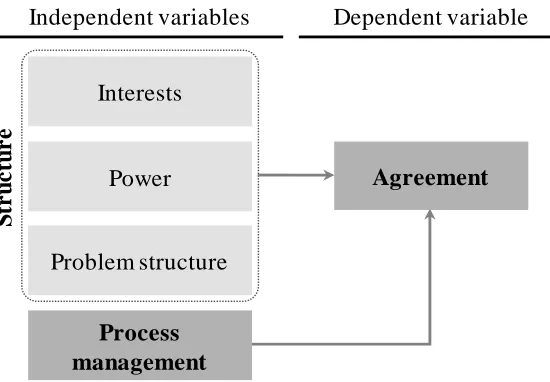
Figure 1: Process management as additional independent variable ... 60
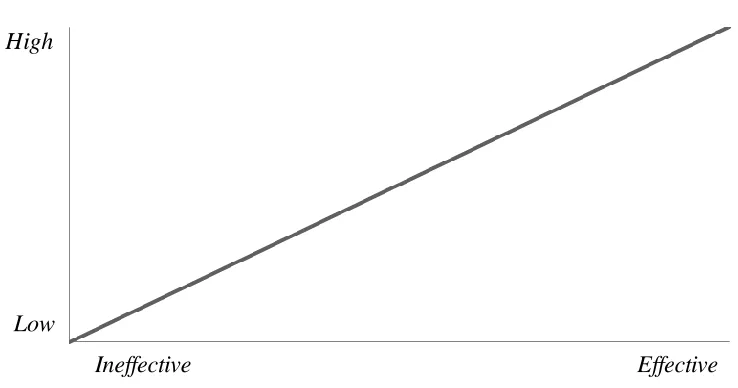
Figure 2: Process management alters the probability of an agreement (Hypothesis 1.1) ... 64
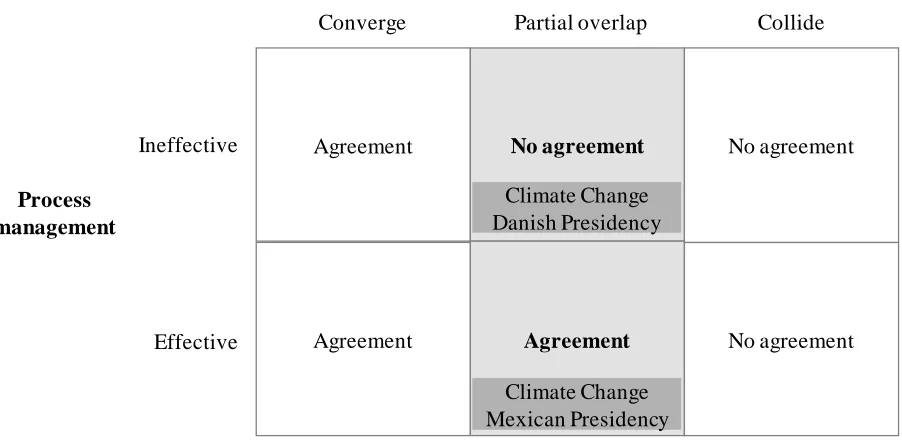
Figure 3: Relation of interests and process management (Hypothesis 1.2) ... 65
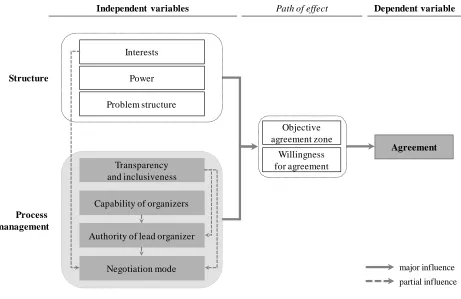
Figure 4: The negotiation framework integrates structure and process ... 73
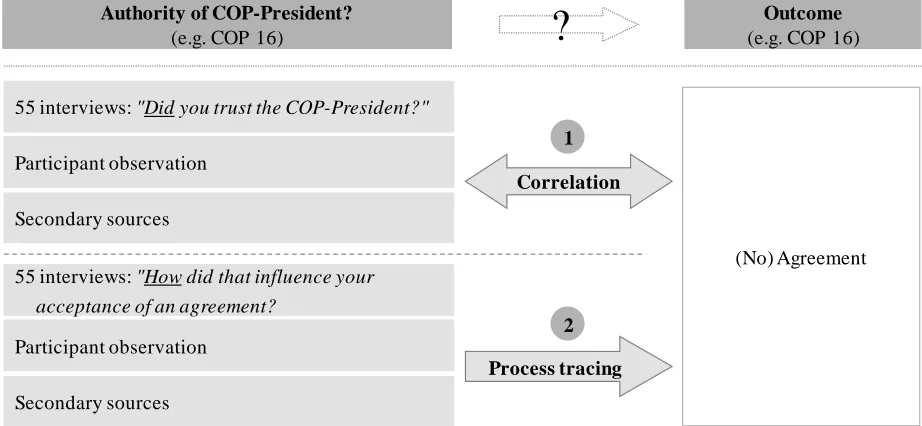
Figure 5: Probing a process variable through correlation and process-tracing ... 77
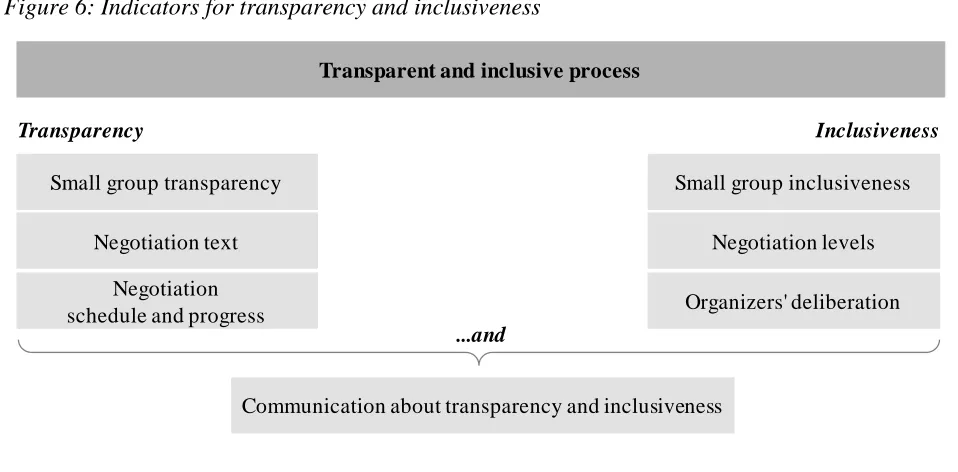
Figure 6: Indicators for transparency and inclusiveness ... 88
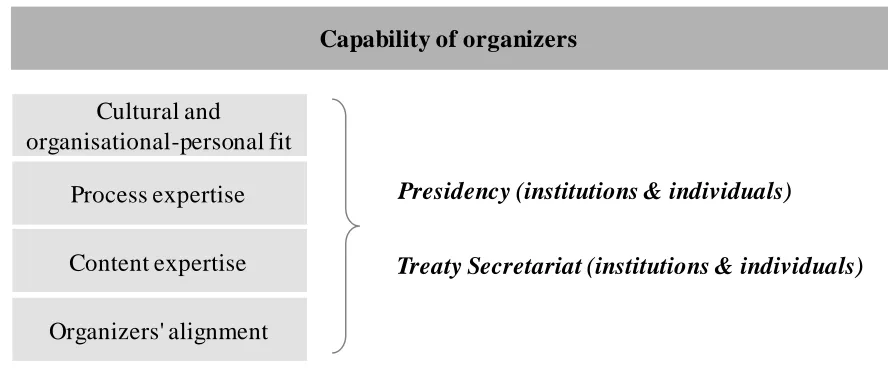
Figure 7: Indicators for capability of organizers ... 91
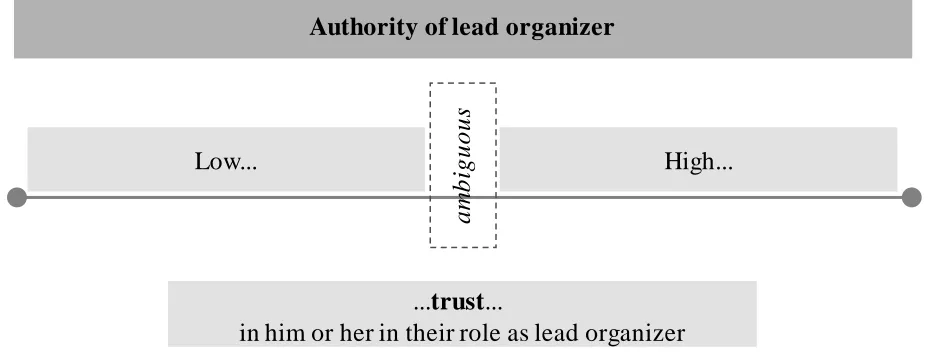
Figure 8: Indicator for authority of lead organizer ... 93
Figure 9: Indicators for negotiation modes of arguing and bargaining ... 95
Figure 10: Overview of the impact of process management ... 170
Figure 11: Process tracing between transparency and inclusiveness and agreement ... 170
Figure 12: Process-tracing between organizers' capability and agreement ... 222
Figure 13: Process-tracing between authority of lead organizer and agreement ... 244
Figure 14: Negotiation modes during the Danish Presidency ... 257
Figure 15: Negotiation modes during the Mexican Presidency ... 264
Figure 16: Process-tracing between negotiation mode and agreement ... 265
Figure 17: Applying the comprehensive negotiation framework to trade negotiations ... 305
Figure 18: Applying the comprehensive negotiation framework to biosafety negotiations ... 358
Figure 19: Process management altered the probability of agreement ... 426
List of Tables
Table 1: Interviews on climate negotiations with lead organizers, head negotiators, and
observers (2010-2012) ... 83
Table 2: Interviews on trade negotiations with lead organizers and head negotiators (2011-2012) ... 86
Table 3: Did all parties know the crucial moves and steps before and at COP negotiations? How were parties included in the negotiations? ... 153
Table 4: Did all parties know the crucial moves and steps before and at COP negotiations? How were parties included in the negotiations? ... 160
Table 5: Did this kind of transparency and inclusion have an influence on whether they agreed to the proposal? ... 169
Table 6: In hindsight, what was done well or not so well by (you and these) the organizers? E.g. on process and content matters at the COP? ... 185
Table 7: How well aligned was the interaction between host country and UNFCCC-Secretariat during 2009? ... 204
Table 8: In hindsight, what was done well or not so well by (you and these) the organizers? E.g. on process and content matters at the COP? ... 208
Table 9: How well aligned was the interaction between host country and UNFCCC-Secretariat during 2010? ... 217
Table 10: How did capability influence the reaching of an agreement? ... 221
Table 11: Did you have full trust in their authority for their negotiation role as Conference President? ... 237
Table 12: Did you have full trust in her authority for her negotiation role as Conference President? ... 240
Table 13: Did that influence your rejection or acceptance of the proposal, e.g. in the final nights when accepting the overruling of Bolivia at COP-16? ... 244
Table 14: Did you see open-ended arguing and problem-solving about content? ... 252
Table 15:Did you see open-ended arguing and problem-solving about content? ... 258
Table 16: Did the negotiation mode get parties closer to or further away from agreement? ... 264
Preface
Recent attempts to advance international regimes have created a puzzle for the traditional scholarship in the field of International Relations (IR). It could not fully explain why the long-awaited UN climate change summit in Copenhagen ended without official agreement in 2009, while it succeeded only one year later in Cancún. Over 120 heads of state and government had travelled to Denmark to attend one of the largest summits ever but failed to achieve a historic comprehensive agreement on the global challenge of climate change that could cost the world dearly. Similarly, the first salient trade negotiations after the creation of the WTO broke down in Seattle in 1999, and were successfully launched only in 2001 in Qatar as the Doha Development Agenda. What factors drove these events? Or, why did the biosafety negotiations to address the international handling of Living Modified Organisms collapse in 1999, before they reached the Cartagena Protocol in 2000? In all of these cases, fundamental power and interests constellations appeared to be constant in the brief time between the summits. So, these principal variables of neorealism and liberal institutionalism offer scant explanation for the initial failures and ensuing agreements, and leave us with a research puzzle: did the summits in Copenhagen, Seattle, and Cartagena then possibly not (only) break down due to clashing interests or lack of support by powerful countries, but to ineffective process management? As a lead UNFCCC-Secretariat official suggested in an anonymous interview for this thesis in May 2011: "The reason the Copenhagen Accord was not formerly adopted was bad process management."
organizers, such as the host government and the UN, alters the probability of agreement. In short, is there a 'power of process'? The work is embedded in the larger question that has intrigued scholars of regime formation for decades: "What are the determinants of success or failure in efforts to form regimes dealing with specific issues" (Osherenko and Young 1993, 2)? Better understanding the dynamics triggered by process management should add a missing piece to the knowledge of how multilateral negotiations evolve and conclude with varying degrees of success. This could complement the analysis of the structural factors of interests, power distribution, and problem structure.
The literature review in Chapter 1 shows that the mainstream structural IR theories of neorealism and liberal institutionalism have largely neglected process factors when explaining the behaviour of states with regard to international cooperation, and thereby left a research gap on process and multilateral negotiations. It sketches how rational choice-based game-theoretical approaches do not capture the full picture of such a sequence of negotiations. The chapter further details that some fields of IR (and beyond) have partially addressed negotiation process as a variable, such as strands of regime theory, constructivism, and those approaches that study the agency of bureaucracy and individuals, be they non-state actors such as the UN Climate Secretariat or be they a Foreign Minister and the supporting bureaucracy of a state that hosts a multilateral negotiation. This is where the thesis is located within the greater field of IR research on international cooperation, without an exclusive base in one theoretical corner. The entire point of the approach taken here is to combine process insights from across these schools.
negotiation framework of this research is constructed. The ensuing section on the specific
hypotheses on the management of a multilateral negotiation process details these roots in contemporary academic thinking. For instance, does the type of discourse between negotiators have any effect on the negotiation outcome? The selection of this process element is based on constructivist discourse literature and general negotiation theory on arguing and bargaining as two ideal types of negotiation. In addition to the literature, exploratory interviews and observation at the UN climate summit in Cancún in 2010 inform the hypotheses on process.
Having provided this background of recent process research and having fleshed out the hypotheses, Chapter 2 further describes the case selection and method of the within and cross-case analysis to answer the research question. The study concentrates on the three case pairs of the above-mentioned negotiations on climate, trade, and biosafety. All three negotiations were of high political importance: climate delegates negotiated about a first-ever comprehensive global agreement on climate change; trade negotiators discussed the launch of a new post-GATT trade round; and biosafety talks addressed the rapidly expanding business with Living Modified Organisms. They dealt with highly complex global challenges and opportunities, and negotiated in global fora. All case pairs were situated in similar temporal circumstances between 1999 and 2010 of a post-Cold War and post-US hegemonic era with emerging developing countries as China or Brazil, and so their overall contextual conditions are comparable. The potential salience of details of the negotiation process demands the possibility of interviewing most key players in person for this research and hence suggested relatively recent cases. Moreover, the opportunity for participant observation and access to a wide range of actual participants of the climate case pair made the UN climate negotiations during the Danish and Mexican Presidencies in 2009 and 2010 an ideal focus case. Negotiations on trade and biosafety became secondary case pairs.
is contrasted with that of the successive negotiation. The comparison across regimes then ensures maximal external validity of the findings. The chapter concludes by conceptualizing 'process management' in multilateral negotiations in detail so it can be tested in varying circumstances. Its key elements became transparency and inclusiveness, capability of the organizers, authority of the lead organizer, and the negotiation mode of arguing and bargaining.
The thesis then turns to its empirical heart with the following chapters on UN negotiations on climate change during 2009 and 2010. Chapter 3 provides the background to the focus case pair. It first offers a brief account of climate negotiations since the signing of the UN Framework Convention on Climate Change in 1992, and an overview of the complex UN climate negotiation structure. It then tells the story of climate negotiations during 2009 and 2010. These chronologies are mostly based on first-hand evidence from semi-structured interviews with delegates, organizers, and observers, as well as participant observation at the time, and complemented by the detailed accounts of the Earth Negotiations Bulletin.
Chapter 4 takes on the primary task of this research by testing the comprehensive negotiation framework proposed by this thesis against empirical evidence. It compares the process management of the Danish and Mexican Presidencies and the UNFCCC-Secretariat
sufficient to conclude a deal. The dissertation uses new evidence from interviews and participant observation, which was collected mostly at climate negotiations between 2010 and 2012. The database resulting from this field work contains 55 in-depth, semi-structured interviews on climate negotiations with senior delegates from key countries, high-level UNFCCC officials, and chief organizers of the Danish and Mexican Presidencies, complemented by participant observation at the climate summits in Cancún, Durban, and Doha.
Chapter 4 then scrutinizes in four extensive sub-chapters the key process management variables of 1) transparency and inclusiveness, 2) capability of the organizers, 3) authority of the lead organizer, and 4) the negotiation mode of arguing and bargaining. A two-step analysis
examines the role each variable played during the negotiations. The first step checks the
correlation between a process factor and the respective negotiation outcome. For example, the process during the Danish Presidency was much less transparent and inclusive than during the Mexican one. This process factor correlated negatively and positively with agreement as a negotiation outcome, as Copenhagen collapsed without adoption of the compromise proposal, while Cancún succeeded in attaining the Cancún Agreements. Beyond correlation, the second step of the analysis examines through meticulous process tracing whether and how a process factor, here transparency and inclusiveness (or the lack of it), contributed to the negotiation outcome. All four process management variables are studied through this two-step analysis of correlation and process tracing, based on solid and original empirical data.
they can (and seek to) explain the differences in negotiation outcomes. As indicated at the beginning, hegemonic theory proves less able to explain these results, as power structures barely changed between both years. Further, the interests of countries generally provide the context in which delegates negotiate. In the climate case, they allowed the reaching of an agreement as they narrowly overlapped at the outset. Yet, the constellation of underlying political, economic, and environmental interests altered very little between 2009 and 2010, so how can they explain the difference in outcomes? Besides, what role was played by the increased risk that the UN climate process would be abandoned as negotiation forum should no agreement be reached again? Additional drivers beyond structure may also come into play, such as the possibility of using the compromises from the earlier summit in Copenhagen as 'stepping stone' for Cancún, to name only one. The chapter on alternative explanations concludes the analysis of the comprehensive negotiation framework of the climate case pair, which is the focus of this dissertation.
process management of the hosts notwithstanding, political pressures after the terror attacks of 9/11 also appear as promising explanatory factors.
The case pair of biosafety negotiations in Chapter 7 serves as the final cross-case comparison for the negotiation framework. The confirmation of the hypotheses in a third regime would significantly support the approach suggested by this thesis. The expanding trade in Living Modified Organisms demanded states to act, yet negotiations for a biosafety agreement collapsed at the Cartagena summit in 1999. They only reached a successful conclusion in Montreal in 2000. The chapter contrasts process management until 1999, led by Danish negotiation Chair Veit Köster and the Biodiversity Secretariat head Zedan, with that by Colombian Chair Juan Mayr and Zedan post-Cartagena until 2000. Correlation of their varying process management with outcomes is followed by process tracing and alternative explanations. Among the latter, the formation of a new negotiation coalition is one example of an additional factor.
1. Literature review: Neglect of process management of multilateral negotiations
This dissertation aims to narrow the research gap on the role of process management in multilateral negotiations. A wide array of IR literature has dealt with international cooperation and regime building, for which negotiations often form a crucial step. Yet, the literature review will show how scholars have mostly focussed on structural conditions, such as interest and power, to explain cooperation. They have largely neglected process variables. This is somewhat different for regime theory and constructivism, as well as theories on the agency of bureaucracies and individuals, who have partially considered the role of process. This review mainly addresses IR scholarship, and only partially non-IR negotiation analysis. Based in management research, the latter studies a different negotiation setting (e.g. Sebenius 1992; Thompson 2009), and can be applied only very selectively. Multilateral negotiations in turn have their own peculiarities (Depledge 2005, 6-7): states are different from other negotiating parties with their heterogeneous domestic constituencies on whose behalf they negotiate; global negotiations are not only among two or several states but comprise nearly the entire world; finally, they are repetitive 'games' as further negotiations of all kinds occur among states, as the climate, trade, and biosafety cases show. Let us begin with a review of how traditional, structural IR theories explain international cooperation, which will illuminate how little they have considered the process management of multilateral negotiations.
1.1. Neorealism
Focus on power
silent on process issues. Simply speaking, it looks at a different level (systemic) and actors (states understood as rational, unitary agents) with a longer time horizon in its analysis, when compared to process management approaches. Let us illuminate this difference by revisiting realism's approach to international cooperation in broad strokes. In its modern 20th century version, it has evolved into several neorealist variances. Early realists positioned the concept of power against more utopian explanations of foreign policy, as elaborated by E.H. Carr (e.g. Carr 2001). Realists grounded the Hobbesian struggle for power in the condition of human nature (e.g. Morgenthau 1954). Later, neorealists shifted towards a more structural perspective of the international anarchic system, where power differences within the system of states became the determining variable (e.g. Waltz 1979). Through this shift to structure, they also moved further away from the detailed analysis of foreign policy processes. Broadly speaking, some neorealists today underline the centrality of relative gains of power to explain international cooperation, while others emphasize more the need for a hegemon to create regimes. For both approaches, process does not really matter.
stands in contrast to neoliberal institutionalism which interprets interests such that absolute rather than relative gains matter for engagement in cooperation.
In consequence of this state-centric view, most neorealists hold that non-state actors, such as international organizations, are powerless and have negligible significance as causal drivers of international regimes (e.g. Mearsheimer 1994). They have no role to play as independent actors in international politics and are hence not considered autonomous units. Instead, states have full control over the development of regimes, and the organizations within them. So, the willingness of states purely decides on the existence and shape of cooperation, and is a mere reflection of their striving to maximize power. Some neorealists, however, concede that once equal power gains allow for a potential collaboration, information and implementation mechanisms of international institutions can overcome the remaining obstacle of the fear of cheating (Grieco 1988b).
Besides, numerous neorealists stress hegemonic power as a determining factor for international cooperation. To what extent is this concept applicable for our cases, given that realists have traditionally understood power predominantly in military terms (Baldwin 1993), and thus applied it in security studies? Military dominance, for instance, gives a hegemonic state sufficient power of deterrence to produce stability. This is a public good, which smaller states would not be able to produce by themselves. The hegemon can thereby create a security regime that less powerful states would accept voluntarily or are – at the extreme – coerced into (Olson 1965). Hegemonic stability collapses once the power distribution changes.
Woods agreements illustrated this mechanism, as it was largely dominated by the US and UK as economic superpowers. Moreover, power could play out in environmental cooperation, which has been growing in importance given the rapidly expanding resources consumption. Today's major environmental challenges are often global, such as the destruction of the ozone layer, climate change, and biosafety. Given the close link between environmental and economic issues, political-economic clout could also influence environmental cooperation. Such leadership has been identified for Germany as European economic hegemon, for instance, in contrast to other environmentalist states with smaller economies such as Denmark, which is less successful in providing such leadership (Falkner 2005, 589). In climate negotiations, the reduction of greenhouse gases is as much influenced by environmental as by economic considerations, such as the costs of climate change and its countermeasures. So, some argue that only the size (i.e. power) of the European market allowed establishing a European Trading System for carbon emissions (Busby 2009, 92). Yet, the argument continues that the absence of other large economies, such as the US or China, from such a scheme undermines the effectiveness of such leadership in an economically non-hegemonic, multi-polar world.
Critique
economic negotiations that in a largely constant political-military power structure, negotiation approaches and results varied nonetheless, and depended, for example, on market conditions instead (Odell 2000, Ch. 3). He further argued that economic cooperation does not only depend on structural economic power, but on subjective factors such as the beliefs and biases of negotiators (Odell 2000, Ch. 4 and 5). Finally, political-economic power only marginally explains environmental cooperation. If a hegemon uses its full political capital to push for global environmental regulation, it is hard to imagine it not succeeding (Touval 2010, 86). Yet, power does not capture the full picture (Young 1994), as the mere existence of a hegemon does not explain environmental cooperation. Rather, domestic interests and institutional structures often determine whether a hegemonic state takes on an environmentally-friendly or –sceptic stance, as the behaviour of the US suggests (Falkner 2005, 589).
Furthermore, several environmental negotiations have produced outcomes that ran contrary to the position of a dominating country. For instance, parties adopted the Cartagena Protocol on Biosafety against US opposition (Falkner 2009, 114). A recent compilation of cases has observed such cooperation without a hegemon in the past two decades from the creation of the International Criminal Court to the Anti-Personnel Landmine Ban Convention (Stiles 2009). This undermined the validity of the hegemonic stability approach across most areas of international politics. Instead, the liberal rational choice argument goes, groups of more activist middle-power countries ('k-group') can reach a critical mass, which successfully drives cooperation. This is especially true for club (rather than public) goods, for which cooperation can be achieved without hegemonic contribution (Stiles 2009, 6-8).
succeeded in Cancún only one year later. In this short time lag of one year, the power distribution between countries barely changed, and prospective gains (and losses) from the proposed outcomes had not substantially altered. So, relative power considerations scarcely explain the change of behaviour between Copenhagen and Cancún. This will be assessed in detail later on, but there are initial doubts that it explains this sequence of negotiation outcomes. Relative gains concerns might instead be more useful for assessing the long-term level of cooperation. Continuing the climate example, the fear of losing relative economic power might have led to a stalemate in the deepening of the UN climate regime. Many countries, such as China or the US, would each not want to constrain their economies relatively more than their competitors.
In conclusion, realism takes a long-term view on the international system in which the struggle for power by unitary states determines their attitude towards international cooperation. Realism does, therefore, only scarcely consider negotiation processes and their management, as the negotiations often concern shorter time horizons and the process itself occurs on a more detailed, micro-level of analysis. This is not to say that power considerations have not always been an important factor for international cooperation. However, it seems doubtful that power alone is a sufficient explanation for state behaviour: economic and environmental regimes have been created without hegemonic consent, such as on biosafety in Montreal, and even a hegemonic position has not been enough to attain cooperation for a superpower, such as on climate change in Copenhagen. So overall, the thesis will consider power as a contextual factor. Prima facie though, power seemed to be constant across all case pairs studied here, while
1.2.Liberal institutionalism and regime theory
Focus on interests
Interest-based theories are rooted in liberal institutionalism. They rest on the assumption that international regimes can influence the behaviour of states, not just vice versa. So aside from power structure, increasing interdependence and expanding international regimes provide a framework for state action. This reduces the uncertainty about the behaviour of other countries and so the "shadow of the future" (e.g. Keohane and Nye 1977; Keohane 1984). States have an interest in such cooperation. It reduces their costs of transactions when operating internationally, increases the chances of implementation, and thereby reaps absolute gains for all. Contrary to the realist argument, neoliberals hold that states do not oppose cooperation only because other states achieve relatively more gains (Hasenclever, Mayer et al. 1997, 4). This neoliberal understanding of state behaviour thus leaves broader room for the creation of regimes. It is influenced by a microeconomic view of states as rational actors that purely follow their preferences to satisfy their interests. Accordingly, cooperation largely depends on the global structure of interests on a particular issue. As with neorealism, this argument is largely structural, and so the strands of liberal institutionalism scarcely deal with process issues, such as the management of a multilateral negotiation and the detailed sequencing of international cooperation. Building on these shared views of institutional liberalists this section first discusses various game-theoretic constellations on the international level, then opens the black box of the state to account for the domestic level, before it finally details the approach of regime theory. Of these three approaches, only domestic level accounts and regime theory partially consider process in their explanations.
parameters. The theory characterises negotiations as varying kinds of 'games' with states as central 'players', which rationally assess their interests and pay-offs at the outset of the negotiations. From this analysis, they derive their negotiation position and strategy to maximize their gains. The positions of all players create an objective-rational zone of possible agreement. Theoretically, the respective game set up predicts the strategies of actors and the negotiation outcome.
Using the game theoretical concept, many global problems of international cooperation have the structure of the thought experiment Prisoners' Dilemma for neoliberal scholars. Interests would generally lead states to cooperate. Yet, they do not trust each other to adhere to agreements but instead to double-cross the other party (Keohane 1984). Such a strategic situation has often been assumed for multilateral negotiations (Schelling 1960). Applied to climate negotiations, the strategic assessment could include economic, environmental, security, political and moral interests. Depending on the calculations, the possible pay-offs of parties could suggest a strategy of not cooperating in reducing emissions. Instead, the defecting country prefers that others produce a stable climate thereby minimising its own mitigation costs (Busby 2009; Grundig 2009; Harstad 2009). In the end, no country can be excluded from the benefit of the public good of a stabilized climate. If all parties follow this defection strategy however, climate change would simply accelerate. But who would voluntarily mitigate first, at initially high economic cost, when others may defect?
with strong implementation mechanisms can make defection less likely. These examples suggest that cooperation is still possible despite the collaboration problem of the Prisoner's Dilemma.
Scholars have identified additional strategic situations, such as the coordination problem. In the so-called 'Battle of the Sexes' it is best for both parties (here: the couple) to cooperate, from which they both envision more gains than from non-cooperation (Stein 1983). Yet, they need to decide on the kind of cooperation, as this determines the distribution of the potential gains amongst each other. Depending on this decision, parties receive diverging levels of pay-offs. As both parties gain, the likelihood of coordination is higher than in the Prisoner's Dilemma. Nevertheless, it still requires a decision on pay-off distribution. At this point, neorealist-driven thinkers introduced the "exercise of state power" into the 'Battle game' to explain which distribution was chosen and whether it achieved Pareto optimality (Krasner 1991, 340). Yet, whether climate negotiations, for instance, are a problem of collaboration or coordination depends on numerous, not-so objective assumptions on climate change.
(Zartman and Touval 2010, 234). This hints at fairness of the negotiation process as the salient factor for cooperation, to which we come back later. Yet, the state is usually not a unitary actor, so neoliberals looked further onto the domestic level.
Two-level game
Liberal-institutional scholars have investigated the political dynamics within a state, which underlie the determination of preferences. In this area of research, process issues have partially entered their analysis. They have disaggregated multilateral negotiations into a two-level game to analyse the process of how states generate negotiation positions on a national level, and how this is used back on the international level (Putnam 1988, 434). This abandoned the realist notion of the state as a unitary "black box". The domestic distribution of power, preferences, and coalition formation shape positions domestically ("Level II"), before a state enters the international negotiation arena ("Level I") (Putnam 1988, 442). This national process determines the win set of a country, defined by its target and reservation points for the negotiation. Eventually, the degree of overlap between the win-sets of countries determines the likelihood of agreement. The argument has been repeatedly tested with indications to relax some of its hypotheses (Moravcsik 1997), recently for instance with the case of the non-ratification of the Kyoto Protocol by the US (Hovi, Sprinz et al. 2012). However its general explanatory power for the process of the interplay between the two levels still seems to hold.
negotiations in Cancún in 2010 is a case in point. The institutional set up of the US political system required the ratification of any binding commitment. At the time, the Republican-controlled House of Representatives in the US Congress would have hardly allowed the Democratic Administration (and its climate negotiators) to agree on far-reaching emission mitigation commitments. This reduced the overlap of win-sets with other, more ambitious negotiation parties (Putnam 1988, 448).
The understanding of this two-level dynamic eventually also explains attempts by negotiating countries to restructure the win-set of the other side (Putnam 1988, 454). Countries regularly also target the domestic constituencies of their counterparts to alter the internal dynamics of preference forming. Actors are constantly playing on both levels, in their own as well as in the worlds of their negotiation counterparts. Even the multilateral negotiations themselves can change the domestic discourse and hence preference in an issue area, when the balance of opinion is fragile and is easily tipped by an additional factor (Putnam 1988, 454).
Regime formation and development
institution to address an international problem (Young 1989, 359). Special circumstances are that there is usually no majority voting and the regime is only formed by consent. Further, the issue variety and complexity is often such that parties only gradually reduce the 'veil of uncertainty' on near- and long-term pay-off structures during the negotiations (Osherenko and Young 1993, 227).
The second direction of regime theory addresses the more prescriptive question of how future negotiations and institutions should be designed. With regard to the climate regime, for example, researchers discuss the switch to multi-track climate treaties, which leave the comprehensive UNFCCC process behind (Barrett 2007). Others defend the existing framework as the still the most appropriate form (Depledge and Yamin 2009). Finally, some deliberate on the creation of a permanent environmental organisation (Biermann, Pattberg et al. 2009). As the key research question of this thesis addresses how process management influences negotiations and the formation and development of regimes, it is more closely related to the first strand of regime research.
Let us now reiterate the evolution of this branch over the past two decades as context for this thesis.1 This will show how regime theory has partially integrated process issues in their analysis. Scholars first studied regime formation and described it as a "process of interactive decision making" (Osherenko and Young 1993, 13). Comparing power, interest, knowledge, and global context, they remained in neoliberal territory when finding 'interest' to be the most salient factor. Yet, they argued that the exact pay-off structure is often unknown in circumstances of complex and uncertain future developments. Therefore, interest alone is an insufficient factor, and regime formation also depends on the process circumstances of negotiations. They tested ten
1 Young broadly distinguishes three phases (Young 2010): The 1990s defined the primary terms of the theory and
conditions of environmental regime formation and found three as particularly important (Osherenko and Young 1993): effective individual leadership, equity of the proposal, and existence of focal points. Process factors with less certainty were integrative (rather than distributive) bargaining and the availability of effective compliance mechanisms. They called for further research into the interaction between "social driving forces (that is power, interest, and knowledge) and crosscutting factors (that is leadership and context)" (Osherenko and Young 1993, 251) – a suggestion to which this dissertation responds.
The IR Handbook stocktaking on "diplomacy, bargaining and negotiation" still states the lack of research into the process and dynamics of multilateral negotiations in 2002 (Jönsson 2002). It shows that the major shortcoming of game theory (the assumption of rational, unitary actors in more or less static strategic settings) had stimulated research on the context and process of negotiations. Jönsson lays out six fields of research beyond game theory: culture (e.g. encounters between high- and low-context cultures), asymmetrical distribution of power (e.g. the notion that weaker states could sometimes be more successful in negotiations than stronger states), negotiating for side-effects (e.g. for some parties negotiations could be merely for communication, contact-building, information gathering, and propaganda), issue context and institutional embeddedness (e.g. that the specificity of issues and actors matter), mediation and multilateral negotiations, as well as negotiation dynamics. Accordingly, especially the last two fields need further investigation to better understand multilateral negotiation processes: there is "need to look more at the process ('the how') as scholars have so far more focused on the conditions of regime creation ('the why')" (Jönsson 2002). This is the goal of the dissertation.
malign a policy problem is. This is related to "problem-structuralism", which makes cooperation dependent on the kind of problem (Czempiel 1981; Rittberger and Zürn 1990). Regime development is more frequent in certain policy domains (e.g. economic more than security issues), and conflict types (e.g. conflict about interests more than underlying values). Besides problem structure, Underdal finds greater problem solving capacity of an institution to enhance collaboration.
This problem solving capacity is determined by the "institutional setting (the rules of the game), the distribution of power among the actors involved, and the skill and energy available for the political engineering of cooperative solutions" (Underdal 2002, 21). Decision rules (e.g. majority voting, unanimity) form the core of the institutional setting, with consensus as a major obstacle to building regimes. However, its negative impact can be reduced by the "creative use of selective incentives, differential obligations (including loopholes), and promotion of voluntary overachievement by pusher countries (leading to two- or multiple-track cooperation schemes)" (Underdal 2002, 24). The distribution of power connected to the interests of the power-holding actors is a further factor alongside the institutional setting. Yet, this negotiation structure is not a satisfactory explanation when negotiation situations are highly complex and ambiguous. In that case, "skill and energy" are needed. Underdal understands such leadership as the "political engineering of international cooperation" with tools such as the design of substantive solutions, of institutional arrangements, and of actor strategies (Underdal 2002, 33). This thesis will build upon this notion of "skill and energy" for process management.
precisely, the extent of "alignment" between regime character and setting is decisive (Young 2010, 13). In the climate regime for instance, the inflexible UNFCCC regime is not aligned with its volatile setting of climate change. This leads to very limited change ("arrested development" pattern). Yet, this approach is again largely structural, as it explains little of the process of how to change the regime. The variables mainly describe statically which structural alignment leads to which change pattern. Yet, how is the rigidity of the regime itself changed? Young resorts to power, interests, and ideas (Young 2010, 182), but sheds little light on the management of the negotiation process, which the thesis aims to enhance.
In a recent overarching approach to explain the slow advancement of international climate cooperation, Keohane and Victor consider interests, power, information, and beliefs as factors (Keohane and Victor 2011). They regard climate change politics as a 'regime complex' with multiple forums that lack clear hierarchy. Accordingly, functional, strategic, and organizational factors cause the current stalemate. It is functionally hard to coherently address the diversity of these problems, strategically difficult to align states given their heterogeneous interests (and scarce convergence of powerful states), and organizationally challenging to change an emission reduction path already taken by a group of countries. Also the account of Keohane and Victor looks more at structural determinants and pays less attention to negotiation process factors, where this thesis comes in to explain, for instance, why the climate negotiations in Cancún reached an agreement, while they did not in Copenhagen. A similar, more overarching approach is the research of the Global Governance Project, which concentrated, inter alia, on new rule-making across a fragmented global environmental governance and on novel actors beyond the state, such as civil society but also international bureaucracies (for an overview of results: Biermann and Pattberg 2012). Yet again, the project did not specifically analyse the dynamics of multilateral negotiations as still the key forum of most regimes, and how they can be influenced by organizers as autonomous actors.
agreement, reminding of the problem structure argument by others, and depends on the cost-benefit calculation of countries (Mitchell 2010, 117). The salience of scientific input is reiterated, yet also the difficulty of considering its insights when interests are strongly opposed (Mitchell 2010, 119). Finally, existing institutions in an environmental issue area, dense interdependence between countries, and growing problem awareness are further structural aspects that increase the chances for cooperation. Mitchell overall though joins the many scholars who have doubts about structure as the main determinant of agreements (Mitchell 2010, 118).
Further authors have analysed recent environmental negotiations by focussing on a variety of single factors, yet without adding up to a distinct debate in one area of regime theory. For instance, they described the positions of individual countries (such as China at the Copenhagen climate summit), context factors, and negotiation sequencing. Dimitrov correlates a series of individual occurrences with the eventual failure of Copenhagen in 2009, e.g. the announcement of a "deal" by US President Obama before the final plenary had even looked at the proposal of only a few powerful countries (Dimitrov 2010). Or, Bodansky provides an account that describes the Copenhagen summit and outcome, without highlighting the impact of specific variables of influence (Bodansky 2010). Haas offers an extensive list of contextual factors as elements of failure in the climate process, such as the weak institutional set up with a small Secretariat, scarce financial support for developing countries, and insufficient domestic pressure in some key states (Haas 2008). Overall, they take a less comprehensive look at the negotiations to assess which structural and process factors altered the likelihood of agreement. Finally, recent studies have emphasized climate negotiations as such, but mainly considered countries (and their delegations) to be key players and looked at their factors of bargaining success, or more specifically at individual countries and coalitions (Michaelowa and Michaelowa 2012).
Critique
explanation of a negotiation 'game', which uses the rational interests of states, is blurred through arbitrary elements, which can distort the theoretical outcome.
A related problem is that game theory mostly concentrates on the initial pay-offs to explain negotiation behaviour. If interests converge or collide, an agreement can be reached or not. It does not capture the many situations where pay-offs and positions are not clear up front and are formed in the course of a negotiation. This is especially true for negotiations on very complex issues with an ambiguous preferences (Mitchell 2002, 505). In these cases, it can be the negotiation process that determines whether parties uncover a zone of agreement. A poorly managed process may also move parties into antagonistic behaviour and destroy any chance of an agreement. As real people (that do not fit one standard-rational definition of a theoretical model) negotiate on behalf of states, they can be influenced also on a personal, emotional level by the circumstances of a negotiation process. Negotiation positions might thereby not just be rationally calculated on a drawing board up front, but might be influenced by the way the process is managed.
theoretical shortcomings. He adds the salient domestic facet to explain the behaviour of states in multilateral negotiations. Putnam, however, does not include process management dynamics, so the latter can complement his two-level game approach.
Regime theorists have widened the perspective on the evolution of international cooperation beyond the limited structural account of pay-offs and interests. Thus, they reached the greater complexity required to paint a fuller picture of negotiations. Yet, while this widens the lens onto comprehensive structural accounts, many still only marginally look at the actual functioning of the negotiation process below macro-level conditions. Some nonetheless took process into account. Osherenko and Young designed an overarching structural-process model (Osherenko and Young 1993). Some others also fleshed out structural factors and specific process variables (e.g. Jönsson 2002; Underdal 2002; Mitchell 2010). I will elaborate on these in more detail below, when I discuss the specific elements of process management. Overall, this thesis connects to the comprehensiveness approach and to selected elements of regime scholarship on the creation and further evolution of regimes.
In sum, the analysis of international cooperation based on the interests of states by most strands of liberal institutionalism considers the effect of process management on multilateral negotiations only on the side. Therefore, this dissertation rather connects to the work of regime theory and goes beyond 'interest' to understand the key process variables that also influence the evolution of negotiation positions, and hence eventually (non-)cooperation as final outcome. As we have seen, a few specific elements in recent regime theory already hint in this direction.
1.3.Constructivism
In the past twenty years, numerous theorists have adopted a more reflectionist than rationalist view to explain international politics and cooperation. They have investigated the process how structure constitutes actors, yet also vice versa (Barnett 2005, 262). This approach brought IR theory closer to the study of process issues. Reflectionist scholars vary between a moderate and outright rejection of established rationalist approaches. On one side, highly critical ideational scholars doubt the pure rational choice-motivated behaviour of states and argue that they aim to fulfil subjectively constructed roles (e.g. Wendt 1987). States are constituted only through a subjective concept of an international society of states and its institutions. Their relations are ruled by an ever-changing understanding of international institutions consisting of rules and norms. From this, states infer their identity and role, and deduce their expected behaviour in international politics. The continuous interpretation of rules and norms by states in turn alters them over time, so that a dynamic of mutual influence is created. For instance, the change in identity of a group of states towards a 'collective identity', like in the European Union, could explain emerging cooperation beyond the mere basis of power and interests (Wendt 1994).
to negotiations, like the Japanese in Kyoto. Yet, he also shows that this thinking could be attributed to the potential material benefits states might reap from such prestige (Busby 2009, 81, 86).
On the other side, a more moderate strand of reflectionist scholarship is constructivism. It mostly acknowledges the interest-driven rationality of decision-making. Yet, it takes a less systemic-structural and more process-oriented perspective. Constructivists highlight the process of how these interests are shaped by discourse and ideas (e.g. Haggard and Simmons 1987; Haas 1992; Goldstein and Keohane 1993). Accordingly, discourse affects ideas also on an international level. Ideas, understood as "causal and normative beliefs held by individuals", then influence the actors of international politics (Hasenclever, Mayer et al. 1997, 139). Ideas could eventually transform their views so that their international political behaviour changes.
position of a negotiating country (Risse-Kappen 1995). National and international discourses are thus interwoven.
Regarding these different strands of reflectionist scholarship, this thesis concurs that perceived roles also influence states in their behaviour in international society. Yet, the focus of this research is the extent to which process management has an impact on the outcome. In order to investigate this part of the picture in more detail, constructivism on the moderate side of reflectionist theories seems more promising as it revolves around immediate and concrete influences of discourse and ideas on international negotiations. It takes less of a meta-level view of international society. In the following, I will first outline the concept of discourse modes in negotiations, and the debate on their role in multilateral negotiations.
Discourse modes in negotiations
How can ideas influence the preferences and positions of countries, and eventually the negotiation outcome? This mechanism is still regarded as underexplored (O'Neill, Balsiger et al. 2004, 163). As discourse is one entry point into the negotiation process for an idea, the analysis of negotiations from the perspective of the mode of discourse and its impact on positions has been one approach to shed light on this question. Scholars distinguish between the modes of bargaining and arguing. In pure terms, bargaining implies the "exchange of demands, threats, and promises" between parties to distribute potential negotiation pay-offs whereas arguing means "deliberative and truth-seeking behaviour" to convince someone else in an open-ended discourse (Ulbert, Risse et al. 2004, 2). The underlying assumption is that arguing facilitates the reaching of an agreement whereas bargaining reduces the chance of a compromise.
in rational action theory between the willingness to cooperate and the eventual actual cooperation. According to him, parties have to reach a common definition of a situation and its relevant norms to get from their interests to action. They achieve that by proposing and evaluating arguments. This mechanism however is contingent on their openness to such a discourse. In that discourse, parties claim validity with regards to their 'speech acts', 'moral rightness', and the 'authenticity of their speakers'.
Conditions and impact of discourse modes
The discourse analysis of a series of multilateral negotiations, such as that of the International Criminal Court (ICC), shows that arguing influenced a negotiation outcome through the change of parties' perception of an issue and their related interests, and in consequence their negotiation position (Ulbert, Risse et al. 2004, 34). The study revealed that both modes of arguing and bargaining often occur in combination during all phases of multilateral negotiations: from agenda-setting to the type and quality of a final agreement. If certain conditions are not met however, parties stay in a bargaining mode. With regard to climate change for example, the lack of a common perception of a "fairness of burden-sharing" is conceived of as a salient obstacle to regime progress. In that case, the situation of an ideal discourse type is not granted. Finally, despite their finding of a positive impact of arguing on reaching an agreement on the ICC, Ulbert and Risse could not produce reliable evidence on the conditions and exact functioning of such an influence. Nevertheless, they collected indications for such conditions, e.g. the importance of "previously agreed-upon principles… [as] points of references", or the presence of persuasive knowledge brokers.
never be fully observed in reality (Deitelhoff and Muller 2005, 168, 178). Among other problems, it proved empirically hard to distinguish a negotiator's genuine internal motivation to argue in search for the best solution from the argument-disguised, mere bargaining. Nevertheless, they approximated three overall conditions so that arguing would occur and have an effect on the outcome in international negotiations (Deitelhoff and Muller 2005, 172): 1) an overlap of lifeworlds of negotiators in that they share some common experience and background; 2) the existence of ideal speech situations approximating the Habermasian type in the setting of international institutions with sovereign states; 3) the third condition of publicity of the negotiations remains ambiguous in international negotiations. Public scrutiny motivates parties to propose substantive arguments. Yet, it also deters parties to concede a position publicly as they would risk losing face. Finally, they add two arguing-enhancing factors: uncertainty about facts, and the resonance of an argument brought forward by an authoritative figure. The fact that a person with widely-accepted moral authority argued for something proved rather important in their research.
Regarding the impact of discourse mode, Hopmann holds that bargaining reduces agreement chances in most multilateral negotiation situations, as they have an only marginal overlap of interests, multiple and complex issues, multiple parties with diverging interests, and high tensions with essential interests at stake (Hopmann 1995, 44). Agreement requires arguing instead. Such "creative problem solving" can be facilitated by issue framing and packaging, jointly held principles, third parties' good offices, and effective management of group complexity (Hopmann 1995, 45) – tools which organizers can also use.
Critique
Studies now have increasingly merged rational and constructivist approaches. Preferences would not be "exogenous and fixed" at the outset of a negotiation, determining the structure of the strategic setting (Hopmann 2010, 110). Rather, an open-ended, non-conflictive negotiation style would enable changes in the attitudes and ideas of states. This would eventually alter their rational preferences, which are hence influenced by the negotiation process itself. Other scholars also combined arguing with rational choice, and went even further (Grobe 2010). Accordingly, arguing does not change preferences but the fact base, with new knowledge on causes and effect. The position of an actor hence alters within his pre-determined set of preferences (Grobe 2010, 6). Arguing is held as a "functional persuasion" rather than a persuasion based on the sincere search for truth as traditional constructivists hold (Grobe 2010, 22). The more recent approaches have in common that they explicitly combine constructivist thinking on ideas and discourse with the neoliberal views on preferences, which this thesis shares.
conditions of arguing and studied in which cases arguing-induced preference changes occurred (Risse and Kleine 2010). They studied negotiations on producing a proposal for a European Union Constitutional Treaty, and detailed the conditions of discourse modes during the failed European intergovernmental conferences and the successful European Convention. Accordingly, three institutional negotiation characteristics drove discourse choices (Risse and Kleine 2010, 720). The more uncertain actors were about their negotiation roles and hence preferences, the more open they became to arguing. The public setting of a negotiation also influenced the extent of arguing. Finally, the ability of neutral expert authority to give input on the negotiation enhanced arguing. This thesis, though, focuses more on the crucial question of whether and how arguing makes agreement likelier than bargaining at all.
To conclude, constructivism has moved the field of IR closer to the study of process and away from a purely structural analysis. It suggests an impact of different kinds of discourse (and negotiation modes of arguing and bargaining) on reaching agreement in multilateral negotiations. According to its scholars, it falls short of establishing certainty on the conditions of arguing. The research question of this dissertation though focuses on the influence of discourse mode on advancing negotiations, and will therefore complement current research on impact. It will only marginally address the conditions of discourse mode to see whether organizers have any lever over the choice between arguing and bargaining.
1.4.Agency of bureaucracies and individuals
Focus on selected agents