An Analytical Solution for a Non-Preemptive Handoff
Priority-based Cellular Scheme with Drop out Voice
and Data Calls
Tehmina Karamat Khan
Taimur Karamat
Institute of Engineering and Management Al Karim Enterprises Sciences Foundation University 1, Near High Level Bridge Mardan Road,
Islamabad, Pakistan KPK, Pakistan
ABSTRACT
The design and engineering of proficient multimedia traffic schemes in wireless cellular networks with Quality of Service (QoS) guarantees involve the performance modeling and analysis of multi-server, finite capacity nodes of queueing network models (QNMs) with drop out calls from queue. This paper focuses on a non-preemptive cellular scheme, where originating and handoff voice and data calls are prioritized by assigning finite capacity queues with dedicated channels, as appropriate. In this context, a performance evaluation study is undertaken based on the analysis of a finite capacity M/M/c/K building block queue with c servers with a Poisson call arrival process and exponentially distributed call time out periods. A new exact closed form steady state probability distribution and associated performance measures are derived and some typical numerical experiments are carried out to evaluate the impact of different traffic patterns on QoS.
Keywords
Queueing theory, wireless cellular systems, mobility, originating voice and data calls, handoff voice and data calls, call timeout periods.
1.
INTRODUCTION
The performance evaluation of a cellular cell for which there is a queue for hand off voice and data calls is a complex problem. In [10] handoff scheme in integrated voice/data wireless network has been analyzed, in this scheme smooth termination and force termination are not considered for performance evaluation. The voice/data wireless networks with priority reservation and preemptive procedures [1], an analytical model is presented where only handoff data calls are queued and priority is given to handoff voice calls but when all the channels are busy processing calls all handoff voice, originating voice and data calls are dropped. The smooth termination and force termination of calls is not considered. Effects of hand off of queued call requests with finite queue size are studied in [6]. Guard Channel Scheme(GCS) and Handoff Queueing Scheme(HQS) is extended in [9] where the channels for handoff calls are reserved dynamically depending on the current status of the handoff queue, important performance metrics i.e.
forced termination and smooth termination of calls are not taken in to account. Handover and Class-Based Call admission control algorithm for heterogeneous wireless networks is presented in [4], the system analyzed is a Loss-System i.e. when all the channels are busy processing calls, all calls will be blocked. Calls are prioritized with dedicated channels assigned. In [5, 7, 8] the analytical solutions developed has overlooked upon important probabilistic assumptions made by stochastic processes, which are not being satisfied.
In this paper an analytical solution associated with queues with multimedia traffic consisting of originating and handoff; voice and data calls, with time out periods is devised. This solution is a simple and cost effective generalization to one devised in [3].
Rest of the paper is organized as follow; Section 2 presents a queueing model of a non-preemptive cellular handoff scheme. Section 3 derives the exact solution of the flow balance equations of the queueing model. Section 4 determines the analytic expressions for the corresponding performance measures, such as the mean numbers and blocking probabilities of originating and handoff calls in queue, the actual arrival rate and the mean waiting times of originating and handoff calls. Some typical numerical experiments are carried out in Section 5. Conclusions and remarks on future work follow in Sections 6 and 7, respectively.
2.
Model Description
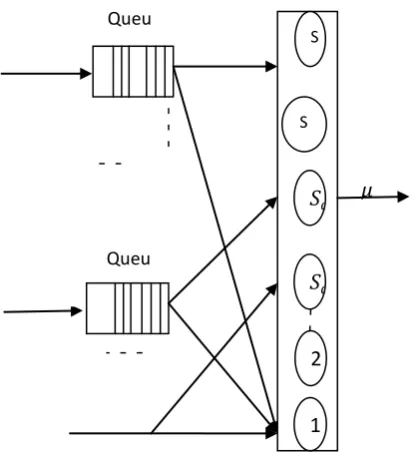
Fig. 1.A queueing model of a non-preemptive handoff priority-based scheme
Calls are of four types i.e. originating voice and data calls, handoff voice and data calls. Let hov, hod, hhv and
hhd be the four random variables of inter arrival time of
respective calls. All arrivals occur from an infinite source in accordance with a Poisson process with parameter λ𝑜𝑣,λ𝑜𝑑,λℎ𝑣 and λℎ𝑑 respectively, inter arrival times are independent and exponentially distributed with mean 1
λ𝑜𝑣, 1
λ𝑜𝑑, 1
λℎ𝑣 and 1
λℎ𝑑. Therefore by memory less property of exponential distribution remaining inter arrival time ∆hov, ∆hod, ∆hhv and ∆hhd is also exponentially
distributed, with parameter ∆λov, ∆λod, ∆λhv𝑎𝑛𝑑∆λhd Next arrival will be min (∆hov, ∆hod, ∆hhv, ∆hhd) [2].
Hence next arrival will also be exponentially distributed with parameter 1/λ i.e. sum of λov,λod,λhv𝑎𝑛𝑑λhd.
λ = λov+ λod+ λhv + λhd
Originating voice and data calls are blocked when 𝑆𝑑 channels are busy processing calls. Handoff data calls are queued in queue of size Mo; when Sc channels are busy processing calls, if queue is full handoff data calls are blocked. These blocked calls are lost and never return to system.
A handoff data call is deleted from queue if it moves out of cell before getting service, rate of such calls is µt and is exponentially distributed with mean 1/ µt. while handoff voice calls are served until any of S channels is available, handoff voice calls that arrive and find all S channels busy wait in queue of length Mh and in case if queue is full handoff voice calls are lost and these lost calls depart immediately and never return to system.
λ = λov+ λod+ λhv+ λhd 0 ≤ n1 ≤ Sd 𝜆/ = λ
hv+ λhd Sc < 𝑛1 < 𝑆c λ = λhv Sc ≤ n1 ≤ S + Mh − 1 and 1 ≤ n2 ≤ Mo − 1
Else 0
Some of handoff voice calls that wait in queue may dropped out either because call is completed or of time out period. First one is called as smooth termination and time of smooth termination is exponentially distributed with mean 1/µc. The later one is called force termination and time of such calls is exponentially distributed with mean 1/µd
As µd, µc and µ are exponentially distributed and remaining time ∆µc, ∆µd and ∆µ are also exponentially distributed therefore next departure will be min (∆µc, ∆µd, ∆µ). By memory less property of exponential distribution service time is exponentially distributed with mean 1/µc+µh +µ.
μ𝑛
1 = n1μ 1 ≤ n1 ≤ S = S μ + n1(µd + µc ) S < 𝑛1 ≤ S + Mh
μ𝑛
2 = Scµ+ n2µt 1 ≤ n2 ≤ M0 𝑎𝑛𝑑 n1 = Sc = n2µt Sc < 𝑛1 ≤ S + M and 1 ≤ n2 ≤ M0 𝑒𝑙𝑠𝑒 0
It’s been assumed that system has reached steady state, so for every state S(n1, n2) (n1=0,1,...Mh , n2=0,1,...Mo) mean flow of population into a state is equal to mean flow out of state. Flow balance equations form base to find performance metrics of queueing system.
𝜇
𝜆
𝑜𝜇
𝑡Queu e
𝑄
𝑜𝜆
ℎ𝑑2
𝑆
𝑑𝑆
𝑐 S -1S
Queu e
𝑄
ℎ𝜆
ℎ𝑣𝜇
𝑐+
𝜇
𝑑Fig. 2. State rate transition diagram
3.
Flow Balance Equations
By equating mean flow rate out of state (n1, n2) to mean rate into state (n1, n2), the equilibrium equations are obtained for state probabilities p(n1,n2). For states (n1, n2), flow balance equations exhibit the so called product form stated for L-Rule in [2], for state probabilities 𝑝 𝑛1, 𝑛2 i.e.
𝑝 𝑛1, 𝑛2 = 𝐶 ∗𝜌1 𝑛1𝜌2𝑛2
𝑛1! 𝑛2!
where C is constant, now let 𝑛1= 𝑛2= 0, above equation will be of form
𝑝 0,0 = 𝐶
Therefore it can written as 𝑝 𝑛1, 𝑛2 =𝜌1
𝑛 1𝜌2𝑛 2
𝑛1!𝑛2! 𝑝(0,0)
(1)
By manipulating flow rates in equation 1, the equation can be written
𝑝 𝑛1, 𝑛2 = 𝜌 𝑛 1 𝑛1!𝑝(0,0) 𝑆𝑐−1
𝑛1=1
𝑓𝑜𝑟 n2 = 0 and 0 ≤ n1 < 𝑆
d
𝑝 𝑛1, 𝑛2 = 𝜆
𝑆𝑑𝜆/ 𝑛 1−𝑆𝑑
𝑛1!𝜇𝑛 1 𝑝 0,0 𝑆𝑐−1
𝑛1=𝑆𝑑
𝑓𝑜𝑟 n2= 0 &𝑆𝑑≤ n1< Sc
𝑝 𝑛1, 𝑛2 = 𝜆
𝑆𝑑𝜆/𝑆𝑐 −𝑆𝑑𝜆
ℎ𝑑𝑛2
𝑆𝑐!𝜇𝑆𝑐 𝑛 2𝑛 =1(𝑆𝑐𝜇 +𝑛𝜇𝑡)𝑝 0,0 𝑀𝑜−1
𝑛2=1 𝑛1=𝑆𝑐
𝑓𝑜𝑟 n1= Sc & 1 ≤ n2< Mo
𝑝 𝑛1, 𝑛2
= 𝜆𝑆𝑑𝜆/𝑆
𝑐−𝑆𝑑𝜆
ℎ𝑣𝑛1−𝑆𝑐𝜆ℎ𝑑𝑛2 𝑛1! 𝜇𝑛1 𝑛𝑛=12 𝑛𝜇𝑡
𝑝 0,0 𝑀𝑜−1
𝑛2=1 𝑆−1
𝑛1=𝑆𝑐+1
𝑓𝑜𝑟 Sc
< 𝑛1< 𝑆 & 1 ≤ 𝑛2< 𝑀𝑜
𝑝 𝑛1, 𝑛2
= 𝜆
𝑆𝑑𝜆/𝑆𝑐−𝑆𝑑𝜆ℎ𝑣𝑛1−𝑆𝑐𝜆ℎ𝑑𝑛2
𝑆! 𝜇𝑆{ (𝑆𝜇 + (𝑥)(𝜇 𝑐+ 𝜇𝑑) 𝑛1−𝑆
𝑥=1 }{ 𝑛𝑛=12 𝑛𝜇𝑡}
𝑝(0,0) 𝑀𝑜−1
𝑛2=1 𝑀ℎ−1
𝑛1=𝑆
𝑓𝑜𝑟 S
≤ n1< 𝑀ℎ&1 ≤ 𝑛2< 𝑀𝑜
𝑝 𝑛1, 𝑛2
= 𝜆
𝑆𝑑𝜆/𝑆𝑐−𝑆𝑑𝜆ℎ𝑣𝑛1−𝑆𝑐𝜆ℎ𝑑𝑀𝑜
𝑛1! 𝜇𝑛1 𝑀𝑛=1𝑜 𝑛𝜇𝑡
𝑝 0,0 𝑆
𝑛1=𝑆𝑐+1 𝑛2=𝑀𝑜
𝑓𝑜𝑟 𝑆𝑐
< 𝑛1≤ Sand 𝑛2= 𝑀𝑜
𝑝 𝑛1, 𝑛2 =
𝜆𝑆𝑑𝜆/𝑆𝑐 −𝑆𝑑𝜆
ℎ𝑣𝑛 1−𝑆𝑐𝜆ℎ𝑑𝑀 𝑜
𝑆!𝜇𝑆{ 𝑛 1−𝑆(𝑆𝜇 +(𝑥)(𝜇𝑐+𝜇𝑑)
𝑥=1 } 𝑀 𝑜𝑛 =1𝑛𝜇𝑡
𝑝(0,0) 𝑀ℎ−1
𝑛1=𝑆+1 𝑛2=𝑀𝑜
𝑓𝑜𝑟𝑆 < 𝑛1≤ 𝑀ℎ− 1 &𝑛2= 𝑀𝑜
𝑝 𝑛1, 𝑛2 = 𝜆
𝑆𝑑𝜆/𝑆𝑐−𝑆𝑑𝜆ℎ𝑣𝑛1−𝑆𝑐
𝑛1! 𝜇𝑛1 𝑝(0,0) 𝑆
𝑛1=𝑆𝑐+1 𝑛2=0
𝑓𝑜𝑟𝑆𝑐
< 𝑛1≤ 𝑆&𝑛2= 0 𝑆𝜇+
𝑀ℎ(𝜇𝑐+ 𝜇𝑑)
𝑆𝜇 𝑆𝜇
(𝑆 − 1)𝜇
𝑆𝜇
(𝑆 − 1)𝜇 (𝑆 − 1)𝜇
𝑆𝑐
𝜇
𝑆𝑐𝜇
𝜆𝑜
𝜆
ℎ𝑣𝑆𝑐
𝜇
𝜆
𝑜𝜆
𝑜𝜆
𝑜𝜆
𝑜𝜆
𝑜𝜆
𝑜𝜆
𝑜𝜆
ℎ𝑣𝜆
ℎ𝑣𝜆
ℎ𝑣𝜆
ℎ𝑣𝜆
ℎ𝑣𝜆
ℎ𝑣
𝜆
/𝜆
/3𝜇
𝜆
(𝑆𝑑−1
)𝜇
𝑆𝑑
𝜇
𝑆𝜇+𝑀ℎ(𝜇𝑐+ 𝜇𝑑)
𝜆
𝑜𝜆
𝑜(𝑆 − 1)𝜇
𝜆
ℎ𝑣 𝑆𝜇𝑆𝜇 𝑆𝜇+
𝑀ℎ 𝜇𝑐+ 𝜇𝑑 𝑆𝜇
𝑆𝜇+ 𝑀ℎ(𝜇𝑐+ 𝜇𝑑)
𝜆
ℎ𝑣(𝑆 − 1)𝜇
𝑀ℎ(𝜇𝑐 + 𝜇𝑑) 𝑆𝜇+
𝑆𝜇
𝜆
/𝑆𝑐, 0 𝑆𝑐, 1
𝑆𝑐, 𝑀𝑜
𝑆 − 1,1
𝑆, 1 𝑆, 𝑀𝑜
𝑆 + 𝑀ℎ, 𝑀𝑜
𝑆𝜇+𝑀ℎ(𝜇𝑐+ 𝜇𝑑)
𝑆 − 1,0
𝑆, 0
𝑆 + 𝑀ℎ, 0 𝑆 − 1, 𝑀𝑜
𝑆 + 𝑀ℎ, 1
𝑆𝑑−1, 0
𝑆𝑑, 0
𝑝 𝑛1, 𝑛2
= 𝜆𝑆𝑑𝜆/𝑆
𝑐−𝑆𝑑𝜆
ℎ𝑣𝑛1−𝑆𝑐 𝑆! 𝜇𝑆{ (𝑆𝜇 + (𝑥)(𝜇
𝑐+ 𝜇𝑑) 𝑛1−𝑆
𝑥=1 }
𝑝(0,0) 𝑀ℎ−1
𝑛1=𝑆+1 𝑛2=0
𝑓𝑜𝑟𝑆 < 𝑛1
≤ 𝑀ℎ− 1 &𝑛2= 0
𝑝 𝑛1, 𝑛2
= 𝜆𝑆𝑑𝜆/𝑆
𝑐−𝑆𝑑𝜆
ℎ𝑣𝑀ℎ−𝑆𝑐𝜆ℎ𝑑𝑀𝑜 𝑆! 𝜇𝑆 𝑀ℎ−𝑆(𝑆𝜇 + (𝑥)(𝜇𝑐+ 𝜇𝑑)
𝑥=1 𝑀𝑛=1𝑜 𝑛𝜇𝑡
𝑝 0,0 𝑓𝑜𝑟 𝑛1
= 𝑀ℎ𝑎𝑛𝑑𝑛2= 𝑀𝑜
Since sum of all probabilities is equal to 1, therefore
[1 + 𝜌𝑛1 𝑛1! 𝑆𝑑−1
𝑛1=1
+ 𝜆𝑆𝑑𝜆/𝑛
1−𝑆𝑑
𝑛1! 𝜇𝑛1 𝑆𝑐
𝑛1=𝑆𝑑
+ 𝜆
𝑆𝑑𝜆/𝑆𝑐−𝑆𝑑𝜆ℎ𝑑𝑛2
𝑆𝑐! 𝜇𝑆𝑐 𝑛𝑛=12 (𝑆𝑐𝜇 + 𝑛𝜇𝑡) 𝑀𝑜−1
𝑛2=1 𝑛1=𝑆𝑐
+ 𝜆
𝑆𝑑𝜆/𝑆𝑐−𝑆𝑑𝜆ℎ𝑣𝑛1−𝑆𝑐𝜆 ℎ𝑑𝑛2 𝑛1! 𝜇𝑛1 𝑛𝑛=12 𝑛𝜇𝑡 𝑀𝑜−1
𝑛2=1 𝑆−1
𝑛1=𝑆𝑐+1
+ 𝜆𝑆𝑑𝜆/𝑆
𝑐−𝑆𝑑𝜆
ℎ𝑣 𝑛1−𝑆𝑐
𝜆ℎ𝑑𝑛2 𝑆! 𝜇𝑆 (𝑆𝜇 + (𝑥)(𝜇
𝑐+ 𝜇𝑑) 𝑛1−𝑆
𝑥=1 𝑛𝑛=12 𝑛𝜇𝑡
𝑀𝑜−1
𝑛2=1 𝑀ℎ−1
𝑛1=𝑆
+ 𝜆
𝑆𝑑𝜆/𝑆𝑐−𝑆𝑑𝜆ℎ𝑣𝑛1−𝑆𝑐𝜆ℎ𝑑𝑀𝑜
𝑛1! 𝜇𝑛1 𝑀𝑛=1𝑜 𝑛𝜇𝑡 𝑆
𝑛1=𝑆𝑐+1 𝑛2=𝑀𝑜
+ 𝜆
𝑆𝑑𝜆/𝑆𝑐−𝑆𝑑𝜆ℎ𝑣𝑛1−𝑆𝑐𝜆 ℎ𝑑𝑀𝑜 𝑆! 𝜇𝑆 (𝑆𝜇 + (𝑥)(𝜇
𝑐+ 𝜇𝑑) 𝑛1−𝑆
𝑥=1 𝑀𝑛=1𝑜 𝑛𝜇𝑡
𝑀ℎ−1
𝑛1=𝑆+1 𝑛2=𝑀𝑜
+ 𝜆
𝑆𝑑𝜆/𝑆𝑐−𝑆𝑑𝜆ℎ𝑣𝑛1−𝑆𝑐
𝑛1! 𝜇𝑛1 𝑆
𝑛1=𝑆𝑐+1 𝑛2=0
+ 𝜆𝑆𝑑𝜆/𝑆
𝑐−𝑆𝑑𝜆
ℎ𝑣𝑛1−𝑆𝑐 𝑆! 𝜇𝑆{ 𝑛1−𝑆(𝑆𝜇 + (𝑥)(𝜇𝑐+ 𝜇𝑑)
𝑥=1 }
𝑀ℎ−1
𝑛1=𝑆+1 𝑛2=0
+ 𝜆
𝑆𝑑𝜆/𝑆𝑐−𝑆𝑑𝜆ℎ𝑣𝑀ℎ−𝑆𝑐𝜆 ℎ𝑑𝑀𝑜 𝑆! 𝜇𝑆 (𝑆𝜇 + (𝑥)(𝜇
𝑐+ 𝜇𝑑) 𝑀ℎ−𝑆
𝑥=1 𝑀𝑛=1𝑜 𝑛𝜇𝑡
]−1
= 𝑝 0,0
In the absence of handoff calls, the above solution reduces to the one of the classical M/M/C/K queue.
4.
PERFORMANCE MEASURES
Total number of calls in system, L= 𝑆𝑛𝑐1−1=1 𝑛1∗ 𝑝 𝑛1, 0 + 𝑛1∗ 𝑀𝑛2𝑜=1𝑛2
𝑀ℎ
𝑛1=𝑆𝑐 * 𝑝 𝑛1, 𝑛2 Total number of handoff data calls in Queue, 𝐿𝑜=
𝑛2∗ 𝑝 𝑛1, 𝑛2 𝑀𝑜
𝑛2=1 𝑀ℎ
𝑛1=𝑆𝑐
Total number of handoff voice calls in Queue, 𝐿ℎ = (𝑛1− 𝑆) ∗ 𝑀𝑛2𝑜=1𝑝 𝑛1, 𝑛2
𝑀ℎ 𝑛1=𝑆+1
Blocking probability of handoff voice calls, 𝐵𝑜= 𝑝(𝑛1,
𝑀ℎ
𝑛1=𝑆𝑐 𝑀𝑜)
Blocking probability of handoff voice calls, 𝐵ℎ= 𝑝(𝑀ℎ,
𝑀𝑜
𝑛2=1 𝑛2)
Blocking probability of originating voice and data calls
=
𝐵𝑜𝑣𝑑= {
𝑆𝑛𝑐1−1=𝑆𝑑𝑛1∗ 𝑝 𝑛1, 0 + 𝑛1∗ 𝑀ℎ 𝑛1=𝑆𝑐 𝑛2𝑀𝑜
𝒏𝟐=𝟏
*
𝑝 𝑛1, 𝑛2 }Actual Arrival rate = λov +λod (1 − 𝐵𝑜𝑣𝑑) + 𝜆ℎ𝑣∗ 1 − 𝐵ℎ + λhd∗ 1 − 𝐵𝑜
Mean waiting time, W = Total number of customers/Actual arrival rate
= 𝑆𝑐−1𝑛 1=1 𝑛1∗ 𝑝 𝑛1,0 + 𝑀 ℎ𝑛 1=𝑆𝑐𝑛1∗ 𝑀 𝑜𝑛 2=1𝑛2∗ 𝑝 𝑛1,𝑛2
λov + λod (1−𝑩𝒐𝒗𝒅) + 𝜆ℎ𝑣∗ 1−𝑩𝒉 +λhd ∗ 1−𝑩𝒐
Mean waiting time of handoff data call in queue,
= 𝑀 ℎ𝑛 1=𝑆𝑐 𝑀 𝑜𝑛 2=1𝑛2∗𝑝 𝑛1,𝑛2
λhd ∗ 1−𝑩𝒐
Mean waiting time of handoff voice calls in queue ={ ((𝒏𝟏−𝑺) ∗ 𝒑 𝒏𝟏,𝒏𝟐
𝑴𝒐 𝒏𝟐=𝟏 𝑀 ℎ
𝒏𝟏=𝑺+𝟏 }
λhv ∗ 1−𝑩𝒉
These formulae are generalizations to those reported in [3].
5.
Numerical Results
In this section some typical numerical experiments are carried out. These experiments illustrate the credibility of solution presented and also assess the impact of different traffic patterns on QoS. Numerical results are generated by using the input data assumed of Table II using Matlab 7.0.0.19920 (R14).
Table II
λov
+
λod
λhd λhv λ μ S Sd Sc μt
μd
+
μc
Qo Qh
10 10 10 30 10 10 3 3 2 2 7 7
11 11 11 33 10 10 3 3 2 2 7 7
12 12 12 36 10 10 3 3 2 2 7 7
13 13 13 39 10 10 3 3 2 2 7 7
14 14 14 42 10 10 3 3 2 2 7 7
Fig. 4. Mean number of call s vs actual arrival rate
[image:5.595.73.290.269.437.2]As shown in Fig. 4, the total number of calls increases with increasing mean arrival rate.
Fig.5. Blocking Probability vs actual arrival rate
As it can be seen in Fig. 5, the blocking probability of calls increases as the arrival rate increases. The blocking probability of originating voice and data calls is higher, as the number of channels to process these calls is smaller compared to the available channels for handoff voice and data calls.
Fig. 6. Mean waiting time vs actual arrival rate
Mean waiting time of a call increases with increase in arrival rate, as shown in fig 6. Originating voice and data calls are blocked when all shared channels are busy
processing calls therefore such calls are not allowed to wait. These blocked calls are lost and never return to system.
6.
CONCLUSIONS
A performance evaluation study is undertaken focusing on a non-preemptive cellular scheme, where originating and handoff voice and data calls are prioritized by assigning finite capacity queues with dedicated channels, as appropriate. An exact closed form steady state probability distribution and associated performance measures are derived for a suitable queueing model and typical numerical experiments are carried out to evaluate the impact of different traffic patterns on QoS.
7.
FUTURE WORK
The proposed analytical solution provides a simple and cost-effective analytic building block for the performance evaluation and prediction of heterogeneous networks with multiple types of traffic flows.
8.
REFERENCES
[1] Zeng,Q.A.,Agrawal,D.P.: An Analytical modeling of handoff for integrated voice/data wireless networks with priority reservation and preemptive priority procedures. Proc. ICPP 2000 Workshop on Wireless Networks and Mobile Computing,pp. 523-529.(2000)
[2] Tijms, H.C.: A First course on stochastic Models. John Wiley & Sons, pp. 204-208. (2003)
[3] Zeng, Q.A.,Agrawal, D.P.: Handoff in Wireless Mobile Networks. In:Handbook of Wireless Networks and Mobile Computing. I. Stojmenovic (Ed.), John Wiley& Sons, Inc., pp. 1-26.( 2002) [4] Sha Sha., Halliwell, Rosemary.: Performance
Modeling and Analysis of a Handover and Class-Based Call Admission Control Algorithm for Heterogeneous Wireless Networks, 27th UK Performance Engineering Workshop, pp. 157-171(2011)
[5] Tekinay,S.,Jabbari,B.: A Measurement-Based Prioritization Scheme for Handovers in Mobile Cellular Networks. IEEE journal on selected areas in Communications, Vol 10, No. 8, pp. 1343-1350.(1998)
[6] Laur,V.K.N.,Maric,S.V.:Mobility of Queued Call Requests of a New Call-Queueing Technique for cellular systems.IEEE Transactions on Vehicular Technology, vol. 47, No. 2, pp. 480-488.(1998) [7] Beraldi, R., Marano, S., Palumbo, E.: Analysis of
New Priority Queueing Strategies for handoff and Originating calls in Mobile Cellular Radio Systems. Wireless Communication systems Symposium, IEEE.(1995)
[8] Beraldi,R., Iera,A., Marano,S.,Salemo,P.: Analysis of Queueing Strategies for handoff and Originating Calls in Macro/Micro/Pico Cellular Systems. Universal Personal Communications.IEEE Transaction, pp. 359-363.( 1995)
[9] Wang,L., Min,G.,Kouvatsos,D.D.: Performance analysis of dynamic handoff scheme in wireless networks with heterogeneous call arrival process. Springer Science, pp. 157-167.(2008)
0 10 20 30 40 50
To
tal
n
u
m
b
e
r
o
f c
al
ls
Actual arrival rate
Total calls in system
0 0.2 0.4 0.6 0.8 1 1.2
B
lo
cki
n
g
p
ro
b
ab
ili
ty
Actual arrival rate
Blocking probability of an originating call
Blocking probability of handoff voice call
0 0.2 0.4 0.6 0.8 1 1.2
M
e
an
wai
ting
tim
e
Actual arrival rate
Waiting time of a call
[image:5.595.72.279.533.710.2][10] Zeng,Q.A.,Agrawal,D.P.:Performance analysis of a handoff scheme in integrated voice/data wireless networks. IEEE Proc. VTC 2000 Fall, Vol. 4, pp. 1986-1992.(2000)