Journal of Chemical and Pharmaceutical Research, 2016, 8(3):42-46
Research Article
CODEN(USA) : JCPRC5
ISSN : 0975-7384
Removal of Cu(II) from aqueous solution using Neem leaf powder as
adsorbent
S. L. Solaskar, S. B. Shinde, V. S. Shinde and S. T. Shukla
*Department of Chemistry, Yashawantrao Chavan Institute of Science, Satara
_____________________________________________________________________________________________
ABSTRACT
The presence of metallic ions in water bodies is of great concern because their presence and accumulation have a toxic effect on living species. Conventional methods for toxic metal removal include oxidation, reduction, precipitation, membrane filtration, ion exchange, electrolytic recovery, biological treatment, and adsorption The adsorption process is being widely used by various researchers for the removal of heavy metals from waste streams. In the present investigation, removal of Cu(II) from aqueous solution by the process of adsorption has been considered. Neem leaf powder (NLP) has been used as adsorbent. The influence of metal concentration, and adsorbent concentration on the extent of adsorption has been studied .
Key words: Low-cost adsorbents, adsorption, Cu(II), Neem leaf powder
_____________________________________________________________________________________________
INTRODUCTION
Metal contamination is becoming a cause of major concern all over the world. Metals are a natural part of terrestrial systems occurring in soil, rock, air, water and organisms. Excess of metals produce physiological poisoning by becoming attached or adsorbed on cellular enzymes. The removal of toxic metals from contaminated soils and wastewater is one of the most important problems to be solved . Toxic metals such as Pb, Cd, Cu, Zn, Cr, Hg, and Ni are the main contaminants of surface water, groundwater and soils which adversely affect water quality, soil ecology, and agricultural production. The main sources of these contaminants are metal plating industries, abandoned disposal sites, and mining industries[1].
Although some metals including Cu, Mn and Zn, are essential to plant metabolism in trace amounts, an excess may become toxic .Copper plays a vital role in protein metabolism. . Copper is necessary to link polypeptides (disulfide bonds), to give protein its required tensile strength. But excess of it may be harmful. According to WHO international standards for water (1971), maximum permissible levelfor Cu in domestic use is 1.5g/m3[2] .
Inhalation of copper dust and fumes (from copper producing and processing factories) can affect the respiratory tract causing coughing, sneezing, and pain in the chest. It also can adversely affect the gastrointestinal tract causing nausea and diarrhea. Liver and endocrine function may also be affected. It has been reported that 0.5mg/L of Copper will kill algae[3].
Bio-sorption is an effective and versatile method and can be easily adopted in low cost to remove heavy metals from large amount of industrial waste water . Adsorption has been a technique of interest . Large number of experiments have been performed Recently, kinetic studies on removal of phenol in aqueous solution have been reported.[4] studies have shown that heavy metals can be removed using certain plant materials[5-7]. Removal of Copper (II) from aqueous solutions using teak (Tectona grandis L.f) leaves has been shown to be successful.[8] Earlier studies have shown that Neem leaf powder (NLP) can be used as adsorbent for removal of metals like Cr(VI)[9] . Recently, NLP has also been used to remove Chromium from ground water .[10] Thus the objective of the present study is to explore the use of NLP as an adsorbent to remove Cu(II) from aqueous solution as it is economical and eco-friendly.
EXPERIMENTAL SECTION
CuCl2.2H2O, KOH and oxalic acid were from PCL, Pune, NLP was prepared from neem leaves, Conductivity meter model No-EQ.664 with built in magnetic stirrer was from Equiptronics .
A. Preparation of solutions: Adsorbate solution:
A stock solution (0.1N) of copper chloride was prepared by dissolving 17.04 gm of CuCl2.2H2O in distilled water and diluted to 1 dm3 .
Preparation of standard KOH solution :
KOH solution was prepared by dissolving 5.6 gm of KOH in 1 dm3 distilled water
to get approximately 0.1N solution. This solution was then standardized by titrating against 0.1N standard solution of oxalic acid
B. Adsorbent preparation:
Adsorbent used for the present investigation is NLP. The neem leaves were collected into clean plastic bags washed with distilled water to remove dust and soluble impurities. Initially leaves were dried at room temperature under shade for 6 hours and kept in microwave oven for 2 minutes .These were then crushed and powdered in a mixer. The ground neem leaves were sieved to get fine uniform powder. This powder was then stored in Aluminium foil for biosorption studies
C. Determination of amount of copper in solution: Determination of initial amount of copper in solution:
The experimental procedure is based on the fact that a reaction usually can be made the basis of a conductometric titration if the reaction product is slightly soluble substance or a stable complex .[11]
The conductometer was standardised before the experiment. The amount of copper present in the original solution of adsorbate has been determined by conductometric titration with standard potassium hydroxide solution. 10ml CuCl2.2H2O solution was taken in a 100 ml beaker .and 40 ml conductivity water was added to it. .The solution was stirred well with the help of a magnetic stirrer and the conductivity cell was immersed into it. The cell was connected to the conductometer to note the reading on the display. The burette was filled with standard solution of KOH..0.5 ml of solution from burette; was added to the beaker containing copper solution. It was stirred well and the conductance was noted. This procedure was repeated upto 20ml addition of KOH .
Determination of amount of copper in solution after adsorption:
Pilot experiment was performed to check the adsorption .Then several experiments were performed for quantitative studies on the process of adsorption by NLP as discussed below:
Effect of concentration of adsorbate:
solution. 10 ml of this solution was used for determination of Cu2+ by conductometric titration by following the procedure explained above.
RESULTS AND DISCUSSION
Determination of initial amount of Cu(II)in solution:
The initial conductance of the copper solution was found to be high(4.69×10⁻³S) .On adding KOH solution from the burette, the conductance value showed a continuous decrease till the value reduced to a minimum after addition of KOH . On continued addition of KOH ,the conductance again showed a continuous rise . By plotting a graph of conductance vs volume of alkali added , two intersecting straight lines are obtained and the equivalence point is obtained from the point of intersection . The molarity has been calculated accordingly from which the amount of Cu present has been determined.
Effect of Initial Metal Concentration:
Biosorption of copper using NLP was carried out at various initial copper (II) concentrations with adsorbent dosage of 0.5 g at a temperature of 22°C.
Increase in the initial metal concentration resulted in the decrease in the percentage adsorption (as shown in Table 3.1,Fig.3.1). This can be explained by the fact that at lower concentration of the Cu(II) ion the ratio of the initial moles of metal ions to the available surface area was low and subsequently, the fractional sorption became independent of initial metal concentration. However, at higher concentration of Cu(II) ion, the available sites for adsorption became fewer compared to the moles of metal ions present and hence the percentage adsorption of metal would be dependent upon the initial metal concentration. Similar effects have been reported earlier for adsorption of lead(II) [12].
Fig.3.1 % adsorption vs initial metal ion concentration
Table3.1 Effect of adsorbate concentration on % adsorption
Amount of Cu before adsorption Amount of Cu after adsorption X (g)
m
(g) x/m % adsorption 0.3611 0.3033 0.0578 0.5 0.1156 16.01 0.2889 0.2311 0.0578 0.5 0.1156 20.01 0.2166 0.1589 0.0577 0.5 0.1155 26.64 0.1444 0.0809 0.0635 0.5 0.1271 43.97 0.07222 0.0335 0.0387 0.5 0.07746 53.58
0 10 20 30 40 50 60
0 0.1 0.2 0.3 0.4
%
ad
so
rp
ti
o
n
C
.
Fig3.2.Effect of metal concentration on amount adsorbed
[image:4.595.87.524.323.606.2]A plot of x/m vs C(adsorbate concentration shows an initial increase but the ratio becomes almost constant after metal concentration reaches a certain limit.(Fig.3.2)
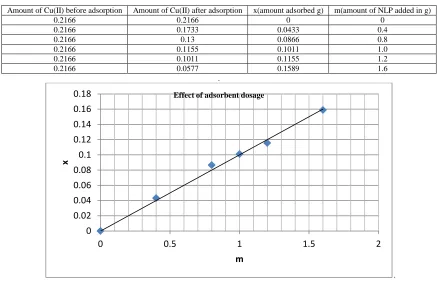
Table 3.2 Effect of increasing NLP amount
Amount of Cu(II) before adsorption Amount of Cu(II) after adsorption x(amount adsorbed g) m(amount of NLP added in g)
0.2166 0.2166 0 0
0.2166 0.1733 0.0433 0.4
0.2166 0.13 0.0866 0.8
0.2166 0.1155 0.1011 1.0
0.2166 0.1011 0.1155 1.2
0.2166 0.0577 0.1589 1.6
.
.
Fig3.3 Effect of NLP dosage on amount adsorbed
CONCLUSION
Adsorption is a useful technology for the removal of Cu (II) from aqueous solution. Neem leaf powder (NLP) can 0
0.02 0.04 0.06 0.08 0.1 0.12 0.14
0 0.1 0.2 0.3 0.4
x
/m
C
Effect of adsorbate concentration
0 0.02 0.04 0.06 0.08 0.1 0.12 0.14 0.16 0.18
0 0.5 1 1.5 2
x
m
Acknowledgement
We thank the Principal, Yashavantrao Chavan Institute of Science, Satara for encouragement and for providing facilities for conducting this work. We also thank the Head, Dept of Chemistry Yashavantrao Chavan Institute of science Satara for providing laboratory facilities.
REFERENCES
[1]S.J.Arceivala Waste water Treatment for Pollution Control Tata McGraw Hill Publication (1998)15-18 [2]K. Gomes. Wastewater Management Oxford Book Company Jaipur(2009)174-207
[3]H. M. Dix Environmental Pollution . John Wiley & Sons (1981)171-174 [4]S.Latharsee J .Chem.Pharm. Res 7(3) (2015) 1833-1838
[5]N. A. Khan, S. Ibrahim and P. Subramaniam Malaysian Journal of Science 23 : (2004) 43 – 51
[6]Innocent OBOH, Emmanuel ALUYOR, and Thomas AUDU Leonardo Biomaterial Journal of Sciences Issue 14, January-June (2009) . 58-65
[7]S. Tangjuank, N. Insuk , J. Tontrakoon , V. Udeye Engineering and Technology 52 (2009) 110-116
[8]S. Rathnakumar, R. Y. Sheeja, and T. Murugesan World Academy of Science, Engineering and Technology 56 (2009) 880-884
[9]V. Vinodhini and Nilanjana Das American-Eurasian Journal of Scientific Research 4 (4):,(2009) 324-329. [10]Elangovan, N.S.,Lavanya V and Arundhati S Int J.Environ.Res.9(2):439-444,Spring 2015
[11]W.W.Scott Standard Methods of Chemical Analysis 5th edition edited by N.H.Furman D Van Nostrand Co.Inc. NY(1956) 2333-2334