A KNOWLEDGE BASED FRAMEWORK FOR PLANNING
HOUSE BUILDING PROJECTS
by
CARLOS TORRES FORMOSO
A thesis submitted to the
UNIVERSITY OF SALFORD
for the degree of
DOCTOR OF PHILOSOPHY
University of Salford
Department of Quantity and Building Surveying
TABLE OF CONTENTS
TABLE OF CONTENTS (i)
LIST OF TABLES AND ILLUSTRATIONS (viii)
ACKNOWLEDGEMENTS (xx)
ABSTRACT (xxii)
CHAPTER 1: INTRODUCTION
1.1 The emergence of knowledge engineering 1
1.2 Knowledge based systems and expert systems 3
1.3 The relevance of knowledge engineering for the construction industry
1.4 The motivation for the work 6
1.5 Aims of the research 9
1.6 Outline of the thesis 11
CHAPTER 2: THE PLANNING TASK
2.1 Introduction 13
2.2 Planning in general
2.2.1 Definition of planning 13
2.2.2 Planning models 15
2.3 Planning in construction management
2.3.1 The complexity of construction 17
2.3.2 The role of planning 17
2.3.3 The vertical dimension of planning J9
2.3.4 The horizontal dimension of planning 21
2.3.5 Construction planning in practice
2.3.5.1 Preparation of plans 22
2.3.5.2 Information gathering 25
2.3.5.3 Information diffusion 26
2.3.6 Improving the effectiveness of formal planning 27
2.4 Summary and conclusions 27
CHAPTER 3: ARTIFICIAL INTELLIGENCE IN CONSTRUCTION PLANNING
3.1 Introduction 29
3.2 Artificial intelligence applications for planning
3.2.2 Domain specific planning systems 31
3.3 Conventional knowledge based systems 32
3.4 Tools and languages 33
3.5 Al applications for construction planning
3.5.1 Early models of expertise 34
3.5.2 Time 35
3.5.3 Elsie 36
3.5.4 Callisto 37
3.5.5 Construction Planex 38
3.5.6 CONSAS 38
3.5.7 Platform 39
3.5.8 Mason 40
3.5.9 GHOST 40
3.5.10 MIRCI 41
3.5.11 Ratu-aj 42
3.5.12 SIPEC 42
3.5.13 OARPLAN 43
3.5.14 PREDICTE 43
3.5.15 Discussion 44
3.6 Guidelines for this research 47
3.7 Summary and conclusions 49
CHAPTER 4: A CHARACTERIZATION OF HOUSE BUILDING
4.1 Introduction 51
4.2 The progress of work in house building
4.2.1 Comparing repetitive building to a production line 52
4.2.2 The low intensity of work 54
4.2.3 The spreading of work to various construction units 55
4.2.4 Lack of continuous flow of work 55
4.2.5 The overlapping of theoretically sequential activities 58
4.2.6 Varying rate of deployment of resources 59
4.2.7 Lack of compulsory sequence of work 60
4.3 The role of key resources 60
4.4 The natural rhythm 62
4.5 Predicting the production process
4.5.1 The chaotic nature of construction 63
4.5.2 The use of mathematical and statistical models 65
4.5.3 The application of knowledge based models 67
CHAPTER 5: THE DEVELOPMENT OF THE APPLICATION
5.1 Introduction 69
5.2 Choice of a methodology
5.2.1 Lack of an adequate methodology 70
5.2.2 Proposed methodology 71
5.3 Conceptual stage
5.3.1 Investigating the availability of expertise 72
5.3.2 Knowledge elicitation techniques 75
5.3.3 The development of the prototype
5.3.3.1 Knowledge elicitation 78
5.3.3.2 Software tool used 80
5.3.3.3 Knowledge analysis and implementation 81
5.4 A more detailed specification of the system
5.4.1 Task model 82
5.4.2 Role of the application 84
5.4.3 Types of knowledge 85
5.4.4 Context knowledge 86
5.4.5 Outputs of the system 87
5.4.6 Inputs of the system 89
5.4.7 Man-machine interface 89
5.5 Choice of the shell
5.5.1 Crystal 91
5.5.2 Criteria used in the selection 91
5.5.3 Comparison of the alternatives
5.5.3.1 Xi Plus 94
5.5.3.2 Savoir 94
5.5.3.3 Leonardo 95
5.5.3.4 Goldworks 95
5.5.4 Final decision 96
5.6 Model building stage
5.6.1 Participation of more experts 98
5.6.2 The development of the working system
5.6.2.1 Knowledge acquisition 99
5.6.2.2 Elicitation techniques 100
5.6.2.3 Issues related to the involvement
multiple experts 102
CHAPTER 6 AN ANALYSIS OF THE EXPERTS' APPROACH
6.1 Introduction 106
6.2 Main planning sub-tasks 106
6.3 Forming a description of the job
6.3.1 Organizing the relevant variables 108
6.3.2 Default data 112
6.4 Establishing the sequence of construction
6.4.1 Dividing the job into work places 113
6.4.2 Sequence of work places 115
6.5 Dividing the Work into activities
6.5.1 General approach 116
6.5.2 Work breakdown criteria 117
6.5.3 Selection of activities 119
6.6 Establishing the pace of work
6.6.1 Types of activities 121
6.6.2 General approach 122
6.6.3 Shell peak rate
6.6.3.1 The experts' approach 124
6.6.3.2 Choice of the learning curve 123
6.6.3.3 A model for estimating the
productivity of bricklayers 129
6.6.4 Finishing peak rate 131
6.6.5 Foundation peak rate 133
6.6.6 Relationships between peak rates 134
6.6.7 Rate profiles 137
6.6.8 Pace of site preparation and landscape
activities 139
6.7 Defining the profile of activity starts
6.7.1 General approach 140
6.7.2 A model for establishing activity precedence relationships
6.7.2.1 Main elements of the model 141
6.7.2.2 Activity dependencies 142
6.7.2.3 Link type 144
6.7.2.4 Floats and overlapping 145
6.7.3 Definition of constraints 146
6.8 Assembling the plans 147
CHAPTER 7 DESCRIPTION OF THE APPLICATION
7.1 Introduction 152
7.2 General view of the system 152
7.3 Internal structure of the system
7.3.1 Rules and frames 155
7.3.2 Class objects 158
7.3.3 Procedures 159
7.3.4 Organizing the knowledge in modules 159
7.3.5 Inference control mechanism 163
7.3.6 Man-machine interface facilities
7.3.6.1 Default screens 163
7.3.6.2 Screen design utility 165
7.3.6.3 Screens generated by procedures 166
7.4 Input module
7.4.1 Main consultation steps 167
7.4.2 Content of each group of variables
7.4.2.1 General information 169
7.4.2.2 Design parameters 169
7.4.2.3 Site conditions 170
7.4.2.4 Specification of components 170
7.4.2.5 Sequence of construction 170
7.5 Context module 171
7.6 Build module
7.6.1 Main consultation steps 172
7.6.2 Establishing the pace of work 173
7.6.3 Selecting activities and defining profile of
activity starts 175
7.6.4 Final steps 176
7.7 Lessons learnt from the implementation of the system 180
7.8 Summary and conclusions 184
CHAPTER 8: VALIDATION OF THE SYSTEM
8.1 Introduction 186
8.2 Software quality models 187
8.3 Difficulties in validating of knowledge based systems
8.3.1 The nature of models of expertise 189
8.3.2 Validation criteria 189
8.3.3 Gold standard 190
8.3.5 When to validate 191
8.3.6 Cost of validation 191
8.3.7 Control of bias 192
8.3.8 Complex results 192
8.3.9 Disagreement between experts 192
8.4 Techniques currently used 193
8.5 Validation of the implemented system
8.5.1 Practical constraints 195
8.5.2 General view of the validation process 196
8.5.3 Predictive validation
8.5.3.1 General description 198
8.5.3.2 Total project duration 199
8.5.3.3 Activity content 202
8.5.3.4 House completion time 205
8.5.3.5 Pace of work 208
8.5.3.6 Activity dependencies 211
8.5.3.7 Durations of bar chart activities 211
8.5.4 Robustness tests 213
8.5.5 Sensitivity tests 216
8.5.6 Field tests 218
8.5.7 Face validation 219
8.6 Summary and conclusions 220
CHAPTER 9: CONCLUSIONS
9.1 Summary of conclusions 223
9.2 Lessons for the future
9.2.1 Knowledge acquisition 224
9.2.2 Model of expertise 225
9.2.3 Implementation of the system 226
9.2.4 Model validation 227
9.3 Suggestions for further work 228
GLOSSARY 231
APPENDIX 1: DATABASE OF BUILDING STEREOTYPES 234
APPENDIX 3: PRODUCTIVITY INDICES
A3.1 Design simplicity 236
A3.2 Work concentration 237
A3.3 Geographical continuity 237
A3.4 Design repetitiveness 238
APPENDIX 4: A TYPICAL CONSULTATION SESSION TO THE SYSTEM
A4.1 Input Module 239
A4.2 Context Module 280
A4.3 Build Module 294
APPENDIX 5: AN EXAMPLE OF SCHEDULE OF CONSTRUCTION ACTIVITIES 310
LIST OF TABLES AND FIGURES
Table 2.1: Degree of detail of plans for each level of 20
management
Figure 2.1: A model of the planning and control process 22
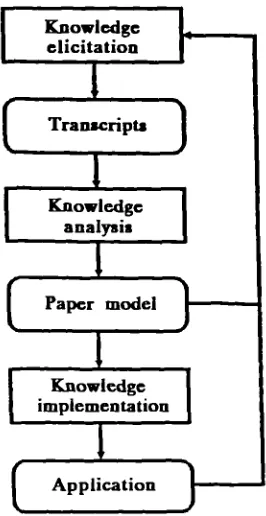
Figure 5.1: The knowledge acquisition process 72
Figure 5.2: Levels of construction planning 82
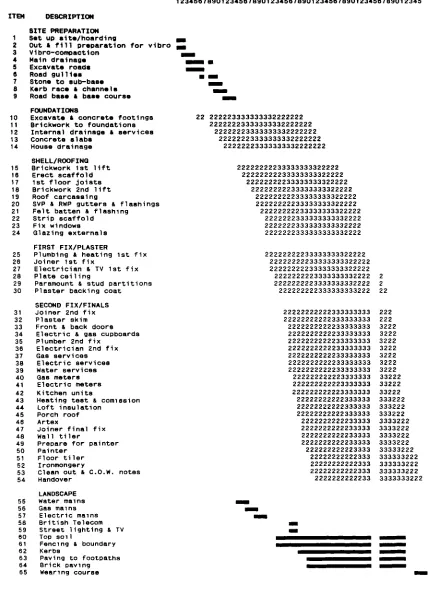
Figure 5.3: Example of construction programme generated
by the expert 88
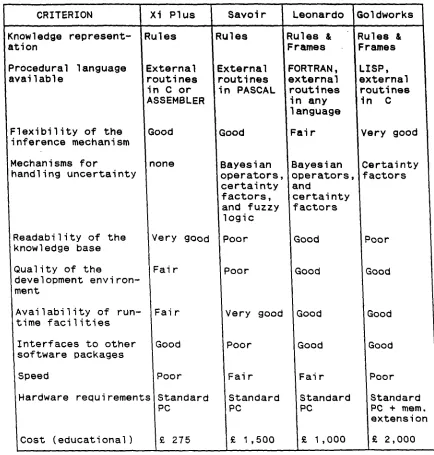
Table 5.1: Comparison of four shells 97
Figure 6.1: Main planning sub-tasks 107
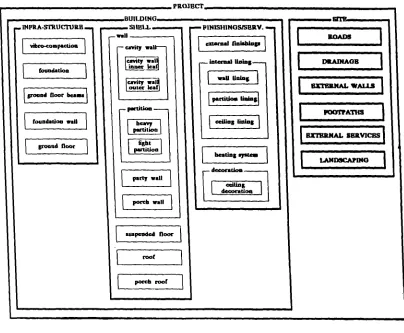
Figure 6.2: Hierarchy of main construction elements 109
Figure 6.3: Hierarchy of alternative infra-structure
elements 110
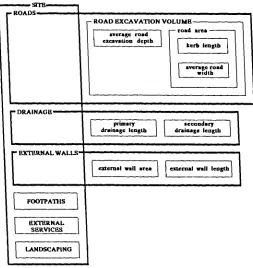
Figure 6.4: Hierarchy of site elements geometric variables 110
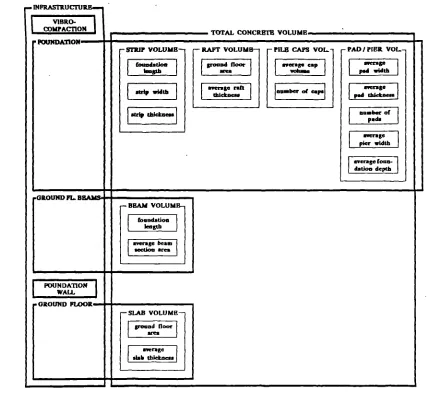
Figure 6.5: Hierarchy of concrete geometric variables 111
Table 6.1: Main factors that affect the selection of
activities 120
Figure 6.6: Line of balance typically found in the
historical cases 123
Figure 6.7: Line of balance usually found in text books 123
Figure 6.8: A model for estimating the productivity of
bricklayers 131
Figure 7.9: Strategy adopted for establishing maximum
finishing rate 133
Figure 7.10: Resources considering for choosing the
foundation rate 134
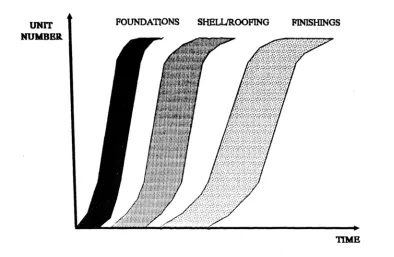
Figure 6.11: Typical shapes of construction programmes 136
Figure 6.12: Non cumulative "S" curve adopted for the
application 138
Table 6.2: Ranges of parameters for rate profiles 138
Figure 6.13: Activity precedence model 142
Figure 7.2: Main ruleset of the Input module 156
Figure 7.3: Examples of object frames 157
Figure 7.4: Example of
quantification
rule 159Figure 7.5: Ruleset concerned with road
construction
160Figure 7.6: Frame for the activity "roof carcass" 162
Figure 7.7: Example of input screens 164
Figure 7.8: Main
consultation
steps in the Input module 168Figure 7.9: Main
consultation
steps in the Build module 174Figure 7.10: Ruleset used for choosing ground floor
activities 175
Figure 7.11: An example of resource schedule 177
Figure 7.12: A construction programme in a bar chart form 178
Figure 7.13: A schedule of milestones 179
Table 8.1: Summarized description of test cases 198
Table 8.2: Comparison of total durations 201
Table 8.3: Comparison of No. of activities 202
Table 8.4: Activities included in the system's plans but
not in the experts' 204
Table 8.5: Activities included in the experts' plans but
not in the system's 204
Table 8.6: Comparison of house completion times 206
Table 8.7: Comparison of activity lead-lag times 207
Table 8.8: Comparison of average building rates 209
Table 8.9: Rate profiles adopted by the experts 210
Table 8.10: Main conflicts in the activity dependencies 212
Table 8.11: Comparison of bar chart activity durations 214-215
Figure 8.1: Some examples of sensitivity tests 217
ACKNOWLEDGEMENTS
I would like to express my gratitude to Prof. Peter Brandon for his most appreciated guidance and encouragement.
I also would like to thank CAPES (Postgraduate Education Federal Agency from the Brazilian Government) for the financial support.
Many thanks to Ian Hilton, Mike Cotgrave, Mark Hingenbotham, Colin Mawson, Bill Robinson, David Betterton, and Martin Ward, the experts that provided the expertise for carrying out this research. Without their help it would not have been possible to carry out this research.
I am grateful to Drs. Ian Watson, Arkadi Retik, and Mustapha Alshawi for their very helpful constructive criticism.
Thanks also to North Housing Association for the information provided.
I wish to extent my gratitude to the staff of the Federal University of Rio Grande do Sul, Department of Civil Engineering for their encouragement to undertake this work, especially to Dr. Luiz F. Heineck and Prof. Jose S. Franco.
ABSTRACT
This thesis describes the development of a knowledge based system
which encapsulates some of the expertise used by a number of
experienced construction planners for planning the construction stage
of low rise house building projects in the U.K.
The general objective of the research was to investigate the
feasibility of using knowledge engineering for developing models of
construction planning expertise, which could be employed for tackling
some of the existing knowledge bottlenecks in the construction
industry.
The resulting system can be described as a knowledge based
framework designed for supporting the decision making process involved
in planning house building at a tactical level. One of the main
features of this framework is its ability to cope with incomplete
information.
The knowledge acquisition process involved both the elicitation
of knowledge directly from experts, and the analysis of construction
plans from several past housing developments. The model was
implemented on an expert system shell called LEONARDO Level 3, which
runs in any standard IBM-PC micro-computer or compatibles.
The evaluation of the system focused on the validity of the
model, i.e. the degree at which the outcomes of the system resembled
the outcomes of the human expertise being modelled in the knowledge
base. A prescriptive method of validation was devised specifically for
this study, involving both experts that had provided expertise for the
CHAPTER I: INTRODUCTION
1.1 The emergence of knowledge engineering
Artificial intelligence is a branch of computer science that
emerged in the Fifties, concerned with symbolic processing, as opposed
to numeric processing. Nowadays, this field deals with the issue of
designing and programming machines that emulate humans, by appearing
to be intelligent or by mimicking human intelligence or human problem
solving (Fenves, 1987). It covers a number of diverse areas, such as
natural language processing, image recognition, knowledge engineering,
and robotics. Newton (1986) stated that the term artificial
intelligence is a misnomer, since this topic covers not only
intelligence but also all the qualities that distinguish the human
from the empty box, such as flexibility, reasoning, communication,
etc.
Knowledge engineering is the process of encapsulating knowledge
into computer systems to solve problems that normally require human
attention and intelligence, using knowledge representation and
processing techniques from the field of artificial intelligence
(Sagalowicz, 1984). Such systems are popularly known as expert systems
or knowledge based systems.
The need for knowledge engineering has emerged because traditional
software engineering has some limitations in supporting
decision-making. The application of conventional computer programs has been
limited to very definite and routine tasks, for the following reasons:
(i) Conventional computer programs are developed in a prescriptive
manner. Every sequential step must be determined in the very early
stages of development, like someone else's interpretation of the
problem - not the user's (Newton, 1986);
(ii) They are primarily designed for computer efficiency, rather
than for human understanding. Usually only their developers are able
to understand and modify them (Lansdown, 1982);
(iii) They cannot provide the user with justification for their
results nor explain why they need a particular piece of information
(iv) Information is usually input in a standardised way and they
cannot perform their task if any piece of information is missing
(Hamilton & Harrison, 1986).
On the other hand, many important problems do not have tractable
algorithmic solutions. They originate in complex social or physical
contexts, in which the available information is often "noisy", full of
uncertainty and errors, incomplete, and sometimes inconsistent
(Schutzer, 1987).
Ortolano & Perman (1987) pointed out that there are two basic
characteristics that distinguish knowledge based systems from
conventional computer programmes. The first one, often termed as
transparency, refers to the ability of a user to stop a program in the
middle, in order to find out why a particular question is asked or
what reasoning was used by the system to deduce a particular
conclusion. The second distinctive feature is that the knowledge
pertaining to a problem, placed in the knowledge base, is kept
distinct and separate from the procedures, or inference mechanism,
which manipulate that knowledge.
There are some other characteristics commonly associated with
knowledge based systems, which may also be found occasionally in
conventional programs. These are:
(i) They contain a great deal of information about very specific
domains (Lansdown, 1982);
(ii) They give advice in a way similar to a consultant (Lansdown,
1982);
(iii) Uncertain data to reach probable conclusions can be used
(Hamilton & Harrison, 1986); and
(iv) The knowledge is represented in a very explicit and uniform
way, normally embodied in separate modules (Lansdown, 1982).
Brandon et al. (1988) stated that knowledge based systems have
expanded the range of problems that can be tackled by the use of
computers. As these systems represent a more human-like form of
computing than do conventional systems, they allow computers to deal
with less structured problems. However, those authors stressed that
based systems to replace completely domain experts in all kinds of
problems. Knowledge based systems still have a number of shortcomings
in comparison to human thinking capabilities, such as:
(i) Knowledge based systems can only be used for relatively deep
and narrow areas of knowledge (Brachman et al., 1983);
(ii) They cannot take into account the kind of wide-range
information that humans use for solving some problems (Brandon et al.,
1988);
(iii) They cannot easily process the unstructured information that
is usually obtained by human senses, such as touch, smell, sound, or
sight (Basden, 1983); and
(iv) They are not able to easily discover similarities between
complex, non-identical objects (Brandon et al., 1988).
Sagalowicz (1984) stated that the most important benefit from
extracting knowledge from humans and representing it in a computable
form is the reduction in the costs of knowledge reproduction and
exploitation, specially in domains where there is a knowledge
bottleneck, i.e. fields where knowledge is unavailable, poorly
distributed, difficult to maintain, update or organise.
In the long term, knowledge based systems have the potential of
becoming depositories of knowledge for specific domains. Because the
knowledge base is usually an explicit representation of domain
knowledge, it is possible to maintain it in a form which is accessible
for more than one kind of use Schutzer (1987). Some authors, such as
Kidd & Welbank (1984) and Hayes-Roth et al. (1983), pointed out that
the ultimate importance of knowledge engineering may be in
formalising, structuring and making public an expert's knowledge,
rather than in the production of high performance computer programs.
1.2 Knowledge based systems and expert systems
Some authors make a distinction between the terms "experts system"
and "knowledge based system". Harmon & King (1985), for instance,
referred to expert systems as large systems, and to knowledge based
systems as small systems.
Ibbs (1986) reported on a seminar about the future for computerized
between "expert system", "knowledge based system" and "knowledge based
expert system". An "expert system" was defined as a computer program
that contains some particular human expertise (surface knowledge),
based exclusively on heuristics or rules of thumb. On the other hand,
a "knowledge based system" was regarded as being founded on knowledge
of physical processes (deep knowledge). The term "knowledge based
expert system" was used to describe systems that combines both surface
and deep knowledge.
However, there seems to be no widely accepted definition for any of
them. In practice, the terms "expert system" and "knowledge based
system" have interchangeably been used to describe a wide range of
computer systems that are able to hold human-like knowledge as well as
to process this knowledge in a more human-like fashion than do
conventional computer systems (Basden, 1983; Fenves, 1987).
The expression "expert system" suggests that such a system captures
knowledge from experts. In reality, these systems very rarely contain
knowledge that has been exclusively elicited from humans (Harmon &
King, 1985). For this reason, the term "knowledge based system" was
chosen to be used throughout this thesis. It generally refers to all
computer systems that have both the characteristics of transparency of
knowledge, and separation between the knowledge base and the inference engine, as discussed above.
1.3 The relevance of knowledge engineering for the construction
industry
Several authors, such as Lansdown (1982), Wager (1984), De La Garza
& Ibbs (1986) and Ashley & Levitt (1987), have pointed out that the
nature of the construction industry puts it in a position to get many
benefits from artificial intelligence techniques, and, in particular,
of knowledge engineering. They all agree that the great potential of
knowledge engineering in construction is related to the fact that
knowledge from experts, such as designers, planners, managers, and
estimators, is intensively used in this industry during all phases of
the construction process.
Construction projects are characterized by a high variability,
resulting from both its one-off production technology and from
agencies, etc. (Bishop, 1972). The decision making process must be
fast, and is very much influenced by site- and time-specific events,
involving both technical and managerial issues (Levitt, 1986). Also,
the acquisition of meaningful data to use in formal optimization
models is difficult and costly to obtain, since the processes involved
in construction are far less repetitive than in the traditional
manufacturing industry (Wager, 1984). For these reasons, practical
experience and intuition are much more fruitful sources of knowledge
in construction than are scientific investigation or mathematical modelling (Levitt, 1986).
There seems to be a considerable number of knowledge bottlenecks
amongst the several distinct specialities involved. Traditionally, the
industry is faced with a sharp division between the design team and
the construction team (Bishop, 1972; Gray, 1983). The design team
usually does not have access to the construction team's expertise, and
vice versa. Also, the increasing sophistication of construction
projects have forced a further partitioning of the design activity
into a number of specialized disciplines (Newton, 1986; Logcher, 1989).
As a result, there is a large number of independent organizations
involved in the construction process, each one having its own
specialists. Specialist groups are frequently physically separated
from each other, which makes their inter-communication difficult.
Moreover, some of these organizations operate in a relatively small
scale, and cannot afford to have as many highly qualified experts as
they need.
Knowledge based systems have the potential of providing individual
organizations involved in the construction process with some expertise
which is needed, but that is not available directly from their staff.
This could greatly improve the quality of decision making in
construction. Even large companies which have a wide range of
specialists are able to get benefit from the use of knowledge based
systems, by freeing the experts available to give more attention to
less trivial tasks.
Another important potential role for knowledge engineering in
construction is training (Basden, 1983). Experts usually gain their
knowledge through experience, long periods of training,
many years, and may be expensive in the case experience is gained
through mistakes made in real situations. The access of students to the formalized domain knowledge could improve the cost-effectiveness
of their training, and shorten the learning period needed to become an
expert. Also, this type of knowledge based system can protect an
organization from the loss of expertise when key experts retire or
leave for other jobs.
The potential of knowledge engineering for refining construction
expertise is highlighted, amongst others, by Ashley & Levitt (1987).
They pointed out that, because construction research has not reached
much beyond the empirical stage, there is a potential for knowledge
based systems to become "an important stepping stone toward a robust
body of theory" in this field.
1.4 The motivation for the work
The initial motivation for this study was the issue of improving
the effectiveness of the construction industry. The author comes from
Brazil, a third world country that has a tremendous shortage of good
quality buildings. The country is faced with a colossal housing
deficit, which has been estimated as something between six and seven
million dwellings for the following ten years, as well as with a large
shortage of hospitals, schools, and other public buildings (FundacZo
Joao Pinheiro, 1984). At the same time, there is a high potential
demand for civil engineering investments, since the country needs
urgently to improve the amount and quality of public services provided
to its population, such as water supply, sanitation, electricity, and
transportation.
The resources available to carry out so many building and civil
engineering projects at the same time are limited. The amount of money
the government has been able to invest in such projects during the
last twelve years has been drastically cut because of the huge
external debt which the country is faced with (Roddick, 1988).
Pressure for a rational use of resources also comes from the need to
preserve the environment. The extensive use of some natural resources,
such as hardwood, aluminium, crushed rocks, sand, etc., has been
recently associated to the rapid destruction of the natural
Construction planning is one of the knowledge intensive tasks
within the construction process that is closely related to the aim of
improving the effectiveness of construction projects in terms of cost,
time, and quality. Baker et al. (1979) described a survey amongst
people experienced in project management, in which satisfaction with
the project and control system was perceived as an important factor
for the success of a project. The Business Roundtable (1982) report
concluded that an effective use of planning techniques can potentially
improve methods of project management, leading to shorter durations of
construction projects, and, consequently, to cost savings to clients.
Arditi (1985) reported on two studies conducted at the Illinois
Institute of Technology, in which planning received the highest score
in terms of importance amongst contractors as one of the factors of
productivity improvement in construction, at company headquarters.
Construction planning usually involves the choice of alternative
construction technologies, the definition of work tasks, the
estimation of required resources and durations of individual tasks,
and the identification of any interactions or constraints amongst
different tasks (Hendrickson et al., 1987).
There are
indications
that this domain is suitable for knowledgeengineering applications. It is a very time consuming task (Laufer &
Tucker, 1988), and the domain experts generally perform it in a very
intuitive and unstructured fashion, with a great deal of reliance on
their judgement (Hendrickson et al., 1987; Levitt & Kunz, 1985). The
ill-structured nature of the problem makes it difficult to develop a
precise and efficient algorithm for generating plans and monitoring
construction projects (McGartland & Hendrickson, 1985; Navinchandra et
al., 1988). Moreover, a knowledge bottleneck exists because the number
of experts available is very small (Mason, 1984; Gray, 1986; Levitt et
al., 1988), training people in this field takes a considerably long
time, and there are very few textbooks that contain real expertise.
Since the introduction of the first software tools for construction
planning in the early Sixties, computers have had relatively little
impact in supporting decision making in this field. Levitt & Kunz
(1985), Hendrickson et al. (1987), and Echeverry et al.(1989) pointed
out that most existing commercial tools are completely knowledge
independent, i.e. the knowledge which experts use for defining
cannot be captured and re-used by these tools. They all agreed that
such tools are employed only as a computer aided framework where
planners input their decisions whenever a new cycle of planning is
performed. Also, the reasoning used for making the programme is not
made available to other people involved in the subsequent stages of
planning, for tasks such as interpreting and updating the schedule,
evaluating project performance, and performing real time control
(Levitt & Kunz, 1985).
Several authors have claimed that there is a demand for knowledge
based tools for construction planning, which could expand the expert's
capability to manipulate and utilise qualitative and experiential
information, making production planning a less painstaking task, and
freeing experts for the work that essentially requires human decisions
(Levitt & Kunz, 1985; Hendrickson et al., 1987; Logcher, 1987;
Warszawski, 1988). They also stressed that explanation facilities
available in such systems could be useful for providing credibility
for correct decisions, as well as for highlighting decisions which are
inconsistent.
Knowledge based tools for construction planning also seem to have a
great potential amongst contractors that do not have a scale of
operation in which it is cost effective to employ highly qualified
construction planners. In such companies this task is usually carried
out in a very informal way by people that have only general knowledge
about the domain, or that do not have enough time to perform formal
planning. Knowledge engineering could provide the means for these
companies to access some of the expertise they lack, quickly, and at a
reasonable cost.
The innovating effect that models of construction planning
expertise can potentially have in terms of enhancing the communication
between design and production have drawn the attention of several
authors, such as Flanagan (1980), Gray (1986), Atkin (1987), Beeston
(1987).
Cost planning procedures have been systematically used in the UK by
consultant quantity surveyors, seeking to improve the economic
performance of construction projects. It is widely accepted that cost
planning is most effectively applied during the early design stages,
when the major cost significant decisions are made (Ferry & Brandon,
The cost models traditionally employed by quantity surveyors, based
on price information collected in bills of quantities from past
projects, have suffered intense criticism from researchers in the
field of cost estimating. Beeston (1987) stated that the way in which
construction prices are estimated in such models has only a remote
relationship to the way costs are incurred on site, making it
difficult to examine accurately the effect of design changes in the production costs. A research study carried out at the University of
Reading (1981) suggested that the most hopeful source of more
efficient improvement in the quantity surveyors' method of estimating
lies in considering the way construction costs actually arise on site.
Another drawback of the traditional cost planning methods is the fact
that, although time usually is a factor of major importance for
construction projects, such methods do not offer any reliable guide
for the relationship between design and the duration of activities on
site (Flanagan, 1980).
The main obstacle for the use of contractors' cost estimating
techniques for cost planning is the fact that the design team do not
have enough expertise about construction methods. Although non
conventional forms of contracting have been used in order to bring the
advice of contractors to the early design stages, the contractor's
role still commences too late during the design process to have a
major impact in the economic efficiency of a project (Gray, 1983).
Unless the structure of the construction industry radically
changes, it seems that knowledge engineering is the most promising
means through which the existing knowledge bottleneck between the
contracting side of the industry and the design team can be overcome.
Knowledge engineering has the potential of being used for developing
sound models of construction planning expertise. Such models could be
used by clients and their consultants for considering the effect that
their decisions are likely to have in the production process.
1.5 Aims of the research
Based on the discussion presented in the previous sections, three
hypotheses were formulated. These are:
(i) Knowledge engineering can provide tools for improving the
and experiential information, removing some of the painstaking work
from their hands, as well as allowing them to analyse a large number
of construction alternatives in a short time;
(ii) Knowledge engineering can improve the integration of the
construction industry by establishing a knowledge link between the
construction team and the design team. Such link consists of making
available to the design team construction planning expertise that
could be used for several tasks, such as estimating the amount of
resources required, forecasting the project duration, etc.; and
(iii) Knowledge engineering can provide the means for formalizing,
structuring, and refining a robust body of knowledge on construction
planning, that can be accessed for more than one kind of use,
improving the dissemination of expertise within the industry as well
as being used as a basis for establishing the research needs in this
field.
Considering the limitations of this research project in terms of
time and resources available, the decision was made to focus the
research on testing the first hypothesis. Based on that, the general
objective of this study was established. It consists of investigating
the feasibility of using knowledge engineering for developing models
of construction planning expertise, which could be applied for
tackling some of the existing knowledge bottlenecks in the
construction industry.
This investigation was carried out by developing a practical
application, which encapsulates knowledge elicited from a number of
construction planning experts from the industry. The specific
objectives of such development are depicted below:
(i) To examine the suitability of available knowledge elicitation
techniques and methodologies specifically for developing applications
in the field of construction planning, considering the practical
constraints of carrying out the study in collaboration with the
industry;
(ii) To understand the nature of the expertise employed by
construction planners in practice, and to find out how much of this
expertise can be modelled in a knowledge engineering application;
construction planning expertise as a knowledge base system, in
relation to issues such as knowledge representation, inference
control mechanism, man-machine interface, etc.; and
(iv) To assess the extent to which the expertise encapsulated in a
knowledge based system for construction planning can be formally
validated.
Although the scope of the study excludes formally examining the
second and third hypotheses outlined above, this research can also be
expected to provide some guidance towards their investigation in
further studies.
1.6 Outline of the thesis
The thesis is divided in two main parts. The first part comprises
Chapters 1 to 4, and consists of a review of the theoretical
background which this research is based on. The second one embodies
Chapters 5 to 8, and focuses on the description of the knowledge
engineering application.
Chapter 2 discusses the planning problem, with particular emphasis
on the task of planning the production stage of construction projects.
It also examines the limited impact that the traditional construction
planning techniques have had in the construction industry.
Chapter 3 provides a general discussion on the application of
artificial intelligence techniques to construction planning. It
reviews some of the main knowledge engineering applications developed
in this field so far, and establishes a number of general guidelines
for the development of the application.
Chapter 4 presents a general description of the production process
involved in house building. Such description is mostly based on
several activity sampling studies which have particularly investigated
this kind of project.
Chapter 5 covers some basic aspects of the application, such as system specification, sources of knowledge, knowledge elicitation
techniques, and software tool choice. The basic structure of the model
of expertise developed in this research is presented in Chapter 6,
Chapter 8 discusses the problem of validating knowledge based systems, as well as describes the approach adopted in the current study. Finally, a summary of the conclusions, lessons for the future, and suggestions for further research are given is Chapter 9.
CHAPTER 2: THE PLANNING TASK
2.1 Introduction
Planning is a cognitive activity familiar to everyone. It plays a
key role in decision making by enabling individuals to deal with
changing and complex situations. Planning influences a wide range of
activities, from the most trivial ones, such as how to get to work in
the morning, to the most consequential, such as the allocation of
resources in a country's economy. Plans are used, either formally or
informally, for guiding any activity that has not been entirely
automatized (Hoc, 1988).
Planning is one of the essential ingredients of construction
management. Although a lot of research has been made during the last
few decades, some dissatisfaction with the application and results of
construction planning still remains (Business Roundtable, 1983; Laufer
& Tucker, 1987). However, it seems that people involved in
construction management still consider that a more effective approach
to construction planning can bring considerable improvements in the
performance of the industry (Baker et al., 1979, Business Roundtable, 1983; Arditi, 1985).
This chapter initially discusses the meaning of planning as well as
the basic cognitive mechanisms that are behind the planning task. The
second part of the chapter is devoted to the role of planning in
construction management. The vertical and horizontal dimensions of
planning throughout a construction project are discussed, and the
major deficiencies of construction planning in practice are presented.
2.2 Planning in general
2.2.1 Definition of planning
There is a large number of distinct definitions of planning as far
as the literature in this field is concerned. Hayes-Roth & Hayes-Roth
(1979) defined planning as the first stage of a two stage
problem-solving process named 'planning and control', in which planning is the
predetermination of a course of action aimed at achieving a certain
goal, and control consists of monitoring and guiding the execution of
making a decision on the basis of predictions of the probable outcome
of a situation through extrapolation from past events, considering
that the decision to act usually has the effect of modifying the
events to more satisfactory goals. Laufer & Tucker (1987) accepted the
definition of planning as a decision making process performed in
advance of action that attempts both to design a future and effective
ways of achieving it. In summary, planning can be defined as the
process of setting goals and establishing the procedures to attain
them, being only effective if intertwined with the process of
controlling activity execution.
According to Hoc (1988), planning mechanisms intervene in
situations where a response cannot be obtained from rules triggered by
current environment information. He also points out that when this occurs, individuals must anticipate on future information, usually in
a schematic fashion, based on previously acquired information. Therefore, if a task requires a totally new elaboration, no
anticipation and, consequently, no planning can be carried out.
Uncertainty about the future is a common feature of most problems
involving planning, since much of the knowledge human beings use for
anticipation is qualitative, uncertain, and judgmental, defying
rigorous analysis (Fiksel & Hayes-Roth, 1989). In very unpredictable
situations, individuals may have to elaborate plans in the form of
working hypothesis (Hoc, 1988).
The necessity of using a schematic representation of a task is a
consequence of both the limited capacity of the human working memory
and the uncertainty involved in anticipation. When dealing with very
complex problems, individuals usually abstract only a number of
relevant data from details, increasing the portion of problem space
that they are able to tackle, resulting in the construction of
schematic representations. Additionally, a schematic representation
enables plans that are generated in a very uncertain environment to
remain probable, since they can summarize a large family of possible
alternative solutions. This schematization process raises the level of
control a human being has over an activity (Hoc, 1988).
The choice of the level of representation is usually a kind of
compromise, since it must be detailed enough in order to be able to
with the limited capacities of individuals' working memory (Hoc,
1988). Plans for very simple tasks include very detailed information,
at a level close to activity execution. Complex and uncertain problems need plans at a higher level, where only strategic information is
taken into consideration.
Plans can be state anticipations, named declarative plans (e.g. an
architectural plan), or procedure anticipations, known as procedural
plans (e.g. a computer programme). They are often not only schematic,
but also hierarchical, since their structure expresses the
organization levels of what they represent as well as the relations
between these levels (Hoc, 1988).
The planning process can be assumed to operate in a two dimensional
planning space, the two dimensions being time and abstraction level
(Hayes-Roth & Hayes-Roth, 1979). The lowest abstraction level is named
'basic level', where plans include all the detailed information
necessary for action execution (Hoc, 1988).
2.2.2 Planning models
Although it is accepted that planning is a multi-stage, multi-level process, some describe it as a top-down, systematic, complete, and
hierarchical process, while others hold that people plan in a
multi-directional, incremental, and heterarchical mode (Laufer & Tucker,
1987). None of the cognitive models of planning proposed so far have
been widely accepted as reliable by researchers in the field of
planning (Laufer & Tucker, 1988).
Early models of planning, adopted in pioneering artificial
intelligence systems, described planning as a top-down, systematic,
complete, and hierarchical process (Hoc, 1988). They assume that plans
are initially generated at the more abstract levels, and are
successively refined into the lower level spaces, towards the basic
level. Also, they presuppose that complete plans exist at all levels of abstraction and that all decisions involved fit a hierarchical
structure.
• Hayes-Roth & Hayes-Roth (1979) proposed a less rigid approach to
planning, named "opportunistic" model. This approach assumes that
planning involves both coherent and incoherent decision sequences, in
assumes that planning is a multi-directional, incremental, and
heterarchical process.
Multi-directional means that both top-down and bottom-up processing
are simultaneously employed, i.e. conclusions arisen from planning at
a more abstract level can guide subsequent planning at a lower level,
and vice versa. The incremental aspect of planning is concerned with the fact that complete plans are rarely produced for each abstract
level, and that tentative solutions are proposed without the
requirement of fitting into a higher level integrated plan. In other words, a developing plan does not necessarily grow as a coherent
integrated plan. Finally, heterarchical means that some of the
planning decisions does not fit into a single hierarchical structure
(e.g. decisions about how to allocate cognitive resources).
Hayes-Roth & Hayes-Roth (1979) regarded the top-down, systematic,
complete and hierarchical approach as a particular case of the
opportunistic model. They stress that both models are suitable for describing different situations, and suggest a number of variables
that can influence the approaches adopted by planners in particular problems. These are:
(i) Problem characteristics: some problems have an inherent
hierarchical structure that planners can naturally use in their
schematic representations. Also, individuals tend to adopt a top-down
approach if a problem imposes severe time constraints;
(ii) Expertise: an experienced planner working on a familiar,
constrained problem may have well-learned, reliable abstract plans
available. In cases where planners are not so experlenced, or the
problem is relatively unconstrained, opportunistic methods tend to be more advantageous; and
(iii) Individual preferences: some individuals have a strong
preference for bottom-up approach, regardless of problem
characteristics, while others are more flexible, adopting an
2.3 Planning in construction management
2.3.1 The complexity of construction
A construction project usually poses a unique problem to the people
involved in managing the production process (Bennett & Ormerod, 1984).
The design and location of each project are distinct from all others.
A large number of different organizations and individuals are involved
in the design and in the production process, each one having a
different set of priorities and objectives (Bishop, 1972).
Construction generally involves a large number of different
technologies, as well as alternative combinations of labour and
equipment. Additionally, a large number of imponderable factors are
bound to affect the production process, such as weather, material
shortages, labour problems, unknown sub-surface conditions, inaccurate
estimates of durations and cost, changes in the design, etc. (Levitt,
1986). All these considerations make the problems that construction
managers have to face of a type and magnitude not usually found in
other industries (Bennett & Ormerod, 1984).
Considering the limited capacity of human working memory,
construction managers normally need some kind of formal plans that can
expand their capacity for understanding complex situations.
Construction plans can be regarded as procedural plans, since they
anticipate and represent in a schematic way a group of actions to be
executed. However, before generating a construction plan, planners
need to translate all the information available, such as architectural
plans (brief, sketch design, or detailed design), and site conditions
(if known), into another abstract representation of the project. Such
representation is possibly a sort of declarative plan, which consists
of the planner's own view of the final product, expressed in terms of
its main construction components.
2.3.2 The role of planning
People involved in construction management are required to perform
a large number of functions (Harrison, 1985; Neale & Neale, 1989),
which can be classified under four main headings: guiding execution,
co-ordination, control, and searching for improved solutions. The
basic role of planning is to assist managers to fulfil each of those
Guiding execution is concerned with directing the parties involved
in the implementation of a project. A construction plan can be seen
as a model of the installation of components and assemblies, which
provides information about the tasks required, their sequence, their
duration, and their required resources (Echeverry et al., 1989). Plans
can be used as either direct assignments or at least as guidelines for
lower management to make decisions later on (Laufer & Tucker, 1987).
The second function consists of providing a means of communication
amongst the different project participants, such as owner, designers,
site management, sub-contractors, suppliers, etc. This is done by
informing which tasks each participant is expected to do (Echeverry et
al., 1989). Here, the planning role is focused on harmonizing and
facilitating clusters of tasks that are characterized by a high degree
of interdependence (Laufer & Tucker, 1987).
Control involves measuring and evaluating performance, and taking
corrective actions in order to ensure that the course of action is
maintained and the project goals are reached. In this respect,
planning must establish the targets and the course of action to attain
such goals , in a format that is convenient to the control function
(Echeverry et al., 1989).
Searching for improved solutions is concerned with generating and
comparing several alternative plans for the production process, in
terms of cost, time, and demand for resources. This function can be
carried out at different points in the construction stage. For
example, alternative plans can be used at the design stage for
comparing a number of design solutions from the point of view of the
duration of the construction stage (GRAY, 1983). Contingency planning
could also be included under this heading. It consists of preparing
several plans for likely contingencies in order to minimize response
time when a new plan is needed (Laufer & Tucker, 1987).
Planning the construction process is a highly complex task that involves a large number of activities, a great deal of uncertainty,
being usually subjected to a number of conflicting constraints, such
as time, space, cost, and availability of resources (Levitt, 1986).
Consequently, the optimization approach, often employed in other
engineering fields, is largely ineffective in construction practice
acceptable, or feasible arrangement of actions, rather than an optimum
one.
2.3.3 The vertical dimension of planning
In most medium and large construction projects, construction
management is usually carried out by a number of different people,
each one tackling the problem at a distinct level of specificity.
The different levels of management for which plans are produced define
a vertical dimension of the planning process.
Laufer & Tucker (1987), for instance, divided construction management in three levels: top, middle and lower management. Top
management is mostly involved in setting the objectives of a project.
Middle management is more involved in selecting the resources for
reaching those objectives. And finally, lower management assists
middle management in selecting and devising the solutions.
Each level of management requires construction plans at a
convenient degree of detail. If plans contain too many details, a long time is needed to elaborate and update them, making them ineffective
to influence short term decisions. Also, very detailed plans can make
the planning and control process very expensive and time-consuming,
since a huge amount of paper work is necessary, both for issuing
instructions and for reporting the work carried out. On the other
hand, if activities are planned without the necessary details, a plan
cannot fulfil its functions of execution, co-ordination and control,
since important relationships between activities can be lost, and
major deviations in the course of the project cannot be picked up by the control system.
The most adequate level of detail of a plan is also affected by the
level of uncertainty, as discussed in Section 2.2. In a highly
unpredictable environment such as construction, changes often disrupt
the original plans, making frequent modifications necessary.
Otherwise, plans become out of date, losing the confidence of users
very quickly (Harrison, 1985). Plans that contain too many details may
be ineffective in the presence of high uncertainty, due to the
excessive effort needed for constantly updating them.
Several authors, such as Nuttal (1965), Bishop, (1972); Harrison
situations can be more effectively dealt with by giving lower level
management some discretion in the day-to-day work. In this case, plans
must have some degree of flexibility, working as a general framework where lower level managers can fit their decisions. This approach is
what Neale & Neale (1989) named as dynamic planning.
The construction process is often divided into fundamental units of
work, named work packages, each one consisting of a continuous action
taken by an operative or group of operatives working together, without
being interrupted by any other gang (Forbes, 1977). The amount of work
packages in each project usually ranges from several hundreds to
dozens of thousands, depending on the complexity and size of the work
to be done (Harrison, 1985).
Plans for top managers are usually much less detailed than the work
package level. They are first generated early in the project cycle,
often before its location and design are known, integrating the
production activities into a more general framework, which includes
also events related to other stages of the building process, such as
design, contractual procedures, and commissioning the project (Neale &
Neale, 1989).
The level of work package is probably convenient for site
managers, who have to co-ordinate and control the work of all gangs.
At a lower level of management, such as first level supervisors on site, or sub-contractors, plans probably have to be elaborated at a
level of detail finer than the work package level, since the work of
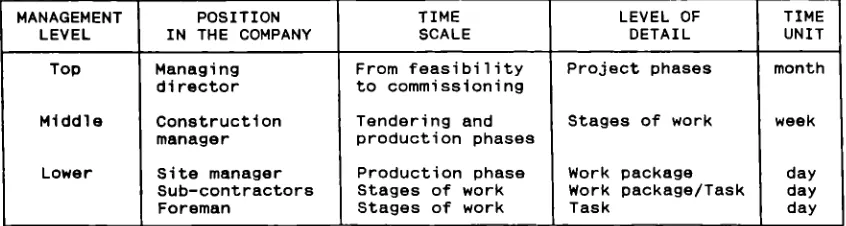
each operative has to be controlled on a short term basis. Table 2.1,
extracted from Neale & Neale (1989), illustrates the level of detail
plans are likely to have among the different levels of management.
MANAGEMENT LEVEL
POSITION IN THE COMPANY
TIME SCALE LEVEL OF DETAIL TIME UNIT Top Middle Lower Managing director Construction manager Site manager Sub-contractors Foreman From feasibility to commissioning Tendering and production phases Production phase Stages of work Stages of work
Project phases
Stages of work
[image:33.595.94.517.617.730.2]Work package Work package/Task Task month week day day day
Table 2.1: Degree of detail of plans for each level of management
In summary, construction planning can be described as a multi-stage
process, carried out by people situated at several different levels in
the management hierarchy. The higher the level of management, the more
comprehensive, abstract the plans are, and the greater the uncertainty
involved in planning. Whether this process can be better described as
a top-down, systematic, complete, and hierarchical process, or as
multi-directional, incremental, heterarchical process is a question still to be answered.
2.3.4 The horizontal dimension of planning
Project planning should be a continuous process which starts at the conception of the project and extends until the project has reached
satisfactory conditions (Harrison, 1985). The horizontal dimension of planning is concerned with the different phases involved in this
continuous process, as well as with their timing.
Laufer & Tucker (1987) describes a theoretical model of the
planning and control process in construction, reproduced in the Figure
2.1, which contains features that are often prescribed by textbooks in
the field of project management, such as Harrison (1985), and Neale & Neale (1989). In this model, the planning process is divided into five
stages, as follows:
(i) Planning the planning process: a number of key decisions
concerning the planning process is made at this stage, such as what
plans are needed, how they will be used, how detailed they will be,
what techniques will be appropriate, when the plans will be prepared,
etc. (Harrison, 1985). Projects that are unique are likely to require
more effort at this stage than the ones that are carried out in a
routine basis;
(ii) Information gathering: this stage generally requires a
considerable amount of resources (Laufer & Tucker, 1987). There are
several sources of information at the beginning of the project, such
as design, contract documents, report on site conditions, data about
labour productivity, and constraints or goals imposed by higher level management or by the client. Additionally, information concerning the
actual progress on site has to be collected throughout the production
stage;
e—I17:277 )L...
diffusion
___________
Evaluating the planning
process
some kind of construction planning techniques. At this stage, a number
of alternative planning solutions can be considered;
(iv) Information diffusion: the information generated in the
previous stage is disseminated in a convenient format to a number of
users, such as other levels of management, sub-contractors, clients;
and
(v) Evaluating the planning process: the whole planning process is periodically evaluated, as a basis for improving the whole planning
process in future projects.
1
( Planning the' Gathering Preparation
planning .—n of formal
— informationnormaon plans
process i
i
InMIO
Project
implementa-tion
FIGURE 2.1: A model of the planning and control process
(after Laufer & Tucker, 1987)
During the implementation of a project, its progress is monitored
and feedback is used to update plans and prepare reports about the
current performance of the project, as shown in Figure 2.1. Managers
evaluate real progress against the plans, identify causes of delay,
take corrective action, and, if necessary, revise the duration
estimates of activities in progress and those that are yet to start
(Ahuja & Nandakumar, 1985).
Laufer & Tucker (1987) pointed out that, from the five stages
above, "planning the planning process", and "evaluating the planning
process" are virtually non existent in practice, while the remaining
ones usually suffer from major deficiencies. These will be discussed
in Section 2.3.5.
2.3.5 Construction planning in practice
2.3.5.1 Preparation of plans
The stage of preparation of plans is the one that usually receives
concepts of project management and construction planning, and the
application of planning techniques (Baker et. al., 1979).
There is a number of techniques that can be applied for the
preparation of plans (Gantt bar chart, linked bar chart, critical path
method, line of balance, etc.), each one having its own advantages and
disadvantages (Harrison, 1985; Neale & Neale, 1989). Critical path
method (CPM) based techniques have been usually accepted as the only
ones that are able cope with the large number of activities involved in construction and their complex inter-relationships (Harrison,
1985). They are often mentioned as indispensable aids for planning and
scheduling construction projects (Levitt et al., 1988).
However, the success of CPM based techniques have been reported as
very limited, although they have been used for more than three
decades. A survey published by Davis (1974) indicated that, amongst
400 large construction companies in the USA, 45% of them never or
seldom used CPM. Another study regarding large companies in the same
country found that only 43% used CPM effectively (Business Roundtable,
1982). Allem (1988) reported that only 4.9% of a sample of CPM users
in the UK applied it in all projects and that 68.3% used it in less than half of their projects.
The limitations of CPM have been extensively discussed by several
authors, such as Peer (1974), Birrel (1980), Roderick (1977), Parsons
(1983), Heineck (1983), Jaafari (1984), Trimble (1984), and White
(1985). Generally, CPM is criticized as being incompatible with the
essence of the construction process, since it was created for projects
of national importance in which cost control and efficient use of
resources had low priority compared to the project duration. In such
projects, contractors usually have central control over the resources
to be allocated, which does not exist in ordinary construction
projects, especially considering the increasing role of sub-contractors in the industry (Piggot, 1972; Birrel, 1980). Other
important weaknesses of CPM techniques can be summarized as follows:
(i) CPM techniques do not attempt to ensure full continuity of work
for the gangs, which is the backbone of operational planning in
construction, since they refer mainly to technological constraints
rather than limitations of resources (Laufer & Tucker, 1987). Trimble
carried out if critical resources are used as a starting point, rather
than activities;
(ii) CPM is more suitable for sequential operations which
characterize an assembling type of work. Construction usually involves
a number of bulk operations, being similar to an installation type of
work, in which the detailed sequencing of activities is not very important (Laufer & Tucker, 1987);
(iii) The sharp separation between the work of the various trades,
as assumed by CPM techniques, does not exist for the majority of
building activities, since they tend to overlap with a score of preceding and succeeding items, instead of being in sequence (Heineck,
1984; Jackson, 1986). The timings of activities are not only linked by start and finish relationships but also by rates of development
(Roderick, 1977);
(iv) Creating or updating a cPM network for complex projects is a
very time-consuming task that constantly requires the work of
construction planning experts (Bromilow, 1978; Parsons, 1983; Levitt &
Kunz, 1985). As discussed in Section 1.4, computers have had
relatively little impact in this task, since most commercial scheduling tools require a complete construction plan as input. CPM
software packages merely carry out computations on data provided by
construction planners (Levitt et al., 1988). Laufer & Tucker (1987) pointed out that the development of sophisticated CPM based computer
packages might have created the misconception that CPM techniques have
progressed more than they actually had;
(v) CPM techniques require plans to be elaborated in a bottom-up
approach, in which the crucial planning decisions are concerned with
detailed construction activities, such as duration, resource
allocations, probabilities, etc. On the other hand, research studies
carried out by Birrel (1980) and Gray & Little (1985b) indicated that,
in practice, planners' crucial decisions involve more general aspects
of a project, such as its division in work locations, the sequence of work through these locations, and the pace of work; and
(vi) It has been reported that site managers have difficulties in
understanding the complexities of cPM networks (Birrel, 1980; Business Roundtable, 1982; Allam, 1988).
of several companies with CPM techniques have brought back to use the
technique of Gantt bar charts. Birrel (1980) and Harrison (1985)
pointed out that several companies carry out planning using CPM
primarily because of clients' demands. Furthermore, there is a growing
tendency to use CPM as an administrative tool for litigation and for
allocating contractual responsibilities, rather than as a planning
instrument (Jaafari, 1984; Royer, 1986).
The unavoidable frequent planning revisions and the long time
needed to update formal plans, undermine to a great extent the
influence that planning can have in regulating operations in a real
time basis (Laufer & Tucker, 1987). The cycle that involves the stages
of "information gathering", "preparation of formal plans",
"information diffusion", and "project implementation" (see Figure 2.1)
is often too slow, restricting the intended role of formal planning,
which is to regulate operations while in progress (Laufer & Tucker, 1989). Consequently, updating formal plans is usually an archival
record-keeping process, rather than a re-planning process (Levitt &
Kunz, 1985).
2.3.5.2 Information gathering
The major deficiency in the information gathering stage is the fact
that uncertainty is usually not adequately considered. One of the main reason for that seems to be the scarcity of information about the
variability of labour performance, both in the industry and in
published sources. Duff (1980) and Bennett & Ormerod (1984) reported
on how the libraries of output rates kept by contractors have been
reduced to databases of single figures, in order to attend
deterministic demands of a commercial environment.
There have been attempts to develop simulation based planning
models that incorporate the effect of variability in the planning process (Bennett & Ormerod, 1984; Ahuja & Nandakumar, 1985). However,
the insufficiency of data about variability and the difficulty of accommodating the interdependency between variables involved have
highly restricted their application as a comprehensive and detailed
planning tool (Laufer & Tucker, 1987).
The usefulness of simulation techniques in practice has been