THE UNIVERSITY OF SALFORD
SCHOOL OF COMPUTING, SCIENCE AND ENGINEERING
Multi-Objective Reinforcement
Learning Framework for Unknown
Stochastic & Uncertain Environments
JOHN MICHAEL PINDER
Submitted in partial fulfilment of the requirements for the degree of:
DOCTOR OF PHILOSOPHY IN ADVANCED ROBOTICS AND AUTOMONOUS SYSTEMS 2016
Author: John Michael Pinder BSc, MSc Supervised by: Prof Samia Nefti-Meziani Co Supervised by: Dr Theodoros Theodoridis
Contents I
List of Figures VI
List of Tables X
Acknowledgements XI
Acronyms XII
Glossary XIII
Abstract XVII
Chapter 1. INTRODUCTION
1.1 Motivation……….………….…...1
1.2 Background to the research………...……...……....……...….2
1.3 Research Goal and Contributions ………..…………...…………...………...2
1.4 Justification for the research………..……….…..…....3
1.5 Methodology……….………...………..………...4
1.6 Outline of the thesis………..……….……..…...4
1.7 Delimitations of scope and key assumptions……..………...6
1.8 Conclusion………..…………...……...……...6
Chapter 2. MULTI OBJECTIVE REINFORCEMENT LEARNING 2.1 Introduction………...………....…...….……...……....7
2.2 Case Study Research Prototype Review……….……….……....7
2.2.1 Controlled Environment Agriculture……….……….……....7
2.2.2 Robotic Medication Administration Systems………….……….….…..8
2.3 Reinforcement Learning …………..……….…………...…..8
2.4 Taxonomy of Reinforcement Learning Frameworks………..…...…10
A. Model-Based & Model-Free Single Objective.………….……...……11
B. Actor, Critic, Actor-Critic……….…...11
C. On-Policy/Off-Policy….……….…...…12
D. Single Policy Multi-Objective……….….….12
E. Multiple-Policy Multi-Objective………..………..……..16
2.5 Historical Progress………..……….17
A. Most Significant RL Algorithms……….….……….……17
B. Most Significant Hybrid Algorithms ………...…...…18
2.6 Prospect Theory………..………..………..…….……19
2.7 Discussion………..….20
2.8 Conclusion……….………...……..….22
Chapter 3. GPFMORL METHODOLOGY 3.1 Introduction………..………..….…...24
3.2 Multi Objective Reinforcement Learning Framework…….…………..….…....…...24
3.3 Multi Objective Actor-Critic Architecture………....….…...28
3.4 Fuzzy Logic and Fuzzy Inference Systems……….……….…...…….……..32
3.5 Probabilistic Theory and Uncertainty………..…...34
3.6 GPFMORL Algorithm Flowchart………..…....37
3.7 Rational behind extending GPFRL with a MO methodology….……….…..…38
3.8 Conclusion………..……...…………..…..….39
Chapter 4. DESIGN & IMPLEMENTATION 4.1 Introduction……….….…...40
4.2 Multi Objective Linear Scalarisation………..………….….….…....41
4.3 Prospect Theory………....….45
4.4 Case Study Research Prototypes……….….………...49
4.4.1 Unmanned Aerial Vehicle Visual Navigation Framework……….…...50
4.4.1.1 Helipad Visual Localisation using Cellular Decomposition….… .50
4.4.1.2 Potential Field Methodology (PFM) Reactive Behaviour………..52
4.4.1.3 UAV 1st Person Perspective Heads Up Display (HUD)………....55
4.4.1.4 Fuzzy Altitude Controller………...…55
4.4.1.5 Multi-Modal Fuzzy Translational Velocity Controller……….…..62
4.4.1.6 Discussion………..…....….64
4.4.2 Automated Solar Powered Environmental Controller…………...…...65
4.4.2.1 Motivation………..…....…65
4.4.2.2 ASPEC Functions and Features………...70
4.4.2.3 Hardware Design………...…73
4.4.2.4 Touchscreen Human Machine Interface (HMI) Design……...74
4.4.2.5 ASPEC State Representation………..….…...75
4.4.2.6 Discussion………..….…...76
4.4.3 Robotic Dementia Medication Administration System……….….…..76
4.4.3.1 RDMAS Case Study Poster………..…..…...…77
4.4.3.2 Hardware Design………...…78
4.4.3.3 RDMAS State Representation………..…....….78
4.4.3.4 Discussion……….….…...….78
4.5 Empirical Evaluation methods for MORL………..………..…79
4.6 Preliminary Results………..….80
4.7 Discussion……….….….….….82
4.8 Conclusion………..……….….82
Chapter 5. EXPERIMENTS 5.1 Introduction……….…...84
5.2 Decision Making Simulated Experiments………...…84
5.2.1 Random Walk Problem (1st Objective Helipad)………....84
5.2.2 Obstacle Avoidance (2nd Objective Boundary)………85
5.2.3 3D Hill Traversal (3rd Objective Hills)……… 86
5.2.4 Grid World Exploration.……….…………... 87
5.2.5 Multi Objective Deterministic Environment………..…...89
5.2.5.1 System Description……….….…. ...89
5.2.5.2 Fixed Start State………...…...91
5.2.5.3 Random Start State………...…96
5.2.5.4 Discussion………...….101
5.2.6 Multi Objective Stochastic Environment………..…...102
5.2.6.1 System Description………..……....102
5.2.6.2 Multi Objective Stochastic Windy Hill World……....103
5.2.6.3 Discussion………....…....109
5.2.7 Prospect Theory Results………...…109
5.2.8 Conclusions………..……….113
5.3 Unmanned Aerial Vehicle Practical Experiments………...…115
5.3.1 Introduction ………..……….116
5.3.2 Autonomous Quad copter Landing ……….…...117
5.3.3 Search and Rescue Application………..……....…118
5.3.4 Multi-modal Fuzzy Translational Velocity Controller………. 120
5.3.5 Discussion……….……….121
5.4 Automated Solar Powered Environmental Controller (ASPEC) .………..…122
5.4.1 Introduction ……….………..…..…..122
5.4.2 Experimental Setup………..………..…..…..122
5.4.3 Results…. ………..…..…..123
5.4.4 Discussion. ………..…..125
5.5 Summary………..……….……...…126
Chapter 6. CONCLUDING DISCUSSION 6.1 Introduction……….…127
6.2 Contributions of this work………...………...128
6.3 Observations………..….…129
6.4 Future Work………....…129
6.4.1 Theoretical Suggestions………...…129
6.4.2 Practical Suggestions……….….130
6.5 Final Conclusions………...…131
References 132
Appendix 138
Appendix A - Multi Objective Random Walk Problem: 139
MOQ-Learning………...140
MOSARSA……….…....148
GPFMORL………...156
GPFMORLPT………...171
Appendix B - Unmanned Aerial Vehicle Practical: 188
Main Program………...189
Appendix C - Case Study Research Prototype: 213
Automated Solar Powered Environmental Controller (ASPEC)…………...214
Figure 2.1: Basic Components of a RL…………...……….…….……8
Figure 2.2: Reinforcement Learning Taxonomy……….……….10
Figure 2.3: Concave Drawback……….…....…...13
Figure 2.4: Reward Vectors.……… ………..………....…..15
Figure 3.1: Multi Objective Actor-Critic Architecture ……...………...…….…..…..28
Figure 3.2 Actor Critic GPFRL Pseudo Code……….….30
Figure 3.3: Fuzzy inference system for the proposed fuzzy altitude controller…..…...….33
Figure 3.4: Proposed GPFMORL Algorithm Flowchart……….…....….37
Figure 4.1A: The value function as a function of gains and losses………...…...45
Figure 4.1B: Weighting function for gains as a function of the probability………...45
Figure 4.2: OpenCV Visual Localisation ………..……….…...50
Figure 4.3: State ID and Region ID………..…51
Figure 4.4a,b,c,d,e: Potential Field Representations………..…..53
Figure 4.5: Accuracy optimised surface view profile………...54
Figure 4.6: Speed optimised surface view profile………...…54
Figure 4.7: UAV’s Heads Up Display (HUD)……….…………..………..…55
Figure 4.8: Fuzzy Membership Functions……….….…..…56
Figure 4.9: Fuzzy Altitude Controller Structure……….……….……58
Figure 4.10: Fuzzy Altitude Controller Inputs………...…...…..58
Figure 4.11: Fuzzy Altitude Controller Outputs………..……..….59
Figure 4.12: Fuzzy Logic Rule Base Editor……….…....60
Figure 4.13: Fuzzy Altitude Controller Inputs………..…..60
Figure 4.14: Fuzzy Rule View – Slightly too HIGH………...61
Figure 4.15: Fuzzy Rule View – Slightly too LOW………...….61
Figure 4.16: Multi-Modal Fuzzy Translational Velocity Controller Surface View….…....62
Figure 4.17: Translational Velocity Controller – Fuzzy Rules………....63
Figure 4.18: Translational Velocity Controller – Input/Output Fuzzy Logic Design…...63
Figure 4.19: Translational Velocity Controller – DistanceToGoal Membership Funct...63
Figure 4.20: Translational Velocity Controller– DistanceToGround Membership Funct...64
Figure 4.21: Translational Velocity Controller – Output Speed Membership Functions....64
Figure 4.22: Organisations promoting local food and Hobbyist Home Growers.…….….65
Figure 4.23: Design and Testing of cost effective and advanced hydroponic methods.….66 Figure 4.24: ASPEC Nutrient vessel arrangement and NFT crop layout……….………..66
Figure 4.25: Automated Solar Powered Self-Sustainable Greenhouse………….…….….67
Figure 4.26: ASPEC mk2 with purpose built illuminated micro switch HMI………..…..68
Figure 4.27: Custom HMI (Front View)……….……….…68
Figure 4.28: Custom HMI (Rear View)………...68
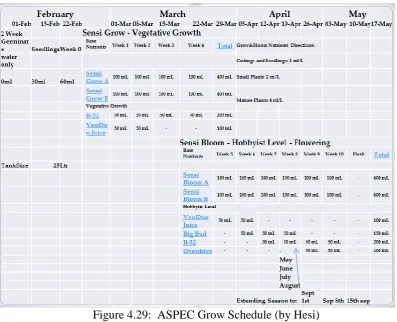
Figure 4.29: ASPEC Grow Schedule (by Hesi)……….….…69
Figure 4.30: ASPEC self-sustaining greenhouse………....69
Figure 4.31: Conventional Hydroponic Nutrient Film Technique (NFT)………...70
Figure 4.32: ASPEC & Additional complementary hardware layout……….…...73
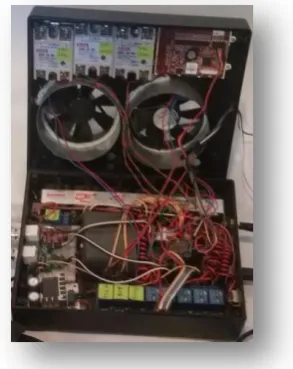
Figure 4.33: ASPEC (Inside View)……….…...74
Figure 4.34: ASPEC Touchscreen Human Machine Interface screens………....…74
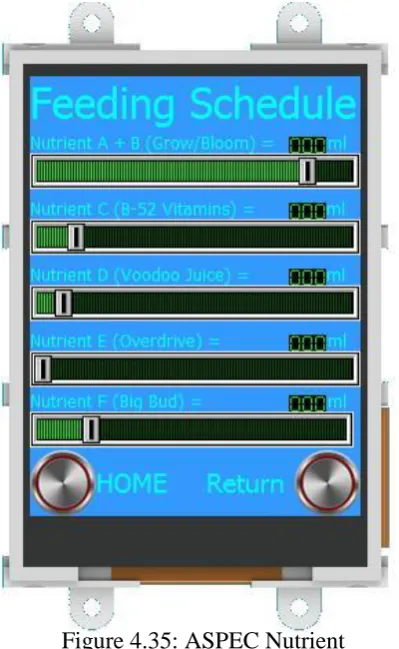
Figure 4.35: ASPEC Nutrient Configuration Screen……….…..75
Figure 4.36: ASPEC State Representation………..….75
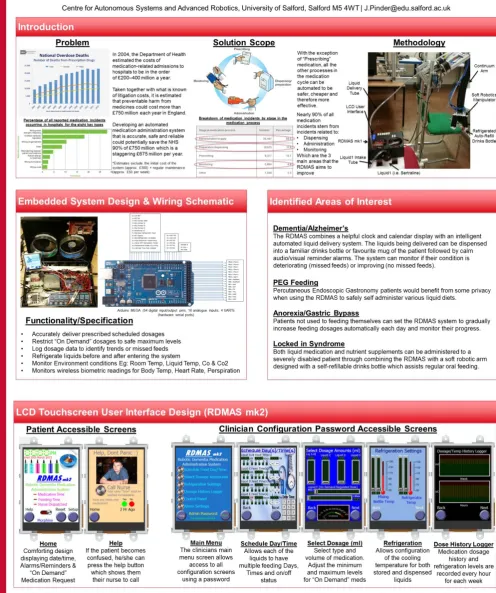
Figure 4.37: RDMAS Research Prototype Poster………..…..77
Figure 4.38: RDMAS State Representation………...78
Figure 4.39: MO Puddleworld………...…...79
Figure 4.40: Buridan’s Ass………...79
Figure 4.41: UAV Helipad Deviation Comparison Graph………...81
Figure 5.1: Random Walk Grid World Environment and Action Set……….….85
Figure 5.2: Multi Objective Solutions………..…86
Figure 5.3: MORL Punishment Locations………...91
Figure 5.4: Static Starting position MOQ learning rates………..…91
Figure 5.5: Static Starting position MOSARSA learning rates………....…92
Figure 5.6: Static Starting position GPFMORL learning rates………...….92
Figure 5.6.1: Static Starting position 1st Objective (Helipad) Comparison……….93
Figure 5.6.2: Static Starting position 2nd Objective (Boundaries) Comparison…………..93
Figure 5.6.3: Static Starting position 3rd Objective (Hills) Comparison……….…93
Figure 5.7a: Fixed Start State Utility Value Distributions for MOQ-Learning………..….94
Figure 5.7b: Fixed Start State Utility Value Distributions for MOSARSA………….…....94
Figure 5.8: Fixed Start State GPFMORL probability distributions a), b), c), d)..……...…94
Figure 5.9: Random Starting Location MOQ learning rates………....97
Figure 5.10: Random Start Location MOSARSA learning rates………..……...98
Figure 5.11: Random Start Location GPFMORL learning rates……….…....98
Figure 5.11.1: Random Starting position 1st Objective (Helipad) Comparison……….….99
Figure 5.11.2: Random Starting position 2nd Objective (Boundaries) Comparison……...99
Figure 5.11.3: Random Starting position 3rd Objective (Hills) Comparison………….….99
Figure 5.12a: Random Start State Utility Value Distributions for MOQ-Learning……...100
Figure 5.12b: Random Start State Utility Value Distributions for MOSARSA…………100
Figure 5.13: Random Start State GPFMORL probability distributions a), b), c), d)….…100 Figure 5.14 Windy Hill World………..………….103
Figure 5.15: Static Start Location Windy MOQ learning rates………..104
Figure 5.16: Windy Static Start Location MOSARSA learning rates………105
Figure 5.17a: Windy Static Start State Utility Value Distributions for MOQ …………..106
Figure 5.17b: Windy Static Start State Utility Value Distributions for MOSARSA….…106 Figure 5.18: Static Start Location Windy GPFMORL learning rates………...….106
Figure 5.18.1: Windy Static Starting position 1st Objective (Helipad ) Comparison……107
Figure 5.18.2: Windy Static Starting position 2nd Objective (Boundaries) Comparison..107
Figure 5.18.3: Windy Static Starting position 3rd Objective (Hills) Comparison…….…107
Figure 5.20: Deterministic Experiment with Prospect Theory……….…..109 Figure 5.21: Deterministic GPFMORL probability distributions……….….110 Figure 5.22: Stochastic Experiment with Prospect Theory………..…..110 Figure 5.22.1: Deterministic Vs Stochastic 1st Objective (Helipad) Comparison…….…111 Figure 5.22.2: Deterministic Vs Stochastic 2nd Objective (Boundaries) Comparison…..111 Figure 5.22.3: Deterministic Vs Stochastic 3rd Objective (Hills) Comparison………….111 Figure 5.23: Stochastic GPFMORL probability distributions………....112 Figure 5.24a,b ¼ of the Detection manoeuvre (Left) for detecting obstacles/hills…..…..117 Figure 5.25: C++ Search and rescue application using AR-Drone 2.0 and OpenCV.…...119 Figure 5.26: Multi-Modal Fuzzy Speed Controller outputs for translational velocity…...121 Figure 5.27: ASPEC Experimental Results Graph………..….…..124
Table 5.1: Reward and punishment scheme for three objectives in the random walk…...90 Table 5.2: MORL Parameters and objective weightings……….…90 Table 5.3: Windy MORL parameters and objective weightings………103
This dissertation is the product of many years of endurance and effort and is the result of not just one individual, but of many, each one being equally important for its correct development.
To begin, I would like to thank my supervisor Prof Samia Nefti Meziani for this amazing opportunity to learn under her guidance in such a well-equipped robotics department at the University Of Salford. Also thanks to my co-supervisor Dr Theodoros Theodoridis for his initial guidance and introduction to the interesting field of Multi Objective Reinforcement Learning.
I would like to thank and acknowledge the remarkable work of Dr William Hinojosa in the development of the GPFRL algorithm which formed the foundations upon which this research was conducted.
I thank my parents and family who have never stopped supporting me, I thank their patience, commitment, support, and advice when I needed it the most. They always believed in me and encouraged me, showing me love and support making me the person I am today.
Special thanks to my beautiful partner Sarah whose continuing support and perseverance have allowed me to peruse my ambitious goals in life. I appreciate that moving into a house together, financial situations, and coping with the stresses of supporting a PHD has pushed our relationship to the limits but thank you for still believing in me and helping me in any way you could.
AI Artificial Intelligence DP Dynamic Programming FIS Fuzzy Inference System
US Ultra Sonic
MC Monte Carlo Methods MDP Markov Decision Process NN Neural Networks
PFL Probabilistic Fuzzy Logic
POMDP Partially Observable Markov Decision Process RL Reinforcement Learning
SARSA State-Action-Reward State-Action TD Temporal Difference
MORL Multi Objective Reinforcement Learning MOQ Multi Objective Q-Learning
MOSARSA Multi Objective State Action Reward State Action
GPFMORL Generalised Probabilistic Fuzzy Multi Objective Reinforcement Learning UAV Unmanned Aerial Vehicle
CDSM Cellular Decomposed State Matrix PFM Potential Field Methodology
Actor-critic:
Refers to a class of agent architectures, where the actor plays out a particular policy, while the critic learns to evaluate the actor's policy. Both the actor and critic are simultaneously improving by bootstrapping on each other.
Agent:
A system that is embedded in an environment. The controller or decision-making entity choosing actions and learning to perform a task. Examples include mobile robots, software agents, or industrial controllers.
Average-reward methods:
A framework where the agent's goal is to maximize the expected payoff per step. Average-reward methods are appropriate in problems where the goal is to maximize the long-term performance. They are usually much more difficult to analyse than discounted algorithms.
Discount Factor:
A scalar value between 0 and 1 which determines the present value of future rewards. If the discount factor is 0, the agent is concerned with maximizing immediate rewards. As the discount factor approaches 1, the agent takes more future rewards into account. Algorithms which discount future rewards include Q-learning and TD (lambda).
Discounting:
If rewards received in the far future are worth less than rewards received sooner, they are described as being discounted. Humans and animals appear to discount future rewards hyperbolically; exponential discounting is common in engineering and finance.
Dynamic Programming:
A collection of calculation techniques for finding a policy that maximises reward or minimises costs. Is a class of solution methods for solving sequential decision problems with a compositional cost structure.
Environment:
The external system in which an agent is “embedded” which enables perception and action.
Episode:
A time segment of learning with task dependent starting and ending conditions. Function Approximation:
Refers to the problem of inducing a function from training examples. Standard approximators include decision trees, neural networks, and nearest-neighbour methods.
Markov Chain:
A model for a random process that evolves over time such that the states (like locations in a maze) occupied in the future are independent of the states in the past given the current state.
Markov Decision Process:
A model for a controlled random process in which an agent's choice of action determines the probabilities of transitions of a Markov chain and lead to rewards (or costs) that need to be maximised (or minimised). Essentially, the outcome of applying an action to a state depends only on the current action and state (and not on preceding actions or states) .
Model:
The agent's view of the environment, which maps state-action pairs to probability distributions over states. Note that not every reinforcement learning agent uses a model of its environment. Basically it’s a mathematical description of the environment.
Model-based algorithms:
These compute value functions using a model of the system dynamics. Adaptive Real-time DP (ARTDP) is a well-known example of a model-based algorithm. Model-free algorithms:
These directly learn a value function without requiring knowledge of the consequences of doing actions. Q-learning is the best known example of a model-free algorithm.
Monte Carlo Methods:
A class of methods for learning value functions, which estimates the value of a state by running many trials starting at that state, then averages the total rewards received on those trials.
Policy:
The decision-making function of the agent, which represents a mapping from situations to actions. Can be considered a deterministic or stochastic scheme for choosing an action at every state or location.
Policy Evaluation:
Determining the value of each state for a given policy. Policy Improvement:
Forming a new policy that is better than the current one. Policy Iteration:
Alternating steps of policy evaluation and policy improvement to converge to an optimal policy.
POMDP
Partially observable Markov decision problem. State information is available only through a set of observations.
Return:
The cumulative (discounted) reward for an entire episode. Reward:
An immediate, possibly stochastic, payoff that results from performing an action in a state represented by a numerical signal to the learning agent indicating task
progress or completion or the degree to which a state or action is desirable. Reward functions can be used to specify a wide range of planning goals
Sensor:
Agents perceive the state of their environment using sensors, which can refer to physical transducers, such as ultrasound, or simulated feature-detectors.
State:
This can be viewed as a summary of the past history of the system, which determines its future evolution.
Temporal Difference Algorithms:
A class of learning methods, based on the idea of comparing temporally successive predictions. Possibly the single most fundamental idea in all of reinforcement learning.
Temporal Difference Prediction Error:
A measure of the inconsistency between estimates of the value function at two successive states. This prediction error can be used to improve the predictions and also to choose good actions.
Unsupervised Learning:
The area of machine learning in which an agent learns from interaction with its environment, rather than from a knowledgeable teacher that specifies the action the agent should take in any given state.
Value Function:
Is a mapping from states to real numbers, where the value of a state represents the long-term reward achieved starting from that state, and executing a particular policy. The key distinguishing feature of RL methods is that they learn policies indirectly, by instead learning value functions. RL methods can be contrasted with direct optimization methods, such as genetic algorithms (GA), which attempt to search the policy space directly. A function defined over states, which gives an estimate of the total (possibly discounted) reward expected in the future, starting from each state, and following a particular policy.
Value Iteration:
A single iteration of policy evaluation followed by policy improvement.
“You only get out of
life what you put in”
- Clifford Neal.
This dissertation focuses on the problem of uncertainty handling during learning, by agents dealing in stochastic environments by means of Multi Objective Reinforcement Learning (MORL). Most previous investigations into multi objective reinforcement learning have proposed algorithms to deal with the learning performance issues but have neglected the uncertainty present in stochastic environments. The realisation that multiple long term objectives are exhibited in many risky and uncertain real-world decision making problems forms the principle motivation of this research.
This dissertation proposes a novel modification to the single objective GPFRL algorithm (HIinojosa et al, 2008) where, the implementation of a linear scalarisation methodology provides a way to automatically find an optimal policy for multiple objectives under different kinds of uncertainty. The proposed Generalised Probabilistic Fuzzy Multi Objective Reinforcement Learning (GPFMORL) algorithm is further enhanced by the introduction of prospect theory to guarantee convergence by the means of risk evaluation. The simulated grid world increased in complexity as a further two complementary and conflicting objectives were specified whilst also introducing uncertainty in the form of stochastic cross winds.
Results obtained from the GPFMORL grid world simulations were compared against two more classical multi objective algorithms, MOQ and MOSARSA, showing not only a stronger convergence but also a much faster one. Experiments performed on an actual Quad-Copter/Drone demonstrated that the proposed algorithm and developed framework are both feasible and promising for the control of Artificially Intelligent (AI) Unmanned Aerial Vehicles (UAV) in a variety of real-world multi objective applications such as; autonomous landing/delivery or search and rescue.
Furthermore, the observed results of this work showed that the GPFMORL method can find its major real world application in the un-calibrated control of non-linear, multiple inputs, and multiple output systems, especially in multi objective situations with high uncertainty. Proposed novel case study research prototype examples include: Controlled Environment Agriculture for optimising Hydroponic Crop Growth by the proposed “Automated Solar Powered Environmental Controller” (ASPEC). Finally the “Robotic Dementia Medication Administration System” (RDMAS) attempts to optimise liquid medication dispensing via intelligent scheduling to more appropriate times of the day when the patient is more likely to remember to take their medication, based upon previous learned knowledge and experience.
Page 1 of 233
1.1 Motivation
In situations where pre-programmed solutions are difficult or impossible to design, learning algorithms can be used to generate solutions for complex problems. Depending upon the level of available information, one or more types of learning can be applied. According to the connectionist learning approach (Hinton, 1989), these algorithms exist primarily in the form of Unsupervised, Supervised and Reinforcement Learning (RL). Unsupervised learning is only applicable when target information is not available and the agent attempts to form a model based upon association amongst data or clustering. Supervised learning however is much more powerful but requires the knowledge of output patterns corresponding to input data. However, in dynamic environments where the outcome of an action is not immediately known and is subject to change, correct target data may not be available at the moment of learning, this implies that supervised approaches cannot be applied. In these environments, reward information, whose availability can be only sparse, may be the best signal that the agent receives. For such systems, Reinforcement Learning has proven to be a more suitable method than supervised or unsupervised learning when the systems require a selection of actions whose consequences emerge over long periods of time for which input-output data are not available (Berenji and Khedkar, 1992). This dissertation proposes a novel Multi Objective Reinforcement Learning (MORL) algorithm that combines the universal function approximation capabilities of fuzzy systems and probabilistic theory with a linear scalarisation approach. The proposed algorithm seeks to exploit the advantages of both fuzzy inference systems and Probabilistic theory in a multi objective scenario to capture the probabilistic uncertainty of real world stochastic environments. This will allow the agent to choose an action that best satisfies all objectives based upon a probabilistic distribution able to minimise negative outcomes or maximise positive reinforcement of future events.
In recent years a growing number of algorithms for multi objective reinforcement learning have been proposed suggesting that MORL is emerging as a distinct sub-discipline of reinforcement learning research. However the field of MORL is still in its infancy and therefore the literature remains fragmented with very few real world
Page 2 of 233
applications developed. The observation that most real-world applications require the simultaneous satisfaction of multiple objectives drove the growth in multi objective optimisation research during the 1990‘s (Coello et al. 2002). Multi objective optimization concerns minimising each objective so that a lower value is superior to a higher value, however in the context of RL, the superiority is reversed so that the task is to maximise the reward. MORL problems are different to RL problems in the fact that there are two or more objectives to be achieved, each with its own associated reward signal; therefore the reward is a vector rather than a scalar value. If all objectives are directly related or completely independent, they can be combined into a single objective and a policy found that can maximise all objectives. In contrast if the objectives are conflicting then any policy must either maximise only one objective, or represent a trade-off between conflicting objectives usually in the form of a pareto front. The extension of a single objective RL algorithm (GPFRL) into a multi objective algorithm (GPFMORL) introduces new possibilities for variations in the overall aim of the MORL algorithm which shall be described in the following sections
1.2 Background to the research
The recent advances in Artificial Intelligence (AI) and military funded technologies embedded into Micro Arial Vehicles (MAV‘s) have allowed a wide variety of Unmanned Arial Vehicle (UAV) applications to be researched and advanced such as search and rescue, crop monitoring and even an Amazon drone delivery service. Along with the increasing popularity of quadcopters (drones) there arises the opportunity to take advantage of their full capabilities by endowing them with AI so that they can learn how to react to situations themselves without being reliant upon a human operator or communication link. Furthermore, researchers typically rely on expensive aerial vehicles that are capable of lifting heavier advanced sensors which inherently reduce the operational run time of the UAV impairing the overall effectiveness of task completion when instead the use of computer vision and AI techniques could be more efficient especially for communication failure redundancies.
1.3 Research Goal and Contributions
It can be seen later that the GPFMORL framework is an extended version of the single objective GPFRL algorithm using linear scalarisation and Prospect Theory. The following contribution is derived from the work described in this thesis.
Page 3 of 233
A Generalised Probabilistic Fuzzy Multi Objective Reinforcement Learning method intended for continuous states and actions and is able to learn input-output mappings through interactions with the environment. This method tackles 6 issues in the decision making processes.
Uncertainty in the outcome of actions is handled by a probabilistic approach.
Learning from interaction, where system model is not readily available is handled by using reinforcement learning.
Uncertainty in the inputs, which is handled by using a fuzzy logic control method.
Choosing the most appropriate action that satisfies multiple objectives using a linear scalarisation technique.
Dealing with the presence of risk in the form of Prospect Theory (Risk Aversion)
The developed algorithm exhibits a comparatively fast learning speed and flexibility as it can be used for several different systems, where control or decision making under uncertainty is paramount. This concept has been tested through 4 different experiments and 2 additional research prototypes:
The random walk multi objective deterministic simulations
The Windy Grid World multi objective stochastic simulations
Experiments performed using Prospect Theory for uncertainty under risk
A real time experimental investigation of automatic landing for a quadcopter mobile robot using computer vision as the primary positioning sensor.
1. Working Prototype of the Automated Solar Powered Environmental Controller 2. Partially working prototype for the Robotic Dementia Medication
Administration System
1.4 Justification for the research
Page 4 of 233
that the research of methods combining the probability estimation of reinforcement learning, as the one proposed by Hinojosa et al (2011), with other methods that can incorporate the knowledge of human operators; especially for situations where the result of selecting actions or behaviours with a relatively ―high‖ probability of success can have positive consequences. As an example, it can be suggested the use of prospect theory, which is a method of calculating decisions not only based on probabilities of success but also based on a risk evaluation.
1.5 Methodology
Quantitative research is ‗Explaining phenomena by collecting numerical data that are analysed using mathematically based methods (in particular statistics)‘. For example, how many iterations (steps) does it take a MORL agent to converge to the optimal policy? While quantitative research is based on numerical data analysed statistically, qualitative research uses non-numerical data. Qualitative research encompasses a wide range of methods, such as interviews, case studies, ethnographic research and discourse analysis. Due to the nature of this autonomous project and the hazardous environment in which it acts, the need for human subjects is eradicated. The performance measure of the system can be acquired using statistical methods directly outputted from the system in terms of a numerical value. The performance may then be compared to other implementations of MORL using further statistical analysis in an attempt to demonstrate its superiority and short falls in contrast with other algorithms.
1.6 Outline of the thesis
Page 5 of 233
policy algorithms, most significant RL and Hybrid algorithms. Prospect theory is then briefly introduced finishing with a discussion and conclusions.
Chapter 3 Explains in more detail the principal components of the GPFMORL architecture. The mathematical formulisation of a sequential decision making process is explained. I then analyse the importance of uncertainty handling; review the concept of fuzzy inference systems, and then introduce the application of probabilistic theory to fuzzy logic. Finally conclusions are made and the rationale behind extending the GPFRL single objective RL algorithm into an improved multi objective GPFMORL algorithm is justified.
Chapter 4 In this chapter, we consider a number of examples regarding our proposed reinforcement learning approach. In sub section 4.2, we describe a multi objective linear scalarisation technique which extends the single objective GPFRL algorithm into a multi objective one (GPFMORL). Prospect theory is then explained in section 4.3 in more detail with integration into our proposed algorithm. Section 4.4 details three unique case study research prototypes developed to demonstrate the feasibility of MORL decision making for crucial applications such as AI UAV‘s, ASPEC and RDMAS. Subsection 4.4.1 details the various implementations necessary to construct the Unmanned Aerial Vehicle Visual Navigation Framework. Subsection 4.4.2 details various prototypes for the Automated Solar Powered Environmental Controller. Subsection 4.4.3 details the design for a Robotic Dementia Medication Administration System. Section 4.5 explains some Empirical Evaluation methods for MORL finishing with a discussion and conclusion.
Page 6 of 233
Landing Practical Experiment and finally the Controlled Environment Agriculture of Hydroponic Tomatoe Plants using ASPEC.
Chapter 6 – Recalls the contributions of this work; it then states some observations and proposes some possible extensions and directions for future research. The chapter ends with some final conclusions derived from this research.
Additionally three appendices complement the chapters above as by demonstating the implementation of MORL as follows: first, appendix A contains matlab programme code used for the random walk simulated experiments. Second, Appendix B contains C++ code used for the practical UAV experiment. Finally Appendix C includes design and development evidence of an alternate case study embedded system prototype ―Automated Solar Programmable Environmental Controller (ASPEC)‖. 1.7 Delimitations of scope and key assumptions
One of the test labs is approximately 6 m high therefore preliminary experiments reveal that this is sufficient to perceive the environments plan view perspective of around 3m2. Should larger environments need to be tested, there are other rooms available with a maximum height of approximately 12m high, therefore at most a plan view perspective of a 6m2 environment can be used for testing purposes. This should satisfy my testing conditions of non-finite environments in an attempt to validate scaled up versions of MORL. It is assumed that the control PC shall be no more than 50m from the AR-Drone at any point in order to ensure reliable Wi-Fi signal strength.
1.8 Conclusion
Page 7 of 233 2.1 Introduction
Automonous robot operation requires the subjects to know its position and movement within the environment. Since no assumptions can be made about the environment, the robot must learn from its environment. The learning task consists of finding a mapping from environmental conditions to behaviours into the most effective actions (policy). One method that is particularly good at learning and improving policies is RL, which is considered to be a significant sub-branch of Machine Learning (ML) most suited to solving sequential decision making problems. Single Objective Reinforcement Learning (SORL) has proven to be very powerful at allowing agents to learn in unknown environments by maximising a value representing a single long term objective. However within the majority of real world decision making problems there usually exists multiple long term objectives. Only recently in the last few years has there been a significant increase in MORL research. However, researchers have yet to develop of a MORL algorithm capable of dealing with risk and uncertainty which is crucial in most real world applications as suggested by the ASPEC and RDMAS research prototypes.
2.2 Case Study Research Prototype Review 2.2.1 Controlled Environment Agriculture
An important real world example of a multi objective problem in the presence of uncertainty is the optimisation of hydroponic crop growth by means of Controlled Environment Agriculture (CEA). Few systems have attempted to automate hydroponic crop growth however no systems take into account uncertain environmental factors which is imperative to predicting the optimal conditions for optimised crop growth. The paper by Saaid et al (2013) proposes a microcontroller system for a hydroponic technique known as deep water culture. Whilst the described system compensates for PH variations with good results, the electrical conductivity of the nutrient solution is neglected, consequently only the PH of the nutrient solution is optimised which is not sufficient for crop growth optimisation. The instrumental system developed by Domingues et al (2012) proved successful at monitoring and fixing the pH and EC of the nutrient solution for hydroponic lettuce. However the quality of crop results obtained were done so via two crops grown in parallel, one in conventional soil and the other using an automated hydroponic system. This does not fairly test the advantages of the automated system; instead it compares automated
Page 8 of 233
hydroponic crop growth with manual conventional soil methods which are unsurprisingly not as efficient. Instead a fairer test would have been to test two parallel hydroponic crop growths, one real time-automatic and the other manually controlled hydroponics truly demonstrating the advantages of automated hydroponics in a non-bias testing environment. Whilst the work by Velázquez et al (2013) proposes sound electrical schematic evidence of accurate PH and EC monitoring systems, it neglects other environmental factors such as Temperature which is influential on nutrient absorption. A system with closed loop feedback from nutrient solution sensors in combination with monitoring of uncertain conditions, such as sunlight and temperature, may result in much more effective hydroponic optimisation system, such as the one proposed later in this thesis.
2.2.2 Robotic Medication Administration Systems
As a result of medication errors both in hospitals and at home, adverse drug events (ADE‘s) cost the NHS around £200 - £400 million per year. In order to reduce these medication errors, Morriss, Frank, et al (2009), proposed barcode technology that verifies medication administration. However whilst this system was effective at detecting medication errors, it was not capable of acting automatically in order to correct these errors which may in fact present the opportunity for more errors to propagate further down the medication administration cycle. Other commercial products include Aesynt‘s ROBOT-Rx which is the market-leading automated medication dispensing solution. The system increases efficiency and accuracy in a Central Pharmacy, but this is not a personal mobile solution and is the size of a large room which would not be feasible for self-care patients in their own homes.
2.3 Reinforcement Learning
RL uses the notion of positive rewards and negative punishments that are experienced by the agent themselves. In other learning methods such as supervised learning, the best action possible will be made known to the agent after acting in specific way. In
Figure 2.1: Basic Components of a RL
Page 9 of 233
practical problems, the best action is sometimes impossible to know, but a certain value of the resulting state could be defined. The task of the agent is to learn from this indirect, delayed reward to choose sequences of actions that yield the greatest cumulative reward. The reward obtained when the agent attempts different actions, is used in reinforcement learning to update either the value function or the policy. The value function determines the potential value of each state where as the policy maps possible perceived states to the best known set of actions. The goal or objectives to be achieved are defined by the reward function without actually specifying how the objectives shall be accomplished.
Page 10 of 233
formulation for sequential decision-making problems defined as a 4-tuple {S, A, R, T,y} (Sutton&Barto, 1998) of which sequences of MDP tupples describe the agents experience in the learning process.
2.4 Taxonomy of RL Frameworks
Being a very flexible learning technique, there are several methods and algorithms that have been developed. Each of these can be classified under one or more categories according to different criteria. There are mainly three basic criteria to classify reinforcement learning methods:
By the presence of a system model.
By the way they learn and select a correct policy.
By its structure.
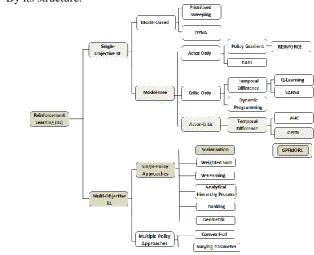
[image:28.595.138.453.303.558.2]Figure 2.2 presents a flow chart illustrating a reinforcement learning taxonomy, along with some well-known algorithm examples. Each of the reinforcement leaning methods or algorithms are classified into one or more categories according to different criteria. The hashed blocks show the structure of a recently developed GPFRL algorithm (Hinojosa, W. 2008), where the shaded blocks show the model that forms the principal focus of this thesis which primarily concerns extending the GPRFL algorithm to the multi-objective domain for complex dynamic unknown stochastic environments.
Figure 2.2: Reinforcement Learning Taxonomy
Page 11 of 233
A. Model-Based & Model-Free Single Objective
Model-based or indirect methods act in two phases: first, they learn the transition probability and reward functions and second, they make use of those transition probabilities in order to compute the Q function by means of, for example, the Bellman equations (Bellman, 1957). Some of the best well known algorithms in this category are Dyna (Roy et al., 2005) and prioritised sweeping (Demspster, 1969, Moore and Atkeson, 1993). Model free or direct methods learn the policy by directly approximating the Q-function with updates from direct experience. These methods are sometimes referred to as the Q-learning family of algorithms (Sutton, 1988), (Watkins, 1989). Some of the best well known algorithms in this category are adaptive heuristic critic (AHC) (Barto et al., 1983), Q-learning (Watkins, 1989) and SARSA (Rummery and Niranjan, 1994). Model free methods can be further classified in three sub groups depending on whether the algorithm focuses on learning the policy or the value function, critic only, actor only, and actor-critic (Barto et al., 1983).
B. Actor, Critic, Actor-Critic
Page 12 of 233
estimated value function is known as the critic, because it criticizes the actions made by the actor. When combined into an AC structure, the learning is always on-policy: the critic must learn about and critique whatever policy is currently being followed by the actor. The critique takes the form of a TD error (a scalar signal) and represents the sole output of the critic which drives all learning in both actor and critic. It would seem that an actor-critic system with a lookup table is guaranteed to converge to optimality no matter what. Surprisingly, that is not the case. Although it always converges for y>0.5 (Williams & Baird 1993), it does not always converge for larger y as shown by Baird (1999).
C. ON-Policy / OFF-Policy
In both model free and model based methods there are two basic strategies to update the policies value function which are known as on-policy and off-policy learning. Off-policy methods are able to update the estimated value functions by using hypothetical actions, those that may never actually be tried. The behaviour policy of the agent is usually ―soft‖ and therefore includes some element of exploration. An advantage of off-policy algorithms is that they can separate exploration from control, whilst on-policy algorithms cannot. One of the most well-known on-on-policy learning algorithms is called Q-Learning (Watkins, 1989) and is reviewed in more detail in section 4A.
D. Single-Policy Multi-Objective
MORL approaches may be divided into two categories based on the number of policies to be learned: single-policy approaches and multiple-policy approaches. Single-policy approaches aim to obtain the best single policy that satisfies the preferences among the multiple objectives, as specified by a user or derived from the problem domain (Vamplew, P et al. 2011). The major difference between the single-policy approaches is the way in which these preferences are expressed.
Weighted Sum Approach
Page 13 of 233
GM-Sarsa‘s approach the updates were based upon actual actions taken rather than the best possible action, the algorithm discovers Q-Values that are closer to the true expected return. This weighted sum approach has the advantage of allowing the user to have some control over the nature of the solution by
placing more or less emphasis on each of the several objectives. Assuming there are two objectives to be completed and 5 possible candidate actions as illustrated in (Fig 2.3), you notice that actions a2, a3 and a4 lie within the concave regions of the pareto front and will therefore never be selected, instead either a1 or a5 will be selected according to their pre-defined weights. This disadvantage can be overcome by using less frequent non linear functions as demonstrated in Tesauro, G. et al (2007)
W-Learning Approach
In the paper by Humphrys, M (1996),Humphrys demonstrates how ‗W‘ values can be generated using Top-Q algorithm which generates the action according to the objective with the highest Q-value in the current state. The advantage of this is that the Optimal action is chosen for at least one objective. However the disadvantage is that the objective with the highest Q-Value may have no preference over what action is chosen, while another objective stands to lose a great deal if its action is not selected. A much better approach is to learn the W values based upon the update rule for a process known as W learning (Liu, C. et al 2013). The reverse of this process is called Negotiated W-Learning which results from Liu, C. et al‘s (2013) statement that there is no need to learn the W values, instead they can be computed directly from the Q-Values.
A common approach in complex reinforcement learning tasks is to divide the problem into functional parts, or behaviours, and then to assign a sub-agent to solve each task. The action selection problem then becomes to negotiate between sub-agents with conflicting desires. W-learning is a method whereby agents build up W-values in each state that indicate how important that state is for that agent. These values are then used as basis for selecting agents.
Figure 2.3: Weighted Sum Concave Drawback (Source:
Page 14 of 233 Analytic Hierarchy Process (AHP) Approach
In most cases, knowledge about the optimisation problem does not exists explicitly therefore we often define the objectives in a qualitative manor such as ―It is more important that the UAV does not fly into a wall rather than landing precisely on the helipad.‖ However this presents a problem for stochastic/deterministic systems as there is no precise mathematical description to quantify this information. Using fuzzy subsets and inference rules, the Importance factor Ii and the value of improvement Di(ap,aq)= Qi(s, ap) − Qi(s, aq) are used as inputs to construct the action selection mechanism (Humphrys, M. 1996). Another example using the AHP algorithm is the Greenhouse Parameter Control Strategy demonstrated in Qian and Wang (2013) where the target for the RL agent is to produce as high yield of crops as possible by taking into account several environmental factors such as light intensity, Co2 level, humidity, and temperature. Various equipment such as heaters, ventilation fans, irrigation equipment and LED lights are controlled by the AHP algorithm to provide a more scientific and reasonable sequence in selecting control measures. Providing the ideal growth values for any particular crop are known, this method may be used to automatically collect and control crop growth parameters to be used as an automatic control algorithm for maximising any crops production yield.
Ranking Approach
Mitten (1964) and Sobel (1975) expressed an objective function TQ(s,a) in terms of partial policies which is also known as the sequential or threshold approach. In this approach one objective is maximized whilst satisfying the constraints on other objectives (such as maximizing factory production while maintaining a required safety level). In the paper by Zheng et al (2012), the two metrics of transmission delay and packet loss rate are considered as an optimisation problem of two choices.
Minimize transmission delay under desired constraint of packet loss rate, which would be suitable for the scenario of a best effort application.
Minimize packet loss rate under desired constraint of transmission delay, which would be proper for the scenario of a real-time application.
Page 15 of 233
Since they only consider the packet loss caused by the link condition, the comparison between MORL based routing and shortest path routing is actually unfair.
Geometric Approach
This algorithm proposed by Mannor and Shimkin (2004) focuses on the long term average reward vector in a dynamic, unknown environment. Interestingly this algorithm can also deal with environments that may be altered by the actions of other agents providing pre-existing knowledge of the problem domain is provided to define the target set. Importantly a disadvantage of this system is that although the changes to the environments state can be observed, they cannot be predicted before hand. The geometric algorithm learns to approach a prescribed target set in multidimensional objective space shown in fig 2.4b below.
Figure 2.4a & 2.4b : Reward Vectors (Source: Mannor and Shimkin, 2001)
Page 16 of 233 E. Multiple-Policy Multi-Objective
Multiple- policy approaches aim to find a set of policies that approximate the Pareto front. The fundamental difference between multiple policy approaches is the manner in which the Pareto front is approximated (Chunming et al 2003).
Convex Hull Approach
Until now, only single policy approaches to multi objective reinforcement learning have been discussed however there have been efforts to develop algorithms that are multiple policy approaches by nature. A multiple policy approach known as the convex hull approach is described in Li-juan et al (2009) which can learn optimal policies for all linear preference assignments over the objective space at once. Conventional RL algorithms repeatedly back up maximal expected rewards whereas this type of RL backs up the set of expected rewards that are maximal for some set of linear preferences. Barret and Narayanan (2008) proved that their solution gives the optimal policy for any linear preference function and the solution is reduced to the standard value iteration algorithm for specific weight vector. Crucially this convex hull technique can be used in combination with other RL algorithms, because multiple policies are learned at once, these RL algorithms must be off-policy such as Q-Learning or Dynamic Programming Techniques.
Varying Parameter Approach
Page 17 of 233 2.5 Historical Progress
A. Most significant RL frameworks
Page 18 of 233
Decision Problems in Image Processing by using reinforcement learning in image processing and computer vision extending as a way of replacing human assistance with intelligent agents.
B. Most Significant Hybrid Algorithms
Page 19 of 233
disadvantage of not being capable of being used as a stand-alone controller without the learning structure. Lin and Lee (1993) developed two approaches: A reinforcement neural fuzzy control network (RNFCN) (Lin, 1995) and a reinforcement neural network based fuzzy logic control system (RNN-FLCS). Both algorithms were given the ability to learn using structure and parameter learning to achieve good overall performance compared with other hybrid methods. A generalised RL fuzzy controller was proposed by Zarandi et al (2008) which is capable of handling vagueness of inputs but overlooks the handling of ambiguity which is crucial when dealing with uncertainty. Furthermore the structure of the algorithm became very complex by the use of two independent fuzzy inference systems. Several other fuzzy RL algorithms, primarily model free, have been implemented based upon Q-learning (Lin and Lin, 1996), (Almeida and Kaymak, 2009) or AC techniques such as those by Jouffe (1998) and Lin (2003). Lin and Lin (1996) developed RL strategy based on fuzzy-adaptive-learning control network (FALCON- RL) method. Fuzzy-AC-learning (FACL) method (Jouffe, 1998), Lin‘s RL-adaptive fuzzy-controller (RLAFC) method (Lin, 2003), and Wang‘s fuzzy AC RL network (FACRLN) method (Wang et al, 2007) However, most of these algorithms fail to provide a way to handle real-world uncertainty which is a greater issue in such a large complex stochastic environments with continuous inputs.
2.6 Prospect Theory
Page 20 of 233
Based upon Bernoulli‘s principle, later in 1944, John von Neumann and Oskar Morgenstern proposed a reinterpreted formal model called expected utility theory (EUT). Since then, it has been used as a model of rational choice under risk based upon the assumption that people behave as rational agents and that they adhere to EUT in decision making behaviour under risk (Andriottyi, 2009). However EUT cannot capture the human decision making attitudes towards risk i.e.: risk aversion and risk seeking, because it does not model the domain of human intuition, thoughts or preferences that come to mind quickly without much reflection (Coleman et al, 2007). This drawback is also confirmed in Allais‘s and Ellsberg‘s paradoxes (Zhang et al 2007). A group of psychologists called Kahneman & Tversky (1979) addressed this limitation and developed an alternative theory of choice based upon Prospect Theory (PT) that can accurately describe how people actually make their decisions. They claimed that PT captures common human decision making attitudes towards risk that cannot be captured by EUT ie: risk aversion and risk seeking. While risk aversion is generally assumed in any economic analysis under uncertainty, risk seeking is generally not. PT goes towards explain why people often make decisions that seem irrational. If people always made decisions on a utilitarian bases there would be little need for insurance and few, if any, people would gamble. Moreover, if utility were the basis for all decision making there would be little need for marketing. The list of the topics that PT could apply to is long and still growing, some of these topics are: Investment banking (Willman et al. 2002), commercial banking (e.g. Godlewski, 2004), finance (Han& Hsu, 2004), analyst behaviour (e.g. Ding et al, 2004), hedge funds (e.g. Siegmann & Lucas, 2002) and political science (Mercer, 2005). Andriotti (2009) proposed a new Q-learning algorithm that reproduced human non-rational behavior by using PT as its basis instead of the EUT. Andriotti‘s new model has been applied in urban traffic modelling.
2.7 Discussion
Page 21 of 233
environments such as the deep see treasure benchmark (Vamplew et al, 2008) but not so well in larger continuous environments. Additionally due to the multi objective nature of many real world practical optimisation and control problems, there is a need for multi objective reinforcement learning algorithms to be further developed to accommodate such applications. The difference between single-agent and multi-agent system exists in the environments. In multi-agent systems other adapting agents make the environment no longer stationary, violating the Markov property that traditional single agent behaviour learning relies upon (Yanjg and Gu, 2004).
Many alternate approaches to solving MORL are actively being researched to work around this Markov violation and some algorithms are reviewed below. However, it appears that, should the environment remain stationary, this violation can be avoided. Forcing the robots to move in a synchronised manor could allow Multi Robot Systems (MRS) to utilise well understood Markovian principles, which have proven to work well in single robot systems. Providing all robots are synchronised during the learning process the only changes to the environment are the ones that we are actually trying to understand. This novel methodology could effectively scale up the MORL problem to be able to deal with more complex dynamic environments without other robots altering the state of the environment and causing misinterpretations of the agents effects of its own actions upon the environment. ―Unlike single-objective optimisation that returns a best solution to the problem, multi-objective problems have usually no unique, perfect solution, but a set of equally efficient, or non-inferior, alternative solutions, known as the Pareto optimal set, which represents the possible trade-off among conflicting objectives‖ (Liao, 2010).
Page 22 of 233
policy approaches aim to find a set of policies which approximate the Pareto front. As with any MORL algorithm, the aim is to intrinsically identify a single or multiple policies that produces suitable compromises between the multiple objectives. A good compromise can be expressed in terms of Pareto dominance (Pareto 1896) which allows a comparison of a pair of solutions to a multi objective problem. The main disadvantage of generating multiple policies rather than a single policy is the increased computation cost and the increased time spent interacting with the environment. The single policy approach is therefore more suited to on-line learning tasks within a real environment such as the UAV visual navigation task described in section 8. Using a UAV to learn from its own interactions is constrained by the fact that it has limited power where the additional cost of searching for multiple policies may be impractical due to the maximum learning flight time of approximately 15 minutes. The earliest example of a single policy algorithm was provided by Gabor et al (1998) where a similar approach is designed for problems where constraints apply to some of the objectives. For example in our experimentation the UAV must carry out a navigation task of maintaining a relative position above the helipad in the presence of stochastic uncertainty whilst maintaining a battery level above zero.
2.8 Conclusion
In order to identify the structure of the field, a representative set of approaches have been reviewed that provide insights into some of the latest state of the art algorithms used actively by researchers within the past decade.
In this review the background and basic architecture of RL and its methods were introduced first; then several representative MORL approaches were discussed. It has been shown that MORL is particularly successful in the following areas:
1) Improving the performance of the traditional single-objective RL.
2) Generating highly diverse multiple Pareto-optimal models for constructing ensembles.
3) Achieving a desired trade-off between accuracy and interpretability of neural networks or fuzzy systems.
Page 23 of 233
the success or failure of an action. It was seen that the SARSA and Q-learning algorithms are very similar, while SARSA updates for the policy it is actually executing, Q-learning updates for a greedy policy. It can be said that Q-learning will learn the ―true‖ optimal policy, but SARSA will learn about what its actually doing. Hinojosa (2010) proposed an approach that is robust under probabilistic uncertainty while also being capable of dealing with continuous states and actions as is prominent in complex real world scenarios particularly when using computer vision as the primary observation method for sensing changes in the environment. The two main fields of application of reinforcement learning are decision making and control problems. So far reinforcement learning has been used successfully in several different applications under both fields, yet some more practical and real-world applications need to be tested particularly for scenarios involving multiple conflicting objectives. For single-policy MORL approaches, the weighted-sum and W-learning approaches are simple to implement, but they cannot express exactly the preferences of the designer. The AHP, ranking, and geometric approaches may express the preferences more exactly, but they need more prior knowledge of the problem domain. For multiple-policy approaches, the convex hull algorithm can learn optimal policies for all linear preference assignments over the objective space at once. The varying parameter approach can be easily implemented by performing multiple runs with different parameters, objective threshold values, and orderings in any single-policy algorithm. MORL approaches have been improved recently in three important directions:
Enhancing their qualities
Adapting dynamic preferences
Constructing evaluation systems
Page 24 of 233
3.1 Introduction
This chapter explains the principal components of the GPFMORL architecture for solving sequential decision making problems in uncertain stochastic environments. The mathematical formulisation of a sequential decision making process is explained along with the agent, policy, environment and reward structure. We then analyse the importance of uncertainty handling; review the concept of fuzzy inference systems, and then introduce the reader to probabilistic theory and its application to fuzzy logic. The proposed GPFMORL algorithm extends an existing single objective GPFRL algorithm (Hinojosa, 2011) which itself merged 3 different paradigms in order to deal with their individual limitations. In order to improve the work by Hinojosa (2011) a further two methodologies were introduced namely linear scalarisation and prospect theory in order to ensure the convergence of a multi objective sequential decision making problem. MORL has proven to be a valuable learning method when a system requires a selection of control actions associated with each objective, whose consequences emerge over long periods for which input or output data are not available (Hinojosa, 2011). In particular UAV visual navigation for automatically landing a UAV on a helipad in uncertain stochastic conditions. Finally, conclusions are made and rationale behind extending the GPFRL single objective RL algorithm into an improved multi objective GPFMORL algorithms are justified.
3.2 Multi Objective Reinforcement Learning Framework
The following subsections describe the most important terms used in both single and multi objective reinforcement learning that shall be used through the entire thesis.
Markov Decision Process
MDP models are for RL in single agent environments (Yang and Gu, 2004). Commonly an MDP is characterized by the mathematical formulation of a sequential decision-making problem defined as a 4-tuple {S, A, R, T, y} (Sutton&Barto, 1998) of which sequences of MDP tupples describe the agents experience in the learning process.