Evaluation of the Blackburn with Darwen
over8s parenting service
Long, T, Livesley, J, Devitt, P, Murphy, M, Fallon, D, Fenton, G and Lee, A
Title
Evaluation of the Blackburn with Darwen over8s parenting service
Authors
Long, T, Livesley, J, Devitt, P, Murphy, M, Fallon, D, Fenton, G and Lee,
A
Type
Monograph
URL
This version is available at: http://usir.salford.ac.uk/17879/
Published Date
2010
USIR is a digital collection of the research output of the University of Salford. Where copyright
permits, full text material held in the repository is made freely available online and can be read,
downloaded and copied for noncommercial private study or research purposes. Please check the
manuscript for any further copyright restrictions.
Contact the Centre for Nursing & Midwifery Research:
[email protected]
Wendy Moran (Research Administrator)
Tel: +44 (0) 161 295 2768
E-mail: [email protected]
http://www.nursing.salford.ac.uk/research/childrenandyoungpeople
This report can be referenced as
Long T, Livesley J, Devitt P, Murphy M, Fallon D, Fenton G, Lee A (2009) Evaluation of the Blackburn with Darwen Over-8s Parenting Service. University of Salford.
ISBN: 987-1-905732-89-0
FINAL REPORT
Tony Long
Joan Livesley
Patric Devitt
Michael Murphy
Debbie Fallon
Gaynor Fenton
Angela Lee
Evaluation of the
Blackburn with Darwen
Acknowledgement
The project team wishes to acknowledge the help of the children, parents, families, practitioners and managers who contributed to the evaluation.
Section 1 – CONTEXT OF THE EVALUATION 3
Introduction 3
Background to the evaluation 3
Section 2 – METHOD 5
Project objectives 5
Data collection and analysis 5
Ethical considerations 7
Section 3 – RESULTS OF PRE-TEST POST-TEST ANALYSIS 8
SDQ results 8
SFP results 8
Impact after six months 9
Summary 10
Section 4 – THE VIEWS OF SERVICE USERS 11
The impact on parents themselves 11
Communication with children 12
Perceiving the child’s perspective & interacting
differently 12
What could be done differently 12
Section 5 – THE VIEWS OF REFERRING AGENCIES 14
Effects on parents and children 14
The complex nature of the network that has developed 15
Section 6 – STRUCTURAL ANALYSIS OF THE SERVICE 17
The service 17
The objectives to be met 17
Analysis of the service 18
Outcomes of the analysis 21
Service strengths 21
Service vulnerabilities 21
Section 7 – CONCLUSIONS 22
Summary 22
Key messages 23
REFERENCES 24
APPENDIX A: Participant Information Sheet 26
APPENDIX B: Participant Consent Forms 27
The Project Team
Dr Tony Long is Professor of Child and Family Health in the University of Salford School of Nursing & Midwifery and leads a multi-professional group on research with children and families. A Registered Child Health Nurse, his personal research programmes are in evaluation of health and social care services for children and families, safeguarding children, early intervention, and clinical research on the outcomes of treatment for children..
Joan Livesley is Senior Lecturer published in the field of children in hospital and evidence-based practice, and researches the improvement of safety in hospital in partnership with children. Qualified in adult & children’s nursing, she leads the dissertation on a postgraduate programme of advanced practice in health and social care. She has a clinical background in services for children in hospital and the community, and links with a children’s drop in centre.
Patric Devitt is Senior Lecturer in Child Health with a clinical background in children’s nursing working particularly with children with cancer and their families. He is a member of the steering group of the Royal College of Nursing’s Research in Child Health Group. His particular focus in research is on safety issues for children in health care practice .
Michael Murphy is Senior Lecturer in Social Work. A qualified social worker and counsellor, he has published widely in dealing with substance misuse, looked after children, chaotic families, and safeguarding children. He is a training consultant to DATA, NWIAT, Right from the Start, and Bolton HSCB). He is the chair of Bolton Substance Misuse Research Group and was an executive member of Promotion of Interagency Training in Childcare.
Dr Debbie Fallon is Senior Lecturer in Child Health and has a clinical background in children’s nursing, working particularly children with disabilities and their families. She has an academic interest in issues on the boundary of health and social care for children and families. In addition to other projects that involved the evaluation of services for children and families, her work in the field of teenage pregnancy and adolescent risk behaviour has led to international conference presentations and publications.
Gaynor Fenton is Lecturer in Child Health with a clinical background in counselling and child mental health. She is co-author of a parenting support programme developed from a multi-agency perspective. Additional publications focus on the views of carers and staff support initiatives. Her work has been presented at conferences both nationally and internationally.
Angela Lee is Lecturer in Child Health with a clinical background in children’s nursing working particularly with critically ill children and their families. Her particular focus in education is on the recognition and assessment of the sick child and negotiation of parental participation within family centred care. She also has clinical links within the community with Sure Start Areas and various healthcare clinics.
Section 1 - Context of the Evaluation
Introduction
Eighteen months after the introduction of the Over-8s Parenting Service, Blackburn with Darwen Community Safety Partnership engaged CYP@Salford, a multi-professional research team from the University of Salford, to undertake this evaluation of the service. The brief was to investigate the process and outcomes of the interventions to date, with a view to informing further development.
While much effort has been put into addressing the early years of childhood – especially 0-5 years, and policy, politics and social concern have focused (sometimes positively, though more often in a negative light) on adolescents, much less attention has been paid to children’s needs in middle childhood (Action for Children 2008). The middle years of childhood (perhaps 6-13 years) have been recognised to be a time of important change for children, and a period in which effective intervention for family difficulties can exert lasting positive impact on their lives. Children’s emotional wellbeing at this point in their lives has been found to be “a key factor in determining mental health outcomes at age 16 and life chances at age 30” (Margo & Sodha 2007). So the impact of intervention with children between 8 and late teenage is likely to be felt not only in the short term, but also right through into young adult life.
Background to the evaluation
The National Policy Context
Key to the understanding of this service is the long-standing desire of the Labour administration to reduce social exclusion, by securing the benefits of family life for all children, particularly those children who are part of the most disadvantaged groups. Early in its first term in office, the Labour Government attempted to target parents with younger children, via Sure Start Children’s Centres in the most disadvantaged wards in the community. This was closely followed by the New Deal raft of initiatives and a ten year child care strategy (HM Treasury 2004) which were designed to reduce child and family poverty and to prevent exclusion. From the very beginning New Labour hoped that the improvement in parenting capacity and ability would radically impact on child well being and prevent social exclusion.
By 2007 there was a growing awareness of a smaller group of families which were seen as being highly resistant to mainstream services and therefore unable to make use of the support that was available: “It is necessary to focus on helping the small number of families with multiple problems who are still struggling to break the cycle of disadvantage” (SETF 2007 p4). Some research (Ravey et al 2008, Blackburn et al 2009) suggests that rather than seeing such families as being resistant to services, they should rather be seen as being isolated and unprepared for the complexity of the parenting task. The Government responded with the introduction of Family Intervention Projects (FIPs) which, although aimed mainly at preventing crime and anti-social behaviour, entailed a strong commitment to help to teach parents how to parent their children better.
Parenting groups – the context
Parent training programmes are increasingly being used to promote the wellbeing of children and families. There is evidence to suggest that these programmes can improve maternal psychosocial health and parenting practices as well as reducing child behaviour problems (Bloomfeild & Kendall 2007, Kendrick et al 2007, Asscher et al 2008). Behaviour problems in young children, such as temper tantrums, and comparable problems in middle childhood, such as aggressive outbursts, can be associated with problems in later life including criminality, substance misuse, mental health problems and relationship difficulties (Gibbs et al 2003).
Section 2 - Method
Project Objectives
1. To analyse and interpret quantitative data from pre- and post-intervention standard instruments.
2. To elicit the perspective of various stakeholders on the effectiveness and acceptability of the service.
3. To provide the sponsor with a report which will inform the strategy for the next year and beyond.
While not within the brief, the research team established in discussion with the commissioner that structural analysis of the service would also be useful to include this in the evaluation.
Data Collection and Analysis
1) Analysis of quantitative data
Data was available from Strengths and Difficulties Questionnaires (SDQ)1 and from Strengthening
Families Programme (SFP)2 end of course evaluations (both parent and child versions), all as raw scores
on paper copy. Collection of both pre-test and post-test data is notoriously difficult with populations such as this one in which denial of responsibility for the presenting problem is common, and continued engagement on completion of the programme to the point of post-programme testing is generally unlikely. Despite this, and as a result of strenuous efforts on the part of the service, a small number of SDQ results were obtained 6 months after the end of the programme. Many reports of outcomes from parenting programmes omit this stage completely (though recognising its importance)
Only SDQ responses in which matched pre-test and post-test were complete are reported here, though the remaining single pre-test or post-test showed such similar scoring that the selected results included in this report may be seen to be representative of the wider group of service users. Similarly, only those SFQ responses in which both elements of the questionnaire had been completed are included. Thirty-four paired responses were available from SDQ data. Parents had attended a parenting programme (or 1-to-1 support) at one of 6 centres. Data from the SFP questionnaires was presented from programmes at 7 centres, totalling 20 parental and 15 youth responses. (See Appendix C for a list of sites for which data was available for one or both of these programmes.)
1
The SDQ is a brief behavioural screening questionnaire about 3-16 year olds. It exists in several versions to meet the needs of researchers, clinicians and educationalists. This version includes the following components: 25 items on psychological attributes - strengths and difficulties (5 emotional symptoms; 5 conduct problems; 5 hyperactivity/inattention; 5 peer relationship problems; 5 prosocial behaviour) and an impact supplement (chronicity, distress, social impairment, and burden to others). http://www.sdqinfo.com/b1.html
2
Data entry and cleaning was undertaken, and SPSS used to analyse this prepared data. The scores at the start of the intervention were compared to those at the end for each of the tools using the Wilcoxon signed ranks test. This test can be used as an alternative to the paired Student’s t-test when the population cannot be assumed to be normally distributed. The results were considered significant where P=<0.05. In addition, descriptive statistics were applied to some aspects that were less amenable to statistical testing.
A small number of parents (n=6) also completed the questionnaire six months following completion of the programme. These scores were then compared with those obtained before and those immediately after the programme. The Wilcoxon signed ranks test was employed as above.
2) Stakeholder perspectives
Service Users
The views of service users – both parents and children were elicited through a variety of means, including group interviews at the location for the parenting programme, individual face-to-face interview, and telephone interviews.
• Group interviews (15 adults and 7 children) • Individual face-to-face interview (1 parent) • Individual telephone interview (3 parents)
One group interview included families with substance-misusing members. In total, only 3 fathers participated. Details of ethnic origin were not sought.
Referring Agencies
We also undertook 3 face-to-face or telephone interviews with key individuals in referring agencies to establish their views on the process of access to the service, the outcomes of referral, perceived impact of the project on children and families, and suggestions for improvement or amendment.
3) Structural analysis of the service
Ethical Considerations
The main ethical issues associated with this study were the risk of breach of confidentiality and the potential for perceived coercion.
Confidentiality
The usual ethical standards relating to research with vulnerable populations and the use of potentially sensitive data were pursued by the study team. In particular, data was stored securely, with access restricted to members of the project team. Such personal information as was essential to the project relating to respondents (whether service users or service providers) remained confidential and was moved to secure storage in the university where required, and destroyed by the project team on completion of the evaluation.
Consent
Participants who were invited to be interviewed were first informed of the evaluation by a member of the Over-8s Parenting Service who introduced the research team. Additional printed information was provided by the researchers who answered any additional questions from participants before commencement of the interview.
Written consent from some populations and for some research topics is notoriously difficult, since this is associated with regulatory authorities and elements of the welfare system. True signatures are rarely offered if at all. For this reason, while arrangements were made for written consent to be secured, in practice verbal consent was gained from service-user participants. However, the researchers ensured that individuals who might wish to disengage from a discussion could do so without embarrassment or fear of untoward consequences.
Research Ethics Guidance and Formal Approval
The research team abided by the research ethics guidance offered by the British Sociological Association 2002 and the Royal College of Nursing 2007. Guidelines provided by INVOLVE for the involvement of service users and children in research projects were followed.3
The project team did not seek to identify individuals as NHS patients (past or present), but rather as members of a community served by a local resource, and the project did not fall within the realm of National Research Ethics Service approval. Formal approval was secured from the University of Salford Research Ethics Panel.
3
Section 3 - Pre-test Post-test Outcomes
[image:12.595.59.527.192.267.2]The four areas measured by the SDQ instrument all demonstrated an improvement following the intervention, although this was not significant in either the emotional symptoms (Z= -1.57 P=0.12) or the peer problems rating (Z= -1.54 P=0.12). In contrast, the improvement in hyperactivity rating, conduct problems rating, and the overall score demonstrated a significant improvement (see Table 1).
Table 1 SDQ test results
Emotional symptoms Conduct problems Hyperactivity Peer problems Total SDQ Score Z -1.57 -2.74 -2.88 -1.54 -3.16
P 0.12 0.01 0.00 0.12 0.00
[image:12.595.64.234.362.769.2]The Strengthening Families end of course evaluations completed by both parents and young people showed a highly significant improvement in all aspects (See Table 2 and Table 3).
Table 2
Parent end of course evaluations
Question Z P
1 -4.16 0
2 -3.86 0
3 -4.18 0
4 -3.72 0
5 -3.99 0
6 -4.28 0
7 -4.08 0
8 -4.37 0
9 -4.46 0
10 -4.46 0
11 -3.98 0
12 -4.47 0
13 -3.90 0
14 -3.75 0
15 -4.10 0
16 -4.20 0
17 -4.10 0
18 -4.09 0
19 -3.62 0
20 -3.26 0
Table 3
Young people end of course evaluations
Question Z P
1 -4.14 0
2 -3.72 0
3 -3.36 0
4 -3.34 0
5 -3.48 0
6 -3.06 0
7 -4.00 0
8 -2.83 0
9 -3.13 0
10 -3.42 0
11 -3.50 0
12 -3.13 0
13 -2.81 0
14 -2.06 0
15 -2.86 0
When the scores at six months were compared with those obtained before and immediately after the programme there was no significant difference in either of the comparisons. This may be an effect of the relatively small sample size in the final group.
Impact Assessment - SDQ
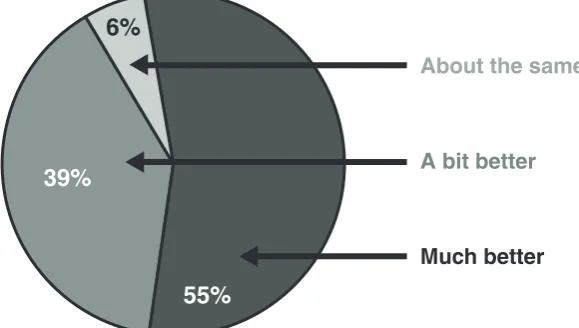
This was re-enforced by the parents’ subjective view of the changes following the completion of the course as expressed in the impact supplement section of the SDQ. None thought that the situation had deteriorated, and only 2 (6%) thought the situation was unchanged. In contrast, 94% (n=31) thought that the situation had improved, with 18 (55%) describing it as being much better and 13 (39%) reporting that it was a bit better (Figure 1).
Impact after 6 months
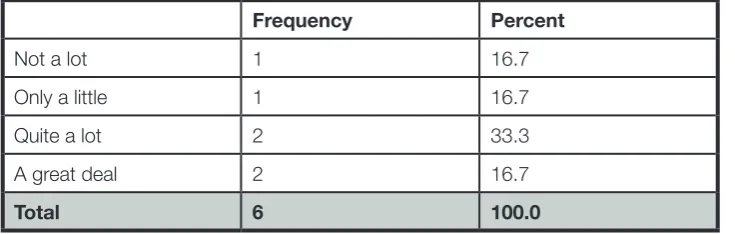
[image:13.595.90.380.378.542.2]After six months the parents subjective view had changed a little; two felt the situation had deteriorated markedly, but three felt it had improved markedly or a little Table 4). When asked whether the clinic had helped in other ways two thirds of the parents felt that it had helped either quite a lot or a great deal, including the parent of a child whose problems were far worse.
[image:13.595.72.432.594.715.2]Figure 1 Situation since the end of the course
Table 4 Situation 6 months later
Frequency Percent
Much worse 2 33.3
About the same 1 16.7
A bit better 2 33.3
Much better 1 16.7
Total 6 100.0
Table 5 Was the programme helpful?
Frequency Percent
Not a lot 1 16.7
Only a little 1 16.7
Quite a lot 2 33.3
A great deal 2 16.7
Total 6 100.0
Summary
Dretzke et al (2009) found that while parenting programmes were an effective treatment for children with conduct problems, there was insufficient evidence to determine the relative effectiveness of different approaches to delivery.
Taking the available evidence here either separately or combined, it is clear that the overall result of the formal evaluations of the range of programmes offered at a variety of locations was positive. Both parents and young people reported positive outcomes, with at least some improvement for most and significant improvements for many. There is limited opportunity to include free text responses in the SDQ, but parents added positive comments:
“Things have changed in the past 12 weeks from coming to this course.”
“I’ve seen good improvements in [child’s] behaviour.”
“The course had an excellent impact on my child and on me.”
Section 4 - The views of service users
Parent training programmes are a well-established treatment approach for children and adolescents with disruptive behaviour disorders (Friars & Mellor 2009), and measurement of outcome indicators with standardised instruments is important. However, the first-hand accounts of service users are vital to complement and illuminate this data.
The Impact on Parents Themselves
Being calm
Many parents spoke of changes in their own approach and behaviour when faced with challenging behaviour in their children. Remaining calm and adopting alternative patterns of behaviour of their own to react more positively to their children were key factors.
“Normally I go off on my high horse, shout, stress, you know….but I’ve learned now to just calm down. I ask him, he chooses not to. I ask him again. I remember to think before I actually speak.’’
Another parent had learned to “walk away and be calmed down”. This was reinforced by a third parent who explained that attending the programme…
“helps you to remember to be calm. It really makes you stop and think about what you are doing and how you react. You have to stop and think first before just shouting. I stop and think first instead.”
A fourth parent independently confirmed that the programme “helps you to remember to be calm and not to respond.”
Mutual support
Parents spoke of the strength gained from mutual support in the group and at home (when both parents attended a course).
“It’s good to know that there are people out there in the same position. You’re not the only one. You can relate to the other parents and change. There’s someone to talk to. You can off load.” “We can stop each other getting angry. I think it’s because we both come to this course.”
“When we have an incident with my son, I’ll say to my husband ‘Do you remember what we were taught on the course?’ And then we do that.”
Rewarding good behaviour
Several parents had applied strategies learned in the parenting programme, including the use of rewards and charting good behaviour.
“A little success: she does as she is told and does what I tell her to - sometimes.”
“Reward for good behaviour rather than tell them off, that’s the difference. We use a points system and reward the good behaviour with prizes.”
(Parent) “We use the targets and rewards chart. That works.” “I have to be good (child speaking) and clean my bedroom. Then I get a reward.”
Communication With Children
Both service providers and parents who used the service expressed their perceptions that communication between parents and their children had improved as a result of attending a parenting programme.
“It makes me think to listen more to (child’s) opinions. I listen to what she has to say.” “We talk about [what we have learned in the session] on the way home.”
“It’s not perfect but we’re listening more to each other. We never bothered to ask each other before. Now we ask each other.”
“It improves communication. They are talking together more effectively now.”
This improvement in communication between parent and child seems particularly relevant for hard to reach or isolated families (Murphy et al 2007, Blackburn et al 2009).
Perceiving The Child’s Perspective And Interacting Differently
Learning that they needed to change their perspective and start to think more about how the situation was from the point of view of their children was a major revelation for many parents. They learned to interact more with the children and to improve the quality of their time together.
“I’d forgotten to do that [to show affection], I don’t do it with the older two.”
“[The programme] encourages you to spend more time with your children. They like it and they want to come back next week.”
“It’s not all fun and games in our house, but now we can all sit in a room and have a laugh. Last night we were just all in the bedroom playing computer games together, whereas it would never happen before.”
“I learned that it is more about what the child wants rather than just what I want. I think about my child’s feelings more now – so it’s working.”
“They get the chance to talk about how they feel.”
“I give him more attention. It’s good for a father and son to talk together.”
The outside world often presumes that understanding the child’s perspective is somehow a “normal” process, but with isolated, under-confident parents, learning to see the child’s perspective is key to parental change (Blackburn et al 2009).
What Could Be Done Differently
Three issues were raised. The first of these was that some felt that the programme was not advertised or promoted adequately: “I think they [the programme] should put themselves out their more, let people know they’re here.” This was not the case everywhere, but it is, perhaps, an indicator that graduates from the programmes perceive the benefit and recognise the need for more parents to access the service.
Two respondents thought that the programme needed to be longer, one suggesting that 3 months might be a more appropriate timescale. The most common programmes being run were of a standard format (though with some tailoring for local requirements) and so not given to drastic extension. However, several parents reported that they had attended a number of other programmes from varying agencies – often 3 or 4, and this may point to the need for extended support in some cases.
Section 5 - The views of referring agencies
Effects On Parents And Children
Direct effects on behaviour
Referring agency managers found it difficult to express the direct effect on parents’ or children’s behaviour. However, it was noted that parents “are empowered through undertaking the Strengthening Families programme.” Moreover, they were clear that parents thought that the efforts being made to address their explicitly stated needs were valuable – presumably because some positive outcome was perceived by the families. This clearly fits with the responses of parents who were interviewed for this evaluation.
Workers and agencies supporting the women’s refuge had also declared that they could see the benefits for families in improved relationships and normalisation of children’s behaviour. The most commonly expressed benefit from the service was that it provided parents with alternative strategies to try out at home in an effort to break the cycle of reaction and over-reaction in response to events in the home. This supported the comments from users to the same effect.
Enhanced communication between parents and service providers
Perhaps the greatest impact was reported to be the improvement in communication between parents and services and within families. At the refuge it was acknowledged that…
“through the programmes they start to listen to each other & develop better relationships and communications between themselves.” [The programme provided] “a basis for working together to solve their problems.”
This was a new experience for many families in which the usual outcome of problems was heightening of tension and conflict.
“The Strengthening Families [programme] improves the children’s communication skills….and reduces their tensions.”
Another respondent emphasised that…
“What stands out is how easy it has become for parents to open up and express themselves without prompting. I think confidence is central to this. Parents seem more able to open up.”
This was in the context of parents who previously would not communicate in any way with their child’s school or supportive services.
Increasing opportunities to engage with parents was held to be a vital contribution made by the parenting service. One manager explained that…
“Relationships are built up (with extended school) which can be exploited to provide further help and support – both to the child and to the parents.”
This building of relationships and trust was vital as an indirect route to achieving positive impact on children’s lives:
Section 4 - The views of service users
If parents could be enticed to engage with services, then there was greater potential to influence not only parental habits and attitudes but also children’s behaviour and aspiration. However, the work involved in achieving this first element of improvement was not to be underestimated, according to a neighbourhood manager.
“Even just getting parents to engage at all was an achievement in itself.”
The Complex Nature Of The Network That Has Been Developed
The service as a network which draws from and contributes to the effort
For many agencies, the resources available from the parenting service were indispensible.
“The most important benefit for us is access to the resources and equipment.”
The service was said to have been set up so well with staff training and effective resources that staff at a women’s refuge felt enabled to provide a high-quality programme, within the umbrella of the wider over-8s service but tailored to the specific needs and circumstances of its service users. It was clear that the drive for this had come from the service manager, and she was also central to the continued review and renewal of the service. Without this pivotal support and strategic lead, the programme might continue, but the drive and resource to ensure continued improvement and updating might be lost. However, the women’s refuge was an unusual case, and most other agencies accessing the programme would not have been able to continue without the associated support.
Workers in organisations which had received training and resources from the service did not necessarily adopt a passive role in the process. The neighbourhood manager was clear that…
“This is a two-way process. The education service makes good use of the parenting service, and, in turn, it feeds back what is learned in the process to strengthen the service.”
This indicated a complex network in which the service lead reached out to other organisations and agencies, providing training and resources, but the network “members” updated and improved the service through their feedback.
Parents, too, were found to act as champions of the service and were involved in its on-going development. Another manager added that…
“proactive parents in the parenting network form a vital force in encouraging engagement.”
Parents, then, not only drew benefit from the programme, but they were important champions of the service, encouraging attendance by other parents.
Complex populations and tailoring of the service
The service was offered through a variety of organisations and in varying formats. For example, an Asian Welfare Association was exploiting the resource to train parenting workers, as was a women’s refuge and many other diverse groups.
The neighbourhood manager highlighted the complexity of the populations served by the service and the sensitive approach required to ensure successful conclusions. As Swift (2008) discovered of the take-up of social services generally in Blackburn and Darwen, there can be significant demand and supply barriers to Asian communities’ accessing services. In this case, specific, tailored services resulted from intense efforts to connect with and learn from local communities. Only when parents believed that the service was designed specifically for them would they consider engaging with it. In this, one manager said that:
“[The service lead’s] role in personally attending to hear parents was so important as it led to tailored services and resources where they were needed the most.”
Another manager used the example of differences in values and understanding between newly-arrived members of south Asian communities and established, more integrated families to explain the value of providing resources for local groups to employ with local communities. Since it was the new arrivals who had the greatest need for support, then the flexibility of the service was crucial to providing an acceptable format for the mixed community. As one respondent concluded: “Funding from [the service] makes things possible so that we are able to take a proactive approach to local problems.”
Section 6 - Structural Analysis of the Service
The Service
The principle aim of the Over-8s Parenting Service was to provide a range of evidence based parenting programmes including specific, targeted and specialist models of intervention. This range of programmes was to be accessible to all parents, achieving outcomes comparable to those published in the literature. This was to be achieved by developing an enthusiastic well resourced and flexible workforce.
In addition, the parenting lead was to work in partnership and mentor all “strengthening families” facilitators engaged in delivery of parenting interventions. The psychology service was to supervise the “incredible years” facilitators. These two mechanisms of support were intended to ensure the delivery of high quality evidence based interventions by enhancing knowledge, skills, competence and confidence in leading programmes.
The Objectives to be Met
The Service Plan
The service was situated in the Community Safety Team under the direction of the Community Safety Team Manager. From the outset, the service was intended to work in partnership with other agencies but to take a lead on delivering evidence- based parenting interventions.
The service plan was set in the context of the Every Child Matters objectives:
• Enjoy and achieve • Economic well being • Staying safe
• Making a positive contribution
…and underpinned by the right of all children to:
• survival
• develop to the fullest
• protection from harmful influences • protection from abuse and exploitation
• participate fully in family, cultural and social life
Analysis of the Service
The Nature of the Service
This aspect of the report was gleaned through an analysis of the service specification, the job description for the service lead, the service plan and the service model. In addition, this analysis was translated into an understanding of the complexity of the over 8’s parenting service in the context of the diverse and high levels of need in Blackburn and Darwen by undertaking an interview with the service lead.
Although the current work of the service lead was complex, a number of discrete areas of strategic influence were discernible:
• Referral process and compliance with these;
• Sourcing (national) evidence-based parenting interventions; • Training for consultation and for Family Intervention Projects;
• Disseminating evidence-based parenting interventions to meet specific needs; • Delivering specific programmes to meet specific local needs;
• Establishing quality assurance and rigorous governance frameworks to ensure that outcomes were comparable with national standards;
• Developing evidence-based parenting support.
The service had been in operation for 18 months. Ambitious outcomes for the first 12 month period had been met, however, in the second year, with a better understanding of the locality needs and the realisation of the complexity of the task, these were reviewed. A further complicating factor was the lack of a team and an over-reliance on existing staff working with families without dedicated time for this activity.
Local Strategic Links
The strategic lead worked in partnership with a number of agencies from all sectors. This included the under 8s Strategic Board, and child protection and safeguarding professionals.
Local Provision
The discussion indicated that the strategic lead began with a scoping exercise to identify what currently existed. This was an important first step as it meant that the service could draw on existing organisational networks and community groups to develop an effective model of delivery. This included direct contact with several groups to discuss how the service could be modified to meet their specific needs to develop evidence-based culturally and cohort-sensitive services. In this way, effective partnership working was established with children and families who were considered hard to reach or service-resistant. These partnerships included the Asian Parents Network and two women’s refuges. In addition, this had a community contagion effect as other parents came to understand how the programmes on offer could potentially benefit them and their children.
Targeted Groups
There was also evidence of a determined effort to engage fathers in the parenting programmes. This was consistent with national evidence that these groups are the ones which present with the highest level of need while being the least likely to use services. The strategic approach to developing links with hard-to-reach communities through privileged access members is considered to be one of the most effective means of engaging resistant populations and improving the outcomes for children.
Examples of services provided to date
• Playgroups in women’s refuges • Play-workers in the refuges
• Development of a play area in a women’s refuge • Increased play-worker involvement
• Parenting intervention programme for an Islamic school
• A variety of parenting programmes for children with additional needs, black and minority ethnic groups, adults with learning disabilities, substance-misusing parents, and others.
The Service Staff and de facto Role of the Service Lead
A diary analysis revealed the complexity of the dual strategic and operational role undertaken by the service lead. Roles of the service lead included:
• Development of a culturally and cohort-specific evidence-based parenting intervention offer. • Acting as a single point of referral into the service.
• Establishing robust referral and follow-up procedures • Training of workers.
• Active participation and engagement with staff training.
• Identification of evidence-based parenting interventions to meet specific needs (including visits to services in London, Camberwell, Bangor and Cardiff).
• Adaptation of national programmes to ensure fit with local need. • Up-skilling of staff to ensure fidelity in the delivery of programmes. • Working with third sector, statutory and voluntary service providers. • Bidding for funding and commissioning of services.
• Establishing rigorous, robust quality assurance and governance processes. • Motivating paid and unpaid workers.
• Provision of first aid training for practitioners on the courses. • Working with extended schools and family liaison officers. • Providing training for social workers and foster carers.
• Low level administrative tasks (eg: booking rooms and ensuring that the required equipment is available for facilitators to use).
• Monitoring compliance with evaluation strategies for individual programmes. • Delivery of one-to-one parenting interventions to parents.
• Delivery of group parenting programmes. • Workforce development.
Outcomes of the Analysis
Service strengths
The underlying philosophy of the service lead is the promotion of anti-oppressive practice.
Established, effective partnerships with pre-existing community groups – including those seen as being service-resistant or hard to reach.
The modification of the available programmes to meet specific needs of the community groups.
Effective engagement and motivation of existing service providers.
Routine evaluation of programmes by service users (both adults and young people).
Service vulnerabilities
The post is strategic but the lack of staff results in the operational aspect of the role dominating and the strategic aspect becoming subordinated.
The service is vulnerable due to over-reliance on a single worker with limited support.
The complex nature of the role would be difficult to transfer to any successor or for another member of staff to pick up in the case of sickness or other unavailability.
The service is over-reliant on the goodwill of associated workers to provide the parenting interventions at times outside of their normal working practice and often on a voluntary basis.
Some of the venues for service delivery are not fit for purpose. For example, a large community centre with few resources often has to be used to deliver programmes. Lack of dedicated or appropriate venues is a constant problem.
Lack of workforce skills. A significant proportion of those initially trained to provide the interventions lack the training to provide evidence-based support to the targeted parents. Therefore, there is an over-reliance on a small group of highly skilled, committed workers who are constantly delivering programmes.
Lack of administrative support. The service lead is often left to organise essential but basic administrative issues such as booking venues, limiting the time to focus on strategic issues.
Child protection referral rates mean that a significant number of families present child protection concerns. Working with families in such a high level of need but having access to few resources places the service at risk.
Section 7 - Conclusions
Summary of Findings
The Over-8s Parenting Service is effective and much-needed. The evidence from formal evaluation shows that both parents and children find the service and its constituent programmes and interventions helpful, supportive and appropriate. They recognise positive changes in behaviour following the interventions – both in the parent and in the child.
This is borne out by the accounts of the participants themselves – adults and children - in interview. In particular, parents recognise that they are provided with additional strategies to apply in responding to difficult behaviour exhibited by their children, and they feel able to remain calm when incidents arise. They learn to listen to their children, to be aware of their perspectives, and to spend time with the children. The children benefit from positive, consistent parenting approaches, become able to recognise the inappropriateness of their behaviour at times, and the rewards that may be found through a more co-operative relationship with their parents.
Referring managers also value the service, particularly for the resources that are made available, for the flexibility to tailor the interventions to the specific needs of local populations, and for the provision of a network. The key role of the service lead in achieving these outcomes is clearly recognised.
However, while the service is effective and needed, it is also vulnerable. It lacks operational and administrative support. It relies upon goodwill and a multiplicity of locally-negotiated arrangements. While many staff provide the intervention, and clearly provide them well, the service as a whole is strongly dependent upon the efforts, knowledge and insights of a single member of staff – the service lead. Support (for example as clinical supervision) is lacking at this level. The service lead’s attention to strategic issues – so far achieved with outstanding success, is threatened by the need to engage so heavily in operational matters and routine administration.
Key Messages
• The service offer, developed to include a wide range of culturally and cohort- specific parenting interventions, is achieved.
• Standardised pre-test post-test questionnaires demonstrate that both parents and children experience positive change in a wide range of attributes relating to their relationships and family stability. Longer-term impact has not been assessed.
• Overall the service is valued by parents and children who report short and medium term impact on family dynamics and children’s behaviour.
• The service has been particularly successful in reaching those considered to be service resistant. • The service has been particularly successful in securing goods and services for children who are
particularly vulnerable (eg: women’s refuge play areas).
• There is some evidence of community contagion, especially in those populations historically considered hard to reach. This means that some families are more engaged with community matters and that their engagement goes beyond attendance at a parenting class.
• The network created by the service is effective and valued, and the agencies which access the resources feel able to contribute to its further development.
• The service lacks operational and administrative support.
• The service lead has to provide strategic, operational and administrative input which is incommensurate with sustained high-quality performance.
• The service is highly vulnerable and unlikely to sustain current successes without further investment in staff.
References
Action For Children (2008) Stuck in the middle: the importance of supporting six to 13 year olds.
London: Action for Children.
Asscher J, Hermanss J, Dekovic M (2008) Effectiveness of the Home-start parenting support program: behavioral outcomes for parents and children. Infant mental Health Journal 29 (2) 95-113.
Blackburn F, Murphy M, Long T (2009) The Pinnacle Project final report. University of Salford.
Bloomfield L Kendall S (2997) Testing a parenting programme evaluation tool as a pre- and post-course measure of parenting self-efficacy. Journal of Advanced Nursing 60 (5) 487-493.
British Sociological Association (2002) Statement of ethical practice for the British Sociological Association. BSO.
Available at: http://www.britsoc.co.uk/equality/63.htm
Department for Education and Skills (2003a) Every Child matters. London: HMSO
Department for Education and Skills (2004a) Every child matters: change for children. London: DfES. Department for Education and Skills (2004b) Every child matters: next steps. London: DfES.
Department for Education and Skills (2005a) The Common Assessment Framework. London: DfES. Department for Education and Skills (2006) Youth matters. London: TSO.
Department of Health (2000) National service framework for children, young people and maternity services. London: DH.
Dretzke J, Davenport C, Frew E, Barlow J, Stewart-Brown S, Bayliss S, Taylor R S, Sandercock J, Hyde C (2009) The clinical effectiveness of different parenting programmes for children with conduct problems: a systematic review of randomised controlled trials. Child: Care, Health and Development 35 (4) 589-590. Friars P, Mellor D (2009) Drop-out from parenting training programmes: a retrospective study. Journal of Child and Adolescent Mental Health. 21(1) 29-38.
Gibbs J, Underdown A, Stevens M, Newbery J, Liabo K (2003) Group-based parenting programmes can reduce behaviour problems of children aged 3-12 yrs. What works for children group Evidence Nugget April 2003.
HM Treasury (2004) Choice for parents, the best start for children: a ten year strategy for childcare. London: TSO.
Kendrick D, Barlow J, Hampshire A, Polnay L, Stewart-Brown S (2007) Parenting interventions for the prevention of unintentional injuries in childhood. Cochrane Database of Systematic Reviews 2007, Issue 4. Art. No: CD006020. DOI: 10.1002/14651858.CD006020.pub2
Moran P, Ghate D, Van der Merwe A (2004) What works in parenting support? A review of the international evidence. Research Brief No: RB 574, September 2004.
Murphy M, Harbin F, Halligan F, Murphy C (2007) No longer alone: an evaluation of the Holding Families project. University of Salford/Bury MBC.
National Institute for Health and Clinical Excellence (2006) Parent-training/education programmes in the management of children with conduct disorders. NICE.
Ravey M, Murphy M, Long T, Fallon D (2008) Evaluation of the Blackpool Springboard Project.
University of Salford.
Royal College of Nursing (2007) Research ethics: RCN guidance for nurses. London: RCN.
Social Exclusion Task Force (2007) Reaching out – think family. London: Cabinet Office.
EVALUATION STUDY
Participant Information Sheet
We would like you to take part in an evaluation of the Blackburn with Darwen over-8s Parenting Service. We want to make sure that the service is providing what you need in an acceptable manner. It is up to you to decide whether or not to take part. You can withdraw from the evaluation at any time without giving a reason, and this will not affect the services that you receive.
If you decide to participate, this is what it would involve
We want to speak to some families or parents personally to hear what you have to say. There are a few ways that you could help us with this.
• We could speak to you privately before or after the parenting group that you attend.
• We could telephone you to talk.
• We could come to your home to interview you and anyone else who wants to join in.
• You could also tell us what you think by email, voicemail, or SMS text message.
If you agree to one of these you will be interviewed by an independent University of Salford researcher. The discussion will be tape-recorded so that the researcher will be able to remember your comments more easily. Your confidentiality in this is guaranteed, and, if you prefer, we can destroy the tapes on completion of the evaluation. Only the University research team will access the tapes.
Keeping your information confidential
The research team does not need to know your name or personal details (address, etc), and these details will not be collected.
If you tells us something that makes us worried about your health or safety (or your children’s) we will talk in confidence to one of the workers that you know to make sure that the right help is available to you.
The results of the evaluation – without any details that would identify individuals or families – will be reported to the managers of the service. If you like, we will send a summary of the report to you.
If you would like to help us by taking part, please let us know either at the contacts for the researchers below or by letting the worker who gave you this information sheet know.
Tony, Joan or Gaynor
(University of Salford researchers)
Tel: 07948 276854
(including voicemail and SMS text message) Email: [email protected].
You can contact the Director of the Evaluation directly… Professor Tony Long
Tel: 0161 295 2750 (including voicemail) Email: [email protected].
APPENDIX B:
Participant Consent Forms
EVALUATION OF THE BLACKBURN WITH
DARWEN OVER-8s PARENTING SERVICE
Consent Form (Parents)
1. I have been provided with information about this evaluation.
2. I understand that I do not have to take part in the interviews.
3. I understand that I do not have to answer all the questions.
4. I understand that if I am interviewed I can stop the interview at any time without having to give a reason.
5. I agree to take part in the evaluation by speaking to one of the researchers in an interview.
You should sign to confirm your agreement only if all of the above statement are true.
APPENDIX B:
Participant Consent Forms
EVALUATION OF THE BLACKBURN WITH
DARWEN OVER-8s PARENTING SERVICE
Consent Form (Young Person)
1. I have been provided with information about this evaluation.
2. I understand that I do not have to take part.
3. I understand that I do not have to answer all the questions.
4. I understand that I can stop the interview at any time without having to give a reason.
5. I agree to take part in the evaluation by speaking to one of the researchers
You should sign to confirm your agreement only if all of the above statement are true.
Signed Name Date
(Witnessed by parent/guardian) Name
APPENDIX C:
EVALUATION OF THE BLACKBURN WITH
DARWEN OVER-8s PARENTING SERVICE
SDQ Data Strengthening Families
Bangor Street Bangor Street (2 programmes))
Foyer Foyer
Little Harwood Little Harwood (2 programmes)
Hawthorne Junior School Hawthorne Junior School
Humraaz Shadsworth Neighbourhood Centre
Wensley Fold