ScholarWorks @ Georgia State University
ScholarWorks @ Georgia State University
Philosophy Theses Department of Philosophy
8-12-2014
On the Unity and Continuity of Science: Structural Realism's
On the Unity and Continuity of Science: Structural Realism's
Underdetermination Problem and Reductive Structuralism's
Underdetermination Problem and Reductive Structuralism's
Solution
Solution
Anthony Blake Nespica
Follow this and additional works at: https://scholarworks.gsu.edu/philosophy_theses
Recommended Citation Recommended Citation
Nespica, Anthony Blake, "On the Unity and Continuity of Science: Structural Realism's Underdetermination Problem and Reductive Structuralism's Solution." Thesis, Georgia State University, 2014.
https://scholarworks.gsu.edu/philosophy_theses/151
STRUCTURAL REALISM’S UNDERDETERMINATION PROBLEM AND REDUCTIVE
STRUCTURALISM’S SOLUTION
by
ANTHONY BLAKE NESPICA
Under the Direction of Daniel A. Weiskopf
ABSTRACT
Russell’s claim that only structural knowledge of the world is possible was influentially
criticized by Newman as rendering scientific discoveries trivial. I show that a version of this
crit-icism also applies to the “structural realism” more recently advocated by Worrall, which requires
continuity of formal structure between predecessor and successor scientific theories. The
prob-lem is that structure, in its common set-theoretical construal, is radically underdetermined by the
entities and relations over which it is defined, rendering intertheoretic continuity intolerably
cheap. I show that this problem may be overcome by supplementing the purely formal relation of
intertheoretic isomorphism with the semiformal “Ontological Reductive Links” developed by
Moulines and others of the German “structuralist” approach to the philosophy of science.
STRUCTURAL REALISM’S UNDERDETERMINATION PROBLEM AND REDUCTIVE
STRUCTURALISM’S SOLUTION
by
ANTHONY BLAKE NESPICA
A Thesis Submitted in Partial Fulfillment of the Requirements for the Degree of
Master of Arts
in the College of Arts and Sciences
Georgia State University
Copyright by Anthony Blake Nespica
STRUCTURAL REALISM’S UNDERDETERMINATION PROBLEM AND REDUCTIVE
STRUCTURALISM’S SOLUTION
by
Anthony Blake Nespica
Committee Chair: Daniel A. Weiskopf
Committee: Andrea Scarantino
Neil Van Leeuwen
Electronic Version Approved:
Office of Graduate Studies
College of Arts and Sciences
Georgia State University
DEDICATION
To Paxton Dean Nespica. You inherit a natural world of great beauty and still greater
mystery. A world savage with unapologetic wonder. May you likewise inherit a sociopolitcal
world possessed of the will and wherewithal to interrogate that wonder with commensurate
ACKNOWLEDGEMENTS
This work would likely never have escaped Meinong’s jungle without the support,
guid-ance, advice, and solidarity of a great many others.
My thanks to my Thesis Director, Dr. Dan Weiskopf, whose discipline has kept me on
task and resistant—for the time being—to the siren’s song of concerns largely tangential to the
one with which I’m here centrally occupied, and whose challenging insight has helped me
scruti-nize this core concern from perspectives which might otherwise have remained remote to me.
My thanks as well to the other members of my Thesis Committee, Dr. Andrea Scarantino
and Dr. Neil Van Leeuwen for many helpfully incisive comments and questions on drafts of this
thesis. The final product benefits greatly from their input.
Thanks to my mother, Rose Anne, my own Mickey Goldmill, for always being in my
cor-ner, and to all other members of the clans Nespica and Holdsworth for their unflagging support.
A special thanks to Drs. Janice Daurio and Paul Ford, who first put the philosophy bug in
me and whose hospitality and moral support over the intervening years can only be described as
angelic. Thanks also to Dr. Patricia Churchland, whose warm advice and encouragement proved
pivotal for a confused undergraduate torn between two great academic loves.
This work has also benefitted in innumerable ways small and large from conversations,
communications, consultations, commiserations, and good-natured contestations with a great
many friends and colleagues. Foremost among them are Emily Cahill, Michael Mahoney,
Mor-gan Thompson, Michael Cawley, Michael Nielsen, Archie Fields, Marcus McGahhey, Jessie
Green, Adam Fox, Alexandra Lee, Chris Wargo, John Alexander, Ross Delkhaste, Dylan Belton,
and Richard Nutley. You have all, after your own fashions, sharpened me, and I say without
TABLE OF CONTENTS
ACKNOWLEDGEMENTS ... v
LIST OF FIGURES ... viii
INTRODUCTION... 1
CHAPTER I ... 5
1.1 Scientific realism and its discontents ... 5
1.2 From traditional realism to structural realism ... 7
1.3 Russell’s epistemic structuralism and Newman’s objection ... 9
1.4 Newman’s objection generalized... 11
1.4.1 The semantic view of theories ... 12
1.4.2 Intertheoretic continuity and the problem of unintended models ... 13
CHAPTER II ... 15
2.1 Intertheoretic reduction: Nagel’s account ... 15
2.2 Intertheoretic reduction: Suppes’ account ... 16
2.3 Schaffner’s objection ... 17
2.4 Schaffner’s objection as a version of Newman’s objection ... 19
CHAPTER III ... 21
3.1 German structuralism: models and theories... 21
3.2 Intertheoretic reduction: the structuralist account ... 24
3.2.2 Ontological Reductive Links ... 27
3.3 Schaffner’s objection defanged ... 29
3.4 ORLs and structural realism ... 31
3.4.1 ORL anchors as (relational) property-cluster kinds ... 32
3.4.2 The problem of unintended models solved ... 33
CONCLUSIONS ... 36
LIST OF FIGURES
Figure 3-1 Theoretic structure as conceived by the German structuralists ... 23
Figure 3-2 Possible structuralist interpretations of Suppesian reduction ... 25
INTRODUCTION
Structural realism is a deflationary strain of scientific realism that eschews ontological or
epistemological commitment to all but the relational structure of our best scientific theories. It
was advanced in its modern iteration by John Worrall (1989) as an answer to Laudan’s (1981)
anti-realist “Pessimistic Meta-Induction” (PMI) and the general problem of apparently radical
ontological discontinuity between predecessor and successor theories of a common phenomenal
domain. Structural realists have argued that despite pre- and post-succession incommunsurability
at the level of object-ontology, there is nevertheless frequently a large degree of intertheoretic
continuity at the level of mathematical or other formal structure.
However, Worrall’s structural realism, couched within the syntactic or sentential view of
theories, is vulnerable to a version of an argument Max Newman (1928) raised against an early
structuralist thesis briefly advocated by Russell (1927). The problem Newman identified is that
any purely structural constraint, whether imposed by a phenomenal domain or by another theory,
can be satisfied by an indefinite number of theories of the right cardinality. The problem has
re-cently been generalized by French and Saatsi (2005) and shown to also applicable, in a residual
but still significant form, to newer species of structural realism developed within the semantic or
model-theoretic view of theories.
The crucial question for the committed structural realist is: To what, if anything, beyond
representational structure can one legitimately appeal in order to establish a trans-successional
The answer, I think, can be provided by examining a solution developed in response to an
analogous problem in the context of a different intertheoretic relation: reduction. In the early
nas-cence of the model-theoretic framework, Patrick Suppes (1957; 1962) devised a novel account of
intertheoretic reduction based on structural isomorphism. Briefly put:
For any two theories Θ1 and Θ2, and any two models μ1(Θ1) and μ2(Θ2) (set-theoretically
construed), Θ1 reduces Θ2 just in case there is a model μ1*, constructible within μ1(Θ1)
that is isomorphic to μ2(Θ2).
This account was influentially criticized by Ken Schaffner (1967) as being too permissive
and, as such, unable to rule out spurious mappings between models (e.g., of classical collision
mechanics and exchange microeconomics) that may be set-theoretically isomorphic but which
clearly stand in no direct reductive relation. To address this particular version of what we may
call the “Generalized Newman Problem” (GNP), Moulines (1984, 2006) introduced the concept
of an “Ontological Reductive Link” (ORL) as a semiformal adjunct to structural morphism that
connects the “kinds” (Moulines, 2006) that figure in one model/theory to those that figure in its
putative reductive parter. I will argue that, under an appropriately non-essentialist reading of
“kinds,” the structural realist may adapt this solution to her own version of the GNP, viz., the
problem of establishing non-spurious continuity between diachronic theories of a common
phe-nomenal domain.
In Chapter I, I will briefly introduce structural realism (SR) and the PMI it was invoked
to overcome. I will then describe Newman’s criticism as it applies to both syntactic and semantic
real-ists grappling with this problem have tended to appeal to context in order to fix the right
struc-tures in the desired continuity relation (Brading & Landry, 2007; French & Saatsi, 2005; see
also, van Fraassen, 1997). It has been difficult, however, to make these appeals both sufficiently
metaphysically innocuous that they do not undermine the crucial entity-agnosticism of SR and
sufficiently principled that they do not appear merely ad hoc.
In Chapter II, I will briefly describe Suppes’ early account of intertheoretic reduction and
the challenge to it raised by Schaffner, viz., that it is unable to rule out obviously spurious
tions. I will show that the difficulty arises because the isomorphism on which Suppesian
reduc-tion depends is, in set theory at least, a purely structural relareduc-tion, and that Schaffner’s problem is,
therefore, another instance of the GNP.
In Chapter III, I will introduce the set-theoretic characterization of models developed by
Sneed (1971), Stegmüller (1976), Mayr (1976), Moulines (1984, 2006), and others in the
Ger-man “structuralist” tradition. Each model μ of a theory Θ on such an account has the following
set-theoretic structure:
‹D1,…Dm, [A1,…An], R1,…Rp›,
where the Di pick out the model’s base sets (i.e., its empirical ontology), the Aj its auxiliary base
sets (i.e., its purely mathematical or formal “ontology”), if applicable, and the Rk the family of
relations obtaining among and between the Di and Aj. I will next describe how structuralists
con-ceive of theories, will introduce two additional formal constraints on Suppes’ account of
reduc-tion based on the work of Balzer, Moulines and Sneed (1987) and Bickle (1998). I will then
in-troduce Moulines’ (1984) notion of an ORL as a set of connections between the base sets
base sets, and relations figuring in the models constituting the reduction base of ΘR within the
reducing theory ΘF, precisifying the account formally using the set-theoretic construct known as
an echelon (after Moulines, 2006). ORLs are legitimated (and to some extent determined) by
what the structuralists call the “intended empirical applications” of the theories in the putative
reductive relation (Balzer, Moulines, & Sneed, 1987; Bickle, 1998). I will demonstrate, using
ex-amples, how ORLs allow reductionists working within a model-theoretic framework to avoid in
a systematic way spurious reductions of the sort that worried Schaffner.
I will argue that ORLs may also be applied, mutatis mutandis, to the SR version of the
GNP. This may at first blush seem counterintuitive, since it is tempting to think of a model’s
“base sets” as the objects whose behavior the model tracks. Moulines (2006), however, sees the
base sets as designating kinds (encompassing, potentially, both the natural and non-natural sort).
Following non-essentialist views of kinds, such as those of Boyd (1991) or Millikan (1999), a
structural realist needn’t see the use of ORLs as committing her to anything more than clusters of
relational properties to which theorists have found it useful to assign names. What ORLs
effec-tively are in the hands of the structural realist are tools for making precise and principled the
hitherto only vague appeals to context by which structural realists have (unsuccessfully, in my
CHAPTER I
1.1 Scientific realism and its discontents
Scientific realism, broadly construed, is the thesis that science aims at providing accurate
descriptions of the objective kinds into which nature divides itself and accurate representations
of their interrelations, and succeeds in doing both in a generally (if not uniformly) progressive
manner. Scientific anti-realism is the denial of either of the central conjuncts of scientific
real-ism. Over the past several decades, the shape of the debate between these rival views has been
largely dictated by two intuitively compelling but opposing arguments. Realists, beginning with
the early Hilary Putnam (1975), have claimed that the accretionary explanatory, predictive, and
manipulatory successes of the scientific enterprise would have to be reckoned miraculous if its
theories were not reliably latching onto the objective facts and ontic categories of the world. That
is to say, the realist avers, the best explanation for the success of science is that its theories and
models are (approximately) true. This has come to be called the No Miracles Argument (NMA;
Worrall, 1989). Anti-realists, on the other hand, have observed that the history of science is a
in-tellectual graveyard packed with the remains of theories once thought true—even obviously so—
but now regarded radically false by the lights of successor theories and the new, incompatible
ontologies they invoke. This state of affairs as famously moved Larry Laudan to claim (1981)
that it is almost certain that most if not all of our current scientific theories will one day be
deemed radically false as well. If this is correct, then we then have no rational justification for
believing in their approximate truth. This argument is commonly known as the Pessimistic
The force of the PMI depends heavily upon a view of scientific theory change most
influ-entially articulated by Thomas Kuhn (1962). Most realists, committed as they are to only the
ap-proximate truth of our best scientific theories, would see little trouble for their view in admitting
the strict falsity of any theory at time t. The received picture of scientific progress is that such
theories are continuously being patched up, refined, refitted, and in various other ways corrected
as increases in observational data and advances in experimental apparatus and mathematical
for-malism warrant, such that realist credence in these theories grows increasingly justified over
time. Kuhn, however, observed that as this “normal science” proceeds, intractable problems tend
to accumulate alongside pragmatic successes, clogging the gears of research until at some point
the theory and its associated investigative framework must simply be replaced whole cloth by a
new paradigm in which the anomalies of the previous no longer arise.
Crucially for Laudan’s argument, the theory that organizes this new paradigm rests upon
an ontology that cannot be mapped in any tidy and straightforward way onto the ontology of the
predecessor theory. The kinetic theory of heat was not a mere refinement or emendation of the
caloric theory; the central ontological posit of the latter—a fluid-like heat substance—simply
finds no home nor obvious analogue in the former. The luminiferous ether of Fresnel’s
mechani-cal theory of light was similarly excised in Maxwell’s succeeding electromagnetic framework.
Even where successor theories borrow terms from their predecessors, it is often the case that the
intended referent varies between them. Relativistic mass, for example, exhibits properties—e.g.,
inertial frame-dependence—that do not feature in classical Newtonian mass. If these ontologies
are as incommensurable as the radical Kuhnian alleges, then there is little sense in which
prede-cessor and sucprede-cessor theories can be said to be the same or even continuous, though their
the norm of scientific progress, then, Laudan invites us to induce, we should expect even our best
contemporary theories to one day be jettisoned as well. We’ve little reason, therefore, to think
that any theory at any time is capturing something real.
1.2 From traditional realism to structural realism
In his foundational 1989 article, John Worrall sought to steer a precarious course between
the Scylla of the NMA and the Charybdis of the PMI, developing a form of realism sufficiently
robust to respect the former while avoiding the direst implications of the latter. His structural
re-alism (SR), the intellectual origins of which he credited to Poincaré (1905), restricts realist
com-mitment to only the relational structure of our best scientific theories. It is not the family of
re-lata themselves, Worrall alleges, but the system of relations into which they enter that should be
the target of the realist’s assent. Worrall observes that even in cases where the shift to a new
the-ory is accompanied by a radical revision of basic ontological categories there is nevertheless
sig-nificant retention of structure as captured in the respective theories’ mathematical equations. For
example, he shows that even though nothing like Fresnel’s elastic ether figures in Maxwell’s
electromagnetic theory, Fresnel’s equations can be readily recovered from Maxwell’s by little
more than term substitution (1989, p. 119). Significantly, it is a theory’s relational structure,
Worrall alleges, that is primarily responsible for the pragmatic successes that have so impressed
scientific realists. If, therefore, structural retention is a sufficiently common feature of theory
change, then realism—a deflationary realism to be sure, but one still adequate to the NMA—can
be rescued from pessimism.
Worrall couched his structural realism within the so-called “syntactic” view of theories.
On this account a theory’s content is exhausted by a set of sentences or their equivalents in a
thought, was given by its Ramsey sentence (Worrall & Zahar, 2001). The Ramsey sentence of a
given theory Θ may be constructed as follows. First, Θ is formalized in a first-order language:
Θ(o1,…,om; t1,…,tn), where the oi are the observational terms and the tj the purely theoretical
terms (i.e., terms that refer to unobservables, such as electrons, fields, and spacetime points). All
theoretical terms are then replaced by existentially quantified variables. The Ramsey sentence of
Θ, then, would be:
ЯΘ = (Ǝx1),…,(Ǝxn)Θ(o1,…,om; x1,…,xn)
While the formalized theory connects observational consequences with particular theoretical
en-tities, the Ramseyfied theory states only that there are some entities responsible for particular
ob-servations within the phenomenal domain to which the theory applies.
Consider (a relevant part of) a physical theory describing the behavior of alpha particles.
It would contain sentences such as the following: “An alpha particle consists of a pair of protons
and a pair of neutrons”; “An alpha particle can usually be stopped by a sheet of paper”; “An
al-pha particle produces a wide, irregular track in a cloud chamber,” etc. The Ramseyfied theory
would then state: “There is some x, some y, and some z such that: x consists of a pair of ys and a
pair of zs; x can usually be stopped by a sheet of paper; x produces a wide, irregular track in a
cloud chamber;” and so forth (“sheet of paper,” “cloud chamber,” and “track” are not replaced
here because they are observational terms with respect to the theory in question). What the
Ram-sey sentence of a theory does, in effect, is capture the theory’s relational structure while
remain-ing neutral as to the non-relational or intrinsic natures of the entities that collectively instantiate
that structure. It appears, then, to be a promising locus of commitment for the structural realist
The Ramsey sentence formalism has been adopted and endorsed by Grover Maxwell
(e.g., 1970) and by Worrall and Zahar (2001) as the preferred way of explicating their own
struc-turalist epistemic commitments. However, Ladyman (1998) has influentially challenged this
ap-proach by invoking a criticism first leveled by Max Newman (1928) and later recapitulated by
Demopoulos and Friedman (1989) against an early precursor to structural realism briefly
enter-tained by Russell (1927).
1.3 Russell’s epistemic structuralism and Newman’s objection
The structuralist view Russell developed in The Analysis of Matter proceeded not from a
felt need for a more realistic scientific realism, but from more fundamental considerations
stem-ming from the presumed impossibility of epistemic access to the first-order or intrinsic properties
of individuals. Stathis Psillos (2001) has dubbed this philosophical trajectory the “upward path”
to structural realism, in contrast with the “downward path” taken by Worrall of weakening
stand-ard scientific realism. Chief among the considerations motivating Russell were what Psillos
(Ibid.) calls the Helmholtz-Weyl Principle:
HW: Percepts supervene on stimuli. That is to say, if there are differences between
per-cepts, then there are differences between the stimuli causative of those percepts; (Russell,
1927, pp. 226-227)
and what Ioannis Votsis (2004) calls the Mirroring Relations Principle:
MR: The relations between percepts mirror the relations between their causative stimuli.
(Russell, 1927, p. 252)
The upshot of the conjunction of HW and MR with basic empiricist principles, Russell
structure of] perception (Ibid., p. 254). It is the business of the empirical sciences to tease this
structure out in a systematic way.
Newman (1928), however, argued that Russell’s conclusion is incompatible with the
intu-itive and widely held notion that science reveals surprising facts about the world. The problem is
that (1) relations overdetermine structure, and (2) HW and MR alone do not suffice to pick out
the relations in the world that give rise to the structure of interest, viz., the structure mirrored in
some focal subset of our percepts.
To see that (1) is the case, let A denote a system of objects with structure W given by
some relation R. Newman then asks us to consider the following:
A might be a random collection of people, and R the two-termed relation of being
ac-quainted. A map of A can be made by making a dot on a piece of paper to represent each
person, and joining with a line those pairs of dots which represent acquainted persons.
Such a map is itself a system, B, having the same structure [W] as A, the generating
rela-tion, S, in this case being “joined by a line”. …[I]t is not at all necessary for the objects
composing A and B, nor the relations R and S, to be qualitatively similar. In fact to
dis-cuss the structure of the system A it is only necessary to know the incidence of R; its
in-trinsic qualities are quite irrelevant. (Ibid., p. 139, emphases in original)
Note as well that MR itself demands the overdetermination of structure by relation. Given
only HW and MR, then, the most it seems we can say with regard to the putative cause of some
particular ordering of percepts is that there exists some relation in the world that generates a
structural knowledge of the world. The problem is not merely one of fixing the correct
exten-sional domain; even assuming this could be specified without breaching structuralist epistemic
constraints, we would still be unable to specify the generating relation, for it follows from a
the-orem of set theory or second-order logic that the domain contains every relation of every arity
compatible with the domain’s cardinality (Demopoulos & Friedman, 1989).
It thus becomes a very nearly trivial matter whether for any perceptual aggregate P, a
mirroring structure-in-extension exists, for any domain can be carved out of the world and
orga-nized under some relation or other to yield the required structure, provided only the domain has
the same cardinality as P. As long as this condition is met, any inference from the structure of
our percepts to the structure of the world will be valid. Hence, the only interesting questions
open to science are those concerning the cardinality of the domains it investigates; everything
else is given a priori.
1.4 Newman’s objection generalized
Demopoulos and Friedman (1989) contend that the problem raised by Newman spells
doom for the Ramsey sentence approach to structural realism, for it follows from the above that
the Ramsey sentence ЯΘ of a theory Θ is guaranteed to be true so long as (1) Θ is consistent; and
(2) Θ is empirically adequate, i.e., entails no false observation statements (see also Ketland,
2004). If the Ramsey sentence is taken to be the correct expression of the structural content of a
theory, then it seems the structural realist’s commitments do not go beyond those of the strict
1.4.1 The semantic view of theories
According to Ladyman (1998), parrying Newman’s objection requires a shift from a
syn-tactic to a semantic or model-theoretic account of scientific theories. Ladyman particularly has in
mind the approach of Giere (1988), according to which a theory is not a set of statements or
for-mulae but a power set of possible models of shared structure, each model itself being a set
con-taining at minimum a subset of entities (real or abstract), and a subset of relations defined
thereon. Within such a framework, high-level theories are connected to the world via a hierarchy
of model families terminating in models of experimental data (Suppes, 1962). Each model in a
hierarchy is directly presented by its embedding theory, but the data models have the additional
putative role—on a realist reading at least—of representing (via a suitably appropriate
morphism) the phenomena the theory is ultimately supposed to be tracking.
One clear advantage the semantic approach has over the Ramsey sentence approach is
that, qua family of possible models, a theory has a modal structure which goes beyond what the
theory’s Ramsey sentence alone can capture (Giere, 1985). This allows the structural realist to
distinguish herself in her commitments from the strict empiricist and thus to carve out a unique
position within the landscape of the scientific realism debate (Ladyman, 1998).
Additionally, though he never states it explicitly, Ladyman seems to hold that the direct
presentation of a model by its theory suffices to fix the relations generating the structure of
inter-est (French & Saatsi, 2005). Whether this is correct or not, it is difficult to see how this putative
fact affords the structural realist any additional traction against Newman’s objection. If the
struc-ture at issue is still set-theoretic strucstruc-ture, then, since strucstruc-ture of this sort, as we’ve seen, is
be specified in the model; they will still be underspecified in any structurally isomorphic
phe-nomenal domain obeying the cardinality and empirical adequacy constraints. Thus it remains a
very nearly trivial truth that any model of any theory structurally represents (some slice or other
of) the world.
A tempting gambit for the structural realist at this juncture might be to concede that very
little indeed can be known about the world solely via deduction from perception but maintain
that inferences to further properties—e.g., particular relational properties—can be justified by
other means, say, the abductive force of the NMA. However satisfactory this reply may be
vis-à-vis theory-world relations, the problem, unfortunately, merely resurfaces for structural realism in
a slightly different guise.
1.4.2 Intertheoretic continuity and the problem of unintended models
The structural realist, qua realist, still owes the anti-realist a response to the PMI. The
difficulty is that if theories are families of merely possible models, then structural equivalence
between theories is at least as cheap as structural representation by a theory of some phenomenal
domain. For any model family M1 at t0, there is at least one (and perhaps infinitely many)
possi-ble model family M2 at t1 and at least one (and perhaps infinitely many) possible model family
M3 at t-1 that are structurally equivalent. The diachronic structural continuity that the Worrallian
structural realist requires in order to resist the PMI is guaranteed within the model-theoretic
framework, but it no longer does the realist work demanded of it.
The Worrallian structural realist needs a way of ruling out “unintended models” (French
be thought that Ladyman’s point about the direct presentation of models can purchase some
trac-tion, but it seems that even if we grant that relations can be specified in a model, the same cannot
be said of the model’s intended phenomenal domain—not, at least, if we are to refrain from
go-ing beyond purely structuralist commitments, since specifygo-ing the domain seems to require
spec-ifying the entities that enter into the modeled relations. French and Saatsi (2005) at this juncture
gesture at “contextual information,” but they are unsuitably vague as to how this information can
be both strong enough to fix the domains of the models or theories in question and yet weak
enough to permit the structuralist to avoid committing herself to any sort of de facto entity
real-ism.
I think we can be more precise, and I think we can do so in a way that does not
contra-vene structural realism’s core “epistemic humility” (Saatsi, 2010). In order to see how, we must
first take a look at a startlingly similar problem faced by proponents of a different
CHAPTER II
2.1 Intertheoretic reduction: Nagel’s account
Reduction has been interpreted as an epistemic relation, a metaphysical relation, a
lin-guistic/semantic relation, or some combination of these. From the latter half of the 20th century
onward, philosophers of science have tended to give it a principally epistemic reading. On this
view, reduction is a relation between scientific theories or other similarly organized
representa-tions which enables the phenomena falling within the domain of one theory to be (at least in
principle) predicted and explained using only the terms, equations, laws, and other resources of
the more fundamental theory.
These intertheoretic reductions may be thought desirable for a number of reasons. Where
successful, they simplify our ontology, constrain theorizing in useful ways, and bring the
explan-atory and predictive resources of each theory in the reductive relation to bear on the other. Where
they are not fully successful but only approximative, they may help scientists hone in on problem
areas in either theory which might otherwise have served as seed crystals for the accretion of
ul-timately catastrophic Kuhnian anomaly. They may even, as Dizadji-Bahmani, Frigg, and
Hart-mann (2011) have recently argued, enable novel confirmation to accrue to each theory in the
re-ductive relation from the other theory’s (formerly) independent evidential basis. In this manner,
and modulo their strength and smoothness, reductions function, empirically, like a bonanza of
confirmed predictions or concordant discoveries.
One of the earliest and most influential accounts of intertheoretic reduction was that
pre-sented by Ernst Nagel in The Structure of Science (1961). Let ΘR denote the phenomenal theory
account, ΘF reduces ΘR just in case the laws of ΘR can be derived from the conjunction of (1) the
laws of ΘF, (2) boundary conditions on ΘF or other auxiliary assumptions, and (3) “bridge
princi-ples” connecting the theoretical terms of ΘR to those of ΘF. Reduction, on this account, is
there-fore a sort of deduction or translation, with the bridge principles specifying the term substitutions
in ΘF required to yield the laws or other empirical generalizations of ΘR.
Problems with Nagel’s account were quickly and widely recognized. For one, it did not
seem to adequately capture much actual scientific practice. The derivability constraint was
ex-ceptionally strict, and most of what scientists generally recognized as straightforward cases of
intertheoretic reduction fail to satisfy it. Even the vaunted reduction of classical thermodynamics
to statistical mechanics falls somewhat short, for the laws of the former are deterministic,
incapa-ble of being derived, except as a limiting case, from the probabilistic laws of the latter. For two,
it seemed tightly wedded to the syntactic view of theories, which was, even at the time of
Nagel’s writing, beginning to lose favor to the alternative, semantic view. It was unclear whether
and how models, which are not sets of sentences as Nagel conceived theories to be and which
ap-pear to be the principal representational vehicles in many of the biological and social sciences,
could enter into reductive relations in the Nagelian sense.
2.2 Intertheoretic reduction: Suppes’ account
Patrick Suppes, one of the chief architects of the semantic view of theories, was also
among the first to propose an account of reduction that could be situated within this new
frame-work (1957; 1962). In his Introduction to Logic (1957), Suppes writes:
To show in a sharp sense that thermodynamics may be reduced to statistical mechanics,
predicates, and then show that given any model T of thermodynamics we may find a
model of statistical mechanics on the basis of which we may construct a model
isomor-phic to T. (p. 271)
Suppes does not provide a detailed formulation of isomorphism in his account. However,
because he defines models set-theoretically—as do many proponents of the semantic view—we
may say that two models μ1 and μ2 are isomorphic just in case there is a bijection of μ1 onto μ2,
which is to say there is a function f: μ1 → μ2 that maps every element x ∈μ1 onto a unique
ele-ment y ∈μ2 (i.e., an injection), and a corresponding function f: μ2 → μ1 that maps every element
y ∈μ2 onto a unique element x ∈μ1.
We may then say that, on Suppes’ account, a theory ΘF reduces another theory ΘR just in
case for any model μR ∈ΘR, there is a model μF within ΘF such that f: μR → μF is a bijection.
For-mally:
ρS(ΘF, ΘR) ⇔ [(∀x)(∃y)(∃f)([μx ^ (x ∈ΘR)] ⇒ {[μy ^ (y ∈ΘF)] ^ [f: x
𝑏𝑖𝑗
→ y]})],
where the expression ρS(ΘF, ΘR) is to be read: “ΘF Suppes-reduces ΘR.”
2.3 Schaffner’s objection
Kenneth Schaffner (1967) famously argued that Suppes’ account of reduction was
weaker than Nagel’s, and in fact too weak to capture or justify, without augmentation, the
reduc-tions scientists claim to have successfully effected. Suppes-reducreduc-tions were, Schaffner
con-tended, necessary but not sufficient for proper scientific reductions. The problem is that
isomor-phism is a purely structural relation, and, as noted in the previous chapter, set-theoretic structure
any two sets of the same cardinality. Because of this, an isomorphic model for any model of the
reduced theory is guaranteed to be found within the reducing theory provided only that the latter
has a cardinality at least equal to that of the former. Suppes-reductions, then, are secured far too
cheaply.
As a consequence, Schaffner noted, Suppes’ account allows for spurious “reductions”
be-tween theories with formally similar presentations that are nevertheless not reductively related in
any direct way. Schaffner’s examples of choice to illustrate this point are hydrodynamics and
“the theory of heat” (Ibid., p. 145). Concerning this particular theory pair, one might wish to
con-tend that the formal similarity is due to both theories having a common reduction base in a third
theory, such as fluid dynamics or statistical mechanics. However, Suppes’ account, on its own,
leaves us unable to designate which among these three theories are reducing and which are
re-duced.
More extreme examples abound in the large, heterogeneous field that has come to be
called “econophysics,” wherein models of energy exchange between various kinds of physical
systems are used to predict and retrodict the flow and distribution of capital and other economic
resources. For example, dyadic monetary exchanges and particle collisions are widely claimed to
follow a conservation equation of the following general form:
ai(t1) + aj(t1) = ai(t2) + aj(t2)
where aiand aj denote the quantities of the exchanged medium possessed by the two exchanging
agents (i.e., particles or economic actors), t1denotes the time immediately prior to the exchange,
and t2 the time immediately following the exchange. More complex systems have also been
Chakrabarti (2007) adapted models from the kinetic theory of gases to describe the behavior of
the tails of income and wealth distribution curves, and Chen (2001) showed that the
Cox-Ross-Rubinstein binomial options pricing formula:
𝐶0𝑁 = (1 + r)-N ∑ 𝑁!
𝑛!(𝑁−𝑛)! 𝑁
𝑛=0 qn(1 – q)N-n[S0(1 + b)n(1 + a)N-n – K]+
was formally equivalent to a multi-step equation used in quantum mechanics to model
probabil-ity distributions within disks of a Euclidian unit sphere:
𝐶0𝑁 = tr[(⊗𝑗=1𝑁 𝜌j)(SN – K)+]
2.4 Schaffner’s objection as a version of Newman’s objection
Reductions are typically thought of as synchronic relations between independently
estab-lished theories in distinct research programs. Wimsatt (1974) famously drew philosophers’
atten-tion to the noatten-tion, seemingly already held at least implicitly by many scientists, that reducatten-tions
could also be diachronic relations between theories ranging over phenomenal domains related by
set inclusion or identity. These “successional” or “intra-level” reductions (Ibid., p. 675) are
char-acterized by large-scale retention of theoretic structure (and, less commonly, content), and thus
run contrary to the Kuhnian picture of violent overthrow by incommensurable successor theories.
Widely recognized reductions of this sort include the reduction of Kepler’s laws of planetary
mo-tion to Newtonian mechanics and (with some revision and, therefore, some controversy) of
New-tonian mechanics in turn to relativistic mechanics.
Given the above, we may then recast the Worrallian structural realist’s aim as the
successional intertheoretic reduction predominates over a pattern of radical successional
replace-ment throughout the history of science. The problem Schaffner identified with
Suppes-reduc-tions, then, can be considered of a piece with the problem Newman identified in Russell’s early
epistemological structuralist excursion. It is another instance of what we may call the
General-ized Newman Problem (GNP), and what French and Saatsi (2005) call the “problem of
unin-tended models.” Indeed, the only constraint on both Suppes-reductions and Worrall-continuities
appears to be the cardinality of the representational systems entering into the relation in question.
Because the core problem in each case follows from the specifically set-theoretic notion
of structure, one option for avoiding it might be to opt for a characterization of models that does
not rely on set theory. Elaine Landry (2007), for instance, has explored category-theoretic
char-acterizations of models and morphisms for the specific purpose of heading off modern variants
of the theory-world version Newman’s challenge to structural realism. Another option might be
to retain the set-theoretic foundation, but to supplement or augment the isomorphism relation
with additional constraints sufficient to rule out spurious instances of the desired relation. A very
detailed proposal of this sort, aimed squarely at the problem of adequately characterizing
reduc-tion within the semantic view of theories, was developed over many years by a group of
philoso-phers working within the so-called “structuralist school.” We now turn to their solution and to
the question of whether a version of it can be safely adapted to the particular species of the GNP
CHAPTER III
3.1 German structuralism: models and theories
Throughout the 1970s and 1980s, a small number of primarily German philosophers
call-ing themselves “structuralists” (to be confused neither with Worrallian structural realists nor with
Russellian structuralistic epistemologists) were tirelessly at work expanding and elaborating the
Suppesian version of the semantic view of theories. Central to their project was a semantic
refor-mulation of intertheoretic reduction that would avoid the sorts of spurious mappings that
ren-dered Suppes’ account intolerably weak. In general, the structuralists have retained Suppes’
set-theoretic characterization of models, so their strategy has largely been to supplement
model-model isomorphism with additional constraints such that reductions only obtain, if they do at all,
between the desired theories.
The development of the structuralists’ accounts of scientific models, theories, and their
interrelations is lengthy and complex, and it will take us too far afield to recapitulate it in any
great detail here (for competent overviews, see Pearce, 1982; Balzer, Moulines, & Sneed, 1987;
Mormann, 1988; and Bickle, 1998, Ch. 3). In what follows, I will be drawing principally upon
the distillation of the approach articulated in a recent paper by Moulines (2006) and on the
exten-sive treatment Bickle develops in his 1998.
The structuralist characterization of a model is fair bit more detailed than that of Suppes.
On the structuralists’ understanding, a model μ of theory Θ is a set comprised of three distinct,
disjoint proper subsets:
Here, the Di denote the model’s base sets, or the kinds of things in its phenomenal domain.
Col-lectively, they constitute the model’s ontological commitments. The Aj denote the model’s
auxil-iary base sets, or the purely mathematical or abstract entities deployed in its formal apparatus (if
applicable). The Rk are relations and magnitudes defined over elements in Di ∪Aj (Moulines,
2006).
A model μ of, say, classical collision mechanics (CCM) would be characterized as
fol-lows:
μCCM = ‹P, T, ℝ,m, v›, such that
∑𝜑 ∈ 𝑃𝑚(𝜑) ∙ 𝑣(𝜑, 𝑡1) = ∑𝜑 ∈ 𝑃𝑚(𝜑) ∙ 𝑣(𝜑, 𝑡2);
i.e., the law of the conservation of momentum is satisfied (Bickle, 1998, pp. 62-63).
Here, P is a finite, nonempty set (viz., of interacting particles), and T is an ordered-pair set ‹t1, t2›
of time instances. P and T constitute the model’s base sets. ℝ, the set of real numbers, is the
model’s auxiliary base set. m is the magnitude mass, which assigns to each 𝜑∈P a positive real
number, and v is the relation velocity, which maps onto certain elements in the Cartesian product
P×T (i.e., particles at particular time instances) an ordered triple of real numbers.
However, a theory or model family is not, on the structuralist construal, exhaustively
comprised of its actual models but of the typically much larger set of its potential models. Let us
denote this set MP and its (seemingly always proper) subset of actual models MA. A potential
model of a theory is a model with the same formal composition as the theory’s actual models but
about which it cannot yet be said that it satisfies the theory’s fundamental law(s). A theory also
of a theory’s empiricalassertions, Bickle notes, amounts to the claim that its empirical
applica-tions are a subset of its actual models (Ibid., p. 63). In reality, this is rarely, if ever, the case.
Typ-ically, a theory will only contain a nonempty intersection I∩MA consisting of its confirmed
em-pirical applications (i.e., its confirmed actual models). Let us denote this IC. On a structuralist
construal, then, for any theory that is not radically false, the following generalizations hold
(Ibid., pp. 63-64):
(A)MA ⊆MP (and usually MA ⊊MP)
(B)I⊊ MP
(C)I ⊈MA
(D)I∩MA ≠∅ (= IC)
These may be represented graphically by the following Euler diagram (Fig. 3-1):
Figure 3-1 Theoretic structure as conceived by the German structuralists
3.2 Intertheoretic reduction: The structuralist account
Suppes’ account of reduction does not advert to this finer-grained general theory
struc-ture, so it is not immediately clear which parts of a theory thus conceived must be bijectively
mapped in order for a reduction to obtain. According to Suppes, recall, a theory, ΘF reduces
an-other theory ΘR just in case for “any model [μR of ΘR] we may find a model of [ΘF] on the basis
of which we may construct a model isomorphic to [μR]” (1957, p. 271).
In most if not all historical cases of reduction, be they synchronic or diachronic, the
re-ducing theory has a broader phenomenal scope than the reduced. Indeed, it would perhaps be
im-possible to effect a reduction—a smooth, largely retentive one, at any rate—without the reducing
theory ranging over at least all the phenomena subsumed under the reduced theory. Let us then
characterize the reduction base, Bof ΘR as a subset within MP(ΘF) having possible intersections
with MA(ΘF), I(ΘF), and IC(ΘF)1. In Suppesian terms, we may think of B as the set of all
con-structible models of ΘF that are isomorphic to models in some appropriate subset of MP(ΘR).
This subset, put another way, is the range of the reduction, while Bis its domain. Suppes’
ac-count, unfortunately, does not sufficiently specify the range of his proposed reduction relation.
Should “any model [μR of ΘR]” be interpreted as any potential model of ΘR, such that Rng(ρS) =
MP(ΘR), as any actual model of ΘR, such that Rng(ρS) = MA(ΘR), or as any empiricalapplication
of ΘR, either merely intended or confirmed, such that Rng(ρS) = I(ΘR) or IC(ΘR), respectively?
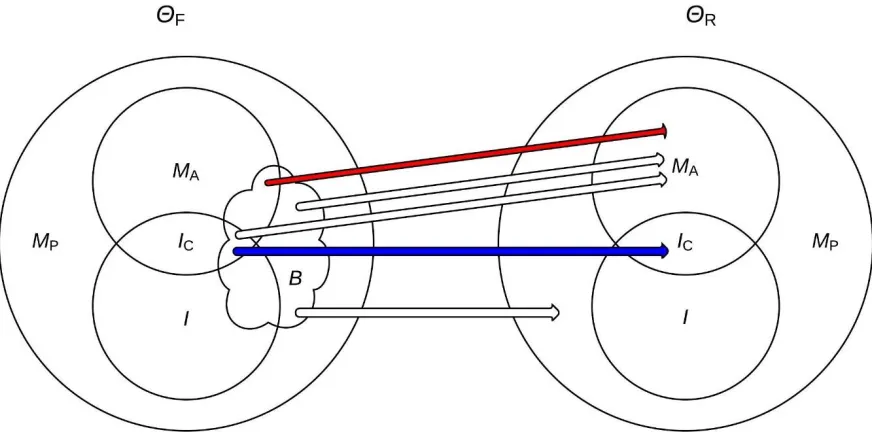
Fig. 3-2 visually represents each of these four possibilities.
1 What I am here designating B bears some resemblance to the “analog structure” T
Figure 3-2 Possible structuralist interpretations of Suppesian reduction
Red: Dom(ρS) = B(ΘF); Rng(ρS) = MA(ΘR). Blue: Dom(ρS) = B(ΘF); Rng(ρS) = I(ΘR). Purple: Dom(ρS) = B(ΘF); Rng(ρS) = IC(ΘR). Black: Dom(ρS) = B(ΘF); Rng(ρS) = MP(ΘR).
3.2.1 Additional formal constraints on Suppesian reduction
Bickle (1998), following Balzer, Moulines, and Sneed (1987, Ch. 6), suggests that the
ap-propriate range may in fact be as heterogeneous as the domain, pursuant to two conditions.
Adapting and formalizing Bickle’s treatment, these may be stated as follows:
(1) (∀z)(∀w)({[(μz ^ {z ∈ [B(ΘF) ∩MA(ΘF)]}) ^ {μw ^ [w ∈MP(ΘR)]}] ^
(‹z,w› ∈ρS)]} ⇒ [w ∈MA(ΘR)])
The first condition, simply put, states that a successful reduction must relate any actual
models of ΘF falling within its domain only to actual models of ΘR. This seems reasonable once
one recalls that the merely potential models of a theory do not necessarily satisfy its fundamental
laws. In fact, Bickle (Ibid., pp. 68-69) interprets this condition as an attempt by the structuralists
to capture the essence of Nagel’s (1961) requirement that the laws of the reduced theory be
de-rivable from those of the reducing theory. The second condition demands that a successful
reduc-tion relate every confirmed intended application of the reduced theory to some confirmed
in-tended application of the reducing theory. This also makes sense, for it would be odd to regard as
successful or complete any putative reduction that left any confirmed actual models of the
re-duced theory without isomorphs in the reducing theory. Fig. 3-3 represents these two conditions
[image:36.612.88.524.404.627.2]by illustrating all permissible isomorphism pairings on the above account.
Figure 3-3 Permissible isomorph pairs in a structuralist reduction
These two conditions serve to constrain Suppes’ account of reduction considerably, but
they do not on their own defuse the Newman-style objection leveled against that account by
Schaffner. The problem Schaffner identified concerns not the possible domains and ranges of
re-duction, but the purely formal character of the individual inter-model relations (viz.,
isomor-phisms) of which reductions are composed.
3.2.2 Ontological Reductive Links
To address this issue, Moulines (1984) introduced the concept of an Ontological
Reduc-tive Link (ORL) as an additional, semiformal constraint on any putative reduction. Recall the
structuralist definition of a model given in §3.1. Let us consider a superset OR containing the
em-pirical base sets of all models in the range of a reduction; this OR comprises the reduced theory’s
ontology. Let us then group all intra-model subsets (i.e., empirical base sets, auxiliary base sets,
and relations) in the domain of the reduction under the superset EF. An ORL between ΘR and ΘF
obtains when every member of OR can be identified with either an atomic element or a nonempty
subset of EF. ORLs, in effect, show that (and in a limited sense how) the ontology of the reduced
theory is realized by elements in the phenomenal domain of the reducing theory.
ORLs may be homogeneous, heterogeneous, or mixed. In a homogeneous ORL, each
em-pirical base set in OR is either identified with exactly one of the empirical base sets in EF or is a
proper subset of an empirical base set in EF, such that OR ⊆OF ⊊EF (i.e., the reducing theory’s
ontology is itself a superset of OR). This kind of ORL, Bickle (1998, p. 78) notes, characterizes
the reduction of classical collision mechanics to Newtonian particle mechanics; the particles that
figure in the former simply are Newtonian particles. In a heterogeneous ORL, on the other hand,
each empirical base set in OR is connected to a subset in EF of > 1 members which may include
and heterogeneous, with some empirical base sets in OR connected to individual empirical base
sets in EF, and some connected to combinations of empirical base sets, auxiliary base sets, and
relations in EF. Heterogeneous or mixed ORLs will be characteristic of any mereological or
inter-level reductions, wherein the ontology of the reduced theory is composed of combinations of
ele-ments of the reducing theory.
In his 2006, Moulines subsumes all three types of ORLs under a general characterization
using the concept of an echelon. As he puts it: “A set A is an echelon-set over sets B1, …, Bn iff A
comes out of B1, …, Bn by successively applying the set-theoretical operations of power-set
for-mation and Cartesian product to B1, …, Bn” (p. 319). Put more simply, to say that an ORL
ob-tains between OR and EF is to say that OR is an echelon on EF, which is to say that OR is
con-structible out of EF.
This notion of constructibility may be stated more precisely and formally. Individual
models, recall, are composed of two to three disjoint proper subsets: the superset of its empirical
base sets, the superset of its auxiliary base sets (if any), and the superset of relations defined on
subsets of the union of its empirical and auxiliary base sets. We may regard EF as itself a single
large model and divide it likewise. We have already carved off from it a proper subset of
empiri-cal base sets appearing in any model within the domain of the reduction, OF. Let us additionally
denote with AF the proper subset of all auxiliary base sets appearing in any model ∈ Dom(ρS) and
with RF the proper subset of all relations appearing in any model ∈ Dom(ρS). To say that OR is an
echelon on EF (=‹OF, AF,RF›), then, is to say that:
where [℘] denotes the merely possible application of the power-set operation, and ℘ … ℘
indi-cates arbitrarily many such applications (after Moulines, 2006, p. 320). Reworked a bit, this
yields our third constraint on Suppesian reduction:
(3) (∀v)[(v ∈OR) ⇒ {v ∈℘ … ℘([℘]OF × [℘]AF × [℘]RF)}]
3.3 Schaffner’s objection defanged
The identifications or other local connections that secure an ORL are the deliverances of
extra-formal judgments determined principally by the intended empirical applications of the
the-ories standing in the putative reduction relation. Indeed, ORLs are only possible if there is
sub-stantial overlap between I(ΘF) and I(ΘR). Thus, Bickle notes (1998, p. 81), one cannot effect
spu-rious identifications between elements of OR and EF without thereby altering the intended
empiri-cal applications of at least one of the theories in question. The intended empiriempiri-cal applications
also enable us to determine (albeit fallibly) which of a pair of theories satisfying the formal
con-ditions on a structuralist reduction is the reducing theory and which is the reduced. With very
few exceptions, it seems, {I(ΘF) \ [I(ΘF) ∩I(ΘR)]} > {I(ΘR) \ [I(ΘF) ∩I(ΘR)]}.
ORLs, thus, enable us to distinguish legitimate reductions from the kinds of
pseudo-re-ductions that troubled Schaffner. We have noted already that classical collision mechanics bears
a homogeneous ORL to Newtonian particle mechanics. This is because the former, simply put, is
a part of the latter; its models are all models of Newtonian particles mechanics as well. Let us
now examine a more complex case: the reduction of rigid body dynamics (RBD) to Newtonian
particle mechanics (NPM). The ontology of rigid body dynamics (ORBD) contains an empirical
of Newtonian particles in ENPM, every element in C can be identified with some construct of
em-pirical base sets, auxiliary base sets, and relations in ENPM. (after Bickle, 1998, p. 80). That is to
say, every element in Cis a system of Newtonian particles having certain masses, positions,
ve-locity vectors, force vectors, and so on. These identifications are permitted by the large overlap
between the intended empirical applications of RBD and NPM, and they enable the derivation of
RBD’s equations of motion (i.e., Euler’s laws) from Newton’s laws of motion.
Compare this to the spurious “reduction” between exchange microeconomics (EME) and
classical collision mechanics (CCM) discussed in §2.3. It might seem at first blush as though a
heterogeneous (or mixed) ORL obtains here as well, since economic actors (i.e., elements of the
empirical base set Æ ∈OEME), like rigid bodies, are composed of particles. It beggars belief,
though, to suppose that anything like a full identification of any element of Æ could be effected
using only elements of the models of CCM (viz., ‹P, T, ℝ,m, v›). Both the ontology of CCM
(particles and time instances) and its fundamental relations (mass and velocity) are insufficient
for the task, even given arbitrarily many power-set and Cartesian product applications. We could,
of course, expand the family of models in the putative reduction base to include as well those of
Newtonian particle mechanics (since CCM is connected to NPM via a homogeneous ORL) or,
more controversially, quantum mechanics, adding to our basal ontology such further elements as
states, wavefunctions, and fields and to the superset of basal relations spin, charge, and many
others. The problem with this strategy is that the resulting reduction base would now satisfy
many more laws, the vast majority of which will not have structural analogues in EME. The
Further, even if an identification or some other suitably strong ontic connection could be
established between economic actors and systems of particles specifiable using only the
re-sources of CCM, this would not provide evidence of any overlap in the intended empirical
appli-cations of the two theories. It is not (merely or directly) in virtue of being composed of particles
that economic actors follow a law analogous to that of the conservation of momentum. That is to
say that the putative mereological connection between the two ontologies would not permit
ex-planations of the behavior of economic actors couched solely in terms CCM in the way that the
identification of rigid bodies with systems of Newtonian particles permits explanations of the
be-havior of rigid bodies couched solely in terms of NPM. The ontological link, if such there be,
would not be an Ontological Reductive Link. The intended empirical applications are simply far
too disjoint.
3.4 ORLs and structural realism
If ORLs can be used to overcome Schaffner’s version of the Newman Problem, can they
likewise be deployed against the version faced by the structural realist? One might initially
sus-pect that the structural realist is barred from availing herself of ORLs, given that her epistemic
commitments cannot by definition go beyond the structure of a theory and that structure’s
gener-ating relations. Recall, however, that the elements of OR are not individual objects but kinds2. I
believe a structural realist may advert to these elements if they are conceptualized under a
non-essentialist reading of kinds, subject to an important constraint.
3.4.1 ORL anchors as (relational) property-cluster kinds
On property-cluster accounts, such as those developed by Boyd (1991) and Millikan
(1999), membership in a kind is determined not by the satisfaction of certain necessary or
suffi-cient conditions, but by the possession of a number of properties shared among other members of
the kind. Approaches may here diverge, with some treating kind membership as bivalently
con-ditional upon the possession of a minimal number of the shared properties and others treating
kinds like fuzzy sets admitting of graded membership according to the number of shared
proper-ties possessed. Either view seems acceptable as far as the structural realist’s aims go. What is
crucial for her is that she appeal exclusively to relational properties in her determinations of kind
membership; any putatively intrinsic properties are verboten.
Are relational properties alone sufficient to delimit (however fuzzily) a scientifically
in-teresting kind? In the vast majority of cases, I suspect so. All so-called “functional
kinds”—com-mon in the ontologies of the biological and social sciences—are already specified relationally.
Even many fundamental physical properties admit of relational characterization. The mass of a
body, for example, may be given by the degree to which it deforms its surrounding spacetime.
The charge of a particle may be known by the amounts of attractive and repulsive forces it exerts
on other particles. In fact, any measurable property admits of a minimal relational
characteriza-tion of the form: “…induces state x in instrument y.”3
Kinds, then, on a structural realist reconstruction, are clusters of relational properties—
hubs, we might say, of structure-generating relations. To show that a kind K in OR is connected
to some construct of EF in an ORL, then, one would need to show that the construct is capable of
instantiating all (or at least some requisite percentage) of the relations by which K is picked out.
This determination will be a largely empirical matter, facilitated to the extent that the intended
applications of the two theories in which K and the construct figure overlap.
3.4.2 The problem of unintended models solved
For any predecessor/successor theory pair for which the structural realist wishes to claim
continuity, then, she must demonstrate two things: (1) that a Suppes-style reduction obtains
be-tween the two theories, subject to the additional formal constraints discussed in §3.2.1; and (2)
that an ORL obtains between the two theories. Traditional Worrallian structural realism goes
only as far as (1), leaving it vulnerable, as we’ve seen, to the Newman-esque “problem of
unin-tended models” (French & Saatsi, 2005). The existence of an ORL shows that the structural
con-tinuity between the theories is more than a trivial artifact of their cardinality and set-theoretic
conceptualization. It shows that the theories are continuous because they pick out common
rela-tions (ensured by the local substiturela-tions of which the ORL is comprised) in a common
phenome-nal domain (ensured by the theories’ overlapping intended empirical applications).
It might be tempting to suppose that the incommensurability thesis on which the PMI
rests amounts to just the denial that ORLs tend to obtain interparadigmatically, and that,
there-fore, the structural realist adopting the above strategy is doing little more than begging the
ques-tion against the Laudanian anti-realist. Consider Worrall’s preferred interparadigm theory pair:
Fresnel’s optics and Maxwell’s electromagnetism. Does not the abolition of an elastic
mechani-cal ether in the latter suggest that no ORL obtains between them? Not, I think, on the relational
[F]rom [the vantage point of Maxwell’s theory], Fresnel’s theory has exactly the right
structure—it’s “just” that what vibrates according to Maxwell’s theory, are the electric
and magnetic field strengths. And in fact if we interpret I, R, X etc. [i.e., the intensities of
the various components of unpolarized light] as the amplitudes of the “vibration” of the
relevant electric vectors, then Fresnel’s equations are directly and fully entailed by
Max-well’s theory. (1989, p. 119)
This is to say, in the terms of the German structuralists, that what was really doing the
work in Fresnel’s theory—what was anchoring all the essential structure-generating relations—
was some construct composed of electromagnetic fields, real numbers, and various relations
as-signing real numbers to those fields and to changes in the real numbers assigned to those fields.
Does this mean that the ether has been, in some substantive sense, preserved under a new
defini-tion (given by Maxwell’s theory)? No; at least, not on a scale beyond the intended applicadefini-tions
of Fresnel’s optics. As a metaphysical background assumption and as an element in the ontology
of many other theories cotemporaneous with Fresnel’s, the ether had a great deal of content
be-yond what Fresnel’s theory alone assigned to it. In what we may call its supratheoretical totality,
this ether is rightly now regarded as a fiction. But the subset of its relational properties on which
Fresnel’s equations depended for their empirical adequacy may be regarded as preserved in the
form of the above-described construct in Maxwell’s theory. For this reason, the structural realist
may regard Fresnel’s more minimal “ether” as ontologically linked to Maxwell’s theory while
maintaining an appropriately eliminitivistic stance toward ether in the broader, supratheoretical
sense.
The above concern aside, it will likely prove desirable to have an account of partial or
preserved in the strict sense of having every putative relational property instantiated by some
construct of the successor theory. This will be the case whenever the successor theory corrects
the predecessor theory to some extent. Perfectly smooth Nagelian reductions are, in fact, the rare
exception in science; most recognized reductions, whether synchronic or diachronic, are at least
somewhat revisionary.
This fact may complicate the structural realist’s response to the Laudanian anti-realist, for
she will need to modulate her credence in any extant theories in proportion to the completeness
of the ORLs in which they enter4. Two broad strategies suggest themselves: (1) The structural
realist may attempt to defend a global scientific realism in the spirit of the definition given in
§1.1 by showing that scientific progression is better characterized by a pattern of significant
ORL-mediated intertheoretic continuity than by a pattern of radical elimination and replacement;
(2) Alternatively, she may assess the relative prevalence of the two patterns more locally—at the
level of individual scientific fields, or even individual theory “lineages”—and tailor her realist
commitments accordingly. This may ultimately require her to adopt anti-realist stances toward
particular theories and even whole sciences, but as long as a pattern of continuity prevails in
some empirical domains, she can resist the global anti-realism toward which the PMI, in its
strongest form, is supposed to compel her.