R E S E A R C H A R T I C L E
Open Access
Antibacterial and antibiotic-modifying
activities of three food plants (Xanthosoma
mafaffa
Lam.,
Moringa oleifera
(L.) Schott
and
Passiflora edulis
Sims) against
multidrug-resistant (MDR) Gram-negative
bacteria
Joachim K. Dzotam, Francesco K. Touani and Victor Kuete
*Abstract
Background:The present study was designed to investigate the antibacterial activities of the methanol extract of three edible plants, namelyXanthosoma mafaffa,Moringa oleiferaandPassiflora edulisand their synergistic effects with some commonly used antibiotics against MDR Gram-negative bacteria expressing active efflux pumps.
Methods:Broth microdilution method was used to determine the minimum inhibitory concentrations (MICs) and the minimum bactericidal concentrations (MBCs) of the extracts, as well as those of antibiotics in association with the extracts.
Results:The phytochemical test indicate that all tested crude extracts contained polyphenols, triterpenes and steroids whilst other phytochemical classes were selectively distributed. Extracts showed antibacterial activities with minimum inhibitory concentrations ranging from 128-1024μg/mL on the majority of the 19 tested Gram-negative bacterial strains. Extract from the pericarp ofP. edulisinhibited the growth of 89.5 % of the 19 tested bacterial strains, the lowest minimal inhibitory concentration (MIC) value of 128μg/mL being recorded againstEscherichia coliAG100 strain. In the presence of Phenylalanine-Arginineβ-Naphtylamide (PAβN)], an efflux pump inhibitor (EPI), the activity of the extract fromX. mafaffa increased on 40 % of tested strains. In combination with antibiotics, extracts ofX. mafaffa,M. oleiferaand pericarp ofP. edulisshowed synergistic effects with some antibiotics against more than 75 % of the tested bacteria.
Conclusion:The results of the present study indicate that the tested plants may be used in the treatment of bacterial infections including the multi-resistant bacteria.
Keywords:Antibiotic-potentiation, Gram-negative bacteria,Moringa oleifera, Multi-resistance,Passiflora edulis,Xanthosoma mafaffa
* Correspondence:[email protected]
Department of Biochemistry, Faculty of Science, University of Dschang, P.O. Box 67, Dschang, Cameroon
Background
Infectious diseases remain the major cause of mortality amongst children and young adults worldwide, with higher prevalence in developing countries [1]. Despite the abundance of antibiotics used in chemotherapy, there is a drastic increase of resistant bacteria. Resistance to antibiotics occurs typically as a result of drug inacti-vation or modification, target alteration, or reduced ac-cumulation associated with decreased permeability and⁄ or increased efflux [2]. The scarcity of new antimicro-bials active against MDR bacteria propels the search of chemotherapeutic agents. While 25–50 % of current pharmaceuticals are derived from natural products, it was reported that none are used as antimicrobials [3]. Investigation of substances which can potentiate the activity of commonly used antibiotics are also being in-tensified [4–7]. Previous studies documented the good antimicrobial potential of natural products from higher plants [8, 9]. Several food plants were also documented as potential candidate to fight MDR Gram-negative bac-teria. Some of them include Dichrostachys glomerata, Beilschmiedia cinnamomea,Aframomum citratum,Piper capense, Echinops giganteus, Fagara xanthoxyloïdes and
Olax subscorpioïdea[4], Lactuca sativa, Sechium edule, Cucurbita pepo and Solanum nigrum[10], Piper nigrum
and Vernonia amygdalina [11], Beilschmiedia obscura, Pachypodanthium staudtii and Peperomia fernandopoi-ana [12], Capsicum frutescens [13]. In our continous search of functional food plants, we designed the present work to investigate in vitro antibacterial activity of the methanol extracts of three Cameroonian food plants,
Moringa oleifera Lam. (Moringaceae), Xanthosoma mafaffa (L.) Schott (Araceae), Passiflora edulis Sims (Passifloraceae) against MDR bacteria. The study was ex-tended to the ability of the studied extracts to potentiate
the activity of some commonly used antibiotics against some of the tested MDR bacteria.
Methods
Plant material and extraction
The three food plants used in this work were purchased from the Bafoussam markets (West Region of Cameroon) in January 2014. The collected plant material were the leaves ofXanthosoma mafaffa,Moringa oleifera
and the fruits ofPassiflora edulis. The plants were iden-tified at the National herbarium (Yaounde, Cameroon) where voucher specimens were deposited under the ref-erence numbers (Table 1). Each plant sample was air dried and then powdered. The obtained powder (200 g) was extracted with methanol (MeOH; 1 L) for 48 h at room temperature with momentary shaking. Methanol was then removed under reduced pressure to give resi-dues which constituted the crude extract. All extracts were then kept at 4 °C until further use.
Preliminary phytochemical screening
The major phytochemical classes such as alkaloids (Dragendorff’s and Mayer’s tests), triterpenes (Libermann Burchard’s test), flavonoids (Aluminum chloride test), anthraquinones (Borntrager’s test), polyphenols (Ferric chloride test), sterols (Salkowski’s test), coumarins (Lacton test), saponins (Foam test) and tannins (Gelatin test) (Table 2) were investigated according to the commonly described phytochemical methods [14–17].
Antimicrobial assays
Chemicals for antimicrobial assay
Tetracycline (TET), cefepime (CEP), ciprofloxacin (CIP), norfloxacin (NOR), chloramphenicol (CHL), ampicillin (AMP), erythromycin (ERY), kanamycin (KAN)
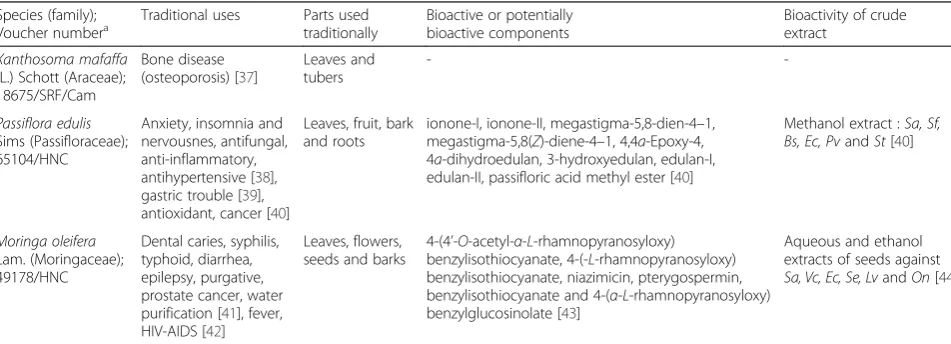
(Sigma-Table 1Information on plants used in the present study
Species (family);
Voucher numbera Traditional uses Parts usedtraditionally Bioactive or potentiallybioactive components Bioactivity of crudeextract
Xanthosoma mafaffa (L.) Schott (Araceae); 18675/SRF/Cam
Bone disease (osteoporosis) [37]
Leaves and tubers
-
-Passiflora edulis Sims (Passifloraceae); 65104/HNC
Anxiety, insomnia and nervousnes, antifungal, anti-inflammatory, antihypertensive [38], gastric trouble [39], antioxidant, cancer [40]
Leaves, fruit, bark and roots
ionone-I, ionone-II, megastigma-5,8-dien-4–1, megastigma-5,8(Z)-diene-4–1, 4,4a-Epoxy-4, 4a-dihydroedulan, 3-hydroxyedulan, edulan-I, edulan-II, passifloric acid methyl ester [40]
Methanol extract :Sa, Sf, Bs, Ec, PvandSt[40]
Moringa oleifera Lam. (Moringaceae); 49178/HNC
Dental caries, syphilis, typhoid, diarrhea, epilepsy, purgative, prostate cancer, water purification [41], fever, HIV-AIDS [42]
Leaves, flowers, seeds and barks
4-(4’-O-acetyl-α-L-rhamnopyranosyloxy) benzylisothiocyanate, 4-(-L-rhamnopyranosyloxy) benzylisothiocyanate, niazimicin, pterygospermin, benzylisothiocyanate and 4-(α-L-rhamnopyranosyloxy) benzylglucosinolate [43]
Aqueous and ethanol extracts of seeds against Sa, Vc, Ec, Se, LvandOn[44]
a
[image:2.595.59.535.533.705.2]Aldrich, St Quentin Fallavier, France) were used as refer-ence antibiotics (RA). p-Iodonitrotetrazolium chloride (INT; Sigma-Aldrich) and Phenylalanine-Arginine-ß-Naphthylamide (PAßN; Sigma-Aldrich) were used as mi-crobial growth indicator and efflux pumps inhibitor (EPI) respectively [18, 19].
Microbial strains and culture media
The studied microorganisms included sensitive and re-sistant strains of Escherichia coli (ATTC8739, AG100, AG100A, AG102, AG100ATet, W3110), Enterobacter aerogenes (ATCC13048, EA289, EA27, EA298, CM64),
Klebsiella pneumoniae(ATCC11296, KP55, KP63, K24),
[image:3.595.56.291.111.280.2] [image:3.595.55.538.415.726.2]Pseudomonas aeruginosa (PA01, PA124), Providencia stuartii (ATCC29914, NEA16) obtained clinically or from the American Type Culture Collection (ATCC). Their resistance profiles have been previously reported [7, 13, 20]. Nutrient agar were used for the activation of the tested Gram-negative bacteria [21].
INT colorimetric assay for MIC and MBC determinations
The MIC determinations on the tested bacteria were conducted using rapid p-iodonitrotetrazolium chloride (INT) colorimetric assay according to described methods [18] with some modifications [22, 23]. The test samples and RA were first of all dissolved in DMSO/Mueller Hinton Broth (MHB) or DMSO/7H9 broth. The final concentration of DMSO was lower than 2.5 % and does not affect the microbial growth [24, 25]. The solution obtained was then added to Mueller Hinton Broth, and serially diluted two fold (in a 96- wells micro-plate). One hundred microlitre (100 μL) of inoculum
Table 2Extraction yields and phytochemical composition of the plant extracts
Extracts Xanthosoma mafaffa
leaves extact
Passiflora edulis Pericarps (fruits) extract
Moringa oleifera leaves extract
Yielda(%) 4.30 3.92 3.95
Alkaloids - - +
Polyphenols + + +
Flavonoids - + +
Anthraquinones - - +
Coumarins + - +
Tannins + - +
Triterpenes + + +
Sterols + + +
Saponins + + +
(-): Absent; (+): Present;a
yield calculated as the ratio of the mass of the obtained methanol extract/mass of the plant powder
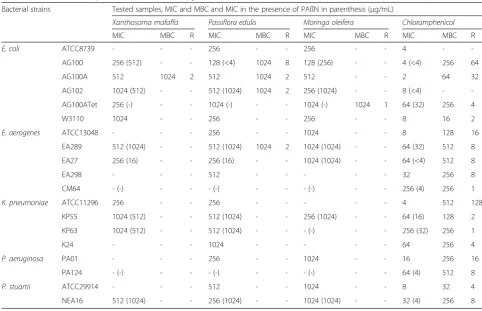
Table 3Minimal Inhibitory Concentration (MIC) inμg/mL of methanol extracts from the studied plants and chloramphenicol
Bacterial strains Tested samples, MIC and MBC and MIC in the presence of PAßN in parenthesis (μg/mL)
Xanthosoma mafaffa Passiflora edulis Moringa oleifera Chloramphenicol
MIC MBC R MIC MBC R MIC MBC R MIC MBC R
E. coli ATCC8739 - - - 256 - - 256 - - 4 -
-AG100 256 (512) - - 128 (<4) 1024 8 128 (256) - - 4 (<4) 256 64
AG100A 512 1024 2 512 1024 2 512 - - 2 64 32
AG102 1024 (512) - - 512 (1024) 1024 2 256 (1024) - - 8 (<4) -
-AG100ATet 256 (-) - - 1024 (-) - - 1024 (-) 1024 1 64 (32) 256 4
W3110 1024 - - 256 - - 256 - - 8 16 2
E. aerogenes ATCC13048 - - - 256 - - 1024 - - 8 128 16
EA289 512 (1024) - - 512 (1024) 1024 2 1024 (1024) - - 64 (32) 512 8
EA27 256 (16) - - 256 (16) - - 1024 (1024) - - 64 (<4) 512 8
EA298 - - - 512 - - - 32 256 8
CM64 - (-) - - - (-) - - - (-) - - 256 (4) 256 1
K. pneumoniae ATCC11296 256 - - 256 - - - 4 512 128
KP55 1024 (512) - - 512 (1024) - - 256 (1024) - - 64 (16) 128 2
KP63 1024 (512) - - 512 (1024) - - - (-) - - 256 (32) 256 1
K24 - - - 1024 - - - 64 256 4
P. aeruginosa PA01 - - - 256 - - 1024 - - 16 256 16
PA124 - (-) - - - (-) - - - (-) - - 64 (4) 512 8
P. stuartii ATCC29914 - - - 512 - - 1024 - - 8 32 4
NEA16 512 (1024) - - 256 (1024) - - 1024 (1024) - - 32 (4) 256 8
1.5 x 10⁶ CFU/mL prepared in appropriate broth was then added [22, 23]. The plates were covered with a sterile plate sealer, then agitated to mix the contents of the wells using a plate shaker and incubated at 37 °C for 18 h. The assay was repeated thrice. Wells containing adequate broth, 100 μL of inoculum and DMSO to a final concentration of 2.5 % served as negative control. The MIC of samples was detected after 18 h incubation at 37 °C, following addition (40 μL) of 0.2 mg/mL of INT and incubation at 37 °C for 30 min. Viable bacteria reduced the yellow dye to a pink. MIC was defined as the lowest sample con-centration that prevented the color change of the medium and exhibited complete inhibition of micro-bial growth [18]. The MBC was determined by adding 50 μL aliquots of the preparations, which did not
show any growth after incubation during MIC assays, to 150 μL of adequate broth. These preparations were incubated at 37 °C for 48 h. The MBC was regarded as the lowest concentration of extract, which did not produce a color change after addition of INT as men-tioned above [22, 23].
To evaluate the role of efflux pumps in the susceptibil-ity of Gram-negative bacteria to Xanthosoma mafaffa,
Moringa oleifera and Passiflora edulis, crude extracts were tested in the presence of PAßN (at 30 μg/mL) against ten selected MDR phenotypes (E. coli AG100, AG102 and AG100ATet,E. aerogenes EA289, EA27 and CM64, K. pneumoniae KP55 and KP63, P. aeruginosa
PA124 andP. stuartiiNAE16).
Extracts from Xanthosoma mafaffa, Moringa oleifera
[image:4.595.55.541.322.680.2]andPassiflora edulis were also tested in association with
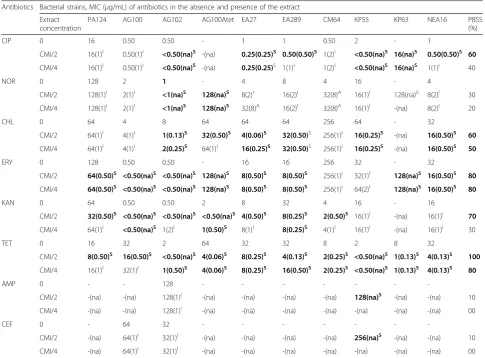
Table 4MIC (FIC) of different antibiotics in association with the extract ofXanthosoma mafaffaat MIC/2, MIC/4 against ten MDR bacteria strains
Antibiotics Bacterial strains, MIC (μg/mL) of antibiotics in the absence and presence of the extract
Extract concentration
PA124 AG100 AG102 AG100Atet EA27 EA289 CM64 KP55 KP63 NEA16 PBSS
(%)
CIP 0 16 0.50 0.50 - 1 1 0.50 2 - 1
CMI/2 16(1)I 0.50(1)I <0.50(na)S -(na) 0.25(0.25)S 0.50(0.50)S 1(2)I <0.50(na)S 16(na)S 0.50(0.50)S 60
CMI/4 16(1)I 0.50(1)I <0.50(na)S -(na) 0.25(0.25)S 1(1)I 1(2)I <0.50(na)S 16(na)S 1(1)I 40
NOR 0 128 2 1 - 4 8 4 16 - 4
CMI/2 128(1)I 2(1)I <1(na)S 128(na)S 8(2)I 16(2)I 32(8)A 16(1)I 128(na)S 8(2)I 30
CMI/4 128(1)I 2(1)I <1(na)S 128(na)S 32(8)A 16(2)I 32(8)A 16(1)I -(na) 8(2)I 20
CHL 0 64 4 8 64 64 64 256 64 - 32
CMI/2 64(1)I 4(1)I 1(0.13)S 32(0.50)S 4(0.06)S 32(0.50)S 256(1)I 16(0.25)S -(na) 16(0.50)S 60
CMI/4 64(1)I 4(1)I 2(0.25)S 64(1)I 16(0.25)S 32(0.50)S 256(1)I 16(0.25)S -(na) 16(0.50)S 50
ERY 0 128 0.50 0.50 - 16 16 256 32 - 32
CMI/2 64(0.50)S <0.50(na)S <0.50(na)S 128(na)S 8(0.50)S 8(0.50)S 256(1)I 32(1)I 128(na)S 16(0.50)S 80
CMI/4 64(0.50)S <0.50(na)S <0.50(na)S 128(na)S 8(0.50)S 8(0.50)S 256(1)I 64(2)I 128(na)S 16(0.50)S 80
KAN 0 64 0.50 0.50 2 8 32 4 16 - 16
CMI/2 32(0.50)S <0.50(na)S <0.50(na)S <0.50(na)S 4(0.50)S 8(0.25)S 2(0.50)S 16(1)I -(na) 16(1)I 70
CMI/4 64(1)I <0.50(na)S 1(2)I 1(0.50)S 8(1)I 8(0.25)S 4(1)I 16(1)I -(na) 16(1)I 30
TET 0 16 32 2 64 32 32 8 2 8 32
CMI/2 8(0.50)S 16(0.50)S <0.50(na)S 4(0.06)S 8(0.25)S 4(0.13)S 2(0.25)S <0.50(na)S 1(0.13)S 4(0.13)S 100
CMI/4 16(1)I 32(1)I 1(0.50)S 4(0.06)S 8(0.25)S 16(0.50)S 2(0.25)S <0.50(na)S 1(0.13)S 4(0.13)S 80
AMP 0 - - 128 - - -
-CMI/2 -(na) -(na) 128(1)I -(na) -(na) -(na) -(na) 128(na)S -(na) -(na) 10
CMI/4 -(na) -(na) 128(1)I -(na) -(na) -(na) -(na) -(na) -(na) -(na) 00
CEF 0 - 64 32 - - -
-CMI/2 -(na) 64(1)I 32(1)I -(na) -(na) -(na) -(na) 256(na)S -(na) -(na) 10
CMI/4 -(na) 64(1)I 32(1)I -(na) -(na) -(na) -(na) -(na) -(na) -(na) 00
a
Antibiotics [TETtetracycline,CIPciprofloxacin,NORnorfloxacin,KANkanamycin,CHLchloramphenicol,ERYerythromycin,AMPampicillin,CEFcefepime]
b
Bacterial strains:Escherichia coli[AG100, AG102, AG100Atet],Pseudomonas aeruginosa[PA124],Enterobacter aerogenes[CM64, EA27, EA289],Klebsiella pneumonia
[KP55],Providencia stuartii[NAE16]
c
antibiotics at their sub-inhibitory concentrations as ob-tained in each bacterium (MIC/2 and MIC/4) [4, 5, 11] against ten MDR phenotypes. Fractional inhibitory concentration (FIC) was calculated as the ratio of MICAntibiotic in combination/MICAntibiotic aloneand the results were discussed as follows: synergy (≤0.5), indifferent (>0.5 to 4), or antagonism (>4) [26, 27]. All assays were performed in triplicate.
Results
Phytochemical composition
The results of the phytochemical screening (Table 2) showed that all the tested plant extracts contain polyphe-nols, triterpenes, sterols and saponins. The other classes of secondary metabolites were selectively distributed. Also,
the extract from M. oleifera contains all the classes of screened secondary metabolites.
Antibacterial activity
[image:5.595.57.536.319.676.2]Results of the antibacterial activities of the tested ex-tracts alone and in some cases in the presence of the PAβN on a panel of 19 Gram-negative bacteria are summarized in Table 3. It appears that the ex-tracts from P. edulis inhibited the growth of 17/19 (89.5 %) bacteria with a concentration ranged from 128 to 1024 μg/mL. The two other samples showed selective activities, their inhibitory activity being re-corded on 13/19 (68.4 %) and 11/19 (57.9 %) tested bacteria for M. oleifera and X. mafaffa extracts re-spectively. The lowest MIC value (128 μg/mL) was
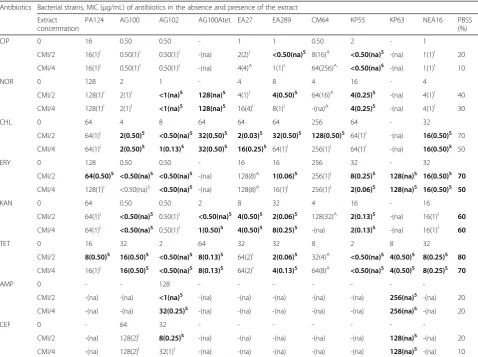
Table 5MIC (FIC) of different antibiotics in association of the extract ofPassiflora edulisat MIC/2, MIC/4 against ten MDR bacteria strains
Antibiotics Bacterial strains, MIC (μg/mL) of antibiotics in the absence and presence of the extract
Extract concentration
PA124 AG100 AG102 AG100Atet EA27 EA289 CM64 KP55 KP63 NEA16 PBSS
(%)
CIP 0 16 0.50 0.50 - 1 1 0.50 2 - 1
CMI/2 16(1)I 0.50(1)I 0.50(1)I -(na) 2(2)I <0.50(na)S 8(16)A <0.50(na)S -(na) 1(1)I 20
CMI/4 16(1)I 0.50(1)I 0.50(1)I -(na) 4(4)A 1(1)I 64(256)A <0.50(na)S -(na) 1(1)I 10
NOR 0 128 2 1 - 4 8 4 16 - 4
CMI/2 128(1)I 2(1)I <1(na)S 128(na)S 4(1)I 4(0.50)S 64(16)A 4(0.25)S -(na) 4(1)I 40
CMI/4 128(1)I 2(1)I <1(na)S 128(na)S 16(4)I 8(1)I -(na)A 4(0.25)S -(na) 4(1)I 30
CHL 0 64 4 8 64 64 64 256 64 - 32
CMI/2 64(1)I 2(0.50)S <0.50(na)S 32(0.50)S 2(0.03)S 32(0.50)S 128(0.50)S 64(1)I -(na) 16(0.50)S 70
CMI/4 64(1)I 2(0.50)S 1(0.13)S 32(0.50)S 16(0.25)S 64(1)I 256(1)I 64(1)I -(na) 16(0.50)S 50
ERY 0 128 0.50 0.50 - 16 16 256 32 - 32
CMI/2 64(0.50)S <0.50(na)S <0.50(na)S -(na) 128(8)A 1(0.06)S 256(1)I 8(0.25)S 128(na)S 16(0.50)S 70
CMI/4 128(1)I <0.50(na)S <0.50(na)S -(na) 128(8)A 16(1)I 256(1)I 2(0.06)S 128(na)S 16(0.50)S 50
KAN 0 64 0.50 0.50 2 8 32 4 16 - 16
CMI/2 64(1)I <0.50(na)S 0.50(1)I <0.50(na)S 4(0.50)S 2(0.06)S 128(32)A 2(0.13)S -(na) 16(1)I 60
CMI/4 64(1)I <0.50(na)S 0.50(1)I 1(0.50)S 4(0.50)S 8(0.25)S -(na) 2(0.13)S -(na) 16(1)I 60
TET 0 16 32 2 64 32 32 8 2 8 32
CMI/2 8(0.50)S 16(0.50)S <0.50(na)S 8(0.13)S 64(2)I 2(0.06)S 32(4)A <0.50(na)S 4(0.50)S 8(0.25)S 80
CMI/4 16(1)I 16(0.50)S <0.50(na)S 8(0.13)S 64(2)I 4(0.13)S 64(8)A <0.50(na)S 4(0.50)S 8(0.25)S 70
AMP 0 - - 128 - - -
-CMI/2 -(na) -(na) <1(na)S -(na) -(na) -(na) -(na) -(na) 256(na)S -(na) 20
CMI/4 -(na) -(na) 32(0.25)S -(na) -(na) -(na) -(na) -(na) 256(na)S -(na) 20
CEF 0 - 64 32 - - -
-CMI/2 -(na) 128(2)I 8(0.25)S -(na) -(na) -(na) -(na) -(na) 128(na)S -(na) 20
CMI/4 -(na) 128(2)I 32(1)I -(na) -(na) -(na) -(na) -(na) 128(na)S -(na) 10
a
Antibiotics [TETtetracycline,CIPciprofloxacin,NORnorfloxacin,KANkanamycin,CHLchloramphenicol,ERYerythromycin,AMPampicillin,CEFcefepime]
b
Bacterial strains:Escherichia coli[AG100, AG102, AG100Atet],Pseudomonas aeruginosa[PA124],Enterobacter aerogenes[CM64, EA27, EA289],Klebsiella pneumonia
[KP55],Providencia stuartii[NAE16].
c
obtained with P. edulis and M. oleifera extracts on
Escherichia coli AG100.
Role of efflux pumps in the susceptibility of Gram-negative bacteria
Ten of the studied MDR bacteria were also tested for their susceptibility to the plant extracts in the presence of the PAβN at 30μg/mL. The results showed that when combined with the extracts, PAβN improves the activity (decrease of MIC values) ofX. mafaffaon 4/10 (40 %) of tested MDR strains. The EPI also improved the activity ofP. edulisagainstE. coliAG100 (Table 3).
Effects of the association of the extracts with antibiotics
A preleminary study was performed against P. aerugi-nosa PA124. This allowed selection of the appropriate
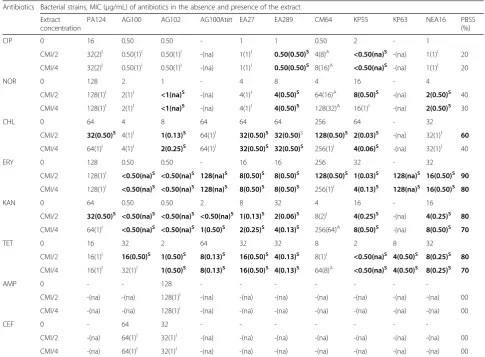
sub-inhibitory concentrations of MIC/2 and MIC/4 for further studies. All the three extracts were combined separately with eight antibiotics (CIP, NOR, CHL, ERY, KAN, TET, CEF and AMP) to evaluate their possible synergetic effects. The results summarized in Tables 4, 5 and 6 showed synergic effects of the three tested extract with most of tested antibiotics except β-lactams (CEF and AMP). At MIC/2 of the extract from X. mafaffa, synergistic effects were observed with 6/8 (75 %) antibi-otics (CIP, NOR, CHL, ERY, KAN, TET) against the tested MDR bacteria. Synergistic effects (FIC ranging from 0.5 to 0.03) were noted with the associations of each of the X. mafaffa, P. edulis and M. oleifera extracts and antibiotics. Low FIC values of 0.03 were obtained with the associations ofM. oleifera extracts + ERY andM. oleifera
[image:6.595.54.540.322.679.2]extract + CHL againstEnterobacter aerogenesEA27.
Table 6MIC (FIC) of different antibiotics after the association of the extract ofMoringa oleiferaat MIC/2, MIC/4 against ten MDR bacteria strains
Antibiotics Bacterial strains, MIC (μg/mL) of antibiotics in the absence and presence of the extract
Extract concentration
PA124 AG100 AG102 AG100Atet EA27 EA289 CM64 KP55 KP63 NEA16 PBSS
(%)
CIP 0 16 0.50 0.50 - 1 1 0.50 2 - 1
CMI/2 32(2)I 0.50(1)I 0.50(1)I -(na) 1(1)I 0.50(0.50)S 4(8)A <0.50(na)S -(na) 1(1)I 20
CMI/4 32(2)I 0.50(1)I 0.50(1)I -(na) 1(1)I 0.50(0.50)S 8(16)A <0.50(na)S -(na) 1(1)I 20
NOR 0 128 2 1 - 4 8 4 16 - 4
CMI/2 128(1)I 2(1)I <1(na)S -(na) 4(1)I 4(0.50)S 64(16)A 8(0.50)S -(na) 2(0.50)S 40
CMI/4 128(1)I 2(1)I <1(na)S -(na) 4(1)I 4(0.50)S 128(32)A 16(1)I -(na) 2(0.50)S 30
CHL 0 64 4 8 64 64 64 256 64 - 32
CMI/2 32(0.50)S 4(1)I 1(0.13)S 64(1)I 32(0.50)S 32(0.50)S 128(0.50)S 2(0.03)S -(na) 32(1)I 60
CMI/4 64(1)I 4(1)I 2(0.25)S 64(1)I 32(0.50)S 32(0.50)S 256(1)I 4(0.06)S -(na) 32(1)I 40
ERY 0 128 0.50 0.50 - 16 16 256 32 - 32
CMI/2 128(1)I <0.50(na)S <0.50(na)S 128(na)S 8(0.50)S 8(0.50)S 128(0.50)S 1(0.03)S 128(na)S 16(0.50)S 90
CMI/4 128(1)I <0.50(na)S <0.50(na)S 128(na)S 8(0.50)S 8(0.50)S 256(1)I 4(0.13)S 128(na)S 16(0.50)S 80
KAN 0 64 0.50 0.50 2 8 32 4 16 - 16
CMI/2 32(0.50)S <0.50(na)S <0.50(na)S <0.50(na)S 1(0.13)S 2(0.06)S 8(2)I 4(0.25)S -(na) 4(0.25)S 80
CMI/4 64(1)I <0.50(na)S <0.50(na)S 1(0.50)S 2(0.25)S 4(0.13)S 256(64)A 8(0.50)S -(na) 8(0.50)S 70
TET 0 16 32 2 64 32 32 8 2 8 32
CMI/2 16(1)I 16(0.50)S 1(0.50)S 8(0.13)S 16(0.50)S 4(0.13)S 8(1)I <0.50(na)S 4(0.50)S 8(0.25)S 80
CMI/4 16(1)I 32(1)I 1(0.50)S 8(0.13)S 16(0.50)S 4(0.13)S 64(8)A <0.50(na)S 4(0.50)S 8(0.25)S 70
AMP 0 - - 128 - - -
-CMI/2 -(na) -(na) 128(1)I -(na) -(na) -(na) -(na) -(na) -(na) -(na) 00
CMI/4 -(na) -(na) 128(1)I -(na) -(na) -(na) -(na) -(na) -(na) -(na) 00
CEF 0 - 64 32 - - -
-CMI/2 -(na) 64(1)I 32(1)I -(na) -(na) -(na) -(na) -(na) -(na) -(na) 00
CMI/4 -(na) 64(1)I 32(1)I -(na) -(na) -(na) -(na) -(na) -(na) -(na) 00
a
Antibiotics [TETtetracycline,CIPciprofloxacin,NORnorfloxacin,KANkanamycin,CHLchloramphenicol,ERYerythromycin,AMPampicillin, CEF: cefepime]
b
Bacterial strains:Escherichia coli[AG100, AG102, AG100Atet],Pseudomonas aeruginosa[PA124],Enterobacter aerogenes[CM64, EA27, EA289],Klebsiella pneumonia
[KP55],Providencia stuartii[NAE16]
c
Discussion
Phytochemical screening revealed the presence of several classes of secondary metabolites such as alkaloids, poly-phenols, flavonoids, anthraquinones, coumarins, sapo-nins, tansapo-nins, triterpenes and steroids. Several molecules belonging to these classes were found to be active on pathogenic microorganisms [3, 28–30]. The presence of such metabolites in the studied plant extracts can pro-vide a preliminary explanation on their antibacterial activities. Differences were observed in the antibacterial activities of the extracts. These could be due to the dif-ferences in their chemical composition as well as in the mechanism of action of their bioactive constitu-ents [3]. As shown in Table 2, all the extracts are rich in secondary metabolites especially the extract from
M. oleifera (which contains all the tested classes); However, activity does not depend only on the pres-ence of secondary metabolites in the plant extracts, but mostly on their concentration and the possible interactions with other constituents.
To the best of our knowledge, the antibacterial activity of X. mafaffa is being reported here for the first time. The inhibitory activity of M. oleifera was previously re-ported against some bacteria such as Escherichia coli,
Pseudomaonas aeruginosa, Stapylococcus aureus and
Salmonella typhii[31]. The present study confirmed the antimicrobial potential of this plant and provide add-itional information on it ability to inhibit the growth of MDR bacteria.
The results of this work are very important taking in account the medicinal importance of the tested MDR bacteria [32–36] and also the fact that samples used are edible plants. In the presence of PAβN (EPI), the anti-bacterial activity of some of the extracts increased, suggesting that some active constituents may have intra-cellular target. In the presence of the EPI, the activity of
M. oleifera remain unchanged, indicating that the bio-active compounds of this extract are not the substrates of bacterial efflux pumps, as the tested MDR bacteria over-express efflux pumps [32–36]. However, it should be observed that in certain cases (Table 3), MIC values of Xanthosoma mafaffa and Passiflora edulis extracts increased in the presence of PAßN. A possible explan-ation is that some active constituents of these extracts may act in the cell coat, inhibiting the synthesis of pep-tidoglycan. In such case, in the absence of PAßN, such compounds are extruded from the cytoplasm of bacteria by efflux pumps, then re-cross the cell membrane to reach their target in the coat, explaining while the MIC value is lower; in presence of PAßN, the efflux pumps are blocked and such compounds could not be expelled from the cytoplasm, reducing their concentration in the cell coat and consequently their activity, explaining their higher MIC values.
In the recent years, scientists intensified the search of substances with ability to restore the activity of available antibiotics to MDR bacteria. In this work, synergistic effects were noted with the associations ofX. mafaffa,P. edulisandM. oleiferaextracts and some antibiotics, pro-viding additional information of their possible use to combat MDR phenotypes.
Conclusion
The results of the present investigation show that X. mafaffa, P. edulis and M. oleifera may be useful in the control of many infectious diseases, particularly those caused by the multidrug resistant Gram-negative bac-teria. These extracts may be used alone or in combin-ation with certain antibiotics such as tetracycline, ciprofloxacin, norfloxacin, chloramphenicol, erythro-mycin, kanamycin but not beta-lactamines. The isolation of the active compounds from the three plants consti-tutes the limitation of the present study and will be fur-ther performed. Also, furfur-ther investigations of the plant extracts are warranted in vivo to validate their use for the control of infectious diseases.
Abbreviations
AMP:Ampicillin; ATCC: American type culture collection; CEF: Cefepime; CFU: Colony forming unit; CHL: Chloramphenicol; CIP: Ciprofloxacin; DMSO: Dimethylsulfoxyde; EPI: Efflux pump inhibitor; ERY: Erythromycin; FIC: Fractional inhibitory concentration; INT: p-iodonitrotetrazolium chloride; KAN: Kanamycin; MDR: Multidrug resistant; MHB: Mueller hinton broth; MIC: Minimal inhibitory concentration; NOR: Norfloxacin; PAßN: Phenylalanine arginine-ß-Naphthylamide; RND: Resistance nodulation-cell division; STR: Streptomycin; TET: Tetracycline.
Competing interests
The authors declare that there are no conflict of interests.
Authors’contributions
JKD and FTK carried out the study; VK supervised the work, designed the experiments, wrote the manuscript, provided the bacterial strains and chemicals; all authors read and approved the final manuscript.
Acknowledgements
Authors are thankful to the Cameroon National Herbarium for identification of plants.
Received: 16 June 2015 Accepted: 8 January 2016
References
1. WHO: World Health Statistics 2013. http://www.whoint/gho/publications/ world_health_statistics/2013/en/2013, Accessed on February 2014. 2. Poole K. Mechanisms of bacterial biocide and antibiotic resistance. J Appl
Microbiol. 2002;92(Suppl):55S–64.
3. Cowan MM. Plant products as antimicrobial agents. Clin Microbiol Rev. 1999;12:564–82.
4. Fankam AG, Kuete V, Voukeng IK, Kuiate JR, Pages JM. Antibacterial activities of selected Cameroonian spices and their synergistic effects with antibiotics against multidrug-resistant phenotypes. BMC Complement Altern Med. 2011;11:104.
6. Djeussi DE, Noumedem JA, Seukep JA, Fankam AG, Voukeng IK, Tankeo SB, et al. Antibacterial activities of selected edible plants extracts against multidrug-resistant Gram-negative bacteria. BMC Complement Altern Med. 2013;13:164.
7. Seukep JA, Fankam AG, Djeussi DE, Voukeng IK, Tankeo SB, Noumdem JA, et al. Antibacterial activities of the methanol extracts of seven Cameroonian dietary plants against bacteria expressing MDR phenotypes. Springerplus. 2013;2:363. 8. Kuete V, Ngameni B, Tangmouo JG, Bolla JM, Alibert-Franco S, Ngadjui BT,
et al. Efflux pumps are involved in the defense of Gram-negative bacteria against the natural products isobavachalcone and diospyrone. Antimicrob Agents Chemother. 2010;54:1749–52.
9. Kuete V, Alibert-Franco S, Eyong KO, Ngameni B, Folefoc GN, Nguemeving JR, et al. Antibacterial activity of some natural products against bacteria expressing a multidrug-resistant phenotype. Int J Antimicrob Agents. 2011;37:156–61. 10. Noumedem JA, Mihasan M, Lacmata ST, Stefan M, Kuiate JR, Kuete V.
Antibacterial activities of the methanol extracts of ten Cameroonian vegetables against Gram-negative multidrug-resistant bacteria. BMC Complement Altern Med. 2013;13:26.
11. Noumedem JA, Mihasan M, Kuiate JR, Stefan M, Cojocaru D, Dzoyem JP, et al. In vitro antibacterial and antibiotic-potentiation activities of four edible plants against multidrug-resistant gram-negative species. BMC Complement Altern Med. 2013;13:190.
12. Fankam AG, Kuiate JR, Kuete V. Antibacterial activities ofBeilschmiedia obscura and six other Cameroonian medicinal plants against multi-drug resistant Gram-negative phenotypes. BMC Complement Altern Med. 2014;14:241.
13. Touani FK, Seukep AJ, Djeussi DE, Fankam AG, Noumedem JA, Kuete V. Antibiotic-potentiation activities of four Cameroonian dietary plants against multidrug-resistant Gram-negative bacteria expressing efflux pumps. BMC Complement Altern Med. 2014;14:258.
14. Harbone J. Phytochemical methods: a guide to modern techniques of plant analysis. London: Chapman & Hall; 1973.
15. Ngameni B, Fotso GW, Kamga J, Ambassa P, Abdou T, Fankam AG, et al. 9 -Flavonoids and Related Compounds from the Medicinal Plants of Africa. In: Kuete V, editor. Medicinal Plant Research in Africa. Oxford: Elsevier; 2013. p. 301–50. 16. Wansi JD, Devkota KP, Tshikalange E, Kuete V. 14 - Alkaloids from the
Medicinal Plants of Africa. In: Kuete V, editor. Medicinal Plant Research in Africa. Oxford: Elsevier; 2013. p. 557–605.
17. Poumale HMP, Hamm R, Zang Y, Shiono Y, Kuete V. 8 - Coumarins and Related Compounds from the Medicinal Plants of Africa. In: Kuete V, editor. Medicinal Plant Research in Africa. Oxford: Elsevier; 2013. p. 261–300. 18. Eloff JN. A sensitive and quick microplate method to determine the
minimal inhibitory concentration of plant extracts for bacteria. Planta Med. 1998;64:711–3.
19. Mativandlela SPN, Lall N, Meyer JJM. Antibacterial, antifungal and antitubercular activity of (the roots of)Pelargonium reniforme(CURT) andPelargonium sidoides (DC) (Geraniaceae) root extracts. S Afr J Bot. 2006;72:232–7.
20. Lacmata ST, Kuete V, Dzoyem JP, Tankeo SB, Teke GN, Kuiate JR, et al. Antibacterial activities of selected Cameroonian plants and their synergistic effects with antibiotics against bacteria expressing MDR phenotypes. Evid Based Complement Altern Med. 2012;2012:623723.
21. Kuete V, Kamga J, Sandjo LP, Ngameni B, Poumale HM, Ambassa P, et al. Antimicrobial activities of the methanol extract, fractions and compounds fromFicus politaVahl. (Moraceae). BMC Complement Altern Med. 2011;11:6. 22. Kuete V, Nana F, Ngameni B, Mbaveng AT, Keumedjio F, Ngadjui BT.
Antimicrobial activity of the crude extract, fractions and compounds from stem bark ofFicus ovata(Moraceae). J Ethnopharmacol. 2009;124:556–61. 23. Kuete V, Wansi JD, Mbaveng AT, Kana Sop MM, Tadjong AT, Beng VP, et al.
Antimicrobial activity of the methanolic extract and compounds fromTeclea afzelii(Rutaceae). S Afr J Bot. 2008;74:572–6.
24. Kuete V, Ngameni B, Simo CC, Tankeu RK, Ngadjui BT, Meyer JJ, et al. Antimicrobial activity of the crude extracts and compounds fromFicus chlamydocarpaandFicus cordata(Moraceae). J Ethnopharmacol. 2008;120:17–24. 25. Kuete V, Wabo GF, Ngameni B, Mbaveng AT, Metuno R, Etoa FX, et al.
Antimicrobial activity of the methanolic extract, fractions and compounds from the stem bark ofIrvingia gabonensis(Ixonanthaceae). J Ethnopharmacol. 2007;114:54–60.
26. Shahverdi AR, Monsef-Esfahani HR, Tavasoli F, Zaheri A, Mirjani R. Trans-Cinnamaldehyde from Cinnamomum zeylanicum Bark Essential Oil Reduces the Clindamycin Resistance of Clostridium difficile in vitro. J Food Sci. 2007;72:S055–8.
27. Braga LC, Leite AAM, Xavier KGS, Takahashi JA, Bemquerer MP, Chartone-Souza E, et al. Synergic interaction between pomegranate extract and antibiotics againstStaphylococcus aureus. Can J Microbiol. 2005;51:541–7. 28. Awouafack MD, Tane P, Kuete V, Eloff JN. 2 - Sesquiterpenes from the
Medicinal Plants of Africa. In: Kuete V, editor. Medicinal Plant Research in Africa. Oxford: Elsevier; 2013. p. 33–103.
29. Ndhlala AR, Amoo SO, Ncube B, Moyo M, Nair JJ, Van Staden J. 16 - Antibacterial, antifungal, and antiviral activities of African medicinal plants. In: Kuete V, editor. Medicinal Plant Research in Africa. Oxford: Elsevier; 2013. p. 621–59. 30. Tsopmo A, Awah FM, Kuete V. 12 - Lignans and Stilbenes from African
Medicinal Plants. In: Kuete V, editor. Medicinal Plant Research in Africa. Oxford: Elsevier; 2013. p. 435–78.
31. Vinoth B, Manivasagaperumal R, Balamurugan S. Phytochemical analysis and antibacterial activity ofMoringa oleiferaLam. Int J Res Biol Sci. 2012;2:98–102. 32. Mallea M, Chevalier J, Bornet C, Eyraud A, Davin-Regli A, Bollet C, et al. Porin
alteration and active efflux: two in vivo drug resistance strategies used by Enterobacter aerogenes. Microbiology. 1998;144(Pt 11):3003–9.
33. Chevalier J, Pages JM, Eyraud A, Mallea M. Membrane permeability modifications are involved in antibiotic resistance inKlebsiella pneumoniae. Biochem Biophys Res Commun. 2000;274(2):496–9.
34. Pradel E, Pages JM. The AcrAB-TolC efflux pump contributes to multidrug resistance in the nosocomial pathogenEnterobacter aerogenes. Antimicrob Agents Chemother. 2002;46(8):2640–3.
35. Mallea M, Mahamoud A, Chevalier J, Alibert-Franco S, Brouant P, Barbe J, et al. Alkylaminoquinolines inhibit the bacterial antibiotic efflux pump in multidrug-resistant clinical isolates. Biochem J. 2003;376(Pt 3):801–5. 36. Tran QT, Mahendran KR, Hajjar E, Ceccarelli M, Davin-Regli A, Winterhalter M,
et al. Implication of porins in beta-lactam resistance ofProvidencia stuartii. J Biol Chem. 2010;285(42):32273–81.
37. http://www.cancer.org/acs/groups/content/@epidemiologysurveilance/ documents/document/acspc-031574.pdf. Cancer in Africa. Accessed on June12, 2012.
38. Ichimura T, Yamanaka A, Ichiba T, Toyokawa T, Kamada Y, Tamamura T, et al. Antihypertensive effect of an extract ofPassiflora edulisrind in
spontaneously hypertensive rats. Biosci Biotechnol Biochem. 2006;70:718–21. 39. Silva JR, Campos AC, Ferreira LM, Aranha Junior AA, Thiede A, Zago Filho
LA, et al. [Extract ofPassiflora edulisin the healing process of gastric sutures in rats: a morphological and tensiometric study]. Acta Cir Bras. 2006;21 Suppl 2:52–60.
40. Kannan S, Parimala B, Jayakar B. Antibacterial evaluation of the methanolic extract ofPassiflora edulis. Hygeia JDMed. 2011;3(1):46–9.
41. Fuglie L. The miracle treeMoringa oleifera: natural nutrition for the tropics. Dakar: Church World Service; 1999.
42. Abrams B, Duncan D, Hertz-Picciotto I. A prospective study of dietary intake and acquired immune deficiency syndrome in HIV-seropositive homosexual men. J Acquir Immune Defic Syndr. 1993;6:949–58.
43. Fahey J.Moringa oleifera: A review of the medical evidence for its nutritional, therapeutic and prophylactic properties. Trees for Life Journal. 2005;1:1–15.
44. Viera GH, Mourao JA, Angelo AM, Costa RA, Vieira RH. Antibacterial effect (in vitro) ofMoringa oleiferaandAnnona muricataagainst Gram positive and Gram negative bacteria. Rev Inst Med Trop Sao Paulo. 2010;52:129–32.
• We accept pre-submission inquiries
• Our selector tool helps you to find the most relevant journal • We provide round the clock customer support
• Convenient online submission • Thorough peer review
• Inclusion in PubMed and all major indexing services • Maximum visibility for your research
Submit your manuscript at www.biomedcentral.com/submit