ScholarWorks @ Georgia State University
ScholarWorks @ Georgia State University
Risk Management and Insurance Dissertations Department of Risk Management and Insurance
Summer 8-7-2012
Essays on Accident Forgiveness in Automobile Insurance
Essays on Accident Forgiveness in Automobile Insurance
Fan Liu
Georgia State University
Follow this and additional works at: https://scholarworks.gsu.edu/rmi_diss
Recommended Citation Recommended Citation
Liu, Fan, "Essays on Accident Forgiveness in Automobile Insurance." Dissertation, Georgia State University, 2012.
https://scholarworks.gsu.edu/rmi_diss/31
In presenting this dissertation as a partial fulfillment of the requirements for an advanced
degree from Georgia State University, I agree that the Library of the University shall make it
available for inspection and circulation in accordance with its regulations governing materials
of this type. I agree that permission to quote from, to copy from, or publish this dissertation
may be granted by the author or, in his/her absence, the professor under whose direction
it was written or, in his absence, by the Dean of the Robinson College of Business. Such
quoting, copying, or publishing must be solely for the scholarly purposes and does not
involve potential financial gain. It is understood that any copying from or publication of
this dissertation which involves potential gain will not be allowed without written permission
of the author.
All dissertations deposited in the Georgia State University Library must be used only in
accordance with the stipulations prescribed by the author in the preceding statement.
The author of this dissertation is:
Fan Liu
35 Broad Street NW, 11th Floor, Atlanta, GA 30303
The director of this dissertation is:
Martin F. Grace
Department of Risk Management and Insurance
BY
Fan Liu
A Dissertation Submitted in Partial Fulfillment of the Requirements for the Degree
Of
Doctor of Philosophy
In the Robinson College of Business
Of
Georgia State University
GEORGIA STATE UNIVERSITY
ROBINSON COLLEGE OF BUSINESS
Fan Liu
This dissertation was prepared under the direction of the Fan Liu’s Dissertation
Commit-tee. It has been approved and accepted by all members of that committee, and it has been
accepted in partial fulfillment of the requirements for the degree of Doctoral of Philosophy
in Business Administration in the J. Mack Robinson College of Business of Georgia State
University.
H. Fenwick Huss, Dean
DISSERTATION COMMITTEE
Martin F. Grace
Glenn W. Harrison
Zhiyong Liu
E. Elisabet Rutstr¨om
Essays on Accident Forgiveness in Automobile Insurance
BY
Fan Liu
June 29, 2012
Committee Chair: Martin F. Grace
Major Academic Unit: Department of Risk Management and Insurance
Accident forgiveness, often considered as a type of “premium insurance,” protects the insured against a premium increase if an at-fault accident occurs. Although accident forgiveness has received considerable attention in the auto insurance industry, there is little or no literature on accident forgiveness in the actual contract. In this dissertation, I use dynamic modeling to examine optimal insurance contracts with an accident forgiveness option and further use a structural modeling approach to investigate the impacts of risk and time preferences on the accident forgiveness contract purchase. This study attempts to improve our understanding of the implications of this new type of insurance option.
ACKNOWLEDGMENTS
It is with the tremendous support of many advisors, scholars, friends, and family members that my thesis has been possible. My doctoral committee, consisting of Martin Grace, Glenn Harrison, Zhiyong Liu, Elisabet Rutstr¨om, and Todd Swarthout, has directly guided me on the thesis research topic, methodology, and analysis. I thank them for their continued sup-port through my career at Georgia State and for their invaluable insights and advice. All remaining errors and shortcomings are my responsibility.
Beyond the immediate academic support of my committee, I have had the pleasure of work-ing in an environment that encourages hard work, original thinkwork-ing, and communication. While it is impossible to name all the scholars and colleagues in this category, I wish to express my particular gratitude to my student cohort of Haewon Jung, Jimmy Martinez, Thorsten Moenig, Xue Qi, and Nan Zhu for making this academic journey an enjoyable experience.
I am grateful for the financial support provided by the Center for the Economic Analysis of Risk (CEAR) and the Risk Management Foundation (RMF) at Georgia State University. I also thank Federal Highway Administration Grant No. DTFH61-09-H-00012 for great sup-port.
On a personal note, I was very lucky to have Martin Grace as my advisor, who not only guided me through the tough waters of the doctoral process but also served as a role model of academic excellence and a source of intellectual inspiration. He has always been a great champion for my academic career and I thank him very much.
TABLE OF CONTENTS
ACKNOWLEDGMENTS . . . viii
LIST OF FIGURES . . . xii
LIST OF TABLES . . . xiii
Chapter 1 ACCIDENT FORGIVENESS IN THE AUTOMOBILE INSURANCE CONTRACT . . . 1
1.1 Introduction . . . 1
1.2 Literature Review . . . 6
1.3 Accident Forgiveness . . . 9
1.4 The Model . . . 11
1.4.1 Model Assumptions and the Sequence of the Game . . . . 11
1.4.2 Model Setup . . . 14
1.4.3 Optimal Contracts with Asymmetric Information . . . 18
1.5 Purchase Decisions . . . 27
1.5.1 Discount Factor . . . 27
1.5.2 Risk Aversion . . . 31
1.6 Conclusions . . . 37
1.7 Appendices . . . 38
1.7.2 Appendix B: Proof in the Case of CARA Utility . . . 39
Chapter 2 WHY BUY ACCIDENT FORGIVENESS POLICIES? 41 2.1 Introduction . . . 41
2.2 Literature Review . . . 46
2.3 Hypotheses . . . 50
2.3.1 Individual Discount Rates . . . 50
2.3.2 Degree of Risk Aversion . . . 51
2.4 Experimental Procedures . . . 53
2.4.1 Choices over Risky Prospects . . . 53
2.4.2 Sooner versus Later Payment Choices . . . 54
2.4.3 The Simulated Driving Task . . . 57
2.4.4 The Insurance Purchase Task . . . 60
2.5 Econometrics . . . 63
2.6 Results . . . 69
2.6.1 Joint Estimation . . . 69
2.6.2 Tests of Hypotheses . . . 70
2.7 Reflection . . . 78
2.8 Conclusions . . . 81
2.9 Appendices . . . 83
2.9.1 Appendix A: Instructions . . . 83
2.9.3 Appendix C: Parameters of Experiments . . . 95
LIST OF FIGURES
Figure 1.1 The Depiction of Two-Period Model . . . 12
Figure 1.2 g(ω) Function and Partial Derivatives of g(ω) . . . 34
Figure 1.3 3D Plot of ω, γ, and y in Case 3 . . . 36
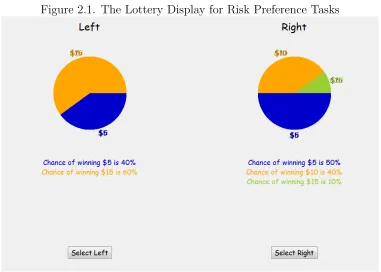
Figure 2.1 The Lottery Display for Risk Preference Tasks . . . 55
Figure 2.2 The Display for Time Preferences Task . . . 56
Figure 2.3 Choices of Later Payment and Interest Rate Offered . . . . 57
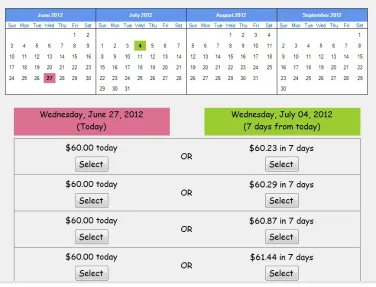
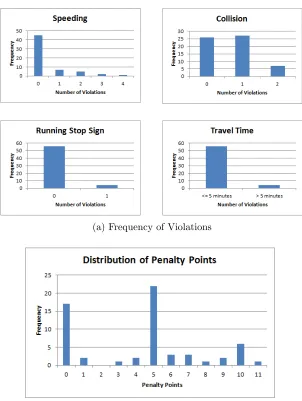
Figure 2.4 Violations and Penalty Points . . . 59
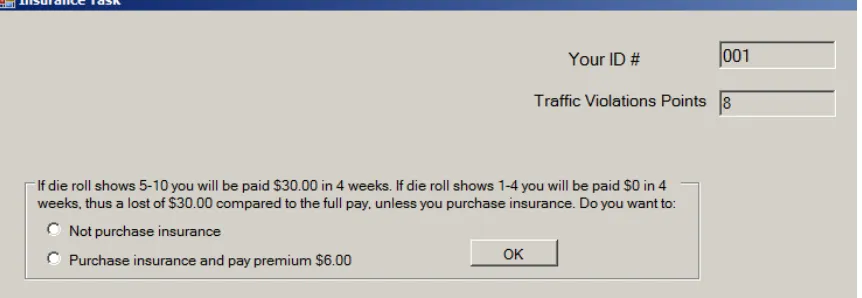
Figure 2.5 Display for the Insurance Purchase Task . . . 61
Figure 2.6 Conditional Marginal Effects of Risk Aversion γ with 95% Confidence Intervals (Evaluated at γ = 0.45,0.46, . . . ,0.50) . . . 76
Figure 2.7 Driving Simulator . . . 85
Figure 2.8 Map for the Unpaid Practice Drive . . . 85
LIST OF TABLES
Table 1.1 Top 10 Writers of PPA Insurance in the United States (2009) 2
Table 1.2 State Accident Reporting Requirements . . . 24
Table 1.3 State DMV DUI Expungement Condition . . . 25
Table 2.1 Joint Estimates of the EUT Model Allowing Homogeneity 70
Table 2.2 Joint Estimates of the EUT Model Allowing Heterogeneity:
Exponen-tial Discounting . . . 71
Table 2.3 Marginal Effects: Exponential Discounting . . . 71
Table 2.4 Joint Estimates of the EUT Model Allowing Heterogeneity:
Hyper-bolic (Mazur) Discounting . . . 72
Table 2.5 Marginal Effects: Hyperbolic (Mazur) Discounting . . . 72
Table 2.6 Insurance Purchase Probit Models, Assuming Exponential
Discount-ing . . . 74
Table 2.7 Conditional Marginal Effects of Time Preferences (δ) Evaluated at
Different Risk Aversion Levels . . . 75
Table 2.8 Conditional Marginal Effects of Risk Preferences (γ) Evaluated at
Table 2.9 Insurance Purchase Probit Models, Assuming Hyperbolic
Discount-ing . . . 77
Table 2.10 Summary of Findings . . . 82
Table 2.11 Driving Violation Penalties . . . 87
Table 2.12 Lotteries in Experiments . . . 95
Table 2.13 Sooner versus Later Payments in Experiments . . . 98
Chapter 1
ACCIDENT FORGIVENESS IN THE AUTOMOBILE INSURANCE CONTRACT
1.1 Introduction
In recent years, we have been hearing and seeing more about accident forgiveness policies on
TV, billboards, and in Internet forums. Accident forgiveness, often considered as “premium
insurance,” protects the insured against a premium increase if an at-fault accident occurs.
With accident forgiveness, insurance rates do not go up due to an accident. Insurance
companies know that drivers are fearful of the financial consequences of being in even the
most minor accidents, which is why insurers are promoting accident forgiveness policies.
Allstate successfully launched its accident forgiveness option in 2005 as part of its “Your
Choice Auto” insurance program. This offering fundamentally changed the type of products
traditionally offered by insurers by presenting consumers with more innovative features.1
Following Allstate’s lead, other major auto insurance companies in the U.S. market, such as
Geico (Government Employees Insurance Company), Progressive, and Travelers, have also
started offering their existing customers this feature (see Table 1.1).
Interestingly, most insurers offering accident forgiveness policies in the United States
provide this feature for “free” to their existing policyholders who have maintained an
accident-1“Your Choice Auto” consumers can choose from three packages: Platinum Protection, Gold Protection,
Table 1.1. Top 10 Writers of PPA Insurance in the United States (2009)
Rank Group Market Share Offering Accident Forgiveness
1 State Farm Mutual 18.60% Guaranteed if accident free for 9 years
2 Allstate 10.50% As part of “Your Choice Auto”
3 Berkshire Hathaway 8.20% Guaranteed if accident free for 5 years
4 Progressive 7.50% Guaranteed if accident free for 3 years
5 Zurich Financial Services 6.40% As part of “Farmers Flex”
6 Nationwide Mutual 4.50% Guaranteed if accident free for 3 years 7 Liberty Mutual 4.40% Guaranteed if accident free for 5 years
8 USAA 4.10% Guaranteed if accident free for 5 years
9 Travelers 2.10% Guaranteed if accident free for 5 years
10 American Family Mutual 2.00% Guaranteed if accident free for 3 years
Note: Adapted from SNL Financial LC and insurance companies’ websites.
free record for a number of consecutive years. For example, Geico requires that policyholders
be accident free for five years to qualify for the accident forgiveness benefits.2 With Travelers’
accident forgiveness policy, customers who have been with Travelers for four years or more
and accident free for five years will not see a surcharge for their first qualifying accident.3
However, a few insurers sell accident forgiveness as an optional feature in the insurance
con-tract to all customers (see Table 1.1). For example, Allstate sells accident forgiveness as
part of its “Your Choice Auto Insurance” program and Farmers sells this feature as part of
its “Farmers Flex” program.4 In both programs, customers are allowed to purchase accident
forgiveness by paying an additional premium.
Although accident forgiveness has received considerable attention in the auto
insur-ance industry, there is little or no literature on accident forgiveness in the actual insurinsur-ance
2See Geico’s official website at http://www.geico.com/information.
3See Traveler’s official website at https://www.travelers.com/personal-insurance/auto-insurance.
4“Farmers Flex” provides customers with a new set of options and features such as accident forgiveness
contract.5 This paper contributes to the existing literature by developing an asymmetric
learning model to examine optimal insurance contracts in the market with accident
forgive-ness provided as an optional feature. My study attempts to improve our understanding of
this new policy feature in insurance contracting.
This paper develops a two-period model in which insurers compete to attract
policy-holders. Individuals are risk averse and subject to a possible income loss in each period. As
usual,6 the model presumes asymmetric information by assuming that the probability of loss
is not known initially by all insurers and at-fault accidents that occurred in the first period
are only observed by the initial insurer. When information about previous at-fault accidents
is not shared perfectly by the insurers in the market, information asymmetries arise between
the initial insurer and its rival insurer, as well as between the insured and the insurer.
Re-gardless of the assumption of no commitment in the prior literature (e.g., Nilssen, 2000), in
this model insurers are able to commit to the two-period contract but policyholders always
have the option to switch insurers ex post.7 I design an accident forgiveness policy that
charges policyholders higher-than-market premiums according to their risk types in the first
period and experience-rates both types in the second period contingent on their previous
at-fault accidents. Contrary to the prior literature, which elicits competition as the reason
5Nini (2009) empirically investigates claim reporting behavior in the auto insurance market that provides
accident forgiveness to policyholders. The author finds that changes in claim reporting behavior can account for nearly all of the increase in claims. After controlling for differences in observable characteristics, Nini shows that the increase in claim frequency is concentrated in relatively small claims and claims where the policyholder is at-fault, suggesting that consumers without premium protection strategically choose not to report such claims to the insurance company.
6Much effort has been spent on thinking about designing an auto insurance contract in a dynamic market
with the existence of asymmetric information (e.g., Cooper and Hayes, 1987; Dionne and Doherty, 1994; Kunreuther and Pauly, 1985; Nilssen, 2000; and Rothschild and Stiglitz, 1976).
7This paper refers to such a situation as semi-commitment, consistent with the specification of Dionne
to temper the experience rating (e.g., Cooper and Hayes, 1987), this model is built such
that accident forgiveness is the device that tempers the experience rating and, of course, is
the incentive for policyholders to purchase it. Such an accident forgiveness contract attracts
policyholders because it “forgives” at-fault accidents and provides “rewards” in terms of
coverage and premiums for those who remain accident-free. By offering this feature to all
policyholders in the pool, the insurer appears to not only lock in its loyal customers but also
attract additional low-risk customers.
This paper’s other noteworthy contribution is analyzing individual accident forgiveness
purchases. I treat accident forgiveness explicitly as “premium insurance” where consumers
purchase premium protection that gives them the right to make at-fault claims without
experiencing an increase in their premiums. An insurance purchase decision, as an investment
decision under uncertainty, may be affected by individual risk and time preferences (e.g.,
Hirshleifer, 1966). By allowing randomization of both risk types of customers over contracts,
my results suggest a nondecreasing effect of the discount factor on the individual accident
forgiveness purchase. Further, risk-averse individuals are more likely to purchase accident
forgiveness if the expected utility provided by the insurance contract is above a certain
threshold. This finding differs from those in the prior literature, which suggest that
risk-averse individuals always purchase more insurance.
The paper is organized as follows. Section 2 discusses previous studies related to
multi-period insurance contracts. Section 3 introduces the features of accident forgiveness in the
characteri-zation for the optimal contract. Section 5 establishes the impact of the discount factor and
1.2 Literature Review
Multi-period contracting is observed in different markets. In the auto insurance market,
consumers typically make repeat purchases. For example, in many countries, drivers purchase
automobile insurance with the same insurer for many years and the insurers use bonus-malus
systems to relate insurance premiums to an individual’s past experience (e.g., Dionne et
al., 2005; Dionne and Vanasse, 1992; Hey, 1985; Lemaire, 1985). Multi-period contracting
is also observed in workers’ compensation insurance, unemployment insurance, and many
other markets. The introduction of multi-period contracts in the analysis raises many issues,
such as time discounting, the commitment of the parties, myopic behavior, and information
asymmetry. Multi-period insurance contracts are set not only to adjust ex-post insurance
premiums or insurance coverage to past experience but also as a sorting device. They can
be a complement to or a substitute for standard self-selection mechanisms (Dionne, 2000, p.
194).
Cooper and Hayes (1987) were the first to consider a repeated insurance problem with
adverse selection. They use the Nash equilibrium concept in a two-period game where
the equilibrium must be separating.8 Cooper and Hayes introduce a second instrument
to induce self-selection: experience rating. Experience rating increases the cost to
high-risk individuals masquerading as low-high-risk individuals by exposing them to second-period
contingent coverage and premiums. The formal problem consists of maximizing the low-risk
policyholder’s two-period expected utility under the incentive compatibility constraints, the
8The authors implicitly assume that the conditions to obtain a Nash separating equilibrium in a
nonnegative intertemporal expected profits constraint, and the no-switching constraints. By
assuming that the insurers commit to a two-period contract but the contract is not binding
on the insured, they show that the presence of a second-period competition limits the use
of experience rating as a sorting device. At equilibrium, high-risk individuals obtain full
insurance coverage and are not experience rated, whereas low-risk individuals receive only
partial insurance coverage and are experience rated.
Dionne and Doherty (1994) introduce renegotiation in long-term relationships in
in-surance markets. In a similar vein to Cooper and Hayes (1987), two-period contracts are
considered where the insured can leave the relationship at the end of the first period and
only the insurer is bound by a multi-period agreement. The difference with the
Cooper-Hayes model is in the possibility of renegotiation. Indeed, insurers are allowed to propose
altering the contract with their insured, which can be accepted or rejected. Dionne and
Doherty present an alternative model (extending that of Laffont and Tirole, 1990)9 that
involves semi-pooling in the first period followed by separation in the second. Their model
offers two contracts. One contract is selected only by high-risk types and the other by both
risk types; thus only the high risks can randomize over two contracts. Dionne and Doherty
conclude that partial coverage is offered in the first-period semi-pooling contract along with
full coverage offered to high risks in the second period. Further, both high risks and low
risks are experience rated in the second period. Other models of multi-period insurance
markets are not as closely related to this work as that of Cooper and Hayes (1987) and
9Laffont and Tirole (1990) fully characterize the equilibrium of a two-period procurement model with
Dionne and Doherty (1994). For example, Nilssen (2000) focuses on consumer lock-in under
a no-commitment assumption and illustrates that an equilibrium may exist with full pooling
in the first period and consumer lock-in in the second period.
In this paper, I build a two-period model in a competitive insurance market with
sep-aration in both periods. This model, an extension of both Cooper and Hayes (1987) and
Dionne and Doherty (1994), reveals that an accident forgiveness policy offered in the market
induces a policyholder’s willingness to stay with the same insurer. My model shares the
basic feature of Dionne and Doherty (1994) regarding multi-period insurance contracts; that
is, two contracts are offered, with asymmetric information between the insured and insurers.
However, my model differs in several respects. I focus primarily on providing a model with
full separation in both periods.10 Contracts are allowed to be selected by both high risks and
low risks, which means that both types can “randomize” over the contracts with accident
forgiveness. In the second period, not just the low risks but both the low and high risks are
experience rated. Finally, the main difference between my work and the previous literature
lies in the analysis of the insurance purchase decision. My findings indicate that the
dis-count factor between periods and the degree of risk aversion are important determinants of
accident forgiveness purchases.
10Separation in the first period is exactly the phenomenon observed in the automobile insurance market.
1.3 Accident Forgiveness
When one is involved in an at-fault accident (or traffic violation), points against one’s driving
record are considered, depending on the description of the accident (or traffic violation)
and the insurer’s rating system. Surcharges or discounts on premiums are based on one’s
driving record. The more points one has, the worse the driving record becomes and the
higher the premium. For example, if one has an at-fault accident, according to the current
surchargeable point schedule in Massachusetts, the driving record can increase three to four
points, depending on the claim amount.11 However, with an accident forgiveness policy, the
points do not increase as much, if at all.12 By protecting the customer’s driving record,
accident forgiveness results in a reduction in the auto insurance premium.
In short, the availability of accident forgiveness varies by company. If available, it is
simply a built-in feature of an insurer’s regular auto insurance policy or can be purchased as
an option. Even if this feature is provided, it does not mean that an accident that occurred
before the purchase would be forgiven. Instead, it means that if an accident were to occur
in the future, it would be forgiven within the conditions and terms specified in the insurance
contract. The number of at-fault accidents allowed to be forgiven varies with the insurer.13
Even if accident forgiveness is part of a policy, having an accident “forgiven” by an insurance
company does not mean the accident is completely removed from one’s driving record. The
11The following is the current surchargeable point schedule in Massachusetts (see the official website of
the Massachusetts Office of Consumer Affairs and Business Regulation at http://www.mass.gov). A major traffic violation (such as driving under the influence, or DUI) if worth five points; a major at-fault accident (such as a claim over $2,000), four points; a minor at-fault accident (claim of $500 to $2,000), three points; and a minor traffic violation (such as speeding), two points.
accident will remain there even if the insurer offering the “forgiveness” does not consider it
when calculating the auto insurance premium.14
14In the United States, the length of time that an auto accident stays on one’s driving record varies
1.4 The Model
1.4.1 Model Assumptions and the Sequence of the Game
I consider a two-period insurance market. Individuals (or the insured) are assumed to be risk
averse and in each period individuals are subject to a risk of financial loss. Individuals differ
solely by their probability of loss. High-risk individuals have a higher probability of
experi-encing a loss (accident) than low-risk individuals. The respective proportions of high and low
risks are assumed to permit a single-period Nash separating equilibrium to exist.15 Risk type
is private information to the individuals, and accidents are out of an individual’s control so
that no moral hazard arises. The insured share the same von Neumann-Morgenstern utility
function with the same per-period income.16 Two insurers (the initial insurer and a rival
insurer) in the market compete to attract the insured and are assumed to be risk neutral.
I assume that the incumbent initial insurer is the only one in the market to offer accident
forgiveness in contracts and observes its policyholders’ loss experience (there is no
underre-porting of accidents). Moreover, borrowing or lending by the insured is not permitted but
they are allowed to switch between insurers at no cost.
The game depicted in Figure 1.1 runs as follows:
1. At the beginning of the first period, the initial insurer offers an accident forgiveness
contract with premium α1H and coverage βH1 to high-risk individuals and a premium
α1L and coverage βL1 to low-risk individuals.
15Rothschild and Stiglitz (1976) prove that a competitive insurance market may have no equilibrium if
there are relatively few high-risk individuals who must be subsidized.
Figure 1.1. The Depiction of Two-Period Model
2. The rival insurer simultaneously offers optimal one-period Rothschild/Stiglitz
con-tracts withαH andβH as premium and coverage, respectively, to high-risk individuals
and, αL and βL, respectively, to low-risk individuals. The optimal one-period
Roth-schild/Stiglitz contracts can be summarized as follows: High-risk individuals receive
full insurance; Low-risk individuals receive less than full insurance and the high-risk
individuals are indifferent between their contracts and the low-risk ones (Rothschild
and Stiglitz,1976).
3. Individuals choose among available contracts. Here (1−x) refers to the proportion of
high-risk individuals purchasing accident forgiveness contracts from the initial insurer
and (1−y) is the proportion for low risk individuals. Premiums are paid and the first
compensated according to the first-period component of their contracts by receiving
the net reimbursement.17
4. At the beginning of the second period, contingent on having the first-period accident or
not, the initial insurer offers the existing insured four different contracts: αHAandβHA
as premium and coverage for high risks who had an accident in the previous period,
αHN andβHN as premium and coverage for high risks with no accident in the previous
period, αLA and βLA as premium and coverage for low risks who had an accident in
the previous period, and αLN and βLN as premium and coverage for low risks with no
accident in the previous period.
5. The rival insurer again offers repeated one-period contracts at the beginning of the
second period.
6. Individuals choose to either continue their contracts with the initial insurer or switch
to the one-period contracts provided by the rival insurer. Premiums are paid and
the second period elapses; wealth losses occur and are compensated according to the
contracts.
17Net reimbursement equals the indemnity paid under the insurance contract in a loss state minus the
1.4.2 Model Setup
The derivation of the optimal contract is obtained by maximizing the following problem (See
the Appendix A for notation used in the model):
maxα,β pL[U(W −D+βL1) +δ[pLU(W −D+βLA) + (1−pL)U(W −αLA)]]
+(1−pL)[U(W −α1L) +δ[pLU(W −D+βLN) + (1−pL)U(W −αLN)]],
(1.1)
which is the utility of low risks purchasing an accident forgiveness contract in the first
period and remaining with the same initial insurer for the second period. This maximization
problem is subject to the randomization constraints
pH[U(W −D+βH1) +δ[pHU(W −D+βHA) + (1−pH)U(W −αHA)]]
+(1−pH)[U(W −α1H) +δ[pHU(W −D+βHN) + (1−pH)U(W −αHN)]]
= (1 +δ)[pHU(W −D+βH) + (1−pH)U(W −αH)],
(1.2)
pL[U(W −D+βL1) +δ[pLU(W −D+βLA) + (1−pL)U(W −αLA)]]
+(1−pL)[U(W −α1L) +δ[pLU(W −D+βLN) + (1−pL)U(W −αLN)]]
= (1 +δ)[pLU(W −D+βL) + (1−pL)U(W −αL)];
the self-selection constraints
pH[U(W −D+βH1) +δ[pHU(W −D+βHA) + (1−pH)U(W −αHA)]]
+(1−pH)[U(W −α1H) +δ[pHU(W −D+βHN) + (1−pH)U(W −αHN)]]
≥(1−x){pH[U(W −D+β1L) +δ[pHU(W −D+βLA) + (1−pH)U(W −αLA)]]
+(1−pH)[U(W −α1L) +δ[pHU(W −D+βLN) + (1−pH)U(W −αLN)]]}
+x(1 +δ)[pHU(W −D+βL) + (1−pH)U(W −αL)],
(1.4)
pL[U(W −D+βL1) +δ[pLU(W −D+βLA) + (1−pL)U(W −αLA)]]
+(1−pL)[U(W −α1L) +δ[pLU(W −D+βLN) + (1−pL)U(W −αLN)]]
≥(1−y){pL[U(W −D+βH1 ) +δ[pLU(W −D+βHA) + (1−pL)U(W −αHA)]]
+(1−pL)[U(W −α1H) +δ[pLU(W −D+βHN) + (1−pL)U(W −αHN)]]}
+y(1 +δ)[pLU(W −D+βH) + (1−pL)U(W −αH)];
(1.5)
the accident forgiveness constraints18
pHU(W−D+βHA)+(1−pH)U(W−αHA) = pHU(W−D+βH)+(1−pH)U(W−αH), (1.6)
pLU(W−D+βLA) + (1−pL)U(W−αLA) = pLU(W−D+βL) + (1−pL)U(W−αL); (1.7)
18Accident forgiveness as the policy feature binds the contract the initial insurer can offer in the second
and the zero-profit constraint for the insurer
(1−x){[(1−pH)α1H −pHβH1] +δ[(1−pH)[(1−pH)αHN −pHβHN] +pH[(1−pH)αHA−pHβHA]]}
+(1−y){[(1−pL)α1L−pLβL1] +δ[(1−pL)[(1−pL)αLN −pLβLN] +pL[(1−pL)αLA−pLβLA]]}
≥0.
(1.8)
The constraints shown in expressions (1.2) and (1.3) are randomization constraints that
ensure that both low and high risks are indifferent between their own one-period contracts
and the accident forgiveness contracts. With these constraints, the insured with the same risk
type will randomize over different contracts. Expression (1.4) is the self-selection constraint
for high risks and guarantees that high risks will not mimic low risks. High risks only
prefer a randomization over the one-period contract and the accident forgiveness contract
for high risks to a randomization over contracts for low risks. Expression (1.5) is the
self-selection constraint for low risks. The purpose of purchasing accident forgiveness is to allow
policyholders to have at-fault accidents without a premium increase. Expressions (1.6) and
(1.7) are accident forgiveness constraints and illustrate that the initial insurer providing
accident forgiveness contracts must keep its promise to offer policyholders with a first-period
accident the same second-period expected utility as the one they can obtain from uninformed
rival insurer. Expression (1.8) as a zero-profit constraint prevents insurers from offering
A policy designed for high risks obviously offers full insurance, since partial insurance
would simply provide incentives for imitation and offer an opportunity for renegotiation.19
The self-selection constraints (1.4) for high-risk individuals and (1.5) for low-risk individuals
can be rewritten as
U(W −α1
H) +δ[pHU(W −αHA) + (1−pH)U(W −αHN)]
≥(1−x){pH[U(W −D+βL1) +δ[pHU(W −D+βLA) + (1−pH)U(W −αLA)]]
+(1−pH)[U(W −αL1) +δ[pHU(W −D+βLN) + (1−pH)U(W −αLN)]]}
+x(1 +δ)[pHU(W −D+βL) + (1−pH)U(W −αL)]
(1.4’)
and
pL[U(W −D+βL1) +δ[pLU(W −D+βLA) + (1−pL)U(W −αLA)]]
+(1−pL)[U(W −α1L) +δ[pLU(W −D+βLN) + (1−pL)U(W −αLN)]]
≥(1−y){U(W −α1
H) +δ[pLU(W −αHA) + (1−pL)U(W −αHN)]}
+y(1 +δ)U(W −αH),
(1.5’)
respectively.
Similarly, the randomization constraint (1.2), the accident forgiveness constraint (1.6), and
the zero-profit constraint (1.8) can be also rewritten as
U(W −α1H) +δ[pHU(W −αHA) + (1−pH)U(W −αHN)] = (1 +δ)U(W −αH), (1.2’)
19Full insurance means that the insured has the same utility regardless of loss experience, for example,
U(W −αHA) =U(W −αH), (1.6’)
(1−x){[(α1
H −pHD)] +δ[(1−pH)(αHN −pHD) +pH(αHA−pHD)]}
+(1−y){[(1−pL)α1L−pLβL1] +δ[(1−pL)[(1−pL)αLN −pLβLN] +pL[(1−pL)αLA−pLβLA]]}
≥0.
(1.8’)
1.4.3 Optimal Contracts with Asymmetric Information
This section characterizes and comments on the optimal two-period contracts with accident
forgiveness.
Optimal contracts characterization To characterize optimal contracts by solving the maximization problem, one needs to determine whether the constraints are binding. Due
to the fact that competition and freedom of entry without transaction costs ensure that the
profit for each type of contract will be driven to zero, the zero-profit constraint is binding
with a Lagrangian multiplier λz >0.
The self-selection constraint with λhss > 0 for high risks is necessary to ensure that
the high risks do not select the contracts for low risks. As usual, the constraint for low
risks cannot possibly be binding, because if the high risks were indifferent between the two
contracts, the low risks would strictly prefer their own contracts since only the high risks
have incentives to mimic the low risks.20 Thus,λ
lss= 0.
20In principal-agent theory, a principal faces two self-selection constraints: one for high risks not to mimic
Because the accident forgiveness constraints are binding, it follows
αHA=αH, αLA =αL, βHA =βH, βLA =βL. (1.9)
With Lagrange multipliers, let us substitute these values into the problem to simplify
the derivation and take the first-order condition of the maximization problem. Then one
obtains
U0(W −α1L) = λz(1−pL)(1−y)
(1−pL) +λlr(1−pL)−λhss(1−pH)(1−x)
, (1.10)
U0(W −D+βL1) = λzpL(1−y)
pL+λlrpL−λhsspH(1−x)
, (1.11)
U0(W −αLN) =
λz(1−pL)2(1−y)
(1−pL)2+λlr(1−pL)2 −λhss(1−pH)2(1−x)
, (1.12)
U0(W −D+βLN) =
λzpL(1−pL)(1−y)
(1−pL)pL+λlr(1−pL)pL−λhsspH(1−pH)(1−x)
. (1.13)
BecausepL< pH, comparingU
0
(W−α1
L) from (1.10) andU
0
(W−D+β1
L) from (1.11) yields
U0(W −α1L)< U0(W −D+βL1),
and, with the assumption of the utility function, U0 >0 and U00 <0, we see
U(W −α1L)> U(W −D+βL1), (1.14)
Similarly, usingU0(W−αLN) from (1.12) andU
0
(W−D+βLN) from (1.13), one obtains
U(W −αLN)> U(W −D+βLN), (1.15)
which also points to the partial coverage for the contract (αLN, βLN) offered in the second
period to low-risk individuals with no loss in the first period.
To determineαHN as the premium for high risks with no loss in the first period, I adopt
the concept of a “rent-constraint contract,” proposed by Laffont and Tirole (1990).21 The
idea is as follows. Considering that high risks would receive the full-insurance, fair-priced
policy in the repeated one-period contracts from the rival insurer, they would deviate to
adopt the strategy of accident forgiveness contracts, which involves an up-front premium in
the first period if the expectation of cost is no higher than the actuarially fair price from
the repeated one-period contracts. Thus, to participate in the accident forgiveness contract,
high risks with no first-period loss must receive a rent that is implicitly embodied by the
premium α. With competition, the insurer cannot offer a rent to the high risks greater than
that corresponding to the transfers paid in the first period, which are determined by the
value of xand y. Hence, the premium αHN can be written as αHN(x, y) and the rent given
to the high-risk individuals with no first-period loss can be derived from
(1−x)(α1H−pHD) + (1−y)[(1−pL)α1L−pLβL1] +δ[(1−x)(1−pH)(αHN(x, y)−pHD)] = 0.
21Laffont and Tirole (1990) explain the rent-constraint contract as a contract in which the principal would
Solving for αHN(x, y) yields
αHN(x, y) = pHD−
[(1−x)(α1H −pHD) + (1−y)[(1−pL)α1L−pLβL1]]
δ(1−x)(1−pH)
, (1.16)
which can be further written as
αHN(x, y) =pHD−
T(x, y) δ(1−x)(1−pH)
, (1.16’)
where
T(x, y) = (1−x)(α1H −pHD) + (1−y)[(1−pL)α1L−pLβL1] (1.17)
is the net transfer paid to the insurer in the first period from both types. Obviously,T(x, y) =
0 whenx= 1 and y= 1 (e.g., no one purchases the accident forgiveness policy).
Here, it is assumed that the rent paid to the low risks in the second period is zero.22 It
is seen that low risks with no loss in the first period will receive an actuarially fair premium
αLN. Moreover, to induce them to participate in the accident forgiveness contracts, more
coverage βLN will be given in the second period.
Apparently, the rent offered to high risks to participate in this contract is from both
intertemporal and cross-sectional subsidization. In other words, only if the insurer makes
a profit in the first period by charging a higher-than-market premium will it support the
rent given to policyholders in the second period, which results in α1
H > αHA > αHN and
α1L > αLA > αLN. The high upfront premium for the two-period contract can be thought
22Laffont and Tirole (1990) demonstrate that there should be no efficiency gain if introducing the additional
of as an entry cost to the accident forgiveness contract with an experience-rating pricing
scheme.
Therefore, for given probabilities x (0 < x < 1) and y (0 < y < 1) that both high
and low risks will separate, the optimal two-period contract with accident forgiveness under
competitive conditions and with the insured permitted to switch contracts is characterized
as follows.
A separating policy exists for the first period, which is full coverage for high risks and
partial coverage for low risks. This is consistent with the one-period Rothschild/Stiglitz
contracts. However, a higher-than-market premium is charged for both types.
A separating policy exists for the second period, which is full coverage for high risks
even if they suffered first-period losses and partial coverage for low risks.
Pricing, however, is different. An experience-rated second-period policy is given for
low risks; that is, low risks who suffered no first-period loss receive more coverage with an
actuarially fair premium and those who did suffer losses receive Rothschild/Stiglitz contracts
for low risks in the second period. High risks also obtain an experience-rated second-period
policy; that is, high risks who suffered no first-period loss receive the rent and those who
suffered losses receive the Rothschild/Stiglitz contracts for high risks in the second period.
The rent is from both intertemporal and cross-sectional subsidization.
Asymmetric information. When information about previous driving records is not
pooled across insurers, if an accident or violation occurs, it is observed only by the
ini-tial insurer responsible for covering it and not by any rival insurers23; thus asymmetries
of information arise. Contrary to what is believed by many to be common practice (e.g.,
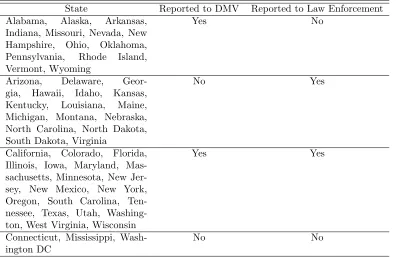
automobile accidents as well as traffic violations are complete and freely available), states
vary in accident reporting regulations (see Table 1.2), and information maintained by state
agencies, such as motor vehicle records (MVRs), is not always available and is often far from
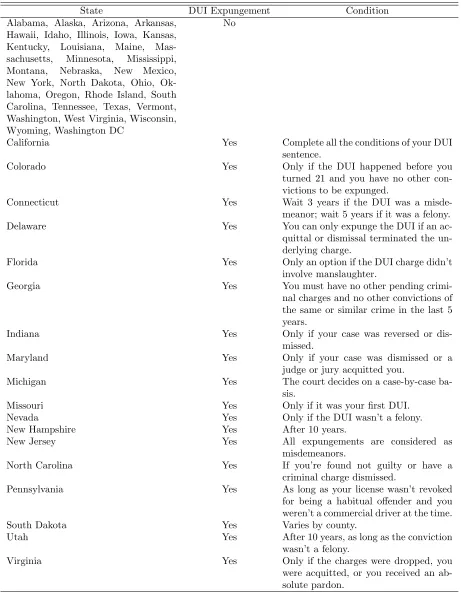
complete. More specifically, in some states, DUIs and other major traffic-related convictions
can even be expunged (see Table 1.3) from one’s motor vehicle record. The source of
in-formation asymmetry may also be the time lag in the learning process between the initial
insurer and its rivals. In other words, the initial insurer, in some sense, can be thought of
as the Stackelberg leader in the updating process. It is likely for the initial insurer to have
a comparative advantage over its rivals in monitoring its own policyholders. Over time, the
initial insurer obtains Bayesian updates on its policyholders’ loss distributions that are not
simultaneously available to its rivals. For example, if the insured vehicle is involved in an
accident, it usually takes some time for rival insurers to access this information, whereas the
initial insurer is required to be notified immediately. Moreover, through contractual
relation-ships with its policyholders, the initial insurer may also learn of more relevant risk-related
personal information, such as a medical history, which is unobservable to other insurers.
Insurer’s commitment to the contract. The way my model has been set up, it is assumed
that insurers can commit to the insurance contract through either enforced legislation or
Table 1.2. State Accident Reporting Requirements
State Reported to DMV Reported to Law Enforcement Alabama, Alaska, Arkansas,
Indiana, Missouri, Nevada, New Hampshire, Ohio, Oklahoma, Pennsylvania, Rhode Island, Vermont, Wyoming
Yes No
Arizona, Delaware, Geor-gia, Hawaii, Idaho, Kansas, Kentucky, Louisiana, Maine, Michigan, Montana, Nebraska, North Carolina, North Dakota, South Dakota, Virginia
No Yes
California, Colorado, Florida, Illinois, Iowa, Maryland, Mas-sachusetts, Minnesota, New Jer-sey, New Mexico, New York, Oregon, South Carolina, Ten-nessee, Texas, Utah, Washing-ton, West Virginia, Wisconsin
Yes Yes
Connecticut, Mississippi, Wash-ington DC
No No
Note: Adapted from state DMV websites.
reputational effects. This is consistent with the general provision in the personal auto policy
drafted by the Insurance Services Office.24 In the termination provision, the named insured
can cancel at any time by returning the policy to the insurer. The insurer also has the right
of cancelation but for only three reasons25: (1) The premium has not been paid, (2) the
driver’s license of any insured has been suspended or revoked, or (3) the policy was obtained
through material misrepresentation. Futhermore, many states place additional restrictions
on the insurer’s right to cancel or not renew an auto insurance policy (e.g., state law may
require a longer period of advance notice to the insured).
24See 2005 edition of the Personal Auto Policy by the Insurance Services Office and Rejda (2009, Ch. 22
pp. 513-514)
Table 1.3. State DMV DUI Expungement Condition
State DUI Expungement Condition
Alabama, Alaska, Arizona, Arkansas, Hawaii, Idaho, Illinois, Iowa, Kansas, Kentucky, Louisiana, Maine, Mas-sachusetts, Minnesota, Mississippi, Montana, Nebraska, New Mexico, New York, North Dakota, Ohio, Ok-lahoma, Oregon, Rhode Island, South Carolina, Tennessee, Texas, Vermont, Washington, West Virginia, Wisconsin, Wyoming, Washington DC
No
California Yes Complete all the conditions of your DUI
sentence.
Colorado Yes Only if the DUI happened before you
turned 21 and you have no other con-victions to be expunged.
Connecticut Yes Wait 3 years if the DUI was a
misde-meanor; wait 5 years if it was a felony.
Delaware Yes You can only expunge the DUI if an
ac-quittal or dismissal terminated the un-derlying charge.
Florida Yes Only an option if the DUI charge didn’t
involve manslaughter.
Georgia Yes You must have no other pending
crimi-nal charges and no other convictions of the same or similar crime in the last 5 years.
Indiana Yes Only if your case was reversed or
dis-missed.
Maryland Yes Only if your case was dismissed or a
judge or jury acquitted you.
Michigan Yes The court decides on a case-by-case
ba-sis.
Missouri Yes Only if it was your first DUI.
Nevada Yes Only if the DUI wasn’t a felony.
New Hampshire Yes After 10 years.
New Jersey Yes All expungements are considered as
misdemeanors.
North Carolina Yes If you’re found not guilty or have a
criminal charge dismissed.
Pennsylvania Yes As long as your license wasn’t revoked
for being a habitual offender and you weren’t a commercial driver at the time.
South Dakota Yes Varies by county.
Utah Yes After 10 years, as long as the conviction
wasn’t a felony.
Virginia Yes Only if the charges were dropped, you
were acquitted, or you received an ab-solute pardon.
The degree of “punishment.” The prior literature has already illustrated that the
pres-ence of second-period competition for consumers may limit but not destroy the use of
ex-perience rating as a sorting device (e.g., Cooper and Hayes, 1987). Since semi-commitment
settings are assumed, policyholders are not bound to the insurer. This results in punishment
for a first-period accident being tempered by the presence of rival insurers offering
one-period contracts in the second one-period. Therefore someone can argue that the insured does
not necessarily need to purchase accident forgiveness to be relieved of the previous accident.
However, one needs to determine that accident forgiveness as an insurance policy feature
offered at the beginning of the contracting in this model not only protects the insured from
higher future premiums but also rewards the insured with more favorable contract terms. In
other words, accident forgiveness is a device to temper the experience rating as well as lower
1.5 Purchase Decisions
Another question worth asking is whether any essential element affects the accident
forgive-ness purchase. The economic explanation of insurance purchases is a story of shifting risk.
For consumers, insurance purchases can be conceptualized as decisions in which they are
faced with risks that have some distributions of losses across probabilities. To reduce these
risks, consumers pay premiums and are compensated by benefits if the losses occur.
Prior literature examining the determinants for consumer insurance purchase decisions
mostly emphasizes how product quality, switching cost, and price affect consumer decisions
(e.g., Cummins et al., 1974; Dahlby and West, 1986; Laury and McInnes, 2003; Schlesinger
and Schulenburg, 1993) or argues that distorted beliefs concerning the probability and size
of potential losses affect consumer decisions about insurance (e.g., Johnson et al., 1993;
Kunreuther and Pauly 2004, 2005). However, insurance decision-making as behavior under
uncertainty may involve time discounting and risk attitude. This paper investigates the
importance of individual risk and time preferences in the insurance purchase decision.
This section completes the derivation of optimal contracts by determining the
probabil-ity of purchasing accident forgiveness contracts as a function of the discount factor and the
degree of risk aversion.
1.5.1 Discount Factor
The discount factor is a provocative subject with important implications for many aspects
of economic behavior and public policy (e.g., Warner and Pleeter, 2001). In particular, the
has provided evidence showing the relation between the discount factor and life insurance
purchase in a life cycle model (e.g., Fischer, 1973; Yaari, 1965).26 Articles related to dynamic
insurance contracts also illustrate the importance of the discount factor. Rubinstein and
Yaari (1983) show that multi-period insurance contracts can increase the welfare of both
the insurer and the insured when the number of periods is large and the discount rate is
small. Dionne and Doherty (1994) demonstrate the positive relation between the discount
factor and high risk drivers’ participation in the first-period pooling insurance. Kunreuther
(1996) uses the discount factor to explain why individuals have limited interest in voluntary
insurance purchases.
In multi-period contracting models with asymmetric information, the discount factor is
very important, such that it may affect optimal allocation in equilibrium. Laffont and Tirole
(1990) complete their derivation of the optimal procurement contract by proposing that the
proportion of good types’ separation from a semi-pooling contract does not increase with the
discount factor.27 Dionne and Doherty (1994) share the same feature of the nonincreasing
theorem but for an optimal insurance contract. Here, I posit that if both low and high risks
are introduced to randomize over different contracts, there exists a nondecreasing effect of
the discount factor on the accident forgiveness purchases for both types.
Proposition 1. The proportion of policyholders, both low and high risk, who purchase con-tracts with accident forgiveness is nondecreasing with the discount factor.
26Yaari (1965) considers the subjective discount rate in the problem of uncertain lifetimes and life insurance
in the context of the expected utility hypothesis using a continuous time model. Fischer (1973) includes a discount factor in the utility-of-consumption function and describes it as a measure of the defectiveness of imagination or impatience.
Proof. Suppose y is the low risks’ equilibrium randomizing probability for a given discount
factor δ and, similarly, ye is for δe. Assume that δ < eδ, then the low risks’ utility for two
periods with optimal y for δ can be written as
U(y, δ, α, β) = (1−y){U(α1L, βL1)+δ[pLU(αLA, βLA)+(1−pL)U(αLN, βLN)]}+y{(1+δ)U(αL, βL)},
(1.18)
utility with optimal yefor eδ can be written as
U(ey,eδ, α, β) = (1− e
y){U(α1L, βL1)+eδ[pLU(αLA, βLA)+(1−pL)U(αLN, βLN)]}+ye{(1+eδ)U(αL, βL)},
(1.19)
utility with ey for δ can be written as
U(ey, δ, α, β) = (1−ye){U(αL1, βL1)+δ[pLU(αLA, βLA)+(1−pL)U(αLN, βLN)]}+ye{(1+δ)U(αL, βL)},
(1.20)
and utility with y for eδ can be written as
U(y,eδ, α, β) = (1−y){U(αL1, βL1)+eδ[pLU(αLA, βLA)+(1−pL)U(αLN, βLN)]}+y{(1+eδ)U(αL, βL)}.
(1.21)
Sincey is an optimum for δ and eyis an optimum for eδ, thenU(y, δ, α, β)≥U(y, δ, α, βe ) and
U(ey,eδ, α, β)≥U(y,eδ, α, β). This yields
U(y, δ, α, β) +U(y,e δ, α, βe )≥U( e
So, adding (1.18) and (1.19) and then subtracting (1.20) and (1.21) yields
{U(α1L, βL1) +δ[pLU(αLA, βLA) + (1−pL)U(αLN, βLN)]}(ey−y)
+{(1 +δ)U(αL, βL)}(y−ey)
+{U(α1
L, βL1) +eδ[pLU(αLA, βLA) + (1−pL)U(αLN, βLN)]}(y− e y)
+{(1 +δe)U(αL, βL)}(ey−y)
≥0
(1.22)
and (1.22) can be further written as
(y−ye)(eδ−δ)[pLU(αLA, βLA) + (1−pL)U(αLN, βLN)−U(αL, βL)]≥0. (1.22’)
From the optimal contract characterization, U(αLA, βLA) = U(αL, βL), U(αLN, βLN)>
U(αL, βL), andeδ > δas assumed, and it is obvious thaty ≥ey. Becauseyandyeare optimum
for δ and eδ, respectively, (1− e
y) ≥ (1−y) proves the nondecreasing relation between the
discount factor and the proportion of low risks purchasing accident forgiveness contracts.
In a similar vein, using the same procedure, this nondecreasing relation can be proven for
high-risk policyholders as well.
This proposition states that when faced with a higher discount factor, the insured is
more willing to pay extra money to have a contract with accident forgiveness. The intuition
is follows. When the discount factor is low, it is costly for the insured to pay a positive
transfer in the first period to increase insurance possibilities in the second period. However,
in the market, the accident forgiveness policy not only protects the insured from a higher
insurance rate if he experiences losses in the first period but also rewards him in the second
period for having no loss. Individuals who care more about their second-period expected
utility obviously prefer to purchase this accident forgiveness policy. Thus, it is clear that the
accident forgiveness purchase decision is driven to some extent by the discount factor.
1.5.2 Risk Aversion
This section examines how accident forgiveness purchases are affected by individual risk
attitude.
The standard economic theory is that risk-averse individuals confronted with sizable
hazards are willing to pay a more diversified insurer to bear the risk (e.g., Dionne and
Harrington, 1992). Schlesinger and Schulenberg (1987) argue that, in the usual insurance
literature, because a higher degree of risk aversion implies a greater relative emphasis on
downside risk, an increase in the level of risk aversion leads to the purchase of a higher level
of insurance coverage. Similar logic is employed by Johnson et al. (1993), who state that
risk-neutral consumers would purchase coverage at an actuarially fair price and that risk
aversion raises this reservation price. Ganderton et al. (2000) state that all risk-neutral or
risk-averse individuals would purchase insurance and undertake all relevant precautions to
the extent that the extra benefits from such actions exceed the marginal costs, less some
risk premium in the case of risk aversion. Laury and McInnes (2003) find that if one is even
The question arises as to whether the insured are going to purchase accident forgiveness
for more protection if they become more risk averse. In other words, is standard economic
theory also applicable to accident forgiveness purchases?
Proposition 2. There exists a threshold in terms of utility for both high and low risks above which the proportion of policyholders who purchase contracts with accident forgiveness is
nondecreasing in their degree of risk aversion.
Proof. Let us assume a constant relative risk aversion (CRRA) utility function withUγ(α, β) =
ω(α,β)1−γ
1−γ , where ω is a function of α and β and γ 6= 1 for convenience.
28 Here γ is the
pa-rameter to measure risk aversion, with γ = 0 corresponding to risk neutrality, γ <0 to risk
loving, and γ > 0 to risk averse. Suppose γ1 and γ2 with γ2 > γ1 >0. As usual, if γ1 and
γ2 are assumed to have optima y1 and y2, respectively, the low risks’ utility for two periods
can be written as
U(y1, γ1, α, β) = (1−y1){Uγ1(α 1
L, βL1) +δ[pLUγ1(αLA, βLA) + (1−pL)Uγ1(αLN, βLN)]}
+y1{(1 +δ)Uγ1(αL, βL)},
(1.23)
U(y2, γ2, α, β) = (1−y2){Uγ2(α 1
L, βL1) +δ[pLUγ2(αLA, βLA) + (1−pL)Uγ2(αLN, βLN)]}
+y2{(1 +δ)Uγ2(αL, βL)},
(1.24)
U(y2, γ1, α, β) = (1−y2){Uγ1(α 1
L, βL1) +δ[pLUγ1(αLA, βLA) + (1−pL)Uγ1(αLN, βLN)]}
+y2{(1 +δ)Uγ1(αL, βL)},
(1.25)
28The CRRA utility function is widely used in the literature on insurance purchase decisions (e.g., Brown
U(y1, γ2, α, β) = (1−y1){Uγ2(α 1
L, βL1) +δ[pLUγ2(αLA, βLA) + (1−pL)Uγ2(αLN, βLN)]}
+y1{(1 +δ)Uγ2(αL, βL)}.
(1.26)
Adding (1.23) and (1.24) and then subtracting (1.25) and (1.26) yields
(y1−y2){Uγ2(α 1
L, βL1) +δ[pLUγ2(αLA, βLA) + (1−pL)Uγ2(αLN, βLN)]
−Uγ1(α 1
L, βL1)−δ[pLUγ1(αLA, βLA) + (1−pL)Uγ1(αLN, βLN)]
+(1 +δ)Uγ1(αL, βL)−(1 +δ)Uγ2(αL, βL)}
≥0.
(1.27)
WithαLA=αL and βLA=βL, (1.27) can be further rewritten as
(y1−y2){[Uγ2(α 1
L, βL1)−Uγ1(α 1
L, βL1)]−[Uγ2(αL, βL)−Uγ1(αL, βL)]
+δ(1−pL){[Uγ2(αLN, βLN)−Uγ1(αLN, βLN)]−[Uγ2(αL, βL)−Uγ1(αL, βL)]}} ≥0.
(1.27’)
To predict the sign of (y1 −y2) in (1.27’), we need to discuss the sign of [Uγ2(α 1
L, βL1)−
Uγ1(α 1
L, βL1)]−[Uγ2(αL, βL)−Uγ1(αL, βL)] +δ(1−pL){[Uγ2(αLN, βLN)−Uγ1(αLN, βLN)]−
[Uγ2(αL, βL)−Uγ1(αL, βL)]}. To simplify the discussion, we define
where ω(α, β) represents different contracts (e.g., contract (α1
L, βL1) or (αL, βL)). Then, we
only need to consider the possible sign of
[image:49.612.117.490.239.470.2]g(ω(α1L, βL1))−g(ω(αL, βL)) +δ(1−pL)[g(ω(αLN, βLN))−g(ω(αL, βL))]. (1.29)
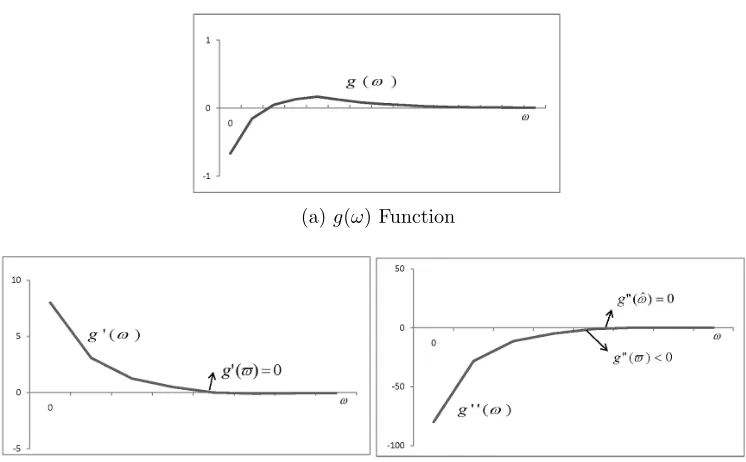
Figure 1.2. g(ω) Function and Partial Derivatives of g(ω)
(a)g(ω) Function
(b) First-Order Partial Derivative ofg(ω) (c) Second-Order Partial Derivative ofg(ω)
The function g(ω) has the curvature shown in Figure 1.2(a). To discuss the sign of
(1.29), let us derive both first and second-order derivatives. The first-order derivativeg0(ω) =
ω−γ2−ω−γ1 is positive ifω is smaller than the cutoff pointω and negative (org is decreasing)
otherwise, as shown in Figure 1.2(b). The second-order derivative −γ2ω−γ2−1+γ1ω−γ1−1 is
negative if ω is smaller than the cutoff point ωb and positive otherwise, as shown in Figure
1.2(c). Although we know that ω(αLN, βLN) > ω(αL, βL)> ω(α1L, βL1), the sign of (1.29) is
Case 1: ω > ω(αLN, βLN)> ω(αL, βL)> ω(α1L, βL1).29 It is straight forward to see that
g(ω(αL, βL))−g(ω(α1L, β 1
L))> g(ω(αLN, βLN))−g(ω(αL, βL)), (1.30)
from which
[Uγ2(α 1
L, βL1)−Uγ1(α 1
L, βL1)]−[Uγ2(αL, βL)−Uγ1(αL, βL)]
+δ(1−pL){[Uγ2(αLN, βLN)−Uγ1(αLN, βLN)]−[Uγ2(αL, βL)−Uγ1(αL, βL)]}<0,
(1.31)
and with (1.27’), (1−y2)≤(1−y1). This result illustrates the nonincreasing relation between
the proportion of low risks purchasing accident forgiveness contracts and the degree of their
risk aversion.
Case 2: bω > ω(αLN, βLN)> ω(αL, βL)> ω(α1L, βL1)> ω. Withg
0
(ω)<0 andg00(ω)<0,
g(ω(αL, βL))−g(ω(αLN, βLN))> g(ω(α1L, β 1
L))−g(ω(αL, βL)), (1.32)
which indicates the undetermined sign of (y1−y2).
Case 3: ω(αLN, βLN)> ω(αL, βL)> ω(α1L, βL1)>ωb. With g
0
(ω)<0 and g00(ω)>0,
g(ω(α1L, βL1))−g(ω(αL, βL))> g(ω(αL, βL))−g(ω(αLN, βLN)), (1.33)
which indicates that (1−y2)≥(1−y1). Unlike the previous two cases, this result points to
a nondecreasing relation between the proportion of low risks purchasing accident forgiveness
29To simplify the discussion, let us assume thatω(α
Figure 1.3. 3D Plot of ω, γ, and y in Case 3
contracts and the degree of risk aversion. As shown in Figure 1.3, for thoseω > bω, a higher
level of γ is associated with a lower level of y (or a higher level of 1−y).
Similar results can also be proven for high-risk policyholders.
The economic theory underlying the insurance predicts that more risk-averse drivers
(e.g., good drivers with a clean driving history) will be more willing to purchase accident
forgiveness policies. However, in practice, it is apparently not that simple. An informal
survey among acquaintances shows that some good drivers hesitate to pay for accident
forgiveness, even knowing that it protects their future premiums, whereas others consider it
a great deal. This proposition identifies a situation where more risk-averse individuals are
more likely to purchase accident forgiveness policy if the expected utility provided by this
insurance contract is higher than a utility threshold (e.g., the individual’s reservation utility).
To statistically test this proposition and further investigate the impact of risk attitude on
accident forgiveness contract purchases, Chapter 2 describes and conducts a well-designed
1.6 Conclusions
This paper is devoted to studying accident forgiveness policies as an option in auto insurance
contracts. Assuming a two-period contract, with a higher-than-market premium charged in
the first period, policyholders purchasing an accident forgiveness policy will be protected
against an increased second-period premium in the event of an at-fault accident. If there
is no accident, the policyholders are rewarded with more favorable contract terms in the
second period. In this model, experience rating can serve the same purpose, although its
effectiveness is tempered by the presence of accident forgiveness. By offering this feature to
all the insured instead of only low risks in the pool, the initial insurer may have an advantage
in attracting more customers.
The analysis of accident forgiveness purchase decisions finds that a higher discount factor
provides an incentive to policyholders to purchase accident forgiveness since the possibility
of any at-fault accident becomes of greater concern to their future premiums (or utility).
Moreover, examination of the impact of individual risk aversion on accident forgiveness
purchases suggests that, contrary to the previous findings that suggest a significantly positive
relation between risk aversion and the insurance purchase, there exists a threshold below
which accident forgiveness will be less affected by the degree of risk aversion. This interesting
finding may be helpful in providing a better understanding of why policyholders who are
1.7 Appendices
1.7.1 Appendix A: Notation
The notation used in this model is as follows:
• i=L, H: subscripts for high risk (H) types or low risk (L) types
• k =N, A: subscripts for accident (A) or no accident (N) in the first period
• D: size of insurable loss and assumed constant
• W: initial wealth and assumed constant
• pi: probability of having losses for risk type i
• U(.): individual utility function for the insured
• α: premium payable under insurance contract
• β: net indemnity paid under insurance contract in loss state
• (αi, βi): one-period Rothschild/Stiglitz contract for risk type i
• (α1
i, βi1): insurance contract with accident forgiveness in the first period for risk typei
• (αik, βik): insurance contract accident forgiveness in the second period for risk type i contingent on k in the first period
• x: proportion of high risks purchasing one-period contracts
• y: proportion of low risks purchasing one-period contracts
• δ: discount factor
• γ: degree of risk aversion
• λhss: Lagrangian multiplier for high risks’ self-selection constraint
• λlss: Lagrangian multiplier for low risks’ self-selection constraint
• λhr: Lagrangian multiplier for high risks’ randomization constraint
• λlr: Lagrangian multiplier for low risks’ randomization constraint
• λha: Lagrangian multiplier for high risks’ accident forgiveness constraint
• λla: Lagrangian multiplier for low risks’ accident forgiveness constraint
1.7.2 Appendix B: Proof in the Case of CARA Utility
Proof of Proposition 2. Let us assume a CARA utility function with U(γ, ω) = 1−e−γω, whereγ >0 for convenience. Ifγ is the parameter to measure the risk aversion, suppose two insured customers, one withγ1 and the other withγ2, andγ2 > γ1. The low-risk individuals’ utility for two periods can still be written as expressions (1.23), (1.24), (1.25), and (1.26).
Because γ1 and γ2 are assumed to have optima y1 and y2, respectively, one still has
U(y1, γ1, α, β) +U(y2, γ2, α, β)≥U(y2, γ1, α, β) +U(y1, γ2, α, β),
which can be further written as
(y1−y2){[Uγ2(α 1
L, βL1)−Uγ1(α 1
L, βL1)]−[Uγ2(αL, βL)−Uγ1(αL, βL)]
+δ(1−pL){[Uγ2(αLN, βLN)−Uγ1(αLN, βLN)]−[Uγ2(αL, βL)−Uγ1(αL, βL)]}} ≥0.
Similar to what has been proven in the case of the CRRA utility, one can derive a new function
g(ω) =Uγ2(ω)−Uγ1(ω) =e
−γ1ω−e−γ2ω. (A1)
It is easy to determine that the cutoff point on the first-order derivative curve is
ω = ln
γ1 γ2 γ1−γ2
. (A2)
Forω < ω, g0(ω)>0.
The second-order derivative of the g function also has a cutoff point, which can be expressed as
b
ω =
lnγ12 γ2 2 γ1−γ2
. (A3)
For ω < bω, g00(ω) < 0 and for the previous cutoff value ω, it is easy to see that g00(ω) < 0 for any ω ≤ω.
It is also assumed thatω(α1
L, βL1),ω(αL, βL), andω(αLN, βLN) representω0swith differ-ent insurance contracts. From the design of the contracts, policyholders haveω(αLN, βLN)>
ω(αL, βL) > ω(α1L, βL1). Further, it is assumed that ω > ω(αLN, βLN) > ω(αL, βL) >
ω(α1
L, βL1) and ω(αL, βL)−ω(α1L, βL1) = ω(αLN, βLN)− ω(αL, βL). Then it is straightfor-ward to see that
g[ω(αL, βL)]−g[ω(α1L, β 1
L)]> g[ω(αLN, βLN)]−g[ω(αL, βL)],
which provesy1−y2 ≤0.
If one assumes that ω > ωb (αLN, βLN) > ω(αL, βL) > ω(α1L, βL1) > ω , with g
0
(ω) < 0 and g00(ω)<0, then
g[ω(αL, βL)]−g[ω(αLN, βLN)]> g[ω(α1L, β 1
which indicates the undetermined sign of (y1−y2).
If one assumes that ω(αLN, βLN) > ω(αL, βL) > ω(αL1, βL1) > ω, with g
0
(ω) < 0 and g00(ω)>0, it is obvious that
g[ω(αL1, βL1)]−g[ω(αL, βL)]> g[ω(αL, βL)]−g[ω(αLN, βLN)],
which provesy1−y2 ≥0.
Chapter 2
WHY BUY ACCIDENT FORGIVENESS POLICIES?
2.1 Introduction
Risk and time preferences influence a variety of economic behaviors, such as investment and
portfolio choice. In the field of insurance economics, attitudes toward risk and time play
central roles in insurance decision-making.
An auto insurance accident forgiveness policy, also known as a “premium insurance”
policy, protects policyholders against a premium increase in the next period if an at-fault
accident occurs in the previous period. While accident forgiveness policies are popular, the
driving forces behind individual purchases are unclear.
A premium “locked-in” low rate guarantee as one of the features of an accident
for-giveness policy invokes the importance of time preferences in the purchase. Policyholders
who prefer to secure their future insurance premiums or, in other words, smooth their
util-ity over future periods are believed to have different purchase preferences over this policy
compared to those who are more concerned about current consumption relative to the
fu-ture. Moreover, as stated by Harrison and Rutstr¨om (2008), attitude toward risk is one of
the primitives of economies and characterizations of the distribution of risk attitudes can
be used to analyze the choice behavior under uncertainty. Prior research (e.g., Laury and