5
VIII
August 2017
Performance Analysis of Inter-Vehicular
Communication in Vanet Based on Aodv Protocol
Rajeev Sharma1, Dr. Anil Chaudhary2
1Dept. Computer Science, Vivekananda global university, Jaipur, India
2Dept. Information Technology, Swami Keshvanand Institute of Technology, Jaipur, India
Abstract: Vehicular Ad-hoc Networks (VANET) is a particular kind of Mobile Ad-hoc network (MANET), in which vehicles on the road from the nodes of the networks. VANETs several applications are used in Intelligent Transportation System. Mobility of nodes, road topologies are few of the interior factors are presented on the performance of routing protocols. Routing protocols are divided into Proactive, Reactive and Hybrid routing protocols. This research paper based on with performance evaluation Ad-Hoc on-Demand Distance Vector routing protocols using mobility model Intelligent Driver Model with Intersection Management based on metrics such as packet distribution ratio, throughput and average end to end delay. In this paper we also present how the sumo simulator communicates with Network Simulator. The result of sumo as a text file.Ns2 and Sumo are open access tools. Research methodology based on NS-2 and sumo simulator open access simulator. The main aim of this paper is to improve the performance and enhancement of AODV protocol. In this investigation paper, the performance of AODV has been analyzed by means of packet delivery ratio, E2E delay, packet damage ratio, energy holes problems and normalized routing load with differing speed and node density below TCP & UDP connections.
Keywords: VANET,AODV,SUMO, NS-2
I. INTRODUCTION
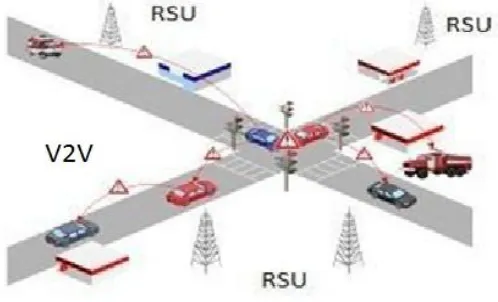
[image:2.612.163.412.439.590.2]VANETs are conjunction of mobile nodes, vehicles equipped with on OBU and static nodes called RSU attach to in infrastructure. On board unit and Road side unit have wired/wireless communication capabilities. Fundamentally Vanet is two kinds of transmission environments Vehicle to Road (V2R) and Vehicle to Vehicle (V2V).
Fig .1. Vehicular ad-hoc network
Vanet transmission allows various types of applications. These are mainly classified as safety applications, comfort applications and Administrator applications i.e. [3]. A particular choice of route is fixed using routing algorithms. In this research paper describes proactive AODV routing protocol algorithm.
The paper is organized as follows. Section II Features of Vanets Section III Routing protocols categories. Section IV Research Methodology used Section V shows results and analysis. Finally conclusion & future scope in the paper Section VI.
II. VEHICULAR ADHOC NETWORKS FEATURES
In Vanet due to high motility of nodes means relative speed is high so change in topology is very high.
B. Motility Patterns as Constricted and Predictable
Vanet have some constricted regulation for node movements; these regulations are to be theory rules of traffic flow.
C. No Power Constrains
The battery which used as unbounded power supply for transmission and computation task is equipped with every vehicle.
D. Localization
With use of Global Positioning System in Vanet it is easy to recognize locations of vehicles with great accuracy i.e. [4].
III. ROUTING PROTOCOLS
A routing protocol regularize the way of exchanging information in two communication existence; it includes the process in establishing a route, decision in forwarding, and action in maintaining the route or recovering from routing failure. Routing protocol are two types topology-based and geographic (position-based). Topology routing protocols use links information to forward the packet where as geographic routing uses the information about the location of position to forward the packet. Topology based routing divided again be reactive or proactive i.e. [8]. Proactive routing uses the routing table for dissemination of message whereas reactive routing construction the route only when it is required.
AODV Routing protocol is a unicast reactive routing protocol for ad-hoc network. AODV is maintained the active path information only in routing tables at all the nodes. The next hop routing table at all nodes hold information of destinations to which the route is submitted currently. Whenever the route is not been used or not reactivated for a pre-specified expiration time then routing table entry expires.
IV. RESEARCH METHODOLOGY USED
For this investigation, we are used two simulator sumo simulator and Ns-2. Sumo simulator and network simulator are an open source platform specific for VANETs which is useful to generate simulation results. A Motility trace is generated as output with sumo simulator; this motility trace is used by a simulation simulator such as ns-2 to simulate realistic vehicle movement.
A. Sumo Simulator
“Simulation of Urban Mobility “ is extremely portable, microscopic road traffic simulation package designed to handle wide road network .It permit to simulate how a given traffic demand which based on single vehicles moves throughput a given road network. .The simulation allows to trace a wide set of traffic management topics. It is exclusive microscopic: every vehicle is modeled explicitly, has own route and moves separately throughput the network [14].
B. Network Simulator
For Network Simulator we use NS-2.35 an open source simulator i.e. [6].It is distinct event simulator. A sufficient support is provided by NS-2 for routing, simulation of TCP/UDP and multicast protocols. Network simulator Ns-2 provides support for both wireless and wired networks. Table.1simulation area specifications are presented for NS2 i.e. [2].
TABLE1:NS2SIMULATION SETTINGS
Operating System Ubuntu 14.04
Simulator Network
Ns-allinone-2.35,SUMO
Simulation time 100 s
Number of nodes 41,65
Traffic agent UDP,TCP
MAC Protocol IEEE 802.11 p
Antenna Model Omni Antenna
Fig .2. Simulation environments in NS2 (NAM)
V. RESULT AND ANALYSIS
We have selected routing protocol is AODV .These routing protocols we calculated metrics such as Throughput, Packet Delivery Ratio and Average end to end Delay.
A. Results for Scenario 1
For MYAODV Protocol for node=41 and simulation time =100ms Avg Throughput=567027.93
Packet Delivery fraction=6515
For AODV Protocols for node=41 and, simulation time =100ms Avg Throughput=396327.87
Packet Delivery fraction=.7639
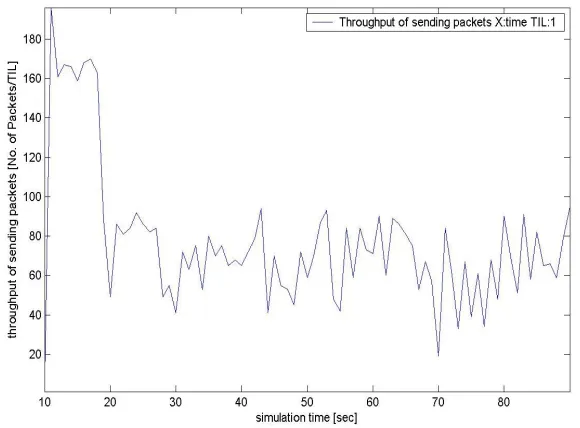
1) Throughput of Sending Packets 41 Nodes MYAODV and AODV: The Graph Display the Simulation Result between no. of Sent with the Simulation Time in Seconds:
[image:4.612.155.445.471.685.2]Fig .4 Throughput of sending packets 41 nodes AODV
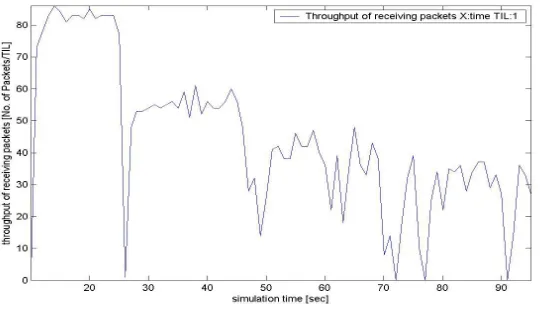
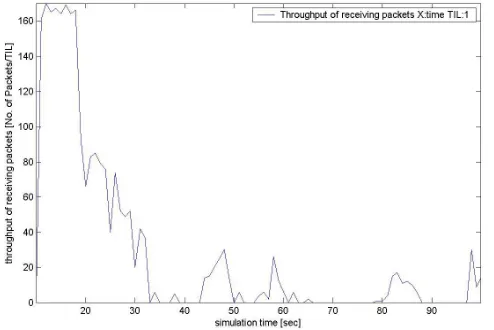
[image:5.612.191.413.333.484.2]2) Throughput of Receiving Packets 41 Nodes MYAODV and AODV: The Graphs Show the Simulation Result Between of Throughput Of Receiving Packets with Regard to Simulation Time in Seconds:
Fig .5. Throughput of receiving packets 41 nodes MYAODV
Fig .6. Throughput of receiving packets 41 nodes AODV
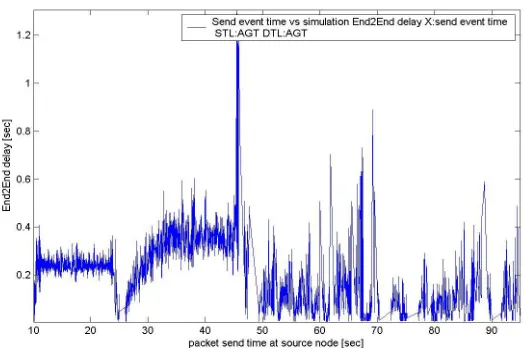
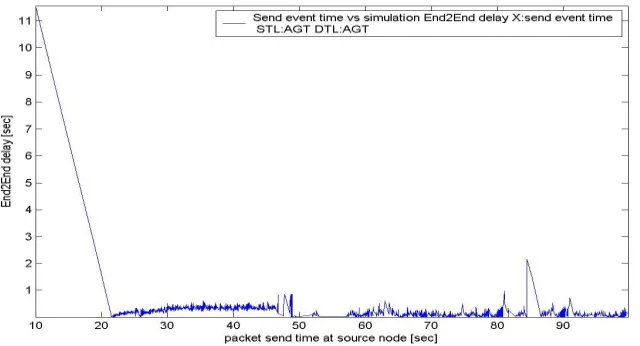
[image:5.612.168.438.541.696.2]respect to packet sent time at source node
Fig .7. Simulation of End to End delay in MYAODV
Fig .8. Simulation of End to End delay in AODV
B. Results for Scenario 2
For MYAODV Protocol for node=65 and simulation time =100ms Avg Throughput=678862.16
Packet Delivery fraction=.2215
For AODV Protocols for node=65 and, simulation time =100ms Avg Throughput=104192.24
[image:6.612.170.433.372.546.2]with the simulation time in seconds.
[image:7.612.179.426.529.694.2]Fig .9. Throughput of sending packets 65 nodes MYAODV
Fig .10. Throughput of sending packets 65 nodes AODV
2) Throughput of Receiving Packets 65 Nodes MYAODV and AODV: The graphs display the Simulation outcome between of throughput of receiving packets with regard to simulation time in seconds.
Fig .12. Throughput of receiving packets 65 nodes AODV
[image:8.612.147.460.329.466.2]3) End to End Delay 65 Nodes MYAODV and AODV: The graph display the Simulation outcome between end to end delays with respect to packet sent time at source node.
Fig .13. Simulation of End to End delay in MYAODV
[image:8.612.143.463.525.698.2]The proposed MYAODV model delivers preferable data with RST support with lower connection breakage. This RST also acts as backup center for data as well as to reserve, routing information and it decreases the complexity in data management. The metrics like Throughput and Control overhead is taken into opinion to analysis the execution of the network. The network is investigated by changing the number of nodes, halt time, network size and rate of a node Finally, the Result display that MYAODV algorithm gives better results than the traditional AODV algorithm and it carve downs the delay experience in the data delivery. The proposed MYAODV algorithm generates high throughput and faces only lower overhead in the network. As a future work, this opinion, could be mixed or expanded with the cache mechanism in RSU and with a cloud based server for storing remote data.
REFERENCES
[1] M. Guezouri and A. Bennaoui, Performance Evaluation of Routing Protocols in Vehicular Networks. I. J. Computer Network and Information Security, 2013, 10, 11-16.
[2] K. Venkateswarlu, G. Murali, Performance Evaluation Of Dsdv, Aodv Routing Protocols In Vanet,IJRET: International Journal of Research in Engineering and Technology eISSN: 2319-1163 | pISSN: 2321-7308, May 2015.
[3] Tajinder Kaur, A. K. Verma, Simulation and Analysis of AODV routing protocol in VANETs,International Journal of Soft Computing and Engineering (IJSCE) ISSN: 2231-2307, Volume-2, Issue-3, July 2012.
[4] Anuj K., Gupta Harsh Sadawarti and Anil K. Verma “Performance analysis of AODV, DSR & TORA Routing Protocols ,IACSIT International Journal of Engineering and Technology, Vol.2, No.2, April 2010 ISSN: 1793-8236.
[5] http://vanet.eurecom.fr.
[6] NS-2- http://www.isi.edu/nsnam/ns.
[7] IDM-IM (Intelligent Driver Model with Intersection Management) VanetMobisim manual.
[8] Lee, K. C., Lee, U., & Gerla, M. (2010), “Survey of RoutingProtocols in Vehicular Ad Hoc Networks”,Advances in Vehicular Ad-Hoc Networks: Developments and Challenge, Watfa, M. (Ed.), (pp. 149-170), 2010.
[9] Meenakshi Diwakar1and Sushil Kumar2,” an energy efficient level based clustering routing protocol for wireless sensor networks”, IJASSN, Vol 2, No.2, Apriln 2012.
[10] www.openstreetmap.org [11] http://www.nsnam.com [12] https://www.nsnam.org [13] http://www.dlr.de [14] http://sumo.dlr.de/wiki
[15] N. Arulkumar1 and Dr. E. George Dharma Prakash Raj2 “Throughput and Control Overhead Analysis using CBAODV Algorithm for Link Breakage in VANET” , IJCSSE, Volume 4, Issue 2, February 2015 , ISSN (Online): 2409-4285.