Blotches and Impulses Removal in Colourscale Images
Using Non-Linear Decision Based Algorithm
P.Tamilselvam
*, M.V.Mahesh
**, G.Prabu
****
II M.E- Applied Electronics, Sasurie College of Engineering, Vijayamangalam, Tirupur, India. **
Assistant Professor, Sasurie College of Engineering, Vijayamangalam, Tirupur, India. ***
II M.E- VLSI, Sasurie College of Engineering, Vijayamangalam, Tirupur, India.
Abstract- In this paper proposed blotches and impulse removal in color scale images using nonlinear decision based algorithm. The implementation of this algorithm can be obtained by two stages. In first stage the pixel are detected as corrupted / uncorrupted using decision rules. In second stage estimate the new pixel value for corrupted pixels. The algorithm used as a adaptive length window whose maximum size is 5X5 to avoid blurring due to large window sizes. The mean filtering is automatically switched in this proposed algorithm. It also tests the different images. To analyze the performance of this algorithm as mean square error, peak signal to noise ratio, computation time and image enhancement factor compare to other algorithm. The noise level is effectively removal without any loss it produces the better result in quantitative and qualitative measures of the image and also provides better performance.
Index Terms- Median Filter, MSE, Decision based algorithm, Impulse Noise, Blotches, PSNR.
I. INTRODUCTION
n image is an array or a matrix of square pixels (picture elements) arranged in columns and rows. An image (from Latin: image) is an artifact, for the example of a two-dimensional picture, that has a similar appearance of some subject usually a physical object or a person.
Images may be two-dimensional, such as a photograph, and screen display, and as well as a three-dimensional, such as for a statue or hologram. They may be captured in optical devices such as telescopes, lenses, mirrors, cameras, microscopes, etc., and natural objects and phenomena, such as the human eye or the water surfaces. The word image is also used in the broader sense of any two-dimensional figure such as a map, a pie chart, a graph or an abstract painting. In this wider sense and images can also be rendered manually, such as by painting, drawing, carving, rendered automatically by computer graphics technology, or printing, or developed by a combination of methods and especially in a pseudo-photograph.
Image enhancement is the improvement of digital image quality (wanted e.g. for visual inspection or for machine analysis), without knowledge about the source of the degradation. If the source of degradation is known, one calls the process of the image restoration. Both are conical processes, viz. input and outputs are images.
and the presence of impulse noise is addressed. Blotches are characterized for being impulsive and randomly distributed, with irregular shapes of approximately constant intensity. There are originated by warping of the substrate or emulsion, dust, mould, dirt or other unknown causes.
Linear filters are not quite effective in the presence of non-Gaussian noise. In the last decade, it has been shown that nonlinear digital filters can overcome some of the limitations of linear digital filters. Mean filtering is a simple, intuitive and easy to implement method of smoothing images,
That is reducing the amount of intensity variation between one pixel and the next. It is often used to reduce the noise in images. The idea of mean filtering is to simply replace each pixel value in an image with the mean („average') value of its neighbors and including itself. This has been effect of eliminating pixel values which are unrepresentative of their surroundings. Mean filtering is most commonly used as a simple method for reducing noise in an image.
Median filters are a class of nonlinear filters and have produced good results where linear filters generally fail. Median filters are known to remove impulse noise and preserve edges. There are a wide variety of median filters in the literature. In remote sensing, artifacts such as strip lines, drop lines, blotches, band missing occur along with impulse noise. Standard median filters reported in the literature do not address these artifacts. In the approach is using for median filter of adequate window size is used for the detection of corrupted pixel. The difference between the pixel of interest and the median filtered output is obtained and compared with the threshold obtained from the minimum and maximum pixel values in the chosen window. A binary flag image is obtained with its values 1 for the corrupted pixels and 0 for the uncorrupted pixels. The corrupted pixel values are estimated for the new values using the median/mean filtering.
II. PREVIOUSARCHITECTURE
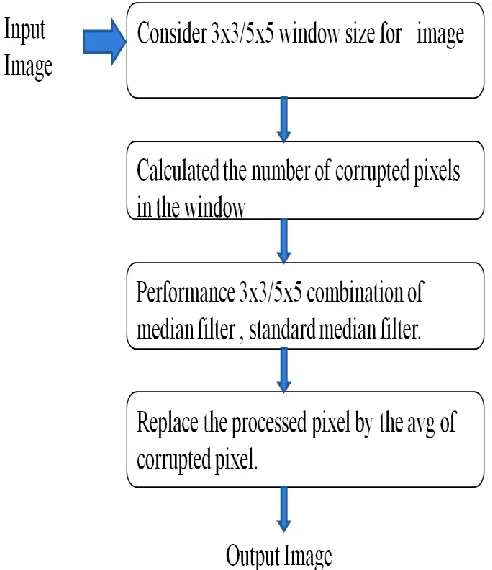
Figure 1: Flow chart of Previous Architecture
Image processing is a subset of the electronic domain wherein the image is converted to an array of small integers, called pixels, representing a physical quantity such as scene radiance, stored in a digital memory and processed by computer or other digital hardware.
Suppose the image, a photo, say. For the moment, let‟s make things easy and suppose the photo is black and white (that is, lots of shades of grey), so no color. Consider this image as being a two dimensional function, where the function values give brightness of the image at any given point. Assume that in such an image brightness values can be any real numbers in the range 0.0 (black) to 1.0 (white). The ranges of x and y will clearly depend on the image, but they can take all real values between their minima and maxima.
A digital image differs from a photo in that the x, y, and f(x,y)values are all discrete. Usually they are take on only integer values, so the image will have x and y ranging from 1to 256 each, and the brightness values also ranging from 0 (black) to 255 (white). A digital image can be considered by a large array of discrete dots and each of which has a brightness associated with it. These dots are called by picture elements, or more simply pixels. The pixels are surrounding a given pixel constitute its neighborhood.
A neighborhood can be characterized by its shape in the same way as a matrix of a 3*3 neighborhood, or of a 5*5 neighborhood. Except in very special circumstances, neighborhoods have odd numbers of rows and columns; this ensures that the current pixel is in the centre of the neighborhood.
A. Noise Model
An image is mention by I and the image size for M x N and x(i,j) is its pixel value at position (i,j).it having 8-bit gray scale pixel resolution. The blotches are regions of usually different homogenous gray levels. The blotches are looks like small coherent image area of pixels with almost similar gray values. Distortion of the blotches can be well modeled as burst of impulsive distortion. Assume that each pixel at x(i,j) is corrupted with probability p independent of whether other pixels are corrupted or not.
Considered as a noise model,
y(i,j) = x(i,j) × (1 − b(i,j)) + b(i,j) × n(i,j) (1)
where, y(i,j) is the observed intensity in the corrupted region
x(i,j) is the original pixel value
b(i,j) is a binary flag pixel value which is set to 1 whenever pixels are corrupted and 0 otherwise
n(i,j) is the corrupted pixel intensity If b(i,j) = 1,
then, y(i,j) = x(i,j)(1 − 1) + 1 × n(i,j) = n(i,j) (2)
If b(i,j) = 0,
theny(i,j) = x(i,j)(1 − 0) + 0 × n(i,j) = x(i,j) (3)
The image corrupted with blotches noise and impulse noise is now
Modeled as,
n(i,j) with p
y(i,j) =
x(i,j) with 1-p
III. PROPOSEDARCHITECTURE
Figure 2: Flow chart of Proposed Architecture
A. Detection of corrupted pixels
The corrupted pixel takes RGB value which is substantially different than the neighboring pixels in the filtering window as applied in standard median filter. To calculate the threshold value in such a way that the edges or finer details are not modified as in standard median filters. The calculated threshold value is ( xmin
+ xmax)/4, where x minimum and x maximum are the minimum
and maximum values of the pixels in the window Wx ij
respectively.
B. Estimation of the new pixel value for corrupted pixels
To obtained the corrupted pixels when the binary flag image b(i,j) is 1. The replaced pixels are estimated pixel value using median filter for lesser noise density are mean filter for higher noise density. The pixels may also other values in the intensity range for [0,255].
(1) Case 1
If the number of corrupted pixels “ n” in the window size is less than or equal to 4, ie., n≤4, that two dimensional window of size 3X3 sorting, column sorting, and diagonal sorting. The corrupted pixel value y(i,j) (highlighted) is replaced by the median value .
(2) Case 2
If the number of corrupted pixels “n” in the window Wx i,j
is between 5 and 12, that is, 5 ≤ n ≤ 12, then 5×5 median
filtering is performed and the corrupted values are replaced by the median value.
(3) Case 3
If the number of corrupted pixels “n” in the window Wx i,j
is greater than 13, that is, n _ 13 increasing the window size leads to blurring, even with the smaller window sizes, the output may
and the corrupted value is replaced by the average value instead of median value.
IV. SIMULATIONRESULTS
The different varitey of color image tested in the proposed algoritham. The performance of algoritham is evaluated quantitatively using the measures viz. peak signal to noise ratio (PSNR in db), mean square error (MSE), image enhancement factor (IEF) and computation time in seconds.
MSE = (4)
PSNR = 20 × (255 / ) (5)
Figure 3: Output of the Color Image
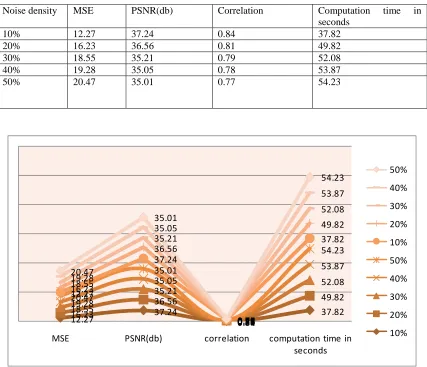
[image:4.612.94.521.307.674.2]Figure 4: Output Performance Analysis
Table 1: Different Noise Densities Performance For color Image
Noise density MSE PSNR(db) Correlation Computation time in seconds
10% 12.27 37.24 0.84 37.82 20% 16.23 36.56 0.81 49.82 30% 18.55 35.21 0.79 52.08 40% 19.28 35.05 0.78 53.87 50% 20.47 35.01 0.77 54.23
12.27 37.24 0.84 37.82
16.23
36.56
0.81
49.82 18.55
35.21
0.79
52.08
19.28
35.05
0.78
53.87
20.47
35.01
0.77
54.23
12.27
37.24
0.84
37.82
16.23
36.56
0.81
49.82
18.55
35.21
0.79
52.08
19.28
35.05
0.78
53.87
20.47
35.01
0.77
54.23
MSE PSNR(db) correlation computation time in
seconds
50%
40%
30%
20%
10%
50%
40%
30%
20%
10%
V. CONCLUSION
The removal of blotches and impulse noise in the images is developed using non linear based algorithm. it is using two different stage algorithm, In first stage pixels are detected as corrupted or uncorrupted. The detection is based on the concept of switching threshold technique with help of binary flag. The pixels are uncorrupted mean they are left unaltered; the processing is done only if the pixels are corrupted in the second stage. The estimate of the new pixel value is calculated using median or mean filter depending on the number of corrupted pixels. The algorithm of performance is analyzed using PSNR, MSE, IEF and computation time. The obtained results are compared with other algorithms. The simulation results and subjective analysis so that the proposed algorithm gives better performance as compared to other algorithms.
REFERENCES
1. Geeta Hanji, N.M.Shweta, An Improved Nonlinear Decision based Algorithm for Removal of Blotches and Impulses in Grayscale Images. IEEE 2012.
2. A. U. Silva and L. Corte-Real, “Removal of blotches and line scratches from film and video sequences using a digital restoration chain,” in Proceedings of the IEEE-EURASIP on Nonlinear Signal and Image Processing (NSIP '99), pp. 826–829, Antalya, Turkey, June 1999.
3. Alan C. Bovik, The Essential Guide to Image Processing, 2ndEdition, Chapter 12, pp. 263- 264, Academic Press Publishers, May2009. 4. H.-M. Lin and A. N. Willson, Jr.,“Median filters with adaptive
length,” IEEE Transactions on Circuits and Systems, vol. 35, no. 6, pp. 675–690, 1988.
5. H. Hwang and R. A. Haddad, “Adaptive median filters: new algorithms and results,” Transactions on Image Processing, vol. 4, no. 4, pp. 499–502, 1995.
6. Kokaram, “Detection and removal of line scratches in degraded motion picture sequences,” in Proceedings of the 8th European Signal Processing Conference (EUSIPCO '96), vol. 1, pp. 5–8, Trieste, Italy, September 1996.
7. K. S. Srinivasan and D. Ebenezer, “A new fast and efficient decision-based algorithm for removal of high-density impulse noises,” IEEE Signal Processing Letters, vol. 14, no. 3, pp. 189–192, 2007
8. R. C. Gonzales and R. E. Woods, Digital Image Processing, 2nd ed.Reading, MA: Addison –Wesley, 2002.
9. S. Manikandan and D. Ebenezer, “A nonlinear decision-based algorithm for the removal of strip lines, drop lines, blotches, band missing and impulses in images and videos,” in EURASIP Journal on image and video processing, vol. 2008.
10. T. Chen and H. R. Wu, “Adaptive impulse detection using center-weighted median filters,” IEEE Signal Processing Letters, vol. 8, no. 1, pp. 1–3, 2001.
AUTHOR’S PROFILE
A.
P.TAMILSELVAMEmail ID:[email protected] P.Tamilselvam was born in 1989. He received the B.E. degree in Electronics and instrumentation engineering from the reputed college of Anna University, India in 2011. He is pursuing his M.E in Applied electronics from Sasurie College of Engineering- Affiliated to Anna University, Tamil Nadu, INDIA. His research interest is Image processing.
B.
M.V.MAHESHEmail ID: [email protected] M.V.Mahesh was born in 1981. He did B.E (EEE) reputed college of madras university and M.E.(Applied Electronics) from reputed college of barath university, Tamil Nadu, INDIA in 2003 and 2005. Now He is the assistant professor of ECE Department, Sasurie College of Engineering (INDIA). His research interest is Embedded System.
C.
G.PRABUEmail ID:[email protected]