Georgia State University
ScholarWorks @ Georgia State University
Middle and Secondary Education Dissertations Department of Middle and Secondary Education
Spring 5-10-2017
Perceptual Lesson Planning in Middle School
Social Studies: An application of Deweyian
aesthetics
Frank W. Jones III
Georgia State University
Follow this and additional works at:https://scholarworks.gsu.edu/mse_diss
This Dissertation is brought to you for free and open access by the Department of Middle and Secondary Education at ScholarWorks @ Georgia State University. It has been accepted for inclusion in Middle and Secondary Education Dissertations by an authorized administrator of ScholarWorks @ Georgia State University. For more information, please [email protected].
Recommended Citation
Jones, Frank W. III, "Perceptual Lesson Planning in Middle School Social Studies: An application of Deweyian aesthetics." Dissertation, Georgia State University, 2017.
ACCEPTANCE
This dissertation, PERCEPTUAL LESSON PLANNING IN MIDDLE SCHOOL SOCIAL STUDIES: AN APPLICATION OF DEWEYIAN AESTHETICS, by FRANK W. JONES III, was prepared under the direction of the candidate’s Dissertation Advisory Committee. It is accepted by the committee members in partial fulfillment of the requirements for the degree, Doctor of Philosophy, in the College of Education and Human Development, Georgia State University.
The Dissertation Advisory Committee and the student’s Department Chairperson, as
representatives of the faculty, certify that this dissertation has met all standards of excellence and scholarship as determined by the faculty.
_________________________________ Joseph Feinberg, Ph.D.
Committee Chair
_________________________________ Laura Meyers, Ph.D.
Committee Member
_________________________________ Caroline Sullivan, Ph.D.
Committee Member
_________________________________ Date
_________________________________ Gertrude Tinker Sachs, Ph.D.
Chairperson, Department of Middle and Secondary Education
_________________________________ Paul A. Alberto, Ph.D.
AUTHOR’S STATEMENT
By presenting this dissertation as a partial fulfillment of the requirements for the advanced
degree from Georgia State University, I agree that the library of Georgia State University shall
make it available for inspection and circulation in accordance with its regulations governing
materials of this type. I agree that permission to quote, to copy from, or to publish this
dissertation may be granted by the professor under whose direction it was written, by the College
of Education and Human Development’s Director of Graduate Studies, or by me. Such quoting,
copying, or publishing must be solely for scholarly purposes and will not involve potential
financial gain. It is understood that any copying from or publication of this dissertation which
involves potential financial gain will not be allowed without my written permission.
NOTICE TO BORROWERS
All dissertations deposited in the Georgia State University library must be used in accordance
with the stipulations prescribed by the author in the preceding statement. The author of this
dissertation is:
Frank W. Jones III
College of Education and Human Development Georgia State University
The director of this dissertation is:
Dr. Joseph Feinberg
Department of Middle and Secondary Education College of Education and Human Development
CURRICULUM VITAE
Frank W. Jones III
ADDRESS: 922 Williamson Lane Snellville, GA 30078
EDUCATION:
PROFESSIONAL EXPERIENCE:
2007-Present Southeastern School District
8th Grade Social Studies Teacher
1986-2006 U.S. Army Officer
Various
EdD 2017 Georgia State University
Middle and Secondary Education
EdS 2012 Georgia State University
Middle and Secondary Education
MA, Education 2007 Georgia State University Middle and Secondary
Education
MA, History 1999 University of Colorado at Denver
History
BBA 1986 University of Mississippi
PRESENTATIONS AND PUBLICATIONS:
2017 National Council for History Education
Enhancing Collaborative Planning
PROFESSIONAL SOCIETIES AND ORGANIZATIONS
2017 Georgia Council for the Social Studies
2017 National Council for the Social Studies
PERCEPTUAL LESSON PLANNING IN MIDDLE SCHOOL SOCIAL STUDIES: AN APPLICATION OF DEWEYIAN AESTHETICS
by
FRANK W. JONES III
Under the Direction of Dr. Joseph Feinberg
ABSTRACT
Lesson planning is an essential component of high quality teaching. Rather than being
regarded as a positive experience, all too often, teachers view the planning process as tedious and
a drain on their time (Trimble, 2015). Using a conceptual model forged from observing the interactions of teachers and artists, this study allowed for an exploration of teachers’ individual
and collaborative engagement. The purpose of this study was to evaluate how the aesthetic planning process impacted the teachers’ beliefs about collaborative planning.
This qualitative case study of middle school social studies teachers examined their
application of Deweyian aesthetics within a collaborative lesson planning setting. The findings
demonstrate that the use of perceptual planning enhanced the value and efficiency of the process.
Moreover, the aesthetic model transformed collaborative planning into a meaningful and
enjoyable experience.
INDEX WORDS: Dewey, Aesthetics, Perceptual lesson planning, Collaborative
PERCEPTUAL LESSON PLANNING IN MIDDLE SCHOOL SOCIAL STUDIES: AN APPLICATION OF DEWEYIAN AESTHETICS
by
FRANK W. JONES III
A Dissertation
Presented in Partial Fulfillment of Requirements for the
Degree of
Doctor of Education
in
Curriculum and Instruction
in
Department of Middle and Secondary Education
in
the College of Education and Human Development
Georgia State University
Copyright by Frank W. Jones III
DEDICATION
This work is dedicated to my father, Frank W. Jones, Jr. He was a young teenager during the
great depression and served in the U.S. military after being drafted duirng the Korean War.
Although he intended to, my father never graduated from college. However, it was his lifelong
dream that I would do so. From my earliest memories, I can recall him repeating with confidence
ii
ACKNOWLEDGMENTS
It is, of course, impossible to thank all those who helped me along this path, but I am
obligated to try. First of all, thank you Jesus for your shining example of love that we all need so
badly.
As a teacher, I see more clearly than ever the importance of a loving and supportive
family. To my wife, Roxanne, you make my life complete. You are my strong foundation and I
love you deeply. My other family members, especially my children, my mother, and all my
loving and praying aunts deserve a word of appreciation as well.
For my colleagues at Central Middle School who graciously agreed to walk part of this
journey with me. You have inspired me to be a better teacher.
Dr. Chara Bohan played a key role in convincing me that I might actually be able to do
doctoral level work.
No doctoral candidate can succeed without tremendous help from their committee
members. Dr. Caroline Sullivan was cheerleader and encourager-in-chief when I felt I was
totally lost. Dr. Laura Meyers agreed to support me, sight unseen, and her enthusiasm for
encouraging creativity in the classroom was a perfect match for this work.
Finally, to my chair, Dr. Joseph Feinberg, I am so pleased that I may now call you
colleague. Our paths first crossed just over ten years ago while I was a pre-service teacher and I
am thankful for the friendship that we have developed and maintained. You introduced me to
CRISPA and gave me a research topic I could believe was worthwhile because it has the
iii
TABLE OF CONTENTS
LIST OF TABLES ... viii
LIST OF FIGURES ... ix
Chapter 1 ... 1
Importance of lesson planning ... 4
Comparing the United States to other Countries ... 8
Benefits of collaboration ... 9
Purpose of the Study ... 10
Deweyian Aesthetics ... 11
Theoretical Framework ... 12
Epistemology ... 12
Dewey’s Epistemology ... 13
Dewey’s View of Aesthetics ... 14
The Deweyian aesthetic model ... 16
Perceptual Lesson Planning ... 18
Aesthetics ... 21
Lesson Planning ... 22
Lesson Planning Defined ... 23
Research Question ... 24
Culturally Relevant Pedagogy ... 24
Summary ... 25
Organization of the Study ... 26
iv
Introduction ... 27
Lesson Planning Research ... 27
Lesson Planning: Product or Process? ... 27
Lesson Planning Summary ... 30
Research on Collaboration and Collaborative Planning ... 30
Research Using Aesthetics ... 34
CRISPA ... 39
CRP Theory ... 42
CRP and CRISPA ... 43
Summary of the Literature Review ... 46
Chapter 3 ... 50
Introduction ... 50
Addressing the research question ... 50
Context for the Research Site ... 50
Research Participants ... 51
Conceptual Framework ... 52
Foundational Theory and Concept for this Research ... 52
Research Design ... 53
Research Method – Case Study ... 55
Researcher Positionality ... 55
Institutional Review Board (IRB) ... 56
Data Collection ... 57
v
Initial Participant Interviews ... 57
Introducing CRISPA to Participants ... 58
Professional Development Demonstrating CRISPA in Social Studies ... 58
Collaborative Planning Sessions ... 59
Artifacts ... 59
Final Individual Interviews ... 60
Data Security ... 60
Data Analysis ... 60
Data Reduction ... 61
Data Display ... 61
Conclusion Drawing and Verification ... 61
Significance of the Study ... 62
Summary ... 65
Chapter 4………..66
Chapter Organization ... 66
Delimitations and Limitations of this Study ... 67
Role of the Researcher at CMS ... 68
Setting for Weekly Curriculum Meetings Known as “Tuesday Meetings” ... 69
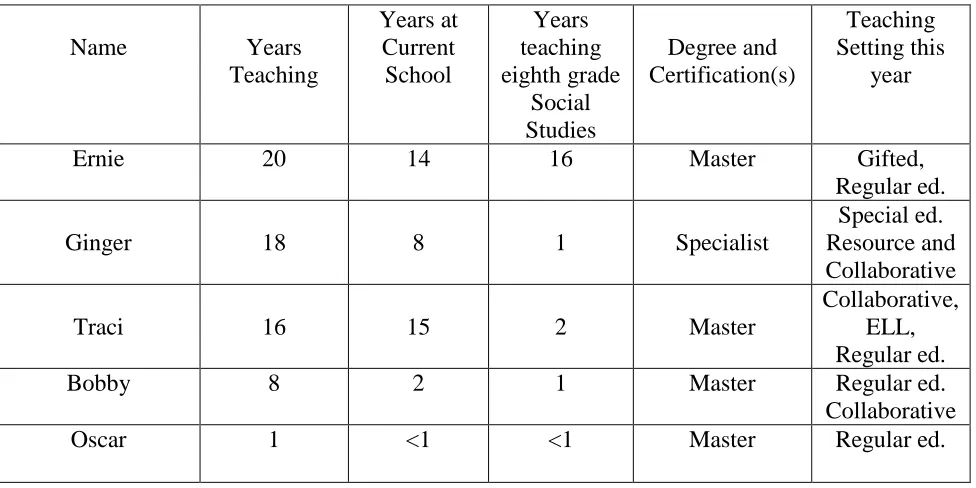
Participant Information ... 69
Participant Descriptions ... 70
Special Context of the School Setting ... 72
Pre-Interviews ... 73
vi
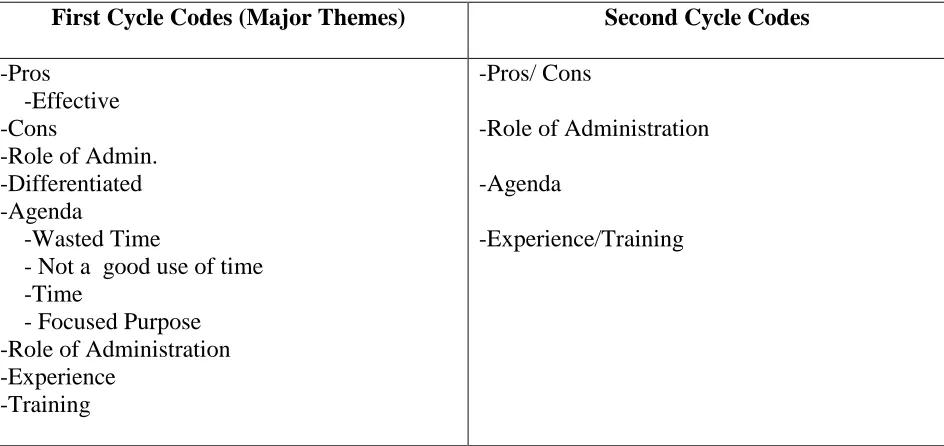
Coding of Pre-Interviews ... 75
First Cycle Codes (Major Themes) ... 76
Second Cycle Codes ... 76
-Training ... 76
-Experience/Training ... 76
Perceived Advantages of Collaborative Planning ... 77
Perceived Disadvantages of Collaborative Planning ... 77
Experience and Training ... 78
Role of Administration ... 80
Control of the Agenda ... 80
Professional Development ... 85
Review of Professional Article applying CRISPA ... 86
Modeling CRISPA within the Social Studies ... 90
Identifying CRISPA ... 92
Summary of Professional Development Session ... 94
Summary of Professional Development ... 94
Collaborative Planning Experience ... 95
Transcribing and Coding the Collaborative Planning ... 96
The Collaborative Planning Day ... 98
Teasing out CRISPA – Addressing the Counter Argument ... 100
Influencers on the Planning Process ... 102
Summary of the Collaborative Planning ... 102
vii
Experience and Professional Development ... 104
Positive Aspects of CRISPA ... 106
Application of CRISPA ... 109
Agenda ... 112
Culturally Relevant Pedagogy ... 114
Chapter Summary ... 120
Chapter 5 ... 122
Summary of the Study ... 122
Context of the Study ... 122
Purpose Statement and Research Question ... 124
Theoretical Framework ... 124
Review of the Methodology ... 125
Major Findings of this Study ... 126
Findings in Relation to Existing Literature ... 127
Application of CRISPA Within Participant Classrooms ... 129
The Case Supporting the Findings ... 132
Implications for Further Research ... 134
Conclusion ... 135
References ... 137
viii
LIST OF TABLES
Table 1 Summary of Participant Experience……….72
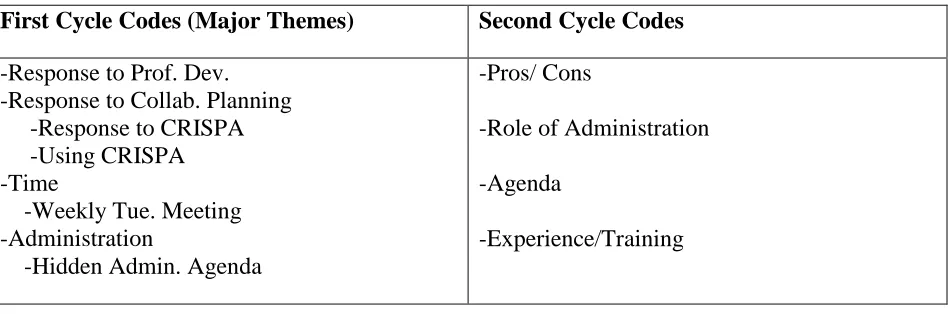
Table 2 Display of First and Second Cycle Coding for Pre-Interviews………76
Table 3 Summary of Participant Identification of CRISPA………..90
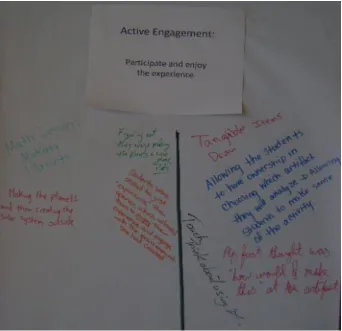
Table 4 Partial Transcript of Professional Development Posters………..90
Table 5 Instances of CRISPA Discussed During Collaborative Planning….………...97
ix
LIST OF FIGURES
Figure 1. The Perceptual Lesson Planning CRISPA Model………19
1
Chapter 1
INTRODUCTION
The act of teaching combines science and art. The science of the profession involves
managing time, considering what must be and should be taught, understanding and managing
children, along with many other tasks. The art of teaching is demonstrated when teachers stand
before their students and encourage, motivate, and inspire them to explore new knowledge and
make new meanings of their world. Lesson planning is a task common to all teachers, and
should be the event that blends the science with the art. Within the current United States public
school setting, extensive lists of state standards and myriad administrative demands on a teacher’s time combine to heighten the importance of lesson planning while at the same time,
allowing less time to do so effectively. Given the middle school teaming model adopted within
many districts, teachers in these settings often have schedules that are conducive to allowing
collaborative planning to occur (Swick, Henley, Driggers, & Beasley, 1976).
When teachers do have time to plan together, it is important that they are effective and
efficient. In an effort to promote collaborative planning as more enjoyable and educative in
itself, Moroye and Uhrmacher (2009) suggested a perceptual planning model that uses a
Deweyian perspective on aesthetics to offer an avenue toward enhancing the planning
experience. This study seeks to explore the possibility that perceptual lesson planning might
improve the quality of collaborative planning among social studies teachers, and in the process,
make the planning itself an educative and enlightening pedagogical practice for the teachers
involved.
JohnDewey challenged the practices of educators almost 100 years ago. However, many
2
teaching should not be a static process. Like Friere (1974), Dewey (1934) urged progressive
minded teachers to constantly seek to depart from being mere transmitters of information,
whereby they simply relay knowledge from one generation to the next. Instead, he believed teachers should consider the child’s social and environmental factors as they developed their
teaching philosophy. He lamented that teachers tended to focus on providing an environment for learning, but in the process, “did not consider the other factor in creating an experience; namely,
the powers and purposes of those taught” (p. 45). In other words, teachers tended to overlook the
needs of their students and the context of the communities from which they originated.
In Democracy and Education (Dewey, 1916), Dewey furthered his argument against what he considered substandard teaching routines for his era. He lamented that “only in
education, and never in the life of the farmer, sailor, merchant, physician, or laboratory
experimenter, does knowledge mean primarily a store of information aloof from doing” (p. 103).
He suggested that the student was both part and product of their environment and that these two
factors should be considered together in order to create the most effective educative
environment. Dewey challenged educators to bridge the gap between schools and communities.
To address the failings of schools to connect to students and their community, Dewey essentially
argued for a pedagogy of social constructivism.
Au (1998) described traits of social constructivism such as communities and individuals’
constructing knowledge. Constructivism is a student-centered approach to learning that focuses
on building knowledge rather than simply reproducing knowledge (Maxim, 2006). Further,
social constructivism includes face to face interaction and active engagement in the meaning making process. Garrison (1995) linked Dewey with Vygotsky’s (1986) social constructivism
3
a given experience with one’s surroundings. Through a lens of social constructivism, teachers
may present students with opportunities to interact, react, and learn from their environment and
information that is presented to them (Au, 1998; Liu & Chen, 2010). Dewey noted that the
ability to respond to the environment and make meaning of events was unique to humans
(Dewey, 1934; Garrison: 1995). This research study sought to encourage teachers to follow a
constructivist approach to their lesson planning while following the perceptual planning model.
One might presume that educational philosophy written nearly 100 years ago is
irrelevant. However, when comparing the experience of teachers in the early 1900’s to those of today, despite the many significant differences, Dewey’s (1934) challenge remains relevant.
Nearly a century ago, public school teachers were just beginning to feel the impact of The Report
of the Committee of Ten on Secondary School Studies (National Education Association of the
United States, 1894). In this early effort to coordinate and standardize the rapidly expanding
public school systems in the United States, educational leaders sought to provide a basic outline
of courses that would lead to secondary school graduation. Discerning contemporary educators can see the root of some of Dewey’s concerns about the uniform approach to education as noted
in the report,"...every subject which is taught at all in a secondary school should be taught in the same way and to the same extent to every pupil so long as he pursues it, no matter what the probable destination of the pupil may be, or at what point his education is to cease" (Dewey, 1934, p. 17). This description of how to teach every child the same seems to parallel the modern scripting of lessons found in some schools today (Commeyras, 2007; Samson, Strykowski,
Weinstein, & Walberg, 1987).
While the Report of the Committee of Ten sought to identify broad educational goals for
4
and specific performance standards that focus on individual course content that tends to constrain
teachers (Glatthorn, 1999; Popham, 2004a). Egan (2001) described the dilemma of modern
educators as being caught between ideal philosophical perspectives of identifying and seeking
knowledge of real value versus an educational system that socially sorts and grades students
based on various testing regiments. Teachers often feel trapped between the high ideals and
demands of educational policy makers and the needs of the students they teach
(Darling-Hammond, Wei, & Andree, 2010; Holt, 2002). Conflicting demands include: too many
standards, too little time to teach them well, and the influence of high stakes testing (Brown,
2006; Popham, 2004; Ravitch, 2010). Given the range of tasks faced by teachers today in
curriculum and instruction, achieving Dewey’s vision for teaching and learning to occur within
the context of community and in a manner that is obviously relevant for the student seems more
distant than ever.
In a climate that demands measured results from questionable testing practices and
teacher evaluation systems that place more emphasis on testing than teaching, educators are more challenged than ever (Ravitch, 2010). Time constraints and myriad demands on a teacher’s time
eat away at opportunities for professional collaboration and personal growth (Darling-Hammond
et al., 2010). With this constraining environment as a backdrop, the focus of this research is to
examine a means to make valuable lesson planning time more effective, more professionally
rewarding, and an educative experience for the teacher in and of itself.
Importance of lesson planning
Every school day in the United States, over 49 million students and 3 million teachers
enter United States K-12 public schools (National Center for Education Statistics, 2015).
5
young minds. Lesson planning is the teacher’s road map of what needs to be taught, and how it
will be done effectively (Milkova, 2012). While most teachers’ have a daily schedule that
includes time for planning, that time is often encroached upon.
American teachers are often so overwhelmed by other daily tasks, such as meetings, data
analysis, and parent conferences, that precious time for planning is eaten away and ultimately
wasted (Canaday & Rottig, 1995). At the extreme, scholars such as Apple (1986) argued that
there is actually a deliberate effort to undermine the authority and responsibilities traditionally
retained by teachers and replace them with top-down management regimes. In this view, by
overloading the teacher with tasks not directly related to instruction, administrators actually gain
more control over individuals. In effect, the teachers are so busy, they do not have time to
choose or direct their own actions or activities or those of their students. They are relegated to
being reactive rather than proactive within their pedagogy.
The value of lesson planning for the student and teacher is supported by research (Anfara
& Caskey, 2010; Darling-Hammond, et al., 2010; John, 2006; Mertens, Flowers, Cook, &
Faulkner, 2010; Swicket al., 1976). At the middle school level, common planning time is a
feature of the day that is regularly wasted. The lack of planning meeting agendas, common
focus, and lack of leadership often impede progress during this important time (Mertens et al.,
2010). To improve their use of time, highly productive teacher communities regularly
demonstrate traits of setting common goals, working together, and supporting one another
(Darling-Hammond, 2009). Collaborative lesson planning offers an opportunity to address all of
these positive traits simultaneously.
Yet, protecting time to plan lessons at school is challenging. In addition to instructing
6
committees within the school and district, be required to attend special meetings for designated
students, or simply have planning time otherwise encroached upon by the administration (O’Neill, 1995). When there is time to plan, teachers are tasked with translating myriad lists of
state standards into a digestible and understandable curriculum that will allow each learner to
develop a range of cognitive and life skills. The advent and adoption of outcome based education models, the pressures on teachers’ time, and requirements to demonstrate objective
effectiveness make for a demanding teaching environment (Glatthorn, 1993). More recently
and within Race to the Top (RT3) initiatives from the federal Department of Education, teachers
are under more scrutiny to demonstrate objective performance as measured by various testing
regiments administered to their students (United States Department of Education, 2015).
Some relief from standardized testing is very likely on the horizon as a result of recent
changes in federal education legislation. Notably, legislation signed by President Obama in
December of 2015, titled the Every Student Succeeds Act (ESSA), rolled back several of the
most contentious components of the Elementary and Secondary Education Act (ESEA), also
known as No Child Left Behind (NCLB) and RT3 guidelines (Elementary and Secondary
Education Act, 2001; United States Department of Education, 2015). Under this new law, the
federal government ceded much control back to the states for determining such issues as
academic standards, mandated testing regimes, punitive measures for failing schools, and
specific requirements for teacher evaluations. As of the time of this research, the state-level
fallout from this new federal direction is uncertain, and NCLB and RT3 continue to drive
education policy (Balingit & St. George, 2016; Camera, 2015). Until the new law begins to
show its impact, local policies will continue to reflect an emphasis on teacher accountability
7
heavy emphasis on demonstrating evidence of lesson planning (State Department of Education,
2015).
Driven by RT3 initiatives, clear evidence of lesson planning is now a requirement in
many state teacher evaluation programs. In accordance with the Teacher Keys Effectiveness
System (TKES), public school teachers are now evaluated in ten specific areas. Four of these
areas, or 40% of the total evaluation, relate directly to demonstrating evidence of planning and
they include: instructional planning, instructional strategies, differentiated instruction, and
providing an academically challenging environment (State Department of Education, 2015). In order to obtain the maximum rating of “exemplary” in these areas, the teacher must exhibit a
consistent level of very high performance. Currently, administrators are required to visit teacher
classrooms six times during the school year to observe and record evidence of these and other
performance measures. In short, a significant portion of the TKES requires clear evidence of
teacher lesson planning.
Recent state government action demonstrates the challenges related to protecting teacher
planning time. The Governor appointed an education committee to explore various aspects of
education reform. As a result of their investigation, the subcommittee on Teacher Recruitment,
Retention and Compensation included a recommendation to the Governor that administrators be assessed within their annual climate survey on “how well (they) protect teacher planning time”
(Meeting 9 Materials, 2015). This comment was provided specifically based on the panel’s
interactions with, and input from, teachers who indicated that their planning time was regularly
encroached upon by other tasks. Thus, the subcommittee report provides firm evidence of an
8
United States face with lesson planning appears direr when compared with their counterparts in
other nations.
Comparing the United States to other Countries
United States. Researchers recognize the value of good lesson planning (Cook &
Faulker, 2010; Van Der Valk & Broekman, 1999). Lederman and Niess (2000) emphasized this point quite succinctly when they stated “teachers who plan are more effective, regardless of
outcome measure, than teachers who do not plan” (p. 58). These studies show that when
teachers are deliberate about planning lessons, their class time is more effective and objective
measures confirm student learning.
While lesson planning could serve as an occasion for cooperative professional
development, consultation, and dialogue among professionals, it is most often viewed by
teachers as drudgery and a waste of time (Glatthorn, 1987; Lederman & Niess, 2000; Trimble,
2015). Furthermore, given the demands on teachers’ time, too often, the reality of lesson
planning is more often viewed as “a list of activities, rather than a professional development experience” (Dorovolomo, Phan & Maubuta, 2010, p. 451). Collectively, these studies help
demonstrate the dilemma facing teachers today. That is, teachers have less time to plan while
facing lengthy lists of state driven learning objectives. Input from teachers shows that their
planning time at school is often impeded upon; yet, they are expected to teach everything well.
The situation is brought into sharper focus when viewed in the context of teaching and planning
in other countries.
Other Countries. In comparison to the United States,Darling-Hammond, Wei, and
Andree (2010), explored teacher experiences within countries that participate in the Programme
9
Science Study (TIMSS). They noted that teachers in New Zealand and Singapore, for example,
were given opportunities for professional learning that were scheduled within the school day. In
these countries, teachers were often allotted 15-25 hours of planning time per week. Demir,
Czerniak, and Hart (2013) pointed out that Japanese schools often release students up to two
hours before the teacher work day ends. During these additional hours at school and without
students present, teachers spent time in a cooperative environment, often conducting lesson
planning.
In China, teachers routinely teach only a couple of hours each day and, by design,
commit the remainder of their time to planning, coordinating, and sharing teaching experiences
with colleagues (Shen, Poppin, Yunhou, & Fan, 2007). The time spent in these collaborative settings strengthens professional and personal relationships, while improving the teachers’ craft
of planning and teaching (Darling-Hammond & Richardson, 2009; Mertens et al., 2010).
However, time spent in planning, particularly collaborative planning offers advantages as well.
Benefits of collaboration
The practice of planning lessons, particularly with other teachers, can benefit the teacher
as well as her students. Teacher collaboration during the lesson planning process leads students
to mastery learning and increases teacher expertise in his subject matter (Dorovolomo et al., 2010; Trimble, 2015). Rimpola’s (2014) conclusions supported the Chinese model when they
demonstrated that “teachers who engage in collaborative work are able to learn from one
another” and “teacher collaboration may improve a school’s ability to foster student
achievement” (p. 42). Dorovolomo et al. (2010) found “a positive nexus between the quality of
lesson planning and its implementation” (p. 451). Notably, this study is focused on the lesson
10
research addresses the issue of collaboration but there are scant examples of research that
specifically explore collaborative planning in detail (Clark & Elmore, 1979; Clark & Yinger,
1979; Goddard & Goddard, 2007; Rimpola, 2014; Roskos & Neuman, 1995; Thousand, Villa &
Nevin, 2006; Tschannen-Moran, Uline, Hoy & Mackley). Without collaboration, the teaching
profession risks becoming an isolated and lonely field (Goddard & Goddard, 2007;
Tschannen-Moran et al., 2000).
The information provided thus far suggests that American teachers are often challenged
to find adequate time to plan effective lessons. Further, compared to their global peers, such as
those in China and New Zealand, American teachers have much less time to plan in the first
place and that time is often reduced by numerous other demands. Existing research studies
indicate that when lesson planning is conducted effectively, it can become a valuable
professional development experience that enhances individual and collaborative teacher growth
(Clark & Elmore, 1979; Roskos & Neuman, 1995). Finally, the requirement to demonstrate
lesson planning has garnered more attention with the advent of federal regulations such as RT3
that led to new teacher evaluation models such as the adopted TKES.
Purpose of the Study
The purpose of this study is to examine how a group of eighth grade social studies
teachers plan collaboratively while using a Deweyian aesthetic framework. The specific
planning model employed is known as perceptual lesson planning and will be explained in detail
later (Moroye & Uhrmacher, 2009). The researcher also sought to determine if the application of
the perceptual planning model offered enhanced opportunities to facilitate discussions of
11
Ladson Billings, 1995a). Multiple data collection methods were utilized including: participant
observation, field notes, artifacts, audio/video transcripts, and personal interview transcripts.
The challenge offered by Dewey (1916) almost 100 years ago was to have teachers seek
the means to make teaching and learning relevant to their students. One means of addressing this
challenge today is through collaboration. Common planning time and opportunities to plan
collaboratively are particularly prevalent in the middle school setting (Cook & Faulker, 2010;
Swick et al., 1976). The establishment of teacher teams and common daily schedules offer the
best opportunity for teachers to meet regularly at the same time and place to discuss upcoming
units and lessons (Carey, 1952; Kohm & Nance, 2009; Swick et al., 1976). As previously noted,
the importance of lesson planning is further reflected within the current State Teacher Keys
Effectiveness System (TKES) and this evaluation includes several specific categories directly related to planning. This research seeks to explore how to incorporate Dewey’s philosophy
within the modern teaching context described thus far.
Deweyian Aesthetics
A unique aspect of this study involves combining Dewey’s challenge for teachers to seek
methods that increase student engagement and interest in learning with the current climate of
teacher and leader evaluations that emphasizes the importance of lesson planning. The aesthetic
lens, described by Dewey in Art as Experience (1934) was intended to serve as a means to spark the teacher’s creativity as well as invigorate teacher collaboration. While many scholars have
examined aesthetics in the classroom, the research is most often located within the area of
science instruction (Girod & Wong, 2002; Jakobson & Wickman, 2008; Moroye & Uhrmacher,
2009; Pugh, 2002; Pugh & Girod, 2007; Wang, 2001). There is little evidence of exploring
12
music, and film, as a means to expand student historical understandings (Gabella, 1994). The
combination of the aesthetic focus of collaborative planning for the social studies curriculum all
combine to make this study unique. Uhrmacher, Conrad & Moroye (2013) suggested that this
research was needed to further explore the concept of planning for applying an aesthetic
approach in the classroom. Ultimately, the goal was to empower teachers with a new way to address Dewey’s (1934) observation of teachers failing to address their students’ needs.
Theoretical Framework
Epistemology
The epistemology for this study was founded in constructionism (Au, 1998; Cook & Faulkner, 2010; Garrison, 1995). Crotty (2013) suggested that within “meanings are constructed
by human beings as they engage with the world they are interpreting.” (p. 42). Further, in
accordance with constructionism, “we do not create meaning, rather, we construct meaning. We
have something to work with and what we have to work with is the world and the objects in the world” (p. 43-44). The constructivist approach is aligned with Dewey’s (1934) urging to
provide educative experiences within the context of the learner and their environment. The
researcher for this study explored how a group of eighth grade social studies teachers interpreted
and utilized perceptual lesson planning (defined below) in a collaborative setting. While the
perceptual lesson plan model provides guidelines for its use, the words and actions of the
members of the research group ultimately allowed the researcher to interpret the meaning of their
work.
This study of collaborative research was informed by Dewey’s (1934) views of the
aesthetic nature of learning. Further, Dewey’s description of aesthetics was more recently
13
foundational beliefs and identified what they consider to be critical components of aesthetics.
Their research sought to inform and empower teachers to take the aesthetic idea and employ the
concept in practical applications of planning and subsequently integrate within their classrooms. The following section will explain (a) Dewey’s epistemology (b) Dewey’s (1934) original vision
and description of the aesthetic and (c) elaborate on the modern application by Uhrmacher et al.
(2013).
Dewey’s Epistemology
John Dewey held to a pragmatist epistemology (Boyles, 2006). As elaborated upon by Hookway (2013), “pragmatism is a form of empiricism (and) our ability to think about external
things and to steadily improve our understanding of them rests upon our experience” (p. 11). Dewey stated that “the continuity of experience means that every experience both takes up
something from those which have gone before and modifies in some way the quality of those which come after” (1938, p. 35). This concept is clearly reflective of a constructivist approach to
learning (Crotty, 2013; Lichtman, 2010; Suter, 2006). At least part of Dewey’s philosophical
motivation was to challenge the status quo that was rooted in the teaching practices of his day,
which he saw as disconnected from the community of the learner and “had no especial
connection with any particular subject matter” (Dewey, 2011, p. 186). Through his pragmatist
epistemology, Dewey sought to define meaningful learning and “emphasize that perfect
knowledge would represent such a connection that any past experience would offer a point of advantage from which to get at the problem presented in a new experience” (p. 185). This
explanation of a constructivist approach to learning coupled with the aesthetic element is one
14
Dewey (1934) carefully considered the importance and value of aesthetic experiences.
He espoused a belief that humans are in a constant state of learning, either formally or
informally. Additionally, they are constantly influenced and stimulated by their environment.
Exposure to sensory experiences such as: visual, taste, sight, and touch, provide the possibility
for enjoyment as well as learning experiences. An educative experience leading toward
knowledge may be interesting or informative, and something with aesthetic beauty might be
enjoyed, but Dewey believed the melding of these two had the potential to create an educative
experience that is wholly fulfilling.
Perhaps a concrete demonstration might be offered when one considers a rose. An
observer might look at the petals, smell the aroma, touch the thorns on the stem, and appreciate
the flower simply as an object of beauty. This aesthetic appreciation is a kind of knowing, but it
is not complete. The science of the flower is another kind of knowledge. The ability to describe
its reproduction, photosynthesis, and how it draws nutrients from the soil within which it is
planted demonstrates another level of knowledge. Thus, the observation of the flower for its
beauty, coupled with the science of its existence becomes a holistic educative experience that
allows the student to arrive at new heights and possibilities of learning (Dewey, 1934).
Dewey’s View of Aesthetics
Aesthetics is defined as “the branch of philosophy that provides a theory of the beautiful and the fine arts” while aesthetic is defined as “pertaining to the sense of the beautiful” (The
American Heritage Dictionary, 1981, p. 21). The term is most commonly associated with the
appreciation of art. In Art as Experience (1934), Dewey sought to draw a philosophical
connection between art, the appreciation of aesthetics, and learning. He observed that humans
15
applying aesthetics within educative experiences, the learning achieved by the student would be
most comprehensive.
He also believed that learning occurred continuously over the life of the student. Dewey
espoused this belief in other works such as Experience and Education (1938) and Democracy
and Education (1916). He recognized that learning occurred in many environments, such as the
workplace, during the play of a game, or even during casual conversation (Dewey, 1934).
However, in Art as Education (1934), he posited that the deliberate inclusion of an aesthetic
layer to education would enable the student to recognize that something unique had occurred in
the learning process.
Dewey used the following example to illustrate this concept of aesthetics. If a student
were asked to explain his or her concept of a severe storm, they could probably do so.
Reasonably, he or she would draw on their understanding of storms, and very likely their
personal experiences with bad weather. In this example, their existing knowledge provided
considerable value and helpfulness toward their understanding of a severe storm. However, Dewey suggested, “then, there is that one storm one went through in crossing the Atlantic – the
storm seemed in its fury, as it was experienced, to sum up in itself all that a storm can
(Dewey, 1934, p. 37). In this case, the student could indeed explain their idea of a storm, but
having experienced the storm on the Atlantic, at once, the idea became complete because it was “marked out from what went before and what came after” (p. 37). This example of a storm was
certainly not an aesthetic event, as with examining a work of art, but Dewey focused on the
tactile experience and suggested that it was a learning event in and of itself. Coupled with what
the student knew before experiencing that great storm on the Atlantic, once it was encountered,
16
research is not limited to the field of art, but includes a tactile, sensory, and connective
experience, all at once.
This particular storm, for Dewey, represented an experience. “We have an experience
when the material experienced runs its course to fulfillment. Then and then only is it integrated within and demarcated in the general stream of experience from other experiences” (Dewey,
1934, pp. 36-37). This learning experience is it contains certain qualities that set it aside and
make it particularly memorable and effective. Dewey recognized and described the part of
schools and education within the larger society. He clearly believed that schools should embrace
their role as helping students identify and fulfill their place as active citizens. To this end, the
teacher, as a member of the community, was “to select influences that shall affect the child to assist him in properly responding to these influences” (Dewey, 1908/2013, p. 293). This concept
of an experience is the underpinning of the aesthetic. It represents the nexus of what educators would generally consider traditional learning, a “just the facts ma’am” approach with the
inclusion of the aesthetic. Many researchers include a description of an experience in their
research articles (Augustine & Zoss, 2006; Girod, Rau & Schepige, 2003; Girod & Wong, 2002;
Jakobson & Wickman, 2007; Pugh, 2002).
This explanation of Dewey’s vision for applying the aesthetic in an educative experience
establishes the foundation for this research. Admittedly, Dewey’s description of the aesthetic is
vague and can be difficult to grasp (Conrad, Moroye, and Uhrmacher, 2015). Fortunately, recent research offers a model within which to consider Dewey’s proposal for applying aesthetics.
The Deweyian aesthetic model
John Dewey placed experience at the heart of the educative process (Dewey, 1934). His
17
(Boyles, 2006). Dewey described how the myriad encounters and experiences of daily life were
often void of significant meaning. For example, the average morning routine and commute to
work are events that many experience almost every day, but they are often drudgery and monotony without meaning in and of themselves. Dewey’s views on the aesthetic role within
learning seek to bring the aesthetic out of the shadows and into the foreground of the educative
experience, thereby creating a more complete learning experience.
Coupled with an aesthetic element, however, even seemingly insignificant events could turn into what Dewey referred to as “an experience” (p. 37). The historic source for describing
Deweyian aesthetics is found in Art as Experience (1934). In this book, Dewey describes an
experience. While acknowledging that human life is filled with thousands of everyday actions
and interactions that, in themselves, carry no great significance, an experience is an event set
aside.
We have an experience when the material experience runs its course…(it) is so rounded
out that its close is a consummation and not a cessation. Such an experience is whole and
carries with it its own individualizing quality and self-sufficiency. It is an experience.
(Dewey, 1934, p. 36-37)
It is this particular focus on an experience that separates the Deweyian aesthetic from other
pedagogy that might include music, artwork, or photographs (Foshay, 2000; Gabella, 1995;
Jakobson & Wickman, 2007; Pugh & Girod, 2007; Uhrmacher, 2009). While pedagogical
choices that include these items may indeed evoke an aesthetic response from students, unless
the aesthetic is specifically sought and leveraged as part of the learning process, then these examples do not meet the context of Dewey’s theory. Dewey’s views on what constitutes
18
best known philosophies (Dewey, 1938). On close reading, however, the importance he placed
on the aesthetic aspect in learning becomes clear and, arguably, completes his vision for relevant
teaching and learning.
For Dewey, "an experience has its own aesthetic quality” (p. 39). It differed from simply
appreciating art as a material item, and was reflected in the example of the severe Atlantic storm mentioned earlier. He articulated that difference when he stated “no intellectual activity is an
experience unless it is rounded out with this (aesthetic) quality. In short, esthetic1 cannot be
sharply marked off from intellectual since the latter must bear an esthetic stamp to be itself complete” (p. 40). Considering the quantity of writing Dewey produced on educational
philosophy, this is an amazing claim. It may be interpreted that this aesthetic layer is the last
piece of the puzzle toward understanding of his views on learning. Given this basic
understanding of where the aesthetic theme originated, it is vital to consider it within his beliefs
about knowledge.
Perceptual Lesson Planning
Perceptual lesson planning closely connects with Dewey and is a relatively new concept outlined by Moroye and Uhrmacher (2009). In short, they described the process as “lesson
planning that may be characterized as engaging teachers’ and students’ senses and creativity; as
an artistic endeavor that is joyful in and of itself” (Moroye & Uhrmacher, 2009, p. 2). Perceptual
lesson planning recognizes that lesson planning in modern public education has largely become a
functional process whereby a teacher is meeting a directed requirement, for example, having a
prepared lesson plan as directed by administration or driven by the local teacher evaluation
systems. Perceptual lesson planning seeks to achieve the functional aspect of the planning
19
process while engaging teacher creativity and improving student learning through more engaging
lessons. Described in detail below, perceptual lesson planning builds on concepts espoused by
Eisner (1967), Greene (1988), and Dewey (1934), and provides the everyday teacher a
straightforward means to integrate aesthetics in everyday lesson planning.
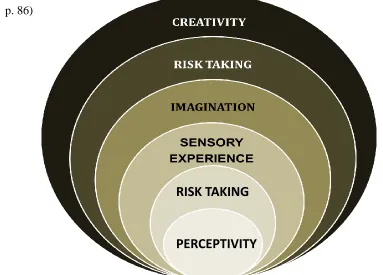
The perceptual planning model is outlined by the acronym CRISPA which stands for:
- Connections: connect to the subject (connect through senses, emotions, knowledge, and
people)
- Risk-taking: try something outside of your comfort zone
- Imagination: imagine possibilities – real and fantasy
- Sensory experience: explore with your senses – taste, touch, smell, sound, see
- Perceptivity: the more you look the more you see and know
- Active engagement: participate and enjoy the experience (Moroye & Uhrmacher, 2009,
[image:38.612.112.495.400.675.2]p. 86)
Figure 1
The Perceptual Lesson Planning CRISPA Model
RISK TAKING
20
As teachers plan, they are encouraged to deliberately seek ways to include as many of these
aspects as possible within each lesson. In this way, the process itself becomes more creative and
invigorating for the teachers and, ultimately, the students receive a better classroom experience
that includes the same CRISPA components.
The focus of this research is not on the lesson planning product. Rather, this research
will explore the collaborative lesson planning process as experienced by the participants, full
time teachers. As described by Uhrmacher et al. (2013) the “functional way of writing a lesson plan rarely modulates an experience that inspires or enlivens the educational process” (p. 7).
Therefore, written lesson plans are not the focus of this research. Through CRISPA, the
researcher seeks to introduce and evaluate a new way to plan collaboratively by exploring the
dynamics of how collaborative lesson planning was affected by the introduction of the aesthetic
theme. The root of this research stems from findings originally summarized by Uhrmacher et al.
(2013), who suggested that the aesthetic approach might ignite or reignite a passion for planning. The perceptual planning model offers opportunity for teachers to ask themselves “what inspires
me about this topic, and how might I organize meaningful experiences that inspire students to reach learning goals?” (Uhrmacher et al., 2013, p. 9). This research was designed to examine
this concept in action. Will the teachers involved collaborative planning be inspired to make the
process meaningful and fulfilling?
In addition to exploring the use of CRISPA in a collaborative planning setting, this
research provided an opportunity to explore how the CRISPA model might offer the opportunity
to discuss culturally relevant pedagogy (CRP) within the planning process (Ladson Billings,
21
home and community environment, the consideration of CRP (Ladson Billings, 1995a) is
explored as a natural fit for CRISPA as well.
Aesthetics
When considering aesthetics, one normally thinks of artworks, beauty, or perhaps a
memorable musical arrangement. Definitions of aesthetic or aesthetics often include terms such
as; beautiful, love of beauty, and the philosophy of art and beauty (Agnes, 1995; Morris, 1981).
Although not specified within routine definitions, aesthetics certainly implies the use of one or
more of the senses such as sight, hearing, taste, or touch. These senses are necessary in order for
humans to perceive what they are encountering when they have an aesthetic experience. For
example, a masterpiece artwork, such as the statue of David, is generally admired for its visual
appearance and quality of craftsmanship. Obviously, there is a highly subjective nature to
definitions of beauty, quality, and taste and these determinations differ greatly between
individual and cultures.
Aesthetic judgments are highly subjective. Consider the last wonderful meal you had, or
your favorite musical artist or performance. Ask a dozen people to respond to these same questions and you are likely to get as many different responses. Further, one person’s favorite
musical artist might be deplored by another. It is indeed a highly personal/individual aesthetic
judgment that brings these specific examples to mind, and each instance has value and beauty in
the eye of the beholder. Dewey (1934) pointed out that humans routinely make aesthetic
judgments throughout their daily lives, most often, they are doing so without placing these
decisions into an educative context. However, Dewey’s (1934) educational philosophy
emphasized that the most complete learning experiences included an aesthetic element. The
22
background or unnoticed judgments and decisions regarding the aesthetic to the educational
foreground within the lesson planning process. In order to achieve this purpose, we must explore
relevant literature on the lesson planning process.
Lesson Planning
Lesson planning is widely recognized as a necessary skill to build on content knowledge
and prepare meaningful lessons (John, 2006; Kohm & Nance, 2009; Van Der Valk & Broekman,
1999). The lesson planning process involves complex decision making skills and pedagogical
dynamics that translate standards into action in an often unpredictable classroom environment.
While planning, the teacher anticipates a variety of outcomes for the lesson, including where
students may have preconceived notions, existing knowledge, or encounter problems
understanding new concepts and information (Aylett, 2015; Clark & Yinger, 1979; Goldston,
Dantzler, Day, & Webb 2013; Lalik & Niles, 1990). The lesson planning process includes combining teachers’ content knowledge and pedagogical skills with their intimate knowledge of
the students in their classroom. Thus, the time spent planning is vital to ensure the teacher is
prepared and that students ultimately receive the best possible classroom experience.
Conrad (2011) described the lesson planning process as a sort of filter, through which
teachers demonstrate their intentions and beliefs. No matter the curriculum or the knowledge or
skill that is to be taught one should be able to follow a logical trail from the teacher’s intentions through their “motivation and efforts” to the planning process (p. 90). Conrad suggested that the
teacher begin with some intention in mind, and that this intention stirs their motivation to see it
implemented, and finally, applies these ingredients within their planning process. This study
23
behaviors within their lesson planning. However, before we can examine existing research that
discusses lesson planning, an exploration of the definition of lesson planning itself is in order.
Lesson Planning Defined
Interestingly, many research studies on lesson planning do not provide a definition of
planning (Clark & Elmore, 1979; Lalik & Niles, 1990; Thousand et al., 2006; Yinger, 1980). For
those that do, quite a range of definitions exist. Roskos and Neuman (1995) posited that planning is “a course of action to achieve a desired goal” (p. 200). This definition actually
suggests a focus on the lesson planning product rather than process. The course of action, in
other words, the plan, would logically be the result of the process of planning. Milkova (2012) identified the lesson plan as “the instructor’s road map of what students need to learn and how it
will be done effectively” (p. 1). Perhaps researchers are hesitant to give a clear definition of
planning in order to avoid limiting the possibilities involved with lesson planning. For example, Clark and Yinger (1980) defined planning as anything that “aids in preparing a framework for
guiding future action” (p. 6). This definition is almost too broad to be helpful and an attempt to
examine teacher planning using this framework would be virtually impossible. A more
restrictive example of defining planning was offered by Hill, Yinger, and Robins (1983) when they described planning as “any activity of a teacher that is concerned with organizing his or her
school-related activities or the activities of students, other teachers…” (p. 182). In a final
example that most closely reflects this research, Clark and Yinger (1979) defined planning as “a
process of preparing a framework for guiding teacher action, a process strongly oriented toward particular action” (p. 9).
A modified version of Clark and Yinger’s (1979) definition of lesson planning is used for
24
among teachers of preparing a framework for guiding individual teacher action toward teaching a
specific skill or standard. These modifications emphasize the collaborative nature of the
planning observed within this research as well as the recognition that the individual teachers will
go forward from the planning session to deliver their own instruction. The definition also
reflects a recognition that collaborative planning effort is usually followed by the individual
teacher acting to refine and develop their own lesson plan and then delivering the lesson.
Research Question
The primary question driving this study is: how do teachers in a collaborative setting
respond to the implementation of a perceptual approach to lesson planning? Perceptual lesson
planning calls on the teacher to explore their content matter in depth while seeking to draw
themselves and the student into deeper meaning and connections. Current leaders in perceptual
planning development and research, Uhrmacher et al. (2013) recommended that “it would be
worthwhile to capture the experiences of the population of teachers who use perceptual planning, to see whether perceptual lesson planning offers the sorts of opportunities for rejuvenation” (p.
22). Based on their recommendation, this research fills a space where little research currently
exists.
Culturally Relevant Pedagogy
Similar to Dewey’s era, the public school system within the United States today is
undergoing tremendous change in the demographic profile of its students. Citing U.S.
Department of Education statistics, as reported in the fall of 2014, “the percentage of students
who are White would drop to 49.7%” in our nation’s public schools (Strauss, 2014). Given this
demographic change, and future projections reflect a continued decline of White enrollment
25
culturally relevant pedagogy (Ladson Billings, 1995a) assumes a prevalent, and perhaps more
urgent, position within a range of pedagogical choices in order to better support the diverse
group of students in schools today.
Abrahams and Troike (1972) provided the earliest foundations of what we now know as
culturally relevant pedagogy. Ladson-Billings (1995) acknowledged the poor academic
performance of marginalized students, but her work centered particularly on students of
African-American descent. The glaring disparities between Whites, and other marginalized groups is
telling. According to the National Center for Educational Statistics, as of the 2011-2012 SY,
four-year high school graduation rates in the United States were as follows: Asian 93%, White
85%, Hispanic 76%, and Black 68% (National Center for Educational Statistics, 2015). The
relatively low rates of high school graduation for many students, especially from marginalized
groups, foretell challenging results for their future economic and social success. Without a high
school diploma, quality job opportunities are limited and generational cycles of poverty may
continue within families (Economic Policy Institute, 2014; Edelman, 2012).
Given the dynamics of an evolving public school population, this research provides an
opportunity to explore if the perceptual planning model offers opportunities for teachers to open
a dialogue on including CRP (Ladson Billings, 1995a) within their lesson planning. CRP
supports teachers in placing an emphasis on honoring their students cultural backgrounds and
leveraging their individual experiences in the classroom to support learning.
Summary
This chapter provided an overview of the research and its key question; how do teachers
in a collaborative setting respond to the implementation of a perceptual approach to lesson
26
theoretical and conceptual frameworks. Founded by Dewey (1934), the theoretical framework is
based upon his views of human aesthetic experience and its promise for fulfilling educative
experiences. Moroye and Uhrmacher (2009) provided the conceptual framework for placing Dewey’s aesthetic ideals into a modern teaching setting. A broad overview of CRP (Ladson
Billings, 1995a) was also offered in order to set the stage for another relevant aspect of this
research.
Organization of the Study
The remainder of the study is organized into five chapters, references and appendices
A-D, in the following manner. Chapter 2 contains the literature review for relevant research
pertaining to the research subject. Chapter 3 provides the research design and methodology.
Chapter 4 contains a summary of the research data and a discussion of the findings. Finally,
27
Chapter 2
Introduction
The purpose of this study is to understand the experience of eighth grade social studies
teachers as they developed lessons collaboratively using the perceptual lesson planning model
(Moroye & Uhrmacher, 2009). This model, also known as CRISPA, was developed specifically to support Dewey’s (1934) ideas concerning the deliberate inclusion of the aesthetic to enhance
educative experiences (Conrad et al., 2015). This research also provides an opportunity to
explore how the perceptual lesson planning model led to teacher discussions regarding CRP
(Ladson-Billings, 1992; Ladson Billings, 1995a; Ladson Billings, 1995b). This chapter explores
existing research that is related to this study. Summarized in this chapter is previous research on
lesson planning, collaboration, Deweyian aesthetics, the perceptual lesson planning model, and
culturally relevant pedagogy. Each of these topics was chosen as they represent key aspects of
the research study.
Lesson Planning Research
Lesson planning defined for this research. As described in Chapter 1, existing
research contains a range of definitions for lesson planning. For purposes of this research, the
modified definition of lesson planning is: a collaborative process among teachers of preparing a
framework for guiding individual teacher action toward teaching a specific skill or standard
(Clark & Yinger, 1979; 1980). The review of collaboration within this chapter will describe why
a collaborative element within planning is important to teachers.
Lesson Planning: Product or Process?
Much of the existing research on lesson planning focuses on product instead of process
28
approaches to teaching as a conflict between the positivistic nature of behaviorists and the
interpretive methods used by constructivists. Behaviorists generally place lesson planning in a
teacher-centered framework and tend to view lesson planning as a linear process, beginning with
objectives in mind and then proceeding to build a lesson (Hunter, 1983; Tyler, 1949). In contrast
to behaviorists, constructivists begin with the student in mind, and while mindful of learning
objectives, approach lesson planning as a means to help students make sense of their world with
appropriate guidance from the teacher (Duckworth, 2006; Schmuck & Schmuck, 1988). The constructivist approach is in accordance with Dewey’s views on making educative experiences
relevant (Dewey, 1934). With regard to this research, no specific lesson planning product is used
or recommended. The CRISPA model for this study is properly utilized as a lens with which to
approach whatever planning process the teachers choose to utilize. Further, by not favoring or
requiring any particular product resulting from the lesson planning, the researcher defers to the
individual experiences and preferences of the teachers involved in the research. While the
collaborative planning process is intended to further the collegial environment, the intent is not
to force any teacher into a particular pedagogical choice.
While this research does not prefer any particular planning product or lesson plan format,
it is worth noting existing research that addresses this question. Researchers have theorized and
proposed various models that focus on a common lesson plan outline and serve to guide the
teacher through the planning process and culminate with a commonly organized product. The
5-E model, for example, suggests that a lesson must include: engagement, exploration, explanation,
elaboration, and evaluation (Jackson, 2009). The Kodaly model, derived from his experience as
a music instructor, calls for every lesson to include student preparation (this student preparation
29
presentation, and practice (Boshkoff, 1991). Despite the availability of models and structures for
lesson planning, these choices are not examined or critiqued in this research. Instead, the focus
is on individual and collective teacher responses to the perceptual planning model.
Along with examples of lesson planning products, various models exist to guide a teacher’s overarching pedagogy. These including Hunter’s (2004) mastery learning, Gagne and
Briggs’s (1974) instructional design, and Slavin’s (2014) psychology of teaching. Wiggins and
McTighe (2001) advocated for a backwards planning model that begins the planning process
with the end in mind. No matter the choice for their pedagogy or content, teachers must plan
lessons in order to create educative experiences. Ornstein (1997) compared these and other
planning models and noted their similarities. Ornstein focused on the lesson plan output derived
from these theorists and, with few exceptions, found that the content of the formats was common
and included key elements such as: a brief review of earlier lessons, previewing the lesson
content, presenting new material, practicing, and assessing for student knowledge. The various
approaches and models to lesson planning are relevant because the product of lesson planning is
a point of emphasis in current teacher evaluation systems as well as preservice teacher programs
(State Department of Education; 2016; John, 2006; Wolcott, 1994). Previous research by
Veenman, Denessen, Oord, and Naafs (2003) and Meyen and Greer (2009) confirm the
relationship between lesson planning, quality instruction, and student achievement. While this
study does not examine individual teacher lesson plan products, pedagogy, content, and choice of
lesson format, individual teachers reasonably approach their lesson planning with some form in
mind.
In another example of research regarding lesson planning processes, Zahorik (1975)