ISSN 2250-3153
Green Computing Based Remote Information System
Suzana Dewi1), Imam Kholik2)
1
Department of Engineering Faculty of Information Technology, Wijaya Putra University, Surabaya, Indonesia
2
Department of Engineering Faculty of Mechanical Engineering, Wijaya Putra University, Surabaya, Indonesia
DOI: 10.29322/IJSRP.8.10.2018.p8253 http://dx.doi.org/10.29322/IJSRP.8.10.2018.p8253
Abstract-The implementation of green computing-based information systems in the school environment is still low. This is marked by the use of paper that is still liked by the school. For this reason, it is necessary to design information systems based on green computing to archive letters that have been created or received by schools. The letter that has been archived will make it easier for schools to search, avoid losing files when moving from one person to another. Those who have authority in archiving will certainly be easy to monitor.
The information system design in the management of school records aims to educate teachers and workers in the school environment for the concept of green computing on paperless.
Keywords: green computing, green computing on paperless, archives of school letters.
I. Introduction
The need for increased use of technology is accompanied by our difficulties in adjusting the school information system users. In the school environment begins with the use of school laboratories for learning media, the use of various tools and information systems to support the work of teachers in providing education to students. Also other electronic devices that are not small in number.
In the teacher's work environment, there is a lot of paper usage both in the reception of the results of the learning reports and assignments to students. Good file recording is very necessary in order to provide convenience in correcting and monitoring activities. According to data from the Central Bureau of Statistics concerning the Export of Paper and Goods from Paper According to the Main Destination Country, 2002-2015 obtained the following table of 1:
Nama Negara
Berat Bersih (Ribu ton)
2002 2003 2004 2005 2006 2007 2008 2009 2010 2011 2012 2013 2014 2015
Jepang 340,2 382,5 395,9 366,6 368,0 307,7 329,1 449,6 447,5 487,2 515,0 461,0 410,2 420,3
Hongkong 253,8 172,2 168,4 160,6 157,3 135,9 106,4 114,4 80,6 86,5 87,5 57,3 37,3 30,4
Taiwan 227,7 201,8 185,9 152,3 167,5 121,6 142,8 130,8 117,1 140,9 155,7 134,2 129,1 137,0
Tiongkok1) 457,9 382,4 320,9 285,4 302,9 258,3 253,7 237,7 193,8 237,9 170,2 117,5 128,3 213,8
Singapura 154,1 139,0 144,3 155,2 190,7 182,1 196,7 179,1 132,5 180,1 182,1 171,3 136,8 109,5
Malaysia 296,5 282,7 312,1 327,3 374,8 379,8 338,0 378,5 343,0 384,4 398,7 364,1 340,9 336,4
ISSN 2250-3153
Iran 70,7 64,6 73,3 131,6 127,5 164,4 171,9 98,7 101,3 114,3 87,4 96,4 84,6 64,7
Australia 186,0 167,7 217,6 181,3 194,3 203,9 179,9 147,4 168,0 141,7 125,8 107,2 101,2 124,8
Amerika
Serikat 140,8 127,2 127,0 128,1 266,2 323,9 275,2 285,3 267,1 249,0 270,1 284,8 451,8 283,6
Lainnya 1.208,2 1.069,1 1.057,2 1.190,3 1.495,8 1.855,3 ,3 1.905 2.018,3 2.452,8 1.991,0 1.930,2 2.148,0 2.204,1 2.257,3
Jumlah 3.411,5 3.066,1 3.110,9 3.186,6 3.792,7 4.118,8 ,4 4.085 4.286,8 4.562,6 4.300,9 4.229,7 4.297,9 4.367,6 4.309,3
Nama Negara
Nilai FOB (Juta US$)
2002 2003 2004 2005 2006 2007 2008 2009 2010 2011 2012 2013 2014 2015
Jepang 289,4 314,4 343,2 319,7 321,5 281,8 347,8 403,4 447,5 574,4 623,4 477,3 395,9 397,5
Hongkong 140,3 101,6 106,1 106,0 112,6 103,5 94,0 83,6 80,6 77,4 73,7 48,8 32,8 28,6
Taiwan 101,8 96,5 94,0 76,9 99,1 78,2 102,9 72,4 117,1 115,1 125,0 100,8 104,2 113,2
Tiongkok1) 206,1 197,6 200,3 174,0 201,3 195,0 195,7 157,5 193,8 196,5 143,1 102,5 115,3 161,0
Singapura 91,6 87,6 92,6 99,7 128,6 127,9 155,0 116,1 132,5 143,3 129,3 118,9 106,0 89,5
Malaysia 160,8 160,8 195,2 209,3 258,0 287,5 301,9 271,1 343,0 347,4 338,9 299,9 279,7 257,6
Vietnam 35,4 40,0 64,6 68,1 99,0 135,5 158,0 181,1 258,9 247,6 236,8 256,7 233,2 210,1
Iran 36,1 33,6 41,1 82,6 89,2 128,2 154,0 75,9 101,3 101,7 74,6 77,0 66,5 49,3
Australia 139,9 138,9 181,7 150,4 170,4 183,5 192,5 138,0 168,0 161,9 146,5 119,2 114,8 133,6
Amerika
Serikat 120,6 111,7 118,1 121,6 230,2 296,8 285,5 270,3 267,1 263,0 277,9 291,6 428,2 304,7
Lainnya 775,5 724,6 792,0 916,5 1.149,3 1.556,9 1.809,6 1.635,6 ,0 2.132 1.986,2 1.802,9 1.909,5 1.903,3 1.860,4
Jumlah 2.097,5 2.007,3 2.228,9 2.324,8 2.859,2 3.374,8 ,9 3.796 3.405,0 4.241,8 4.214,5 3.972,1 3.802,2 3.779,9 3.605,5
From the table it is understood that the demand for paper and goods from paper is still high. From the data from 2002 to 2015, the average use of paper and goods from paper is 3,927.6 thousand tons per year with a value of 3,265 million dollars.
So the activities of green computing from an early age to students are very important. The use of the right information system plays an important role in the green computing movement.
This research is
II. Research Elaborations
ISSN 2250-3153
According to Malviya, Pushtikant, in the Journal of "A Study about Green Computing", page 790, it was explained that the beginning of "Green Computing" was when computer users who increasingly needed the speed and accuracy of data in using a computer, wanted to cut costs, by minimal effort (cost), but the results can be maximum. The Data Center is faced with the problem of large energy consumption and tends to be wasteful. To minimize the use of enormous energy, the concept of "Green Computing" was raised. Green Computing is used to save energy costs and reduce the cost of energy consumption and minimize waste resulting from the "Computing" process.
2. Green Computing on Paperless Method. Can be implemented with Document Management System, Electronic Business Process and Electronic Invoicing. According to Harry Carley, in a quote in the Journal of "Going Green: The Paperless Classroom", p. 10 [2], it is said that in paperless classes it must be completely paperless, there is no use of paper, ink, and staff, in activities teaching in class, students in learning activities and doing assignments and tests are using computer networks.
3. Green Computing on Paperless Education. Use electronic files to archive mail data. In the opinion of Dr. Ravindra D. Sarode and Mr. Ashish S. Raul, as in the journal "Cloud Computing towards Green Libraries", p. 1, explained that at present, in accordance with the effects of the need for locations that are appropriate for storing document material, "Cloud Computing" appears and functions as a library to store data in large capacity but safe and affordable
Research methodology
1. Literature study. This section will study internet articles / publications and reference books.
2. Analysis method. This section is carried out by analyzing and reviewing the development of green computing in the scope of the school.
III. Result
The results of previous studies on green computing in information systems are shown in the following table: Several studies related to Green Design Computing, among others are:
1. According to Gaurav Jindal and Manisha Gupta, in the journal "Green Computing" Future of Computers ", page 17, 2012, it was explained that the concept of Green Computing is the future for the world of computers, especially IT, because as IT functions in the lives of human beings, then more and more computers and components are used. But based on his research, the required costs are quite large and large, so Green Computing is absolutely necessary. The combination of new database management needs to be used which will have a positive impact, namely: reducing energy consumption, saving energy, using materials that are eco-friendly, reducing waste, and reducing waste materials.
2. According to Carley in her journal, "Going Green: Paperless Classroom" pages 10-13, 2014, it was explained that later in academic activities lectures would reduce or even eliminate the use of papers, even later a few years later, it could be, the next generation , will ask, what is paper? by using applications and various programs for teaching, the use of paper will be minimized, so that for the good of the environment will be very significant, where the need for paper including raw materials will decrease, and vice versa, the use of data bases on computers must be more efficient and able to store as much as possible data capacity. 3. According to Laura - Diana Radu, in her journal "Green Cloud Computing: A Literature Survey", in 2017, page 2, it was
explained that the use of Cloud, as an important component in data storage would be increasingly massive, so that the capacity and capacity needed to be reproduced and upgraded The cloud is quickly accessed and storage capacity, making it possible for users to store data on a large scale and quickly displayed on a computer screen when accessed. With the increasing use of cloud, it will reduce waste (e-waste) that is not useful.
Discussion
ISSN 2250-3153
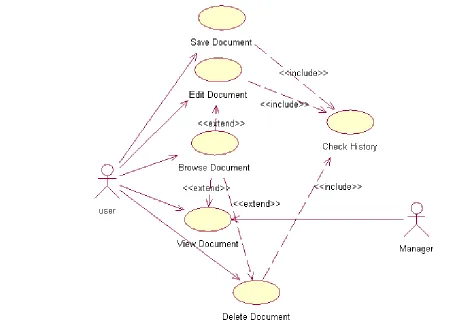
Figure 1 Use Case Diagram
Use Case Diagram here is used to describe object oriented design in the school information system. The school that is described as a user can do activities as clearly shown in the picture above. This diagram is very important to describe organizing and modeling behavior in a system.
ISSN 2250-3153
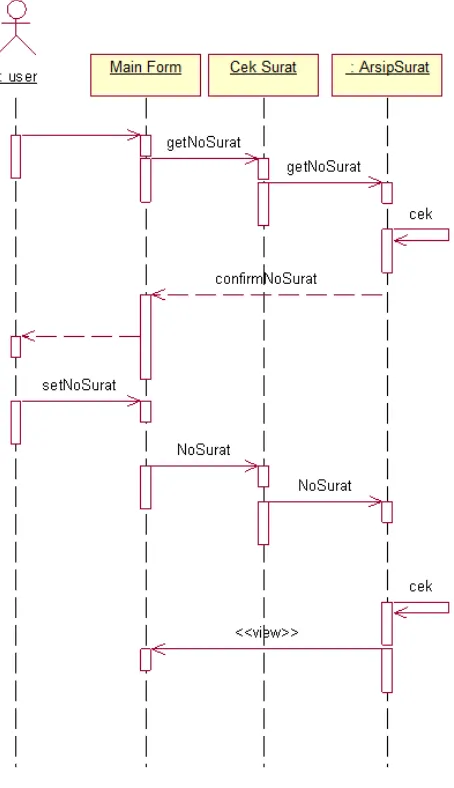
Figure 2 Sequence Diagram
In the picture above clearly sending messages from time to time in 1 use case diagram.
ISSN 2250-3153
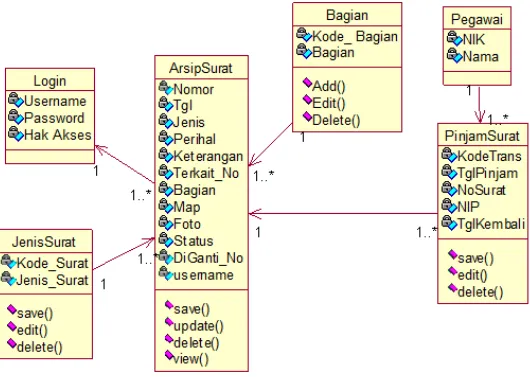
Figure 3 Class Diagram
IV. Conclusion
The concept of green computing will save a lot of resources. Electricity, paper, time, energy and human resources. So the concept of green computing is more widely applied in various places and developed to be more perfect from time to time.
References
[1] B. P. Statistik, "Ekspor Kertas dan Barang dari Kertas Menurut Negara Tujuan Utama, 2002-2015," [Online].
Available:
https://www.bps.go.id/statictable/2014/09/08/1029/ekspor-kertas-dan-barang-dari-kertas-menurut-negara-tujuan-utama-2002-2015.html. [Accessed 28 September 2018].
[2] P. Malviya and S. Singh, "A Study about Green Computing," International Journal of Advanced Research in Computer Science and Software Engineering, vol. Volume 3, no. Issue 6, June 2013, pp. 790-794, 2013. [3] M. G. Gaurav Jindal, "Green Computing “Future of Computers”," International Journal of Emerging Research
in Management &Technology, no. December 2012, p. 17, 2012.
[4] H. Carley, "Going Green: The Paperless Classroom," no. April 2014, p. 1, 2014.
[5] L.-D. Radu, "Green Cloud Computing: A Literature Survey," symmetry, no. 30 November 2017, p. 2, 2017. [6] M. A. S. R. Dr. Ravindra D. Sarode, "Cloud Computing Towards Green Libraries," New Interdisciplinary