S T U D Y P R O T O C O L
Open Access
Influence of early goal-directed therapy using
arterial waveform analysis on major complications
after high-risk abdominal surgery: study protocol
for a multicenter randomized controlled
superiority trial
Leonard Montenij
1†, Eric de Waal
1*†, Michael Frank
2, Paul van Beest
3, Ardine de Wit
1, Cas Kruitwagen
1,
Wolfgang Buhre
4and Thomas Scheeren
3Abstract
Background:Early goal-directed therapy refers to the use of predefined hemodynamic goals to optimize tissue oxygen delivery in critically ill patients. Its application in high-risk abdominal surgery is, however, hindered by safety concerns and practical limitations of perioperative hemodynamic monitoring. Arterial waveform analysis provides an easy, minimally invasive alternative to conventional monitoring techniques, and could be valuable in early goal-directed strategies. We therefore investigate the effects of early goal-directed therapy using arterial waveform analysis on complications, quality of life and healthcare costs after high-risk abdominal surgery.
Methods/Design:In this multicenter, randomized, controlled superiority trial, 542 patients scheduled for elective, high-risk abdominal surgery will be included. Patients are allocated to standard care (control group) or early
goal-directed therapy (intervention group) using a randomization procedure stratified by center and type of surgery. In the control group, standard perioperative hemodynamic monitoring is applied. In the intervention group, early goal-directed therapy is added to standard care, based on continuous monitoring of cardiac output with arterial waveform analysis. A treatment algorithm is used as guidance for fluid and inotropic therapy to maintain cardiac output above a preset, age-dependent target value. The primary outcome measure is a combined endpoint of major complications in the first 30 days after the operation, including mortality. Secondary endpoints are length of stay in the hospital, length of stay in the intensive care or post-anesthesia care unit, the number of minor complications, quality of life, cost-effectiveness and one-year mortality and morbidity.
Discussion:Before the start of the study, hemodynamic optimization by early goal-directed therapy with arterial waveform analysis had only been investigated in small, single-center studies, including minor complications as primary endpoint. Moreover, these studies did not include quality of life, healthcare costs, and long-term outcome in their analysis. As a result, the definitive role of arterial waveform analysis in the perioperative hemodynamic assessment and care for high-risk surgical patients is unknown, which gave rise to the present trial. Patient inclusion started in May 2012 and is expected to end in 2016.
(Continued on next page)
* Correspondence:[email protected] †Equal contributors
1
University Medical Center Utrecht, Heidelberglaan 100, 3584 CX Utrecht, The Netherlands
Full list of author information is available at the end of the article
(Continued from previous page)
Trial registration:This trial was registered in the Dutch Trial Register (registration number NTR3380) on 3 April 2012.
Keywords: High-risk surgery, Early goal-directed therapy, Hemodynamic monitoring, Hemodynamic
optimization, Tissue oxygen delivery, Randomized controlled trial, Outcome, Quality of life, Cost-effectiveness
Background
High-risk surgery
Both the extent of the surgical procedure and the presence of comorbidities increase the risk of an adverse outcome after surgery. Moreover, approximately 12.5% of all surgi-cal patients are considered as‘high-risk’[1,2]. The major-ity of perioperative complications and death occur in this minority of patients [1]. With increasing age and comor-bidities in the general population, the number of high-risk surgical patients is expected to grow. Approximately 50% of these surgical patients develops one or more periopera-tive complications, and mortality in this specific patient group is around 5% [1-6]. Major complications such as myocardial infarction, cardiac failure, stroke, pneumonia, renal failure, or sepsis, involve a significant burden to the patient and to hospital facilities during the hospitalization period [3]. After discharge, these complications may result in long-term disability, cognitive impairment and even death, significantly reducing quality of life and increasing healthcare consumption [3].
Hemodynamic monitoring in high-risk surgery
Surgical patients are subject to the effects of anesthesia, dir-ect surgical trauma, inflammation, fluid shifts, and blood loss. In extensive surgical procedures these effects are en-hanced, which may impair oxygen delivery to organs and tissues. Patients with significant comorbidities have limited cardiopulmonary reserve and are therefore more suscep-tible to the consequences of surgical stress [7]. An imbal-ance in tissue oxygen delivery and demand may occur, which promotes the incidence of complications [8-10]. This emphasizes the need for appropriate hemodynamic monitoring and optimization therapy to maintain ad-equate tissue oxygen delivery in perioperative care for this high-risk group.
Cardiac output (CO) is the principal determinant of tissue oxygen delivery. Continuous monitoring of CO would therefore be valuable for each high-risk surgical patient. A number of CO measurement techniques are available. Pulmonary artery thermodilution remained the standard technique for a number of decades [11,12]. This technique is, however, invasive and associated with potentially life-threatening complications which limits its use in clinical practice [11,12]. Transesophageal echo-cardiography (TEE) can be used to measure CO, but is also rather invasive, does not provide CO continuously,
and requires specific skills that are not included in the training of each anesthesiologist or intensive care phys-ician [13]. Therefore, TEE is predominantly used in car-diac surgery. Esophageal Doppler probes for continuous CO measurement are easier to use but not readily toler-ated by conscious patients. Other minimally invasive CO techniques such as bioimpedance are not yet sufficiently reliable for use in clinical practice [13].
Arterial waveform analysis (AWA) provides a less inva-sive and more practical alternative to conventional tech-niques of CO monitoring. CO is derived from the arterial pressure waveform and only requires an arterial line, which is almost routinely placed in high-risk surgical patients in the operating room (OR) and intensive care unit (ICU) [13,14]. Moreover, the AWA technique enables dynamic preload assessment in mechanically ventilated patients. Assessment of cardiac preload or fluid responsiveness is the first step in optimizing CO [14,15]. Both AWA-based CO measurement and dynamic preload assessment have been validated in a variety of clinical settings [14,16]. The technique is therefore potentially valuable for advanced hemodynamic monitoring and fluid optimization of high-risk, non-cardiac surgical patients [17].
Early goal-directed therapy
Adequate strategies to correct and improve hemodynamic variables should be available, since monitoring without therapeutic consequences is not enough. Early goal-directed therapy (EGDT) refers to the preemptive use of predefined target values for hemodynamic optimization in order to maintain tissue oxygen delivery. A target variable is continuously monitored and immediately corrected using a treatment algorithm if the value decreases below a predefined threshold. Especially CO or CO-derived vari-ables have been used for this purpose. The treatment algo-rithms used in EGDT guide fluid therapy and inotropic support, in order to improve the patient’s hemodynamic status. With the emergence of AWA techniques, a new, promising CO measurement technique became available for EGDT [14,18].
Previous literature
promising strategy to reduce morbidity and even mortality in high-risk surgery. There are, however, several limita-tions to the previous literature which may explain why EGDT has never been widely implemented into rou-tine practice [19]. First, the results from most studies are outdated and not applicable to the current standard of care. In studies from 1988 to 2000, morbidity and mortal-ity are much higher in comparison with current practice, even in the intervention groups. The same applies for length of stay in the hospital. Second, pulmonary artery catheterization has been used for the purposes of EGDT at that time. As described before, this technique is limited to specific types of surgery and not broadly accepted for peri-operative monitoring in non-cardiac surgery [11-13,20]. Two studies applying arterial waveform analysis for EGDT purposes were small and performed in a single center [4,6]. Moreover, minor complications, such as short-lasting intraoperative hypotension or urinary tract infection, are included as an outcome measure. These complications are not associated with increased long-term morbidity and mortality and should be evaluated separ-ately. One final but major limitation applies to all of the studies described. They lack information about the effect of EGDT on long-term outcome, quality of life, and utilization of healthcare resources. This hinders a cost-effectiveness analysis. EGDT requires the purchase of CO monitoring equipment which consists of specific patient monitors and arterial blood pressure sensors. Additional costs may be the result of an increased use of inotropic support or other therapeutic consequences of EGDT.
Since the start of the trial in May 2012, a number of in-teresting studies have been published which partially ad-dressed the shortcomings mentioned above [5,21-23]. Two studies demonstrated that the implementation of a goal-directed strategy was cost-effective [21,22]. In addition, two multicenter studies were performed in which a reduc-tion in complicareduc-tions was shown [5,23]. However, minor complications were included, and the number of patients was rather small in these studies.
Added value of the proposed study
The present study is a multicenter, randomized controlled trial in a relatively large group of patients and performed in both university and non-academic teaching hospitals. Patients scheduled for elective high-risk abdominal surgery are included. They represent an extensive group of patients at risk for adverse postoperative outcomes. The primary aim is to reduce the number of major complications that are associated with an increased short-term and long-term morbidity and mortality. These complications are expected to comprise a major burden to quality of life, healthcare costs, and long-term outcome, which are included as secondary outcome parameters. AWA-based CO moni-toring techniques are used to assess tissue oxygen delivery,
which are minimally invasive and easy-to-use. The treat-ment algorithm is straightforward and suitable for each anesthesiologist, ICU physician, and anesthesia or ICU nurse. The results of this study may therefore be useful in guiding evidence-based implementation of EGDT.
Objective
The primary objective of the study is to investigate the ef-fect of perioperative EGDT using arterial waveform analysis on a composite endpoint of major complications, including mortality after high-ris, abdominal surgery, in comparison with standard care. Secondary endpoints are minor com-plications, length of stay in the hospital, length of stay in the ICU or post-anesthesia care unit (PACU), long-term outcome, quality of life (QOL), and cost-effectiveness. We hypothesize that perioperative EGDT using AWA reduces the number of major complications after high-risk abdom-inal surgery in comparison with standard care.
Methods/Design
Trial design
The EGDT trial is designed as a multicenter, randomized, controlled superiority trial with two parallel groups in a 1:1 allocation. The trial is unblinded for the clinicians in-volved, the patients, and the observers.
Study setting
Currently, the study is performed in three hospitals in The Netherlands: Albert Schweitzer Hospital (Dordrecht, The Netherlands), University Medical Center Groningen (Groningen, The Netherlands), and University Medical Center Utrecht (Utrecht, The Netherlands). The Maastricht University Medical Center (Maastricht, The Netherlands) is preparing study participation. Additional participating centers may be added in the future.
Eligibility criteria
Eligible are patients scheduled for elective high-risk ab-dominal surgery. Two groups of patients are considered high-risk: patients undergoing extensive procedures com-prising a high risk for an adverse postoperative outcome, irrespective of the condition of the patient (group 1); pa-tients undergoing moderately extensive procedures that suffer from significant comorbidity (group 2). These pro-cedures comprise a moderately high-risk for an adverse postoperative outcome in healthy patients, but are consid-ered high-risk for patients with significant comorbidity.
Inclusion criteria are:
open abdominal aorta aneurysm repair, and major abdominal resections for soft tissue malignancy. 2) Group 2: patients with ASA physical status III or IV
scheduled for the following surgical procedures in which postoperative observation in the ICU/PACU is needed: gastrectomy, colorectal resections for carcinoma, and other extensive upper or lower abdominal surgery (such as ileocystoplasty or debulking surgery for ovarian cancer).
Patients will be excluded if they meet one of the fol-lowing criteria: patients with aortic insufficiency > grade 1, patients who are under 18 years-old, patients with car-diac arrhythmias (such as atrial fibrillation or flutter, or ventricular tachycardia), patients requiring emergency surgery, patients in which cardiac output measurement is mandatory for therapeutic decisions, or contraindica-tion for passive leg raising in the entire postoperative period.
Randomization
A randomization procedure is used to allocate patients to standard care (control group) or standard care with EGDT (intervention) in a 1:1 ratio. The randomization is stratified according to hospital and type of surgery. In each stratum, a block randomization with variable block size is applied using a computer.
Standard care
Patients assigned to standard care will be treated according to local routine, with the following conditions: 1) after in-duction of anesthesia and tracheal intubation, patients are mechanically ventilated (volume control) with a fixed tidal volume of 8 ml/kg−1(ideal body weight, IBW) throughout the procedure, adjusting respiratory rate to maintain nor-mocapnia; 2) an arterial line, central venous line, and urine catheter are placed, 3) hypotension after induction is treated preferably with crystalloids, eventually with
colloids, with a maximum of 500 ml. Ongoing hypotension is treated with a continuous infusion of norepinephrine. Sudden, short-lasting hypotension is treated with phenyl-ephrine or ephedrine depending on local routine and indication; and 4) transfusions with erythrocytes will be applied according to the 4-5-6 rule (Additional file 2).
Therapy is aimed at maintaining: SpO2≥95%, mean
ar-terial blood pressure (MAP)≥60 mmHg or≤25% below baseline in cases of preexisting hypertension, and heart rate (HR) < 100/min or≤25% above baseline.
The use of epidural analgesia, enhanced recovery after surgery (ERAS) protocols, corrections for preoperative fasting, and basic fluid regimes is allowed but not obliga-tory. Serum lactate, central venous oxygenation satur-ation, and other laboratory parameters may be used to the discretion of the attending anesthesiologist or ICU physician.
Intervention
Patients assigned to EGDT are treated according to the same conditions as defined for the standard group. An EGDT algorithm is added to standard care in order to maintain tissue oxygen delivery in the perioperative period. After induction of anesthesia in the OR, an AWA tech-nique is applied for continuous CO measurement and dy-namic preload assessment. The choice of AWA technique depends on the institution in which the study is per-formed. CO values are indexed to the patients’ body sur-face area. For each patient, an age-dependent target cardiac index (CI) is determined with the following cri-teria: age < 60 years, target CI≥2.8 l/min/m; age between 60 and 75 years, target CI≥2.6 l/min/m; or age > 75 years, target CI≥2.4 l/min/m.
If the CI drops below the target value, a treatment al-gorithm is used in order to restore the CI above the threshold (Figure 1). In this algorithm, the dynamic pre-load parameter stroke volume variation (SVV) is used to determine whether the patient should receive a fluid challenge (FC), or whether inotropic support should be started or increased. Continuous infusion of norepineph-rine and/or dobutamine should be used as inotropic sup-port. SVV cannot be used in the following circumstances: spontaneous breathing activity, tidal volume <8 ml/kg, and/or breathing frequency >16/min−.
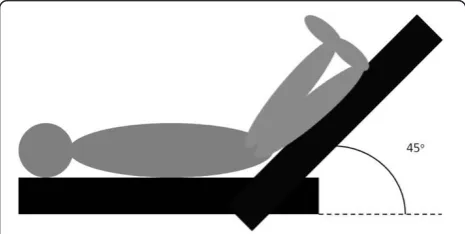
[image:4.595.57.290.109.268.2]In these circumstances, a passive leg raising (PLR) test is used to guide fluid or inotropic support [24-26]. The procedure is explained in Figure 2. If the CI increases 10% or more during PLR, a 500 ml FC is given. If not, inotropic support is started or increased. If both measure-ment of SVV and PLR testing are not possible, a small 250 ml FC is given. If the CI subsequently increases, an-other 250 ml FC is given. If the CI does not increase, ino-tropic support is started or increased. Treatment according to this EGDT algorithm starts after induction of anesthesia
Table 1 American Society of Anesthesiologists (ASA) physical status
ASA physical status
Description
I Normal, healthy patient
II Patient with mild systemic disease which does not affect daily functioning (such as controlled hypertension, stable chronic obstructive pulmonary disease (COPD), well-regulated diabetes mellitus, mild obesity)
III Severe systemic disease which affects daily functioning (such as coronary artery disease, heart failure or COPD limiting exercise tolerance, morbid obesity)
IV Systemic disease that is a constant threat to life (such as invalidating COPD or heart failure, unstable angina pectoris)
in the OR and is maintained until discharge from the ICU/ PACU, with a maximum of 24 hours from induction of anesthesia.
Modifications
In case of any newly developed arrhythmia in patients in the intervention group, CO and SVV measurements ob-tained with AWA are unreliable. Therefore, treatment according to the EGDT algorithm stops as long as the arrhythmia persists. If a patient in the intervention group develops unwanted tachycardia, arrhythmia, or (suspected) myocardial ischemia due to inotropic sup-port applied within the EGDT algorithm, inotropic support needs to be reduced or stopped, irrespective of the CI. In addition, a FC should be withheld or stopped if pulmonary edema or cardiac decompensation is sus-pected, irrespective of the CI.
Protocol adherence
The EGDT algorithm is easy to use and rather straight-forward, yet extensive training of nurses and physicians involved in the care of patients allocated to EGDT will be performed before the start of the study in each par-ticipating center. Moreover, a number of nurses and physicians from each institution have been involved in the trial from the beginning and are thoroughly in-formed about the procedures. These‘trial experts’can be consulted at any time and will monitor the appropriate application of the EGDT algorithm.
Outcome measures
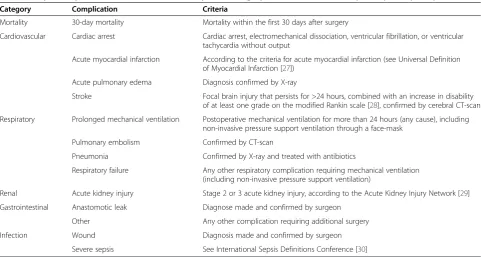
The primary outcome measure is the number of major complications per patient within the first 30 days after surgery, including mortality. An overview of all major complications can be found in Table 2. The complica-tions within this composite endpoint are associated with increased long-term morbidity and mortality [3].
[image:5.595.60.541.90.263.2]The following secondary outcome measures are consid-ered: the grade of major complications occurring in the first 30 days after surgery according to the Accordion Severity Grading system [31]; the number of the following minor complications within the first 30 days after surgery: arrhythmia (requiring intervention), deep venous throm-bosis (confirmed by ultrasonography), urinary tract infec-tion (confirmed by urinalysis and treated with antibiotics), prolonged ileus (diagnose made and confirmed by sur-geon), herniation or other prolonged wound healing (diag-nosis made and confirmed by surgeon); the total amount of fluid administered in the first 24 hours after surgery (crystalloids, colloids, and blood products); inotropic support in the first 24 hours after surgery (amount and
Figure 1EGDT algorithm.(1)target value depends on age: age < 60 years: target CI≥2.8 l/min/m2; age between 60 and 75 years: target CI≥ 2.6 l/min/m2; or age > 75 years: target CI≥2.4 l/min/m2.(2)”no”in the presence of spontaneous breathing activity, tidal volume < 8 ml/kg, or breathing frequency > 16/min.(3)CI increases: repeat FC. If not: increase inotropic support. CI = Cardiac Index, FC = Fluid Challenge, PLR = Passive Leg Raising, SVV = Stroke Volume Variation, Tidal volumes are in ml/kg ideal body weight (IBW); IBW is calculated as 22 × L2(L = length in meters).
[image:5.595.57.290.568.685.2]duration of infusion); hemodynamic (blood pressure, HR, CI, SVV, mean urine output) and laboratory (central venous oxygen saturation and pCO2, serum lactate,
tropo-nin) variables in the first 24 hours after surgery; length of stay in the hospital and in the ICU/PACU; continu-ation of care at intermediate care units (level of care in between the ward and ICU/PACU); number and length of ICU/PACU or intermediate care readmissions; QOL; cost-effectiveness; long-term outcome: 3, 6, and 12 months complications and mortality.
Data collection
Before the operation demographic data, ASA physical sta-tus, medical history, and drug usage are collected from the patient’s medical records.
A number of hemodynamic variables (blood pressure, HR, CI, and SVV if applicable) are recorded each hour during the first 24 hours after induction. In the EGDT group, these variables are also recorded before and after interventions to correct a drop in CI below the target value. Fluid balance in the first 24 hours is evaluated by recording the amount of fluids infused (crystalloid, col-loid, and blood products) as well as urine output and blood loss. In addition, the use of inotropes is registered (type, amount, and duration of infusion). The following laboratory variables are determined after induction, dur-ing surgical closure, after admittance to the ICU/PACU, and the morning after surgery: serum hemoglobin, lactate, and full blood gas analysis (arterial and venous). After ad-mittance to the ICU/PACU, the following additional blood
values are determined in order to calculate the Sequential Organ Failure Assessment (SOFA) score [32]: serum cre-atinine, bilirubin, and platelet count. The morning after sur-gery, serum troponin and creatinine levels are measured. The Therapeutic Intervention Scoring System (TISS) is calculated after admittance to the ICU/PACU [33]. Vari-ables are derived from the patient monitoring systems used in the operating room and ICU/PACU, or from the OR and ICU/PACU record systems.
The following information is obtained in the first 30 days after surgery: all-cause mortality, major and minor com-plications, if applicable; duration of postoperative mechan-ical ventilation (hours); length of stay in the in the hospital (days) and ICU/PACU (hours); length of stay in the in the hospital (days) and ICU/PACU (hours) according to fit-for-discharge criteria [5] (Additional file 3); continuation of care at intermediate care units (hours); number of read-missions to the ICU/PACU or intermediate care unit.
All information can be obtained from the patients’ medical records. Patient follow-up with respect to com-plications and length of stay is active.
[image:6.595.57.539.98.355.2]QOL will be assessed with the EQ-5D and Short Form (SF) 36 questionnaires before surgery and 1, 3, 6, and 12 months after surgery. Depending on the patient’s pref-erence, the questionnaires are sent to the patient by email or conventional mail, or the patient is called by an inter-viewer. Patients who do not respond will receive a max-imum of two phone calls as a reminder. Before contacting or sending the questionnaires to the patient, confirmation will be obtained that the patient is still alive.
Table 2 Major complications within the first 30 days after surgery embedded in the composite primary endpoint
Category Complication Criteria
Mortality 30-day mortality Mortality within the first 30 days after surgery
Cardiovascular Cardiac arrest Cardiac arrest, electromechanical dissociation, ventricular fibrillation, or ventricular tachycardia without output
Acute myocardial infarction According to the criteria for acute myocardial infarction (see Universal Definition of Myocardial Infarction [27])
Acute pulmonary edema Diagnosis confirmed by X-ray
Stroke Focal brain injury that persists for >24 hours, combined with an increase in disability of at least one grade on the modified Rankin scale [28], confirmed by cerebral CT-scan
Respiratory Prolonged mechanical ventilation Postoperative mechanical ventilation for more than 24 hours (any cause), including non-invasive pressure support ventilation through a face-mask
Pulmonary embolism Confirmed by CT-scan
Pneumonia Confirmed by X-ray and treated with antibiotics
Respiratory failure Any other respiratory complication requiring mechanical ventilation (including non-invasive pressure support ventilation)
Renal Acute kidney injury Stage 2 or 3 acute kidney injury, according to the Acute Kidney Injury Network [29]
Gastrointestinal Anastomotic leak Diagnose made and confirmed by surgeon
Other Any other complication requiring additional surgery
Infection Wound Diagnosis made and confirmed by surgeon
Both healthcare costs (treatment costs including equip-ment, hospital stay, and re-interventions) and non-healthcare costs (costs as a result of absence from work) will be ana-lyzed. Additional equipment and staff costs associated with EGDT will be monitored to assess incremental costs associated with EGDT. Direct healthcare costs will be cal-culated by multiplying the volume of (healthcare) re-sources use with its cost, using standard reference prices for economic evaluation in healthcare whenever available. Information on the following direct costs will be collected from the medical records: blood sample measurements, cultures and other investigations (such as chest films, CT-scans, echography, and ECG), interventions (such as reoperation, catheterization, chest drainage, and anti-biotic treatment), and discharge destination (home, nurs-ing home, rehabilitation). Data on absenteeism from work will be collected using parts of the Short-Form Health and Labor Questionnaire (SF-HLQ). The following three ques-tions are added to the SF-HLQ: how many times did you visit your general practitioner? How many times did you visit a doctor in the hospital? Have you been admitted to the hospital? These questions are included in the QOL questionnaire described above. Indirect costs associated with production losses will be estimated using the friction cost method.
Long-term outcome is determined with a letter to the general practitioner of the patient after 3, 6, and 12 months. In this way, mortality and morbidity in the period between 30 days and one year after the operation is determined.
Statistical analysis and sample size calculation
A study of the hospital data of one of the participating centers revealed that the number of major complications embedded in the composite primary endpoint was 0.58 per patient, and that a Poisson distribution was applicable. We aim to reduce the number of major complications per patient by 30% (from 0.58 to 0.41). Using Poisson regres-sion with an assumed two-sided error of 5%, we calculated that a sample size of 226 patients in each group will be needed to detect this reduction with a power of 80%. For the multicenter character of the study, a 20% correction was made, since the variance between the participating centers is unknown. This results in a total sample size of 542, or 271 patients in each group.
Statistical analysis will be performed using SPSS version 21.0 for Windows (SPSS Inc, Chicago, Illinois, United States). The first analysis will be performed by combining the results from the participating centers. After this, the results of the individual centers are analyzed to detect possible differences. The primary analysis consists of a comparison of the primary endpoint (number of com-plications per patient) between the control group and the EGDT group using Poisson regression. According to secondary endpoints, data will be checked for normal
distribution and presented as mean +/−standard devi-ation when normally distributed, and as median +/− interquartile range when not normally distributed. Relative risks are presented with 95% confidence intervals. Categor-ical data are tested with Fisher’s exact test. Continuous data are tested with the independent samples t-test when normally distributed, and with the Mann-Whitney U test if not normally distributed. APvalue <0.05 is considered sta-tistically significant. Analysis will be carried out according to the intention-to-treat principle.
For the quality-of-life assessment, the mean EQ-5D score and the individual SF-36 subscale scores are deter-mined, and a comparison will be made between the standard group and the EGDT group. In addition, mean change scores are determined and evaluated over time. For the economic evaluation, especially the EQ-5D, is of im-portance as utilities and consequently, quality-adjusted life years (QALY), can be elicited using this generic quality-of-life questionnaire. The incremental cost-effectiveness ratio (ICER) will be expressed as cost differences between groups divided by differences in numbers of serious com-plications between groups (cost per complication averted). The incremental cost-utility ratio (ICUR) will be expressed as cost differences between groups divided by differences in QALY’s gained between groups (cost per QALY). Confi-dence intervals will be determined using bootstrapping. A cost-effectiveness acceptability curve will be drawn using this bootstrap sample.
Institutional Review Board approval and informed consent
The trial has been reviewed and approved by the institu-tional review board (IRB) of the University Medical Center Utrecht (The Netherlands). Furthermore, local IRB ap-proval has been obtained in the participating centers for the local applicability of the protocol. Details regarding the IRB approval are presented in Additional file 4. Writ-ten informed consent will be obtained from all patients.
Risk assessments
are not used in this study. Only one study reported myo-cardial ischemia due to use of inotropic support, which disappeared after stopping inotropic infusion [6]. In the other studies however, the results point to a lower inci-dence of myocardial ischemia, although significant reduc-tions have not been reported. Adverse events with respect to fluid overload have not been described in the systematic review. Despite this, precautions have been taken in the EGDT algorithm to prevent the potentially harmful effects of excessive fluid and inotropic support.
Safety procedure
Events that meet the criteria for ‘severe adverse events’ (SAE’s) are monitored and reported to the accredited IRB that approved the protocol and to a Data Safety Monitoring Board (DSMB). The major complications embedded in the primary outcome measure meet these criteria and are considered‘expected SAE’s’. Cumulative data on these expected SAE’s are reported biannually. Mortality and all other ‘unexpected SAE’s’ are reported immediately. The DSMB has been created to assess the safety of the interventions and to monitor the overall conduct of the study. In addition, the DSMB assists and advises the investigators in protecting the validity and credibility of the trial. The members of the DSMB for this trial are an epidemiologist and biostatistician, an anesthesiologist and intensivist, and a gastrointestinal sur-geon. The DSMB members will meet every six months in closed and open sessions. After each meeting the DSMB may decide the following: the trial is allowed to continue without further action, the trial is allowed to continue with recommendations which will be evaluated in the next meeting, or recruitment of patients is stopped since accu-mulating data points to an adverse effect in the interven-tion arm. The study will not stop if accumulating data points to a beneficial effect in the intervention arm. The roles and responsibilities of the DSMB are described in detail in a DSMB charter.
Discussion
Trial context
There is an urgent need for a multicenter, randomized controlled trial, evaluating the application of AWA-based hemodynamic monitoring in goal-directed strat-egies for high-risk surgical patients [14,34,35]. Ideally, the algorithm used for EGDT should be user-friendly and easily applicable in order to enhance the implemen-tation in daily care. Moreover, this trial should include a large group of patients in order to have sufficient power to demonstrate differences in clinically relevant outcome parameters. Finally, long-term effects in terms of QOL and healthcare costs should be considered. So far, this ‘ideal’trial has not been performed. The presented study protocol attempts to include the important features
mentioned, however, a number of aspects of the trial de-sign however need to be discussed in detail. First we try to elucidate the clinical choices made in the selection of patients, the EGDT algorithm, care in the control group, and safety. Next, we will discuss a number of methodo-logical issues with respect to the study design, primary outcome measure, blinding, and discharge criteria.
Clinical considerations Patient population
Each year a large number of patients are scheduled for extensive abdominal surgery in a variety of hospitals. The postoperative problems seen in the postoperative period involve a major burden to patients and healthcare costs, and are acknowledged by many clinicians in the field of anesthesia, critical care, and surgery. Yet there is on-going debate if and which type of advanced hemodynamic monitoring should be applied in these patients. In contrast, transesophageal echocardiography and pulmonary artery catheterization are extensively used in patients undergoing cardiac surgery, while the risk for postoperative complica-tions or mortality is often lower. Therefore, we chose major abdominal surgery as the target population in this study. Hepatic resections are considered high-risk abdom-inal surgery, especially due to bleeding complications. Intraoperatively, however, the use of fluids is highly restrictive and the algorithm described in this study is not suitable for application in this specific patient category. Therefore, we decided to exclude patients scheduled for hepatic resection.
EGDT algorithm
The algorithm was designed to be as easy as possible, to enhance the applicability in the various types of hospitals performing high-risk abdominal surgery. Basically, the algorithm includes three steps: 1) detect a drop in CI below the target value, 2) determine the intervention to restore the CI, and 3) evaluate if the CI increases above the target value.
The AWA technique used is not prescribed, but de-pends on the preference of the hospital. This will en-hance the willingness to implement EGDT in clinical practice, since many hospitals already have AWA moni-toring systems for other clinical purposes. In addition, EGDT is the intervention under investigation, not a spe-cific device. AWA algorithms continue to improve and new devices will emerge in the coming years [36,37].
optimizing CO. An SVV measurement can be used for this purpose, if a number of criteria for mechanical ven-tilation are met [14,15]. In the OR, this will be the case in most situations. In the ICU or PACU however, pa-tients are weaned from the ventilator, which hinders the reliability of dynamic preload assessment. In these cir-cumstances, PLR testing provides a suitable alternative, if properly performed [24-26]. If the SVV criteria are not met and PLR testing is not possible, we decided to use a small FC to prevent unwanted volume loading in unre-sponsive patients. This small FC can be repeated if the pa-tient responds well. Otherwise, inotropic support is used to restore the CI. Overall, SVV and PLR testing are im-portant in the algorithm, which emphasizes the role of cardiac preload in treating low CO. Preload optimization is, however, not the primary target in this trial, since CO represents the most direct way to determine tissue oxygen delivery in the perioperative period [13].
Central venous oxygen saturation (ScvO2) has been
shown to be effective as a target variable in a number of goal-directed strategies in critical care, and has been considered as target variable for this trial as well [40-43]. There are, however, a number important limitations. For proper interpretation, oxygen consumption should be considered, which varies in the perioperative period to a great extent [40]. In addition, ScvO2is usually intermittently
determined, since special oximetry probes are needed for continuous ScvO2measurement. Therefore, ScvO2was not
chosen as target in the treatment algorithm, but may be used additionally according to local practice.
The EGDT algorithm starts in the OR after induction of anesthesia before the start of surgery. Postoperatively in the ICU/PACU, EGDT continues until discharge for a maximum of 24 hours. In most hospitals, it is common practice to monitor patients after high-risk surgery for this period. For practical reasons therefore, EGDT can easily be implemented. More importantly, impaired tis-sue oxygenation may present up to 24 hours after sur-gery [44-46].
Standard care
We decided to limit the criteria for standard care in order to keep care in the control group close to local routine. As described above, EGDT is meant as a supplement to stand-ard care, not as a substitute. For reasons of generalizability to other institutions, care in the control group should not deviate from local routine to a great extent. On the other hand, bias or major differences between the participating centers may occur if standard care is rather heterogeneous. Criteria for mechanical ventilation were introduced to prevent bias from differences between the groups, since a reliable SVV measurement requires specific ventilation settings [14,15]. The other criteria are very routine in most institutions. The use of epidural analgesia, enhanced
recovery after surgery (ERAS) protocols, corrections for preoperative fasting, and basic fluid regimes are not ob-ligatory. Due to randomization, these treatment elements are expected to be balanced between the control and intervention groups. In addition, these elements do not interfere with the application of EGDT.
It would be valuable to monitor CO in the control group as well, albeit blinded for the clinicians. The pres-ence or abspres-ence of differpres-ences in outcome between the control and intervention group are easier to interpret in the light of differences in CO between the groups. In clin-ical practice however, it may be difficult to apply standard care in the control group in the presence of a CO monitor. We fear that clinicians may tend to take CO values into consideration in their therapy. In addition, CO monitoring is associated with significant costs, which increases the total costs of the trial to a great extent.
Safety
Our systematic review of the literature did not reveal any harm due to the use of fluid or inotropes in goal-directed strategies. In the OR and ICU/PACU, both fluid and ino-tropes are extensively used. We decided to allow the use of both crystalloid and colloid fluids, according to local preferences. Norepinephrine and dobutamine were chosen for inotropic support as these inotropes are commonly used. Clinicians and other healthcare personnel are there-fore familiar with the administration, clinical effects, and adverse reactions. In the algorithm however, patients may end up in a continuing loop of fluid or inotropic support if the response in CI is insufficient. In this case, volume overloading or adverse effects of inotropes may occur, and a number of safety measures have been incorporated in the algorithm in order to address this. If tachycardia, arrhythmia, myocardial ischemia, pulmonary edema, or cardiac decompensation is suspected or observed, any intervention within the algorithm should be stopped im-mediately. In contrast, fluid or inotropes should not be withheld in patients with CI values above their target. We therefore emphasize that EGDT is added to standard care and does not replace it. Interventions within the usual care for high-risk surgical patients, such as treatment of hypotension, hypovolemia, or any other suspicion of hemodynamic deterioration, should therefore be applied irrespective of the CI or the treatment algorithm.
Methodological aspects RCT design
studies, which may affect outcome in both the control and intervention groups [49]. We discussed the alternative ap-proach of a before-after study. For the purposes of our study, prospective data collection is necessary. Therefore, the Hawthorne effect will be present in both‘before’and ‘after’ periods. More importantly, postoperative outcome after high-risk surgery is multifactorial. It is simply impos-sible to keep all these factors constant during the entire study period, which was the main reason for choosing the RCT design. Since the start of our trial, a number of im-portant aspects in the care for high-risk surgical patients have changed. First, robotic surgery is increasingly being used in our institutions. Second, surgical safety checklists have been introduced in many centers, reducing both mortality and morbidity after surgery [50]. In one of the participating centers in this trial this led to a signifi-cant reduction in 30-day in-hospital mortality [51]. Similar checklists have been implemented in the other participat-ing centers. We therefore regarded randomization to be crucial in this study. We stratified the randomization procedure with respect to participating center and type of surgery, since these covariates may influence outcome to a great extent. The number of patients in certain strata may become small however, which was the reason for ap-plying blocked randomization.
Primary endpoint
The primary outcome measure in this trial is a combined endpoint of major complications in the first 30 days after surgery, including mortality. The use of composite end-points in trials is common in order to increase statistical power and to capture the net benefit of the intervention [52,53]. The most important disadvantage of this approach is that interpretation of the results is difficult if the out-comes are of different importance to patients. The com-ponents of a composite endpoint should therefore be clearly defined, clinically important, effected by the inter-vention, as homogeneous as possible, and weighed to re-flect their relative importance [53].
The major complications embedded in the composite endpoint in our study are clearly defined and associated with increased long-term morbidity and mortality. Yet there are differences in terms of clinical consequences for the patient. Therefore, we decided to take the num-ber of complications per patient as a primary endpoint, instead of the number of patients with one or more complications. In this way, the severity of the complica-tion is reflected. For instance, if a patient develops pneu-monia, which is treated with antibiotics in the ward, there is only one complication registered. If the patient however needs ICU readmission because of respiratory failure and septic shock, three complications are registered. We will report all complications separately to show if a difference in the primary endpoint is predominantly caused by one
or more specific complications. In addition, the complica-tions will be weighed using the Accordion complication severity score [31].
A number of other outcome measures have been con-sidered as a primary endpoint in this trial. First, we per-formed a sample size calculation for the detection of a difference in mortality. This however revealed that over 5,000 patients would be needed, which was not feasible. Second, we calculated that approximately 250 patients would be needed to detect a difference in length of stay in the hospital. As a result, the study would have insufficient power to detect differences in terms of morbidity, which was our primary aim. Third, a single complication taken as an outcome measure was considered. In this case, however, consequences for the patient may differ considerably as well. As described previously, pneumonia may have a mild clinical course, but may also result in septic shock with multi-organ failure. Finally, we considered complications weighed according to the Accordian complication severity score as a primary outcome measure [31]. This, however, requires an ordinal approach to data-analysis, which is not straightforward. In addition, it remains difficult to compare patients with multiple complications.
Blinding
Ideally, blinding is used at the level of the patient, the caregiver, and the assessor of the outcome variable. In our trial however, blinding at the patient and caregiver is simply impossible. In theory, it is possible to use blinded assessors to determine outcome measures according to specified criteria. However, patient follow-up should be active and thorough, in order not to overlook complica-tions and adverse outcomes once the patient is in the ward or at home. This requires frequent visits to the pa-tients and monitoring of the papa-tients’ medical records. During these visits and in these records, information about the use of CO monitoring and PLR testing is easily obtained, which makes blinding impossible. Therefore, all variables are elaborately defined, especially outcome pa-rameters. Strict criteria are used to define the complica-tions embedded in the composite primary endpoint. In this way, we aim to minimize bias as much as possible.
Discharge criteria
adjustments at home or (temporary) placement in nursing homes. In addition, discharge from the IC/PACU occurs mainly the morning after surgery, which leads to a skewed distribution. To account for these effects, fit-for-discharge criteria from the hospital and ICU/PACU were deter-mined (Additional file 3) [5].
Trial status
Patient recruitment started in May 2012 and is expected to end in 2016. At the end of 2013, approximately 160 patients had been recruited across three centers. The fourth center is expected to start patient recruitment in 2014.
Additional files
Additional file 1:Systematic review of the literature, performed before the start of the study.
Additional file 2:The‘4-5-6’rule for transfusion with erythrocytes during acute, normovolemic anemia.
Additional file 3:Fit-for-discharge criteria ICU/PACU.
Additional file 4:IRB approval information.
Abbreviations
ASA:American Society of Anesthesiologists; AWA: Arterial waveform analysis; CI: Cardiac index; CO: Cardiac output; CT: Computed tomography; DSMB: Data safety monitoring board; EGDT: Early goal-directed therapy; FC: Fluid challenge; GCP: Good clinical practice; HR: Heart rate; IBW: Ideal body weight; ICER: Incremental cost-effectiveness ratio; ICU: Intensive care unit; ICUR: Incremental cost-utility ratio; IRB: Institutional review board; MAP: Mean arterial pressure; OR: Operating room; QALY: Quality-adjusted life years; QOL: Quality of life; PACU: Post anesthesia care unit; PLR: Passive leg raising; SAE: Serious adverse event; SOFA: Sequential organ failure assessment; SVV: Stroke volume variation; TEE: Transesophageal echocardiography; TISS: Therapeutic intervention scoring system.
Competing interests
WB has received honoraria for lectures and was consultant for both Pulsion Medical Systems and Edwards LifeSciences before the writing of the study proposal. TS has received honoraria for lectures for both Pulsion Medical Systems and Edwards LifeSciences before the writing of the study proposal. Pulsion and Edwards are both manufacturers of AWA-based hemodynamic monitoring devices, but they did not sponsor the study, have not been involved in the design of this study, and will not be involved in the data acquisition, analysis, or writing of the manuscript. LM, EW, MF, PB, AW and CK have no competing interests.
Authors’contributions
LM, EW, WB and TS participated in the study concept and design, study conduct, and will be involved in the data analysis and writing of the manuscript. MF and PB have been involved in the study design and will participate in the study conduct, data analysis and writing of the manuscript. AW was involved in the study concept and design and will be involved in the data analysis and writing of the manuscript, especially with respect to the quality of life and cost-effectiveness evaluation. CK is the trial statistician and has been involved in the study concept and design and will be involved in the data analysis and writing of the manuscript, especially with respect to the statistical analyses. All authors read and approved the final manuscript.
Acknowledgements
The authors would like to thank the research staff and clinicians of all participating centers involved in the study. This study is supported with institutional funding from the Albert Schweitzer Hospital, the Maastricht University Medical Center, the University Medical Center Groningen, and the
University Medical Center Utrecht. The study is not supported with external funding.
Author details
1University Medical Center Utrecht, Heidelberglaan 100, 3584 CX Utrecht,
The Netherlands.2Albert Schweitzer Hospital, Albert Schweitzerplaats 25, 3318 AT Dordrecht, The Netherlands.3University Medical Center
Groningen, Hanzeplein 1, 9700 RB, Groningen, The Netherlands.
4Maastricht University Medical Center, P. Debyelaan 25, 6229 HX
Maastricht, The Netherlands.
Received: 29 April 2014 Accepted: 28 August 2014 Published: 16 September 2014
References
1. Pearse RM, Harrison DA, James P, Watson D, Hinds C, Rhodes A, Grounds RM, Bennett ED:Identification of the high-risk surgical population in the United Kingdom.Crit Care2006,10:81–86.
2. Jhanji S, Thomas B, Ely A, Watson D, Hinds CJ, Pearse RM:Mortality and utilisation of critical care resources amongst high-risk surgical patients in a large NHS trust.Anaesthesia2008,63:695–700.
3. Khuri SF, Henderson WG, DePalma RG, Mosca C, Healey NA, Kumbhani DJ: Determinants of long-term survival after major surgery and the adverse effect of postoperative complications.Ann Surg2005,242:326–343. 4. Benes J, Chytra I, Altmann P, Hluchy M, Kasal E, Svitak R, Pradl R, Stepan M:
Intraoperative fluid optimization using stroke volume variation in high risk surgical patients: results of prospective randomized study.
Crit Care2010,14:R118.
5. Scheeren TW, Wiesenack C, Gerlach H, Marx G:Goal-directed intraoperative fluid therapy guided by stroke volume and its variation in high-risk surgical patients: a prospective, randomized multicentre study.J Clin Monit Comput
2013,27:225–233.
6. Pearse R, Dawson D, Fawcett J, Rhodes A, Grounds RM, Bennett ED:Early goal-directed therapy after major surgery reduces complications and duration of hospital stay. A randomized, controlled trial.Crit Care2005, 9:687–693.
7. Older P, Hall A, Hader R:Cardiopulmonary exercise testing as a screening test for perioperative management of major surgery in the elderly.
Chest1999,116:355–362.
8. Kusano C, Baba M, Takao S, Sane S, Shimada M, Shirao K, Natsugoe S, Fukumoto T, Aikou T:Oxygen delivery as a factor in the development of fatal postoperative complications after oesophagectomy.Br J Surg1997, 84:252–257.
9. Shoemaker WC:Cardiorespiratory patterns of surviving and nonsurviving postoperative patients.Surg Gynecol Obstet1972,134:810–814. 10. Peerless JR, Alexander JJ, Pinchak AC, Piotrowski JJ, Malangoni MA:Oxygen
delivery is an important predictor of outcome in patients with ruptured abdominal aortic aneurysms.Ann Surg1998,227:726–732.
11. De Waal EE, De Rossi L, Buhre W:Pulmonary artery catheter in
anaesthesiology and intensive care medicine.Anaesthesist2006,31:713–728. 12. Connors AF Jr, Speroff T, Dawson NV, Thomas C, Harrell FE Jr, Wagner D,
Desbiens N, Goldman L, Wu AW, Califf RM, Fulkerson WJ Jr, Vidaillet H, Broste S, Bellamy P, Lynn J, Knauw WA:The effectiveness of right heart catheterization in the initial care of critically ill patients.SUPPORT Investigators JAMA1996,276:889–897.
13. De Waal EE, Wappler F, Buhre WF:Cardiac output monitoring.Curr Opin Anaesthesiol2009,22:71–78.
14. Montenij LJ, de Waal EEC, Buhre WF:Arterial waveform analysis in anesthesia and critical care.Curr Opin Anaesthesiol2011,24:651–656. 15. Michard F, Teboul JL:Using heart-lung interactions to assess fluid
responsiveness during mechanical ventilation.Crit Care2000,4:282–289. 16. Marik PE, Cavalazzi R, Vasu T, Hirani A:Dynamic changes in arterial
waveform derived variables and fluid responsiveness in mechanically ventilated patients: a systematic review of the literature.Crit Care Med
2009,37:2642–2647.
17. Jhanji S, Pearse RM:The use of early intervention to prevent postoperative complications.Curr Opin Crit Care2009,15:349–354. 18. Hamilton MA, Cecconi M, Rhodes A:A systematic review on the use of
19. Cannesson M, Pestel G, Ricks C, Hoeft A, Perel A:Hemodynamic monitoring and management in patients undergoing high risk surgery: a survey among North American and European anesthesiologists.Crit Care2011, 15:R197.
20. Richard C, Monnet X, Teboul JL:Pulmonary artery catheter monitoring in 2011.Curr Opin Crit Care2011,17:296–302.
21. Bartha E, Davidson T, Hommel A, Thorngren KG, Carlsson P, Kalman S: Cost-effectiveness analysis of goal-directed hemodynamic treatment of elderly hip fracture patients.Anesthesiology2012,117:519–530. 22. Ebm C, Cecconi M, Sutton L, Rhodes A:A cost-effectiveness analysis for
postoperative goal-directed therapy in high-risk surgical patients.
Crit Care Med2014,42:1194–1203.
23. Salzwedel C, Puig J, Carstens A, Bein B, Molnar Z, Kiss K, Hussain A, Belda J, Kirov MY, Sakka SG, Reuter DA:Perioperative goal-directed hemodynamic therapy based on radial arterial pulse pressure variation and continuous cardiac index trending reduces postoperative complications after major abdominal surgery: a multi-center, prospective, randomized study.
Crit Care2013,17:R191.
24. Monnet X, Teboul JL:Passive leg raising.Intensive Care Med2008, 34:659–663.
25. Tabot J, Teboul JL, Richard C, Monnet X:Passive leg raising for the prediction of fluid responsiveness: importance of the postural change.
Intensive Care Med2009,35:85–90.
26. Monnet X, Rienzo M, Osman D, Anguel N, Richard C, Pinsky MR, Teboul JL: Passive leg raising predicts fluid responsiveness in the critically ill.
Crit Care Med2006,34:1402–1407.
27. Thygesen K, Alpert JS, Jaffe AS, Simoons ML, Chaitman BR, White HD:Joint ESC/ACCF/AHA/WHF Task Force for the Universal definition of myocardial infarction.Eur Heart J2012,33:2551–2567.
28. New PW, Buchbinder R:Critical appraisal and review of the Rankin scale and its derivatives.Neuroepidemiology2006,26:4–15.
29. Mehta RL, Kellum JA, Shah SV, Molitoris BA, Ronco C, Warnock DG, Levin A: Acute Kidney Injury Network: report of an initiative to improve outcomes in acute kidney injury.Crit Care2007,11:R31.
30. Levy MM, Fink MP, Marshall JC, Abraham E, Angus D, Cook D, Cohen J, Opal SM, Vincent JL, Ramsay G:SCCM/ESICM/ACCP/ATS/SIS International Sepsis Definitions Conference.Crit Care Med2003,2001:1250–1256.
31. Strasberg SM, Linehan DC, Hawkins WG:The Accordion severity grading system of surgical complications.Ann Surg2009,250:177–186. 32. Ferreira FL, Bota DP, Bross A, Mélot C, Vincent JL:Serial evaluation of the
SOFA score to predict outcome in critically ill patients.JAMA2001, 286:1754–1758.
33. Keene AR, Cullen DJ:Therapeutic Intervention Scoring System: Update 1983.Crit Care Med1983,11:1–3.
34. MacDonald N, Pearse RM:Peri-operative hemodynamic therapy: only large clinical trials can resolve our uncertainty.Crit Care2011,15:122. 35. Kirov MY, Kuzkov VV, Molnar Z:Perioperative haemodynamic therapy.
Curr Opin Crit Care2010,16:384–392.
36. Bendjelid K, Giraud R, Siegenhalter N, Michard F:Validation of a new transpulmonary thermodilution system to assess global end-diastolic volume and extravascular lung water.Crit Care2010,14:R209. 37. Broch O, Renner J, Hocker J, Gruenewald M, Meybohm P, Schöttler J,
Steinfath M, Bein B:Uncalibrated pulse power analysis fails to reliably measure cardiac output in patients undergoing coronary artery bypass grafting.Crit Care2011,15:R76.
38. Brandfonbrener M, Landowne M, Shock NW:Changes in cardiac output with age.Circulation1955,12:557–566.
39. Boss GR, Seegmiller E:Age-related physiological changes and their clinical significance.West J Med1981,135:434–440.
40. Van Beest P, Wietasch G, Scheeren T, Spronk P, Kuiper M:Clinical review: use of venous oxygen saturations as a goal: a yet unfinished puzzle.
Crit Care2011,15:232–240.
41. Shah S, Ouellette DR:Early goal-directed therapy for sepsis in patients with preexisting left ventricular dysfunction: a retrospective comparison of outcomes based upon protocol adherence.
Chest2010,138:897A.
42. Rivers E, Nguyen B, Havstad S, Ressler J, Muzzin A, Knoblich B, Peterson E, Tomlanovich M:Early goal-directed therapy in the treatment of severe sepsis and septic shock.N Engl J Med2001,19:1368–1377.
43. Donati A, Loggi S, Preiser JC, Orsetti G, Münch C, Gabbanelli V, Pelaia P, Pietropaoli P:Goal-directed intraoperative therapy reduces morbidity and
length of hospital stay in high-risk surgical patients.Chest2007, 132:1817–1824.
44. Lobo SM, Salgado PF, Castillo VG, Borim AA, Polachini CA, Palchetti JC, Brienzi SL, De Oliveira GG:Effects of maximizing oxygen delivery on morbidity and mortality in high-risk surgical patients.Crit Care Med2000, 28:3396–3404.
45. Boyd O, Grounds RM, Bennett ED:A randomized clinical trial of the effect of deliberate perioperative increase of oxygen delivery on mortality in high-risk surgical patients.JAMA1993,270:2699–2707.
46. Shoemaker WC, Appel PL, Kram HB, Waxman K, Lee TS:Prospective trial of supranormal values of survivors as therapeutic goals in high-risk surgical patients.Chest1988,94:1176–1186.
47. Berguer R:The evidence thing.Ann Vasc Surg2004,18:265–270. 48. Michard F, Cannesson M, Vallet B:Perioperative hemodynamic therapy:
quality improvement programs should help resolve our uncertainty.
Crit Care2011,15:445.
49. Izawa MR, French MD, Hedge A:Shining new light on the Hawthorne illumination experiments.Hum Factors2011,53:528–547.
50. De Vries EN, Prins HA, Crolla RM, De Outer AJ, Van Andel G, Van Helden SH, Schlack WS, Van Putten MA, Gouma DJ, Dijkgraaf MG, Smorenburg SM, Boermeest MA:Effect of a comprehensive surgical safety system on patient outcomes.N Engl J Med2010,363:1928–1937.
51. Van Klei WA, Hoff RG, Van Aarnhem EE, Simmermacher RK, Regli LP, Kappen TH, Van Wolfswinkel L, Kalkman CJ, Buhre WF, Peelen LM:Effects of the introduction of the WHO“Surgical Safety Checklist”on in-hospital mortality: a cohort study.Ann Surg2012,22:44–49.
52. Freemantle N, Calvert M, Wood J, Eastaugh J, Griffin C:Composite outcomes in randomized trials: greater precision but with greater uncertainty?JAMA2003,289:2554–2559.
53. Ferreira-González I, Permanyer-Miralda G, Busse JW, Bryant DM, Montori V, Alonso-Coello P, Walter SD, Guyatt GH:Methodologic discussions for using and interpreting composite endpoint are limited, but still identify major concerns.J Clin Epidemiol2007,60:651–657.
doi:10.1186/1745-6215-15-360
Cite this article as:Montenijet al.:Influence of early goal-directed therapy using arterial waveform analysis on major complications after high-risk abdominal surgery: study protocol for a multicenter randomized controlled superiority trial.Trials201415:360.
Submit your next manuscript to BioMed Central and take full advantage of:
• Convenient online submission
• Thorough peer review
• No space constraints or color figure charges
• Immediate publication on acceptance
• Inclusion in PubMed, CAS, Scopus and Google Scholar
• Research which is freely available for redistribution