ScholarWorks @ Georgia State University
Art and Design Theses Ernest G. Welch School of Art and Design
Spring 5-11-2018
GAGA! INTERDISCIPLINARY AND
INTEGRATED EDUCATION: GEOGRAPHY,
ART, AND GLOBAL AWARENESS
Lieu Nguyen
Follow this and additional works at:https://scholarworks.gsu.edu/art_design_theses
This Thesis is brought to you for free and open access by the Ernest G. Welch School of Art and Design at ScholarWorks @ Georgia State University. It has been accepted for inclusion in Art and Design Theses by an authorized administrator of ScholarWorks @ Georgia State University. For more information, please [email protected].
Recommended Citation
Nguyen, Lieu, "GAGA! INTERDISCIPLINARY AND INTEGRATED EDUCATION: GEOGRAPHY, ART, AND GLOBAL AWARENESS." Thesis, Georgia State University, 2018.
ART, AND GLOBAL AWARENESS
by
LIEU NGUYEN
Under the Direction of Dr. Melanie Davenport
ABSTRACT
Based on my experience designing and implementing a team-taught course in Art and
Geography, called GAGA, at a Charter high school in Atlanta, I conducted this action research in
my classroom to solicit student feedback and assess effectiveness of interdisciplinary instruction
in an integrated classroom. Results support the benefits of interdisciplinary education, and
helped to reveal the strength and weaknesses of each project that my partner and I have created.
I intend to continue polishing this course to provide an engaging learning experience for future
students. I am eager to showcase the results of my research at future conferences.
ART, AND GLOBAL AWARENESS
by
LIEU NGUYEN
A Thesis Submitted in Partial Fulfillment of the Requirements for the Degree of
Masters of Art Education
in the College of the Arts
Georgia State University
Copyright by Lieu Nguyen
ART, AND GLOBAL AWARENESS
by
LIEU NGUYEN
Committee Chair: Melanie Davenport
Committee: Melody Milbrandt
Kevin Hsieh
Electronic Version Approved:
Office of Academic Assistance
College of the Arts
Georgia State University
DEDICATION
I would like to dedicate this thesis to my father and mother, Phi Nguyen and Nhung Le. I
am grateful for their support in all of my endeavors whether it be in the field of education or any
field of my choosing. They encouraged me to explore the field of education and more
specifically, the fine arts. Their willingness to support me in my pursuit of becoming an
educator, despite knowing the challenges that I would face, has been an instrumental factor in
my graduate studies. I chose not to walk for my Bachelors to signify my intent of advancing my
ACKNOWLEDGEMENTS
I would like to thank Melanie Davenport for her mentorship and guidance in the research
process. Without her help and support, I would be truly lost. The countless hours collaborating
(and dining) with Dr. Davenport on this research paper was much needed and greatly
appreciated.
Additionally, I want to thank Melody Milbrandt and Kevin Hsieh for being a part of the
thesis committee, providing me with a clear path in completing my study. All three professors
not only taught, but also inspired me while I was an undergraduate and I am honored to have
learned from them again as a graduate student. I enjoyed being a part of the Art Education
program which Drs. Davenport, Milbrandt, and Hsieh have worked tirelessly on for the past few
years. It was through their recommendation and student teaching placement that I was able to
obtain my first teaching job and achieve the goals I set forth in my career.
Lastly, I would like to express my sincerest gratitude to my friend BaoNgoc Nguyen who
took on the challenging, sometimes involuntary task of proofreading my thesis. And to my
significant other who is deployed on the other side of the world miles away from me – thank you
TABLE OF CONTENTS
ACKNOWLEDGEMENTS ... II
LIST OF TABLES ... VI
LIST OF FIGURES ... VII
LIST OF ABBREVIATIONS ... VIII
1 INTRODUCTION ... 1
1.1 Topic Interest ... 1
1.2 Purpose of Investigation ... 3
1.3 Research Aspiration ... 6
2 LITERATURE REVIEW ... 9
2.1 Interdisciplinary and Integrated Education ... 9
2.2 Benefits of Co-teaching ... 10
2.3 Purposeful Planning ... 12
2.4 Art and Social Studies ... 14
2.5 Artistic Expression as Learning Outcomes ... 17
2.6 Benefits at a Glance ... 20
3 METHODOLOGY ... 22
3.2 IRB (Institutional Review Board) ... 25
3.3 Timeline ... 26
3.4 Data Collection ... 27
3.5 Authentic Student Feedback ... 27
3.6 Reflective Practice for Future GAGA PBL Implementation ... 28
4 CURRICULUM INTEGRATION ... 29
4.1 Data Unit 1: Lantern ... 29
4.1.1 Student Commentary Unit 1 ... 33
4.1.2 Student Sample Unit 1 ... 35
4.2 Data Unit 2: Kite ... 36
4.2.1 Student Commentary Unit 2 ... 38
4.2.2 Student Sample Unit 2 ... 40
4.3 Data Unit 3: Ceramic Burger ... 43
4.3.1 Student Commentary Unit 3 ... 45
4.3.2 Student Sample Unit 3 ... 47
4.4 Data Unit 4: Mandala ... 48
4.4.1 Student Commentary Unit 4 ... 52
4.4.2 Student Sample Unit 4 ... 54
5 CONCLUSIONS ... 57
5.2 Student Input to Drive Future Planning ... 58
5.3 Self-Reflection to Improve Practice ... 59
5.4 Lantern Project Unit 1 Implications... 60
5.5 Kite Unit 2 Implications ... 63
5.6 Burger and Cultures Unit 3 Implications ... 67
5.7 NGO Mandalas Unit 4 Implications ... 69
5.8 Conclusions ... 71
REFERENCES ... 73
APPENDICES ... 77
Appendix A (Curriculum Map and Standards) ... 77
Appendix B Unit 1 Pre-test . ... 90
Appendix B.1 (Quiz 4) ... 94
Appendix B.2 (Unit 1 Post -test) ... 96
Appendix B.3 (Unit 1 Reflection) ... 107
Appendix C (Unit 3 Lesson Plan: Burger) ... 109
Appendix C.1 Unit 3 Ceramic Burger Research Guide ... 118
Appendix C.2 (Quiz 9) ... 119
Appendix C.3 (Unit 3 Post-test) ... 121
Appendix C.4 (Unit 3 Reflection) ... 129
LIST OF TABLES
Table 1 Unit 1 Pre-test and Post-test Average ... 30
Table 2 Unit 1 Summative Assessment Average Comparison ... 32
Table 3 Unit 2 Summative Assessment Average ... 38
Table 4 Unit 3 Summative Assessment Average ... 45
Table 5 Unit 4 Summative Midterm Average... 51
LIST OF FIGURES
Figure 1 Student Work Representing New York ... 29
Figure 2 Student Work Representing France ... 30
Figure 3 Student Work Representing United Kingdom ... 33
Figure 4 Lantern Structure Progress ... 35
Figure 5 2nd and 3rd period Tetrahedral Kite ... 36
Figure 6 Tissue Paper Tetrahedral Kite Student Sample ... 37
Figure 7 STEAM in the GAGA Classroom ... 41
Figure 8 Tetrahedral Kite Prototype ... 42
Figure 9 Kite Production in Progress ... 42
Figure 10 Tetrahedral Kite Assemblage ... 43
Figure 11 Student Work Representing Japan ... 44
Figure 12 Green Ware Stage Production ... 47
Figure 13 Student Work Representing Brazil ... 48
Figure 14 Student Work Representing Human Rights Watch ... 49
Figure 15 Student Work Representing Union of South American Nations ... 50
Figure 16 Student Work Representing Barefoot College ... 54
Figure 17 Student Work Representing Chai ... 55
Figure 18 Student Work Representing Architecture for Humanity ... 56
Figure 19 Student Work Representing Transparency International ... 56
LIST OF ABBREVIATIONS
DBAE: Discipline Base Art Education
ESPN: Economic, Social, Political, Environment
GAGA: Geography, Art and Global Awareness
GCSS: Georgia Council of Social Studies
PBL: Project Based Learning
NAEA: National Art Educators Association
NCSS: National Council of Social Studies
MR.HELP: Movement, Region, Human Environment Interaction, Economic, Location, Place
1 INTRODUCTION
1.1 Topic Interest
Before starting my graduate study, I had wanted to contribute the wonderful results that
my course, Geography, Art and Global Awareness (GAGA,) have yielded for my students, and
for myself while teaching secondary art education. This course was the start of my secondary
education career when I bid “see you later” to primary education. The journey that I have taken
with GAGA has challenged me to make connections not only in geography but across other
disciplines as well. As project ideas developed each year, I craved more interdisciplinary; in
turn, it has enhance my passion for teaching, igniting my creativity. I feel that I have progressed
in interdisciplinary education in a very short period of time in the field of secondary education,
but I am eager to learn more.
When I first started teaching, I incorporated other disciplines as best I could. Being the
only art teacher in the building and having no one to bounce ideas off, it was difficult to find
collaborators. Elective teachers had varying schedules from primary grade teachers, thus, it was
hard to find a time to plan a collaborative project. Oftentimes we would briefly mention our
projects in passing, but we never found the time to implement meaningful interdisciplinary
education, cross curricular learning in a single class. It was hard to plan and implement a project
that coincided with a specific grade level content. Either the project idea did not support the
integration of art with another academic standard or we were short on time. Eventually, I
decided to forego collaborating and tried to incorporate any disciplines which fit into my own
primary grade projects. An increasing number of project ideas emerged but they never seemed
to coincide with what students were learning in their particular classroom. I either incorporated
reviewed material. Reviewing information was not my goal; I wanted to support their learning
through simultaneous education that would enhance their understanding of content from a
different perspective. My aspiration was to have cross curricular lessons that would be aligned
with what students were learning in their immediate classroom.
As an art teacher, I am required to teach art, but I also want to connect art to one’s life,
culture, future, and interest. Art has the ability to bring life to virtually any subject through
creative sense, vision, and endeavor. Art can spark the mind, induce creativity, and elicit
dialogues between different people. With this said, art can be successfully used to illustrate what
the mind has acquired through meaningful teaching and learning. Eager to convey this ideology
to express the benefits of art in education, I set out to incorporate interdisciplinary education in
order to fuel my curriculum. It just so happened that after my second year of teaching, an
opportunity presented itself - a new position at Drew Charter Senior Academy. It was no
ordinary opening, but rather a unique request to initiate an integrated course between Art and
Geography - GAGA.
GAGA was a vision, a seed planted three years ago, which blossomed into a creative
course encompassing a number of important goals. The thought of integrating social studies in
my art projects on a regular basis, seemed like an exciting venture, so, I enthusiastically took on
the challenge. In the early stages, a fellow teacher (social studies) and I collaborated on this
innovative course, having no idea whether it would work or not; but had hopes it would yield
significant results in the long run. GAGA proved to be an excellent collaboration between
Geography and Art highlighting the connections through art history.
For GAGA, an innovative collaborative course, we sought to create a curriculum that
from this course over the past three years and we modified every unit each year to improve the
course. Annually during the spring, we reflected on our previous year of teaching and we
planned ahead with the end in mind to create an even better project which would highlight the
main theme of each region and introduced new art practices. Once we incorporated student
feedback, we either expanded an existing project or heavily revised it so that incoming students
could identify and relate to it more. Meanwhile, former students expressed their envy for the
new proposed projects, questioning why they were not given this unique opportunity.
One of the most rewarding things about teaching art is that the outcome can look
different depending on how it is taught, presented, and approached. Each year, the content being
taught is the same as outlined by the Georgia Performance Standards; but the approach to each
unit to blend two disciplines together was different each year, thus, different products were
produced by students. Having a range of different projects each year allows us to collect
feedback on what works in terms of integrating Art and Geography.
The feedback I have received from my students piqued my interest in evaluating the benefits
of Art and Geography comingled. In addition, I want to investigate how I can improve my
curriculum each year. Collecting data from students can direct me in the right path to revise my
approach to the GAGA course. I sought substantiation that interdisciplinary education enhances
learning in order to teach an integrated course with confidence.
1.2 Purpose of Investigation
The purpose of this curriculum research is to examine the benefits of art education but
more specifically, the integration of Art with Geography. Personally, I feel that this course has
been a success because I have grown tremendously as a teacher through this course. GAGA has
worked very hard to create lessons and projects that would address both content areas.
Specializing in different academic fields, we have learned so much from each other’s discipline
and have gone to the extent of incorporating each other’s content in our own stand-alone classes.
Because we have acquired a multitude of information from one another, we can only imagine
how much our students are reaping from our integrated course.
In recent years, my partners and I have written proposals to document the success we
have achieved through teaching the GAGA integrated course. During our first year of teaching
the course, we were accepted to the Georgia Council for Social Studies Conference (GCSS) held
in Athens, Georgia. We believe that our innovative integrated course caught the attention of the
reviewing committee since it supported interdisciplinary education. During the third year of
GAGA, we were accepted to the National Council for Social Studies (NCSS) in Washington and
the National Art Educators Association (NAEA) in New York. During these two conferences, we
presented our curriculum and student works to attendees and received very positive and
constructive feedback. The fusion between the two disciplines to create a single product
motivated many attendees to incorporate interdisciplinary lessons and even collaborate among
each other.
Following the success from the previous conferences at GCSS, NCSS, and NAEA we gained
confidence to submit more proposals for this school year. We were overjoyed when our proposal
regarding GAGA was accepted again to NCSS this year, 2017, held in San Francisco. This year’s
presentation changed as we approached it from a methodology approach since the former
Geography course in Georgia changed to World Geography, creating a shift from our usual
region based to a thematic based approach. This thematic approach refers to the practice of
NAEA’s theme for the upcoming conference in Seattle is STEAM1, we submitted a proposal,
STEAM in a Co-Taught Classroom: Art and Human Geography, but unfortunately did not get
accepted. In the meantime, I submitted a second proposal titled Drive the Planning for
Interdisciplinary/STEAM Teaching, which was accepted, so I presented with another colleague
from Drew. Acceptance to these conferences is an honorable achievement and is an affirmation
that the GAGA course has something to offer. These conference presentations have been an
encouraging factor in my pursuit of a Master’s degree in Art Education as well as completing my
research involving interdisciplinary education in an integrated classroom. I am eager to share my
results upon completion of this research at future conferences.
One other important aspect of this research concerns co-teaching. The GAGA course meets
every day with instruction units planned between the Social Studies teacher and myself, Art
teacher. Without the existence of this partnership, I believe that the GAGA course would not be
what it is today. I must admit, the first year administering the GAGA course was not as effective
as I’d envisioned, but it resulted in a great learning experience
Although it was an integrated course, we separated the class into two after one month to
better facilitate instruction, so we were very much collaborating separately. At first, we tried
teaching each subject in separate rooms, but we found it did not support integrated learning, for a
variety of reasons. Being in separated rooms caused a lack in communication between my
co-teacher and I. Because we did not work in synch, our style of delivering content did not
complement as well as we had initially planned. This led to miscommunication and students
expressed their confusion with how the content related to one another very well. Teaching in
different classrooms and trying to support each other’s discipline was interdisciplinary, not an
1 STEAM is a movement in education advocating for science, math, engineering, art, and technology. This
integrated model of teaching and learning. Interdisciplinary takes place when a second discipline
is introduced into a lesson by a single teacher whereas integrated education involves
interdisciplinary with co-teachers, each specialized in the content being delivered. Chapter Two
of this thesis will compare and contrast interdisciplinary and integrated teaching.
To prevent the GAGA class from having a disconnect as an integrated course, as expressed
from previous year’s students, we decided that this course must exist in one single classroom.
Having experienced teaching in two separate classes and in a single class, I realized that my
student’s feedback led me to restructure GAGA in order to permitted adequate learning.
Learning became seamless and we elaborated on the similarities during instruction, made
analogies, and associated the two different disciplines to ensure that students can make the
connection between what is being taught between Art and Geography. I experienced a profound
benefit in co-teaching in the same classroom at the same time, hence, I highly encourage and
recommend other educators to pursue interdisciplinary education with this approach to
co-teaching when possible.
1.3 Research Aspiration
Prior to this study, the ultimate goal was to obtain quantitative data hopefully in support
of my perception of student mastery of content in Art and social studies. Additionally, qualitative
data was necessary to help guide me in my instructional path to improve PBL projects for
GAGA.
Quantitative data was collected in hopes of presenting numerical gains made by students.
Students enrolled in the GAGA course provided assent and parent permission to participate in
the research and was assessed weekly as well as at the end of each unit of study. Through the
the amount of knowledge students had prior to starting any unit in GAGA will be limited to
moderate. I expected the average on pre-test scores to be below a 60% due to the fact that each
thematic unit in World Geography covers abroad range of topics from every continent.
Moreover, art content tends to be extensive in nature especially when artists, cultures, and
history are involved; while at the same time a number of students may not be familiar with
content specific information.
Once students were exposed to the dynamic relationship that Art shares with World
Geography, I was hopeful that students will be able to show improvement on their post-test
scores. Granted the opportunity to develop our own curriculum and drive the direction of the
GAGA course, I was optimistic that our purposeful planning would deliver mastery of growth to
at least 70%. While 70% seems like a rather low score, I have taken into account the different
levels of learners that I serve in GAGA.
Because each student has a unique learning style, the way in which a lesson is executed is
important in order to tap into their learning. Delivery of content is a crucial aspect of pedagogy
which makes a tremendous difference on how students learn, comprehend, establish
connections, and retrieve information to perform well. Without constructive feedback from
pupils, educators often make assumptions on how well instructional strategies are. This in turn
affects how effectively students learn. Often, teachers can recognize if a lesson is effective or
engaging enough to foster learning. Lack of engagement in lessons most likely leads to
remediation of content and results in loss of time. Because planning precedes implementing a
lesson, there are unforeseen disconnections that deter the fluidity in the learning process.
Mistakes are noted by educators and are revised appropriately. Meanwhile, we improvised to
Modifying to improve a lesson and to better suit one’s classroom is part of reflective
teaching; however, an integral part of reflective teaching also involves taking students’
suggestions into account. Students should have the opportunity to be proactive and contribute to
their own learning experience. These suggestions and reflections as part of a more interactive
approach comprise the qualitative data I planned to gather in my research.
I am partial to my work because the projects performed in class are my personal creative
ideas, so I am reluctant to make drastic changes or scrap the project entirely. Bias hinders
growth in my teaching, therefore I welcome constructive criticism to improve my performance.
Colleagues can provide suggestions as they conceptualize the project but can only judge the
effectiveness of a project through a secondary perspective. On the contrary, students’
suggestions can be considered primary sources as they are actually the ones completing the
assignment. I presented a set of reflective questions in hopes of receiving useful and thought
provoking responses. The ultimate goal when striving to make GAGA a better course was to
solve any sense of disconnect among students on a project Moreover, identifying any
unintentional connection made during the learning process allowed me to address the same
2 LITERATURE REVIEW
2.1 Interdisciplinary and Integrated Education
Interdisciplinary education is an approach to collaborative and strategic alignment of
different disciplines with a focus on promoting connections across two or more disciplines
equally to enhance the learning experience. By increasing engagement and critical thinking, this
type of approach to education has gained popularity and interest in recent years. We can note the
rising interest as it is being implemented in classrooms around the world. This “cognitive process
brings together and blend insights from two or more disciplines, resulting in a broader
understanding of a complex real-world problem that may lead to new viable solutions” (Everett,
2016, p.22). Juliano Jr. (2002) also see the benefit to interdisciplinary teaching as
providing students with opportunities to solve problems and make meaningful
connections within their hearts and across disciplines. Interdisciplinary curriculum
encourages students to generate new nights and to synthesize new relationships between
ideas. (p.3)
Drake (2004) likewise asserts that connections made through an integrated curriculum aims to
foster life skills and knowledge.
Interdisciplinary learning across disciplines distinguishes separate subjects and all
content are typically taught by a sole instructor (Smilan & Miraglia, 2009). Normally, teachers
who follow this approach are experts in their academic field and may be uncomfortable teaching
topics beyond their field that somehow relates to the common theme or issue of study; as a result,
learning across disciplines usually may not involve significant leaps in understanding compared
to an integrated approach (Drake, 1998; Morris, 1995; Smilan & Miraglia, 2009). As mentioned
facilitating instruction in two separate classrooms although it was meant to be an integrated
course.
An integrated approach differs from an interdisciplinary approach because there are
specialized educators who teach specific content compared to one educator tackling all content.
This type of approach requires extensive planning as it “involves arranging the existing academic
subjects so that they reinforce each other” (Morris, 1995, p.69). For example, GAGA involves
one teacher who specializes in social studies and I, Ms. Nguyen, specialize in the art content.
Because I am an advocate for STEAM education, we also incorporate other disciplines such as
engineering, science, technology, and math in our artistic geography lessons. The GAGA class
establishes an interdisciplinary as well as an integrated approach when delivering science and
math content. Including math in an interdisciplinary approach in the GAGA class deepens the
learning process so students can make connections across discipline lines, creating an
environment that is “less threatening while maintaining its rigor” (Wynn, 2012, p.43).
As a course progresses in the setting of an integrated class, it is believed that the
connections made between the different disciplines of study should gradually increase over time
(Drake, 1998). Students enrolled in the course should not have a disconnection in the integrated
course, instead, students should be able see how one discipline associates with the other. A more
important takeaway for the students is the realization of how ideas and aspects of everyday life
are affiliated since the world is becoming increasing interdependent with globalization (Ulbricht,
1998).
2.2 Benefits of Co-teaching
In an integrated classroom, two or more instructors collaborate to co-teach integrated
space (Cook and Friend, 1995). Co-teaching allows for growth as teachers work together to
discover and learn new things from one another. Boundaries are pushed, allowing for each
co-teacher to reach their potential individually, shifting their pedagogical process (Carney, Weltsek,
Hall, & Brinn, 2016; Hartle, Pinciotti, & Gorton, 2015). This shift in pedagogy allows for the
unique learning, exploration and implementation of diverse teaching styles in order to
appropriately respond to unique learners who may not otherwise succeed in the absence of a
co-teacher (Friend, Reising, & Cook, 1993).
According to Prize (2015), in addition to promoting “complementary teaching
competencies in core curriculum and instructional methodology,” co-teaching can also permit
“improved understanding and academic performance and increase self-esteem and confidence"
(p.44). The boost in self-confidence can lead to better room management, better rapport with
students, delivery of lessons, and intrinsic motivation to uncover interdisciplinary connection.
This intrinsic motivation will lead to better relationship between the existing co-teachers in the
integrated class as well as other teachers in the same school. The welcome interaction between
co-teaching in an integrated class can create avenues of diverse collaboration through vertical or
horizontal alignment using connected themes. Drake’s (1998) book on Creating Integrated
Curriculum provided a number of positive personal teacher reflections on the value of an
integrated curriculum. One of these reflections include “collaboration helps me to think in a
more integrated way… the more I work with teachers, the more I want to work with them”
(Drake, 1998, p.41).
Other advantages of co-teaching include a positive learning experience of content that
enriches educators professionally. The process of lesson planning is shared as co-teachers
responsibility of planning extends to workload in terms of grading, facilitating class lessons, and
diligently finding creative ways to incorporate interdisciplinary of other content areas within the
current integrated course (Prizeman, 2015).
2.3 Purposeful Planning
In order to make successful connections, internal alignment must occur to unpack
standards in each content area and strategically group them together in a curriculum map, as
addressed by Drake (2004). A curriculum map is an organization method used to chart standards
and ideas to create a well-developed integrated project addressing the disciplines involved.
Curriculum mapping helps to allocate resources and address specific standards that work well
together for a meaningful learning experience. Purposeful planning across disciplines will yield
great results and allow for multiple perspectives to be viewed and shared in a group setting
(Jones, 2009). This same strategy of providing, internalizing, and responding from unique
perspectives was also supported by Friend, Reising, and Cook (1993).
Embracing the approach of integration requires extensive research and ample time for
lesson planning in order to reach a successful educational experience. Likewise, having an
appropriate understanding of the content is imperative to its delivery in a standalone setting. In
interdisciplinary education, the educator provides knowledge while including digital technology
as a supplementary tool. Devoting lengthy research time for non-specialized content in this
single instructor approach can be reduced through a co-taught integrated classroom. Co-teaching
provides a more seamless interdisciplinary education collaboratively to execute the best
education possible in their field of expertise - such as an art instructor and the general academic
he/she does not teach. Together, two educators are able to provide better explanations and a
much more enriching educational experience than just one.
Geography, Art, and Global Awareness (GAGA), use curriculum mapping methods to
successfully incorporate Art and Geography standards in a creative manner. Our approach to
curriculum mapping is very similar to Drake’s (2004) process of scanning standards, clustering
common standards and skills, and formulating an authentic product that will challenge our
students academically in both disciplines. Successful interdisciplinary planning requires a lot of
scaffolding to link the two disciplines together for students to receive maximum independent
learning, rooted in Vygotsky’s model, Zone of Proximal Development (Doyle, 2014). Breazeale
(2015) quoted “that a balanced approach to interdisciplinary teaching would provide the best
opportunity to present such phenomena” (p.24). Purposeful planning by the instructor will enable
students to “create, perform, display, analyze, review, and reflect upon their arts-infused lessons
and learning across the discipline” (McDonald, 2010, p.4).
Purposeful planning investigates the strategic alignment of Geography and Art standards
in order to create a thought provoking project through which students can learn culture, art,
history, global issues, human environmental interaction, and physical features of each region.
The product, a form of art, depicts a particular culture and topic in Geography as a metaphor of
purposeful learning. Beyond the integrated curriculum of Geography and Art, students also
learned about science, math, technology, and engineering concepts in the STEAM movement.
The underlying rationale for an extensive interdisciplinary approach stems from the idea that all
disciplines are interconnected in one way or another. The Story About Bits by Davenport (2005)
provides an exceptional metaphor of how disciplines, specialized bodies of knowledge, evolved
isolated as each discipline created a niche - a necessary stop by not the endpoint on the journey
to uncover knowledge of the world. Certain individuals in these disciplines began to blur the
boundaries of their discipline as they borrowed knowledge to create new ideas – a familiar
strategy of combining knowledge and what we called interdisciplinary, a method of
deconstructing intellectual walls in order to make connections of the world.
2.4 Art and Social Studies
Art relates to all academic subjects, thus making it easily integrated with other disciplines.
I agree with the belief that art is a visual language used since the earliest of times to record
history, express ideas, display knowledge, enhance learning, and captivate the attention of an
individual that may otherwise not be interested in reading a lengthy text (Dunn, 1995; Eisner,
1972; Goldenberg, 1997; Hatcher, 1999; Hosack, 2013; Vygotsky, 1971).
I believe that including the humanities and social studies with visual arts works well
because these disciplines cross path in a variety of ways. Breazeale (2015) concurs stating,
“Social studies classes encompasses a wide range of topics; art can generally relate to these
topics because of the nature of art as a visual language” (p.16). Cox (1981) supports the
integration of both disciplines by asserting "one of the most binding threads between the
disciplines is their common heritage- the history and ideas of mankind” (p.10). History is a
documentation developed by mankind to voice a time in life while art provides a method of
communication when words cannot be expressed (Breazeale, 2015). Art as communication
differs from one culture to another because it is “transmitted through a number of channels with
different codes and systems” (Hatcher, 1999, p.136). For this reason, art is beneficial in learning
Incorporating social studies, specifically Geography, with the arts helps students discover
more diverse cultures by providing students “opportunities to develop their full range of
intellectual potentials” (Dobbs, 1988, p.108). In addition to cultural and multicultural education
through art, students are exposed to relevant social issues which they may otherwise overlook.
The integrated curriculum can help to engage students and retain information better through the
various perspectives that art provides.
Research suggests student performance improves with the help of integrating Art in the
curriculum (Cox, 1981). For Geography specifically, Smith-Shank (2005) stressed the
importance of visual skills in map reading and production. Mapping is a visual way of
compacting a “story, concept, pattern, information, and spatial site” into a comprehensible
composition (p.149). Understanding maps requires complex cognitive skills especially in today’s
technology driven society. The maps created can provide valuable information exposing students
to social, political, environmental, cultural, physical, or economic issues around the world.
In addition, according to Taylor (2008) “including the arts in social studies instruction
may have pedagogical benefits because the inclusion would facilitate differentiated instruction”
(p.236). The advantage for educators and students from social studies and the arts could be
astounding when implemented strategically through purposeful curriculum mapping.
The goals of interdisciplinary teaching of the Art and Geography, and all integration,
includes promoting innovation, verbal, perceptual, written, motor, observation and collaboration
skills to name a few. In a multicultural setting, integrating Art with Geography will tap into
various learning styles, allow expression without a specific language, increase achievement and
esteem through engaging activities, promote peer interaction, welcome cultural and perspective
Geography through Art will allow students to experience the diverse global community in which
they live. Breazeale (2015) asserted that
Quality visual arts instruction gives students opportunities to be proactive learners
through direct, firsthand experiences that involve transformative creative processes as
well as informative critical thinking process that apply to learning for life. (p.50)
Her statement above is an aspect at the foundation of Piaget’s constructivist theory (p.10).
Innovative lessons of the GAGA course can allow children to “express their conception of the
world around them” through a creative art form (Goldberg, 1997, p.2).
Humans have recorded history for millenniums for example, cave dwellers use visual
expression to record the world in which we all live. Since the earliest of times, our ancestors
creatively used natural substances to make drawings and record their lifestyle and values on
walls; these cave paintings have been useful to historians to track changes in lifestyle and animal
life. The arts also contain good information about politics, wealth, and status throughout history
in a geographical area through paintings. Humans construct and destroy things as economies
change; a painting or photograph is a good record of a place in time. As such, a painting such as
Picasso’s Guernica is a significant example of destruction during the Spanish Civil War which
documented his reaction to a bombing in a small town (Hosack, 2013). This allows students to
capture reactions to current events. Natural disasters can also evolve into an art piece to depict
the reaction of a phenomena. Introducing Hokusai’s The Great Wave of Kanagawa can be used
to illustrate the artistic side of Geography. Through an artistic depiction of physical features,
students will be able to visualize and verbalize the region, characteristics, events, history, and
interesting facts associated to the feature. Another example is the Great Western Railway, the
2013). Art also explores culture to convey different beliefs, practices, and traditions of the
world. Hatcher’s (1999) Art as Culture is an insightful resource for understanding how
individuals in the past used art to express their culture.
2.5 Artistic Expression as Learning Outcomes
In the setting of interdisciplinary instructions, art instruction enables the development of
creativity. It allows for true self-expression through exploration and challenges set forth in a
positive academic environment. Art contributes to the development of cognitive ability through
visual literacy such as nonverbal language, visual metaphors, and body performance (Eisner,
2002). “Through viewing or making art, students’ emotions or bodily response provide
information that can be transformed into knowledge strengthening personal meaning and
cognition and contributing to the mature development of all facets of a students’ lived
experience” (Dalton, 2016, p.94). Furthermore, being engaged in the art making process allows
us to “draw relationships and make connections across context” (Dalton, 2016, p. 98; Lowenfeld,
1947). Drake (1998) suggested that Art in an integrated curriculum helps to “excite brain
patterns and enhance use in complex reasoning” which is a necessary life skill (p.37). Complex
reasoning is imperative, especially during high stakes testing required of students. Drake (1998)
provided evidence of this via research data from a study outlined by Oddeleifson, which asserts
that students who partake in art courses score higher on the SAT as well as core academic
classes. This can be attributed to the fact that integrating art can “challenge students to use
reasoning skills- both concrete and abstract-to draw conclusions and formulate ideas” as they are
faced with challenging questions or scenarios (Gullatt, 2007, p.211). Moreover, Carney, Weltsek,
close the achievement gap through improving nature and complexity of students’ thinking”
(p.232).
Using art as a methodology to foster an engaging learning environment will set forth a
meaningful source of expression when individuals take part in imagination, critical thinking,
translating, and meaning making (Goldberg, 1997). Taylor (2008) stressed the importance of
arts integration in the overall educational experience. The cultural benefits and cognitive
enhancement of individuals of all ages are reasons to favor the inclusion of the arts (p.236).
Partaking in the arts develops these skills and assists in a student’s ability to retain information
better. Breazeale (2015) provided examples of students whose attention and engagement
increased after being exposed to art activities. “Having a greater engagement means that students
will find deeper meaning and understanding of topics that utilize art as the vehicle for
instruction” (p.18).
Assessment of learning is evaluated in the form of language performance, but language
does not exist solely in written or verbal forms. Language encompasses a variety of forms
ranging from written, verbal, sign language, metaphor, numerical, symbolic, and character to
among others (Hartle, Pinciotti, & Gorton, 2015). Artistic expression is a form of visual language
which can be presented in a multitude of ways metaphorically, symbolically, and can even
include text (Eisner, 2002; Hatcher, 1999). As such, visual arts are a valid form of language to
display intellectual learning. Learning through the arts makes it much more interesting as it is
engaging, expressive, and can be visually assessed. Goldberg (1997) echoes the belief that art is
a reflection of the human experience where expression takes the form of visual execution. This
type of literacy using visual language is also known as graphicacy. Graphicacy is a literacy skill
Green, (1996) stated in Anning’s (1997) article, “the language of images is so much richer than
the language of words” and is used in materials such as construction manuals, architectural plans,
terrain maps, military field manuals, silent cinemas, and production of portraying emotions
(p.221).
As mentioned above, art is a tool often used to engage students in the learning process
whether it be learning with the arts, as a hook, or learning through the arts, an activity and
product. Learning through the arts in any discipline permits mastery in content when art is a form
of expression. Learning takes place when students’ imagination flourishes and meanings are
constructed in creative ways (Goldberg, 1997). Goldberg included examples like “creating a
dance to express understanding of metamorphosis” writing poems to display mastery of ecology,
creating a mini drama to express understanding of a history, and drawing from life to express
understanding of nature (p.20). Hosack (2013) gave examples of many schools that took part in
constructing Rommel pots from various recycled materials to experiment with pitches showing
interdisciplinary across music, art, and science. All the suggestions given allow students to
personalize their learning through authentic experiences to construct meaning and express
knowledge across the board (Hosack, 2013). The flexibility and complex nature of art allows for
infinite possibilities to express understanding and intelligence. The possibilities of the arts allow
for children to expand their “potential for creative engagement and diverse ways of thinking,
feeling, knowing, interacting, and communicating about themselves, others and their world”
(Hartle, Pinciotti, & Gorton, 2015, p. 294).
Visual arts are a great way to induce active participation with a product that can display
their understanding and intellectual growth of content in ways a traditional reading and writing
learners who may encounter obstacles with verbal and written articulation. Artistic depiction
through visual imagery can very well express the intellectual growth of an individual while
improving the trait of creativity. Take Gardner (1990), whose theory of multiple intelligences
suggests that there isn’t a single direct way to evaluate intelligence; differentiation and adapting
teaching styles will help accommodate different learners. Learning and teaching is an ongoing
process that will continue to change through the development of knowledge due to the
progressiveness of intelligence. Jean Piaget’s (1963) intellectual theory states that “intelligence is
an adaptation… life is a continuous creation of increasingly complex forms and a progressive
balancing of these forms with the environment” (p.3). If the construction of knowledge and
understanding can assume various forms, why not stimulate the process by learning through the
arts?
2.6 Benefits at a Glance
Benefits of integrating Art and Geography includes improved engagement, observation,
evaluating, reflection, envisioning, and other habits of mind through productivity and
collaboration (Donahue, 2010). Teaching art from a Discipline Based Art Education (DBAE)2
3perspective encourages more awareness of the history surrounding a topic or artist, fosters
creative thinking through art production, and cultivates an environment where different
perspectives and critical analysis can promote productive discussions. Historical context and
learning content through Art will better engage students which will foster greater understanding
and higher retention rates. The different aspects of visual literacy provide students with skills to
evaluate, interpret and construct data which addresses the different types of intelligences
2 Discipline Based Art is an educational approach developed in the 19080s to promote an appreciation of art through
(Gardner, 1990). A curriculum that involves Art will develop cognizance, enhance visual
perceptual skills, augment verbal abilities, address different learning styles, and allow children to
express themselves in different ways linguistically (Dunn, 1995). The art experience will permit
students to create and share meanings, and this in turn will provoke dialogue as it engages the
audience through purposeful learning (Hartle, Pinciotti, & Gorton, 2015). Lastly, all skills
developed through interdisciplinary and integrated learning serve as robust attributes (problem
solving and innovation) that employers seek to meet and fill future demands of the global
3 METHODOLOGY 3.1 Research Question
In this research study, I investigated the qualitative and quantitative goals of the GAGA
unit and gained insight with respect to course improvement. Students were assessed in each unit
of study through quizzes, tests, projects, artist statements, presentations, study aids, and personal
reflections. The following questions guided the research:
1. How is the GAGA curriculum effective or ineffective in terms of learning
achievement for students in the two disciplines?
2. What can I acquire from student input to assist in the development of
curriculum-based learning in the future?
3. How does self-reflection assist me overall in making course improvements?
This integrated course, GAGA, contains two sections with roughly 30-41 students in each
classroom with no distinction in student performance. To elaborate, there are no honor classes
offered besides AP Geography, a non-integrated course with higher performing students, which
GAGA does not serve. With that said, differentiation is a priority in order to accommodate the
diverse students we serve in each GAGA class.
In order to address the first question regarding the qualitative and quantitative aspects of
the GAGA course, I implemented a short preliminary test to gather data on any prior knowledge
students had. Using this information helped me direct the lessons and place focus on contents
that students struggled with. After the lesson, I assigned a post-test with similar questions from
flipped from the pre-test in order to reduce bias in the assessment process. As my co-teacher and
I taught a particular concept, we disclosed the results as a class if students did well or did not do
well to justify the amount of time needed to be spent for remediation of a particular concept.
In addition to preliminary and final tests, weekly quizzes with 10 multiple choice
questions were evaluated on Fridays to identify which topics required remediation the following
week. The weekly quizzes are reviewed with the students where answers are revealed, and
students were afforded the opportunity to ask questions and gauge their own understanding. The
post-test as mentioned before, has a total of 50 questions. Of those questions, many were aligned
to address contents learned throughout the unit which were not initially assessed. These
questions are more detailed and stem from previous questions on the pre-test and weekly
quizzes.
Quantitative research is not enough since we recognize that some students perform better
than others during tests or exams. In fact, some students experience anxiety which serves as an
interference with their growth assessment. Diverse benchmarks were set in place to assess
understanding through different learning outcomes in each thematic unit. These include written,
verbal, and product assessment which are all reflected in the end of unit to measure
metacognition.
To fairly assess student growth, whether it be a small percentage increase or a dramatic
change in scores, self-regulation is imperative through reflecting. Numerical data is not the only
proof of growth because self-acknowledgement matters as well. Likewise, unit reflections were
given to gauge metacognition which helped students realize their strengths, weaknesses, gains,
study habits, and thus improving their learning. In addition to reflecting on their progress, it
their ability to grasp the information in its entirety. It is through our student’s reflection that we
were able to reflect on differentiation in order to create a better learning environment.
To address the second question, the end of each project concluded with a written
reflection. The same reflection sheet was used for each unit to remain uniform and easy to
analyze. Students were asked to reflect on their learning experience, work ethic, and opinion of
the project. The reflection sheet also solicited suggestions to improve the project or GAGA
class, GAGA integration, STEAM integration, and their work ethics. In regards to STEAM
integration, I have put in tremendous effort to imbed interdisciplinary education of other
discipline content aside from Geography. My co-teacher, Drew’s STEAM director, and I
discussed project ideas and revised as needed to provide a unique and engaging projects that
addressed all aspects of the STEAM approach. In doing so, we hoped that students become
practitioners of STEAM education at DREW in the GAGA class. Because GAGA evolved from
an introductory art course, the A in STEAM was naturally addressed. It was interesting to see
how the rest of the STEAM unfolded and was received by our students in both GAGA classes.
Only through their end of unit reflection was I truly able to know how well STEAM integration
worked.
In order to address the third question, I kept personal notes of my experience in the
GAGA class for each unit. Modifications were made when students expressed difficulty
understanding a particular lesson. In a true project based learning environment (PBL), there is a
focus on students, thus, their input is valuable and I must be flexible and willing to modify or
even improvise my lesson plan very quickly. Because the course has two sections, it was
interesting how I was influenced to make changes to the second section (3rd period) based on
In addition to student commentary provided, I also provided my personal input on how
planned lessons went and any changes that were made in the last chapter of this thesis. I realized
perhaps a lesson that was great in concept and theory can be ineffective and unsuccessful for
some students. On the contrary, data revealed that a lesson I thought may not be as interesting to
some was actually loved by many students. I gained a lot of insights from each lesson that I
planned with my co-teacher and the STEAM director. It helped me with future project ideas,
daily lessons, and most important my teaching pedagogy.
3.2 IRB (Institutional Review Board)
Since this research includes human subjects-my students-- I submitted an application to
Georgia State’s Institutional Review Board (IRB). Because my high school students are under 18
years of age, parental consent must be on file and the student must also provide written consent
to participate in the research. Both parent and student forms were distributed to address the
purpose of the research, procedure, risk, benefits, compensation, voluntary participation and
withdrawal, and confidentiality. Persons of contact (Dr. Davenport, Ms. Nguyen, and Susan
Vogtner in GSU’s IRB office) were listed in case questions arose or clarification needed.
Once consent forms and assent forms were signed and returned to me, a copy of each was
given to the parent and student for record keeping. Each student was given a pseudonym and/or
code number that only I knew, safely stored on my password protected computer. The
pseudonym protects the identity of each student in the case the individual student’s scores or
reflection writing are used as supporting evidence in the research writing. A total of 22 students
voluntarily provided necessary documents for this research study.
As mentioned previously, pre-test and post-test scores on specific questions were used to
not identical in wording. Quiz grades were used to provide further supporting evidence and set
the tone for post-test questions since pre-test consisted of 25 or less questions and post-test
consisted of 50 questions. Reflection assignments were used as qualitative data to provide an
understanding of the projects, quality of integration, STEAM, and overall learning experience.
The reflection writing focused on the class rather than the teacher because it was used to help
improve the GAGA course. Students were not asked a question directly through verbal
procedures to avoid bias and uncomfortable feelings as a result of audio or visual recording.
Students possessed the right to opt out of the research at any time without any risk or
consequences before the paper was published.
An application to the IRB was made through GSU’s IRIS system in August 2017 and was
approved in February 2018 after several revisions. The process required I, Ms. Nguyen, to fill
out all necessary information and required documents prior to submitting it to the principal
investigator, Melanie Davenport, and Department Chair, Michael White, for approval. Once
approved by Dr. Davenport and Mr. White, the application was submitted to the IRB office for
review. Once it was approved by the IRB, I was able to start data collection.
3.3 Timeline
The research was built upon my existing GAGA course, so all work was already in
progress with the exception of the permission slips. The official start date of the GAGA course
was July 31st although enrollment for the school year at Charles R. Drew Charter was July 26,
2017. The official end date involving student subjects was December 19, 2017 because it marks
the end of the first semester. Work completed in the first semester was solely used for the
research. The start of 2018 was used to compile data and complete all quantitative and qualitative
any time throughout this period until May 2018, the conclusion. Additionally, any student who
wished to submit a parental assent form and student consent form was able to do so until
February 23, 2018 before the initial review submission to the Thesis committee in Spring 2018.
3.4 Data Collection
Data for this research were collected from regular class assignments. No additional work
was required by participants, thus, non-participants also completed the same assignments. There
were no risks or consequences for not participating, and work from non-participants was not
included in the paper. It is important to note that non-participants’ pre-test and post-test scores
were also not used as part of the class’ test average. In other words, the score did not reflect the
entire GAGA class; it was only a reflection of students who voluntarily gave consent to the
research.
Quantitative scores are provided in one section of this thesis and are organized by unit.
The charts provide a breakdown of the quantitative data for each unit quizzes, pretest, and
post-test in two parts: assessment average and question comparison. Meanwhile, qualitative data
stemmed from student reflection. I hoped that students were honest in their reflection as I used
both positive and negative comments to provide an accurate representation of personal opinion.
3.5 Authentic Student Feedback
Student feedback is imperative in the research since my student’s experience is a truer
representation of the GAGA course than my assumptions about their experience based on my
interaction with them. As an educator, I recognize there is going to be bias if I include my
personal opinion of the course which I designed, and implemented,
Student input, whether positive or negative, will not impact their standing in my class as I
teaching and acknowledge I am still developing in my professional career. Conducting research
and reflecting upon the course will mature and enhance my role. I will not be able to reach my
potential unless I take my students’ opinions into consideration to modify my lessons and/or
teaching style.
3.6 Reflective Practice for Future GAGA PBL Implementation
In prior years, I have asked students to reflect on the projects and content assigned to
them. I used their feedback to modify future projects and adjust timelines for certain mediums.
Because the approach has helped me in the past, I have implemented it again this year and will
adjust accordingly for the following school year. Because it is the first year working with an
enduring theme rather than region-based lessons, it will be the first set of reflections I have
acquired using this curriculum style It will set the tone for next year’s curriculum as my
co-teacher and I have planned to use the suggestions to create PBL while incorporating STEAM
into our GAGA course for 2018 -2019..
4 CURRICULUM INTEGRATION
In this chapter I provide analysis of the data collected on each unit of study that took place
in the GAGA classroom from August – December 2017. These include a unit on Lanterns, Kites,
Ceramic Burgers, and Mandalas, which can be found in their entirety in Appendices ABCD. For
each unit, assessment averages from both class periods are concluded. These averages are
weekly quizzes which in turn determined discussion, review, and preparation for the post-test.
Student feedback for each unit are transcribed and multiple common ground are present.
4.1 Data Unit 1: Lantern
The first unit in GAGA introduced the fundamentals to both Art and Geography. For Art,
students were exposed to the elements and principles of art. Fundamentals of Geography
includes ESPN (economic, social, political, and environment) and MR.HELP (movement,
region, human environmental interaction, economics, location, and place). Using these, students
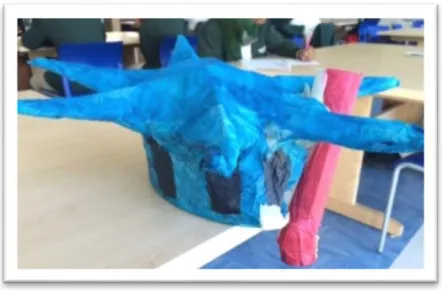
were asked to create a wearable lantern that can glow at night in hopes of participating in the
annual night lantern festival in Atlanta. These lanterns creatively portrayed a destination of their
[image:42.612.195.416.529.676.2]choosing to highlight the different fundaments of Geography.
Figure 2 Student Work Representing France
For Unit One, assessment includes a pre-test, weekly quizzes, and a post-test to track
student progress and growth. It was expected students would not score high on the pre-test since
lessons did not take place prior to implementing the pre-test. Quiz scores vary each week since
content has been covered prior to any daily quizzes. The quizzes are used to remediate content
the following week to ensure that students are retaining information and have a better
understanding before taking the post-test. Workshops for remediation include small groups, class
discussion, and additional content specific assignments.
Table 1 Unit 1 Pre-test and Post-test Average
Assessment Pre-Test Quiz 1 Quiz 2 Quiz 3 Quiz 4 Quiz 5 Post-Test
[image:43.612.74.550.606.667.2]Table 1 provides an average test score for each assessment between the 22 participants in
this study in 2nd and 3rd period. Quiz one covered basic Art and Geography content, and I am
pleased to see student growth in comparison to the pre-test score. Quizzes two and three dropped
when a STEAM component, math and physics, were introduced in the lesson. It was the GAGA
student’s first exposure to a rather in-depth lesson with another subject area in an attempt to
bridge cross curricular learning. As a result of such foreign interdisciplinary connection in our
GAGA class, the quiz average supported a need to make better connections in each classes.
The concepts of average speed, calculating average speed, and distance conversion in
science and math were introduced simultaneously to the lantern production in GAGA. Despite
the simultaneous learning, the test score indicated that additional review was necessary in order
to support and make connections in their math and science class. It was not until I pulled students
into small groups based on their weekly quiz performance for mathematics deficiency that I
learned, not every student was taking a common math course. Some students were enrolled in
geometry, thus conversion was not covered in their math class at the time. Although the majority
of the students took algebra, there were a few students who took math support or algebra
foundations. As a result of this, I learned there was a small number of students who did not
experience the cross curricular learning we had originally planned.
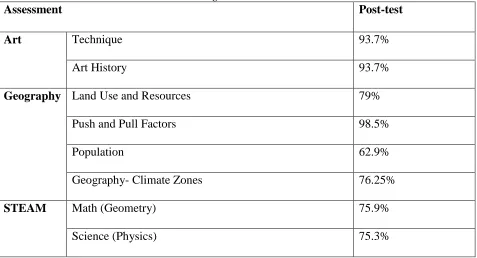
Table 2 provides an in depth analysis in each content area and growth between pre-test,
quizzes, and post-test. Content area includes Art, Geography, and STEAM components such as
Engineering, Physics, and Algebra. For the data provided in Table 2, average speed calculation
are grouped in the Physics content. Questions related to numerical conversions are assigned to
provides data on areas which need more attention and better delivery in the future. Multiple
workshops were implemented to support student learning where needed on a daily basis.
Table 2 Unit 1 Summative Assessment Average Comparison
Assessment Percent of Students with
Correct Answer
Pre-test Post-test
Art Elements of Art – Form, Line, Value, Color, Shape, Space, Texture
55.2% 81.8%
Principles of Art – Balance, Emphasis,
Contrast, Rhythm, Unity, Movement, Pattern
N/A 85.7%
Art History N/A 63.9%
Creative Process N/A 77.3%
Geography Cultural Geography N/A N/A
Map Skills N/A 86.4%
Political Geography N/A 91.84%
Physical Geography N/A 84.1%
ESPN – Economic, Social, Political, and
Environment
N/A 65.6%
STEAM Science (Physics) – Average Speed Calculation
85% 50%
Science (Physics) - Conceptual Average
Speed
31% 27.3%
4.1.1 Student Commentary Unit 1
For Unit One, students were able to articulate what they created and demonstrate how it
relates to Geography, Art, and STEAM. Students were asked to create a custom wearable lantern
representing a country of their choice, equipped with a ramp so that a ping pong ball,
representative of a person, could travel through the glowing lantern (country). Student A8
concluded the “project challenges each student to research about a place they aren’t familiar
with.” Students had to research the economic, social, political, and environment (ESPN) aspect
of each country and creatively expressed this through an art form via a lantern. For example, A8
stated “I chose different colors and tribal markings to illustrate landmarks and locations
consisted of shapes and lines.” A8 was able to see how interdisciplinary education took place in
the GAGA classroom expressed “math and science was incorporated by how fast each ping pong
ball went through the roller coaster of the lantern hat.” All students participating in this
interdisciplinary project in the GAGA integrated classroom and maintained interesting
[image:46.612.232.378.485.687.2]perspectives on the project.
There was an overwhelming consensus that the project was creative and fun. Several
students including A7 found the project to be so fun that he or she would do it again. A6 favored
the project because it provided a chance for students to include LED lights which allowed the
lantern hat to glow in the dark during the Atlanta Lantern Parade. Participants such as A2 shared
an appreciation of freedom to choose a country of their choice for the project. Students learned a
number of new facts regarding their chosen country economically, culturally, historically, among
other aspects. More importantly, students such as B8 and A4 enjoyed learning about other
countries through their peer’s unique presentation.
Though the project was a fun assignment, there were also challenges expressed by several
students. Certain students felt there was a time constraint since the construction of the lantern
required abundant amount of time per A9. One student, B9, pointed out that the original sketch
seemed achievable but much more difficult during the production process, thus the design had to
be modified. Although B9 did not voice her concerns in person, many students also had to
reconstruct and edit certain parts of their design. Another challenge faced by many students was
the construction of the ramp. A4 expressed frustration during the creation of the ramp because it
wrapped around or inside each student’s lantern in order for the ping pong ball to travel.
Students also gave input on what improvements can be made moving forward in the
GAGA classroom. There were a mixture of feelings in regards to the integration of Art and
Geography. Some students, including A3 and A9, felt that art lessons took up too much time and
wanted more Geography content to balance the class. A8 provided valuable information by
expressing concerns with research skills. This participant wanted more guidance and emphasis
on the research process rather than the art production since the research is the foundation of a