Citation:
Bolton, S and Jackson, D and Long, J and Robinson, P and Robson, S and Totten, M and Welch, M (2003) Awards for All: an impact study evaluating sports projects in the Awards for All Programme. Project Report. Conducted for Sport England by the Centre for Leisure and Sport Research Leeds Metropolitan University. (Unpublished)
Link to Leeds Beckett Repository record: http://eprints.leedsbeckett.ac.uk/1604/
Document Version: Monograph
The aim of the Leeds Beckett Repository is to provide open access to our research, as required by funder policies and permitted by publishers and copyright law.
The Leeds Beckett repository holds a wide range of publications, each of which has been checked for copyright and the relevant embargo period has been applied by the Research Services team.
We operate on a standard take-down policy. If you are the author or publisher of an output and you would like it removed from the repository, please contact us and we will investigate on a case-by-case basis.
Awards for All
An Impact Study Evaluating Sports
Projects
in the Awards for All Programme
Acknowledgements
First and foremost we need to thank all those who returned one of the postal questionnaires, gave an interview or contributed to group discussions. Our formal contacts are listed in the appendix, but there were many more beside.
Emily Palmer and Janet Allen provided liaison with Sport England.
The project was directed by Jonathan Long, project management was undertaken by Mel Welch, and the field research team led by Paul Robinson.
The researchers were: Sally Bolton, David Jackson, Jonathan Long, Paul Robinson, Stephen Robson, Mick Totten and Mel Welch. All contributed to the drafting of the report, which was edited by Jonathan Long and Paul Robinson.
Contents
1.
Introduction
2.
Research Approach
3.
Extending the Reach
4. Project
Outcomes
5.
Organisational Outcomes
6. Running the Scheme
7.
Conclusions
8.
Recommendations
APPENDICES
I.
Analysis of Results of Questionnaire
II.
Schedule of Interviews Conducted
III.
Research Instruments for Interviews
IV. A4A Case Study Profiles
V.
Regional Information
VI. Quotes from the Questionnaire
Centre for Leisure & Sport Research Fairfax Hall
Beckett Park Leeds LS6 3QS Tel: 0113 283 7565 Fax: 0113 283 3170
1. Introduction
1.1 Background and Context
Launched as Millennium Festival Awards for All, the scheme awarded its first grants in 1999. Since its inception the scheme has gradually evolved, but throughout it has been offering small grants of between £500 and £5000 to community groups. Awards for All (A4A) funds projects that enable people to take part not just in sport, but in art, heritage and community activities as well as projects that promote education, the environment and health. By the end of 2002 there had already been 13,948 grants awarded to sports related projects.
Awards for All is administered by the Community Fund on behalf of the five Lottery awards funds (Arts Council England, Community Fund, Heritage Lottery Fund, New Opportunities Fund as well as Sport England). In its current form, all the funding bodies contribute to a ‘joint pot’ and decisions regarding allocation are made collectively at regional level (matching the nine Sport England regions). Unlike many other sources of finance, applicants are often awarded 100% of the costs of completing their project and are not expected to secure partnership funding.
1.2 Rationale of the A4A Scheme
The National Lottery has given Sport England the opportunity to distribute funding instrumentally to secure a range of social objectives. For example, the Sport England consultation for the review of Lottery funding suggested that the funding should be seen as ‘a catalyst in the continuous development of healthy lifestyles and socially inclusive communities’ (sportengland.org/lottery/lottery_1.htm). Sport England’s publicity indicates that Awards for All is seen as opening another door for funding that did not previously exist – ‘not just another funding pot’. It also promises a more accessible way of applying for resources and, moreover, that the Lottery distributors should operate as ‘investment partners’ to try to ensure that the projects succeed.
Recognising that Lottery Funding was going primarily to major organisations for large-scale projects, the Lottery distributors established this scheme to support local groups by providing small scale funding to enhance community activity. This is typically used to aid areas and groups experiencing deprivation and is predicated on the belief that small sums of money can have a significant impact. To this end it has three key aims:
· to extend access and participation
· to increase skill and creativity
· to improve the quality of life
1.3 The Need for the Research
Annabel Jackson Associates had conducted research between November 1999 and March 2001 on the impact of Awards for All in England and a similar study for Awards for All Scotland in 2002. Both studies considered a variety of different projects across the full range of A4A funded activities (i.e. not just sport) as did a smaller scale research study conducted by Lynn Whitfield in 2001 for Awards for All in the South West. All reached similar conclusions that the scheme generally met its overall objectives although some improvements could be made. Sport England felt it needed national research specifically on sport to inform its debate about whether investment in the scheme is providing value for money in terms of achieving its aims and objectives for the scheme. The Centre for Leisure and Sport Research was therefore commissioned to conduct a programme that would:
· Review the effectiveness of promoting the scheme to reach the identified priority groups and get beyond those who usually apply for funding. [Is it reaching the deprived communities / small organisations / etc. intended?]
· Identify what the impacts of funded projects have been in terms of effectiveness of outcomes [Does A4A contribute to quality of life, enhance skill/creativity or extend participation?]
· Consider issues of sustainability and lasting effects. [Has the grant helped to make the organisation more secure and ensured its future continuance?]
· Gather feedback from community groups and those involved in the scheme regarding the appropriateness of its format and the efficiency and effectiveness of its administration. [Is the scheme well conceived and the process simple for applicants to follow, and do applicants get a swift response and know what is expected of them thereafter?]
1.4 The Report
We have drawn together material as appropriate from each component of the research, to address the key issues addressed by the study. Wherever possible we identify forms of good practice uncovered by our research that help to achieve the goals of Awards for All and provide feedback to the continuing evolution of the scheme. The different forms of research and assessment are set out in the next chapter with a brief description of the work undertaken by the research team.
Chapter 4 reviews the success of the projects in achieving the key outcomes desired by Awards for All: increasing participation; improving skill levels; and enhancing the quality of life. Chapter 5 then extends that to the desired organisational outcomes regarding increased capacity and sustainability.
The sixth chapter considers the running of the Awards for All scheme, specifically as it relates to sport. This recognises the significance of a range of partners integral to the process, and reviews some of the mechanics of the scheme. Particular attention is paid to the promotion of the scheme and the awareness and knowledge of potential partners and applicants. We also address how easy it is to apply for an award, the kind of support that is available in doing so and the processes for providing feedback and monitoring.
The concluding chapter reviews the achievements of the sporting awards for all and considers the claim not just to be ‘another funding pot’, but one with a distinctive purpose and set of outcomes. We also consider the implications of the findings of the research and make recommendations for the future running of the scheme.
2. Research Approach
2.1 Secondary Analysis
An early briefing meeting with Sport England was used to clarify aims and objectives and provide background information on the running of A4A.
The A4A database of sports-related grants awarded provided useful orientation for the research team by giving some insight into the nature of projects being supported through the scheme. Beyond that the A4A database also allows an examination of regional variations, for example comparing distribution patterns for sport with those of other types of project in A4A and comparing A4A sport funding with that of the Sport England Lottery funded programmes.
Unfortunately the usefulness of the database for more detailed analysis of grant awards is severely constrained by the procedures adopted for data entry. The result is that there is no straightforward way of comparing the amount of money / number of grants directed to particular priority groups. For example, even when we thought we had identified projects intended to benefit minority ethnic groups, we found that subset included applications that had checked the box for ‘other’ on the basis that they are open to all. Such projects almost certainly are doing nothing to promote greater participation by minority ethnic groups. The matter is complicated further by sometimes suspect multiple ticking of boxes, making it impossible to distinguish who the primary beneficiaries of the project are expected to be.
2.2 Postal Questionnaire
Working from the aims and objectives of the research a structural framework was established for a postal questionnaire to be administered to recipients of grants. Some of the questions were adapted from the questionnaire used by Annabel Jackson Associates, but the majority had to be devised specifically for this study. A draft questionnaire was reviewed with staff of Sport England and piloted among local contacts in sports organisations. The questions were accompanied by an explanation of the purpose of the research and respondents were offered the inducement of being entered in a prize draw (see Appendix 1 for a copy of the questionnaire and the overall results).
Using the A4A awards database, respondents were selected randomly from each of the nine regions in proportion to the number of sports awards allocated in the region. This produced a stratified random sample of 2000.
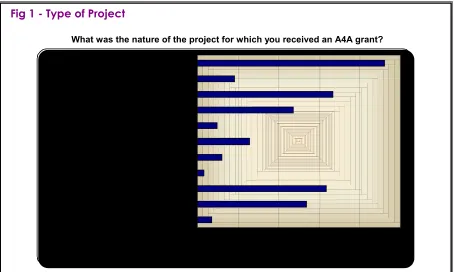
74% of responses were from sports organisations (65% were sports clubs), and the remainder were almost entirely from schools (18%) and community groups (6%). These represented a wide range of projects, including (in rank order) the purchase of equipment, development programmes, establishing new clubs/teams, hiring facilities, coaching or coaching and equipment and staff training (see Fig 1). For just over two thirds (69%) of respondents the A4A funding was finished, although 42% of those were continuing the project with other funding. The remaining grant recipients were responding for A4A projects that were still underway, apart from just 1% that had never got going.
Analysis of the questionnaires was conducted using SPSS for Windows. All percentages given in this report have been rounded to the nearest whole number after eliminating missing values and no replies. Full details of the results of the questionnaire and an analysis of the responses can be found in Appendix I.
2.3 Field Studies
In discussion with Sport England five of the nine regions were selected for closer study of what has happened ‘on the ground’. Each was then assigned a particular theme to provide the focus of investigation reflecting Sport England priorities:
· East Midlands Disability
· Yorkshire and Humber Black & minority ethnic groups
· London Young people
[image:10.595.73.527.214.486.2]· North East Women and girls
Fig 1 - Type of Project
What was the nature of the project for which you received an A4A grant?
0 5 10 15 20 25
Provision of equipment Organisation of an event Setting up a new team or programme Coaching Refurbishment Rent/purchase facilities Staff training Marketing/ admin expenses Run a development programme Multiple responses Other
%
· South West Rural deprivation
It was agreed that, given the aims of A4A, deprivation and disadvantage should be a common theme in the other regions beyond the South West. Similarly the concern with groups not previously supported by grant aid would be picked-up in each region.
There were four key groups to be interviewed in each region: 1. Grant deliverers – Sport England and A4A regional staff
2. ‘Partner’ organisations – Sporting Equals, English Federation of Disability Sport, Women’s Sport Foundation, plus local authorities (e.g. sports development officers), Sports Boards, Federations of Sport, etc
3. Award recipients – organisations in receipt of grant
4. Participants/beneficiaries – local people affected as a result
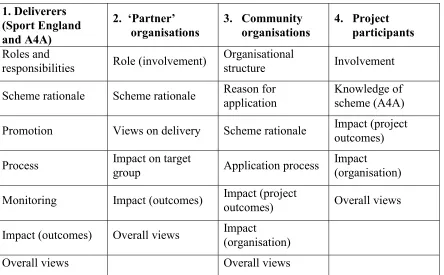
Consequently, our field programme involved a large number of interviews. In total we conducted over 120 interviews/discussions apart from our attendance at 6 related events that gave us the opportunity to discuss A4A issues with many more (see Appendix 2). Given the diversity of interviewees, core topics varied (Table 1) although some questions were consistent across all groups apart from the participants (see Appendix 3 for the fuller interview schedules). Each set of interview questions started with some ‘soft’ ones to encourage discussion and then followed the sequence that was most appropriate for that particular respondent. It proved unnecessary to ask all questions as answers to some emerged naturally through the course of the discussion.
2.3.1 Interviews with professionals
In each region the programme began with interviews with key professionals from Sport England, A4A and their partners. These included organisations, like the Women’s Sport Foundation, the English Federation of Disability Sport and Sporting Equals, with a special remit relating directly to the various priority groups identified (see Appendix 2 for a listing). Respondents were provided with a briefing about the purpose of the research prior to the interview, which was recorded and then transcribed under major headings.
2.3.2 Case studies of recipients
The A4A database was used to identify the subset of projects in each region that matched the national requirements of the study and the respective regional themes (see above). Advice was then taken from officers of A4A, Sport England and partners to narrow down to a shortlist of possible case studies. The research team then selected five projects in each region that offered a suitable range, both within individual regions and across the overall sample (Appendix 4). The final selection features a broad mix of projects reflecting the type of organisation, type of award/project and time of award.
Within each project we tried to ensure that different voices were represented and sought the original applicant, the primary deliverer (if different) and people who took part in the scheme as sport participants. The main topics covered with each type of respondent are set out in Table 1.
Table 1: Topics Addressed with Respondents
1. Deliverers (Sport England and A4A)
2. ‘Partner’ organisations
3. Community organisations
4. Project participants
Roles and
responsibilities Role (involvement)
Organisational
structure Involvement
Scheme rationale Scheme rationale Reason for application
Knowledge of scheme (A4A)
Promotion Views on delivery Scheme rationale Impact (project
outcomes)
Process Impact on target
group Application process
Impact
(organisation)
Monitoring Impact (outcomes) Impact (projectoutcomes) Overall views
Impact (outcomes) Overall views Impact(organisation)
Overall views Overall views
2.3.3 Group discussions
Members of the research team also held group discussions at five meetings attended by people representing a broad range of sports and positions within sport. This allowed an appreciation of general levels of awareness of A4A and feedback from those who had received grants and some whose applications had been rejected.
2.3.4 Community fieldwork
The previous parts of the research involved people who are already part of the A4A set-up in one way or another. We were keen to reach those people who appear to be the sorts of groups who might benefit from A4A, but who lie beyond its current reach. Unfortunately, for data protection reasons, we were unable to have access to details of groups that had had their applications rejected. Instead we identified three sets of respondents to represent these hard to reach sections of the community: in a Sport Action Zone in Bradford; within an area for which an application has been submitted for SAZ status in Leeds; and in surrounding areas. We chose the SAZ as our starting point because it is designed to encompass the very people who A4A may be able to assist in satisfying sporting needs.
The same enthusiasm as shown by case study organisations was characteristic of those we approached directly while doing this less structured fieldwork. Once again interviews were a mix of face-to-face and telephone contacts. Some of these respondents were already well informed of A4A, in the case of others the discussion took the form of an information exchange. The main issues addressed with these respondents were:
· awareness and knowledge of A4A;
· the appropriateness of A4A’s priorities, conditions, procedures
· perceived potential benefits
· the needs of the group in terms of support required to secure such funding
3. Extending the Reach
[image:14.595.72.406.269.377.2]One of the principles of A4A is that it should get funds to organisations that would not normally benefit from public funds. The postal questionnaire offered some evidence that A4A is extending the reach of public support for sport. Only 7% had previously applied for an A4A grant, less than half of whom had been successful prior to the current project. Some had been in receipt of funds from more than one source (Table 2), but overall only 29% had received any external funding before this A4A grant; this means that a large majority (71%) had not had previous funding. Most of this sample could therefore certainly not be seen as habitual grant recipients. Indeed, some of the organisations (8%) were formed specifically in order to apply for an Awards for All grant, half of which indicated that the organisation intends to continue even after the Awards for All project has been completed.
Table 2: Sources of external funding prior to A4A award
Source percentage of respondents
Local authority 19
Charity 12
Other National Lottery 4
Other A4A 3
Other Sport England 3
N.B. Some organisations received funds from more than one source
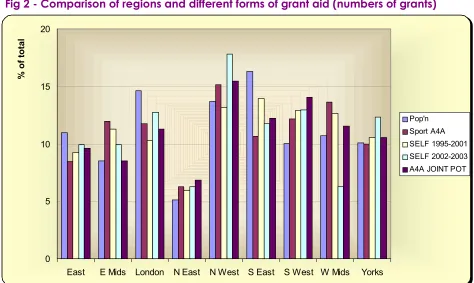
[image:14.595.67.541.498.781.2]The central databases allow some insight into the regional distribution of Lottery funding. Figure 2 compares the distribution of all A4A funding from the joint pot with that of A4A sports awards and grants from the Sport England Lottery Fund. While London and the North West have consistently done better in terms of £/capita, this depiction, based on number of awards, suggests a more complex picture, but one in which the North East and South West appear relatively successful.
Fig 2 - Comparison of regions and different forms of grant aid (numbers of grants)
0 5 10 15 20
East E Mids London N East N West S East S West W Mids Yorks
% of total
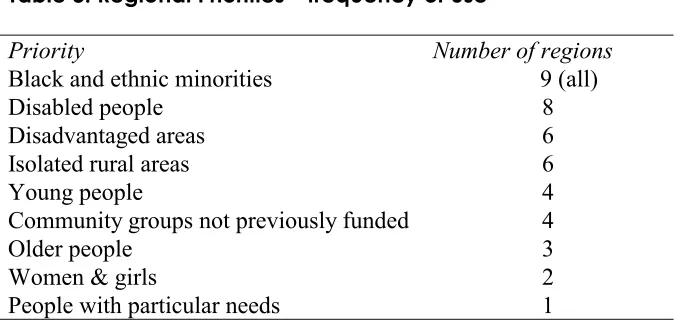
Each A4A regional office has identified a set of priorities (anything from three to seven). Most of the regions have been reviewing these, but Table 3 shows the extent of those being used at the time of the research. Importantly, these are A4A priorities determined by the Joint Regional Committees and may not be the same as Sport England would otherwise choose. For example, women and girls are identified as a priority in only two regions.
Table 3: Regional Priorities – frequency of use
Priority Number of regions
Black and ethnic minorities 9 (all)
Disabled people 8
Disadvantaged areas 6
Isolated rural areas 6
Young people 4
Community groups not previously funded 4
Older people 3
Women & girls 2
People with particular needs 1
As explained in Chapter 2, within each of our regional study areas we focussed on a different priority group. A summary of the recurring themes appears at the end of this chapter for those wanting a quick guide.
3.1 People with Disabilities
(East Midlands)
A recent Sport England survey of participation by disabled adults concludes that opportunities are limited by comparison with the general population:
Sports participation rates for disabled adults are significantly lower than for non-disabled adults. This is true for people with a wide range of different disabilities (Sport England, 2002).
The situation is adversely affected by the incidence of low incomes, transport issues and wider social disadvantage among disabled people, combined with a general lack of information available to them about possible sports opportunities. There are a number of national initiatives built around trying to remedy this situation, but these are still in the relatively early stages of development. Past interventions have had limited overall impact on participation in sport by disabled people. The A4A scheme is different in offering an easily accessible means of facilitating (primarily) small-scale projects that can have a significant impact on local opportunities for disabled people. It also has the potential to empower local groups to initiate action to help themselves. However, as with other socially excluded groups in this study, further assistance is often required to enable such groups to take full advantage of the opportunity.
regional priority and EFDS has been a partner from an early stage. Despite this record, EFDS nationally is concerned that the grants management system operated by A4A does not supply them with sufficient detail to keep them adequately informed. One of their concerns is that several of the schemes that have been recorded as addressing disability, are not in reality doing so. The Regional Director of Sport England was similarly cautious:
“Good quality schemes for disability are coming through, although we still get cynical ones, e.g. ramps for access or toilets which are accessible but primarily intended for older members or anyone to use”.
Commenting on their decision to fund an A4A promotional post from the ‘target group action plan’, a Sport England officer noted, “Its worth has been proved since the number of disability applications has gone up”. The person appointed supports and liaises with the respective county disability-specific officers and gives direct support to disability groups where there is no county post. One club chairman was particularly appreciative of the very helpful support received from the post holder over a series of three meetings. EFDS had hoped for more of these posts to be established, but the idea has fallen foul of the current Sport England funding hiatus.
EFDS officers feel they have to be heavily involved in the application process in most cases. One EFDS officer suggested that “disability groups have often been influenced by the advice they have received on applying but not always then been ready to put projects into action once the application has been approved – they are not as used to the process of putting in applications as others”. For some disability groups the conditions of award are difficult to meet (constitutions and proof of financial arrangements). To address this EFDS offers advice and has prepared templates which can be adopted. However, despite A4A/Sport England/EFDS ‘dummy’ constitutions, one disability representative still commented that the A4A documentation was a “major stumbling block for disabled and other under-represented groups”.
At an informal activity group that has since become an established club it was noted that, “The EFDS were a critical friend – a source of help and advice throughout [the application process]”. There was a strong message that A4A provides an opportunity for disability groups but that, where organisations are new or informally structured, outside assistance is often needed in order to exploit the opportunity.
“If it hadn’t been for EFDS coaching us through the process, we would not have made the application at all. It is difficult for a layman and time constrained community worker to find the time or inclination to complete all the paperwork. I know of other projects that could qualify for funding, but who have abandoned the application because it is too onerous. EFDS was a major help, without partner organisations’ assistance applications such as this one would not get made.” (newly formed disability club)
There is no doubt that historical attitudes still linger in regard to disability. It was suggested that some disabled people react to these by thinking they should get money because of their disability, while the officers are trying to encourage a more forward looking approach in accord with models of sports development. In attempting to do that the chairman of a newly formed club, having not previously made an application, was pleasantly surprised by how much money they received. Elsewhere, a disabled participant had come to appreciate that “if you don’t apply, you won’t get”, and they are now considering how to get funding for other clubs they are involved with. However, an EFDS officer found it difficult to say definitively that A4A has been a catalyst for future projects. Nonetheless, they were aware of some groups that did not previously exist and have now gone on to develop further.
“It has definitely encouraged the formalisation of previously loosely formed groups, which have now become established clubs. One of our initial concerns was about the tranche of disabled people who don’t organise into clubs – could they access funding? With support they are able to take that step.” (EFDS officer)
The recurring theme was one of achievement in terms of both applicants (winning the grants) and participants (through involvement with the funded projects). Overall the result is a change of horizons and respondents are typically very positive about A4A.
“Yes, it’s successful as it’s a lot easier [to access] than other schemes and it’s more successful in hitting the target group than others.” (EFDS officer)
“It met my expectations and went beyond them.” (project participant)
3.2 Minority Ethnic Groups
(Yorkshire and the Humber)
The number of Black and Minority Ethnic (BME) groups accessing funds reveals a level of awareness of A4A and we found enthusiasm for A4A built on considerable optimism that real benefits had resulted from the scheme. The success of some has given growing confidence to others. Nonetheless, there are many bona fide organisations who have not heard of A4A or who have neither the trust nor confidence to start to get involved in the process of applying for funding. Making the first step is fraught with problems for groups who do not naturally access ‘mainstream’ methods of support. Individuals and organisations involved in a range of capacities believe that much more can be achieved: “the message needs to be spread further”.
A4A. Should the promoters of A4A develop strategies to reach groups through the sporting network or through the community network?
In our fieldwork most of those working within BME communities believed that A4A does indeed reach those parts of the different communities sought out. The consequences are considered to be very positive and empowering for both the experienced and newcomers. A4A has the potential to achieve more than other schemes partly because of this ‘bottom up’ approach that ensures involvement and ownership. This is seen as a crucial element in further development, but the view is tempered by acknowledgement that many groups with whom liaison workers have contact are reluctant to enter the process. The reasons range from pre-conceived ideas about chances of success to simple fear of filling in the forms (either correctly or at all).
It is increasingly difficult to isolate measures for particular groups from national and regional targets influenced by policy debates about the ‘cross-cutting agenda’. Our experience suggests these are being directly addressed in terms of economic deprivation, issues around crime, drugs and community health. There are additional benefits perceived in cross community relations and evidence of different minority groups sharing knowledge and experience to further their ambitions. One new Asian group enthused about the contacts who had advised them: “We were helped by some of the people from the Caribbean Sports Club who work with BEMSport”.
A more focussed approach is seen by BME groups as essential to future expansion. The view of grant recipients interviewed in Yorkshire is that Sport England is doing a relatively good job of reaching out to the world of sport. The problem for minority ethnic populations (and other hard to reach groups) is that these traditional sporting networks are not so effective in reaching less accessible communities. It is therefore appropriate that an alternative line of communication is pursued that reaches out through the community network instead of the sporting network. In Yorkshire, Sport England uses the system it set up via BEMSport (Black and Ethnic Minorities Sports Forum - Yorkshire) and employing consultants with a community work background. The latter are being successfully used both to transfer the message and to empower BME groups to access A4A funding.
There is a view that the training of community trainers who are able to facilitate both further training and support for individual groups, as has happened through BEMSport, is crucial. The consultants employed amplify this view and place it at the top of the list on their wider strategic map, independent of any A4A initiative. Further support for this approach comes from the BME communities and those employed to deliver this work but this is tempered by a concern that whilst much more could be done, resources are needed at a higher level than are currently available. This is both in terms of funding the training of more trainers and providing more money to support the greater number of schemes that would follow.
development of BME communities and as such their funding by A4A may be questioned if that were the reason they were granted money.
These concerns notwithstanding, A4A is generally considered by BME groups to be one of the most successful methods of distributing lottery funding. It is providing targeted resources for a range of groups and activities many of whom might not have received any financial support without it. In so doing A4A is having a real impact on sporting and social development within BME communities and there is resultant strengthening of existing groups and real support for fledgling organisations. This in turn is generating the confidence so important to long term sustainability and development.
3.3 Young People
(London)
Projects aimed specifically at children and young people were identified in London where case studies concentrated on educational and charitable agencies specialising in working with these age groups. In practice many applications for activities involving young people come from organisations other than sports clubs. The skill of schools and mainstream charities working with young people to apply for this funding is often much greater than that of small sports clubs. These sports clubs are slow to hear about the opportunities, may have difficulty with the form filling, and cannot easily provide the supporting documents.
Because the scheme is now being over-subscribed, little is being done by A4A to attract new applications in London. Professionals (e.g. teachers, sports development officers, charity workers) find the forms relatively easy to complete, though schools find it hard to understand why the supporting documents should even be necessary, believing that their status and financial responsibility should go without saying. For such individuals and organisations, an A4A grant can be a relatively small part of a total budget, but one that may enable an activity to take place that would not otherwise have been possible. Some process several applications:
“We run a football league for disadvantaged teams (homeless, refugees, drug rehabs etc.). We apply for an A4A grant for each team on their behalf. They receive the money and pay part of that back to us for services provided.” (charity worker)
Where equipment has been purchased with some or all of the funding, it is usual for this to be seen as now being part of the substantive equipment base of the organisation (e.g. the school). As such, the expectation is that it will be repaired/replaced in due course from mainstream funding - the equipment becomes part of the main PE repertoire and is available in curriculum time as well as for the A4A project.
Small sports clubs are more difficult to track, and do not necessarily stay in existence for long. Projects run by volunteers and aimed at providing new opportunities for disadvantaged young people are often short-term, ending when the money runs out. The ability to subsidise the participants is dependent on external funding that is unlikely to be replaced in due course.
(a) contemplated (for example, a strong interest in cricket has been developed among Turkish and Kurdish communities in a primary school in Islington); or
(b) been able to afford (for example a cycling club at an East End school).
New sports can appeal to different children who may be less motivated by the ‘traditional’ games on offer. In inner-city environments, the lack of playing fields at or near their school or home has further limited their opportunities in the past. Awards for All has succeeded in introducing many young people to sports that they would not normally have encountered, and in some cases they have discovered and revelled in their unknown talent. Almost by definition A4A has contributed to increased participation.
“We had a go in our PE lesson and I came second. I didn't know that I would be any good at it until then. Now I go to the club every week and we have won the Panathlon against 3 other schools” (12 year old girl member of school cycling club)
All the projects for young people reviewed in this survey were in areas of urban deprivation, and many of the communities benefiting have a multi-ethnic mix (one school visited had students with over thirty mother-tongues). In some cases this wide range of ethnicity has led to confrontation or self-segregation, but the ability to offer common interests through sport has helped to promote racial harmony. Sport has proved to be an excellent way of bringing these groups together even if the children do invariably choose their teams along ethnic lines. Unfortunately, some respondents also observed that young people may face parental pressure to conform to their ethnic norms outside curriculum time, thereby severely limiting their opportunity to participate in after-school clubs. Moreover, as one teacher pointed out: “It's difficult to get some of the children to attend or have any commitment to after school classes. A lot of the children have to attend Arabic classes after school.”
The very nature of some of the communities for whom the funding is secured challenges the possibility of development and sustainability. For example, a youth centre, which provides support for homeless young people, organises an indoor football session each week and take part in a league once a month. However, the number of players involved at any one time is generally small (no more than 8-10) and the participants are constantly changing (as would be expected by the nature of the institution).
The projects which are based in institutions like schools have enabled highly committed and inspirational teachers to improve the education and lifestyle of their pupils. The legacy of the new facilities and equipment provides optimism for the future that the projects will continue to flourish and more young people will have the opportunity to benefit. However, it is clear that the success of the projects (indeed the inspiration behind them) is not in the institution per se, but dependent on the commitment, enthusiasm and vision of one or two outstanding individuals. When they move on (most of these individuals are relatively young and likely to make career moves) the project may wither.
Those responsible for the applications were all very complimentary about the programme. They recognised that, even with any shortcomings that they might have identified, it was still the easiest and most effective funding programme that they had encountered in their work with young people.
3.4 Women and Girls
(North East)
The General Household Survey (1996) identified that the North East was the English region with the biggest gap between male and female participation in sport. Moreover, women and girls represent one of the regional foci for A4A. It is thus encouraging that a significant number of the projects to have been funded are indeed led by women and girls, explicitly for the benefit of women and girls. However, it is questionable whether the majority of projects claiming to provide a new or enhanced service for women and girls are actually doing so. Approaching half of the applicants are male, and the majority of the project descriptions do not make specific reference to women and girls, so there is a concern that groups have ticked the ‘women and girls’ box to satisfy the requirements of the awarding body.
According to the assessment of Sport England in the region, established groups are adept at using A4A as a resource. Beyond that, targeted work through the Women’s Sports Foundation and other partners is engaging those who are harder to reach. It was recognised that while this input may increase the quality, as well as quantity, of applications, the process is quite slow because of the need to generate constitutions and bank accounts. Despite the acknowledged successes of the scheme, most partners feel that awareness could be higher and are concerned that even among those who do know of it there are many who feel it is not for them, even that there is a catch.
While the partner organisations considered the application form to be suitably accessible for the groups they are working with, many applicants found it daunting and were therefore extremely appreciative of the support they had been able to get. By the applicants’ own admission, some of the bids may never have succeeded without this input. Although the conditions had caused delays for some, they were not considered to be inappropriate. Sport England does encourage potential applicants to consult an appropriate support agency or previously successful bidders. There is now a network of support agencies in place across the region (available to any applicant).
All of the projects assessed in the North East are located in the context of, and seeking to address, some aspect of deprivation, some more explicitly than others. For example, an outdoor activity project was described by the grant applicant as being “for socially isolated women, often in economically deprived situations”, and as such she sees the A4A-funded activity programme as a “vital service” because “not a lot else is provided in this town”. While none of the participants reported direct experience of adverse economic circumstances, some commented upon the positive contribution made by A4A-funded activities to those in this situation. The girls from the outreach branch of a netball club remarked that some had stayed away when the price of admission was increased to £1, highlighting that cost is still an issue for some, despite the advances the club has made.
importantly, women’s, girls’ and junior sections are instigated through the use of this money. This is neatly summarised by a partner working in girls’ sport who reported that “more clubs have started and more clubs are now doing more things than they did before”. However, a concern was expressed that some activities, sections and even clubs would only exist while the A4A money is available.
In most of the case studies it was reported that activities are being provided which would have been impossible without A4A support. This provides some evidence that A4A is capable of challenging traditional gender, geographical and economic barriers, and in at least one instance, the very women who would traditionally encounter discriminatory forces are shaping their own destiny. This women-led group is now more aware of the support mechanisms available but simultaneously less reliant upon outside backing ("Our house is in order now"). While there is evidence that rank-and-file club members from similarly excluded backgrounds are sharing in the benefits, some of the bids have been led by women and men from less disadvantaged circumstances. There are encouraging instances of participation amongst hard-to-reach sub-groups, such as the number of 16-17 year-olds attracted and retained by one club. The outdoor activities project, meanwhile, provides activities for women in the 25+ age group, and is particularly appealing to women aged 40 and over, whom the applicant feels are disadvantaged in many walks of life. Elsewhere, some of the footballers commented that previous experiences with women’s and girls’ football clubs had not been positive, but that the A4A-funded club is more professional and confident in its approach.
The partner organisations were persuaded that the empowerment of women’s and girls’ organisations is happening in the region. However, they were divided on whether A4A is more responsible for this development than other funding pots, although examples were cited where A4A has made a significant difference. One of the projects is in a community which ranked 9th nationally in the Index of Multiple Deprivation in the DETR’s 2000 study and is now recognised as offering an example of local success. The case studies illustrated how A4A funding has contributed to the empowerment of women in potentially excluded situations. We received reports of feelings of increased confidence and for some, A4A has acted as a springboard so that they now feel prepared for the challenges of future bids to this and other schemes. It should also be noted, however, that 2 of the 5 groups had men involved in the application process, so the extent to which women and girls have been empowered in these circumstances is less clear. On the other hand, one netballer, who has been ‘in the system’ for 10 years, feels that the club would benefit from the involvement of men and boys, and this would not compromise the positive strides made by and for women and girls.
3.5 Rural Deprivation
(South West)
“It is certainly great to have your lungs full of clean air. And it’s a nice place to raise the kids. But if you are one of those kids, out in the sticks and feeling that there is little else to do but breathe … it can seem small recompense. One of the biggest problems facing many – particularly the young – living in our villages and hamlets is isolation, compounded by lack of transport.” (Culture South West, 2001: 17)
Awards for All acknowledges that deprivation is not restricted to urban areas. Recent research commissioned from Durham University by the Community Fund noted how localised deprivation can easily be overlooked when dealing with aggregated statistical data. A consideration of ‘bench-mark’ measures of deprivation and disadvantage in England led to the conclusion that no measure of deprivation at an area level can identify every ‘pocket’ of deprivation, and that these pockets probably occur more often in rural areas (Community Fund, 2003). Although deprivation is a common issue in A4A deliberations, and running through this report, we focussed specifically on rural deprivation in the South West. The problems of isolation and limited sporting opportunities, as identified in the quote, are not faced only by the young in rural areas. Facilities, travelling distance to get to them and choice of activity once there, are all limiting factors for anyone interested in sport in such locales.
Since larger facilities are more commonly located in areas with concentrations of population, those in rural areas are largely reliant on the sports opportunities offered by local clubs and organisations. Although possible funding accessed via A4A is relatively small, it was generally felt that it can make a big difference to small rural organisations such as village hall committees and clubs.
A rural development fieldworker, who felt involved as a partner working with the A4A set-up, noted that local groups would often say, “Just give us the money – why do we have to do all these things [in the application]”. However, she explains that “it’s a good discipline for them to work through a developmental process”. Other development officers commented on the importance of development planning not only in producing an application that is successful, but also in terms of ensuring the successful implementation of schemes.
Sports organisations in rural areas in particular may be small in size and keeping their heads above water through the efforts of a few dedicated volunteers/officials. One Sport England officer pointed out that A4A keeps many of them going and the development process of applying helps tighten up the club’s administrative structures. For these small organisations the payment procedures operated by different funding agencies can be problematic, especially when applying for different sets of grant awards since they need to work out payment schedules. “An up front award makes a hell of a difference. They [rural organisation] think ‘Oh gosh, we can do this’ [project]” (community fieldworker).
applications].” He went on to note that, “There is enough intervention occurring to say it’s a successful scheme but priority groups still find it difficult to access”.
Location, accessibility and mobility continually reappear as problems in rural provision for populations scattered across a large, rural isolated area. However, important though transport issues are in such circumstances, the costs of transport are ineligible under A4A funding. These difficulties are exacerbated as standards improve and individuals and teams have to look beyond the region for competition. As one sports development officer pointed out, this is a problem that is particularly acute for emerging sports like women’s rugby.
Although quality of life is difficult to measure, there is a feeling that this link is being achieved: “Yes I think so, especially in rural areas. It gives a boost to the groups involved.” (rural development worker). One local club representative commented in a similar vein that it had been a useful device for improving activity and morale in their local area, which had been affected badly by the foot and mouth outbreak. Success in achieving an award can have a significant impact: “It gives people confidence. They don’t think it’s possible to get things in rural areas”.
“It’s especially important in rural areas because there isn’t the same level of local funding on the ground which there used to be. Government funding agencies like the RDA tend to be quite focussed on promoting bigger causes like more jobs created, etc.” (rural development worker)
“It’s the best thing ever: small grants that have a good effect. These are far more important than big [capital] grants. Our applicant clubs out there in the sticks are supported by our regional sports officers and Active Sports co-ordinators locally … more of the same please!” (regional sports-specific development officer)
3.6 Around the Fringes
There is no doubt that A4A has been able to extend access to those within the stated priority groups, and to some who may previously have been considered hard to reach, but there are still others who remain beyond that reach. There are still many among community groups and sports organisations (both volunteers and professionals) untouched by A4A, even among well-established forums. The extent of this was revealed by our group discussions with members of district and regional sports federations (arguably the core of sports organisations), the majority of whom had not even heard of A4A.
Any system that identifies some priority groups excludes others. For example, our respondents cited the disadvantage experienced by (amongst others) the over fifties, gays, lesbians, travellers and refugees, who are not all specifically addressed by the scheme within the regions we investigated. A4A and Sport England staff are mindful that they do not want to raise expectations too high for what is already an over-subscribed initiative. But the scheme can certainly be encouraged to work harder and smarter to benefit those who at this point remain excluded.
National (even regional) agencies are necessarily limited in what they can do to address such groups. They lack the local knowledge and access to networks, have responsibility for promoting many other initiatives and have to seek some trans-regional consistency (in addition Sport England staff resources are being reduced). Both A4A and Sport England staff agree that there should be more local authority and voluntary sector involvement in the delivery of the scheme at community level using established networks. Clearly marginal groups are more likely to receive an award if their local authority has a strategy to target both these groups and A4A funding. Those operating with the delivery of the scheme at local level wanted greater decentralisation of the scheme. They saw consequent advantages in prioritising, targeting and scrutiny. Some pointed out that because many of the hardest to reach (HTR) groups are quite ephemeral, Sport England cannot access them directly, whereas other agencies can.
“How can Sport England develop local knowledge? It can’t. There’s too much centralised knowledge and not enough participation of local professionals in the decision making process.”
A manager felt that “Sport England sees A4A as a panacea and doesn’t really understand the real issues”. This was associated in the mind of a national sports development manager with the need for A4A partners to develop a better understanding of community priorities so that they could relate to the needs of the community rather than the structure of the scheme:
“…needs change, issues change... it’s not sport development, and it’s not within a sports development structure… barriers are there in a mainstream structured approach – it needs more flexibility. The most disadvantaged don’t have the capacity for organisation and project management. They haven’t had the opportunity to write constitutions and open back accounts… There are policies which want to reach out to excluded groups, but some groups don’t want to be part of the mainstream, or don’t have the means to conform to organisational requirements”.
It was in relation to such groups that some suggested awards of less than £500 (see chapter 3) with even fewer strings attached. Many felt that the hardest to reach often needed the support of a ‘host organisation’, but that currently this could invalidate their application. Local authorities are not allowed to be in receipt of funds, and other organisations with (not so) large turnovers are not afforded priority, so attributes that might ensure financial probity serve to exclude.
of an area, to consult, and to use and exploit local knowledge. A senior sport development officer believed that SAZ status:
“will increase the number of applications coming to A4A because of the impetus and resource that the SAZ will create. The status alone may increase the success rate of the bids but I think that is only subject to the bids being of the right quality.”
Some felt SAZ support offered a sort of ‘seal of approval’ for applications. There was a concern that Sport England itself is not as good in recognising and responding to community needs as some of its programmes purport to be: “Organisational change in Sport England needs to take place to support SAZ work. Sport England is playing catch-up – talk, talk, but not walk, walk”.
Gaps in awareness identified earlier in the chapter are emphasised here. For example, an inner city Asian cricket team have to share (to them unaffordable) safety helmets, completely oblivious to the scheme, and unaware of their eligibility. This in itself is exclusion from access. The marketing and promotion of the award are therefore a significant issue, but some were clearly responding to an outdated impression of the A4A scheme, criticising it for its emphasis on sport rather than the excluded. Many agree with the community worker who said the “physical activity term is more appropriate because it’s more inclusive”. Those professionals who recognise the scope of A4A find it suitable for accommodating the needs of community groups that cannot be readily compartmentalised. It is a major advantage that the bid does not have to be pre-assigned as sport or art or heritage. Those still working with a more restrictive sports understanding of A4A are unable to realise its full potential. Certainly there is a perception among some that community groups have not got the broader message, but that at the same time A4A works better for sports clubs than for community based organisations. A national sports development manager asks, “Is the programme to support those already in the system or to address bigger issues that sport could address?” He then went on to insist that regional offices should ask how sport fits into the ‘social cohesion agenda’.
From a consultant engaged by Sport England, to sports development workers, to community worker there was a common plea for a more ‘bottom-up’ approach if these currently peripheral groups are to be engaged. One manager argued for a community needs approach as “the only way to work if you really want to make a difference to those hardest to reach. By definition they are alienated already from existing organisational policies and practices.” Community workers emphasised the need to raise awareness as HTR groups are not part of the ‘usual networks’, and many would prefer face-to-face support to help with applications and to demonstrate how to meet the criteria. It was suggested that promotion should be directly targeted to youthworkers, community centres, resource centres, community elders and leaders. Each grouping though had its own list, and clearly A4A needs other umbrella organisations as partners to fulfil this challenge.
Once the information has been communicated there are still issues to deal with. A physical activity co-ordinator describes issues and barriers like the lack of “co-cultural”1 information, language, lack of cultural awareness, and states that the conditions should be loosened as they fail to work for non-established groups. The light touch valued by the other groups is seen to
be equally important here, but there were calls for even more “flexibility and human touch”. A support worker describes how a women’s keep fit group do not think they are eligible because they think that £500 is a lot of money (unlike sports clubs). That means, in their eyes, that they would have to get tied-up in all sorts of bureaucracy to get the funding and they cannot understand why anyone would give them money. They have not yet got to the stage where they have the confidence to present what they do as worthwhile.
In relation to these (incipient) groups there are mixed views about the two conditions of having to have a bank account and a constitution. Some are in favour, believing that they offer opportunities to develop, to change, to overcome a lack of trust, and as a means towards capacity building. A national development manager pointed out that HTR groups may initially be seen as weak applicants, but the challenge is to develop them to be in a better position to apply for public funds after working with them on a project. He felt the focus of A4A could shift beyond participation and be more innovative in addressing pre-participation, community development and forming groups. A4A might help the HTR to become organisations. Others believed that the conditions are no problem if another agency can act as ‘host’ (although some would expect to be paid). Many agencies assist groups that are not already constituted or put them in touch with someone like the Community Voluntary Service who will draft a constitution with them free of charge. However, a senior sports development worker says the word ‘constitution’ puts some people off. He offers a ‘dummy’ constitution, but this is sometimes still not understood.
Some HTR groups do not want to be formalised, or feel that the conditions are ‘too much hassle’. They might decline the opportunity for money, as they simply do not want to be bound by a constitution. An A4A officer felt that the conditions may be problematic for embryonic groups and noted anecdotal concern that the need for a constitution might be rejected by some BME groups as “imposing a WASP culture”. Most agree with the community workers who believe the conditions are comparatively easy for professionals, and well-established sports organisations, but unreasonable for small informal groups, and can actually act as a barrier. Arguing a particular case, a youthworker felt that the conditions should be “loosened a bit”, pointing out that some, like those with learning disabilities, do not understand a constitution.
Sport England officers recognise that a good application technique is needed: “It’s about form filling competence”. Although assistance is often available, there are many HTR groups who are still daunted by the prospect of completing the forms and others who do not recognise that they need assistance in completing them. These latter groups often conveyed no awareness of the complexity of composing a successful application, or of the policy process, or of the language or terminology likely to engage the attention of funders. Literary and political competence are precursors to achieving a successful application, and HTR groups are often at a disadvantage which might obscure their genuine eligibility and need.
3.7 Overview
increase its inclusion. To achieve this will require a more coherent effort engaging a range of agencies in more localised fieldwork. The implication may be a need for increased funding for what could continue to be the most successful national community sports inclusion initiative there is.
“Scheme priorities are ‘spot on’. Also assists with social cohesion. Some club members live in institutions and it allows them to mix in a new environment.” (disability club rep)
Recurring Themes
· Awareness of A4A through the usual sporting channels is generally thought to be good, indeed so good that some regions have stopped their promotional activities. Awareness of the scheme could still be greater. This was particularly the case among those we encountered on the fringes of the system. There is a need to transcend the sporting networks and utilise community networks.
· Money is being directed to groups that would not otherwise have received any.
· The popularity of the scheme has created an excess of demand before the hardest to reach groups have been able to benefit. So greater levels of funding are now required, both to provide the support mechanisms and training needed to make sure that priority groups are fully included and to meet the increased demand their actions will precipitate.
· There was concern that some think of funding as a right and need to be encouraged to see it in terms of securing sports development goals.
· Among peripheral groups there remain problems in engaging with the system. Making the first step is fraught with problems for groups who do not naturally access ‘mainstream’ methods of support. Reasons for this reluctance range from pre-conceived ideas about chances of success to simple fear of filling in the forms. While most understand the need for the A4A conditions, the requirement for a constitution and bank account may deter the very people who are hardest to reach.
· Most of the professionals consider the application process straightforward, but some of the (potential) applicants think otherwise. Making a successful application is dependent upon the skills available, so training and support are necessary. The latter may take the form of templates for constitutions and advice on setting-up a bank account, as well as guidance on framing the application.
· Among groups previously outside the funding system the success of some encourages others to apply.
· Despite concerns (and some examples) that the projects might just represent ‘more of the same’, there is considerable confidence that new groups and new ideas are being supported, thereby extending opportunity.
· Some fear that schemes have been approved which are not centrally addressing the priority groups (e.g. women, minority ethnic groups, disabled) claimed. The grants management system operated by A4A needs to be sufficiently robust to inform the original decision and service continued monitoring, allowing partners to play a role when appropriate.
· The outcome for recipients of grants has been a confidence boost that in itself supports the sustainability of groups in these priority communities. On the other hand, while some agreed that opportunities had been increased they were not persuaded that these were necessarily sustainable after the end of the A4A funding.
4 Project Outcomes
4.1 General Impact
Projects might be considered to improve the quality of life insofar as they offer more opportunities … that are enjoyable … that provide additional benefits through socialising, making people feel better about themselves and others, reducing crime, increasing learning and improving health.
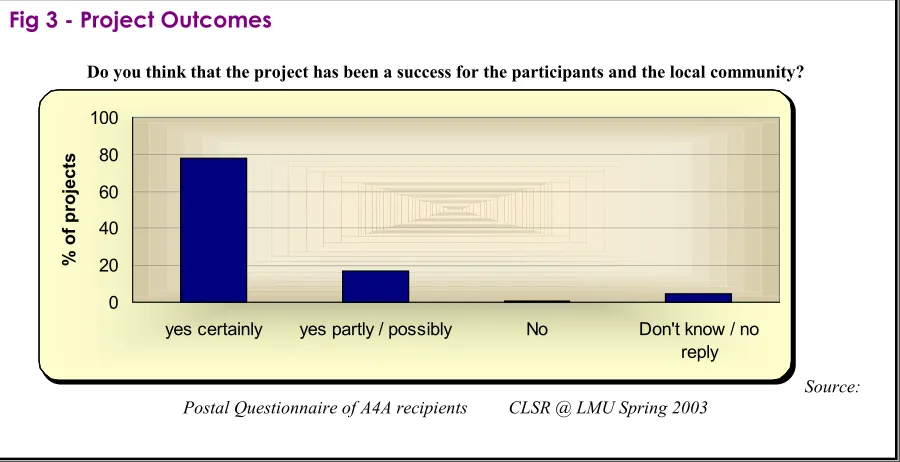
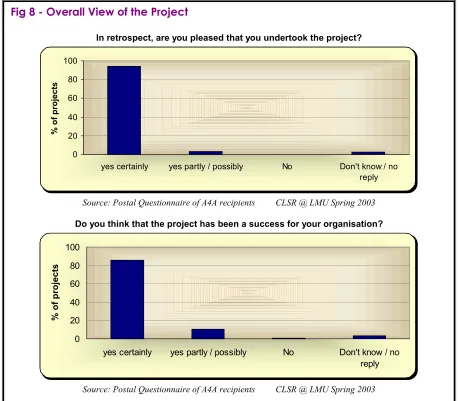
With few exceptions, our case studies were extremely pleased with what they have been able to achieve as a result of receiving A4A funding. The initiatives undertaken are diverse and appear, to some extent or other, to be ‘hitting the spot’ in terms of Sport England’s regional priorities. Certainly a large majority of respondents to our survey (78%) felt that the A4A funded projects had been a success for participants and the local community (Fig 3). Both Sport England and A4A regional staff are also very positive about the achievements of A4A. They see it as reaching ‘very wide and deep’, with the criteria being met. But officers also concede there is more to be done. Sport England staff say there are definitely lots of new
applicants, but “no evidence one way or the other to say that new participants are benefiting”.
Current measures of direct impact are the number of awards and the amount of money spent. Whether or not the aims are met is recorded using a coding process with the majority of projects accorded three aims. However, some community workers suggest that sometimes projects quite validly turn out to be something quite different from originally intended (which can then raise a funding issue).
[image:30.595.76.526.362.593.2]Only 9% of the projects responding in the postal survey did not take place as originally intended. The main changes were that the programme eventually contained different activities (30% of those that were changed), a smaller range of activities (12%), or a wider range of activities or extended programme (17%). The changes did not appear to have been caused by any particular aspect of the application process.
Fig 3 - Project Outcomes
Do you think that the project has been a success for the participants and the local community?
0 20 40 60 80 100
yes certainly yes partly / possibly No Don't know / no reply
% of projects
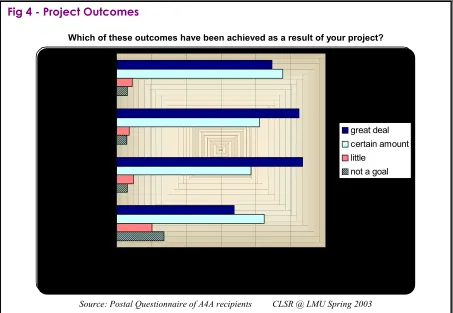
It is harder to measure indirect impact. A4A teams receive additional letters and other materials, but these are not measured in any formal way. A4A staff concede that there is no attempt to measure community development or quality of life, i.e. the ‘wider’ benefits to the community, and there are real concerns about how this can actually be done in practice. Nevertheless, three quarters (76%), subscribed to the idea that it had ‘improved the quality of life’ of the participants (Fig 4). As can also be seen from Fig 4, even larger proportions believed the project had contributed to more people taking part in sport (92%), increasing skill levels of performers (94%), and providing better access to opportunities to take part in sport (92%).
4.2 Increasing participation
“Generally, A4A has achieved what it set out to do – small groups, start-up costs etc. It should not be looked at as a major fund for new facilities, etc., but has made a significant impact in terms of new clubs, equipment, junior sections etc.” (Sport England officer)
[image:31.595.73.526.216.529.2]However, partner organisations such as EFDS and others were unable to identify clearly whether participation rates were being increased. Some commented that the current ‘tick-box’ monitoring process did not supply them with the information they needed to make meaningful conclusions about A4A’s impact on participation, beyond the notion that there is ‘generally more sporting activity’ because of the scheme.
Fig 4 - Project Outcomes
Which of these outcomes have been achieved as a result of your project?
0 10 20 30 40 50 60
More people taking part in sport
Increased skill levels of performers
Better access/opportunity
to take part
Improved quality of life
% of projects
great deal certain amount little
not a goal
The applicant organisations and participants interviewed were far more positive about participation outcomes with some reporting tangible increases in playing strength. Significant numbers of girls had joined a women’s football club, with 86 playing at the time of the interview, and expected to rise to over 100 by the end of the year, while a cricket club reported a continuous flow of new players as a result of their project. In a similar vein, a netball club has been able to set up an outreach group based several miles from the club’s base, which it is hoped will eventually feed players into the mainstream club.
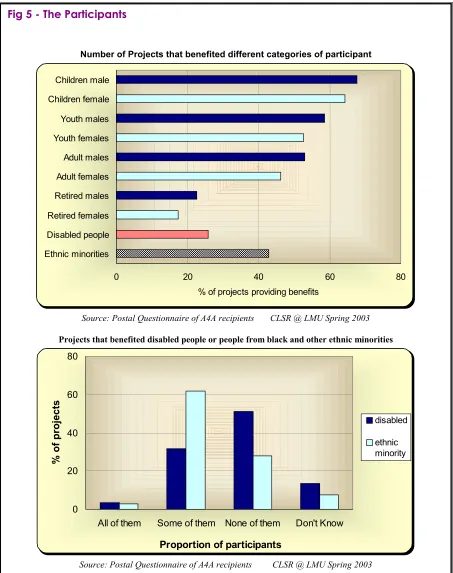
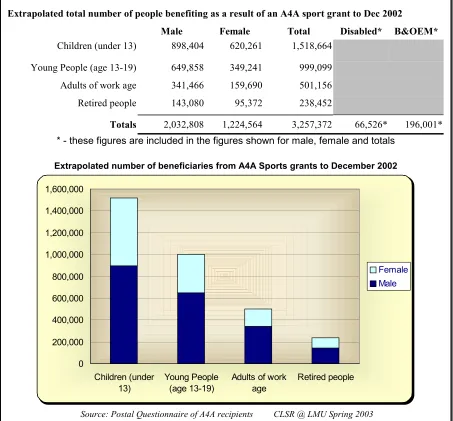
On the evidence of our postal survey, two thirds of projects have been catering for under 13 boys (68%) and girls (64%). As can be seen from Fig 5, smaller proportions of projects address successively older age groups until only a smaller minority provide opportunities for retired people. Throughout the age range more projects have been directed to males than females, an imbalance that becomes much more pronounced when the number of people involved is taken into account (Fig 6). Although only a small number of projects have been specifically for disabled people or people from minority ethnic groups, both have been able to benefit from more projects than the retired.
An Asian youth group reported a doubling of their membership, “We started with 15 but are now up to 30 and still growing”. A small canoe club in a rural location now has 30 members (10 of whom are juniors), representing an increase of around 12, as well as increasing its family membership by 2 or 3 whole families plus part-families (lads and dads). Retention of new members is an issue, however, and the club is unsure how many will stay with them long-term. This is illustrated in the case of an archery club that attracted 10 new members of whom only 1 or 2 subsequently stayed. The club uses its A4A funded equipment to run have-a-go sessions at local fairs and fetes, providing the opportunity for people to try archery and “to have fun without joining a club – it’s too expensive to find out [later] you don’t like it”. Club personnel are happy to provide an enjoyable experience in the hope that a proportion of the ‘have-a-goers’ will join the club later.
In attracting previous non-participants into sport, the scheme can clearly be a catalyst for personal development, especially in those from previously under-represented groups. Despite considering that the achievement of scheme targets is essentially a subjective assessment, an EFDS development officer noted that the formation of new clubs and new activities has contributed to improved social interaction, independent living and empowerment. As a consequence:
“People who have put their toe in the water have gone on to take part in other activities, roles in the club or further applications to other bodies. Being successful is very important at this level because initially groups would not apply for fear of failure.”
This was a view supported by participants:
Fig 5 - The Participants
Number of Projects that benefited different categories of participant
0 20 40 60 80
Children male
Children female
Youth males
Youth females
Adult males
Adult females
Retired males
Retired females
Disabled people
Ethnic minorities
% of projects providing benefits
Source: Postal Questionnaire of A4A recipients CLSR @ LMU Spring 2003
Projects that benefited disabled people or people from black and other ethnic minorities
0 20 40 60 80
All of them Some of them None of them Don't Know
Proportion of participants
% of projects
disabled
ethnic minority
Similarly, two blind bowls players comment:
“I’m over the moon about it. It’s given me the confidence to come here [indoor bowling centre] and have a go. I probably wouldn’t have done any other sport”.
“It’s changed my life. I just came to make up numbers – I didn’t go out much [before].”
[image:34.595.73.526.285.706.2]By taking the number of beneficiaries identified by the replies to the survey, we can extrapolate the figures to provide an estimate of the total number of beneficiaries from the A4A sports awards from the start of the scheme until December 2002 (Fig 6).
Fig 6 - Total Number of A4A Beneficiaries
Extrapolated total number of people benefiting as a result of an A4A sport grant to Dec 2002
Male Female Total Disabled* B&OEM*
Children (under 13) 898,404 620,261 1,518,664 Young People (age 13-19) 649,858 349,241 999,099 Adults of work age 341,466 159,690 501,156 Retired people 143,080 95,372 238,452
Totals 2,032,808 1,224,564 3,257,372 66,526* 196,001*
* - these figures are included in the figures shown for male, female and totals
Extrapolated number of beneficiaries from A4A Sports grants to December 2002
0 200,000 400,000 600,000 800,000 1,000,000 1,200,000 1,400,000 1,600,000
Children (under 13)
Young People (age 13-19)
Adults of work age
Retired people
Female Male
4.3 Improving skill levels
Again, although A4A scheme partners find it difficult to explicitly quantify outcomes in terms of skill improvement, participants (whether they knew about the A4A funding source or not) are predominantly positive about their new skill levels, access to better equipment and further opportunities. “I would never have thought of doing water-skiing, and I’ve since [the project] had a couple of weekends away … and introduced other people to it.”
Gains in self-development do not necessarily relate only to improved personal activity skills. Projects can also help in encouraging individuals to play a more active role as volunteers. A new member