R E S E A R C H A R T I C L E
Open Access
Xuan Bai Cheng Qi formula as an adjuvant
treatment of acute exacerbation of chronic
obstructive pulmonary disease of the syndrome
type phlegm-heat obstructing the lungs: a
multicenter, randomized, double-blind,
placebo-controlled clinical trial
Miao Liu, Xianggen Zhong, Yuhang Li
*, Fengjie Zheng, Ruohan Wu, Yan Sun and Jinchao Zhang
Abstract
Background:Acute exacerbation of chronic obstructive pulmonary disease (AECOPD) is a common cause of morbidity and mortality. Traditional Chinese medicine (TCM) is used to treat AECOPD as adjunctive therapy. This study aimed to evaluate the efficacy and safety of the TCM formula Xuan Bai Cheng Qi as an adjuvant therapy for AECOPD patients with the syndrome type of phlegm-heat obstructing the lungs.
Methods:A multicenter, randomized, double-blind, placebo-controlled clinical trial was conducted. A total of 244 patients were divided into the intervention group (n = 122, treated with conventional medicine and Xuan Bai Cheng Qi) and the control group (n = 122, treated with conventional medicine and placebo). Total symptom scores (cough, phlegm, wheezing, chest congestion) before treatment and at 3, 5, 7, 10 days post-treatment were
recorded. Lung function, arterial blood gas, serum inflammatory cytokines, oxidation/anti-oxidation index were observed before treatment and at the end of the 10-day treatment.
Results:A total of 242 patients completed the study. The full analysis set (FAS) population was 244 and the per-protocol analysis set (PPS) population was 229. After the 10-day treatment, symptom scores of the Xuan Bai Cheng Qi group were significantly lower over time compared with the control group (FAS: mean difference−1.84, 95% CI−2.66 to−1.03,P< .001; PPS: mean difference−1.87, 95% CI−2.71 to−1.03,P< .001). FEV1, FVC, and FEV1% pred were significantly higher over time in the Xuan Bai Cheng Qi group compared with those in the control group (day 10, FAS and PPS:P< .05). PaO2and PaCO2were significantly improved in the Xuan Bai Cheng Qi group (day 10, FAS and PPS:P< .05). Xuan Bai Cheng Qi was also found to ameliorate cytokine levels and oxidation/antioxidant index compared with placebo. There were no differences in safety variables and adverse events between the two groups.
Conclusions:Xuan Bai Cheng Qi formula appears to be a safe and beneficial treatment for AECOPD of phlegm-heat obstructing the lungs syndrome type.
Keywords:Acute exacerbation, Chronic obstructive pulmonary disease, Xuan Bai Cheng Qi, Phlegm-heat obstructing lung, Syndrome, Traditional Chinese medicine
* Correspondence:[email protected]
School of Preclinical Medicine, Beijing University of Chinese Medicine, 11 East Third Ring Road, Beijing 100029, China
Background
Chronic obstructive pulmonary disease (COPD) is defined by irreversible or partially reversible airway obstruction in persons with chronic bronchitis or emphysema. Experts predict that COPD will become the fourth leading cause of death worldwide by 2030 [1].
Hastening of normal reduction in lung function that occurs with age and repeated exacerbations are key fea-tures of COPD. Acute exacerbation of chronic obstruct-ive pulmonary disease (AECOPD) is a common cause of morbidity and mortality in COPD patients [2]. These exacerbations are associated with worsening respiratory symptoms and lung function [3]. Median time post-exacerbation to recovery of peak flow is 6 days and time to recovery from symptoms is 7 days [4].
Many etiologic factors contribute to COPD exacerba-tions such as continued smoking, respiratory tract infec-tions, and exposure to particles from air pollution and the work environment. Upper respiratory tract infections are the most common triggering factor of COPD exacer-bations. Thus, the management of exacerbations creates an enormous burden on health care services [5].
Traditional Chinese medicine (TCM) is used exten-sively in the treatment of AECOPD in Asia, particularly in China. The effects of TCM, especially herbal medi-cines, in improving respiratory symptoms and decreas-ing the incidence of COPD exacerbations are well known. One such herbal medicine is Xuan Bai Cheng Qi formula. In Chinese medicine, the primary syndrome type of AECOPD is phlegm-heat obstructing the lungs [6]. The actions of Xuan Bai Cheng Qi formula are to clear lung heat and dissipate phlegm, so for this reason it is commonly prescribed for AECOPD [7]. The remedy consists of four Chinese herbs: Gypsum fibrosum (gyp-sum), Rheum officinale Baill (rhubarb root and rhizome), Armeniacae amarum(apricot seed or kernel), and Tricho-santhes kirilowii (trichosanthes peel) (Table 1). Xuan Bai Cheng Qi is a classical prescription dating to the Qing Dynasty (late 1700s) text Systematic Differentiation of Warm Pathogen Diseases by Wu Jutong. Our previous studies found that Xuan Bai Cheng Qi improves oxidant/ antioxidant imbalance, pulmonary inflammation in the rat model of COPD [8,9]. Clinical studies have postulated that Xuan Bai Cheng Qi is effective as a supplemental remedy
for treating AECOPD or respiratory failure [10,11]. How-ever, due to the limited sample sizes and methodological problems apparent in these studies the evidence for the effectiveness of Xuan Bai Cheng Qi was not robust. Therefore, we performed a multicenter, randomized, double-blind, placebo-controlled clinical trial to evalu-ate the efficacy and safety of Xuan Bai Cheng Qi in the treatment of AECOPD of the syndrome type phlegm-heat obstructing the lungs.
Methods
Ethics and trial registration
This study was approved by the research ethics commit-tees at all participating centers and on file at Dongzhimen Hospital affiliated to Beijing University of Chinese Medicine (DZMSP20090302). This trial was registered with the Chinese Clinical Trial Registry (ChiCTR-TRC-09000533).
Patients
Diagnostic criteria
AECOPD diagnosis was based on criteria established by the Global Initiative for Chronic Obstructive Lung Disease (GOLD, 2007 version) [12], and by the Chinese Society of Respiratory Diseases (2007 version) [13].
Diagnostic criteria for TCM syndrome of phlegm-heat obstructing lung was based on State Administration of Traditional Chinese Medicine guidelines [14] and criteria outline by Wang and Lu [15]. Primary symptoms were: cough and/or gasping for breath; yellow and viscous sputum. Accompanying symptoms were: irritability and restlessness; abdominal distension; thirst with desire for cool drink; fever without chills; yellow urine; constipa-tion with hard stool; red tongue with yellow or yellow greasy coating; slippery and rapid pulse. Phlegm-heat obstructing the lungs was diagnosed when any two pri-mary symptoms along with any two accompanying symp-toms were present.
Inclusion and exclusion criteria
[image:2.595.57.537.637.717.2]Persons of either gender were included in the study if they: met the diagnostic criteria of AECOPD; met TCM diagnostic criteria for syndrome of phlegm-heat obstruct-ing lung; had symptoms defined by GOLD as level 1 to 4;
Table 1 Medicinals in Xuan Bai Cheng Qi formula
Chinese name (pinyin) Latin name English common name Daily decoction
dosea(g) Dose per 1,000 ggranuleb(g)
Sheng Shi Gao Gypsum fibrosum Gypsum 30 435
Sheng Dahuang Rheum officinaleBaill Unprocessed rhubarb root and rhizome 18 261
Ku Xing Ren Armeniacae amarum Bitter apricot seed 12 174
Gua Lou Pi Trichosanthes kirilowii Trichosanthes peel 9 130
a
Amount of each medicinal if formula were prepared as a decoction.
b
were aged between 18 to 85 years; were within 5 days post-AECOPD; had not participated in other interven-tional trials in the previous 1 month; and were willing to participate in the study voluntarily and signed an informed consent.
Persons were excluded from the study if they had any of the following: airflow limitation due to bronchiectasis, cystic fibrosis, lung cancer, or other respiratory disease; co-morbidities such as acute heart failure, acute cerebral hemorrhage, gastrointestinal bleeding, aplastic anemia, or other severe or life-threatening diseases; unstable hyper-tension, coronary heart disease, or diabetes; mental dis-ease, severe neurologic deficits or other disorders that impaired understanding or cooperation with the investiga-tion; serious liver, kidney, or hematopoietic disease; recent use of immunosuppressive agents; known allergy to herbs or drugs used in the trial. Women planning to become or were pregnant or breastfeeding were also excluded.
Participant enrollment
Participants in the trial were inpatients diagnosed with AECOPD of the syndrome phlegm-heat obstructing the lungs. They were recruited and enrolled on a rolling basis and observed from October 2009 through January 2013. Eight teaching hospitals in China were a part of the trial: Dongzhimen Hospital affiliated to Beijing University of Chinese Medicine (40 cases; 16.4%); Dongfang Hospital affiliated to Beijing University of Chinese Medicine (26 cases; 10.7%); Shanghai Shuguang Hospital affiliated to Shanghai University of Chinese Medicine (45 cases; 18.4%); University Hospital of Gansu Traditional Chinese Medicine (10 cases; 4.1%); First Affiliated Hospital of Anhui University of Chinese Medicine (23 cases; 9.4%); Hebei Provincial Hospital of Chinese Medicine (38 cases; 15.6%); Henan Province Kaifeng City Hospital of Traditional Chinese Medicine (18 cases; 7.4%);
Affiliated Hospital of Liaoning University of Traditional Chinese Medicine (44 cases; 18.0%).
Treatments
Conventional therapy
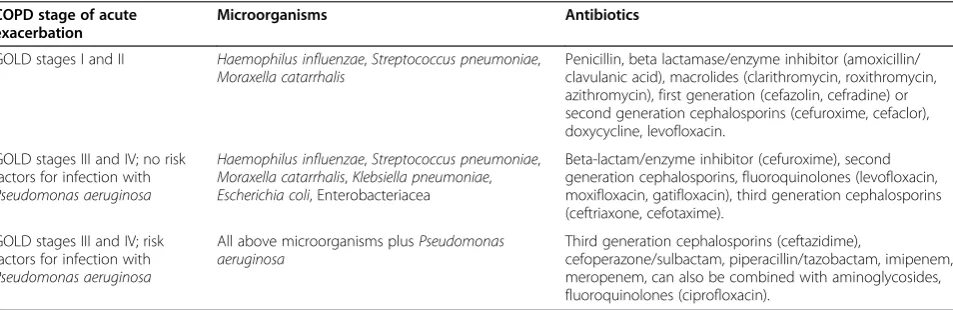
All participants in the trial and control groups were given conventional treatment based on GOLD [12] and the Chinese Society of Respiratory Diseases [13]. Conventional medicine regimen: oxygen therapy (1–3 L/min) by nasal cannula or Venturi mask; open-label cefotaxime 2 g daily (iv q 12 h) for 10 days or an alternate antibiotic if the pa-tient was allergic to or intolerant of cefotaxime (Table 2); inhaled long-acting β-agonist (either salmeterol or for-moterol) and an inhaled long-acting anticholinergic bronchodilator (tiotropium) after randomization; if the patient was using an inhaled steroid or inhaled steroid/ long-acting β-agonist combination product at the time of randomization, this medication was continued for patients in both groups; if the patient’s baseline FEV1
was <50% of predicted, 30–40 mg prednisolone per day for 7–10 days was administered. Supplemental salbuta-mol, ambroxol, and aminophylline were given as needed throughout the trial period.
Experimental and control treatments
Participants in the intervention group received Xuan Bai Cheng Qi formula in granule form as an adjunct to conventional therapy (Table 1). Participants in the con-trol group received conventional therapy plus placebo granules.
Manufacturing and administration of Xuan Bai Cheng Qi and placebo granules
[image:3.595.60.537.561.716.2]Both Xuan Bai Cheng Qi granules and the placebo gran-ules were produced and packaged by Jiang Yin Tian Jiang Pharmaceutical Co. Ltd. (Jiangsu, China) under
Table 2 Application of antibiotics at each stage of AECOPD
COPD stage of acute exacerbation
Microorganisms Antibiotics
GOLD stages I and II Haemophilus influenzae,Streptococcus pneumoniae,
Moraxella catarrhalis
Penicillin, beta lactamase/enzyme inhibitor (amoxicillin/ clavulanic acid), macrolides (clarithromycin, roxithromycin, azithromycin), first generation (cefazolin, cefradine) or second generation cephalosporins (cefuroxime, cefaclor), doxycycline, levofloxacin.
GOLD stages III and IV; no risk factors for infection with
Pseudomonas aeruginosa
Haemophilus influenzae,Streptococcus pneumoniae,
Moraxella catarrhalis,Klebsiella pneumoniae,
Escherichia coli, Enterobacteriacea
Beta-lactam/enzyme inhibitor (cefuroxime), second generation cephalosporins, fluoroquinolones (levofloxacin, moxifloxacin, gatifloxacin), third generation cephalosporins (ceftriaxone, cefotaxime).
GOLD stages III and IV; risk factors for infection with
Pseudomonas aeruginosa
All above microorganisms plusPseudomonas aeruginosa
Third generation cephalosporins (ceftazidime),
cefoperazone/sulbactam, piperacillin/tazobactam, imipenem, meropenem, can also be combined with aminoglycosides, fluoroquinolones (ciprofloxacin).
good manufacturing practice regulations of China (Approval Number: 0905301–4).
Xuan Bai Cheng Qi granules were prepared by decoct-ing the four herbs together, resultdecoct-ing in a concentrated liquid and extraction and capture of the volatile oils. The concentrated liquid was spray-dried on a starch base powder to obtain the final product. Each package of gran-ules was 4.5 g. Quality of the grangran-ules was tested for consistency with industry standards.
The placebo granules were designed to taste, smell, and resemble the Xuan Bai Cheng Qi granules.
Participants were given packages of Xuan Bai Cheng Qi or placebo granules to prepare on their own over the 10-day trial period. Four packages were to be taken each day by dissolving the granules in 300 mL boiled water with 150 mL taken twice daily. To assess adherence, at the completion of the trial on day 10, participants turned in used and unused packages of granules to research team nurses.
At the start of the trial, participants were instructed not to receive other TCM therapy associated with the treatment of AECOPD.
Outcome measures
A case report form (CRF) was designed by the research steering committee. Spot checks were conducted through-out the trial by seven independent reviewers from within the steering committee to check completion of the CRF and conformance to the protocol. Randomly selected CRFs were reviewed during the trial to ensure quality.
Primary outcome measure was symptom scores, which were assessed and recorded on day 1, 3, 5, 7, 10. Second-ary outcome measures were lung function, arterial blood gas analysis, pro-inflammatory biomarkers (cytokines) and oxidation/antioxidant index, which were measured and recorded on days 1 and 10.
Symptom scores
A symptom score sheet was designed based on the typ-ical format of a 4-point Likert scale [16] with questions pertaining to four AECOPD symptoms in terms of TCM syndrome of phlegm-heat obstructing the lung (cough, phlegm, wheezing, chest congestion) [17]. Members of the research team administered the questionnaire to participants. Severity of symptoms was assigned the fol-lowing points: 0 (none), 2 (mild), 4 (moderate), and 6 (severe). Total score range was from 0 (asymptomatic) to 30 (severe).
Lung function
Lung function was evaluated in participants using spir-ometry. Forced expiratory volume in one second (FEV1),
forced vital capacity (FVC) and FEV1 percentage of the
predicted value (FEV1% pred) were tested.
Arterial blood gas analysis
Arterial blood gas parameters that were measured were pH, arterial partial pressure of oxygen (PaO2), arterial
partial carbon dioxide pressure (PaCO2).
Pro-inflammatory biomarkers (cytokines)
Levels of tumor necrosis factor alpha (TNF-α), interleukin-4 (IL-interleukin-4), interleukin-8 (IL-8), interleukin-1 beta (IL-1β), interleukin-6 (IL-6), interleukin-2 (IL-2) in serum were quantified using an enzyme-linked immunosorbent assay (ELISA) kit (BD Biosciences, San Diego, CA).
Oxidant/antioxidant balance
Levels of superoxide dismutase (SOD) and malondialde-hyde (MDA) in serum were quantified using commercially available kits (Nanjing Jiancheng BioEngineering Institute, Nanjing, China).
Safety variables
Complete blood count, urine, liver and kidney function tests, and electrocardiography were performed pre- and post-treatment (days 1 and 10). Any adverse events that occurred during the treatment period were recorded.
Adherence
Treatment adherence was assessed by investigators at each center counting used and unused granule packages.
Study design
This was a multicenter, randomized, double-blind, placebo-controlled, parallel group clinical trial.
Sample size
As an exploratory study, reference power calculations were lacking as there have been only a few small-size trials in China of Xuan Bai Cheng Qi formula for treatment of AECOPD. Therefore, we inferred data from literature on TCM therapies with similar efficacy as Xuan Bai Cheng Qi that treated the same syndrome of phlegm-heat obstruct-ing the lungs.
Randomization and blinding
Participants were randomly allocated to receive Xuan Bai Cheng Qi formula or placebo. Randomization was achieved using SAS 8.0 software to generate random numbers. Simple randomization was used, with each block comprised of eight participants. Randomization numbers were assigned to participants in chronological order after their screening assessments. Participants in the active arm received Xuan Bai Cheng Qi formula (granules) plus con-ventional therapy. Participants in the inactive arm received conventional therapy plus matching placebo.
To ensure allocation concealment, opaque and sealed emergency letters were printed according to random-ized list. In the event of an emergency, the participant’s
randomization code and group allocation could be identified by the emergency envelope, which were on file at all centers. Third-party investigators were assigned in each research center as the contact person who preserved and recorded the randomization information. They did not have contact with other trial investigators, therefore, they did not affect enrollment or randomization.
Xuan Bai Cheng Qi and placebo granules were re-packaged in identical wrappers at each center before dis-tribution to participants, and numbered sequentially ac-cording to randomization schedule. Outcome assessments were made by an independent statistician who was blinded to group allocation, intervention, and trial management and did not take part in any other part of the trial. Both
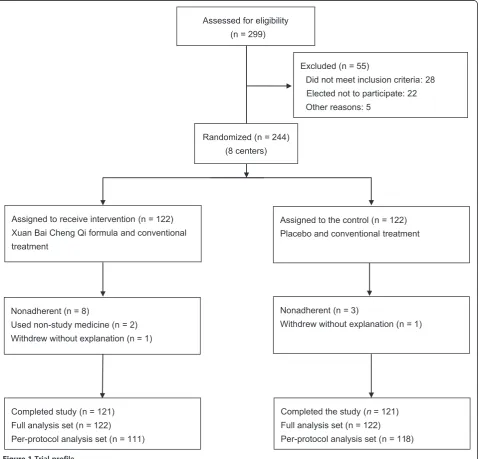
Excluded (n = 55)
Did not meet inclusion criteria: 28 Elected not to participate: 22
Other reasons: 5 Assessed for eligibility
(n = 299)
Completed the study (n= 121)
Full analysis set (n = 122)
Per-protocol analysis set (n = 118) Nonadherent (n = 3)
Withdrew without explanation (n = 1) Assigned to the control (n = 122)
Placebo and conventional treatment
Completed study (n = 121) Full analysis set (n = 122)
Per-protocol analysis set (n = 111) Nonadherent (n = 8)
Used non-study medicine (n = 2)
Withdrew without explanation (n = 1) Assigned to receive intervention (n = 122) Xuan Bai Cheng Qi formula and conventional
treatment
[image:5.595.60.540.265.724.2]Randomized (n = 244) (8 centers)
participants and investigators were blinded until the end of study.
Statistical analysis
All data were entered with Epidata 3.0 software (The EpiData Association, Odense, Denmark) by two independ-ent data recorders. All randomized patiindepend-ents were included in data analysis. Full analysis set (FAS) was used to analyze the baseline data and outcome data of the cases that went through randomization and received treatment. Each par-ticipant underwent at least one time-point observation during the trial. Partially missing data were imputed with the use of the last-observation-carried-forward (LOCF) method, whereby missing values were replaced by the last non-missing value. Per-protocol analysis set (PPS) was used to analyze the evaluation data of cases that com-pleted the trial without major protocol deviations.
Continuous variables were analyzed using repeated-measures analysis of variance (ANOVA) and/or analysis of covariance. Mauchly’s test was used to assess sphericity in the repeated measures ANOVAs, and the Greenhouse Geisser correction was applied to the degrees of freedom (DFs) if necessary. Main effects for time, for the inter-action between time and the intervention group, and for the overall difference between groups (Xuan Bai Cheng Qi versus placebo) were assessed. Categorical variables were analyzed using chi-square test, Fisher’s exact test, or Cochran-Mantel-Haenszel test. The effect size estimate and 95% confidence interval (CI) were applied for compar-ing the treatments. All statistical procedures were per-formed with SPSS 17.0 software (SPSS Inc, Chicago, IL).
Data monitoring committee
A data monitoring committee at Dongzhimen Hospital comprised of clinicians, statisticians, epidemiologists over-saw data analyses and ensured protocol adherence and safety of the trial. Data were reviewed and monitored every 6 months.
Results
Study population
A total of 299 COPD patients were assessed for eligibility in the trial. After 55 patients were excluded due to not meeting eligibility criteria, 244 patients were enrolled and underwent randomization (Figure 1). Two partici-pants dropped out on day 7 without explanation, but they received treatment and also completed one time point observation. Thus, a total of 242 evaluable partici-pants were in the study, with 121 in the Xuan Bai Cheng Qi group and 121 in the control group. The FAS popula-tion was 244, with 122 in the trial group and 122 in the control group. Eleven participants were protocol noncom-pliant, and two participants used non-study medica-tions, which affected outcome calculation. Ultimately,
PPS population was 229, with 111 in the trial group and 118 in the control group.
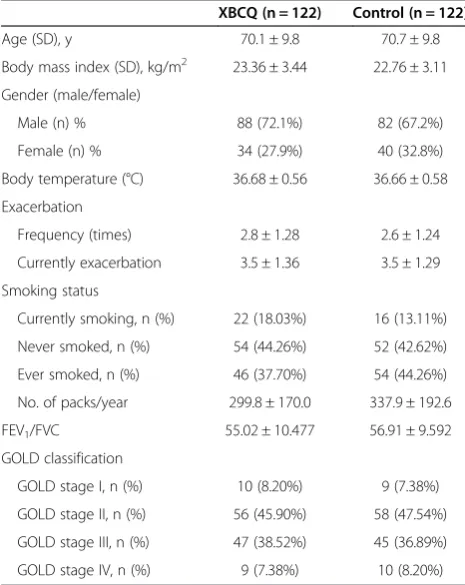
In terms of demographic and baseline characteristics of participants (Table 3), there were no significant differ-ences between the Xuan Bai Cheng Qi and control groups in gender, age, course of disease, body mass index (BMI), exacerbations, FEV1/FVC, and GOLD classification of
lung function.
Symptom scores
[image:6.595.304.537.406.699.2]ANOVA revealed a significant main effect of group (P= .001), a significant main effect of time (P< .001), as well as a significant group × time interaction (P< .001). Total symptom scores of the Xuan Bai Cheng Qi group were significantly lower over time compared with those of the control group (FAS: mean difference −1.84, 95% CI−2.66 to−1.03,P< .001; PPS: mean difference−1.87, 95% CI −2.71 to −1.03, P< .001). This difference was achieved within the first 3 days of treatment (FAS: mean difference −2.57, 95% CI −3.64 to −1.49, P< .001; PPS: mean difference −2.60, 95% CI −3.70 to−1.49, P< .001). At days 3, 5, 7, and 10, there were significant differences in total symptom scores of the Xuan Bai Cheng Qi group compared with those of the control group (Table 4).
Table 3 Baseline characteristics of participants
XBCQ (n = 122) Control (n = 122)
Age (SD), y 70.1 ± 9.8 70.7 ± 9.8
Body mass index (SD), kg/m2 23.36 ± 3.44 22.76 ± 3.11
Gender (male/female)
Male (n) % 88 (72.1%) 82 (67.2%)
Female (n) % 34 (27.9%) 40 (32.8%)
Body temperature (°C) 36.68 ± 0.56 36.66 ± 0.58
Exacerbation
Frequency (times) 2.8 ± 1.28 2.6 ± 1.24
Currently exacerbation 3.5 ± 1.36 3.5 ± 1.29
Smoking status
Currently smoking, n (%) 22 (18.03%) 16 (13.11%)
Never smoked, n (%) 54 (44.26%) 52 (42.62%)
Ever smoked, n (%) 46 (37.70%) 54 (44.26%)
No. of packs/year 299.8 ± 170.0 337.9 ± 192.6
FEV1/FVC 55.02 ± 10.477 56.91 ± 9.592
GOLD classification
GOLD stage I, n (%) 10 (8.20%) 9 (7.38%)
GOLD stage II, n (%) 56 (45.90%) 58 (47.54%)
GOLD stage III, n (%) 47 (38.52%) 45 (36.89%)
GOLD stage IV, n (%) 9 (7.38%) 10 (8.20%)
Abbreviations:COPDchronic obstructive pulmonary disease,FEV1forced
expiratory volume in one second,FVCforced vital capacity,GOLDGlobal Initiative for Chronic Obstructive Lung Disease,SDstandard deviation,
Lung function
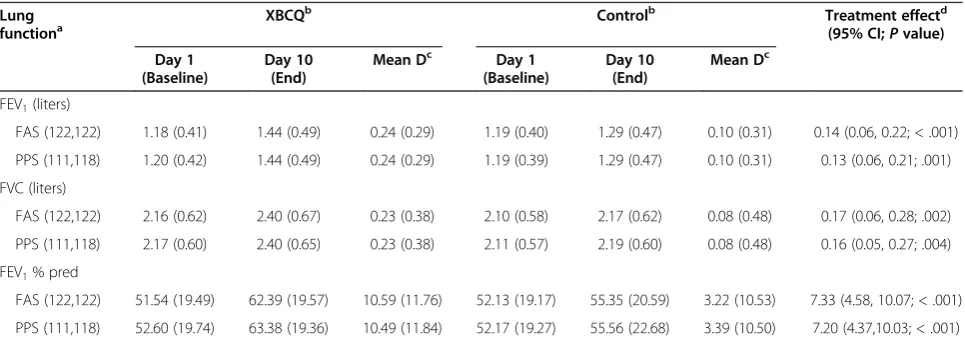
FEV1, FVC, and FEV1% pred were significantly higher
over time in the Xuan Bai Cheng Qi group compared with the same parameters in the control group (FEV1,
FAS: mean difference 0.14, 95% CI 0.06 to 0.22,P< .001, PPS: mean difference 0.13, 95% CI 0.06 to 0.21,P= .001; FVC, FAS: mean difference 0.17, 95% CI 0.06 to 0.28, P= .002, PPS: mean difference 0.16, 95% CI 0.05 to 0.27,P= .004; FEV1% pred, FAS: mean difference 7.33,
95% CI 4.58 to 10.07, P< .001, PPS: mean difference 7.20, 95% CI 4.37 to 10.03,P< .001) (Table 5).
Arterial blood gas analysis
At day 10, PaO2and PaCO2were significantly improved
in the Xuan Bai Cheng Qi group compared with PaO2
and PaCO2 in the control group (PaO2, FAS: mean
difference 4.75, 95% CI 1.21 to 8.28,P= .009, PPS: mean difference 4.08, 95% IC 0.04 to 7.76, P= .030; PaCO2,
FAS: mean difference −2.48, 95% CI −4.53 to −0.44, P= .018, PPS: mean difference −2.69, 95% CI −4.56 to −0.81, P= .005). There was no significant difference between the Xuan Bai Cheng Qi and control groups in PH (FAS: mean difference−0.00, 95% CI−0.01 to 0.01, P= .894, PPS: mean difference −0.00, 95% CI −0.01 to 0.01,P= .794) (Table 6).
Pro-inflammatory biomarkers (cytokines)
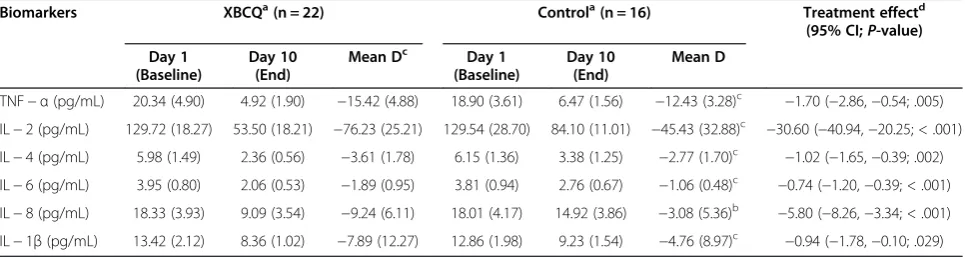
[image:7.595.57.539.100.226.2]Only 22 participants in the Xuan Bai Cheng Qi group and 16 participants in the control group permitted their blood to be collected at the end of the trial on day 10. Therefore, comparison of biomarker levels between the two groups was based on these numbers of participants. Table 4 Total symptom scores in Xuan Bai Cheng Qi and control groups during 10−day treatment
Total symptom scores Full analysis set Per−protocol analysis set
XBCQa Controla Treatment effectb XBCQa Controla Treatment effectb
(n = 122) (n = 122) (95% CI;P-value) (n = 122) (n = 122) (95% CI;P-value)
1 d 19.70 (4.23) 20.10 (4.28) −0.39 (−1.47, 0.68; .471) 19.64 (4.24) 20.09 (4.32) −0.45 (−1.56, 0.67; .433)
3 d 13.92 (4,46) 16.48 (4.08) −2.57 (−3.64,−1.49; < .001) 13.82 (4.50) 16.42 (3.95) −2.60 (−3.70,−1.49; < .001)
5 d 10.64 (4.28) 13.20 (4.18) −2.56 (−3.63,−1.49; < .001) 10.59 (4.24) 13.12 (4.10) −2.52 (−3.61,−1.44; < .001)
7 d 7.72 (4.34) 9.64 (3.68) −1.92 (−2.93,−0.90; < .001) 7.64 (4.38) 9.54 (3.65) −1.90 (−2.95,−0.86; < .001)
10 d 5.21 (4.43) 7.00 (3.72) −1.79 (−2.82,−0.76; 0.001) 5.03 (4.29) 6.92 (3.74) −1.89 (−2.93,−0.84; < .001)
Meanc 11.44 (3.36) 13.28 (3.09) −1.84 (−2.66,−1.03; < .001) 11.34 (3.40) 13.22 (3.05) −1.87 (−2.71,−1.03; < .001)
Abbreviations:CIconfidence interval,XBCQXuan Bai Cheng Qi. Mauchly’s test of sphericity was applied: W = .506,P< .001.
a
Data presented as mean (SD).
b
Repeated-measures analysis of variance (ANOVA) for estimate with 95% confidence interval for difference.
c
Mean = change from baseline.
Table 5 Lung function measurements in Xuan Bai Cheng Qi and control groups before and after 10-day treatment
Lung
functiona XBCQ
b
Controlb Treatment effectd (95% CI;Pvalue)
Day 1 (Baseline)
Day 10 (End)
Mean Dc Day 1 (Baseline)
Day 10 (End)
Mean Dc
FEV1(liters)
FAS (122,122) 1.18 (0.41) 1.44 (0.49) 0.24 (0.29) 1.19 (0.40) 1.29 (0.47) 0.10 (0.31) 0.14 (0.06, 0.22; < .001)
PPS (111,118) 1.20 (0.42) 1.44 (0.49) 0.24 (0.29) 1.19 (0.39) 1.29 (0.47) 0.10 (0.31) 0.13 (0.06, 0.21; .001)
FVC (liters)
FAS (122,122) 2.16 (0.62) 2.40 (0.67) 0.23 (0.38) 2.10 (0.58) 2.17 (0.62) 0.08 (0.48) 0.17 (0.06, 0.28; .002)
PPS (111,118) 2.17 (0.60) 2.40 (0.65) 0.23 (0.38) 2.11 (0.57) 2.19 (0.60) 0.08 (0.48) 0.16 (0.05, 0.27; .004)
FEV1% pred
FAS (122,122) 51.54 (19.49) 62.39 (19.57) 10.59 (11.76) 52.13 (19.17) 55.35 (20.59) 3.22 (10.53) 7.33 (4.58, 10.07; < .001)
PPS (111,118) 52.60 (19.74) 63.38 (19.36) 10.49 (11.84) 52.17 (19.27) 55.56 (22.68) 3.39 (10.50) 7.20 (4.37,10.03; < .001)
Abbreviations:CIconfidence interval,COPDchronic obstructive pulmonary disease,FEV1forced expiratory volume in one second,FEV1% predFEV1percentage of
predicted value,FVCforced vital capacity,GOLDGlobal Initiative for Chronic Obstructive Lung Disease,Mean Dmean difference,XBCQXuan Bai Cheng Qi.
a
FAS population was 122 in the XBCQ group and 122 in the control group; PPS population was 111 in the XBCQ group and 118 in the control group.
b
Data presented as mean (SD).
c
P< .01: Change between pre-treatment and post-treatment (within group difference by paired t-test).
d
[image:7.595.57.540.502.673.2]At day 10, TNF-α, IL-4, IL-8, IL-1β, IL-6, and IL-2 levels were significantly decreased in the Xuan Bai Cheng Qi group compared with levels in the control group (Table 7).
Oxidant/antioxidant balance
Based on serum collected from the 20 participants in the Xuan Bai Cheng Qi group and 20 participants in the control group, MDA level was significantly decreased in the Xuan Bai Cheng Qi group compared with that in the control group (mean difference−1.07, 95% CI−1.55 to −0.59, P< .001), while SOD level in the Xuan Bai Cheng Qi group was significantly higher than that in the control group (mean difference 6.09, 95% CI 2.94 to 9.23,P< .001) (Table 8).
Safety variables
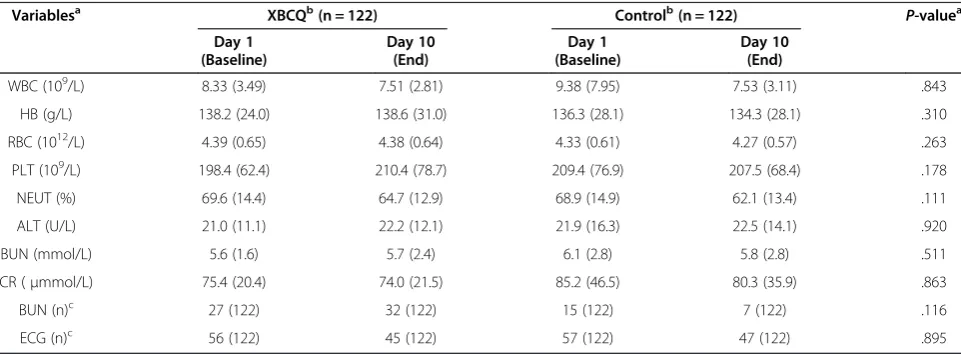
Adverse events were recorded during the study period. Mild diarrhea occurred in six participants (4.92%) in the Xuan Bai Cheng Qi group and in two participants (1.64%) in the control group, but these incidents were not statis-tically significant (P= .281). There were no significant differences in blood, urine, and liver and kidney func-tion tests, or in electrocardiography results before and after the study period between the Xuan Bai Cheng Qi and control groups (Table 9).
Adherence
[image:8.595.57.540.554.683.2]Adherence based on empty granule package count was high and similar in both the Xuan Bai Cheng Qi and control groups.
Table 6 Arterial blood gas analysis in Xuan Bai Cheng Qi and control groups before and after 10-day treatment
Variablesa XBCQb Controlb Treatment effectd
(95% CI;P-value)
Day 1 (Baseline)
Day 10 (End)
Mean D Day 1 (Baseline)
Day 10 (End) Mean D
PH
FAS (122,122) 7.41 (0.05) 7.41 (0.04) 0.01 (0.05) 7.42 (0.05) 7.42 (0.05) −0.00 (0.05) −0.00 (−0.01, 0.01; .894)
PPS (111,118) 7.41 (0.05) 7.41 (0.04) 0.00 (0.05) 7.42 (0.05) 7.42 (0.05) −0.00 (0.05) −0.00 (−0.01, 0.01; .794)
PaO2
FAS (122,122) 75.56 (19.38) 85.69 (16.42) 13.13 (18.12)c 71.47 (18.90) 80.49 (15.91) 9.01 (17.49)c 4.75 (1.21, 8.28; .009)
PPS (111,118) 71.91 (19.28) 85.11 (16.59) 13.20 (18.50)c 71.27 (19.08) 80.76 (15.96) 9.49 (17.31)c 4.08 (0.04, 7.76; .030)
PaCO2
FAS (122,122) 47.41 (10.04) 39.52 (11.55) −7.89 (12.27)c 39.52 (11.55) 41.45 (8.33)
−4.76 (8.97)c
−2.48 (−4.53,−0.44; .018) PPS (111,118) 46.46 (13.32) 38.93 (9.47) −7.53 (11.49)c 45.90 (11.82) 41.38 (8.41)
−4.52 (8.83)c
−2.69 (−4.56,−0.81; .005)
Abbreviations:CIconfidence interval,Mean Dmean difference,PaO2arterial partial pressure of oxygen,PaCO2arterial partial carbon dioxide pressure,
XBCQXuan Bai Cheng Qi.
a
FAS population was 122 in the XBCQ group and 122 in the control group; PPS population was 111 in the XBCQ group and 118 in the control group.
b
Data presented as mean (SD).
c
P< .01: Change between pre−treatment and post−treatment (within group difference by paired t−test).
d
Covariance analysis estimate with 95% confidence interval for difference.
Table 7 Pro-inflammatory biomarker changes in Xuan Bai Cheng Qi and control groups before and after 10−day treatment
Biomarkers XBCQa(n = 22) Controla(n = 16) Treatment effectd
(95% CI;P-value)
Day 1 (Baseline)
Day 10 (End)
Mean Dc Day 1 (Baseline)
Day 10 (End)
Mean D
TNF−α(pg/mL) 20.34 (4.90) 4.92 (1.90) −15.42 (4.88) 18.90 (3.61) 6.47 (1.56) −12.43 (3.28)c −1.70 (−2.86,−0.54; .005)
IL−2 (pg/mL) 129.72 (18.27) 53.50 (18.21) −76.23 (25.21) 129.54 (28.70) 84.10 (11.01) −45.43 (32.88)c −30.60 (−40.94,−20.25; < .001)
IL−4 (pg/mL) 5.98 (1.49) 2.36 (0.56) −3.61 (1.78) 6.15 (1.36) 3.38 (1.25) −2.77 (1.70)c −1.02 (−1.65,−0.39; .002)
IL−6 (pg/mL) 3.95 (0.80) 2.06 (0.53) −1.89 (0.95) 3.81 (0.94) 2.76 (0.67) −1.06 (0.48)c −0.74 (−1.20,−0.39; < .001)
IL−8 (pg/mL) 18.33 (3.93) 9.09 (3.54) −9.24 (6.11) 18.01 (4.17) 14.92 (3.86) −3.08 (5.36)b −5.80 (−8.26,−3.34; < .001)
IL−1β(pg/mL) 13.42 (2.12) 8.36 (1.02) −7.89 (12.27) 12.86 (1.98) 9.23 (1.54) −4.76 (8.97)c −0.94 (−1.78,−0.10; .029)
Abbreviations:CIconfidence interval,IL−1βinterleukin−1 beta,IL−2interleukin−2,IL−4interleukin−4,IL−6interleukin−6,IL−8interleukin−8,Mean Dmean difference,TNF−αtumor necrosis factor alpha,XBCQXuan Bai Cheng Qi.
a
Data presented as mean (SD).
b
P< .05.
c
P< .01: change between pre−treatment and post−treatment (within group difference by paired t−test).
d
Discussion
This multicenter, randomized, double-blind, placebo-controlled study showed that as an adjuvant treatment Xuan Bai Cheng Qi formula produced a significant improvement in symptoms associated with AECOPD of the TCM syndrome type, phlegm-heat obstructing the lungs. Total symptom scores from baseline showed that Xuan Bai Cheng Qi ameliorated cough, phlegm, wheezing, and chest congestion. Lung function and blood gas levels were also significantly improved in the intervention group compared with the control group.
AECOPD appears to be triggered by increased airway inflammation. A number of pro-inflammatory cytokines, such as TNF-α, IL-4, IL-8, IL-1β, IL-6, IL-2, have been detected during COPD exacerbation and have been re-ported to be increased in both sputum and serum during COPD exacerbations [21-25]. In our study, levels of pro-inflammatory mediators in the Xuan Bai Cheng Qi group were lower than those in the control group. We propose that as an adjuvant treatment, Xuan Bai Cheng Qi contributed to regulating systemic inflammatory
response. Previous studies have shown that the active ingredients in the herbs that comprise Xuan Bai Cheng Qi formula, such as emodin in Rheum officinale Baill [26], calcium sulfate in Gypsum fibrosum [27], triter-penoid saponins inTrichosanthes kirilowiiMaxim [28], and amygdalin in Semen Armeniacae amarum [29] possess anti-inflammatory effects.
Oxidative stress is another component in the patho-genesis of AECOPD [30-32]. Oxidative stress can in-duce extensive tissue damage and activate the nuclear factor kappa-light-chain-enhancer of activated B cells (NF-κB) pathway, which provokes the release of pro-inflammatory molecules, such as TNF-α, IL-8. Our results indicate that compared with the control group, SOD activ-ity was higher and MDA content was lower in the Xuan Bai Cheng Qi group. Thus Xuan Bai Cheng Qi may con-tribute to restoring oxidant/antioxidant balance.
[image:9.595.55.542.100.172.2]Mention needs to be made that of the 122 participants each in the Xuan Bai Chang Qi and control groups, only 20 and 16 participants, respectively, allowed their serum to be collected at the end of the trial for evaluation of biomarker changes. A similar situation occurred during Table 8 Serum SOD and MDA in Xuan Bai Cheng Qi and control groups before and and after treatment
Variables XBCQa(n = 20) Controla(n = 20) Treatment effectc
(95% CI;Pvalue)
Day 1 (Baseline) Day 10 (End)
Mean Db Day 1 (Baseline)
Day 10 (End)
Mean D
SOD (U/mL) 20.56 (4.95) 28.54 (4.66) 7.98 (5.97) 21.90 (5.32) 23.24 (6.76) 1.33 (4.21) 6.09 (2.94, 9.23; < .001)
MDA (nmol/mL) 4.43 (1.52) 1.89 (0.52) −2.54 (1.65) 4.52 (1.44) 2.98 (1.45) −1.54 (0.94)b −1.07 (−1.55,−0.59; < .001)
Abbreviations:CIconfidence interval,MDAmalondialdehyde,Mean Dmean difference,SODsuperoxide dismutase,XBCQXuan Bai Cheng Qi.
a
Data presented as mean (SD).
b
P< .01: Change between pre-treatment and post-treatment (within group difference by paired t-test).
c
Covariance analysis estimate with 95% confidence interval for difference.
Table 9 Safety profile
Variablesa XBCQb(n = 122) Controlb(n = 122) P-valuea
Day 1 (Baseline)
Day 10 (End)
Day 1 (Baseline)
Day 10 (End)
WBC (109/L) 8.33 (3.49) 7.51 (2.81) 9.38 (7.95) 7.53 (3.11) .843
HB (g/L) 138.2 (24.0) 138.6 (31.0) 136.3 (28.1) 134.3 (28.1) .310
RBC (1012/L) 4.39 (0.65) 4.38 (0.64) 4.33 (0.61) 4.27 (0.57) .263
PLT (109/L) 198.4 (62.4) 210.4 (78.7) 209.4 (76.9) 207.5 (68.4) .178
NEUT (%) 69.6 (14.4) 64.7 (12.9) 68.9 (14.9) 62.1 (13.4) .111
ALT (U/L) 21.0 (11.1) 22.2 (12.1) 21.9 (16.3) 22.5 (14.1) .920
BUN (mmol/L) 5.6 (1.6) 5.7 (2.4) 6.1 (2.8) 5.8 (2.8) .511
CR (μmmol/L) 75.4 (20.4) 74.0 (21.5) 85.2 (46.5) 80.3 (35.9) .863
BUN (n)c 27 (122) 32 (122) 15 (122) 7 (122) .116
ECG (n)c 56 (122) 45 (122) 57 (122) 47 (122) .895
Abbreviations:ALTalanine aminotransferase,BUNblood urea nitrogen,Crcreatinine,ECGelectrocardiogram,HBhemoglobin,NEUTneutrophilic granulocyte,
PLTplatelets,RBCred blood cell,WBCwhite blood cell.
a
Covariance analysis for between group after treatment.
b
Data presented as mean (SD).
c
[image:9.595.57.538.514.691.2]assessment of levels of SOD and MDA, with only 20 par-ticipants in each group permitting serum collection. For ethical considerations, we respected participants’ inclin-ation. Nevertheless, based on the results we did obtain, there were significant differences between the two groups as described above.
Xuan Bai Cheng Qi formula appears to be safe. Serious untoward effects were not reported during the study. Six participants in the Xuan Bai Cheng Qi group experi-enced mild diarrhea. Toxicological studies on the active ingredient in individual medicinals in Xuan Bai Cheng Qi formula have shown that long-term use of Rheum officinale Baill may induce liver degeneration [33]; tox-icity of Semen Armeniacae amarum is mainly from amygdaloside, which can produce the toxic hydrocyanic acid by enzymatic hydrolysis [34];Trichosanthes kirilowii Maxim is not known to be toxic [35]; and Gypsum fibro-sum is mildly toxic [36]. Typically, during processing of raw medicinals and decoction of the combined medici-nals, it is likely that the individual toxic effects are re-duced or even neutralized [37].
The main limitation of this study is its short duration of 10 days. Changes in frequency of acute exacerbations of COPD were not observable. In addition, the compari-son between biomarkers and levels of SOD and MDA are of an observational nature, which may therefore be biased. Further studies should be performed to evaluate the long-term efficacy of Xuan Bai Cheng Qi formula as an adjuvant treatment for AECOPD.
Conclusions
Traditional Chinese medicinals are commonly used to treat lung conditions, including acute exacerbation of chronic obstructive pulmonary disease (AECOPD). How-ever, there is a lack of modern research to validate such empirical remedies. To the best of our knowledge, this study is the first large-scale, multicenter randomized con-trol trial evaluating the efficacy and safety in humans of the traditional formula Xuan Bai Cheng Qi as an adjuvant treatment for AECOPD of the TCM syndrome type, phlegm-heat blocking the lungs. Our results found that compared with placebo, Xuan Bai Cheng Qi appears to be safe and effective for AECOPD with improvement in symptoms as well as biomarker parameters.
Abbreviations
COPD:Chronic obstructive pulmonary disease; TCM: Traditional Chinese medicine; AECOPD: Acute exacerbation of chronic obstructive pulmonary disease; FVC: Forced vital capacity; FEV1: Forced expiratory volume in one
second; FEV1%pred: FEV1percentage of predicted value; SOD: Superoxide
dismutase; MDA: Malondialdehyde.
Competing interests
The authors declare that they have no competing interests.
Authors’contributions
YL and XZ conceived and designed the study. RW, YS, and JZ input the data, and ML and FZ analysed the data and drafted the manuscript. All authors read and approved the final manuscript.
Acknowledgments
This study was funded by China National key basic research plan (No. 2009CB522704).
The authors particularly thank Professor Jianping Liu and the Centre for Evidence-Based Chinese Medicine, Beijing University of Chinese Medicine, for their valuable contribution to this study.
We appreciate the assistance and support in patient recruitment from the following individuals: Limei Geng (Hebei Provincial Hospital of Chinese Medicine), Hong Li (University Hospital of Gansu Traditional Chinese Medicine), Huiping Su (Dongzhimen Hospital affiliated to Beijing University of Chinese Medicine), Jinmin Liu (Dongfang Hospital affiliated to Beijing University of Chinese Medicine), Qixiang Wu (Henan Province Kaifeng City Hospital of Traditional Chinese Medicine) Xudong Xiong (Shuguang Hospital affiliated to Shanghai University of Chinese Medicine), Yanling Xu (Affiliated Hospital of Liaoning University of Traditional Chinese Medicine), Nianzhi Zhang (First Affiliated Hospital of Anhui University of Chinese Medicine), and all the medical staff who participated in this study.
We are indebted to Nissi S. Wang, MSc, for reviewing and editing the manuscript.
Received: 27 July 2013 Accepted: 1 July 2014 Published: 11 July 2014
References
1. Mathers CD, Loncar D:Projections of global mortality and burden of disease from 2002 to 2030.PLoS Med2006,3(11):e442.
2. Bourbeau J, Ford G, Zackon H, Pinsky N, Lee J, Ruberto G:Impact on patients’health status following early identification of a COPD exacerbation.Eur Respir J2007,30:907–913.
3. Donaldson GC, Seemungal TA, Bhowmik A, Wedzicha JA:Relationship between exacerbation frequency and lung function decline in chronic obstructive pulmonary disease.Thorax2002,57:847–852.
4. Donaldson GC, Wedzicha JA:COPD exacerbations.1: Epidemiology.Thorax
2006,61:164–168.
5. Global Initiative for Chronic Obstructive Lung Disease, Inc:Global strategy for the diagnosis, management, and prevention of chronic obstructive pulmonary disease (updated 2013).Available at: http://www.goldcopd.org/ uploads/users/files/GOLD_Report_2013_Feb20.pdf. Accessed January 27, 2014. 6. Xu WJ, Wang TF, Wang ZY, Jiao Y, Su HP, Yu LL, Lu JC, Zou XJ, Zhang N,
Chen XH, Miao JY, Xu YL, Li SY, Wang MH, Wang QG:Comparison of traditional Chinese symptomatologies of acute and stable stages of chronic obstructive pulmonary disease.Acta Universitatis Traditionis Medicalis Sinensis Pharmacologiaeque Shanghai2010,24(6):35–39. Chinese. 7. Xin DY:Disseminating lung qi unblocking the bowels method in the
treatment of acute exacerbation of chronic obstructive pulmonary disease: a randomized controlled observation.J Pract Tradit Chinese Intern Med2012,26(12):25–28. Chinese.
8. Li YH, Zhong XG, Jia X, Sun Y, Zheng FJ, Wang W, Zhou XW, Zhu XH, Tian Y, Liu XH:Effects of“catharsis large intestine”on oxidative stress in rats with COPD.Chin J Tradit Chin Med Pharm2010,25:1196–1198. Chinese. 9. Wang T, Zhang Q, Li YH, Xie H, Zhong XG, Jia X, Liu M, Liu XH:J Beijing Univ
Tradit Chin Med2013,36:104–107. Chinese.
10. Meng FS:Clinical study on Xuan Bai Cheng Qi formula for acute exacerbation of chronic obstructive pulmonary disease.J New Chin Med
2012,44:23–24. Chinese.
11. Shi YJ, Wang H:Clinical observation of Tongfu treatment on treating 40 COPD patients with respiratory insufficiency.Med Innov China2013,
17:39–40. Chinese.
12. Global Initiative for Chronic Obstructive Lung Disease, Inc:Global strategy for the diagnosis, management, and prevention of chronic obstructive lung disease (updated 2007).Available at: http://www.goldcopd.org/ uploads/users/files/GOLDReport07_0108.pdf. Accessed February 7, 2014. 13. Chinese Society of Respiratory Diseases:Chronic obstructive pulmonary
14. State Administration of Traditional Chinese Medicine:Standards of Traditional Chinese Syndrome Diagnosis and Treatment.Beijing, China: China Press of Traditional Chinese Medicine; 1994:2.
15. Wang YY, Lu ZL:Pulmonary disease.InInternal Medicine of Traditional Chinese Medicine.2nd edition. Beijing: People’s Medical Publishing House; 2002:200. Chinese.
16. Jamieson S:Likert scales: how to (ab)use them.Med Educ2004,
38:1217–1218.
17. Zheng XY, Zheng XY:Respiratory disease.InGuide to New Traditional Chinese Medicine Research (Trial), Volume 1. Edited by Zheng XY. Beijing: China Medical Science Press; 2002:53–58. Chinese.
18. Li W, Mao B, Wang G, Wang L, Chang J, Zhang Y, Wan MH, Guo J:A study of the mechanism of Qingre Huatan therapy in treatment of acute exacerbation of chronic obstructive pulmonary disease by improving airway inflammation and mucus hypersecretion.J Chin Integr Med2008,
6:799–805. Chinese.
19. Peng WB, Li SF:Clinical observation of lung-purging, blood-activating and fu-unblocking herbs with western medicine in treating acute exacerbation of chronic obstructive pulmonary disease.Shanghai J Tradit Chin Med2009,07:28–30. Chinese.
20. Chen H, Zhi KY, Feng WJ:Clinical observation of fu-unblocking, clearing-heat in treating 128 patients with acute exacerbation of chronic obstructive pulmonary disease.Shanxi J Tradit Chin Med2008,06:29–30. Chinese.
21. Papi A, Luppi F, Franco F, Fabbri LM:Pathophysiology of exacerbations of chronic obstructive pulmonary disease.Proc Am Thorac Soc2006,
3:245–251.
22. Mallia P, Johnston SL:Mechanisms and experimental models of chronic obstructive pulmonary disease exacerbations.Proc Am Thorac Soc2005,
2:361–366.
23. Ko FWS, Leung TF, Wong GWK, Ngai J, To KW, Ng S, Hui DSC:
Measurement of tumor necrosis factor-alpha, leukotriene B4, and interleukin 8 in the exhaled breath condensate in patients with acute exacerbations of chronic obstructive pulmonary disease.Int J Chron Obstruct Pulmon Dis2009,4:79–86.
24. Almansa R, Sanchez-Garcia M, Herrero A, Calzada S, Roig V, Barbado J, Rico L, Bobillo F, Eiros JM, Iglesias V, de Lejarazu RO, Bermejo-Martin JF:Host response cytokine signatures in viral and nonviral acute exacerbations of chronic obstructive pulmonary disease.J Interferon Cytokine Res2011,
31:409–413.
25. Liang R, Zhang W, Song YM:Levels of leptin and IL-6 in lungs and blood are associated with the severity of chronic obstructive pulmonary disease in patients and rat models.Mol Med Rep2013,7:1470–1476. 26. Chu X, Wei M, Yang X, Cao Q, Xie X, Guan M, Wang D, Deng X:Effects of
an anthraquinone derivative from Rheum officinale Baill, emodin, on airway responses in a murine model of asthma.Food Chem Toxicol2012,
50:2368–2375.
27. Zhou YX, Li M, Tang ZS, Wang B, Zhang B:Gypsum compounds and their antipyretic function and anti-inflammatory mechanisms.J Shaanxi Coll of Tradit Chin Med2012,35(5):74–76.
28. Bhattacharya S, Haldar PK:Protective role of the triterpenoid-enriched extract of Trichosanthes dioica root against experimentally induced pain and inflammation in rodents.Nat Prod Res2012,26:2348–2352. 29. Yang HY, Chang HK, Lee JW, Kim YS, Kim H, Lee MH, Shin MS, Ham DH,
Park HK, Lee H, Kim CJ:Amygdalin suppresses lipopolysaccharide-induced expressions of cyclooxygenase-2 and inducible nitric oxide synthase in mouse BV2 microglial cell.Neurol Res2007,29(11):59–64.
30. Skyba P, Kluchova Z, Joppa P, Petrasova D, Tkacova R:Nutritional status in relation to respiratory impairment and systemic inflammation in patients with acute exacerbations of COPD.Med Sci Monit2009,
15(10):CR528–CR533.
31. Zeng M, Li Y, Jiang Y, Lu G, Huang X, Guan K:Local and systemic oxidative stress status in chronic obstructive pulmonary disease patients. Can Respir J2013,20(1):35–41.
32. Stanojkovic I, Kotur-Stevuljevic J, Milenkovic B, Spasic S, Vujic T, Stefanovic A, Llic A, Ivanisevic J:Pulmonary function, oxidative stress and inflammatory markers in severe COPD exacerbation.Respir Med2011,
105(Suppl 1):S31–S37.
33. Yu CL, Huang TK, Ding ZZ, Gao XL, Zhang ZD:Traditional Chinese Medicine Thesauruses, Volume 1. 1st edition. Beijing: China Medical Science Press; 1993:327.
34. Yu CL, Huang TK, Ding ZZ, Gao XL, Zhang ZD:Traditional Chinese Medicine Thesauruses, Volume 2. 1st edition. Beijing: China Medical Science Press; 1993:159.
35. Yu CL, Huang TK, Ding ZZ, Gao XL, Zhang ZD:Traditional Chinese Medicine Thesauruses, Volume 2. 1st edition. Beijing: China Medical Science Press; 1993:1985.
36. Yu CL, Huang TK, Ding ZZ, Gao XL, Zhang ZD:Traditional Chinese Medicine Thesauruses, Volume 1. 1st edition. Beijing: China Medical Science Press; 1993:1482.
37. Chan K:Chinese herbal medicine concepts of herbs.InInteractions Between Chinese Herbal Medicinal Products and Orthodox Drugs.Edited by Chan K, Cheung L. London: Taylor and Francis; 2000:36–41.
doi:10.1186/1472-6882-14-239
Cite this article as:Liuet al.:Xuan Bai Cheng Qi formula as an adjuvant treatment of acute exacerbation of chronic obstructive pulmonary disease of the syndrome type phlegm-heat obstructing the lungs: a multicenter, randomized, double-blind, placebo-controlled clinical trial.
BMC Complementary and Alternative Medicine201414:239.
Submit your next manuscript to BioMed Central and take full advantage of:
• Convenient online submission
• Thorough peer review
• No space constraints or color figure charges
• Immediate publication on acceptance
• Inclusion in PubMed, CAS, Scopus and Google Scholar
• Research which is freely available for redistribution