Automatic Defect Detection of Patterned Fabric by using
RB Method and Independent Component Analysis
R K Rao Ananthavaram
M.Tech (IT) Student, JNTUK
UCE
,
Vizianagaram
O.Srinivasa Rao
Assistant Professor, JNTUK
,
UCE, Vizianagaram
MHM Krishna Prasad
Associate Professor, JNTUK
UCE, Vizianagaram
ABSTRACT
Automatic fabric inspection is important for maintain the fabric quality. For a long time the fabric defects inspection process is still carried out with human visual inspection, and thus, insufficient and costly. Hence the automatic fabric defect inspection is required to reduce the cost and time waste caused by defects. The development of fully automated web inspection system requires robust and efficient fabric defect detection algorithms. The detection of local fabric defects is one of the most intriguing problems in computer vision. Texture analysis plays an important role in the automated visual inspection of texture images to detect their defects. The main aim of this study is to find independent components of the Regular Bands method of the patterned fabric images for the purpose of defect detection in this paper, Independent Component Analysis (ICA) is the proposed method that solves the problem of defect detection in patterned fabrics prior to Regular Bands (RB) method. Patterned fabric is built on the repetitive unit of its design. RB is an existing method that is based on periodicity. The proposed method ICA along with RB method tries to improve the efficiency and quality of the fabric with in less time.
Keywords
Patterned fabric detection, defect detection, Regular Band, Independent Component Analysis, Texture Analysis, Quality Assurance.
1. INTRODUCTION
Fabric Automatic Visual Inspection (FAVI) system is an attractive alternative to human vision inspection. Based on advances in computer technology, image processing and pattern recognition, FAVI system can provide reliable, objective and stable performance on fabric defects inspection. A good automated system means lower labor cost [1] and shorter production time [2].Texture analysis is defined as a picture that is composed of high number of similar elements that are located at different positions of the image. It is one of the important characteristics for identifying defects or faults. Texture defect detection is the process of identifying the location of
Various defects based on the textural properties of the input image. Some of the fabric defects are shown in the example fig.1. This defect detection is texture analysis is defined as a picture that is composed of high number of similar elements that are located at different positions of the image. It is one of the important characteristics for identifying defects or faults. Texture defect detection is the process of identifying the location of various defects based on the textural properties of the input image.
2. FABRIC DEFECTS
Fabric faults or defects are responsible for nearly 85% of the defects found in the garment industry [6]. Manufactures recover only 45-65% of their profit from second or off quality goods [7]. It is imperative therefore to detect, to identify and to prevent these defects from reoccurring. There are many kinds of fabric defects. Much of them are caused by machine malfunctions and have the
orientation along pick direction (broken pick yarns or missing pick yarns), they tend to be long and narrow. Other defects are caused by faulty yarns or machine spoils. Slubs are often appeared as point defects; machine oil spoils are often along with the direction along the warp direction, and they are wide and irregular. An automated defect detection and identification system enhances the product quality and results in improved productivity to meet both customer needs and to reduce the costs associated with off-quality. Recently, the fault detection is done manually after a sufficient amount of fabric has been produced, removed from the production machine and then batched into larger rolls and then sent to the inspection frame. An optimal solution for this would be to automatically inspect from the fabric as it is being produced and to alert the maintenance personnel when the machine needs attention to prevent production of defects or to change process parameters to prevent automatically to improve product quality. This is done by identifying the faults in fabric using the image processing techniques and then based on the dimension of the faults; the fabric is classified and then graded accordingly.
2.1. Texture analysis techniques for fabric defect
inspection
(a) (b) (c) (d)
Fig. 1. Fabric defect samples:
(a) Double yarn; (b) Missing yarn; (c) Broken yarn;
(d) Variation
Some of the fabric defects are shown in the example fig.1. This defect detection is viewed as a major textural analysis problem
Texture defect detection plays an important role in textile industry for improving the quality of the fabric. Textile is one the traditional industry that requires fully automated inspection system for improving the fabric quality. Quality improvement is on the main aspects of modern industrial manufacturing companies like surface detection for ceramic tiles [1][2][3], shoemaking[4], wallpaper scanning and mainly textile [4].
For decades, the inspection process in textile industry is carried out with human visual inspection at the end of the manufacturing stage with prior knowledge that leads to more detection rate. This process is considered as the pre-production inspection for garments or other textile products and it is insufficient and costly. A computer vision [5] system can replace the human inspection that provides several benefits and can offer high processing, robust detection and large flexibility.
An automated inspection system is needed for improving fabric quality in textile industry that reduces cost and increase accuracy of inspection that is caused by defects. A good automated system means low labor cost and shorter production time. Fabric Automated Visual Inspection (FAVI) [9] is an alternative to human inspection system. FAVI is one of the good automated systems that provide reliable, objective and stable performance on fabric defects. Texture analysis is broadly classified into uniform, random or patterned textures. Unpatterned fabrics are plain and twill fabrics. This fabric does not provide clear information. Only the automated fabric inspection systems can tackle the “Unpatterned fabric”. Some of the methods of unpatterned fabric are Fourier Transforms [10] and Gabor Filters [11]. Patterned fabric is defined as fabric with repetitive units in its design. Pattern fabrics provide more underlying information when compared to unpatterned. Patterned fabric defect detection is one of the main problems in fabric because of its repetitive design. Fig.2. shows some of the examples of patterned fabric of repetitive pattern. Many approaches for patterned fabric inspection are Bollinger Bands (BB) [12] method, Hash function [13] etc., the approaches that are used in the previous works are highly sensitive to noise, expensive and cannot outline the shape of the defect after detection. The existing RB [14] method is one of the defect detection technique that can outline the shape of the defect and is less sensitive to noise. The proposed method is also used for defect detection which can provide better results when compared to other previous works.
(a)
(b)
Fig.2. (a) Sample pattern (b) Repetitive unit
The paper is organized as follows. Previous works of patterned fabric defect detection is discussed in section 2 & Section 3, outlines the brief discussion about the existing Regular Bands (RB) approach Section 4. Section 5 deals with proposal approach, Independent Component Analysis (ICA) for patterned fabric defect detection. Working procedure and the partial experimental results are shown in section 5. Conclusion is drawn lastly in section 6.
3. PREVIOUS WORKS OF PATTERNED
FABRIC DEFECT DETECTION
Based on the previous research works, patterned fabric defect detection provides more complexity and is relatively little when compared to unpatterned fabric inspection. Many approaches have been developed based on the patterned fabric inspection and periodicity such as Bollinger Bands (BB), Traditional Image Subtraction (TIS) method, Hash function, Direct Thresholding (DT) method.
Bollinger Bands (BB) method [12] is an efficient, fast and shift-invariant approach. It can segment the defects of the fabric with clear and clean images. This method is basically used in the stock market for oversold and over bought shares. Bollinger Bands method is based on moving average and standard deviation measures. The method is one-dimensional approach. BB method cannot properly align reference image and input image.
Chin and Harlow used Traditional Image Subtraction (TIS) [15] method on lace which is a kind of patterned fabric. TIS method is based on Exclusive-OR operation. This method is one of the traditional subtraction methods. However, TIS is very sensitive to noise and cannot do pixel-by-pixel comparison because of complex thread patterns.
Hash function [13] is also one of the patterned fabric defect detection techniques that is used in cryptography for generating binary signature documents for security purpose. Hash function is one dimensional approach. Four basic properties of this function are checksum hash function, plain hash function, XOR hash function and multiplication has function. It is very sensitive to small changes, defects in textures and shifting of the image directions.
4. REGULAR BANDS (RB) METHOD
Regular Bands [14] (RB) method is one of the efficient, fast and shift-invariant methods that are used for patterned fabric defect detection. Existing RB method is based on periodicity which means repeat distance of a repetitive unit of patterned texture. RB method makes use of regularity approach. Any irregularity signal in the image is considered to be defective.
Moving average and standard deviation are two statistical tools that are newly applied for patterned defect detection. Standard deviation is a good measure for indication irregular signal in the defective images. The RB method has only one parameter called periodic length which is one-dimensional.
The defects that occur in the fabric are broken end, hole, double threading, miss printing, variation in the yarn, broken yarn etc., the basic idea of the RB method is to generate a signal for each vertical and horizontal line of the defect-free region. The RB method is less sensitive to noise distortion and can outline the shape of the defect after detection.
Existing RB method can handle defects with dark color means at low pixel intensities and light color which means high pixel intensities. RB method consists of two sub bands: Light Regular Bands (LRB) and Dark Regular Bands (DRB).
Light Regular Bands (LRB) method deals with light color defects of the fabric. Dark Regular Bands (DRB) method deals with dark defects in the fabric. The method can detect various defects and can outline their shapes.
4.1 Limitations of Regular Bands Method
Limitations regarding the existing approach are less sensitive to noise distortion and cannot detect the defects at the border of the input images.
5. INDEPENDENT COMPONENTNALYSIS
(ICA)
ICA is one of the novel proposed techniques for revealing the hidden factors in the patterned fabric. It is used for indicating and locating the defects on patterned fabric images. ICA seeks directions that are most independent from each other. ICA model is noise free.
ICAs very different application is on feature extraction. Application of ICA can be found in many different areas such as audio processing, biomedical signal processing, image processing, telecommunications and econometrics.
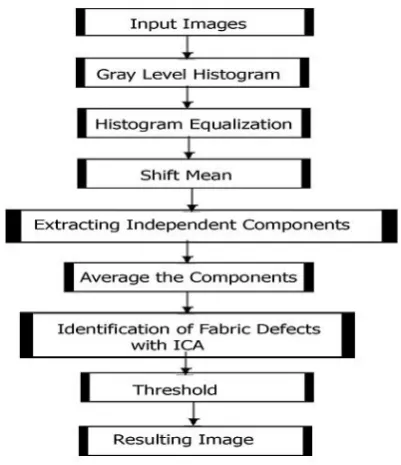
[image:3.595.328.529.84.317.2]ICA deals with filter for natural images and based on the ICA decomposition, removes noise from the images that are corrupted with additive Gaussian noise. The process of ICA is depicted in the flowchart form along with algorithmic modules for defect detection shown in fig.4.
Fig.3. Flowchart for ICA with algorithmic modules
Moving average is calculated using the formula as followed:
Where n is the integer value that represents the row dimension of the repetitive unit and xij is the pixel value at row i and column j of the input image X.
Standard deviation is defined as:
ICA aims to find linear transformations of the original data. The novel method ICA minimized the statistical dependence of the components present in the representation.
6. EXPERIMENTAL RESULTS
The working procedure of the ICA algorithm along with the existing RB method is given in this section. A number of samples have been collected which are both defective and non-defective images. Among them in this work one sample image is taken for testing. The input images that are taken for testing are repetitive patterns.
Original defective and defect free images are shown in the following fig.5. Fabric that contains defects is usually characterized by the higher pixel intensity levels. Each input sample is formed as a matrix for calculating the mean and standard deviation of the input samples.
(a) Defective sample
(b) Defect free sample
Fig.4. a) Defective-image b) Defect free image.
Corresponding histogram without and with equalization for both defective and non-defective images is shown in the following figures.6. a) Histogram of defective image without equalization, b) Histogram of defect free image without equalization, c) Histogram equalization for defective image, and d) Histogram equalization for defect free image.
Fig. 5.
a)
Defective image without equalization,
b)
Defect free image without histogram equalization,
c)
Defective image with histogram equalization, and
d)
Defect free image with histogram equalization.
The resultant images shows better performance with histogram equalized than the preprocessed one that is shown without histogram equalization.
In the next step mean is calculated for the input images of both defective and non-defective rows and columns not pixel by pixel. Shifted mean image is shown in the following fig.7. The input images are made into components so that efficiency of the work of the can be improved in less time.
[image:4.595.112.224.81.198.2]Fig.6. Shifted by the mean value image
To improve the efficiency of the pixel intensity, for all the components that are extracted average is calculated. In the next step defects are identified and comparison is done for both the defective and defect free image. So that the defective region can be easily identified and can be located perfectly.
Threshold value is calculated for both rows and columns of the input images. If the threshold values exceeds the normal range of the mean value than it is regarded as a defective image otherwise it is non-defective.
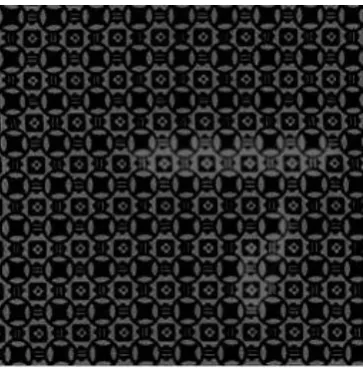
[image:4.595.330.512.176.363.2]In this way, the process continues for all the row and columns of the input images that are undergone for testing. Final output defective region after detection is shown in the following fig.8.
[image:4.595.305.526.525.736.2]7. CONCLUSION
This paper presents a new method, which combines the concepts of Regular Bands and ICA for patterned fabric defect detection is presented. Proposed approach is suitable for real time applications and the previous detection rates are compared along with the overall detection rates. Author can conclude that by applying RB method prior to ICA tries to increase the detection rate, quality of the fabric. As a future study, one can concentrate to reduce the computational time required to process.
8. REFERENCES
[1] M. Ghazvini, S . A . Monadjemi , N . Movahhedinia and , K . Jamshidi “Defect Detection of Tiles Using 2D-Wavelet Transform and Stastical Features”, WASET, 2009.
[2] F. Acebrón, F. López, J.M. Valiente, J. R. Navarro,”Surface Defect Detection on Fixed Patterns Ceramic Tiles”.
[3] H. Elbehiery, A. Hefnawy, and M. Elewa,”Surface Defects Detection for Ceramic Tiles Using Image Processing and Morphological Techniques”,2005.
[4] Manuel . J . Ferrerira , Aparicio Fernandes , J . A. Campos Neves , Joaol Monterio , “ Automatic Visual Inspection on Shoe and Textile Industries”.
[5] Ajay Kumar,” Computer vision-based Fabric Defect Detection-A Survey”.
[6] Sengottuvelan P., Wahi A. and Shanmugam A. (2008) Research Journal of Applied Sciences, 3(1) pp 26-31.
[7] Srinivasan K., Dastor P. H.,Radhakrishnaihan P., and Jayaraman S.(1992) J. text. Inst., vol. 83, no. 3, pp. 431- 447.
[8] Harlick R. (1979) Proceedings of IEEE, 67(5) 786-804.
[9] P.M.Mahajan, S.R.Kolhe, P.M.Patil,” A Review of Automatic Fabric Defect Detection Techniques”,2009.
[10] J . G . Campbell , A . A. Hashim and, F. D Murtagh,”Flaw Detection in Woven Textiles using Space-dependent Fourier Transform”, May 1997.
[11] A Bodnarova , M . Bennamoun , and S . J .Latham, “ Textile Flaw Detection using Optimal Gabor Filter”.
[12] Henry Y T Ngan and Grantham K . H . Pang,” Novel Method for Patterned Fabric Inspection using Bollinger Bands”, Aug 2006.
[13] I Cem Baykal ,R Muscedere and G. A. Jullien ,”On the use of Hash Functions for Defect Detection in Textures for In-Camera Web Inspection Systems”.
[14] Henry Y T Ngan and Grantham K H Pang ,” Regularity Analysis for Patterned Texture Inspection”, Jan 2009.